Search Results: "uwe"

31 May 2010

Piotr Galiszewski: Hello Word

Hello Planet Debian readers!

I've never thought that such a thing can ever happen, but I've started blogging ;) So now it is time to introduce myself.

My name is Piotr Galiszewski and I am second year student of computer science at AGH - University of Science and Technology in Krakow (Poland). I have been GNU/Linux user for about 5 years (mostly Debian based distributions).

Thanks for Debian and Google, this summer I will be working on creating Qt-based user interface for aptitude as my Google Summer of Code project. I hope that my mentors Sune Vuorela and Daniel Barrows will be patient with me ;) I am sure I will learn a lot from them. Please look at abstract of my project made by Debian GSoC administrator Obey Arthur Liu:
Qt GUI for aptitude. Currently, KDE users need to use Aptitude via the console interface, or install the newly developed GTK frontend, which does not fit well into KDE desktop. Making Qt frontend to Aptitude would solve this problem and bring an advanced and fully Debian-compliant graphical package manager to KDE.
As I wrote in my proposal I will split my work into three main parts:
  1. writing low level classes which will abstract aptitude signals and slots (which uses sigc++) into Qt slots and signals.
  2. creating and evaluating GUI mockups
  3. implementing GUI on top of classes from the first point
Point 1 and 2 will be made simultaneously and will take all May and half of June. Low level classes should implement all necessary functions for further use in GUI. This classes allow me to avoid direct usage of none Qt code in GUI classes and also give much more time to prepare completed and usability-wise mockups. Every mockups version will be presented and discussed on this blog. First version should be ready in next few days and updates will appear each week (or to weeks).
After finishing this two steps I will start coding GUI. With mockups and finished low level classes this should not be complicated (Yeah, I know that this is only my dream).

Full text of my proposal (including more precise time-line) can be found at Debian wiki.

Currently, project is slightly behind the schedule . It is caused by changes in my studies plan. The Juwanalia students' festival took place earlier, and yesterday it finished. But my first exam will take place one week later on 18 May, so I will have more time to catch up with time-line.

This project is my first direct contribution to Debian, but not first involvement in free software movement. I've been Kadu Instant Messenger developer for more then two year. In last two years I have been second most active developer with more than 700 commits in master branch. During GSoC period my Kadu activities will be limited. If time allows me to do this, I will be still contributing to Kadu. I still can be found at Kadu forum or #kadu channel on irc.freenode.net. I will also continue reviewing patches and fixing low time-consuming bugs.

My plans for the next few days:
If you have any thoughts about this project, please add comment to this post or contact me directly. I will be glad to read all yours opinions

Cheers

PS. As you can see English is not my mother tongue, so please forgive me my mistakes

28 April 2010

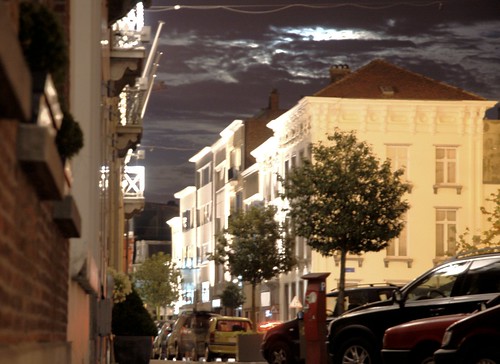
Wouter Verhelst: It was a dark and stormy night.

Onze-Lieve-Vrouwestraat The moon shone through the clouds. The sun didn't. The lightning did. Or, well, didn't. The beer flew wildly, and changed the food into something of the past. Discussions arose about lasers, ceramic knifes, and stormy nights. Promises were made that were only kept by some, including me, but not including him. Much was said that mattered little. Little was said that should've been forgotten. Yet much was. He would've been proud.

9 April 2010

Uwe Hermann: coreboot / flashrom in GSOC 2010 -- student application deadline today!

GSoC 2010 logo As you may know there's a Google Summer of Code program again this year. The deadline for student applications is April 9th at 19:00 UTC, so if you're a student and you want to work on a coreboot (open-source BIOS / PC firmware) or flashrom (open-source BIOS chip flasher) project, please apply in time. The following coreboot/flashrom GSOC project ideas have been proposed so far (but you can also suggest your own ideas, of course): See this wiki page for why and how to apply for a coreboot/flashrom project.

6 April 2010

Uwe Hermann: Miro 3.0 released, Debian package available

Miro 3.0 Yep, the new major release, Miro 3.0, of the cross-platform Internet RSS audio/video aggregator and player has been released. Please check the release notes and the feature list for details. Overall more than 139 issues have been fixed since the last 2.x series release. The most notable changes are probably the dropping of xine support upstream (gstreamer is used now for all video/audio on Linux) and the introduction of subtitle support. I have uploaded a new Miro 3.0 Debian package to unstable recently (which have been a delayed a bit due to Debian server issues), by now it should be available from most mirrors. Let me know if there are any issues...

16 March 2010

Dirk Eddelbuettel: Rcpp 0.7.10

Versions 0.7.7 to 0.7.9 of Rcpp contained a bug: protecting paths with quotes was supposed to help with Windows builds, but did the opposite at least in 'backticks mode' for getting path and/or library information. Using the shQuote() function instead helped. Our thanks to the tireless R-on-Windows maintainer Uwe Ligges for an earlier heads-up about the problem. So another quick bug-fix release 0.7.10 is now in Debian and should be on CRAN some time tomorrow. We also put two small improvements in, see the full NEWS entry for this release:
0.7.10  2010-03-15
    o	new class Rcpp::S4 whose constructor checks if the object is an S4 object
	
    o	maximum number of templated arguments to the pairlist function, 
	the DottedPair constructor, the Language constructor and the 
	Pairlist constructor has been updated to 20 (was 5) and a script has been
	added to the source tree should we want to change it again
    o   use shQuotes() to protect Windows path names (which may contain spaces)
As always, even fuller details are in Rcpp Changelog page and the Rcpp page which also leads to the downloads, the browseable doxygen docs and zip files of doxygen output for the standard formats. A local directory has source and documentation too. Questions, comments etc should go to the rcpp-devel mailing list off the R-Forge page

4 March 2010

Uwe Hermann: libopenstm32 - a Free Software firmware library for STM32 ARM Cortex-M3 microcontrollers

Olimex STM32-H103 eval board I guess it's time to finally announce libopenstm32, a Free Software firmware library for STM32 ARM Cortex-M3 microcontrollers me and a few other people have been working on in recent weeks. The library is licensed under the GNU GPL, version 3 or later (yes, that's an intentional decision after some discussions we had). The code is available via git:
 $ git clone git://libopenstm32.git.sourceforge.net/gitroot/libopenstm32/libopenstm32
 $ cd libopenstm32
 $ make
Building is done using a standard ARM gcc cross-compiler (arm-elf or arm-none-eabi for instance), see the summon-arm-toolchain script for the basic idea about how to build one. The current status of the library is listed in the wiki. In short: some parts of GPIOs, UART, I2C, SPI, RCC, Timers and some other basic stuff works and has register definitions (and some convenience functions, but not too many, yet). We're working on adding support for more subsystems, any help with this is highly welcome of course! Luckily ARM stuff (and especially the STM32) has pretty good (and freely available) datasheets. We have a few simple example programs, e.g. for the Olimex STM32-H103 eval board (see photo). JTAG flashing can be done using OpenOCD, for example. Feel free to join the mailing lists and/or the #libopenstm32 IRC channel on Freenode. The current list of projects where we plan to use this library is Open-BLDC (an Open Hardware / Free Software brushless motor controller project by Piotr Esden-Tempski), openmulticopter (an Open Hardware / Free Software quadrocopter/UAV project), openbiosprog (an Open Hardware / Free Software BIOS chip flash programmer I'm in the process of designing using gEDA/PCB), and probably a few more. If you plan to work on any new (or existing) microcontroller hardware- or software-projects involving an STM32 microcontroller, please consider using libopenstm32 (it's the only Free Software library for this microcontroller family I know of) and help us make it better and more complete. Thanks!

25 February 2010

Uwe Hermann: How to setup an encrypted USB-disk software-RAID-1 on Debian GNU/Linux using mdadm and cryptsetup

This is what I set up for backups recently using a cheap USB-enclosure which can house 2 SATA disks and shows them as 2 USB mass-storage devices to my system (using only one USB cable). Without any further introduction, here goes the HOWTO: First, create one big partition on each of the two disks (/dev/sdc and /dev/sdd in my case) of the exact same size. The cfdisk details are omitted here.
  $ cfdisk /dev/sdc
  $ cfdisk /dev/sdd
Then, create a new RAID array using the mdadm utility:
  $ mdadm --create /dev/md0 --level=1 --raid-devices=2 /dev/sdc1 /dev/sdd1
The array is named md0, consists of the two devices (--raid-devices=2) /dev/sdc1 and /dev/sdd1, and it's a RAID-1 array, i.e. data is simply mirrored on both disks so if one of them fails you don't lose data (--level=1). After this has been done the array will be synchronized so that both disks contain the same data (this process will take a long time). You can watch the current status via:
  $ cat /proc/mdstat
  Personalities : [raid1]
  md0 : active raid1 sdd1[1] sdc1[0]
        1465135869 blocks super 1.1 [2/2] [UU]
        [>....................]  resync =  0.0% (70016/1465135869) finish=2440.6min speed=10002K/sec
  unused devices: 
Some more info is also available from mdadm:
  $ mdadm --detail --scan
  ARRAY /dev/md0 metadata=1.01 name=foobar:0 UUID=1234578:1234578:1234578:1234578
  $ mdadm --detail /dev/md0
  /dev/md0:
          Version : 1.01
    Creation Time : Sat Feb  6 23:58:51 2010
       Raid Level : raid1
       Array Size : 1465135869 (1397.26 GiB 1500.30 GB)
    Used Dev Size : 1465135869 (1397.26 GiB 1500.30 GB)
     Raid Devices : 2
    Total Devices : 2
      Persistence : Superblock is persistent
      Update Time : Sun Feb  7 00:03:21 2010
            State : active, resyncing
   Active Devices : 2
  Working Devices : 2
   Failed Devices : 0
    Spare Devices : 0
   Rebuild Status : 0% complete
             Name : foobar:0  (local to host foobar)
             UUID : 1234578:1234578:1234578:1234578
           Events : 1
      Number   Major   Minor   RaidDevice State
         0       8       33        0      active sync   /dev/sdc1
         1       8       49        1      active sync   /dev/sdd1
Next, you'll want to create a big partition on the RAID device (cfdisk details omitted)...
  $ cfdisk /dev/md0
...and then encrypt all the (future) data on the device using dm-crypt+LUKS and cryptsetup:
  $ cryptsetup --verbose --verify-passphrase luksFormat /dev/md0p1
  Enter your desired pasphrase here (twice)
  $ cryptsetup luksOpen /dev/md0p1 myraid
After opening the encrypted container with cryptsetup luksOpen you can create a filesystem on it (ext3 in my case):
  $ mkfs.ext3 -j -m 0 /dev/mapper/myraid
That's about it. In future you can access the RAID data by using the steps below. Starting the RAID and mouting the drive:
  $ mdadm --assemble /dev/md0 /dev/sdc1 /dev/sdd1
  $ cryptsetup luksOpen /dev/md0p1 myraid
  $ mount -t ext3 /dev/mapper/myraid /mnt
Shutting down the RAID:
  $ umount /mnt
  $ cryptsetup luksClose myraid
  $ mdadm --stop /dev/md0
That's all. Performance is shitty due to all the data being shoved out over one USB cable (and USB itself being too slow for these amounts of data), but I don't care too much about that as this setup is meant for backups, not performance-critical stuff.

9 February 2010

Dirk Eddelbuettel: Rcpp 0.7.5

A new release of our Rcpp R / C++ interface classes is now out, the version number is 0.7.5. It comes on the heels of the release 0.7.4 and keeps with our semi-frantic schedule of releases every ten or so days going. The package is now on CRAN and Debian, and mirrors start to get the new versions. As before, my local page provides more details and Romain's blog is always worth watching too. The changes are summarised below in the NEWS file snippet, more details are in the ChangeLog as well.
0.7.5	2010-02-08
    o 	wrap has been much improved. wrappable types now are :
    	- primitive types : int, double, Rbyte, Rcomplex, float, bool
    	- std::string
    	- STL containers which have iterators over wrappable types:
    	  (e.g. std::vector<t>, std::deque<t>, std::list<t>, etc ...). 
    	- STL maps keyed by std::string, e.g std::map<std::string>
    	- classes that have implicit conversion to SEXP
    	- classes for which the wrap template if fully or partly specialized
    	This allows composition, so for example this class is wrappable: 
    	std::vector< std::map<std::string> > (if T is wrappable)
    	
    o 	The range based version of wrap is now exposed at the Rcpp::
    	level with the following interface : 
    	Rcpp::wrap( InputIterator first, InputIterator last )
    	This is dispatched internally to the most appropriate implementation
    	using traits
    o	a new namespace Rcpp::traits has been added to host the various
    	type traits used by wrap
    o 	The doxygen documentation now shows the examples
    o 	A new file inst/THANKS acknowledges the kind help we got from others
    o	The RcppSexp has been removed from the library.
    
    o 	The methods RObject::asFoo are deprecated and will be removed
    	in the next version. The alternative is to use as<foo>.
    o	The method RObject::slot can now be used to get or set the 
    	associated slot. This is one more example of the proxy pattern
    	
    o	Rcpp::VectorBase gains a names() method that allows getting/setting
    	the names of a vector. This is yet another example of the 
    	proxy pattern.
    	
    o	Rcpp::DottedPair gains templated operator<< and operator>> that 
    	allow wrap and push_back or wrap and push_front of an object
    	
    o	Rcpp::DottedPair, Rcpp::Language, Rcpp::Pairlist are less
    	dependent on C++0x features. They gain constructors with up
    	to 5 templated arguments. 5 was choosed arbitrarily and might 
    	be updated upon request.
    	
    o	function calls by the Rcpp::Function class is less dependent
    	on C++0x. It is now possible to call a function with up to 
    	5 templated arguments (candidate for implicit wrap)
    	
    o	added support for 64-bit Windows (thanks to Brian Ripley and Uwe Ligges)
As always, even fuller details are in the ChangeLog on the Rcpp page which also leads to the downloads, the browseable doxygen docs and zip files of doxygen output for the standard formats. Questions, comments etc should go to the rcpp-devel mailing list off the R-Forge page

6 February 2010

Uwe Hermann: FOSDEM 2010: coreboot and flashrom devroom and talks

coreboot logo Quick public service announcement (which probably comes a bit too late, sorry): There's a coreboot developer room at this year's FOSDEM (Free and Open-Source Software Developer's European Meeting), which starts roughly... um... today. In 20 minutes, actually. Unfortunately I cannot be there, hopefully there will be video archives of the talks. If you're at FOSDEM already, here's the list of talks:
Sat 13:00-14:00 coreboot introduction (Peter Stuge)
Sat 14:00-15:00 coreboot and PC technical details (Peter Stuge)
Sat 15:00-16:00 ACPI and Suspend/Resume under coreboot (Rudolf Marek)
Sat 16:00-17:00 coreboot board porting (Rudolf Marek)
Sat 17:00-18:00 Flashrom, the universal flash tool (Carl-Daniel Hailfinger)
Sat 18:00-19:00 Flash enable BIOS reverse engineering (Luc Verhaegen)
Highly recommended stuff if you're interested in an open-source BIOS and/or open-source, cross-platform flash EEPROM programmer software.

1 February 2010

Dirk Eddelbuettel: Rcpp 0.7.4

Yesterday, and about nine days after release 0.7.3 of Rcpp (a set of R / C++ interface classes), Romain and I released version 0.7.4. It has been uploaded to CRAN and Debian, and mirrors should already have new versions. As before, my local page is also available for downloads and some more details. The release once again combines a number of necessary fixes with numerous new features: Post-release, I also reworked the doxygen setup slightly so that all examples are now browseable, and the whole documentation is now searchable as well. Lastly, we had a remaining Windows build issue. Also, Brian Ripley and Uwe Ligges kindly sent us a small patch supporting the new Windows 64-bit builds using the new MinGW 64-bit compiler for Windows -- so release 0.7.5 may follow in due course. The NEWS file entry for release 0.7.4 is as follows:
0.7.4	2010-01-30
    o	matrix matrix-like indexing using operator() for all vector 
    	types : IntegerVector, NumericVector, RawVector, CharacterVector
    	LogicalVector, GenericVector and ExpressionVector. 
    o	new class Rcpp::Dimension to support creation of vectors with 
    	dimensions. All vector classes gain a constructor taking a 
    	Dimension reference.
    o	an intermediate template class "SimpleVector" has been added. All
    	simple vector classes are now generated from the SimpleVector 
    	template : IntegerVector, NumericVector, RawVector, CharacterVector
    	LogicalVector.
    o	an intermediate template class "SEXP_Vector" has been added to 
    	generate GenericVector and ExpressionVector.
    o	the clone template function was introduced to explicitely
    	clone an RObject by duplicating the SEXP it encapsulates.
    o	even smarter wrap programming using traits and template
        meta-programming using a private header to be include only
        RcppCommon.h
    o 	the as template is now smarter. The template now attempts to 
    	build an object of the requested template parameter T by using the
    	constructor for the type taking a SEXP. This allows third party code
    	to create a class Foo with a constructor Foo(SEXP) to have 
    	as<foo> for free.
    o	wrap becomes a template. For an object of type T, wrap<t> uses
    	implicit conversion to SEXP to first convert the object to a SEXP
    	and then uses the wrap(SEXP) function. This allows third party 
    	code creating a class Bar with an operator SEXP() to have 
    	wrap for free.
    o	all specializations of wrap :  wrap<double>, wrap< vector<double> >
    	use coercion to deal with missing values (NA) appropriately.
    o	configure has been withdrawn. C++0x features can now be activated
    	by setting the RCPP_CXX0X environment variable to "yes".
    o	new template r_cast<int> to facilitate conversion of one SEXP
    	type to another. This is mostly intended for internal use and 
    	is used on all vector classes
    o	Environment now takes advantage of the augmented smartness
    	of as and wrap templates. If as<foo> makes sense, one can 
    	directly extract a Foo from the environment. If wrap<bar> makes
    	sense then one can insert a Bar directly into the environment. 
    	Foo foo = env["x"] ;  /* as<foo> is used */
	Bar bar ;
	env["y"] = bar ;      /* wrap<foo> is used */    	
    o	Environment::assign becomes a template and also uses wrap to 
    	create a suitable SEXP
    o	Many more unit tests for the new features; also added unit tests
        for older API
As always, even fuller details are in the ChangeLog on the Rcpp page which also leads to the downloads, the browseable doxygen docs and zip files of doxygen output for the standard formats. Questions, comments etc should go to the rcpp-devel mailing list off the R-Forge page

26 January 2010

Uwe Hermann: Roda RK886EX (Rocky III+) first laptop/notebook being supported by coreboot

coreboot logo Only few days ago a long-standing bug in coreboot, the Free Software x86 BIOS/fimware project, has been fixed: Adding support for a laptop/notebook. The code was developed by coresystems GmbH (thanks a lot!). Quoting from the announcement:
coreboot is running on a multitude of different computers, ranging from tiny embedded systems as small as the palm of your hand over desktop and server systems to super computers with thousands of nodes. However, one might say that in the area of mobile computers coreboot has to catch up, compared to its support of other devices. Thus, I am especially glad to announce that coresystems GmbH is releasing coreboot for the Roda RK886EX a.k.a Rocky III+ notebook today. It's a rugged notebook, protected against shock, vibration, dust and humidity:
http://www.roda-computer.com/en/products/notebooks/rocky-iii-rk886ex.html We have been testing various Linux distributions as well as Windows XP and Windows 7 booting on this nice notebook. I want to sincerely thank those who made this project possible with their funding:
  • secunet Security Networks AG
  • Bundesamt f r Sicherheit in der Informationstechnologie (Federal Office for Information Security, BSI)
A big thank you also goes to everyone who worked with coresystems on this project.
The committed patch series includes improved support for the Intel i945 / ICH7 chipset (which was also written by coresystems), the SMSC LPC47N227 Super I/O, the Texas Instruments Cardbus+Firewire bridge TI PCI7420, and finally the Renesas M3885x Embedded Controller (EC). Btw, the latter, the so-called embedded controller (sometimes integrated in the Super I/O, sometimes it's an extra chip) is one of the major problems for coreboot support on laptops. They are almost always undocumented (i.e., no public datasheets are available), but they have low-level control over power/battery management, early power-up sequence, and often include keyboard controller functionality and other important stuff. Luckily, for this notebook an EC datasheet is available. Checkout the coreboot EC support code for the Renesas M3885x for an impression of what this stuff is all about. Anyway, there is hope that this laptop will only be the first in a row of multiple supported ones in the future. Interested developers and contributors are of course always welcome on the coreboot mailing list :-)

23 November 2009

Uwe Hermann: Note to self: Missing lvm2 and cryptsetup packages lead to non-working initrd very, very soon

I recently almost died from a heart attack because after a really horrible crash (don't ask), Debian unstable on my laptop wouldn't boot anymore. The system hung at "Waiting for root filesystem...", and I was in panic mode as I feared I lost all my data (and as usual my backups were waaay too old). At first I was suspecting that something actually got erased or mangled due to the crash, either at the dm-crypt layer, or the LVM layer, or the ext3 filesystem on top of those. After various hours of messing with live CDs, cryptsetup, lvm commands (such as pvscan, pvs, vgchange, vgs, vgck) and finally fsck I still had not managed to successfully boot my laptop. I finally was able to boot by changing the initrd from initrd.img-2.6.30-2-686 to initrd.img-2.6.30-2-686.bak in the GRUB2 menu (at boot-time), at which point it was clear that something was wrong with my current initrd. A bit of debugging and some initrd comparisons revealed the cause: Both, the cryptsetup and lvm2 packages were no longer installed on my laptop, which made all update-initramfs invokations (e.g. upon kernel package updates) create initrds which did not contain the proper dm-crypt and lvm functionality support. Hence, no booting for me. I only noticed because of the crash, as I usually do not reboot the laptop very often (two or three times per year maybe). Now, as to why those packages were removed I have absolutely no idea. I did not remove them knowingly, so I suspect some dist-upgrade did it and I didn't notice (but I do carefully check which packages dist-upgrade tries to remove, usually)...

16 October 2009

Uwe Hermann: coreboot on the cover of the Linux Journal

coreboot on Linux Journal Nice coreboot news the Free Software x86 firmware ("BIOS") is featured on the cover of issue 186 of the Linux Journal. Anton Borisov's article Coreboot at Your Service! explains the basic ideas behind coreboot, how to build an image for your board, which payloads are available and how they are used, e.g. GRUB2, SeaBIOS if you need legacy BIOS callbacks (e.g. for booting Windows), Etherboot/GPXE, or more fun stuff such as space invaders or tint (a tetris clone) in your flash ROM chip... If you read the article and think the build process is a bit complicated and ugly, do not despair! We're currently in the process of converting the whole coreboot code base to use kconfig (the widely-known configuration tool used by the Linux kernel, busybox, and other projects), so in the very near future the whole process for building a coreboot image will work like this:
  $ make menuconfig
  $ make
coreboot menuconfig Flashing the image can then be done using an EEPROM programmer and/or via the user-space utility flashrom (available for Linux, Mac OS X, FreeBSD, etc.)... It's nice to see that coreboot is getting more and more coverage in "mainstream" media and is growing both in number of deployments and in number of supported chipsets and boards. We are desperately in need of more developers though, there are just way too many chipsets, boards, and datasheets out there; we're happy about every patch and every new tester or developer who likes to mess with code that runs in the very first few (micro)seconds after power-on. If you think kernel hacking and related low-level development is nice, you might also be interested in writing code where there's no RAM yet (as coreboot has to initialize it), there's no serial port for debugging (coreboot has to initialize it), no PCI devices have been set up, most of your auxiliary hardware is not yet up (ethernet NIC, parallel port, audio, IDE, SATA, USB, you name it). It's a fun environment to work in and you'll learn a lot about PC hardware, even if you (so far) thought you knew everything there is to know. Feel free to join us on the mailing list or on IRC in #coreboot on Freenode.

24 September 2009

Dirk Eddelbuettel: digest 0.4.0 and 0.4.1

After almost two years, I just made a small update to the digest package for R by adding sha-256 as another supported hashing function. While at this, a few minor edits where made here or there. Version 0.4.0 also included a file src/Makefile.win but as that actually prevents a successful build on the Windows platform I promptly removed it for a (more-or-less brown-bag) release 0.4.1. Thanks to Uwe Ligges and his automated win-builder service that permits easy unattended build tests on that platform. The new package will appear shortly on its CRAN page; the R-Forge page has access to the Subversion repo etc and otherwise there's always my local my local digest page. Oh, and 0.3.1 was never blogged about as it was just a maintenance release that added a single cast and an edit to the DESCRIPTION file.

22 September 2009

Uwe Hermann: Using CRM114 for spam filtering on Debian GNU/Linux

I've been using CRM114 as spam filter for a while now, and I'm quite happy with it. Due to bug #529720 though (incompatible upstream file format changes) I decided to start my setup from scratch with a recent CRM114 version from unstable. Here's a short HOWTO, hope it's useful for others. First you need to install crm114 and set up a few files in your $HOME directory.
  $ sudo apt-get install crm114
  $ mkdir ~/.crm114
  $ cd ~/.crm114
  $ cp /usr/share/doc/crm114/examples/mailfilter.cf.gz .
  $ gunzip mailfilter.cf.gz
  $ cp /usr/share/crm114/mailtrainer.crm .
  $ touch rewrites.mfp priolist.mfp
Edit ~/.crm114/mailfilter.cf and set the following variables (some are optional, but that's what I currently use):
  :spw: /mypassword/
  :add_verbose_stats: /no/
  :add_extra_stuff: /no/
  :rewrites_enabled: /no/
  :spam_flag_subject_string: //
  :unsure_flag_subject_string: //
  :log_to_allmail.txt: /no/
The :log_to_allmail.txt: /no/ option should probably stay at "yes" for the first few days until you have tested your setup and everything works OK. The ~/.crm114/allmail.txt file will contain all your mails, in case something goes wrong. Now set up empty spam and nonspam files like this:
  $ cssutil -b -r spam.css
  $ cssutil -b -r nonspam.css
Test the setup by invoking mailreaver.crm as follows, typing some test text and then pressing CTRL+d:
  $ /usr/share/crm114/mailreaver.crm -u ~/.crm114
  test
  [CTRL-d]
  ** ACCEPT: CRM114 PASS osb unique microgroom Matcher **
  CLASSIFY fails; success probability: 0.5000  pR: 0.0000
  Best match to file #0 (nonspam.css) prob: 0.5000  pR: 0.0000
  Total features in input file: 8
  #0 (nonspam.css): features: 1, hits: 0, prob: 5.00e-01, pR:   0.00
  #1 (spam.css): features: 1, hits: 0, prob: 5.00e-01, pR:   0.00
  X-CRM114-Version: 200904023-BlameSteveJobs ( TRE 0.7.6 (BSD) ) MF-35EB8B9A [pR: 0.0000]
  X-CRM114-CacheID: sfid-20090920_151224_574131_D290E589
  X-CRM114-Status: UNSURE (0.0000) This message is 'unsure'; please train it!
The output should look similar to the above. If there are errors instead, you should check your settings in ~/.crm114/mailfilter.cf. Now you have to setup a procmail rule for crm114:
  :0fw: crm114.lock
    /usr/share/crm114/mailreaver.crm -u /home/uwe/.crm114
  :0:
  * ^X-CRM114-Status: SPAM.*
  IN.spam-crm114
In my case this rule is also followed by a spamassassin rule, so all my mail goes through two different spam filters (will look into dspam and bogofilter also I guess, the more the better). Finally, in .muttrc I have the following configs so I can press SHIFT+x to mark a mail as spam, and SHIFT+h to mark it as non-spam (ham).
macro index X '  formail -I X-CRM114-Status -I X-CRM114-Action -I X-CRM114-Version   /usr/share/crm114/mailreaver.crm -u /home/uwe/.crm114/ --spam'
macro index H '  formail -I X-CRM114-Status -I X-CRM114-Action -I X-CRM114-Version   /usr/share/crm114/mailreaver.crm -u /home/uwe/.crm114/ --good'
macro pager X '  formail -I X-CRM114-Status -I X-CRM114-Action -I X-CRM114-Version   /usr/share/crm114/mailreaver.crm -u /home/uwe/.crm114/ --spam'
macro pager H '  formail -I X-CRM114-Status -I X-CRM114-Action -I X-CRM114-Version   /usr/share/crm114/mailreaver.crm -u /home/uwe/.crm114/ --good'
Important: crm114 is most effective if you start with empty CSS files (as shown above) and only train it by marking mails as spam/ham when it gets them wrong. The process will take a few hours or maybe a day (depending on how many mails per day you get), then the misclassification rate gets very low... Update 2009-09-23: Changed --spam/--nonspam to the correct options for mailreaver/mailtrainer, --spam/--good.

20 September 2009

Uwe Hermann: Help add subtitle support for Miro

Miro 2.0 feed list If you ever wanted to support an open-source project but you are not a programmer, here's one (of many possible) ways to help: The Miro project (Internet TV / Video and Audio Podcast application for Linux, Windows, and Mac OS X) is seeking for pledges/donations that will be used to add subtitles support in Miro. To quote from the announcement:
We re hoping to build real subtitle support into Miro in the next couple months, but we need your help! So we ve started a Kickstarter project to raise $1,000 to develop this feature for Miro on all three platforms: Windows, Mac, and Linux. Can you pledge to help make it happen? One of the great things about the Kickstarter model is that unless we can reach $1,000, your pledge won t be charged.
[...]
(if you live in the United States, donations are tax deductible we are a 501c3 non-profit)
There are 11 days left to make a pledge.

6 September 2009

Dirk Eddelbuettel: RQuantLib 0.3.0 Windows build snag

Yesterday's upload of RQuantLib 0.3.0 contained one minor oversight: I had failed to update src/Makefile.win to the new and enlarged set of source files. The proper fix (of using wildcards and implicit rules) was simple, and Uwe Ligges kindly rebuilt RQuantLib on the Windows builder for CRAN using an updated Makefile so that binaries for Windows will be available. This fix will also be in the next upload. Should you need it in the meantime, here is a link to the new version directly from SVN.

Uwe Hermann: identi.ca - a microblogging service based on Free Software, AGPL, and Creative Commons

identi.ca logo After a long time of ignoring (or at least not using) micro-blogging services such as Twitter, I recently tried the Free-Software based identi.ca service, and I'm beginning to like it. The choice of service was pretty obvious while Twitter uses proprietary software and has custom Terms of Service, identi.ca is based on software under the GNU Affero General Public License, and the contents are CC-BY 3.0 licensed. The code behind identi.ca is called Laconica (recently renamed to StatusNet) and is hosted at gitorious:
 $ git clone git://gitorious.org/laconica/mainline.git
My account details are available under http://identi.ca/uwehermann, where I'm posting smaller announcements and notes about random technical stuff I'm working on (slightly more regularly than in this blog). Sometimes I use the web interface for posting, but using the Jabber integration available at identi.ca is even more convenient. You can both be notified of new posts ("dents") in real time via Jabber, as well as post your own dents from within your Jabber client, which is nice. identi.ca seems to become more popular every day, which will hopefully make the proprietary Twitter pretty much irrelevant sooner or later.

3 September 2009

Uwe Hermann: Open-Source software for LightScribe CDs and DVDs?

Dear Lazyweb, is there any Free Software utility for putting those nice logos/images on LightScribe CDs or DVDs? I'm considering buying such a CD/DVD burner, but only if there's open-source software to control the device. I guess burning CDs/DVDs should be no problem using wodim/cdrecord, but adding images as labels on the CD/DVD is likely not possible without special software. I know about the LightScribe Linux software (which is binary-only and not open-source, it seems) and LaCie LightScribe Labeler for Linux (which only creates labels but does not write them to the CD/DVD, and is not open-source either, I think). Anyone aware of a Free Software utility for this? Or at least a public specification/datasheet which could be used for creating one? I might even be willing to join development if datasheets are available.

5 May 2009

Uwe Hermann: Flashrom 0.9 release - Flashing your BIOS from the Unix/Linux command line

I have mentioned the flashrom utility in my blog in the past. This is a small command line tool which allows you to update your BIOS/coreboot/firmware chips without opening the computer and without any special boot procedures. Yesterday, flashrom 0.9 was finally released. Here's a short passage from the release announcement:

After nine years of development and constant improvement, we have added support for every BIOS flash ROM technology present on x86 mainboards and every flash ROM chip we ever saw in the wild. Highlights of flashrom include:
  • Parallel, LPC, FWH and SPI flash interfaces.
  • 157 flash chip families and half a dozen variants of each family.
  • Flash chip package agnostic. DIP32, PLCC32, DIP8, SO8/SOIC8, TSOP32, TSOP40 and more have all been verified to work.
  • 75 different chipsets, some with multiple flash controllers.
  • Special mainboard enabling code for dozens of nonstandard mainboards.
  • No physical access needed. root access is sufficient.
  • No bootable floppy disk, bootable CD-ROM or other media needed.
  • No keyboard or monitor needed. Simply reflash remotely via SSH.
  • No instant reboot needed. Reflash your ROM in a running system, verify it, be happy. The new firmware will be present next time you boot.
  • Crossflashing and hotflashing is possible as long as the flash chips are electrically and logically compatible (same protocol). Great for recovery.
  • Scriptability. Reflash a whole pool of identical machines at the same time from the command line. It is recommended to check flashrom output and error codes.
  • Speed. flashrom is much faster than vendor flash tools.
  • Supports Linux, FreeBSD, DragonFly BSD, Solaris, Mac OS X. Please refer to the README for build instructions.
Please note that rewriting your flash chip can be dangerous and flashrom developers make no guarantees whatsoever. That said, many users have successfully replaced proprietary tools such as awdflash, amiflash and afudos with flashrom.
Download: flashrom-0.9.0.tar.gz
SVN: svn co svn://coreboot.org/flashrom/trunk flashrom
Debian: apt-get install flashrom Do yourself a favor and try flashrom next time you want to upgrade your BIOS. No more floppies or bootable CD-ROMs with DOS/Windows binaries or similar crap. Run flashrom conveniently from the Linux command line, or even via SSH or serial console if you want...

Next.

Previous.