Quest for a terminal emulator
The requirements
I need a terminal emulator. This is a checklist of the features that I need:
- Foreground colour:
#aaaaaa.
- Background colour: black.
- "Linux console" colour palette.
- Font: Monospace-10.
Alt+Fnn to directly switch to one of the first 12 terminals, like in the
Linux console.F11 to toggle fullscreen.Alt+'+', Alt+'-', Alt+'0' to control font sizes.- All other keybindings disabled, so that terminal programs are free to use
them.
- I occasionally need to switch to black-on-white for presentations.
- Tabs.
- When I open a new tab it needs to contain a shell opened inside the same
directory of the last tab I was in. The way I normally start working is
something like:
cd workdir; x-terminal-emulator -e vim todolist and then I
start opening new tabs.
- I need -e to work. In fact, I need the terminal to work as
x-terminal-emulator -e cmd args...
- I need to conveniently pick a URL in a terminal and open it in Chromium, and
not any other browser. Even better, open it in
x-www-browser
My experience is that getting all of this to work is not being as easy as it
seems, so I'm creating this page to track progress.
gnome-terminal
I've been happily using this for years, and it did everything I needed, until
some months ago it started to open new tabs in the terminal's working directory
instead of the last tab's working directory. This is a big point of frustration
for me.
It also started opening
https urls with Firefox, although the preferred
browser was Chromium. There seemed to be no way to control it: I looked for
firefox or
iceweasel in all gconf and dconf settings and found nothing.
The browser issue was fixed by accident when I used Xfce4's settings
application to change the browser from Chromium to Firefox and then back to
Chromium.
update, thanks to Mathieu Parent, Josh Triplett, Peter De Wachter, Julien
Cristau, and Charles Plessy:
It is also possible to
restore the "new tab opened inside the same
directory of the last tab I was in" behaviour,
by enabling "run command as a login shell" so that
/etc/profile.d/vte.sh is
run (thanks Mathieu Parent for the link).
That in turn spawned extra cleanup work in my
.bashrc/
.bash_profile/
.profile setup, which has been randomly evolving
since even before my first Debian "buzz" system. I found that it was setting
PROMPT_COMMAND to something else to set the terminal title, conflicting with
what vte.sh wants to do.
With regards to loading
/etc/profile.d/vte.sh by default, Peter De Watcher
sent pointers to relevant bugs:
here,
here, and
here.
An alternative strategy is to work using the prompt rather than
PROMPT_COMMAND; an example is in Josh Triplett's .bashrc from
git://joshtriplett.org/git/home.
Josh Triplett also said:
To fix the browser launched for URLs, you either need to use a desktop
environment following GNOME's mechanism for setting the default browser,
or edit ~/.local/share/applications/mimeapps.list and make sure
x-scheme-handler/http, x-scheme-handler/https, and x-scheme-handler/ftp
are set to your preferred browser's desktop file basename under [Added
Associations].
All my issues with gnome-terminal are now gone and I'm only too happy to go
back to it.
rxvt-unicode-256color
urxvt took some work. This is where I got with configuration:
URxvt.font: xft:Monospace-10:antialias=true
URxvt.foreground: #aaaaaa
URxvt.background: black
URxvt.scrollBar_right: true
URxvt.cursorBlink: true
URxvt.perl-ext-common: default,matcher,tabbedex
URxvt.url-launcher: /usr/bin/x-www-browser
URxvt.matcher.button: 1
URxvt.perl-lib: /home/enrico/.urxvt/perl
URxvt.color0: black
URxvt.color1: #aa0000
URxvt.color2: #00aa00umask
URxvt.color3: #aa5500
URxvt.color4: #0000aa
URxvt.color5: #aa00aa
URxvt.color6: #00aaaa
URxvt.color7: #aaaaaa
URxvt.color8: #555555
URxvt.color9: #ff5555
URxvt.color10: #55ff55
URxvt.color11: #ffff55
URxvt.color12: #5555ff
URxvt.color13: #ff55ff
URxvt.color14: #55ffff
URxvt.color15: #ffffff
I got all of the tab behaviour that I need by
"customizing" the tab script (yuck
github

).
Missing
- Bold fonts only work if I set
TERM=rxvt
- The implementation for opening a new tab in the directory of the current tab
is rather fragile.
- Resizing the terminal window causes an annoying flicker
sakura
Configuration is in
.config/sakura/sakura.conf and these bits help:
colorset1_fore=rgb(170,170,170)
colorset1_back=rgb(0,0,0)
colorset1_opacity=99
colorset2_fore=rgb(0,0,0)
colorset2_back=rgb(254,254,254)
colorset2_opacity=99
font=Monospace 10
show_always_first_tab=No
scrollbar=false
fullscreen_key=F11
palette=linux
Missing
Alt+Fnn to directly switch to one of the first 12 terminals, like in the
Linux console. Sakura hardcodes using numbers for switching, and only allows
to change the modifier.Alt+'+', Alt+'-', Alt+'0' to control font sizes.- Tabs are huge and take way too much screen space.
lxterminal
Configuration is in
.config/lxterminal/lxterminal.conf and this is relevant
to me:
[general]
fontname=DejaVu Sans Mono 10
fgcolor=#aaaaaaaaaaaa
disallowbold=false
cursorblinks=true
tabpos=top
hidescrollbar=false
hidemenubar=true
hideclosebutton=true
disablef10=true
disablealt=true
Also, to open a url directly you control+click it.
Missing
Alt+Fnn to directly switch to one of the first 12 terminals, like in the
Linux console.F11 to toggle fullscreen.Alt+'+', Alt+'-', Alt+'0' to control font sizes.- I occasionally need to switch to black-on-white for presentations: this is
inconvenient, as it requires to set foreground and background separately
each time.
terminator
Configuration is in
.config/terminator/config and this is relevant to me:
[global_config]
  use_custom_url_handler = True
  custom_url_handler = x-www-browser
  inactive_color_offset = 1.0
[keybindings]
  close_term = None
  close_window = None
  copy = None
  cycle_next = None
  cycle_prev = None
  go_down = None
  go_next = None
  go_prev = None
  go_up = None
  group_all = None
  group_tab = None
  hide_window = None
  move_tab_left = None
  move_tab_right = None
  new_tab = None
  new_terminator = None
  new_window = None
  next_tab = None
  paste = None
  prev_tab = None
  reset_clear = None
  reset = None
  resize_down = None
  resize_left = None
  resize_right = None
  resize_up = None
  rotate_ccw = None
  rotate_cw = None
  scaled_zoom = None
  search = None
  split_horiz = None
  split_vert = None
  switch_to_tab_1 = <Alt>F1
  switch_to_tab_2 = <Alt>F2
  switch_to_tab_3 = <Alt>F3
  switch_to_tab_4 = <Alt>F4
  switch_to_tab_5 = <Alt>F5
  switch_to_tab_6 = <Alt>F6
  switch_to_tab_7 = <Alt>F7
  switch_to_tab_8 = <Alt>F8
  switch_to_tab_9 = <Alt>F9
  switch_to_tab_10 = <Alt>F10
  toggle_scrollbar = None
  toggle_zoom = None
  ungroup_all = None
  ungroup_tab = None
[profiles]
  <span class="createlink">default</span>
    palette = "#000000:#aa0000:#00aa00:#aa5500:#0000aa:#aa00aa:#00aaaa:#aaaaaa:#555555:#ff5555:#55ff55:#ffff55:#5555ff:#ff55ff:#55ffff:#ffffff"
    copy_on_selection = True
    icon_bell = False
    background_image = None
    show_titlebar = False
Missing
- I need -e to work. In fact, I need the terminal to work as
x-terminal-emulator -e cmd args....
#734655 but should
be fixed soon
- New windows start with the title bar visible, even if I configured it not to
show. It disappears as soon as the window gets focused, causing the terminal
contents to resize. It is just a glitch, but oh so annoying!
update: Richard Hartmann pointed out that terminator's upstream maintainer
now changed after the old one didn't have time any more, and it should have a
release with a ton of improvements anytime soon.
xfce4-terminal
Configuration is in
.config/xfce4/terminal, and this is relevant to me:
terminalrc:
[Configuration]
FontName=Monospace 10
MiscAlwaysShowTabs=FALSE
MiscBell=FALSE
MiscBordersDefault=TRUE
MiscCursorBlinks=FALSE
MiscCursorShape=TERMINAL_CURSOR_SHAPE_BLOCK
MiscDefaultGeometry=80x24
MiscInheritGeometry=FALSE
MiscMenubarDefault=FALSE
MiscMouseAutohide=FALSE
MiscToolbarDefault=FALSE
MiscConfirmClose=TRUE
MiscCycleTabs=TRUE
MiscTabCloseButtons=TRUE
MiscTabCloseMiddleClick=TRUE
MiscTabPosition=GTK_POS_TOP
MiscHighlightUrls=TRUE
ShortcutsNoMenukey=TRUE
ShortcutsNoMnemonics=TRUE
ColorForeground=#aaaaaaaaaaaa
accels.scm:
(gtk_accel_path "<Actions>/terminal-window/goto-tab-1" "<Alt>F1")
(gtk_accel_path "<Actions>/terminal-window/goto-tab-2" "<Alt>F2")
(gtk_accel_path "<Actions>/terminal-window/goto-tab-3" "<Alt>F3")
(gtk_accel_path "<Actions>/terminal-window/goto-tab-4" "<Alt>F4")
(gtk_accel_path "<Actions>/terminal-window/goto-tab-5" "<Alt>F5")
(gtk_accel_path "<Actions>/terminal-window/goto-tab-6" "<Alt>F6")
(gtk_accel_path "<Actions>/terminal-window/goto-tab-7" "<Alt>F7")
(gtk_accel_path "<Actions>/terminal-window/goto-tab-8" "<Alt>F8")
(gtk_accel_path "<Actions>/terminal-window/goto-tab-9" "<Alt>F9")
(gtk_accel_path "<Actions>/terminal-window/goto-tab-10" "<Alt>F10")
(gtk_accel_path "<Actions>/terminal-window/goto-tab-11" "<Alt>F11")
(gtk_accel_path "<Actions>/terminal-window/goto-tab-12" "<Alt>F12")
update: Yves-Alexis Perez points out that to disable the F1 for help in the
terminal, you need to remove the accelerator. I tried
this and
this
and didn't have success, but I confess I did not dig too much into it.
Although
xfce4-terminal -e does not work as I expect, xfce4-terminal
registers a wrapper for x-terminal-emulator that does the right thing with
respect to
-e (also thanks Yves-Alexis Perez).
Missing
Alt+'+', Alt+'-', Alt+'0' to control font sizes.- All other keybindings disabled, so that terminal programs are free to use
them. I could not find a way to disable F1 for help.
- I occasionally need to switch to black-on-white for presentations. I can
switch to a "Black on white" preset, but there is no "Gray on black" to
switch back to. I can switch back to "White on black", but then I need to
manually set the text colour to
#aaaaaa. update: Yves-Alexis Perez
found that you can add presets to .local/share/colorthemes taking examples
from /usr/share/xfce4/terminal/colorschemes; next time I consider
switching to xfce4-terminal I'll try that.
roxterm
Configuration is in
.config/roxterm.sourceforge.net/ split in several files
corresponding to profiles. This is a reasonable starting point for me:
Profiles/Default:
[roxterm profile]
colour_scheme=Default
disable_menu_access=1
disable_menu_shortcuts=1
disable_tab_menu_shortcuts=0
tab_close_btn=0
hide_menubar=1
always_show_tabs=0
Colours/Default:
[roxterm colour scheme]
0=#000000000000
1=#aaaa00000000
2=#0000aaaa0000
3=#aaaa55550000
4=#00000000aaaa
5=#aaaa0000aaaa
6=#0000aaaaaaaa
7=#aaaaaaaaaaaa
8=#555555555555
9=#ffff55555555
10=#5555ffff5555
11=#ffffffff5555
12=#55555555ffff
13=#ffff5555ffff
14=#5555ffffffff
15=#ffffffffffff
palette_size=16
foreground=#aaaaaaaaaaaa
background=#000000000000
cursor=#cccccccccccc
bold=
dim=
Shortcuts/Default:
[roxterm shortcuts scheme]
File/New Window=
File/New Tab=
File/Close Window=
File/Close Tab=
Tabs/Previous Tab=
Tabs/Next Tab=
Edit/Copy=
Edit/Paste=
View/Zoom In=<Control>plus
View/Zoom Out=<Control>minus
View/Normal Size=<Control>0
View/Full Screen=F11
View/Scroll Up One Line=
View/Scroll Down One Line=
Help/Help=
Edit/Copy & Paste=
Search/Find...=
Search/Find Next=
Search/Find Previous=
File/New Window With Profile/Default=
File/New Tab With Profile/Default=
Tabs/Select_Tab_0=<Alt>F1
Tabs/Select_Tab_1=<Alt>F2
Tabs/Select_Tab_2=<Alt>F3
Tabs/Select_Tab_3=<Alt>F4
Tabs/Select_Tab_4=<Alt>F5
Tabs/Select_Tab_5=<Alt>F6
Tabs/Select_Tab_6=<Alt>F7
Tabs/Select_Tab_7=<Alt>F8
Tabs/Select_Tab_8=<Alt>F9
Tabs/Select_Tab_9=<Alt>F9
Tabs/Select_Tab_10=<Alt>F10
Tabs/Select_Tab_11=<Alt>F11
Tabs/Select_Tab_12=<Alt>F12
Global:
[roxterm options]
edit_shortcuts=0
prefer_dark_theme=1
colour_scheme=Default
warn_close=1
Missing
Nothing of my initial requirements seems to be missing, really, so I'm sticking
to it for a while to see what happens.
The first itch to scratch is that when the menubar is hidden, the popup menu
becomes
the entire menubar contents, which does not fit the general use case
to have a contextual menu with the most common shortcuts. I'll just declare it
useless and get myself used to some new hotkey for starting a new terminal.
update: after fixing my issues with gnome-terminal I've switched back to
gnome-terminal: its interface feels less clunky as I'm already used to it.
Other references
Guillem Jover made a similar analysis in 2009, it can be found
here.
Thomas Koch mentioned that
termit should be able to do all I need, and is
scriptable in Lua. I like the sound of that, and it's definitely one I should
look next time I find myself shopping for terminal emulators.
 For the 6th year in a row, Igalia has organized a hackfest focused on web engines. The 5 years before this one were actually focused on the GTK+ port of WebKit, but the number of web engines that matter to us as Free Software developers and consultancies has grown, and so has the scope of the hackfest.
It was a very productive and exciting event. It has already been covered by Manuel Rego, Philippe Normand, Sebastian Dr ge and Andy Wingo! I am sure more blog posts will pop up. We had Martin Robinson telling us about the new Servo engine that Mozilla has been developing as a proof of concept for both Rust as a language for building big, complex products and for doing layout in parallel. Andy gave us a very good summary of where JS engines are in terms of performance and features. We had talks about CSS grid layouts, TyGL a GL-powered implementation of the 2D painting backend in WebKit, the new Wayland port, announced by Zan Dobersek, and a lot more.
With help from my colleague ChangSeok OH, I presented a description of how a team at Collabora led by Marco Barisione made the combination of WebKitGTK+ and GNOME s web browser a pretty good experience for the Raspberry Pi. It took a not so small amount of both pragmatic limitations and hacks to get to a multi-tab browser that can play youtube videos and be quite responsive, but we were very happy with how well WebKitGTK+ worked as a base for that.
One of my main goals for the hackfest was to help drive features that were lingering in the bug tracker for WebKitGTK+. I picked up a patch that had gone through a number of iterations and rewrites: the HTML5 notifications support, and with help from Carlos Garcia, managed to finish it and land it at the last day of the hackfest! It provides new signals that can be used to authorize notifications, show and close them.
To make notifications work in the best case scenario, the only thing that the API user needs to do is handle the permission request, since we provide a default implementation for the show and close signals that uses libnotify if it is available when building WebKitGTK+. Originally our intention was to use GNotification for the default implementation of those signals in WebKitGTK+, but it turned out to be a pain to use for our purposes.
GNotification is tied to GApplication. This allows for some interesting features, like notifications being persistent and able to reactivate the application, but those make no sense in our current use case, although that may change once service workers become a thing. It can also be a bit problematic given we are a library and thus have no GApplication of our own. That was easily overcome by using the default GApplication of the process for notifications, though.
The show stopper for us using GNotification was the way GNOME Shell currently deals with notifications sent using this mechanism. It will look for a .desktop file named after the application ID used to initialize the GApplication instance and reject the notification if it cannot find that. Besides making this a pain to test our test browser would need a .desktop file to be installed, that would not work for our main API user! The application ID used for all Web instances is org.gnome.Epiphany at the moment, and that is not the same as any of the desktop files used either by the main browser or by the web apps created with it.
For the future we will probably move Epiphany towards this new era, and all users of the WebKitGTK+ API as well, but the strictness of GNOME Shell would hurt the usefulness of our default implementation right now, so we decided to stick to libnotify for the time being.
Other than that, I managed to review a bunch of patches during the hackfest, and took part in many interesting discussions regarding the next steps for GNOME Web and the GTK+ and Wayland ports of WebKit, such as the potential introduction of a threaded compositor, which is pretty exciting. We also tried to have Bastien Nocera as a guest participant for one of our sessions, but it turns out that requires more than a notebook on top of a bench hooked up to a TV to work well. We could think of something next time ;D.
I d like to thank Igalia for organizing and sponsoring the event, Collabora for sponsoring and sending ChangSeok and myself over to Spain from far away Brazil and South Korea, and Adobe for also sponsoring the event! Hope to see you all next year!
For the 6th year in a row, Igalia has organized a hackfest focused on web engines. The 5 years before this one were actually focused on the GTK+ port of WebKit, but the number of web engines that matter to us as Free Software developers and consultancies has grown, and so has the scope of the hackfest.
It was a very productive and exciting event. It has already been covered by Manuel Rego, Philippe Normand, Sebastian Dr ge and Andy Wingo! I am sure more blog posts will pop up. We had Martin Robinson telling us about the new Servo engine that Mozilla has been developing as a proof of concept for both Rust as a language for building big, complex products and for doing layout in parallel. Andy gave us a very good summary of where JS engines are in terms of performance and features. We had talks about CSS grid layouts, TyGL a GL-powered implementation of the 2D painting backend in WebKit, the new Wayland port, announced by Zan Dobersek, and a lot more.
With help from my colleague ChangSeok OH, I presented a description of how a team at Collabora led by Marco Barisione made the combination of WebKitGTK+ and GNOME s web browser a pretty good experience for the Raspberry Pi. It took a not so small amount of both pragmatic limitations and hacks to get to a multi-tab browser that can play youtube videos and be quite responsive, but we were very happy with how well WebKitGTK+ worked as a base for that.
One of my main goals for the hackfest was to help drive features that were lingering in the bug tracker for WebKitGTK+. I picked up a patch that had gone through a number of iterations and rewrites: the HTML5 notifications support, and with help from Carlos Garcia, managed to finish it and land it at the last day of the hackfest! It provides new signals that can be used to authorize notifications, show and close them.
To make notifications work in the best case scenario, the only thing that the API user needs to do is handle the permission request, since we provide a default implementation for the show and close signals that uses libnotify if it is available when building WebKitGTK+. Originally our intention was to use GNotification for the default implementation of those signals in WebKitGTK+, but it turned out to be a pain to use for our purposes.
GNotification is tied to GApplication. This allows for some interesting features, like notifications being persistent and able to reactivate the application, but those make no sense in our current use case, although that may change once service workers become a thing. It can also be a bit problematic given we are a library and thus have no GApplication of our own. That was easily overcome by using the default GApplication of the process for notifications, though.
The show stopper for us using GNotification was the way GNOME Shell currently deals with notifications sent using this mechanism. It will look for a .desktop file named after the application ID used to initialize the GApplication instance and reject the notification if it cannot find that. Besides making this a pain to test our test browser would need a .desktop file to be installed, that would not work for our main API user! The application ID used for all Web instances is org.gnome.Epiphany at the moment, and that is not the same as any of the desktop files used either by the main browser or by the web apps created with it.
For the future we will probably move Epiphany towards this new era, and all users of the WebKitGTK+ API as well, but the strictness of GNOME Shell would hurt the usefulness of our default implementation right now, so we decided to stick to libnotify for the time being.
Other than that, I managed to review a bunch of patches during the hackfest, and took part in many interesting discussions regarding the next steps for GNOME Web and the GTK+ and Wayland ports of WebKit, such as the potential introduction of a threaded compositor, which is pretty exciting. We also tried to have Bastien Nocera as a guest participant for one of our sessions, but it turns out that requires more than a notebook on top of a bench hooked up to a TV to work well. We could think of something next time ;D.
I d like to thank Igalia for organizing and sponsoring the event, Collabora for sponsoring and sending ChangSeok and myself over to Spain from far away Brazil and South Korea, and Adobe for also sponsoring the event! Hope to see you all next year!

 Twenty years ago, I was sixteen and in high school. The school at the
time, if memory serves right, was the "Kunsthumaniora voor muziek en
woord van het gemeenschapsonderwijs" in Brussels (which translates
approximately to "art high school for music and word of the communal
educational branch"... that's not entirely right, but it's late and I'm
too tired to look for a dictionary). I was taking drama classes there.
No, I'm not making this up. Except maybe the sixteen bit I might
be off by one or two years.
Hey, I did a lot of things during high school. Stop looking at me like
that.
At one point in time during my stint in drama, a group of educational
interns the sort of people who would be teaching some sort of
stuff somewhere after their graduation cooperated with our school
to come up with a whole day of classes around one subject. I'll never
forget the title: "Can art rescue the democracy?" If that sounds pompous
and silly, that's because it was. However, I was at art school, fer
crying out loud, so I drank it up like it was cool-aid. Which it wasn't.
It was worse.
At the end of the day (literally, that is), the educational interns had
booked some hot shot art person for a debate. I've since completely
forgotten his name. He must've been not that hot shot after all, since
I never even once read anything about him in the next few years. Of
course I can't exclude the most recent decade, not remembering him and
all, but whatever. I also don't remember whether he was a hot shot art
critic, a hot shot artist, or just some random hot shot person who
writes about art, but doesn't actually do it himself. Whatever.
One of the main topics during the whole day was the point about how
artsy people find it extremely difficult to define what art actually
is. I mean, it's all they do all day, but they can't come up with a
decent definition of the damn thing.
During the afternoon break, just before the debate with this
maybe-sortof-semi hot shot art person, I walk around the playground and
think about the whole thing. And come up with some personal definition
of art. My definition.
As the time of the debate comes up, the hot shot art person sits in the
front of the gym behind some table, and the whole school (literally) is
sitting in chairs in the rest of the gym. Some questions are asked. Many
of those are just shot down.
At some point, I raise my finger when it's asked if anyone has further
questions. I walk up to the microphone. I ask him:
"Could we maybe define art as that thing that, though it might be easy
to reproduce, in no case is easy to produce?"
He sits (he never got up, really). He thinks. I stand, and wait. After a
few seconds of this, he answers. He seems impressed. His reply is
something along the lines of "that's not a perfect definition, but it's
pretty good. There's a lot to be said for that, and I urge you to write
about art when you grow older".
I never followed his advice. I got a bit more interested in art, but
quickly found out that art consists of one group of people who spend
their time doing things other people find pretty, and another group of
people who spend their time doing things that makes other people
"think", whatever that is. They may not have a brain, they may be silly
as hell, but they still want to "think". It's not for me, it's never
been. Art, that is -- not the think bit. That is something I don't mind
doing.
Don't get me wrong. I still like art. I like going to museums from time
to time; I like the performing arts. I mean, I play the flute. Not the
piano, not the guitar, not the flipping drums, the flute. Which I
like, for what it's worth.
But if the intent is to make people think, there are better ways to do
that. If I want to make people think, I'm not going to make some obscure
object that may or may not have a message, in the hope that a
millionaire with no better use for his money would buy it just to make
his friends jealous, after which he's going to put it in a safe for a
few years so he can sell it at a higher value. Without thinking about
it. If I want to make people think, I'm not going to write a play or
piece of music that's so obscure it will make people all confused, so
they can fill their evening afterwards drinking cocktails at a
reception, claiming it was all nice and thought-provoking, quoting
little parts of it to people they've never met, just so they can make
their social status look more than it actually is.
Good thing I never finished drama school, I suppose.
No, if I want to make people think, I'll try doing so where it actually
matters. Like, say, in politics. Not that I have any political
ambitions, mind you. But I think the answer to that question of twenty
years ago should be a firm "no." Art cannot rescue democracy. Not if
they don't have a lot of interesting things to say to anyone but
themselves. Maybe the reverse is true, though; maybe democracy can
rescue art. Not that I care much.
Why is all this relevant today?
A few days ago, as I was driving somewhere, there was some show on the
radio relating to the current exploits of the Belgian national soccer
team. There are a lot of them these days. Radio shows about that
subject, that is not Belgian national soccer teams. I suppose
having a lot of competition makes it hard to find a new angle to come
up with, and still keep things interesting. I also suppose having a lot
of stuff going on about that squad gets people annoyed if they're not
the least bit interested. I suppose that could be a new angle.
Presumably that radio host supposed the same, because he'd been looking
for, and asking questions of, people who didn't like soccer and who
weren't going to watch the match. Most of them said they weren't
interested and added one or two words about what they were going to be
doing instead.
One of them said that "they" would be better off spending money on "art
and culture", rather than on soccer. No, I don't know who "they" were,
he didn't say. Never mind that, let me go on now.
I don't know who this dude was; they the radio people didn't
say. He sounded like someone between 50 and 65, and had a somewhat
tenor-y voice. I suspect he had two kids, and a mercedes. Yes, I just
made that up. The part about the kids. And the car. No, it doesn't
matter. But it's still likely. He sounded like that sort of guy.
Whoever this dude was, though, I'd like to just say one thing: Dude,
you're an idiot. There's a time and a place for everything.
The time and place for art is "everywhen", and "in any random art
gallery, opera house, or theatre, out of the public eye". Not because
the rest of us doesn't want to deal with art, but because artsy people
like it that way. They like to feel all pompous and important, and
therefore use difficult words. Words that nobody except those along with
them in their ivory tower like to use. Words that don't actually mean
anything. But in doing so, they make this Art thing uninteresting to
look at for people who don't care about their pompous and silly words.
And strengthen the walls of their ivory tower. Only to complain later on
that nobody ever shows up at art galleries, and that the really good
ones keep going out of business.
The time and place for the world championship soccer is "once every four
years", and "everywhere". Not because soccer people want to annoy
you although, yes, I'll grant you that the KBVB has gone a little overboard with the
merchandising this time around but rather because it's so simple.
You kick the ball, and you hit the goal. There, done. Everyone can do
it. Yes, true, there are some pompous people talking about it on TV,
too. And yes, true, some people are better at it than others. But nobody
claims you can't do soccer unless you're part of the "in" club. There
are plenty of people who claim you can't do art unless you are. And if
everyone can do it, then everyone can understand it. If you can
understand it, it's easier to enjoy it. This is why so few people enjoy
cricket or baseball outside of the few countries where it's popular.
That's also why so few people enjoy art: because you make it so
difficult. And people just don't care. They want to be entertained.
I'm not saying that soccer is the best sport in the world, or that
watching it is the most entertaining thing one can do. It isn't. In
fact, beyond the national team, I'm not really following it all that
well myself. If through some weird spacial anomaly the world
championship would suddenly cease to exist and I would be the only
person alive remembering it, I don't think I'd spend a lot of time
trying to get it back.
But don't compare it to art. Because, well, in the grand scheme of
things, neither of those two really matters all that much.
That is all.
Twenty years ago, I was sixteen and in high school. The school at the
time, if memory serves right, was the "Kunsthumaniora voor muziek en
woord van het gemeenschapsonderwijs" in Brussels (which translates
approximately to "art high school for music and word of the communal
educational branch"... that's not entirely right, but it's late and I'm
too tired to look for a dictionary). I was taking drama classes there.
No, I'm not making this up. Except maybe the sixteen bit I might
be off by one or two years.
Hey, I did a lot of things during high school. Stop looking at me like
that.
At one point in time during my stint in drama, a group of educational
interns the sort of people who would be teaching some sort of
stuff somewhere after their graduation cooperated with our school
to come up with a whole day of classes around one subject. I'll never
forget the title: "Can art rescue the democracy?" If that sounds pompous
and silly, that's because it was. However, I was at art school, fer
crying out loud, so I drank it up like it was cool-aid. Which it wasn't.
It was worse.
At the end of the day (literally, that is), the educational interns had
booked some hot shot art person for a debate. I've since completely
forgotten his name. He must've been not that hot shot after all, since
I never even once read anything about him in the next few years. Of
course I can't exclude the most recent decade, not remembering him and
all, but whatever. I also don't remember whether he was a hot shot art
critic, a hot shot artist, or just some random hot shot person who
writes about art, but doesn't actually do it himself. Whatever.
One of the main topics during the whole day was the point about how
artsy people find it extremely difficult to define what art actually
is. I mean, it's all they do all day, but they can't come up with a
decent definition of the damn thing.
During the afternoon break, just before the debate with this
maybe-sortof-semi hot shot art person, I walk around the playground and
think about the whole thing. And come up with some personal definition
of art. My definition.
As the time of the debate comes up, the hot shot art person sits in the
front of the gym behind some table, and the whole school (literally) is
sitting in chairs in the rest of the gym. Some questions are asked. Many
of those are just shot down.
At some point, I raise my finger when it's asked if anyone has further
questions. I walk up to the microphone. I ask him:
"Could we maybe define art as that thing that, though it might be easy
to reproduce, in no case is easy to produce?"
He sits (he never got up, really). He thinks. I stand, and wait. After a
few seconds of this, he answers. He seems impressed. His reply is
something along the lines of "that's not a perfect definition, but it's
pretty good. There's a lot to be said for that, and I urge you to write
about art when you grow older".
I never followed his advice. I got a bit more interested in art, but
quickly found out that art consists of one group of people who spend
their time doing things other people find pretty, and another group of
people who spend their time doing things that makes other people
"think", whatever that is. They may not have a brain, they may be silly
as hell, but they still want to "think". It's not for me, it's never
been. Art, that is -- not the think bit. That is something I don't mind
doing.
Don't get me wrong. I still like art. I like going to museums from time
to time; I like the performing arts. I mean, I play the flute. Not the
piano, not the guitar, not the flipping drums, the flute. Which I
like, for what it's worth.
But if the intent is to make people think, there are better ways to do
that. If I want to make people think, I'm not going to make some obscure
object that may or may not have a message, in the hope that a
millionaire with no better use for his money would buy it just to make
his friends jealous, after which he's going to put it in a safe for a
few years so he can sell it at a higher value. Without thinking about
it. If I want to make people think, I'm not going to write a play or
piece of music that's so obscure it will make people all confused, so
they can fill their evening afterwards drinking cocktails at a
reception, claiming it was all nice and thought-provoking, quoting
little parts of it to people they've never met, just so they can make
their social status look more than it actually is.
Good thing I never finished drama school, I suppose.
No, if I want to make people think, I'll try doing so where it actually
matters. Like, say, in politics. Not that I have any political
ambitions, mind you. But I think the answer to that question of twenty
years ago should be a firm "no." Art cannot rescue democracy. Not if
they don't have a lot of interesting things to say to anyone but
themselves. Maybe the reverse is true, though; maybe democracy can
rescue art. Not that I care much.
Why is all this relevant today?
A few days ago, as I was driving somewhere, there was some show on the
radio relating to the current exploits of the Belgian national soccer
team. There are a lot of them these days. Radio shows about that
subject, that is not Belgian national soccer teams. I suppose
having a lot of competition makes it hard to find a new angle to come
up with, and still keep things interesting. I also suppose having a lot
of stuff going on about that squad gets people annoyed if they're not
the least bit interested. I suppose that could be a new angle.
Presumably that radio host supposed the same, because he'd been looking
for, and asking questions of, people who didn't like soccer and who
weren't going to watch the match. Most of them said they weren't
interested and added one or two words about what they were going to be
doing instead.
One of them said that "they" would be better off spending money on "art
and culture", rather than on soccer. No, I don't know who "they" were,
he didn't say. Never mind that, let me go on now.
I don't know who this dude was; they the radio people didn't
say. He sounded like someone between 50 and 65, and had a somewhat
tenor-y voice. I suspect he had two kids, and a mercedes. Yes, I just
made that up. The part about the kids. And the car. No, it doesn't
matter. But it's still likely. He sounded like that sort of guy.
Whoever this dude was, though, I'd like to just say one thing: Dude,
you're an idiot. There's a time and a place for everything.
The time and place for art is "everywhen", and "in any random art
gallery, opera house, or theatre, out of the public eye". Not because
the rest of us doesn't want to deal with art, but because artsy people
like it that way. They like to feel all pompous and important, and
therefore use difficult words. Words that nobody except those along with
them in their ivory tower like to use. Words that don't actually mean
anything. But in doing so, they make this Art thing uninteresting to
look at for people who don't care about their pompous and silly words.
And strengthen the walls of their ivory tower. Only to complain later on
that nobody ever shows up at art galleries, and that the really good
ones keep going out of business.
The time and place for the world championship soccer is "once every four
years", and "everywhere". Not because soccer people want to annoy
you although, yes, I'll grant you that the KBVB has gone a little overboard with the
merchandising this time around but rather because it's so simple.
You kick the ball, and you hit the goal. There, done. Everyone can do
it. Yes, true, there are some pompous people talking about it on TV,
too. And yes, true, some people are better at it than others. But nobody
claims you can't do soccer unless you're part of the "in" club. There
are plenty of people who claim you can't do art unless you are. And if
everyone can do it, then everyone can understand it. If you can
understand it, it's easier to enjoy it. This is why so few people enjoy
cricket or baseball outside of the few countries where it's popular.
That's also why so few people enjoy art: because you make it so
difficult. And people just don't care. They want to be entertained.
I'm not saying that soccer is the best sport in the world, or that
watching it is the most entertaining thing one can do. It isn't. In
fact, beyond the national team, I'm not really following it all that
well myself. If through some weird spacial anomaly the world
championship would suddenly cease to exist and I would be the only
person alive remembering it, I don't think I'd spend a lot of time
trying to get it back.
But don't compare it to art. Because, well, in the grand scheme of
things, neither of those two really matters all that much.
That is all.
 I ve done some clean-up in the Debian BTS. The result can be seen in the QA graphs:
 The last remaining 6 bugs are only affecting OpenStack Essex (which is what Wheezy ships, and which unfortunately I have not enough time to support properly), and the last one is waiting for FTP masters approval after I added Python 3 support to oslo-config (OpenStack is slowly moving to Python3, and I ve tried to add support to Python3 in the packages as well each time it was possible). Also, the Icehouse packages have passed the tempest tests (a set of functional tests) which we run in our continuous integration system.
As I was doing some triaging, it is possible that some bugs have been closed a bit quickly (like for example the Ceilometer FTBFS which I couldn t reproduce, even with sbuild and cowbuilder), so it is well possible that some more QA work will be needed later on. I m also expecting a new set of patches for supporting Ceph in Nova. I m sure there s issues which we will discover later on, however, it is nice to have this result right after the first Icehouse release of OpenStack.
Next up: testing new components that I uploaded for this release: Trove (DB as a Service), Designate (DNS as a Service), Ironic (Metal as a Service, or cloud computing on bare-metal), and TripleO (OpenStack on OpenStack). I unfortunately know already that TripleO and Tuskar wont really work yet, and that it needs some patches to be sent upstream for it to support Debian correctly (let s work it out for Juno!). So please consider it as a technology preview only. Though Trove, Designate and Ironic are supposed to be in good enough shape, I didn t have the chance to test them more than just installing the packages and checking daemons are running and connected to the various components of OpenStack (eg: database, keystone and RabbitMQ). Please do test them and report bugs in the BTS.
I d like to thanks Gustavo Panizzo & Thomas Bechtold who contributed to this release, and also the folks at eNovance (Emilien, Cyril, Seb ) who provided precious help with the CI and package quality. See you in the Juno Atlanta design summit next week (as hopefully, my plane ticket issue will be soon solved).
The last remaining 6 bugs are only affecting OpenStack Essex (which is what Wheezy ships, and which unfortunately I have not enough time to support properly), and the last one is waiting for FTP masters approval after I added Python 3 support to oslo-config (OpenStack is slowly moving to Python3, and I ve tried to add support to Python3 in the packages as well each time it was possible). Also, the Icehouse packages have passed the tempest tests (a set of functional tests) which we run in our continuous integration system.
As I was doing some triaging, it is possible that some bugs have been closed a bit quickly (like for example the Ceilometer FTBFS which I couldn t reproduce, even with sbuild and cowbuilder), so it is well possible that some more QA work will be needed later on. I m also expecting a new set of patches for supporting Ceph in Nova. I m sure there s issues which we will discover later on, however, it is nice to have this result right after the first Icehouse release of OpenStack.
Next up: testing new components that I uploaded for this release: Trove (DB as a Service), Designate (DNS as a Service), Ironic (Metal as a Service, or cloud computing on bare-metal), and TripleO (OpenStack on OpenStack). I unfortunately know already that TripleO and Tuskar wont really work yet, and that it needs some patches to be sent upstream for it to support Debian correctly (let s work it out for Juno!). So please consider it as a technology preview only. Though Trove, Designate and Ironic are supposed to be in good enough shape, I didn t have the chance to test them more than just installing the packages and checking daemons are running and connected to the various components of OpenStack (eg: database, keystone and RabbitMQ). Please do test them and report bugs in the BTS.
I d like to thanks Gustavo Panizzo & Thomas Bechtold who contributed to this release, and also the folks at eNovance (Emilien, Cyril, Seb ) who provided precious help with the CI and package quality. See you in the Juno Atlanta design summit next week (as hopefully, my plane ticket issue will be soon solved).
 To "pedestal" an aerobar means to elevate the bars above the basebar using risers instead of using headset spacers:
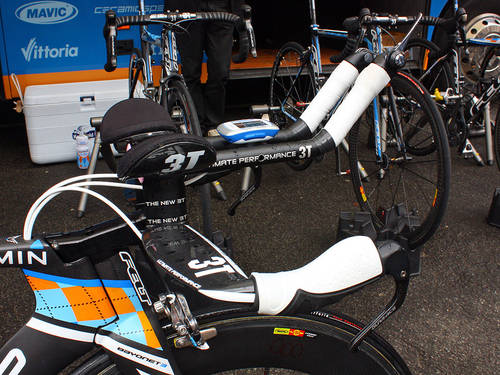
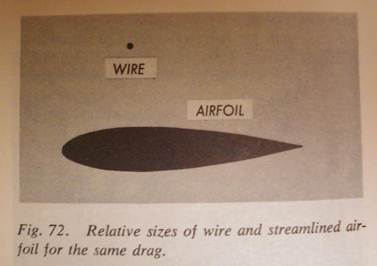 So, assuming you currently have a bike that uses headset spacers, what would be the effect on your position if you were to replace, say, a 10mm headset spacer with a 10mm armrest riser?
First, let us consider the effect of removing the headset spacer. The crucial insight is that removing a 10mm spacer will not lower the
So, assuming you currently have a bike that uses headset spacers, what would be the effect on your position if you were to replace, say, a 10mm headset spacer with a 10mm armrest riser?
First, let us consider the effect of removing the headset spacer. The crucial insight is that removing a 10mm spacer will not lower the  I spent last week looking into the firmware configuration protocol used on current IBM system X servers. IBM provide
  I have always loved
  In
In 
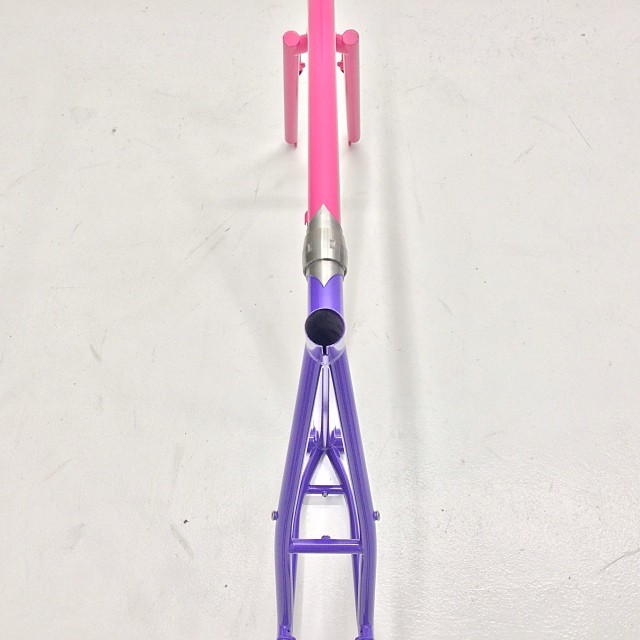
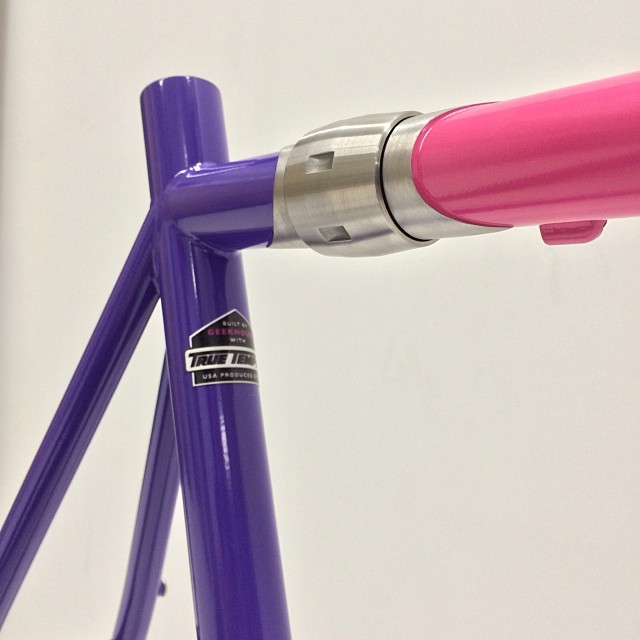
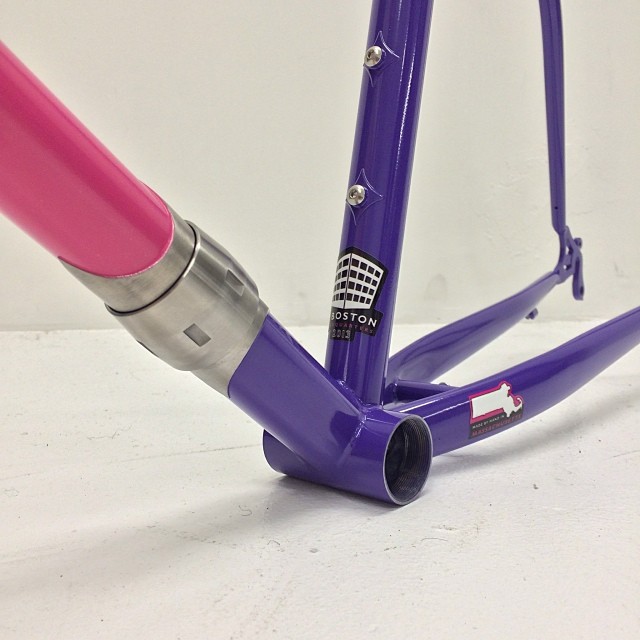
 Some of you might have noticed there is a new
  this week(end) I was more in the "RC bug fix flow" than in the last weeks, &
here are the results:
this week(end) I was more in the "RC bug fix flow" than in the last weeks, &
here are the results:
 I know it's been ages since I last blogged anything at all. To some degree I had a down phase, but I hope to get out of it. It's nice to see that there are people out there who give me a prod every now and then, and don't let me drown. Thanks, most of you probably know that I mean exactly you, and in case you are uncertain, you probably are meant if you contact me every now and then.
Anyway, if you remember that I blogged about
I know it's been ages since I last blogged anything at all. To some degree I had a down phase, but I hope to get out of it. It's nice to see that there are people out there who give me a prod every now and then, and don't let me drown. Thanks, most of you probably know that I mean exactly you, and in case you are uncertain, you probably are meant if you contact me every now and then.
Anyway, if you remember that I blogged about  Last week, I was