Search Results: "pere"

16 April 2022

Petter Reinholdtsen: Playing and encoding AV1 in Debian Bullseye

Inspired by the recent news of AV1 hardware encoding support from Intel, I decided to look into the state of AV1 on Linux today. AV1 is a free and open standard as defined by Digistan without any royalty payment requirement, unlike its much used competitor encoding H.264. While looking, I came across an 5 year old question on askubuntu.com which in turn inspired me to check out how things are in Debian Stable regarding AV1. The test file listed in the question (askubuntu_test_aom.mp4) did not exist any more, so I tracked down a different set of test files on av1.webmfiles.org to test them with the various video tools I had installed on my machine. I was happy to discover that AV1 decoding and playback worked with almost every tool I tested:
mediainfo ok
dragonplayer ok
ffmpeg / ffplay ok
gnome-mplayer fail
mplayer ok
mpv ok
parole ok
vlc ok
firefox ok
chromium ok
AV1 encoding is available in Debian Stable from the aom-tools version 1.0.0.errata1-3 package, using the aomenc tool. The encoding using the package in Debian Stable is quite slow, with the frame rate for my 10 second test video at around 0.25 fps. My 10 second video test took 16 minutes and 11 seconds on my test machine. I tested by first running ffmpeg and then aomenc using the recipe provided by the askubuntu recipe above. I had to remove the '--row-mt=1' option, as it was not supported in my 1.0.0 version. The encoding only used a single thread, according to top.
ffmpeg -i some-old-video.ogv -t 10 -pix_fmt yuv420p video.y4m
aomenc --fps=24/1 -u 0 --codec=av1 --target-bitrate=1000 \
  --lag-in-frames=25 --auto-alt-ref=1 -t 24 --cpu-used=8 \
  --tile-columns=2 --tile-rows=2 -o output.webm video.y4m
As version 1.0.0 currently have several unsolved security issues in Debian Stable, and to see if the recent backport provided in Debian is any quicker, I ran apt -t bullseye-backports install aom-tools to fetch the backported version and re-encoded the video using the latest version. This time the '--row-mt=1' option worked, and the encoding was done in 46 seconds with a frame rate of around 5.22 fps. This time it seem to be using all my four cores to encode. Encoding speed is still too low for streaming and real time, which would require frame rates above 25 fps, but might be good enough for offline encoding. I am very happy to see AV1 playback working so well with the default tools in Debian Stable. I hope the encoding situation improve too, allowing even a slow old computer like my 10 year old laptop to be used for encoding. As usual, if you use Bitcoin and want to show your support of my activities, please send Bitcoin donations to my address 15oWEoG9dUPovwmUL9KWAnYRtNJEkP1u1b.

12 March 2022

Petter Reinholdtsen: Publish Hargassner wood chip boiler state to MQTT

Recently I had a look at a Hargassner wood chip boiler, and what kind of free software can be used to monitor and control it. The boiler can be connected to some cloud service via what the producer call an Internet Gateway, which seem to be a computer connecting to the boiler and passing the information gathered to the cloud. I discovered the boiler controller got an IP address on the local network and listen on TCP port 23 to provide status information as a text line of numbers. It also provide a HTTP server listening on port 80, but I have not yet figured out what it can do beside return an error code. If I am to believe various free software implementations talking to such boiler, the interpretation of the line of numbers differ between type of boiler and software version on the boiler. By comparing the list of numbers on the front panel of the boiler with the numbers returned via TCP, I have been able to figure out several of the numbers, but there are a lot left to understand. I've located several temperature measurements and hours running values, as well as oxygen measurements and counters. I decided to write a simple parser in Python for the values I figured out so far, and a simple MQTT injector publishing both the interpreted and the unknown values on a MQTT bus to make collecting and graphing simpler. The end result is available from the hargassner2mqtt project page on gitlab. I very much welcome patches extending the parser to understand more values, boiler types and software versions. I do not really expect very few free software developers got their hands on such unit to experiment, but it would be fun if others too find this project useful. As usual, if you use Bitcoin and want to show your support of my activities, please send Bitcoin donations to my address 15oWEoG9dUPovwmUL9KWAnYRtNJEkP1u1b.

2 March 2022

Petter Reinholdtsen: Run your industrial metal working machine using Debian?

After many months of hard work by the good people involved in LinuxCNC, the system was accepted Sunday into Debian. Once it was available from Debian, I was surprised to discover from its popularity-contest numbers that people have been reporting its use since 2012. Its project site might be a good place to check out, but sadly is not working when visiting via Tor. But what is LinuxCNC, you are probably wondering? Perhaps a Wikipedia quote is in place?
"LinuxCNC is a software system for numerical control of machines such as milling machines, lathes, plasma cutters, routers, cutting machines, robots and hexapods. It can control up to 9 axes or joints of a CNC machine using G-code (RS-274NGC) as input. It has several GUIs suited to specific kinds of usage (touch screen, interactive development)."
It can even control 3D printers. And even though the Wikipedia page indicate that it can only work with hard real time kernel features, it can also work with the user space soft real time features provided by the Debian kernel. The source code is available from Github. The last few months I've been involved in the translation setup for the program and documentation. Translators are most welcome to join the effort using Weblate. As usual, if you use Bitcoin and want to show your support of my activities, please send Bitcoin donations to my address 15oWEoG9dUPovwmUL9KWAnYRtNJEkP1u1b.

14 February 2022

Petter Reinholdtsen: Updated vlc bittorrent plugin in Debian (version 2.14)

I am very happy to report that a new version of the VLC bittorrent plugin was just uploaded into debian. The changes since last time is mostly code clean in the download code. The package is currently in Debian unstable, but should be available in Debian testing son. To test it, simply install it like this:
apt install vlc-plugin-bittorrent
After it is installed, you can try to use it to play a file downloaded live via bittorrent like this:
vlc https://archive.org/download/Glass_201703/Glass_201703_archive.torrent
It can also use magnet links and local .torrent files like the ones provided by the Internet Archive. Another example is the Love Nest Buster Keaton movie, where one can click on the 'Torrent' link to get going. As usual, if you use Bitcoin and want to show your support of my activities, please send Bitcoin donations to my address 15oWEoG9dUPovwmUL9KWAnYRtNJEkP1u1b.

17 January 2022

Matthew Garrett: Boot Guard and PSB have user-hostile defaults

Compromising an OS without it being detectable is hard. Modern operating systems support the imposition of a security policy or the launch of some sort of monitoring agent sufficient early in boot that even if you compromise the OS, you're probably going to have left some sort of detectable trace[1]. You can avoid this by attacking the lower layers - if you compromise the bootloader then it can just hotpatch a backdoor into the kernel before executing it, for instance.

This is avoided via one of two mechanisms. Measured boot (such as TPM-based Trusted Boot) makes a tamper-proof cryptographic record of what the system booted, with each component in turn creating a measurement of the next component in the boot chain. If a component is tampered with, its measurement will be different. This can be used to either prevent the release of a cryptographic secret if the boot chain is modified (for instance, using the TPM to encrypt the disk encryption key), or can be used to attest the boot state to another device which can tell you whether you're safe or not. The other approach is verified boot (such as UEFI Secure Boot), where each component in the boot chain verifies the next component before executing it. If the verification fails, execution halts.

In both cases, each component in the boot chain measures and/or verifies the next. But something needs to be the first link in this chain, and traditionally this was the system firmware. Which means you could tamper with the system firmware and subvert the entire process - either have the firmware patch the bootloader in RAM after measuring or verifying it, or just load a modified bootloader and lie about the measurements or ignore the verification. Attackers had already been targeting the firmware (Hacking Team had something along these lines, although this was pre-secure boot so just dropped a rootkit into the OS), and given a well-implemented measured and verified boot chain, the firmware becomes an even more attractive target.

Intel's Boot Guard and AMD's Platform Secure Boot attempt to solve this problem by moving the validation of the core system firmware to an (approximately) immutable environment. Intel's solution involves the Management Engine, a separate x86 core integrated into the motherboard chipset. The ME's boot ROM verifies a signature on its firmware before executing it, and once the ME is up it verifies that the system firmware's bootblock is signed using a public key that corresponds to a hash blown into one-time programmable fuses in the chipset. What happens next depends on policy - it can either prevent the system from booting, allow the system to boot to recover the firmware but automatically shut it down after a while, or flag the failure but allow the system to boot anyway. Most policies will also involve a measurement of the bootblock being pushed into the TPM.

AMD's Platform Secure Boot is slightly different. Rather than the root of trust living in the motherboard chipset, it's in AMD's Platform Security Processor which is incorporated directly onto the CPU die. Similar to Boot Guard, the PSP has ROM that verifies the PSP's own firmware, and then that firmware verifies the system firmware signature against a set of blown fuses in the CPU. If that fails, system boot is halted. I'm having trouble finding decent technical documentation about PSB, and what I have found doesn't mention measuring anything into the TPM - if this is the case, PSB only implements verified boot, not measured boot.

What's the practical upshot of this? The first is that you can't replace the system firmware with anything that doesn't have a valid signature, which effectively means you're locked into firmware the vendor chooses to sign. This prevents replacing the system firmware with either a replacement implementation (such as Coreboot) or a modified version of the original implementation (such as firmware that disables locking of CPU functionality or removes hardware allowlists). In this respect, enforcing system firmware verification works against the user rather than benefiting them.
Of course, it also prevents an attacker from doing the same thing, but while this is a real threat to some users, I think it's hard to say that it's a realistic threat for most users.

The problem is that vendors are shipping with Boot Guard and (increasingly) PSB enabled by default. In the AMD case this causes another problem - because the fuses are in the CPU itself, a CPU that's had PSB enabled is no longer compatible with any motherboards running firmware that wasn't signed with the same key. If a user wants to upgrade their system's CPU, they're effectively unable to sell the old one. But in both scenarios, the user's ability to control what their system is running is reduced.

As I said, the threat that these technologies seek to protect against is real. If you're a large company that handles a lot of sensitive data, you should probably worry about it. If you're a journalist or an activist dealing with governments that have a track record of targeting people like you, it should probably be part of your threat model. But otherwise, the probability of you being hit by a purely userland attack is so ludicrously high compared to you being targeted this way that it's just not a big deal.

I think there's a more reasonable tradeoff than where we've ended up. Tying things like disk encryption secrets to TPM state means that if the system firmware is measured into the TPM prior to being executed, we can at least detect that the firmware has been tampered with. In this case nothing prevents the firmware being modified, there's just a record in your TPM that it's no longer the same as it was when you encrypted the secret. So, here's what I'd suggest:

1) The default behaviour of technologies like Boot Guard or PSB should be to measure the firmware signing key and whether the firmware has a valid signature into PCR 7 (the TPM register that is also used to record which UEFI Secure Boot signing key is used to verify the bootloader).
2) If the PCR 7 value changes, the disk encryption key release will be blocked, and the user will be redirected to a key recovery process. This should include remote attestation, allowing the user to be informed that their firmware signing situation has changed.
3) Tooling should be provided to switch the policy from merely measuring to verifying, and users at meaningful risk of firmware-based attacks should be encouraged to make use of this tooling

This would allow users to replace their system firmware at will, at the cost of having to re-seal their disk encryption keys against the new TPM measurements. It would provide enough information that, in the (unlikely for most users) scenario that their firmware has actually been modified without their knowledge, they can identify that. And it would allow users who are at high risk to switch to a higher security state, and for hardware that is explicitly intended to be resilient against attacks to have different defaults.

This is frustratingly close to possible with Boot Guard, but I don't think it's quite there. Before you've blown the Boot Guard fuses, the Boot Guard policy can be read out of flash. This means that you can drop a Boot Guard configuration into flash telling the ME to measure the firmware but not prevent it from running. But there are two problems remaining:

1) The measurement is made into PCR 0, and PCR 0 changes every time your firmware is updated. That makes it a bad default for sealing encryption keys.
2) It doesn't look like the policy is measured before being enforced. This means that an attacker can simply reflash modified firmware with a policy that disables measurement and then make a fake measurement that makes it look like the firmware is ok.

Fixing this seems simple enough - the Boot Guard policy should always be measured, and measurements of the policy and the signing key should be made into a PCR other than PCR 0. If an attacker modified the policy, the PCR value would change. If an attacker modified the firmware without modifying the policy, the PCR value would also change. People who are at high risk would run an app that would blow the Boot Guard policy into fuses rather than just relying on the copy in flash, and enable verification as well as measurement. Now if an attacker tampers with the firmware, the system simply refuses to boot and the attacker doesn't get anything.

Things are harder on the AMD side. I can't find any indication that PSB supports measuring the firmware at all, which obviously makes this approach impossible. I'm somewhat surprised by that, and so wouldn't be surprised if it does do a measurement somewhere. If it doesn't, there's a rather more significant problem - if a system has a socketed CPU, and someone has sufficient physical access to replace the firmware, they can just swap out the CPU as well with one that doesn't have PSB enabled. Under normal circumstances the system firmware can detect this and prompt the user, but given that the attacker has just replaced the firmware we can assume that they'd do so with firmware that doesn't decide to tell the user what just happened. In the absence of better documentation, it's extremely hard to say that PSB actually provides meaningful security benefits.

So, overall: I think Boot Guard protects against a real-world attack that matters to a small but important set of targets. I think most of its benefits could be provided in a way that still gave users control over their system firmware, while also permitting high-risk targets to opt-in to stronger guarantees. Based on what's publicly documented about PSB, it's hard to say that it provides real-world security benefits for anyone at present. In both cases, what's actually shipping reduces the control people have over their systems, and should be considered user-hostile.

[1] Assuming that someone's both turning this on and actually looking at the data produced

comment count unavailable comments

19 December 2021

Russ Allbery: Review: Raybearer

Review: Raybearer, by Jordan Ifueko
Series: Raybearer #1
Publisher: Amulet Books
Copyright: 2020
ISBN: 1-68335-719-1
Format: Kindle
Pages: 308
Tarisai was raised alone in Bhekina House by an array of servants and tutors who were not allowed to touch her. Glimpses of the world were fleeting and sometimes ended by nailed-shut windows. Her life revolved around her rarely-seen mother, The Lady, who treats her with deep affection but rarely offers a word of praise, instead only pushing her to study harder. The servants whispered behind her back (but still in her hearing) that she was not human. At the age of seven, in a child's attempt to locate her absent mother by sneaking out of the house, she finds her father and is told a piece of the truth: she is the daughter of the Lady and a captive ehru, a djinn. At the age of eleven she's sent with two guardians to Oluwan City, the capital of Aritsar, to enter a competition she knows nothing about, for reasons no one has ever explained. Raybearer is a young adult fantasy novel, the first of a duology. Like a lot of young adult novels, it is a coming of age story that follows Tarisai from the end of her highly manipulated childhood through her introduction to a world she was carefully never taught about. Like a lot of young adult fantasy novels, Tarisai has some unusual abilities. What those are, and why she has them, is perhaps less obvious than it may appear at first. Unlike a lot of young adult fantasy novels, Raybearer is not set in a facsimile of Western Europe, the structure of gods and religion is not obviously derived from Christianity or Greek or Norse mythology, and neither Tarisai nor most of the characters of this story are white. Some of the characters are; Ifueko draws from a grab bag of cultures that does include European as well as African, Middle Eastern, and Asian. But the food, the physical descriptions, the landscape, and the hair and hair styles feel primarily African not in the sense of specific identifiable regions, but in the same way that most fantasy feels European even if the map isn't recognizable. That gives this story a freshness that I found delightful. The mythology of this world shares some similarities to standard fantasy tropes, including a bargain with the underworld that plays a similar role to fae bargains in some European fantasy, but it also goes in different directions and finds atypical balances, which gave the story room to catch me by surprise. The magical center of this book (and series), which Tarisai is carefully not told about until the story starts, is a system for anointing and protecting the emperor: selection of people who swear loyalty to him and each other and become his innermost circle, and thereby grant him magical protection. The emperor himself is the Raybearer, possessing an artifact that makes him invulnerable to one form of death for each member of his council he anoints. At eleven council members, he becomes invulnerable to anything but old age, or an attack from one of the council themselves. As the reader learns early in the book, that last part is important. Tarisai is an assassin; her mother's goal is for her to be selected as a member of the council for the prince, who will become the next emperor. But there is rather more to this system of magic than it may first appear, in a way that adds good depth to the mythology. And there is quite a bit more to Tarisai herself than anyone expects. Tarisai as a protagonist follows a more typical young adult pattern, but it's a formula that works for me. Her upbringing isolated from any other children has left her craving connection, but it also made her self-reliant, stubborn, and good at keeping her own counsel. One of the things that I loved about this book is that she's not thrown into a nest of vipers and cynical politics. Some of that is happening in the background, but the first step of her mother's plan is for her to earn the trust of the prince in a competition with other potential council members, all of whom are, well, kids. They fight (some), but they also make friends, helped along by the goal and requirement that they join a cooperative council or be sent home. That gives the plot a more collaborative and social feel than one would otherwise expect from the setup. Ifueko does a great job juggling a challenging cast size by focusing on a few kids with whom Tarisai strikes up a friendship but giving the others distinct-enough personalities that their presence is still felt in the story. There are two character dynamics that stand out: Tarisai's relationship with Prince Ekundayo, and her friendship with Sanjeet. The first carries much of the weight of the plot, of course; Tarisai is supposed to gain his trust and then kill him, and the reader will be unsurprised that this takes twists and turns no one expected. But Ifueko, refreshingly, does not reach for the stock plot development of a romance to complicate matters, even though many of the characters expect that. To the contrary, this is a rare story that at least hints at an acknowledgment that some people are not interested in romance at all, and there are other forms that mutual respect can take. Tarisai's relationship with Sanjeet is a different type of depth: two kids with very different histories finding a common understanding in the ways that they were both abused, and create space for each other. It's a great friendship that includes some deeply touching moments. It took me a bit to get into this book, but once Tarisai starts finding her feet and navigating her new relationships, I was engrossed. The story takes a sharp and nasty turn that was hard to read, but Ifueko chooses to turn it into a story of resiliency rather than survival, which makes it much easier to read than it could have been. She also pulls off the kind of plot that complicates and deepens the motives of the obvious villains in a way that gives the story much greater heft, but without disregarding the damage that they have done. I think the plot did fall apart a bit at the end of the book, with too much quick travel and world-building revelations at the cost of development of the relationships that were otherwise at the center of the book, but I'm hoping the sequel will pull those threads back together. And it's so refreshing to read a fantasy novel of this type with a different setting. It's not perfect: Ifueko falls back on Planet of the Hats regional characterization in a few places, and Songland is so obviously Korea that it felt jarring and out of place. Christianity also snuck its nose into the world-building tent near the end in ways that bugged me a bit, although it was subtle enough that I think most readers won't notice. But compared to most fantasy settings, it feels original and fresh. More of this! Ifueko starts this book with a wonderfully memorable dedication:
For the kid scanning fairy tales for a hero with a face like theirs. And for the girls whose stories we compressed into pities and wonders, triumphs and cautions, without asking, even once, for their names.
I think she was successful on both parts of that promise, and it makes for some great reading. Recommended. Followed by Redemptor. Rating: 8 out of 10

3 December 2021

Petter Reinholdtsen: A Brazilian Portuguese translation of the book Made with Creative Commons

A few days ago, a productive translator started working on a new translation of the Made with Creative Commons book for Brazilian Portuguese. The translation take place on the Weblate web based translation system. Once the translation is complete and proof read, we can publish it on paper as well as in PDF, ePub and HTML format. The translation is already 16% complete, and if more people get involved I am conviced it can very quickly reach 100%. If you are interested in helping out with this or other translations of the Made with Creative Commons book, start translating on Weblate. There are partial translations available in Azerbaijani, Bengali, Brazilian Portuguese, Dutch, French, German, Greek, Polish, Simplified Chinese, Swedish, Thai and Ukrainian. The git repository for the book contain all source files needed to build the book for yourself. HTML editions to help with proof reading is also available. As usual, if you use Bitcoin and want to show your support of my activities, please send Bitcoin donations to my address 15oWEoG9dUPovwmUL9KWAnYRtNJEkP1u1b.

24 October 2021

Petter Reinholdtsen: Debian still an excellent choice for Lego builders

The Debian Lego team saw a lot of activity the last few weeks. All the packages under the team umbrella has been updated to fix packaging, lintian issues and BTS reports. In addition, a new and inspiring team member appeared on both the debian-lego-team Team mailing list and IRC channel #debian-lego. If you are interested in Lego CAD design and LEGO Minestorms programming, check out the team wiki page to see what Debian can offer the Lego enthusiast. Patches has been sent upstream, causing new upstream releases, one even the first one in more than ten years, and old upstreams was released with new ones. There are still a lot of work left, and the team welcome more members to help us make sure Debian is the Linux distribution of choice for Lego builders. If you want to contribute, join us in the IRC channel and become part of the team on Salsa. As usual, if you use Bitcoin and want to show your support of my activities, please send Bitcoin donations to my address 15oWEoG9dUPovwmUL9KWAnYRtNJEkP1u1b.

21 October 2021

Lisandro Dami n Nicanor P rez Meyer: CMake toolchain files with Debian's cross compilers

Almost a year ago I added a script made by Helmut Grohne that is able to create a CMake toolchain file pre-filled with Debian-specifics ross compilers. The tool is installed by the cmake package and located at /usr/share/cmake/debtoolchainfilegen. It's usage is simple:
debtoolchainfilegen (arch) > cmake_toolchain_<arch>.cmake
Where $arch can be any of the Debian supported architectures, like arm64 (aka aarch64):
$ /usr/share/cmake/debtoolchainfilegen arm64 > /tmp/cmake_toolchain_aarch64
dpkg-architecture: warning: specified GNU system type aarch64-linux-gnu does not match CC system type x86_64-linux-gnu, try setting a correct CC environment variable
$ cat /tmp/cmake_toolchain_aarch64
# Use it while calling CMake:
#   mkdir build; cd build
#   cmake -DCMAKE_TOOLCHAIN_FILE="/path/to/cmake_toolchain_<arch>.cmake" ../
#
set(CMAKE_SYSTEM_NAME "Linux")
set(CMAKE_SYSTEM_PROCESSOR "aarch64")
set(CMAKE_C_COMPILER "aarch64-linux-gnu-gcc")
set(CMAKE_CXX_COMPILER "aarch64-linux-gnu-g++")
set(PKG_CONFIG_EXECUTABLE "aarch64-linux-gnu-pkg-config")
set(PKGCONFIG_EXECUTABLE "aarch64-linux-gnu-pkg-config")
set(QMAKE_EXECUTABLE "aarch64-linux-gnu-qmake")
Note: I kept the warnings, which can be ignored and won't end up on the final file. As you might have noticed the file itself has instructions on how to use it. Of course we will need the requires cross toolchain for the selected arch. For example using arm64:
$ apt install crossbuild-essential-arm64
That's it, we can now start cross building our cmake-based software.

4 August 2021

Petter Reinholdtsen: Mechanic's words in five languages, English, Norwegian and Northern S mi editions

Almost thirty years ago, some forward looking teachers at Samisk videreg ende skole og reindriftsskole teaching metal work and Northern S mi, decided to create a list of words used in Northern S mi metal work. After almost ten years this resulted in a dictionary database, published as the book "Mekanihkk rs nit : Mekanikerord = Mekaanisen alan sanasto = Mechanic's words" in 1999. The story of this work is available from the pen of Svein Lund, one of the leading actors behind this effort. They even got the dictionary approved by the S mi Language Council as the recommended metal work words to use. Fast forward twenty years, I came across this work when I recently became interested in metal work, and started watching educational and funny videos on the topic, like the ones from mrpete222 and This Old Tony. But they all talk English, but I wanted to know what the tools and techniques they used were called in Norwegian. Trying to track down a good dictionary from English to Norwegian, after much searching, I came across the database of words created almost thirty years ago, with translations into English, Norwegian, Northern S mi, Swedish and Finnish. This gave me a lot of the Norwegian phrases I had been looking for. To make it easier for the next person trying to track down a good Norwegian dictionary for the metal worker, and because I knew the person behind the database from my Skolelinux / Debian Edu days, I decided to ask if the database could be released to the public without any usage limitations, in other words as a Creative Commons licensed data set. And happily, after consulting with the S mi Parliament of Norway, the database is now available with the Creative Commons Attribution 4.0 International license from my gitlab repository. The dictionary entries look slightly different, depending on the language in focus. This is the same entry in the different editions. English
lathe
dreiebenk (nb) v rve, v rvenbea ka, jorahanbea ka, v tnanbea ka (se) svarv (sv) sorvi (fi)
Norwegian
dreiebenk
lathe (en) v rve, v rvenbea ka, jorahanbea ka, v tnanbea ka (se) svarv (sv) sorvi (fi)
(nb): sponskj rande bearbeidingsmaskin der ein med skj reverkt y lausgj r spon fr eit roterande arbetsstykke
Northern S mi
v rve, v rvenbea ka, jorahanbea ka, v tnanbea ka
dreiebenk (nb) lathe (en) svarv (sv) sorvi (fi)
(se): ma iidna mainna uohpp vuolahasaid jorri bargo vdnasis
(nb): sponskj rande bearbeidingsmaskin der ein med skj reverkt y lausgj r spon fr eit roterande arbetsstykke
The database included term description in both Norwegian and Northern S mi, but not English. Because of this, the Northern S mi edition include both descriptions, the Norwegian edition include the Norwegian description and the English edition lack a descripiton. Once the database was available without any usage restrictions, and armed with my experience in publishing books, I decided to publish a Norwegian/English dictionary as a book using the database, to make the data set available also on paper and as an ebook. Further into the project, it occurred to me that I could just as easily make an English dictionary, and talking to Svein and concluding that it was within reach, I decided to make a Northern S mi dictionary too. Thus I suddenly find myself publishing a Northern S mi dictionary, even though I do not understand the language myself. I hope it will be well received, and can help revive the impressive work done almost thirty years ago to document the vocabulary of metal workers. If I get some help, I might even extend it with some of the words I find missing, like collet, rotary broach, carbide, knurler, arbor press and others. But the first edition build from a lightly edited version of the original database, with no new entries added. If you would like to check it out, visit my list of published books and consider buying a paper or ebook copy from lulu.com. The paper edition is only available in hardcover to increase its durability in the workshop. I am very happy to report that in the process, and thanks to help from both Svein Lund and B rre Gaup who understand the language, the docbook tools I use to create books, dblatex and docbook-xsl, now include support for Northern S mi. Before I started, these lacked the needed locale settings for this language, but now the patches are included upstream. As usual, if you use Bitcoin and want to show your support of my activities, please send Bitcoin donations to my address 15oWEoG9dUPovwmUL9KWAnYRtNJEkP1u1b.

2 August 2021

Colin Watson: Launchpad now runs on Python 3!

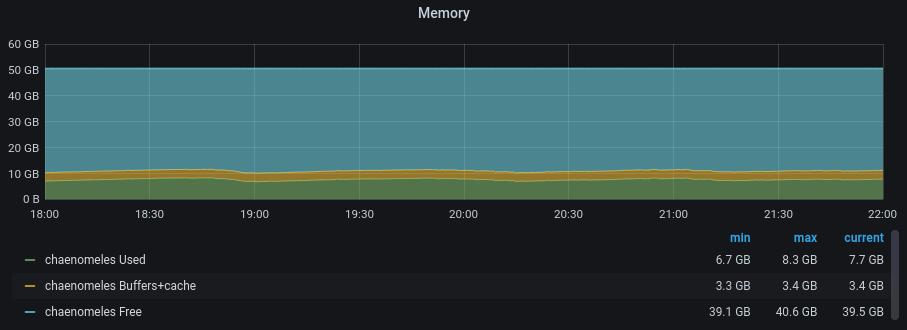
After a very long porting journey, Launchpad is finally running on Python 3 across all of our systems. I wanted to take a bit of time to reflect on why my emotional responses to this port differ so much from those of some others who ve done large ports, such as the Mercurial maintainers. It s hard to deny that we ve had to burn a lot of time on this, which I m sure has had an opportunity cost, and from one point of view it s essentially running to stand still: there is no single compelling feature that we get solely by porting to Python 3, although it s clearly a prerequisite for tidying up old compatibility code and being able to use modern language facilities in the future. And yet, on the whole, I found this a rewarding project and enjoyed doing it. Some of this may be because by inclination I m a maintenance programmer and actually enjoy this sort of thing. My default view tends to be that software version upgrades may be a pain but it s much better to get that pain over with as soon as you can rather than trying to hold back the tide; you can certainly get involved and try to shape where things end up, but rightly or wrongly I can t think of many cases when a righteously indignant user base managed to arrange for the old version to be maintained in perpetuity so that they never had to deal with the new thing (OK, maybe Perl 5 counts here). I think a more compelling difference between Launchpad and Mercurial, though, may be that very few other people really had a vested interest in what Python version Launchpad happened to be running, because it s all server-side code (aside from some client libraries such as launchpadlib, which were ported years ago). As such, we weren t trying to do this with the internet having Strong Opinions at us. We were doing this because it was obviously the only long-term-maintainable path forward, and in more recent times because some of our library dependencies were starting to drop support for Python 2 and so it was obviously going to become a practical problem for us sooner or later; but if we d just stayed on Python 2 forever then fundamentally hardly anyone else would really have cared directly, only maybe about some indirect consequences of that. I don t follow Mercurial development so I may be entirely off-base, but if other people were yelling at me about how late my project was to finish its port, that in itself would make me feel more negatively about the project even if I thought it was a good idea. Having most of the pressure come from ourselves rather than from outside meant that wasn t an issue for us. I m somewhat inclined to think of the process as an extreme version of paying down technical debt. Moving from Python 2.7 to 3.5, as we just did, means skipping over multiple language versions in one go, and if similar changes had been made more gradually it would probably have felt a lot more like the typical dependency update treadmill. I appreciate why not everyone might want to think of it this way: maybe this is just my own rationalization. Reflections on porting to Python 3 I m not going to defend the Python 3 migration process; it was pretty rough in a lot of ways. Nor am I going to spend much effort relitigating it here, as it s already been done to death elsewhere, and as I understand it the core Python developers have got the message loud and clear by now. At a bare minimum, a lot of valuable time was lost early in Python 3 s lifetime hanging on to flag-day-type porting strategies that were impractical for large projects, when it should have been providing for bilingual strategies (code that runs in both Python 2 and 3 for a transitional period) which is where most libraries and most large migrations ended up in practice. For instance, the early advice to library maintainers to maintain two parallel versions or perhaps translate dynamically with 2to3 was entirely impractical in most non-trivial cases and wasn t what most people ended up doing, and yet the idea that 2to3 is all you need still floats around Stack Overflow and the like as a result. (These days, I would probably point people towards something more like Eevee s porting FAQ as somewhere to start.) There are various fairly straightforward things that people often suggest could have been done to smooth the path, and I largely agree: not removing the u'' string prefix only to put it back in 3.3, fewer gratuitous compatibility breaks in the name of tidiness, and so on. But if I had a time machine, the number one thing I would ask to have been done differently would be introducing type annotations in Python 2 before Python 3 branched off. It s true that it s technically possible to do type annotations in Python 2, but the fact that it s a different syntax that would have to be fixed later is offputting, and in practice it wasn t widely used in Python 2 code. To make a significant difference to the ease of porting, annotations would need to have been introduced early enough that lots of Python 2 library code used them so that porting code didn t have to be quite so much of an exercise of manually figuring out the exact nature of string types from context. Launchpad is a complex piece of software that interacts with multiple domains: for example, it deals with a database, HTTP, web page rendering, Debian-format archive publishing, and multiple revision control systems, and there s often overlap between domains. Each of these tends to imply different kinds of string handling. Web page rendering is normally done mainly in Unicode, converting to bytes as late as possible; revision control systems normally want to spend most of their time working with bytes, although the exact details vary; HTTP is of course bytes on the wire, but Python s WSGI interface has some string type subtleties. In practice I found myself thinking about at least four string-like types (that is, things that in a language with a stricter type system I might well want to define as distinct types and restrict conversion between them): bytes, text, ordinary native strings (str in either language, encoded to UTF-8 in Python 2), and native strings with WSGI s encoding rules. Some of these are emergent properties of writing in the intersection of Python 2 and 3, which is effectively a specialized language of its own without coherent official documentation whose users must intuit its behaviour by comparing multiple sources of information, or by referring to unofficial porting guides: not a very satisfactory situation. Fortunately much of the complexity collapses once it becomes possible to write solely in Python 3. Some of the difficulties we ran into are not ones that are typically thought of as Python 2-to-3 porting issues, because they were changed later in Python 3 s development process. For instance, the email module was substantially improved in around the 3.2/3.3 timeframe to handle Python 3 s bytes/text model more correctly, and since Launchpad sends quite a few different kinds of email messages and has some quite picky tests for exactly what it emits, this entailed a lot of work in our email sending code and in our test suite to account for that. (It took me a while to work out whether we should be treating raw email messages as bytes or as text; bytes turned out to work best.) 3.4 made some tweaks to the implementation of quoted-printable encoding that broke a number of our tests in ways that took some effort to fix, because the tests needed to work on both 2.7 and 3.5. The list goes on. I got quite proficient at digging through Python s git history to figure out when and why some particular bit of behaviour had changed. One of the thorniest problems was parsing HTTP form data. We mainly rely on zope.publisher for this, which in turn relied on cgi.FieldStorage; but cgi.FieldStorage is badly broken in some situations on Python 3. Even if that bug were fixed in a more recent version of Python, we can t easily use anything newer than 3.5 for the first stage of our port due to the version of the base OS we re currently running, so it wouldn t help much. In the end I fixed some minor issues in the multipart module (and was kindly given co-maintenance of it) and converted zope.publisher to use it. Although this took a while to sort out, it seems to have gone very well. A couple of other interesting late-arriving issues were around pickle. For most things we normally prefer safer formats such as JSON, but there are a few cases where we use pickle, particularly for our session databases. One of my colleagues pointed out that I needed to remember to tell pickle to stick to protocol 2, so that we d be able to switch back and forward between Python 2 and 3 for a while; quite right, and we later ran into a similar problem with marshal too. A more surprising problem was that datetime.datetime objects pickled on Python 2 require special care when unpickling on Python 3; rather than the approach that ended up being implemented and documented for Python 3.6, though, I preferred a custom unpickler, both so that things would work on Python 3.5 and so that I wouldn t have to risk affecting the decoding of other pickled strings in the session database. General lessons Writing this over a year after Python 2 s end-of-life date, and certainly nowhere near the leading edge of Python 3 porting work, it s perhaps more useful to look at this in terms of the lessons it has for other large technical debt projects. I mentioned in my previous article that I used the approach of an enormous and frequently-rebased git branch as a working area for the port, committing often and sometimes combining and extracting commits for review once they seemed to be ready. A port of this scale would have been entirely intractable without a tool of similar power to git rebase, so I m very glad that we finished migrating to git in 2019. I relied on this right up to the end of the port, and it also allowed for quick assessments of how much more there was to land. git worktree was also helpful, in that I could easily maintain working trees built for each of Python 2 and 3 for comparison. As is usual for most multi-developer projects, all changes to Launchpad need to go through code review, although we sometimes make exceptions for very simple and obvious changes that can be self-reviewed. Since I knew from the outset that this was going to generate a lot of changes for review, I therefore structured my work from the outset to try to make it as easy as possible for my colleagues to review it. This generally involved keeping most changes to a somewhat manageable size of 800 lines or less (although this wasn t always possible), and arranging commits mainly according to the kind of change they made rather than their location. For example, when I needed to fix issues with / in Python 3 being true division rather than floor division, I did so in one commit across the various places where it mattered and took care not to mix it with other unrelated changes. This is good practice for nearly any kind of development, but it was especially important here since it allowed reviewers to consider a clear explanation of what I was doing in the commit message and then skim-read the rest of it much more quickly. It was vital to keep the codebase in a working state at all times, and deploy to production reasonably often: this way if something went wrong the amount of code we had to debug to figure out what had happened was always tractable. (Although I can t seem to find it now to link to it, I saw an account a while back of a company that had taken a flag-day approach instead with a large codebase. It seemed to work for them, but I m certain we couldn t have made it work for Launchpad.) I can t speak too highly of Launchpad s test suite, much of which originated before my time. Without a great deal of extensive coverage of all sorts of interesting edge cases at both the unit and functional level, and a corresponding culture of maintaining that test suite well when making new changes, it would have been impossible to be anything like as confident of the port as we were. As part of the porting work, we split out a couple of substantial chunks of the Launchpad codebase that could easily be decoupled from the core: its Mailman integration and its code import worker. Both of these had substantial dependencies with complex requirements for porting to Python 3, and arranging to be able to do these separately on their own schedule was absolutely worth it. Like disentangling balls of wool, any opportunity you can take to make things less tightly-coupled is probably going to make it easier to disentangle the rest. (I can see a tractable way forward to porting the code import worker, so we may well get that done soon. Our Mailman integration will need to be rewritten, though, since it currently depends on the Python-2-only Mailman 2, and Mailman 3 has a different architecture.) Python lessons Our database layer was already in pretty good shape for a port, since at least the modern bits of its table modelling interface were already strict about using Unicode for text columns. If you have any kind of pervasive low-level framework like this, then making it be pedantic at you in advance of a Python 3 port will probably incur much less swearing in the long run, as you won t be trying to deal with quite so many bytes/text issues at the same time as everything else. Early in our port, we established a standard set of __future__ imports and started incrementally converting files over to them, mainly because we weren t yet sure what else to do and it seemed likely to be helpful. absolute_import was definitely reasonable (and not often a problem in our code), and print_function was annoying but necessary. In hindsight I m not sure about unicode_literals, though. For files that only deal with bytes and text it was reasonable enough, but as I mentioned above there were also a number of cases where we needed literals of the language s native str type, i.e. bytes in Python 2 and text in Python 3: this was particularly noticeable in WSGI contexts, but also cropped up in some other surprising places. We generally either omitted unicode_literals or used six.ensure_str in such cases, but it was definitely a bit awkward and maybe I should have listened more to people telling me it might be a bad idea. A lot of Launchpad s early tests used doctest, mainly in the style where you have text files that interleave narrative commentary with examples. The development team later reached consensus that this was best avoided in most cases, but by then there were far too many doctests to conveniently rewrite in some other form. Porting doctests to Python 3 is really annoying. You run into all the little changes in how objects are represented as text (particularly u'...' versus '...', but plenty of other cases as well); you have next to no tools to do anything useful like skipping individual bits of a doctest that don t apply; using __future__ imports requires the rather obscure approach of adding the relevant names to the doctest s globals in the relevant DocFileSuite or DocTestSuite; dealing with many exception tracebacks requires something like zope.testing.renormalizing; and whatever code refactoring tools you re using probably don t work properly. Basically, don t have done that. It did all turn out to be tractable for us in the end, and I managed to avoid using much in the way of fragile doctest extensions aside from the aforementioned zope.testing.renormalizing, but it was not an enjoyable experience. Regressions I know of nine regressions that reached Launchpad s production systems as a result of this porting work; of course there were various other regressions caught by CI or in manual testing. (Considering the size of this project, I count it as a resounding success that there were only nine production issues, and that for the most part we were able to fix them quickly.) Equality testing of removed database objects One of the things we had to do while porting to Python 3 was to implement the __eq__, __ne__, and __hash__ special methods for all our database objects. This was quite conceptually fiddly, because doing this requires knowing each object s primary key, and that may not yet be available if we ve created an object in Python but not yet flushed the actual INSERT statement to the database (most of our primary keys are auto-incrementing sequences). We thus had to take care to flush pending SQL statements in such cases in order to ensure that we know the primary keys. However, it s possible to have a problem at the other end of the object lifecycle: that is, a Python object might still be reachable in memory even though the underlying row has been DELETEd from the database. In most cases we don t keep removed objects around for obvious reasons, but it can happen in caching code, and buildd-manager crashed as a result (in fact while it was still running on Python 2). We had to take extra care to avoid this problem. Debian imports crashed on non-UTF-8 filenames Python 2 has some unfortunate behaviour around passing bytes or Unicode strings (depending on the platform) to shutil.rmtree, and the combination of some porting work and a particular source package in Debian that contained a non-UTF-8 file name caused us to run into this. The fix was to ensure that the argument passed to shutil.rmtree is a str regardless of Python version. We d actually run into something similar before: it s a subtle porting gotcha, since it s quite easy to end up passing Unicode strings to shutil.rmtree if you re in the process of porting your code to Python 3, and you might easily not notice if the file names in your tests are all encoded using UTF-8. lazr.restful ETags We eventually got far enough along that we could switch one of our four appserver machines (we have quite a number of other machines too, but the appservers handle web and API requests) to Python 3 and see what happened. By this point our extensive test suite had shaken out the vast majority of the things that could go wrong, but there was always going to be room for some interesting edge cases. One of the Ubuntu kernel team reported that they were seeing an increase in 412 Precondition Failed errors in some of their scripts that use our webservice API. These can happen when you re trying to modify an existing resource: the underlying protocol involves sending an If-Match header with the ETag that the client thinks the resource has, and if this doesn t match the ETag that the server calculates for the resource then the client has to refresh its copy of the resource and try again. We initially thought that this might be legitimate since it can happen in normal operation if you collide with another client making changes to the same resource, but it soon became clear that something stranger was going on: we were getting inconsistent ETags for the same object even when it was unchanged. Since we d recently switched a quarter of our appservers to Python 3, that was a natural suspect. Our lazr.restful package provides the framework for our webservice API, and roughly speaking it generates ETags by serializing objects into some kind of canonical form and hashing the result. Unfortunately the serialization was dependent on the Python version in a few ways, and in particular it serialized lists of strings such as lists of bug tags differently: Python 2 used [u'foo', u'bar', u'baz'] where Python 3 used ['foo', 'bar', 'baz']. In lazr.restful 1.0.3 we switched to using JSON for this, removing the Python version dependency and ensuring consistent behaviour between appservers. Memory leaks This problem took the longest to solve. We noticed fairly quickly from our graphs that the appserver machine we d switched to Python 3 had a serious memory leak. Our appservers had always been a bit leaky, but now it wasn t so much a small hole that we can bail occasionally as the boat is sinking rapidly : A serious memory leak (Yes, this got in the way of working out what was going on with ETags for a while.) I spent ages messing around with various attempts to fix this. Since only a quarter of our appservers were affected, and we could get by on 75% capacity for a while, it wasn t urgent but it was definitely annoying. After spending some quality time with objgraph, for some time I thought traceback reference cycles might be at fault, and I sent a number of fixes to various upstream projects for those (e.g. zope.pagetemplate). Those didn t help the leaks much though, and after a while it became clear to me that this couldn t be the sole problem: Python has a cyclic garbage collector that will eventually collect reference cycles as long as there are no strong references to any objects in them, although it might not happen very quickly. Something else must be going on. Debugging reference leaks in any non-trivial and long-running Python program is extremely arduous, especially with ORMs that naturally tend to end up with lots of cycles and caches. After a while I formed a hypothesis that zope.server might be keeping a strong reference to something, although I never managed to nail it down more firmly than that. This was an attractive theory as we were already in the process of migrating to Gunicorn for other reasons anyway, and Gunicorn also has a convenient max_requests setting that s good at mitigating memory leaks. Getting this all in place took some time, but once we did we found that everything was much more stable: A rather flat memory graph This isn t completely satisfying as we never quite got to the bottom of the leak itself, and it s entirely possible that we ve only papered over it using max_requests: I expect we ll gradually back off on how frequently we restart workers over time to try to track this down. However, pragmatically, it s no longer an operational concern. Mirror prober HTTPS proxy handling After we switched our script servers to Python 3, we had several reports of mirror probing failures. (Launchpad keeps lists of Ubuntu archive and image mirrors, and probes them every so often to check that they re reasonably complete and up to date.) This only affected HTTPS mirrors when probed via a proxy server, support for which is a relatively recent feature in Launchpad and involved some code that we never managed to unit-test properly: of course this is exactly the code that went wrong. Sadly I wasn t able to sort out that gap, but at least the fix was simple. Non-MIME-encoded email headers As I mentioned above, there were substantial changes in the email package between Python 2 and 3, and indeed between minor versions of Python 3. Our test coverage here is pretty good, but it s an area where it s very easy to have gaps. We noticed that a script that processes incoming email was crashing on messages with headers that were non-ASCII but not MIME-encoded (and indeed then crashing again when it tried to send a notification of the crash!). The only examples of these I looked at were spam, but we still didn t want to crash on them. The fix involved being somewhat more careful about both the handling of headers returned by Python s email parser and the building of outgoing email notifications. This seems to be working well so far, although I wouldn t be surprised to find the odd other incorrect detail in this sort of area. Failure to handle non-ISO-8859-1 URL-encoded form input Remember how I said that parsing HTTP form data was thorny? After we finished upgrading all our appservers to Python 3, people started reporting that they couldn t post Unicode comments to bugs, which turned out to be only if the attempt was made using JavaScript, and was because I hadn t quite managed to get URL-encoded form data working properly with zope.publisher and multipart. The current standard describes the URL-encoded format for form data as in many ways an aberrant monstrosity , so this was no great surprise. Part of the problem was some very strange choices in zope.publisher dating back to 2004 or earlier, which I attempted to clean up and simplify. The rest was that Python 2 s urlparse.parse_qs unconditionally decodes percent-encoded sequences as ISO-8859-1 if they re passed in as part of a Unicode string, so multipart needs to work around this on Python 2. I m still not completely confident that this is correct in all situations, but at least now that we re on Python 3 everywhere the matrix of cases we need to care about is smaller. Inconsistent marshalling of Loggerhead s disk cache We use Loggerhead for providing web browsing of Bazaar branches. When we upgraded one of its two servers to Python 3, we immediately noticed that the one still on Python 2 was failing to read back its revision information cache, which it stores in a database on disk. (We noticed this because it caused a deployment to fail: when we tried to roll out new code to the instance still on Python 2, Nagios checks had already caused an incompatible cache to be written for one branch from the Python 3 instance.) This turned out to be a similar problem to the pickle issue mentioned above, except this one was with marshal, which I didn t think to look for because it s a relatively obscure module mostly used for internal purposes by Python itself; I m not sure that Loggerhead should really be using it in the first place. The fix was relatively straightforward, complicated mainly by now needing to cope with throwing away unreadable cache data. Ironically, if we d just gone ahead and taken the nominally riskier path of upgrading both servers at the same time, we might never have had a problem here. Intermittent bzr failures Finally, after we upgraded one of our two Bazaar codehosting servers to Python 3, we had a report of intermittent bzr branch hangs. After some digging I found this in our logs:
Traceback (most recent call last):
  ...
  File "/srv/bazaar.launchpad.net/production/codehosting1-rev-20124175fa98fcb4b43973265a1561174418f4bd/env/lib/python3.5/site-packages/twisted/conch/ssh/channel.py", line 136, in addWindowBytes
    self.startWriting()
  File "/srv/bazaar.launchpad.net/production/codehosting1-rev-20124175fa98fcb4b43973265a1561174418f4bd/env/lib/python3.5/site-packages/lazr/sshserver/session.py", line 88, in startWriting
    resumeProducing()
  File "/srv/bazaar.launchpad.net/production/codehosting1-rev-20124175fa98fcb4b43973265a1561174418f4bd/env/lib/python3.5/site-packages/twisted/internet/process.py", line 894, in resumeProducing
    for p in self.pipes.itervalues():
builtins.AttributeError: 'dict' object has no attribute 'itervalues'
I d seen this before in our git hosting service: it was a bug in Twisted s Python 3 port, fixed after 20.3.0 but unfortunately after the last release that supported Python 2, so we had to backport that patch. Using the same backport dealt with this. Onwards!

5 July 2021

Petter Reinholdtsen: Six complete translations of The Debian Administrator's Handbook for Buster

I am happy observe that the The Debian Administrator's Handbook is available in six languages now. I am not sure which one of these are completely proof read, but the complete book is available in these languages: This is the list of languages more than 70% complete, in other words with not too much left to do: I wonder how long it will take to bring these to 100%. Then there is the list of languages about halfway done: Several are on to a good start: Finally, there are the ones just getting started: If you want to help provide a Debian instruction book in your own language, visit Weblate to contribute to the translations. As usual, if you use Bitcoin and want to show your support of my activities, please send Bitcoin donations to my address 15oWEoG9dUPovwmUL9KWAnYRtNJEkP1u1b.

22 June 2021

Lisandro Dami n Nicanor P rez Meyer: Creating an app with QML: a heater control

Last week I took the ICS course "Building an Embedded Application with Qt" and now it's time to put the gained knowledge into action. I decided to create an application to (simulate?) a heater control. Why? Because I have a very basic one at home, and I always dreamed of getting something better. So time to implement it.
Requirements General Try to do the business logic in C++ as much as possible. Thermostat Temperature profiles Profile selection The system should be able to configure the desired profile in slots of 15' for each day (Monday to Sunday). So 96 slots per day. Manual button Sometimes I want to override the predefined configuration for a special situation. This button should allow me to set a new target temperature in a time slot from 15 minutes to 3 hours. Heater on indicator We want to know when the heater is being commanded to turn on. Temperature sensor This is not strictly decided, so the ability to use different kinds of sensors, one at a time, would be just nice.
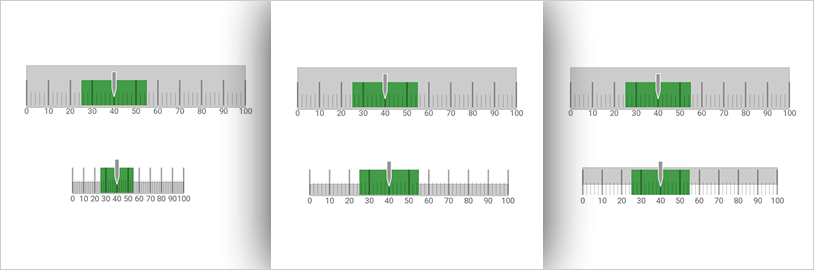
User interface I did some sketches on what I would want as a UI. But I'm not a graphic designer, so I will first do a very simple but yet functional UI and then try to switch to a better designed UI. I dream on emulating an horizontal disc gauge, those where the user sees the border of the disc and the center of it shows the current temperature, perhaps even with a magnifier in the middle. Something like this, but with the needle fixed in the center.
Implementing the idea The backend Code repository at GitLab. My first steps where to implement the C++ backend: a Settings class and a TemperatureEngine class. For the temperature sensor I decided to make a very simple AbstractTemperatureSensor class and also implement a FakeTemperatureSensor. The later will come handy in order to be able to run tests. Later on I can implement other temperature sources like reading an analog voltage from some GPIO, getting the data trough MQTT, etc. The GUI That's definitely Work In Progress :-)

21 June 2021

Lisandro Dami n Nicanor P rez Meyer: Firsts steps into QML

After years of using and maintaining Qt there was a piece of the SDK that I never got to use as a developer: QML. Thanks to ICS I've took the free (in the sense of cost) QML Programming Fundamentals and Beyond. It consists of seven sessions, which can be easily done in a few days. I did them all in 4 days, but with enough time available you can do them even faster. Of course some previous knowledge of Qt comes handy. The only drawback was the need of a corporate e-mail in order to register (or at least the webpage says so). Apart from that it is really worth the effort. So, if you are planning into getting into QML this is definitely a nice way to start.

10 June 2021

Petter Reinholdtsen: Nikita version 0.6 released - free software archive API server

I am very pleased to be able to share with you the announcement of a new version of the archiving system Nikita published by its lead developer Thomas S dring:
It is with great pleasure that we can announce a new release of nikita. Version 0.6 (https://gitlab.com/OsloMet-ABI/nikita-noark5-core). This release makes new record keeping functionality available. This really is a maturity release. Both in terms of functionality but also code. Considerable effort has gone into refactoring the codebase and simplifying the code. Notable changes for this release include:
  • Significantly improved OData parsing
  • Support for business specific metadata and national identifiers
  • Continued implementation of domain model and endpoints
  • Improved testing
  • Ability to export and import from arkivstruktur.xml
We are currently in the process of reaching an agreement with an archive institution to publish their picture archive using nikita with business specific metadata and we hope that we can share this with you soon. This is an interesting project as it allows the organisation to bring an older picture archive back to life while using the original metadata values stored as business specific metadata. Combined with OData means the scope and use of the archive is significantly increased and will showcase both the flexibility and power of Noark. I really think we are approaching a version 1.0 of nikita, even though there is still a lot of work to be done. The notable work at the moment is to implement access-control and full text indexing of documents. My sincere thanks to everyone who has contributed to this release! - Thomas Release 0.6 2021-06-10 (d1ba5fc7e8bad0cfdce45ac20354b19d10ebbc7b)
  • Refactor metadata entity search
  • Remove redundant security configuration
  • Make OpenAPI documentation work
  • Change database structure / inheritance model to a more sensible approach
  • Make it possible to move entities around the fonds structure
  • Implemented a number of missing endpoints
  • Make sure yml files are in sync
  • Implemented/finalised storing and use of
    • Business Specific Metadata
    • Norwegian National Identifiers
    • Cross Reference
    • Keyword
    • StorageLocation
    • Author
    • Screening for relevant objects
    • ChangeLog
    • EventLog
  • Make generation of updated docker image part of successful CI pipeline
  • Implement pagination for all list requests
    • Refactor code to support lists
    • Refactor code for readability
    • Standardise the controller/service code
  • Finalise File->CaseFile expansion and Record->registryEntry/recordNote expansion
  • Improved Continuous Integration (CI) approach via gitlab
  • Changed conversion approach to generate tagged PDF documents
  • Updated dependencies
    • For security reasons
    • Brought codebase to spring-boot version 2.5.0
    • Remove import of necessary dependencies
    • Remove non-used metrics classes
  • Added new analysis to CI including
  • Implemented storing of Keyword
  • Implemented storing of Screening and ScreeningMetadata
  • Improved OData support
    • Better support for inheritance in queries where applicable
    • Brought in more OData tests
    • Improved OData/hibernate understanding of queries
    • Implement $count, $orderby
    • Finalise $top and $skip
    • Make sure & is used between query parameters
  • Improved Testing in codebase
    • A new approach for integration tests to make test more readable
    • Introduce tests in parallel with code development for TDD approach
    • Remove test that required particular access to storage
  • Implement case-handling process from received email to case-handler
    • Develop required GUI elements (digital postroom from email)
    • Introduced leader, quality control and postroom roles
  • Make PUT requests return 200 OK not 201 CREATED
  • Make DELETE requests return 204 NO CONTENT not 200 OK
  • Replaced 'oppdatert*' with 'endret*' everywhere to match latest spec
  • Upgrade Gitlab CI to use python > 3 for CI scripts
  • Bug fixes
    • Fix missing ALLOW
    • Fix reading of objects from jar file during start-up
    • Reduce the number of warnings in the codebase
    • Fix delete problems
    • Make better use of cascade for "leaf" objects
    • Add missing annotations where relevant
    • Remove the use of ETAG for delete
    • Fix missing/wrong/broken rels discovered by runtest
    • Drop unofficial convertFil (konverterFil) end point
    • Fix regex problem for dateTime
    • Fix multiple static analysis issues discovered by coverity
    • Fix proxy problem when looking for object class names
    • Add many missing translated Norwegian to English (internal) attribute/entity names
    • Change UUID generation approach to allow code also set a value
    • Fix problem with Part/PartParson
    • Fix problem with empty OData search results
    • Fix metadata entity domain problem
  • General Improvements
    • Makes future refactoring easier as coupling is reduced
    • Allow some constant variables to be set from property file
    • Refactor code to make reflection work better across codebase
    • Reduce the number of @Service layer classes used in @Controller classes
    • Be more consistent on naming of similar variable types
    • Start printing rels/href if they are applicable
    • Cleaner / standardised approach to deleting objects
    • Avoid concatenation when using StringBuilder
    • Consolidate code to avoid duplication
    • Tidy formatting for a more consistent reading style across similar class files
    • Make throw a log.error message not an log.info message
    • Make throw print the log value rather than printing in multiple places
    • Add some missing pronom codes
    • Fix time formatting issue in Gitlab CI
    • Remove stale / unused code
    • Use only UUID datatype rather than combination String/UUID for systemID
    • Mark variables final and @NotNull where relevant to indicate intention
  • Change Date values to DateTime to maintain compliance with Noark 5 standard
  • Domain model improvements using Hypersistence Optimizer
    • Move @Transactional from class to methods to avoid borrowing the JDBC Connection unnecessarily
    • Fix OneToOne performance issues
    • Fix ManyToMany performance issues
    • Add missing bidirectional synchronization support
    • Fix ManyToMany performance issue
  • Make List
  • and Set
  • use final-keyword to avoid potential problems during update operations
  • Changed internal URLs, replaced "hateoas-api" with "api".
  • Implemented storing of Precedence.
  • Corrected handling of screening.
  • Corrected _links collection returned for list of mixed entity types to match the specific entity.
  • Improved several internal structures.
If free and open standardized archiving API sound interesting to you, please contact us on IRC (#nikita on irc.oftc.net) or email (nikita-noark mailing list). As usual, if you use Bitcoin and want to show your support of my activities, please send Bitcoin donations to my address 15oWEoG9dUPovwmUL9KWAnYRtNJEkP1u1b.

4 June 2021

Matthew Garrett: Mike Lindell's Cyber "Evidence"

Mike Lindell, notable for absolutely nothing relevant in this field, today filed a lawsuit against a couple of voting machine manufacturers in response to them suing him for defamation after he claimed that they were covering up hacks that had altered the course of the US election. Paragraph 104 of his suit asserts that he has evidence of at least 20 documented hacks, including the number of votes that were changed. The citation is just a link to a video called Absolute 9-0, which claims to present sufficient evidence that the US supreme court will come to a 9-0 decision that the election was tampered with.

The claim is that Lindell was provided with a set of files on the 9th of January, and gave these to some cyber experts to verify. These experts identified them as packet captures. The video contains scrolling hex, and we are told that this is the raw encrypted data from the files. In reality, the hex values correspond very clearly to printable ASCII, and appear to just be the Pennsylvania voter roll. They're not encrypted, and they're not packet captures (they contain no packet headers).

20 of these packet captures were then selected and analysed, giving us the tables contained within Exhibit 12. The alleged source IPs appear to correspond to the networks the tables claim, and the latitude and longitude presumably just come from a geoip lookup of some sort (although clearly those values are far too precise to be accurate). But if we look at the target IPs, we find something interesting. Most of them resolve to the website for the county that was the nominal target (eg, 198.108.253.104 is www.deltacountymi.org). So, we're supposed to believe that in many cases, the county voting infrastructure was hosted on the county website.

Unfortunately we're not given the destination port, but 198.108.253.104 isn't listening on anything other than 80 and 443. We're told that the packet data is encrypted, so presumably it's over HTTPS. So, uh, how did they decrypt this to figure out how many votes were switched? If Mike's hackers have broken TLS, they really don't need to be dealing with this.

We're also given some background information on how it's impossible to reconstruct packet captures after the fact (untrue), or that modifying them would change their hashes (true, but in the absence of known good hash values that tells us nothing), but it's pretty clear that nothing we're shown actually demonstrates what we're told it does.

In summary: yes, any supreme court decision on this would be 9-0, just not the way he's hoping for.

Update: It was pointed out that this data appears to be part of a larger dataset. This one is even more dubious - it somehow has MAC addresses for both the source and destination (which is impossible), and almost none of these addresses are in actual issued ranges.

comment count unavailable comments

2 June 2021

Matthew Garrett: Producing a trustworthy x86-based Linux appliance

Let's say you're building some form of appliance on top of general purpose x86 hardware. You want to be able to verify the software it's running hasn't been tampered with. What's the best approach with existing technology?

Let's split this into two separate problems. The first is to do as much as we can to ensure that the software can't be modified without our consent[1]. This requires that each component in the boot chain verify that the next component is legitimate. We call the first component in this chain the root of trust, and in the x86 world this is the system firmware[2]. This firmware is responsible for verifying the bootloader, and the easiest way to do this on x86 is to use UEFI Secure Boot. In this setup the firmware contains a set of trusted signing certificates and will only boot executables with a chain of trust to one of these certificates. Switching the system into setup mode from the firmware menu will allow you to remove the existing keys and install new ones.

(Note: You shouldn't use the trusted certificate directly for signing bootloaders - instead, the trusted certificate should be used to sign another certificate and the key for that certificate used to sign your bootloader. This way, if you ever need to revoke the signing certificate, you can simply sign a new one with the trusted parent and push out a revocation update instead of having to provision new keys)

But what do you want to sign? In the general purpose Linux world, we use an intermediate bootloader called Shim to bridge from the Microsoft signing authority to a distribution one. Shim then verifies the signature on grub, and grub in turn verifies the signature on the kernel. This is a large body of code that exists because of the use cases that general purpose distributions need to support - primarily, booting on arbitrary off the shelf hardware, and allowing arbitrary and complicated boot setups. This is unnecessary in the appliance case, where the hardware target can be well defined, where there's no need for interoperability with the Microsoft signing authority, and where the boot configuration can be extremely static.

We can skip all of this complexity using systemd-boot's unified Linux image support. This has the format described here, but the short version is that it's simply a kernel and initramfs linked into a small EFI executable that will run them. Instructions for generating such an image are here, and if you follow them you'll end up with a single static image that can be directly executed by the firmware. Signing this avoids dealing with a whole host of problems associated with relying on shim and grub, but note that you'll be embedding the initramfs as well. Again, this should be fine for appliance use-cases, but you'll need your build system to support building the initramfs at image creation time rather than relying on it being generated on the host.

At this point we have a single image that can be verified by the firmware and will get us to the point of a running kernel and initramfs. Unless you've got enough RAM that you can put your entire workload in the initramfs, you're going to want a filesystem as well, and you're going to want to verify that that filesystem hasn't been tampered with. The easiest approach to this is to use dm-verity, a device-mapper layer that uses a hash tree to verify that the filesystem contents haven't been modified. The kernel needs to know what the root hash is, so this can either be embedded into your initramfs image or into the kernel command line. Either way, it'll end up in the signed boot image, so nobody will be able to tamper with it.

It's important to note that a dm-verity partition is read-only - the kernel doesn't have the cryptographic secret that would be required to generate a new hash tree if the partition is modified. So if you require the ability to write data or logs anywhere, you'll need to add a new partition for that. If this partition is unencrypted, an attacker with access to the device will be able to put whatever they want on there. You should treat any data you read from there as untrusted, and ensure that it's validated before use (ie, don't just feed it to a random parser written in C and expect that everything's going to be ok). On the other hand, if it's encrypted, remember that you can't just put the encryption key in the boot image - an attacker with access to the device is going to be able to dump that and extract it. You'll probably want to use a TPM-sealed encryption secret, which will be discussed later on.

At this point everything in the boot process is cryptographically verified, and so should be difficult to tamper with. Unfortunately this isn't really sufficient - on x86 systems there's typically no verification of the integrity of the secure boot database. An attacker with physical access to the system could attach a programmer directly to the firmware flash and rewrite the secure boot database to include keys they control. They could then replace the boot image with one that they've signed, and the machine would happily boot code that the attacker controlled. We need to be able to demonstrate that the system booted using the correct secure boot keys, and the only way we can do that is to use the TPM.

I wrote an introduction to TPMs a while back. The important thing to know here is that the TPM contains a set of Platform Configuration Registers that are large enough to contain a cryptographic hash. During boot, each component of the boot process will generate a "measurement" of other security critical components, including the next component to be booted. These measurements are a representation of the data in question - they may simply be a hash of the object being measured, or the hash of a structure containing various pieces of metadata. Each measurement is passed to the TPM, along with the PCR it should be measured into. The TPM takes the new measurement, appends it to the existing value, and then stores the hash of this concatenated data in the PCR. This means that the final PCR value depends not only on the measurement, but also on every previous measurement. Without breaking the hash algorithm, there's no way to set the PCR to an arbitrary value. The hash values and some associated data are stored in a log that's kept in system RAM, which we'll come back to later.

Different PCRs store different pieces of information, but the one that's most interesting to us is PCR 7. Its use is documented in the TCG PC Client Platform Firmware Profile (section 3.3.4.8), but the short version is that the firmware will measure the secure boot keys that are used to boot the system. If the secure boot keys are altered (such as by an attacker flashing new ones), the PCR 7 value will change.

What can we do with this? There's a couple of choices. For devices that are online, we can perform remote attestation, a process where the device can provide a signed copy of the PCR values to another system. If the system also provides a copy of the TPM event log, the individual events in the log can be replayed in the same way that the TPM would use to calculate the PCR values, and then compared to the actual PCR values. If they match, that implies that the log values are correct, and we can then analyse individual log entries to make assumptions about system state. If a device has been tampered with, the PCR 7 values and associated log entries won't match the expected values, and we can detect the tampering.

If a device is offline, or if there's a need to permit local verification of the device state, we still have options. First, we can perform remote attestation to a local device. I demonstrated doing this over Bluetooth at LCA back in 2020. Alternatively, we can take advantage of other TPM features. TPMs can be configured to store secrets or keys in a way that renders them inaccessible unless a chosen set of PCRs have specific values. This is used in tpm2-totp, which uses a secret stored in the TPM to generate a TOTP value. If the same secret is enrolled in any standard TOTP app, the value generated by the machine can be compared to the value in the app. If they match, the PCR values the secret was sealed to are unmodified. If they don't, or if no numbers are generated at all, that demonstrates that PCR 7 is no longer the same value, and that the system has been tampered with.

Unfortunately, TOTP requires that both sides have possession of the same secret. This is fine when a user is making that association themselves, but works less well if you need some way to ship the secret on a machine and then separately ship the secret to a user. If the user can simply download the secret via some API, so can an attacker. If an attacker has the secret, they can modify the secure boot database and re-seal the secret to the new PCR 7 value. That means having to add some form of authentication, along with a strong binding of machine serial number to a user (in order to avoid someone with valid credentials simply downloading all the secrets).

Instead, we probably want some mechanism that uses asymmetric cryptography. A keypair can be generated on the TPM, which will refuse to release an unencrypted copy of the private key. The public key, however, can be exported and stored. If it's acceptable for a verification app to connect to the internet then the public key can simply be obtained that way - if not, a certificate can be issued to the key, and this exposed to the verifier via a QR code. The app then verifies that the certificate is signed by the vendor, and if so extracts the public key from that. The private key can have an associated policy that only permits its use when PCR 7 has an appropriate value, so the app then generates a nonce and asks the user to type that into the device. The device generates a signature over that nonce and displays that as a QR code. The app verifies the signature matches, and can then assert that PCR 7 has the expected value.

Once we can assert that PCR 7 has the expected value, we can assert that the system booted something signed by us and thus infer that the rest of the boot chain is also secure. But this is still dependent on the TPM obtaining trustworthy information, and unfortunately the bus that the TPM sits on isn't really terribly secure (TPM Genie is an example of an interposer for i2c-connected TPMs, but there's no reason an LPC one can't be constructed to attack the sort usually used on PCs). TPMs do support encrypted communication channels, but bootstrapping those isn't straightforward without firmware support. The easiest way around this is to make use of a firmware-based TPM, where the TPM is implemented in software running on an ancillary controller. Intel's solution is part of their Platform Trust Technology and runs on the Management Engine, AMD run it on the Platform Security Processor. In both cases it's not terribly feasible to intercept the communications, so we avoid this attack. The downside is that we're then placing more trust in components that are running much more code than a TPM would and which have a correspondingly larger attack surface. Which is preferable is going to depend on your threat model.

Most of this should be achievable using Yocto, which now has support for dm-verity built in. It's almost certainly going to be easier using this than trying to base on top of a general purpose distribution. I'd love to see this become a largely push button receive secure image process, so might take a go at that if I have some free time in the near future.

[1] Obviously technologies that can be used to ensure nobody other than me is able to modify the software on devices I own can also be used to ensure that nobody other than the manufacturer is able to modify the software on devices that they sell to third parties. There's no real technological solution to this problem, but we shouldn't allow the fact that a technology can be used in ways that are hostile to user freedom to cause us to reject that technology outright.
[2] This is slightly complicated due to the interactions with the Management Engine (on Intel) or the Platform Security Processor (on AMD). Here's a good writeup on the Intel side of things.

comment count unavailable comments

26 May 2021

Ian Jackson: Disconnecting from Freenode

I have just disconnected from irc.freenode.net for the last time. You should do the same. The awful new de facto operators are using user numbers as a public justification for their behaviour. Specifically, I recommend that you: Note that mentioning libera in the channel topic of your old channels on freenode is likely to get your channel forcibly taken over by the new de facto operators of freenode. They won't tolerate you officially directing people to the competition. I did an investigation and writeup of this situation for the Xen Project. It's a little out of date - it doesn't have the latest horrible behaviours from the new regime - but I think it is worth pasting it here:
Message-ID: <24741.12566.639691.461134@mariner.uk.xensource.com>
From: Ian Jackson <iwj@xenproject.org>
To: xen-devel@lists.xenproject.org
CC: community.manager@xenproject.org
Subject: IRC networks
Date: Wed, 19 May 2021 16:39:02 +0100
Summary:
We have for many years used the Freenode IRC network for real-time
chat about Xen.  Unfortunately, Freenode is undergoing a crisis.
There is a dispute between, on the one hand, Andrew Lee, and on the
other hand, all (or almost all) Freenode volunteer staff.  We must
make a decision.
I have read all the publicly available materials and asked around with
my contacts.  My conclusions:
 * We do not want to continue to use irc.freenode.*.
 * We might want to use libera.chat, but:
 * Our best option is probably to move to OFTC https://www.oftc.net/
Discussion:
Firstly, my starting point.
I have been on IRC since at least 1993.  Currently my main public
networks are OFTC and Freenode.
I do not have any personal involvement with public IRC networks.  Of
the principals in the current Freenode dispute, I have only heard of
one, who is a person I have experience of in a Debian context but have
not worked closely with.
George asked me informally to use my knowledge and contacts to shed
light on the situation.  I decided that, having done my research, I
would report more formally and publicly here rather than just
informally to George.
Historical background:
 * Freenode has had drama before.  In about 2001 OFTC split off from
   Freenode after an argument over governance.  IIRC there was drama
   again in 2006.  Significant proportion of the Free Software world,
   including Debian, now use OFTC.  Debian switched in 2006.
Facts that I'm (now) pretty sure of:
 * Freenode's actual servers run on donated services; that is,
   the hardware is owned by those donating the services, and the
   systems are managed by Freenode volunteers, known as "staff".
 * The freenode domain names are currently registered to a limited
   liability company owned by Andrew Lee (rasengan).
 * At least 10 Freenode staff have quit in protest, writing similar
   resignation letters protesting about Andrew Lee's actions [1].  It
   does not appear that any Andrew Lee has the public support of any
   Freenode staff.
 * Andrew Lee claims that he "owns" Freenode.[2]
 * A large number of channel owners for particular Free Software
   projects who previously used Freenode have said they will switch
   away from Freenode.
Discussion and findings on Freenode:
There is, as might be expected, some murk about who said what to whom
when, what promises were made and/or broken, and so on.  The matter
was also complicated by the leaking earlier this week of draft(s) of
(at least one of) the Freenode staffers' resignation letters.
Andrew Lee has put forward a position statement [2].  A large part of
the thrust of that statement is allegations that the current head of
Freenode staff, tomaw, "forced out" the previous head, christel.  This
allegation is strongly disputed by by all those current (resigning)
Freenode staff I have seen comment.  In any case it does not seem to
be particularly germane; in none of my reading did tomaw seem to be
playing any kind of leading role.  tomaw is not mentioned in the
resignation letters.
Some of the links led to me to logs of discussions on #freenode.  I
read some of these in particular[3].  MB I haven't been able to verify
that these logs have not been tampered with.  Having said that and
taking the logs at face value, I found the rasengan writing there to
be disingenuous and obtuse.
Andrew Lee has been heavily involved in Bitcoin.  Bitcoin is a hive of
scum and villainy, a pyramid scheme, and an environmental disaster,
all rolled into one.  This does not make me think well of Lee.
Additionally, it seems that Andrew Lee has been involved in previous
governance drama involving a different IRC network, Snoonet.
I have come to the very firm conclusion that we should have nothing to
do with Andrew Lee, and avoid using services that he has some
effective control over.
Alternatives:
The departing Freenode staff are setting up a replacement,
"libera.chat".  This is operational but still suffering from teething
problems and of course has a significant load as it deals with an
influx of users on a new setup.
On the staff and trust question: As I say, I haven't heard of any of
the Freenode staff, with one exception.  Unfortunately the one
exception does not inspire confidence in me[4] - although NB that is
only one data point.
On the other hand, Debian has had many many years of drama-free
involvement with OFTC.  OFTC has a formal governance arrangement and
it is associated with Software in the Public Interest.  I notice that
the last few OFTC'[s annual officer elections have been run partly by
Steve McIntyre.  Steve is a friend of mine (and he is a former Debian
Project Leader) and I take his involvement as a good sign.
I recommend that we switch to using OFTC as soon as possible.
Ian.
References:
Starting point for the resigning Freenode staff's side [1]:
  https://gist.github.com/joepie91/df80d8d36cd9d1bde46ba018af497409
Andrew Lee's side [2]:
  https://gist.github.com/realrasengan/88549ec34ee32d01629354e4075d2d48
[3]
https://paste.sr.ht/~ircwright/7e751d2162e4eb27cba25f6f8893c1f38930f7c4
[4] I won't give the name since I don't want to be shitposting.


comment count unavailable comments

Next.

Previous.