Search Results: "paultag"

9 June 2013

Paul Tagliamonte: Automatically lint your packages with debuild.me

Over my time working with Debian packages, I've always been concerned that I have been missing catchable mistakes by not running all the static checking tools I could run. As a result, I've been interested in writing some code that automates this process, a place where I can push a package and come back a few hours later to check on the results. This is great, since it provides a slightly less scary interface to new packagers, and helps avoid thinking they've just been told off by a Developer. I've spent the time to actually write this code, and I've called it debuild.me. The code itself is in its fourth iteration, and is built up from a few core components. The client / server code (lucy and ethel) are quite interconnected, but firehose works great on it's own, and is a single, unified (and sane!) spec that is easy to hack with (or even on!). Hopefully, this means that our wrappers will be usable outside of debuild.me, which is a win for everyone. Backend Design The backend (lucy) was the first part I wanted to design. I made the decision (very early on) that everything was going to be 100% Python 3.3+. This lets me use some of the (frankly, sweet) tools in the stdlib. Since I've written this type of thing before (i've tried to write this tool many, many, many, many times before), so I had a rough sense of how I wanted to design the backend. Past iterations had suffered from and overly complex server half, so I decided to go ultra minimal with the design of debuild.me. <aside class="left"> You can find the code for the server (lucy) on my GitHub </aside> The backend watches a directory (using a simple inotify script) and processes .changes files as they come in. If the package is a source package, a set of jobs are triggered (such as lintian, build and desktop-file-validate), as well as a different set for binary packages (such as lintian, piuparts and adequite). Only people may upload source packages (without any debs) and only builders can upload binary packages (without source). The client and server talk using XML-RPC with BASIC HTTP auth. I'm going to (eventually) SSL secure the transport layer, but for now, this will work as a proof of concept. Since I tend to like to keep my codebase simple and straightforward, I've used MongoDB as Lucy's DB. This lets me move between documents in Mongo to Python objects without any trouble. In addition, I evaluated some of the queue code out there (ZMQ, etc), and they all seemed like overkill for my problem, and had a hard time keeping track of jobs that (must never!) get lost. As a result, I wrote my own (very simple) job queue in Mongo, which has no sense of scheduling (at all), but can do it's job (and do it well). Jobs describe what's to be built with a link to the package document that the job relates to, and it's arch and suite (don't worry about the rest just yet). Jobs get assigned via natural sort on it's UUID based _id, and assigned to the first builder that can process it's arch / suite. Source packages are considered arch:all / suite:unstable (so they always get the most up-to-date linters on any arch that comes along). Lucy also allows for uploads to be given an X-Lucy-Group tag to manage which set of packages they're a part of. This comes in handy for doing partial archive rebuilds, or eventually using it to manage what jobs should be run on which uploads. This will allow me to run much more time-consuming tools for packages I want to review versus rebuilding to ensure packages don't FTBFS or aren't adequite. Client Design The buildd client (ethel) talks with lucy via XML-RPC to get assigned new jobs, release old jobs, close finished jobs, and upload package report data. When the etheld requests a new job, it also passes along what suites it knows of, which arches it can build, as well as what types it can run (stuff like lintian, build or cppcheck.) Lucy then assigns the builder to that job (so that we don't allocate the same job twice), and what time it was assigned at. <aside class="right"> You can find the code for the client (ethel) on my GitHub </aside> Ethel then takes the result of the job (in the form of a firehose.model tree) and transmits it over the line back to the Lucy server as a report (which also contains information on if the build failed or not), at which point lucy hands back a location (on the lucy host) that the daemon can write the log to. If the job was a binary build, the etheld process will dput the package to the server, with a special X-Lucy-Job tag to signal which job that build relates to, so that future lint runs can fetch the deb files that the build produced. Tooling Ethel runs a set of static checkers on the source code, which are basically fancy wrappers around the tools we all know and love (like lintian, desktop-file-validate, or piuparts) which output Firehose in place of home-grown stdout. This allows us to programmatically deal with the output of these tools in a normal and consistent way. <aside class="left"> You can read more about Firehose over in the Firehose README.rst </aside> Some of the more complex runners are made of 3 parts - a runner, wrapper and command. The server invokes the command routine, which invokes the runner (the command just provides a unified interface to all the runners), who's output gets parsed by the wrapper to turn it into a Firehose model tree. The goal here is that tons of very quick-running tools get run over a distributed network, and machine-readable reports get filed in a central location to aid in reviewing packages. Ricky In addition to the actual code to run builds, I've worked on a few tools to aid with using debuild.me for my DD related life. I have some uncommon use-cases that are nice to support. One such use-case is the ability to rebuild packages from the archive (unmodified) to check that they rebuild OK against the target. This is handy for things like arch:all packages that get uploaded (since they never get rebuilt on the buildd machines, and FTBFSs are sadly common) or packages that have had a Build-Dependency change on them. Ricky is able to create a .dsc url to your friendly local mirror, and fetch that exact version of the package. Ricky can then also use the .dsc (in a monumental hack) to forge a package_version_source.changes file, and sign it with an autobuild key and upload it to the debuild.me instance. Since it can also modify the .changes's target distribution, you can also use this to test if a package will build on stable or testing, unmodified. Fred Fred is a wrapper around Ricky, to help with fetching packages that may not exist yet. Fred also contains an email scraper to read off such lists as debian-devel-changes, and add an entry to fetch that upload when it becomes available on the local mirror, pass it to ricky, and allow debuild.me to rebuild new packages that match a set of criteria. I'm currently playing around with the idea of rebuilding all incoming Python packages to ensure they don't FTBFS in a clean chroot. Loofah Loofah is also another wrapper around Ricky, but for use manually. Loofah is able to sync down the apt Sources list, and place it in Mongo for fast queries. This than allows me to manually run rebuilds on any Source package that fits a set of critera (written in the form of a Mongo query), which get pulled and uploaded by Ricky. An example script to rebuild any packages that Build-Depend on python3-all-dev in Debian unstable / main would look like: <aside class="right"> You can find more queries in the Loofah examples </aside>
[
      "version": "unstable", "suite": "main"  ,
      "Build-Depends": "python3-all-dev"  
]
Or, a script to rebuild any package that depends on CDBS:
[
     ,
     "$or": [ "Build-Depends": "cdbs" ,
              "Build-Depends-Indep": "cdbs" ] 
]
You can use anything that exists in the Sources.gz file to query off of ( including Maintainer!) Future Work The future work on debuild.me will be centered around making it easier for buildd nodes to be added to the network, with more and more automation in that process (likely in the form of debs). I also want to add better control over the jobs, so that packages I upload only go to my personal servers. I'd also very much like to get better EC2 / Virtualization support integrated into the network, so that the buildd count grows with the queue size. This is a slightly hard problem that I'm keen to fix. I'm also considering moving the log parsing code out of the workers, so that the parsing code can be fixed without upgrading all the workers. This would also drop the Firehose dep on the client code, which would be nice. Migration from a debuild.me build into a local reprepro repo is something that would be fairly easy to do as well, likely to be done remotely via the XML-RPC interface, which calls a couple of reprepro commands (such as includedsc and includedeb) and publishes it to the user's repo. This is a nice use of the debs that get built, and could also allow debuild.me to be used like a PPA system, but this allows the user to not migrate packages that may contain piuparts issues.

8 June 2013

Michael Stapelberg: Uploading packages via SFTP

Yesterday I uploaded a big package and got multiple timeouts. I then figured out that DDs can also upload using SFTP (i.e. SSH s file transfer thingie) instead of traditional FTP, which seems like a more modern alternative. So let s give that a try. With dput-ng, the following configuration leads to using sftp by default:
mkdir -p ~/.dput.d/profiles/
cat > ~/.dput.d/profiles/ftp-master.json <<EOT
 
    "fqdn": "ssh.upload.debian.org",
    "incoming": "/srv/upload.debian.org/UploadQueue/",
    "method": "sftp"
 
EOT
Note that uploading via SFTP will lead to debianqueued uploading the files via FTP for you. But maybe that is more reliable than doing it yourself. We ll see :-).

Paul Tagliamonte: Crossgrading from 32 to 64 bit

Yes! It is possible! I ve done it! On my production linode! It was a bit hard, and I made quite a few mistakes, but I m convinced that a minimal system can be sanely crossgraded. I did it and only had an hour or so of server downtime In the process. However, most of the stack gets stripped down and back out, so I fear what happens with the X stack (nevermind GNOME Or anything that depends on it) A more detailed post to follow! Thanks to the dpkg team for making this happen!

30 May 2013

Paul Tagliamonte: Design: The next stage

One thing that s always bugged me is this schism between graphic designers and hackers. Seeing as how most graphic designers learn how to code even if it s just JavaScript / CoffeeScript, HTML5, CSS3 / LessCSS or ActionScript / Flash. Almost no hackers learn how to design. And that s a problem. As a result, I ve started a real effort to learn the basics / fundamentals of design, in hopes that I can better communicate with my peers, create things that don t look like a 1992 timewarp and be able to finish a project and feel proud of what it is, as it is, even without a designer s help. I can only hope that it goes well, and others do the same.

24 May 2013

Paul Tagliamonte: python-schroot

I ve been hacking on some static analyses stuff for debuild.me, and i ve been involved in a multi-year long yak shaving exercise. As today s fun part, I wrote python-schroot to help run commands in a schroot chroot (say that 10 times fast!) After a while, I got some neat stuff working. Here s an honest example:
from schroot import schroot
with schroot('unstable-amd64') as chroot:
    chroot.copy('/etc/issue', '/etc/issue', user='root')
This will copy a file (/etc/issue) from the host system into the schroot chroot. Neat! Now, to run something:
with schroot('unstable-amd64') as chroot:
    out, err, ret = chroot.run("whoami")
    print(out)    
Then, in an effort to make a DSL, I set out to create the following syntax:
with schroot('unstable-amd64') as chroot:
    "apt-get update" in chroot
but, hit some issues with implementing it, and got the following to work:
with schroot('unstable-amd64') as chroot:
    "apt-get update" > chroot // "root"  # apt-get update as root
More later!

19 May 2013

Nicolas Dandrimont: Hello world

Or rather, hello Planet! Here s a somewhat traditional introductory post. I m Nicolas Dandrimont, I m French, I m sysadmin in a grande cole, where I m mostly in charge of the GNU/Linux workstations and servers. In Debian, I m a DM, currently in the NM queue, so I might become a DD soon-ish. I am (rather inactively) co-maintaining a few packages. In my Debian career , I have been involved in OCaml packaging and Python packaging, although lately most of my time has been spent on Google Summer of Code (mentor for two mentors.debian.net projects in 2012, org admin for Debian in 2013), and on mentors.debian.net. In other free-software related projects, I own a RepRap 3D printer, and I grew some interest in the related software, e.g. Slic3r and printrun. There have been a lot of action in Fedora about packaging 3D-printing-related software, and it d be great to get a team together to work on that in Debian during the jessie release cycle. Consider this a call for interested parties :) Unrelatedly, paultag has tricked me into working on hy, which is way too much fun. Blame him if you feel that I have been inactive lately, this has been eating way too much of my free time ;) Hopefully I ll be able to make regular updates on the work I do in Debian and free software, so stay tuned!

18 May 2013

Paul Tagliamonte: Hy: recent developments and some work from doctormo

Thanks to DoctorMo for the hilarious photo. It s just so good. We ve got Classes working, the usual fixes from the crew, and native macros. Huzzah! I ve had to take the site down for now (well, stop updating it) because of a vulnerability I introduced (macros allow arbitrary code to run), which means, if anyone s keen, they should add the sandboxing code to the Hy Site as well! More coming soon!

9 May 2013

Paul Tagliamonte: Hylang updates

We ve got all sorts of spiffy changes lined up and another major release! We ve got Hy version 0.9.7 released. The website is updated with the latest cut of the hylang, and y all should check it out.
Sadly, we ve not attracted any women interested in hacking on hy, so I d like to re-iterate that I m quite disappointed to see that, and encourage female hackers to check out the source and see what they can do with it. As always, the source is over at https://github.com/hylang/hy - star it, hack it, fork it, use it!

2 May 2013

Paul Tagliamonte: Me, as an Ubuntu Community Member

Recently, some folks have brought it to my attention that I m not so good at making my work with Ubuntu known. I d like to clarify my role. Yes, I m still an Ubuntu member. Yes, I m still active. Yes, I care about Ubuntu. A lot. To insinuate otherwise is wholly wrong. I ve been with Ubuntu for just about 5 years now, and to misrepresent that would be a damn shame. I mostly do work in Debian these days, where I make sure packages upstream support Ubuntu, and work to help create a solid Debian, which provides a strong base for Ubuntu to work from.

Every Debian developer is also an Ubuntu developer, because one way to contribute to Ubuntu is to contribute to Debian.

- SABDFL

I also spend time to make sure Ubuntu / Debian relations remain strong, and that Debian folks know they can count on a friendly face to interface with the Ubuntu ers, or the Ubuntu ers knowing they can count on a friend to help.

To be clear; I m not active in the Ubuntu community channels anymore. I m still very much active with Ubuntu on the whole.

Hope that clears things up for folks.

28 April 2013

Paul Tagliamonte: Recent Hy developments

With some new patches from just oddles of interested hackers, there are some hot new changes, including a major mode for emacs and a hot new bot. I m currently blocking stuff while I m in the middle of the compiler, but new feature development will be wide open soon! Check out Hy, play with the source, install it with pip, and consider doing awesome stuff!

20 April 2013

Paul Tagliamonte: Fixing the theme situation in Jessie

Hello, World, As many of you know, I fell into helping get the artwork for Wheezy into place. While I don t want to do this (in the long run), I feel the urge to get it into shape for Jessie. I d like to do a small request for methods to improve the theme packaging. I ve posted a suggestion, but I never really got happy with it. The problem is basically the deb makes no sense because making thee deb make sense would result in insanity ;) stuff like proper dependencies to allow the Plymouth theme to work can t be done, since it d require a dep on Plymouth, which means it requires all installs with desktop-base to have it installed. Thanks, lazyblog!

13 April 2013

Paul Tagliamonte: Hy s got a new home (and team!) As some of you interested...


Hy s got a new home (and team!) As some of you interested folks know, I ve been hacking on Hy, and I m proud to announce it s new home at hylang.org and future deb repo at gethy.org. I ve posted this as an image for one very important reason - Hy is now a full community based project. There s been in insane reaction to hy, and I d like to keep it sustainable. So, come hack with us on #hy on freenode, or just help us come up with more puns. As always, try hy, and see if you don t have some feature requests!

3 April 2013

Julien Danjou: Hy, Lisp in Python

I've meant to look at Hy since Paul Tagliamonte started to talk to me about it, but never took a chance until now. Yesterday, Paul indicated it was a good time for me to start looking at it, so I spent a few hours playing. But what's Hy? Python is very nice: it has a great community and a wide range of useful libraries. But let's face it, it misses a great language. Hy is an implementation of a Lisp on top of Python. Technically, Hy is built directly with a custom made parser (for now) which then translates expressions using the Python AST module to generate code, which is then run by Python. Therefore, it shares the same properties as Python, and is a Lisp-1 (i.e. with a single namespace for symbols and functions). If you're interested to listen Paul talking about Hy during last PyCon US, I recommend watching his lightning talk. As the name implies, it's only a few minutes long. <iframe allowfullscreen="allowfullscreen" class="shadow" frameborder="0" height="374" src="http://www.youtube.com/embed/1vui-LupKJI?wmode=transparent&amp;autohide=1&amp;egm=0&amp;hd=1&amp;iv_load_policy=3&amp;modestbranding=1&amp;rel=0&amp;showinfo=0&amp;showsearch=0#t=16m14s" width="500"></iframe> Does it work? I've been cloning the code and played around a bit with Hy. And to my greatest surprise and pleasure, it works quite well. You can imagine writing Python from there easily. Part of the syntax smells like Clojure's, which looks like a good thing since they're playing in the same area. You can try a Hy REPL in your Web browser if you want. Here's what some code look like:
(import requests)

(setv req (requests.get "http://hy.pault.ag"))
(if (= req.status_code 200)
(for (kv (.iteritems req.headers))
(print kv))
(throw (Exception "Wrong status code")))

This code would ouput:
('date', 'Wed, 03 Apr 2013 12:09:23 GMT')
('connection', 'keep-alive')
('content-encoding', 'gzip')
('transfer-encoding', 'chunked')
('content-type', 'text/html; charset=utf-8')
('server', 'nginx/1.2.6')
As you can see, it's really simple to write Lispy code that really uses Python idioms. There's obviously still a lots of missing features in Hy. The language if far from complete and many parts are moving, but it's really promising, and Paul's doing a great job implementing every idea. I actually started to hack a bit on Hy, and will try to continue to do so, since I'm really eager to learn a bit more about both Lisp and Python internals in the process. I've already send a few patches on small bugs I've encountered, and proposed a few ideas. It's really exciting to be able to influence early a language design that I'll love to use! Being a recent fan of Common Lisp, I tend to grab the good stuff from it to add them into Hy.

Paul Tagliamonte: Here s my talk from PyCon 2013 (I tried to queue it up to...

<iframe allowfullscreen="allowfullscreen" frameborder="0" height="299" src="http://www.youtube.com/embed/1vui-LupKJI?wmode=transparent&amp;autohide=1&amp;egm=0&amp;hd=1&amp;iv_load_policy=3&amp;modestbranding=1&amp;rel=0&amp;showinfo=0&amp;showsearch=0#t=16m14s" width="400"></iframe>

Here s my talk from PyCon 2013 (I tried to queue it up to where I start (@ 16:14)

A bit more giggley then I intended, but apparently it s endearing.

If anyone s actually interested in Hy, check out #hy on irc.freenode.net, star the code @ git.io/hy - it s actually pretty feature complete. If you want to play with it, check out the magic repl I ve been pondering taking it a bit more serious, so there is even a bit of documentation thanks to Chris Webber (hey, thanks!). Rock on!

31 March 2013

Nathan Handler: Debian Mobile

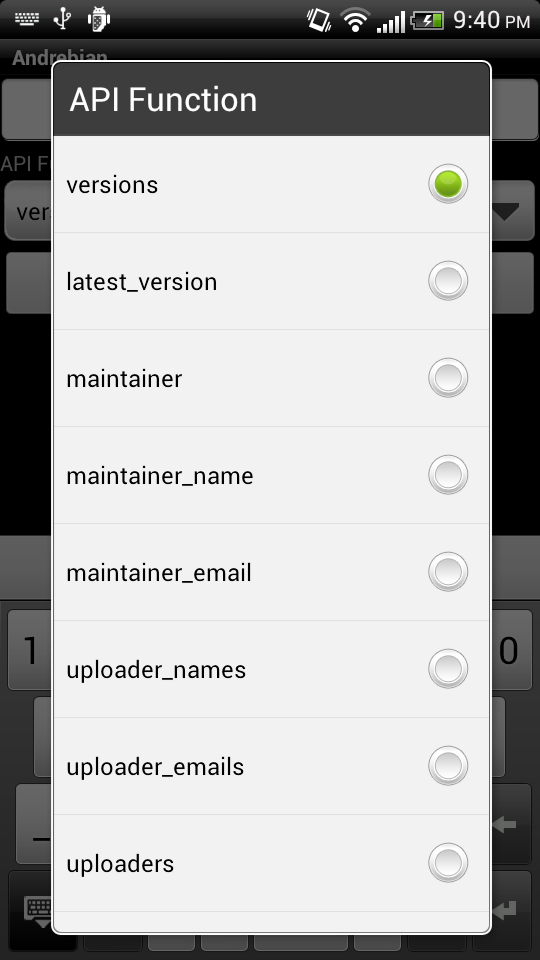
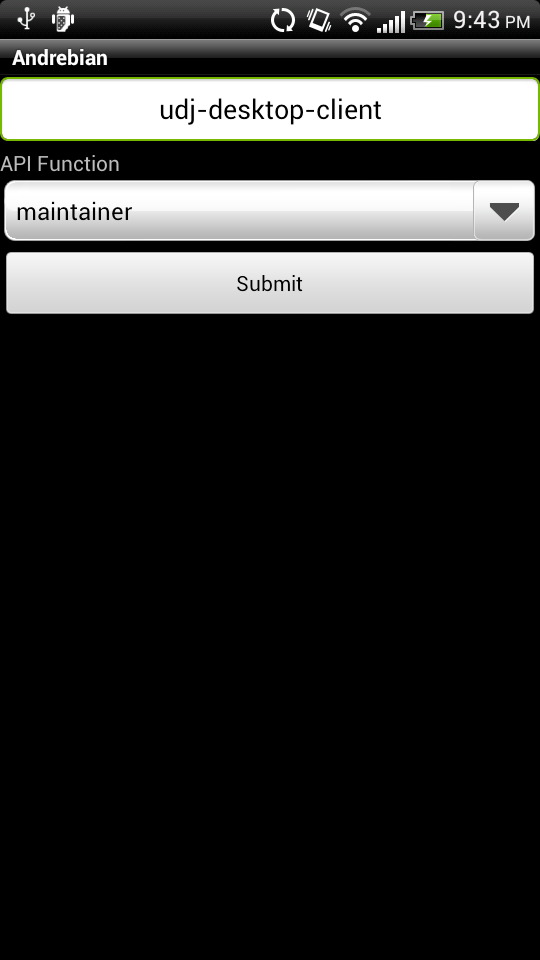
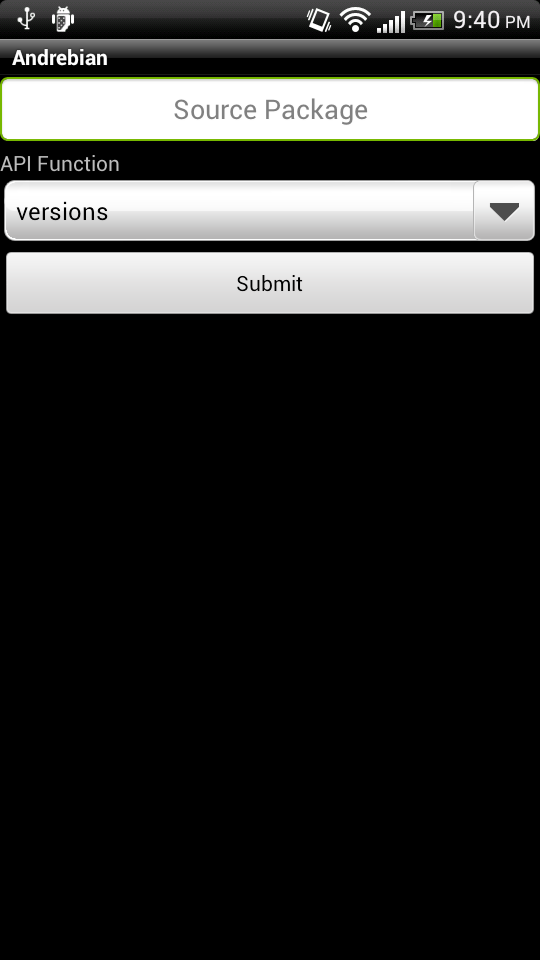
For one of my classes, the final project is to work on a personal project for four weeks. Since I have never done mobile programming before, I decided I would use this project as a chance to teach myself the basics of Android development. Paul Tagliamonte recently blogged about a Google Summer of Code project idea for a Debian Android application. It was this post that motivated me to create a Debian Android application for my final project. We are only in the middle of week one, but my plan is to have at least a basic BTS and PTS interface done by the end of the project. Then, depending on a few things, I hope to turn it into a Google Summer of Code project or simply continue developing it on my own. As I mentioned, I am only a few days into the project. One of the first hurdles I encountered was interacting with the SOAP interfaces available for the PTS and BTS. There are a few examples available on the wiki, but there are not any for Java. A Google search also failed to return any clear and simple results. As a result, I decided I would create a Python script that would accept requests from the Java Android application via a REST API and pass them on to the SOAP API before returning the result as JSON. Before I could finish writing the script, Paul mentioned that he had already written a similar program a few months ago. I immediately stopped working on my script and began preparing a patch for Paul's program to add support for some missing PTS SOAP functions as well as the entire BTS. After a few hours, I had the ability to query the PTS and BTS via a REST API from Java. While I normally prefer to use VIM for my programming, I decided to follow Google's recommendation and use Eclipse. I was able to follow their guide to get the SDK setup and a simple demo application running. One of the few hurdles I encountered was when I wanted to make web requests. Due to the ability for such requests to stall, you are required to perform them in a separate thread. This only becomes aparant when you try to test your application on an actual device; the emulator will happily run the process in the main thread. Regardless, I was eventually able to modify the demo application to allow me to make requests to my Python REST server and then parse and display the result. Here are some screenshots of the application running. Main Screen API Functions Information Entered Result If you have any feature suggestions, questions, or comments, feel free to send me an email (nhandler@debian.org). The source code for the Android application is currently not available, but I plan to put it up in a git repository sometime in the near future. The source code for the Python script that provides a REST API to access the PTS and BTS SOAP interface is available on GitHub.
30 March 2013

Paul Tagliamonte: Debian Stable (Or: When to switch)

I ve noticed something funky when looking over the Release Critical page on the BTS Look! There s a cross-over between the Stable bug count and the Testing bug count around 6/2012. Since then, Stable has actually been more buggy the testing. What should we (as a project) do? Why is stable so unloved during the freeze? Do we have too long a freeze? Hilariously, this makes me think I should be suggesting users to switch from stable to testing when the crossover happens during the release cycle. Has there been previous discussion of this?

27 March 2013

Paul Tagliamonte: Debian as part of the GNOME OPW

As some may have seen, zack put out a note about the GNOME OPW. The GNOME OPW program, as some of you may know, is the GNOME Outreach Program for Women. Debian has been considering participating this year, and I think it s something we should focus on this year. So, please, if you have ideas, please feel free to send along ideas on that thread it d be amazing to get this going (in conjunction with) GSoC this year. Also, if you have any GSoC ideas, please do also add those! GNOME OPW allows for things that are non-technical, so feel free to post non-technical things too (publicity team, www team, I m looking at you!)

21 March 2013

Paul Tagliamonte: Hy: The joke just got pretty serious

(btw, the source is on github) During the sprints at PyCon in a spare moment after some awesome OpenGov hacking, I ended up doing the unthinkable: rpython support in Hy. Yes. That s right. Lisp > Python > C > x86 instructions. The thanks here goes to Romain Guillebert - who is a really funny rpythonista and took the time to sit down and help me with this frankly insane idea. It works, though. I filed a bug on shipping rpython bits from PyPy s Debian package (hi, tumbleweed!), which should make building this a skitch easier. Finally, and unrelatedly, I also just got a .hy > .pyc compiler working (huzzah!) which means no one will ever know we wrote anything in Lisp, ever. As always, play with the REPL, star the code or have a laugh with it. Let me know what you hack up! I ll post the lightning talk I gave after it s posted :)

13 March 2013

Paul Tagliamonte: hilariously debuggable lisp: Hy

If anyone wants to check out some new Hy stuff, check out the REPL 3.0 at hy.pault.ag Also, check out the GitHub Repo, and star it, or consider contributing to it. Hang tight, this is technical Hopefully you re a rockn Pythonista already. If not, hang on! Right, so, here s the Hython we re working with:
;;;; testing.hy
(import-from sunlight openstates)
(defn get-legislators [state]
  "Get some Legislators from a state"
  (kwapply (.legislators openstates)  "state" state ))
(defn print-legislator-count [state]
  "Print the Legislative count for a state"
  (print (len (get-legislators state))))
And a Python script to run it:
#!/usr/bin/env python
import hy
import testing
# import pdb; pdb.set_trace()
testing.print_legislator_count("ma")
Which outputs (correctly): 198. Now, let s try and debug this sucker: I added import pdb; pdb.set_trace() to the top of the Pythonic script (after the imports), to drop into a pdb shell:
> /home/tag/tmp/invoke.py(8)()
-> testing.print_legislator_count("ma")
(Pdb) 
Here s where we are:
(Pdb) l
  3     import hy
  4     import testing
  5     
  6     import pdb; pdb.set_trace()
  7     
  8  ->  testing.print_legislator_count("ma")
[EOF]
OK. Let s step into it.
(Pdb) s
--Call--
> /home/tag/tmp/testing.hy(12)print_legislator_count()
-> (defn print-legislator-count [state]
Whoh! Right! We ve just invoked Lisp. Let s step through the Lisp code:
> /home/tag/tmp/testing.hy(14)print_legislator_count()
-> (print (len (get-legislators state))))
(Pdb) 
--Call--
> /home/tag/tmp/testing.hy(7)get_legislators()
-> (defn get-legislators [state]
(Pdb) 
> /home/tag/tmp/testing.hy(9)get_legislators()->[ (SNIP) ]
-> (kwapply (.legislators openstates)  "state" state ))
(Pdb) l
  4     (import-from sunlight openstates)
  5     
  6     
  7     (defn get-legislators [state]
  8       "Get some Legislators from a state"
  9  ->    (kwapply (.legislators openstates)  "state" state ))
 10     
 11     
 12     (defn print-legislator-count [state]
 13       "Print the Legislative count for a state"
 14       (print (len (get-legislators state))))
(Pdb) 
Rockn . This worked hilariously well.
-> (kwapply (.legislators openstates)  "state" state ))
(Pdb) state
'ma'
Whoh, right there. Look at that! Python s pdb has access to Hy s bits! Neat :)
(Pdb) openstates
(Pdb) s
And. just to prove it s actually Python :)
(Pdb) s
198
--Return--
> /home/tag/tmp/testing.hy(14)print_legislator_count()->None
-> (print (len (get-legislators state))))
(Pdb) s
--Return--
> /home/tag/tmp/invoke.py(8)()->None
-> testing.print_legislator_count("ma")
Whoo! From Python to Lisp and back! Now, for fun, here s some pudb action: And, now, some bpython voodoo: Hopefully this is the start of something wicked neat! :)

8 March 2013

Paul Tagliamonte: Ubuntu: The Community

Alas. The blogosphere has been slammed with discontent. Count me as one of them. It s been a long time since the last position (I ve held) of significance in Ubuntu, a LoCo Council Member, which I left with a heavy heart. I felt, at the time, that Ubuntu, The Community was no longer in control of Ubuntu The Distro . Technical opinions of Ubuntu community members started to get disregarded (starting with the gawd-awful Yahoo search switch), and it continued to get worse as Canonical stopped becoming a contributor to Ubuntu and started becoming it s sole guiding force. In comes the mess called Ubuntu One which, for the record, is a wrong name, it s not Ubuntu in any sense, it s not Community driven, it just uses Ubuntu as one of it s platforms. Trading on Ubuntu s good name started this mess. Slowly, like the ship of theseus, Canonical started to swap out bit by bit until nothing was left without Canonical assignment. I always assumed it was so that selling the code for another company to use the code for non-free purpose was the reason. Oh well. Look at us now: Starting off on an ill-thought out path because others are unwilling to say they just didn t understand the whole problem. This is a long way of saying: Ex-Ubuntu ers: You re welcome in Debian. I ve set up #ubuntu-expats on oftc. Please join us. You re welcome there. Working in Debian has been an absolute dream; it feels like contributing to Ubuntu in the early days. Come. Have a say. Re-join a Community that isn t just Like us on Facebook . I still consider myself an Ubuntu Community Member, but I don t think there s any community left.

Next.

Previous.