Go s embed feature lets you bundle static assets into an executable, but it
stores them uncompressed. This wastes space: a web interface with documentation
can bloat your binary by dozens of megabytes. A proposition to optionally
enable compression was declined because it is difficult to handle all use
cases. One solution? Put all the assets into a ZIP archive!
The automatic variable$@ is the rule target, while $^ expands to all
the dependencies, modified or not.
Space gain
Akvorado, a flow collector written in Go, embeds several static assets:
CSV files to translate port numbers, protocols or AS numbers, and
HTML, CSS, JS, and image files for the web interface, and
the documentation.
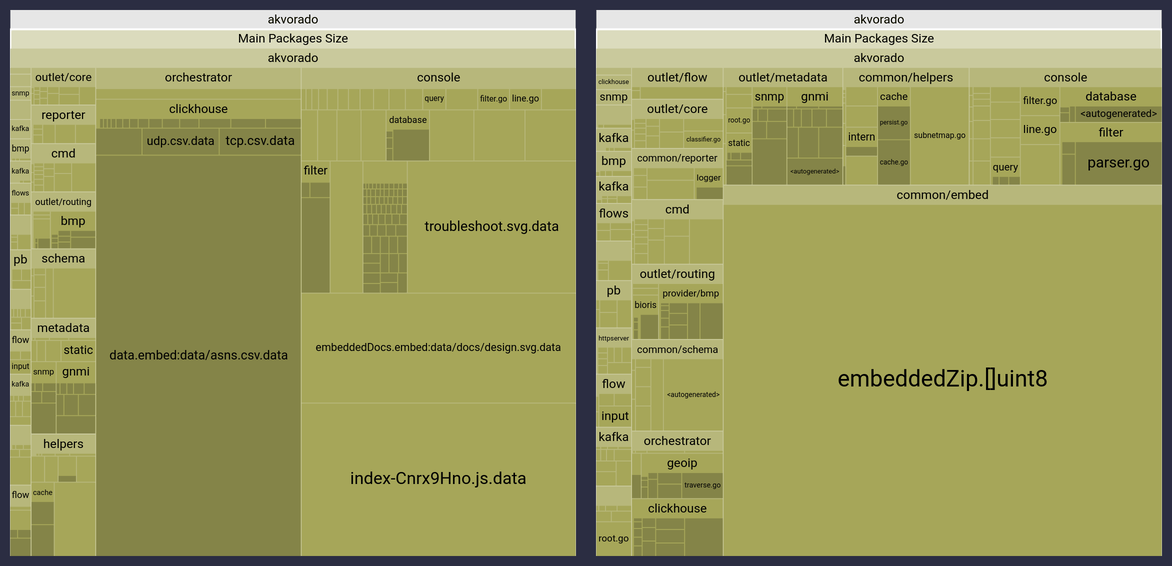
Breakdown of the space used by each component before (left) and after (right) the introduction of embed.zip.
Embedding these assets into a ZIP archive reduced the size of the Akvorado
executable by more than 4 MiB:
Performance loss
Reading from a compressed archive is not as fast as reading a flat file. A
simple benchmark shows it is more than 4 slower. It also allocates some
memory.2
Each access to an asset requires a decompression step, as seen in this flame
graph:
🖼 Flame graph when reading data from embed.zip compared to reading data directly
CPU flame graph comparing the time spent on CPU when reading data from embed.zip (left) versus reading data directly (right). Because the Go testing framework executes the benchmark for uncompressed data 4 times more often, it uses the same horizontal space as the benchmark for compressed data. The graph is interactive.
While a ZIP archive has an index to quickly find the requested file, seeking
inside a compressed file is currently not possible.3 Therefore, the files
from a compressed archive do not implement the io.ReaderAt or io.Seeker
interfaces, unlike directly embedded files. This prevents some features, like
serving partial files or detecting MIME types when serving files over HTTP.
For Akvorado, this is an acceptable compromise to save a few mebibytes from an
executable of almost 100 MiB. Next week, I will continue this futile adventure
by explaining how I prevented Go from disabling dead code elimination!
You can safely read multiple files concurrently. However, it does
not implement ReadDir() and ReadFile() methods.
You could keep frequently accessed assets in memory. This
reduces CPU usage and trades cached memory for resident memory.
SOZip is a profile that enables fast random access in a compressed
file. However, Go s archive/zip module does not support it.
It's done! It's over!
I've graduated, I have the scroll, I'm staring at
the eye-watering prices for the official photographer snap, I'm
adjusting to post-thesis life.
My PhD thesis revisions have been accepted and my thesis
is now available from Newcastle University Library's eThesis
repository.
As part of submitting my corrections, I wrote a brief report
detailing the changes I made from my thesis at the time of
the viva. I also produced a latexdiff
marked-up copy of the thesis to visualise the exact changes.
In order to shed some light on the post-viva corrections process, at least at
my institution, and in the hope that they are some use to someone, I'm sharing
those documents:
My Debian contributions this month were all
sponsored by
Freexian. I had a bit less time than usual, because Freexian collaborators
gathered in Marseille this month for our yearly sprint, doing some planning
for next year.
You can also support my work directly via
Liberapay or GitHub
Sponsors.
OpenSSH
I began preparing for the second stage of the GSS-API key exchange package
split (some
details have changed since that message). It seems that we ll need to wait
until Ubuntu 26.04 LTS has been released, but that s close enough that it s
worth making sure we re ready. This month I just did some packaging
cleanups that would otherwise have been annoying to copy, such as removing
support for direct upgrades from pre-bookworm. I m considering some other
package rearrangements to make the split easier to manage, but haven t made
any decisions here yet.
This also led me to start on a long-overdue bug triage pass, mainly
consisting of applying usertags to lots of our open bugs to sort them by
which program they apply to, and also closing a few that have been fixed,
since some bugs will eventually need to be reassigned to GSS-API packages
and it would be helpful to make them easier to find. At the time of
writing, about 30% of the bug list remains to be categorized this way.
Python packaging
I upgraded these packages to new upstream versions:
I packaged django-pgtransaction and
backported it to trixie, since we plan to use it in Debusine; and I adopted
python-certifi for the Python team.
I fixed or helped to fix several other build/test failures:
Welcome to the report for November 2025 from the Reproducible Builds project!
These monthly reports outline what we ve been up to over the past month, highlighting items of news from elsewhere in the increasingly-important area of software supply-chain security. As always, if you are interested in contributing to the Reproducible Builds project, please see the Contribute page on our website.
In this report:
10 years of Reproducible Builds at SeaGL 2025
On Friday 8th November, Chris Lamb gave a talk called 10 years of Reproducible Builds at SeaGL in Seattle, WA.
Founded in 2013, SeaGL is a free, grassroots technical summit dedicated to spreading awareness and knowledge about free source software, hardware and culture. Chris talk:
[ ] introduces the concept of reproducible builds, its technical underpinnings and its potentially transformative impact on software security and transparency. It is aimed at developers, security professionals and policy-makers who are concerned with enhancing trust and accountability in our software. It also provides a history of the Reproducible Builds project, which is approximately ten years old. How are we getting on? What have we got left to do? Aren t all the builds reproducible now?
Distribution work
In Debian this month, Jochen Sprickerhof created a merge request to replace the use of reprotest in Debian s Salsa Continuous Integration (CI) pipeline with debrebuild. Jochen cites the advantages as being threefold: firstly, that only one extra build needed ; it uses the same sbuild and ccache tooling as the normal build ; and works for any Debian release . The merge request was merged by Emmanuel Arias and is now active.
kpcyrd posted to our mailing list announcing the initial release of repro-threshold, which implements an APT transport that defines a threshold of at least X of my N trusted rebuilders need to confirm they reproduced the binary before installing Debian packages. Configuration can be done through a config file, or through a curses-like user interface.
Holger then merged two commits by Jochen Sprickerhof in order to address a fakeroot-related reproducibility issue in the debian-installer, and J rg Jaspert deployed a patch by Ivo De Decker for a bug originally filed by Holger in February 2025 related to some Debian packages not being archived on snapshot.debian.org.
Elsewhere, Roland Clobus performed some analysis on the live Debian trixie images, which he determined were not reproducible. However, in a follow-up post, Roland happily reports that the issues have been handled. In addition, 145 reviews of Debian packages were added, 12 were updated and 15 were removed this month adding to our knowledge about identified issues.
Lastly, Jochen Sprickerhof filed a bug announcing their intention to binary NMU a very large number of the R programming language after a reproducibility-related toolchain bug was fixed.
Bernhard M. Wiedemann posted another openSUSEmonthly update for their work there.
Julien Malka and Arnout Engelen launched the new hash collection
server for NixOS. Aside from improved reporting to help focus reproducible builds
efforts within NixOS, it collects build hashes as individually-signed attestations
from independent builders, laying the groundwork for further tooling.
Tool development
diffoscope version 307 was uploaded to Debian unstable (as well as version 309). These changes included further attempts to automatically attempt to deploy to PyPI by liaising with the PyPI developers/maintainers (with this experimental feature). [][][]
In addition, reprotest versions 0.7.31 and 0.7.32 were uploaded to Debian unstable by Holger Levsen, who also made the following changes:
Do not vary the architecture personality if the kernel is not varied. (Thanks to Ra l Cumplido). []
Drop the debian/watch file, as Lintian now flags this as error for native Debian packages. [][]
Bump Standards-Version to 4.7.2, with no changes needed. []
Drop the Rules-Requires-Root header as it is no longer required.. []
In addition, however, Vagrant Cascadian fixed a build failure by removing some extra whitespace from an older changelog entry. []
Website updates
Once again, there were a number of improvements made to our website this month including:
Bernhard M. Wiedemann updated the SOURCE_DATE_EPOCH page to fix the Lisp example syntax. []
Web3 applications, built on blockchain technology, manage billions of dollars in digital assets through decentralized applications (dApps) and smart contracts. These systems rely on complex, software supply chains that introduce significant security vulnerabilities. This paper examines the software supply chain security challenges unique to the Web3 ecosystem, where traditional Web2 software supply chain problems intersect with the immutable and high-stakes nature of blockchain technology. We analyze the threat landscape and propose mitigation strategies to strengthen the security posture of Web3 systems.
Their paper lists reproducible builds as one of the mitigating strategies. A PDF of the full text is available to download.
Upstream patches
The Reproducible Builds project detects, dissects and attempts to fix as many currently-unreproducible packages as possible. We endeavour to send all of our patches upstream where appropriate. This month, we wrote a large number of such patches, including:
Finally, if you are interested in contributing to the Reproducible Builds project, please visit our Contribute page on our website. However, you can get in touch with us via:
When I started looking at synths again, I had a feeling I would
want to record from them, and ideally not with a computer. To that
end, I also bought a second-hand standalone multitrack recorder,
the Zoom R8.
It's a little desktop console with two inputs, a built-in mic, and
8 sliders for adjusting the playback of 8 (ostensibly) independent
tracks. It has a USB port to interface with a computer, and
features some onboard effects (delay, reverb, that kind-of thing).
Look a bit closer, and the USB port is mini-USB, which gives away
its age (and I'll never get rid of mini-USB cables, will I?). The
two inputs are mono, so to capture stereo output from the
minilogue-xd I need to tie up both inputs. Also, the 8 tracks
are mono, so it's more like a stereo 4-track.
The effects (what little I've played with them) are really pretty
cool; and it's great to apply them to a live signal. We had some
fun running them over a bass guitar. However you can only use them
for 44.1 kHz sample rate. If you ignore the effects the device
supports 48 kHz.
I've ended up using it as my main USB interface on my computer;
It's great for that. The internal mic ended up being too weak to
use for video calls. As a USB interface, my computer can receive
the signal from the synth (and I've wasted more time than I care
to admit trying to wrestle with the Linux audio stack to do
something with that).
It can also run on batteries, which opens up the possibility of
recording piano with my daughter, or field recording or suchlike.
Writing this up serves as a reminder to me of why I bought it, and
I now intend to spend a little more time using it that way and stop
wasting time fighting ALSA/PulseAudio/PipeWire/PortAudio/etc.
It occurred to me recently that one of the attractions of vinyl, or more
generally physical media, could be that it's inert, safe: the music is a
groove cut into some plastic. That's it. The record can't do anything
unexpected to you1: it just contains music.
Safe.
There's so much exploitation of attention, and so much of what we interact
with in a computing context (social media) etc has been weaponised against
us, that having something some matter-of-fact is a relief. I know that
sometimes, I prefer to put a record on than to dial up the very same album
from any number of (ostensibly more convenient) digital sources, partly
because I don't need to spend any of my attention spoons to do so, I can
save them for the task at hand.
The same is perhaps not true for audio CDs. That might depend on your own
relationship with them, of course. For me they're inexorably tied up with
computing and a certain amount of faff (ripping, encoding, metadata). And
long dead it might be (hopefully), but I can still remember Sony's CD
rootkit scandal:
CDs could be a trojan horse. Beware!
DebConf25 was held at IMT Atlantique Brest Campus in France from 14th to 19th July 2025. As usual, it was preceded by DebCamp from 7th to 13th July.
I was less motivated to write this time. So this year, more pictures, less text. Hopefully, (eventually) I may come back to fill this up.
Conference
IMT Atlantique
Main conference area
RAK restaurant, the good food place near the venue
Bits from DPL (can't really miss the tradition of a Bits picture)
During the conference, Subin had this crazy idea of shooting Parody of a popular clip from the American-Malayalee television series Akkarakazhchakal advertising Debian. He explained the whole story in the BTS video. The results turned out great, TBF:
I managed to complete The Little Prince (Le Petit Prince) during my travel from Paris to Brest
Paris
Basilica of the Sacred Heart of Montmartre
View of Paris from the Basilica of the Sacred Heart of Montmartre
Paris streets
Cats rule the world, even on Paris streetlights
Eiffel Tower. It's massive.
View from Eiffel Tower Credits - Nilesh Patra, licensed under CC BY SA 4.0.
As for the next DebConf work, it has already started. It seems like it never ends. We close one and in one or two months start working on the next one. DebConf is going to Argentina this time and we have a nice little logo too now.
DebConf26 logo Credits - Romina Molina, licensed under CC BY SA 4.0.
Overall, DebConf25 Brest was a nice conference. Many thanks to local team, PEB and everyone involved for everything. Let s see about next year. Bye!
Welcome to the October 2025 report from the Reproducible Builds project!
Welcome to the very latest report from the Reproducible Builds project. Our monthly reports outline what we ve been up to over the past month, and highlight items of news from elsewhere in the increasingly-important area of software supply-chain security. As ever, if you are interested in contributing to the Reproducible Builds project, please see the Contribute page on our website.
In this report:
Farewell from the Reproducible Builds Summit 2025
Thank you to everyone who joined us at the Reproducible Builds Summit in Vienna, Austria!
We were thrilled to host the eighth edition of this exciting event, following the success of previous summits in various iconic locations around the world, including Venice, Marrakesh, Paris, Berlin, Hamburg and Athens. During this event, participants had the opportunity to engage in discussions, establish connections and exchange ideas to drive progress in this vital field. Our aim was to create an inclusive space that fosters collaboration, innovation and problem-solving.
The agenda of the three main days is available online however, some working sessions may still lack notes at time of publication.
One tangible outcome of the summit is that Johannes Starosta finished their rebuilderd tutorial, which is now available online and Johannes is actively seeking feedback.
Google s Play Store breaks reproducible builds for Signal
On the issue tracker for the popular Signal messenger app, developer Greyson Parrelli reports that updates to the Google Play store have, in effect, broken reproducible builds:
The most recent issues have to do with changes to the APKs that are made by the Play Store. Specifically, they add some attributes to some .xml files around languages are resources, which is not unexpected because of how the whole bundle system works. This is trickier to resolve, because unlike current expected differences (like signing information), we can t just exclude a whole file from the comparison. We have to take a more nuanced look at the diff. I ve been hesitant to do that because it ll complicate our currently-very-readable comparison script, but I don t think there s any other reasonable option here.
kpcyrd forwarded a fascinating tidbit regarding so-called ninja and samurai build ordering, that uses data structures in which the pointer values returned from malloc are used to determine some order of execution.
Arnout Engelen, Justin Cappos, Ludovic Court s and kpcyrd continued a conversation started in September regarding the Minimum Elements for a Software Bill of Materials . (Full thread)
Felix Moessbauer of Siemens posted to the list reporting that he had recently stumbled upon a couple of Debian source packages on the snapshot mirrors that are listed multiple times (same name and version), but each time with a different checksum . The thread, which Felix titled, Debian: what precisely identifies a source package is about precisely that what can be axiomatically relied upon by consumers of the Debian archives, as well as indicating an issue where we can t exactly say which packages were used during build time (even when having the .buildinfo files).
Luca DiMaio posted to the list announcing the release of xfsprogs 6.17.0 which specifically includes a commit that implements the functionality to populate a newly created XFS filesystem directly from an existing directory structure which makes it easier to create populated filesystems
without having to mount them [and thus is] particularly useful for reproducible builds . Luca asked the list how they might contribute to the docs of the System images page.
Reproducible Builds at the Transparency.dev summit
Holger Levsen gave a talk at this year s Transparency.dev summit in Gothenburg, Sweden, outlining the achievements of the Reproducible Builds project in the last 12 years, covering both upstream developments as well as some distribution-specific details. As mentioned on the talk s page, Holger s presentation concluded with an outlook into the future and an invitation to collaborate to bring transparency logs into Reproducible Builds projects .
The slides of the talk are available, although a video has yet to be released. Nevertheless, as a result of the discussions at Transparency.dev there is a new page on the Debian wiki with the aim of describing a potential transparency log setup for Debian.
Supply Chain Security for Go
Andrew Ayer has setup a new service at sourcespotter.com that aims to monitor the supply chain security for Go releases. It consists of four separate trackers:
A tool to verify that the Go Module Mirror and Checksum Database is behaving honestly and has not presented inconsistent information to clients.
A module monitor that records every module version served by the Go Module Mirror and Checksum Database, allowing you to monitor for unexpected versions of your modules.
A tool to verifies that the Go toolchains published in the Go Module Mirror can be reproduced from source code, making it difficult to hide backdoors in the binaries downloaded by the go command.
A telemetry config tracker that tracks the names of telemetry counters uploaded by the Go toolchain, to ensure that Go telemetry is not violating users privacy.
As the homepage of the service mentions, the trackers are free software and do not rely on Google infrastructure.
In March 2024, a sophisticated backdoor was discovered in xz, a core compression library in Linux distributions, covertly inserted over three years by a malicious maintainer, Jia Tan. The attack, which enabled remote code execution via ssh, was only uncovered by chance when Andres Freund investigated a minor performance issue. This incident highlights the vulnerability of the open-source supply chain and the effort attackers are willing to invest in gaining trust and access. In this article, I analyze the backdoor s mechanics and explore how bitwise build reproducibility could have helped detect it.
Although quantum computing is a rapidly evolving field of research, it can already benefit from adopting reproducible builds. This paper aims to bridge the gap between the quantum computing and reproducible builds communities. We propose a generalization of the definition of reproducible builds in the quantum setting, motivated by two threat models: one targeting the confidentiality of end users data during circuit preparation and submission to a quantum computer, and another compromising the integrity of quantum computation results. This work presents three examples that show how classical information can be hidden in transpiled quantum circuits, and two cases illustrating how even minimal modifications to these circuits can lead to incorrect quantum computation results.
The thesis focuses on providing a reproducible build process for two open-source E2EE messaging applications: Signal and Wire. The motivation to ensure reproducibility and thereby the integrity of E2EE messaging applications stems from their central role as essential tools for modern digital privacy. These applications provide confidentiality for private and sensitive communications, and their compromise could undermine encryption mechanisms, potentially leaking sensitive data to third parties.
Currently, there are numerous solutions and techniques available in the market to tackle supply chain security, and all claim to be the best solution. This thesis delves deeper by implementing those solutions and evaluates them for better understanding. Some of the tools that this thesis implemented are Syft, Trivy, Grype, FOSSA, dependency-check, and Gemnasium. Software dependencies are generated in a Software Bill of Materials (SBOM) format by using these open-source tools, and the corresponding results have been analyzed. Among these tools, Syft and Trivy outperform others as they provide relevant and accurate information on software dependencies.
In the wake of growing supply chain attacks, the FreeBSD developers are relying on a transparent build concept in the form of Zero-Trust Builds. The approach builds on the established Reproducible Builds, where binary files can be rebuilt bit-for-bit from the published source code. While reproducible builds primarily ensure verifiability, the zero-trust model goes a step further and removes trust from the build process itself. No single server, maintainer, or compiler can be considered more than potentially trustworthy.
Upstream patches
The Reproducible Builds project detects, dissects and attempts to fix as many currently-unreproducible packages as possible. We endeavour to send all of our patches upstream where appropriate. This month, we wrote a large number of such patches, including:
Bernhard Wiedemann and Zbigniew J drzejewski-Szmek extended ismypackagereproducibleyet.org with initial support for Fedora [].
In addition, a number of contributors added a series of notes from our recent summit to the website, including Alexander Couzens [], Robin Candau [][][][][][][][][] and kpcyrd [].
Tool development
diffoscope version 307 was uploaded to Debian unstable by Chris Lamb, who made a number of changes including fixing compatibility with LLVM version 21 [], an attempt to automatically attempt to deploy to PyPI by liaising with the PyPI developers/maintainers (with this experimental feature). [] In addition, Vagrant Cascadian updated diffoscope in GNU Guix to version 307.
Finally, if you are interested in contributing to the Reproducible Builds project, please visit our Contribute page on our website. However, you can get in touch with us via:
I have just converted to the Internode NBN500 plan which is now the same price as the NBN100 plan. I m in a HFC area so they won t let me get fiber to the home (due to Malcolm Turnbull breaking the NBN to help Murdoch) so I m limited to what HFC can do.
I first tried it out on a 100mbit card and got speeds of 96/47 mb/s according to speedtest.net. I ve always had the MTU set to 1492 for the PPPoE connection (something I forgot to mention in my blog post about connecting to the Arris CM8200 on Debian [1]) but when run on the 100mbit card I had to set it to 1488. Apparently 1488 is the number because 4 bytes are taken for the VLAN header and 8 bytes for the PPPoE header. But it seems that when using gigabit ethernet it doesn t take 4 bytes for the VLAN (comments explaining that would be appreciated).
when connected via gigabit with a MTU of 1492 I got speeds of 534/46 which are quite good. When I tested with my laptop on a Wifi link while sitting next to the main node of my Kogan Wifi6 mesh [2] via 2.4GHz wifi I got 172/45. When using 5GHz I got 514/41. When using 5GHz at the far end of my home over the mesh I got 200/45.
Here s a table summarising the speeds. I rounded all speeds off to 1Mbit/s because I don t think that the results are even that accurate. I think that Wifi5 over mesh reporting a faster upload speed than Wifi5 near the AP is because of random factors not an actual benefit to being further away, but I will do more tests later on.
Since it's spooky season, let me present to you the FrankenKeyboard!
8bitdo retro keyboard
For some reason I can't fathom, I was persuaded into buying an
8bitdo retro mechanical keyboard.
It was very reasonably priced, and has a few nice fun features:
built-in bluetooth and 2.4GHz wireless (with the supplied dongle);
colour scheme inspired by the Nintendo Famicom; fun to use knobs
for volume control; some basic macro support; and funky oversized
mashable macro keys (which work really well as "Copy" and "Paste")
The 8bitdo keyboards come with switch-types I had not previously
experienced: Kailh Box White v2. I'm used to Cherry MX Reds, but
I loved the feel of the Box White v2s. The 8bitdo keyboards all
have hot-swappable key switches.
It's relatively compact (comes without a numpad), but still larger
than my TEX Shura, which (at home) is my daily driver. I also
miss the trackpoint mouse on the Shura. Finally, the 8bitdo model
I bought has American ANSI key layout, which I can tolerate but is
not as nice as ISO. I later learned that they have a limited range
of ISO-layout keyboards too, but not (yet) in the Famicom colour
scheme I'd bought.
DIY Shura
My existing Shura's key switches are soldered on and can't be swapped
out. But I really preferred the Kailh white switches.
I decided to buy a second Shura, this time as a "DIY kit" which
accepts hot-swappable switches. I then moved the Kailh Box White v2
switches over from the 8bitdo keyboard.
keycaps
Part of justifying buying the DIY kit was the possibility that I could sell on
my older Shura with the Cherry MX Red switches. My existing Shura's key caps
are for the ISO-GB layout and have their legends printed onto them. After three
years the legends have faded in a few places.
The DIY kit comes with a set of ABS "double-shot" key caps (where the
key legends are plastic rather than printed). They look a lot nicer, but
I don't look at my keys. I'm considering applying the new, pristine key
caps to the old Shura board, to make it more attractive to buyers. One
problem is I'm not sure the new set of caps includes the ISO-UK specific
ones. It might be that potential buyers might prefer to have used caps
with the correct legends rather than pristine ones which are mislabelled.
franken keyboard
Given I wasn't going to use the new key cap set, I borrowed most of the caps
from the 8bitdo keyboard. I had to retain the G, H and B keys from my older
Shura as they are specially molded to leave space for the trackpoint, and a
couple of the modifier keys which weren't the right size. Hence the odd look!
(It needs some tweaking. That left-ALT looks out of place. It may be that the
8bitdo caps are temporary. Left "cmd" is really Fn, and "Caps lock" is really
"Super". The right-hand red dot is a second "Super".)
Since taking the photo I've removed the "stabilisers" under the right-shift
and backspace keys, in order to squeeze a couple more keys in their place.
the new keycap set includes a regular-sized "BS" key, as the JIS keyboard
layout has a regular-sized backspace. (Everyone should have a BS key in my
opinion.)
I plan to map my new keys to "Copy" and "Paste" actions following the advice in
this article.
The discovery of a backdoor in XZ Utils in the spring of 2024 shocked the open source community, raising critical questions about software supply chain security. This post explores whether better Debian packaging practices could have detected this threat, offering a guide to auditing packages and suggesting future improvements.
The XZ backdoor in versions 5.6.0/5.6.1 made its way briefly into many major Linux distributions such as Debian and Fedora, but luckily didn t reach that many actual users, as the backdoored releases were quickly removed thanks to the heroic diligence of Andres Freund. We are all extremely lucky that he detected a half a second performance regression in SSH, cared enough to trace it down, discovered malicious code in the XZ library loaded by SSH, and reported promtly to various security teams for quick coordinated actions.
This episode makes software engineers pondering the following questions:
Why didn t any Linux distro packagers notice anything odd when importing the new XZ version 5.6.0/5.6.1 from upstream?
Is the current software supply-chain in the most popular Linux distros easy to audit?
Could we have similar backdoors lurking that haven t been detected yet?
As a Debian Developer, I decided to audit the xz package in Debian, share my methodology and findings in this post, and also suggest some improvements on how the software supply-chain security could be tightened in Debian specifically.
Note that the scope here is only to inspect how Debian imports software from its upstreams, and how they are distributed to Debian s users. This excludes the whole story of how to assess if an upstream project is following software development security best practices. This post doesn t discuss how to operate an individual computer running Debian to ensure it remains untampered as there are plenty of guides on that already.
Downloading Debian and upstream source packages
Let s start by working backwards from what the Debian package repositories offer for download. As auditing binaries is extremely complicated, we skip that, and assume the Debian build hosts are trustworthy and reliably building binaries from the source packages, and the focus should be on auditing the source code packages.
As with everything in Debian, there are multiple tools and ways to do the same thing, but in this post only one (and hopefully the best) way to do something is presented for brevity.
The first step is to download the latest version and some past versions of the package from the Debian archive, which is easiest done with debsnap. The following command will download all Debian source packages of xz-utils from Debian release 5.2.4-1 onwards:
Verifying authenticity of upstream and Debian sources using OpenPGP signatures
As seen in the output of debsnap, it already automatically verifies that the downloaded files match the OpenPGP signatures. To have full clarity on what files were authenticated with what keys, we should verify the Debian packagers signature with:
$ gpg --verify --auto-key-retrieve --keyserver hkps://keyring.debian.org xz-utils_5.8.1-2.dsc
gpg: Signature made Fri Oct 3 22:04:44 2025 UTC
gpg: using RSA key 57892E705233051337F6FDD105641F175712FA5B
gpg: requesting key 05641F175712FA5B from hkps://keyring.debian.org
gpg: key 7B96E8162A8CF5D1: public key "Sebastian Andrzej Siewior" imported
gpg: Total number processed: 1
gpg: imported: 1
gpg: Good signature from "Sebastian Andrzej Siewior" [unknown]
gpg: aka "Sebastian Andrzej Siewior <bigeasy@linutronix.de>" [unknown]
gpg: aka "Sebastian Andrzej Siewior <sebastian@breakpoint.cc>" [unknown]
gpg: WARNING: This key is not certified with a trusted signature!
gpg: There is no indication that the signature belongs to the owner.
Primary key fingerprint: 6425 4695 FFF0 AA44 66CC 19E6 7B96 E816 2A8C F5D1
Subkey fingerprint: 5789 2E70 5233 0513 37F6 FDD1 0564 1F17 5712 FA5B
The upstream tarball signature (if available) can be verified with:
$ gpg --verify --auto-key-retrieve xz-utils_5.8.1.orig.tar.xz.asc
gpg: assuming signed data in 'xz-utils_5.8.1.orig.tar.xz'
gpg: Signature made Thu Apr 3 11:38:23 2025 UTC
gpg: using RSA key 3690C240CE51B4670D30AD1C38EE757D69184620
gpg: key 38EE757D69184620: public key "Lasse Collin <lasse.collin@tukaani.org>" imported
gpg: Total number processed: 1
gpg: imported: 1
gpg: Good signature from "Lasse Collin <lasse.collin@tukaani.org>" [unknown]
gpg: WARNING: This key is not certified with a trusted signature!
gpg: There is no indication that the signature belongs to the owner.
Primary key fingerprint: 3690 C240 CE51 B467 0D30 AD1C 38EE 757D 6918 4620
Note that this only proves that there is a key that created a valid signature for this content. The authenticity of the keys themselves need to be validated separately before trusting they in fact are the keys of these people. That can be done by checking e.g. the upstream website for what key fingerprints they published, or the Debian keyring for Debian Developers and Maintainers, or by relying on the OpenPGP web-of-trust .
Verifying authenticity of upstream sources by comparing checksums
In case the upstream in question does not publish release signatures, the second best way to verify the authenticity of the sources used in Debian is to download the sources directly from upstream and compare that the sha256 checksums match.
This should be done using the debian/watch file inside the Debian packaging, which defines where the upstream source is downloaded from. Continuing on the example situation above, we can unpack the latest Debian sources, enter and then run uscan to download:
$ tar xvf xz-utils_5.8.1-2.debian.tar.xz
...
debian/rules
debian/source/format
debian/source.lintian-overrides
debian/symbols
debian/tests/control
debian/tests/testsuite
debian/upstream/signing-key.asc
debian/watch
...
$ uscan --download-current-version --destdir /tmp
Newest version of xz-utils on remote site is 5.8.1, specified download version is 5.8.1
gpgv: Signature made Thu Apr 3 11:38:23 2025 UTC
gpgv: using RSA key 3690C240CE51B4670D30AD1C38EE757D69184620
gpgv: Good signature from "Lasse Collin <lasse.collin@tukaani.org>"
Successfully symlinked /tmp/xz-5.8.1.tar.xz to /tmp/xz-utils_5.8.1.orig.tar.xz.
The original files downloaded from upstream are now in /tmp along with the files renamed to follow Debian conventions. Using everything downloaded so far the sha256 checksums can be compared across the files and also to what the .dsc file advertised:
In the example above the checksum 0b54f79df85... is the same across the files, so it is a match.
Repackaged upstream sources can t be verified as easily
Note that uscan may in rare cases repackage some upstream sources, for example to exclude files that don t adhere to Debian s copyright and licensing requirements. Those files and paths would be listed under the Files-Excluded section in the debian/copyright file. There are also other situations where the file that represents the upstream sources in Debian isn t bit-by-bit the same as what upstream published. If checksums don t match, an experienced Debian Developer should review all package settings (e.g. debian/source/options) to see if there was a valid and intentional reason for divergence.
Reviewing changes between two source packages using diffoscope
Diffoscope is an incredibly capable and handy tool to compare arbitrary files. For example, to view a report in HTML format of the differences between two XZ releases, run:
If the changes are extensive, and you want to use a LLM to help spot potential security issues, generate the report of both the upstream and Debian packaging differences in Markdown with:
The Markdown files created above can then be passed to your favorite LLM, along with a prompt such as:
Based on the attached diffoscope output for a new Debian package version compared with the previous one, list all suspicious changes that might have introduced a backdoor, followed by other potential security issues. If there are none, list a short summary of changes as the conclusion.
Reviewing Debian source packages in version control
As of today only 93% of all Debian source packages are tracked in git on Debian s GitLab instance at salsa.debian.org. Some key packages such as Coreutils and Bash are not using version control at all, as their maintainers apparently don t see value in using git for Debian packaging, and the Debian Policy does not require it. Thus, the only reliable and consistent way to audit changes in Debian packages is to compare the full versions from the archive as shown above.
However, for packages that are hosted on Salsa, one can view the git history to gain additional insight into what exactly changed, when and why. For packages that are using version control, their location can be found in the Git-Vcs header in the debian/control file. For xz-utils the location is salsa.debian.org/debian/xz-utils.
Note that the Debian policy does not state anything about how Salsa should be used, or what git repository layout or development practices to follow. In practice most packages follow the DEP-14 proposal, and use git-buildpackage as the tool for managing changes and pushing and pulling them between upstream and salsa.debian.org.
To get the XZ Utils source, run:
$ gbp clone https://salsa.debian.org/debian/xz-utils.git
gbp:info: Cloning from 'https://salsa.debian.org/debian/xz-utils.git'
$ gbp clone https://salsa.debian.org/debian/xz-utils.git
gbp:info: Cloning from 'https://salsa.debian.org/debian/xz-utils.git'
At the time of writing this post the git history shows:
$ git log --graph --oneline
* bb787585 (HEAD -> debian/unstable, origin/debian/unstable, origin/HEAD) Prepare 5.8.1-2
* 4b769547 d: Remove the symlinks from -dev package.
* a39f3428 Correct the nocheck build profile
* 1b806b8d Import Debian changes 5.8.1-1.1
* b1cad34b Prepare 5.8.1-1
* a8646015 Import 5.8.1
* 2808ec2d Update upstream source from tag 'upstream/5.8.1'
 \
  * fa1e8796 (origin/upstream/v5.8, upstream/v5.8) New upstream version 5.8.1
  * a522a226 Bump version and soname for 5.8.1
  * 1c462c2a Add NEWS for 5.8.1
  * 513cabcf Tests: Call lzma_code() in smaller chunks in fuzz_common.h
  * 48440e24 Tests: Add a fuzzing target for the multithreaded .xz decoder
  * 0c80045a liblzma: mt dec: Fix lack of parallelization in single-shot decoding
  * 81880488 liblzma: mt dec: Don't modify thr->in_size in the worker thread
  * d5a2ffe4 liblzma: mt dec: Don't free the input buffer too early (CVE-2025-31115)
  * c0c83596 liblzma: mt dec: Simplify by removing the THR_STOP state
  * 831b55b9 liblzma: mt dec: Fix a comment
  * b9d168ee liblzma: Add assertions to lzma_bufcpy()
  * c8e0a489 DOS: Update Makefile to fix the build
  * 307c02ed sysdefs.h: Avoid <stdalign.h> even with C11 compilers
  * 7ce38b31 Update THANKS
  * 688e51bd Translations: Update the Croatian translation
*   a6b54dde Prepare 5.8.0-1.
*   77d9470f Add 5.8 symbols.
*   9268eb66 Import 5.8.0
*   6f85ef4f Update upstream source from tag 'upstream/5.8.0'
 \ \
  *   afba662b New upstream version 5.8.0
   /
  * 173fb5c6 doc/SHA256SUMS: Add 5.8.0
  * db9258e8 Bump version and soname for 5.8.0
  * bfb752a3 Add NEWS for 5.8.0
  * 6ccbb904 Translations: Run "make -C po update-po"
  * 891a5f05 Translations: Run po4a/update-po
  * 4f52e738 Translations: Partially fix overtranslation in Serbian man pages
  * ff5d9447 liblzma: Count the extra bytes in LZMA/LZMA2 decoder memory usage
  * 943b012d liblzma: Use SSE2 intrinsics instead of memcpy() in dict_repeat()
This shows both the changes on the debian/unstable branch as well as the intermediate upstream import branch, and the actual real upstream development branch. See my Debian source packages in git explainer for details of what these branches are used for.
To only view changes on the Debian branch, run git log --graph --oneline --first-parent or git log --graph --oneline -- debian.
The Debian branch should only have changes inside the debian/ subdirectory, which is easy to check with:
If the upstream in question signs commits or tags, they can be verified with e.g.:
$ git verify-tag v5.6.2
gpg: Signature made Wed 29 May 2024 09:39:42 AM PDT
gpg: using RSA key 3690C240CE51B4670D30AD1C38EE757D69184620
gpg: issuer "lasse.collin@tukaani.org"
gpg: Good signature from "Lasse Collin <lasse.collin@tukaani.org>" [expired]
gpg: Note: This key has expired!
$ git verify-tag v5.6.2
gpg: Signature made Wed 29 May 2024 09:39:42 AM PDT
gpg: using RSA key 3690C240CE51B4670D30AD1C38EE757D69184620
gpg: issuer "lasse.collin@tukaani.org"
gpg: Good signature from "Lasse Collin <lasse.collin@tukaani.org>" [expired]
gpg: Note: This key has expired!
The main benefit of reviewing changes in git is the ability to see detailed information about each individual change, instead of just staring at a massive list of changes without any explanations. In this example, to view all the upstream commits since the previous import to Debian, one would view the commit range from afba662b New upstream version 5.8.0 to fa1e8796 New upstream version 5.8.1 with git log --reverse -p afba662b...fa1e8796. However, a far superior way to review changes would be to browse this range using a visual git history viewer, such as gitk. Either way, looking at one code change at a time and reading the git commit message makes the review much easier.
Comparing Debian source packages to git contents
As stated in the beginning of the previous section, and worth repeating, there is no guarantee that the contents in the Debian packaging git repository matches what was actually uploaded to Debian. While the tag2upload project in Debian is getting more and more popular, Debian is still far from having any system to enforce that the git repository would be in sync with the Debian archive contents.
To detect such differences we can run diff across the Debian source packages downloaded with debsnap earlier (path source-xz-utils/xz-utils_5.8.1-2.debian) and the git repository cloned in the previous section (path xz-utils):
diff$ diff -u source-xz-utils/xz-utils_5.8.1-2.debian/ xz-utils/debian/
diff -u source-xz-utils/xz-utils_5.8.1-2.debian/changelog xz-utils/debian/changelog
--- debsnap/source-xz-utils/xz-utils_5.8.1-2.debian/changelog 2025-10-03 09:32:16.000000000 -0700
+++ xz-utils/debian/changelog 2025-10-12 12:18:04.623054758 -0700
@@ -5,7 +5,7 @@
* Remove the symlinks from -dev, pointing to the lib package.
(Closes: #1109354)
- -- Sebastian Andrzej Siewior <sebastian@breakpoint.cc> Fri, 03 Oct 2025 18:32:16 +0200
+ -- Sebastian Andrzej Siewior <sebastian@breakpoint.cc> Fri, 03 Oct 2025 18:36:59 +0200
$ diff -u source-xz-utils/xz-utils_5.8.1-2.debian/ xz-utils/debian/
diff -u source-xz-utils/xz-utils_5.8.1-2.debian/changelog xz-utils/debian/changelog
--- debsnap/source-xz-utils/xz-utils_5.8.1-2.debian/changelog 2025-10-03 09:32:16.000000000 -0700
+++ xz-utils/debian/changelog 2025-10-12 12:18:04.623054758 -0700
@@ -5,7 +5,7 @@
* Remove the symlinks from -dev, pointing to the lib package.
(Closes: #1109354)
- -- Sebastian Andrzej Siewior <sebastian@breakpoint.cc> Fri, 03 Oct 2025 18:32:16 +0200
+ -- Sebastian Andrzej Siewior <sebastian@breakpoint.cc> Fri, 03 Oct 2025 18:36:59 +0200
In the case above diff revealed that the timestamp in the changelog in the version uploaded to Debian is different from what was committed to git. This is not malicious, just a mistake by the maintainer who probably didn t run gbp tag immediately after upload, but instead some dch command and ended up with having a different timestamps in the git compared to what was actually uploaded to Debian.
Creating syntetic Debian packaging git repositories
If no Debian packaging git repository exists, or if it is lagging behind what was uploaded to Debian s archive, one can use git-buildpackage s import-dscs feature to create synthetic git commits based on the files downloaded by debsnap, ensuring the git contents fully matches what was uploaded to the archive. To import a single version there is gbp import-dsc (no s at the end), of which an example invocation would be:
$ gbp import-dsc --verbose ../source-xz-utils/xz-utils_5.8.1-2.dsc
Version '5.8.1-2' imported under '/home/otto/debian/xz-utils-2025-09-29'
$ gbp import-dsc --verbose ../source-xz-utils/xz-utils_5.8.1-2.dsc
Version '5.8.1-2' imported under '/home/otto/debian/xz-utils-2025-09-29'
Example commit history from a repository with commits added with gbp import-dsc:
An online example repository with only a few missing uploads added using gbp import-dsc can be viewed at salsa.debian.org/otto/xz-utils-2025-09-29/-/network/debian%2Funstable
An example repository that was fully crafted using gbp import-dscs can be viewed at salsa.debian.org/otto/xz-utils-gbp-import-dscs-debsnap-generated/-/network/debian%2Flatest.
There exists also dgit, which in a similar way creates a synthetic git history to allow viewing the Debian archive contents via git tools. However, its focus is on producing new package versions, so fetching a package with dgit that has not had the history recorded in dgit earlier will only show the latest versions:
$ dgit clone xz-utils
canonical suite name for unstable is sid
starting new git history
last upload to archive: NO git hash
downloading http://ftp.debian.org/debian//pool/main/x/xz-utils/xz-utils_5.8.1.orig.tar.xz...
downloading http://ftp.debian.org/debian//pool/main/x/xz-utils/xz-utils_5.8.1.orig.tar.xz.asc...
downloading http://ftp.debian.org/debian//pool/main/x/xz-utils/xz-utils_5.8.1-2.debian.tar.xz...
dpkg-source: info: extracting xz-utils in unpacked
dpkg-source: info: unpacking xz-utils_5.8.1.orig.tar.xz
dpkg-source: info: unpacking xz-utils_5.8.1-2.debian.tar.xz
synthesised git commit from .dsc 5.8.1-2
HEAD is now at f9bcaf7 xz-utils (5.8.1-2) unstable; urgency=medium
dgit ok: ready for work in xz-utils
$ dgit/sid   git log --graph --oneline
* f9bcaf7 xz-utils (5.8.1-2) unstable; urgency=medium 9 days ago (HEAD -> dgit/sid, dgit/dgit/sid)
 \
  * 11d3a62 Import xz-utils_5.8.1-2.debian.tar.xz 9 days ago
* 15dcd95 Import xz-utils_5.8.1.orig.tar.xz 6 months ago
Unlike git-buildpackage managed git repositories, the dgit managed repositories cannot incorporate the upstream git history and are thus less useful for auditing the full software supply-chain in git.
Comparing upstream source packages to git contents
Equally important to the note in the beginning of the previous section, one must also keep in mind that the upstream release source packages, often called release tarballs, are not guaranteed to have the exact same contents as the upstream git repository. Projects might strip out test data or extra development files from their release tarballs to avoid shipping unnecessary files to users, or projects might add documentation files or versioning information into the tarball that isn t stored in git. While a small minority, there are also upstreams that don t use git at all, so the plain files in a release tarball is still the lowest common denominator for all open source software projects, and exporting and importing source code needs to interface with it.
In the case of XZ, the release tarball has additional version info and also a sizeable amount of pregenerated compiler configuration files. Detecting and comparing differences between git contents and tarballs can of course be done manually by running diff across an unpacked tarball and a checked out git repository. If using git-buildpackage, the difference between the git contents and tarball contents can be made visible directly in the import commit.
In this XZ example, consider this git history:
* b1cad34b Prepare 5.8.1-1
* a8646015 Import 5.8.1
* 2808ec2d Update upstream source from tag 'upstream/5.8.1'
 \
  * fa1e8796 (debian/upstream/v5.8, upstream/v5.8) New upstream version 5.8.1
  * a522a226 (tag: v5.8.1) Bump version and soname for 5.8.1
  * 1c462c2a Add NEWS for 5.8.1
* b1cad34b Prepare 5.8.1-1
* a8646015 Import 5.8.1
* 2808ec2d Update upstream source from tag 'upstream/5.8.1'
 \
  * fa1e8796 (debian/upstream/v5.8, upstream/v5.8) New upstream version 5.8.1
  * a522a226 (tag: v5.8.1) Bump version and soname for 5.8.1
  * 1c462c2a Add NEWS for 5.8.1
The commit a522a226 was the upstream release commit, which upstream also tagged v5.8.1. The merge commit 2808ec2d applied the new upstream import branch contents on the Debian branch. Between these is the special commit fa1e8796 New upstream version 5.8.1 tagged upstream/v5.8. This commit and tag exists only in the Debian packaging repository, and they show what is the contents imported into Debian. This is generated automatically by git-buildpackage when running git import-orig --uscan for Debian packages with the correct settings in debian/gbp.conf. By viewing this commit one can see exactly how the upstream release tarball differs from the upstream git contents (if at all).
In the case of XZ, the difference is substantial, and shown below in full as it is very interesting:
To be able to easily inspect exactly what changed in the release tarball compared to git release tag contents, the best tool for the job is Meld, invoked via git difftool --dir-diff fa1e8796^..fa1e8796.
To compare changes across the new and old upstream tarball, one would need to compare commits afba662b New upstream version 5.8.0 and fa1e8796 New upstream version 5.8.1 by running git difftool --dir-diff afba662b..fa1e8796.
With all the above tips you can now go and try to audit your own favorite package in Debian and see if it is identical with upstream, and if not, how it differs.
Should the XZ backdoor have been detected using these tools?
The famous XZ Utils backdoor (CVE-2024-3094) consisted of two parts: the actual backdoor inside two binary blobs masqueraded as a test files (tests/files/bad-3-corrupt_lzma2.xz, tests/files/good-large_compressed.lzma), and a small modification in the build scripts (m4/build-to-host.m4) to extract the backdoor and plant it into the built binary. The build script was not tracked in version control, but generated with GNU Autotools at release time and only shipped as additional files in the release tarball.
The entire reason for me to write this post was to ponder if a diligent engineer using git-buildpackage best practices could have reasonably spotted this while importing the new upstream release into Debian. The short answer is no . The malicious actor here clearly anticipated all the typical ways anyone might inspect both git commits, and release tarball contents, and masqueraded the changes very well and over a long timespan.
First of all, XZ has for legitimate reasons for several carefully crafted .xz files as test data to help catch regressions in the decompression code path. The test files are shipped in the release so users can run the test suite and validate that the binary is built correctly and xz works properly. Debian famously runs massive amounts of testing in its CI and autopkgtest system across tens of thousands of packages to uphold high quality despite frequent upgrades of the build toolchain and while supporting more CPU architectures than any other distro. Test data is useful and should stay.
When git-buildpackage is used correctly, the upstream commits are visible in the Debian packaging for easy review, but the commit cf44e4b that introduced the test files does not deviate enough from regular sloppy coding practices to really stand out. It is unfortunately very common for git commit to lack a message body explaining why the change was done, and to not be properly atomic with test code and test data together in the same commit, and for commits to be pushed directly to mainline without using code reviews (the commit was not part of any PR in this case). Only another upstream developer could have spotted that this change is not on par to what the project expects, and that the test code was never added, only test data, and thus that this commit was not just a sloppy one but potentially malicious.
Secondly, the fact that a new Autotools file appeared (m4/build-to-host.m4) in the XZ Utils 5.6.0 is not suspicious. This is perfectly normal for Autotools. In fact, starting from XZ Utils version 5.8.1 it is now shipping a m4/build-to-host.m4 file that it actually uses now.
Spotting that there is anything fishy is practically impossible by simply reading the code, as Autotools files are full custom m4 syntax interwoven with shell script, and there are plenty of backticks () that spawn subshells and evals that execute variable contents further, which is just normal for Autotools. Russ Cox s XZ post explains how exactly the Autotools code fetched the actual backdoor from the test files and injected it into the build.
There is only one tiny thing that maybe a very experienced Autotools user could potentially have noticed: the serial 30 in the version header is way too high. In theory one could also have noticed this Autotools file deviates from what other packages in Debian ship with the same filename, such as e.g. the serial 3, serial 5a or 5b versions. That would however require and an insane amount extra checking work, and is not something we should plan to start doing. A much simpler solution would be to simply strongly recommend all open source projects to stop using Autotools to eventually get rid of it entirely.
Not detectable with reasonable effort
While planting backdoors is evil, it is hard not to feel some respect to the level of skill and dedication of the people behind this. I ve been involved in a bunch of security breach investigations during my IT career, and never have I seen anything this well executed.
If it hadn t slowed down SSH by ~500 milliseconds and been discovered due to that, it would most likely have stayed undetected for months or years. Hiding backdoors in closed source software is relatively trivial, but hiding backdoors in plain sight in a popular open source project requires some unusual amount of expertise and creativity as shown above.
Is the software supply-chain in Debian easy to audit?
While maintaining a Debian package source using git-buildpackage can make the package history a lot easier to inspect, most packages have incomplete configurations in their debian/gbp.conf, and thus their package development histories are not always correctly constructed or uniform and easy to compare. The Debian Policy does not mandate git usage at all, and there are many important packages that are not using git at all. Additionally the Debian Policy also allows for non-maintainers to upload new versions to Debian without committing anything in git even for packages where the original maintainer wanted to use git. Uploads that bypass git unfortunately happen surpisingly often.
Because of the situation, I am afraid that we could have multiple similar backdoors lurking that simply haven t been detected yet. More audits, that hopefully also get published openly, would be welcome! More people auditing the contents of the Debian archives would probably also help surface what tools and policies Debian might be missing to make the work easier, and thus help improve the security of Debian s users, and improve trust in Debian.
Is Debian currently missing some software that could help detect similar things?
To my knowledge there is currently no system in place as part of Debian s QA or security infrastructure to verify that the upstream source packages in Debian are actually from upstream. I ve come across a lot of packages where the debian/watch or other configs are incorrect and even cases where maintainers have manually created upstream tarballs as it was easier than configuring automation to work. It is obvious that for those packages the source tarball now in Debian is not at all the same as upstream. I am not aware of any malicious cases though (if I was, I would report them of course).
I am also aware of packages in the Debian repository that are misconfigured to be of type 1.0 (native) packages, mixing the upstream files and debian/ contents and having patches applied, while they actually should be configured as 3.0 (quilt), and not hide what is the true upstream sources. Debian should extend the QA tools to scan for such things. If I find a sponsor, I might build it myself as my next major contribution to Debian.
In addition to better tooling for finding mismatches in the source code, Debian could also have better tooling for tracking in built binaries what their source files were, but solutions like Fraunhofer-AISEC s supply-graph or Sony s ESSTRA are not practical yet. Julien Malka s post about NixOS discusses the role of reproducible builds, which may help in some cases across all distros.
Or, is Debian missing some policies or practices to mitigate this?
Perhaps more importantly than more security scanning, the Debian Developer community should switch the general mindset from anyone is free to do anything to valuing having more shared workflows. The ability to audit anything is severely hampered by the fact that there are so many ways to do the same thing, and distinguishing what is a normal deviation from a malicious deviation is too hard, as the normal can basically be almost anything.
Also, as there is no documented and recommended default workflow, both those who are old and new to Debian packaging might never learn any one optimal workflow, and end up doing many steps in the packaging process in a way that kind of works, but is actually wrong or unnecessary, causing process deviations that look malicious, but turn out to just be a result of not fully understanding what would have been the right way to do something.
In the long run, once individual developers workflows are more aligned, doing code reviews will become a lot easier and smoother as the excess noise of workflow differences diminishes and reviews will feel much more productive to all participants. Debian fostering a culture of code reviews would allow us to slowly move from the current practice of mainly solo packaging work towards true collaboration forming around those code reviews.
I have been promoting increased use of Merge Requests in Debian already for some time, for example by proposing DEP-18: Encourage Continuous Integration and Merge Request based Collaboration for Debian packages. If you are involved in Debian development, please give a thumbs up in dep-team/deps!21 if you want me to continue promoting it.
Can we trust open source software?
Yes and I would argue that we can only trust open source software. There is no way to audit closed source software, and anyone using e.g. Windows or MacOS just have to trust the vendor s word when they say they have no intentional or accidental backdoors in their software. Or, when the news gets out that the systems of a closed source vendor was compromised, like Crowdstrike some weeks ago, we can t audit anything, and time after time we simply need to take their word when they say they have properly cleaned up their code base.
In theory, a vendor could give some kind of contractual or financial guarantee to its customer that there are no preventable security issues, but in practice that never happens. I am not aware of a single case of e.g. Microsoft or Oracle would have paid damages to their customers after a security flaw was found in their software. In theory you could also pay a vendor more to have them focus more effort in security, but since there is no way to verify what they did, or to get compensation when they didn t, any increased fees are likely just pocketed as increased profit.
Open source is clearly better overall. You can, if you are an individual with the time and skills, audit every step in the supply-chain, or you could as an organization make investments in open source security improvements and actually verify what changes were made and how security improved.
If your organisation is using Debian (or derivatives, such as Ubuntu) and you are interested in sponsoring my work to improve Debian, please reach out.
Some progress upstream
Recently Sebastian Reichel at Collabora [1] has made a few related commits, apparently inspired in part by my kvetching on this blog.
Disconnecting and reconnecting PCI busses
At some point I noticed error message about the nvme device on
resume. I then learned how to disconnect and reconnect PCI buses in
Linux. I ended up with something like the following. At least the PCI
management seems to work. I can manually disconnect all the PCI busses
and rescan to connect them again on a running system. It presumably
helps that I am not using the nvme device in this system.
Minimal changes to upstream
With the ongoing work at collabora I decided to try a minimal patch
stack to get the pocket reform to boot. I added the following 3
commits (available from [3]).
This does look like some progress, probably thanks to Sebastien. Comparing with the logs in hibernate-pocket-12, the resume process is not bailing out complaining about PHY.
Attempt to reapply PCI reset patches
Following the procedure in hibernate-pocket-12, I attempted to
re-apply the pci reset patches [2]. In particular I followed the hints
output by b4.
Unfortunately there are too many conflicts now for me to sensibly
resolve.
Version 0.0.23 of RcppSpdlog arrived
on CRAN today (after a slight
delay) and has been uploaded to Debian. RcppSpdlog
bundles spdlog, a
wonderful header-only C++ logging library with all the bells and
whistles you would want that was written by Gabi Melman, and also includes fmt by Victor Zverovich. You can learn
more at the nice package
documention site.
This release updates the code to the version 1.16.0 of spdlog which was released
yesterday morning, and includes version 1.12.0 of fmt. We also converted the documentation site
to now using mkdocs-material
to altdoc (plus local
style and production tweaks) rather than directly.
I updated the package yesterday morning when spdlog was updated. But the
passage was delayed for a day at CRAN as their machines still times
out hitting the GPL-2 URL from the README.md badge, leading to a human
to manually check the log assert the nothingburgerness of it. This
timeout does not happen to me locally using the corresponding URL
checker package. I pondered this in a r-package-devel
thread and may just have to switch to using the R Project URL for
the GPL-2 as this is in fact recurrning.
The NEWS entry for this release follows.
Changes in
RcppSpdlog version 0.0.23 (2025-10-11)
Upgraded to upstream release spdlog 1.16.0 (including fmt
12.0)
The mkdocs-material documentation site is now generated via altdoc
On mail.quux, a node of NNCPNET (the NNCP-based peer-to-peer email network), I started noticing emails not being delivered. They were all in the queue, frozen, and Exim s log had entries like:
unable to set gid=5001 or uid=5001 (euid=100): local delivery to [redacted] transport=nncp
Weird.
Stranger still, when I manually ran the queue with sendmail -qff -v, they all delivered fine.
Huh.
Well, I thought, it was a one-off weird thing. But then it happened again.
Upon investigating, I observed that this issue was happening only on messages submitted by SMTP. Which, on these systems, aren t that many.
While trying different things, I tried submitting a message to myself using SMTP. Nothing to do with NNCP at all. But look at this:
jgoerzen@[redacted] R=userforward defer (-1): require_files: error for /home/jgoerzen/.forward: Permission denied
Strraaannnge .
All the information I could find about this, even a FAQ entry, said that the problem is that Exim isn t setuid root. But it is:
-rwsr-xr-x 1 root root 1533496 Mar 29 2025 /usr/sbin/exim4
This problem started when I upgraded to Debian Trixie. So what changed there?
There are a lot of possibilities; this is running in Docker using my docker-debian-base system, which runs a regular Debian in Docker, including systemd.
I eventually tracked it down to Exim migrating from init.d to systemd in trixie, and putting a bunch of lockdowns in its service file. After a bunch of trial and error, I determined that I needed to override this set of lockdowns to make it work. These overrides did the trick:
I don t know for sure if the issue is related to setuid. But if it is, there s nothing that immediately jumps out at me about any of these that would indicate a problem with setuid.
I also don t know if running in Docker makes any difference.
Anyhow, problem fixed, but mystery not solved!
Avoiding
5XX errors by adjusting Load Balancer Idle Timeout
Recently I faced a problem in production where a client was running a
RabbitMQ server behind the Load Balancers we provisioned and the TCP
connections were closed every minute.
My team is responsible for the LBaaS (Load Balancer as a Service)
product and this Load Balancer was an Envoy proxy provisioned by our
control plane.
The error was similar to this:
At first glance, the issue is simple: the Load Balancer's idle
timeout is shorter than the RabbitMQ heartbeat interval.
The idle timeout is the time at which a downstream or upstream
connection will be terminated if there are no active streams. Heartbeats
generate periodic network traffic to prevent idle TCP connections from
closing prematurely.
Adjusting these timeout settings to align properly solved the
issue.
However, what I want to explore in this post are other similar
scenarios where it's not so obvious that the idle timeout is the
problem. Introducing an extra network layer, such as an Envoy proxy, can
introduce unpredictable behavior across your services, like intermittent
5XX errors.
To make this issue more concrete, let's look at a minimal,
reproducible setup that demonstrates how adding an Envoy proxy can lead
to sporadic errors.
Reproducible setup
I'll be using the following tools:
I'll be running experiments with two different
envoy.yaml configurations: one that uses Envoy's TCP proxy,
and another that uses Envoy's HTTP connection manager.
Here's the simplest Envoy TCP proxy setup: a listener on port 8000
forwarding traffic to a backend running on port 8080.
The default idle timeout if not otherwise specified is 1 hour, which
is the case here.
The backend setup is simple as well:
package mainimport("fmt""net/http""time")func helloHandler(w http.ResponseWriter, r *http.Request) w.Write([]byte("Hello from Go!"))func main() http.HandleFunc("/", helloHandler) server := http.Server Addr:":8080", IdleTimeout:3* time.Second, fmt.Println("Starting server on :8080")panic(server.ListenAndServe())
The IdleTimeout is set to 3 seconds to make it easier to test.
Now, oha is the perfect tool to generate the HTTP
requests for this test. The Load test is not meant to stress this setup,
the idea is to wait long enough so that some requests are closed. The
burst-delay feature will help with that:
I'm running the Load test for 30 seconds, sending 100 requests at
three-second intervals. I also use the -w option to wait
for ongoing requests when the duration is reached. The result looks like
this:
We had 886 responses with status code 200 and 64 connections closed.
The backend terminated 64 connections while the load balancer still had
active requests directed to it.
Let's change the Load Balancer idle_timeout to two
seconds.
filter_chains:-filters:-name: envoy.filters.network.tcp_proxytyped_config:"@type": type.googleapis.com/envoy.extensions.filters.network.tcp_proxy.v3.TcpProxystat_prefix: go_server_tcpcluster: go_server_clusteridle_timeout: 2s # <--- NEW LINE
Run the same test again.
Great! Now all the requests worked.
This is a common issue, not specific to Envoy Proxy or the setup
shown earlier. Major cloud providers have all documented it.
AWS
troubleshoot guide for Application Load Balancers says this:
The target closed the connection with a TCP RST or a TCP FIN while the load balancer had an outstanding request to the target. Check whether the keep-alive duration of the target is shorter than the idle timeout value of the load balancer.Google
troubleshoot guide for Application Load Balancers mention this as
well:
Verify that the keepalive configuration parameter for the HTTP server software running on the backend instance is not less than the keepalive timeout of the load balancer, whose value is fixed at 10 minutes (600 seconds) and is not configurable.The load balancer generates an HTTP 5XX response code when the connection to the backend has unexpectedly closed while sending the HTTP request or before the complete HTTP response has been received. This can happen because the keepalive configuration parameter for the web server software running on the backend instance is less than the fixed keepalive timeout of the load balancer. Ensure that the keepalive timeout configuration for HTTP server software on each backend is set to slightly greater than 10 minutes (the recommended value is 620 seconds).RabbitMQ
docs also warn about this:
Certain networking tools (HAproxy, AWS ELB) and equipment (hardware load balancers) may terminate "idle" TCP connections when there is no activity on them for a certain period of time. Most of the time it is not desirable.
Most of them are talking about Application Load Balancers and the
test I did was using a Network Load Balancer. For the sake of
completeness, I will do the same test but using Envoy's HTTP connection
manager.
The updated envoy.yaml:
The yaml above is an example of a service proxying HTTP from
0.0.0.0:8000 to 0.0.0.0:8080. The only difference from a minimal
configuration is that I enabled access logs.
Let's run the same tests with oha.
Even thought the success rate is 100%, the status code distribution
show some responses with status code 503. This is the case where is not
that obvious that the problem is related to idle timeout.
However, it's clear when we look the Envoy access logs:
UC is the short name for
UpstreamConnectionTermination. This means the upstream,
which is the golang server, terminated the connection.
To fix this once again, the Load Balancer idle timeout needs to
change:
clusters:-name: go_server_clustertype: STATICtyped_extension_protocol_options: # <--- NEW BLOCKenvoy.extensions.upstreams.http.v3.HttpProtocolOptions:"@type": type.googleapis.com/envoy.extensions.upstreams.http.v3.HttpProtocolOptionscommon_http_protocol_options:idle_timeout: 2s # <--- NEW VALUEexplicit_http_config:http_protocol_options:
Finally, the sporadic 503 errors are over:
To Sum Up
Here's an example of the values my team recommends to our
clients:
Key Takeaways:
The Load Balancer idle timeout should be less than the backend
(upstream) idle/keepalive timeout.
When we are working with long lived connections, the client
(downstream) should use a keepalive smaller than the LB idle
timeout.
About 90% of my Debian contributions this month were
sponsored by Freexian.
You can also support my work directly via
Liberapay or GitHub
Sponsors.
Some months I feel like I m pedalling furiously just to keep everything in a
roughly working state. This was one of those months.
Python team
I upgraded these packages to new upstream versions:
I had to spend a fair bit of time this month chasing down build/test
regressions in various packages due to some other upgrades, particularly to
pydantic, python-pytest-asyncio, and rust-pyo3:
I updated dh-python to suppress generated dependencies that would be
satisfied by python3 >=
3.11.
pkg_resources is
deprecated. In most cases
replacing it is a relatively simple matter of porting to
importlib.resources,
but packages that used its old namespace package support need more
complicated work to port them to implicit namespace
packages. We had quite a few bugs about
this on zope.* packages, but fortunately upstream did the hard part of
this recently. I went
round and cleaned up most of the remaining loose ends, with some help from
Alexandre Detiste. Some of these aren t completely done yet as they re
awaiting new upstream releases:
I fixed
jupyter-client
so that its autopkgtests would work in Debusine.
I fixed waitress to build with the
nocheck profile.
I fixed several other build/test failures:
There's a new Nine Inch Nails album! That
doesn't happen very often.
There's a new Trent Reznor & Atticus Ross soundtrack! That happens
all the time!
For the first time, they're the same thing.
The new one, Tron: Ares, is very deliberately presented as a Nine Inch Nails
album, and not a TR&AR soundtrack. But is it neither fish nor fowl? 24 tracks,
four with lyrics. Singing is not unheard of on TR&AR soundtracks,
but it's rare (A Minute to Breathe from the excellent Before the Flood
is another). Instrumentals are not rare on NIN albums, either, but this ratio
is very unusual, and has disappointed some fans who were hoping for a more
traditional NIN album.
What does it mean to label something a NIN album anyway? For me, the lines are
now further blurred. One thing for sure is it means a lot of media attention,
and this release, as well as the film it's promoting, are all over the media
at the moment. Posters, trailers, promotional tie-in items, Disney logos
everywhere. The album is hitched to the Disney marketing and promotion machine.
It's a bit weird seeing the NIN logo all over the place advertising the movie.
On to the music. I love TR&AR soundtracks, and some of my favourite NIN tracks
are instrumentals. Despite that, three highlights for me are songs: As Alive
As You Need Me To Be, I Know You Can Feel It and closer Shadow Over Me.
The other stand-out is Building Better Worlds, a short instrumental and
clear nod to Wendy Carlos.
My main complaint here applies to some of the more recent soundtracks as well:
the tracks are too short. They're scored to scenes in the movie, which makes a
lot of sense in that presentation, but less so for independent listening. It's
not a problem that their earlier, lauded soundtracks suffered (The Social Network,
Before the Flood, Bird Box Extended). Perhaps a future remix album will address that.
Life can sometimes be tricky, and it's useful to know that there are
some simple things to take pleasure from. Amongst them for me are
lava lamps.
At some point in the late 90s, my brother and I somehow had 6
lavalamps between us. I'm not sure what happened to them (and
the gallery of photos I had of them has long disappeared from
my site.)
More recently, I stumbled across a Mathmos "Telstar" rocket-shaped lava
lamp in a
charity shop: silver metal; purple water; red wax.
It now adorns my study desk.
 Breakdown of the space used by each component before (left) and after (right) the introduction of
 It's done! It's over!
I've graduated, I have the scroll, I'm staring at
the eye-watering prices for the official photographer snap, I'm
adjusting to post-thesis life.
My
 My Debian contributions this month were all




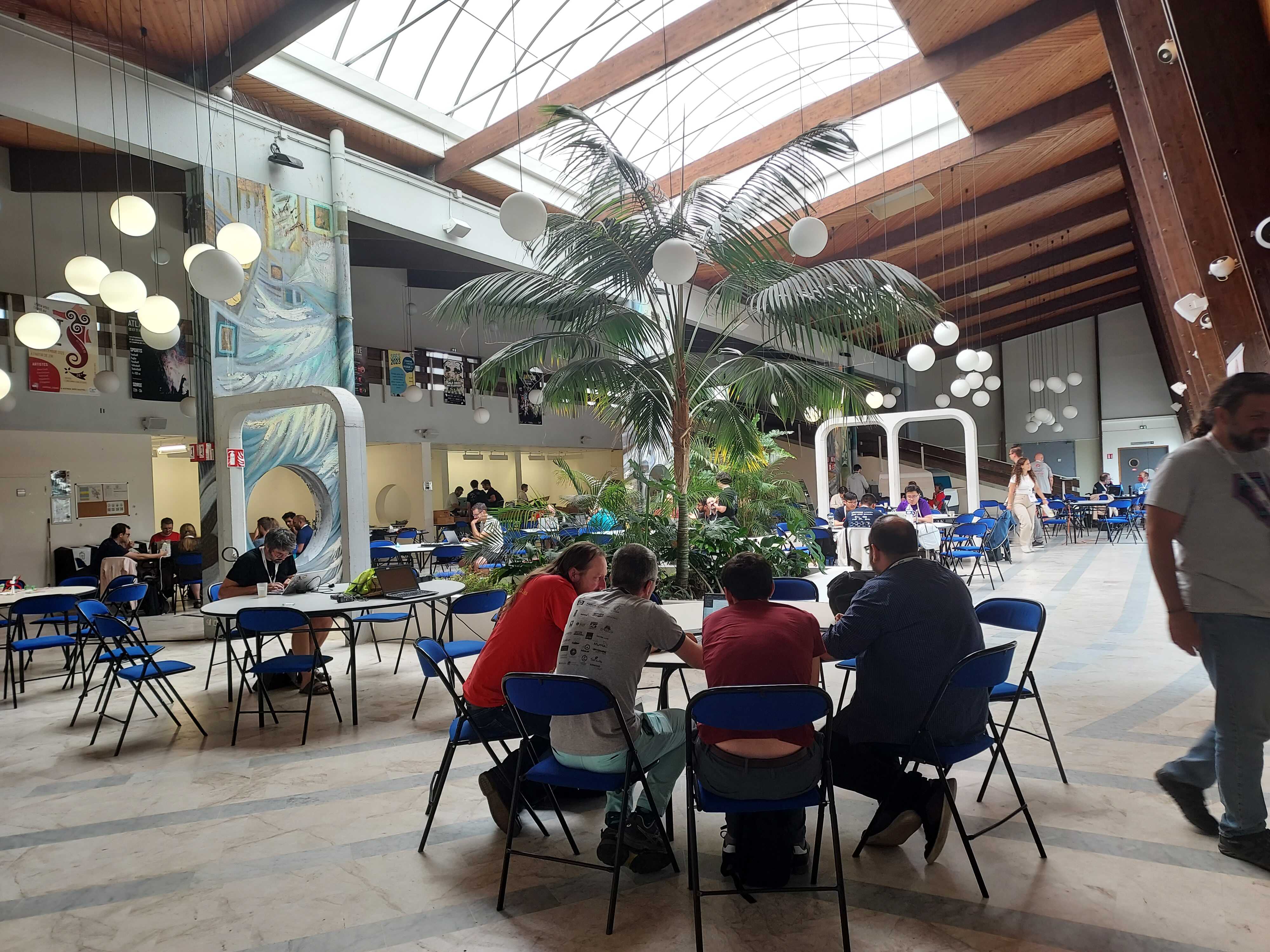

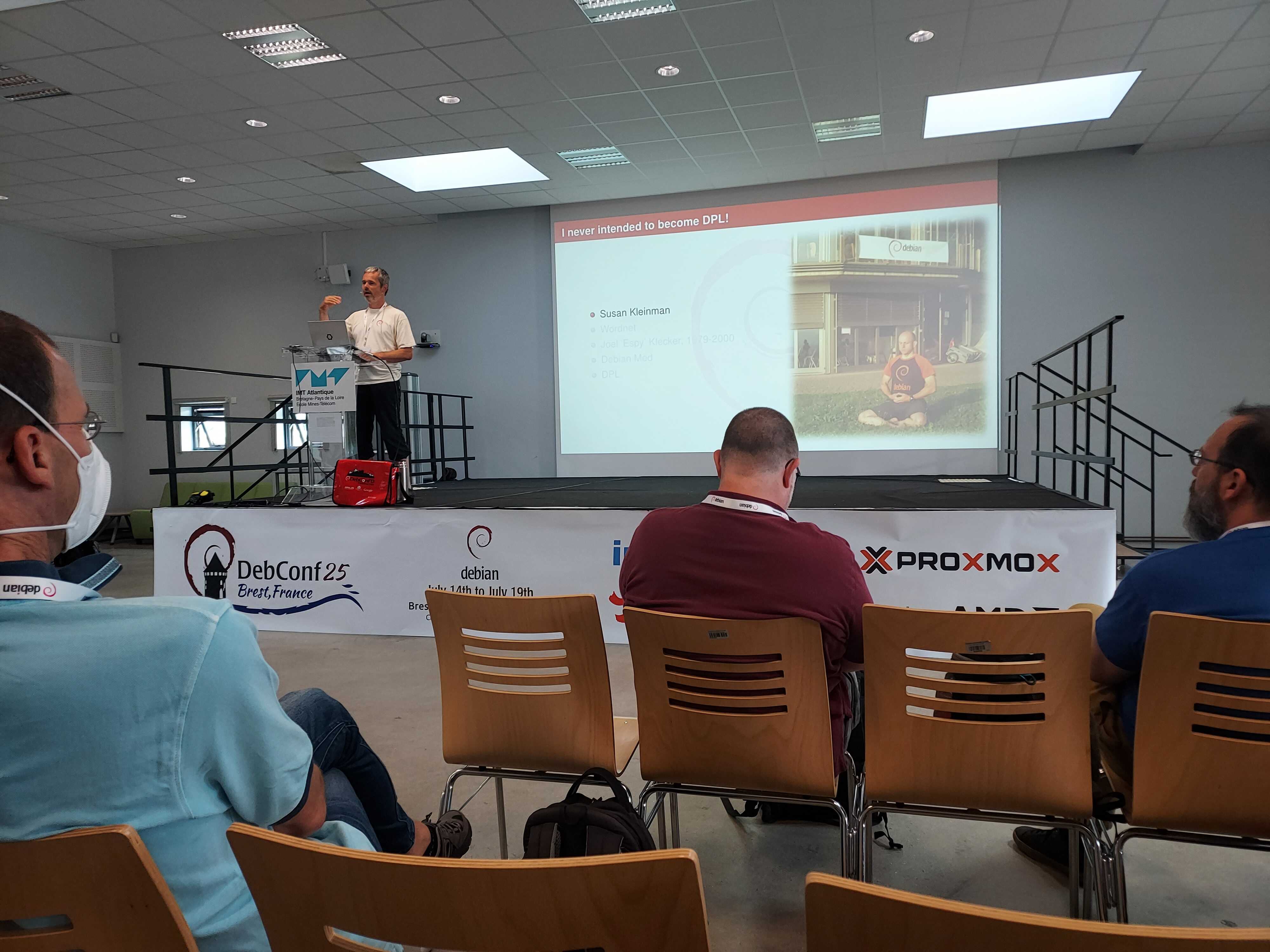
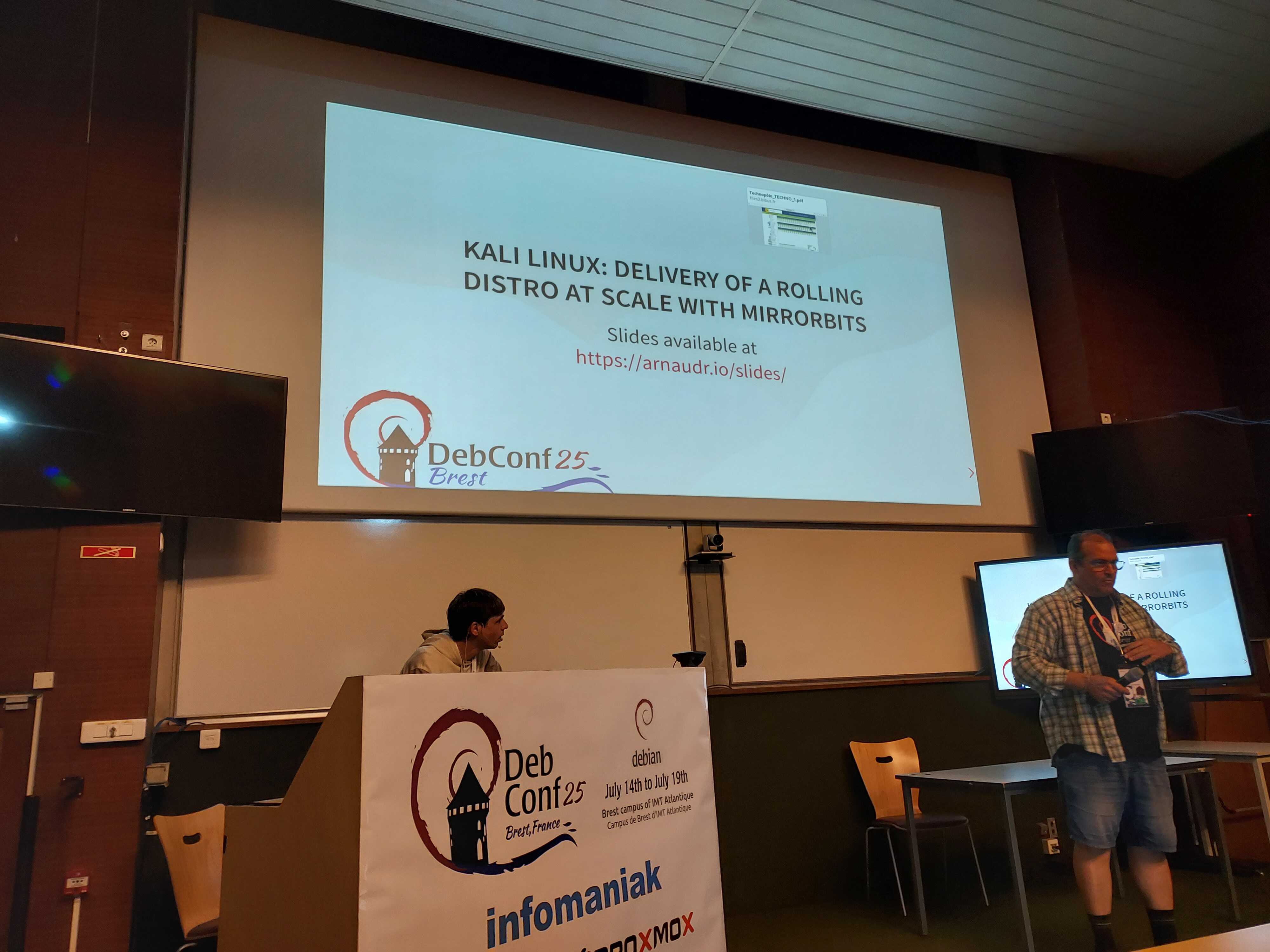
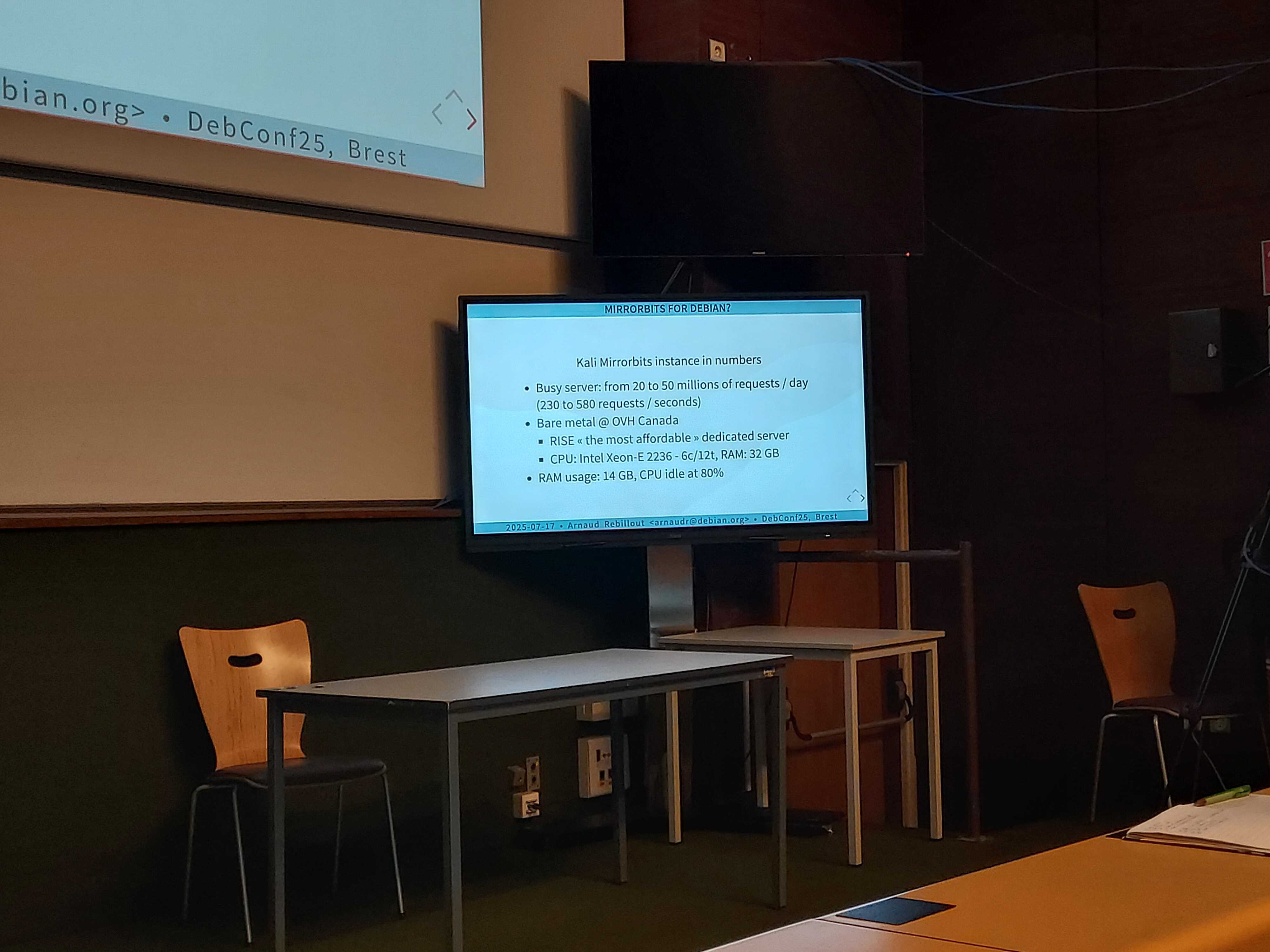
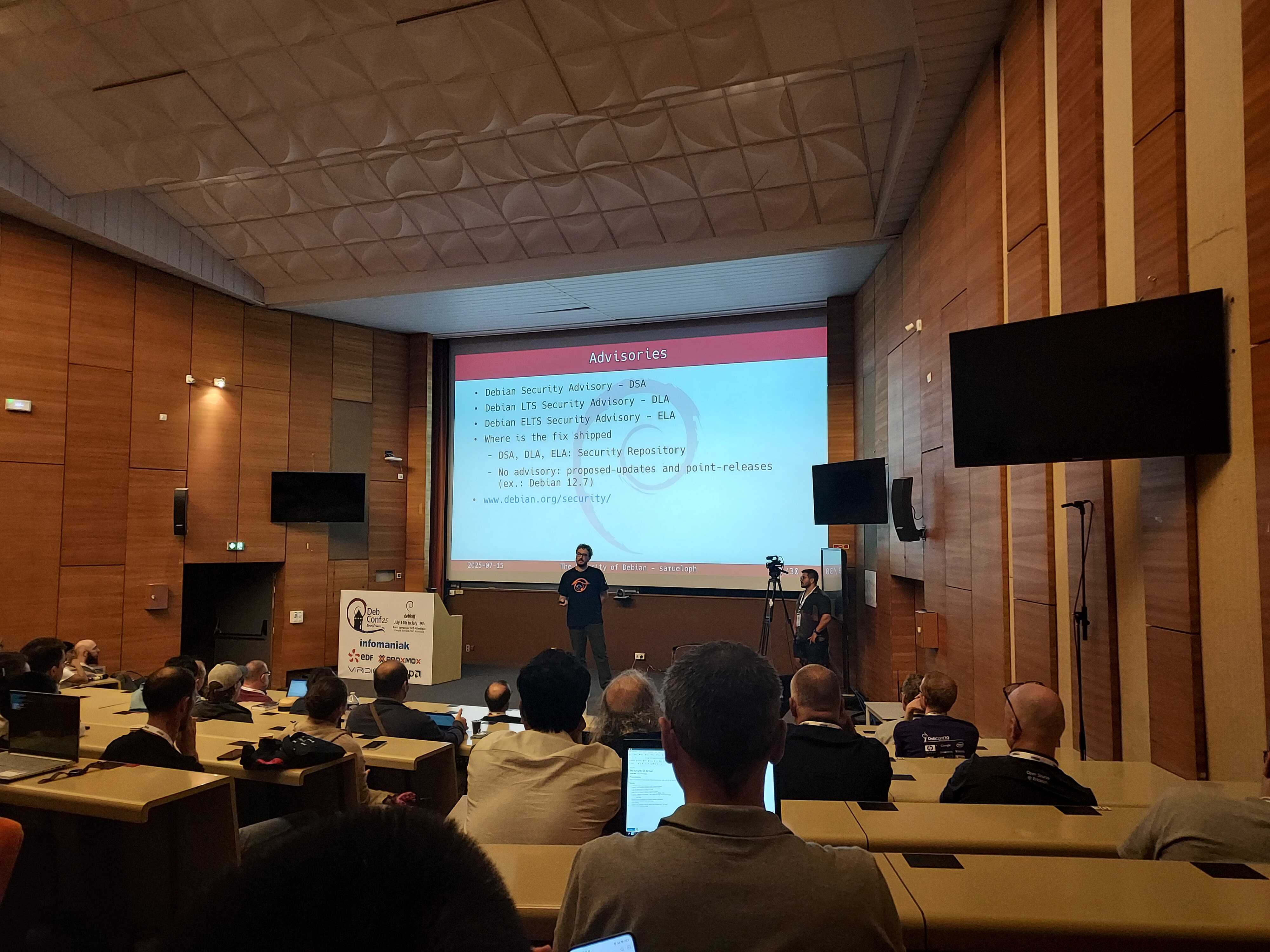
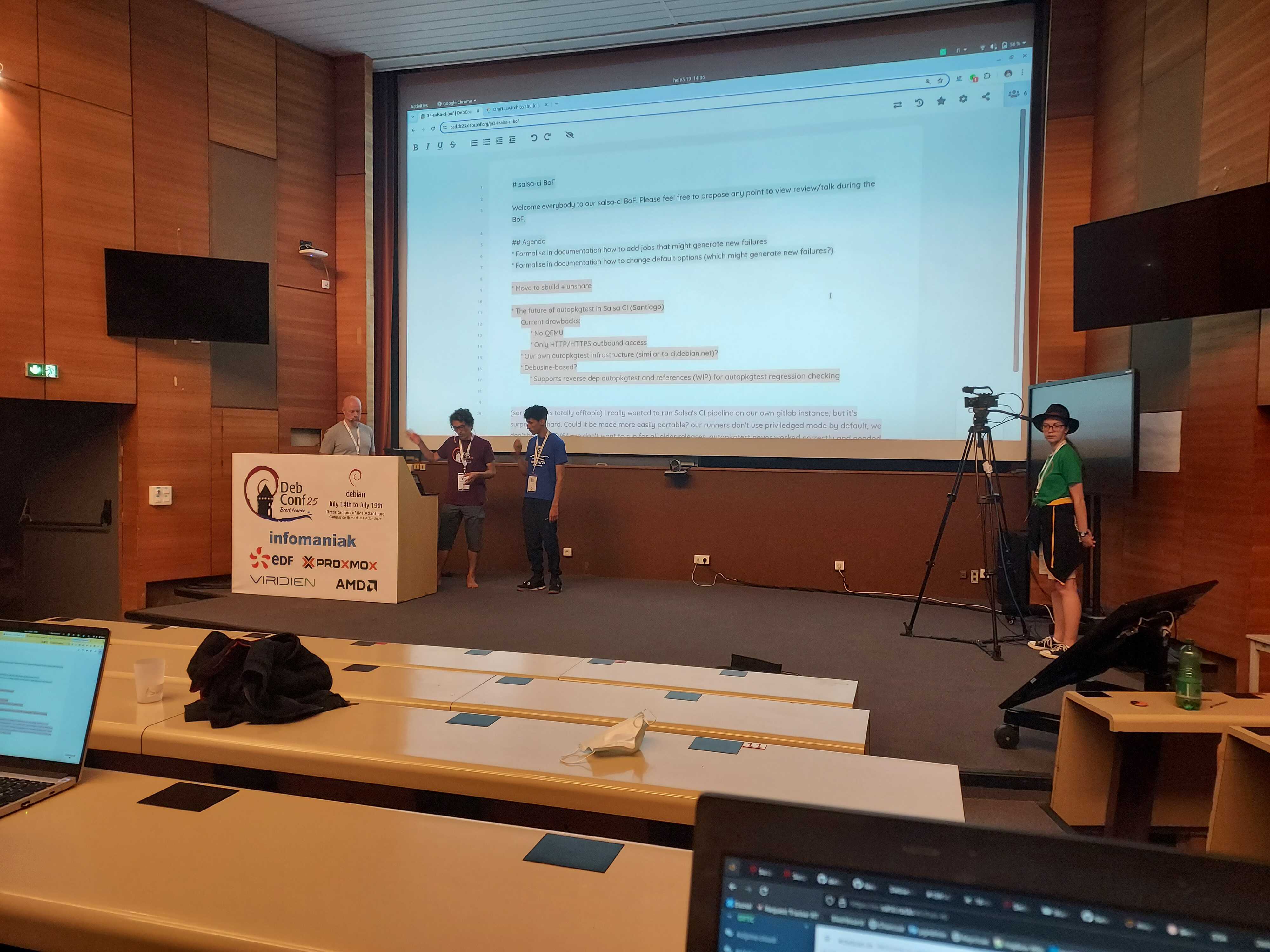
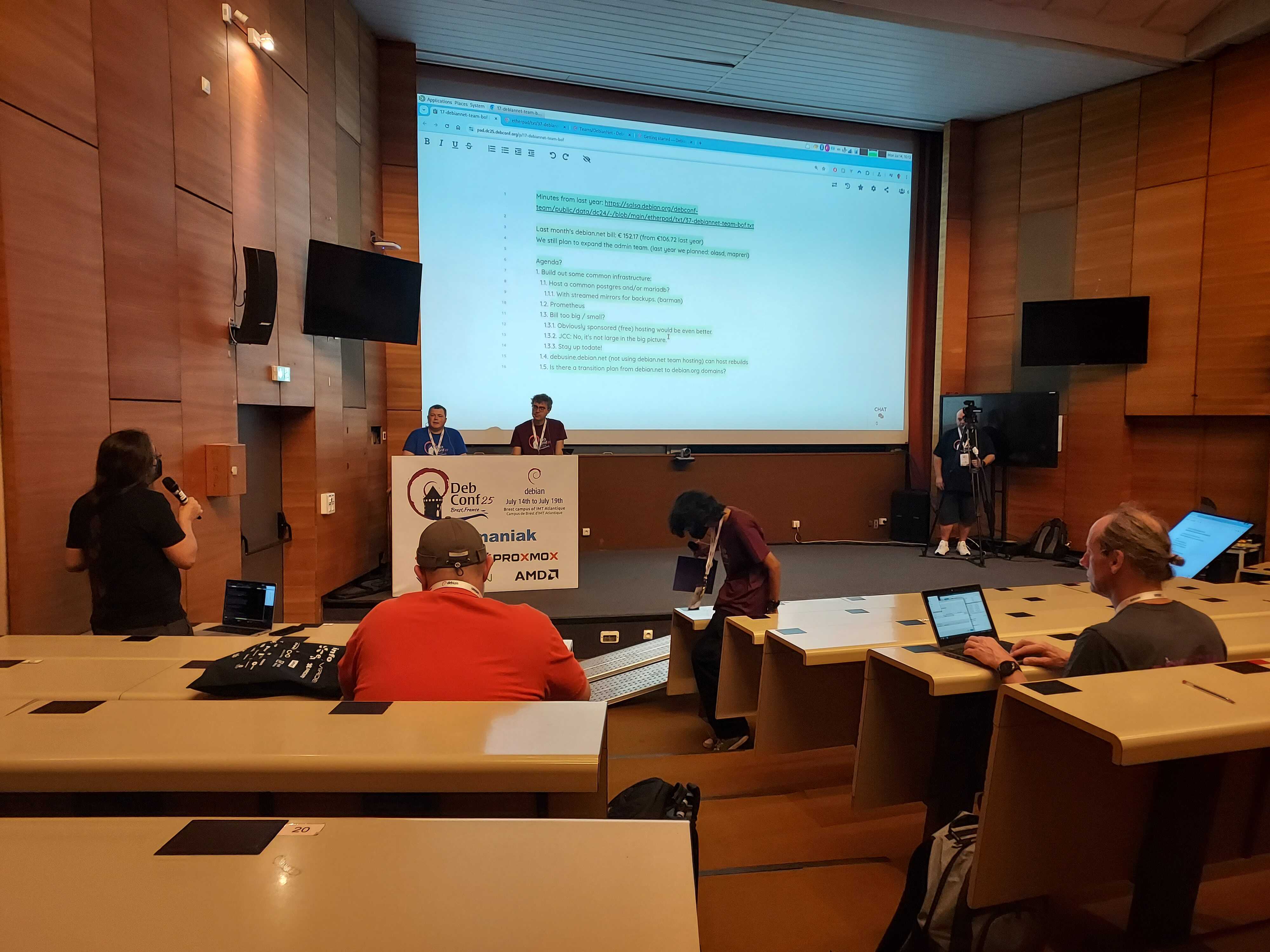


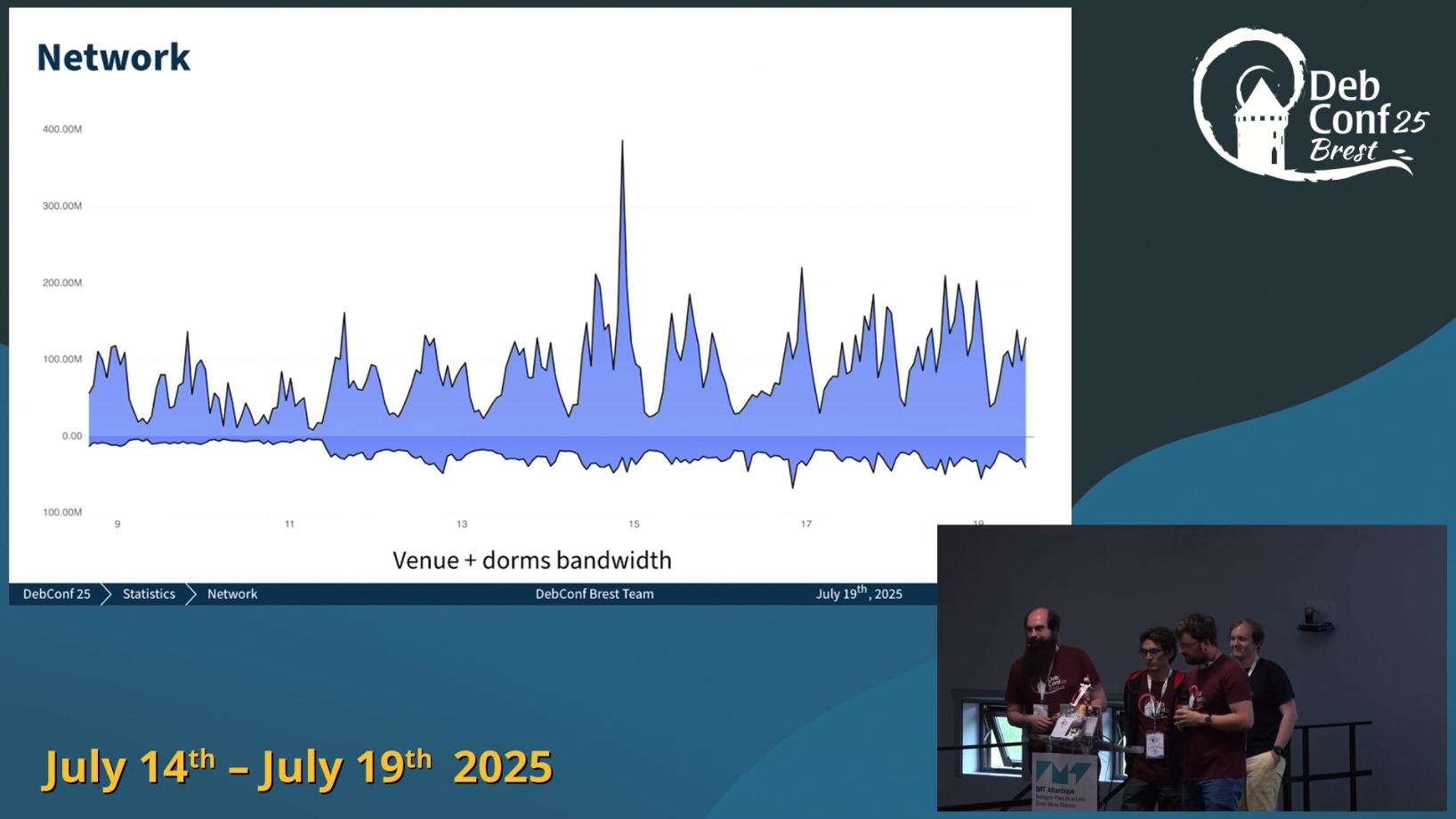 DC25 network usage graphs.
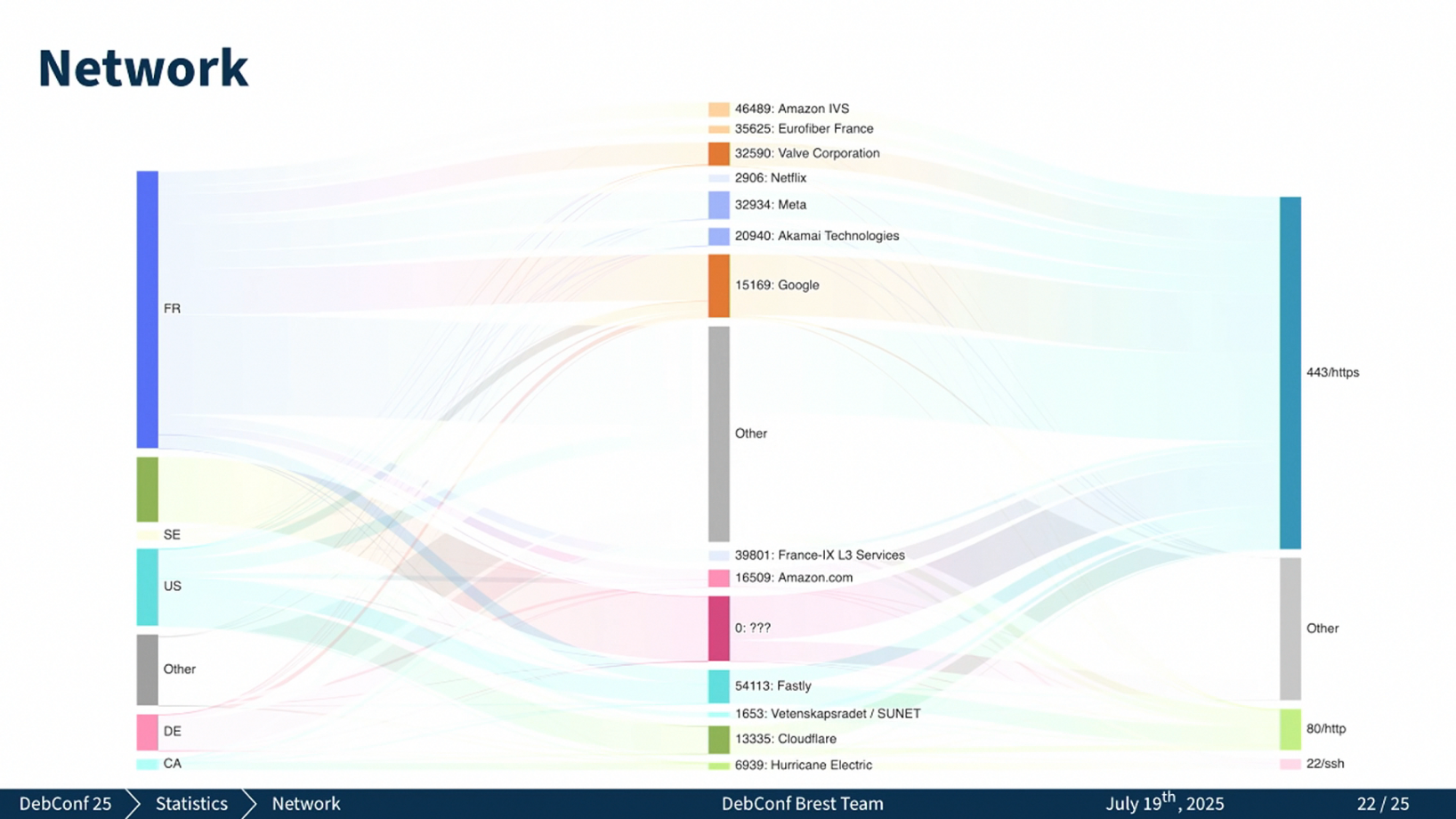 Flow diagrams.
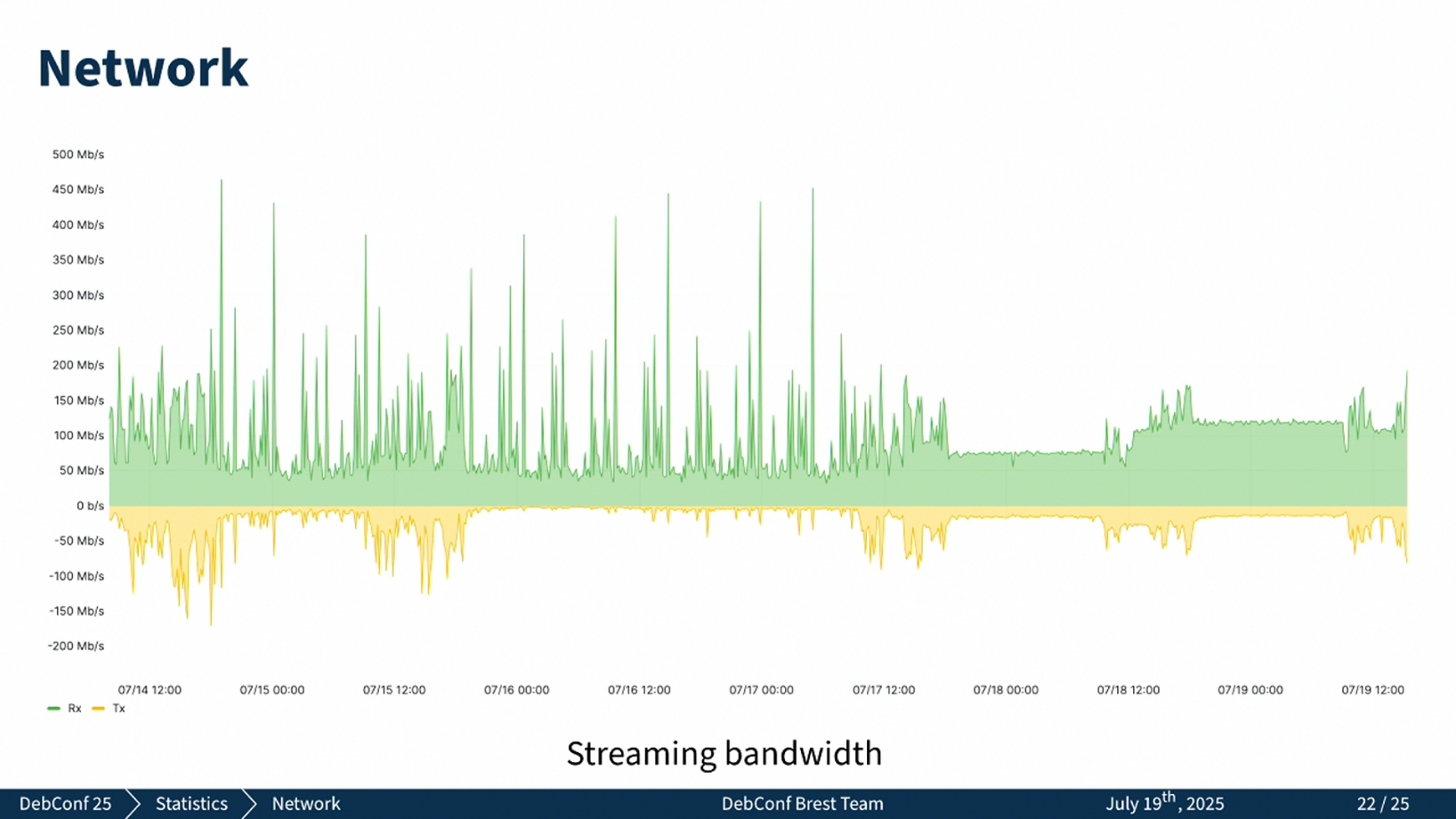 Streaming bandwidth graph.



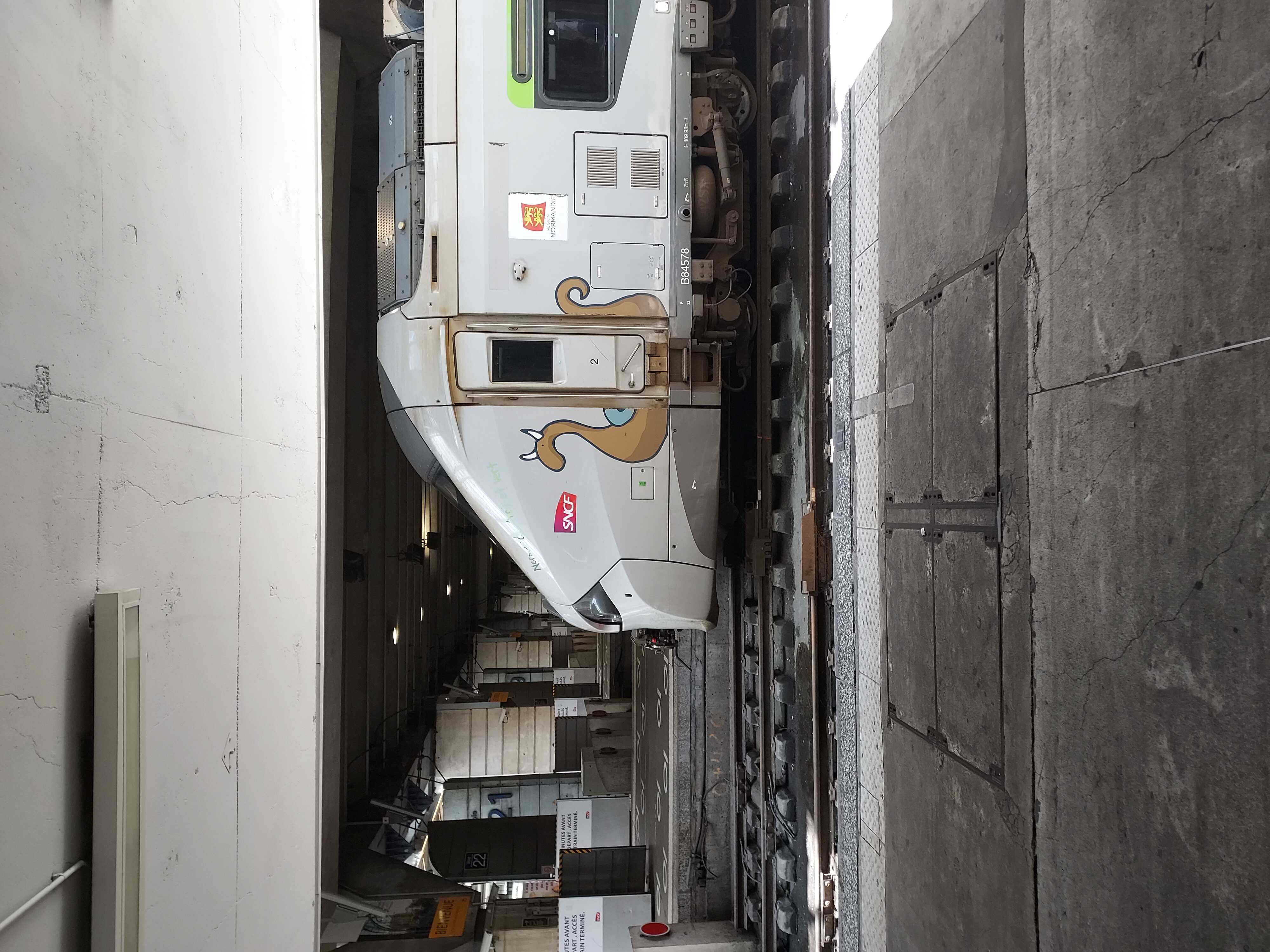













 The discovery of a backdoor in XZ Utils in the spring of 2024 shocked the open source community, raising critical questions about software supply chain security. This post explores whether better Debian packaging practices could have detected this threat, offering a guide to auditing packages and suggesting future improvements.
The XZ backdoor in versions 5.6.0/5.6.1 made its way briefly into many major Linux distributions such as Debian and Fedora, but luckily didn t reach that many actual users, as the backdoored releases were quickly removed thanks to the heroic diligence of
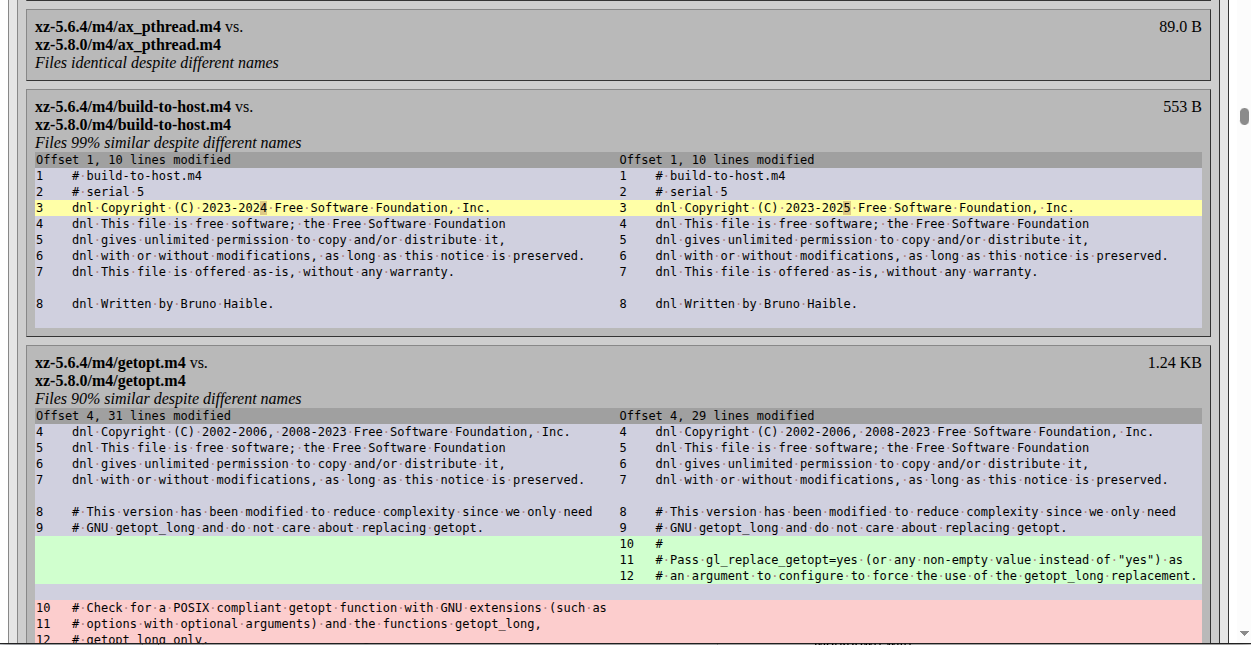 If the changes are extensive, and you want to use a LLM to help spot potential security issues, generate the report of both the upstream and Debian packaging differences in Markdown with:
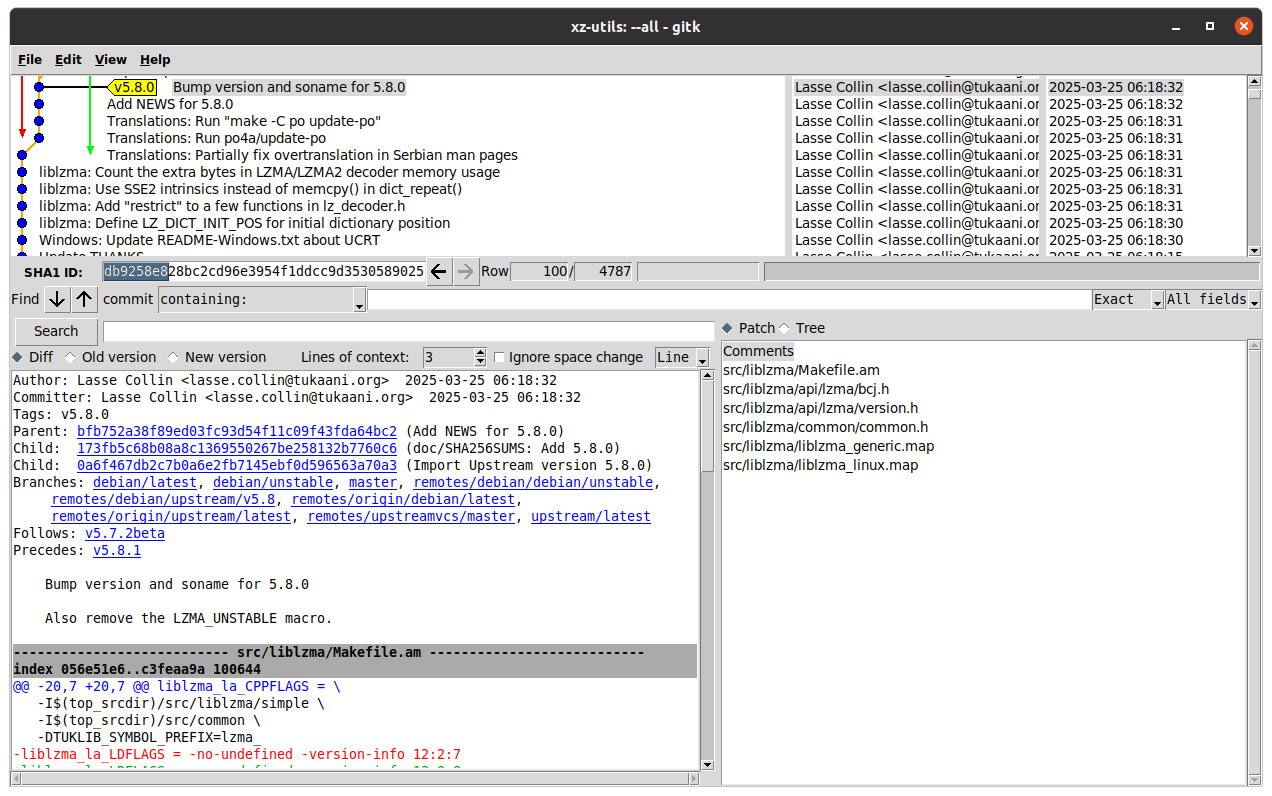
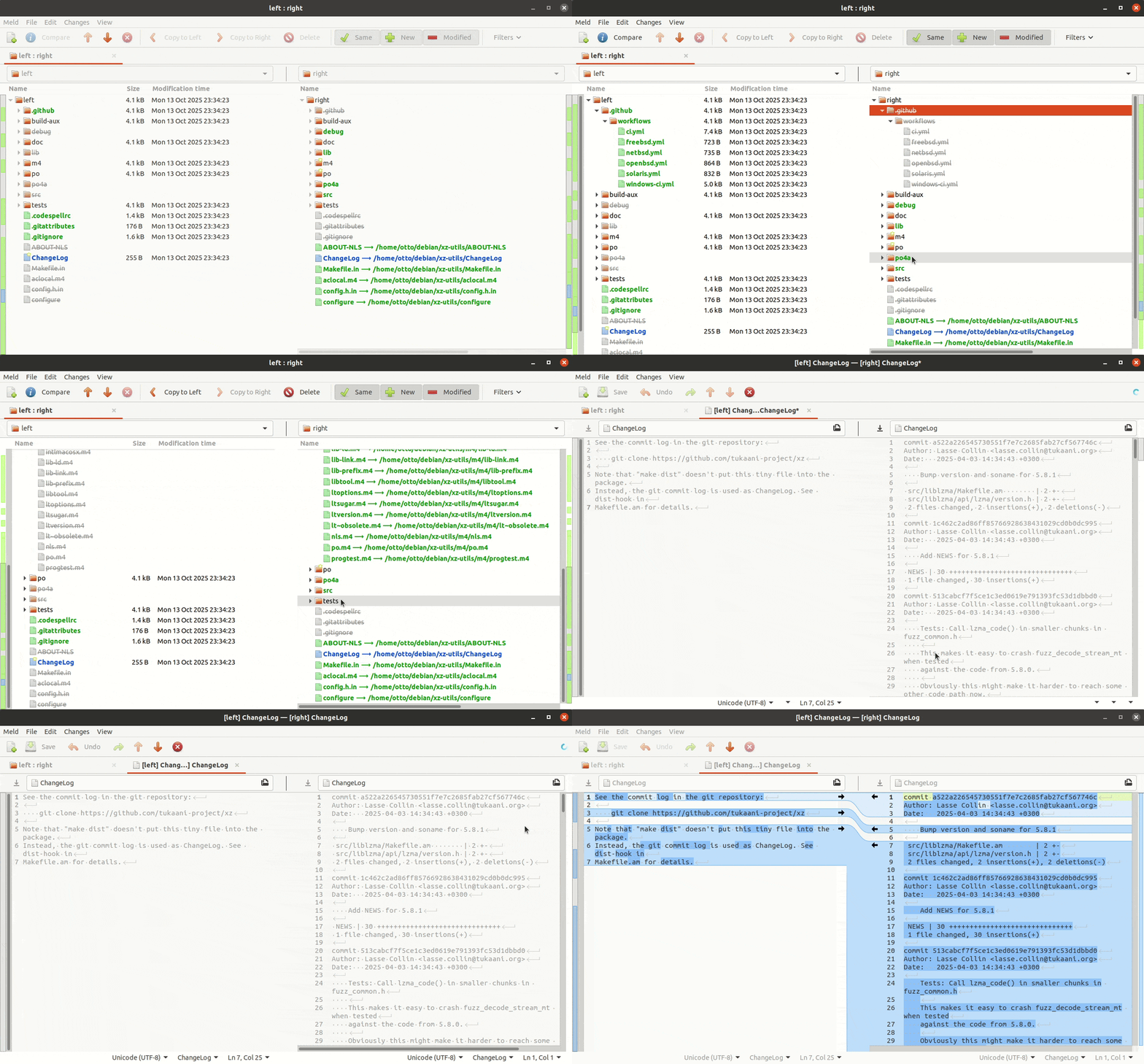 To compare changes across the new and old upstream tarball, one would need to compare commits afba662b New upstream version 5.8.0 and fa1e8796 New upstream version 5.8.1 by running
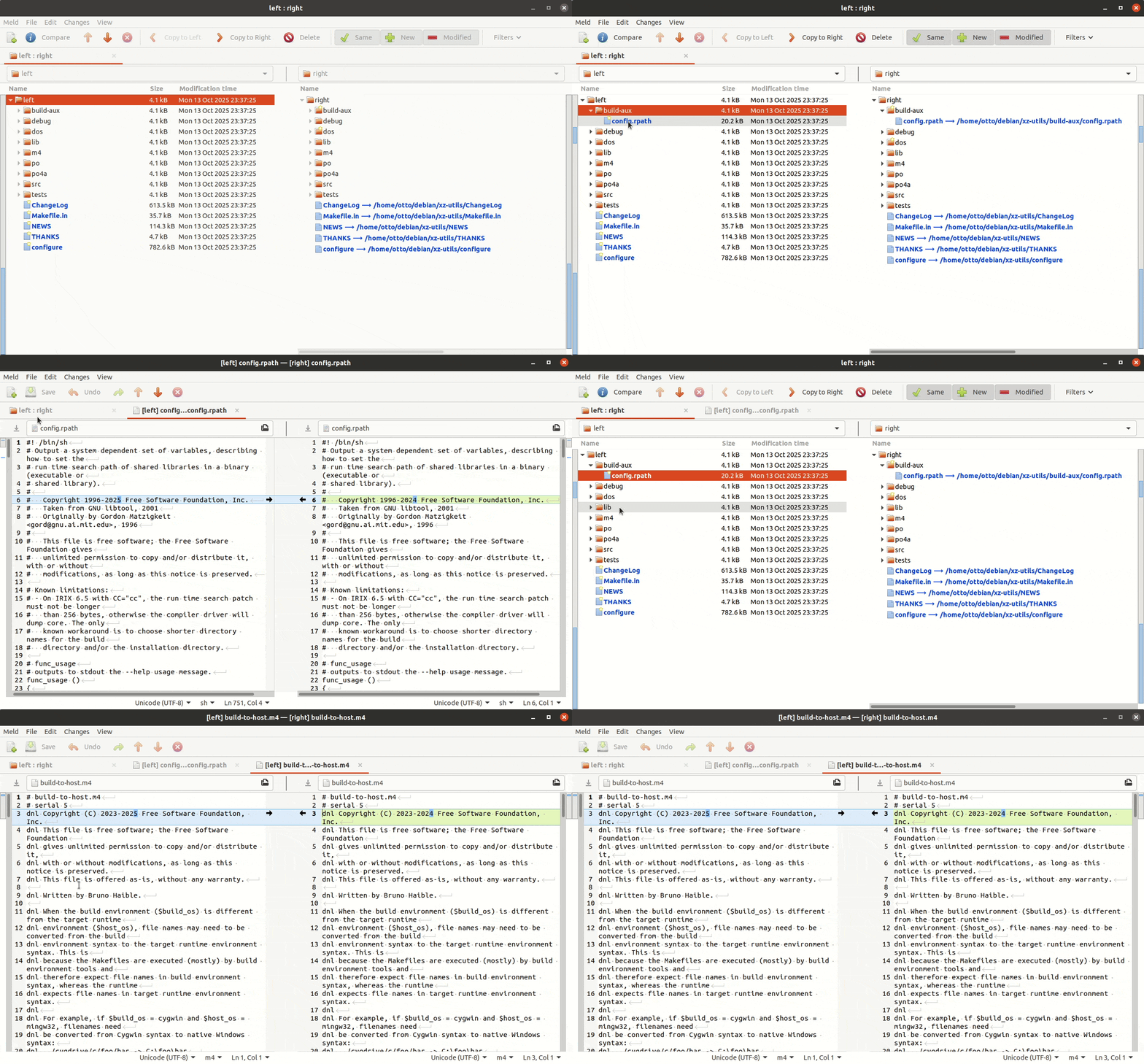 With all the above tips you can now go and try to audit your own favorite package in Debian and see if it is identical with upstream, and if not, how it differs.
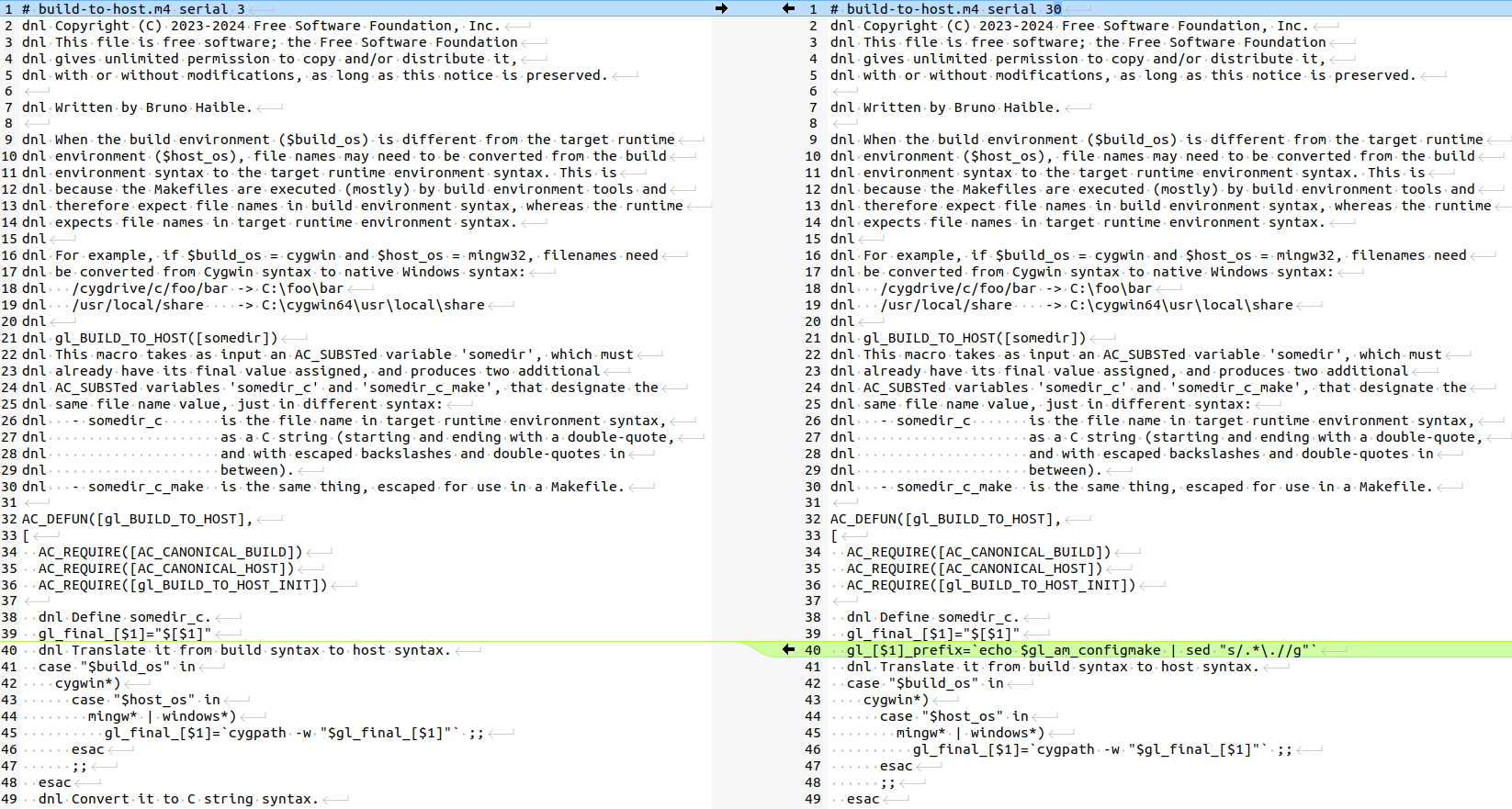 There is only one tiny thing that maybe a very experienced Autotools user could potentially have noticed: the

 Version 0.0.23 of
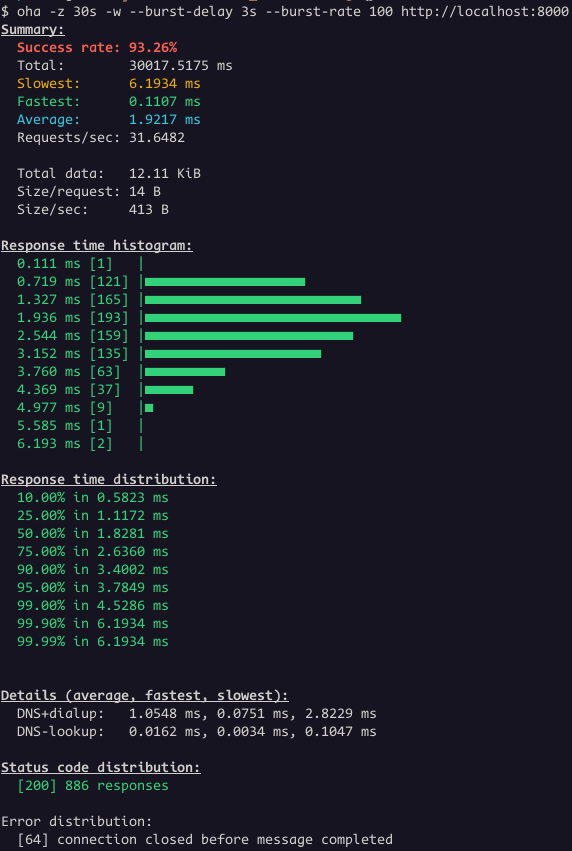 We had 886 responses with status code 200 and 64 connections closed.
The backend terminated 64 connections while the load balancer still had
active requests directed to it.
Let's change the Load Balancer
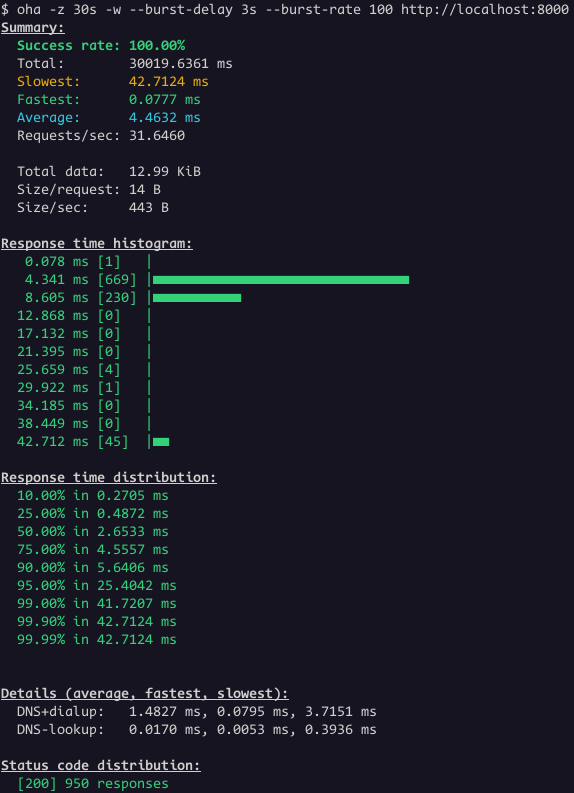 Great! Now all the requests worked.
This is a common issue, not specific to Envoy Proxy or the setup
shown earlier. Major cloud providers have all documented it.
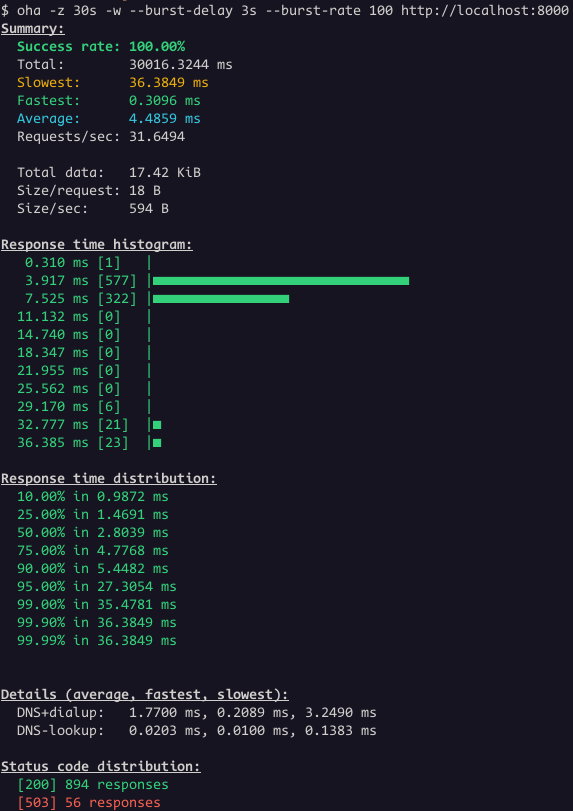 Even thought the success rate is 100%, the status code distribution
show some responses with status code 503. This is the case where is not
that obvious that the problem is related to idle timeout.
However, it's clear when we look the Envoy access logs:
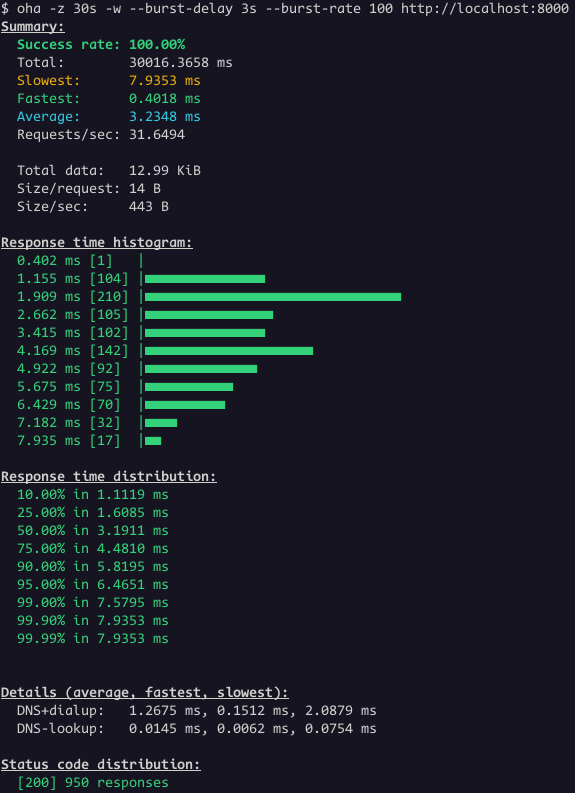
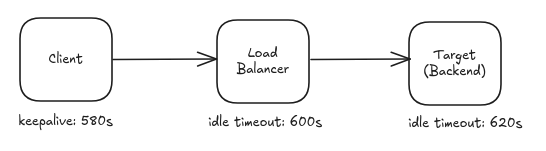 Key Takeaways: