Search Results: "jab"

23 July 2015

Daniel Pocock: Unpaid work training Google's spam filters

This week, there has been increased discussion about the pain of spam filtering by large companies, especially Google. It started with Google's announcement that they are offering a service for email senders to know if their messages are wrongly classified as spam. Two particular things caught my attention: the statement that less than 0.05% of genuine email goes to the spam folder by mistake and the statement that this new tool to understand misclassification is only available to "help qualified high-volume senders". From there, discussion has proceeded with Linus Torvalds blogging about his own experience of Google misclassifying patches from Linux contributors as spam and that has been widely reported in places like Slashdot and The Register. Personally, I've observed much the same thing from the other perspective. While Torvalds complains that he isn't receiving email, I've observed that my own emails are not always received when the recipient is a Gmail address. It seems that Google expects their users work a little bit every day going through every message in the spam folder and explicitly clicking the "Not Spam" button: so that Google can improve their proprietary algorithms for classifying mail. If you just read or reply to a message in the folder without clicking the button, or if you don't do this for every message, including mailing list posts and other trivial notifications that are not actually spam, more important messages from the same senders will also continue to be misclassified. If you are not willing to volunteer your time to do this, or if you are simply one of those people who has better things to do, Google's Gmail service is going to have a corrosive effect on your relationships. A few months ago, we visited Australia and I sent emails to many people who I wanted to catch up with, including invitations to a family event. Some people received the emails in their inboxes yet other people didn't see them because the systems at Google (and other companies, notably Hotmail) put them in a spam folder. The rate at which this appeared to happen was definitely higher than the 0.05% quoted in the Google article above. Maybe the Google spam filters noticed that I haven't sent email to some members of the extended family for a long time and this triggered the spam algorithm? Yet it was at that very moment that we were visiting Australia that email needs to work reliably with that type of contact as we don't fly out there every year. A little bit earlier in the year, I was corresponding with a few students who were applying for Google Summer of Code. Some of them also observed the same thing, they sent me an email and didn't receive my response until they were looking in their spam folder a few days later. Last year I know a GSoC mentor who lost track of a student for over a week because of Google silently discarding chat messages, so it appears Google has not just shot themselves in the foot, they managed to shoot their foot twice. What is remarkable is that in both cases, the email problems and the XMPP problems, Google doesn't send any error back to the sender so that they know their message didn't get through. Instead, it is silently discarded or left in a spam folder. This is the most corrosive form of communication problem as more time can pass before anybody realizes that something went wrong. After it happens a few times, people lose a lot of confidence in the technology itself and try other means of communication which may be more expensive, more synchronous and time intensive or less private. When I discussed these issues with friends, some people replied by telling me I should send them things through Facebook or WhatsApp, but each of those services has a higher privacy cost and there are also many other people who don't use either of those services. This tends to fragment communications even more as people who use Facebook end up communicating with other people who use Facebook and excluding all the people who don't have time for Facebook. On top of that, it creates more tedious effort going to three or four different places to check for messages. Despite all of this, the suggestion that Google's only response is to build a service to "help qualified high-volume senders" get their messages through leaves me feeling that things will get worse before they start to get better. There is no mention in the Google announcement about what they will offer to help the average person eliminate these problems, other than to stop using Gmail or spend unpaid time meticulously training the Google spam filter and hoping everybody else does the same thing. Some more observations on the issue Many spam filtering programs used in corporate networks, such as SpamAssassin, add headers to each email to suggest why it was classified as spam. Google's systems don't appear to give any such feedback to their users or message senders though, just a very basic set of recommendations for running a mail server. Many chat protocols work with an explicit opt-in. Before you can exchange messages with somebody, you must add each other to your buddy lists. Once you do this, virtually all messages get through without filtering. Could this concept be adapted to email, maybe giving users a summary of messages from people they don't have in their contact list and asking them to explicitly accept or reject each contact? If a message spends more than a week in the spam folder and Google detects that the user isn't ever looking in the spam folder, should Google send a bounce message back to the sender to indicate that Google refused to deliver it to the inbox? I've personally heard that misclassification occurs with mailing list posts as well as private messages.

12 June 2015

Riku Voipio: Dystopia of Things

The Thing on Internet
I've now had an "Internet of Things" device for about a year. It is Logitech Harmony HUB, an universal remote controller. It comes with a traditional remote, but the interesting part is that it allows me to use my smartphone/tablet as remote over WiFi. With the android app it provides a rather nice use experience, yet I can see the inevitable end in anger. Bare minimum GPL respectToday, the GPL sources for hub are available - at least the kernel and a patch for busybox. The proper GPL release is still only through written offer. The sources appeared online April this year while Hub has been sold for two years already. Even if I ordered the GPL CD, it's unlikely I could build a modified system with it - too many proprietary bits. The whole GPL was invented by someone who couldn't make a printer do what he wanted. The dystopian today where I have to rewrite the whole stack running on a Linux-based system if I'm not happy what's running there as provided by OEM.App onlyThe smartphone app is mandatory. The app is used to set up the hub. There is no HTML5 interface or any other way to control to the hub - just the bundled remote and phone apps. Fully proprietary apps, with limited customization options. And if app store update removes a feature you have used.. well you can't get it from anywhere anymore. The dystopian today where "Internet of Things" is actually "Smartphone App of Things".Locked APIMaybe instead of modifying the official app you could write your own UI? Like one screen with only the buttons you ever use when watching TV? There *is* an API with delightful headline "Better home experiences, together". However, not together with me, the owner of the harmony hub. The official API is locked to selected partners. And the API is not to control the hub - it's to let the hub connect to other IoT devices. Of course, for talented people, locked api is usually just undocumented api. People have reverse engineered how the app talks to the hub over wifi. Curiously it is actually Jabber based with some twists like logging credentials through Logitech servers. The dystopian today where I can't write programs to remotely control the internet connected thing I own without reverse engineering protocols.Central ServerDid someone say Logitech servers? Ah yes, all configuring of the remote happens via myharmony servers, where the database of remote controllers lives. There is some irony in calling the service *my* harmony when it's clearly theirs. The communication with cloud servers leaks at minimum back to Logitech what hardware I control with my hub. At the worst, it will become an avenue of exploits. And how long will Logitech manage these servers? The moment they are gone, harmony hub becomes a semi-brick. It will still work, but I can't change any configuration anymore. The dystopian future where the Internet of Thing will stop working *when* cloud servers get sunsetWhat nowThis is not just the Harmony hub - this is a pattern that many IoT products follow - Linux based gadget, smartphone app, cloud services, monetized apis. After the gadget is bought, the vendor has little incentive to provide any updates. After all, the next chance I'll carry them money is when the current gadget gets obsolete. I can see two ways out. The easy way is to get IoT gadgets as monthly paid service. Now the gadget vendor has the right incentive - instead of trying to convince me to buy their next gadget, their incentive is to keep me happily paying the monthly bill. The polar opposite is to start making open competing IoT's, and market to people the advantage of being yourself in control. I can see markets for both options. But half-way between is just pure dystopy.

17 May 2015

Lunar: Reproducible builds: week 2 in Stretch cycle

What happened about the reproducible builds effort for this week: Media coverage Debian's effort on reproducible builds has been covered in the June 2015 issue of Linux Magazin in Germany. Cover of Linux Magazin June 2015 Article about reproducible builds in Linux Magazin June 2015 Toolchain fixes josch rebased the experimental version of debhelper on 9.20150507. Packages fixed The following 515 packages became reproducible due to changes of their build dependencies: airport-utils, airspy-host, all-in-one-sidebar, ampache, aptfs, arpack, asciio, aspell-kk, asused, balance, batmand, binutils-avr, bioperl, bpm-tools, c2050, cakephp-instaweb, carton, cbp2make, checkbot, checksecurity, chemeq, chronicle, cube2-data, cucumber, darkstat, debci, desktop-file-utils, dh-linktree, django-pagination, dosbox, eekboek, emboss-explorer, encfs, exabgp, fbasics, fife, fonts-lexi-saebom, gdnsd, glances, gnome-clocks, gunicorn, haproxy, haskell-aws, haskell-base-unicode-symbols, haskell-base64-bytestring, haskell-basic-prelude, haskell-binary-shared, haskell-binary, haskell-bitarray, haskell-bool-extras, haskell-boolean, haskell-boomerang, haskell-bytestring-lexing, haskell-bytestring-mmap, haskell-config-value, haskell-mueval, haskell-tasty-kat, itk3, jnr-constants, jshon, kalternatives, kdepim-runtime, kdevplatform, kwalletcli, lemonldap-ng, libalgorithm-combinatorics-perl, libalgorithm-diff-xs-perl, libany-uri-escape-perl, libanyevent-http-scopedclient-perl, libanyevent-perl, libanyevent-processor-perl, libapache-session-wrapper-perl, libapache-sessionx-perl, libapp-options-perl, libarch-perl, libarchive-peek-perl, libaudio-flac-header-perl, libaudio-wav-perl, libaudio-wma-perl, libauth-yubikey-decrypter-perl, libauthen-krb5-simple-perl, libauthen-simple-perl, libautobox-dump-perl, libb-keywords-perl, libbarcode-code128-perl, libbio-das-lite-perl, libbio-mage-perl, libbrowser-open-perl, libbusiness-creditcard-perl, libbusiness-edifact-interchange-perl, libbusiness-isbn-data-perl, libbusiness-tax-vat-validation-perl, libcache-historical-perl, libcache-memcached-perl, libcairo-gobject-perl, libcarp-always-perl, libcarp-fix-1-25-perl, libcatalyst-action-serialize-data-serializer-perl, libcatalyst-controller-formbuilder-perl, libcatalyst-dispatchtype-regex-perl, libcatalyst-plugin-authentication-perl, libcatalyst-plugin-authorization-acl-perl, libcatalyst-plugin-session-store-cache-perl, libcatalyst-plugin-session-store-fastmmap-perl, libcatalyst-plugin-static-simple-perl, libcatalyst-view-gd-perl, libcgi-application-dispatch-perl, libcgi-application-plugin-authentication-perl, libcgi-application-plugin-logdispatch-perl, libcgi-application-plugin-session-perl, libcgi-application-server-perl, libcgi-compile-perl, libcgi-xmlform-perl, libclass-accessor-classy-perl, libclass-accessor-lvalue-perl, libclass-accessor-perl, libclass-c3-adopt-next-perl, libclass-dbi-plugin-type-perl, libclass-field-perl, libclass-handle-perl, libclass-load-perl, libclass-ooorno-perl, libclass-prototyped-perl, libclass-returnvalue-perl, libclass-singleton-perl, libclass-std-fast-perl, libclone-perl, libconfig-auto-perl, libconfig-jfdi-perl, libconfig-simple-perl, libconvert-basen-perl, libconvert-ber-perl, libcpan-checksums-perl, libcpanplus-dist-build-perl, libcriticism-perl, libcrypt-cracklib-perl, libcrypt-dh-gmp-perl, libcrypt-mysql-perl, libcrypt-passwdmd5-perl, libcrypt-simple-perl, libcss-packer-perl, libcss-tiny-perl, libcurses-widgets-perl, libdaemon-control-perl, libdancer-plugin-database-perl, libdancer-session-cookie-perl, libdancer2-plugin-database-perl, libdata-format-html-perl, libdata-uuid-libuuid-perl, libdata-validate-domain-perl, libdate-jd-perl, libdate-simple-perl, libdatetime-astro-sunrise-perl, libdatetime-event-cron-perl, libdatetime-format-dbi-perl, libdatetime-format-epoch-perl, libdatetime-format-mail-perl, libdatetime-tiny-perl, libdatrie, libdb-file-lock-perl, libdbd-firebird-perl, libdbix-abstract-perl, libdbix-class-datetime-epoch-perl, libdbix-class-dynamicdefault-perl, libdbix-class-introspectablem2m-perl, libdbix-class-timestamp-perl, libdbix-connector-perl, libdbix-oo-perl, libdbix-searchbuilder-perl, libdbix-xml-rdb-perl, libdevel-stacktrace-ashtml-perl, libdigest-hmac-perl, libdist-zilla-plugin-emailnotify-perl, libemail-date-format-perl, libemail-mime-perl, libemail-received-perl, libemail-sender-perl, libemail-simple-perl, libencode-detect-perl, libexporter-tidy-perl, libextutils-cchecker-perl, libextutils-installpaths-perl, libextutils-libbuilder-perl, libextutils-makemaker-cpanfile-perl, libextutils-typemap-perl, libfile-counterfile-perl, libfile-pushd-perl, libfile-read-perl, libfile-touch-perl, libfile-type-perl, libfinance-bank-ie-permanenttsb-perl, libfont-freetype-perl, libfrontier-rpc-perl, libgd-securityimage-perl, libgeo-coordinates-utm-perl, libgit-pureperl-perl, libgnome2-canvas-perl, libgnome2-wnck-perl, libgraph-readwrite-perl, libgraphics-colornames-www-perl, libgssapi-perl, libgtk2-appindicator-perl, libgtk2-gladexml-simple-perl, libgtk2-notify-perl, libhash-asobject-perl, libhash-moreutils-perl, libhtml-calendarmonthsimple-perl, libhtml-display-perl, libhtml-fillinform-perl, libhtml-form-perl, libhtml-formhandler-model-dbic-perl, libhtml-html5-entities-perl, libhtml-linkextractor-perl, libhtml-tableextract-perl, libhtml-widget-perl, libhtml-widgets-selectlayers-perl, libhtml-wikiconverter-mediawiki-perl, libhttp-async-perl, libhttp-body-perl, libhttp-date-perl, libimage-imlib2-perl, libimdb-film-perl, libimport-into-perl, libindirect-perl, libio-bufferedselect-perl, libio-compress-lzma-perl, libio-compress-perl, libio-handle-util-perl, libio-interface-perl, libio-multiplex-perl, libio-socket-inet6-perl, libipc-system-simple-perl, libiptables-chainmgr-perl, libjoda-time-java, libjsr305-java, libkiokudb-perl, liblemonldap-ng-cli-perl, liblexical-var-perl, liblingua-en-fathom-perl, liblinux-dvb-perl, liblocales-perl, liblog-dispatch-configurator-any-perl, liblog-log4perl-perl, liblog-report-lexicon-perl, liblwp-mediatypes-perl, liblwp-protocol-https-perl, liblwpx-paranoidagent-perl, libmail-sendeasy-perl, libmarc-xml-perl, libmason-plugin-routersimple-perl, libmasonx-processdir-perl, libmath-base85-perl, libmath-basecalc-perl, libmath-basecnv-perl, libmath-bigint-perl, libmath-convexhull-perl, libmath-gmp-perl, libmath-gradient-perl, libmath-random-isaac-perl, libmath-random-oo-perl, libmath-random-tt800-perl, libmath-tamuanova-perl, libmemoize-expirelru-perl, libmemoize-memcached-perl, libmime-base32-perl, libmime-lite-tt-perl, libmixin-extrafields-param-perl, libmock-quick-perl, libmodule-cpanfile-perl, libmodule-load-conditional-perl, libmodule-starter-pbp-perl, libmodule-util-perl, libmodule-versions-report-perl, libmongodbx-class-perl, libmoo-perl, libmoosex-app-cmd-perl, libmoosex-attributehelpers-perl, libmoosex-blessed-reconstruct-perl, libmoosex-insideout-perl, libmoosex-relatedclassroles-perl, libmoosex-role-timer-perl, libmoosex-role-withoverloading-perl, libmoosex-storage-perl, libmoosex-types-common-perl, libmoosex-types-uri-perl, libmoox-singleton-perl, libmoox-types-mooselike-numeric-perl, libmousex-foreign-perl, libmp3-tag-perl, libmysql-diff-perl, libnamespace-clean-perl, libnet-bonjour-perl, libnet-cli-interact-perl, libnet-daap-dmap-perl, libnet-dbus-glib-perl, libnet-dns-perl, libnet-frame-perl, libnet-google-authsub-perl, libnet-https-any-perl, libnet-https-nb-perl, libnet-idn-encode-perl, libnet-idn-nameprep-perl, libnet-imap-client-perl, libnet-irc-perl, libnet-mac-vendor-perl, libnet-openid-server-perl, libnet-smtp-ssl-perl, libnet-smtp-tls-perl, libnet-smtpauth-perl, libnet-snpp-perl, libnet-sslglue-perl, libnet-telnet-perl, libnhgri-blastall-perl, libnumber-range-perl, libobject-signature-perl, libogg-vorbis-header-pureperl-perl, libopenoffice-oodoc-perl, libparse-cpan-packages-perl, libparse-debian-packages-perl, libparse-fixedlength-perl, libparse-syslog-perl, libparse-win32registry-perl, libpdf-create-perl, libpdf-report-perl, libperl-destruct-level-perl, libperl-metrics-simple-perl, libperl-minimumversion-perl, libperl6-slurp-perl, libpgobject-simple-perl, libplack-middleware-fixmissingbodyinredirect-perl, libplack-test-externalserver-perl, libplucene-perl, libpod-tests-perl, libpoe-component-client-ping-perl, libpoe-component-jabber-perl, libpoe-component-resolver-perl, libpoe-component-server-soap-perl, libpoe-component-syndicator-perl, libposix-strftime-compiler-perl, libposix-strptime-perl, libpostscript-simple-perl, libproc-processtable-perl, libprotocol-osc-perl, librcs-perl, libreadonly-xs-perl, libreturn-multilevel-perl, librivescript-perl, librouter-simple-perl, librrd-simple-perl, libsafe-isa-perl, libscope-guard-perl, libsemver-perl, libset-tiny-perl, libsharyanto-file-util-perl, libshell-command-perl, libsnmp-info-perl, libsoap-lite-perl, libstat-lsmode-perl, libstatistics-online-perl, libstring-compare-constanttime-perl, libstring-format-perl, libstring-toidentifier-en-perl, libstring-tt-perl, libsub-recursive-perl, libsvg-tt-graph-perl, libsvn-notify-perl, libswish-api-common-perl, libtap-formatter-junit-perl, libtap-harness-archive-perl, libtemplate-plugin-number-format-perl, libtemplate-plugin-yaml-perl, libtemplate-tiny-perl, libtenjin-perl, libterm-visual-perl, libtest-block-perl, libtest-carp-perl, libtest-classapi-perl, libtest-cmd-perl, libtest-consistentversion-perl, libtest-data-perl, libtest-databaserow-perl, libtest-differences-perl, libtest-file-sharedir-perl, libtest-hasversion-perl, libtest-kwalitee-perl, libtest-lectrotest-perl, libtest-module-used-perl, libtest-object-perl, libtest-perl-critic-perl, libtest-pod-coverage-perl, libtest-script-perl, libtest-script-run-perl, libtest-spelling-perl, libtest-strict-perl, libtest-synopsis-perl, libtest-trap-perl, libtest-unit-perl, libtest-utf8-perl, libtest-without-module-perl, libtest-www-selenium-perl, libtest-xml-simple-perl, libtest-yaml-perl, libtex-encode-perl, libtext-bibtex-perl, libtext-csv-encoded-perl, libtext-csv-perl, libtext-dhcpleases-perl, libtext-diff-perl, libtext-quoted-perl, libtext-trac-perl, libtext-vfile-asdata-perl, libthai, libthread-conveyor-perl, libthread-sigmask-perl, libtie-cphash-perl, libtie-ical-perl, libtime-stopwatch-perl, libtk-dirselect-perl, libtk-pod-perl, libtorrent, libturpial, libunicode-japanese-perl, libunicode-maputf8-perl, libunicode-stringprep-perl, libuniversal-isa-perl, libuniversal-moniker-perl, liburi-encode-perl, libvi-quickfix-perl, libvideo-capture-v4l-perl, libvideo-fourcc-info-perl, libwiki-toolkit-plugin-rss-reader-perl, libwww-mechanize-formfiller-perl, libwww-mechanize-gzip-perl, libwww-mechanize-perl, libwww-opensearch-perl, libx11-freedesktop-desktopentry-perl, libxc, libxml-dtdparser-perl, libxml-easy-perl, libxml-handler-trees-perl, libxml-libxml-iterator-perl, libxml-libxslt-perl, libxml-rss-perl, libxml-validator-schema-perl, libxml-xpathengine-perl, libxml-xql-perl, llvm-py, madbomber, makefs, mdpress, media-player-info, meta-kde-telepathy, metamonger, mmm-mode, mupen64plus-audio-sdl, mupen64plus-rsp-hle, mupen64plus-ui-console, mupen64plus-video-z64, mussort, newpid, node-formidable, node-github-url-from-git, node-transformers, nsnake, odin, otcl, parsley, pax, pcsc-perl, pd-purepd, pen, prank, proj, proot, puppet-module-puppetlabs-postgresql, python-async, python-pysnmp4, qrencode, r-bioc-graph, r-bioc-hypergraph, r-bioc-iranges, r-bioc-xvector, r-cran-pscl, rbenv, rlinetd, rs, ruby-ascii85, ruby-cutest, ruby-ejs, ruby-factory-girl, ruby-hdfeos5, ruby-kpeg, ruby-libxml, ruby-password, ruby-zip-zip, sdl-sound1.2, stterm, systemd, taktuk, tcc, tryton-modules-account-invoice, ttf-summersby, tupi, tuxpuck, unknown-horizons, unsafe-mock, vcheck, versiontools, vim-addon-manager, vlfeat, vsearch, xacobeo, xen-tools, yubikey-personalization-gui, yubikey-personalization. The following packages became reproducible after getting fixed: Some uploads fixed some reproducibility issues but not all of them: Patches submitted which did not make their way to the archive yet: reproducible.debian.net Alioth now hosts a script that can be used to redo builds and test for a package. This was preliminary done manually through requests over the IRC channel. This should reduce the number of interruptions for jenkins' maintainers The graph of the oldest build per day has been fixed. Maintainance scripts will not error out when they are no files to remove. Holger Levsen started work on being able to test variations of CPU features and build date (as in build in another month of 1984) by using virtual machines. debbindiff development Version 18 has been released. It will uses proper comparators for pk3 and info files. Tar member names are now assumed to be UTF-8 encoded. The limit for the maximum number of different lines has been removed. Let's see on reproducible.debian.net how it goes for pathological cases. It's now possible to specify both --html and --text output. When neither of them is specified, the default will be to print a text report on the standard output (thanks to Paul Wise for the suggestion). Documentation update Nicolas Boulenguez investigated Ada libraries. Package reviews 451 obsolete reviews have been removed and 156 added this week. New identified issues: running kernel version getting captured, random filenames in GHC debug symbols, and timestamps in headers generated by qdbusxml2cpp. Misc. Holger Levsen went to re:publica and talked about reproducible builds to developers and users there. Holger also had a chance to meet FreeBSD developers and discuss the status of FreeBSD. Investigations have started on how it could be made part of our current test system. Laurent Guerby gave Lunar access to systems in the GCC Compile Farm. Hopefully access to these powerful machines will help to fix packages for GCC, Iceweasel, and similar packages requiring long build times.

12 May 2015

Simon Josefsson: Certificates for XMPP/Jabber

I am revamping my XMPP server and I ve written down notes on how to set up certificates to enable TLS. I will run Debian Jessie with JabberD 2.x, using the recent jabberd2 jessie-backport. The choice of server software is not significant for the rest of this post. Running XMPP over TLS is a good idea. So I need a X.509 PKI for this purpose. I don t want to use a third-party Certificate Authority, since that gives them the ability to man-in-the-middle my XMPP connection. Therefor I want to create my own CA. I prefer tightly scoped (per-purpose or per-application) CAs, so I will set up a CA purely to issue certificates for my XMPP server. The current XMPP specification, RFC 6120, includes a long section 13.7 that discuss requirements on Certificates. One complication is the requirement to include an AIA for OCSP/CRLs fortunately, it is not a strict MUST requirement but a weaker SHOULD . I note that checking revocation using OCSP and CRL is a MUST requirement for certificate validation some specification language impedence mismatch at work there. The specification demand that the CA certificate MUST have a keyUsage extension with the digitalSignature bit set. This feels odd to me, and I m wondering if keyCertSign was intended instead. Nothing in the XMPP document, nor in any PKIX document as far as I am aware of, will verify that the digitalSignature bit is asserted in a CA certificate. Below I will assert both bits, since a CA needs the keyCertSign bit and the digitalSignature bit seems unnecessary but mostly harmless. My XMPP/Jabber server will be chat.sjd.se and my JID will be simon@josefsson.org . This means the server certificate need to include references to both these domains. The relevant DNS records for the josefsson.org zone is as follows, see section 3.2.1 of RFC 6120 for more background.
_xmpp-client._tcp.josefsson.org.	IN	SRV 5 0 5222 chat.sjd.se.
_xmpp-server._tcp.josefsson.org.	IN	SRV 5 0 5269 chat.sjd.se.
The DNS records or the sjd.se zone is as follows:
chat.sjd.se.	IN	A	...
chat.sjd.se.	IN	AAAA	...
The following commands will generate the private key and certificate for the CA. In a production environment, you would keep the CA private key in a protected offline environment. I m asserting a expiration date ~30 years in the future. While I dislike arbitrary limits, I believe this will be many times longer than the anticipated lifelength of this setup.
openssl genrsa -out josefsson-org-xmpp-ca-key.pem 3744
cat > josefsson-org-xmpp-ca-crt.conf << EOF
[ req ]
x509_extensions = v3_ca
distinguished_name = req_distinguished_name
prompt = no
[ req_distinguished_name ]
CN=XMPP CA for josefsson.org
[ v3_ca ]
subjectKeyIdentifier=hash
basicConstraints = CA:true
keyUsage=critical, digitalSignature, keyCertSign
EOF
openssl req -x509 -set_serial 1 -new -days 11147 -sha256 -config josefsson-org-xmpp-ca-crt.conf -key josefsson-org-xmpp-ca-key.pem -out josefsson-org-xmpp-ca-crt.pem
Let s generate the private key and server certificate for the XMPP server. The wiki page on XMPP certificates is outdated wrt PKIX extensions. I will embed a SRV-ID field, as discussed in RFC 6120 section 13.7.1.2.1 and RFC 4985. I chose to skip the XmppAddr identifier type, even though the specification is somewhat unclear about it: section 13.7.1.2.1 says that it is no longer encouraged in certificates issued by certification authorities while section 13.7.1.4 says Use of the id-on-xmppAddr format is RECOMMENDED in the generation of certificates . The latter quote should probably have been qualified to say client certificates rather than certificates , since the latter can refer to both client and server certificates. Note the use of a default expiration time of one month: I believe in frequent renewal of entity certificates, rather than use of revocation mechanisms.
openssl genrsa -out josefsson-org-xmpp-server-key.pem 3744
cat > josefsson-org-xmpp-server-csr.conf << EOF
[ req ]
distinguished_name = req_distinguished_name
prompt = no
[ req_distinguished_name ]
CN=XMPP server for josefsson.org
EOF
openssl req -sha256 -new -config josefsson-org-xmpp-server-csr.conf -key josefsson-org-xmpp-server-key.pem -nodes -out josefsson-org-xmpp-server-csr.pem
cat > josefsson-org-xmpp-server-crt.conf << EOF
subjectAltName=@san
[san]
DNS=chat.sjd.se
otherName.0=1.3.6.1.5.5.7.8.7;UTF8:_xmpp-server.josefsson.org
otherName.1=1.3.6.1.5.5.7.8.7;UTF8:_xmpp-client.josefsson.org
EOF
openssl x509 -sha256 -CA josefsson-org-xmpp-ca-crt.pem -CAkey josefsson-org-xmpp-ca-key.pem -set_serial 2 -req -in josefsson-org-xmpp-server-csr.pem -out josefsson-org-xmpp-server-crt.pem -extfile josefsson-org-xmpp-server-crt.conf
With this setup, my XMPP server can be tested by the XMPP IM Observatory. You can see the c2s test results and the s2s test results. Of course, there are warnings regarding the trust anchor issue. It complains about a self-signed certificate in the chain. This is permitted but not recommended however when the trust anchor is not widely known, I find it useful to include it. This allows people to have a mechanism of fetching the trust anchor certificate should they want to. Some weaker cipher suites trigger warnings, which is more of a jabberd2 configuration issue and/or a concern with jabberd2 defaults. My jabberd2 configuration is simple in c2s.xml I add a <id> entity with the require-starttls , cachain , and pemfile fields. In s2s.xml, I have the <pemfile>, <resolve-ipv6>, and <require-tls> entities. Some final words are in order. While this setup will result in use of TLS for XMPP connections (c2s and s2s), other servers are unlikely to find my CA trust anchor, let alone be able to trust it for verifying my server certificate. I m happy to read about Peter Saint-Andre s recent SSL/TLS work, and in particular I will follow the POSH effort.

31 March 2015

Laura Arjona: Upgrading my home server (HP Microserver N54L G7) to Debian Jessie

Note: this is a long overdue post. I upgraded some months ago but I promised myself to blog about my selfhosting adventures, so here you are.
You may know the story TL;DR After searching a bit for information about my problem and not finding anything helpful, I began to think that maybe upgrading to Jessie could fix it (recent versions of kernel and cryptsetup ). And the Jessie freeze was almost there, and I also thought that trying to make my MediaGoblin work in Jessie now that I still didn t upload lots of content, would be a nice idea And, I wanted to feel the adventure! Whatever. I decided to upgrade to Jessie. This is the glory of free software at home : you only waste your time (and probably not, because you can learn something, at least, what not to do). Upgrading my system to Jessie, and making it boot! I changed sources.list, updated, did a safe-upgrade, and then upgrade. Then reboot and the system didn t boot. What happened? I m not sure, everything looked ok during the upgrade But now, my system even was not asking for the passphrase to unlock the encrypted disk. It was trying to access the physical volume group as if it was in an unencrypted disk, and so, failing. The boot process left me in a initramfs console in which I didn t know what to do. I asked help from @luisgf, the system administrator of mipump.es (a Pump.io public server) and mijabber.es (an XMPP public server). We met via XMPP and with my thinking aloud and his patient listening and advice, we solved the problem, as you will see: I tried to boot my rescue system (a complete system installed in different partitions in a different disk) and it booted. I tried then to manually unencrypt the encrypted disk (cryptsetup luksopen /dev/xxx), and it worked, and I could list the volume group and the volumes, and activate them, and mount the partitions. Yay! my (few) data was safe. I rebooted and in the initramfs console I tried to do the same, but cryptsetup was not present in my initramfs. Then I tried to boot in the old Wheezy kernel: it didn t asked for the passphrase to unencrypt the disk, but in that initramfs console, cryptsetup was working well. So after manually unencrypt the system, activate the volumes and mount the partitions, I could exit the console and the system was booting #oleole! So, how to tell the boot process to ask for the encryption password? Maybe reinstalling the kernel was enough I tried to reinstall the 3.16 kernel package. It (re)generated /boot/initrd.img-3.16.0-4-amd64 and then I restarted the system, and the problem was solved. It seems that the first time, the kernel didn t generate the initrd image correctly, and I didn t notice about that. Well, problem solved. My system was booting again! No other boot problems and Jessie seemed to run perfectly. Thanks @luisgf for your help! In addition to that, since then, my password has been accepted in every reboot, so it seems that the original problem is also gone. A note on systemd After all the noise of last months, I was a bit afraid that any of the different services that run on my system would not start with the migration to systemd.
I had no special tweaks, just two handmade init scripts (for MediaGoblin, and for NoIP), but I didn t write them myself (I just searched about systemd init scripts for the corresponding services), so if it was any problem there I was not sure that I could solve it. However, everything worked fine after the migration. Thanks Debian hackers to make this transition as smooth as possible! Reinstalling MediaGoblin My MediaGoblin was not working, and I was not sure why. Maybe it was just that I need to tune nginx or whatever, after the upgrade But I was not going to spend time trying to know what part of the stack was the culprit, and my MediaGoblin sites were almost empty So I decided to follow again the documentation and reinstall (maybe update would be enough, who knows). I reused the Debian user(s), the PostgreSQL users and databases, and the .ini files and nginx configuration files. So it was quick, and it worked. Updating Jessie I have updated my Jessie system several times since then (kernel updates, OpenSSL, PostgreSQL, and other security updates and RC bugs fixes, with the corresponding reboots or service restarts) and I didn t experience the cryptsetup problem again. The system is working perfectly. I m very happy. Using dropbear to remotely provide the cryptsetup password The last thing I made in my home server was setting up dropbear so I can remotely provide the encryption password, and then, remotely reboot my system. I followed this guide and it worked like a charm. Some small annoyances and TODO list
[  0.203617] [Firmware Bug]: ACPI: BIOS _OSI(Linux) query ignored
[  0.214828] ACPI: Dynamic OEM Table Load:
[  0.214841] ACPI: OEMN 0xFFFF880074642000 000624 (v01 AMD  NAHP  00000001 INTL 20051117)
[  0.226879] \_SB_:_OSC evaluation returned wrong type
[  0.226883] _OSC request data:1 1f 
[  0.227055] ACPI: Interpreter enabled
[  0.227062] ACPI Exception: AE_NOT_FOUND, While evaluating Sleep State [\_S1_] (20140424/hwxface-580)
[  0.227067] ACPI Exception: AE_NOT_FOUND, While evaluating Sleep State [\_S2_] (20140424/hwxface-580)
[  0.227070] ACPI Exception: AE_NOT_FOUND, While evaluating Sleep State [\_S3_] (20140424/hwxface-580)
[  0.227083] ACPI: (supports S0 S4 S5)
[  0.227085] ACPI: Using IOAPIC for interrupt routing
[  0.227298] HEST: Table parsing has been initialized.
[  0.227301] PCI: Using host bridge windows from ACPI; if necessary, use "pci=nocrs" and report a bug
And this one
[  1.635130] ERST: Failed to get Error Log Address Range.
[  1.645802] [Firmware Warn]: GHES: Poll interval is 0 for generic hardware error source: 1, disabled.
[  1.645894] GHES: APEI firmware first mode is enabled by WHEA _OSC.
And this one, about the 250GB disk (it came with the server, it s not in the RAID):
[    3.320913] ata6: SATA link up 3.0 Gbps (SStatus 123 SControl 300)
[    3.321551] ata6.00: failed to enable AA (error_mask=0x1)
[    3.321593] ata6.00: ATA-8: VB0250EAVER, HPG9, max UDMA/100
[    3.321595] ata6.00: 488397168 sectors, multi 0: LBA48 NCQ (depth 31/32)
[    3.322453] ata6.00: failed to enable AA (error_mask=0x1)
[    3.322502] ata6.00: configured for UDMA/100
A note about RAID Some people commented about the benefits of the software RAID (mainly, not to depend on a particular, proprietary firmware, what happens if my motherboard dies and I cannot find a compatible replacement?). Currenty I have a RAID 1 (mirror) using the capabilities of the motherboard. The problem is that, frankly, I am not sure about how to migrate the current setup (BIOS RAID + cryptsetup + LVM + partitions) to the new setup (software RAID + cryptsetup + LVM + partitions, or better other order?). As you see, lots of things to read/think/try I hope I can find time for my home server more often! Comments? You can comment on this pump.io thread.
Filed under: My experiences and opinion Tagged: Debian, encryption, English, Free Software, libre software, MediaGoblin, Moving into free software, N54L, selfhosting, sysadmin

13 January 2015

Simon Josefsson: Replicant 4.2 0003 on I9300

The Replicant project released version 4.2 0003 recently. I have been using Replicant on a Samsung SIII (I9300) for around 14 months now. Since I have blogged about issues with NFC and Wifi earlier, I wanted to give a status update after upgrading to 0003. I m happy to report that my NFC issue has been resolved in 0003 (the way I suggested; reverting the patch). My issues with Wifi has been improved in 0003, with my merge request being accepted. What follows below is a standalone explanation of what works and what doesn t, as a superset of similar things discussed in my earlier blog posts. What works out of the box: Audio, Telephony, SMS, Data (GSM/3G), Back Camera, NFC. 2D Graphics is somewhat slow compared to stock ROM, but I m using it daily and can live with that so it isn t too onerus. Stability is fine, similar to other Android device I m used to. Video playback does not work (due to non-free media decoders?), which is not a serious problem for me but still likely the biggest outstanding issue except for freedom concerns. 3D graphics apparently doesn t work, and I believe it is what prevents Firefox from working properly (it crashes). I m having one annoying but strange problem with telephony: when calling one person I get scrambled audio around 75% of the time. I can still hear what the other person is saying, but can barely make anything out of it. This only happens over 3G, so my workaround when calling that person is to switch to 2G before and switch back after. I talk with plenty other people, and have never had this problem with anyone else, and it has never happened when she talks with anyone else but me. If anyone has suggestion on how to debug this, I m all ears. Important apps to get through daily life for me includes K9Mail (email), DAVDroid (for ownCloud CalDav/CardDAV), CalDav Sync Adapter (for Google Calendars), Conversations (XMPP/Jabber chat), FDroid (for apps), ownCloud (auto-uploading my photos), SMS Backup+, Xabber (different XMPP/Jabber accounts), Yubico Authenticator, MuPDF and oandbackup. A couple of other apps I find useful are AdAway (remove web ads), AndStatus, Calendar Widget, NewsBlur and ownCloud News Reader (RSS readers), Tinfoil for Facebook, Twidere (I find its UI somewhat nicer than AndStatus s), and c:geo. A number of things requires non-free components. As I discussed in my initial writeup from when I started using Replicant I don t like this, but I m accepting it temporarily. The list of issues that can be fixed by adding non-free components include the front camera, Bluetooth, GPS, and Wifi. After flashing the Replicant ROM image that I built (using the fine build instructions), I m using the following script to add the missing non-free files from Cyanogenmod.
# Download Cyanogenmod 10.1.3 (Android 4.2-based) binaries:
# wget http://download.cyanogenmod.org/get/jenkins/42508/cm-10.1.3-i9300.zip
# echo "073a464a9f5129c490502c77374495c38a25ba790c10e27f51b43845baeba6bf  cm-10.1.3-i9300.zip"   sha256sum -c 
# unzip cm-10.1.3-i9300.zip
adb root
adb remount
adb shell mkdir /system/vendor/firmware
adb shell chmod 755 /system/vendor/firmware
# Front Camera
adb push cm-10.1.3-i9300/system/vendor/firmware/fimc_is_fw.bin /system/vendor/firmware/fimc_is_fw.bin
adb push cm-10.1.3-i9300/system/vendor/firmware/setfile.bin /system/vendor/firmware/setfile.bin
adb shell chmod 644 /system/vendor/firmware/fimc_is_fw.bin /system/vendor/firmware/setfile.bin
# Bluetooth
adb push cm-10.1.3-i9300/system/bin/bcm4334.hcd /system/vendor/firmware/
adb shell chmod 644 /system/vendor/firmware/bcm4334*.hcd
# GPS
adb push cm-10.1.3-i9300/system/bin/gpsd /system/bin/gpsd
adb shell chmod 755 /system/bin/gpsd
adb push cm-10.1.3-i9300/system/lib/hw/gps.exynos4.so /system/lib/hw/gps.exynos4.so
adb push cm-10.1.3-i9300/system/lib/libsecril-client.so /system/lib/libsecril-client.so
adb shell chmod 644 /system/lib/hw/gps.exynos4.so /system/lib/libsecril-client.so
# Wifi
adb push cm-10.1.3-i9300/system/etc/wifi/bcmdhd_apsta.bin_b1 /system/vendor/firmware/
adb push cm-10.1.3-i9300/system/etc/wifi/bcmdhd_apsta.bin_b2 /system/vendor/firmware/
adb push cm-10.1.3-i9300/system/etc/wifi/bcmdhd_mfg.bin_b0 /system/vendor/firmware/
adb push cm-10.1.3-i9300/system/etc/wifi/bcmdhd_mfg.bin_b1 /system/vendor/firmware/
adb push cm-10.1.3-i9300/system/etc/wifi/bcmdhd_mfg.bin_b2 /system/vendor/firmware/
adb push cm-10.1.3-i9300/system/etc/wifi/bcmdhd_p2p.bin_b0 /system/vendor/firmware/
adb push cm-10.1.3-i9300/system/etc/wifi/bcmdhd_p2p.bin_b1 /system/vendor/firmware/
adb push cm-10.1.3-i9300/system/etc/wifi/bcmdhd_p2p.bin_b2 /system/vendor/firmware/
adb push cm-10.1.3-i9300/system/etc/wifi/bcmdhd_sta.bin_b0 /system/vendor/firmware/
adb push cm-10.1.3-i9300/system/etc/wifi/bcmdhd_sta.bin_b1 /system/vendor/firmware/
adb push cm-10.1.3-i9300/system/etc/wifi/bcmdhd_sta.bin_b2 /system/vendor/firmware/
adb push cm-10.1.3-i9300/system/etc/wifi/nvram_mfg.txt /system/vendor/firmware/
adb push cm-10.1.3-i9300/system/etc/wifi/nvram_mfg.txt_murata /system/vendor/firmware/
adb push cm-10.1.3-i9300/system/etc/wifi/nvram_mfg.txt_murata_b2 /system/vendor/firmware/
adb push cm-10.1.3-i9300/system/etc/wifi/nvram_mfg.txt_semcosh /system/vendor/firmware/
adb push cm-10.1.3-i9300/system/etc/wifi/nvram_net.txt /system/vendor/firmware/
adb push cm-10.1.3-i9300/system/etc/wifi/nvram_net.txt_murata /system/vendor/firmware/
adb push cm-10.1.3-i9300/system/etc/wifi/nvram_net.txt_murata_b2 /system/vendor/firmware/
adb push cm-10.1.3-i9300/system/etc/wifi/nvram_net.txt_semcosh /system/vendor/firmware/
I hope this helps others switch to a better phone environment!

9 November 2014

Steve Kemp: How could you rationally fork Debian?

The topic of Debian forks has come up a lot recently, and as time goes on I've actually started considering the matter seriously: How would you fork Debian? The biggest stumbling block is that the Debian distribution contains thousands of packages, which are maintained by thousands of developers. A small team has virtually no hope of keeping up to date, importing changes, dealing with bug-reports, etc. Instead you have to pick your battle and decide what you care about. This is why Ubuntu split things into "main" and "universe". Because this way they didn't have to deal with bug reports - instead they could just say "Try again in six months. Stuff from that repository isn't supported. Sorry!" So if you were going to split the Debian project into "supported" and "unsupported" what would you use as the dividing line? I think the only sensible approach would be : On that basis you'd immediately drop the support burden of GNOME, KDE, Firefox, Xine, etc. All the big, complex, and user-friendly stuff would just get thrown away. What you'd end up with would be a Debian-Server fork, or derivative. Things you'd package and care about would include: Would that be a useful split? I suspect it would. It would also be manageable by a reasonably small team. That split would also mean if you were keen on dropping any particular init-system you'd not have an unduly difficult job - your server wouldn't be running GNOME, for example. Of course if you're thinking of integrating a kernel and server-only stuff then you might instead prefer a BSD-based distribution. But if you did that you'd miss out on Docker. Hrm.

2 October 2014

Andrew Pollock: [opinion] On Islamaphobia

It's taken me a while to get sufficiently riled up about Australia's current Islamaphobia outbreak, but it's been brewing in me for a couple of weeks. For the record, I'm an Atheist, but I'll defend your right to practise your religion, just don't go pushing it on me, thank you very much. I'm also not a huge fan of Islam, because it does seem to lend itself to more violent extremism than other religions, and ISIS/ISIL/IS (whatever you want to call them) aren't doing Islam any favours at the moment. I'm against extremism of any stripes though. The Westboro Baptists are Christian extremists. They just don't go around killing people. I'm also not a big fan of the burqa, but again, I'll defend a Muslim woman's right to choose to wear one. They key point here is choice. I got my carpets cleaned yesterday by an ethnic couple. I like accents, and I was trying to pick theirs. I thought they may have been Turkish. It turned out they were Kurdish. Whenever I hear "Kurd" I habitually stick "Bosnian" in front of it after the Bosnian War that happened in my childhood. Turns out I wasn't listening properly, and that was actually "Serb". Now I feel dumb, but I digress. I got chatting with the lady while her husband did the work. I got a refresher on where most Kurds are/were (Northern Iraq) and we talked about Sunni versus Shia Islam, and how they differed. I learned a bit yesterday, and I'll have to have a proper read of the Wikipedia article I just linked to, because I suspect I'll learn a lot more. We briefly talked about burqas, and she said that because they were Sunni, they were given the choice, and they chose not to wear it. That's the sort of Islam that I support. I suspect a lot of the women running around in burqas don't get a lot of say in it, but I don't think banning it outright is the right solution to that. Those women need to feel empowered enough to be able to cast off their burqas if that's what they want to do. I completely agree that a woman in a burqa entering a secure place (for example Parliament House) needs to be identifiable (assuming that identification is verified for all entrants to Parliament House). If it's not, and they're worried about security, that's what the metal detectors are for. I've been to Dubai. I've seen how they handle women in burqas at passport control. This is an easily solvable problem. You don't have to treat burqa-clad women as second class citizens and stick them in a glass box. Or exclude them entirely.

20 September 2014

Laura Arjona: Happy Software Freedom Day!

Today we celebrate the day of free software (each year, a saturday around mid-September) More info at softwarefreedomday.org There are no public events in Madrid, but I m going to try to hack and write a bit more this weekend, as my personal celebration. In this blog post you can find some of my very very recent activities on free software, and my plans for this weekend of celebration! Debian Children distros aka Derivatives I had the translation/update of the page www.debian.org/misc/children-distros pending since long time. It s a long page, and I was not sure what was better: if picking up the too-outdated last translation, and review it carefully in order to update it, or starting from scratch. I decided to reuse the last translation (thanks Luis Uribe!) and after some days dedicating my commuting time on it, finally, yesterday evening I finished it at home. Now it s in the review queue, and I hope in 10 days or so it will be uploaded. In the meantime, I have learned a bit about the Debian Derivatives subproject and census, I have watched the Derivatives Panel at DebConf13, and had a look at the bug #723069 about keeping the children-distros page up to date. So now that I m liberated about this translation, I m going to put some time in keeping up to date the original English page (I m part of the www and publicity team, so I think it makes sense). My goal is to review at least one Debian derivative each two days, and when I finish the list, start again. I can update the wiki myself, and for the www, I ll send patches against #723069, unless I m told to do it other way. BTW, wouldn t be nice to mark web/wiki pages as RFH the same as packages?, so other people can easily decide to put some time on them, and make http://www.debian.org even more awesome! Or make them appear in the how-can-i-help reminders :) Mmm maybe it s just a matter of filing a bug and tagging it as gift ? I think no, because nobody has the package www.debian.org installed in their system I ll talk with the maintainer about this. New Member process I promised myself to try to work a bit more in Debian during the summer and September, and if everything goes well, try to apply to the new member process in October. I wanted to read all the documentation first, and one challenge is to review/update the translations of www.debian.org/devel/join folder. This way, both myself and the Spanish speaking community benefit from the effort. Yesterday I translated one of those pending pages and I hope during the weekend I can translate/update the rest. When I finish that, I ll keep reading the other documentation. DebConf15 This summer I was invited to join the DebConf15 organization team and pick up tasks in the publicity area. I was very happy to join, I m not sure at all that I can go to DebConf15 in Heidelberg (Germany), in fact I m quite sure I will not go since mid-August is the only opportunity to visit family who lives far away, but anyway, there are things that we can do before DebConf15 and I can contribute. For now, I attended last Monday to the meeting at IRC, and I m finishing a short blogpost about the DebConf14 talk presenting DebConf15, that will be published in the DebConf15 blog. Android, F-Droid I keep on trying to spread the word about F-Droid and the free software available for Android, last week some of my friends updated Kontalk to the 3.0.b1 version (I had updated at the beginning of September) and they liked that now, the images are sent encrypted as well as the text messages :) Some friends also liked the 2048 game, since it can be played offline, without ads, and so. I decided to spend some time this weekend contributing translations to the Android apps that I use. A long pending issue is to try to put workforce in the F-Droid project itself so apps descriptions are internationalized (the program is fully translatable, but the categories of apps and the descriptions themselves, are not). This is a complicated issue, it requires to take some design decisions, and later, of course, the implementation. I cannot do it alone, and I cannot do it in the short time. But today I have filed a bug report (#35) so maybe I find other people able to help. Jabber/XMPP and the RedesLibres chatroom Since several months I ve been using more often my Jabber/XMPP account to join the chatroom redeslibres@salas.mijabber.es I meet there some people that I follow in Pump.io (for example, the people that write in the Comun cate Libremente or Lignux blogs) and we talk about pump.io, free software, free services, and other things. I feel very comfortable there, it s nice to have a Spanish speaking group inside the Free Software community, and I m also learning a bit about XMPP (I ve tried a lot of desktop and Android clients, just for fun!), free networks, and so. So today I wanted to publicly thank you everybody in that chatroom, that welcomed me so well :) Thank you, free software friends And, by extension, I want to thank you all the people that work and have fun in the Free Software communities, in the projects where I contribute or others. They (we) hack to make the world better, and to allow others join to this beautiful challenge that is making machines do what their (final) users wants. Comments? You can comment on this post in this Pump.io thread.
Filed under: My experiences and opinion Tagged: Android, Communities, Contributing to libre software, Debian, English, F-Droid, federation, Free Software, Freedom, internationalization, libre software, localization, translations

23 August 2014

Daniel Pocock: Want to be selected for Google Summer of Code 2015?

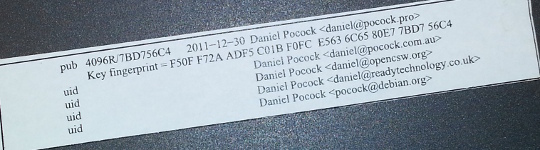
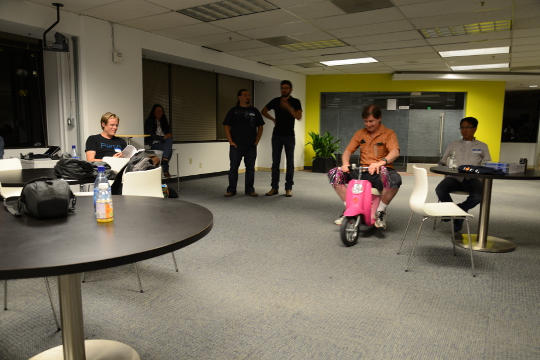
I've mentored a number of students in 2013 and 2014 for Debian and Ganglia and most of the companies I've worked with have run internships and graduate programs from time to time. GSoC 2014 has just finished and with all the excitement, many students are already asking what they can do to prepare and be selected in 2015. My own observation is that the more time the organization has to get to know the student, the more confident they can be selecting that student. Furthermore, the more time that the student has spent getting to know the free software community, the more easily they can complete GSoC. Here I present a list of things that students can do to maximize their chance of selection and career opportunities at the same time. These tips are useful for people applying for GSoC itself and related programs such as GNOME's Outreach Program for Women or graduate placements in companies. Disclaimers There is no guarantee that Google will run the program again in 2015 or any future year. There is no guarantee that any organization or mentor (including myself) will be involved until the official list of organizations is published by Google. Do not follow the advice of web sites that invite you to send pizza or anything else of value to prospective mentors. Following the steps in this page doesn't guarantee selection. That said, people who do follow these steps are much more likely to be considered and interviewed than somebody who hasn't done any of the things in this list. Understand what free software really is You may hear terms like free software and open source software used interchangeably. They don't mean exactly the same thing and many people use the term free software for the wrong things. Not all open source projects meet the definition of free software. Those that don't, usually as a result of deficiencies in their licenses, are fundamentally incompatible with the majority of software that does use genuinely free licenses. Google Summer of Code is about both writing and publishing your code and it is also about community. It is fundamental that you know the basics of licensing and how to choose a free license that empowers the community to collaborate on your code well after GSoC has finished. Please review the definition of free software early on and come back and review it from time to time. The The GNU Project / Free Software Foundation have excellent resources to help you understand what a free software license is and how it works to maximize community collaboration. Don't look for shortcuts There is no shortcut to GSoC selection and there is no shortcut to GSoC completion. The student stipend (USD $5,500 in 2014) is not paid to students unless they complete a minimum amount of valid code. This means that even if a student did find some shortcut to selection, it is unlikely they would be paid without completing meaningful work. If you are the right candidate for GSoC, you will not need a shortcut anyway. Are you the sort of person who can't leave a coding problem until you really feel it is fixed, even if you keep going all night? Have you ever woken up in the night with a dream about writing code still in your head? Do you become irritated by tedious or repetitive tasks and often think of ways to write code to eliminate such tasks? Does your family get cross with you because you take your laptop to Christmas dinner or some other significant occasion and start coding? If some of these statements summarize the way you think or feel you are probably a natural fit for GSoC. An opportunity money can't buy The GSoC stipend will not make you rich. It is intended to make sure you have enough money to survive through the summer and focus on your project. Professional developers make this much money in a week in leading business centers like New York, London and Singapore. When you get to that stage in 3-5 years, you will not even be thinking about exactly how much you made during internships. GSoC gives you an edge over other internships because it involves publicly promoting your work. Many companies still try to hide the potential of their best recruits for fear they will be poached or that they will be able to demand higher salaries. Everything you complete in GSoC is intended to be published and you get full credit for it. Imagine a young musician getting the opportunity to perform on the main stage at a rock festival. This is how the free software community works. It is a meritocracy and there is nobody to hold you back. Having a portfolio of free software that you have created or collaborated on and a wide network of professional contacts that you develop before, during and after GSoC will continue to pay you back for years to come. While other graduates are being screened through group interviews and testing days run by employers, people with a track record in a free software project often find they go straight to the final interview round. Register your domain name and make a permanent email address Free software is all about community and collaboration. Register your own domain name as this will become a focal point for your work and for people to get to know you as you become part of the community. This is sound advice for anybody working in IT, not just programmers. It gives the impression that you are confident and have a long term interest in a technology career. Choosing the provider: as a minimum, you want a provider that offers DNS management, static web site hosting, email forwarding and XMPP services all linked to your domain. You do not need to choose the provider that is linked to your internet connection at home and that is often not the best choice anyway. The XMPP foundation maintains a list of providers known to support XMPP. Create an email address within your domain name. The most basic domain hosting providers will let you forward the email address to a webmail or university email account of your choice. Configure your webmail to send replies using your personalized email address in the From header. Update your ~/.gitconfig file to use your personalized email address in your Git commits. Create a web site and blog Start writing a blog. Host it using your domain name. Some people blog every day, other people just blog once every two or three months. Create links from your web site to your other profiles, such as a Github profile page. This helps reinforce the pages/profiles that are genuinely related to you and avoid confusion with the pages of other developers. Many mentors are keen to see their students writing a weekly report on a blog during GSoC so starting a blog now gives you a head start. Mentors look at blogs during the selection process to try and gain insight into which topics a student is most suitable for. Create a profile on Github Github is one of the most widely used software development web sites. Github makes it quick and easy for you to publish your work and collaborate on the work of other people. Create an account today and get in the habbit of forking other projects, improving them, committing your changes and pushing the work back into your Github account. Github will quickly build a profile of your commits and this allows mentors to see and understand your interests and your strengths. In your Github profile, add a link to your web site/blog and make sure the email address you are using for Git commits (in the ~/.gitconfig file) is based on your personal domain. Start using PGP Pretty Good Privacy (PGP) is the industry standard in protecting your identity online. All serious free software projects use PGP to sign tags in Git, to sign official emails and to sign official release files. The most common way to start using PGP is with the GnuPG (GNU Privacy Guard) utility. It is installed by the package manager on most Linux systems. When you create your own PGP key, use the email address involving your domain name. This is the most permanent and stable solution. Print your key fingerprint using the gpg-key2ps command, it is in the signing-party package on most Linux systems. Keep copies of the fingerprint slips with you. This is what my own PGP fingerprint slip looks like. You can also print the key fingerprint on a business card for a more professional look. Using PGP, it is recommend that you sign any important messages you send but you do not have to encrypt the messages you send, especially if some of the people you send messages to (like family and friends) do not yet have the PGP software to decrypt them. If using the Thunderbird (Icedove) email client from Mozilla, you can easily send signed messages and validate the messages you receive using the Enigmail plugin. Get your PGP key signed Once you have a PGP key, you will need to find other developers to sign it. For people I mentor personally in GSoC, I'm keen to see that you try and find another Debian Developer in your area to sign your key as early as possible. Free software events Try and find all the free software events in your area in the months between now and the end of the next Google Summer of Code season. Aim to attend at least two of them before GSoC. Look closely at the schedules and find out about the individual speakers, the companies and the free software projects that are participating. For events that span more than one day, find out about the dinners, pub nights and other social parts of the event. Try and identify people who will attend the event who have been GSoC mentors or who intend to be. Contact them before the event, if you are keen to work on something in their domain they may be able to make time to discuss it with you in person. Take your PGP fingerprint slips. Even if you don't participate in a formal key-signing party at the event, you will still find some developers to sign your PGP key individually. You must take a photo ID document (such as your passport) for the other developer to check the name on your fingerprint but you do not give them a copy of the ID document. Events come in all shapes and sizes. FOSDEM is an example of one of the bigger events in Europe, linux.conf.au is a similarly large event in Australia. There are many, many more local events such as the Debian France mini-DebConf in Lyon, 2015. Many events are either free or free for students but please check carefully if there is a requirement to register before attending. On your blog, discuss which events you are attending and which sessions interest you. Write a blog during or after the event too, including photos. Quantcast generously hosted the Ganglia community meeting in San Francisco, October 2013. We had a wild time in their offices with mini-scooters, burgers, beers and the Ganglia book. That's me on the pink mini-scooter and Bernard Li, one of the other Ganglia GSoC 2014 admins is on the right. Install Linux GSoC is fundamentally about free software. Linux is to free software what a tree is to the forest. Using Linux every day on your personal computer dramatically increases your ability to interact with the free software community and increases the number of potential GSoC projects that you can participate in. This is not to say that people using Mac OS or Windows are unwelcome. I have worked with some great developers who were not Linux users. Linux gives you an edge though and the best time to gain that edge is now, while you are a student and well before you apply for GSoC. If you must run Windows for some applications used in your course, it will run just fine in a virtual machine using Virtual Box, a free software solution for desktop virtualization. Use Linux as the primary operating system. Here are links to download ISO DVD (and CD) images for some of the main Linux distributions: If you are nervous about getting started with Linux, install it on a spare PC or in a virtual machine before you install it on your main PC or laptop. Linux is much less demanding on the hardware than Windows so you can easily run it on a machine that is 5-10 years old. Having just 4GB of RAM and 20GB of hard disk is usually more than enough for a basic graphical desktop environment although having better hardware makes it faster. Your experiences installing and running Linux, especially if it requires some special effort to make it work with some of your hardware, make interesting topics for your blog. Decide which technologies you know best Personally, I have mentored students working with C, C++, Java, Python and JavaScript/HTML5. In a GSoC program, you will typically do most of your work in just one of these languages. From the outset, decide which language you will focus on and do everything you can to improve your competence with that language. For example, if you have already used Java in most of your course, plan on using Java in GSoC and make sure you read Effective Java (2nd Edition) by Joshua Bloch. Decide which themes appeal to you Find a topic that has long-term appeal for you. Maybe the topic relates to your course or maybe you already know what type of company you would like to work in. Here is a list of some topics and some of the relevant software projects:


  • System administration, servers and networking: consider projects involving monitoring, automation, packaging. Ganglia is a great community to get involved with and you will encounter the Ganglia software in many large companies and academic/research networks. Contributing to a Linux distribution like Debian or Fedora packaging is another great way to get into system administration.
  • Desktop and user interface: consider projects involving window managers and desktop tools or adding to the user interface of just about any other software.
  • Big data and data science: this can apply to just about any other theme. For example, data science techniques are frequently used now to improve system administration.
  • Business and accounting: consider accounting, CRM and ERP software.
  • Finance and trading: consider projects like R, market data software like OpenMAMA and connectivity software (Apache Camel)
  • Real-time communication (RTC), VoIP, webcam and chat: look at the JSCommunicator or the Jitsi project
  • Web (JavaScript, HTML5): look at the JSCommunicator
Before the GSoC application process begins, you should aim to learn as much as possible about the theme you prefer and also gain practical experience using the software relating to that theme. For example, if you are attracted to the business and accounting theme, install the PostBooks suite and get to know it. Maybe you know somebody who runs a small business: help them to upgrade to PostBooks and use it to prepare some reports. Make something Make some small project, less than two week's work, to demonstrate your skills. It is important to make something that somebody will use for a practical purpose, this will help you gain experience communicating with other users through Github. For an example, see the servlet Juliana Louback created for fixing phone numbers in December 2013. It has since been used as part of the Lumicall web site and Juliana was selected for a GSoC 2014 project with Debian. There is no better way to demonstrate to a prospective mentor that you are ready for GSoC than by completing and publishing some small project like this yourself. If you don't have any immediate project ideas, many developers will also be able to give you tips on small projects like this that you can attempt, just come and ask us on one of the mailing lists. Ideally, the project will be something that you would use anyway even if you do not end up participating in GSoC. Such projects are the most motivating and rewarding and usually end up becoming an example of your best work. To continue the example of somebody with a preference for business and accounting software, a small project you might create is a plugin or extension for PostBooks. Getting to know prospective mentors Many web sites provide useful information about the developers who contribute to free software projects. Some of these developers may be willing to be a GSoC mentor. For example, look through some of the following: Getting on the mentor's shortlist Once you have identified projects that are interesting to you and developers who work on those projects, it is important to get yourself on the developer's shortlist. Basically, the shortlist is a list of all students who the developer believes can complete the project. If I feel that a student is unlikely to complete a project or if I don't have enough information to judge a student's probability of success, that student will not be on my shortlist. If I don't have any student on my shortlist, then a project will not go ahead at all. If there are multiple students on the shortlist, then I will be looking more closely at each of them to try and work out who is the best match. One way to get a developer's attention is to look at bug reports they have created. Github makes it easy to see complaints or bug reports they have made about their own projects or other projects they depend on. Another way to do this is to search through their code for strings like FIXME and TODO. Projects with standalone bug trackers like the Debian bug tracker also provide an easy way to search for bug reports that a specific person has created or commented on. Once you find some relevant bug reports, email the developer. Ask if anybody else is working on those issues. Try and start with an issue that is particularly easy and where the solution is interesting for you. This will help you learn to compile and test the program before you try to fix any more complicated bugs. It may even be something you can work on as part of your academic program. Find successful projects from the previous year Contact organizations and ask them which GSoC projects were most successful. In many organizations, you can find the past students' project plans and their final reports published on the web. Read through the plans submitted by the students who were chosen. Then read through the final reports by the same students and see how they compare to the original plans. Start building your project proposal now Don't wait for the application period to begin. Start writing a project proposal now. When writing a proposal, it is important to include several things:
  • Think big: what is the goal at the end of the project? Does your work help the greater good in some way, such as increasing the market share of Linux on the desktop?
  • Details: what are specific challenges? What tools will you use?
  • Time management: what will you do each week? Are there weeks where you will not work on GSoC due to vacation or other events? These things are permitted but they must be in your plan if you know them in advance. If an accident or death in the family cut a week out of your GSoC project, which work would you skip and would your project still be useful without that? Having two weeks of flexible time in your plan makes it more resilient against interruptions.
  • Communication: are you on mailing lists, IRC and XMPP chat? Will you make a weekly report on your blog?
  • Users: who will benefit from your work?
  • Testing: who will test and validate your work throughout the project? Ideally, this should involve more than just the mentor.
If your project plan is good enough, could you put it on Kickstarter or another crowdfunding site? This is a good test of whether or not a project is going to be supported by a GSoC mentor. Learn about packaging and distributing software Packaging is a vital part of the free software lifecycle. It is very easy to upload a project to Github but it takes more effort to have it become an official package in systems like Debian, Fedora and Ubuntu. Packaging and the communities around Linux distributions help you reach out to users of your software and get valuable feedback and new contributors. This boosts the impact of your work. To start with, you may want to help the maintainer of an existing package. Debian packaging teams are existing communities that work in a team and welcome new contributors. The Debian Mentors initiative is another great starting place. In the Fedora world, the place to start may be in one of the Special Interest Groups (SIGs). Think from the mentor's perspective After the application deadline, mentors have just 2 or 3 weeks to choose the students. This is actually not a lot of time to be certain if a particular student is capable of completing a project. If the student has a published history of free software activity, the mentor feels a lot more confident about choosing the student. Some mentors have more than one good student while other mentors receive no applications from capable students. In this situation, it is very common for mentors to send each other details of students who may be suitable. Once again, if a student has a good Github profile and a blog, it is much easier for mentors to try and match that student with another project. GSoC logo generic Conclusion Getting into the world of software engineering is much like joining any other profession or even joining a new hobby or sporting activity. If you run, you probably have various types of shoe and a running watch and you may even spend a couple of nights at the track each week. If you enjoy playing a musical instrument, you probably have a collection of sheet music, accessories for your instrument and you may even aspire to build a recording studio in your garage (or you probably know somebody else who already did that). The things listed on this page will not just help you walk the walk and talk the talk of a software developer, they will put you on a track to being one of the leaders. If you look over the profiles of other software developers on the Internet, you will find they are doing most of the things on this page already. Even if you are not selected for GSoC at all or decide not to apply, working through the steps on this page will help you clarify your own ideas about your career and help you make new friends in the software engineering community.

14 August 2014

Gregor Herrmann: RC bugs 2014/13 - 2014/33

perl 5.20 got uploaded to debian unstable a few minutes ago; be prepared for some glitches when upgrading sid machines/chroots in the next days, while all 557 reverse dependencies are rebuilt via binNMUs. how does this relate to this blog post's title? it does, since during the last weeks I was mostly trying to help with the preparation of this transition. & we managed to fix quite a few bugs while they were not bumped to serious yet, otherwise the list below would be a bit longer :) anyway, here are the the RC bugs I've worked on in the last 20 or so weeks: p.s.: & now, go & enjoy the new perl 5.20 features :)

28 June 2014

Gunnar Wolf: Forms of communication

I stared at Noodles' Emptiness, where I found a short rant on the currently most used forms of communication. No, into the most socially-useful forms of communication. No, into what works best for him. And, as each person's experience is unique, I won't try to correct him Noodles knows himself much, much, much, much better than I do. But some people have wondered recently (i.e. at conferences I have been at) why I give such an atypical use to social networks (...a term which I still hold to be grossly misused, but that's a topic for a different rant...One that's been had too many times). So, although my blog is syndicated at Planet Debian, and I know a good deal of readers come from there, this post is targetted at the rest of the world population: Those that don't understand why many among us prefer other ways of communication. Noodles mentions seven forms of communication he uses, arguably sorted by their nowadayness, low to high: Phone call, text (SMS) message, email, IRC, Skype, Google Hangouts and Facebook messenger. Among those, I strongly dislike two: Phone call and Skype (or any voice-based service, FWIW). I do most of my communication while multitasking, usually at work. I enjoy the quasi-real-timeliness of IRC and the instant messengers, but much more, I like the ability to delay an answer for seconds or minutes without it breaking the rules of engagement. Second, if the ordering is based on what I found, the reason for my little rant should become obvious: We had kept a great job so far building interoperable technology.1 Up until now, you could say drop me a mail , and no matter if you had your mail with GMail and I insisted on self-hosting my gwolf.org, as long as our communications adhered to simple and basic standards, we would be perfectly able to communicate. Skype is a bit of a special case here: They did build a great solution, ~ten years ago, when decent-quality VoIP was nowhere to be found. They have kept their algorithm and mechanisms propietary, and deliberately don't operate with others. And, all in all, there is a case for them remaining closed. But Google Hangouts and Facebook Messenger do piss me off. More the first than the second. Both arrived to the instant messenger scene long after the experimentation and early stages, so they both took Jabber / XMPP, a well tried and tested protocol made with interoperability and federability in mind. And... They closed it, so they can control their whole walled garden. So, yes, I do use them both Because in both there are many people which I value, and which I want to be in touch with. And no, I won't try to change the ways of everybody so they can talk with me on IRC. I'm an asshole, but everything has its limits! :) Of course, I can (still?) use them from my trusty old multiprotocol chat manager, Pidgin. And it's so much better to have one small program gobbling up moderate heaps of memory than to be connected to the Facebook site, spending much more memory and CPU cycles via Javascript in a Web browser. Bah. PS- Interestingly, he left out the face-to-face communication.I am quite an anchorite in my daily life, but I still think it's worth at least a mention ;-) So, Noodles: Thanks for the excuse to let me vent a rant ;-)

10 June 2014

Gunnar Wolf: Tor: I'm shutting down my relay only after four days

Some days ago, I bit the bullet and accepted the Tor Challenge. Sadly, after only four days of having a Tor relay node happily sitting at home (and, of course, giving a nice function to this little friend). The inconveniences were too many. I understand anonimity can be used for many nefarious things, but I was surprised and saddened to see the amount of blocking services. Most notorious to me were the Freenode IRC network, friendly home to many free software projects, and the different Wikimedia projects, which ban editting from IP addresses idenitfied as Tor relays. I'm saddened to say that, while I could perfectly survive (and even be a bit proud about supporting a project I believe in) by jumping through some hoops (i.e. by setting up a SOCKS over ssh tunnel to my office to do my Wikipedia edits while at home), after only four days, I decided to shut down my relay. And the main reason... Was something I'm not going to fight against. And it's not even from a nice, friendly free software project. One thing I am not willing to part with is the one tool that keeps my wife well in contact with her friends and family back in Argentina. Yes, I know I could set up one or many different flavors of SIP or Jabber-based VoIP for her But it's also her parents, brother, sisters, and friends who use Skype. So, Skype's banning of Tor relay nodes made me decide to shut down my relay. Sigh... And for somebody obsessed with graphing stuff, this is the graph of the short lifespan of the "Lobazal" Tor node: [update] I will do another blog post. Good news: My Tor node is alive again! Just no longer as an exit relay, as properly pointed out by many, but as a Tor bridge.

AttachmentSize
tor-challenge-1.png23.97 KB
tor1.png27.84 KB
tor2.png18.3 KB

30 May 2014

Tiago Bortoletto Vaz: On losing contacts with old friends

In 2010 I decided to stop using my google account. In 2011 I decided to leave facebook, twitter and other $cool stuff. This was a hard decision. Not because email migration was annoying, nor because I liked to do social networking. It's hard because most of friends depend on either google or facebook to chat. Since I moved to another country, phone calls and presencial meetings have been substantially reduced. So we keep in contact by using IRC and XMPP. I have good friends who use IRC, mostly Debian people, which is great. I also have lots of friends and contacts not using IRC. In the past they used ICQ, then moved to MSN and now they are using google talk and facebook. I used to explain them that we could talk by using their google account and my Jabber account due to an open standard called XMPP. I enjoy having short conversations in random times, which sometimes takes hours and helps us to keep affectionately connected. It used to work so well. Now it seems to be gone. I've noticed that I can't connect anymore with contacts using google talk, probably because google has finally put into action their decision to abandon open standards for instant messaging. I'm not going to list here all the good things that happened in my life when I stopped using all this crap services. But I have to admit that it really hurts to see my contacts disappearing day by day, feeling like my friends are being devoured by these companies, with zero critical sense. You'll say that good friends won't disappear like that if they are good friends. I agree, but the convenience of having people from one-click distance in random hours a day makes a difference, mainly when physical distance is a blocker.

30 April 2014

Mirco Bauer: Smuxi 0.11 "Distractions" Release

And here we go again! We're proud to announce the new version of Smuxi, release 0.11 "Distractions". During the development, 11 bug reports and 2 feature requests in 112 commits were worked on. Notable highlights in this release are:

User Interface Enhancements
  • The chat list can be shrunken. This is especially handy with XMPP/Jabber and long group chat identifiers.
  • The highlight counter is now a separate column. This enhances the vertical alignment with other highlights and guarantees to be visible even if the chat name was truncated.

Multi Identity Support Smuxi cares for user feedback. Multi identity support was the most voted feature and thus it has been implemented! Now you can please your schizo^Wdesire to use different nicks, users and real names depending on the server. Simply edit the server in preferences and change the details.

Message Patterns Everybody knows text can be boring because it is all just text. Nothing can sidetrack you except reading that bare text. Text often has recurring patterns from which something useful and interactive can be created. For example, someone writes:
Hey meebey, do you know RFC2812?
RFCs are a recurring pattern with a distinct number behind it and are real references to something in the internet (collection of protocol specifications). So I would usually fire up a browser tab, copy/paste or type RFC2812 into my favorite search engine and click the first hit. Then I'd reply to the question afterwards. But with Smuxi's message patters, it turns RFC2812 into a link on which you can simply click to launch the relevant document. Wow this is very cool, but isn't this already happening with http URLs and email addresses? Exactly! Why shouldn't more information be used to create useful things from it? Smuxi message patterns allow you to define text patterns that are transformed into clickable links. This can be used for RFCs, CVEs, bug report numbers (#XXX), git commit hashes and much more. Make good use of your creativity! By default Smuxi comes with built-in message patterns for:
  • URLs
  • heuristic URLs (not starting with http:// etc)
  • email addresses
  • RFCs
  • CVEs
  • Debian Security Advisories (DSA)
  • Many popular bug trackers (GNU, GCC, kernel, Launchpad, freedesktop, GNOME, KDE, Xfce, Debian, Redhat, Novell, Xamarin, openSUSE, Mozilla, Samba, SourceForge, CPAN, boost, Claws and Smuxi)
If you know more general patterns useful for others, please submit them. For a full list of built-in message patterns or how to add your own patterns, head over to the message pattern documentation.

Hooks Enhancements
  • A bug was fixed that prevented hooks from issuing more than one command
  • New hook points:
    • engine/session/on-group-chat-person-added
    • engine/session/on-group-chat-person-removed
    • engine/session/on-group-chat-person-updated
  • New hook variables:
    • CMD
    • CMD_PARAMETER
    • CMD_CHARACTER
    • PROTOCOL_MANAGER_PRESENCE_STATUS: Unknown, Offline, Online, Away

Twitter Enhancements As of 14 Jan 2014, Twitter disallows unencrypted HTTP requests which broke Smuxi's Twitter support. Smuxi is now making exclusively encrypted requests (HTTPS) and thus works with Twitter again.

JabbR (Beta) Enhancements
  • Messages now raise Smuxi hooks
  • The Validate certificate setting is now correctly honored.

Updated Translations Smuxi should now be in your language, including:
  • Initial complete Dutch (Jeroen Baten)

Behind the Scenes
  • New Smuxi git repository @ GNOME
  • Cleaner XMPP code (Oliver Schneider)
  • Smuxi's STFL text frontend is doing a graceful shutdown on quit (Calvin B))
  • New sexy website! We hope you like it :)

Contributors Contributors to this release are the following people:
  • Mirco Bauer (98 commits)
  • Oliver Schneider (6 commits)
  • Calvin B (6 commits)
  • Andr s G. Aragoneses (1 commit)
  • Jeroen Baten (translations)
Thank you very much for your contributions to Smuxi! Want it? Go here and grab it right now!

Posted Mon Apr 14 13:23:29 2014

17 April 2014

Andrew Pollock: [life] Day 79: Magic, flu shots, and play dates and dinner

Zoe slept until 7:45am this morning, which is absolutely unheard of in our house. She did wake up at about 5:15am yelling out for me because she'd kicked her doona off and lost Cowie, but went back to sleep once I sorted that out. She was super grumpy when she woke up, which I mostly attributed to being hungry, so I got breakfast into her as quickly as possible and she perked up afterwards. Today there was a free magic show at the Bulimba Library at 10:30am, so we biked down there. I really need to work on curbing Zoe's procrastination. We started trying to leave the house at 10am, and as it was, we only got there with 2 minutes to spare before the show started. Magic Glen put on a really good show. He was part comedian, part sleight of hand magician, and he did a very entertaining show. There were plenty of gags in it for the adults. Zoe started out sitting in my lap, but part way through just got up and moved closer to the front to sit with the other kids. I think she enjoyed herself. I'd have no hesitation hiring this guy for a future birthday party. Zoe had left her two stuffed toys from the car at Megan's house on Tuesday after our Port of Brisbane tour, and so after the magic show we biked to her place to retrieve them. It was close to lunch by this stage, so we stayed for lunch, and the girls had a bit of a play in the back yard while Megan's little sister napped. It was getting close to time to leave for our flu shots, so I decided to just bike directly to the doctor from Megan's place. I realised after we left that we'd still left the stuffed toys behind, but the plan was to drive back after our flu shots and have another swim their neighbour's pool, so it was all good. We got to the doctor, and waited for Sarah to arrive. Sarah and I weren't existing patients at Zoe's doctor, but we'd decided to get the flu shot as a family to try and ease the experience for Zoe. We both had to do new patient intake stuff before we had a consult with Zoe's doctor and got prescriptions for the flu shot. I popped next door to the adjacent pharmacy get the prescriptions filled, and then the nurse gave us the shots. For the last round of vaccinations that Zoe received, she needed three, and she screamed the building down at the first jab. The poor nurse was very shaken, so we've been working to try and get her to feel more at ease about this one. Zoe went first, and she took a deep breath, and she was winding up to freak out when she had her shot, but then it was all over, and she let the breath go, and looked around with a kind of "is that it?" reaction. She didn't even cry. I was so proud of her. I got my shot, and then Sarah got hers, and we had to sit in the waiting room for 10 minutes to make sure we didn't turn into pumpkins, and we were on our way. We biked home, I grabbed our swim gear, and we drove back to Megan's place. The pool ended up being quite cold. Megan didn't want to get in, and Zoe didn't last long either. Megan's Mum was working back late, so I invited Megan, her Dad and her sister over for dinner, and we headed home so I could prepare it. One of Zoe's stuffed toys had been located. We had a nice dinner of deviled sausages made in the Thermomix, and for a change I didn't have a ton of leftovers. Jason had found the other stuffed toy in his truck, so we'd finally tracked them both down. After Megan and family went home, I got Zoe to bed without much fuss, and pretty much on time. I think she should sleep well tonight.

14 April 2014

Daniel Kahn Gillmor: OTR key replacement (heartbleed)

I'm replacing my OTR key for XMPP because of heartbleed (see below). If the plain ASCII text below is mangled beyond verification, you can retrieve a copy of it from my web site that should be able to be verified.
-----BEGIN PGP SIGNED MESSAGE-----
Hash: SHA512
OTR Key Replacement for XMPP dkg@jabber.org
===========================================
Date: 2014-04-14
My main XMPP account is dkg@jabber.org.
I prefer OTR [0] conversations when using XMPP for private
discussions.
I was using irssi to connect to XMPP servers, and irssi relies on
OpenSSL for the TLS connections.  I was using it with versions of
OpenSSL that were vulnerable to the "Heartbleed" attack [1].  It's
possible that my OTR long-term secret key was leaked via this attack.
As a result, I'm changing my OTR key for this account.
The new, correct OTR fingerprint for the XMPP account at dkg@jabber.org is:
  F8953C5D 48ABABA2 F48EE99C D6550A78 A91EF63D
Thanks for taking the time to verify your peers' fingerprints.  Secure
communication is important not only to protect yourself, but also to
protect your friends, their friends and so on.
Happy Hacking,
  --dkg  (Daniel Kahn Gillmor)
Notes:
[0] OTR: https://otr.cypherpunks.ca/
[1] Heartbleed: http://heartbleed.com/
-----BEGIN PGP SIGNATURE-----
Version: GnuPG v1
iQJ8BAEBCgBmBQJTTBF+XxSAAAAAAC4AKGlzc3Vlci1mcHJAbm90YXRpb25zLm9w
ZW5wZ3AuZmlmdGhob3JzZW1hbi5uZXRFQjk2OTEyODdBN0FEREUzNzU3RDkxMUVB
NTI0MDFCMTFCRkRGQTVDAAoJEKUkAbEb/fpcYwkQAKLzEnTV1lrK6YrhdvRnuYnh
Bh9Ad2ZY44RQmN+STMEnCJ4OWbn5qx/NrziNVUZN6JddrEvYUOxME6K0mGHdY2KR
yjLYudsBuSMZQ+5crZkE8rjBL8vDj8Dbn3mHyT8bAbB9cmASESeQMu96vni15ePd
2sB7iBofee9YAoiewI+xRvjo2aRX8nbFSykoIusgnYG2qwo2qPaBVOjmoBPB5YRI
PkN0/hAh11Ky0qQ/GUROytp/BMJXZx2rea2xHs0mplZLqJrX400u1Bawllgz3gfV
qQKKNc3st6iHf3F6p6Z0db9NRq+AJ24fTJNcQ+t07vMZHCWM+hTelofvDyBhqG/r
l8e4gdSh/zWTR/7TR3ZYLCiZzU0uYNd0rE3CcxDbnGTUS1ZxooykWBNIPJMl1DUE
zzcrQleLS5tna1b9la3rJWtFIATyO4dvUXXa9wU3c3+Wr60cSXbsK5OCct2KmiWY
fJme0bpM5m1j7B8QwLzKqy/+YgOOJ05QDVbBZwJn1B7rvUYmb968yLQUqO5Q87L4
GvPB1yY+2bLLF2oFMJJzFmhKuAflslRXyKcAhTmtKZY+hUpxoWuVa1qLU3bQCUSE
MlC4Hv6vaq14BEYLeopoSb7THsIcUdRjho+WEKPkryj6aVZM5WnIGIS/4QtYvWpk
3UsXFdVZGfE9rfCOLf0F
=BGa1
-----END PGP SIGNATURE-----

9 April 2014

Lucas Nussbaum: speedtest.net, or how not to do bandwidth tests

While trying to debug a bandwidth problem on a 3G connection, I tried speedtest.net, which ranks fairly high when one searches for bandwidth test on various search engines. I was getting very strange results, so I started wondering if my ISP might be bandwidth-throttling all traffic except the one from speedtest.net tests. After all, that s on a 3G network, and another french 3G ISP (SFR) apparently uses Citrix ByteMobile to optimize the QoE by minifying HTML pages and recompressing images on-the-fly (amongst other things). So, I fired wireshark, and discovered that no, it s just speedtest being a bit naive. Speedtest uses its own text-based protocol on port 8080. Here is an excerpt of a download speed test:

> HI
< HELLO 2.1 2013-08-14.01
> DOWNLOAD 1000000
< DOWNLOAD JABCDEFGHIJABCDEFGHIJABCDEFGHIJABCDEFGHIJABCDEFGHIJABCDEFGHIJABCDEFGHIJABCDEFGHIJABCDEFGHIJABCDEFGHIJABCDEFGHIJABCDEFGHIJABCDEFGHIJABCDEFGHIJABCDEFGHIJABCDEFGHIJABCDEFGHIJABCDEFGHIJABCDEFGHIJABCDEFGHIJABCDEFGHIJABCDEFGHIJABCDEFGHIJABCDEFGHIJABCDEFGHIJABCDEFGHIJABCDEFGHIJABCDEFGHIJABCDEFGHIJABCDEFGHIJABCDEFGHIJABCDEFGHIJABCDEFGHIJABCDEFGHIJABCDEFGHIJABCDEFGHIJABCDEFGHIJABCDEFGHIJABCDEFGHIJABCDEFGHIJABCDEFGHIJABCDEFGHIJABCDEFGHIJABCDEFGHIJABCDEFGHIJABCDEFGHIJABCDEFGHIJABCDEFGHIJABCDEFGHIJABCDEFGHIJABCDEFGHIJABCDEFGHIJABCDEFGHIJABCDEFGHIJABCDEFGHIJABCDEFGHIJABCDEFGHIJABCDEFGHIJABCDEFGHIJABCDEFGHIJABCDEFGHIJABCDEFGHIJABCDEFGHIJABCDEFGHIJABCDEFGHIJABCDEFGHIJABCDEFGHIJABCDEFGHIJABCDEFGHIJABCDEFGHIJABCDEFGHIJABCDEFGHIJABCDEFGHIJABCDEFGHIJABCDEFGHIJABCDEFGHIJABCDEFGHIJABCDEFGHIJABCDEFGHIJABCDEFGHIJABCDEFGHIJABCDEFGHIJABCDEFGHIJABCDEFGHIJABCDEFGHIJABCDEFGHIJABCDEFGHIJABCDEFGHIJABCDEFGHIJABCDEFGHIJABCDEFGHIJABCDEFGHIJABCDEFGHIJABCDEFGHIJABCDEFGHIJABCDEFGHIJABCDEFGHIJABCDEFGHIJABCDEFGHIJABCDEFGHIJABCDEFGHIJABCDEFGHIJABCDEFGHIJABCDEFGHIJABCDEFGHIJABCDEFGHIJABCDEFGHIJABCDEFGHIJABCDEFGHIJABCDEFGHIJABCDEFGHIJABCDEFGHIJABCDEFGHIJABCDEFGHIJABCDEFGHIJABCDEFGHIJABCDEFGHIJABCDEFGHIJABCDEFGHIJABCDEFGHIJABCDEFGHIJABCDEFGHIJABCDEFGHIJABCDEFGHIJABCDEFGHIJABCDEFGHIJABCDEFGHIJABCDEFGHIJABCDEFGHIJABCDEFGHIJABCDEFGHIJABCDEFGHIJABCDEFGHIJABCDEFGHIJABCDEFGHIJABCDEFGHIJABCDEFGHIJABCDEFGHIJABCDEFGHIJABCDEFGHIJABCDEFGHIJABCDEFGHIJABCDEFGHIJABCDEFGHIJABCDEFGHIJABCDEFGHIJABCDEFGHIJABCDEFGHIJABCDEFGHIJABCDEFGHIJABCDEFGHIJABCDEFGHIJABCDEFGHIJABCDEFGHIJABCDEFGHIJABCDEFGHIJABCDEFGHIJABCDEFGHIJABCDEFGHIJABCDEFGHIJABCDEFGHIJABCDEFGHIJABCDEFG
Yeah, right: sequences of ABCDEFGHIJ . How course, extremely easy to compress, which apparently happens transparently on 3G (or is it PPP? but I tried to disable PPP compression, and it did not see any change). It s funny how digging into problems that look promising at first sight often results in big disappointments :-(

7 February 2014

Jo Shields: Dear Fake Debian Developers, shoo.

Another post about the Valve/Collabora free games thing. This time, the bad bit people trying to scam free games from us. Before I start, I want to make one thing clear there are people who have requested keys who don t meet the criteria, but are honest and legitimate in their requests. This blogspam is not about them at all. If you re in that category, you re not being complained about. So. Some numbers. At time of writing, I ve assigned keys to 279 Debian Developers or Debian Maintainers almost 25% of the total eligible pool of about 1200. I ve denied 22 requests. Of these 10 were polite requests from people who didn t meet the conditions stated (e.g. Ubuntu developers rather than Debian). These folks weren t at all a problem for us, and I explained politely that they didn t meet the terms we had agreed at the time with Valve. No problem at all with those folks. Next, we have the chancers, 7 of them, who pretended to be eligible when they clearly weren t. For example, two people sent me signed requests pointing to their entry on the Debian New Maintainers page when challenged over the key not being in the keyring. The NM page showed that they had registered as non-uploading Debian Contributors a couple of hours previously. A few just claimed I am a DD, here is my signature when they weren t DDs at all. Those requests were also binned.
Papers, Please screenshot - denied entry application

DENIED

And then we move onto the final category. These people tried identity theft, but did a terrible job of it. There were 5 people in this category:
From: Xxxxxxxx Xxxxxx <xxxxxxxx.xxxxxx@ieee.org>
Subject: free subscription to Debian Developer
8217 A205 5E57 043B 2883 054E 7F55 BB12 A40F 862E
This is not a signature, it s a fingerprint. Amusingly, it s not the fingerprint for the person who sent my mail, but that of Neil McGovern a co-worker at Collabora. Neil assured me he knew how to sign a mail properly, so I shitcanned that entry.
From: "Xxxxx, Xxxxxxxxx" <x.xxxxx@bbw-bremen.de>
Subject: Incoming!
Hey dude,
I want to have the redemption code you are offering for the Valve Games
mQGiBEVhrscRBAD4M5+qxhZUD67PIz0JeoJ0vB0hsLE6QPV144PLjLZOzHbl4H3N
...snip...
Lz8An1TEmmq7fltTpQ+Y1oWhnE8WhVeQAKCzh3MBoNd4AIGHcVDzv0N0k+bKZQ=3D=3D
=3Du/4R
Wat? Learn to GPG!
From: Xxxxxx-Xxxx Le Xxxxxxx Xxxx <xx.xxxxxxxxx@gmail.com>
Subject: pass steam
Hey me voila
Merci beaucoup
valve
2069 1DFC C2C9 8C47 9529 84EE 0001 8C22 381A 7594
Like the first one, a fingerprint. This one is for S bastien Villemot. Don t scammers know how to GPG sign?
From: "Xxxxxxxxx Xxxxxxx" <xxxxxxxx@web.de>
Subject: thanks /DD/Steam gifts us finally something back
0x6864730DF095E5E4
Yet again, a fingerprint. This one is for Marco Nenciarini. I found this request particularly offensive due to the subject line the haughty tone from an identity thief struck me as astonishingly impertinent. Still, when will scammers learn to GPG?
From: Sven Hoexter <svenhoexter@gmail.com>
Subject: Valve produced games
I'm would like to get the valve produced games
My keyring: 0xA6DC24D9DA2493D1 Sven Hoexter <hoexter> sig:6
Easily the best scam effort, since this is the only one which both a) registered an email address under the name of a DD, and b) used a fingerprint which actually corresponds to that human. Sadly for the scammer, I m a suspicious kind of person, so my instinct was to verify the claim via IRC.
31-01-2014 16:52:48 > directhex: Hoaxter, have you started using gmail without updating your GPG key? (note: significantly more likely is someone trying to steal your identity a little to steal valve keys from collabora)
31-01-2014 16:54:51 < Hoaxter!~sh@duckpond6.stormbind.net: directhex: I do not use any Google services and did not change my key
So yeah. Nice try, scammer. I m not listing, in all of this, the mails which Neil received from people who didn t actually read his mail to d-d-a. I m also not listing a story which I ve only heard second ha actually no, this one is too good not to share. Someone went onto db.debian.org, did a search for every DD in France, and emailed every Jabber JID (since they look like email addresses) asking them to forward unwanted keys. All in all, the number of evildoers is quite low, relative to the number of legitimate claims 12 baddies to 279 legitimate keys issued. But still, this is why the whole key issuing thing has been taking me so long and why I have the convoluted signature-based validation system in place. Enjoy your keys, all 279 of you (or more by the time some of you read this). The offer has no explicit expiry on it Valve will keep issuing keys as long as there is reason to, and Collabora will continue to administer their allocation as long as they remain our clients. It s a joint gift to the community thousands of dollars worth of games from Valve, and a significant amount of my time to administer them from Collabora.

28 January 2014

Bits from Debian: Debian.org enabled for SIP federation and WebRTC, XMPP/Jabber to follow

Debian System Administrators working in conjunction with pkg-voip team member Daniel Pocock have set up a SIP proxy and TURN server for debian.org. Specifically, the SIP proxy provides a way for Debian Developers to use their Debian email ID as a SIP address for making calls to other project members and exchanging calls with any other domain that is enabled for SIP. The repro SIP proxy from reSIProcate has been chosen for this project. The TURN server provides a mechanism for users of SIP or XMPP (Jabber) to relay audio and video streams through a public IP address when necessary, eliminating many of the quality issues that arise when NAT devices block the media streams in one or both directions. The service allows the users to connect directly with the SIP device or softphone of their choosing, including many of those packaged in Debian such as Jitsi and Empathy or third party solutions like Lumicall or CSipSimple on Android. The SIP proxy also includes a WebRTC interface, allowing Debian Developers to immediately try WebRTC voice and video calls without installing or configuring any software of their own other than a web browser. A second stage of the project involves providing an XMPP (Jabber) server with similar capabilities for federated communications between debian.org users and other domains. Further details will be announced in the weeks ahead. It is a significant feature of the Debian Project philosophy that we can operate the entire project using free software, specifically, using software available in Debian packages running on our own infrastructure and without a dependency on third party cloud solutions.These new services for project members fulfill those expectations. It is particularly relevant for situations where real-time communication (voice or video) collaboration takes place with third parties such as applicants for Google Summer of Code, Outreach Program for Women, sponsors, media and other free software projects. Project specific details and a user guide are available now on the Debian Wiki at http://wiki.debian.org/UnifiedCommunications/DebianDevelopers

Next.

Previous.