Search Results: "iari"

29 February 2012

Antonio Terceiro: Thesis submitted

Last Friday, after 5 long years, I have finally submitted my PhD thesis. It was quite a relief, more or less as if an elephant was taken off my back. An English title for my thesis would be Structural Complexity Characterization in Software Systems. Here is an abstract:
This thesis proposes a theory to characterize structural complexity in software systems. This theory aims to identify (i) the contribution of several factors to the structural complexity variation and (ii) the effects of structural complexity in software projects. Possible factors in the structural complexity variation include: human factors, such as general experience of the developers and their familiarity with the different parts of the system; factors related to the changes performed on the system, such as size variation and change diffusion; and organizational factors, such as the maturity of the software development process and the communication structure of the project. Effects of structural complexity include higher effort, and consequently higher cost, in software comprehension and maintenance activities. To test the validity of the proposed theory, four empirical studies were performed, mining data from free software project repositories. We analyzed historical data from changes performed in 13 systems from different application domains and written in different programming languages. The results of these studies indicated that all the factors studied influenced the structural complexity variation significantly in at least one of the projects, but different projects were influenced by different sets of factors. The models obtained were capable of describing up to 93% of the structural complexity variation in the projects analyzed. Keywords: Structural Complexity, Software Maintainance, Human factors in Software Engineering, Mining Software Repositories, Theories in Software Engineering, Empirical Software Engineering, Free/Open Source Software Projects.
Those who read Portuguese can check out the actual thesis text as a PDF file. Most of the studies discussed in the thesis are presented in English in papers I have published during the last years. My defense is going to be on March 23rd. If you happen to be at Salvador at that day, please feel cordially invited.

25 February 2012

David Bremner: First steps with Racket PLoT

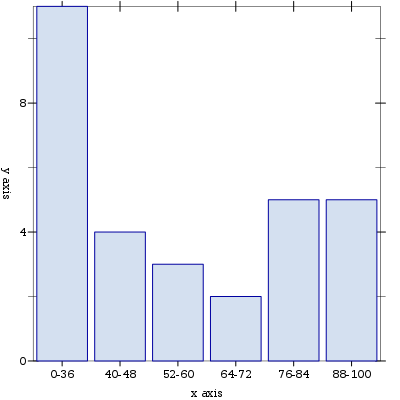
I have been in the habit of using R to make e.g. histograms of test scores in my courses. The main problem is that I don't really need (or am too ignorant to know that I need) the vast statistical powers of R, and I use it rarely enough that its always a bit of a struggle to get the plot I want. racket is a programming language in the scheme family, distinguished from some of its more spartan cousins by its "batteries included" attitude. I recently stumbled upon the PLoT graph (information visualization kind, not networks) plotting module and was pretty impressed with the Snazzy 3D Pictures. So this time I decided try using PLoT for my chores. It worked out pretty well; of course I am not very ambitious. Compared to using R, I had to do a bit more work in data preparation, but it was faster to write the Racket than to get R to do the work for me (again, probably a matter of relative familiarity). racket-hist.png
#lang racket/base
(require racket/list)
(require plot)
(define marks (build-list 30 (lambda (n) (random 25))))
(define out-of 25)
(define breaks '((0  9) (10 12) (13 15) (16 18) (19 21) (22 25)))
(define (per-cent n)
  (ceiling (* 100 (/ n out-of))))
(define (label l)
  (format "~a-~a" (per-cent (first l)) (per-cent (second l))))
(define (buckets l)
  (let ((sorted (sort l <)))
    (for/list ([b breaks])
          (vector (label b)
           (count (lambda (x) (and 
                    (<= x ( second b))
                    (>= x ( first b))))
               marks)))))
(plot
 (list
  (discrete-histogram 
  (buckets marks)))
 #:out-file "racket-hist.png")

23 February 2012

Jordi Mallach: alsaconf

Removing alsaconf was one of the very few rewarding moments of these ten years of taking care of ALSA in Debian. Not everyone agreed back then, and we still get some retaliation. :)
Date: Thu, 23 Feb 2012 02:59:31 +0100
From: <CENSORED>
To: jordi@debian.org
Subject: sabotage!
the removing of alsaconf without working(!) alternatives  was (AND IS!)  an
act of sabotage against millions of debian/alsa - users who needs stable
productive systems
you and all those proponents of removing this still needed alsaconf - program
will have to take the responsibility in front of an (us-) court for damages in
millions of dollars - amounts (lost man hours) all over the world
only a short while and we will have enough sponsors and witnesses around the
globe (and a very specialised, international labouring bureau of advocates) to
go to the court for prosecution.
we will not tolerate such an betray ("stable"? - do you believe, we're
fools??!!) against broad sections of the population and against the spirit of
free software!
it will be intresting to investigate, in whoms interests you've done so and
who the beneficiaries are ...
L.B.
conductor, publicist, whistleblower

18 February 2012

Biella Coleman: Montreal, first impressions

frozenlights When I told people of my plans to move to Montreal, it usually prompted one of two reactions: one was some version of joyful envy, many people exclaiming breathlessly Montreal is one of my favorite cities, one person once even clutching my arm and told me as he looked me straight in the eye: you are so lucky, there is no city quite like Montreal in North America. The second reaction came off as a thinly veiled mixture of disdain and disbelief usually peppered with many reallys: oh wow, really, really you would really leave NYC? I am pretty certain they really were thinking something along the lines of what a fool, how dare she leave a great job, a great university, a world class city (the only city to live) for some Canadian mid-sized city, which is like tundra for a good chunk of the year? The decision to move weighed heavily on me, if for no other reason I had a choice to stay or to go and I honestly have not had a choice, a decision to make about where to go since I got accepted to graduate school (and even then the choice was more obvious than this one). So over a month into my move what is my verdict? In a word, win. I don t miss NYC at all though I get why some people cannot leave the place and know that despite some oddities and difficulties of living in Montreal, it fits my tastes and needs much better than NYC which dwarfed me in so many ways. I never felt I could enjoy it, I grew tired of the cramped living quarters, the noise ate at my soul, and I simply felt more overwhelmed by the fact that I could not even get a handle on the neighborhoods in my vicinity, much less all the other hoods in the area. Instead of dogging NYC anymore, I think I will spend a little time on first impressions, as they will soon be lost to the familiarity borne with time and experience. In essence Montreal is chock full of life but rather intimate, a quirky city with lots of charm but some grit and lacking the way over designed and done feel of cities like Portland. Here are some of quirks: 1. The Hawt Metro: I fell in love with the Metro when I first rode it a few years ago. I just love the powder blue color of the cars and the super sweet 1960s aesthetic of many stations. Even better and unlike NYC, they are just clean and quiet. The downside? The temperatures approximates a sauna during the winter and while you would think this is a good thing, when you are layered with the clothing necessary to survive outside (re: long underwear along with Canada-coat, gloves, hat, and scarf), it is hooooooot down there and you feel like you need to pass out. 2. Spend money, get free stuff: In many establishments you get free stuff (like blueberries or some like sports bar) when you spend over a certain amount of money, like 70 bucks. Quirky local tradition. 3. The culture of negotiation and the kick ass standard lease: Housing is amazing here. There is plenty of it, there are many different styles, and it is rather fun exploring all the different hoods that make up the city. Problem is too that lots of apartments have weird problems and issues and I had to steer clear of anything that could even possibly have mold. I spent weeks day in day out looking for a place, desperate to move out of my corporate apartment very nicely provided by the university but still not my ideal living situation. Finally found a place that fit all my needs in the perfect location and I took it to only find out that places are priced to negotiate and I was faced with the decision to negotiate or not. Sort of did, was not thrilled about it (thinking that I might lose the place) but it sort of worked and I scored the place. If price is up to haggling, the lease on the other hand, is standard (you can buy one at your local bodega ). It is the law to use it and it is like a no nonsense, straightforward lease, which is very protective of renters. 4. Montreal is known for its exceptional food but you know Poutine is just plain gross: Food here is good and I can tell that I will get a handle of restaurants in a way that felt impossible in NYC. The gluten free religion seems to be spreading, thankfully. There are many little Fruiterias! to get your fruits veggies which I am still exploring and right around my house is a crazy supermarket that is so cheap, which is weird because consumer goods generally ain t cheap in Montreal like they are in the states but this place is a gem and everyone agrees (and almost impossible to notice from the street!). Now Poutine is disgusting. Ok it did not help that the first night I went out to eat it, I was still under the clutches of Noro virus, and I think it re-activated the nausea that had been zapped by some strong medicine and the hospital, the day before, which brings me to the next point, the health care system. 5. Healthcare, I had to use it way too early: So last week I came down with the Noro virus and you usually wait it out as it runs through you quickly but I was dehydrated before I even started to vomit to for 8 hours straight, at which point severely tired and so nauseous (I was yelling to make it stop), I went to the hospital. Now I had talked to lot of people about the healthcare system in Montreal as it seems good, really great but a bit over taxed, especially compared to where I had lived in Edmonton where it was like a magic fairy tale dream. I had heard of two things: the care is excellent but the facilities are shocking and the wait times unless dire can be atrociously long. So facilities, yea they are kinda shocking, somewhat shabby but who cares, so long as the care is good, no? Packaging is irrelevant so long as the goods are derived. Before going I was scared of the long wait times (and also the taxi took me by mistake to Montreal General Hospital was looked too much like a HUGE version of the creepy buildings in The Shining for me, and I was supposed to go to Jewish General so left for there). The wait time: nearly none, somewhat as shocking as the facilities first looked to me. I think it was a combination of the time I arrived, with the fact that my lounge was parched and yellowish-gross (sorry, it was gross), indicating I was dehydrated, oh and I was crying bit hysterically, for despite my high threshold for pain, nausea terrorizes me. I was covered by insurance and since I did not yet have my McGill health cards (it takes three months to qualify for the local stuff), I did pay and the price was laughably cheap compared to what I would pay in NYC for the same treatment. 6. Now for my favorite, snow so nice, ice oh Christ: Well this winter has been, by all accounts, weak and warm, the spirit of winter barely making its way from the underworld to the outerworld. But even though it is has been more idle than full throttle, I still got a pretty accurate taste of what winter is like, with a few days of 20- c temps, and having to walk a number of times on a layer of frozen ice that makes it feel like a very dangerous mini-ice age in the making. IMAG0028-1 I do rather love the quiet snow falling and just love love sprinting through the snow with my dog, Roscoe, who has taken a liking for prancing in the white stuff and looks awful cute with his winter man s ice beard. After a sizable snowfall, it is clear they city does not toy with the snow removal although the sidewalk snow plows do look somewhat like very large and dangerous but kinda cute toys. But let s be frank, winters are hard, so hard that I think I would go mad if I had to stay through the entire thing, being born and raised in the tropics So the fact that I am writing this from the southern hemisphere in the height of summer gives me the assurance I can handle the rest of the snow, ice, ice and snow upon my return.

5 January 2012

Jaldhar Vyas: Jeopardy!: The Post-Mortem

By now hopefully you got a chance to see my Jeopardy! episode so it won't be much of a spoiler to mention that I didn't win. It went like this. I flew into LA on the night of October 31st. The taping was to take place on the next two days. Jeopardy! tapes two weeks of shows, two days a week for a total of 10 episodes. Contestants are randomly chosen for one of those 10 episodes but you don't find out which one you will be on until the last minute. Randomness and secrecy have become become a big part of the production process in games since the quiz show scandals of the 1950s. (Interesting fact: it is a Federal felony to tamper with a TV game show.) There were a group of just under 20 0f us altogether waiting to go on. All very nice people. Here in the New York area one tends to equate very intelligent people with "Type A" personalities but we got on well together. Interspersed between the tapings, we had short practice sessions to familiarize ourselves with the studio setup and this is where I first started getting a little apprehensive. Jeopardy! is not just about general knowledge, there is a physical element too in that you have to buzz in by pressing a button on a stick which is wired up to some producers console. You can't buzz in before Alex has finished reading the question and obviously you can't buzz in if someone is already answering the question. If you buzz at the wrong time, your buzzer locks for 0.75 seconds so just jamming your finger on the button. I didn't even get that far as on the entire first day I failed to buzz in at all despite changing hands, changing grip different ways and other strategies. I was pretty despondent by the second day but then miraculously I managed to get the hang of it. So when I was finally selected (for the 3rd game of that day.) I was back to my usual cool self. I was up against Dave Leach and Nicholas Campiz who were returning after having tied in the previous game. And the game did start well enough. Oh one thing you may notice is that Alex mispronounces my name Jaldhal. I knew he did that once or twice and even mentioned it to a producer but it was only viewing the episode right now that I see he does it consistently. I assumed such things would be fixed up in post-editting but I guess not. Oh well, after living in this country for so many years I've learned to be happy whenever two consonants are more or less in the right place. This particular mispronunciation is actually fairly common, even Indian people have been known to make it. The alternative theory is that Alex couldn't read my horrible handwriting which is also plausible. Anyway, I digress. I started off fairly well. My first mistake was in a category about alcoholic drinks. I answered vermouth when the correct response was gin. In my defense I'm a strict teetoler so none of these words mean anything to me. I also earned the disapproval of my superhero fan son by mistaking Dr. Strange for Dr. Doom. I did get the one about Spiderman villain Dr. Octopus so that mollified him somewhat. The highlight of my evening was strangely enough in a category about books of the Bible. I got a Daily Double. It was a risky move but I have always wanted to make a "true" daily double so I threw caution to the winds and wagered everything I had. To my surprise as much as anyones, got the answer right doubling my score. I was in a pretty good position for the Double Jeopardy but thats when Dave started dominating. If you haven't been watching previous games, Dave Leach is arguably the best player this season. Not only is he smart but he is almost supernaturally fast on the buzzer. You can't see because I kept my hands behind the podium but I again and again I would desperately try to ring in on a question I knew the answer to only to be beaten to the punch by Dave. This caused me to start getting a bit reckless and answering questions where I was less than certain which cost me dearly. One particularly dumb mistake was in a category where all the answers were supposed to start with the letter g. I said compass when I should said gyrocompass but actually I should have left that category alone entirely. By the time Final Jeopardy came around winning was no longer an option as Dave was too far in the lead. I was slightly ahead of Nicholas in 2nd place. This is where I again made a strategic error. My original plan to bet nothing in Final Jeopardy but the category was "1930s Novels" and I liked my chances. The clue was read out and it involved an anti-war novel whose author was blacklisted. I was elated. It had to be "All Quiet on the Western Front" right? The blacklist bit gave me pause as the author Erich Maria Remarque was German and this was obviously a reference to the anti-Communist blacklist in the 1950s USA. But somehow I remembered that he had spent the end of his life in Hollywood or maybe I just convinced myself that it was plausible. Evidently my thought process wasn't too crazy because all three of us came up with the same answer. All three of us were wrong. The correct answer was "Johnny Got His Gun" by Daltan Trumbo. In hindsight I knew this but it illustrates the strange ways the mind works. I knew because the video for Metallicas song "One" from "...And Justice for All" is based on the film adaptation of this book. However in a previous orientation session the lady who is the contestant coordinator for Jeopardy! had mentioned AQOTHWF as anexample of something and this got stuck in my brain crowding out the previously known fact. So when all was said and done I ended up in 3rd place. (I bet big whereas Nicholas was more conservative.) Oh well. Despite not winning I had a blast. I fulfilled my dream of appearing on Jeopardy! I met Alex Trebek. (And I should be receiving an autographed picture of us together soon.) My witty banter was sufficiently witty. I made enough money to cover my travel expenses and still have a nice amount left. And I got to meet lots of interesting and wonderful people. So I'm satisfied.

19 December 2011

Benjamin Mako Hill: The Influence of the Ecstasy of Influence

/copyrighteous/images/andy-warhol-mickey.jpg Back in 2007, Harpers Magazine published The Ecstasy of Influence: a beautiful article by Jonathan Lethem on reuse in art and literature. Like Lewis Hyde in The Gift (quite like Hyde, as readers discover) Lethem blurs the line between plagiarism, remix, and influence and points to his subject at the center of artistic production. Lethem's gimmick, which most readers only discover at the end, is that the article is constructed entirely out of "reused" (i.e., plagiarized) quotations and paraphrases. A couple months ago, I suggested to my friend Andr s Monroy-Hern ndez a very similar project: a literature review on academic work on remixing and remixing communities constructed entirely of text lifted from existing research. After some searching around, Andr s pointed out that Lethem had essentially beaten us to the punch and linked me to his article. Only after I visited the link did I remember that I had read Lethem's article when it was published and loved the idea then. Over time, I'd forgotten I read ever it. Without knowing it, I had read, loved, forgotten, and then -- influenced, if unconsciously -- copied and reproduced the idea myself in slightly modified form. And I suppose that was the point.

2 November 2011

Benjamin Mako Hill: Slouching Toward Autonomy

I care a lot about free network services. Recently, I have been given lots of reasons to be happy with the progress the free software community has made in developing services that live up to my standards. I have personally switched from a few proprietary network services to alternative systems that respect my autonomy and have been very happy both with the freedom I have gained and with the no-longer-rudimentary feature sets that the free tools offer. Although there is plenty left to do, here are four tools I'm using now instead of the proprietary tools that many people use, or that I used to use myself: In trying to switch away from proprietary services, I have found that there still a lack of good information comparing the different systems out there and giving folks advice on who might be able to help with things like setup or hosting. I really value hearing from other people about what they use and what they find useful but finding this information online still seems to be a struggle. The autonomo.us wiki seems like the natural place to host or summarize this discussion and to collect and share information useful for those of us slouching (or running) toward autonomy in our use of network services. I invite folks to get involved in improving that already useful resource. For example, this week, I spent a few hours researching free social bookmarking tools and produced a major update to the (already useful) social bookmarking page on the autonomo.us wiki. Of course, I can imagine lots of ways to improve that page and to collect similar information on other classes of network services. Please join me in that effort!

26 September 2011

Gunnar Wolf: e-voting: Something is brewing in Jalisco...

There's something brewing, moving in Jalisco (a state in Mexico's West, where our second largest city, Guadalajara, is located). And it seems we have an opportunity to participate, hopefully to be taken into account for the future. Ten days ago, I was contacted by phone by the staff of UDG Noticias, for an interview on the Universidad de Guadalajara radio station. The topic? Electronic voting. If you are interested in what I said there, you can get the interview from my webpage. I held some e-mail contact with the interviewer, and during the past few days, he sent me some links to notes in the La Jornada de Jalisco newspaper, and asked for my opinion on them: On September 23, a fellow UNAM researcher, C sar Astudillo, claims the experience in three municipalities in Jalisco prove that e-voting is viable in the state, and today (September 26), third generation of an electronic booth is appearingly invulnerable. Of course, I don't agree with the arguments presented (and I'll reproduce the mails I sent to UDG Noticias about it before my second interview just below They are in Spanish, though). However, what I liked here is that it does feel like a dialogue. Their successive texts seem to answer to my questioning. So, even though I cannot yet claim this is a real dialogue (it would be much better to be able to sit down face to face and have a fluid conversation), it feels very nice to actually be listened to from the other side! My answer to the first note:
El tema de las urnas electr nicas sigue dando de qu hablar por ac en Jalisco... nosotros en Medios UDG hemos presentado distintas voces como la del Dr. Gabriel Corona Armenta, que est a favor del voto electr nico, del Dr. Luis Antonio Sobrado, magistrado presidente del tribunal supremo de elecciones de Costa Rica, quien nos habl sobre los 20 MDD que les cuesta implementar el sistema por lo que no lo han logrado hasta el momento, pudimos hablar hasta argentina con Federico Heinz y su rotunda oposici n al voto electr nico y por supuesto la entrevista que le realizamos a usted. Sin embargo este d a La Jornada Jalisco publica la siguiente nota http://www.lajornadajalisco.com.mx/2011/09/23/index.php?section=politica... nos gustar a saber cu l es su punto de vista al respecto, quedo a la espera de su respuesta
Hola, Pues... Bueno, s que el IFE hizo un desarrollo muy interesante y bien hecho hace un par de a os, dise ando desde cero las urnas que propon an emplear, pero no se instrumentaron fuera de pilotos (por cuesti n de costos, hasta donde entiendo). Se me hace triste y peligroso que el IEPC de Jalisco est proponiendo, teniendo ese antecedente, la compra de tecnolog a prefabricada, y confiando en lo que les ofrece un proveedor. Se me hace bastante iluso, directamente, lo que propone el t tulo: comicios en tres municipios prueban la viabilidad del voto electr nico en todo el estado . Pong moslo en estos t rminos: El que no se caiga una choza de l mina con estructura de madera demuestra que podemos construir rascacielos de l mina con estructura de madera? Ahora, un par de p rrafos que me llaman la atenci n de lo que publica esta nota de La Jornada:
la propuesta de realizar la elecci n en todo el estado con urnas electr nicas que desea llevar a cabo el Instituto Electoral y de Participaci n Ciudadana (IEPC) es viable, pues los comicios realizados en tres municipios son pruebas suficientes para demostrar que la urna es fiable
y algunos p rrafos m s adelante,
Cu ntas experiencias m s se necesitan para saber si es confiable, 20, 30, no lo s (...) Pero cuando se tiene un diagn stico real, efectivo y serio de cu ndo t cnicamente procede, se puede tomar la decisi n
Como lo menciono en mi art culo... No podemos confundir a la ausencia de evidencia con la evidencia de ausencia. Esto es, que en un despliegue menor no haya habido irregulares no significa que no pueda haberlas. Que haya pa ses que operan 100% con urnas electr nicas no significa que sea el camino a seguir. Hay algunas -y no pocas- experiencias de fallas en diversos sentidos de urnas electr nicas, y eso demuestra que no puede haber confianza en las implementaciones. Aunque el equipo nos saliera gratis (que no es el caso), hay que invertir recursos en su resguardo y mantenimiento. Aunque se generara un rastro impreso verificado por el votante (que s lo ha sido el caso en una peque a fracci n de las estacione de votaci n), nada asegura que los resultados reportados por el equipo sean siempre consistentes con la realidad. El potencial para mal uso que ofrecen es demasiado. Saludos,
And to September 26th:
Disculpe que lo molestemos otra vez, pero este d a fue publicada otra nota m s sobre el tema de las Urnas electr nicas en Jalisco donde se asegura que la urna es invulnerable. http://www.lajornadajalisco.com.mx/2011/09/26/index.php?section=politica... nos podr a conceder unos minutos para hablar con usted, como la vez pasada, v a telef nica sobre el caso espec fico de Jalisco, en referencia a estas notas publicadas recientemente? si es posible podr a llamarle este d a a las 2 pm? Quedo a la espera de su respuesta agradeci ndole su ayuda, apreciamos mucho esta colaboraci n que est haciendo con nosotros
Hola, ( ) Respecto a esta nota: Nuevamente, ausencia de evidencia no es evidencia de ausencia. Se le permite a un peque o segmento de personas jugar con una m quina. Significa eso que fue una prueba completa, exhaustiva? No, s lo que ante un jugueteo casual no pudieron encontrar fallos obvios y graves. Un verdadero proceso que brindara confianza consistir a en (como lo hicieron en Brasil - Y resultaron vulnerables) convocar a la comunidad de expertos en seguridad en c mputo a hacer las pruebas que juzguen necesarias teniendo un nivel razonable de acceso al equipo. Adem s, la seguridad va m s all de modificar los resultados guardados. Un par de ejemplos que se me ocurren sin darle muchas vueltas:
  • Qu pasa si meto un chicle a la ranura lectora de tarjeta magn tica?
  • Qu pasa si golpeo alguna de las teclas lo suficiente para hacerla un poquito menos sensible sin destruirla por completo? (o, ya entrados en gastos, si la destruyo)
La negaci n de servicio es otro tipo de ataque con el cual tenemos que estar familiarizados. No s lo es posible modificar el sentido de la votaci n, sino que es muy f cil impedir que la poblaci n ejerza su derecho. Qu har an en este caso? Bueno, podr an caer de vuelta a votaci n sobre papel - Sobre hojas de un block, probablemente firmadas por cada uno de los funcionarios, por ejemplo. Pero si un atacante bloque la lectura de la tarjeta magn tica, que es necesaria para que el presidente de casilla la marque como cerrada, despoj de su voto a los usuarios. S , se tienen los votos impresos (que, francamente, me da mucho gusto ver que esta urna los maneja de esta manera). El conteo es posible, aunque un poco m s inc modo que en una votaci n tradicional (porque hay que revisar cu les son los que est n marcados como invalidados - no me queda muy claro c mo es el escenario del elector que vot por una opci n, se imprimi otra, y el resultado fue corregido y marcado como tal)... Pero es posible. Sin embargo, y para cerrar con esta respuesta: Si hacemos una corrida de prueba, en circunstancias controladas, obviamente no se notar n los much simos fallos que una urna electr nica puede introducir cuando los "chicos malos" son sus programadores. Podemos estar seguro que este marcador Atlas-Chivas-Cruz Azul tenga el mismo ndice de fiabilidad como una elecci n de candidatos reales, uno de los cuales puede haberle pagado a la empresa desarrolladora para manipular la elecci n? Y a n si el proceso fuera perfecto, indican aqu que est n _intentando_ licitar estas urnas (y nuevamente, si lo que menciona esta nota es cierto, son de las mejores urnas disponibles, y han atendido a muchos de los se alamientos - Qu bueno!)... Para qu ? Qu nos van a dar estas urnas, qu va a ganar la sociedad? Mayor rapidez? Despreciable - Media hora de ganancia. A cambio de cu nto dinero? Mayor confiabilidad? Me queda claro que no, siendo que no s lo somos cuatro trasnochados los que ponemos su sistema en duda, sino que sus mismos proponentes apuntan a la duda generalizada. La frase con la que cierra la nota se me hace digna para colgar un ep logo: "en ese futuro quiz no tan distante la corrupci n tambi n ocurre y sta se debe siempre al factor humano". Y el factor humano sigue ah . Las urnas electr nicas son programadas por personas, por personas falibles. Sin importar del lado que est n, recordar n la pol mica cuando se hizo p blico que la agregaci n de votos en el 2006 fue supervisada por la empresa Hildebrando, propiedad del cu ado del entonces candidato a la presidencia Felipe Calder n. Qu evita que caigamos en un escenario similar, pero ampliamente distribu do? Y aqu hay que referirnos a la sentencia de la Suprema Corte de Alemania: En dicho pa s, las votaciones electr nicas fueron declaradas anticonstitucionales porque s lo un grupo de especialistas podr an auditarlas. Una caja llena de papeles con la evidencia clara del sentido del voto de cada participante puede ser comprendida por cualquier ciudadano. El c digo que controla a las urnas electr nicas, s lo por un peque o porcentaje de la poblaci n.

30 August 2011

Miriam Ruiz: Fantastic Park 2011 is over

On the 26th of June I wrote that I wouldn t be able to travel anywhere this summer (including DebConf 11), because I was going to be teaching lots of things related to Information and Communication Technologies (ICT) to a bunch of kids. That was a bit more than two months ago. On the 27th of June we started the first edition of Fantastic Park with a lot of enthusiasm, and hoping that the kids participating could get in touch to the ICT world while having fun. After all, it was summer holidays. The results have not only more than fulfilled our expectations but, from what their parents tell, we have also been able to overcome what the children were expecting. It was somehow encouraging to know that the kids were telling their parents to get up half an hour earlier (heh, sorry for them, but that s what being a parent is about, isn t it?), to be able to start as soon as they could, and also to make them wait until the last minute for going back home. These four editions have involved more than two months of work (280 hours), and 82 kids have taken part on it (57 boys and 25 girls). There have also been visits to different companies that work on the field of ICT (32 in total), and there was an important number of other people collaborating (thanks to all of them). Finally, the last edition of the Park has ended yesterday. Along these weeks, the kids have been able to get acquainted with a lot of different things, such as robotics (using Lego WeDo), digital photography and photo edition (using Pinta), Free Software, satellites, GPS or learning to code with Scratch. It has been very intensive and I m almost exhausted, but I m also quite sad that it s over. Hopefully some of these children might have developed an interest in this field, and who knows what might come out of it. If somebody is interested in the daily activities at the Park, we have been writing a blog with daily entries (in Spanish, sorry). We have also published quite a lot of photos of the activities. Of course, needless is to say that I m really happy to have taken part on it, and that the kids participating were simply great. I ll miss them.

23 August 2011

Rudy Godoy: Compute clusters for Debian development and building final report

Compute clusters for Debian development and building final report Summary
-
The goal of this project was intended to have Eucalyptus cloud to
support ARM images so it allows Debian developers and users to be able
to use such facility for taks such package building, software
development (ie. Android) under a Debian pre-set image,
software testing many others. What was expected to have at the end is a modified version of Eucalyptus
Cloud that supports ARM images on the first place. To date this goal has
been reached but is not complete, read production-ready. Extensive test
needs to be done. Besides that we have another goal which is to get
Debian community to use this new extended tool. Project overview
-
Eucalyptus is a hybrid cloud computing platform which has a Open Source
(FLOSS) version. It s targetted to be used for PaaS (Platform as a
Service), IaaS (Infrastructure as a Service) and other distribution
models. It can be used also for cloud management. Given that it has
implemented the EC2, for computing, and the S3, for storage, API, it s
compatible with existing public clouds such Amazon EC2. Currently it
supports running i386 and amd64 images or NC (Node Controllers) in
Eucalyptus naming. Eucalyptus is a complex piece of software. It s architechture it s
modular composed by five components. Cloud Controller (CLC), Walrus (W),
Storage Controller (SC), Cluster Controller (CC) and Node Controller
(NC). The first three are written in Java and the remaining are written
in C. Our project modifications was targetted to the NC component,
altough there is a remaining task for hacking the UI to allow setting
the arch of the uploaded NC image instance. The Node Controller is in charge of setting the proper information for
Eucalyptus to be able to run virtualized images. Eucalyptus uses XEN and
KVM hyphervisor to handle internal virtualization subsystem, and
Libvirt, which is an abstraction of the existing virtualization
libraries, for program interfacing. Having that in mind we are back to our project. For our project to be
sucessful we had various tasks to do. Beginning with understanding such
complex piece of software, followed by hacking the requiered bits and
later integrate the work so it results in a useful tool. Our approach to
the project was then inline with such description. The project s history
I started my participation in GSoC approaching Steffen to discuss about
what was expected, or more accurately, what was in his mind. We
exchanged emails previous to my application and that resulted on my
application being submitted. From the beginning I should tell that I
wasn t much clear on the final product of the project, however we
refined ideas and goals during the weeks following to the official
begining of the project. What was clear for me, after all, is that for
this to see the light and gain adoption Eucalyptus code needed to be
dealt with. Our first task was review ARM image creation from scratch, using the
work done by Aurelien and Dominique in previous GSoC. I ve managed to
get an updated ARM image running under qemu-system-arm. The issues
presented in the past were almost unexistant now that the versatile
kernel is official. You can see this on my first report. After that being done and sometimes in parallel my main goal was then understand
the internals of the Eucalyptus software in order to figure out it s
feasibility, where do we need to extend and how big the task is, we
didn t knew upfront. From the beginning of the project Steffen was kind
to introduce me to the Eucalyptus developers and that have resulted in a
good outcome for Debian, IMHO, to date. Understanding Eucalyptus internals was quite a fun task to say the less. As you
can see on the first part of the report Eucalyptus is modularized and
the component I was expected to work with was the NC (Node
Controller). Given that I isolated my work focus, I started to focus on
learning the internals about that component. Node Controller as described is in charge of talking with
virtualization hyphervisors in order to arrange things to run guest
image instances. The module has basically one main component: handler.c,
in charge to talk to the appropiate hyphervisor and there are
extensions (think of OOP polymorphism but acknoledge it s plain C)
that interact with KVM or XEN. I figured that if qemu-kvm is ran in Hyphervisor mode we can manage to
run an ARM image with qemu-system-arm. Given that Eucalyptus has
interaction with KVM hyphervisor in place, this answered the question of
the project s feasibility. First green light on.
>From this point the scope reduced to interacting with the KVM handler
(node/handler_kvm.c) and extend it to support running an image that is
not amd64 or i386. NC makes use of libvirt to abstract interaction with Hyphervisors. So,
the next phase was learning about it s API and figure what s needed to
be modified next. Libvirt uses a XML file for setting Domain (in
libvirt s naming) definitions. So, Eucalyptus provides a Perl wrapper to
generate this file on runtime and allow the NC to invoke libvirt s API
to run the instance. Next task then, was adapt such script to support
ARM arch. The current script is taiolred for amd64 and i383. I worked on
that front and managed to get a script prototype, that can later be
improved and support more arch s. Generating an adequate Libvirt s XML Domain definition file for ARM can
be a heroic task. There are many things to have in mind given the
diversity of the ARM processor and vendors. I focused on the versatile
flavour given that I was going to test the image I built on the first
place and it ran fine under qemu-system-arm.
The Perl script wrapper then was adapted for such configuration and it
can be tested independently by issuing the following command: $ tools/gen_kvm_libvirt_xml arch arm The arch parameter is what I implemented and it s intended to be
called from the kvm handler on instance creation. With the extensibility
in mind I ve created a hash to associate the arch with their
corresponding emulator. our %arches = (
amd64 => /usr/bin/kvm ,
arm => /usr/bin/qemu-system-arm ,
); Added the arch parameter to the GetOptions() function and used
conditions to tell whether the user is looking for a particular arch,
arm in our case. The most important parts to be considered are the
, and entries. hvm $local_kvm There s also and that require to be tailored for arm. root=0800 As output the script generates an XML template that can be adapted to
your needs and it could be used and tested with tools like Libvirt s
virsh. So that, it can be useful independently of Eucalyptus. I managed
to get to this point before the midterm evaluation. Now that we had the XML wrapper almost done, the next task was to make
the handler call pass the arch as an argument to the script, so the
image is loaded with the proper settings and we are able to run it. Eucalyptus doesn t have a arch field for NC s instances. So, after approaching
Eucalyptus developers, with whom we had already being interacting, I
settled to my proposal of extending the ncInstance struct with an arch
field (util/data.h). The ncInstance_t struct stores the metadata for the
instance being created. It s used for storing runtime data as well as
network configuration and more. It was indeed the right place to add a
new field. I did so by creating the archId field.
Now I needed to make sure the arch information is stored and later used on the
libvirt s call. typedef struct ncInstance_t
char instanceId[CHAR_BUFFER_SIZE];
char imageId[CHAR_BUFFER_SIZE];
char imageURL[CHAR_BUFFER_SIZE];
char kernelId[CHAR_BUFFER_SIZE];
char kernelURL[CHAR_BUFFER_SIZE];
char ramdiskId[CHAR_BUFFER_SIZE];
char ramdiskURL[CHAR_BUFFER_SIZE];
char reservationId[CHAR_BUFFER_SIZE];
char userId[CHAR_BUFFER_SIZE];
char archId[CHAR_BUFFER_SIZE];
int retries; /* state as reported to CC & CLC */
char stateName[CHAR_BUFFER_SIZE]; /* as string */
int stateCode; /* as int */ /* state as NC thinks of it */
instance_states state; char keyName[CHAR_BUFFER_SIZE*4];
char privateDnsName[CHAR_BUFFER_SIZE];
char dnsName[CHAR_BUFFER_SIZE];
int launchTime; // timestamp of RunInstances request arrival
int bootTime; // timestamp of STAGING->BOOTING transition
int terminationTime; // timestamp of when resources are released (->TEARDOWN transition) virtualMachine params;
netConfig ncnet;
pthread_t tcb; /* passed into NC via runInstances for safekeeping */
char userData[CHAR_BUFFER_SIZE*10];
char launchIndex[CHAR_BUFFER_SIZE];
char groupNames[EUCA_MAX_GROUPS][CHAR_BUFFER_SIZE];
int groupNamesSize; /* updated by NC upon Attach/DetachVolume */
ncVolume volumes[EUCA_MAX_VOLUMES];
int volumesSize;
ncInstance; With that in place what was left was modifying the functions that
store/update the ncInstance data, and also the libvirt s function that
calls the gen_kvm_libvirt_xml script. I ve modified the following files:
- util/data.c
- node/handlers_kvm.c
- node/handlers. c,h
- node/test.c
- node/client-marshall-adb.c Most important the allocate_instance() function that is in charge of setting up
the instance metadata a prepare it to pass it to the handler, then
hyphervisor trough Libvirt s API. The function now has a new archId
parameter as well, to keep coherence with the field name. It also
handles whether the field is set or not. We (Eucalyptus developers and
I) haven t settled wether to initialize this field with a default value
or not. I d stepped up and initialized with a NULL value for this string
type var. if (archId != NULL)
strncpy(inst->archId, archId, CHAR_BUFFER_SIZE);
Stores the value only if it s passed to the function. This is essential to
don t break existing functionality and keep consistency for later releases.
With this we almost finished the part of extending Eucalyptus to support
arm images. It took quite long to get to that point. Next step: test. As I mentioned in my previous report the current Eucalyptus packaging
has issues. From the beginning I ve approached the pkg-eucalyptus team,
who were very hepful. So I myself set me up and joined the pkg team with
commit access to the repo. Even the GSoC is not intended for packaging
labour, I needed to clear things on that side because what we want is
adoption so anyone, say a DSA or a user, could setup a cloud that has
support for running arm instances under amd64 arch. Over the weeks between mid-term evaluation and past week I ve worked on
that front. Results were good, as you can see in the pkg-eucalyptus
mailing list and SVN repo.
Eucalyptus has a couple of issues that because of it s nature and complexity
triggered build errors. Those issues came from the Java side of the project and
few form the C-side. The C-part was a problem with AXIS2 Jar used to generate
stubs for later inclusion on build-time. There s no definitive solution to date
because one of the Makefile on gatherlog/Makefile issues a subshell call that
doesn t catches the AXIS_HOME environment variable. I ve worked around this
by defining it as a session env var from .zshrc. The other problem is related
to the Java libary versioning and most likely (we had to investigate further)
to groovy versioning. As I explained Eucalyptus has 3 components written in Java. The Java code uses
extensively the AXIS2 library for implementing webservices calls, the groovy
language for JVM, and many other Java libaries. Eucalyptus open source version
ships both online and offline versions. The difference is basically that
the offline version ships the Java libaries JAR files inside the source code,
so you can build with all required deps. Our former packaging used a file to list which Java libraries the package
depends on and it symlinked them using system wide installed packages. This
rather than helping out triggered a lot of problems I explaing with more detail
on the pkg-eucalyptus ml. I worked around this by telling the debian/rules
not to use such file to symlink and instead use the existing ones from
the source. The last weekend I managed to get to that point and built
sucessfully the software under Debian. I ve done that in order to have a
complete build-cycle for my changes, and then test. In fact today I ve
spotted and fixed a couple of bugs there. What s available now

To date we have a Eucalyptus branch where my patches are sent. The level of
extension is nearly complete, more testing needed. One missing bit is to
change the UI so that the user selects which arch her image is and that
value is passed to the corresponding functions on the Node Controller
component. We also have an ARM image that can be tested and later automated. I ve
recently learned about David Went s VMBuilder repo that extends Ubuntu s
vmbuilder to support image creationg. I might talk to him to adapt the tool
in order to support creation of arm images and use it to upload to an
Eucalyptus cloud. I ve also created a wiki page with different bits on which I was working on.
I ve yet need to craft it to be more educational. I guess I m going to use
this report as a source :) We also had more strong cooperation with the Eucalyptus project and
involved their developers on the packaging and this project, which is
something I consider a great outcome for this project and GSoC goals:
to attract more people to contribute to FLOSS. I ve also been contacted by
people from the Panda Project and we might cooperate also. Future work

I plan to keep working on the project regardless the GSoC ends. Our goal
as Debian could be integrating this into the Eucalyptus upstream
branch. We have good relations with them so expect news from that side.
I also plan to keep working with the Eucalyptus team and related
software in Debian, given that I m familiarized with the tools and
projects.
I m also planning to advocate SoC for Debian in my faculty. To date we
had already 4 students, IIRC, that have participated in the past. Project challenges and lessons
During the project I faced many challenges both in the personal side
and in the technical one. This part is a bit personal but I expect we
learn from this. First challenge was the where do I sit problem. My project was
particular, indeed quite different from the others on it s nature. I had
to work on a software that is not Debian s and then come and say Hey we
have this nice tool for you, come test it! . So, indeed, my focus was on
the understanding of such tool, Eucalyptus, and not much on looking back
at Debian because I didn t feel I had something to advertise yet and
indeed I got most valuable/useful feedback from Eucalyptus developers
rather than Debian s, which for the case is OK IMHO. I had great
mentoring. This situation probably looked a bit of isolation from my
side, from Debian s POV, but it was not intended it s just how it needed
to be IMHO. I felt that I wasn t contributing directly to the
project. I ve spoke about such thing with Steffen a couple of times. I d
like to say that it was also my concern but I probably failed on
communicating this, second challenge. Third challenge was more technical and related to the first one. Since I
was not writing any code for a Debian native package/program but instead for
other project I faced the situation of where to publish my
contributions. Eucalyptus had some issues on managing their FLOSS repo
and the current development one is outdated comparing to the
-src-offline 2.0.3 release. The project didn t fit pkg-eucalyptus repo
neither, even we thought to branch the existing trunk and ship my
contribs as quilt patches, but it involved a lot of more work and burn
on reworking something that has issues now. Later on time I branched the
bzr eucalyptus-devel Launchpad repo and synced there with the
src-offline code. I was slow to react on thing I can say. Fourth challenge was also technical and still dealing with. I was looking to
setup a machine to set a cloud and test my branch. The Dean of my faculty
kindly offered a machine but I ve never managed to get things arranged
with the technical team. Steffen and I discussed about this and evaluated
options, at the end we settled on pushing adoption rather than showcasing it.
Since for adoption we need a use case, I ve spend some SoC money on hardware
for doing this. I should have news this week on that side :) Finally, I d like to thank everyone on the Debian SoC team for this
opportunity to participate. I like to thank Steffen for his effort on
arranging things for me, Graziano from Eucalyptus for his advice on
working with the software code. The different people from Eucalyptus I
interacted with and showed interest on the project s sucess. My
classmates and teachers from the Computer Science School at UCSP in
Arequipa-Peru, friends from the computing community in Peru SPC and
finally my family. Thank you, I learned a lot, specially on the personal
side. As Randy Pausch put: The brick walls are there to give us a
chance to show how badly we want something. Resources
Please see the Wiki page[1] for any reference to the project s resources. 1- http://wiki.debian.org/SummerOfCode2011/BuildWithEucalyptus/ProjectLog Best regards,
Rudy

12 July 2011

Kees Cook: aliens hat-tip

Picked up a Doctor Who comic today and saw a nice hat-tip to (or composite ship design plagiarism of) Aliens. The Colonial Marines ship Sulaco , from Aliens, 1986:
aliens ship The Scavengers ship, from the Doctor Who Spam Filtered story, 2011:
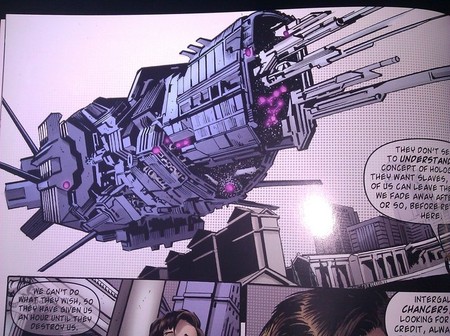
drwho art Such a great ship. Not even remotely made to look aerodynamic. And to make this almost related to Ubuntu and Debian, here was my command line to remove exif data from the image I took with my phone: mogrify -strip spam-filtered.jpg

2011, Kees Cook. This work is licensed under a Creative Commons Attribution-ShareAlike 3.0 License.
Creative Commons License

20 June 2011

Nathan Handler: Google Summer of Code Report #2

A lot of work has taken place since my last report. First, since my original mentor, Matt Zimmerman, is going to be moving, he helped arrange for Stefano Zacchiroli to fill in for him temporarily. I have had a call with Stefano, and I am looking forward to getting to work with him more over the next couple of weeks. Shortly after my first report, we realized that having the dashboard only display bugs severely limited its usefulness. In our original design, we had it pulling a list of bugs with specific usertags from the BTS. This forced all information to be added to bugs, which we viewed as a good thing since it made the information available to the Debian Maintainers without requiring them to familiarize themselves with DEX. The issue was that when looking back at the ancient-patches project or forward to the big merges project, a large portion of the work will be triaging and determining whether or not the changes are even applicable in Debian. If they aren t, there is no reason for a bug to be filed on the BTS. As a result, I spent a fair amount of time re-writing most of the dashboard. It still supports finding bugs on the BTS that have been tagged with a specific DEX usertag, but it is now task-based rather than bug-based. A task can be a bug number, a package name, a patch name, or anything. It is merely something that needs to be done for a project. Each task will have a name, an assignee, a status, a note, and a bug associated with it. There are two ways to define a list of tasks for a project. The first is to tag bugs on the BTS with a user of debian-derivatives@lists.debian.org and a tag with a format of dex-<distribution>- <project> (i.e. dex-ubuntu-ancient-patches). The script will convert the bugs to tasks and automatically set all of the fields. The second method is to specify the list of tasks in a plain text file on the server the scripts are being run on. Eventually, this list will be able to be specified via a web interface. Currently, you are only able to specify the task name in the file. This means that all of the other fields for a task created in this manner are initially blank. I am still deciding on the best way to specify additional information about each task in the file. Once I decide on a method, it should not be too difficult to modify the script to parse and store that additional information. For the ancient patches DEX project, everyone involved had to update a status file stored in a VCS on alioth. This was rather annoying, so we decided early on that we want to be prevent this from being necessary for future projects. This means that the dashboard needs a way for users to modify the information on it. For tasks that are based on bugs, this is rather easy; you simply use the BTS email interface to adjust the bug. However, for other tasks, we needed the ability to modify them on the dashboard. I have managed to get this partially implemented. Currently, all cells on the table are text input fields (with css being used to hide the boxes). This means that you can click on any cell and edit its contents. Hitting the submit button will execute a script to save these changes. This is the tricky part. The dashboard is a collection of html files generated by a python script. The script is meant to be run by cron every n minutes. When you update something via a web interface, you usually expect to see the changes instantly. This means that we can t wait for the python script to run again and re-generate the html files. As a result, I currently have it setup so that when you submit the form, it will go and modify the html files to reflect the changes. The next time cron runs the python script, the html files will be re-created, and the changes made by the user will be lost. Once I come up with a method for storing additional information about a task, it shouldn t be too hard to make changes made by a user via the web interface permanent. I also did some work on a script to generate graphs. There are two types of graphs I hope to be able to display on the dashboard. One graph will help show which individuals have done the most work on a project. I have not started working on this graph yet. The second type of graph is meant to show the number of open tasks versus time. This will allow people to quickly see the progress of a project, estimate how long the project will take to complete, and notice if things start to slow down. I have some initial code for this graph using matplotlib. However, due to the many changes that were made to the dashboard, I had to hold off a bit on this graph, as it relies on certain information provided by the dashboard. I hope to sort out some of the last few issues with this graph, such as getting the axes to display properly, and then merge it with the dashboard sometime in the next few weeks. Allison Randal approached me a while ago to see if my Summer of Code project might be in a state where it could be used to assist with a Python 2.7 DEX project that she was working on. For a while, I did not think that it would be ready. However, last week, I helped her get the related bugs usertagged appropriately, and they now show up in the DEX dashboard. While the dashboard is still not complete, it does allow her and everyone else working on the project to clearly see the tasks (bugs) that they need to focus on and the current status of each of them. I plan to try and incorporate any feedback I receive from people working on this project into my designs. All of my code is available in a git repository on alioth. Keep in mind that it should not be considered stable at this point. Further status updates will be posted on my blog, and I will try to keep the wiki page updated. I am still trying work out where we will host the actual dashboard. In the meantime, you can try out my testing version of it. During the next few weeks, I will be focusing my efforts on coming up with a method for storing additional task information. That will allow me to support permanently storing changes made by users via the web interface. I also hope to finish the first graph script and merge it with the dashboard. Finally, I hope to find a permanent home for the dashboard, as having it on my personal server is not a viable long-term solution. Finally, if anyone is interested in getting involved with DEX, feel free to join the debian-derivatives mailing list, join #debian-derivatives on OFTC, or contact me via email or on IRC (nhandler).</project></distribution>

16 June 2011

Wouter Verhelst: Attaching in mutt

All mail clients suck. Some just suck less. But they all have their own peculiarities. mutt, for instance, is a full-featured text-mode mail client. As such, it's pretty popular amongst many Linux enthousiasts, including me. A common error made amongst mutt users is to talk about attaching a file in a mail, but then forgetting to actually do so afterwards. This is because mutt starts an external editor to allow you to edit the message in question, which since it's not mutt itself would seem to make it impossible to attach a file while you're editing a mail, requiring one to remember to actually perform the attach step. One solution to this problem could be to use the little script that Steve wrote, which will complain if you mention something about an attachment in a mail without actually attaching anything. While I'm sure it works to some extent, this kind of script has the downside that it's never going to be 100% correct in all cases (you might mistype the word 'attach', or you might use another word that you didn't think about when you wrote the script, or you might be replying to someone who sent you an attachment). However, a better way could be to realize that mutt does, actually, support attaching files while you're editing a mail text, by way of the 'Attach:' pseudo-header. It requires two steps:

  1. Make sure that you have set 'edit_headers' to 'yes' in your configuration. This will cause mutt to fire your editor on a file that also contains the (relevant) headers for your mail, rather than just the body.
  2. When you want to attach a file, rather than trying to remember to do so after exiting your editor, just add an 'Attach:' header to the headers section of your mail, with as argument a filename optionally followed by a description. When mutt finds that header, it'll attach the named file, and all is well.
Yes, of course, that does mean you'll have to change your habits, and actually remember to add the damn pseudo-header rather than be like me and still forget to attach files. But hey, can't help you with that.

11 June 2011

Clint Adams: Debian on the DreamPlug

The DreamPlug is like a GuruPlug Server-Plus with a few notable differences: So let's say you want to put Debian on your DreamPlug. You do, of course, because running some other operating system is in poor taste, and you'd be embarrassed telling your friends. How do you do it? You can't use d-i. Let me back up. In the onboard SPI flash, there is a copy of Das U-Boot. This is a fork of mainline U-Boot, with no complete and corresponding source available. To the casual observer, this might look like an egregious GPL violation, but, on the other hand, no one seems to know how to rewrite the SPI flash except from U-Boot itself, so if you happen to corrupt said flash, your plug is bricked and openocd can't save you. I would be happy to be proven wrong on this last point, but for not let's assume that you're screwed and unable to replace your boot loader with free software. The next problem is the kernel, which lives on the microSD card. This is potentially free software, though I can't swear that complete and corresponding source code is available. What I can claim is that linux-2.6.33.6.tar.bz2 on Google Code will build a Linux that works on the plug. I will also point out that this doesn't match Linux 2.6.33.6 from kernel.org. Some other time I should rant about ARM Linux but for now I will just say that if you use the U-Boot of questionable provenance and either the Linux that's shipped with the plug or the one at the above link, you will be able to boot a mostly Debian system. I'll mention the third exception later. One thing you can do is to take the plug apart, remove the microSD card from its slot, and then stick it into a reader that you can then manipulate on another machine. If you're choosing this route and wish to take this opportunity to replace the microSD card with something larger than 2 gigs, keep in mind that you'll have to either preserve the uImage file from the first partition or build a new one. I am not fond of cross-architecture anything. I prefer to do things natively rather than cross-compile or foreign-debootstrap, and I own enough armel boxes that I can do this easily. So at this point I would just debootstrap a new Debian base onto the second partition of the microSD card. The first partition contains the uImage (which is your Linux image in a wrapper), and must be a FAT filesystem since you can't replace your boot loader with something that can read a better filesystem. The second partition will be your rootfs and can be whichever filesystem your Linux can read. If you do not have another armel system to play with, you might want to familiarize yourself with Marco's Sheevaplug instructions. You can install to a USB stick as well. Just remember that U-Boot needs a FAT filesystem containing the uImage on it and that you can't use a kernel in Debian yet. You'll also want to ignore the instructions regarding U-Boot, since that must be done differently. I'll be back later with some more details.

10 June 2011

Nathan Handler: Google Summer of Code Report #1

Here is my first official Google Summer of Code report. As I still had classes, the first week of coding was rather slow. However, after my first phone call with my mentor, Matt Zimmerman, things started to pick up. I spent most of my time working on a dashboard/portal for the Debian Derivatives Exchange (DEX). We decided that the best approach to this would be to store as little information ourselves as possible. Instead, we will try to pull most of our information from other sources, such as Debian s BTS. The main advantage to this is that package maintainers do not need to change any of their workflows, but they still get to benefit from DEX s work. Currently, I have a python script that gets a list of usertags and bugs for debian-derivatives@lists.debian.org from the BTS. This script will end up getting run by cron. It stores the information it gets in static HTML files. Finally, JQuery and Javascript are used to present the final dashboard to the user. I created a mockup showing how this looks. I also have a functioning website that looks and acts like the mockup, but the code is not publicly available yet (see below). DEX uses Alioth to host its git branches and website. I have spent some time trying to familiarize myself with the recent changes that have taken place on Alioth, as well as trying to figure out the best way to store and execute my script to generate the website. So far, it looks like people are still deciding on the best way to handle having websites that are updated from VCS hooks (due to things being split between vasks and wagner). I will continue to look into this, and might try using an alternate host until things settle down. Next, I plan to work on updating the dashboard to provide a way to edit, store, and display certain extra fields of information. This is necessary for certain pieces of information that are not appropriate for adding to bugs and in a few other cases. I will also be taking some time to talk to a few people who were active contributors to the last DEX project. This will allow me to learn more about their experience, find out what changes they feel should be made to make things run smoother, and get feedback on my current Summer of Code work. Finally, although I have been posting updates on my Summer of Code work to my blog [2][3], Matt thinks that having all of this information in one place will be useful. As a result, I will be creating another wiki page about the project that will contain all of the information people need to know. This page will be updated as the summer progresses. I am also hoping to have my code available in a public VCS by the time of my next progress update so that people can check it out and provide feedback. In addition to the dashboard, I will be working on creating a few other tools to assist with the creation and tracking of new DEX projects. I will also be coming up with a way to generate graphs to visually allow us to track our progress on projects versus time as well as show the work done by people at the individual level. This last task is part of a goal to get more people involved in the DEX project. While we may only be a few weeks into the actual Google Summer of Code, I have already learned a lot of new things. I am looking forward to working more with Matt and other members of the community over the course of the summer.

23 March 2011

Kumar Appaiah: Review of "Linux Shell Scripting Cookbook"

I have been reading Linux Shell Scripting Cookbook by Sarath Lakshman, published by Packt, for a while. While most people I know learn shell scripts themselves, I was looking to refresh my concepts a little as well as have a reference lying around on the table for fast access. Since I was asked to review it for someone else, I thought I might as well post the review here.First of all, let me remark by saying that shell scripting is something learned more on a need basis than as a tool to solve the main problem. People would seldom write shell scripts as standalone programs (exceptions exist). However, what makes shell scripting invaluable to know is the fact that knowing some tricks can save several minutes, or hours, of work by automating and simplifying certain tasks, generally (but not restricted to) file management and data processing. Linux Shell Scripting Cookbook does go quite far in pursuing this goal, and is appropriate for both beginners who are looking to gain dexterity in shell scripting, as well as intermediate users who wish to polish their skills. The book also can double up as a quick reference, though I would argue that the "Advanced Bash Scripting Guide" would suit that more.At the outset, the author clarifies that the focus will be on Bash. This, people may or may not like, but the fact that bash has become ubiquitous in terms of the available shells on Unix-like systems today, starting out with bash is not a bad thing to do. Besides, learning other shell scripting languages while knowing bash isn't too hard, since the paradigm remains the same.Let's go through the books from the aspects I found most relevant.OrganizationThe book is organized into chapters based more on utility than scripting concepts themselves, although the language aspects are brought onto the reader gradually. For instance, the examples in the first chapter focus more on the basic data elements (variables, arrays, functions etc.) as well as operators (for numbers, files etc.), and all the examples demonstrate simple usage of these concepts, and he further chapters build upon these in a gradual manner.At the same time, if the reader has some familiarity with shell scripting and needs to only refresh or learn a certain concept, he/she needs to just read the relevant chapter. It is not too difficult to grasp the examples of the later chapters, provided some basic shell knowledge is assumed.Content and PresentationA positive trait in the presentation of this book is that it is all based on practical everyday examples which, with minor adaptation, can be used by many for their own daily tasks. For instance, there are several examples which describe searching for and processing files, which, I'd imagine, many users would want to do on a regular basis. Thus, providing realistic examples allows the book to double its utility. The language and approach used is simple and conversational, and the presentation is very clear, with each idea being described as a problem statement followed by a "How to do it" section with the actual code, and ending with a discussion of the nitty-gritties of the code. It is easy to go for a quick scan for those in a hurry, while those who with to read in more detail will not be disappointed either.The book also covers a wide array of applications. For instance, there are examples on automating fetching web pages and processing them, demonstrations of parsing and simplifying and even some queries around databases wrapped around in shell. It also spans to utilities and tasks connected to statistics, backups, compression, version control and many more.Breadth and DepthThe book goes into a fair amount of detail in terms of describing the shell scripting concept under consideration. The examples used go into a fair amount of detail in order to describe to the user all the aspects involved in the method or command being used. The concepts described are fairly complete, and would be sufficient for the reader to use immediately or with just a little bit of fine tuning. In terms of breadth, the book covers most of the features of shell scripting while also describing the various facilities the shell provides access to in a Unix-like environment. Thus, the book does not disappoint in this front either.In summary...In summary, probably the only thing I'd have liked to see more of is some emphasis on how to write more efficient shell scripts. Granted, most of the shell scripts described in the book are very simple and succinct, but a some words on how loops can be made better, or how to spot situations where pipes are not needed to solve a problem etc. might have been a nice addition. Some explanation of differences with dash, tcsh, zsh etc. might also have been nice, since a lot of users have different default shells. But all this isn't going to prevent me from giving this book a high rating, since it delivers quite well on the promises it makes at the beginning.This is definitely a good book to have near your desk, and kudos to the author for having taken the effort to put it together. I would highly recommend it to the beginner and occasional shell user for a thorough read, and to an intermediate to have on his/her desk for borrowing the cool scripting ideas and applications the author has written in this book.

26 February 2011

Neil Williams: Why software patents differ from pharmaceutical patents

I was going to make this a comment against Ritesh Raj Sarraf's post about patents and pharmaceuticals but the comment got way too long.

The basic problem is that patents on pharmaceuticals cannot be directly compared to patents on software and the explanation gets a bit involved. It's worse than apples and oranges, it's more like comparing an algorithm to a piece of DNA.

Patented pharmaceuticals must declare the precise chemical formula of the molecule (and a whole lot else besides) before the molecule can be brought to market but the company holding the patent is legally prevented from protecting themselves against slightly different molecules which are blatantly based on the protected molecule. All modification results in a new patentable product, legally separated from the original.

Therefore, the first company to patent a molecule from a new class is instantly joined in the field by other companies who are (obviously) watching the research news channels very carefully. (In their shoes, you would do the same or you go bust.) These companies simply add a flourine ion or change a hydrogen to a hydroxl group or any other number of minor, apparently inconsequential, changes. Changes which, in software, would be deemed a derivative work and would be roughly equivalent to changing a single local variable from a 16bit integer to a 32bit integer in a single function in a single file in the entire codebase. i.e. a trivial bug fix or even a typo.

A molecule with a couple of hundred atoms can have a change affecting one atom and be a completely new patentable item without any risk of the other company being sued for patent infringement, plagiarism, copyright violation (there is no copyright) or any other barrier. It's common to find that molecule foo is joined on the market by a desoxyfoo and a flourofoo etc. with a chlorofoo just around the corner, within months of the class-leader being launched. It can't be compared to software - effectively, every new release gets a new patent which covers the entirety of everything contained in that release, even if 99.999999999% of it is precisely the same as is covered under other several other patents held by extremely litigious competitors.

Modification is simply not prohibited - copying without making any changes whatsoever to the active molecule is prohibited. Changes to the inactive ingredients will be prosecuted - changes to the active ingredient will not. Comparing this with software is likely to drive you insane.

For example, the mere process of packaging an upstream release for a distribution would be patent infringement in pharmaceutical terms - UNLESS you deliberately patch the original source to make an utterly trivial and apparently pointless change. At that point, the upstream completely disown your entire release and you would have to fix every bug yourself - without the original upstream even telling you whether they fixed the same bug themselves, because they aren't ABLE to modify the upstream code without starting a whole new project and they won't tell you why or how they changed things. There is no such thing as an alpha-release of a molecule. Every release is final and no subsequent modification is possible - unless it only affects the inactive ingredients, e.g. by adding a slow release coating. These changes can affect the way that the molecule acts on the test subject / patient but must not change the active ingredient itself in any identifiable way. So the upstream can make a new wrapper (new packaging) but nobody else is allowed to do so until the patent expires. Once the patent expires, every one and their dog is allowed to make identical copies of the active ingredient in their own inactive packaging and these are called generics. Generics still need testing to ensure that the active ingredient truly is the same and that the generic behaves in the same way as the original but this process is cheaper than making a change to the active molecule.

A changed active molecule is an entirely new substance, it gets a new patent and it needs to go through largely the same amount of testing as the patented original but the new company still gets a head start on what the molecule is likely to do and what side-effects (by now noticeable with the class-leader product which is in large scale trials or even on the market) would be harmful to the future usefulness of their new, derivative, molecule. The new company simply jumps onto the bandwagon shouting "I want a piece of that action!" and there is absolutely nothing the original company can do about it, except try to show that their original molecule is better than the new competitors and to try and build a substantial market share before everyone switches to the new derivative. (Prescribers are human and tend therefore to be lazy, so unless there's a reason to change, the class leader will still have substantial share even after several derivatives exist.)

It's an arms race - each company tries to create as many of these potential "me-too" variants as possible in-house, put as many as can be (financially) supported through trials, keep pursuing those which don't have prohibitive side-effects / problems in tests and hope that, at the end, one of their versions will actually turn out to have better effectiveness or fewer side-effects. If not, they just have to market one as "as-effective-and-no-more-harmful-but-CHEAPER-than" the class leader. The majority of "me-too" molecules come under this category - even if the company concerned would try to point to infinitesimal differences in trial data to pretend otherwise. All this with the knowledge that the very hour that the patent expires, a dozen generic manufacturers will flood the market with copies which do not need to recover the massive costs of the original research and are therefore massively cheaper.

How much cheaper? patented molecules may cost 30 for 28 doses on Monday and one generic may cost 3p for 500, another may cost 40p for 10,000 on Tuesday, the day after the patent expiry. Generic houses only need to cover the actual costs of manufacture, not the costs of the original patent etc. and by the time the patent expires, the efforts of the patent holder to generate market share mean that economies of scale become evident. The absolute cheapest isn't necessarily the one who gets the contract either, these things all have expiry dates and all 10,000 have to be sold / supplied from a single location within that date to actually deliver the full savings. So then you get satellite generics who buy in quantities of a few million and pack down into 56 or less so that the total purchased quantity can sit on many shelves instead of just one. It's the same tablet in the end, with the same markings too. All that differs is the marking on the foil and the colour of the cardboard. (Oh and the same foil and colour cardboard can contain tablets with different markings from different manufacturers from one batch to the next, all within the branding of the same repackaging company.)

The original patent-holding company also has an interest in generating their own "me-too" derivatives, sometimes marketed under the name of a company which turns out to be solely owned by the parent of the original company. It can get horribly recursive.
Sometimes, the derivative from the sibling company hits the market before the "true" competitor from a different company - simply because all companies try to have many molecules in development at any one time (because most changed molecules fail in testing) and sometimes they get lucky and come up with two v.similar molecules and have to do something to justify the cost of developing both. That can turn out to be a poisoned chalice rather than two golden geese.

Sometimes, the company fails to get enough variants through testing and the company then gets bought out by a rival - who then gains their research and continues experimenting with other derivative molecules based on the ones already tested and dismissed. The limiting factor is the money.

At this point, I must now declare my cards. I used to be a pharmacist and although I am still entitled to call myself the holder of a Batchelor of Sciences degree in Pharmaceutical Sciences I am most definitely no longer a pharmacist. I therefore defer to my still-registered colleagues in case I've messed up any of the detail here. The above cannot be declared as the opinion of a pharmacist. I am an ex-pharmacist who voluntarily chose to resign his registration to take up full time work as a software developer rather than pay the exorbitant costs of maintaining such registration and all the "proof-of-competency" requirements which such registration requires.

Finally, before you ask, I am very happy to be an ex-pharmacist - my erstwhile colleagues have my ongoing sympathy but no matter how much some of them may beg, they all know that I will not be rejoining them on that side of the dispensary bench if I've got any choice in the matter.

Software is just better. It's all just recycled electrons.

23 February 2011

Gintautas Miliauskas: Off to San Francisco!

The interview at Munich seemed to go well. Well, at least, I had fun. We'll see how that turns out.


For now, I'm off again for another job interview, this time to Palo Alto. This will be my first time to the West Coast, so I have postponed the return flight for two weeks to familiarize myself with the proverbial area. If anyone's from around the San Francisco Bay Area, I would be very happy to meet over lunch/dinner/beer!

30 December 2010

Jonathan McDowell: Why Linux? (Part 5: Flexibility)

(This is part of a series of posts on Why Linux?) I find Linux more flexible. Maybe that's the familiarity showing, maybe it's about the package management, but it's a powerful reason for me to use it. For example, a couple of years ago I wanted to try out some iSCSI stuff against a SAN. Of course I have test boxes available I can do this on, but this was just to try out a few bits and pieces rather than anything more concrete. So I installed open-iscsi on my desktop and was able to merrily do the tests I wanted with very little additional work. Or I wanted to try out some BitKeeper to git conversion work recently. I wasn't sure how much resource it would take on a build server, and didn't want to tie things up there. So I ran it on my desktop overnight, where I could easily setup the appropriate environment and wouldn't impact on anyone else's resources. Problems talking to dodgy hardware? Linux is much better about giving you some idea what's going on, without needing to install extra software. I had a workmate grappling with an old USB music player recently; hooking it up to her Windows laptop wasn't providing a lot of joy so I attached it to my Linux box and was able to see that it did identify ok, but was disconnecting randomly at times too. Want to script querying an AD server for the current employee list and displaying who's joined and who's left since the last time you did so? I found that easy enough with the common Linux LDAP tools. I'm sure it's doable under Windows too, but I'm not sure it would be quite so simple. For bonus points add graphviz into the mix for automatic organisation charts (modulo accuracy of the AD data). This flexibility is something that helps me do my job. Sure, as I mentioned above I do have access to test boxes that I can use for this, but being able to do it on my desktop can be useful - for example if I'm offline, or on a slow network connection, or just geographically distant from my test machines so network latency is higher than I'd like. (Also, it's something that makes a Linux box a really great test box. I'm lucky in that I have a mix of OSes available to me for testing, but the one that I use most often is the Debian box. Much easier to get and install decent diagnosis tools for it that can give me packet level dumps, or do really odd stuff that turns out to be really useful.)

5 December 2010

Jonathan McDowell: Why Linux? (Part 1: Familiarity)

A few weeks ago it became apparent to me that I may end up having to run Windows on my work PC. We're getting new machines soon with Vista images preloaded. There's a Linux image option (of unknown base, but possibly Ubuntu), but I've kinda been assuming that I could continue in my current approach - I run Debian, and accept that IT won't give me any support in doing so other than caring about the hardware. Seems like a reasonable deal to me. Except it requires an infrastructure that's platform agnostic, and that's the problem. There's a danger our new bug tracking system is much, much happier in IE than anything else. That's kinda a problem if I can't access it. The event last week was around a web streamed meeting, which is annoying but not as critical. I was unhappy at this realization. Very unhappy. And yet I had trouble finding the words to explain why. I don't do Linux advocacy these days (I'm not sure I ever really did). I probably gave up at the point my parents' bought a replacement machine for my mother while I was living in England and went for a Windows box (she'd been running Debian) because "they had knowledge of that in the house given I wasn't around". And then promptly rang me after it arrived to ask how to configure networking. Anyway. If I can't come up with some decent reasons about why I run Linux over Windows then I can't justifiably complain if I end up with a Windows desktop. So I think I need to collect together some thoughts about it. I'll try to break them up into a bunch of separate posts rather than one huge dump that no one will read. Let's start with the obvious: Familiarity This was the first question a coworker asked; is it because you're used to Linux? And it would be untruthful to say that doesn't play a part. I've been running Linux on the desktop for the past 12 years or so (well, I had few years running FreeBSD on my primary desktop too, but close enough). The only time I've ended up with a Windows desktop was when I worked for Aviva. I don't currently have a working Windows install anywhere. I have little experience of working with Windows these days. I mean, I can do it, but I don't find it comfortable (to the extent that I managed about 3 hours when I ended up with a Windows desktop back in August before installing Debian on it). That's the argument often used to stay with Windows (as per my parents, above). And it's not accurate. Why did I try Linux in the first place, and stick with it long enough to get to this point?

Next.

Previous.