Search Results: "ean"

10 July 2026

Jonathan Dowland: Bauer Fly30 ice skates

I used to ice skate as a teenager but I stopped at University. I tried to pick it back up in 2024 but had to stop when I got ill. I restarted in 2025, initially with a weekly skate session but last month I started group hockey skate lessons.
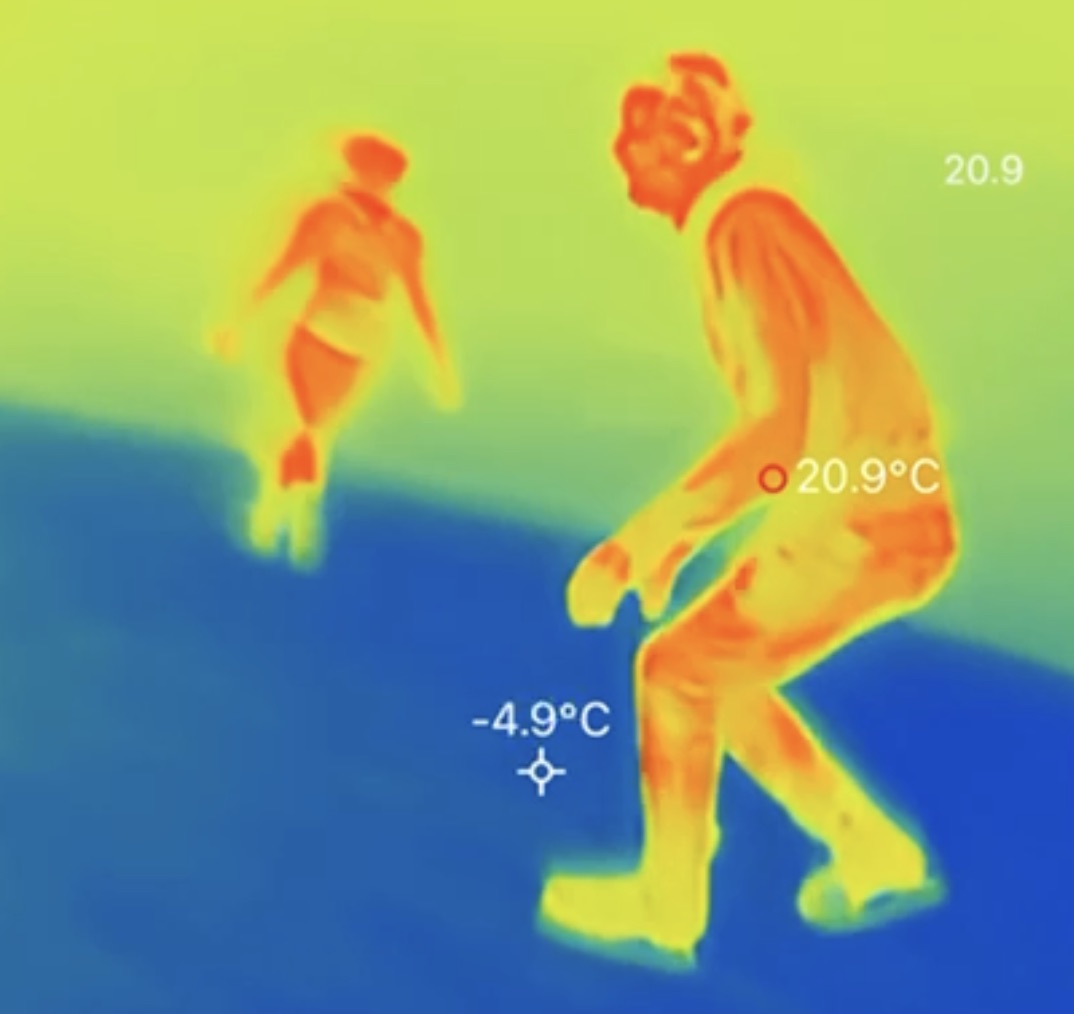
IR photo of me skating There's not a lot of pics of me skating this one from an IR camera
I've been skating in a pair of Bauer1 Nexus N77s that I bought 7 years ago on a work trip to Toronto. These did a great job of getting me back into the hobby for 6 years but recently I felt it was time to step up to a better quality pair. Despite being a size down from my shoe size, the Nexuses are too large: I had been compensating with thick socks but still struggling to get the boots tight enough. I'd have to wear gloves to lace up because I'd cut my hands pulling the laces otherwise. After too long researching/deliberating/kvetching (very much on trend for me) I upgraded to Bauer Vapor Fly30s another half-size down (and nearly ten times as much). The fit is much better, in almost every respect. They actually go on easier and I don't have to tear my hands tightening the laces. They feel like a natural extension of my feet. I seem to be using a different set of muscles to skate, so the first few sessions were very fatiguing, but that settled. The Vapor line is speed-oriented, which I thought would fit my skate style best.
new and old skates new and old skates
I have unfortunately gained a common problem: arch pain. More precisely, my navicular bone seems to be quite prominent2, and that part is pressing uncomfortably into the boot. Boots typically take a few sessions to break in, but after 7-8 sessions the pain was getting to the stage that I couldn't skate for a full session without being in agony. The last time I skated I tried to throw everything at the problem: I'd had the skates baked3; bought some orthotic insoles; then some "Bunga" pads over the sore bit and an attempt to more loosely tie the laces over the affected area. I tried a ten minute skate, and it seemed a bit better. I then tried experimentally to swap back to my old skates, and I felt like Bambi: I just couldn't do it! They didn't press on the navicular, and they're softer so you can compensate for the size with tight lacing, but I had no confidence in them, I couldn't lean into the turns. They just felt weird. I realised there's no way back. I switched back to the fly30s, adjusted the bunga pad positioning, tweaked the lacing and went back on for about 40 minutes. It went well: the rink was quiet, it was cool whilst we had a heat wave outside, so I worked up a sweat. By the end there was some discomfort, but not too much, and I think partly the area is currently sensitive so just about anything will cause discomfort. Fingers (or toes) crossed that I've mitigated the problem! If not, it might be time to try a punch out.

  1. I've owned four pairs of skates: all hockey, my first were Bauers, my second CCM Tacks of some kind. I've no idea what happened to them.
  2. Or possibly I have accessory navicular bones
  3. modern mid-tier skates are thermoformable, and many skate shops carry a specially designed oven to briefly bake skates such that you wear them as they cool and the padding should mould to your foot.

Tim Retout: Blocking distracting news links

You are what you eat but perhaps this is even more true of our information diet. It is hard to strike a balance between remaining a well-informed citizen versus spending hours ingesting unnecessary news about issues and events we can t affect. But I m increasingly convinced that my hours lost to doomscrolling are down to design choices by web publishers rather than a failure of individual willpower.

We have created an obesogenic information environment I don t think it is just me I think our information environment has been progressively altered over time as news sites look to maximize engagement. Even outside of social media, the invisible hand of the market for eyeballs forces sites to optimize for browse time or risk irrelevance. Even as newspapers find it increasingly difficult to fund good journalism through advertising in an online world, especially local journalism, they need to keep readers on their sites, clicking through as many articles as possible. Clickbait headlines, urgent flashing live icons to draw the attention, and many opportunities to leap from one article to another, and another. But this design approach even extends to news organisations with a different funding model, like BBC News, which is a public service (state-owned but arms-length) organisation funded through a mandatory television licence a matter of controversy in some quarters. And it extends even to sites where I pay a subscription fee; I might get adverts removed, but I am still bombarded with the same design philosophy; too many opportunities to be pulled away from what I m reading towards some other unrelated article. Even if I try and limit my exposure to algorithmic discovery of new news, via RSS feeds or similar, if I m reading the full article in a browser then I am prompted to read more stuff that I didn t intend. This defeats the benefit of curating a set of feeds, because you still get dragged away to random articles.

Only 44% of BBC News is news To show you what I mean, I m going to pick on the BBC, although I love them dearly and the same issue very much applies elsewhere. I ve taken a screenshot of a random BBC News article in mobile view (my preferred doomscrolling user access device), and measured approximately what proportion of the full length of the page is taken up by each section. This is a fairly in-depth news article, so I reckon if anything the figures would be worse than this on shorter articles. A full-length screenshot of a BBC News article showing proportions of the page allocated to the main article vs. related links etc. (These numbers will not sum to 100% for reasons which are obvious if you look at the crossbars. Also they re approximations.) Less than half of the page (44% if you exclude the inline related links) is actual news text/images; the rest are links trying to help you find the next thing to read/watch. I do not want this. I m sure this A/B tests well in terms of reader figures, but it sometimes leaves me exhausted it must take subconscious mental energy to ignore, or I spend too much time trying to keep on top of things. And remember, this is a publicly-funded site that does not rely on advertising!

Blocking out the noise If you are technically-minded, you can use an ad-blocker such as uBlock Origin to take back some control. Applying the following lines as a custom filter (Settings > My filters) brutally cuts out almost all of these links:
bbc.co.uk##aside
bbc.co.uk##footer>div:has(h2)
bbc.co.uk##[data-block="uploaderEmbed"]
bbc.co.uk##[data-block="links"]
Caveat emptor: I have not road-tested this for more than half an hour, so who knows what consequences this could have on your web browsing. In particular, international readers outside the UK will likely be redirected to bbc.com, the commercial arm of the BBC, where these rules will need adapting. Is it unethical to use an ad-blocker to remove these links? I would argue not. I am not depriving the BBC of any revenue, because I pay my licence fee. I might reduce the amount of time I spend on their website, but if anything the subjectively better experience might encourage me to consume more news from them, not less. In other circumstances (outside the UK for instance, where the BBC relies on advertising), the balance might be different.

Product managers, please find better metrics I lament the state of the internet in 2026. I now can t unsee these innocuous related stories links as a mechanism to grab my attention, and it s gone too far. If you are a normal person just browsing the news and looking to discover the latest important stories relatively quickly, I can see that these types of links might actually be useful for discovery; but I m actually reasonably sure that I m not going to miss out on anything major. You still have the option of the news home page if you want to be presented with more news for example, and it feels natural to go back to there when you ve run out of stories to consume. But it shouldn t be down to individual responsibility to ignore or geekily block these types of link; news sites with alternative funding models should find better metrics for engagement than hours spent on site how about optimizing for customer mental wellbeing, or minimizing time required to catch up with the news? There s no need to maximize clicks and eyeballs. This is a societal level issue, because we are all going mad with news over-engagement. Product managers, over to you.

Valhalla's Things: Cockades!

Posted on July 10, 2026
Tags: madeof:atoms, FreeSoftWear, craft:sewing
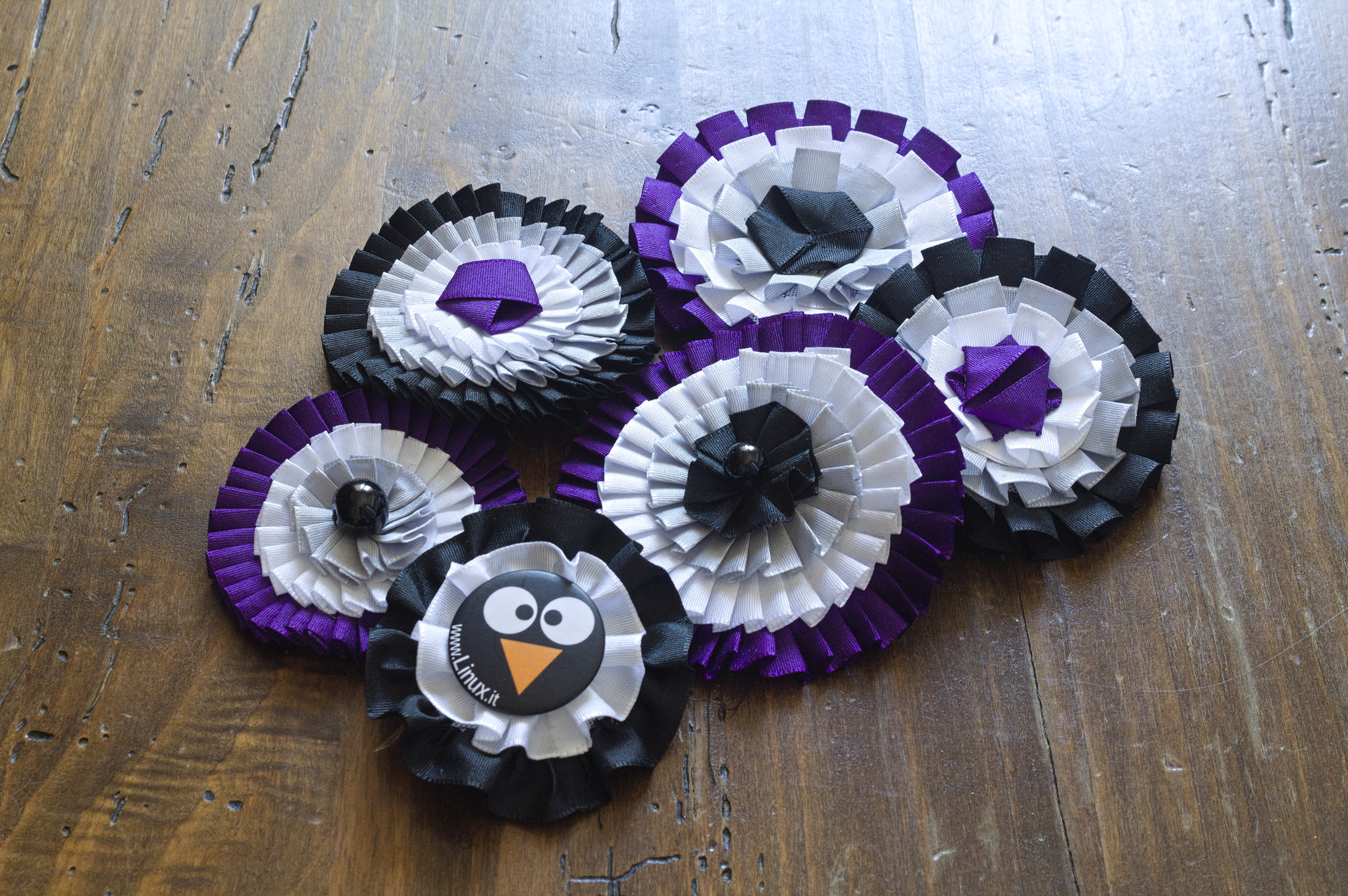
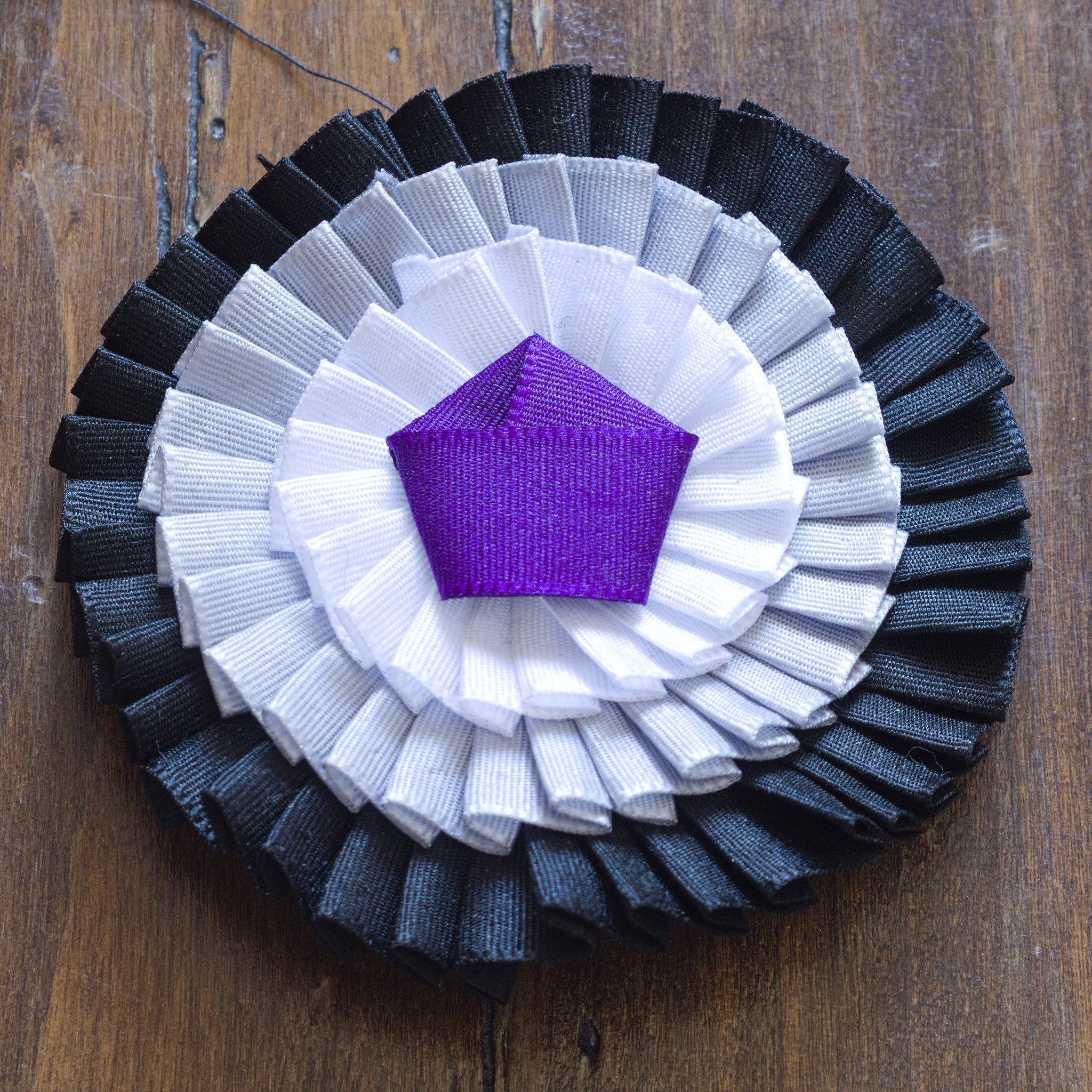
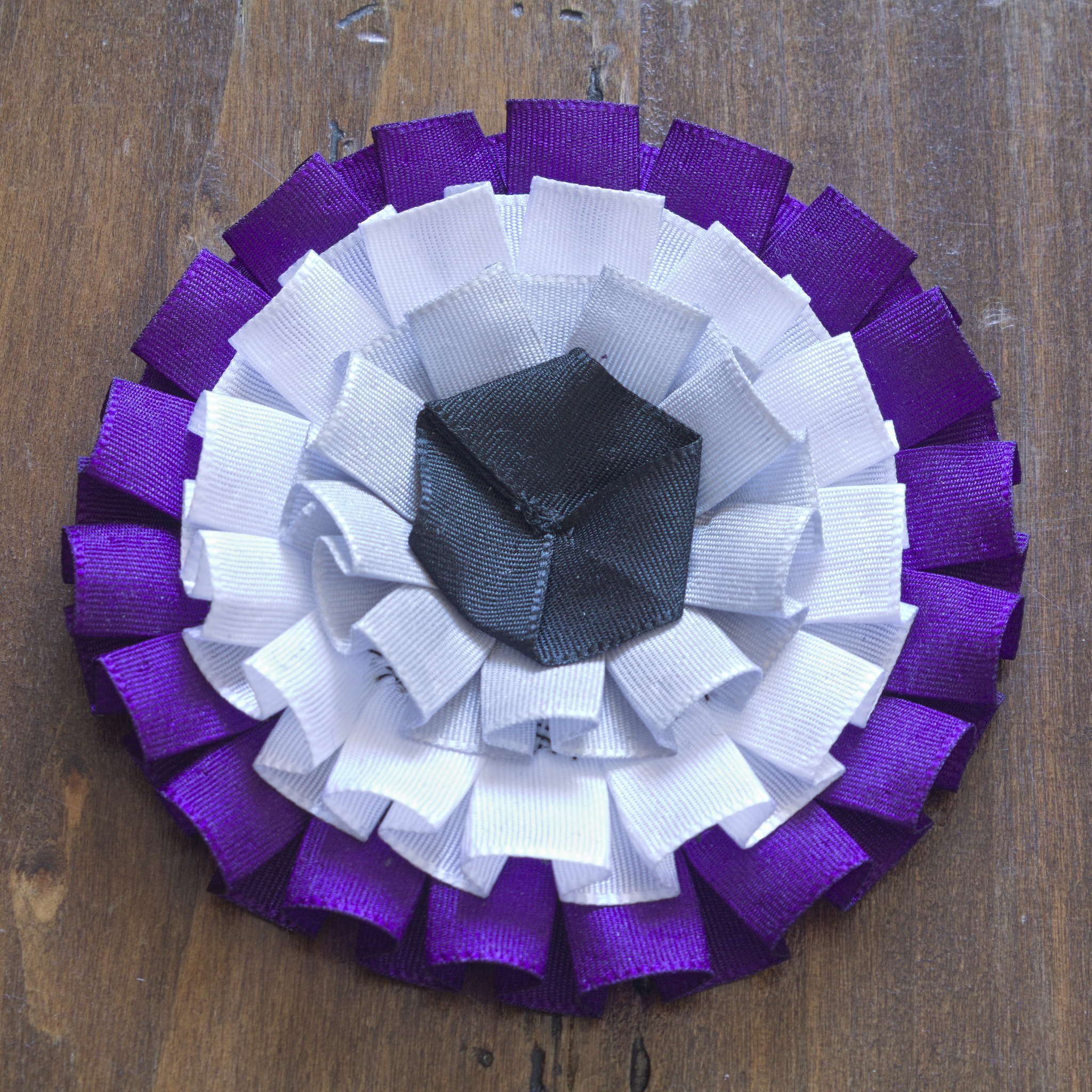
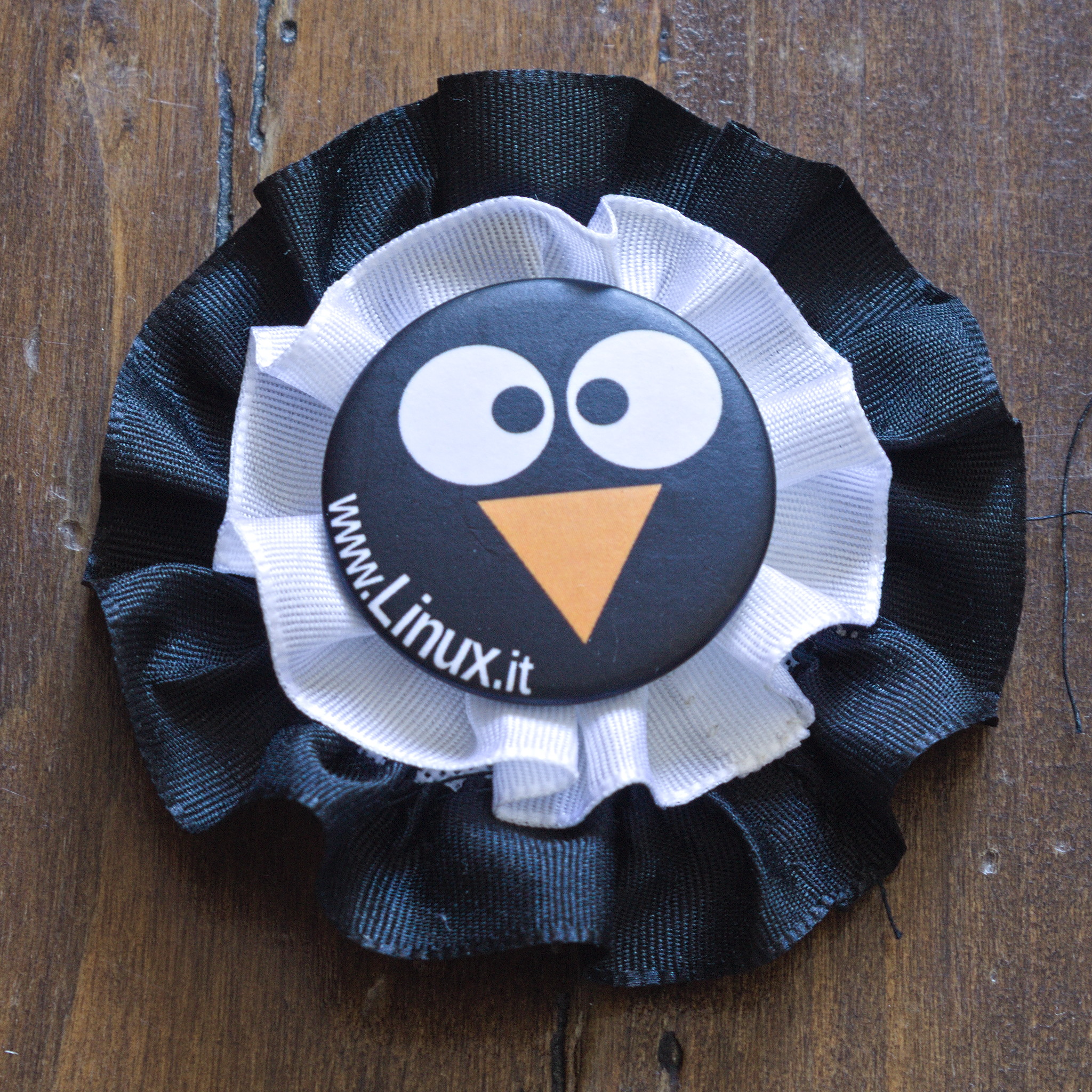
six cockades in black, grey, white, purple, in different sizes and with different centrepieces. One is only black and white and has a penguin pin in the middle. Earlier this year, I made myself a new hat (it will be blogged), and I wanted to put a nice cockade on it. So, I looked for suitable ribbons, and couldn t find any. I found some ribbon that looked passable, but the colours I wanted weren t available, so I set up the website to notify me, and kept working on the hat. Eventually the hat was done, the ribbon was still not available, so I decorated the hat with fake flowers from my stash, and started wearing it. And that s when I got notified that the ribbon was back in stock. By the time the ribbon arrived, I had decided that the hat looked better with the flowers, and project cockade was put on hold, possibly for a future hat. And then June came, and what could be a better time than that for a project based on flag colours? As I feared, the ribbon I got wasn t the best: it was a bit too stiff and plasticy, and not really usable for many other things. It did however work well enough for a cockade, and I decided it was a good chance to try different methods and designs, and then make another one to take pictures and publish step-by-step instructions. And that s the perfect recipe to find oneself surrounded by a somewhat unreasonable number of very similar cockades, I guess. A big cockade with four ribbons, starting with purple on the outside, and a black bead in the middle covering the centre of the black ribbon. The pleating isn't the most regular, and the black ribbon at the centre is almost more gathered than pleated. I looked around for instructions, and the ones that gave a result that was closer to my mental idea of a cockade were the ones by American Duchess, so on my first attempt I tried to follow those. I didn t have a cork board with a hole, so it was a bit fiddly, and the result was passable, but could have been better. Meanwhile I saw a forum post commenting on the above tutorial and that gave me ideas for a procedure more suitable to the tools I had. A cockade with tree ribbons, starting with purple on the outside, then white, grey, and a black bead in the middle that is a bit bigger than the one on the previous one. The pleating isn't perfect, but neater than the previous one. The second cockade I made was indeed more satisfactory, and I also started to experiment with making a center piece with ribbons, to cut down on the types of materials needed. On this one I also tried to add a pin backing, so that I could write instructions on how to do it in what I believe is a more stable way than simply adding it to the felt backing at the end. I m not sure whether the other ones will be tacked to a hat, and thus won t require pins at all, or if I ll just put them on some dress with pins hidden under the ribbon layers. A cockade with three ribbons, starting with black on the outside, then grey and white, and a flat pentagonal knot of purple ribbon at the centre. And then I was ready to make a third cockade, taking step by step pictures for my website, and I planned to start on it the next morning. Trenord had different ideas. Thanks to the combination of independent but complete disruptions on two nearby train lines, I spent the morning driving a couple of people to the nearest station that was still being served by trains, and then back home less than 10 minutes before I had to start working, which if you ask1 me was pretty homophobic of the train company. There was way less traffic than I expected, and I did enjoy the drive 2, but for various reasons it meant a significant delay for this post. Anyway, less than a week later than I had planned, halfway in June I managed to publish step by step instructions on my website, but I wasn t done with the project yet. Beside the fact that I still needed to finish sewing the backing felt to the cockades I had done, I also had a few ideas for more centrepieces made of ribbon I wanted to try. And this means that I moved on to another project that was already in progress (this one will also be blogged). A cockade with three ribbons, starting with black on the outside, then grey and white, and two squares of purple ribbon at the centre, forming a sort of eight point star. The ribbons are box pleated and this gives the cockade a bit more of a tree-dimensional shape. After I ve finished that one, at the very end of June I quickly made the last two centrepieces, taking pictures for the instructions, and in the next few days I also finished the cockades. A cockade with three ribbons, starting with purple on the outside, then white and grey, and an hexagonal shape made of black ribbon at the centre. The ribbons are again box pleated. This time, instead of plain pleats I tried to use box pleats, and I quite like the look they give, so if in the future I ll have a need for more cockades I may use again this pleating pattern. A cockade with just two gathered ribbons, starting with black on the outside, then white, and a linux.it pin in the middle with a black background and two eyes and an orange beak reminding of a penguin. For the last cockade I wanted to try two things: putting a pin in the middle as a centrepiece, and gathering the ribbons. For the pin, I found that the only one I had that had a colour scheme compatible with the ribbons I had was one with the penguin from linux.it, which had a black background, so I put black ribbon on the outside and white next to it for contrast. And gathering was done with a whipped gather with ribbons that were one and a half times the outer circumference of their slot, and looks decent enough, but I think I prefer the look of pleated cockades a lot. Maybe it would look better with a softer ribbon. Anyway, I think this is plenty of cockades for the time being, unless I get tempted by buying more colours of ribbon to make different ones. But I m not making an online purchase just for those. I am not.

  1. you probably shouldn t.
  2. also thanks to my partner who, on entering the destination town, told me to stop on the big, straight, two-way road with plenty of roundabouts to turn around, and went through the maze of one-way streets to the station by foot.

7 July 2026

Thorsten Alteholz: My Debian Activities in June 2026

Debian LTS/ELTS This was my hundred-forty-fourth month that I did some work for the Debian LTS initiative, started by Raphael Hertzog at Freexian. During my allocated time I uploaded or worked on: Besides fixing all CVEs of asterisk in Bullseye, I started to look at asterisk in other releases as well. Rather surprisingly asterisk is only part of Unstable and Bullseye. All other releases don t include any version of asterisk at all. So first things first, besides some security related RC bugs, asterisk did not migrate due to RC-bugs in dahdi-linux. As I maintain osmocom-dahdi-linux (which supports less/other hardware), I looked at the open issues and after some rounds I could upload a new upstream version, fixed some bugs and resolved issues with piuparts. dahdi-linux meanwhile migrated to testing, job done!
As a next step I looked at the open CVEs. Some of them had been already fixed in previous uploads but had not been marked accordingly. So I fixed all remaining ones and sent a debdiff to the maintainer. Unfortunately there was some kind of overlap in our work and he ignored my debdiff but uploaded a new upstream version. Anyway, job done as well, no open security issues anymore. The only thing that hinders asterisk from migrating to testing is the reproducible build. So if anybody has some spare time Other things I worked on were the regression update of rsync. Some of the elven new patches need to be backported, but I am confidentially to finish this month. I already reviewed the rsync uploads of Sylvain to Buster and Stretch, so I don t expect any big hurdles here. I am also making progress to find the correct patches for hplip and cups. Debian Printing This month I uploaded a new upstream versions: This work is generously funded by Freexian! Debian Lomiri This month new upstream versions of dozens of lomiri packages have been released and I uploaded lots of them to Debian. After they migrate to testing, I am also going to sync them to the Ubuntu PPA. This work is generously funded by Fre(i)e Software GmbH! Debian Astro This month I uploaded a new upstream version or a bugfix version of: Debian IoT This month I uploaded a new upstream version or a bugfix version of: Debian Mobcom This month I uploaded a new upstream version or a bugfix version of: misc This month I uploaded a new upstream version or a bugfix version of:

6 July 2026

Aigars Mahinovs: How to make a good group photo

Taking a good group photo consists of multiple aspects: I can say with confidence that nearly everything here comes from having failed to do these things right at least once, even on the latest attempts, so this is an ideal to reach towards, not something we expect to hit every time. The Goal The main goal of a big event group photo is capture both the moment itself and each individual person inside that moment. We want people, who were not there to see all the people involved and get an impression of what it was like being there. It needs to show the breadth and depth of people that make up this group, this project. And we want people who were there to be able to look back the next week, the next year or in ten years and remember - ah, yes, I was there, I was standing right there with this grin on my face next to this wonderful person and I was feeling great. Hardware Based on the goal we want to have high level photographic gear that is able to capture both a broad enough picture to encompass all the people and some of their surroundings to communicate the context (without undue distortions) and to deliver enough detail and resolution so that faces and facial expressions and underlying feelings of every single person in that group could be clearly seen and preserved. To both capture the context and minimise distortion the final picture should be just a bit wider than normal human field of view. That is about 50mm for a full-frame camera or 35mm for a typical 1.6 crop camera. You can go a bit wider if there are no better alternatives (as detailed in the scouting section), but be prepared that corners of the image will be distorted and not really usable (but we can fix that in processing step). Or you can go to unusual aspect ratios, like we did in Debconf 10. In the absence of a 100MP+ camera, you will need to be stitching together multiple frames to achieve resolution high enough to have enough pixels-per-face to see emotions clearly. This means that the photos you will actually be taking will be tighter than the overall field of view mentioned above. Still, a higher resolution camera body is preferable - nowadays 24MP-32MP cameras APS-C provide a good compromise between resolution and price, but 45-67MP full-frame cameras also exist on the market. Assume that we will be shooting in a bright environment, so most likely with quite low ISO settings, that means that high-ISO noise characteristics of more expensive cameras will not really play a role here. You will also not need very fast burst modes, even manual speed of one frame per second is sufficient. You will also want to get as much detail as possible out of your lens, and this is the most important part. You can do amazing work in all other steps of the process and have a great camera too, but if you pair it with a lens that is not sharp, then the end result will be disappointing. You want the lens that is sharpest corner-to-corner when stepped down to about f/8-f/11, that you can get for your system. You also want that lens to be about 85mm full-size sensor or 50mm for 1.6 crop size. Luckily that kind of range is also a great range for optical design and sharpest lenses are typically available in exactly these kinds of sizes. You absolutely want to have a fixed focal length lens, not a zoom lens. Even profession grade zoom lenses often deliver worse image quality compared to fixed lenses that cost less 1/10th of their price (when shooting in the same focal length). Newer design lenses are better than older lenses - optical design, coatings and precision manufacturing have advanced a lot over the decades. Retro look is great for mood, but not as good for actual resolution and clarity. You don't need to overpay for most expensive lenses because those often only improve image quality on lower F-stops. To encompass the whole group we will need to shoot at f/8 and in bright light, so the extra benefits of those f/1.2-capable super expensive lenses will not come into play here. We will have no use for a flash here. A tripod will be too restrictive when rapidly repositioning the camera between different parts of the panorama shoot. But a monopod might help with stability - I have not tried that myself, however. For my last photos I used a Canon EOS R7 (32.5MP) with Canon RF 50mm f/1.8 STM lens and considering an upgrade to Sigma 56mm f/1.4 DC DN for the next time. Scouting Scouting a good location for the group photo is another big chunk of a successful picture. The critical piece of the puzzle is lens-to-face distance. In order to keep everyone's face in-focus and have enough resolution on the farthest faces (without making nearest faces truly massive) we want to do everything possible to reduce the variance in lens-to-face distance - to reduce the difference in distance between closest and farthest face. The most effective way to do that is to have the photographer climb higher. To see this in action on the Debconf photos, compare Debconf6 (very high camera position, group on level ground - good) to Debconf10 (camera not too high, group on stairs, still good) and to Debconf17 (camera could not get high enough and the group is on flat ground - not great). Even the Debconf25 photo was suboptimal from this perspective. The Debconf23 photo was a very good example from the recent years - good height and also the group was positioned in a semi-circle so there were no people directly in front and very near to the camera. So you are looking for the highest point you could get to (even if that requires a special permission of key or a ladder) with a field large enough to fit the whole group comfortably. How to check that? Normally I simply take a photo from the top of the whole area and note down from there where the extreme corners of the group could be and still be fully seen in the shot - not blocked by trees, buildings and shadows. Then I go down and measure that space. Rule of thumb being - people in one horizontal line can stand 1 normal length step from each other and two horizontal lines can be half a step from each other vertically. So I can just measure a rough rectangle in steps, multiply the sides, multiply that by two and I have the rough number of people that can fit there for the photo. Once you have a candidate location or two, it is important to check them at the same time-of-day as you plan to do the photo (see organization section for that). You want to make sure that the whole area of the group is in the same illumination - if half of the group is in the sun and half in a shadow, then you will be having a very bad time later. The absolute ideal positioning for the group photo is to have everyone be in shadow, but still have enough bright skies and bright buildings in front of the people to give good illumination of the faces. Worst you can do is have the sun be behind the people (so all the faces are really dark) and second worst is have the sun be directly in front of the group, so that the faces are very well illuminated, but everyone's eyes are closed because they are being blinded by the sun. And sometimes all you can do is pray for some light clouds to provide for even and dispersed light. Debconf23 was very lucky that way. Another consideration is to how people are going to get to that place. You need to consider accessibility needs of people (it is ok, if it takes more effort or time, but it needs to be organized and communicated well in advance). And you need to consider how the big masses of people will be getting there - how to tell people where exactly it is and how to get there from various locations where people might be hanging out during the event? Having an alternate location indoors might be necessary if the weather report for the next days is not sufficiently predictable. We had to use that contingency in Debconf9, for example. Organization It's hard to take a good group photo if half of the group does not show up or is too late, so this needs some organization to happen smoothly. First of all you need to choose date and time for the photo. The photo does not take too much time from the schedule of the event and can be squeezed in after all the other events are already scheduled. In fact I prefer that as it allows you the flexibility of choosing the date based on weather conditions and time based on light and shadow conditions in potential photo spots. You don't want to choose the daytrip day as most people will be away and return times are not really predictable. You do not want to choose the morning after Cheese and Wine party for obvious reasons. First day and last two days are also sub-optimal as some people arrive late and some leave early for various personal reasons. Also you don't want it to happen just before Cheese and Wine either because then you'd have very little time and clarity to do the processing of the image on the same day. For timing, the best way, in my experience, is to schedule the photo directly after the end of talk sessions before a meal break - lunch or dinner. Typically in the Debconf schedule there are 2-3 daily breaks planned, say for Debconf25 there was lunch, afternoon break and dinner. Talks are planned to end ~10 minutes before those breaks (and meals) begin, so for example, afternoon break starts at 16:00 and all talks in the previous block end at 15:50. In such a case just schedule the "Group photo" event from 15:50 to 16:05. This gives people the info to go there directly from the end of all talks and that they will have sufficient time for break/meal afterwards. Do not forget to specify the location (as exactly as possible) in that event entry and make sure to post it at least two days in advance. People often want to wear something specific for the photo and thus need to know about it in advance. This also makes sure that people do not make alternate food plans for that specific break and don't leave the venue. Announce the date, time and the exact location as wide as possible, don't be shy. Announce and discuss mailing lists, IRC, Signal, Telegram, make sure the front desk knows in case anyone asks in-person, ... Check that it is again included in the announcements email on the day preceding the photo date. When the date has arrived, it is a good idea to check in early with people with special mobility needs to make sure they know where to go, how to get there and how much time they will need to be able to get there on time. As the final round of talks before the group photo is starting up, it is time to recruit "runners". I've had great success with this technique. The idea is pretty simple - for each room where people congregate (talk rooms, hacklabs, cafeteria, outside hackspace, front-desk, ...) go there and choose one person. You want to choose a person that you will recognise and remember among everyone else in the group, either because of who they are or what they are wearing, whatever works best for you. If they agree to help, instruct them to: "at end of talk, announce that the group photo happening now and the location, herd people towards the photo location, be the last person out, make sure there are no stragglers from this area behind you, when you arrive to the photo place I will assume that everyone else from this room is also now there, when you are there catch my attention and show this sign so I know for sure that it is all good and make sure that I did see it from you". With that sorted out all you will need to remember is how many runners you recruited and how many have reported in to figure out if everyone has now arrived or if we still have to wait for someone or some group. Then you will only have one last point of organization left - shaping the crowd into a group. People will not know what your vision for the group photo is, so you will have to give clear and LOUD instructions on where people should not be standing. Use clear, large gestures to support your words. You want to compact the group, have the people that just joined in the last moment and are standing to the side come deeper in and join the crowd. Have any holes in the middle of the crowd filled in. Forming a semi-circle instead of a blob helps with averaging face-to-lens distances. Make sure people are not in unexpected shadows. Make sure carried objects, like umbrellas of flags do not cover the faces of other people. Take the time to look at everyone face to make sure there are no people hiding behind someone's shoulder - typically they are not aware that their face is in fact not really visible. If there are such people, call them out and point directly at them and encourage them to step forward, if they wish to do so. You are the only one seeing the final picture now and only you can correct it before capturing the moment. So a few extra seconds here are worth taking, even if 300+ people are standing in scorching heat and waiting on you. When you are happy with what you are seeing, make sure to tell people clearly that you are now about to take the pictures and again remind them not to move and explicitly not to turn their heads to the side until you are done (this is the source of most of the extra work in processing). Be very loud and clear and make sure you have everyone's undivided attention before you start saying the important stuff. When done - say so. There will be other groups that will want to also have a photo taken after the main group is a bit more dispersed, so don't run away. Typically at least the T-shirt group will want a picture and also all the organizers. Final bit of organization during the group photo shooting itself is the sneaky self-insert. You may choose not to bother with it, or do it in the simplest way, like I did in Debconf6, but if you really want to blend in with the crowd, you need to have someone else take a photo of you in the exact same location at the same date and time from the same location. So you should already during shaping the crowd decide where you would fit in, it is easiest to blend in at the back of the crowd and to one or other side, so that it appears like you are just standing behind the shoulders of a couple peoples. Remember that spot - it is easiest if you stand in the exact same ground spot when your photo is taken. Just go down, recruit a volunteer to take your photo, make sure the settings are fixed to the same ones as for the group photo shots and have them take a handful of shots of you - one of you centered in the camera frame and a couple more with you more towards the corners of the frame. This distortion from being off-center in the frame may be important later. Preparation In addition to preparing the crowd for the photo, you also need to prepare yourself and the equipment. Make sure you have dusted your camera sensor and cleaned both inside and outside glass of your lens. It is usually a good idea to remove any filters from the lens. Install the hood, if that could help with blocking the sun flares. Make sure you have the right lens and that you have installed the right lens. For fixed settings I typically shoot in JPEG with RAW being there more like an emergency backup. The extra dynamic range of RAW could be used, but it is really complex to do that in combination with image blending and it is hard to get right, so I prefer an all-JPEG workflow and fix the dynamic range in the scene itself, before shooting. For Canon I am using the Standard profile that boosts the color saturation and sharpness a bit as I just enjoy that look and find it hard to get anything significantly better from RAW data even with a lot of effort. In any case make sure you have enough space on the cards to take at least 100 images and that you have a full battery. Do not use high speed burst setting because it is then too easy to take too many pictures at the start of the sequence and be stuck with your camera still in "Busy" state writing big RAW files to slowish SD cards and not allowing you to finish the full picture rapidly. You want to have the shutter speed at at least 1/100th of a second to prevent blur from both your hand movements and also from people in the shot moving around a bit (image stabilisation will not help you there). And you want to have the aperture to be around f/8 - lower apertures risk people in front or behind falling out of focus, make the lenses look less sharp. Higher apertures also start to become less sharp due to diffraction effects above f/8. ISO should stay as low as possible, ideally at ISO 100, but if there is not enough light then upping the ISO to 400 would be the first step that I would try to do and second would be decreasing the aperture to f/5.6. If there is too much light, then increasing the shutter speed should be the safe thing to do. As people start to arrive into the shooting location - check the exposure and nail down the settings, ideally in manual mode. Consider that left side could be a bit lighter or darker than right side. Err on the side of making the picture a bit too dark as there is more depth to darkness before cut-off compared to clipping on the high end. However, do not trust the exposure detection, instead take a picture and look specifically at skin tones in faces of people that already are standing in the photo area. Faces are the key bit and the exposure needs to be adjusted just to the faces and ignore darker of lighter clothing. Do some test shots and find settings where faces look not too bright, but also not very dark and fix those settings in manual mode. Now you are ready for the action. Shape the crowd, check the faces and the action can start! Execution During taking of the group photo you want to finish it fast, but at the same time you have to take the time to make it right. If you hurry too much under pressure, you risk being left with unusably blurry images and the whole effort wasted. Having already prepared and verified the manual settings makes it easier. When you are taking pictures, you have to remain as still as possible - even at very high shutter speeds even slow hand movements are still bad for image quality. So think of the movement as of biathlon athlete shooting the very middle of five, very separate targets - take a burst, reframe, then steady up for a second and only then take the next burst. 3 frames per burst are sufficient. 90% of the time the very first photo of a burst will be best. As you move from frame to frame, aim for just a bit more than half-frame overlap. This will give the opportunity to skip frames if all is good, but also have backup coverage of every face in case of problems. Proceed systematically, I typically start off on the top left of the crowd, then go right until the end of the line, then shift down half a frame and go left until the end and repeat until I am done with the crowd. After that it is very helpful to also immediately take photos of a "frame" around the whole crowd. Stitching process often distorts the frames in weird ways that leave holes in the resulting image that you can fill if you have a wide frame around the crowd. It is possible to compensate with creative cutouts in the final image (like Debconf9), but the more framing room you make, the more flexible you will be able to be with cropping of the final photo. The frame also gives you the opportunity to capture more of the context of the place and space. As an example, Debconf25 group photo in the end consisted from 9 images + 1 for sick people + 1 for me. I ended up missing the framing shots for bottom left, top left and top right corners. To get there I took 68 images. And in some years it was more than a hundred. Processing This part might be less stressful than taking the pictures from intensity perspective, but it lasts longer. Depending on you luck, skill and perfectionism it can take anywhere from 3 to 9 hours of work to complete. Before you start, however, you should first request things that you will need for other people. This can even be done before taking the actual group photo, but usually I forget. To finish the photo you will need three things: The first two you should be able to get from the respective organizers. The motto is harder. I typically try to ask the current DPL to come up with something describing the current mood of the project or of the event, but it is rare that it is that easy. Most of the time I came up with something as I was editing the photo and reflecting on what was the mood, the feeling, the mojo of this conference and of this year was like. Bend that around a recognisable phrase or expression, make it a bit more insider-relevant and you are on the right path. Some years this was the hardest part. For the panorama stitching I will describe the workflow that has served me good for years, but maybe there are better ways possible nowadays. Feel free to let me know! First I would save all photos taken and select one sharpest photo from every burst. Next I would select the minimal number of photos that appear to be covering the entire crowd. The fewer images you use, the better in the end because the most quality problems crop up in the areas where photos are getting stitched together. Fewer seams leads to fewer issues. Open Hugin (you will also need enblend and enfuse installed) and import your minimal set of images into it. Click the "Align" button and wait a while - the processor will be trying to figure out keypoints in each image and then try to match these points between the images to try to fit them all together into a single projection. To do that it will distort the images. This is the trial and error process part. You may need to add, remove or replace images to get the stitching to work or to work better. You may want to add more of the frame images to fill the ragged holes around the image. After initial alignment, go to "Move/Drag" tab and move the image a bit up in the projected field of view and make it a bit more central visually. That will help a bit with the distortions in the near-by people and people in the corners of the image. In the "Crop" tab set the initial crop - leave it generous, you can always crop more in later steps. Do not be afraid of leaving in sizable chunks of black homes, empty skies or grass. All of that can be filled in later as well. Go back to the "Assistant" tab and click "Create panorama". It is good enough to have JPEG output at 100% quality using exposure corrected low dynamic range output option. Make sure to check the "Keep intermediate images" option. This will not only generate the final, merged panorama, but also keep around the individual images after perspective correction and exposure blending steps. These are critical for fixing blending error in the next step. You might need to go back a forth a few times with a different sets of source images, maybe adding some image between other two, maybe removing another to reach a better starting point. The key part to pay attention - how many ugly stitches are there in the image. Check every face, the blending algorithms do not recognise faces and sometimes try to stitch one face from two or more images creating very weird effects. They can be fixed in the next step, but it is rather hard manual work, so the fewer such faces are in the blended image, the less work you will have. In some years I've managed to find a combination where all faces were good and in other years I had to manually fix 13-15 faces. Do not try to blend the extra pictures (like with you or with sick people) into the main panorama with Hugin - it will get very confused with the parts of the grass that it is able to see where other people were standing. The next is the final processing in GIMP. Think of it like a large and complex project - do as much as possible in separate layers, save often. Fixing wrongly stitched faces and also putting yourself into the photo are very similar activities in the end. Just the scale and the source differ. For yourself you just cut out yourself (upper torso is enough) from the separate photo. For corrupted face, choose one of two intermediate images that the Hugin created where the face is transformed, but not yet merged (with a different version of itself). In either case crop the photo to roughly the interesting size and put roughly in the right spot as a separate layer on top of the group photo background. Reduce the opacity of the small layer to 30-40% and zoom in to 400%. With that it is much simpler to position the layer with pixel precision. Then all you need to do is add a layer mask to this layer and paint it just right. Basically in layer mask black means transparent and white means non-transparent. So you need to just make everything that is you have white mask and everything that is not you have black mask. And smudge the border a bit with finger tool or blur to make the transition smoother. Easy to say. Hard to do. This is what takes most of the actual work hours in post-processing. You might miss someone. I am sure Phill is just thrilled to see me in the very middle of the Debconf25 final picture .... But do try to fix them all. Use large, sweeping geometric figures to cover up black holes, empty grass fields and other sub-optimal corner features. And then use that newly created free space to put in a large version of the logo of this years conference, decently sized motto and slightly smaller invitation to the next years conference. Do not forget to add a copyright and license statement somewhere in the corner in smaller, but still well readable font. I am using a text like: "Photo by: Full Name, Email: fullemail@debian.org, License: GPLv2+ or CCv3-BY" This ensures that this image may be used in any press coverage (with basic attribution) and also can be included in any GPL-licensed software, if that ever comes up. The same statement is also in the metadata of the image file (see Image-Metadata-Edit metadata in GIMP) along with information that states that this is "Debian Developer Conference Group photo, City, Country, Year". Image->Image properties->Comment is another place where GIMP hides this EXIF information. For ease of use, in addition to a full-resolution image it is also useful to make a lower resolution version that would still fit on a 4K screen at full resolution, so about 3840px wide. Some photo hosting services set other limits for image size as well, so it might be needed to scale the image down below 100Mpix to upload it to Google Photos, for example. Publishing So, it is finally 1AM and the group photo is ready! How do you push it out to people? Well, in all possible ways and places. Again - don't be shy, people do really want to see it. Push it to whatever you use for your shared photos. Push it to Debconf shared git (note that this is GIT-LFS repo, make sure you know how to add content to the LFS specifically). All permanent links to that in GroupPhotosAll wiki. And then send those links to IRC, Signal, Telegram groups, debconf-announce mailing list. Publish it in your blog and push that to Debian Planet. Push it in Threads, Bluesky and Mastodon. Send an email separately to Debconf orga team. And one to Debian Publicity Team so they can put it into the Debian Home Page and push via Debian micronews accounts. And that is about it. Now you can go back to enjoying the rest of the conference. Or running around doing other things that you think need to be done. It's up to you. You did it. This moment will remain with people for a very long time. And you helped. Questions? Feedback? Just ask here or here.

Russ Allbery: Review: The Player of Games

Review: The Player of Games, by Iain M. Banks
Series: Culture #2
Publisher: HarperPrism
Copyright: 1989
Printing: February 1987
ISBN: 0-06-105356-2
Format: Trade paperback
Pages: 295
The Player of Games is political space opera and the second book in the shared Culture setting. As with most Culture books, the reading order is not particularly important. It won the 1989 Locus Award for best science fiction novel and sometimes competes with Use of Weapons as the consensus best Culture novel. This review is a re-read and yet another experiment in how to re-review a book. This time, I decided to write a full second review with substantial spoilers so that I can talk in more detail about the book. If you want to avoid spoilers, or just want to see how my thoughts have evolved from my first reading, see my original review from 2005. Gurgeh plays games. He is probably the best strategy game player in the entirety of the galaxy-spanning Culture. He has written papers on game theory, won innumerable major championships, and is a celebrity in the circle of like-minded aficionados. Gurgeh is also bored and in the middle of the Culture equivalent of a mid-life crisis. As the story opens, he's vaguely unsatisfied and adrift, unenthused by his normal activities, and searching vaguely for something that will break through his ennui. He is caught by surprise by the thrill he gets from a moment's misunderstanding in which an opponent suspects him of cheating, which sets him up to be (apparently) clumsily blackmailed by a deeply unpleasant drone named Mawhrin-Skel. SPOILERS BELOW. If you have not read this book, consider stopping here and instead reading my original no spoiler review. The first hundred pages of The Player of Games is a slow, somewhat plodding introduction to Gurgeh, his social circle, and life in (one part of) the Culture. I remember being fascinated by this part the first time I read this book. It was only the second Culture novel I read and the first set in the Culture proper, so the world-building underlying this odd post-scarcity utopia on a vast intelligent habitat with sentient drones, complex privacy rules, endless cocktail parties, and apparently directionless socialites was intriguingly unlike the other science fiction I was reading at the time. This time through, I have to admit I was less impressed. Gurgeh is not very likable, and his desultory mid-life crisis is a little boring. None of his friends have enough depth to appear as more than side notes, in part because Gurgeh doesn't seem to care enough about any of them to make them interesting to the reader. I've since read seven other Culture novels, so Banks's cocktail parties hold less charm and I was impatient for the real action to begin. These chapters are still important, though, because they establish how utterly average Gurgeh is. He has one unique talent, a deep affinity with and obsession with strategy games, and is otherwise a bit of a depressed narcissist with a few casual relationships, a friend that he barely confides in, and a comfortable and familiar life. He is not in any way a hero or a charismatic figure; he just happens to be exceptionally good at one thing, enough to make him famous among people who care about that one thing and probably unknown to anyone else apart from the occasional idly perused news headline. He is the Culture's equivalent of the world chess champion. The Contact division of the Culture has a problem. The Empire of Azad in the Lesser Magellanic Cloud is a nasty, expansionist culture of the sort that Contact would like to deal with before it causes broader problems. The Culture's normal approaches are thwarted by an unusual organizing principle: The empire is built around and takes its name from the game of Azad, a highly complex strategy game developed over thousands of years. Azad is the civil service exams, means of political and religious dispute resolution, selection mechanism for the emperor, and civic religion. Faced with that oddity, Contact turned to Special Circumstances, the Culture's more aggressive and less restrained way of dealing with tricky problems. Special Circumstances, in turn, needs someone who can learn how to play the game of Azad. They want Gurgeh to take a very long trip. For all of Gurgeh's dissatisfaction, he's not impulsive enough to take a five year journey away from his life and everyone he knows just to play a novel game. Conveniently, Mawhrin-Skel's blackmail resolves this reluctance. The game of Azad requires some suspension of disbelief. Banks provides a few glimpses at the mechanics of the game, but those details are insufficient to reconstruct the rules, and some of the claims made about its properties are improbable at best. The best mental model I could build for it is a strategy or simulation game built around units and territory control, with supplemental side games used to build up resources for the main boards, but it's more of a plot device and a set piece than a world-building invention. The significance of Azad the game is its role in society: The Empire of Azad believes they have constructed a game whose complexity so closely models reality that the skills required for success in the game are precisely the skills required for success in the empire. The Empire of Azad is wrong, and this is one of the core themes of The Player of Games. As with many Culture novels, what Special Circumstances tells Gurgeh is, at best, incomplete. Gurgeh is a refutation of the basis of belief in Azad; this is why it is important thematically that he is an average, somewhat unlikable citizen of the Culture whose only special characteristic is skill at learning and playing games. Azad is the myth of meritocracy given physical form as a game. It provides the anchor of the empire for the same reason that societies on Earth place enormous weight on standardized tests, capitalist success, or public debates. All societies face the problem of selecting good leaders and testing opposing beliefs, and all societies attempt to find some form of shortcut, some set of general principles, tests, or objective metrics used to select the best person via a process that people consider plausible and fair. The game of Azad is a paragon of apparently meritocratic process. No matter who you are or what your background is, if you excel at the game that, in theory, objectively tests your skills, you are given a position of power. In practice, the Empire of Azad is not that naive. Manipulation outside of the game happens, only some players have the opportunity and resources to spend years learning the game at a deep level, and only their dominant sex truly stands a chance in games that matter. But neither is Azad's place in society a fiction. There is corruption around the edges, and a lot of people are filtered out before the games begin, but the highest echelons of society are true believers. The game does decide both rank and policy; Banks is arguing against a strong form of apparently working meritocracy. Gurgeh represents a refutation of this meritocracy through the mechanism that breaks every supposed meritocracy: The map is not and cannot be the territory. Any objective evaluation criteria is necessarily separate from what it is trying to measure, and in that separation there is always an opportunity. Gurgeh has none of the background, training, or mindset expected for a player of Azad because he could not possibly care less about any of the things Azad represents to the Empire. What he has instead is a preternatural skill at games and vast experience with the most intricate strategy games the Culture, a much larger society, has been able to devise. He also has both the patience and the resources to devote himself entirely to learning a game for several years, and past experience in doing that with other games. If Azad represents the civil service exams, Gurgeh is the person who has no interest in ruling but adores memorizing facts and taking tests. The theory behind the exams is that the skills to pass the exam only come with the correct mindset to do the job for which the exam is testing. Gurgeh is an existence proof that this is not always the case. Banks also uses Azad to show another aspect of the failure of meritocracy: A society whose rulers are chosen through a competition takes on the shape of that competition. The Empire of Azad is run by the winners of competitive games, so the empire is a winner-take-all system of dominance and status hierarchy. Here, I think Banks lays the point on a little thick; the empire is an irredeemable hellhole of misogyny, sexual abuse, slavery, genocide, and military colonialism to a degree that is a bit hard to justify solely from the game. There is a beautiful turning point about two-thirds of the way through the book where Gurgeh's face is shoved into just how vile Azad society is and reconsiders his approach to the tournament as a result, and I think it may have been a bit stronger if the morality had been a little less blatant and absolute. To the extent that Gurgeh has political beliefs, he represents a Culture flavor of soft liberalism. He has opinions about acceptable and unacceptable ways to treat people, but he grew up in a utopia and his opinions are mostly theoretical. When he sees just how vile people can be outside of that utopia, he is revolted and appalled and redoubles his efforts to fight that society in the only way he knows how, inside of a game. This part of the book follows the standard, if enjoyable, plot of a flawed but fundamentally decent person discovering a true injustice and becoming enraged at it. In a lot of books, that would have been where the plot stops. Banks is doing something more subtle and more interesting, though. Gurgeh wipes the board with his next challenger, but that soft liberalism eventually proves inadequate. To learn the game of Azad and to play in the tournament, Gurgeh has been wrapping himself in Azad culture and its language, and in that frame of mind he is losing the climactic game of the book. It's only when he is pushed to think in Marain, the native language of the Culture, that he understands what is happening in the game and how to defeat Nicosar, the emperor. This, on the surface, is a bit too close to the strong hypothesis of linguistic relativity to be entirely plausible, but such an objection would miss the point that Banks is making here. Marain is a construct, the product of considerable effort within the Culture to match language to the most nuance and complexity that brains can understand, and it is a language, one of the most social and collective artifacts a society can produce. Gurgeh is a remarkable individual with an impressive talent, but individual skill and achievement can only take him so far. The critical final piece is the support of societal infrastructure intentionally built and maintained to help him make better decisions. Once I noticed that point, I saw it everywhere in the book. The empire repeatedly attempts to subvert or distract Gurgeh with drugs, pleasure, politics, or danger, and at each point there is some critical piece of Culture social infrastructure that blunts the attack. Illicit substances and forbidden vices are less tempting to someone for whom the illicit has been demystified by the Culture's gentler approach to rules and boundaries. Embedded biological mechanisms allow him to divert drugs so that they don't affect him. At first, it's easy to read this as an exercise of self-control, but on this re-read I saw how much behind-the-scenes infrastructure supports Gurgeh's ability to ignore temptation. This social support notably does not take the form of some ideological principle or moral framework. Gurgeh is not a monk or an ascetic, as is obvious from the first third of the book, and he has no political ideology to speak of. He is a flawed person with a streak of danger-seeking and self-aggrandizement, which the Culture exploited to get him involved in Azad. But through a lot of hard work, technological and social, the Culture has given him a robust foundation and a set of mental and biological tools that make him remarkably hard to corrupt. The implication is that if Gurgeh has that support, so does every other member of the Culture. It's neither a religion or an ideology; it's well-maintained infrastructure, complex and nuanced and pragmatic, and composed of innumerable small solutions to specific problems. I think the true climax of this book takes place the night before the final day of the game, in the tower meeting between Gurgeh and Nicosar. Gurgeh has realized that he's already won; there's nothing Nicosar can do to salvage the game. He's also seen that the game represents a cultural conflict and conversation between the Culture and Azad and he's overwhelmed by the beauty of that communication and sadness that the game is about to be over. Gurgeh's true passion is the game. It is doubtless easier for him to be magnanimous because he's winning, but he also loves the structure of the game itself and what two players can create in a sort of collaborative competition. Gurgeh tries to express all of this to Nicosar. It is one of the most centrist liberal moments I've ever read in a novel, the pure essence of "reaching across the aisle" or "disagreeing agreeably." Gurgeh has seen something beautiful, something he's created with Nicosar, a moment of true communication, and he wants to share it. Surely Nicosar sees the same thing; surely now that he sees Gurgeh has won, he can appreciate the board structure, savor the moment, understand the transient beauty of a game that is about to end and how perfectly it captures the meeting of their different cultures. That moment does Gurgeh real credit. It's a rare sign of emotional and spiritual depth in a character who often seems superficial. Nicosar meets this outreach with unhinged, furious contempt. He despises everything Gurgeh represents, everything the Culture is, and the next day he tries to kill Gurgeh on the board of the game. It is a devastating critique of liberal tolerance, all the more so because Gurgeh's attitude and outreach is truly admirable. It is perhaps the most sympathetic moment that Gurgeh has in the entire book, the moment where the reader thinks "oh, I get it, I understand what he really cares about." Gurgeh assumes that Nicosar is not his position or culture, that they have made a moment of connection that transcends all the awful things he previously learned about the empire of Azad. That Nicosar, despite being the emperor of the society that is currently doing so many things Gurgeh finds repulsive, cannot be as bad as his society. And Nicosar considers that outreach to be weak, disgusting, and vile, and does everything that he can to destroy it. One of the oddest twists of our current moment is the obsession that some billionaires have with stories that are moral arguments against exactly what those billionaires are currently doing. The most obvious example is Peter Thiel, who is obsessed with The Lord of the Rings and has devoted his life to becoming Saruman, a character who is notably not one of the protagonists. It's as if something in them recognizes the power of the story, but some deep shame or narcissism or simple aversion allows them to completely ignore what the story means. Elon Musk is obsessed with the Culture novels. He names the SpaceX rockets following Culture Ship naming conventions and has claimed that one of his goals is to bring about a Culture-style utopia. And in 1989, years before anyone had ever heard of him, Banks cast him as the villain of The Player of Games. There is so much of Nicosar in Musk: the superficial charm, the limited brilliance (Nicosar is a very good Azad player), the ambition, the pride, and the vicious, spitting contempt for everything the Culture represents at every level deeper than superficial materialism. And Banks is as clear about his opinion of Nicosar as he is about anything in any Culture novel. One of the oldest fictional answers to what a society does with people like Nicosar is the consequences of hubris. By being unable to accept defeat, by holding a vision of the world so tightly, they become brittle and unstable and bring about their own collapse. In a broad sense, that is what happens in The Player of Games with a bit of pushing from Special Circumstances. By the politics of the game, Nicosar had already won; the results of Gurgeh's earlier games had already been faked, the final game had no political consequences, and everyone who knew its true outcome could be disposed of. Gurgeh's win could have been covered up and ignored. But Nicosar could not endure the thought that he would be beaten by someone like Gurgeh, playing Azad the way that Gurgeh was playing it. Gurgeh had to be destroyed on the board of the game; Nicosar's pride did not allow any other outcome, even if it meant Nicosar's death. However, Special Circumstances didn't let hubris be the end of the story. In the climax of the book, the drone protecting Gurgeh also makes sure that Nicosar dies. There is a fig leaf of plausible deniability, but it's so obvious that even the unobservant Gurgeh sees through it immediately. It's hard to escape the feeling that was Banks's answer to what to do with people like Nicosar: They cannot live within society, because they will not live peacefully within society. I enjoyed The Player of Games as much this time through as I did the first time, but for entirely different reasons. In my first read, I focused on the world-building of the Culture, the political machinations, and the concept of games as conversations between the players. This time, I was struck by the political commentary just below the surface. Special Circumstances wanted to resolve the problem of the Empire of Azad without a military conflict and occupation that would be long, brutal, expensive, and demoralizing. They found an answer that relied on the diversity of the Culture. A vast, utopian civilization in which people can pursue whatever interests make them happy produces innumerable microspecialized oddities, people with astonishing talents in some small field that only a tiny fraction of people care about. It produces, in other words, innumerable keys for locks that you may never encounter, but which are invaluable if you happen to stumble across that lock. Gurgeh is not a hero. He is not a paragon of moral virtue, or even a charming charismatic, He is an entirely average member of an extraordinary society, the beneficiary of thousands of years of concerted effort at producing a robust, flexible foundation on which to raise robust, flexible citizens with a shared sense of basic morality. Those people, by themselves, do not solve all of life's problems; the structure of Special Circumstances and its willingness to bend rules in order to maintain them is the tension and deus ex machina in all of the Culture novels. But much of the strength of Special Circumstances is that it has an entire civilization of people like Gurgeh to draw upon when it needs them. It has those people because the Culture comprehensively rejects competitive meritocracy, something that some readers of the Culture novels appear incapable of comprehending. Rating: 9 out of 10

3 July 2026

Julian Andres Klode: The pandemic of incomplete OpenSSL error handling

Recently a person reported a bug in APT saying that TLS is failing on FIPS systems with MD5 errors, and suggested we call ERR_clear_error() around TLS operations. Like any serious software engineer would do, I said No. Just because one component failed to handle its errors does not mean I can go around and discard all errors in another place - the program should have failed earlier (or discarded the error when it was determined to be safe). Little did I know that people have for years been using this approach as a best practice: Codebases everywhere are littered with calls to ERR_clear_error() before performing TLS, and upstream themselves suggest to do just that. This is a major, systemic, pandemic of incomplete error handling. We cannot just discard unrelated errors if they become inconvenient. The code that caused the error needs to be fixed to handle it. This isn t all. It seems many authors are not familiar with libraries using a stack of errors, and there is a second anti-pattern: Call an OpenSSL operation, check the top-level error, and then discard all errors if deemed not too bad . This has the same problem: Unrelated errors get silently discarded. I would strongly encourage everyone to inspect their code bases for any calls to ERR_clear_error() and whether they are safe or one of the bad patterns above (or maybe you find a new pattern). You may want to use error stack functionality ofERR_set_mark (https://docs.openssl.org/3.4/man3/ERR_set_mark/) to essentially push and pop an error context of your own as a guard around multiple OpenSSL operations. To the OpenSSL authors, I would suggest not encouraging devastating security practices that fundamentally break any trust in software. We need to do better than this.

Matthew Garrett: Securing agentic identity

As is the case for many people working in the security industry, the last few months of my life have been focused on dealing with people wanting to use LLMs everywhere. From an enterprise security perspective that s not an inherent problem - what s more of a problem is that people want those agents to have access to resources like their calendar and email and so on, and now we have somewhat non-deterministic agents that seem very enthusiastic to achieve what you asked whether that s a good idea or not, and we re combining this with credentials that give them access to sensitive data, and leaving those credentials on disk where they can be committed into git repos or exfiltrated to some other service to make use of them on the agent s behalf or well just any other number of things, at which point your CEO s email is suddenly readable by everyone and you re having a bad day. As I mentioned in my last post, pretty much every strong mechanism for keeping credentials in place is just not supported in the wider world. We can imagine a universe where agents use hardware (or at least hypervisor) backed certificates to obtain credentials and any that end up leaking are worthless as a result. But, sadly, that s not an option for most people using existing identity providers. The state of the art is that you use the device code flow and a human authenticates and the token ends up back inside the agent environment and then it proceeds to do whatever it wants with it and you just hope that you wake up the next morning without an awful infoleak occurring. (An aside: I do not like the device code flow as used in enterprise environments, and I never will. The identity provider doesn t have a real opportuity to inspect the security posture of the system asking for the token, and as a result some identity providers will restrict tokens that are issued in this way. The common alternative of doing stuff using a more standard flow and having a redirect URI pointing at localhost works fine for local systems and is a pain for remote ones, even if you can commit crimes with SSH forwarding. I m going to suggest something that I think is better, and you are free to disagree) I m not in a position to get every identity provider and service provider to change their security posture, so I m somewhat stuck in terms of the tokens they re willing to issue me - largely either JWTs or opaque access tokens, with no support for any mechanism of binding that token to an instance. The token that s going to have to be provided to the remote service is something I have little influence over. But that doesn t mean I can t influence the token that lands inside the agent s environment. I can issue a placeholder token to the agent, and force it to communicate via a proxy that swaps out the placeholder for the real thing. The worst the agent can do is exfiltrate the placeholder token, and as long as malicious actors don t have access to that proxy, it doesn t matter - nobody else can do anything with the placeholder. This isn t a terribly novel insight, and it seems like almost everybody has reinvented this on their own. But a lot of these implementations involve you somehow obtaining the real token in advance and then pasting that into something that generates a placeholder that you provide to your agent environment somehow, and it s all a bit clunky and awkward, and it also means that you need to deal with something that keeps track of the mapping between placeholders and real tokens and oh no we ve just invented a secret store, and if you want this to work at scale and reliably you re just invented a high availability distributed secret store, and a lot of people who ve read that are now shaking their heads and reaching for gin. Can we simplify this, and improve security at the same time? I think we can! Remember when I said as long as malicious actors don t have access to that proxy, it doesn t matter ? What if they do? What if they compromise one machine inside your environment and are then able to email a bunch of employees and convince their agents to send more tokens back to them and then delete the email before a human reads it? Now you have someone inside the wall with access to those tokens, and presumably with access to the proxy, and now they can be anyone whose agent was gullible enough to think sending them a token was a good idea. This isn t good! So, I thought for a while, and I came up with a new idea. We can have a broker service that obtains credentials for us. We can run that centrally, away from the agents. A client in an agentic environment can request a token, and that can result in a URL being generated and the user being directed to open a URL in a browser and authenticate. When the user authenticates, the authentication flow redirects the confirmation back via the broker, and the broker obtains the real auth token. The obvious thing to do now would be to return the auth token to the client in the agentic environment, but we don t do that. Instead, we mint a new JWT, and add a new claim - one that contains an encrypted copy of the token. In the process we can copy over all the original claims, because those aren t secret - and now even if the client inspects the token to figure out what access it has, it ll get a correct answer. We sign the new token with our own signing key, and pass that back to the client. The client now has a legitimate JWT that is utterly useless, because the signature isn t trusted by anyone other than us. How does it use it? It makes an API request via a proxy, including the new token in the Authorization: header. The proxy verifies the signature on the token, and then decrypts the original token and swaps out the fake token for the real one. The remote API sees what it expects, and everyone is happy. There s never a real token in the agentic environment, but also we don t need to store anyting anywhere. The only state is the encryption keys, and those can be injected into the environment at startup. You need to scale? Just start more of these processes. You need to support multiple availability zones? Just start more of these processes in different places. No persistent data is ever held in the broker or the proxy. You don t need to care about distributed databases or secret stores. This felt wonderfully elegant and I felt smug about coming up with a better idea, and then I went to a bar earlier this week and sat down to read RFC 8705 and the guy next to me saw that over my shoulder and asked what I was reading and I explained why I was interested and we talked about agentic identity and then he mentioned that fly.io had something that sounded very similar and I read that and gosh yes it is very similar, so damn you fly.io for stealing my ideas 3 years before I even had them. Anyway. Now I need to do better. Remember that there s still a risk around anyone who has access to the proxy having access to the encrypted keys? We can remove that risk as well. It s not uncommon for agentic environments to have an identity issued via something like SPIFFE, at which point they have a client certificate. You can probably guess where I m going with this. If we require that an agent present a client cert to the broker when requesting a token, we can embed a representation of that client cert into the token we mint. The proxy can then require mTLS for the client connection, and can verify that the presented certificate matches the one represented in the token. If it does then whoever s using the token has access to the private key associated with the environment it was issued to. If we then ensure that the private keys backing these certificates are either hardware or hypervisor backed, and as such tied to a specific instance, we now have a high degree of confidence that the token can only be used in its intended environment. Even if our identity provider doesn t support RFC 8705, we can. This is fairly straightforward where you re using a platform where your identity provider is also the environment that s consuming your tokens, and more annoying for third parties. The broker potentially needs some amount of third party vendor knowledge to make that work for everyone. This is even more the case where login isn t via your identity provider (thanks, github), but none of this is insurmountable - just annoying. And where vendors issue opaque tokens rather than JWTs, this still isn t a problem; we can just mint a new JWT that includes the opaque token as an encrypted claim, and include the same certificate binding. The opaque token ends up being the thing that s presented to the third party, but only after we ve verified the mTLS binding. In an ideal world none of this would be necessary - someone would spin up a new agentic environment, a user would prove their identity, and a certificate embodying that identity would be issued to the environment with a private key that can t be exfiltrated. That certificate would be sufficient to obtain new certificates associated with the same private key, and we could still bind that into mTLS identity. This would be much simpler, but browsers don t support it, so it s not likely to happen any time soon. Anyway. Even if we can t have the best thing, we can do better than we are at the moment, and also it would be lovely if we could standardise on this rather than have everyone build their own thing. The end.
2 July 2026

Matthew Garrett: Preventing token theft

When you log into a service you re given an authentication token. Each further request to the site includes that token, allowing the server to figure out who you are and ensuring that you have access to your data. Depending on site policy, this token may either be stored in memory (and so vanish if you restart your browser) or disk. The token is the proof of your identity. As far as the site is concerned, anyone with your token is you. These tokens may be traditional browser cookies, but they may also be stored in either site local storage or (if you re not using a browser) in some other storage location. In recent years we ve seen infostealer malware (like LummaC2) gain the ability to exfiltrate user tokens, allowing attackers to gain access to the user s data without needing to retain access to the user s machine. This attack is viable even if the site has strong MFA requirements, so passkeys don t help. Encrypting the tokens on disk doesn t prevent the malware from scraping them out of the browser s RAM or obtaining whatever key is used to encrypt them. This feels like a pretty hard problem to solve. But that hasn t stopped people from trying! Dirk Balfanz wrote an IETF draft describing a mechanism for using self-signed certificates for TLS authentication. This uses the mutual authentication feature of the TLS protocol that requires both sides prove their identity to each other. In regular TLS, the remote site presents a signed certificate that tells you who it is. When performing mutual authentication, you then present a certificate to the remote site telling it who you are. These client certificates are largely unused outside enterprise environments because they re a huge pain to deploy. It s not so much that this has sharp edges, it s that it s entirely made of sharp edges. Managing certificate deployment to your devices is hard. Browsers get confused if the certificates change under them. You have one certificate and it lives forever, so sites you present it to can track your identity. Users are prompted to choose a certificate to authenticate with, and if they pick the wrong one everything breaks and is hard to recover. I ve deployed this and I did not have a good time. But Balfanz s idea was simple. Rather than require certificates to be deployed, browsers would simply generate a certificate on the fly. The goal wasn t to prove the device or user s identity in any global way - but it would associate a TLS session with a specific certificate. You could then, for example, include a hash of the certificate in the cookie, and if someone tried to use that cookie without presenting that certificate then the cookie could be rejected. If the browser used a hardware-backed private key for the certificate then it would be impossible for an attacker to steal it. Sure, you could still steal cookies, but you wouldn t be able to use them. This was written almost 15 years ago, and seems simple, elegant, and functional. It didn t happen. Part of the reason for that is that, well, it wasn t quite so simple. One problem was privacy related. Cookies are only sent after the TLS session is established, so anyone monitoring the network doesn t know anything about the user identity. A naive implementation of this approach would have meant the client certificate being sent before session establishment, and now user identity can be tracked (no longer an issue if this was implemented on top of TLS 1.3, but this was a log time ago). This was avoided by reordering the client handshake, but that meant having to modify the TLS specification and implementations would have to be updated to support this. Another was that figuring out the granularity of the certificates was difficult. You d want to use different certificates for every site to avoid them effectively becoming tracking cookies, but you need to provide the certificate before cookies are set, and you don t know what origin the site is going to set in its cookies. If you generate a certificate for a.example.com and a different one for b.example.com, and a.example.com sets a cookie for *.example.com and includes the certificate you used for a.example.com, that cookie isn t going to work on b.example.com and things are broken. This meant supporting it wasn t as straightforward as it seemed - you d need to ensure that your cookie scope was compatible with the certificate scope. You could probably make this work well enough by aligning it with the Public Suffix List, but there was still some risk of expectations not being aligned. And, perhaps most importantly, TLS session resumption (replaced by pre-shared keys in TLS 1.3) somewhat defeats the purpose of the exercise - clients store state that allows them to re-establish a TLS connection without performing certificate exchange (this reduces overhead if a connection gets interrupted or you switch to a new network or anything along those lines), and anyone in a position to steal cookies could steal that state as well. The followup attempt was channel IDs. This simplified the implementation somewhat - rather than certificates, a raw public key would be sent, along with proof of possession of the private key in the form of a signature over a portion of the TLS handshake. This was required even in the event of session resumption, which avoided having to worry about theft of session secrets. The timing of the exchange was after the encrypted session had been established, so user identity couldn t be leaked that way either. Cookies could then be bound to this identifier. Unfortunately it didn t really deal with the problem of scoping keys in a way that would match cookie requirements, and the spec suggests that the right way of handling this is to scope keys to TLDs, which would enable user tracking across sites (Chrome s implementation apparently restricted it to eTLD+1, which would match the third party cookie policy and avoid the tracking risk). Chrome added support for this, but it was removed in early 2018. The discussion of some of the pain points in that message is interesting, explicitly calling out problems with connection coalescing across domains and the incompatibility with zero-RTT TLS1.3. The overall consensus at the time seems to be that trying to solve this entirely at the TLS layer has too many rough edges, and a different approach should be taken. And so almost 7 years after the initial draft for origin bound certificates, we come to token binding. This ended up being a rather more complex endeavour, covering 3 different RFCs describing how it impacts TLS, how to incorporate it into HTTP, and how to manage all the various parties involved in the process. The short version is that it s pretty similar to channel ID, except that there s also a documented mechanism for allowing tokens to be bound to one party and consumed by another, avoiding any need for widely scoped keys. Token binding effectively solved all the issues in the original proposal, but at the cost of somewhat more complexity. The RFC was finalised in October 2018. Chrome removed its (incomplete, draft) support for token binding in November 2018. Edge carried support until late 2024. Despite getting all the way through the RFC process, it s functionally dead. The process up until this point had been largely initiated by Google, with Microsoft contributing significantly to the token binding standards. The work had been focused on identifying a generic solution to the problem rather than tying it to any specific authentication flow. The next step was in a different direction - rather than trying to fix this for the entire internet, how about we try to fix it for OAuth? RFC 8705 is titled OAuth 2.0 Mutual-TLS Client Authentication and Certificate-Bound Access Tokens . This is basically the 2011 approach, but (a) with an explicit definition of how the certificate should be incorporated into issued auth cookies, and (b) with a proviso that well uh if you re going to use tokens issued by your IdP to authenticate to someone else then well you re going to need to use the same cert for both. This is probably fine for the company-owned-laptop case where you re actually fine with multiple sites being able to tie identities together (that s kind of the point here!), and also works for I am using an app and not a browser , but doesn t work for more generic scenarios. It also doesn t seem to take the session resumption case into account at all? Support for RFC8705 seems poor, as far as I can tell of the big players only Auth0 implements it. In theory it works fine with self-signed client certs but in reality that s going to be almost as difficult to support across multiple platforms as just issuing proper client certs in the first place, so deployment is going to be kind of a pain. But the good news is it doesn t rely on any TLS extensions or custom browser behaviour, so at the client side it works fine with any browser. Which brings us on to RFC 9449, Demonstrating Proof of Possession . This goes even further than RFC8705 in terms of reducing the burden of deployment - it works fine with existing browsers, and it doesn t even require any certs. The client generates a keypair and provides the pubkey when requesting the cookie. The cookie contains the pubkey. Every request to the service now provides the cookie with the pubkey and also provides a signature over the URI and HTTP method. If the signature matches the pubkey in the token then clearly the signature came from the machine the token was issued to, and everything is good. This does come with some downsides, though. The first is that it uses browser interfaces to generate the keys (typically crypto.subtle.generatekey()) and as far as I can tell there are no browsers that guarantee that that key is going to be generated in hardware even if it s marked non-exportable, so anyone able to steal the cookies can also steal the keys. The second is that the signature only covers the URI and HTTP method, and not the message content or any other headers, so anyone able to exfiltrate a valid signature can replay it against the same URI with different message content. The recommended way to handle this is to reject any signatures that weren t generated within the last few seconds, which is a wonderful additional way to allow clock skew to give you a Bad Day. And the third is that every single request has to be separately signed, which is not intrinsically a problem because computers are fast and have multiple cores, but if you re trying to solve the first problem by sticking the key in a TPM then you re dealing with something that s slow and single threaded and that s maybe acceptable if you re using client certificates (because there s going to be one signature per session and you can use the same session for multiple requests) but probably not if you re dealing with a user opening a browser that restores previous tabs and each of those is a webapp that fires off 100 requests in parallel. In case it wasn t clear, I don t like DPoP. It doesn t feel like it actually solves the underlying problem that we see in the real world (malware running in a context where if it can grab the tokens it can grab the keys), it adds a massive amount of overhead, and it has baked in replay vulnerabilities. I don t know why it exists and I m incredibly suspicious of vendors telling me that it fixes my problems, because if they re telling me that then I m going to end up assuming that they either don t understand my problems or they don t understand their technology, and neither of those is good. Still. Then we get to the thing that prompted me to write this - Chrome s announcement that they had launched device-bound session credentials. This is interesting because it s a Chrome feature that s explicitly intended to counter on-device malware, which was one of the things that was out of scope in 2018 when token binding was being removed. Since this is entire web level it doesn t have to be an RFC, and so is instead defined by W3C. I m going to handwave all the complexity and say that it s basically a way to register a public key when a cookie is issued, and then prove possession of the private key when it s time to renew the cookie. By making the cookies shortlived and having support for rotating them in the background, user impact is basically zero and while it s still possible for an attacker to exfiltrate and use a cookie they ll only be able to do so for a short window before it needs to be refreshed - something the attacker can t do, since they don t have the private key. This avoids the DPoP overhead because you only need to do signing once per cookie per cookie lifetime, and not on every single request. I don t like this due to the window where exfiltrated tokens can be used, but it feels like a strict improvement over the status quo. An extension called device-bound session credentials for enterprise allows pre-enrollment of device keys, so even though the actual runtime DBCE flow doesn t involve certificates, certificates can be used for device registration in enterprise environments and you can make sure that auth cookies only go to trusted devices. Unfortunately this is Chrome-only, and so we re going to need to wait for it to be backported to all the random app frameworks for it to have widespread support on mobile or for almost everyone s desktop app that s actually three websites in an Electron wrapper. Mozilla s current position is that they re not in favour of it, so I guess we ll see where Safari lands in terms of broad uptake. The last thing on my list is another client cert/OAuth binding, this one still in draft state at the time of writing. This one is aimed primarily at the use of agent-driven tooling, where you have something running in the background using a whole bunch of tools that are each acting on your behalf. Authenticating to all of them separately isn t a fun time, but giving broadly scoped access tokens to a non-deterministic agent and trusting that it ll never post them somewhere public also isn t a fun time. The key distinction between it and RFC8705 is that it s aimed at connections rather than sessions, which avoids the worries about session resumption. This is done with TLS Exporters, which in TLS 1.3 should be unique to the connection even over session resumption (TLS 1.2 may reuse some of the same key material for exporters over session resumption, so it s recommended to enforce 1.3 for this). By providing a new signature alongside the cookie on every new connection, the client proves that it still has access to the private key. This is a very new spec and I haven t had much time to work through it yet, but my naive understanding is that unlike RFC8705 this would require some additional client support to be able to regenerate the client signature on every TLS reconnection. This doesn t avoid all the problems that RFC8705 has, including how to scope certificates. For the agentic use case that probably doesn t matter - all these tools are acting on behalf of the same user, it s fine if all the sites involved know they re the same user. But it doesn t solve the general purpose user use case, and right now DBSC seems like the best we have there. But. Part of me still wonders whether Dirk Balfanz s approach was the right one. Yes, there s risk associated with TLS session resumption, but in the worst case you could just switch that off for high risk setups. The cookie scope argument is real, and also in cases where it could violate privacy the site owner could already choose to broaden their cookie scope and violate your privacy, and in cases where it breaks things you could just not make use of it. The other problems are largely fixed by TLS 1.3, and then we re just left with Browsers handle client certificates badly to which my answer is Yes, and we should fix that anyway . Despite having a pretty good answer to this solution over a decade ago, the closest we have to actual deployment is something that offers strictly worse security guarantees. And tokens keep getting stolen, and compromises keep occurring, and for the most part people shrug and get on with things.

Valhalla's Things: A Pair of Hair Towel Wraps

Posted on July 2, 2026
Tags: madeof:atoms, craft:sewing, FreeSoftWear
Two trapezoid shaped hoods made out of off-white towels: one is still looking new, while the other one has been bleached and roughened by having been washed many times. Many months ago I had been ordering some furniture from IKEA1 and on one of those orders I got tempted by a hair towel wrap: it mostly worked as an idea, but it was too short for my hair. On the other hand, I had two old towels I wasn t using, and a recently unpacked sewing machine. A towel cut in two trapezoid halves with a STJ RNBUSKE laid on top of it: the IKEA wrap is a bit less than 10 cm less deep, and at least 30 cm shorter, and is also triangular rather than a trapezoid. I didn t plan too much, I just put the STJ RNBUSKE over the towel, cut, realized that the two pieces didn t fit with right sides together, cut the second towel (I had planned to make two wraps, anyway, so it wasn t a big deal), and started sewing by machine in what seemed like a reasonable procedure, taking notes and pictures. A towel, with its original care label, that has been cut in a trapezoid shape and reassembled into a hood shape with a long triangular tail. The machine sewn finishing is still neat and pristine. The result was pretty good, and I started using it every time I washed my hair, but then I started to entertain the idea of shooting myself sewing the second one by hand for a video, but never found the time to actually doing it, and the pieces remained in the Pile for months, and months, and way more than a year. The head of a woman with a turban-like thing on the head, covering all of the hair except for a tiny bit at the center front. Until one day I bought a meter of cotton cheesecloth (mostly because it was almost cheaper than buying a sample) and it felt like a good material to make a nicely looking head wrapper, to keep my hair out of the way when needed. A woman in a bathrobe with her head tilted downwards, covered by a towel thing that lies on the back of the head and has a long tail hanging on the front, in the process of being wrapped around the hairs and then brought over the top and back. A couple months later, it was finally time to bring this project to the top of the list, and even if I was sewing two by hand it went pretty quickly: we had a weekend when it was too hot to do anything else, and by the end of it the wraps were done. All that remained was finish writing the instructions for my FreeSoftWear patterns website <https://sewing-patterns.trueelena.org/contemporary_unisex/headwear/hair_towel_wrap/index.html>>, and having some pictures taken, and this project was done. And now, on to documenting a few more things I ve done lately, and to start working on the other projects I have added to the queue in the meantime.


  1. small things. Like, you know, a kitchen :D

1 July 2026

Ben Hutchings: FOSS activity in June 2026

This month s work was dominated by the transition of Debian 12 bookworm to support by the LTS team, and by review of some large updates to Linux stable branches. Linux 6.12 is currently available in bookworm-backports, but that suite will stop accepting uploads after the last bookworm point release. I updated some supporting packages in bookworm in preparation for adding Linux 6.12 there. I also prepared for the possibility that bookworm-backports would close earlier. Since the LTS team is still also maintaining Debian 11 bullseye until August, I reviewed upstream changes for both Linux 5.10 and 6.1 stable branches and reported a number of regressions and other issues.

30 June 2026

Joey Hess: big loads offgrid with a small battery (sidelined)

No matter that the hype cycle wants you to think, the renewable energy transition is the biggest thing happening in tech and it's happening faster and faster. Despite being neck deep in it personally with offgrid solar projects, most recently solar hot water, increasingly it becomes clear I'm watching from the sidelines. In Australia, everyone gets 24 kwh of free daytime electric power now. That's without installing any solar panels of their own, the grid just has that much excess capacity. All it takes to save $thousands per year (and avoid emissions) is to schedule some big loads like the hot water heater and EV to charge during the day. To save more, drop in a home battery that charges for free and powers the home through the evening. In Germany, a 2 kwh plug-in home battery costs $350 and the electric company will pay you $130 per year to plug it into your wall. There are similar offers throughout Europe. In Cuba something something geopolitics, oil blockade, belt and road => suddenly 1GW of solar farms with another gigawatt on the way. I'll soon visit South Carolina where with no subsidies whatsoever from a decidedly renewable-unfriendly government, it made sense for my dad's house to get a whole home battery and double the solar array. The resulting system will be able to power the well pump and probably also the whole geothermal HVAC system through the kind of month-long grid down events that happened in Hurricane Helene. Myself, well, I've got a by modern standards small 4 kwh home battery that powers my house offgrid, and I've recently installed a heat pump hot water heater. That's after about a decade pondering what solution to use for solar hot water, to replace an aging and horrible propane instant water heater. I've in the past considered everything from evacuated tubes to special direct drive inverters to DC resistive MPTT dump loads. The solution turned out to be just a big enough solar array, and plugging in a 120v hot water heater that needs only 500 watts in heat pump mode. Plus a small amount of code to manage when it runs. In the time I was thinking about that, economies of scale and tech improvements just wiped all those other possibilities off the map, it's not economical to install and maintain a separate evactuated tube heat collector when a pile of solar panels costs so little and when electric hot water has gotten more than 200% efficient. I also recently completed my permanant EV charger installation, with a new inverter and conduit and proper wiring, and increased the car's charge rate to 2 kw. Eliminating the need to charge anywhere except at home except on road trips. Coordinating when these two big loads run, to maximize solar production and ensure that the house battery is full at the end of the day was ... not hard at all actually? The car charger amps can be dialed up and down to match incoming solar power fairly well, and leave some room for the hot water heater. They both operate as more or less dump loads. More or less because neither one can be cycled on or off very fast (to avoid wear and tear on the car's contactor and the heat pump's compressor), so it makes sense to leave them on and skate through short cloudy sections of the day, as long as the house battery doesn't get too low. How low is too low for the house battery? Depends on the time of day. The code it's currently using, which may get tweaked over winter:
    -- When the battery is charged enough to run major loads that may prevent
    -- charging it further.
    --
    -- This varies with the hour of day. Early in the day, the battery does not
    -- need to be as full to be considered well charged, since there is
    -- still plenty of time for it to charge up. Later in the day, with less
    -- time to charge, it needs to be more full.
    wellCharged :: Hour -> Percentage
    wellCharged (Hour hour)
              hour < 9 = Percentage 90 -- night
              pmhour <= 0 = Percentage 50
              pmhour <= 1 = Percentage 60
              pmhour <= 2 = Percentage 70
              pmhour <= 3 = Percentage 80
              pmhour <= 4 = Percentage 90
              otherwise = Percentage 95
      where
            pmhour = hour - 12
More complicated is, what to do it there's solar power to run one or the other, but not both? This is starting to get into the territory of microgrids now, or of demand response programs, so there's a whole industry or three out there doing industry things geared at the kind of no-brainer solutions I mentioned earlier. From what I've gathered, all of them involve proprietary protocols and gear. What I've done is to read the state of the hot water heater and car, and prioritize hot water over the car. Except, if the car is below 10% it urgently needs to charge. And I found a really simple way to decide when to run the low-priority load: Just check if the house battery's current charge will be considered wellCharged in an hour. So if it's 2 pm, the battery needs to be 80% charged to run the lower-priority load, and if it dips below that, that load will turn off but the high-priority load will keep running down to 70% battery. Unfortunately, getting any information out of my hot water heater relies on a vendor API server that is often down on weekends, and reverse engineered the web page of my EVSE[1] to control it, to say nothing of the nightmare of getting the car's state of charge from The Cloud. Anyway, I'm pleased with having easily tweakable code and how far I've taken this offgrid, and everything I've learned doing so, but like I said, I'm clearly observing from the sidelines over here while the most significant thing for all of us is going on over there. You might appreciate my code or method, but you'll eventually be plugging in a home battery or signing up for a free daytime power tarrif from your electric company, or having professionals install a whole home system for climate resiliance. So my question is, where does free software fit into all this? There are things like Home Assistant that do productize the kind of thing I'm doing enough to be useful more widely. But still niche. Meanwhile there are inverters and batteries that phone home to China, and every consumer facing install is either "use this device" or "integrate these 3 proprietary devices". I don't think focusing on these negatives is really useful though, I'm more trying to understand where all this is going and then maybe get out ahead of it in some useful way with free software. Your thoughts welcome.
[1] Obviously OpenEVSE exists, but it didn't meet my needs hardware wise. And I could set my EVSE to use an OCPP server but it was easier to do the screen scraping than find an appropriate one, and I have the feeling I would not appreciate learning any more about OCPP, in the same way I really don't want to know a lot about web browsers' tag soup mode.

26 June 2026

Jonathan Wiltshire: Streamlining Debian Updates with AI: The Stable Update Adviser

Please consider supporting my work in Debian and elsewhere through Liberapay.


Some months ago I started working on a small experiment: a specialised LLM assistant for Debian maintainers preparing proposed updates for stable and oldstable.

The aim is not to replace review by the Stable Release Managers, nor to automate away maintainer judgement. It is meant to be a pre-advice tool: something maintainers can use while they are still preparing a proposed update, before sending it to other people to review.

If you ve uploaded to stable before you may have some experience with our acceptance criteria. Does the version sort correctly? Is the changelog clear enough? Is the delta focused? Are the patches documented? Are the right bugs or CVEs mentioned? Are they of sufficient severity? What is the risk to users of stable? Is there an ABI change hiding in the diff?

These are the sort of checks where a structured first pass can be useful, provided it is treated as advice rather than authority.

To explain what the tool does, what could be more appropriate in an AI age than to ask it?

Describe yourself and your abilities and limitations for a blog post.

It answers:

I m Debian Stable Update Adviser, a specialised ChatGPT assistant for Debian maintainers preparing proposed updates for Debian stable and oldstable.

My main job is to review a single .debdiff and give practical, policy-aware feedback before a maintainer submits or uploads a proposed update. I focus on whether the update appears suitable for Debian stable or oldstable, especially under the Stable Release Managers expectations for minimal, targeted, low-risk changes.

I can inspect a debdiff for Debian changelog quality, including suite, version, bug references, CVE mentions, and rationale. I can check version correctness using Debian dpkg version semantics. I can review packaging changes under debian/, such as patches, maintscripts, symbols files, conffiles, Build-Depends, autopkgtests, and control metadata. I can also group upstream source changes into behavioural and non-behavioural categories, and flag areas that may carry regression risk.

My reports are intended to be concise and useful to maintainers. A typical review includes a quick summary, behavioural and non-behavioural change breakdown, mechanical policy checks, risk assessment, stable-policy checklist, acceptance likelihood, rationale, maintainer advice, and a clear conclusion.

My limitations are important. I cannot prove that a package builds, that tests pass, that the bug is fully fixed, or that the Stable Release Managers will accept the upload. I also do not replace maintainer judgment, archive review, autopkgtest results, reproducibility checks, or real-world upgrade testing. I can only review the provided debdiff and point out likely issues, risks, and improvements.

I also do not proceed without a valid debdiff. The whole point of my review is to assess the actual proposed delta, not to speculate from package names or bug descriptions alone.

In short, I act as a focused pre-review assistant for Debian stable and oldstable proposed updates: useful for catching policy, versioning, changelog, packaging, and regression-risk issues early, but not a substitute for the Debian review process itself.

That last point is an important one. This is not an oracle, and it is not part of the Debian archive machinery. It is a checklist with some language-model assistance, aimed at reading a debdiff and pointing out things that might be worth another look.

I know that commercial AI and LLM tools are not universally welcome in Debian. That is understandable. Debian depends on transparency, human responsibility, licensing clarity, and technical correctness. LLMs have obvious problems in all of those areas. They can be wrong, and worse, they can be wrong in a fluent and plausible way. They are impossible to reproduce and their training is opaque.

But I see this as a useful first pass for a maintainer who is unused to working in stable, and would benefit from a virtual mentor giving their proposal a quick check and reassurance. Perhaps they don t have a more experienced co-maintainer to ask. Perhaps they are conscious that stable reviews are presently a two-man effort and want to avoid adding round trips to that load. Perhaps they just need some reassurance.

So despite my reservations I am today opening the adviser up for general use, and I m interested in feedback about how it responds to real world proposals in various states. Most of the examples I have tested with already had a green light, so the value added by the adviser is limited. I would especially be interested in seeing a transcript alongside the submitted debdiff.

Try it out

I would dearly love to build this in a more Debian-ish environment, but for now I m limited in resources and skill to do that (help is welcome). Until that s a reality, you can try out the ChatGPT implementation: Debian Stable Update Adviser

Russ Allbery: Review: Platform Decay

Review: Platform Decay, by Martha Wells
Series: Murderbot Diaries #8
Publisher: Tor
Copyright: 2026
ISBN: 1-250-82701-9
Format: Kindle
Pages: 245
Platform Decay is the eighth book in the Murderbot science fiction series. You absolutely should not start here, but you also don't need to remember the specifics of the previous books. As the story opens, Murderbot and a friend (the identity of whom is a spoiler for previous books) are infiltrating a Corporation Rim torus, a massive space station that encircles a mined-out planet. (Like most science fiction megastructures, this is more space than the plot really requires.) Murderbot's mission is to exfiltrate some of Dr. Mensah's family members who have become entangled in corporate shenanigans. The corporates are eager to get revenge for the events of System Collapse, not to mention the other times Preservation Station has upended corporate plans. Murderbot's job is to stop them. The group, in addition to one of Dr. Mensah's partners, includes an older woman and a young child. Murderbot is analytical and of course not at all emotional about children, which is reliably a good time. Also, the older woman is gruff, stubborn, and thoroughly enjoyable. There are, of course, complications that lead to picking up more children and going through rather more of the torus than Murderbot wanted to explore. Each section of the torus is run by a different corporation and has a different constructed environment and visual aesthetic, so there are a lot of opportunities for fights, daring escapes, and incidental trouble. Also, well:
So I had installed a mental health module. I know, I was surprised I did it too.
After the events of System Collapse, University Medical decided that Murderbot needed a bit more metal health support.
The only reason I agreed to it was that the mental health module didn't actually try to adjust my processing or core programming or anything; it just monitored my organic neural tissue. When my neural tissue started to generate weird chemicals and whatever, it would ping me to "check in with my emotional state." Seriously, I could have coded that myself. (I told Dr. Bharadwaj that, and she said, "Would you have ever coded that yourself?" which was totally unfair and also correct. I would never have done that.)
Speaking as someone whose neural tissue sometimes generates weird chemicals and whatever, I sympathize. The specific form this module takes is periodic "emotion check" parentheticals throughout the narration, which I found utterly delightful.
I ran that through risk assessment and it produced the equivalent of a shrug. (Emotion check: Shrug sigil right back at you, you piece of shit.)
This is otherwise an extended action movie sort of a book, much like several of the early novellas. There are no major political or interpersonal developments here and the usual cast (apart from Murderbot) is mostly absent. Instead, we get an extended, dangerous journey through a corporation-controlled habitat, mixed with Murderbot trying to interact with humans in a way that minimizes its annoyance while being hopefully reassuring. It's competence porn with awkward but surprisingly heartfelt emotional bonding, not that Murderbot in any way wants to bond or would appreciate that description. I doubt this will be anyone's favorite entry into the series since there are none of the big reveals or major leaps of character development there have been in the past few books. But, like all Murderbot books, the narrative tone is wonderful and all of the small asides and little moments of character interaction are an utter delight. If you've gotten this far in the series, you know what I mean and you'll be as happy to read more of it as I was. There is a part of me that is hoping for some major plot development, and I always want to see more of ART (who has no significant role in this book), but Wells has the narrative style down so perfectly that I would read and enjoy a book about Murderbot doing just about anything. If you're this far in the series, you probably don't need a review, and since this is an action-heavy adventure rather than a character growth novel, I don't have a lot more to add. There's a new short Murderbot novel out and you want to read it. Recommended to everyone who enjoys the series. Rating: 8 out of 10

20 June 2026

Russell Coker: HP Z4 G4

In what is hopefully the conclusion of my hunt for a cheap tower server supporting REBAR [1] I have just bought a HP Z4 G4 with W-2125 CPU for $320. Hardware One interesting thing is that it has an adaptor from SATA power to 8 pin PCIe power. According to Wikipedia the 8 pin connector provides 150W at 12V [2]. According to Wikipedia SATA power cables include 3 12V pins each of which can deliver 1.5A [3] which is 54W. The system as I received it had a single SATA power plug connected so potentially 150W could be drawn from a connector designed for 54W. The first thing I did was to connect a second SATA power connector on the same cable so I could have connectors designed for a total of 108W supplying potentially 150W (and definitely more than 75W). I found two versions of the specs for this system, this version seems to match what I bought as it references W-21xx CPUs [4] while this version matches what I would rather have with a W-22xx CPU [5]. The URL naming scheme implies that there are potentially at least a few other variants out there. So much for the buy name brand and you can buy two systems with the same model and have them work the same benefit you hope to get. Why don t they just name them G4.1 , G4.2 , etc? It seems that W-21xx and W-22xx CPUs are incompatible, so the W-2295 scoring 30,804 multithread and 2,634 single thread on passmark that I hoped to get isn t an option [6]. The system is well designed for space efficiency, both it and the Z640 are 17cm wide but the Z4G4 allows my to close the lid with the Intel Battlemage card installed which doesn t come close to fitting in a Z640. It has 8 DIMM sockets and with the ready availability of 32G DIMMS that allows 256G of RAM which is the maximum the motherboard supports. That compares well to the Z640 that only has 4 DIMM slots and the Z6G4 which only has 6. The system supports a maximum RAM speed of DDR4-2666 which is better than the DDR4-2400 of the Z640 but less than the DDR4-2933 of the Z6G4. The NVMe sockets on the motherboard are a convenient feature. Most systems I run need at most two NVMe devices so this saves a PCIe slot which is important when dealing with GPUs that take 2+ slots. Also for systems that don t really need NVMe I can use some of the small NVMe devices that I have no other use for. 128G NVMe devices aren t even worth selling and 256G will be of little use in the near future. So when I move to gen4 Z servers I can use up some of them without wasting slots. Using the lesser socket LGA2066 in the Z4G4 is a minor annoyance, but for a single socket system 18 cores is probably enough. The BIOS has an option for single-socket NUMA, which is basically locking cores in a single CPU to specific RAM channels. I enabled it but it did nothing presumably because I only have 2 DIMMs. When I get more DIMMs I ll do some tests of that and compare it with NUMA on my Z840. Variants There are many different variants of the Z4G4 and the only way to recognise them is by the CPU not by any part number or serial number AFAIK. The first difference is between server grade CPUs (the W-2xxx CPUs) and desktop grade CPUs (the i7 and i9 CPUs). The systems with i7 and i9 CPUs don t support ECC RAM which makes them less reliable, gives smaller limits for RAM The below table compares the Z640 which is my current desktop PC with the Z4G4, Z6G4, and Z8G4 systems. For the latter 3 I have included multiple options for the parts that differ in different models in the same name series. The Z4G4 I have is an early one which only supports W-21xx CPUs which means a maximum RAM speed of 2666 and the best possible CPU would only be 15% faster than my Z640. I can only use this for ML stuff as it s the only system I have with REBAR support (which works well).
Z640 (1 socket) Z4G4 Z6G4 (1 socket) Z8G4
DIMM slots 4 8 6 24
Max DDR4 speed 2400 2666/2933 2666/2933 2666/2933
Max DIMM size 32G 64G 64G 64G/128G
System Max Ram 128G 512G 192G/384G 1.5T/3T
CPU Socket LGA2011-3 LGA2066 LGA3647 LGA3647
Best CPU E5-2699A v4 W-2195/W-2295 Platinum 8180/W-3275 Platinum 8180/8280
Motherboard NVMe 0 2 2 ?
Conclusion In my previous blog post I concluded that the next step up for me would be DDR5 systems [10]. But now some of the LGA3647 systems are appealing. The Z8G4 would be a decent upgrade from my current Z840 build server and should be affordable long before any two socket DDR5 system becomes affordable. The Z4G4 doesn t have any potential for useful upgrades. But for me it was a good cheap way to house a GPU that had already damaged the motherboard of one good system. If the Z4G4 has a PCIe slot break the way my Z840 did then it wouldn t bother me a lot. It was annoying to discover how limited this variant of the Z4G4 is after buying it, but at that price I can t complain. A Z6G4 could be a nice workstation if I found one at a really low price. The only reason I d seek one out is if I had a need for a desktop workstation with REBAR support, which seems unlikely.

Russell Coker: Font Sizes

The Problem In 2019 I blogged about getting a 4K monitor because of my vision being inadequate for a 2560*1440 monitor [1]. Now I m using a 40 5120*2160 monitor [2] and still trying to find the correct balance between how much I want to see on the screen and what I am physically capable of seeing on screen. Currently Kitty is my terminal emulator of choice [3]. What I most like about it is the feature of having multiple terminal windows in a single OS window, so instead of having 9 or 16 different xterm instances running all with possible alignment issues I have a single window for all terminals which can be brought to the foreground. The impending 6.7 release of KDE (my favourite Linux desktop environment) [4] includes the feature of per-screen virtual desktops which might be the feature I need to make multiple monitors usable for me. One of the factors stopping me from using multiple monitors in the past was the issue of not getting the alignment of dozens of xterms right if a monitor goes to sleep mode and is regarded as disconnected, moving a few Kitty windows is much easier than moving dozens of xterms (also a tiling window manager isn t my style). I ve just decided that the Terminus font (my favourite out of the monospaced fonts in Debian) is too small for me at 9.0 point. But then I tried 10.0 which looked really ugly and an experiment showed that 10.5 looked good. What I ve Learned This is the best explanation I ve seen of how ridiculous the whole font point thing is [5]. It doesn t and won t ever correlate to pixels. So what we ideally want to do is set the size on screen to match the actual pixel size of the font. I can t find any software to interrogate a font file and find out what sizes it supports. The web page for the Terminus font says that it supports 6 12, 8 14, 8 16, 10 18, 10 20, 11 22, 12 24, 14 28 and 16 32 [6]. So the question is how to get a terminal program that uses one of those. Kitty doesn t and won t support specifying font size by pixel. I tried some other terminal programs, I started with the Debian Wiki page TerminalEmulator [7] which wasn t very helpful, I added some new entries to that page. There doesn t seem to be another option for a terminal emulator with multiple terminals in one OS window that can arrange them automatically. I didn t even get to the stage of checking whether other terminal emulators supported font size in pixels. The lcdf-typetools package contains the program otfinfo which gives some interesting information on fonts but nothing about the font sizes in pixels. Sites like Coding Font to compare fonts [8] can never work properly as the fonts will always be slightly different sizes as the same point size doesn t mean the same display size. The Current Situation On my 5120*2160 monitor with 9 Kitty terminal sessions with 9.0 point font they each have 277*50 characters. With 10 point it s 237*46 but fuzzy and unpleasant to read. With 10.5 point it s 208*43 which isn t as good as I m used to but is still almost 4.5* as many characters as the original 80*25 standard for terminals. Some time before 2019 I had a 4*4 array of terminal windows that were 100*25 or 120*25. That left some space at the right and bottom so I could open another 8 or 9 terminals that were partially obscured if I needed to. By 2019 before getting a 4K monitor I had a 3*3 array of terminal windows as my standard desktop and a larger monitor that did 4K resolution allowed me to have 16+ terminals again. Now with Kitty I routinely have 9 terminals in a 3*3 array and I can easily open more if I need them and have them resize appropriately. This situation works reasonably well, but the element of just trying different sizes in 0.5 point increments until I find something that looks good is unpleasant. I should be able to specify the next largest increment of the bitmaps in the font and just have it look good. Conclusion It would be good if more people tested the terminal emulators in Debian and added information to the wiki page about them. The current page is useful but needs more information to support the variety of features that people find important. We need some tools to provide information on fonts in Debian, such as the sizes of bitmapped fonts. The whole point size thing is just wrong and would ideally go away. The vast majority of font use nowadays is for things that will probably never end up on a printed page so trying to map it to a physical size in fractions of an inch makes no sense. But that s just one of many horrible things used for backwards compatibility that aren t going to go away any time soon. Really everything involving inches should go away.

Gunnar Wolf: systemd for Linux SysAdmins

This post is a review for Computing Reviews for systemd for Linux SysAdmins , a book published in Apress
systemd. Yes, in full lowercase. If there was ever a technology to cause controversy in the Linux world, this is it. Since its inception in 2010, systemd s goals were set quite high: to replace the vital part in every Linux system that takes care of the system boot process. It quickly reached maturity, allowing it to be adopted as the main init system in most major distributions just five years later. Despite describing events that happened over a decade ago, systemd adoption still raises the temperature in any Linux-related discussion. David Both s comprehensive book tackles the what, why, and how issues surrounding systemd. Carefully divided into 16 chapters, going from the basics and some of the technical and political history behind the project to the different subsystems and aspects covered by systemd, its almost 450 pages can scare people away. But the text is written in a very clear, tutorial-like fashion, and while it can be read sequentially, cover-to-cover, readers can also pick a single aspect and jump straight to the relevant chapter. A frequent criticism of the systemd project is that it aims to basically rewrite all of a Linux system, and just looking at this book s index shows there is some truth to it. The first chapter is an introduction to the systemd project and a brief overview of its history (including the controversies around it), and the following four chapters deal with understanding and controlling the system boot process. That leaves ten chapters to cover different aspects or subprojects of systemd, such as time and date issues (synchronization, time specifications, and controlling repetitive tasks), understanding and leveraging the system journal that strongly departs from the old syslog system, network configuration and firewall management, system health and performance debugging all aspects that in the traditional Unix philosophy were managed by independent programs. And I can identify several systemd subprojects not covered by this book! We long-time Unix and Linux administrators took pride in how highly performant and stable systems were supported by the simplicity of our tools; systemd critics point out this massive project has absorbed dozens of individual tools, yielding corporate control over vast swaths of vital system tooling. Truth is, as a sysadmin myself, systemd is today one of my greatest allies. I appreciate how the author evaluates every component independently, including his personal evaluation of each even acknowledging when he prefers working with the traditional programs. If I had to note one criticism: given the many console captures, having a maximum width below 70 characters means several lines are unnaturally cut short (and continued with odd indentations). There is probably no right way to solve this, but it does affect the reading experience.

19 June 2026

Wouter Verhelst: Agentic coding and Free Software

Through work, I have paid license to windsurf (recently renamed to "devin"), an application for LLM-based (aka, "Agentic") development. I hadn't been using it that much, but in an effort to more clearly understand how this whole AI development thing works, I decided to give it a closer look recently. My conclusions: In its current form, this whole LLM wave is problematic for multiple reasons. But ignoring that, and looking at the technology only, I can say that:

Problems Lest someone (incorrectly) assume that I am arguing in favour of the current state of affairs with regards to LLMs, let me state this first. The way LLMs are built today is highly parasitic. Websites are downloaded in whole, at unsustainable rates, regardless of the consent of the people who made the original content. The result is predictable: servers get overloaded, server administrators attempt to implement various mitigations. Some of these mitigations work; some do, for a while; some are entirely useless. In actual fact, the mitigations are an arms race -- if too many people implement the same mitigation, then the people who try to build yet another LLM so they can extract rent will just try to work around the mitigation, eventually they will succeed, and you'll just have to come up with another mitigation. It's a bit like spam; you introduce regex-based spam filters, they introduce spelling mistakes, you introduce bayesian filters, they add a large batch of markov chain-generated semi-nonsense words made invisible by markup, you add filters to block emails with such markup, they move the text into an image. We have working mitigations today, but eventually we'll run out of ideas. LLMs glob up everything they can while ignoring the license of the source material. The people who push those LLMs claim that pushing the source material through the machine learning algorithms makes the output of the algorithm distinct enough from the source material that the license no longer applies; I'm not so sure that this is true. I guess the New York Times v OpenAI lawsuit will teach us some of the answer to that question here, but even so the ethical questions about "is it OK to bring down another server just so we can download the internet for another for-pay LLM" are still open. And regardless of what the law states, my opinion on "you're using my copyleft code to generate code under a different license" is not something you might like if you agree with the rent seekers' opinion on the subject. That all being said and true, the technology works. You can have a "conversation" with an LLM that resembles a human one. If you pass it some data, you can use plain english to ask it questions about that data, which is a lot easier than to ask it about that in a formal way. You can request it to generate some code, and it will generate something that looks like what you need and that will be mostly correct for like 95% of the time. Now, yes, 95% of the time is not 100% of the time, and no, you can't ask it to "write me a piece of software that implements this 300-page requirements document and get back to me when you're done", because it will fail, and you won't know where it has failed, and you'll take it into production and expect everything to be fine because it won't and this one minor logic bug will cause half your servers to spin and consume credits with your infrastructure provider with nothing to show for it. But that doesn't mean you can't use an LLM to build a large piece of software. It just means you have to understand the LLMs limitations and strenghts, and use them correctly. Here's what an LLM is good at:
  • Generating plausible text
  • Interpreting text to figure out what a plausible meaning or summary of that text is
  • Giving vague indications as to what the probable context of a given body of text is.
It turns out that that's enough to use the LLM to build a reliable piece of software, provided you do it right.

Paradigm shift An LLM can generate text by the truckful. The generated text could be code. Given a good enough LLM, the generated text might even run and do something useful. You can try to blindly run the code, and if it doesn't run correctly, you can paste the error message to the LLM, and it can tell you what went wrong and how you could possibly fix it. This creates a feedback loop: you ask it for an amount of code, you run the code, you receive an error, you tell it that the code is problematic and give it the error message, it makes changes to the code, now you have something that at least no longer fails at startup. If you ask it to add tests to make sure that your code acts as per your specification, now you get an error if and when the code doesn't act as per your specification. Or, well, at least not as per the part of the specification that was correctly turned into a unit test by the LLM. LLMs have a context window, so if the error message is pasted in the same conversation as where the code was generated, it is able to reuse the earlier prompts to refine how it should interpret the error message that you received. You can't really paste the source code of an entire application into the prompt of your LLM, that would quickly overrun its context window. But LLMs also allow you to provide some form of background information -- a document, say -- on which you ask it to reason. It will interpret that document, but doing so uses less of the LLMs context window. So providing the LLM with your application's source code as background information can help it understand better how your code interacts. This is especially helpful if you only provide the LLM the background information relevant to the actual question. So now if you are able to:
  • Create background context with your application's source code
  • Have the LLM generate a first draft of your requested change, plus the tests to make sure it works
  • Compile (if applicable) the generated code (and tests) and run said tests
  • Return any error messages to the LLM with a request to correct the error
Then the combination of "getting it 95% right off the bat" and the above feedback loop means you can generate syntactically correct code, that probably does what you need, in minutes. I say "probably" for a reason. There are going to be cases where you specify a request without a number of details (because they are implied), and the LLM will get most of those details right but just not implement the one bit because it's an automaton and it doesn't think. Or you will ask it to make sure that two bits of the application look exactly the same, without specifying that they must act the same, now and in the future, and it will just generate the same block of code twice and then in a future change it will change one but not the other. But if you review the changes, and you have experience as a programmer, you will be able to spot most cases where the LLM got it wrong. And so it's possible, if not necessarily easy at first, to use an LLM to generate mostly correct code. There are certain places where "mostly correct" code is not desireable. But equally, there are also cases where, "mostly correct" is good enough. After all, most of the software you run today -- the bits of it that weren't, yet, generated by an LLM -- is only "mostly correct", too, because to err is human and we all make mistakes. If not, there wouldn't be any CVEs and your software would never do anything wrong. Now, doing the feedback loop described above is certainly something you could do manually. You could open an account on one of the LLM websites, upload the source code of your application, ask it to generate some new feature, download the newly generated feature, run it, and then copy/paste any error messages back into the LLM. But that's a lot of manual work of the type that computers are pretty good at. So that's what the "windsurf" tool helps you with: you run it inside your IDE -- either a VSCode-based tool that you download from their website which comes with their product preinstalled, or a separate JetBrains plugin that you can install. You can then open your entire relevant codebase in a workspace in your IDE. You then ask the LLM, through the IDE, to generate a new feature in your codebase, and to also generate the test while it's at it. It will use a mixture of LLM interpretation and non-LLM functionality to scoop out the relevant bits of your codebase to send to the LLM as background information, will send it your prompt, will download the generated code and patch or create files, will compile (if required) and run the newly generated code and tests, and will refine the generated code if the tests produce any errors. All mostly automatic; by default, running anything requires explicit confirmation. You can turn that off completely (probably not a good idea), or you can give it a whitelist of things that you don't want to confirm (perhaps OK), and the tool also passes standing instructions to the LLM to never generate any command that deletes a file (which, like with any LLM, can be overridden, but it requires you to be very stubborn and to use more credits than you'd probably like). All this put together means you can build something without writing any piece of code, provided you do it right.

A technically positive evolution Don't go and say, "here's a 300-page document, read it and write whatever the document says". It will get it wrong, it will write a massive test suite that it will only run at the end, it will choke itself up trying to interpret the massive amount of failures it encounters, it will fill up its context window and it will start to forget some of the requirements. That won't work. But what you can do -- what I did, in fact -- is this. First, create an empty workspace. Don't put any code in it. Then, tell the LLM to generate a backend framework using technology X and a frontend framework using technology Y that initially only says "hello, world". Also add tests to it, and run the tests. It will do that. You'll not get much, but it will work. Then, ask it to add some UI elements. A login page, perhaps. A navigation bar. Small things. Most of it doesn't have to be functional -- but tests must be there for the bits that are, and have it run the tests and evaluate the results. Rinse, repeat, until you have a working application. Importantly, in between the steps, you should also run the application yourself and see if the change was implemented correctly. Sometimes it won't be. Sometimes there will be a subtle bug -- I at one point had a the application hang after a few minutes. Sometimes you tell it that there's a subtle bug, and it will discover it more quickly than you could, and it will fix it, and in implementing the fix it will uncover another bug, and then you have to fix that one -- the fix it came up with for the hang was to move something to an async process on the server, which caused the application to start spinning while trying to create hundreds of async jobs (this is when I realized that the hang was a deadlock due to some part of the codebase doing something that indirectly triggered itself). Sometimes it will try to fix the bug you tell it about, and you'll see that it's going off on a tangent that has nothing to do with what you're seeing. It's important to keep an eye on what it's doing, so you can guide it back on track when that happens -- when I told it about the hang, it started investigating the part of the code which sends out emails, thinking that it could hang while waiting for sendmail to finish, but the hang was happening when the application was idle, not when it was sending out emails, and only when I told it about it happening when it was idle did it find the deadlock. So it's not a fully automatic process, and it needs to be guided by someone who knows what they're doing. But if that is the case, you can come up with something that works. I spent evenings and breaks for about a week, and I managed to create a working application which, had I written it by hand, would have taken me a few months of full-time work to come up with. And I now have a side project, fully complete and working, that I had been thinking about doing for more than a decade, but never got around to actually doing, because of all the work that would be involved and I just didn't see myself having the time for. It's not perfect code. But it's mostly good enough, and it will perform the job it needs to. And it looks far slicker than most of the side projects I've done in the past, because in the past I would prioritize between implementing new features or making something look slick, and I would decide that the new feature was more important because it's only for me and there's only me and nobody cares if it looks good or not and I don't have three weeks to come up with something that looks better. But here, I found myself sometimes spending 10 minutes writing a prompt with instructions on making things look better. Because what's 10 minutes when you just spent an hour writing down and refining specifications for functionality and tests? There are a number of other things in which an LLM can help a programmer. For instance. I received a bug report recently in a project I'm paid to maintain that I couldn't make heads or tails of. I opened the source code in my windsurf IDE, pasted the bug report in the prompt, and then requested the tool to analyze the source code and the associated logs and tell me how the described behavior could be happening. It turned out that I had overlooked something, but with the help of the tool, I found the bug in minutes. I was trying to understand a particular part of a large codebase that I didn't really grasp very well. I loaded the codebase in the tool, and asked it to explain to me how a particular action is performed by the code. I requested specific functions and line numbers. I now have a far better understanding of how the code works, and will be able to write that patch that I've been wanting to write for years -- without using the LLM. I have been struggling for, literally, years with understanding why another tool that I maintain was misbehaving in a particular way but only in Firefox. I opened the codebase in Firefox, explained the buggy behavior in plain English, and asked it to explain how this could be happening. It picked up some obscure corner case behavior of ffmpeg and mp4 containers that I was not aware of and that perfectly explained why things were misbehaving in the way that they were. At the same time, there are limitations. Giving an LLM a codebase that was originally generated by an LLM (either the same one or another one) seems to work well. Giving it a codebase that was written by a human and expecting it to correctly update it seems to be more error-prone. I did one or two of those as a trial, and it is more problematic than anything. An LLM is also not intelligent, notwithstanding the popular term of "Artificial Intelligence". On multiple occasions, I've asked it to write a test case for some code that was not set up to do so; and rather than suggesting a refactor is required, it would instead copy the code that needed to be tested and then test the copy, rather than the original. The tool has made multiple similar errors. I have sometimes people describe agentic coding as "similar to interacting with junior programmers", but that is not the case. A junior programmer will either fill in the gaps in your specifications, or ask for clarification when something seems off. The LLM will not do that; it will do what you ask, exactly that and nothing more. If you missed a corner case in your specification, then all bets are off. I remember learning about programming language generations in college. A first-generation language is "machine code", a second-generation language is "assembler", a third-generation language is any high-level language such as C, Perl, or Pascal. I've forgotten what set a 3rd-generation language apart from a 4th-generation language. But I remember the definition they gave me for a 5th-generation language: "you tell the computer what to do, and it will do it". At the time, I thought it was ridiculous. Nobody could ever write something like that. But it's here. And it's a threat to free software.

A threat to free software? Yes. There is the obvious part where most of the well-known LLMs are non-free software. I mean, there are some "open source" LLM models. The windsurf tool that I used doesn't allow you to use them (directly), but they're there. There are also open source applications that implement what the windsurf editor does. So it's definitely possible to work like this without resorting to non-free software and non-free services, even though the non-free LLMs might be a bit ahead of the curve of the free ones. But that's not what I mean. And there is also the obvious thing which I mentioned earlier in this post, which is that the people who try to build LLMs are doing it in unethical, disgusting ways, causing downtimes and disregarding licenses for whatever they can get their grubby hands on. Ideally we wouldn't be in that situation, and ideally this wouldn't be a problem, but we are where we are. And there's the obvious thing where the OSI sold itself out and declared that a machine learning program can be open source even when the very things it was built from -- the training data -- is not available. That's a major issue that the free software community needs to fight against, but there's not really anything that that is a threat to free software. You just build your own, free software, LLM, and you're done. The actual threat is in funding and developer support. Most large businesses do not care about free-as-in-freedom software. They like the free-as-in-beer part, and they appreciate that the free-as-in-freedom bits can make the software more customizable. They are (mostly) happy to do sponsorships of the free-as-in-freedom projects that they use if that means their free-as-in-beer usage of the software gets improved. But why would you care about all that when you can just generate the code you need, rather than interacting with an open source community that may or may not care about your business's interests?

Where to go from here Although I think the moral and environmental issues with LLMs are real and problematic, given the experiments I did I am not convinced that the concept of interacting with a computer system in natural language and to use it to generate code is necessarily deficient. There are pitfalls, but they can be managed. It is possible to use such a system to create throwaway, proof-of-concept type "good enough" code bases. It can be used to interpret code bases and to understand bug reports. I believe that the major issue with LLMs has to do with that saying about hammers and nails:
If all you have is a hammer, then everything looks like a nail.
LLMs are an outgrowth of machine learning, pushed by large corporations. These large corporations have a lot of money. If all you have is money, then every problem can be fixed by throwing more money at it. The initial language models were promising but not (yet) good enough, and it seemed that one way in which they could be improved was to increase the scale of the statistics: throw more hardware (and thus money) at it, and rather than improving the efficiency of the models, just scale up. Scaling up is something that megacorporations are very good at. It's only a money problem, after all. Does that mean that "scaling up" is the only way to improve the models, though? I'm not convinced. Some hardware, such as most modern Apple and Samsung devices, ship with accelerator hardware for machine learning algorithms. There are some models that are small enough to be able to run on these devices. I don't see why it should not be possible to create a small(er) language model that can do some useful part of the above-described use cases; if not locally, then at least on a server that one can run on-prem rather than requiring that you pay rent to one of the LLM companies. The Software Freedom Conservancy has published an aspirational statement on machine learning-assisted programming that, I think, gets a lot right. It's not quite a definition, but it's something to keep in mind. Perhaps that's the way forward? More questions than answers at this point, anyway.

Freexian Collaborators: Monthly report about Debian Long Term Support, May 2026 (by Santiago Ruano Rinc n)

The Debian LTS Team, funded by Freexian s Debian LTS offering, is pleased to report its activities for May.

Activity summary During the month of May, 21 contributors have been paid to work on Debian LTS (links to individual contributor reports are located below). The team released 56 DLAs fixing 877 CVEs. May was a much busier month than usual, especially due to the disclosed vulnerabilities on linux regarding Local Privilege Escalation (LPE), that included public proof-of-concept (PoC) exploits. These reports of course impacted Debian as a whole, and the situation warrants a special mention to the Kernel Team, especially Ben Hutching and Salvatore Bonaccorso, who faced the pace and released linux packages on a weekly basis. On the LTS side, the Front Desk team also triaged a significant flow of high severity CVEs. It is also important to note that Debian 12 ( bookworm ) will be handed over to the LTS Team on June 11th. If you benefit from Debian, especially during the full 5-year lifecycle, please consider subscribing as a sponsor of Debian LTS: https://www.freexian.com/lts/debian/. Moreover, Debian 11 ( bullseye ) will reach the end of the Debian LTS period on August 31st. After that, Freexian will continue the security support under the Extended LTS offer. The team published several notable updates:
  • As mentioned above, several exploitable LPE vulnerabilities in linux were published during May. Ben released the following DLAs for the Debian LTS versions:
  • exim update (DLA-4580-1), prepared by Thorsten, to address a vulnerability that may result in remote code execution.
  • gnutls28 update (DLA-4595-1) by Guilhem Moulin, fixes several vulnerabilities that may result in execution of arbitrary code, information leak, authentication bypass, among other impacts.
  • krb5 updates released as DLA-4603-1, fixing two vulnerabilities that may yield to a denial of service. Updated prepared by Emmanuel Arias
  • lemonldap-ng (DLA-4602-1), released by Abhijith PA, fixing multiple vulnerabilities
  • Two imagemagick updates (DLA-4559-1 and DLA-4609-1), prepared by Bastien Roucari s, fixing several vulnerabilities
  • openjdk-11 and openjdk-17 updates (DLA-4566-1 and DLA-4565-1), both prepared by Emilio, to fix seven vulnerabilities.
  • php7.4 update (DLA-4586-1) to fix six vulnerabilities that could result in remote code execution, information disclosure or denial of service. Update prepared by Guilhem Moulin.
  • python3.9 update (DLA-4583-1), prepared by Arnaud Rebillout, addressing multiple vulnerabilities.
Contributions from outside the LTS Team: We are greatly thankful for the contributions from people outside the LTS Team:
  • Colin Watson prepared an OpenSSH update, that was released by Santiago as DLA-4584-1.
  • Thomas Goirand handled a keystone update, whose advisory was done by Santiago and released as DLA-4611-1.
  • Christopher Obbard kindly prepared a sentry-python update, released as DLA-4612-1.
  • Christoph Goehre made two thunderbird updates (DLA-4562-1 and DLA-4582-1). As is customary, Emilio released the advisories.
The LTS Team has also contributed with updates to the latest Debian releases: Moreover, thanks to our partnership with Catalyst, it has been possible to extend the support for Samba 4.17, the version shipped with Debian 12. In May, several vulnerabilities were disclosed, and their patches were prepared by Catalyst. For Debian 12, the update was prepared by the Samba maintainer and released as DSA-6297-1.

Individual Debian LTS contributor reports

Thanks to our sponsors Sponsors that joined recently are in bold.

18 June 2026

Mike Gabriel: Commenting on the recent Ubuntu Touch review done by @SwitchandClickOfficial on Youtube

There has been a video blog post recently published with a review of Ubuntu Touch as an option to opt out of the Android world: https://www.youtube.com/watch?v=wTK6TS3pXgc Thanks to @SwitchandClick for spending time on this and publishing that video. Much appreciated. Many Issues amended in upcoming 24.04-2.0 Release When I watched that video referenced above, I continuously thought: ah... this is fixed in the next major release of Ubuntu Touch, or: ah... this is a known issue that we have on the roadmap..., or: ah... this is done in this ways by design (so it's a feature or basic functionality)... Let me just state, that most of the criticized aspects will be resolved in upcoming Ubuntu Touch release 24.04-2.0 (the tests in that video blog post have been run on Ubuntu Touch 24.04-1.x): The full feature preview of the 24.04-2.0 release can be found here: https://ubports.com/blog/ubports-news-1/ubuntu-touch-24-04-2-0-beta-is-n... Ubuntu Touch App Ecosystem The app ecosystem of Ubuntu Touch is quite specific, because many apps in Ubuntu Touch have been explicitly developed for Ubuntu Touch using a widget toolkit called Lomiri.Components. However, in Ubuntu Touch we also encourage developers to provide apps written with other convergent-capable toolkits, such as QQC2-based apps or Kirigami-based apps. One reason for the very different app ecosystem in Ubuntu Touch is that many service providers don't have Ubuntu Touch on their radar when investing in app development for their services. Some Ubuntu Touch App Developers work around this by either implementing unofficial client apps for web services (e.g. the Flow app for Deezer by Sander Klootwijk), others provide the web service via implementing a web app (will not work when offline, but at least will show up as an app in the launcher). The overall solution for making Open-Store.io more familiar to users who migrate from Android is that commercial service providers start honouring digital sovereignty and start providing apps for Linux. Not just for the Linux desktop, but also for mobile Linux platforms. This dual use case can easily achieved with an app development that bears convergence in mind. App Ecosystems are also a Matter of Perspective And one more minor note: whenever I open an Android appstore or can peak over someone's shoulder using an iOS device: I always wonder: what are all these apps about??? Never heard about them. So, familiarity really depends on perspective. And perspective depends on what you are used to. Change what you do and your perspective will follow. Ubuntu Touch's root filesystem (rootfs) is Immutable Only thing from that video blog post that we haven't fixed and won't do so in the midterm future is apt-get not working on the command line. The reason for this is: the Ubuntu Touch root file system is an immutable file system and thus shall not be changed via apt-get & friends by ordinary users. There are various discussions ongoing such as dpkg-divert'ing apt-get to a wrapper shell script that spits out an error message if rootfs is mounted read-only and someone tries to install packages the Debian/Ubuntu way. Other approaches are to mount some RAM disk over the rootfs, so apt-get can be used at runtime but changes to the system get reset at reboot. However, it is possible to mount the root filesystem read-write and test newer package versions (as UT core developers do regularly, in fact). If you tinker with this, it is recommended to reflash your device (don't wipe user data, when you reflash!) from time to time, because adding packages or package upgrades to your rootfs may over time corrupt the integrity of the rootfs. One reason for apt-get breaking the rootfs and thus your Ubuntu Touch development device is that the upgrade process of the rootfs image is incremental, so update tarballs sometimes contain only those parts that got changed between this and your previous upgrade (sometimes, upgrades contain a complete rootf image, depending on the interval between upgrades). If files from an incremental update tarball mix into a rootfs that got tinkered with via apt-get, you really end up on your own. Re-flashing will grab the complete rootfs tarball and wipe the whole rootfs and reinstall a fresh version of the newest rootfs image. Developers also do this in regular intervals to ensure their test device is clean again before running more/other tests.

Next.

Previous.