Thomas Goirand: Seamlessly upgrading a production OpenStack cluster in 4 hours : with 2k lines shell script

tl;dr: To the question: what does it take to upgrade OpenStack , my personal answer is: less than 2K lines of dash script. I ll here describe its internals, and why I believe it is the correct solution. Why writing this blog post During FOSSDEM 2024, I was asked how to you handle upgrades . I answered with a big smile and a short with a very small shell script as I couldn t explain in 2 minutes how it was done. Just saying it is great this way doesn t help giving readers enough hints to be trusted. Why and how did I do it the right way ? This blog post is an attempt to reply better to this question more deeply. Upgrading OpenStack in production I wrote this script maybe a 2 or 3 years ago. Though I m only blogging about it today, because I did such an upgrade in a public cloud in production last Thuesday evening (ie: the first region of the Infomaniak public cloud). I d say the cluster is moderately large (as of today: about 8K+ VMs running, 83 compute nodes, 12 network nodes, for a total of 10880 physical CPU cores and 125 TB of RAM if I only count the compute servers). It took only 4 hours to do the upgrade (though I already wore some more code to speed this up for the next time ). It went super smooth without a glitch. I mostly just sat, reading the script output and went to bed once it finished running. The next day, all my colleagues at Infomaniak were nicely congratulating me that it went that smooth (a big thanks to all of you who did). I couldn t dream of an upgrade that smooth! :) Still not impressed? Boring read? Yeah let s dive into more technical details. Intention behind the implementation My script isn t perfect. I wont ever pretend it is. But at least, it does minimize down time of every OpenStack service. It also is a by the book implementation of what s written in the OpenStack doc, following every upstream advice. As a result, it is fully seamless for some OpenStack services, and as HA as OpenStack can be for others. The upgrade process is of course idempotent and can be re-run in case of failure. Here s why. General idea My upgrade script does thing in a certain order, respecting what is documented about upgrades in the OpenStack documentation. It basically does:
- Upgrade all dependency
- Upgrade all services one by one, in all the cluster
- disable puppet on all nodes of the cluster
- switch the APT repository
- apt-get update on all nodes
- install library dependency on all nodes
$ hapc list-backends
$ hapc drain-server --backend glancebe --server cl1-controller-1.infomaniak.ch --verbose --wait --timeout 50
$ apt-get install glance-api
$ hapc enable-server --backend glancebe --server cl1-controller-1.infomaniak.ch
Upgrading the control plane
My upgrade script leverages hapc just like above. For each OpenStack project, it s done in this order on the first node holding the VIP:
- hapc drain-server of the API, so haproxy gracefully stops querying it
- stop all services on that node (including non-API services): stop, disable and mask with systemd.
- upgrade that service Python code. For example: apt-get install python3-nova , which also will pull nova-api, nova-conductor, nova-novncprox, etc. but services wont start automatically as they ve been stoped + disabled + masked on the previous bullet point.
- perform the db_sync so that the db is up-to-date [1]
- start all services (unmask, enable and start with systemd)
- re-enable the API backend with hapc enable-server
- hapc drain-server of the API of the other 2 controllers
- stop of all services on these 2 controllers [2]
- upgrade of the package
- start of all services
 Version 0.0.27 of
 If you d like to have a simple solution for managing all the secrets you re
using in your Ansible Playbooks, keep reading on. Bitwarden s Secrets Manager
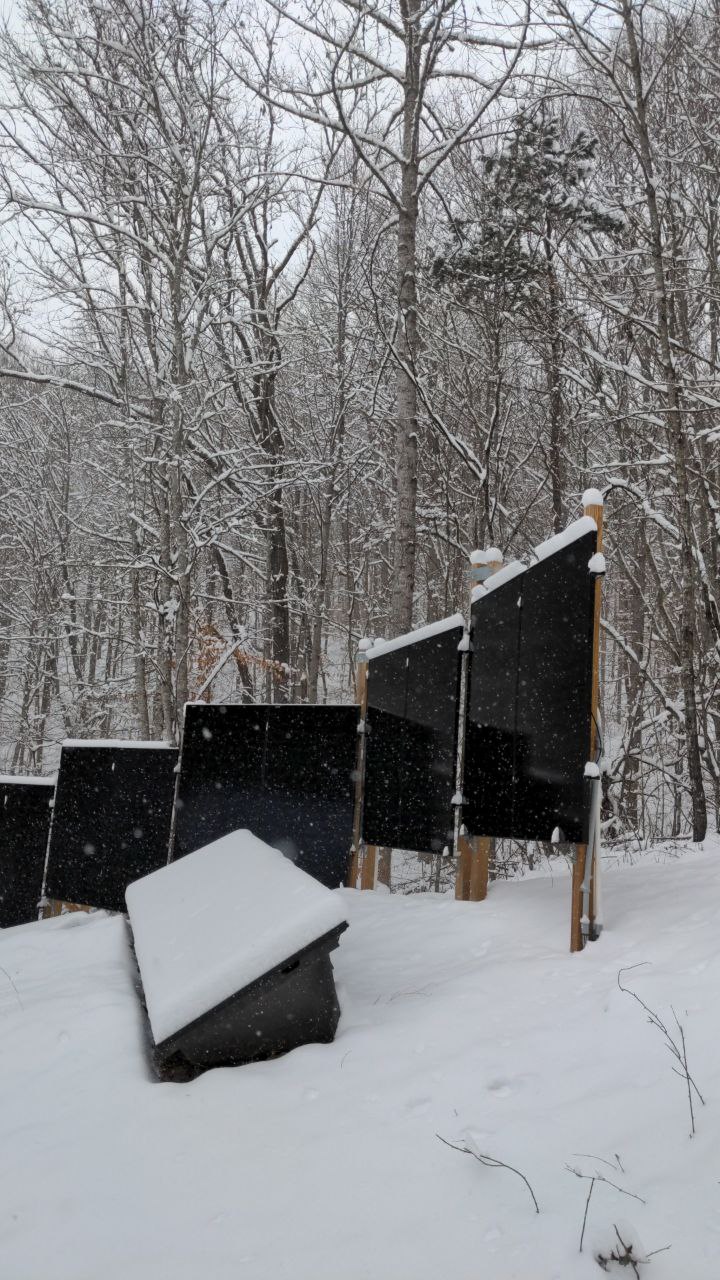
 Snow coming. I'm tuned into the local 24 hour slop weather stream. AI
generated, narrated, up to the minute radar and forecast graphics. People
popping up on the live weather map with questions "snow soon?" (They pay
for the privilege.) LLM generating reply that riffs on their name. Tuned to
keep the urgency up, something is always happening somewhere, scanners are
pulling the police reports, live webcam description models add
verisimilitude to the description of the morning commute. Weather is
happening.
In the subtext, climate change is happening. Weather is a growth industry.
The guy up in Kentucky coal country who put this thing together is building
an empire. He started as just another local news greenscreener. Dropped out
and went twitch weather stream. Hyping up tornado days and dicy snow
forecasts. Nowcasting, hyper individualized, interacting with chat.
Now he's automated it all. On big days when he's getting real views,
the bot breaks into his live streams, gives him a break.
Only a few thousand watching this morning yet. Perfect 2026 grade slop.
Details never quite right, but close enough to keep on in the background
all day. Nobody expects a perfect forecast after all, and it's fed from the
National Weather Center discussion too. We still fund those guys? Why
bother when a bot can do it?
He knows why he's big in these states, these rural areas. Understands
the target audience. Airbrushed AI aesthetics are ok with them, receive no
pushback. Flying more under the radar coastally, but weather is big there
and getting bigger. The local weather will come for us all.


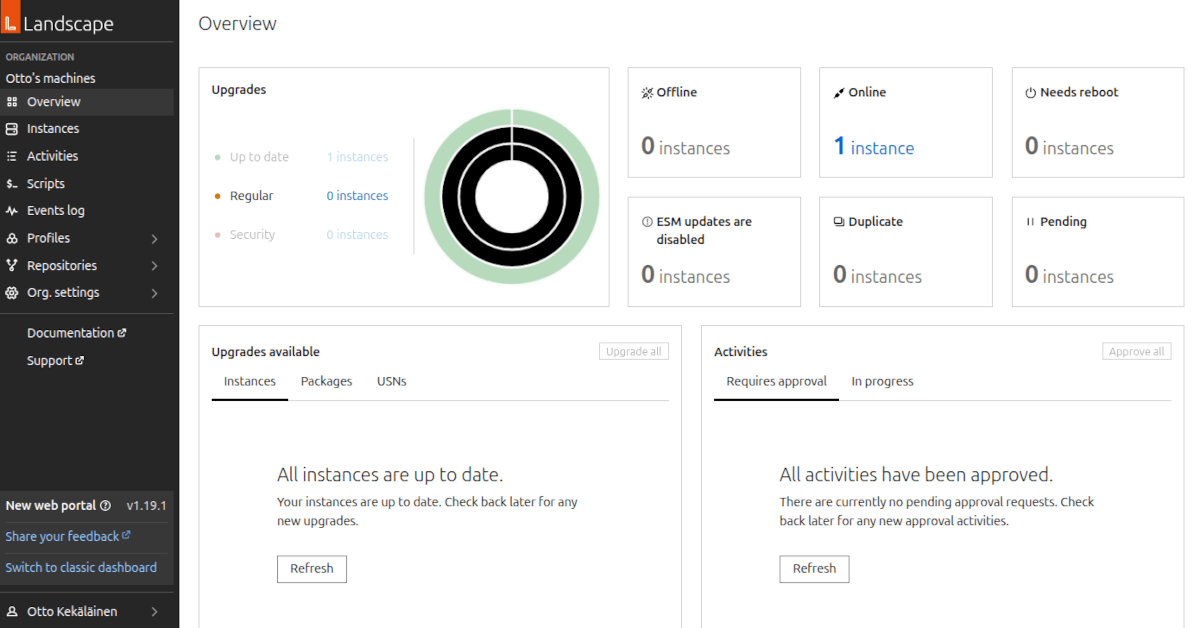 Ubuntu Pro is a subscription offering for Ubuntu users who want to pay for the assurance of getting quick and high-quality security updates for Ubuntu. I tested it out to see how it works in practice, and to evaluate how well it works as a commercial open source service model for Linux.
Anyone running Ubuntu can subscribe to it at
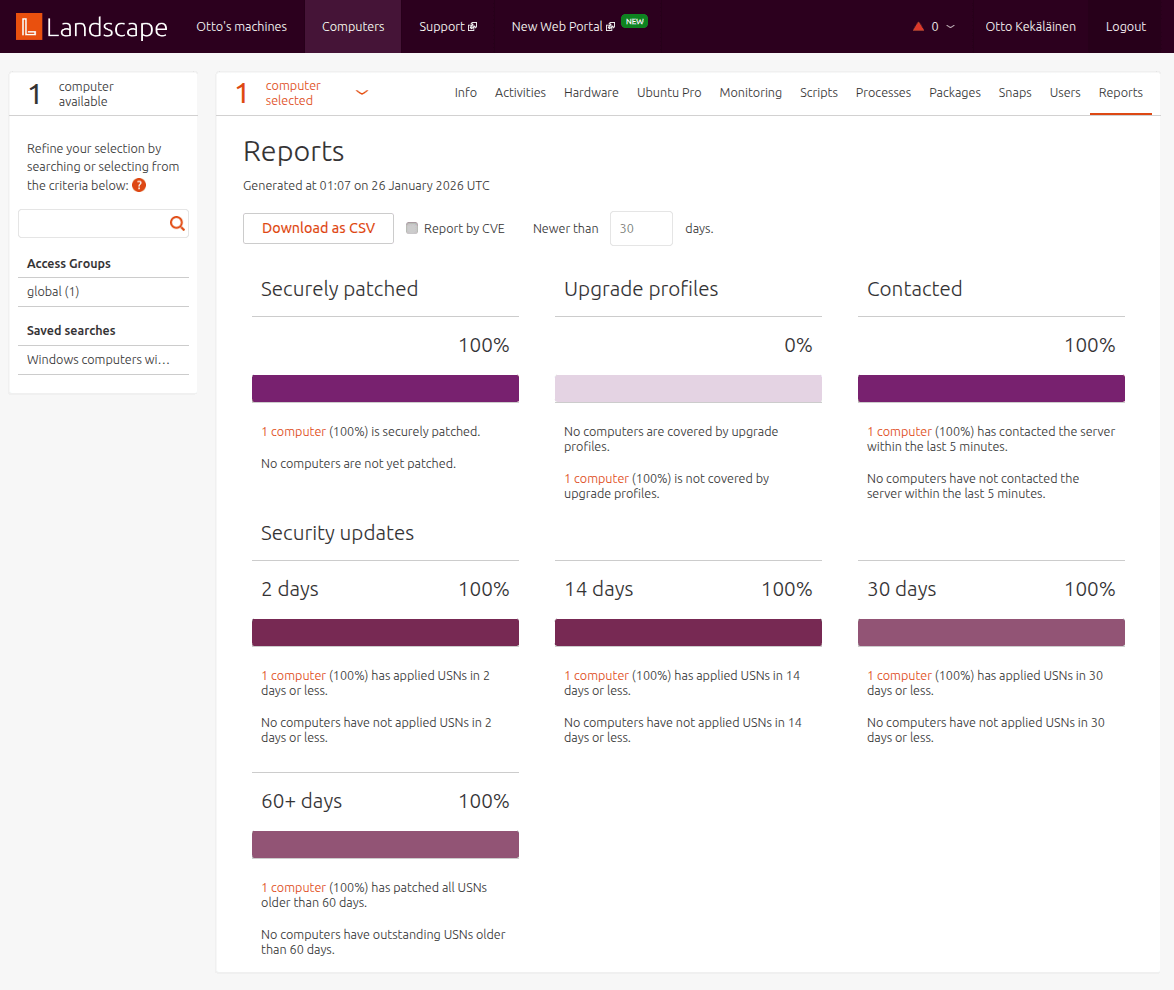
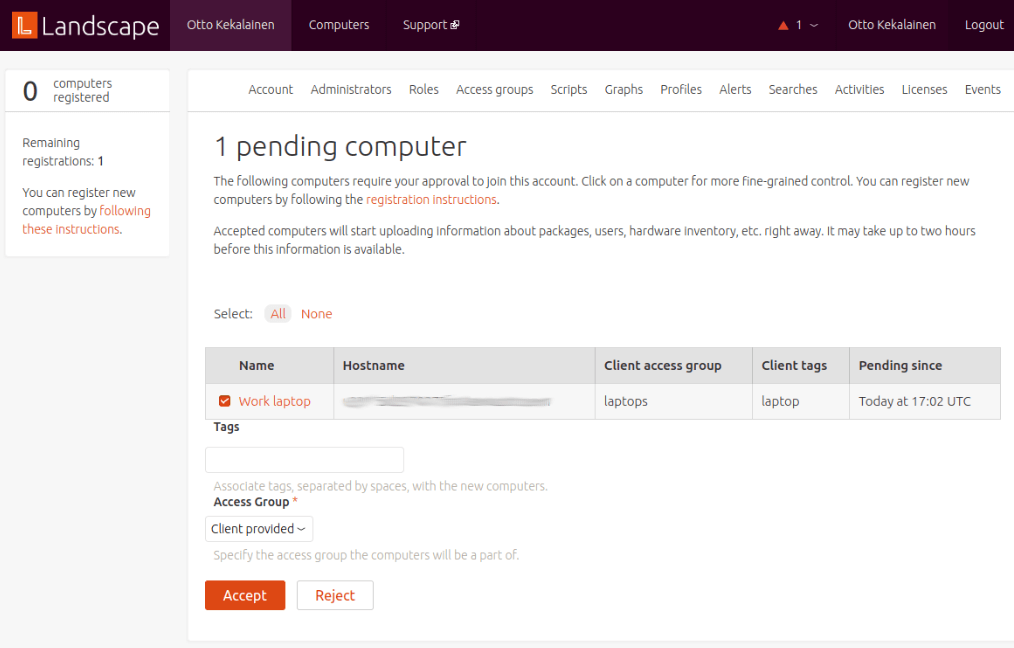 If I had a large fleet of computers, Landscape might come in useful. Also it is obvious Landscape is intended primarily for managing server systems. For example, the default alarm trigger on systems being offline, which is common for laptops and desktop computers, is an alert-worthy thing only on server systems.
It is good to know that Landscape exists, but on desktop systems I would probably skip it, and only stick to the security updates offered by Ubuntu Pro without using Landscape.
 Somehow this whole DevOps thing is all about generating the wildest things from some (usually equally wild) template.
And today we're gonna generate
 I have officially reached the 6-week mark, the halfway point of my Outreachy internship. The time has flown by incredibly fast, yet it feels short because there is still so much exciting work to do.


 . I am an intern here at Outreachy working with Debian OpenQA Image testing team. The work consists of testing Images with OpenQA. The internship has reached midpoint and here are some of the highlights that I have had so far.




 A new release, now at version 0.0.22, of
 A recent article in The Atlantic makes the case that