Search Results: "weasel"

28 February 2025

Antoine Beaupr : testing the fish shell

I have been testing fish for a couple months now (this file started on 2025-01-03T23:52:15-0500 according to stat(1)), and those are my notes. I suspect people will have Opinions about my comments here. Do not comment unless you have some Constructive feedback to provide: I don't want to know if you think I am holding it Wrong. Consider that I might have used UNIX shells for longer that you have lived. I'm not sure I'll keep using fish, but so far it's the first shell that survived heavy use outside of zsh(1) (unless you count tcsh(1), but that was in another millenia). My normal shell is bash(1), and it's still the shell I used everywhere else than my laptop, as I haven't switched on all the servers I managed, although it is available since August 2022 on torproject.org servers. I first got interested in fish because they ported to Rust, making it one of the rare shells out there written in a "safe" and modern programming language, released after an impressive ~2 year of work with Fish 4.0.

Cool things Current directory gets shortened, ~/wikis/anarc.at/software/desktop/wayland shows up as ~/w/a/s/d/wayland Autocompletion rocks. Default prompt rocks. Doesn't seem vulnerable to command injection assaults, at least it doesn't trip on the git-landmine. It even includes pipe status output, which was a huge pain to implement in bash. Made me realized that if the last command succeeds, we don't see other failures, which is the case of my current prompt anyways! Signal reporting is better than my bash implementation too. So far the only modification I have made to the prompt is to add a printf '\a' to output a bell. By default, fish keeps a directory history (but separate from the pushd stack), that can be navigated with cdh, prevd, and nextd, dirh shows the history.

Less cool I feel there's visible latency in the prompt creation. POSIX-style functions (foo() true ) are unsupported. Instead, fish uses whitespace-sensitive definitions like this:
function foo
    true
end
This means my (modest) collection of POSIX functions need to be ported to fish. Workaround: simple functions can be turned into aliases, which fish supports (but implements using functions). EOF heredocs are considered to be "minor syntactic sugar". I find them frigging useful. Process substitution is split on newlines, not whitespace. you need to pipe through string split -n " " to get the equivalent. <(cmd) doesn't exist: they claim you can use cmd foo - as a replacement, but that's not correct: I used <(cmd) mostly where foo does not support - as a magic character to say 'read from stdin'. Documentation is... limited. It seems mostly geared the web docs which are... okay (but I couldn't find out about ~/.config/fish/conf.d there!), but this is really inconvenient when you're trying to browse the manual pages. For example, fish thinks there's a fish_prompt manual page, according to its own completion mechanism, but man(1) cannot find that manual page. I can't find the manual for the time command (which is actually a keyword!) Fish renders multi-line commands with newlines. So if your terminal looks like this, say:
anarcat@angela:~> sq keyring merge torproject-keyring/lavamind-
95F341D746CF1FC8B05A0ED5D3F900749268E55E.gpg torproject-keyrin
g/weasel-E3ED482E44A53F5BBE585032D50F9EBC09E69937.gpg   wl-copy
... but it's actually one line, when you copy-paste the above, in foot(1), it will show up exactly like this, newlines and all:
sq keyring merge torproject-keyring/lavamind-
95F341D746CF1FC8B05A0ED5D3F900749268E55E.gpg torproject-keyrin
g/weasel-E3ED482E44A53F5BBE585032D50F9EBC09E69937.gpg   wl-copy
Whereas it should show up like this:
sq keyring merge torproject-keyring/lavamind-95F341D746CF1FC8B05A0ED5D3F900749268E55E.gpg torproject-keyring/weasel-E3ED482E44A53F5BBE585032D50F9EBC09E69937.gpg   wl-copy
Note that this is an issue specific to foot(1), alacritty(1) and gnome-terminal(1) don't suffer from that issue. I have already filed it upstream in foot and it is apparently fixed already. Globbing is driving me nuts. You can't pass a * to a command unless fish agrees it's going to match something. You need to escape it if it doesn't immediately match, and then you need the called command to actually support globbing. 202[345] doesn't match folders named 2023, 2024, 2025, it will send the string 202[345] to the command.

Blockers () is like $(): it's process substitution, and not a subshell. This is really impractical: I use ( cd foo ; do_something) all the time to avoid losing the current directory... I guess I'm supposed to use pushd for this, but ouch. This wouldn't be so bad if it was just for cd though. Clean constructs like this:
( git grep -l '^#!/.*bin/python' ; fdfind .py )   sort -u
Turn into what i find rather horrible:
begin; git grep -l '^#!/.*bin/python' ; fdfind .py ; end   sort -ub
It... works, but it goes back to "oh dear, now there's a new langage again". I only found out about this construct while trying:
  git grep -l '^#!/.*bin/python' ; fdfind .py     sort -u 
... which fails and suggests using begin/end, at which point: why not just support the curly braces? FOO=bar is not allowed. It's actually recognized syntax, but creates a warning. We're supposed to use set foo bar instead. This really feels like a needless divergence from standard. Aliases are... peculiar. Typical constructs like alias mv="\mv -i" don't work because fish treats aliases as a function definition, and \ is not magical there. This can be worked around by specifying the full path to the command, with e.g. alias mv="/bin/mv -i". Another problem is trying to override a built-in, which seems completely impossible. In my case, I like the time(1) command the way it is, thank you very much, and fish provides no way to bypass that builtin. It is possible to call time(1) with command time, but it's not possible to replace the command keyword so that means a lot of typing. Again: you can't use \ to bypass aliases. This is a huge annoyance for me. I would need to learn to type command in long form, and I use that stuff pretty regularly. I guess I could alias command to c or something, but this is one of those huge muscle memory challenges. alt . doesn't always work the way i expect.

19 February 2025

Thomas Lange: The secret maze of Debian images

TL;DR It's difficult to find the right Debian image. We have thousands of ISO files and cloud images and we support multiple CPU architectures and several download methods. The directory structure of our main image server is like a maze, and our web pages for downloading are also confusing. Most important facts from this blog post The Debian maze Debian maze Did you ever searched for a specific Debian image which was not the default netinst ISO for amd64? How long did it take to find it? Debian is very good at hiding their images for downloading by offering a huge amount of different versions and variants of images and multiple methods how to download them. Debian also has multiple web pages for This is the secret Debian maze of images. It's currently filled with 8700+ different ISO images and another 34.000+ files (raw and qcow2) for the cloud images. The main URL for the server hosting all Debian images is https://cdimage.debian.org/cdimage/ There, you will find installer images, live images, cloud images. Let's try to find the right image you need We have three different types of images: Images for the stable release Almost always, you are probably looking for the image to install the latest stable release. The URL https://cdimage.debian.org/cdimage/release/ shows:
12.9.0
12.9.0-live
current
current-live
but you cannot see that two are symlinks:
current -> 12.9.0/
current-live -> 12.9.0-live/
Here you will find the installer images and live images for the stable release (currently Debian 12, bookworm). If you choose https://cdimage.debian.org/cdimage/release/12.9.0/ you will see a list of CPU architectures:
amd64
arm64
armel
armhf
i386
mips64el
mipsel
ppc64el
s390x
source
trace
(BTW source and trace are no CPU architectures) The typical end user will not care about most architectures, because your computer will actually always need images from the amd64 folder. Maybe you have heard that your computer has a 64bit CPU and even if you have an Intel processor we call this architecture amd64. Let's see what's in the folder amd64:
bt-bd
bt-cd
bt-dvd
iso-bd
iso-cd
iso-dvd
jigdo-16G
jigdo-bd
jigdo-cd
jigdo-dlbd
jigdo-dvd
list-16G
list-bd
list-cd
list-dlbd
list-dvd
Wow. This is confusing and there's no description what all those folders mean. The first three are different methods how to download an image. Use iso when a single network connection will be fast enough for you. Using bt can result in a faster download, because it downloads via a peer-to-peer file sharing protocol. You need an additional torrent program for downloading. Then we have these variants: 16G and dlbd images are only available via jigdo. All iso-xx and bt-xx folders provide the same images but with a different access method. Here are examples of images:
  iso-cd/debian-12.9.0-amd64-netinst.iso
  iso-cd/debian-edu-12.9.0-amd64-netinst.iso
  iso-cd/debian-mac-12.9.0-amd64-netinst.iso
Fortunately the folder explains in very detail the differences between these images and what you also find there. You can ignore the SHA... files if you do not know what they are needed for. They are not important for you. These ISO files are small and contain only the core Debian installer code and a small set of programs. If you install a desktop environment, the other packages will be downloaded at the end of the installation. The folders bt-dvd and iso-dvd only contain debian-12.9.0-amd64-DVD-1.iso or the appropriate torrent file. In bt-bd and iso-bd you will only find debian-edu-12.9.0-amd64-BD-1.iso. These large images contain much more Debian packages, so you will not need a network connection during the installation. For the other CPU architectures (other than amd64) Debian provides less variants of images but still a lot. In total, we have 44 ISO files (or torrents) for the current release of the Debian installer for all architectures. When using jigdo you can choose between 268 images. And these are only the installer images for the stable release, no older or newer version are counted here. Take a breath before we're diving into..... The live images The live images in release/12.9.0-live/amd64/iso-hybrid/ are only available for the amd64 architecture but for newer Debian releases there will be images also for arm64. We have 7 different live images containing one of the most common desktop environments and one with only a text interface (standard).
debian-live-12.9.0-amd64-xfce.iso
debian-live-12.9.0-amd64-mate.iso
debian-live-12.9.0-amd64-lxqt.iso
debian-live-12.9.0-amd64-gnome.iso
debian-live-12.9.0-amd64-lxde.iso
debian-live-12.9.0-amd64-standard.iso
debian-live-12.9.0-amd64-cinnamon.iso
debian-live-12.9.0-amd64-kde.iso
The folder name iso-hybrid is the technology that you can use those ISO files for burning them onto a CD/DVD/BD or writing the same ISO file to a USB stick. bt-hybrid will give you the torrent files for downloading the same images using a torrent client program. More recent installer and live images (aka testing) For newer version of the images we have currently these folders:
daily-builds
weekly-builds
weekly-live-builds
trixie_di_alpha1
I suggest using the weekly-builds because in this folder you find a similar structure and all variants of images as in the release directory. For e.g. weekly-builds/amd64/iso-cd/debian-testing-amd64-netinst.iso and similar for the live images
weekly-live-builds/amd64/iso-hybrid/debian-live-testing-amd64-kde.iso
weekly-live-builds/amd64/iso-hybrid/debian-live-testing-amd64-lxde.iso
weekly-live-builds/amd64/iso-hybrid/debian-live-testing-amd64-debian-junior.iso
weekly-live-builds/amd64/iso-hybrid/debian-live-testing-amd64-standard.iso
weekly-live-builds/amd64/iso-hybrid/debian-live-testing-amd64-lxqt.iso
weekly-live-builds/amd64/iso-hybrid/debian-live-testing-amd64-mate.iso
weekly-live-builds/amd64/iso-hybrid/debian-live-testing-amd64-xfce.iso
weekly-live-builds/amd64/iso-hybrid/debian-live-testing-amd64-gnome.iso
weekly-live-builds/amd64/iso-hybrid/debian-live-testing-amd64-cinnamon.iso
weekly-live-builds/arm64/iso-hybrid/debian-live-testing-arm64-gnome.iso
Here you see a new variant call debian-junior, which is a Debian blend. BitTorrent files are not available for weekly builds. The daily-builds folder structure is different and only provide the small network install (netinst) ISOs but several versions of the last days. Currently we have 55 ISO files available there. If you like to use the newest installation image fetch this one: https://cdimage.debian.org/cdimage/daily-builds/sid_d-i/arch-latest/amd64/iso-cd/debian-testing-amd64-netinst.iso Debian stable with a backports kernel Unfortunately Debian does not provide any installation media using the stable release but including a backports kernel for newer hardware. This is because our installer environment is a very complex mix of special tools (like anna) and special .udeb versions of packages. But the FAIme web service of my FAI project can build a custom installation image using the backports kernel. Choose a desktop environment, a language and add some packages names if you like. Then select Debian 12 bookworm and then enable backports repository including newer kernel. After a short time you can download your own installation image. Older releases Usually you should not use older releases for a new installation. In our archive the folder https://cdimage.debian.org/cdimage/archive/ contains 6163 ISO files starting from Debian 3.0 (first release was in 2002) and including every point release. The full DVD image for the oldstable release (Debian 11.11.0 including non-free firmware) is here https://cdimage.debian.org/cdimage/unofficial/non-free/cd-including-firmware/archive/latest-oldstable/amd64/iso-dvd/firmware-11.11.0-amd64-DVD-1.iso the smaller netinst image is https://cdimage.debian.org/cdimage/archive/11.10.0/amd64/iso-cd/debian-11.10.0-amd64-netinst.iso The oldest ISO I could find is from 1999 using kernel 2.0.36 I still didn't managed to boot it in KVM. UPDATE I got a kernel panic because the VM had 4GB RAM. Reducing this to 500MB RAM (also 8MB works) started the installer of Debian 2.1 without any problems. Anything else? In this post, we still did not cover the ports folder (the non official supported (older) hardware architectures) which contains around 760 ISO files and the unofficial folder (1445 ISO files) which also provided the ISOs which included the non-free firmware blobs in the past. Then, there are more than 34.000 cloud images. But hey, no ISO files are involved there. This may be part of a complete new posting.

9 February 2025

Antoine Beaupr : A slow blogging year

Well, 2024 will be remembered, won't it? I guess 2025 already wants to make its mark too, but let's not worry about that right now, and instead let's talk about me. A little over a year ago, I was gloating over how I had such a great blogging year in 2022, and was considering 2023 to be average, then went on to gather more stats and traffic analysis... Then I said, and I quote:
I hope to write more next year. I've been thinking about a few posts I could write for work, about how things work behind the scenes at Tor, that could be informative for many people. We run a rather old setup, but things hold up pretty well for what we throw at it, and it's worth sharing that with the world...
What a load of bollocks.

A bad year for this blog 2024 was the second worst year ever in my blogging history, tied with 2009 at a measly 6 posts for the year:
anarcat@angela:anarc.at$ curl -sSL https://anarc.at/blog/   grep 'href="\./'   grep -o 20[0-9][0-9]   sort   uniq -c   sort -nr   grep -v 2025   tail -3
      6 2024
      6 2009
      3 2014
I did write about my work though, detailing the migration from Gitolite to GitLab we completed that year. But after August, total radio silence until now.

Loads of drafts It's not that I have nothing to say: I have no less than five drafts in my working tree here, not counting three actual drafts recorded in the Git repository here:
anarcat@angela:anarc.at$ git s blog
## main...origin/main
?? blog/bell-bot.md
?? blog/fish.md
?? blog/kensington.md
?? blog/nixos.md
?? blog/tmux.md
anarcat@angela:anarc.at$ git grep -l '\!tag draft'
blog/mobile-massive-gallery.md
blog/on-dying.mdwn
blog/secrets-recovery.md
I just don't have time to wrap those things up. I think part of me is disgusted by seeing my work stolen by large corporations to build proprietary large language models while my idols have been pushed to suicide for trying to share science with the world. Another part of me wants to make those things just right. The "tagged drafts" above are nothing more than a huge pile of chaotic links, far from being useful for anyone else than me, and even then. The on-dying article, in particular, is becoming my nemesis. I've been wanting to write that article for over 6 years now, I think. It's just too hard.

Writing elsewhere There's also the fact that I write for work already. A lot. Here are the top-10 contributors to our team's wiki:
anarcat@angela:help.torproject.org$ git shortlog --numbered --summary --group="format:%al"   head -10
  4272  anarcat
   423  jerome
   117  zen
   116  lelutin
   104  peter
    58  kez
    45  irl
    43  hiro
    18  gaba
    17  groente
... but that's a bit unfair, since I've been there half a decade. Here's the last year:
anarcat@angela:help.torproject.org$ git shortlog --since=2024-01-01 --numbered --summary --group="format:%al"   head -10
   827  anarcat
   117  zen
   116  lelutin
    91  jerome
    17  groente
    10  gaba
     8  micah
     7  kez
     5  jnewsome
     4  stephen.swift
So I still write the most commits! But to truly get a sense of the amount I wrote in there, we should count actual changes. Here it is by number of lines (from commandlinefu.com):
anarcat@angela:help.torproject.org$ git ls-files   xargs -n1 git blame --line-porcelain   sed -n 's/^author //p'   sort -f   uniq -ic   sort -nr   head -10
  99046 Antoine Beaupr 
   6900 Zen Fu
   4784 J r me Charaoui
   1446 Gabriel Filion
   1146 Jerome Charaoui
    837 groente
    705 kez
    569 Gaba
    381 Matt Traudt
    237 Stephen Swift
That, of course, is the entire history of the git repo, again. We should take only the last year into account, and probably ignore the tails directory, as sneaky Zen Fu imported the entire docs from another wiki there...
anarcat@angela:help.torproject.org$ find [d-s]* -type f -mtime -365   xargs -n1 git blame --line-porcelain 2>/dev/null   sed -n 's/^author //p'   sort -f   uniq -ic   sort -nr   head -10
  75037 Antoine Beaupr 
   2932 J r me Charaoui
   1442 Gabriel Filion
   1400 Zen Fu
    929 Jerome Charaoui
    837 groente
    702 kez
    569 Gaba
    381 Matt Traudt
    237 Stephen Swift
Pretty good! 75k lines. But those are the files that were modified in the last year. If we go a little more nuts, we find that:
anarcat@angela:help.torproject.org$ $ git-count-words-range.py    sort -k6 -nr   head -10
parsing commits for words changes from command: git log '--since=1 year ago' '--format=%H %al'
anarcat 126116 - 36932 = 89184
zen 31774 - 5749 = 26025
groente 9732 - 607 = 9125
lelutin 10768 - 2578 = 8190
jerome 6236 - 2586 = 3650
gaba 3164 - 491 = 2673
stephen.swift 2443 - 673 = 1770
kez 1034 - 74 = 960
micah 772 - 250 = 522
weasel 410 - 0 = 410
I wrote 126,116 words in that wiki, only in the last year. I also deleted 37k words, so the final total is more like 89k words, but still: that's about forty (40!) articles of the average size (~2k) I wrote in 2022. (And yes, I did go nuts and write a new log parser, essentially from scratch, to figure out those word diffs. I did get the courage only after asking GPT-4o for an example first, I must admit.) Let's celebrate that again: I wrote 90 thousand words in that wiki in 2024. According to Wikipedia, a "novella" is 17,500 to 40,000 words, which would mean I wrote about a novella and a novel, in the past year. But interestingly, if I look at the repository analytics. I certainly didn't write that much more in the past year. So that alone cannot explain the lull in my production here.

Arguments Another part of me is just tired of the bickering and arguing on the internet. I have at least two articles in there that I suspect is going to get me a lot of push-back (NixOS and Fish). I know how to deal with this: you need to write well, consider the controversy, spell it out, and defuse things before they happen. But that's hard work and, frankly, I don't really care that much about what people think anymore. I'm not writing here to convince people. I have stop evangelizing a long time ago. Now, I'm more into documenting, and teaching. And, while teaching, there's a two-way interaction: when you give out a speech or workshop, people can ask questions, or respond, and you all learn something. When you document, you quickly get told "where is this? I couldn't find it" or "I don't understand this" or "I tried that and it didn't work" or "wait, really? shouldn't we do X instead", and you learn. Here, it's static. It's my little soapbox where I scream in the void. The only thing people can do is scream back.

Collaboration So. Let's see if we can work together here. If you don't like something I say, disagree, or find something wrong or to be improved, instead of screaming on social media or ignoring me, try contributing back. This site here is backed by a git repository and I promise to read everything you send there, whether it is an issue or a merge request. I will, of course, still read comments sent by email or IRC or social media, but please, be kind. You can also, of course, follow the latest changes on the TPA wiki. If you want to catch up with the last year, some of the "novellas" I wrote include: (Well, no, you can't actually follow changes on a GitLab wiki. But we have a wiki-replica git repository where you can see the latest commits, and subscribe to the RSS feed.) See you there!

20 November 2024

Ian Jackson: The Rust Foundation's 2nd bad draft trademark policy

tl;dr: The Rust Foundation s new trademark policy still forbids unapproved modifications: this would forbid both the Rust Community s own development work(!) and normal Free Software distribution practices. Background In April 2023 I wrote about the Rust Foundation s ham-fisted and misguided attempts to update the Rust trademark policy. This turned into drama. The new draft Recently, the Foundation published a new draft. It s considerably less bad, but the most serious problem, which I identified last year, remains. It prevents redistribution of modified versions of Rust, without pre-approval from the Rust Foundation. (Subject to some limited exceptions.) The people who wrote this evidently haven t realised that distributing modified versions is how free software development works. Ie, the draft Rust trademark policy even forbids making a github branch for an MR to contribute to Rust! It s also very likely unacceptable to Debian. Rust is still on track to repeat the Firefox/Iceweasel debacle. Below is a copy of my formal response to the consultation. The consultation closes at 07:59:00 UTC tomorrow (21st November), ie, at the end of today (Wednesday) US Pacific time, so if you want to reply, do so quickly. My consultation response
Hi. My name is Ian Jackson. I write as a Rust contributor and as a Debian Developer with first-hand experience of Debian s approach to trademarks. (But I am not a member of the Debian Rust Packaging Team.) Your form invites me to state any blocking concerns. I m afraid I have one: PROBLEM The policy on distributing modified versions of Rust (page 4, 8th bullet) is far too restrictive. PROBLEM - ASPECT 1 On its face the policy forbids making a clone of the Rust repositories on a git forge, and pushing a modified branch there. That is publicly distributing a modified version of Rust. I.e., the current policy forbids the Rust s community s own development workflow! PROBLEM - ASPECT 2 The policy also does not meet the needs of Software-Freedom-respecting downstreams, including community Linux distributions such as Debian. There are two scenarios (fuzzy, and overlapping) which provide a convenient framing to discuss this: Firstly, in practical terms, Debian may need to backport bugfixes, or sometimes other changes. Sometimes Debian will want to pre-apply bugfixes or changes that have been contributed by users, and are intended eventually to go upstream, but are not included upstream in official Rust yet. This is a routine activity for a distribution. The policy, however, forbids it. Secondly, Debian, as a point of principle, requires the ability to diverge from upstream if and when Debian decides that this is the right choice for Debian s users. The freedom to modify is a key principle of Free Software. This includes making changes that the upstream project disapproves of. Some examples of this, where Debian has made changes, that upstream do not approve of, have included things like: removing user-tracking code, or disabling obsolescence timebombs that stop a particular version working after a certain date. Overall, while alignment in values between Debian and Rust seems to be very good right now, modifiability it is a matter of non-negotiable principle for Debian. The 8th bullet point on page 4 of the PDF does not give Debian (and Debian s users) these freedoms. POSSIBLE SOLUTIONS Other formulations, or an additional permission, seem like they would be able to meet the needs of both Debian and Rust. The first thing to recognise is that forbidding modified versions is probably not necessary to prevent language ecosystem fragmentation. Many other programming languages are distributed under fully Free Software licences without such restrictive trademark policies. (For example, Python; I m sure a thorough survey would find many others.) The scenario that would be most worrying for Rust would be embrace - extend - extinguish . In projects with a copyleft licence, this is not a concern, but Rust is permissively licenced. However, one way to address this would be to add an additional permission for modification that permits distribution of modified versions without permission, but if the modified source code is also provided, under the original Rust licence. I suggest therefore adding the following 2nd sub-bullet point to the 8th bullet on page 4:
  • changes which are shared, in source code form, with all recipients of the modified software, and publicly licenced under the same licence as the official materials.
This means that downstreams who fear copyleft have the option of taking Rust s permissive copyright licence at face value, but are limited in the modifications they may make, unless they rename. Conversely downstreams such as Debian who wish to operate as part of the Free Software ecosystem can freely make modifications. It also, obviously, covers the Rust Community s own development work. NON-SOLUTIONS Some upstreams, faced with this problem, have offered Debian a special permission: ie, said that it would be OK for Debian to make modifications that Debian wants to. But Debian will not accept any Debian-specific permissions. Debian could of course rename their Rust compiler. Debian has chosen to rename in the past: infamously, a similar policy by Mozilla resulted in Debian distributing Firefox under the name Iceweasel for many years. This is a PR problem for everyone involved, and results in a good deal of technical inconvenience and makework. Debian could seek approval for changes, and the Rust Foundation would grant that approval quickly . This is unworkable on a practical level - requests for permission do not fit into Debian s workflow, and the resulting delays would be unacceptable. But, more fundamentally, Debian rightly insists that it must have the freedom to make changes that the Foundation do not approve of. (For example, if a future Rust shipped with telemetry features Debian objected to.) Debian and Rust could compromise . However, Debian is an ideological as well as technological project. The principles I have set out are part of Debian s Foundation Documents - they are core values for Debian. When Debian makes compromises, it does so very slowly and with great deliberation, using its slowest and most heavyweight constitutional governance processes. Debian is not likely to want to engage in such a process for the benefit of one programming language. Users will get Rust from upstream . This is currently often the case. Right now, Rust is moving very quickly, and by Debian standards is very new. As Rust becomes more widely used, more stable, and more part of the infrastructure of the software world, it will need to become part of standard, stable, reliable, software distributions. That means Debian.
(The consultation was a Google Forms page with a single text field, so the formatting isn t great. I have edited the formatting very lightly to avoid rendering bugs here on my blog.)

comment count unavailable comments

21 November 2023

Mike Hommey: How I (kind of) killed Mercurial at Mozilla

Did you hear the news? Firefox development is moving from Mercurial to Git. While the decision is far from being mine, and I was barely involved in the small incremental changes that ultimately led to this decision, I feel I have to take at least some responsibility. And if you are one of those who would rather use Mercurial than Git, you may direct all your ire at me. But let's take a step back and review the past 25 years leading to this decision. You'll forgive me for skipping some details and any possible inaccuracies. This is already a long post, while I could have been more thorough, even I think that would have been too much. This is also not an official Mozilla position, only my personal perception and recollection as someone who was involved at times, but mostly an observer from a distance. From CVS to DVCS From its release in 1998, the Mozilla source code was kept in a CVS repository. If you're too young to know what CVS is, let's just say it's an old school version control system, with its set of problems. Back then, it was mostly ubiquitous in the Open Source world, as far as I remember. In the early 2000s, the Subversion version control system gained some traction, solving some of the problems that came with CVS. Incidentally, Subversion was created by Jim Blandy, who now works at Mozilla on completely unrelated matters. In the same period, the Linux kernel development moved from CVS to Bitkeeper, which was more suitable to the distributed nature of the Linux community. BitKeeper had its own problem, though: it was the opposite of Open Source, but for most pragmatic people, it wasn't a real concern because free access was provided. Until it became a problem: someone at OSDL developed an alternative client to BitKeeper, and licenses of BitKeeper were rescinded for OSDL members, including Linus Torvalds (they were even prohibited from purchasing one). Following this fiasco, in April 2005, two weeks from each other, both Git and Mercurial were born. The former was created by Linus Torvalds himself, while the latter was developed by Olivia Mackall, who was a Linux kernel developer back then. And because they both came out of the same community for the same needs, and the same shared experience with BitKeeper, they both were similar distributed version control systems. Interestingly enough, several other DVCSes existed: In this landscape, the major difference Git was making at the time was that it was blazing fast. Almost incredibly so, at least on Linux systems. That was less true on other platforms (especially Windows). It was a game-changer for handling large codebases in a smooth manner. Anyways, two years later, in 2007, Mozilla decided to move its source code not to Bzr, not to Git, not to Subversion (which, yes, was a contender), but to Mercurial. The decision "process" was laid down in two rather colorful blog posts. My memory is a bit fuzzy, but I don't recall that it was a particularly controversial choice. All of those DVCSes were still young, and there was no definite "winner" yet (GitHub hadn't even been founded). It made the most sense for Mozilla back then, mainly because the Git experience on Windows still wasn't there, and that mattered a lot for Mozilla, with its diverse platform support. As a contributor, I didn't think much of it, although to be fair, at the time, I was mostly consuming the source tarballs. Personal preferences Digging through my archives, I've unearthed a forgotten chapter: I did end up setting up both a Mercurial and a Git mirror of the Firefox source repository on alioth.debian.org. Alioth.debian.org was a FusionForge-based collaboration system for Debian developers, similar to SourceForge. It was the ancestor of salsa.debian.org. I used those mirrors for the Debian packaging of Firefox (cough cough Iceweasel). The Git mirror was created with hg-fast-export, and the Mercurial mirror was only a necessary step in the process. By that time, I had converted my Subversion repositories to Git, and switched off SVK. Incidentally, I started contributing to Git around that time as well. I apparently did this not too long after Mozilla switched to Mercurial. As a Linux user, I think I just wanted the speed that Mercurial was not providing. Not that Mercurial was that slow, but the difference between a couple seconds and a couple hundred milliseconds was a significant enough difference in user experience for me to prefer Git (and Firefox was not the only thing I was using version control for) Other people had also similarly created their own mirror, or with other tools. But none of them were "compatible": their commit hashes were different. Hg-git, used by the latter, was putting extra information in commit messages that would make the conversion differ, and hg-fast-export would just not be consistent with itself! My mirror is long gone, and those have not been updated in more than a decade. I did end up using Mercurial, when I got commit access to the Firefox source repository in April 2010. I still kept using Git for my Debian activities, but I now was also using Mercurial to push to the Mozilla servers. I joined Mozilla as a contractor a few months after that, and kept using Mercurial for a while, but as a, by then, long time Git user, it never really clicked for me. It turns out, the sentiment was shared by several at Mozilla. Git incursion In the early 2010s, GitHub was becoming ubiquitous, and the Git mindshare was getting large. Multiple projects at Mozilla were already entirely hosted on GitHub. As for the Firefox source code base, Mozilla back then was kind of a Wild West, and engineers being engineers, multiple people had been using Git, with their own inconvenient workflows involving a local Mercurial clone. The most popular set of scripts was moz-git-tools, to incorporate changes in a local Git repository into the local Mercurial copy, to then send to Mozilla servers. In terms of the number of people doing that, though, I don't think it was a lot of people, probably a few handfuls. On my end, I was still keeping up with Mercurial. I think at that time several engineers had their own unofficial Git mirrors on GitHub, and later on Ehsan Akhgari provided another mirror, with a twist: it also contained the full CVS history, which the canonical Mercurial repository didn't have. This was particularly interesting for engineers who needed to do some code archeology and couldn't get past the 2007 cutoff of the Mercurial repository. I think that mirror ultimately became the official-looking, but really unofficial, mozilla-central repository on GitHub. On a side note, a Mercurial repository containing the CVS history was also later set up, but that didn't lead to something officially supported on the Mercurial side. Some time around 2011~2012, I started to more seriously consider using Git for work myself, but wasn't satisfied with the workflows others had set up for themselves. I really didn't like the idea of wasting extra disk space keeping a Mercurial clone around while using a Git mirror. I wrote a Python script that would use Mercurial as a library to access a remote repository and produce a git-fast-import stream. That would allow the creation of a git repository without a local Mercurial clone. It worked quite well, but it was not able to incrementally update. Other, more complete tools existed already, some of which I mentioned above. But as time was passing and the size and depth of the Mercurial repository was growing, these tools were showing their limits and were too slow for my taste, especially for the initial clone. Boot to Git In the same time frame, Mozilla ventured in the Mobile OS sphere with Boot to Gecko, later known as Firefox OS. What does that have to do with version control? The needs of third party collaborators in the mobile space led to the creation of what is now the gecko-dev repository on GitHub. As I remember it, it was challenging to create, but once it was there, Git users could just clone it and have a working, up-to-date local copy of the Firefox source code and its history... which they could already have, but this was the first officially supported way of doing so. Coincidentally, Ehsan's unofficial mirror was having trouble (to the point of GitHub closing the repository) and was ultimately shut down in December 2013. You'll often find comments on the interwebs about how GitHub has become unreliable since the Microsoft acquisition. I can't really comment on that, but if you think GitHub is unreliable now, rest assured that it was worse in its beginning. And its sustainability as a platform also wasn't a given, being a rather new player. So on top of having this official mirror on GitHub, Mozilla also ventured in setting up its own Git server for greater control and reliability. But the canonical repository was still the Mercurial one, and while Git users now had a supported mirror to pull from, they still had to somehow interact with Mercurial repositories, most notably for the Try server. Git slowly creeping in Firefox build tooling Still in the same time frame, tooling around building Firefox was improving drastically. For obvious reasons, when version control integration was needed in the tooling, Mercurial support was always a no-brainer. The first explicit acknowledgement of a Git repository for the Firefox source code, other than the addition of the .gitignore file, was bug 774109. It added a script to install the prerequisites to build Firefox on macOS (still called OSX back then), and that would print a message inviting people to obtain a copy of the source code with either Mercurial or Git. That was a precursor to current bootstrap.py, from September 2012. Following that, as far as I can tell, the first real incursion of Git in the Firefox source tree tooling happened in bug 965120. A few days earlier, bug 952379 had added a mach clang-format command that would apply clang-format-diff to the output from hg diff. Obviously, running hg diff on a Git working tree didn't work, and bug 965120 was filed, and support for Git was added there. That was in January 2014. A year later, when the initial implementation of mach artifact was added (which ultimately led to artifact builds), Git users were an immediate thought. But while they were considered, it was not to support them, but to avoid actively breaking their workflows. Git support for mach artifact was eventually added 14 months later, in March 2016. From gecko-dev to git-cinnabar Let's step back a little here, back to the end of 2014. My user experience with Mercurial had reached a level of dissatisfaction that was enough for me to decide to take that script from a couple years prior and make it work for incremental updates. That meant finding a way to store enough information locally to be able to reconstruct whatever the incremental updates would be relying on (guess why other tools hid a local Mercurial clone under hood). I got something working rather quickly, and after talking to a few people about this side project at the Mozilla Portland All Hands and seeing their excitement, I published a git-remote-hg initial prototype on the last day of the All Hands. Within weeks, the prototype gained the ability to directly push to Mercurial repositories, and a couple months later, was renamed to git-cinnabar. At that point, as a Git user, instead of cloning the gecko-dev repository from GitHub and switching to a local Mercurial repository whenever you needed to push to a Mercurial repository (i.e. the aforementioned Try server, or, at the time, for reviews), you could just clone and push directly from/to Mercurial, all within Git. And it was fast too. You could get a full clone of mozilla-central in less than half an hour, when at the time, other similar tools would take more than 10 hours (needless to say, it's even worse now). Another couple months later (we're now at the end of April 2015), git-cinnabar became able to start off a local clone of the gecko-dev repository, rather than clone from scratch, which could be time consuming. But because git-cinnabar and the tool that was updating gecko-dev weren't producing the same commits, this setup was cumbersome and not really recommended. For instance, if you pushed something to mozilla-central with git-cinnabar from a gecko-dev clone, it would come back with a different commit hash in gecko-dev, and you'd have to deal with the divergence. Eventually, in April 2020, the scripts updating gecko-dev were switched to git-cinnabar, making the use of gecko-dev alongside git-cinnabar a more viable option. Ironically(?), the switch occurred to ease collaboration with KaiOS (you know, the mobile OS born from the ashes of Firefox OS). Well, okay, in all honesty, when the need of syncing in both directions between Git and Mercurial (we only had ever synced from Mercurial to Git) came up, I nudged Mozilla in the direction of git-cinnabar, which, in my (biased but still honest) opinion, was the more reliable option for two-way synchronization (we did have regular conversion problems with hg-git, nothing of the sort has happened since the switch). One Firefox repository to rule them all For reasons I don't know, Mozilla decided to use separate Mercurial repositories as "branches". With the switch to the rapid release process in 2011, that meant one repository for nightly (mozilla-central), one for aurora, one for beta, and one for release. And with the addition of Extended Support Releases in 2012, we now add a new ESR repository every year. Boot to Gecko also had its own branches, and so did Fennec (Firefox for Mobile, before Android). There are a lot of them. And then there are also integration branches, where developer's work lands before being merged in mozilla-central (or backed out if it breaks things), always leaving mozilla-central in a (hopefully) good state. Only one of them remains in use today, though. I can only suppose that the way Mercurial branches work was not deemed practical. It is worth noting, though, that Mercurial branches are used in some cases, to branch off a dot-release when the next major release process has already started, so it's not a matter of not knowing the feature exists or some such. In 2016, Gregory Szorc set up a new repository that would contain them all (or at least most of them), which eventually became what is now the mozilla-unified repository. This would e.g. simplify switching between branches when necessary. 7 years later, for some reason, the other "branches" still exist, but most developers are expected to be using mozilla-unified. Mozilla's CI also switched to using mozilla-unified as base repository. Honestly, I'm not sure why the separate repositories are still the main entry point for pushes, rather than going directly to mozilla-unified, but it probably comes down to switching being work, and not being a top priority. Also, it probably doesn't help that working with multiple heads in Mercurial, even (especially?) with bookmarks, can be a source of confusion. To give an example, if you aren't careful, and do a plain clone of the mozilla-unified repository, you may not end up on the latest mozilla-central changeset, but rather, e.g. one from beta, or some other branch, depending which one was last updated. Hosting is simple, right? Put your repository on a server, install hgweb or gitweb, and that's it? Maybe that works for... Mercurial itself, but that repository "only" has slightly over 50k changesets and less than 4k files. Mozilla-central has more than an order of magnitude more changesets (close to 700k) and two orders of magnitude more files (more than 700k if you count the deleted or moved files, 350k if you count the currently existing ones). And remember, there are a lot of "duplicates" of this repository. And I didn't even mention user repositories and project branches. Sure, it's a self-inflicted pain, and you'd think it could probably(?) be mitigated with shared repositories. But consider the simple case of two repositories: mozilla-central and autoland. You make autoland use mozilla-central as a shared repository. Now, you push something new to autoland, it's stored in the autoland datastore. Eventually, you merge to mozilla-central. Congratulations, it's now in both datastores, and you'd need to clean-up autoland if you wanted to avoid the duplication. Now, you'd think mozilla-unified would solve these issues, and it would... to some extent. Because that wouldn't cover user repositories and project branches briefly mentioned above, which in GitHub parlance would be considered as Forks. So you'd want a mega global datastore shared by all repositories, and repositories would need to only expose what they really contain. Does Mercurial support that? I don't think so (okay, I'll give you that: even if it doesn't, it could, but that's extra work). And since we're talking about a transition to Git, does Git support that? You may have read about how you can link to a commit from a fork and make-pretend that it comes from the main repository on GitHub? At least, it shows a warning, now. That's essentially the architectural reason why. So the actual answer is that Git doesn't support it out of the box, but GitHub has some backend magic to handle it somehow (and hopefully, other things like Gitea, Girocco, Gitlab, etc. have something similar). Now, to come back to the size of the repository. A repository is not a static file. It's a server with which you negotiate what you have against what it has that you want. Then the server bundles what you asked for based on what you said you have. Or in the opposite direction, you negotiate what you have that it doesn't, you send it, and the server incorporates what you sent it. Fortunately the latter is less frequent and requires authentication. But the former is more frequent and CPU intensive. Especially when pulling a large number of changesets, which, incidentally, cloning is. "But there is a solution for clones" you might say, which is true. That's clonebundles, which offload the CPU intensive part of cloning to a single job scheduled regularly. Guess who implemented it? Mozilla. But that only covers the cloning part. We actually had laid the ground to support offloading large incremental updates and split clones, but that never materialized. Even with all that, that still leaves you with a server that can display file contents, diffs, blames, provide zip archives of a revision, and more, all of which are CPU intensive in their own way. And these endpoints are regularly abused, and cause extra load to your servers, yes plural, because of course a single server won't handle the load for the number of users of your big repositories. And because your endpoints are abused, you have to close some of them. And I'm not mentioning the Try repository with its tens of thousands of heads, which brings its own sets of problems (and it would have even more heads if we didn't fake-merge them once in a while). Of course, all the above applies to Git (and it only gained support for something akin to clonebundles last year). So, when the Firefox OS project was stopped, there wasn't much motivation to continue supporting our own Git server, Mercurial still being the official point of entry, and git.mozilla.org was shut down in 2016. The growing difficulty of maintaining the status quo Slowly, but steadily in more recent years, as new tooling was added that needed some input from the source code manager, support for Git was more and more consistently added. But at the same time, as people left for other endeavors and weren't necessarily replaced, or more recently with layoffs, resources allocated to such tooling have been spread thin. Meanwhile, the repository growth didn't take a break, and the Try repository was becoming an increasing pain, with push times quite often exceeding 10 minutes. The ongoing work to move Try pushes to Lando will hide the problem under the rug, but the underlying problem will still exist (although the last version of Mercurial seems to have improved things). On the flip side, more and more people have been relying on Git for Firefox development, to my own surprise, as I didn't really push for that to happen. It just happened organically, by ways of git-cinnabar existing, providing a compelling experience to those who prefer Git, and, I guess, word of mouth. I was genuinely surprised when I recently heard the use of Git among moz-phab users had surpassed a third. I did, however, occasionally orient people who struggled with Mercurial and said they were more familiar with Git, towards git-cinnabar. I suspect there's a somewhat large number of people who never realized Git was a viable option. But that, on its own, can come with its own challenges: if you use git-cinnabar without being backed by gecko-dev, you'll have a hard time sharing your branches on GitHub, because you can't push to a fork of gecko-dev without pushing your entire local repository, as they have different commit histories. And switching to gecko-dev when you weren't already using it requires some extra work to rebase all your local branches from the old commit history to the new one. Clone times with git-cinnabar have also started to go a little out of hand in the past few years, but this was mitigated in a similar manner as with the Mercurial cloning problem: with static files that are refreshed regularly. Ironically, that made cloning with git-cinnabar faster than cloning with Mercurial. But generating those static files is increasingly time-consuming. As of writing, generating those for mozilla-unified takes close to 7 hours. I was predicting clone times over 10 hours "in 5 years" in a post from 4 years ago, I wasn't too far off. With exponential growth, it could still happen, although to be fair, CPUs have improved since. I will explore the performance aspect in a subsequent blog post, alongside the upcoming release of git-cinnabar 0.7.0-b1. I don't even want to check how long it now takes with hg-git or git-remote-hg (they were already taking more than a day when git-cinnabar was taking a couple hours). I suppose it's about time that I clarify that git-cinnabar has always been a side-project. It hasn't been part of my duties at Mozilla, and the extent to which Mozilla supports git-cinnabar is in the form of taskcluster workers on the community instance for both git-cinnabar CI and generating those clone bundles. Consequently, that makes the above git-cinnabar specific issues a Me problem, rather than a Mozilla problem. Taking the leap I can't talk for the people who made the proposal to move to Git, nor for the people who put a green light on it. But I can at least give my perspective. Developers have regularly asked why Mozilla was still using Mercurial, but I think it was the first time that a formal proposal was laid out. And it came from the Engineering Workflow team, responsible for issue tracking, code reviews, source control, build and more. It's easy to say "Mozilla should have chosen Git in the first place", but back in 2007, GitHub wasn't there, Bitbucket wasn't there, and all the available options were rather new (especially compared to the then 21 years-old CVS). I think Mozilla made the right choice, all things considered. Had they waited a couple years, the story might have been different. You might say that Mozilla stayed with Mercurial for so long because of the sunk cost fallacy. I don't think that's true either. But after the biggest Mercurial repository hosting service turned off Mercurial support, and the main contributor to Mercurial going their own way, it's hard to ignore that the landscape has evolved. And the problems that we regularly encounter with the Mercurial servers are not going to get any better as the repository continues to grow. As far as I know, all the Mercurial repositories bigger than Mozilla's are... not using Mercurial. Google has its own closed-source server, and Facebook has another of its own, and it's not really public either. With resources spread thin, I don't expect Mozilla to be able to continue supporting a Mercurial server indefinitely (although I guess Octobus could be contracted to give a hand, but is that sustainable?). Mozilla, being a champion of Open Source, also doesn't live in a silo. At some point, you have to meet your contributors where they are. And the Open Source world is now majoritarily using Git. I'm sure the vast majority of new hires at Mozilla in the past, say, 5 years, know Git and have had to learn Mercurial (although they arguably didn't need to). Even within Mozilla, with thousands(!) of repositories on GitHub, Firefox is now actually the exception rather than the norm. I should even actually say Desktop Firefox, because even Mobile Firefox lives on GitHub (although Fenix is moving back in together with Desktop Firefox, and the timing is such that that will probably happen before Firefox moves to Git). Heck, even Microsoft moved to Git! With a significant developer base already using Git thanks to git-cinnabar, and all the constraints and problems I mentioned previously, it actually seems natural that a transition (finally) happens. However, had git-cinnabar or something similarly viable not existed, I don't think Mozilla would be in a position to take this decision. On one hand, it probably wouldn't be in the current situation of having to support both Git and Mercurial in the tooling around Firefox, nor the resource constraints related to that. But on the other hand, it would be farther from supporting Git and being able to make the switch in order to address all the other problems. But... GitHub? I hope I made a compelling case that hosting is not as simple as it can seem, at the scale of the Firefox repository. It's also not Mozilla's main focus. Mozilla has enough on its plate with the migration of existing infrastructure that does rely on Mercurial to understandably not want to figure out the hosting part, especially with limited resources, and with the mixed experience hosting both Mercurial and git has been so far. After all, GitHub couldn't even display things like the contributors' graph on gecko-dev until recently, and hosting is literally their job! They still drop the ball on large blames (thankfully we have searchfox for those). Where does that leave us? Gitlab? For those criticizing GitHub for being proprietary, that's probably not open enough. Cloud Source Repositories? "But GitHub is Microsoft" is a complaint I've read a lot after the announcement. Do you think Google hosting would have appealed to these people? Bitbucket? I'm kind of surprised it wasn't in the list of providers that were considered, but I'm also kind of glad it wasn't (and I'll leave it at that). I think the only relatively big hosting provider that could have made the people criticizing the choice of GitHub happy is Codeberg, but I hadn't even heard of it before it was mentioned in response to Mozilla's announcement. But really, with literal thousands of Mozilla repositories already on GitHub, with literal tens of millions repositories on the platform overall, the pragmatic in me can't deny that it's an attractive option (and I can't stress enough that I wasn't remotely close to the room where the discussion about what choice to make happened). "But it's a slippery slope". I can see that being a real concern. LLVM also moved its repository to GitHub (from a (I think) self-hosted Subversion server), and ended up moving off Bugzilla and Phabricator to GitHub issues and PRs four years later. As an occasional contributor to LLVM, I hate this move. I hate the GitHub review UI with a passion. At least, right now, GitHub PRs are not a viable option for Mozilla, for their lack of support for security related PRs, and the more general shortcomings in the review UI. That doesn't mean things won't change in the future, but let's not get too far ahead of ourselves. The move to Git has just been announced, and the migration has not even begun yet. Just because Mozilla is moving the Firefox repository to GitHub doesn't mean it's locked in forever or that all the eggs are going to be thrown into one basket. If bridges need to be crossed in the future, we'll see then. So, what's next? The official announcement said we're not expecting the migration to really begin until six months from now. I'll swim against the current here, and say this: the earlier you can switch to git, the earlier you'll find out what works and what doesn't work for you, whether you already know Git or not. While there is not one unique workflow, here's what I would recommend anyone who wants to take the leap off Mercurial right now: As there is no one-size-fits-all workflow, I won't tell you how to organize yourself from there. I'll just say this: if you know the Mercurial sha1s of your previous local work, you can create branches for them with:
$ git branch <branch_name> $(git cinnabar hg2git <hg_sha1>)
At this point, you should have everything available on the Git side, and you can remove the .hg directory. Or move it into some empty directory somewhere else, just in case. But don't leave it here, it will only confuse the tooling. Artifact builds WILL be confused, though, and you'll have to ./mach configure before being able to do anything. You may also hit bug 1865299 if your working tree is older than this post. If you have any problem or question, you can ping me on #git-cinnabar or #git on Matrix. I'll put the instructions above somewhere on wiki.mozilla.org, and we can collaboratively iterate on them. Now, what the announcement didn't say is that the Git repository WILL NOT be gecko-dev, doesn't exist yet, and WON'T BE COMPATIBLE (trust me, it'll be for the better). Why did I make you do all the above, you ask? Because that won't be a problem. I'll have you covered, I promise. The upcoming release of git-cinnabar 0.7.0-b1 will have a way to smoothly switch between gecko-dev and the future repository (incidentally, that will also allow to switch from a pure git-cinnabar clone to a gecko-dev one, for the git-cinnabar users who have kept reading this far). What about git-cinnabar? With Mercurial going the way of the dodo at Mozilla, my own need for git-cinnabar will vanish. Legitimately, this begs the question whether it will still be maintained. I can't answer for sure. I don't have a crystal ball. However, the needs of the transition itself will motivate me to finish some long-standing things (like finalizing the support for pushing merges, which is currently behind an experimental flag) or implement some missing features (support for creating Mercurial branches). Git-cinnabar started as a Python script, it grew a sidekick implemented in C, which then incorporated some Rust, which then cannibalized the Python script and took its place. It is now close to 90% Rust, and 10% C (if you don't count the code from Git that is statically linked to it), and has sort of become my Rust playground (it's also, I must admit, a mess, because of its history, but it's getting better). So the day to day use with Mercurial is not my sole motivation to keep developing it. If it were, it would stay stagnant, because all the features I need are there, and the speed is not all that bad, although I know it could be better. Arguably, though, git-cinnabar has been relatively stagnant feature-wise, because all the features I need are there. So, no, I don't expect git-cinnabar to die along Mercurial use at Mozilla, but I can't really promise anything either. Final words That was a long post. But there was a lot of ground to cover. And I still skipped over a bunch of things. I hope I didn't bore you to death. If I did and you're still reading... what's wrong with you? ;) So this is the end of Mercurial at Mozilla. So long, and thanks for all the fish. But this is also the beginning of a transition that is not easy, and that will not be without hiccups, I'm sure. So fasten your seatbelts (plural), and welcome the change. To circle back to the clickbait title, did I really kill Mercurial at Mozilla? Of course not. But it's like I stumbled upon a few sparks and tossed a can of gasoline on them. I didn't start the fire, but I sure made it into a proper bonfire... and now it has turned into a wildfire. And who knows? 15 years from now, someone else might be looking back at how Mozilla picked Git at the wrong time, and that, had we waited a little longer, we would have picked some yet to come new horse. But hey, that's the tech cycle for you.

19 April 2023

Ian Jackson: The Rust Foundation's bad draft trademark policy

tl;dr The Rust Foundation s proposed new trademark policy is far too restrictive, and will cause (more) drama unless it is substantially revised. Process Rust is a trademark owned by the Foundation. The Rust Foundation still seems to be finding its feet. Evidently, one of the items on its backlog was to update the trademark policy. Apparently they have been working on this for some time, in an informal working group. In August, there was a survey. (I saw it in This Week In Rust, the community-curated newsletter where most important stuff appears, and responded.) I don t think the results of this survey have been published anywhere. Last week (12th April) the Foundation published an official Inside Rust blog post linking to a draft. They included a link to a feedback survey, closing on the 17th of April i.e., it was open for 5 days. This is far too short a period for formal feedback on such a draft. Especially given that this process has apparently already been generating significant controversy within parts of the Rust community. Substance Overall, this policy is poor. It is far too restrictive. It is likely to lead to (further) controversy and argument, including conflicts with Rust s downstreams. It does not serve the needs of the Rust community. In particular, the Rust community does not need the trademark to: The community does need the trademark to: It might be useful to use the trademark to strengthen licensing or CoC compliance. For example, good faith redistributions of a modified Rust, as Rust , would be Free Software, even though the copyright licence permits proprietary derivatives; so use of the Rust trademark should probably require use of a Free licence. There should be a series of blanket permissions to use the word Rust in for example: Currently there aren t. For example the current Debian practice of calling Rust libraries rust-<name-of-crate> is probably in violation. There are a number of more detailed problems with the wording. Values The policy has all the hallmarks of excessive influence from traditional trademark lawyers and not enough influence from the Free Software community. I would like to remind the Free Software activists on the inside of this process that the lawyers are there to serve you and the community. The values embodied in trademark law often conflict with the values of the Free Software community. The Rust Project should adopt a trademark policy which follows the community s values - even if that might weaken our ability to sue evildoers. Next steps The Foundation should take a step back and pause the process. Then, the Foundation should restart the process from a much earlier stage, with much wider publicity. Each stage should be widely advertised to the whole community, with opportunities for feedback. This should include publishing the results of the August 2022 survey. The Foundation should publish a sketch of the legal advice they have received, publicly say what the plausible options are and what their consequences might be (for the community, for downstreams, and for the Foundation s enforcement ability). (Some of this will no doubt repeat the work that has been done in the informal trademark working group. That work wasn t widely enough advertised.) Echoes of a dispute from 2006 Mozilla made a very similar mistake with Firefox in 2006. The official policy stated that no-one was allowed to distribute Firefox with any patches, unless those patches had been pre-approved by Mozilla. Debian is committed to Software Freedom. This must includes the freedom to modify the software as one sees fit, even if the original authors don t agree. Now, overly-restrictive trademark policies are hardly new. Debian often takes the practical view that usually the upstream with such a policy doesn t really mean it. But Mozilla decided they did mean it. They contacted Debian asking for Debian to get their patches approved. Since that wasn t acceptable to Debian, they stopped using the word Firefox . For a decade, Debian s Firefox browser was called Iceweasel . We don t want something similar happening to Rust .

comment count unavailable comments

10 March 2021

Mike Hommey: 5 years ago, Firefox (re)entered Debian

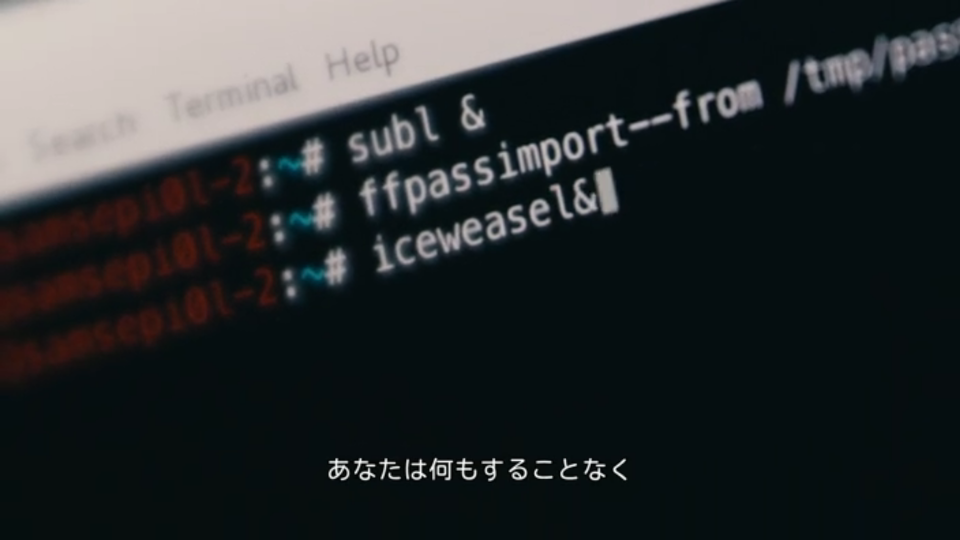
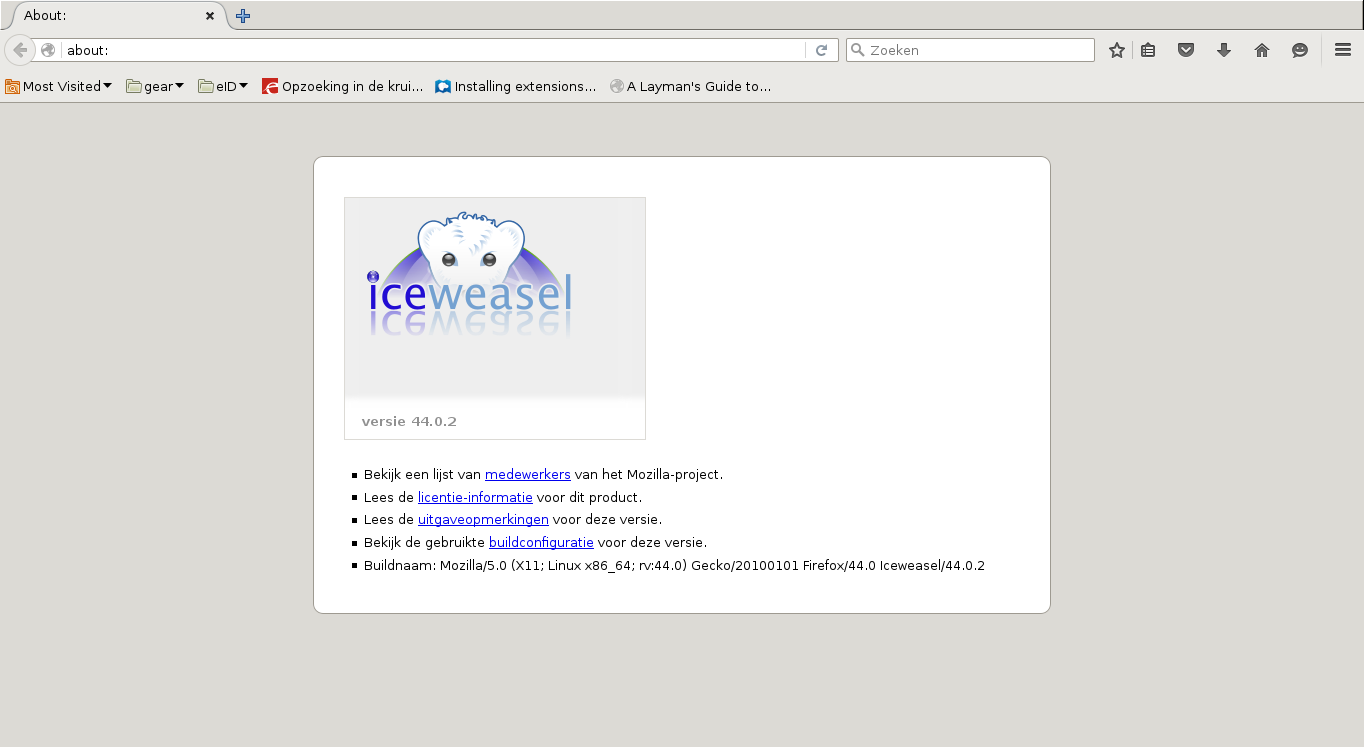
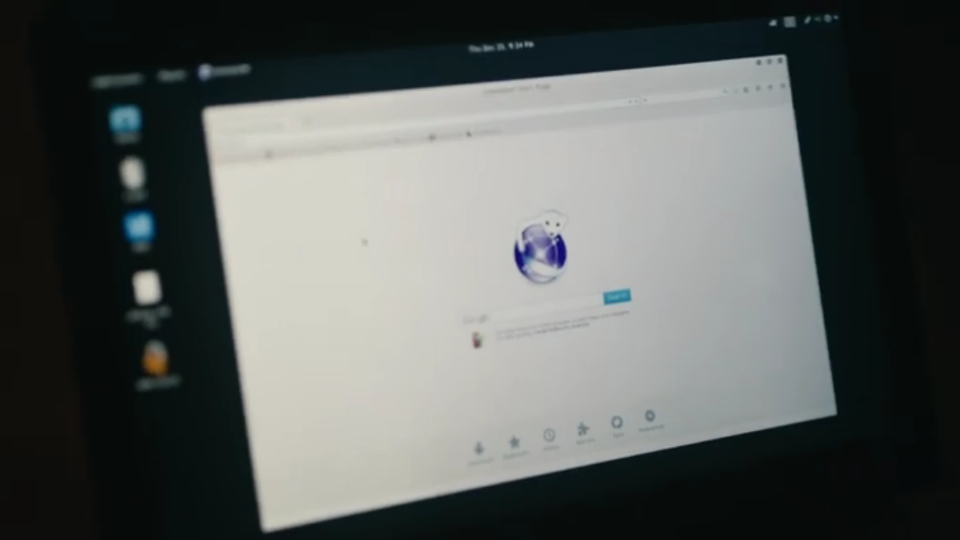
5 years ago today, I was declaring Iceweasel dead, and Firefox was making a come back in Debian. I hadn t planned to make this post, and in fact, I thought it had been much longer. But coincidentally, I was binge-watching Mr. Robot recently, which prominently featured Iceweasel. iceweasel command in a terminal Mr. Robot is set in the year 2015, and I was surprised that Iceweasel was being used, which led me to search for that post where I announced Firefox was back and realizing that we were close to the 5 years mark. Well, we are at the 5 years mark now. iceweasel start page I d normally say time flies, but it turns out it hasn t flown as much as I thought it did. I wonder if the interminable pandemic is to blame for that.

19 August 2017

Holger Levsen: 20170819-lasercutter-sprint

laser-cutter sprint So I'm overcoming my jetlag after DebConf17 by helping to make the Alioth sprint happen, and while it's good to witness work on the upcoming git.debian.org replacement, I'm rather minding my own business instead of getting involved And so I got interested in this laser cutter, which since two months has been set up in the CCCHH hackerspace and which is nicely documentend (and set up), so I managed to learn how to do my first baby steps with the laser cutter in one evening: Basically there is a hosted web application named 'LaserWeb4' for which a pre-configuration exists, so that one only needs to load an image, scale and position it and tune the laser settings a bit. The laser itself is inside a cage, which has a physical safety switch which will turn off the laser if the cage is opened. Obviously the setup is a lot more complex and there are many parameters to tune, and I basically just learned one thing, which is "printing images on wood", but "printing images on a laptop cover" should be pretty similar and something to learn in the future ;-) And now I'm even teaching weasel how to use this thing (and he already made interesting new mistakes) and it looks like Ganneff & formorer are next. Fun fun fun! Oh, and the Alioth sprint also seems to be quite productive, but I'll leave reporting about this to others.

30 April 2017

Chris Lamb: Free software activities in April 2017

Here is my monthly update covering what I have been doing in the free software world (previous month):
Reproducible builds

Whilst anyone can inspect the source code of free software for malicious flaws, most software is distributed pre-compiled to end users. The motivation behind the Reproducible Builds effort is to permit verification that no flaws have been introduced either maliciously or accidentally during this compilation process by promising identical results are always generated from a given source, thus allowing multiple third-parties to come to a consensus on whether a build was compromised. I have generously been awarded a grant from the Core Infrastructure Initiative to fund my work in this area. This month I:
I also made the following changes to diffoscope, our recursive and content-aware diff utility used to locate and diagnose reproducibility issues:
  • New features:
    • Add support for comparing Ogg Vorbis files. (0436f9b)
  • Bug fixes:
    • Prevent a traceback when using --new-file with containers. (#861286)
    • Don't crash on invalid archives; print a useful error instead. (#833697).
    • Don't print error output from bzip2 call. (21180c4)
  • Cleanups:
    • Prevent abstraction-level violations by defining visual diff support on Presenter classes. (7b68309)
    • Show Debian packages installed in test output. (c86a9e1)


Debian
Debian LTS

This month I have been paid to work 18 hours on Debian Long Term Support (LTS). In that time I did the following:
  • "Frontdesk" duties, triaging CVEs, etc.
  • Issued DLA 882-1 for the tryton-server general application platform to fix a path suffix injection attack.
  • Issued DLA 883-1 for curl preventing a buffer read overrun vulnerability.
  • Issued DLA 884-1 for collectd (a statistics collection daemon) to close a potential infinite loop vulnerability.
  • Issued DLA 885-1 for the python-django web development framework patching two open redirect & XSS attack issues.
  • Issued DLA 890-1 for ming, a library to create Flash files, closing multiple heap-based buffer overflows.
  • Issued DLA 892-1 and DLA 891-1 for the libnl3/libnl Netlink protocol libraries, fixing integer overflow issues which could have allowed arbitrary code execution.

Uploads
  • redis (4:4.0-rc3-1) New upstream RC release.
  • adminer:
    • 4.3.0-2 Fix debian/watch file.
    • 4.3.1-1 New upstream release.
  • bfs:
    • 1.0-1 Initial release.
    • 1.0-2 Drop fstype tests as they rely on /etc/mtab being available. (#861471)
  • python-django:
    • 1:1.10.7-1 New upstream security release.
    • 1:1.11-1 New upstream stable release to experimental.

I sponsored the following uploads: I also performed the following QA uploads:
  • gtkglext (1.2.0-7) Correct installation location of gdkglext-config.h after "Multi-Archification" in 1.2.0-5. (#860007)
Finally, I made the following non-maintainer uploads (NMUs):
  • python-formencode (1.3.0-2) Don't ship files in /usr/lib/python 2.7,3 /dist-packages/docs. (#860146)
  • django-assets (0.12-2) Patch pytest plugin to check whether we are running in a Django context, otherwise we can break unrelated testsuites. (#859916)


FTP Team

As a Debian FTP assistant I ACCEPTed 155 packages: aiohttp-cors, bear, colorize, erlang-p1-xmpp, fenrir, firejail, fizmo-console, flask-ldapconn, flask-socketio, fontmanager.app, fonts-blankenburg, fortune-zh, fw4spl, fzy, gajim-antispam, gdal, getdns, gfal2, gmime, golang-github-go-macaron-captcha, golang-github-go-macaron-i18n, golang-github-gogits-chardet, golang-github-gopherjs-gopherjs, golang-github-jroimartin-gocui, golang-github-lunny-nodb, golang-github-markbates-goth, golang-github-neowaylabs-wabbit, golang-github-pkg-xattr, golang-github-siddontang-goredis, golang-github-unknwon-cae, golang-github-unknwon-i18n, golang-github-unknwon-paginater, grpc, grr-client-templates, gst-omx, hddemux, highwayhash, icedove, indexed-gzip, jawn, khal, kytos-utils, libbloom, libdrilbo, libhtml-gumbo-perl, libmonospaceif, libpsortb, libundead, llvm-toolchain-4.0, minetest-mod-homedecor, mini-buildd, mrboom, mumps, nnn, node-anymatch, node-asn1.js, node-assert-plus, node-binary-extensions, node-bn.js, node-boom, node-brfs, node-browser-resolve, node-browserify-des, node-browserify-zlib, node-cipher-base, node-console-browserify, node-constants-browserify, node-delegates, node-diffie-hellman, node-errno, node-falafel, node-hash-base, node-hash-test-vectors, node-hash.js, node-hmac-drbg, node-https-browserify, node-jsbn, node-json-loader, node-json-schema, node-loader-runner, node-miller-rabin, node-minimalistic-crypto-utils, node-p-limit, node-prr, node-sha.js, node-sntp, node-static-module, node-tapable, node-tough-cookie, node-tunein, node-umd, open-infrastructure-storage-tools, opensvc, openvas, pgaudit, php-cassandra, protracker, pygame, pypng, python-ase, python-bip32utils, python-ltfatpy, python-pyqrcode, python-rpaths, python-statistics, python-xarray, qtcharts-opensource-src, r-cran-cellranger, r-cran-lexrankr, r-cran-pwt9, r-cran-rematch, r-cran-shinyjs, r-cran-snowballc, ruby-ddplugin, ruby-google-protobuf, ruby-rack-proxy, ruby-rails-assets-underscore, rustc, sbt, sbt-launcher-interface, sbt-serialization, sbt-template-resolver, scopt, seqsero, shim-signed, sniproxy, sortedcollections, starjava-array, starjava-connect, starjava-datanode, starjava-fits, starjava-registry, starjava-table, starjava-task, starjava-topcat, starjava-ttools, starjava-util, starjava-vo, starjava-votable, switcheroo-control, systemd, tilix, tslib, tt-rss-notifier-chrome, u-boot, unittest++, vc, vim-ledger, vis, wesnoth-1.13, wolfssl, wuzz, xandikos, xtensor-python & xwallpaper. I additionally filed 14 RC bugs against packages that had incomplete debian/copyright files against getdns, gfal2, grpc, mrboom, mumps, opensvc, python-ase, sniproxy, starjava-topcat, starjava-ttools, unittest++, wolfssl, xandikos & xtensor-python.

9 April 2017

Michael Stapelberg: manpages.debian.org: what s new since the launch?

On 2017-01-18, I announced that https://manpages.debian.org had been modernized. Let me catch you up on a few things which happened in the meantime: The list above is not complete, but rather a selection of things I found worth pointing out to the larger public. There are still a few things I plan to work on soon, so stay tuned :).

27 January 2017

Russ Allbery: Review: Summer in Orcus

Review: Summer in Orcus, by T. Kingfisher
Publisher: Red Wombat Studio
Copyright: 2016
ASIN: B01N26G2I0
Format: Web serial
Pages: 268
In September, Ursula Vernon started posting Summer in Orcus as a web serial, funded by her Patreon supporters. The entire story is now complete and available on-line for free, which is how I read it, but it's also available as an ebook from the expected places if you prefer to read it that way. The ebook publication lists T. Kingfisher as the author, Vernon's pen name for her books for adults. While I would have been happy to read this book as a kid, it does have one fairly gruesome chapter, which is probably the reason for that choice. Summer is eleven, and her mother loves her very much. So much so that she's never allowed to do anything even slightly risky, and she spends quite a lot of her time and emotional energy reassuring her mother, dealing with the burden of that suffocating love, and helping her through her bad days. Then, one day, a house with giant chicken feet walks into the alley behind her house. Summer in Orcus is a portal fantasy. It's the story of how Summer meets Baba Yaga and asks for her heart's desire, finds herself in the magical country of Orcus, and is desperately moved by the plight of a frog tree. It has a talking weasel and a werehouse and antelope women who are not to be trusted, and it's about Summer making friends her mother would never have approved of and learning what she's capable of, and about doing what one can to put things right. Even though it may appear that way at times, Summer in Orcus is not really a book about large things. It's not a saving the world sort of portal fantasy. And it's not really a wish fulfillment portal fantasy, because heart's desires are complicated and subtle. It's a story about being scared and tired and lost, and about making friends, and doing the things one can do rather than learning how to be a completely different person. The plot itself is not particularly complex, but the joy of this story is in all the small things. Vernon's writing is an absolute delight. Summer in Orcus is packed with sentences and paragraphs that I just want to read again and again and quote at people.
Summer had never had a father, and wasn t entirely sure what you did with one, and certainly her mother never had anything good to say about the one Summer didn t have.
Or:
The house lifted its back end up and inched forward a little, like a dog wanting to play. This must have made the floors tilt inside, because Summer heard a banging and sliding of furniture and Baba Yaga yelled, "Fool house! I ll trade you in for one with turtle feet and a three-car garage!" The house sank back down, but wiggled forward a little more, until the front door was only a few feet away.
Vernon mentions in her author notes at the end that Summer in Orcus started as a place to put a whole bunch of fragmentary ideas that she'd come up with but that didn't seem to fit into other stories, and it does have a bit of a grand tour feel to it. But unlike a lot of grand tour figures, the protagonist is not at all bland. Summer is entirely believable and very sympathetic, torn between wanting a grand adventure and being afraid of circumstance and danger entirely outside of her limited experience. She channels the reader's awe and delight, but is still very much her own person, trying to figure out who she wants to be and believe in without the stifling presence of her mother. The tour nature of the story does mean that some things weren't explored as deeply as I would have liked. I would dearly love to read more about the dogs, for instance. I also have to admit that Zultan's motives never made sense to me, even after they were explained, and I found him an odd and weirdly random character to the end. But Glorious is, well, glorious, and I utterly adored the bits with the Forester. The ending is highly unusual for a story of this sort, and I thought it was wonderful, with a great symbolic tie back to the start of the story. The aftermath is even better, including Summer standing firm against one of the tropes of portal fantasies that I dislike the most. This is a great story, with some excellent writing. If you're anything like me, once you read the first chapter you won't want to stop (and since it's all available on the web for free, there's no reason to stop). Recommended. Rating: 8 out of 10

4 January 2017

Rapha&#235;l Hertzog: My Free Software Activities in December 2016

My monthly report covers a large part of what I have been doing in the free software world. I write it for my donors (thanks to them!) but also for the wider Debian community because it can give ideas to newcomers and it s one of the best ways to find volunteers to work with me on projects that matter to me. Debian LTS I was allocated 10 hours to work on security updates for Debian 7 Wheezy. During this time I did the following: Misc packaging With the strong freeze approaching, I had some customer requests to push packages into Debian and/or to fix packages that were in danger of being removed from stretch. While trying to bring back uwsgi into testing I filed #847095 (libmongoclient-dev: Should not conflict with transitional mongodb-dev) and #847207 (uwsgi: FTBFS on multiple architectures with undefined references to uwsgi_* symbols) and interacted on some of the RC bugs that were keeping the package out of testing. I also worked on a few new packages (lua-trink-cjson, lua-inotify, lua-sandbox-extensions) that enhance hindsight in some use cases and sponsored a rozofs update in experimental to fix a file conflict with inn2 (#846571). Misc Debian work Debian Live. I released two live-build updates. The second update added more options to customize the grub configuration (we use it in Kali to override the theme and add more menu entries) both for EFI boot and normal boot. Misc bugreports. #846569 on libsnmp-dev to accomodate the libssl transition (I noticed the package was not maintained, I asked for new maintainers on debian-devel). #847168 on devscripts for debuild that started failing when lintian was failing (unexpected regression). #847318 on lintian to not emit spurious errors for kali packages (which was annoying with the debuild regression above). #847436 for an upgrade problem I got with tryton-server. #847223 on firefoxdriver as it was still depending on iceweasel instead of firefox. Sponsorship. I sponsored a new version of asciidoc (#831965) and of ssldump 0.9b3-6 (for libssl transition). I also uploaded a new version of mutter to fix #846898 (it was ready in SVN already). Distro Tracker Not much happening, I fixed #814315 by switching a few remaining URLs to https. I merged patches from efkin to fix the functional test suite (#814315), that was a really useful contribution! The same contributer started to tackle another ticket (#824912) about adding an API to retrieve action items. This is a larger project and needs some thoughts. I still have to respond to him on his latest patches (after two rounds already). Misc stuff I updated the letsencrypt-sh salt formula for version 0.3.0 and added the possibility to customize the hook script to reload the webserver. The @planetdebian twitter account is no longer working since twitterfeed.com closed doors and the replacement (dlvr.it) is unhappy about the RSS feed of planet.debian.org. I filed bug #848123 against planet-venus since it does not preserve the isPermalink attribute in the guid tag Thanks See you next month for a new summary of my activities.

No comment Liked this article? Click here. My blog is Flattr-enabled.

29 October 2016

Jaldhar Vyas: Dawkins Weasel

Happy Dhanteras from Bappy Lahiri
It's already Dhan Terash so I better pick up the pace if I want to beat my blogging challenge before Diwali so in this post I'll discuss a program I wrote earlier this year.
I dread to look up anything on Wikipedia because I always end up going down a rabbit hole and surfacing hours later on a totally unrelated topic. Case in point, some months ago, I ended up on the page of the title. This is an interesting little experiment illustrating how random selection can result in the evolution of a specific form. The algorithm is:

  1. Start with a random string of 28 characters.
  2. Make 100 copies of this string, with a 5% chance per character of that character being replaced with a random character.
  3. Compare each new string with "METHINKS IT IS LIKE A WEASEL", and give each a score (the number of letters in the string that are correct and in the correct position).
  4. If any of the new strings has a perfect score (== 28), halt.
  5. Otherwise, take the highest scoring string, and go to step 2.
I had to try this myself so I wrote a little implementation in C++. A sample run looks like this:
  
$ ./weasel
0000 DNCFICBLUZVC JF KKNVJJASCJRW (0)
0001 DNIFICOLUZVC JFLIKNVAJASCJEW (6)
0002 DNNWICKSUZVCRSFLIKNVA ASCJEL (11)
0003 DNNWICKSUZVCRSFLIKNVA ASCJEL (11)
0004 MNNVICKSQZVCRSFLIKNVA WSCJEL (13)
0005 MENVICKSQZVCRSFLIKNVA WSCJEL (14)
0006 MENVISKS ZTCRSFLIKNVA WLCJEL (16)
0007 MENVISKS ZTCRSFLIKNVA WLCJEL (16)
0008 MEDHISKS ZTCISFLIKNVA WLCJEL (18)
0009 MEDHISKS ZTCISFLIKNVA WLCJEL (18)
0010 MEDHISKS ZTCISFLIKNVA WLCJEL (18)
0011 MEDHISKS ZTCIS LIKTKA WLCZEL (19)
0012 MEDHISKS ZTCIS LIKTKA WLCZEL (19)
0013 MEDHISKS ZTCIS LIKT A WLCZEL (20)
0014 MEDHISKS ZTCIS LIKT A WLCZEL (20)
0015 MEDHISKS ZTCIS LIKE A WLAZEL (22)
0016 MEDHIGKS ITCIS LIKE A WLAZEL (23)
0017 MEDHIGKS ITCIS LIKE A WLAZEL (23)
0018 MEDHIGKS ITCIS LIKE A WLAZEL (23)
0019 MEDHIGKS ITCIS LIKE A WLAZEL (23)
0020 MEDHIGKS ITCIS LIKE A WLAZEL (23)
0021 MEDHIGKS ITCIS LIKE A WLAZEL (23)
0022 METHINKS ITCIS LIKE A WLASEL (26)
0023 METHINKS ITCIS LIKE A WLASEL (26)
0024 METHINKS ITCIS LIKE A WLASEL (26)
0025 METHINKS ITCIS LIKE A WEASEL (27)
0026 METHINKS ITCIS LIKE A WEASEL (27)
0027 METHINKS ITCIS LIKE A WEASEL (27)
0028 METHINKS ITCIS LIKE A WEASEL (27)
0029 METHINKS ITCIS LIKE A WEASEL (27)
0030 METHINKS ITCIS LIKE A WEASEL (27)
0031 METHINKS ITCIS LIKE A WEASEL (27)
0032 METHINKS ITCIS LIKE A WEASEL (27)
0033 METHINKS ITCIS LIKE A WEASEL (27)
0034 METHINKS ITCIS LIKE A WEASEL (27)
0035 METHINKS ITCIS LIKE A WEASEL (27)
0036 METHINKS ITCIS LIKE A WEASEL (27)
0037 METHINKS ITCIS LIKE A WEASEL (27)
0038 METHINKS ITCIS LIKE A WEASEL (27)
0039 METHINKS ITCIS LIKE A WEASEL (27)
0040 METHINKS ITCIS LIKE A WEASEL (27)
0041 METHINKS ITCIS LIKE A WEASEL (27)
0042 METHINKS ITCIS LIKE A WEASEL (27)
0043 METHINKS ITCIS LIKE A WEASEL (27)
0044 METHINKS ITCIS LIKE A WEASEL (27)
0045 METHINKS ITCIS LIKE A WEASEL (27)
0046 METHINKS ITCIS LIKE A WEASEL (27)
0047 METHINKS ITCIS LIKE A WEASEL (27)
0048 METHINKS ITCIS LIKE A WEASEL (27)
0049 METHINKS ITCIS LIKE A WEASEL (27)
0050 METHINKS ITCIS LIKE A WEASEL (27)
0051 METHINKS ITCIS LIKE A WEASEL (27)
0052 METHINKS ITCIS LIKE A WEASEL (27)
0053 METHINKS ITCIS LIKE A WEASEL (27)
0054 METHINKS IT IS LIKE A WEASEL (28)

My program lets you adjust the input string, the number of copies, and the mutation threshold. I also thought it might be interesting to implement the Generator design pattern. In C++ this is done by making a class which implements begin() and end() methods and atleast a forward iterator. You can find the source code on Github.

2 October 2016

Russell Coker: Hostile Web Sites

I was asked whether it would be safe to open a link in a spam message with wget. So here are some thoughts about wget security and web browser security in general. Wget Overview Some spam messages are designed to attack the recipient s computer. They can exploit bugs in the MUA, applications that may be launched to process attachments (EG MS Office), or a web browser. Wget is a very simple command-line program to download web pages, it doesn t attempt to interpret or display them. As with any network facing software there is a possibility of exploitable bugs in wget. It is theoretically possible for an attacker to have a web server that detects the client and has attacks for multiple HTTP clients including wget. In practice wget is a very simple program and simplicity makes security easier. A large portion of security flaws in web browsers are related to plugins such as flash, rendering the page for display on a GUI system, and javascript features that wget lacks. The Profit Motive An attacker that aims to compromise online banking accounts probably isn t going to bother developing or buying an exploit against wget. The number of potential victims is extremely low and the potential revenue benefit from improving attacks against other web browsers is going to be a lot larger than developing an attack on the small number of people who use wget. In fact the potential revenue increase of targeting the most common Linux web browsers (Iceweasel and Chromium) might still be lower than that of targeting Mac users. However if the attacker doesn t have a profit motive then this may not apply. There are people and organisations who have deliberately attacked sysadmins to gain access to servers (here is an article by Bruce Schneier about the attack on Hacking Team [1]). It is plausible that someone who is targeting a sysadmin could discover that they use wget and then launch a targeted attack against them. But such an attack won t look like regular spam. For more information about targeted attacks Brian Krebs article about CEO scams is worth reading [2]. Privilege Separation If you run wget in a regular Xterm in the same session you use for reading email etc then if there is an exploitable bug in wget then it can be used to access all of your secret data. But it is very easy to run wget from another account. You can run ssh otheraccount@localhost and then run the wget command so that it can t attack you. Don t run su otheraccount as it is possible for a compromised program to escape from that. I think that most Linux distributions have supported a switch user functionality in the X login system for a number of years. So you should be able to lock your session and then change to a session for another user to run potentially dangerous programs. It is also possible to use a separate PC for online banking and other high value operations. A 10yo PC is more than adequate for such tasks so you could just use an old PC that has been replaced for regular use for online banking etc. You could boot it from a CD or DVD if you are particularly paranoid about attack. Browser Features Google Chrome has a feature to not run plugins unless specifically permitted. This requires a couple of extra mouse actions when watching a TV program on the Internet but prevents random web sites from using Flash and Java which are two of the most common vectors of attack. Chrome also has a feature to check a web site against a Google black list before connecting. When I was running a medium size mail server I often had to determine whether URLs being sent out by customers were legitimate or spam, if a user sent out a URL that s on Google s blacklist I would lock their account without doing any further checks. Conclusion I think that even among Linux users (who tend to be more careful about security than users of other OSs) using a separate PC and booting from a CD/DVD will generally be regarded as too much effort. Running a full featured web browser like Google Chrome and updating it whenever a new version is released will avoid most problems. Using wget when you have to reason to be concerned is a possibility, but not only is it slightly inconvenient but it also often won t download the content that you want (EG in the case of HTML frames).

14 August 2016

Sven Hoexter: handling html mails with mutt and convincing Icedove to open http/https links in Firefox

... or the day I fixed my mail clients running on Debian/stretch. First of all mutt failed to open html mails or the html multipart stuff in Firefox. I found some interesting hints in a recent thread on debian-user. So now my "~/.mailcap" looks like this:
text/html; /usr/bin/firefox --new-tab %s;
text/html; /usr/bin/elinks -force-html -dump %s; copiousoutput
and I added the proposed "~/.muttrc" addition verbatim:
bind  attach  <return>  view-mailcap
alternative_order text/plain text/html
unauto_view *
auto_view text/html
For work related mails, where the use of html crap mails is a sad reality I can not avoid, I stick to Icedove. But beside of the many crashes everyone encountered recently it also crashes when I try to reach "Preferences -> Advanced -> Config Editor". So no chance to adjust the handling of http/https links in the UI. Luckily that configuration is still text, well XML, in a file called mimeTypes.rdf in in the profile directory. So I manually replaced "/usr/bin/iceweasel" with "/usr/bin/firefox" and a restart later clicking on http and https links works again. Yay.

2 July 2016

Guido G nther: Debian Fun in June 2016

Debian LTS June marked the fourteenth month I contributed to Debian LTS under the Freexian umbrella. I spent the 8 hours working on these LTS things: Other Debian stuff Besides the usual bunch of libvirt* uploads I addressed several bugs in git-buildpackage, upload pending.

30 June 2016

Chris Lamb: Free software activities in June 2016

Here is my monthly update covering a large part of what I have been doing in the free software world (previously):
Debian My work in the Reproducible Builds project was covered in our weekly reports. (#58, #59 & #60)
Debian LTS

This month I have been paid to work 18 hours on Debian Long Term Support (LTS). In that time I did the following:
  • "Frontdesk" duties, triaging CVEs, etc.
  • Extended the lts-cve-triage.py script to ignore packages that are not subject to Long Term Support.

  • Issued DLA 512-1 for mantis fixing an XSS vulnerability.
  • Issued DLA 513-1 for nspr correcting a buffer overflow in a sprintf utility.
  • Issued DLA 515-1 for libav patching a memory corruption issue.
  • Issued DLA 524-1 for squidguard fixing a reflected cross-site scripting vulnerability.
  • Issued DLA 525-1 for gimp correcting a use-after-free vulnerability in the channel and layer properties parsing process.

Uploads
  • redis (2:3.2.1-1) New upstream bugfix release, plus subsequent upload to the backports repository.
  • python-django (1.10~beta1-1) New upstream experimental release.
  • libfiu (0.94-5) Misc packaging updates.


RC bugs

I also filed 170 FTBFS bugs against a7xpg, acepack, android-platform-dalvik, android-platform-frameworks-base, android-platform-system-extras, android-platform-tools-base, apache-directory-api, aplpy, appstream-generator, arc-gui-clients, assertj-core, astroml, bamf, breathe, buildbot, cached-property, calf, celery-haystack, charmtimetracker, clapack, cmake, commons-javaflow, dataquay, dbi, django-celery, django-celery-transactions, django-classy-tags, django-compat, django-countries, django-floppyforms, django-hijack, django-localflavor, django-markupfield, django-model-utils, django-nose, django-pipeline, django-polymorphic, django-recurrence, django-sekizai, django-sitetree, django-stronghold, django-taggit, dune-functions, elementtidy, epic4-help, fcopulae, fextremes, fnonlinear, foreign, fort77, fregression, gap-alnuth, gcin, gdb-avr, ggcov, git-repair, glance, gnome-twitch, gnustep-gui, golang-github-audriusbutkevicius-go-nat-pmp, golang-github-gosimple-slug, gprbuild, grafana, grantlee5, graphite-api, guacamole-server, ido, jless, jodreports, jreen, kdeedu-data, kdewebdev, kwalify, libarray-refelem-perl, libdbusmenu, libdebian-package-html-perl, libdevice-modem-perl, libindicator, liblrdf, libmail-milter-perl, libopenraw, libvisca, linuxdcpp, lme4, marble, mgcv, mini-buildd, mu-cade, mvtnorm, nose, octave-epstk, onioncircuits, opencolorio, parsec47, phantomjs, php-guzzlehttp-ringphp, pjproject, pokerth, prayer, pyevolve, pyinfra, python-asdf, python-ceilometermiddleware, python-django-bootstrap-form, python-django-compressor, python-django-contact-form, python-django-debug-toolbar, python-django-extensions, python-django-feincms, python-django-formtools, python-django-jsonfield, python-django-mptt, python-django-openstack-auth, python-django-pyscss, python-django-registration, python-django-tagging, python-django-treebeard, python-geopandas, python-hdf5storage, python-hypothesis, python-jingo, python-libarchive-c, python-mhash, python-oauth2client, python-proliantutils, python-pytc, python-restless, python-tidylib, python-websockets, pyvows, qct, qgo, qmidinet, quodlibet, r-cran-gss, r-cran-runit, r-cran-sn, r-cran-stabledist, r-cran-xml, rgl, rglpk, rkt, rodbc, ruby-devise-two-factor, ruby-json-schema, ruby-puppet-syntax, ruby-rspec-puppet, ruby-state-machine, ruby-xmlparser, ryu, sbd, scanlogd, signond, slpvm, sogo, sphinx-argparse, squirrel3, sugar-jukebox-activity, sugar-log-activity, systemd, tiles, tkrplot, twill, ucommon, urca, v4l-utils, view3dscene, xqilla, youtube-dl & zope.interface.

FTP Team

As a Debian FTP assistant I ACCEPTed 186 packages: akonadi4, alljoyn-core-1509, alljoyn-core-1604, alljoyn-gateway-1504, alljoyn-services-1504, alljoyn-services-1509, alljoyn-thin-client-1504, alljoyn-thin-client-1509, alljoyn-thin-client-1604, apertium-arg, apertium-arg-cat, apertium-eo-fr, apertium-es-it, apertium-eu-en, apertium-hbs, apertium-hin, apertium-isl, apertium-kaz, apertium-spa, apertium-spa-arg, apertium-tat, apertium-urd, arc-theme, argus-clients, ariba, beast-mcmc, binwalk, bottleneck, colorfultabs, dh-runit, django-modeltranslation, dq, dublin-traceroute, duktape, edk2, emacs-pdf-tools, eris, erlang-p1-oauth2, erlang-p1-sqlite3, erlang-p1-xmlrpc, faba-icon-theme, firefox-branding-iceweasel, golang-1.6, golang-defaults, golang-github-aelsabbahy-gonetstat, golang-github-howeyc-gopass, golang-github-oleiade-reflections, golang-websocket, google-android-m2repository-installer, googler, goto-chg-el, gr-radar, growl-for-linux, guvcview, haskell-open-browser, ipe, labplot, libalt-alien-ffi-system-perl, libanyevent-fcgi-perl, libcds-savot-java, libclass-ehierarchy-perl, libconfig-properties-perl, libffi-checklib-perl, libffi-platypus-perl, libhtml-element-library-perl, liblwp-authen-oauth2-perl, libmediawiki-dumpfile-perl, libmessage-passing-zeromq-perl, libmoosex-types-portnumber-perl, libmpack, libnet-ip-xs-perl, libperl-osnames-perl, libpodofo, libprogress-any-perl, libqtpas, librdkafka, libreoffice, libretro-beetle-pce-fast, libretro-beetle-psx, libretro-beetle-vb, libretro-beetle-wswan, libretro-bsnes-mercury, libretro-mupen64plus, libservicelog, libtemplate-plugin-datetime-perl, libtext-metaphone-perl, libtins, libzmq-ffi-perl, licensecheck, link-grammar, linux, linux-signed, lua-busted, magics++, mkalias, moka-icon-theme, neutron-vpnaas, newlisp, node-absolute-path, node-ejs, node-errs, node-has-flag, node-lodash-compat, node-strip-ansi, numba, numix-icon-theme, nvidia-graphics-drivers, nvidia-graphics-drivers-legacy-304xx, nvidia-graphics-drivers-legacy-340xx, obs-studio, opencv, pacapt, pgbackrest, postgis, powermock, primer3, profile-sync-daemon, pyeapi, pypandoc, pyssim, python-cutadapt, python-cymruwhois, python-fisx, python-formencode, python-hkdf, python-model-mommy, python-nanomsg, python-offtrac, python-social-auth, python-twiggy, python-vagrant, python-watcherclient, python-xkcd, pywps, r-bioc-deseq2, r-bioc-dnacopy, r-bioc-ensembldb, r-bioc-geneplotter, r-cran-adegenet, r-cran-adephylo, r-cran-distory, r-cran-fields, r-cran-future, r-cran-globals, r-cran-htmlwidgets, r-cran-listenv, r-cran-mlbench, r-cran-mlmrev, r-cran-pheatmap, r-cran-pscbs, r-cran-r.cache, refind, relatorio, reprotest, ring, ros-ros-comm, ruby-acts-as-tree, ruby-chronic-duration, ruby-flot-rails, ruby-numerizer, ruby-u2f, selenium-firefoxdriver, simgrid, skiboot, smtpping, snap-confine, snapd, sniffles, sollya, spin, subuser, superlu, swauth, swift-plugin-s3, syncthing, systemd-bootchart, tdiary-theme, texttable, tidy-html5, toxiproxy, twinkle, vmtk, wait-for-it, watcher, wcslib & xapian-core.

29 March 2016

Rog rio Brito: Partially switching to Chromium

In the interest of being as brief as possible (just ask for details if you want to know more or if you think that it would help), I have started, against my preferences, to start using chromium from Debian instead of Firefox (aka, Iceweasel). The reason? I have a slow computer (a Core 2 Duo T7250). My main computer. My workhorse. There are some sites that even with an empty profile and a vanilla Firefox build right from Mozilla Foundation cause Firefox to generate a very heavy CPU load. I briefly reported this via Twitter to one (but not the only!) of the sites in question and to Firefox Site Compatibility. What do I see? Many CSS and redraw events (thanks to Firefox's profiling tools). In fact, as many events that Firefox alone is able to completely take over 1 (of the 2) cores that I have, with just that single tab open. I don't see those problems with Chromium, unfortunately (or, at least, they are not that perceptible to my computer's CPU). So, before I go on and formally file a bug report, I would love to confirm if other people see the same problems that I am seeing. Do you also see something similar? Your input is highly welcome!

11 March 2016

Wouter Verhelst: Welcome Back!

Before this bug: screenshot of Iceweasel after: screenshot of Firefox Whee!

10 March 2016

Mike Hommey: RIP Iceweasel, 13 Nov 2006 10 Mar 2016

This took longer than it should have, but a page is now officially turned. I uploaded Firefox and Firefox ESR to Debian unstable. They will have to go through the Debian NEW queue because they are new source packages, so won t be immediately available, but they should arrive soon enough. People using Iceweasel from Debian unstable will be upgraded to Firefox ESR. Debian stable will receive Firefox ESR after Iceweasel/Firefox ESR38 is end-of-lifed, in about 3 months. Thanks go to Sylvestre Ledru, Mike Connor (the same who filed bug 354622) and Stefano Zacchiroli.

Next.