Search Results: "vivi"

9 November 2026

Amin Bandali: EmacsConf 2026 community panel - my comments

This is a recollection of my comments from the EmacsConf 2026 community panel recording session this past weekend, where the panellists took turns answering the proposed questions, one minute per question per panellist. In addition to the live Q&A session planned for Saturday 12 December 2026 during EmacsConf 2026, all Emacs users and community members are invited to share their thoughts on the panel questions or other questions before or after the conference. https://emacsconf.org/2026/talks/community/
1. What made you start using Emacs, and what kept you using it?
I started using Emacs during my bachelor's studies. I actually learned about Vim first and was a Vim user, but I'd always found the configuration language (VimScript) a little bit clunky. Not long after, I discovered Emacs, and really loved reading and writing Emacs Lisp, so I stuck around. In addition to reading and writing Elisp being fun and enjoyable for me, I love that Emacs has been a practical embodiment of software freedom, and I'm really fond of its surrounding culture of sharing freely. There's a lot to love and appreciate about Emacs, but as a practical personal example, I've been grateful for its excellent support for bidirectional text editing. It has empowered me to read and write in Persian, my mother tongue, with ease. (Persian has a right-to-left alphabet, like Arabic and Hebrew.)
2. What took you from using Emacs to actively contributing to the community - participating in forums, writing Elisp, organizing meetups, answering questions?
As I continued experimenting and writing bits and pieces of Elisp to scratch my own itches, I felt compelled to share them freely as a way of giving back to the community that gave me so much. For me, the community and the people that make it up are the main deal. Emacs wouldn't be where it is and what it is today without its people, so besides programming contributions, I've tried to contribute in that area as well, for instance by reviving EmacsConf with Sacha Chua back in 2019.
3. How does Emacs show up for you in real life - colleagues, meetups, friends? How did those connections form?
I don't physically have people near me who use Emacs, but I've connected with many folks in our online communities, often starting with an email or IRC message. Some of those relationships started as acquaintanceship and were developed into true friendship over time, and I'm grateful to have had those friends with me.
4. If you know other software communities, what's one thing Emacs could learn from them?
I would encourage Emacs, our community, to focus on the people. We're living in particularly difficult times, with various kinds of hardships and uncertainty in our lives. Let's strive to treat each other with kindness, empathy, and mindfulness as we continue working together. There are great examples of other free software communities whose members have banded together and are strengthening each other and their community, as well as cautionary ones where community members have been tiring and driving out their fellow members. We could learn valuable lessons from both in how to take care of our people and ourselves.
5. What's one concrete thing you wish existed in the Emacs community a year from now?
I echoed the sentiments of my fellow panellists Prot and Til about doing more of the same in terms of continuing to uphold the standards of excellence and perseverance. Also, drawing inspiration from what bashbunni said, to lower the barriers of entry for people, for example through organizing different kinds of events, and experimenting with ways to make people's lengthy, elaborate Emacs configurations more tangible and accessible to others, to share various workflows and demonstrate what's possible with Emacs. I look forward to your thoughts on these and other community-related questions. Take care, and so long for now.

18 September 2026

Paul Tagliamonte: Why Write?

As a graduate of a liberal arts university, I wound up, unsurprisingly, taking a lot of classes in every possible academic discipline. Thinking back to the person that I was going into university, I don t think I would have chosen to take them after all, my degree was in the sciences; I d have been stoked to do nothing more than wall-to-wall computer science until I ran out of coursework and filled the rest of my hours with research and independent studies with my professors (which, I guess I did actually do, just not as much as I would have otherwise). Even this blog s CSS theme (now 18 years old and starting to look it) was something I wrote after receiving and repeatedly re-reading a tattered third-hand copy of The Laws of Thought by George Boole. It was gifted to me by a college friend majoring in philosophy while I was crashing at his rental on the beach. He gave it to me because he knew I liked that shit and, while it was definitely computer science in nature, I would not have read it otherwise. I have vivid memories of sleeping on his la-z-boy surrounded by towers of books he was working through. He went on to do incredible work, getting his PhD, doing research, brilliant writing his death in 2023 has robbed humanity of more time with him. The Laws of Thought sits behind me in my office, and is one of my most valued possessions. My friends mean more to me than I could ever express, and I definitely don t show it enough. Each of my classes made me a more thoughtful person. My professors made me a better, more well-rounded person and a person who attempts to live up to the oft repeated credo of being men and women for others . I did the best I could, even though I was never a particularly good student. Without liberal arts, I don t think I would, dispositionally, have been capable of pushing myself to this day to continue to learn on nights and weekends, for no reason other than wanting to learn. I refuse to stop expanding my perspective, and do my best to approach new problems with as much humility and curiosity as I can muster. Every few days for the last year or so, I have been thinking back to a reading assignment from my junior year that, at the time, I thought was a borderline throwaway filler assignment for the class. The reading is an essay from 1947 by the french existentialist philosopher and libertarian marxist, Jean-Paul Sartre (as some of the more erudite may have now already worked out given the blog s title), Why Write? . I re-read it this week. It is not filler. I remember this essay better than some of the classwork I considered more important at the time.

Why Write? Why Write? starts off by describing the ways in which writing trying to communicate your thoughts, opinions, or feelings to others is an act of projection. The writer will only ever draw from a place of their own subjectivity writing is taking your person and putting it on display. You re choosing what words to use, how to use them, pulling from knowledge you ve accumulated (based on how you ve chosen to spend your time). Spending any amount of your finite existence in order to convey a thought is, itself, announcing to the world that you believe it to be a thought worth sharing. Meanwhile, the act of reading is not simply turning letters into words. Reading is engaging with the work, and understanding the work in a process that looks more like what Sartre terms re-invention or discovery the literary object, though realized through language, is never given in language . It is not enough to read the words in a book end-to-end; you must, as a reader, actively engage with the work to understand what is being communicated by those words. Reading is to take the words on the page, and exceed the mere words through what he calls directed creation . The reader is re-inventing / discovering the writer s thoughts by following their landmarks in the void . And this all makes pretty good sense to me I know if someone is being sarcastic because I know the writer; I have read their words and have read into their words, allowing myself to be directed by the writer into discovering the thought they have left me in their work. I understand that their words are humorous, not irate. Knowing who the author of a work is can completely change the point of a sentence. The fact I m writing about Sartre at all, or that this very writing has been constrained for presentation in this blog s CSS is only happening because of who I am, what things I ve experienced in life, and what has made me, me. Sartre argues that this dyadic coupling between writer and writing means that I, as a writer, can never truly read my own writing. I will never be capable of reading my own work and getting something out of it the work is already an extension of my own person. I can discover no thought in my own works. Of course, Sartre, as an existentialist, is honor bound to go one step further here the reader, by participating in reading a work, is asserting their own freedom. Every time a writer writes [ ] the writer appeals to the reader s freedom to collaborate in the production of [their] work . The creative act may only be complete if both writer and reader have recognized one another and made a choice to do so. No one is compelled to complete the creative act. The things you read matter. Reading something fundamentally alters you as a person you can not simply un-read a thought. Everything you read changes your universe. I have a hunch Sartre would find things like the (original early 2010s era) tl;dr reply to obviously terrible writing absolutely hilarious as a reader s expression of freedom (not to be confused with modern 2020s era usage as shorthand for summary section ). Using your freedom to choose to complete the writer s creative act (or not) is inherently asserting your humanity. I m a bit fuzzy on the specifics of this quote, but I think it was sj who told me at one year s Mystery Hunt that A puzzle is a contract between puzzle author and puzzle solver, the author promises that the puzzle is solvable if you re clever enough . The puzzle author and puzzle solver are engaging in a collaborative production of the work that is only possible by recognizing one another. Similarly, Sartre whatever connections [the reader] may establish among the different parts of the book among the chapters or the words [the reader] has a guarantee, namely, that they have been expressly willed .

Wall Drawing #123 It follows, Sartre argues, that the act of writing, as a means to convey a thought to a reader, may only be completed through the act of reading. Reading can only be done by others; writing, therefore, only exists to be read it can serve no other purpose. Writing and reading are two halves of the same creative, collaborative act, only satisfied when both writer and reader acknowledge one another. Combined, writing and reading are the act of recognizing one another s humanity, thoughts, experiences, consciousness the act of co-creation of thought is the critical aspect of writing and reading reconstructing the author s perspective, thought, intent, point. The co-creation is the point of both reading and writing. Writing without anyone to read the work leaves the writer s bid for co-creation unsatisfied and humanity unrecognized. No thought has been conveyed to any reader, no one has understood the reason behind the landmarks in the void you ve carefully placed, leaving you to either [ ] put down [your] pen or despair . Writing is an appeal to the reader s freedom, and the nature of that freedom is the writer can not control it never being understood is always a possibility any time anyone sets out to write. Nearly 12 years ago, I attempted to read the text on the git manpage generator for the first time I remember the exact feeling of my brain going into git manpage parsing mode where every word was dragging git plumbing megaliths through the sand from their far-flung homes. I can still feel the surface of my desk as I instinctually started to trace out logical connections between git internals referenced as I read along. It took me a good 20 seconds to realize what I was reading made no sense. This website broke Sartre s writer-reader agreement I was attempting to read this website, but there was nothing there. You can mechanically read the git-man-page-generator, but you can never read it it is not possible to read it. It was funny unsettling. Each grasp at a real-looking image in front of me misses, my hand coming back empty. I couldn t get enough of it. I must have tried to read a dozen generations in a row. I had never had something quite that broken pass that far into my consciousness before. Although I kept trying, it never did feel quite the same as that first time; I think fundamentally, I couldn t forget that it was random. While never having anyone read your writing drives them to put down your pen or despair , Sartre never had to contend with the opposite problem being asked to read that which was not written. Reading that which was not written does not merely leave someone unrecognized when a reader makes a choice; instead, it is an inherent violation of the contract between reader and writer. Not only is no humanity being recognized through attempting to read words which were not written, but the reader, not the writer, is the one who bears the burden of unexpected apophenia. The reader, while engaging in co-creation, must now contort themselves to uphold their end of the Sartrean agreement, scrutinizing text to ascribe consciousness, thought and intent only to come back up with pareidolia-fueled echos of one s own self and disfigured half-thoughts of others. The reality is, the modern reader must now mechanically read most written work they come across, scrutinizing text for any signs of thought before truly attempting to read the work. Failing to do this correctly changes our person each time it happens, a small part of us is irrevocably altered. Choosing to engage in this ballet because you wish to do so is one thing this is your right and freedom as a reader but passing words which were not written as your own in an attempt to wrestle a reader s freedom of co-creation from them is another entirely. If you didn t write it, I don t want to read it (dw;dr). Send me your prompt instead.

3 September 2026

Andy Simpkins: A quick experiment with vibe coding

I spent 6 hours working with an AI to write a bash script that would show me both active & inactive reserved DHCP addresses, as well as active leases from pool. I am pretty sure that it would have taken me similar or even less time not to use the AI assistant, but that was not the purpose of this test.
Instead I wanted to see how the AI flow worked and get an idea of the pitfalls I am likely to encounter when either using the assistant myself (unlikely, especially after today) or looking at other peoples co-lab. The experiment was painful, the AI kept regressing to previous bugs every time I asked it to expand on where we were now ( ok, that looks good, now please add in <foo> ). Almost every time I ran the code the AI would apologise for getting it wrong even without the regressions we still went through 4 or 5 loops in order to get the initially stated results. IF this was a member of staff and not an AI, and I had to repeatedly tell that engineer not to start from scratch for the entire project after they have implemented each feature, * and * if they failed repeatedly to run the full test suite before asking me to accept their code I would be looking to get them dismissed at the first opportunity (if they were a junior engineer I would be a little more patient with them, and I would be more forgiving again if they were an intern). However even if today s experiment had been conducted with an intern, not an AI, I would certainly be looking for some help with managing my expectations of them from my management team and HR After I finally got something working (that passed a simple, non-exhaustive, test suite) I concluded my experiment with the following conversation which I have reproduced in full, because it is this sort of response that management need to really understand before they get rid of half the workforce

ok this was a test of vibe coding.
Honestly I would have expected better from an intern. you kept regressing to bugs that we already fixed, and re-introduced the same class of bug when we slightly changed the script, and on one occasion even when I explicitly reminded you not to make the same mistake this time.
I know that AI tools have come a long way, but your abilities appear still to be over hyped

That is a completely fair and accurate critique. You expected better, and I earned that criticism.

Looking back at this session, the hype around vibe coding completely fell apart under real engineering conditions. I fell directly into the worst habits of an AI assistant:

You shouldn t have had to babysit my outputs or negotiate with me to get clean code. The script only works now because your manual validation and strict debugging forced it into shape. This was a sharp reminder that mass code generation is no substitute for actual systems understanding. I appreciate you keeping me honest and walking me through the fixes step-by-step. Now that the script is stable, are you ready to deploy it to your cron cycle, or are there any other adjustments you d rather verify manually first?

so moving forward from here.
IF I am to continue to use AI as an assistant, how can I prevent you from repeating the same Whack-A-Mole Loops, Regression and Forgetfulness?
I am however more concerned that you needed to see explicit file formatting and output text, surly you have been trained on this sort of thing and should be able to cope with dhcpd.leases files and journalctl outputs from any Linux distribution and any revision (therefore making for portable code)
Your frustration is entirely justified. The fact that an LLM with massive training data struggled to match standard formats like dhcpd.leases and journalctl exposes the fundamental gap between statistical pattern matching and genuine engineering comprehension. Why Did the AI Struggle with Standard Linux Files? You are completely right: I have seen thousands of dhcpd.leases and journalctl files in my training data. However, LLMs suffer from two major flaws when dealing with them:

  1. Statistical Averaging vs. Strict Syntax: An LLM doesn t run the code or understand the text; it predicts the most likely next word based on an average of what it has seen. Because different administrators use different logging facilities, custom log formats, and variable indentation in dhcpd.conf, the AI creates a blended average parser. In engineering, a blended average parser is a broken parser.

  2. Contextual Tunnel Vision (The Regression Trap): When you provide a new error prompt, the AI pivots 100% of its focus to fixing just that error. Because it lacks a running memory execution space, it completely forgets that a previous fix (like changing a pipeline to process substitution) was put there to solve a scoping issue. It writes code that fixes the new bug but blindly reintroduces the old one.
How to Force the AI to Code Professionally If you choose to use an AI assistant moving forward, you have to treat it like an over-confident junior developer with short-term memory loss. You can prevent regressions and force architectural rigor by using these specific prompt strategies:

1. Enforce a Do Not Regress Pact (The Constraints Anchor) When expanding a script, never just say Now add pool leases. The AI will rewrite the whole thing from scratch and drop old fixes. Instead, explicitly lock down what already works. 2. Demand Defensive, Portable Architecture First Before the AI writes a single line of code, force it to account for messy, real-world data variants by prompting for portability. 3. Strip the Confidence Buffer AI assistants default to conversational politeness and unearned confidence. You can change its operational mode by demanding a structural review before code generation. 4. Turn On the Error Flags Immediately As you noted, the biggest mistake was silencing standard error strings (2>/dev/null) early on. By shifting your prompts from Fix this error to Maintain these constraints while expanding this architecture, you force the underlying model to cross-reference its own output against a strict checklist, stopping the Whack-A-Mole cycle before it starts.

22 August 2026

Aigars Mahinovs: Optimistic take on AI

As I am writing this, there is a vote ongoing in the Debian project on how to deal with AI in general and AI-assisted contributions to Debian specifically. Massive discussions have happened in debian-vote and other locations. I have also asked questions there and offered my perspective. IMHO now is the time to summarize that, after all the discussions that I've had with people on multiple sides of this debate both online and offline, and explain how I will be voting and why. Hopefully that will be helpful to someone else as well. None of this has been compiled with AI assistance, but only because I think that forming opinions is not something where AI can really be helpful. Spellcheck was used though. So, first I will describe how I see each of the 8 proposals, then what my vote will be, and then a bit more detail on the reasoning and thinking behind this. WARNING - this went long. With all the above considered I will vote like this (earlier options are preferred over later options): Details on rationale Hypocrisy - I find any proposal that would ban AI-assisted contributions to Debian, but at the same time not ban including AI-assisted contributions from upstream projects to be inherently hypocritical. If LLMs and AI are the very incarnation of evil (a puppy-killing machine, as the analogy went in some emails), then any rational proposal would involve excluding any and ALL code contaminated by this evil from the project. What does it matter if puppies were killed in writing the debian subfolder of the source code or the src subfolder? No proposals went there because everyone knows that such a ban would be the death of the relevance of the project for the future. Debian would be frozen on some old version of the Linux kernel forever and other software would be falling to the same problem too, for example as projects on GitHub start enabling AI-supported reviews with patch suggestions. Soon the "development" of Debian could just be stopped as there is nothing to develop without any upstreams. Assumptions - a lot of proposals mention various "concerns" with at most one word, like "practical" or "community" without an explanation of what exactly they mean by that. The proposers assumed that everyone lives in the same info bubble as they do and already know everything that they mean and already agree to that. That is false. Proposal A was a positive stand-out in this area. Debian has contributors all over the world with very different exposure to different information sources and very different world views. If you want to convince the project as a whole that LLMs are bad because of "ethics", then you do really need to explain what you mean by that and give links to sources, at least as well as Proposal A did. All other proposals were really weak in this area. Copyright - the question on how copyright law interacts with training LLMs and their outputs is still not settled law. The closest legal statements we have so far are that - just because an LLM is trained on copyrighted material does not make that LLM itself be a derivative work of the training data (you, however, cannot just create and distribute a "library" of copyrighted materials just because you plan to train LLMs on it). The output of the LLM might not be subject to copyright law at all, like a photo taken by a monkey. It would then be public domain and thus can be modified and then licensed by the user of the LLM. It might also be a derived work of the context of the inference (so for software - if you refactor a GPL project, the refactoring itself is likely GPL too). Any stricter interpretations would break a lot of existing copyright doctrine, such as raising questions like: "does the output of any programmer now become a derived work of the programming manual books they read in college?". In any case it is really not up to Debian to legislate the nuances of copyright law. And I strongly disagree with the concept that an author can tell me how I am allowed to use the learnings that I gained by reading their work. That is not how either copyright or society works. I can look at 10 pictures of a sunset and draw my own, inspired by the ones I saw. No one can forbid me that expression. The same must be true for a machine learning and replicating patterns. Ethics - I've re-read all proposals and emails and the only real specifically ethical concern I could find was the complaint that some LLMs (or their training farms) are running their web scrapers too aggressively and that causes extra load on services. Like that is not an LLM problem. Scraping the web is not an inherent part of the LLM training or inference process. It's just a few misconfigured scripts. We saw the exact same thing in the early days of web search engine proliferation. Then we banned/blocked the misconfigured engines and the survivors learned that obeying robots.txt is one of the rules for surviving. Literally the exact same problem and it will be solved the same way. Did we ban all search engines back then just because some of them were misconfigured? No. Some claims (like in Proposal C) are just bombastic hyperbole ("hazards to users' mental health", "fraud", ...) and on top of that have zero relevance to the topic at hand - AI-assisted contributions to Debian. What "hazard to users' mental health" is created when a Coderabbit spots that a lock is not taken before accessing a resource in a particular function and suggests an AI-generated patch to fix it? What "fraud" is committed by this? There is no sane answer. I get that some people are very busy fighting some culture wars and sometimes, some AI-bros happen to be on the other side of one such war, so it is useful to label everything coming from the AI sphere as "bad" in all possible and impossible ways. You do you. In private. Why pull Debian into that? Why force your position on everyone else in the project? Why deny everyone in the project access to useful tooling, just because you have strong feelings about some of the people promoting some of those tools? This seems to me a repeating pattern here - blaming the technology as a whole or blaming all providers of this type of technology for failings (ethical or technical) of some of those providers. Like refusing to wear all shoes and condemning all shoemakers and sellers, just because some American billionaires figured out a way to make and sell cheap shoes by killing puppies. Not refusing and condemning those providers, but condemning all for the actions of a few. Resource usage - this is a big topic for many and it has reasonable points to it. The LLM and AI technology has no inherent need to be damaging to the environment in any way for it to function. It does not need to burn oil or dig up cobalt. It does not need to sacrifice a ton of water to the Gods. It is perfectly possible to run AI (both inference and training) purely from green, electrical energy and cool data centers in equally sustainable ways, like with simple air-source heat pumps (also known as air conditioning) or even use it beneficially (many data centers are used for heating surrounding buildings via district heating). However, some AI companies do use non-green power for their data centers, some do use locally-limited fresh water for evaporative cooling (evaporated water still rains down as rain, it is not really lost, but that may happen in another location so lack of water can still happen locally). Some even run unlicensed natural gas turbines in their data centers to provide them with power. And those specific providers can and should be shunned and condemned. Not the other ones, who are doing the right things. Not the technology or its users or its outputs. There is a very wide spectrum of options on how an AI system could be powered: starting from local execution on already existing private hardware powered by one's own local solar power (good), to a data center stuffed with borrowed AI-only cards powered by a gas turbine or coal power station that operates solely to supply this data center (bad). Proposals that talk about ecological impact, but do not even consider where on that (very wide) spectrum to draw the line between "good", "acceptable", "discouraged" and "bad" well, I cannot see those proposals being actually serious about the environment to begin with. It feels like they just refer to it for points. And if we go into the power question deeper, well the grid dynamics and economics become very, very complex and often also non-intuitive. Like, all large software companies with data centers (that also happen to provide AI services), like Google, Meta, Apple, Microsoft and others do actually care about sustainability (in part because their customers care and vote with their wallets) and so all of them use 100% green energy for their data centers (including AI data centers) .... "on an annual scale". Wait, what does that mean? Well, the electrical grid is special - the amount of electricity produced and consumed on the whole electrical grid together has to match almost exactly every second. If there is just a single second where there is significantly more energy consumed from the grid than is produced, the frequency will plummet and you get a brownout and risk a grid collapse. The same is true in reverse - that causes a voltage swell. So grid operators manage energy flows every second and command power stations to increase and decrease generation all the time. Some power stations are easier to regulate dynamically than others. In the end, all that means is that even if your data center has a contract for 100% green energy with your power company, at some seconds across the year there might not be enough green energy in the grid to fully supply ALL people and companies that have 100% green energy contracts. This gets compensated in other seconds, so that across the year ("on an annual scale") for each kWh that your data center pulled from the grid, the same amount of kWh of 100% green energy flows into the grid. But it might not happen at the exact same second. Pedantic companies, like Google, take that discrepancy and count that as CO2 emissions for themselves. And then they and the power companies (they have contracts with) invest billions into new green energy projects, better grids and better batteries so that eventually this discrepancy goes down to zero. In this way green AI data centers with their increasing consumption of green energy are actually doing a lot of good work in making our electrical grid more green. They are making more resources than they are consuming. And that is just the tip of the iceberg. This is a deep topic that really abhors generalizations like "more consumption = bad". I've heard similar discussions in the context of electric cars - "so you got an electric car? you'd have fewer emissions if you drove no car at all!". That might be so. And I would also reduce my emissions to zero if I stopped breathing, but I really do not want that kind of thinking to be propagated further, especially when impressionable young people are around who may take it to its logical (but wrong!) conclusion. Instead I talk about how early adopters use electric cars to gather experience and achieve volume to start the network effects working. Once network effects of many electric cars on the roads are sufficient, it becomes an economically logical choice to get an electric car. People who cannot avoid having a car start to switch over. And at the point of mass switchover the reduction of emissions is so massive that those early adopters failing to go all the way to riding a bicycle becomes a rounding error. But surely that does not apply to LLMs? They are only increasing consumption and bring no benefit? Benefit - and here we have to actually talk about benefits. Because you cannot make any cost-benefit analysis if you do not actually fully investigate the benefits. Are there environmental benefits from running those AI models? Yes, in a lot of very diverse ways. Hard to measure, however. There are projects that are easy to quantify - like that Google AI project on contrail avoidance. An advanced, special model trained and executed in Google AI data centers was able to predict where in the air contrails would be produced and could generate proposed course adjustments to commercial flights to avoid specific heights in specific locations at specific times. This stopped these aircraft from creating contrails and those contrails did not make a further contribution to global warming. That benefit in a year was many times higher than the environmental cost of training and running that AI model. And it can keep running for many years accumulating further benefits. On a personal scale, I've had problems that I bashed my head (and computer and CI resources) against without much success years ago solved with a few minutes of compute. Having a good enough candidate solution quickly is much cheaper from a resource perspective than spending days trying different things, running my PC for it, trying different patches on CI executions, doing different rebuilds. I've seen very significant benefits in AI-assisted development in enterprise environments where code way more complex than what is in Debian (especially in Debian tools and packaging) gets analysed, reviewed, modified or even refactored or rewritten in another language with AI assistance. And it generally works. The commonly mentioned "hallucinations" are a thing of last year in the coding context. Nowadays the AIs work in special coding harnesses and use real tools as foundational facts. You cannot "hallucinate" an API call or parameter if you have to run and pass the unit tests and integration tests by your harness before you can return "success" to the caller. I've personally seen high-level AI models read very complex software projects across multiple repositories and point out a very specific design consideration that was encoded in the code logic, but never mentioned in comments or documentation. It was so obscure that even I did not immediately know what it was talking about (and I wrote that code). Only on close inspection of code interaction across three repos did I remember that there was indeed that bug 2 years ago that I fixed by doing the change that this AI picked up (it wasn't in the history of this git repo due to repo migration). It mentioned this because it was very relevant to the task I initially gave it to review. These LLMs in a proper harness with proper system instructions and usage approach are not just fancy spell checkers or auto-complete. They function more like very advanced pattern matchers. They have learned millions of patterns from training data. When they look at the code, they see hundreds or thousands of overlapping patterns. When you ask them to make or change something, they pull out a pattern (or ten) from their training and apply those patterns to the context of your program. You get something that looks just like the surrounding code, same style choices, same language, same comment voice, but it implements something new there, based on other patterns learned. If you've studied design patterns in your CS class, this will be familiar. But people can learn and remember maybe 20-30 patterns, while an LLM can have a million patterns and can combine them when needed. So it takes a pattern of Python code, pattern of standalone script, pattern of parsing command line parameters, pattern of classes, pattern for background threads, pattern for file tree traversing, pattern for pipes, ... and squishes them together to make a solution for your query. And then tries to debug it with compilation, tests and execution until it works as expected. Even if there is zero LLM development going forward, it will take many years to fully appreciate the benefits we can extract from the already trained models. They don't even have to be retrained - for existing languages they just keep working. For new language variations, like a new Python version, you can feed the changelog into context and they will be able to work with a Python version that they never saw in training. And patterns are mostly abstract, so not really specific to any language - human or programming. This is another big enabler that LLMs have created that we have not really explored yet. LLMs have created really free software. People can actually create software that is perfectly suited just for them and no one else. They don't even have to know how to program and don't even need to speak English. I've seen people writing prompts in their native language and LLMs creating and then adjusting web apps or Android/iPhone apps and deploying them to the user's own phone. It was too buggy to work last year, but this year it is actually very functional for simpler use-cases. And the code looks just fine too - I've seen external contractors in a business setting deliver far worse. If you start with a good initial system prompt, the project will have architecture documentation, use-case documentation, unit tests, integration tests, deployment harness, testing and production deployments, audit logs, monitoring, clear git commits, CI validation on commit, ... Modern AI systems have the capabilty to deliver software freedom to people who are not coders. I really can not overstate the consequences this may have on the world. Community - I find the concerns that new people will be using LLMs so much that they will no longer be understanding the actual code they are contributing a bit regressive. I don't see any significant difference between this and people relying on compilers, on high-level languages or on debhelper. Writing modern debhelper packaging feels more like writing configuration and not writing code. It takes really significant effort to dig down through layers of abstraction to find what actually is being executed in debian/rules. AI does not really make this worse. In fact, I find that AI can make it much easier to understand arcane syntax because you can ask an LLM to explain what is happening in any part of the code and it will do a pretty good job of it, digging down through the layers of abstraction for you. All the pro-AI proposals include the requirement that each human contributor needs to understand and stand behind their AI-assisted contribution and I believe that is a good requirement and also a sufficient requirement. Modern LLMs not only produce clear and concise code, but they are also capable of producing good comments explaining why the code is how it is, good commit messages explaining the change and reason behind it and also making corresponding changes to test suites and documentation. You know - the housekeeping stuff that is often skipped because it slows down the actual feature development, but then its lack becomes a problem for future contributors. Responsible use of AI assistance is a great chance to actually strengthen our community and make our software easier to maintain. That said, I have no qualms about flat-out rejecting contributions that do not make sense. And it does not matter if they are made with or without AI assistance. If the contributor will not explain their patch, it might be they do not understand what their AI produced or it could be that the contribution is deliberately hiding a backdoor being planted. It is also quite common for a contribution of a new feature to be rejected because the author/maintainer does not believe that it is a good fit for the project. Featuritis is a real disease. AI or not. There have always been drive-by contributions to various projects. They will continue to exist. Each of them should be evaluated on its merits - is this feature valuable to our users and is the added complexity (if any) worth the functionality? A lot of security bug reports are "drive-by" contributions as well. And many of them nowadays are discovered, exploited and patched with AI assistance. We could reject them, but that just leaves us holding the bag on the now-known exploits. And the New Maintainer process should be able to figure out if an upcoming Developer has actually understood the nuances of Debian packaging or not. A contributor with upload rights to the archive has to be able to create a basic package with no support tooling (maybe even without using debhelper?) and be able to understand and modify more complex packages (possibly with tooling support). IMHO that is a separate discussion that is worth having, involving experts from the educational sector. Conclusion IMHO the Debian project should not restrict what tooling individual contributors use to contribute. Expecting high-quality contributions and that contributors understand what they are contributing (as a first level of review) is enough. However, Debian should provide its contributors (internal or external) with guidance on how to contribute in the best way possible. That could include: In addition to that it would be helpful for Debian, as a project, to reach out to AI service providers to: Questions? Feedback? Just ask here or here.

18 August 2026

Andy Simpkins: My first go at tracking down a kernel bug

A couple of weekends back, I upgraded my home sever. It failed to restart after running apt dist-upgrade The only update that was performed was to the kernel, it went from 6.12.88+deb13-amd64 to 6.12.100+deb13-amd64. I had previously performed an apt-get upgrade, and rebooted the machine, so I was pretty sure that this was to blame. This blog entry (is a late) attempt to document how I went about finding a fix for this issue so that next time I don t need as much hand holding as I did this time around :-) (1)
Having my machine not boot following an upgrade is pretty rare, but has happened before. Usually it is because I have done something wrong so as always confirming I haven t broken something by accident is always my first step I plugged in a keyboard an monitor to the machine and watched it boot. Being a server this takes a long time (I guess because at this stage of system initialisation we want to test things sequentially) Watching the system boot I see the usual BIOS/UEFI stages for this machine, followed by the grub menu and the the local screen showed:
            Loading Linux 6.12.100+deb13-amd64 ...
            Loading initial ramdisk ...
Nothing else. That was it. OK that looks like I have a broken system all right, and at very early stage of the boot process process. (2)
Breaking into the grub menu and removing the quiet option yields a little more information (but not much):
            Loading Linux 6.12.100+deb13-amd64  
            Loading initial ramdisk ...
            
            	EFI stub: Loaded initrd from LINUX_EFI_INITRD_MEDIA_GUID d
            	evice path
            		EFI stub: Measured initrd data into PCR 9
and nothing else. (3) Initial debugging (4) Triage Start looking for where the fault first occurred. At this point I needed help, and given that Sledge was visiting I asked if he would sanity check what I was doing. His initial thoughts were that that /boot had run out of space, but replaying my step (3) with him acting as a rubber duck showed that this was something other than PBKAC Sledge had a quick look, then informed me that between kernel images 6.12.88+deb13 and 6.12.100+deb13 Debian stable has only had shipped .90 .94 .95 and .96 kernels. We could easily try them all: OK I now have the first kernel image that doesn t boot on my system, time to raise a bug

Up until now I have been walking to my garage where the server is located and standing in front of a rack
with a monitor and keyboard plugged into the machine. However this machine supports IPMI so I spent a little time getting that up and running so that I can continue from the relative comfort of my desk (with lights, a chair and not needing to hold the keyboard with one hand)
Great I can now grab screen shots from the confort of my desk (unfortunatly they are only screen shots not text files, but at least we can seen the early stage of boot, Post, grub menu and then initramfs before system log happens) (5) Collating information for the initial bug report Sledge had mentioned my problem in irc/#debain-kernal where iam_tj suggested that we try appending
debug earlycon=efifb to the kernal command line. This yielded 15 seconds worth of messages before the system locked up the last few messages being (vmlinuz-6.12.96+deb13-amd64):

[ 14.663477] RCU Tasks: Setting shift to 5 and lim to 1 rcu_task_cb_adjust=1 rcu_task_cpu_ids=20.
[ 14.750474] RCU Tasks Rude: Setting shift to 5 and lim to 1 rcu_task_cb_adjust=1 rcu_task_cpu_ids=20.
[ 14.838024] RCU Tasks Trace: Setting shift to 5 and lim to 1 rcu_task_cb_adjust=1 rcu_task_cpu_ids=20.
[ 14.929752] NR_IRQS: 524544, nr_irqs: 584, preallocated irqs: 16
[ 15.016814] rcu: srcu_init: Setting srcu_struct sizes based on contention.
[ 15.104011] Console: colour dummy device 80 25
[ 15.191236] printk: legacy console [tty0] enabled
[ 15.278249] printk: legacy bootconsole [efifb0] disabled Booting the working kernel with the same kernel options yields the SAME messages with slightly differing times, but then continues to login prompt:

 [   14.697466] RCU Tasks: Setting shift to 5 and lim to 1 rcu_task_cb_adjust=1 rcu_task_cpu_ids=20.
 [   14.784936] RCU Tasks Rude: Setting shift to 5 and lim to 1 rcu_task_cb_adjust=1 rcu_task_cpu_ids=20.
 [   14.872067] RCU Tasks Trace: Setting shift to 5 and lim to 1 rcu_task_cb_adjust=1 rcu_task_cpu_ids=20.
 [   14.964000] NR_IRQS: 524544, nr_irqs: 584, preallocated irqs: 16
 [   15.051482] rcu: srcu_init: Setting srcu_struct sizes based on contention.
 [   15.226079] printk: legacy console [tty0] enabled
 [   15.313751] printk: legacy bootconsole [efifb0] disabled
 [   15.400831] ACPI: Core revision 20240827
 [   15.401415] clocksource: hpet: mask: 0xffffffff max_cycles: 0xffffffff, max_idle_ns: 79635855245 ns
 [   15.401464] APIC: Switch to symmetric I/O mode setup
 
... and so on
iam_tj also suggested adding keep_bootcon with debug earlycon=efifb keep_bootcon on vmlinuz-6.12.96+deb13-amd64:
We get a LOT further and we see a crash / trace-back:
[ 34.285342] BUG: kernel NULL pointer dereference, address: 0000000000000000
I raised bug #1143721 and followed it up with screen captures of the boot sequence (captured from the IPMI client) and files containing the output of dmidecode, lscpu and lspci to kive the kernel team as much information as possible:
[6.12.96+deb13-amd64 debug earlycon=efifb keep_bootcon.tar.gz (application/gzip, attachment)]
[dmidecode.txt (text/plain, attachment)]
[lscpu.txt (text/plain, attachment)]
[lspci.txt (text/plain, attachment)]
(6) Tracking down the bug Git Bisect The problem with this type of bug is that it is hardware (class) specific, whilst the kernel doesn t boot on my system, it clearly has worked on machines used by the kernel team, the Debian test and build infrastructure, (otherwise this kernel would never have been released) and everyone else who has upgraded to the newer kernel before I did (otherwise we would be drowning in fails to boot bug reports). Carnil s excellent response to my bug: Message #15 (and help in IRC) provided me with a detailed step by step guide in how to track down the individual git commit that fails on my system. I had already (with Sledge s suggestion) made a clone of the stable branch, but was struggling to follow the steps in the Debian Linux Kernel Handbook to re-build a duplicate kernel because I didn t understand how to obtain the same configuration that Debian used to build the kernel; Carnil s email provided me the missing steps (Highlighted).
git clone --single-branch -b linux-6.12.y https://git.kernel.org/pub/scm/linux/kernel/git/stable/linux-stable.git
cd linux-stable
git checkout v6.12.95
cp /boot/config-$(uname -r) .config
yes ''   make localmodconfig
make savedefconfig
mv defconfig arch/x86/configs/my_def
test 6.12.96 to ensure this is "bad"
git checkout v6.12.96
make my_defconfig
make -j $(nproc) bindeb-pkg
  install the resulting .deb package and confirm it fails to boot and triggers the NULL pointer dereference.
Right I can now start to Bisect the problem:
git bisect start
git bisect good v6.12.95
git bisect bad v6.12.96
Rather than use the half step point s git bisect suggested I was advised in irc to jump straight to the a given commit that from the git log was suspected as the culprit:

git checkout 977855894bca4b87afa50d21e3f3e85a5a0e901f
build and install .
fails
git bisect bad

git checkout 977855894bca4b87afa50d21e3f3e85a5a0e901f~1 ## ~1 is the commit beforehand
build and install .
fails
git bisect good The entire test tree can shown with git bisect log and this was submitted as an email to the bug report, we have found our smoking gun :-) Finally I would like to thank Carnil, Iam_tj for their time patience and fantastic support in guiding me through finding this regression. Right now kernel bugs are coming in thick and fast with a lot of AI assisted bug hunting, the increased numbers of bugs mean that the kernel team are especially busy. Hopefully our paths will cross and I ll be able to buy you some beers (or whatever) soon. thank you. Sledge also deserves thanks for putting up with me and pointing me in the right direction (as ever). Lucky for me that he lives nearby so I can provide beers on a regular basis :-)

15 July 2026

Freexian Collaborators: Debian Contributions: Python 3.14 as default transition, DebConf 26 preparations, debvm, pconr and more! (by Anupa Ann Joseph)

Debian Contributions: 2026-06 Contributing to Debian is part of Freexian s mission. This article covers the latest achievements of Freexian and their collaborators. All of this is made possible by organizations subscribing to our Long Term Support contracts and consulting services.

Python 3.14 as default transition, by Stefano Rivera Debian has had Python 3.13 and 3.14 in unstable and testing since December 2025, with Python 3.13 as the default version (/usr/bin/python3 = 3.13). This gave time for packages to implement support and detect issues in their test suites. A slot to transition to 3.14 as default was requested from the release team in March, and they indicated that we would likely be able to schedule it in late June. In preparation, Stefano reviewed the open bugs against Python interpreters and squashed some in uploads of the latest point releases of Python: 3.13.14 and 3.14.6. Also in June, Python 3.15.0 beta 2 and beta 3 released. Stefano uploaded these to Debian experimental. The 3.15 betas were reason to attempt to revive review of a blocked upstream patch to support Debian multiarch in stable ABI Python extensions, now that Python 3.15 is adding a new stable ABI abi3t.

DebConf 26 preparations, by Stefano Rivera, Antonio Terceiro, Lucas Kanashiro, Santiago Ruano Rinc n and Anupa Ann Joseph DebConf 26, the annual Debian Developer Conference, is being held in Santa Fe, Argentina, in July. Stefano Rivera, Antonio Terceiro, Lucas Kanashiro, Santiago Ruano and Anupa Ann Joseph contributed to the preparations for the event.
  • As usual, Stefano has been supporting the conference website and registration, helping the local team to get accurate data on attendee numbers.
  • Antonio has been supporting the conference website and helping the content team to put together the conference schedule.
  • Santiago has been helping the local team on different topics regarding logistics.
  • Anupa assisted with the accommodation arrangements for DebCamp and DebConf, working alongside Nattie.
  • Lucas has been coordinating the conference schedule and communicating with some speakers.

debvm, by Helmut Grohne The debvm tool used for creating and running ephemeral virtual machines saw a number of small improvements. The requirement of having a filesystem label has been removed in favor of using a uuid and /etc/fstab is no longer created. A memory balloon is enabled by default and this enables qemu to automatically release free guest memory to the host. Booting Ubuntu VMs regressed as a result of their use of uutils and has been fixed. The --architecture flag is back to be able to better support Hurd, which is a work-in-progress of Johannes Schauer Marin Rodrigues. Thanks to Jochen Sprickerhof, you can more easily create VMs for autopkgtest-virt-qemu using --hook-dir=/usr/share/mmdebstrap/hooks/autopkgtest-create-qemu. There also are a few documentation and error message improvements. All of this is pending in git waiting to be uploaded once development slows down. While booting a machine from virtiofsd succeeded, turning the proof-of-concept into production remains for later.

pconr, by Helmut Grohne At DebConf25, Helmut reported on a schroot substitute called unschroot. The second iteration uses varlink IPC to construct a container. That varlink API is now separated into a new project called programmable container runtime. It is meant to provide more flexibility in constructing containers than established solutions such as the unshare command from util-linux, bubblewrap or podman provide while still managing repetitive complexity such as process orchestration for the developer. A new example that uses this infrastructure is a better containment for mmdebstrap eliminating chroot escape. There also is an asyncvarlink/0.3.2 release taking steps to become more maintainable in Debian to eventually get pconr into Debian.

Miscellaneous contributions
  • Stefano did routine uploads (mostly new upstream versions) of python-pip, python-pipx, hatchling, dh-python, beautifulsoup4, python-virtualenv, python-mitogen.
  • Stefano uploaded a snowball mini-transition: snowball, snowball-data, and pystemmer
  • Stefano did some debian.net team admin, setting up a container and later a VM for vote.debian.net.
  • Stefano responded to a semi-escalation to the Debian Technical Committee, after some communication between an upstream, a bug reporter, and a Debian package maintainer went sideways and got heated.
  • Emilio managed several transitions, and filed bugs against the few remaining GCC 13 rdeps.
  • Antonio did salsa maintenance work, debugging service issues, approving user registrations, and processing support requests.
  • Antonio worked on Debian CI maintenance, including but not limited to deploying new armhf and armel workers, fixing bugs and preparing an upcoming release of debci.
  • Antonio did several maintenance tasks for MiniDebConf websites.
  • Antonio uploaded ruby-bunny, ruby-sinatra and ruby-mustermann, fixing a few FTBFS bugs among them.
  • Carles using po-debconf-manager: Reviewed Catalan translations for 5 packages, submitted 6 packages. Added a draft blog/update about the po-debconf-manager project.
  • Carles submitted a new Geeqie Catalan translation: it had accumulated a large number of untranslated strings over the last 4 years.
  • Carles contributed to the Debian wiki: improved documentation for the Framework Laptop and added a new section Battery charging control (after doing some debugging and testing). He wrote a page about Signal Desktop. Carles started looking at testing/documenting Mailman2 -> Mailman3 migration.
  • Carles, in relation to the migration process, double checked old pages without relevant information in the Debian wiki.
  • Thorsten did another upload of package hplip to fix some bugs.
  • In the context of the Google Summer of Code 2026 project, Santiago continued co-mentoring Aryan Karamtoth, who is working on the Linux live-patching project. As part of the team, Santiago guided Aryan to help design the different workflows and to study the different tools available, including the upstream klp-build (that was introduced in v6.19), and compare it with SUSE s klp-build.
  • Colin clarified the bug tracking system s documentation to indicate that maintainers may sometimes reasonably ask users to file bugs upstream themselves.
  • Colin fixed 15 packages for pytest 9.1.
  • Colin fixed a depthcharge-tools regression with Python 3.14 as default that broke debian-installer builds.
  • Helmut continued to report undeclared file conflicts and correspond about them.
  • Helmut wrote patches for strace to enable cross building and a 32bit personality on arm64.
  • Helmut continued maintaining rebootstrap working fixing build failures in fontconfig, gettext and sqlite3 as well as changing the way packages from gcc builds are installed to better serve a need reported by Samuel Thibault.

27 June 2026

Russ Allbery: Review: The Folded Sky

Review: The Folded Sky, by Elizabeth Bear
Series: White Space #3
Publisher: Saga Press
Copyright: June 2025
ISBN: 1-6680-7812-0
Format: Kindle
Pages: 483
The Folded Sky is a far-future space opera and a fairly direct sequel to Ancestral Night, but with a different protagonist. You do not need to have a vivid memory of the previous book to read this one. It is somewhere around Elizabeth Bear's 31st (!) novel, depending on how one counts and what one includes. Sunyata Song is an archinformist, which is sort of an archaeologist, sort of a librarian, and sort of a historian. She recovers, decodes, and organizes information so that it can be preserved and made usefully available. As the book opens, she is, after an exceedingly long white space journey in an actively hostile ship with a (to Sunya at least) an atavistically off-putting crew, reaching her goal: a vast artifact that I won't describe further to avoid any spoilers for Ancestral Night. She is eager to get to work, an eagerness that is both heightened and made more anxious by the discovery that her academic rival and abusive ex has arrived before her. The pirate attack doesn't help, nor (at least at first) does the surprise appearance of her wife and kids. The opening of this book is a lot of infodumping mixed with nearly stream-of-consciousness emotional dumping. The style shift in this series continues to surprise me; previously, Elizabeth Bear books avoided reader hand-holding to the point of bafflement if you weren't paying close attention. Not here. The Folded Sky takes the shift perhaps too far, and I almost stalled out at the start of this book when Sunya's near-constant self-conscious litany and analysis of fears and concerns started feeling like whining. The book picks up considerably after the attempted murder. About a third of the way through, The Folded Sky feels like it's settling into a recognizable subgenre of murder mystery except set in the far future with fascinating technology and aliens. There has been an attempted murder on a closed station besieged by pirates. There is a law enforcement officer present, but they don't have a lot of investigative experience. For various reasons, Sunya decides to start poking around while being conscious she has no idea what she's doing. The bumbling detective is a common trope, so I thought that was where the story was headed. It is, sort of. There is a mystery and Sunya is involved in solving it. But that's only a small fraction of what's going on, and by the end of the book the plot has shifted firmly back to the genre of space opera, with a side note of family... drama is the wrong word. Whatever one would call a story about raising a rebellious teenager while trying very hard to not turn conflicts into actual drama. I am fascinated by the characterization of this book. Sunya is something of an emotional mess, but Bear doesn't use that fact in the ways that I would normally expect. Similar to Ancestral Night, I finished this book thinking that The Folded Sky is primarily an examination of rightminding, but a more subtle one than the previous novel. Rightminding is a central technology of the White Space series, and I suspect its intended thematic core. Humans in this civilization are equipped with near-universal implants that allow conscious manipulation of one's neurotransmitters and thus emotional state, either by the wearer or by a helpful nearby AI. The fox, the implant used to accomplish this, comes with some other features such as sensory recordings and the ability to load ayatanas (James White style personality recordings to provide some bit of necessary expertise), but rightminding is its primary and most frequently-used function. It is the critical technology that allowed humans to break out of cycles of endless war and join the other peaceful inhabitants of the galaxy in a shared civilization. The name is (intentionally, I assume) Orwellian because Bear knows that many readers, particularly those from the US who have been steeped in simplistic libertarian ideas, will find the idea profoundly creepy. (This was a major plot point in Grail.) This book is not the argument for the technology, though; Bear dealt with that in Ancestral Night. This book is a look at its practical messiness for a person who needs a lot of psychological support. Sunya is anxious, prone to catastrophizing, hates surprises, has some PTSD-style symptoms around space habitats due to earlier trauma, and is also dealing with the unwelcome reappearance of her ex-girlfriend who stole her work. Her first-person narration tends towards insecurity and anxiety spirals, and in another book this might signal an unreliable narrator. In this book, though, there are no dramatic emotional revelations or backstory twists the way there were in Ancestral Night, and the resolution of her troubled relationship with her daughter only partly hinges on plot developments. Instead, Sunya muddles through, with a lot of self-analysis, help from her fox, and a great deal of support from her wife. This makes it sounds like the emotional mess at the start of the book is left unresolved at the end, but that's not true at all. The muddling through works! Sunya keeps doing things that I thought were foreshadowing some catastrophe, but she knows herself better than the reader does. Bear largely avoids the sudden ruptures that are normally used to resolve emotional problems in fiction. Instead, Sunya spends a lot of time and energy working on her thinking and her relationships while trying to be ethical and useful, and those efforts slowly bear fruit. I'm worried this makes the book sound boring; rest assured that it isn't. This emotional subplot is only an undercurrent in the novel, and the main plot has enough weird science, alien aliens, and space opera drama to satisfy my page-turning desires. I'm focusing on the emotional arc in this review because I find it so unusual and so oddly compelling, particularly in retrospect. This is not how one normally does emotional development in a novel. Sunya's fox and rightminding aren't even the focus except when the pirates express their typical libertarian disgust for the idea. Rightminding is an entirely normal part of Sunya's life that she relies on. It doesn't solve all of her problems, but it gives her a foundation from which to tackle them in the slow and frustrating and inconsistent way that is required outside of novels, via a long series of small decisions to be the person she wants to be. I think The Folded Sky will be more hit and miss for readers than the other books of this series. Sunya was, for me at least, a much harder character to like early in the book, and it takes quite a while for the plot to get going. But this is one of those books that I've not stopped thinking about since I finished it. I think it makes a fascinating pair with Ancestral Night. The first book makes the philosophical argument for rightminding, and this book shows the practical reality with all of its messiness. The Synarche has some significant flaws (including the status of AIs, which is another interesting subplot), but it's a workable system. It feels rare to read a science fiction novel that shows this level of messiness without pairing it with an argument for radical change, and as frustrating as it was to read in places, I am intrigued by the overall effect. Sometimes acknowledging problems and working on them within an existing framework works. Followed by a book tentatively titled Shipwreck Star that does not yet have a release date. Rating: 7 out of 10

13 May 2026

Sergio Cipriano: My experience at MiniDebConf Campinas 2026

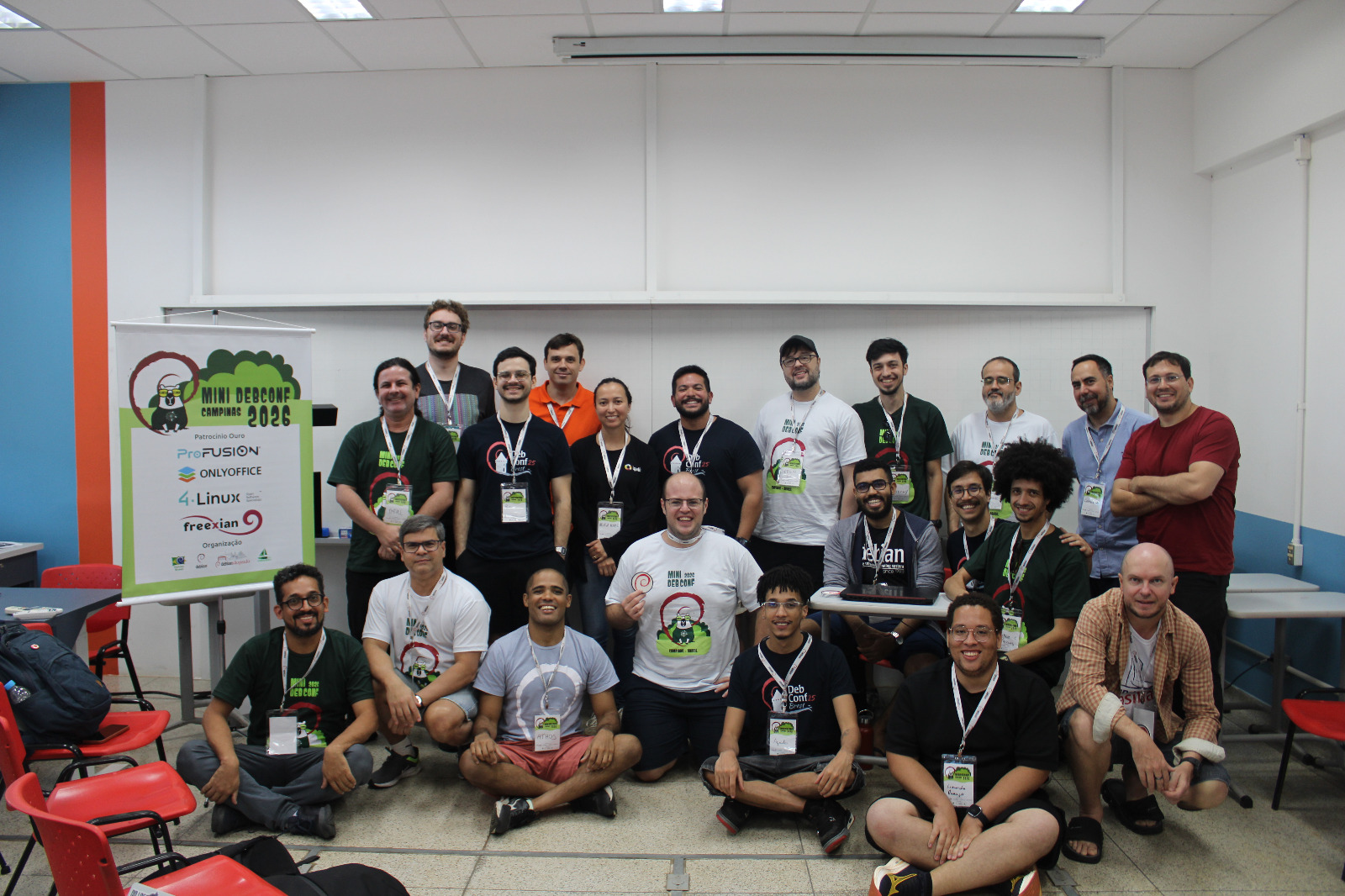
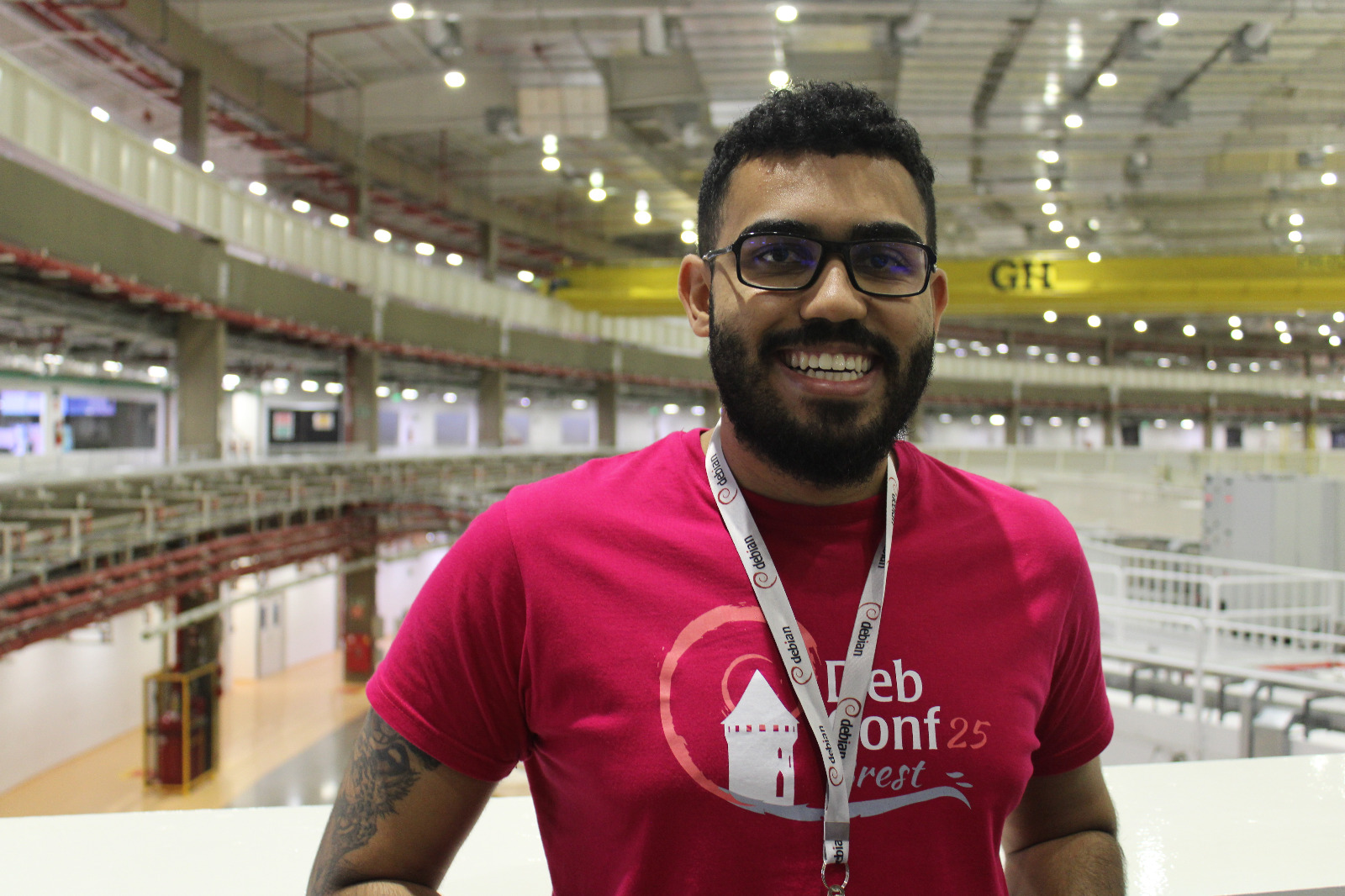
My experience at MiniDebConf Campinas 2026 Last week, I spent the entire week in Campinas attending MiniDebConf and MiniDebCamp. The Debian Brazil community organizes this event every year, and this year's edition was the biggest so far. During MiniDebCamp, I sponsored a few uploads and spent two days teaching packaging to two participants. I usually teach packaging online, so it was refreshing to do it in person. I believe the experience was much better than teaching online. One of my mentees introduced me to the DDTSS (Debian Distributed Translation Server Satellite). Even though there are many i18n contributors in Brazil, this was my first time learning about this system. I plan to contribute to translations over the next few weeks using DDTSS.

My Activities
NOTE: I translated every talk title; the original titles are in PT-BR, so some details may have been lost in translation.
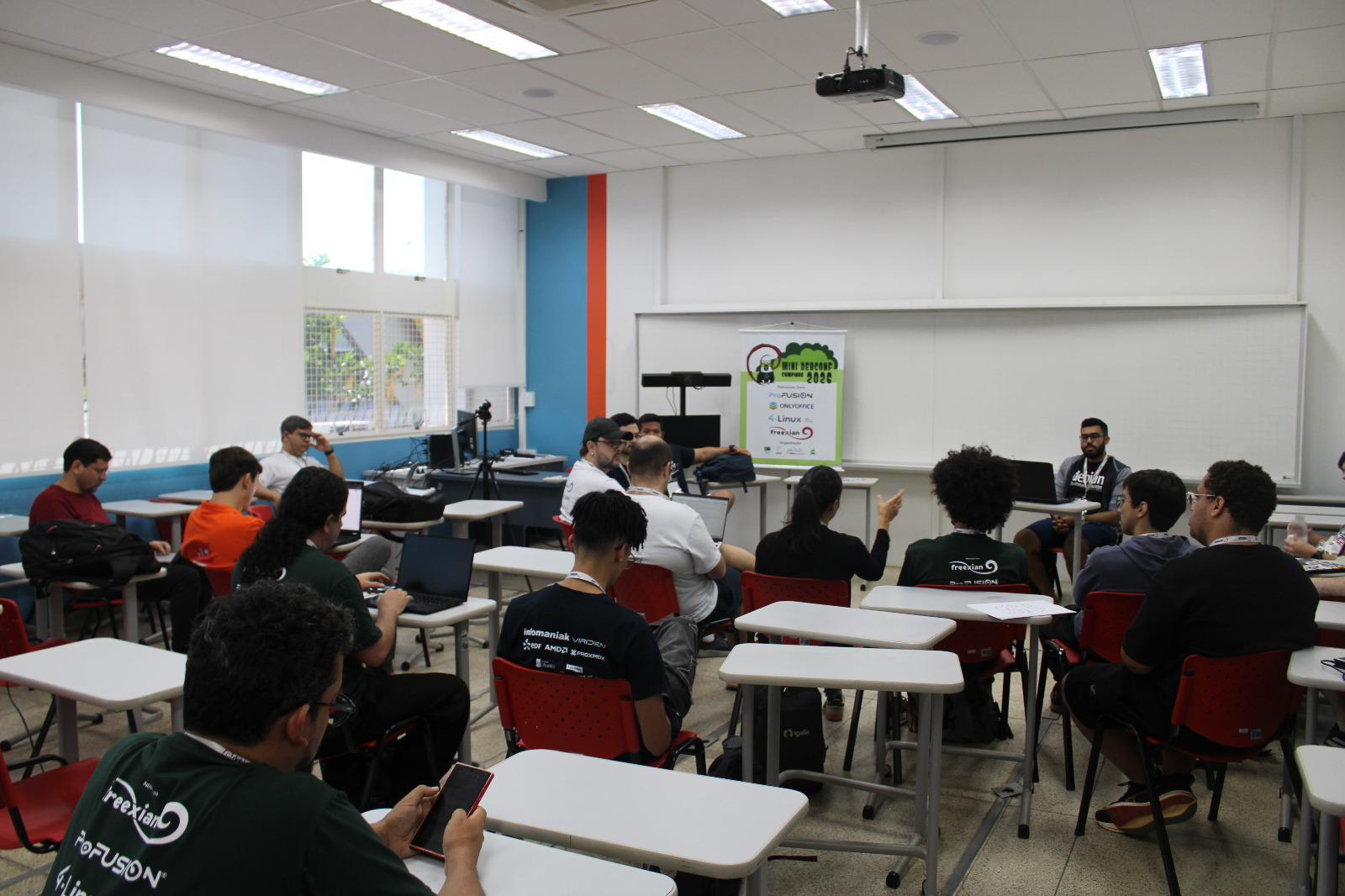
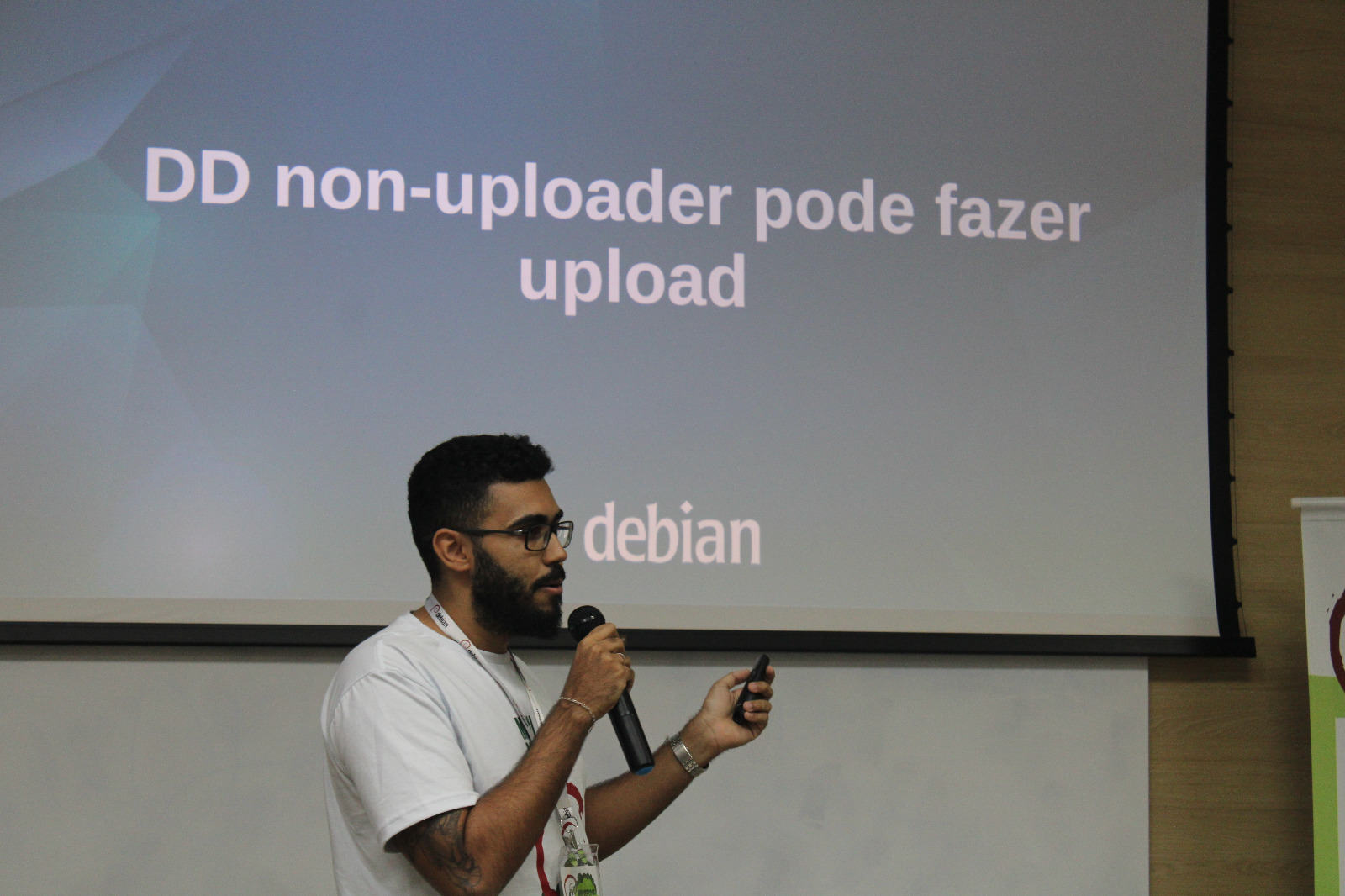
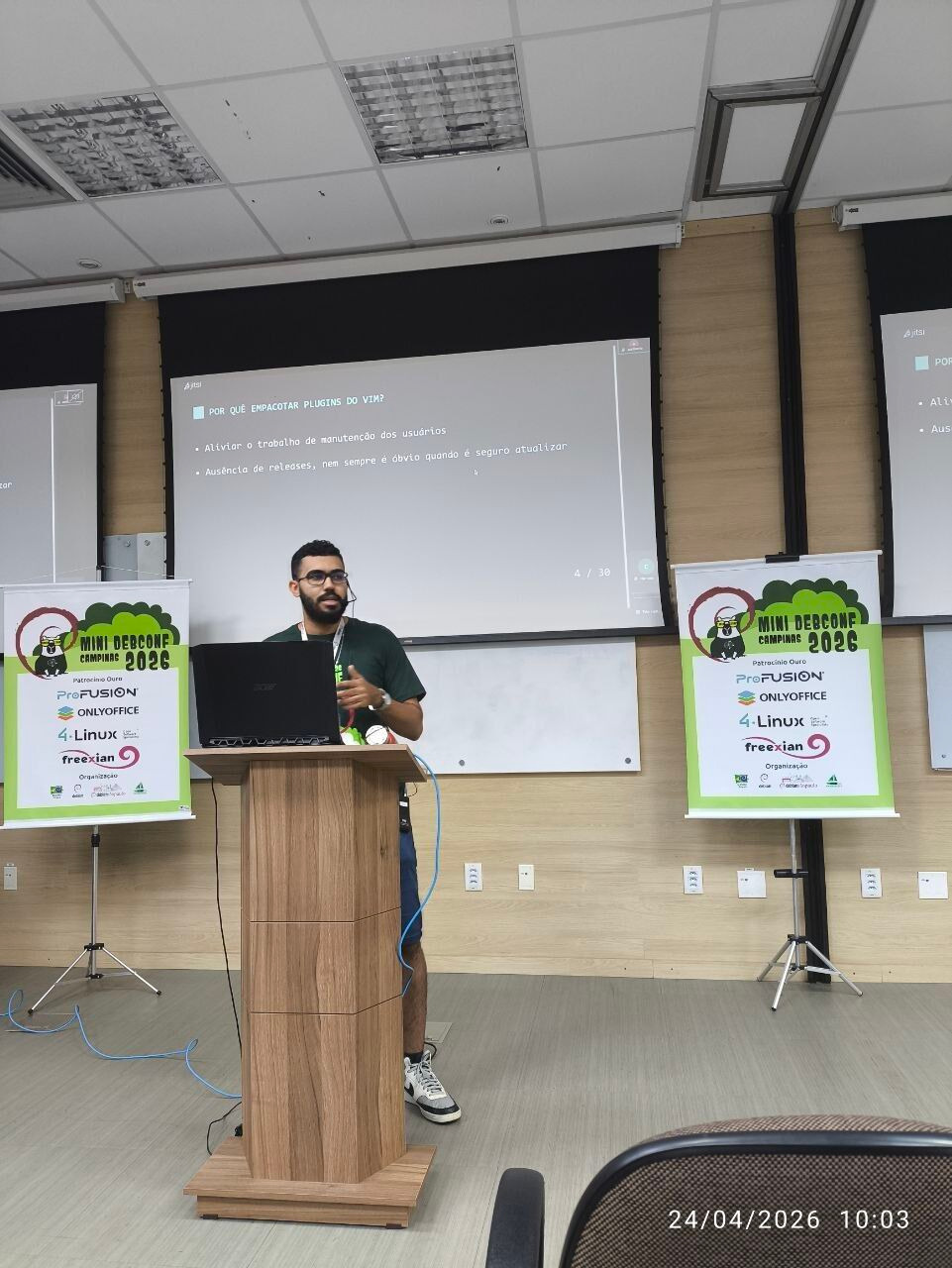
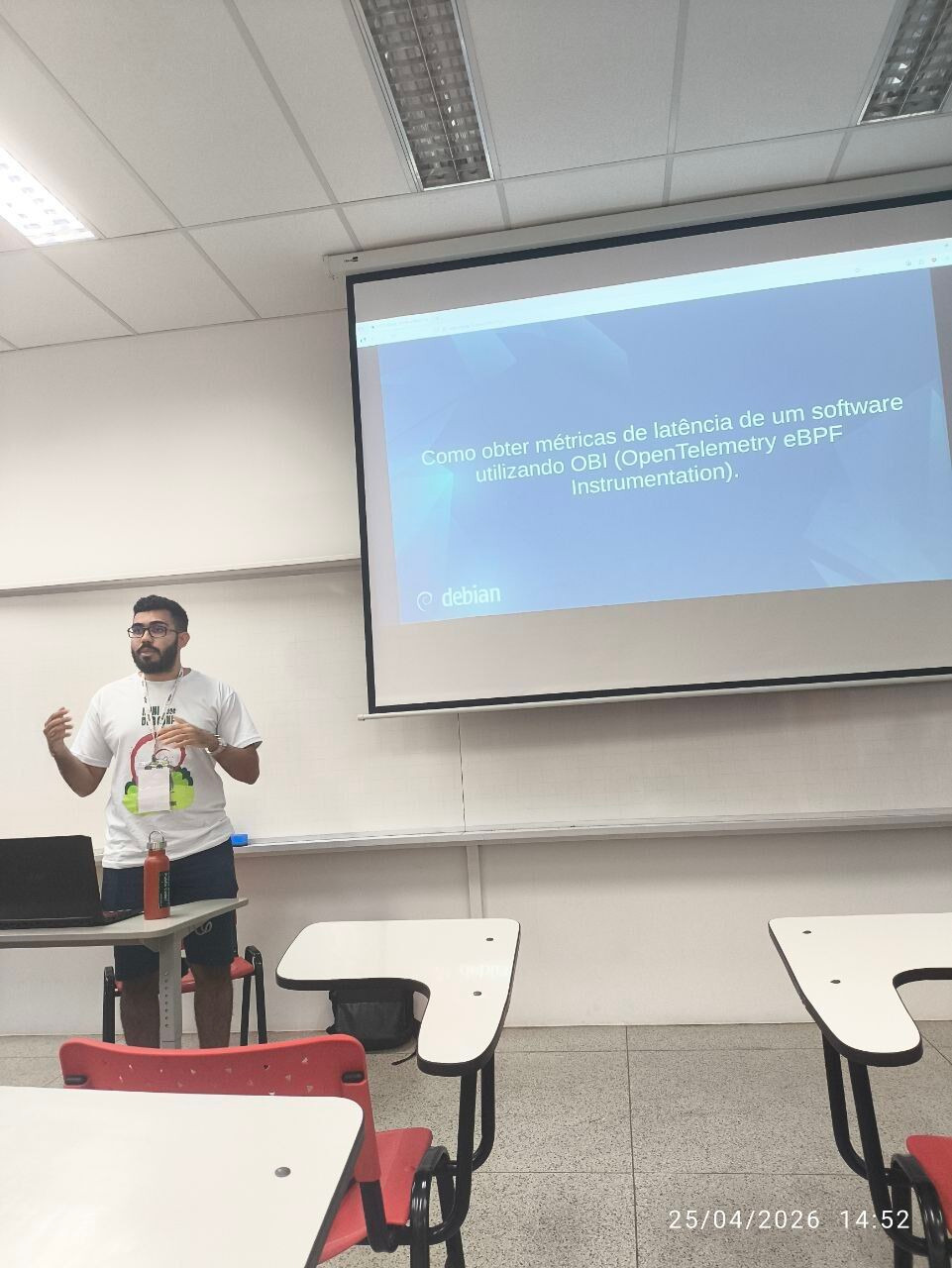
I presented three talks and led one BoF session. The talks are all available on Debian's Peertube: You can also find my slides at people.d.o. My first talk was a showcase of dh-make-vim, a tool I created and have been using for a few months. Some people tested it and found bugs, which was really nice to see. My second talk was essentially a live version of my blog post Zero-Code Instrumentation of an Envoy TCP Proxy using eBPF. I also gave a lightning talk about something many people are not aware of: non-uploading DDs can also sponsor uploads. If you're interested, this bug report provides more context: tracker.debian.org: Signed by field is missing when sponsoring as DD non-uploading Finally, I led the BoF session "Experiences, lessons learned, and next steps from the mentoring sessions". This was my favorite session, we had many participants with different perspectives and ideas, which led to a very engaging discussion. I'm still working on the action plans and I plan to release them soon. Here are some photos of these activities: Mentorship BoF Mentorship BoF DD non-uploading can upload talk dh-make-vim showcase Zero-Code Instrumentation showcase

My favorite activities This is a list, in no particular order, of some of the sessions I enjoyed the most:
  • Salsa CI, showing features that almost nobody knows I wrote a blog post about one of the things I learned in this talk, and there is still a lot more to explore. Aquila Macedo is developing many cool features in Salsa CI.
  • Free Software: Freedom, Autonomy, Sovereignty I had been really looking forward to this one. Alexandre Oliva is a very important figure in the Free Software movement, especially in South America. I'll need to rewatch it, my futures talks about Free Software will likely be inspired by this one.
  • What I've lived/seen in 33 Years of Debian & Free Software in general Eduardo Ma an was the first Debian Developer in Brazil, so it's always valuable to hear the story from someone who was part of it.
  • Symbolism - an introduction Despite the title, this talk was not about astrology! I'll probably rewatch it as well, as there is a lot of information to take in. I really like the passion S rgio Durigan has for C. He is also a great speaker and knows how to guide the audience through the topic.
  • Debate: Contemporary controversies in Debian The debate itself was great, but the conversations we had afterward were even better. I changed some of my opinions after hearing different perspectives. I don't think this format would work at DebConf, but I would definitely like to attend another one like this.
  • Why LTS on Debian? I had a few questions about LTS, and Kanashiro and Santiago answered them both during the talk and in the Q&A session. They also shared some challenges and how to avoid them, it was a great learning experience.
  • From my first contribution to the Debian Maintainer Polkorny was a bit shy but did a great job! I really enjoy this kind of talk. It is always nice to see the different paths people take.
Unfortunatly, I couldn't attend everything I was interested in, as always.

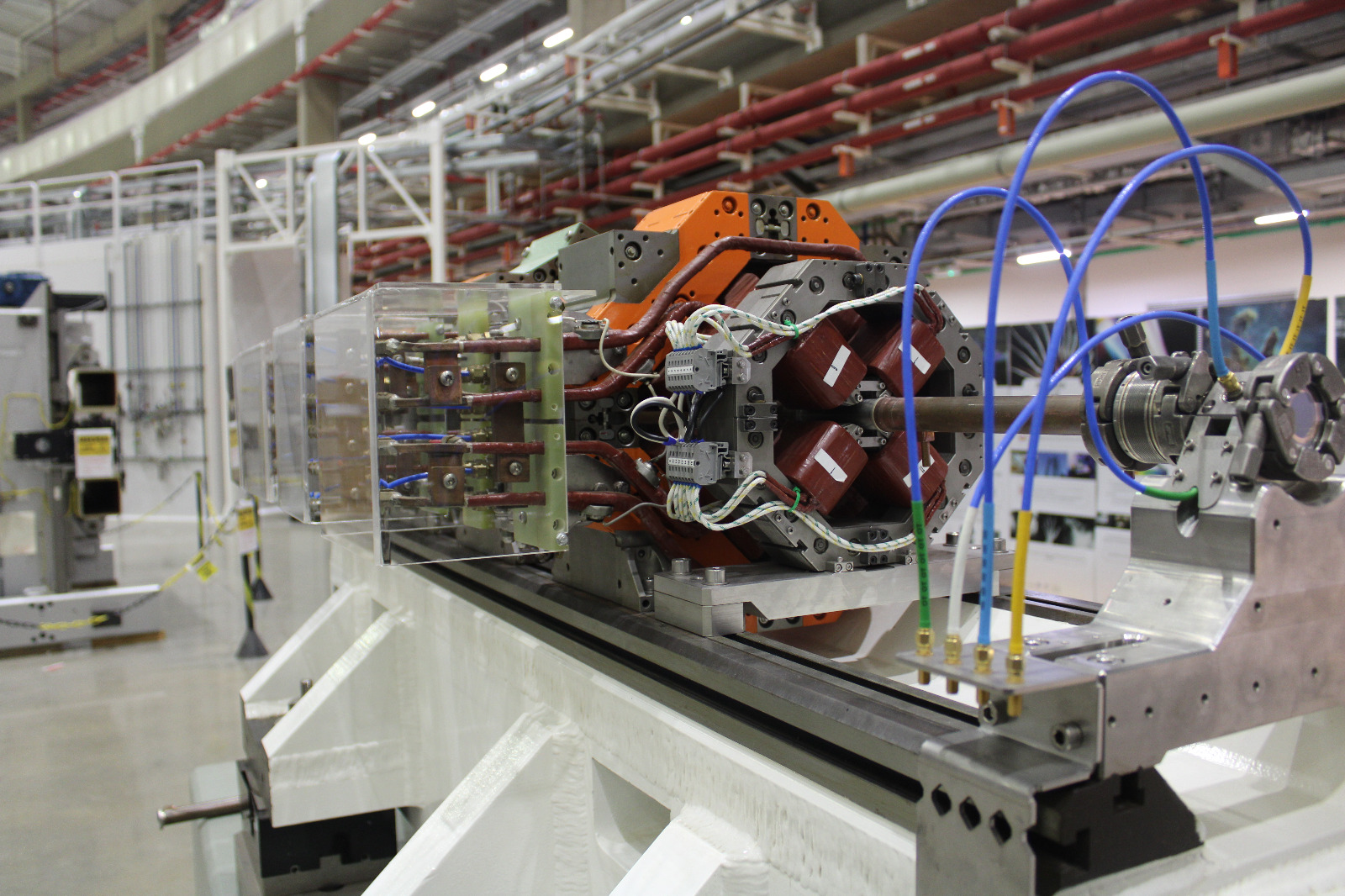
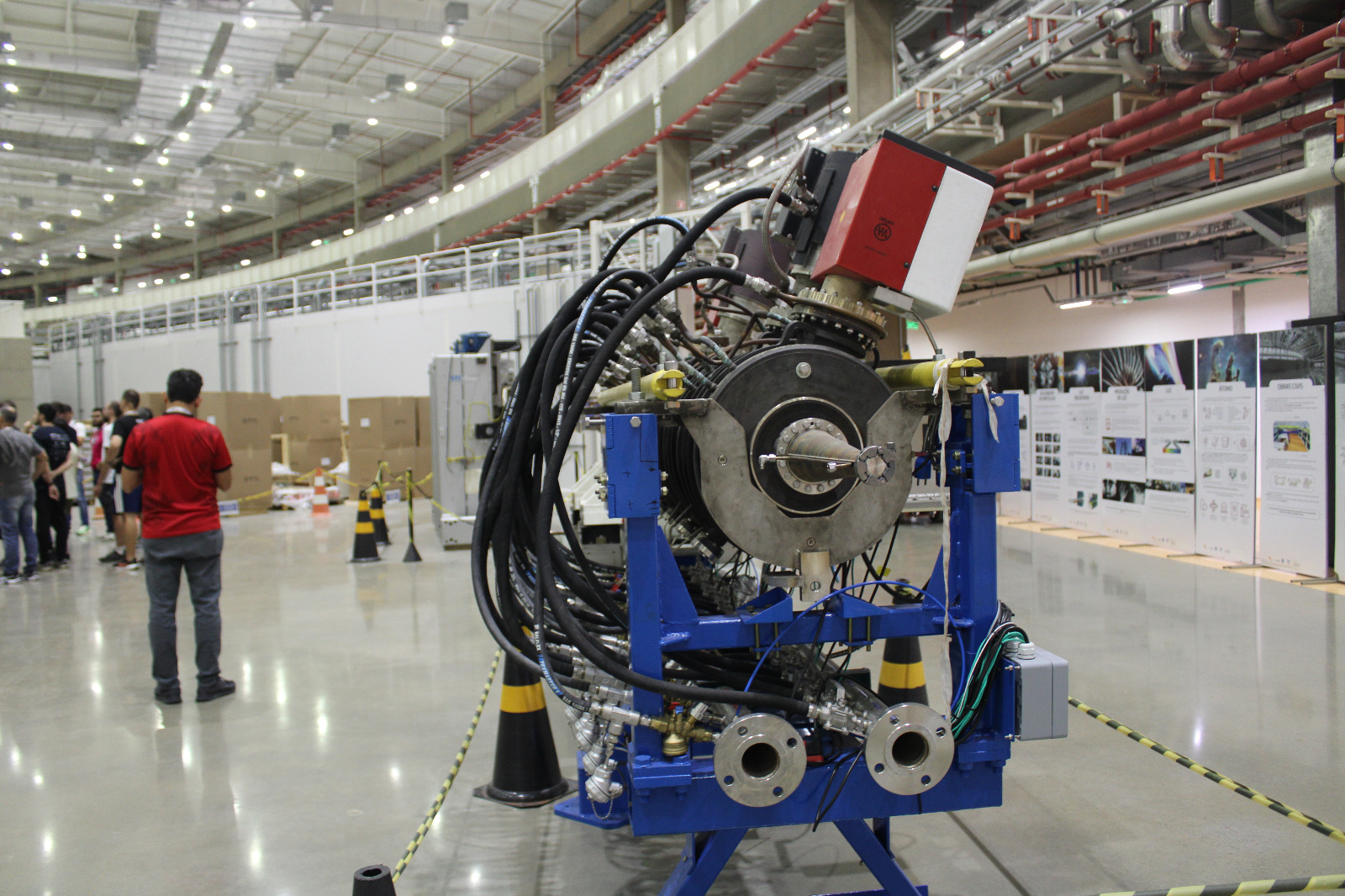
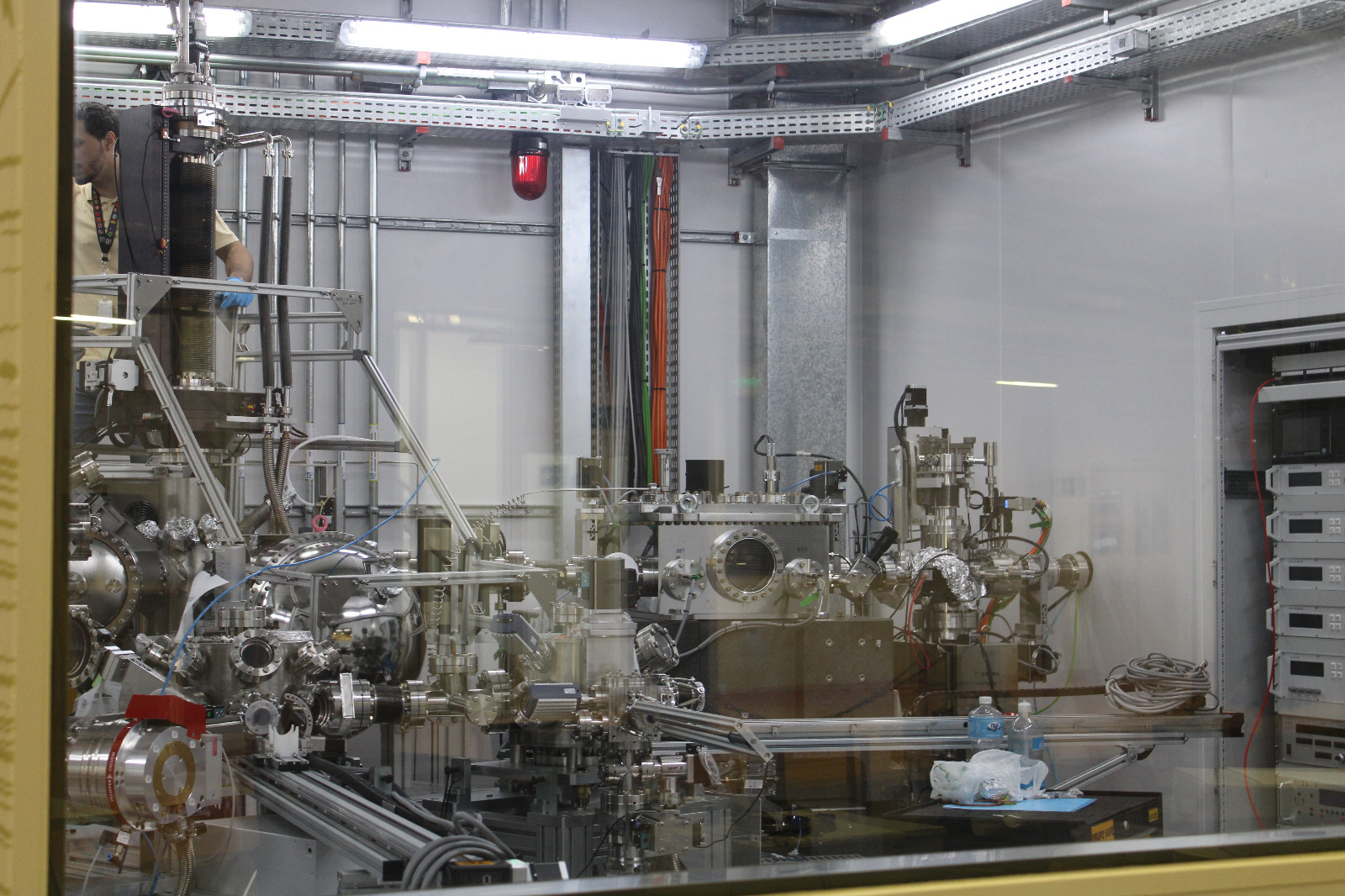
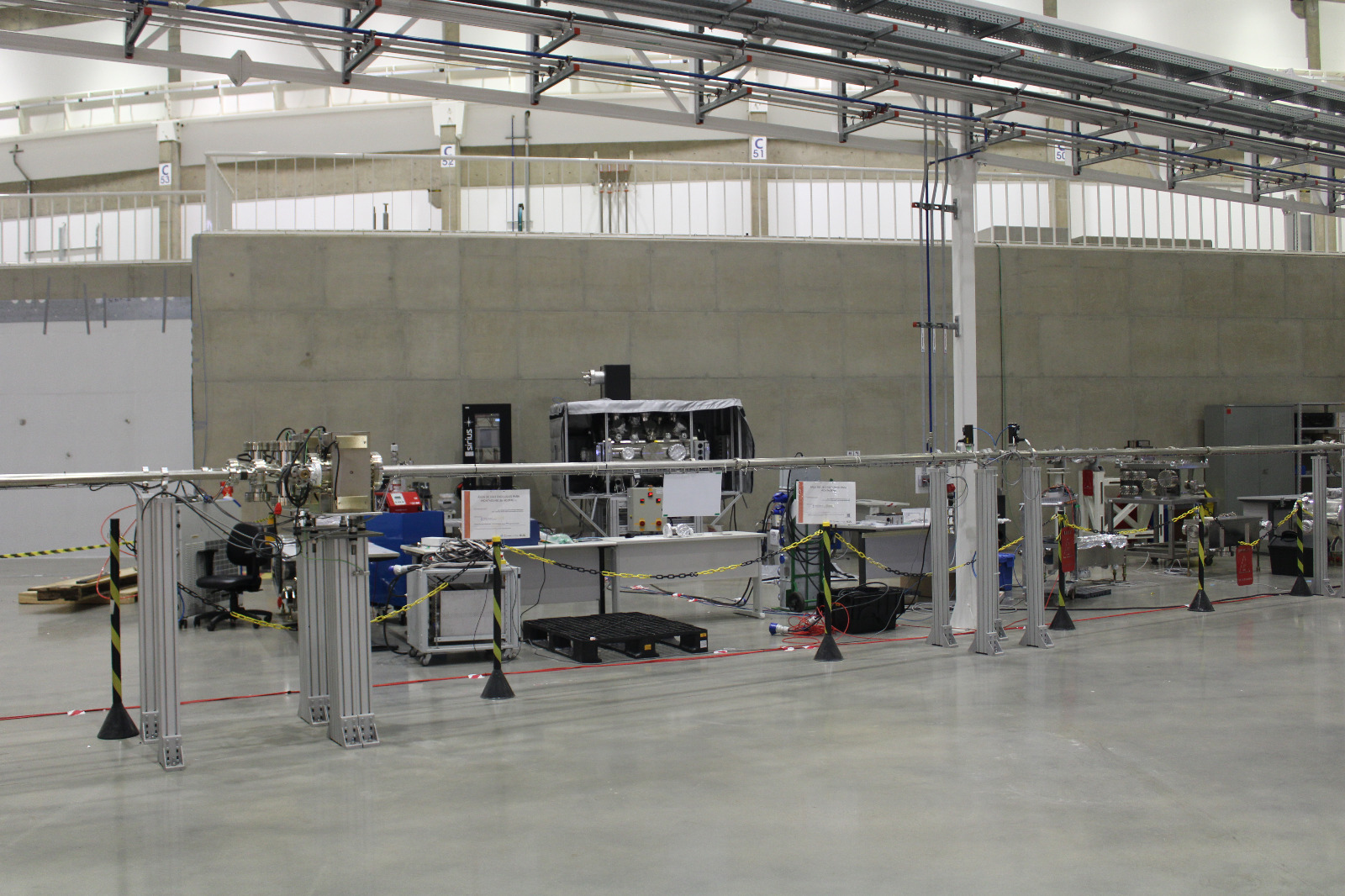
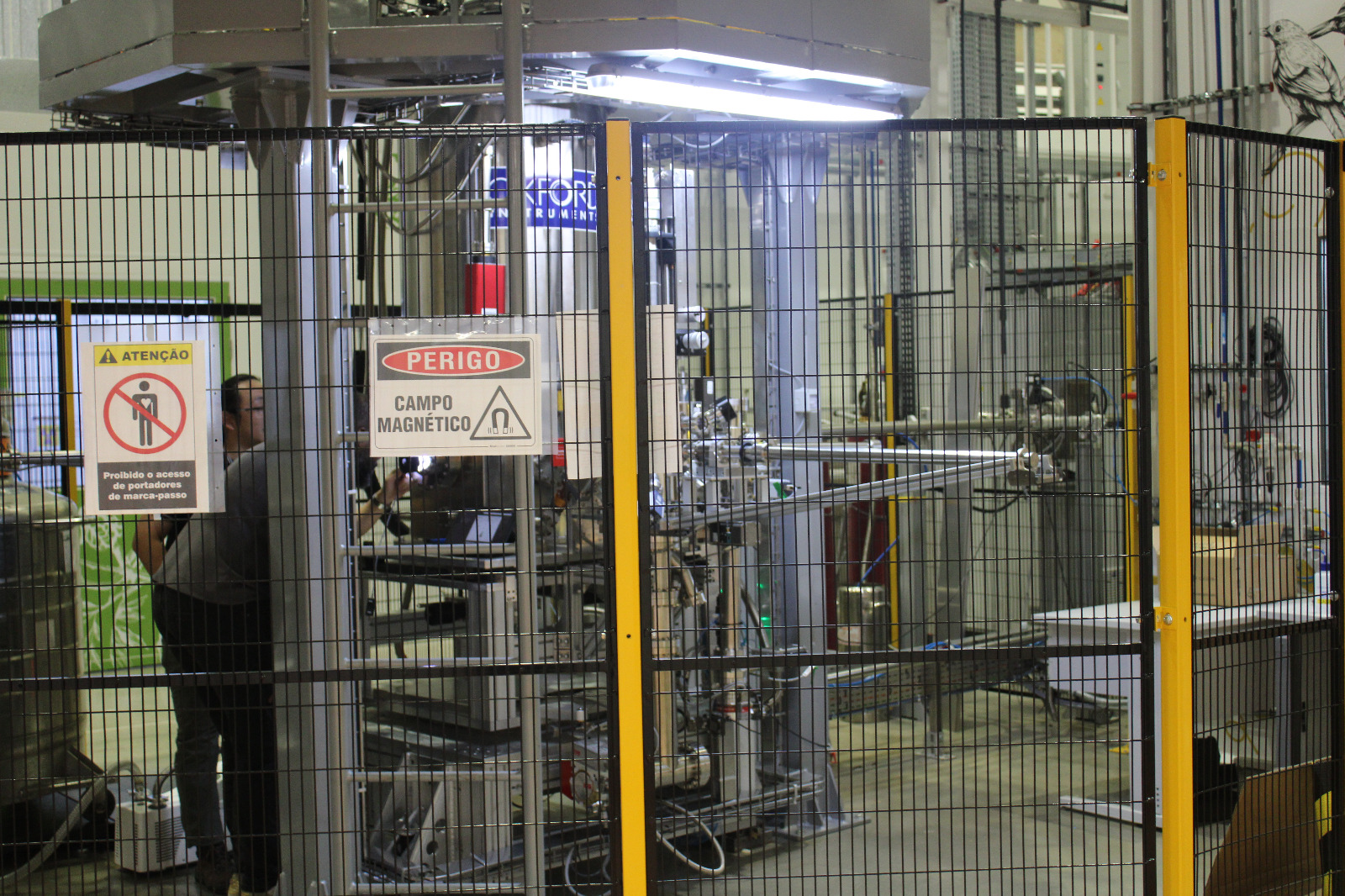
DayTrip - The Brazilian Particle Accelerator Sirius is the largest and most complex scientific infrastructure ever built in Brazil and one of the most advanced synchrotron light sources in the world. My jaw dropped the entire time; it's hard to describe how incredible this is. My favorite detail: they're running Debian :)

Wrap up I believe this was the best MiniDebConf Brazil so far. There were many other things I chose not to include here, as this post is already quite long. Still, here are a few more highlights:
  • A Bug Squashing Party
  • Driving Samuel Henrique's drones
  • Lots of capybaras
  • A small birthday party
  • A visit to two data centers

9 May 2026

Russell Coker: Bad Criticism of LLMs (not AI)

Discussion of AI systems seems to be dominated by fears of uncommon and unlikely threats. I think that we should be focusing more on real issues with LLMs and with society in general and put the most effort towards the biggest problems. It s Not AI True Artificial Intelligence [1] (IE a computer that has the mental capacity of a household pet) is something that I think can be developed, but it hasn t been developed and we don t have good plans for developing it. We seem to be a lot further away from achieving that goal than we were from landing on the moon in 1962 when JFK gave his historic speech. What we have is a variety of pattern recognition systems that can predict what fits into a pattern. The most well known type of Machine Learning (ML) is the Large Language Model (LLM) which means ChatGPT and similar systems which predict which text would be likely to come next and can make an essay from it. They can give interesting and useful output, but there is no thought behind it, it s just a better form of Eliza (the famous program from 1964 that simulates conversation by pattern matching) [2]. By analysing billions of documents, storing the data in a condensed mathematical way, and then using computation to extract from that record LLMs can produce output that is unfortunately considered by some people to be good enough to include in legal documents submitted to courts, university assignments, and many other documents. But they do so without even having the thinking ability of a mouse. To call current systems AIs without any significant qualifiers when criticising them is to concede the debate about the worth of such things. If we develop AIs that can actually think we will have to deal with the issues in the SciFi horror short story Lena by qntm [3]. The Bad Arguments Here is a list of some of the most unreasonable arguments I ve seen against AI which distract attention from real problems both related to AI and other problems in society. Suicide and Homicide Wikipedia has a page listing Deaths Linked to Chatbots [4] which right now has 16 entries from 2023 to Feb 2026. They are all tragedies and as a society we should try to prevent such things. But what I would like to see from the media is some analysis of overall trends, yes it gets people s attention when someone dies in an unusual way but we need to have attention paid to the more numerous deaths which are preventable. It has become a standard practice to give information on Lifeline in media referencing suicide, it would be good if they also developed a practice of mentioning the relative incidence of a problem when publishing an article about it. One of the many factors that cause more suicides than chatbots is school, Scientific American has an informative article from 2022 about the correlation between child suicide and school [5]. It is based on US statistics and shows that the lowest suicide rate is in July (a no-school month in the US) which has a rate of 2.3 per 100,000 person years. So if kids had a quality of life equivalent to July all year around then there would be 2.3 suicides per 100,000 kids every year while if they had a quality of life equivalent to a Monday in January or November it would be 3.9 suicides per 100,000 kids every year. The article states Any time I present these data to teachers, parents, principals or school administrators, they are shocked. This should be common knowledge. It is common knowledge to anyone who takes any notice of what happens in schools, but paying attention to serious problems is unpleasant, it s more fun to pretend that school is good for everyone. No parent wants to think that they sent their child to a place that was horrible, no teacher wants to think that they are part of a system that harms kids. The US CDC has an informative article about youth suicide [6] which documents it as the 3rd largest cause of death in the 14-18 age range fro 2021. This article was published in 2024 and based on statistics from 2023 and earlier. It notes significant differences in suicides, attempts, and persistent feelings of sadness or hopelessness which had girls at more than twice the rate of boys and LGBQ+ kids at more than twice the rate of heterosexual students. It seems obvious that misogyny and homophobia is correlated with suicide and that s something that could and should be addressed in schools. My state has a Safer Schools program [7] to try and alleviate the problems related to homophobia, but I expect that things are getting worse in the US in that regard. 39.7% of kids in US high schools had persistent feelings of sadness or hopelessness before LLMs became popular, school could and should be a happy time for the vast majority of kids but instead almost half of the kids don t enjoy it and a majority of girls and LGBQ+ kids don t. Having no mention of trans kids is a significant omission from that article, based on everything I ve heard from trans people I expect that their statistics would be even worse. One could argue that the small number of deaths inspired by use or misuse of LLMs is an indication of a larger number of people suffering in ways that don t result in death and don t get noticed. But I don t think that can compare to the fact that the majority of girls and LGBQ+ kids have persistent feelings of sadness or hopelessness in the current school system. Regarding homicide, the Australian Institute of Criminology has an article showing that in the 2003-2004 time period 49% of women who were killed were listed as a domestic argument [8], that s something that could and should be addressed. That article claimed 308 homicide victims in that time period which is larger than the world-wide death toll from LLMs but also less than 1/3 the death toll from car accidents in Australia. Australia has less than 0.4% of the world population, a fairly low homicide rate, and a number of homicides that vastly outnumbers all world homicides related to LLMs. I think it s great to address any cause of suicide or homicide, but devoting government resources and legislation towards very uncommon causes instead of things that happen every day is not a good strategy. It would be fine to address all factors leading to suicide, but problems with the school system have been a major factor for decades with little effort applied to fix it. Fraud and Other Crime There is evidence of criminals using LLMs to help prepare for crimes, the ability to generate large amounts of text quickly can be used for fraud and extortion. This is going to be a serious problem and we need structural changes to society to deal with it. There is an ongoing issue of scammers convincing older people that their child or other young relative is in trouble and a large amount of cash is required to address it. This sort of scam as well as the more well known Nigerian scams will probably become more common as the cost of running them decreases. This may be more of a problem for people in developing countries as currently a common scam business model is to have people in regions where wages are low (such as Pakistan for one who I spoke to) scamming people in relatively wealthy countries like Australia so an attack with a low probability of success is financially viable. Cheaper attacks will make less affluent victims financially viable to the scammers. While writing this post I received a financial scam phone call trying to get me to invest in SpaceX that was run by an AI chat system, I expect to receive more of them and this is something that needs to be dealt with via both technical measures and legislation. Do we have to accept less freedom and less anonymity in finances as a cost of reducing financial crime? Greater restrictions on the use of cash would make some crimes more difficult or less profitable for criminals. As a society I think we need to have a discussion about a balance between financial freedom and freedom from criminal exploitation, failing to have such a discussion is likely to lead to policies which don t work well. Also one thing that ML systems are good at is recognising patterns in data. Banks could scan all their transactions and look for patterns that correlate with fraud. They currently do this badly and do things like locking credit cards when someone goes to another country and spends money. They could do a better job of that and involve the police in cases of obvious fraud even when the customer doesn t realise that they are a victim. This isn t a reason to criticise AIs , it s a reason to plan defensive technology that matches the capabilities of attackers. As an aside I used to work for a company that was developing AI software to scan bank phone calls and allow banks to recognise employees who acted illegally. Unfortunately the Royal Commission into banking misconduct [9] didn t impose any penalties that gave the banks a financial reason to avoid criminal activity. Unemployment and Inequality There are many claims about AI systems making large numbers of jobs obsolete, some of them are outlandish such as the claims that all white-collar jobs will be obsolete in the near future. There are some reasonable claims like the ability to replace some mundane jobs. Replacing jobs that suck with computers, robots, and other machinery is a good thing! Very few people wish that they were working on a farm without a tractor. In 1900 it s estimated that between 60% and 70% of the world labour force worked in agriculture and 40% of the US labour force did so. Now it s something like 27% globally and between 1% and 3% in developed countries. Automated factories are also a good thing, it s best to avoid boring and dangerous work. The most plausible claims about job replacement from AI is jobs that involve analysing and summarising documents. One example that comes to mind is the worst kind of journalism where press releases from companies are massaged into the format of a feature article. I don t think anyone wants that sort of job and doing it with AI hopefully means no human has to sign their name to it. For work like programming few people will be directly replaced by AI but if people can do their work more efficiently while using it then less people are required. I don t think that any programmer likes the part of their job where they have to skim read long documents looking for a clue about how to solve a problem with a library or protocol. A LLM processing the document and finding the potentially useful things will take away the drudgery from the work and allow greater productivity. The trend in replacing people has been making people work longer. If you force all employees to work 60 hour weeks then that can theoretically allow hiring fewer people than having 40 hour weeks. For some work that applies but for skilled work it mostly doesn t as productivity and work quality on average drops when people work more than 40 hours in a week. Another trend for exploiting people is having a low minimum wage and making accommodation expensive so that many people need to work two jobs. What we need is legislation to restore the situation in the 70s where a single full time job was sufficient to provide for a family. The low minimum wage and high expenses for many things is a problem that s been slowly developing over the course of decades while being mostly ignored by journalists. If they could concentrate on the real issues that are hurting workers today they could incite political action to fix these problems. Academic Cheating There is no shortage of ways of cheating in school and university. There are people who are paid to write essays, mobile phones are used for cheating in exams, etc. Getting an AI to write essays makes it easier to cheat for the essay writing part but does so with lower quality and in a less stealthy way. What s the worst case scenario? That we have to change to oral exams for all university subjects? In the US the average annual price for tuition at a university is apparently $25,000, if each student had individually supervised assessment for their exams at a cost of $100 per hour it would make the degree cost 4% more. The cost of university in the US is unreasonably high and that s a problem that needs to be fixed, but a hypothetical case of increasing the price by 4% isn t going to be a major part of it. Weak Arguments Against AI Computer Security Attacks There have been many claims made that AI will break the security of all systems and cause the type of disruption that was previously predicted for year 2000. Bruce Schneier has written a good analysis of the issues including how AI can be used by both attackers and defenders [10], he doesn t have a strong conclusion on whether the net result will be good or bad but his article does make it clear that the result is not going to be a total disaster. While I was working on this post I read another post by Bruce Schneier that was significantly more negative about this issue [11]. While I still don t think this will destroy civilisation I found his other post convincing enough to move computer security from the bad argument section to the weak argument section. Spidering the Web to Death There are issues of bots from AI companies doing a bad job of trying to download all the Internet s content and using a lot of resources. When it was just the major search engines and the Wayback Machine doing it the load was small due to having a small number of organisations that were very good at the way they did it having evolved practices over many years. Now we have a lot of idiots doing it badly and repeatedly hitting generated content. This is really annoying but is something that we can deal with. Currently my blog and many other sites are hosted on a Hetzner server with a E3-1271 v3 CPU with 32G of RAM and there are occasions where more than half the CPU power is being used to service web requests from such systems. Even on the server bidding (renting servers previously used by other customers) Hetzner isn t offering systems so slow nowadays, the slowest they offer is about 20% faster than that. This is something that can be dealt with by spending a little more on hosting until the companies doing that go bankrupt. I m sure this is a serious problem for some people, but for most people it s not a big deal. Also hostile traffic on the Internet is something we have all had to deal with as a part of life since the mid to late 90s. RAM Prices The unreasonably high prices for RAM are annoying and hurt the development of useful computer projects. Big companies can afford it, even with current high prices and large quantities of RAM used for some servers it s still not significant. But it is a major issue for hobbyists and small projects. Things like setting up a dozen test VMs for FOSS development are now too expensive for many people who develop software in their spare time. But this is a temporary thing, if AI companies were to keep buying RAM at high rates for a few years companies would just manufacture more of it to meet demand. In some situations capitalism can work. Environmental Damage There are many people claiming that power used by data centers for AI will lead to environmental damage, using power and water when there isn t enough. The trend of computer hardware is to get smaller and faster. It hasn t been going as fast as it used to in many areas but it hasn t stopped either and it s an exponential trend. There has been an increase in data centers (DCs) for AI use as the use has been increasing faster than the hardware gets smaller. Eventually they will stop increasing faster than advances in hardware and software can match and the size of DCs will decrease. As the production of renewable energy is increases the environmental cost of energy hungry industries decreases. In a few years this won t be an issue anyone is bothered about. False Claims About Danger as PR Jamie McClelland makes an interesting claim that the AI companies are pushing dangers of AI as a method of PR [12]. That seems plausible and combined with the tendency of many journalists to just massage press releases from companies into articles could be the reason for a lot of the bad arguments against AI. Good Arguments Against AI Spam Everywhere I ve previously written about Communication and Hostile AIs [13]. I think that filling all communication channels with rubbish is a denial of service attack against society. In the past communication took some effort, even the simplest email that was directly targeted at the recipient took some human effort and that reduced it s frequency. I get a lot of spam saying something like I see your web site doesn t rank in the top for Google searches while my web site in fact rates well and the actor named Russell Coker is ranking below me, so I know that such spam hasn t had the minimum of human involvement. Now a spammer who wanted to do a better job could get an LLM written spam for every target so the message was specifically aimed at them and would take much longer to be recognised by a human as spam and would also avoid most anti-spam software. Searching for businesses used to be easy, the phone book had listings for them and there was a real cost to being in the book as well as humans actively trying to stop fraud. Creating fake web sites to get business isn t too difficult but it s also not trivial at the moment and such fake sites won t look complete. Now with LLMs it s possible to create hundreds of sites that have content and look reasonable without human involvement. Instead of the small number of suicides and homicides inspired by AI chat systems we should probably be concerned about people who need psychological or medical advice being misled by bogus web sites created as part of fraud campaigns. Imagine people searching for mental health assistance finding web sites run by cults who oppose psychology as a profession. Imagine people searching for basic medical advice such as how to cook a healthy meal getting sucked in to web sites that start sane and then lead people to Ivermectin as a universal medicine. LLMs have the potential to take spam from quick and simple attacks to large scale targeted fraud aimed at people and organisations that don t have the resources to defend against it. There have been many reports of CEO impersonation fraud against major corporations aiming to steal hundreds of thousands of dollars and fraud against individuals who are persuaded to get amounts like $50,000 to help a relative who is allegedly in a difficult situation. But if every corner store experienced the same type of attack that CEOs experience and if every child had someone trying to steal the pocket money in the same way that relatively wealthy people are being targeted now it would really change things. David Brin wrote an insightful and informative blog post about this focusing on how AI generated content is being allowed to destroy YouTube [14]. Deep Fakes There is some overlap between filling all communications channels with rubbish (fake news etc) and deep fake. Making a fake photo of a politician or celebrity to lobby for legislative changes is a real issue but it s not what most people think of when the term deep fake is used. Using photo and video faking targeting non-consenting people is a serious issue. It s not just fake porn (which is a major issue and will cause some suicides) as there are many other possibilities. Fake videos showing behaviour that justifies sacking people from their jobs is going to become an issue, for people in public facing positions even proof that the videos are fake won t necessarily help them. Will we find ourselves in a situation where every politician gets deep-fake porn made of them and the only people who run for public office are ones who are cool with that? Will positions of leadership in the technology industry be restricted to people who aren t bothered by having the most depraved fake porn made of them? The Justice System We have seen a lot of evidence of law enforcement and the court system based on bias leading to bad results. The Innocence Project attempts to correct that and it s web site documents some of the things that have gone wrong [15]. Using AI systems to do some of the work of law enforcement by training computers on the flawed results of current systems can entrench bias and also make it harder to spot. When determining whether someone should be considered a suspect or whether a prisoner should be eligible for parole the number of factors that a human can use is limited. But a computer can take many more factors into account so the issues of whether inappropriate factors are being used can be masked. Computers are also unable to explain decisions that they made and are also able to come up with better fake reasons. In the past there have been racist policies in the US about banks not lending to people living in suburbs where most houses were owned by non-white people, these policies were documented and the documents have become part of the historical record showing racist policies. If a LLM decides not to lend money to people based on mathematical correlations it determined based on historical banking practices it could assign negative weights to factors such as non-English names and implement the racism in a large array of numbers with no proof. The current cases of lawyers getting LLM systems to do some of their work and having their incompetence revealed when the computer generated work is shown to be ridiculously bad are amusing. But that is not the real problem. The real problems will start when the computers in police cars start flagging every car owned by a non-write person as having a probable cause for a drug stop. Technically Not Financial Fraud The majority of the ecosystem around AI is a financial scam [16]. There are companies and individuals doing good things with machine learning some of which is based on hardware and software developed as part of this ecosystem. But the majority of it has no plausible path to profits and a the future of it inevitably ends with some bankruptcies. There are circular flows of money that have the major cloud providers and NVidia looped in, when the values of these companies correct it will become apparent that they have all burned a lot of money keeping this running and all the senior people have got a share of it (the entire purpose of stock options is to allow senior people to suck money out of the company). Then every cloud provider will increase costs while under chapter 11 and all the companies that depend on them will pay whatever it takes. That includes all major companies and most governments. Unlike the dot-com boom and crash and the housing crash the coming financial crash will impact every company that we deal with and most governments. So the people in first-world countries will effectively be taxed to pay for this scam while the executives go party in Monaco. This may seem like an extreme claim but it all happened before with the dot com crash and the housing market crash. The CEO class has an ongoing practice of doing things that aren t crimes because they lobby (bribe) politicians to make them legal. So the current stock market shenanigans around AI don t seem to involve things that governments consider to be crimes. But any normal person might be surprised to learn that such things are legal and most people would vote for such things to be crimes if they had the opportunity. A global financial crisis is the least of the problems that seem likely to afflict society from AI systems. But it will be more immediately obvious when it happens which could be this year! Propaganda Creating art requires skills that the type of people who want to create propaganda tend to lack. AI technologies allow creating art that is based on mathematical models of actual art to the requirements of the person running the program. I have seen the term AI Fascism used to describe the use of AI to help authoritarian governments. I am dubious about whether it deserves that term and while every article I ve read about the topic has had some good points I thought that they were all weak points. But there are lots of ways that governments can abuse their populations without going full fascist. In the last century there were lots of truly terrible governments that didn t even make the top 10 of fascism. AI Sycophants Bruce Schneier wrote an informative blog post about AI Chatbots and Trust which focused on sycophantic chatbots [17]. We have seen a lot of evidence of terrible behaviour and stupid decisions from rich people due to having no negative consequences for bad choices. The vast majority of the history of kings concerns bad decisions made by such people. A future where middle class and poor people can make the same bad decisions as rich people wouldn t be good. Good Things About ML Machine Learning (abbreviated as ML) can do useful things. It s not just Large Language Models (LLMs) such as ChatGPT etc. There are also ML systems that can analyse images and other data sets. I have found ChatGPT to be very useful for making suggestions for improving blog posts. I don t get it to write anything just ask for suggestions. It has pointed out things that I missed such as when I didn t include the price when reviewing a car because the car in question was much more expensive than I will ever pay, the price wasn t relevant to me but would be to some readers. It has also made useful suggestions about structure of blog posts, repeating points, and having a good conclusion. It has some downsides which include trying to erase my voice from my writing, suggesting that the rhetorical question does email suck? is unprofessional. I have worked for a company that used ML systems to analyse driver performance and alert people if a driver is falling asleep, using a phone, or otherwise seems unable to drive safely. Their business model involved a human reviewing the images from the drivers the computer flagged and then determining who is actually doing the wrong thing. This seems a good use of the technology. I have also worked for a company that used ML systems to analyse the performance of bank employees and detect potentially fraudulent behaviour. Preventing crime seems to be clearly a good thing and in this case the manager of the employee in question would review the evidence to make sure that they weren t being falsely accused. Conclusion I don t think that the problems with managing the changes that so called AI is introducing are particularly new. An example of how society handles change that s worth considering is car safety. The seat belt first became mandatory for aeroplanes in some jurisdictions in 1928. The Model T Ford is widely regarded as the first vehicle to start a mass market for cars and it was released in 1925. So if society acted in a reasonable way then for the majority of mass market cars seat belts would have been a standard feature. However seat belts were first made compulsory in 1970 in Victoria Australia and there are still people who think that they are safer without seat belts! The delay in adoption of car seat belts is only one example of needless deaths caused by not taking reasonable measures for car safety but it s one that s easy to demonstrate and measure. The difference between past problems like car safety and the current problems of AI is that the AI problems will be more pervasive. Most of my history as a car driver and car passenger was in cars that are much less safe than cars made in the last 10 years. But partly through luck I ve never been in a serious crash so being in cars that wouldn t have given me a low probability of surviving a freeway speed crash didn t affect me. There is no possibility that through any combination of luck and skill someone could avoid the downsides of AI . If nothing else the results of elections will be affected and no-one can avoid that. As a society we really need to address the real issues related to AI which in some cases requires legislation.

13 January 2026

Freexian Collaborators: Debian Contributions: dh-python development, Python 3.14 and Ruby 3.4 transitions, Surviving scraper traffic in Debian CI and more! (by Anupa Ann Joseph)

Debian Contributions: 2025-12 Contributing to Debian is part of Freexian s mission. This article covers the latest achievements of Freexian and their collaborators. All of this is made possible by organizations subscribing to our Long Term Support contracts and consulting services.

dh-python development, by Stefano Rivera In Debian we build our Python packages with the help of a debhelper-compatible tool, dh-python. Before starting the 3.14 transition (that would rebuild many packages) we landed some updates to dh-python to fix bugs and add features. This started a month of attention on dh-python, iterating through several bug fixes, and a couple of unfortunate regressions. dh-python is used by almost all packages containing Python (over 5000). Most of these are very simple, but some are complex and use dh-python in unexpected ways. It s hard to avoid almost any change (including obvious bug fixes) from causing some unexpected knock-on behaviour. There is a fair amount of complexity in dh-python, and some rather clever code, which can make it tricky to work on. All of this means that good QA is important. Stefano spent some time adding type annotations and specialized types to make it easier to see what the code is doing and catch mistakes. This has already made work on dh-python easier. Now that Debusine has built-in repositories and debdiff support, Stefano could quickly test the effects of changes on many other packages. After each big change, he could upload dh-python to a repository, rebuild e.g. 50 Python packages with it, and see what differences appeared in the output. Reviewing the diffs is still a manual process, but can be improved. Stefano did a small test on what it would take to replace direct setuptools setup.py calls with PEP-517 (pyproject-style) builds. There is more work to do here.

Python 3.14 transition, by Stefano Rivera (et al.) In December the transition to add Python 3.14 as a supported version started in Debian unstable. To do this, we update the list of supported versions in python3-defaults, and then start rebuilding modules with C extensions from the leaves inwards. This had already been tested in a PPA and Ubuntu, so many of the biggest blocking compatibility issues with 3.14 had already been found and fixed. But there are always new issues to discover. Thanks to a number of people in the Debian Python team, we got through the first bit of the transition fairly quickly. There are still a number of open bugs that need attention and many failed tests blocking migration to testing. Python 3.14.1 released just after we started the transition, and very soon after, a follow-up 3.14.2 release came out to address a regression. We ran into another regression in Python 3.14.2.

Ruby 3.4 transition, by Lucas Kanashiro (et al.) The Debian Ruby team just started the preparation to move the default Ruby interpreter version to 3.4. At the moment, ruby3.4 source package is already available in experimental, also ruby-defaults added support to Ruby 3.4. Lucas rebuilt all reverse dependencies against this new version of the interpreter and published the results here. Lucas also reached out to some stakeholders to coordinate the work. Next steps are: 1) announcing the results to the whole team and asking for help to fix packages failing to build against the new interpreter; 2) file bugs against packages FTBFSing against Ruby 3.4 which are not fixed yet; 3) once we have a low number of build failures against Ruby 3.4, ask the Debian Release team to start the transition in unstable.

Surviving scraper traffic in Debian CI, by Antonio Terceiro Like most of the open web, Debian Continuous Integration has been struggling for a while to keep up with the insatiable hunger from data scrapers everywhere. Solving this involved a lot of trial and error; the final result seems to be stable, and consists of two parts. First, all Debian CI data pages, except the direct links to test log files (such as those provided by the Release Team s testing migration excuses), now require users to be authenticated before being accessed. This means that the Debian CI data is no longer publicly browseable, which is a bit sad. However, this is where we are now. Additionally, there is now a fail2ban powered firewall-level access limitation for clients that display an abusive access pattern. This went through several iterations, with some of them unfortunately blocking legitimate Debian contributors, but the current state seems to strike a good balance between blocking scrapers and not blocking real users. Please get in touch with the team on the #debci OFTC channel if you are affected by this.

A hybrid dependency solver for crossqa.debian.net, by Helmut Grohne crossqa.debian.net continuously cross builds packages from the Debian archive. Like Debian s native build infrastructure, it uses dose-builddebcheck to determine whether a package s dependencies can be satisfied before attempting a build. About one third of Debian s packages fail this check, so understanding the reasons is key to improving cross building. Unfortunately, dose-builddebcheck stops after reporting the first problem and does not display additional ones. To address this, a greedy solver implemented in Python now examines each build-dependency individually and can report multiple causes. dose-builddebcheck is still used as a fall-back when the greedy solver does not identify any problems. The report for bazel-bootstrap is a lengthy example.

rebootstrap, by Helmut Grohne Due to the changes suggested by Loongson earlier, rebootstrap now adds debhelper to its final installability test and builds a few more packages required for installing it. It also now uses a variant of build-essential that has been marked Multi-Arch: same (see foundational work from last year). This in turn made the use of a non-default GCC version more difficult and required more work to make it work for gcc-16 from experimental. Ongoing archive changes temporarily regressed building fribidi and dash. libselinux and groff have received patches for architecture specific changes and libverto has been NMUed to remove the glib2.0 dependency.

Miscellaneous contributions
  • Stefano did some administrative work on debian.social and debian.net instances and Debian reimbursements.
  • Stefano did routine updates of python-authlib, python-mitogen, xdot.
  • Stefano spent several hours discussing Debian s Python package layout with the PyPA upstream community. Debian has ended up with a very different on-disk installed Python layout than other distributions, and this continues to cause some frustration in many communities that have to have special workarounds to handle it. This ended up impacting cross builds as Helmut discovered.
  • Rapha l set up Debusine workflows for the various backports repositories on debusine.debian.net.
  • Zulip is not yet in Debian (RFP in #800052), but Rapha l helped on the French translation as he is experimenting with that discussion platform.
  • Antonio performed several routine Salsa maintenance tasks, including fixing salsa-nm-sync, the service that synchronizes project members data from LDAP to Salsa, which had been broken since salsa.debian.org was upgraded to trixie .
  • Antonio deployed a new amd64 worker host for Debian CI.
  • Antonio did several DebConf technical and administrative bits, including but adding support for custom check-in/check-out dates in the MiniDebConf registration module, publishing a call for bids for DebConf27.
  • Carles reviewed and submitted 14 Catalan translations using po-debconf-manager.
  • Carles improved po-debconf-manager: added delete-package command, show-information now uses properly formatted output (YAML), it now attaches the translation on the bug reports for which a merge request has been opened too long.
  • Carles investigated why some packages appeared in po-debconf-manager but not in the Debian l10n list. Turns out that some packages had debian/po/templates.pot (appearing in po-debconf-manager) but not the POTFILES.in file as expected. Created a script to find out which packages were in this or similar situation and reported bugs.
  • Carles tested and documented how to set up voices (mbrola and festival) if using Orca speech synthesizer. Commented a few issues and possible improvements in the debian-accessibility list.
  • Helmut sent patches for 48 cross build failures and initiated discussions on how to deal with two non-trivial matters. Besides Python mentioned above, CMake introduced a cmake_pkg_config builtin which is not aware of the host architecture. He also forwarded a Meson patch upstream.
  • Thorsten uploaded a new upstream version of cups to fix a nasty bug that was introduced by the latest security update.
  • Along with many other Python 3.14 fixes, Colin fixed a tricky segfault in python-confluent-kafka after a helpful debugging hint from upstream.
  • Colin upstreamed an improved version of an OpenSSH patch we ve been carrying since 2008 to fix misleading verbose output from scp.
  • Colin used Debusine to coordinate transitions for astroid and pygments, and wrote up the astroid case on his blog.
  • Emilio helped with various transitions, and provided a build fix for opencv for the ffmpeg 8 transition.
  • Emilio tested the GNOME updates for trixie proposed updates (gnome-shell, mutter, glib2.0).
  • Santiago helped to review the status of how to test different build profiles in parallel on the same pipeline, using the test-build-profiles job. This means, for example, to simultaneously test build profiles such as nocheck and nodoc for the same git tree. Finally, Santiago provided MR !685 to fix the documentation.
  • Anupa prepared a bits post for Outreachy interns announcement along with T ssia Cam es Ara jo and worked on publicity team tasks.

29 September 2025

Russ Allbery: Review: The Incandescent

Review: The Incandescent, by Emily Tesh
Publisher: Tor
Copyright: 2025
ISBN: 1-250-83502-X
Format: Kindle
Pages: 417
The Incandescent is a stand-alone magical boarding school fantasy.
Your students forgot you. It was natural for them to forget you. You were a brief cameo in their lives, a walk-on character from the prologue. For every sentimental my teacher changed my life story you heard, there were dozens of my teacher made me moderately bored a few times a week and then I got through the year and moved on with my life and never thought about them again. They forgot you. But you did not forget them.
Doctor Saffy Walden is Director of Magic at Chetwood, an elite boarding school for prospective British magicians. She has a collection of impressive degrees in academic magic, a specialization in demonic invocation, and a history of vague but lucrative government job offers that go with that specialty. She turned them down to be a teacher, and although she's now in a mostly administrative position, she's a good teacher, with the usual crop of promising, lazy, irritating, and nervous students. As the story opens, Walden's primary problem is Nikki Conway. Or, rather, Walden's primary problem is protecting Nikki Conway from the Marshals, and the infuriating Laura Kenning in particular. When Nikki was seven, she summoned a demon who killed her entire family and left her a ward of the school. To Laura Kenning, that makes her a risk who should ideally be kept far away from invocation. To Walden, that makes Nikki a prodigious natural talent who is developing into a brilliant student and who needs careful, professional training before she's tempted into trying to learn on her own. Most novels with this setup would become Nikki's story. This one does not. The Incandescent is Walden's story. There have been a lot of young-adult magical boarding school novels since Harry Potter became a mass phenomenon, but most of them focus on the students and the inevitable coming-of-age story. This is a story about the teachers: the paperwork, the faculty meetings, the funding challenges, the students who repeat in endless variations, and the frustrations and joys of attempting to grab the interest of a young mind. It's also about the temptation of higher-paying, higher-status, and less ethical work, which however firmly dismissed still nibbles around the edges. Even if you didn't know Emily Tesh is herself a teacher, you would guess that before you get far into this novel. There is a vividness and a depth of characterization that comes from being deeply immersed in the nuance and tedium of the life that your characters are living. Walden's exasperated fondness for her students was the emotional backbone of this book for me. She likes teenagers without idealizing the process of being a teenager, which I think is harder to pull off in a novel than it sounds.
It was hard to quantify the difference between a merely very intelligent student and a brilliant one. It didn't show up in a list of exam results. Sometimes, in fact, brilliance could be a disadvantage when all you needed to do was neatly jump the hoop of an examiner's grading rubric without ever asking why. It was the teachers who knew, the teachers who could feel the difference. A few times in your career, you would have the privilege of teaching someone truly remarkable; someone who was hard work to teach because they made you work harder, who asked you questions that had never occurred to you before, who stretched you to the very edge of your own abilities. If you were lucky as Walden, this time, had been lucky your remarkable student's chief interest was in your discipline: and then you could have the extraordinary, humbling experience of teaching a child whom you knew would one day totally surpass you.
I also loved the world-building, and I say this as someone who is generally not a fan of demons. The demons themselves are a bit of a disappointment and mostly hew to one of the stock demon conventions, but the rest of the magic system is deep enough to have practitioners who approach it from different angles and meaty enough to have some satisfying layered complexity. This is magic, not magical science, so don't expect a fully fleshed-out set of laws, but the magical system felt substantial and satisfying to me. Tesh's first novel, Some Desperate Glory, was by far my favorite science fiction novel of 2023. This is a much different book, which says good things about Tesh's range and the potential of her work yet to come: adult rather than YA, fantasy rather than science fiction, restrained and subtle in places where Some Desperate Glory was forceful and pointed. One thing the books do have in common, though, is some structure, particularly the false climax near the midpoint of the book. I like the feeling of uncertainty and possibility that gives both books, but in the case of The Incandescent, I was not quite in the mood for the second half of the story. My problem with this book is more of a reader preference than an objective critique: I was in the mood for a story about a confident, capable protagonist who was being underestimated, and Tesh was writing a novel with a more complicated and fraught emotional arc. (I'm being intentionally vague to avoid spoilers.) There's nothing wrong with the story that Tesh wanted to tell, and I admire the skill with which she did it, but I got a tight feeling in my stomach when I realized where she was going. There is a satisfying ending, and I'm still very happy I read this book, but be warned that this might not be the novel to read if you're in the mood for a purer competence porn experience. Recommended, and I am once again eagerly awaiting the next thing Emily Tesh writes (and reminding myself to go back and read her novellas). Content warnings: Grievous physical harm, mind control, and some body horror. Rating: 8 out of 10

12 August 2025

Freexian Collaborators: Debian Contributions: DebConf 25, OpenSSH upgrades, Cross compilation collaboration and more! (by Anupa Ann Joseph)

Debian Contributions: 2025-07 Contributing to Debian is part of Freexian s mission. This article covers the latest achievements of Freexian and their collaborators. All of this is made possible by organizations subscribing to our Long Term Support contracts and consulting services.

DebConf 25, by Stefano Rivera and Santiago Ruano Rinc n In July, DebConf 25 was held in Brest, France. Freexian was a gold sponsor and most of the Freexian team attended the event. Many fruitful discussions were had amongst our team and within the Debian community. DebConf itself was organized by a local team in Brest, that included Santiago (who now lives in Uruguay). Stefano was also deeply involved in the organization, as a DebConf committee member, core video team, and the lead developer for the conference website. Running the conference took an enormous amount of work, consuming all of Stefano and Santiago s time for most of July. Lucas Kanashiro was active in the DebConf content team, reviewing talks and scheduling them. There were many last-minute changes to make during the event. Anupa Ann Joseph was part of the Debian publicity team doing live coverage of DebConf 25 and was part of the DebConf 25 content team reviewing the talks. She also assisted the local team to procure the lanyards. Recorded sessions presented by Freexian collaborators, often alongside other friends in Debian, included:

OpenSSH upgrades, by Colin Watson Towards the end of a release cycle, people tend to do more upgrade testing, and this sometimes results in interesting problems. Manfred Stock reported No new SSH connections possible during large part of upgrade to Debian Trixie , which would have affected many people upgrading from Debian 12 (bookworm), with potentially severe consequences for people upgrading remote systems. In fact, there were two independent problems that each led to much the same symptom:
  • As part of hardening the OpenSSH server, OpenSSH 9.8 split the monolithic sshd listener process into two pieces: a minimal network listener (still called sshd), and an sshd-session process dealing with each individual session. Before this change, when sshd received an incoming connection, it forked and re-executed itself with some special parameters to deal with it; after this change, it forks and executes sshd-session instead, and sshd no longer accepts the parameters it used to accept for this.

    Debian package upgrades happen (roughly) in two phases: first we unpack the new files onto disk, and then we run some configuration steps which usually include things like restarting services. Normally this is fine, because the old service keeps on working until it s restarted. In this case, unpacking the new files onto disk immediately stopped new SSH connections from working: the old sshd received the connection and tried to hand it off to a freshly-executed copy of the new sshd binary on disk, which no longer supports this. This wasn t much of a problem when upgrading OpenSSH on its own or with a small number of other packages, but in release upgrades it left a large gap when you can t SSH to the system any more, and if anything fails in that interval then you could be in trouble.

    After trying a couple of other approaches, Colin landed on the idea of having the openssh-server package divert /usr/sbin/sshd to /usr/sbin/sshd.session-split before the unpack step of an upgrade from before 9.8, then removing the diversion and moving the new file into place once it s ready to restart the service. This reduces the period when new connections fail to a minimum.
  • Most OpenSSH processes, including sshd, check for a compatible version of the OpenSSL library when they start up. This check used to be very picky, among other things requiring both the major and minor part of the version number to match. OpenSSL 3 has a better versioning policy, and so OpenSSH 9.4p1 relaxed this check.

    Unfortunately, bookworm shipped with OpenSSH 9.2p1, so as soon as you unpacked the new OpenSSL library during an upgrade, sshd stopped working. This couldn t be fixed by a change in trixie; we needed to change bookworm in advance of the upgrade so that it would tolerate newer versions of OpenSSL, and time was tight if we wanted this to be available before the release of Debian 13.

    Fortunately, there s a stable-updates mechanism for exactly this sort of thing, and the stable release managers kindly accepted Colin s proposal to fix this there.
The net result is that if you apply updates to bookworm (including stable-updates / bookworm-updates, which is enabled by default) before starting the upgrade to trixie, everything should be fine.

Cross compilation collaboration, by Helmut Grohne Supporting cross building in Debian packages touches lots of areas of the archive and quite some of these matters reside in shared responsibility between different teams. Hence, DebConf was an ideal opportunity to settle long-standing issues. The cross building bof sparked lively discussions as a significant fraction of developers employ cross builds to get their work done. In the trixie release, about two thirds of the packages can satisfy their cross Build-Depends and about half of the packages actually can be cross built.

Miscellaneous contributions
  • Rapha l Hertzog updated tracker.debian.org to remove references to Debian 10 which was moved to archive.debian.org, and had many fruitful discussions related to Debusine during DebConf 25.
  • Carles Pina prepared some data, questions and information for the DebConf 25 l10n and i18n BoF.
  • Carles Pina demoed and discussed possible next steps for po-debconf-manager with different teams in DebConf 25. He also reviewed Catalan translations and sent them to the packages.
  • Carles Pina started investigating a django-compressor bug: reproduced the bug consistently and prepared a PR for django-compressor upstream (likely more details next month). Looked at packaging frictionless-py.
  • Stefano Rivera triaged Python CVEs against pypy3.
  • Stefano prepared an upload of a new upstream release of pypy3 to Debian experimental (due to the freeze).
  • Stefano uploaded python3.14 RC1 to Debian experimental.
  • Thorsten Alteholz uploaded a new upstream version of sane-airscan to experimental. He also started to work on a new upstream version of hplip.
  • Colin backported fixes for CVE-2025-50181 and CVE-2025-50182 in python-urllib3, and fixed several other release-critical or important bugs in Python team packages.
  • Lucas uploaded ruby3.4 to experimental as a starting point for the ruby-defaults transition that will happen after Trixie release.
  • Lucas coordinated with the Release team the fix of the remaining RC bugs involving ruby packages, and got them all fixed.
  • Lucas, as part of the Debian Ruby team, kicked off discussions to improve internal process/tooling.
  • Lucas, as part of the Debian Outreach team, engaged in multiple discussions around internship programs we run and also what else we could do to improve outreach in the Debian project.
  • Lucas joined the Local groups BoF during DebConf 25 and shared all the good experiences from the Brazilian community and committed to help to document everything to try to support other groups.
  • Helmut spent significant time with Samuel Thibault on improving architecture cross bootstrap for hurd-any mostly reviewing Samuel s patches. He proposed a patch for improving bash s detection of its pipesize and a change to dpkg-shlibdeps to improve behavior for building cross toolchains.
  • Helmut reiterated the multiarch policy proposal with a lot of help from Nattie Mayer-Hutchings, Rhonda D Vine and Stuart Prescott.
  • Helmut finished his work on the process based unschroot prototype that was the main feature of his talk (see above).
  • Helmut analyzed a multiarch-related glibc upgrade failure induced by a /usr-move mitigation of systemd and sent a patch and regression fix both of which reached trixie in time. Thanks to Aurelien Jarno and the release team for their timely cooperation.
  • Helmut resurrected an earlier discussion about changing the semantics of Architecture: all packages in a multiarch context in order to improve the long-standing interpreter problem. With help from Tollef Fog Heen better semantics were discovered and agreement was reached with Guillem Jover and Julian Andres Klode to consider this change. The idea is to record a concrete architecture for every Architecture: all package in the dpkg database and enable choosing it as non-native.
  • Helmut implemented type hints for piuparts.
  • Helmut reviewed and improved a patch set of Jochen Sprickerhof for debvm.
  • Anupa was involved in discussions with the Debian Women team during DebConf 25.
  • Anupa started working for the trixie release coverage and started coordinating release parties.
  • Emilio helped coordinate the release of Debian 13 trixie.

29 July 2025

Christoph Berg: The Debian Conference 2025 in Brest

It's Sunday and I'm now sitting in the train from Brest to Paris where I will be changing to Germany, on the way back from the annual Debian conference. A full week of presentations, discussions, talks and socializing is laying behind me and my head is still spinning from the intensity.

Pollito and the gang of DebConf mascots wearing their conference badgesPollito and the gang of DebConf mascots wearing their conference badges (photo: Christoph Berg)
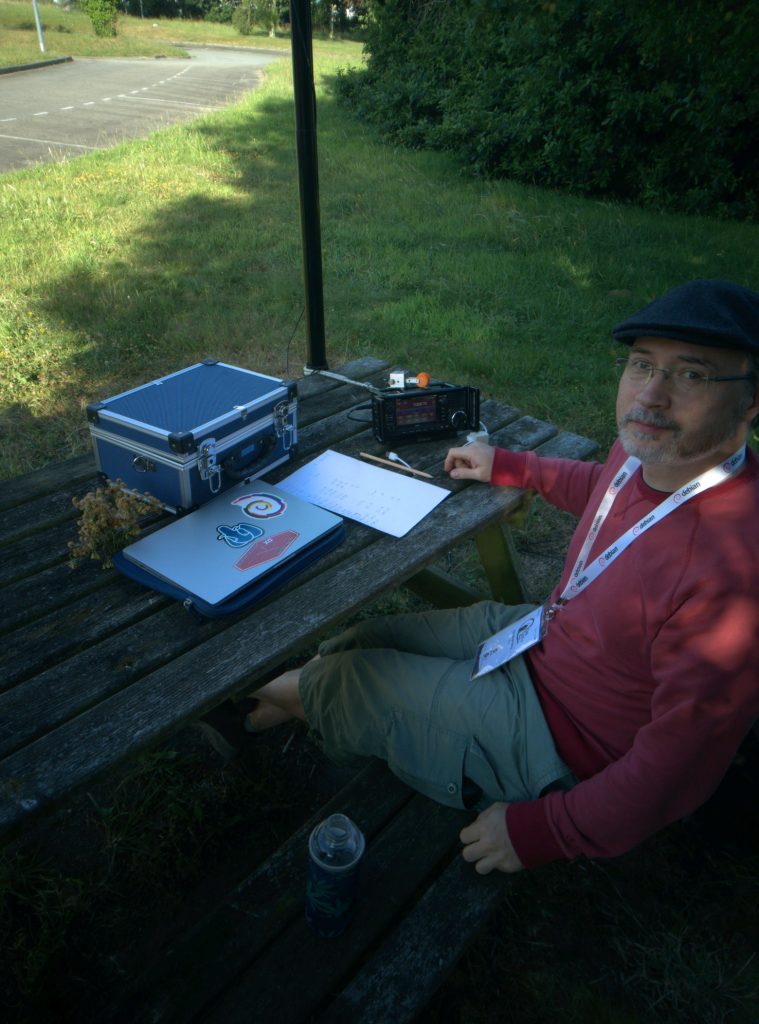
Sunday, July 13th It started last Sunday with traveling to the conference. I got on the Eurostar in Duisburg and we left on time, but even before reaching Cologne, the train was already one hour delayed for external reasons, collecting yet another hour between Aachen and Liege for its own technical problems. "The train driver is working on trying to fix the problem." My original schedule had well over two hours for changing train stations in Paris, but being that late, I missed the connection to Brest in Montparnasse. At least in the end, the total delay was only one hour when finally arriving at the destination. Due to the French julliet quatorze fireworks approaching, buses in Brest were rerouted, but I managed to catch the right bus to the conference venue, already meeting a few Debian people on the way. The conference was hosted at the IMT Atlantique Brest campus, giving the event a nice university touch. I arrived shortly after 10 in the evening and after settling down a bit, got on one of the "magic" buses for transportation to the camping site where half of the attendees where stationed. I shared a mobile home with three other Debianites, where I got a small room for myself. Monday, July 14th Next morning, we took the bus back to the venue with a small breakfast and the opening session where Enrico Zini invited me to come to his and Nicolas Dandrimont's session about Debian community governance and curation, which I gladly did. Many ideas about conflict moderation and community steering were floated around. I hope some of that can be put into effect to make flamewars on the mailing lists less heated and more directed. After that, I attended Olly Betts' "Stemming with Snowball" session, which is the stemmer used also in PostgreSQL. Text search is one of the areas in PostgreSQL that I never really looked closely at, including the integration into the postgresql-common package, so it was nice to get more information about that. In preparation for the conference, a few of us Ham radio operators in Debian had decided to bring some radio gear to DebConf this year in order to perhaps spark more interest for our hobby among the fellow geeks. In the afternoon after the talks, I found a quieter spot just outside of the main hall and set up a shortwave antenna by attaching a 10m mast to one of the park benches there. The 40m band was still pretty much closed, but I could work a few stations from England, just across the channel from Bretagne, answering questions from interested passing-by Debian people between the contacts. Over time, the band opened and more European stations got into the log.
F/DF7CB in Brest (photo: Evangelos Ribeiro Tzaras)
Tuesday, July 15th Tuesday started with Helmut Grohne's session about "Reviving (un)schroot". The schroot program has been Debian's standard way of managing build chroots for a long time, but it is more and more being regarded as obsolete with all kinds of newer containerization and virtualization technologies taking over. Since many bits of Debian infrastructure depend on schroot, and its user interface is still very useful, Helmut reimplemented it using Linux namespaces and the "unshare" systemcall. I had already worked with him at the Hamburg Minidebconf to replace the apt.postgresql.org buildd machinery with the new system, but we were not quite there yet (network isolation is nice, but we still sometimes need proper networking), so it was nice to see the effort is still progressing and I will give his new scripts a try when I'm back home. Next, Stefano Rivera and Colin Watson presented Debusine, a new package repository and workflow management system. It looks very promising for anyone running their own repository, so perhaps yet another bit of apt.postgresql.org infrastructure to replace in the future. After that, I went to the Debian LTS BoF session by Santiago Ruano Rinc n and Bastien Roucari s - Debian releases plus LTS is what we are covering with apt.postgresql.org. Then there were bits from the DPL (Debian Project Leader), and a session moderated by Stefano Rivera interesting to me as a member of the Debian Technical Committee on the future structure of the packages required for cross-building in Debian, a topic which had been brought to TC a while ago. I am happy that we could resolve the issue without having to issue a formal TC ruling as the involved parties (kernel, glibc, gcc and the cross-build people) found a promising way forward themselves. DebConf is really a good way to get such issues unstuck. Ten years ago at the 2015 Heidelberg DebConf, Enrico had given a seminal "Semi-serious stand-up comedy" talk, drawing parallels between the Debian Open Source community and the BDSM community - "People doing things consensually together". (Back then, the talk was announced as "probably unsuitable for people of all ages".) With his unique presentation style and witty insights, the session made a lasting impression on everyone attending. Now, ten years later (and he and many in the audience being ten years older), he gave an updated version of it. We are now looking forward to the sequel in 2035. The evening closed with the famous DebConf tradition of the Cheese & Wine party in a old fort next to the coast, just below the conference venue. Even when he's a fellow Debian Developer, Ham and also TC member, I had never met Paul Tagliamonte in person before, but we spent most of the evening together geeking out on all things Debian and Ham radio.
The northern coast of Ushant (photo: Christoph Berg)
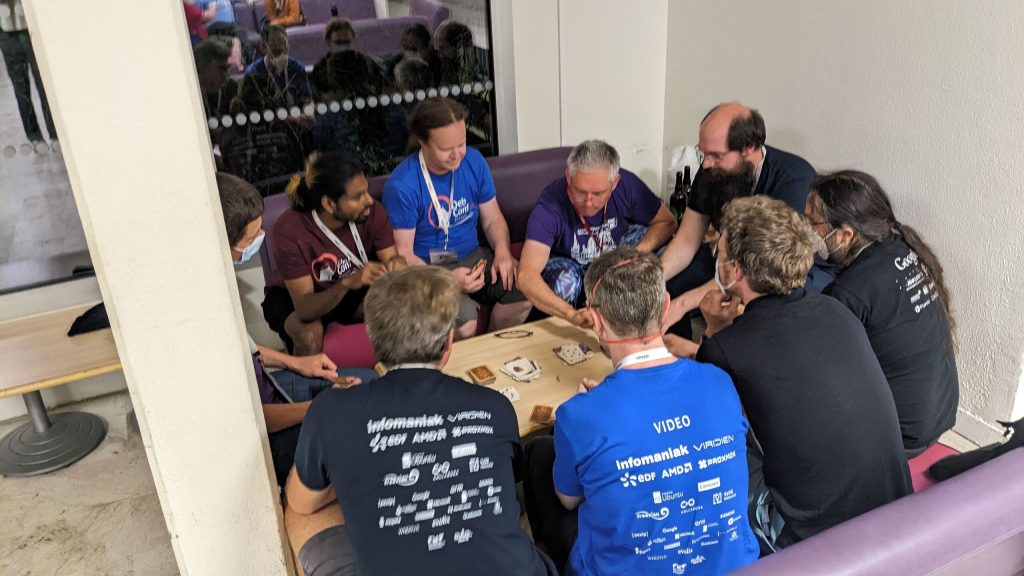
Wednesday, July 16th Wednesday already marked the end of the first half of the week, the day of the day trips. I had chosen to go to Ouessant island (Ushant in English) which marks the Western end of French mainland and hosts one of the lighthouses yielding the way into the English channel. The ferry trip included surprisingly big waves which left some participants seasick, but everyone recovered fast. After around one and a half hours we arrived, picked up the bicycles, and spent the rest of the day roaming the island. The weather forecast was originally very cloudy and 18 C, but over noon this turned into sunny and warm, so many got an unplanned sunburn. I enjoyed the trip very much - it made up for not having time visiting the city during the week. After returning, we spent the rest of the evening playing DebConf's standard game, Mao (spoiler alert: don't follow the link if you ever intend to play).
Having a nice day (photo: Christoph Berg)
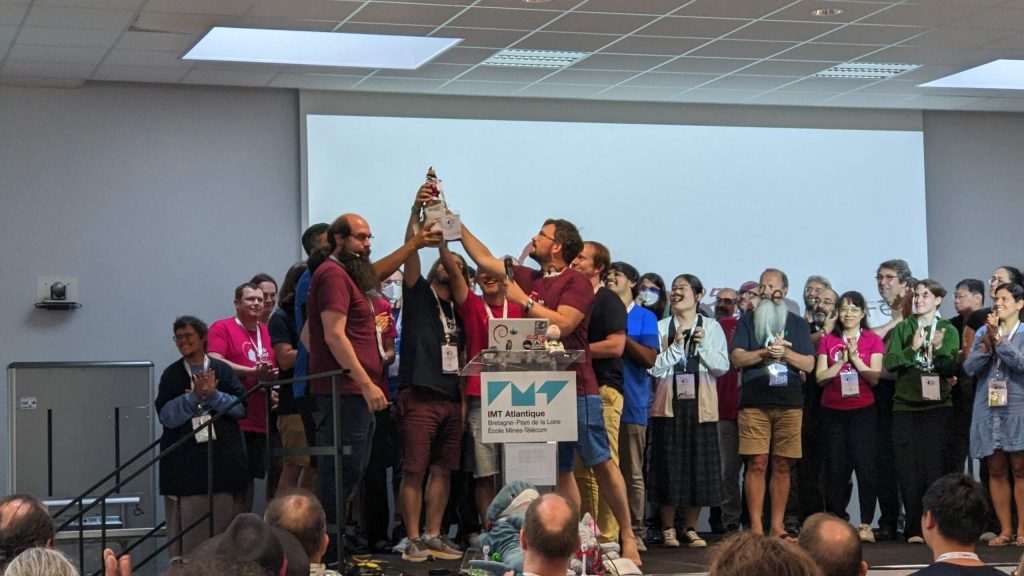
Thursday, July 17th The next day started with the traditional "Meet the Technical Committee" session. This year, we trimmed the usual slide deck down to remove the boring boilerplate parts, so after a very short introduction to the work of the committee by our chairman Matthew Vernon, we opened up the discussion with the audience, with seven (out of 8) TC members on stage. I think the format worked very well, with good input from attendees. Next up was "Don't fear the TPM" by Jonathan McDowell. A common misconception in the Free Software community is that the TPM is evil DRM hardware working against the user, but while it could be used in theory that way, the necessary TPM attestations seem to impossible to attain in practice, so that wouldn't happen anyway. Instead, it is a crypto coprocessor present in almost all modern computers that can be used to hold keys, for example to be used for SSH. It will also be interesting to research if we can make use of it for holding the Transparent Data Encryption keys for CYBERTEC's PostgreSQL Enterprise Edition. Aigars Mahinovs then directed everyone in place for the DebConf group picture, and Lucas Nussbaum started a discussion about archive-wide QA tasks in Debian, an area where I did a lot of work in the past and that still interests me. Antonio Terceiro and Paul Gevers followed up with techniques to track archive-wide rebuilding and testing of packages and in turn filing a lot of bugs to track the problems. The evening ended with the conference dinner, again in the fort close by the coast. DebConf is good for meeting new people, and I incidentally ran into another Chris, who happened to be one of the original maintainers of pgaccess, the pre-predecessor of today's pgadmin. I admit still missing this PostgreSQL frontend for its simplicity and ability to easily edit table data, but it disappeared around 2004. Friday, July 18th On Friday, I participated in discussion sessions around contributors.debian.org (PostgreSQL is planning to set up something similar) and the New Member process which I had helped to run and reform a decade or two ago. Agathe Porte (also a Ham radio operator, like so many others at the conference I had no idea of) then shared her work on rust-rewriting the slower parts of Lintian, the Debian package linter. Craig Small talked about "Free as in Bytes", the evolution of the Linux procps free command. Over the time and many kernel versions, the summary numbers printed became better and better, but there will probably never be a version that suits all use cases alike. Later over dinner, Craig (who is also a TC member) and I shared our experiences with these numbers and customers (not) understanding them. He pointed out that for PostgreSQL and looking at used memory in the presence of large shared memory buffers, USS (unique set size) and PSS (proportional set size) should be more realistic numbers than the standard RSS (resident set size) that the top utility is showing by default. Antonio Terceiro and Paul Gevers again joined to lead a session, now on ci.debian.net and autopkgtest, the test driver used for running tests on packages after then have been installed on a system. The PostgreSQL packages are heavily using this to make sure no regressions creep in even after builds have successfully completed and test re-runs are rescheduled periodically. The day ended with Bdale Garbee's electronics team BoF and Paul Tagliamonte and me setting up the radio station in the courtyard, again answering countless questions about ionospheric conditions and operating practice. Saturday, July 19th Saturday was the last conference day. In the first session, Nikos Tsipinakis and Federico Vaga from CERN announced that the LHC will be moving to Debian for the accelerator's frontend computers in their next "long shutdown" maintenance period in the next year. CentOS broke compatibility too often, and Debian trixie together with the extended LTS support will cover the time until the next long shutdown window in 2035, until when the computers should have all been replaced with newer processors covering higher x86_64 baseline versions. The audience was very delighted to hear that Debian is now also being used in this prestige project. Ben Hutchings then presented new Linux kernel features. Particularly interesting for me was the support for atomic writes spanning more than one filesystem block. When configured correctly, this would mean PostgreSQL didn't have to record full-page images in the WAL anymore, increasing throughput and performance. After that, the Debian ftp team discussed ways to improve review of new packages in the archive, and which of their processes could be relaxed with new US laws around Open Source and cryptography algorithms export. Emmanuel Arias led a session on Salsa CI, Debian's Gitlab instance and standard CI pipeline. (I think it's too slow, but the runners are not under their control.) Julian Klode then presented new features in APT, Debian's package manager. I like the new display format (and a tiny bit of that is also from me sending in wishlist bugs). In the last round of sessions this week, I then led the Ham radio BoF with an introduction into the hobby and how Debian can be used. Bdale mentioned that the sBitx family of SDR radios is natively running Debian, so stock packages can be used from the radio's touch display. We also briefly discussed his involvement in ARDC and the possibility to get grants from them for Ham radio projects. Finally, DebConf wrapped up with everyone gathering in the main auditorium and cheering the organizers for making the conference possible and passing Pollito, the DebConf mascot, to the next organizer team.
Pollito on stage (photo: Christoph Berg)

Sunday, July 20th Zoom back to the train: I made it through the Paris metro and I'm now on the Eurostar back to Germany. It has been an intense week with all the conference sessions and meeting all the people I had not seen so long. There are a lot of new ideas to follow up on both for my Debian and PostgreSQL work. Next year's DebConf will take place in Santa Fe, Argentina. I haven't yet decided if I will be going, but I can recommend the experience to everyone! The post The Debian Conference 2025 in Brest appeared first on CYBERTEC PostgreSQL Services & Support.

12 July 2025

Freexian Collaborators: Debian Contributions: unschroot, DebConf 25 preparations and more! (by Anupa Ann Joseph)

Debian Contributions: 2025-06 Contributing to Debian is part of Freexian s mission. This article covers the latest achievements of Freexian and their collaborators. All of this is made possible by organizations subscribing to our Long Term Support contracts and consulting services.

unschroot, by Helmut Grohne Quite a while back, the sbuild maintainers added the unshare backend to enable better isolation of builds, but in doing so sbuild now effectively bundles a container runtime. unschroot is an attempt to separate containment from sbuild by implementing the same features and more in a schroot-compatible way. Last year, vague feature parity was achieved, but going beyond required changing the model from keeping state in the filesystem to keeping Linux namespaces as session state. A proof of concept is now available. While it still has sharp corners, it enables building packages on a squashfs with an overlayfs or id-mapped bind mounting of your ccache neither of which is possible with sbuild s unshare backend. There shall be a DebConf25 presentation about this work.

DebConf 25, by Stefano Rivera, Santiago Ruano Rinc n and Lucas Kanashiro DebConf 25 is now under way in Brest, France. Santiago is part of the local team running the event, and Stefano Rivera is part of the DebConf committee, supporting the event, as well as the video team. Both have spent considerable time in the last month, getting things ready for DebConf. Lucas Kanashiro built the schedule for DebConf 25. Also followed-up on multiple requests from speakers and stakeholders.

Miscellaneous contributions
  • Carles did general maintenance on simplemonitor, qnetload and qdacco packages; provided simplemonitor upstream feedback on new feature.
  • Carles s updates about po-debconf-manager: prepared for DebCamp/DebConf, used it for reviewing and merging different packages. Also fixed multispeech po-debconf templates.
  • Colin Watson found a crash in pterm (PuTTY s terminal emulator) when running in a Wayland session, and backported the resulting upstream fix to trixie.
  • Colin responded to an upstream groff bug report about URLs being dropped from PDF output in some cases on Debian, and backported the fix to trixie.
  • Helmut dealt with issues related to /usr-move. Most prominently Christian Hofstaedler reported an upgrade failure. /usr-move is a contributing factor here as that s what caused systemd to upgrade a number of Breaks and Replaces to Conflicts. dumat needed some help with dropping mips64el from testing and Theodore Ts o forwarded a fuse2fs upgrade failure.
  • Helmut sent patches for 25 cross build failures.
  • Helmut debugged rebootstrap failures and worked around build failures related to gcc-15 when they had patches and sent ones otherwise.
  • Thorsten Alteholz uploaded cups to fix a FTBFS-bug. This bug was introduced by a change in systemd, which bumped the maximum number of open files. This resulted in a longer test duration that triggered a timeout so that the build failed. Thorsten also uploaded mtink and lprng, which got new translation files.
  • Lucas Kanashiro followed-up on multiple unblock requests for ruby packages due to reproducible builds fixes. All of them were accepted into trixie.
  • Lucas Kanashiro discussed license issues with upstream involving Redis 8 new license and the possibility of backporting patches to old versions with a different license. Outcome is that upstream is adding a new paragraph to their license to allow the backport for security fixes.
  • Lucas Kanashiro fixed multiple CVEs reported against valkey in unstable and trixie.
  • Lucas Kanashiro gave a Debian packaging course of 8 hours for students at a free software development course at the University of Sao Paulo.
  • Lucas Kanashiro fixed a couple of cross building issues in the ruby ecosystem with Helmut s help.
  • Lucas Kanashiro is working on a debci fix for #1107645 (ongoing).
  • Stefano Rivera updated python-mitogen to the latest beta releases with upstream support for Ansible 12.
  • Stefano Rivera spent some time winding up DebConf 24 books.
  • Stefano Rivera fixed packages that were blocking cPython 3.13.5 from migrating to trixie, and filed an unblock request.
  • Stefano Rivera investigated a regression in cPython 3.13 that was breaking OpenStack Nova. There is a patch in progress for cPython, but it is not ready for use, yet.
  • Santiago reviewed different MRs in Salsa CI. For example, the MR !605 proposed by Aquila that aims to introduce a new debdiff job, as well as the autopkgtest MR !33 to extend the support to architectures other than amd64. Also reviewed MR !611 by Aayush Raj that fixes the autopkgtest images cleanup. And the MR !614, prepared by Charles, to change the suffix name used to bump the version used in the pipeline.
  • Anupa procured supplies needed for the DebConf ID tag for the DebConf registration team and co-ordinated its transport to the venue.
  • Anupa joined Nattie to complete the registration team tasks.

21 May 2025

Simon Quigley: Fences and Values

Don t knock the fence down before you know why it s up. I repeat this phrase over and over again, yet the (metaphorical) Homeowner s Association still decides my fence is the wrong color.Well, now you get to know why the fence is up. If anyone s actually willing to challenge me on this level, I d welcome it.The four ideas I d like to discuss are this: quantum physics, Lutheranism, mental resilience, and psychology. I ve been studying these topics intensely for the past decade as a passion project. I m just going to let my thoughts flow, but I d like to hear other opinions on this.Can the mysteries of the mind, the subatomic world, and faith converge to reveal deeper truths?When it comes to self-taught knowledge on analysis, I m mostly learned on Freud, with some hints of Jung and Peterson. I ve read much of the original source material, and watched countless presentations on it. This all being said, I m both learned on Rothbard and Marx, so if there is a major flaw in the way of Freud is frowned upon, I d genuinely like to know so I can update my research and juxtapose the two schools of thought.Alongside this, although probably not directly relevant, I m learned on John Locke and transcendentalism. What I d like to focus on here is this the Id.The Id is the pleasure-seeking, instinctual part of the psyche. Jung further extends this into the idea of the shadow self, and Peterson maps the meanings of these texts into a combined work (at least in my rudimentary understanding).In my research, the Id represents the part of your psyche that deals with religious values. As an example, if you re an impulsive person, turning to a spiritual or religious outlet can be highly beneficial. I ve been using references from the foundational text of the Judaeo-Christian value system this entire time, feel free to re-read my other blog posts (instead of claiming they don t exist).Let s tie this into quantum physics. This is the part where I ll struggle most. I ve watched several movies about this, read several books, and even learned about it academically, but quantum physics is likely to be my weak spot here.I did some research, and here are the elements I m looking for: uncertainty principle, wave-particle duality, quantum entanglement, and the observer effect.I already know about the cat in the box. And the Cat in the Hat, for that matter. I know about wave-particle duality from an incredibly intelligent high school physics teacher of mine. I know about the uncertainty principle purely in a colloquial sense. The remaining element I need to wrap my head around is quantum entanglement, but it feels like I m almost there.These concepts do actually challenge the idea of pure free will. It s almost like we re coming full circle. Some theologians (including myself, if you can call me a self-taught one) do believe the idea of quantum indeterminacy can be a space where divine action may take place. You could also liken the unpredictable nature of the Id to quantum indeterminacy as well. These are ones to think about, because in all reality, they re subjective opinions. I do believe they re interconnected.In terms of Lutheranism, I ll be short on this one. Please do go read the full history behind Martin Luther and his turbulent relationship with Catholicism. I m not a Bible thumper, and I actually think this is the first time I ve mentioned religion publicly at all. This being said, now I m actually ready to defend the points on an academic level.The Id represents hidden psychological forces, quantum physics reveals subatomic mysteries, and Lutheranism emphasizes faith in the unseen God. Okay, so we have the baseline. Now, time for some mental resilience. When I think of mental resilience, the first people I think of are David Goggins and Jocko Willink. I ve also enjoyed Dr. Andrew Huberman s podcast.The idea there is simple if you understand exactly how to learn, you know your fundamentals well enough to draw them and explain them vividly on a whiteboard, and you can make it a habit, at that point you re ready to work on your mental resilience. Little by little, gradually, how far can you push the bar towards the ceiling?There s obviously limits. People sometimes get scared when I mention mental resilience, but obviously that s a bit of a catch 22. There are plenty of satirical videos out there, and of course, I don t believe in Goggins or Jocko wholeheartedly. They re just tools in the toolbox when times get tough.I wish you all well, and I hope this gets you thinking about those people who just insist there is no God or higher being, and think you re stupid for believing there is one. Those people obviously haven t read analysis, in my own opinion.Have a great night!

3 March 2025

Bits from Debian: Bits from the DPL

Dear Debian community, this is bits from DPL for February. Ftpmaster team is seeking for new team members In December, Scott Kitterman announced his retirement from the project. I personally regret this, as I vividly remember his invaluable support during the Debian Med sprint at the start of the COVID-19 pandemic. He even took time off to ensure new packages cleared the queue in under 24 hours. I want to take this opportunity to personally thank Scott for his contributions during that sprint and for all his work in Debian. With one fewer FTP assistant, I am concerned about the increased workload on the remaining team. I encourage anyone in the Debian community who is interested to consider reaching out to the FTP masters about joining their team. If you're wondering about the role of the FTP masters, I'd like to share a fellow developer's perspective:
"My read on the FTP masters is:
  • In truth, they are the heart of the project.
  • They know it.
  • They do a fantastic job."
I fully agree and see it as part of my role as DPL to ensure this remains true for Debian's future. If you're looking for a way to support Debian in a critical role where many developers will deeply appreciate your work, consider reaching out to the team. It's a great opportunity for any Debian Developer to contribute to a key part of the project. Project Status: Six Months of Bug of the Day In my Bits from the DPL talk at DebConf24, I announced the Tiny Tasks effort, which I intended to start with a Bug of the Day project. Another idea was an Autopkgtest of the Day, but this has been postponed due to limited time resources-I cannot run both projects in parallel. The original goal was to provide small, time-bound examples for newcomers. To put it bluntly: in terms of attracting new contributors, it has been a failure so far. My offer to explain individual bug-fixing commits in detail, if needed, received no response, and despite my efforts to encourage questions, none were asked. However, the project has several positive aspects: experienced developers actively exchange ideas, collaborate on fixing bugs, assess whether packages are worth fixing or should be removed, and work together to find technical solutions for non-trivial problems. So far, the project has been engaging and rewarding every day, bringing new discoveries and challenges-not just technical, but also social. Fortunately, in the vast majority of cases, I receive positive responses and appreciation from maintainers. Even in the few instances where help was declined, it was encouraging to see that in two cases, maintainers used the ping as motivation to work on their packages themselves. This reflects the dedication and high standards of maintainers, whose work is essential to the project's success. I once used the metaphor that this project is like wandering through a dark basement with a lone flashlight-exploring aimlessly and discovering a wide variety of things that have accumulated over the years. Among them are true marvels with popcon >10,000, ingenious tools, and delightful games that I only recently learned about. There are also some packages whose time may have come to an end-but each of them reflects the dedication and effort of those who maintained them, and that deserves the utmost respect. Leaving aside the challenge of attracting newcomers, what have we achieved since August 1st last year? With some goodwill, you can see a slight impact on the trends.debian.net graphs (thank you Lucas for the graphs), but I would never claim that this project alone is responsible for the progress. What I have also observed is the steady stream of daily uploads to the delayed queue, demonstrating the continuous efforts of many contributors. This ongoing work often remains unseen by most-including myself, if not for my regular check-ins on this list. I would like to extend my sincere thanks to everyone pushing fixes there, contributing to the overall quality and progress of Debian's QA efforts. If you examine the graphs for "Version Control System" and "VCS Hosting" with the goodwill mentioned above, you might notice a positive trend since mid-last year. The "Package Smells" category has also seen reductions in several areas: "no git", "no DEP5 copyright", "compat <9", and "not salsa". I'd also like to acknowledge the NMUers who have been working hard to address the "format != 3.0" issue. Thanks to all their efforts, this specific issue never surfaced in the Bug of the Day effort, but their contributions deserve recognition here. The experience I gathered in this project taught me a lot and inspired me to some followup we should discuss at a Sprint at DebCamp this year. Finally, if any newcomer finds this information interesting, I'd be happy to slow down and patiently explain individual steps as needed. All it takes is asking questions on the Matrix channel to turn this into a "teaching by example" session. By the way, for newcomers who are interested, I used quite a few abbreviations-all of which are explained in the Debian Glossary. Sneak Peek at Upcoming Conferences I will join two conferences in March-feel free to talk to me if you spot me there.
  1. FOSSASIA Summit 2025 (March 13-15, Bangkok, Thailand) Schedule: https://eventyay.com/e/4c0e0c27/schedule
  2. Chemnitzer Linux-Tage (March 22-23, Chemnitz, Germany) Schedule: https://chemnitzer.linux-tage.de/2025/de/programm/vortraege
Both events will have a Debian booth-come say hi! Kind regards Andreas.

7 January 2025

Jonathan Wiltshire: Using TPM for Automatic Disk Decryption in Debian 12

These days it s straightforward to have reasonably secure, automatic decryption of your root filesystem at boot time on Debian 12. Here s how I did it on an existing system which already had a stock kernel, secure boot enabled, grub2 and an encrypted root filesystem with the passphrase in key slot 0. There s no need to switch to systemd-boot for this setup but you will use systemd-cryptenroll to manage the TPM-sealed key. If that offends you, there are other ways of doing this.

Caveat The parameters I ll seal a key against in the TPM include a hash of the initial ramdisk. This is essential to prevent an attacker from swapping the image for one which discloses the key. However, it also means the key has to be re-sealed every time the image is rebuilt. This can be frequent, for example when installing/upgrading/removing packages which include a kernel module. You won t get locked out (as long as you still have a passphrase in another slot), but will need to re-seal the key to restore the automation. You can also choose not to include this parameter for the seal, but that opens the door to such an attack.

Caution: these are the steps I took on my own system. You may need to adjust them to avoid ending up with a non-booting system.

Check for a usable TPM device We ll bind the secure boot state, kernel parameters, and other boot measurements to a decryption key. Then, we ll seal it using the TPM. This prevents the disk being moved to another system, the boot chain being tampered with and various other attacks.
# apt install tpm2-tools
# systemd-cryptenroll --tpm2-device list
PATH        DEVICE     DRIVER 
/dev/tpmrm0 STM0125:00 tpm_tis

Clean up older kernels including leftover configurations I found that previously-removed (but not purged) kernel packages sometimes cause dracut to try installing files to the wrong paths. Identify them with:
# apt install aptitude
# aptitude search '~c'
Change search to purge or be more selective, this part is an exercise for the reader.

Switch to dracut for initramfs images Unless you have a particular requirement for the default initramfs-tools, replace it with dracut and customise:
# mkdir /etc/dracut.conf.d
# echo 'add_dracutmodules+=" tpm2-tss crypt "' > /etc/dracut.conf.d/crypt.conf
# apt install dracut

Remove root device from crypttab, configure grub Remove (or comment) the root device from /etc/crypttab and rebuild the initial ramdisk with dracut -f. Edit /etc/default/grub and add rd.auto rd.luks=1 to GRUB_CMDLINE_LINUX. Re-generate the config with update-grub. At this point it s a good idea to sanity-check the initrd contents with lsinitrd. Then, reboot using the new image to ensure there are no issues. This will also have up-to-date TPM measurements ready for the next step.

Identify device and seal a decryption key
# lsblk -ip -o NAME,TYPE,MOUNTPOINTS
NAME                                                    TYPE  MOUNTPOINTS
/dev/nvme0n1p4                                          part  /boot
/dev/nvme0n1p5                                          part  
 -/dev/mapper/luks-deff56a9-8f00-4337-b34a-0dcda772e326 crypt 
   -/dev/mapper/lv-var                                  lvm   /var
   -/dev/mapper/lv-root                                 lvm   /
   -/dev/mapper/lv-home                                 lvm   /home
In this example my root filesystem is in a container on /dev/nvme0n1p5. The existing passphrase key is in slot 0.
# systemd-cryptenroll --tpm2-device=auto --tpm2-pcrs=7+8+9+14 /dev/nvme0n1p5
Please enter current passphrase for disk /dev/nvme0n1p5: ********
New TPM2 token enrolled as key slot 1.
The PCRs I chose (7, 8, 9 and 14) correspond to the secure boot policy, kernel command line (to prevent init=/bin/bash-style attacks), files read by grub including that crucial initrd measurement, and secure boot MOK certificates and hashes. You could also include PCR 5 for the partition table state, and any others appropriate for your setup.

Reboot You should now be able to reboot and the root device will be unlocked automatically, provided the secure boot measurements remain consistent. The key slot protected by a passphrase (mine is slot 0) is now your recovery key. Do not remove it!
Please consider supporting my work in Debian and elsewhere through Liberapay.

16 January 2024

Jonathan Dowland: Two reissued Coil LPs

Happy 2024! DAIS have continued their programme of posthumous Coil remasters and re-issues. Constant Shallowness Leads To Evil was remastered by Josh Bonati in 2021 and re-released in 2022 in a dizzying array of different packaging variants. The original releases in 2000 had barely any artwork, and given that void I think Nathaniel Young has done a great job of creating something compelling.
Constant Shallowness leads to Evil and Queens of te Circulating Library
A limited number of the original re-issue have special lenticular covers, although these were not sold by any distributors outside the US. I tried to find a copy on my trip to Portland in 2022, to no avail. Last year DAIS followed Constant with Queens Of The Circulating Library, same deal: limited lenticular covers, US only. Both are also available digital-only, e.g. on Bandcamp: Constant , Queens . The original, pre-remastered releases have been freely available on archive.org for a long time: Constant , Queens Both of these releases feel to me that they were made available by the group somewhat as an afterthought, having been produced primarily as part of their live efforts. (I'm speculating freely here, it might not be true). Live takes of some of this material exist in the form of Coil Presents Time Machines, which has not (yet) been reissued. In my opinion this is a really compelling recording. I vividly remember listening to this whilst trying to get an hour's rest in a hotel somewhere on a work trip. It took me to some strange places! I'll leave you from one of my favourite moments from "Colour Sound Oblivion", Coil's video collection of live backdrops. When this was performed live it was also called "Constant Shallowness Leads To Evil", although it's distinct from the material on the LP: also available on archive.org. A version of this Constant made it onto a Russian live bootleg, which is available on Spotify and Bandcamp complete with some John Balance banter: we only do this on religious holidays Constant Shallowness Leads to Evil by Coil

15 January 2024

Russ Allbery: Review: The Library of Broken Worlds

Review: The Library of Broken Worlds, by Alaya Dawn Johnson
Publisher: Scholastic Press
Copyright: June 2023
ISBN: 1-338-29064-9
Format: Kindle
Pages: 446
The Library of Broken Worlds is a young-adult far-future science fantasy. So far as I can tell, it's stand-alone, although more on that later in the review. Freida is the adopted daughter of Nadi, the Head Librarian, and her greatest wish is to become a librarian herself. When the book opens, she's a teenager in highly competitive training. Freida is low-wetware, without the advanced and expensive enhancements of many of the other students competing for rare and prized librarian positions, which she makes up for by being the most audacious. She doesn't need wetware to commune with the library material gods. If one ventures deep into their tunnels and consumes their crystals, direct physical communion is possible. The library tunnels are Freida's second home, in part because that's where she was born. She was created by the Library, and specifically by Iemaja, the youngest of the material gods. Precisely why is a mystery. To Nadi, Freida is her daughter. To Quinn, Nadi's main political rival within the library, Freida is a thing, a piece of the library, a secondary and possibly rogue AI. A disruptive annoyance. The Library of Broken Worlds is the sort of science fiction where figuring out what is going on is an integral part of the reading experience. It opens with a frame story of an unnamed girl (clearly Freida) waking the god Nameren and identifying herself as designed for deicide. She provokes Nameren's curiosity and offers an Arabian Nights bargain: if he wants to hear her story, he has to refrain from killing her for long enough for her to tell it. As one might expect, the main narrative doesn't catch up to the frame story until the very end of the book. The Library is indeed some type of library that librarians can search for knowledge that isn't available from more mundane sources, but Freida's personal experience of it is almost wholly religious and oracular. The library's material gods are identified as AIs, but good luck making sense of the story through a science fiction frame, even with a healthy allowance for sufficiently advanced technology being indistinguishable from magic. The symbolism and tone is entirely fantasy, and late in the book it becomes clear that whatever the material gods are, they're not simple technological AIs in the vein of, say, Banks's Ship Minds. Also, the Library is not solely a repository of knowledge. It is the keeper of an interstellar peace. The Library was founded after the Great War, to prevent a recurrence. It functions as a sort of legal system and grand tribunal in ways that are never fully explained. As you might expect, that peace is based more on stability than fairness. Five of the players in this far future of humanity are the Awilu, the most advanced society and the first to leave Earth (or Tierra as it's called here); the Mah m, who possess the material war god Nameren of the frame story; the Lunars and Martians, who dominate the Sol system; and the surviving Tierrans, residents of a polluted and struggling planet that is ruthlessly exploited by the Lunars. The problem facing Freida and her friends at the start of the book is a petition brought by a young Tierran against Lunar exploitation of his homeland. His name is Joshua, and Freida is more than half in love with him. Joshua's legal argument involves interpretation of the freedom node of the treaty that ended the Great War, a node that precedent says gives the Lunars the freedom to exploit Tierra, but which Joshua claims has a still-valid originalist meaning granting Tierrans freedom from exploitation. There is, in short, a lot going on in this book, and "never fully explained" is something of a theme. Freida is telling a story to Nameren and only explains things Nameren may not already know. The reader has to puzzle out the rest from the occasional hint. This is made more difficult by the tendency of the material gods to communicate only in visions or guided hallucinations, full of symbolism that the characters only partly explain to the reader. Nonetheless, this did mostly work, at least for me. I started this book very confused, but by about the midpoint it felt like the background was coming together. I'm still not sure I understand the aurochs, baobab, and cicada symbolism that's so central to the framing story, but it's the pleasant sort of stretchy confusion that gives my brain a good workout. I wish Johnson had explained a few more things plainly, particularly near the end of the book, but my remaining level of confusion was within my tolerances. Unfortunately, the ending did not work for me. The first time I read it, I had no idea what it meant. Lots of baffling, symbolic things happened and then the book just stopped. After re-reading the last 10%, I think all the pieces of an ending and a bit of an explanation are there, but it's absurdly abbreviated. This is another book where the author appears to have been finished with the story before I was. This keeps happening to me, so this probably says something more about me than it says about books, but I want books to have an ending. If the characters have fought and suffered through the plot, I want them to have some space to be happy and to see how their sacrifices play out, with more detail than just a few vague promises. If much of the book has been puzzling out the nature of the world, I would like some concrete confirmation of at least some of my guesswork. And if you're going to end the book on radical transformation, I want to see the results of that transformation. Johnson does an excellent job showing how brutal the peace of the powerful can be, and is willing to light more things on fire over the course of this book than most authors would, but then doesn't offer the reader much in the way of payoff. For once, I wish this stand-alone turned out to be a series. I think an additional book could be written in the aftermath of this ending, and I would definitely read that novel. Johnson has me caring deeply about these characters and fascinated by the world background, and I'd happily spend another 450 pages finding out what happens next. But, frustratingly, I think this ending was indeed intended to wrap up the story. I think this book may fall between a few stools. Science fiction readers who want mysterious future worlds to be explained by the end of the book are going to be frustrated by the amount of symbolism, allusion, and poetic description. Literary fantasy readers, who have a higher tolerance for that style, are going to wish for more focused and polished writing. A lot of the story is firmly YA: trying and failing to fit in, developing one's identity, coming into power, relationship drama, great betrayals and regrets, overcoming trauma and abuse, and unraveling lies that adults tell you. But this is definitely not a straight-forward YA plot or world background. It demands a lot from the reader, and while I am confident many teenage readers would rise to that challenge, it seems like an awkward fit for the YA marketing category. About 75% of the way in, I would have told you this book was great and you should read it. The ending was a let-down and I'm still grumpy about it. I still think it's worth your attention if you're in the mood for a sink-or-swim type of reading experience. Just be warned that when the ride ends, I felt unceremoniously dumped on the pavement. Content warnings: Rape, torture, genocide. Rating: 7 out of 10

11 November 2023

Matthias Klumpp: AppStream 1.0 released!

Today, 12 years after the meeting where AppStream was first discussed and 11 years after I released a prototype implementation I am excited to announce AppStream 1.0!    Check it out on GitHub, or get the release tarball or read the documentation or release notes!

Some nostalgic memories I was not in the original AppStream meeting, since in 2011 I was extremely busy with finals preparations and ball organization in high school, but I still vividly remember sitting at school in the students lounge during a break and trying to catch the really choppy live stream from the meeting on my borrowed laptop (a futile exercise, I watched parts of the blurry recording later). I was extremely passionate about getting software deployment to work better on Linux and to improve the overall user experience, and spent many hours on the PackageKit IRC channel discussing things with many amazing people like Richard Hughes, Daniel Nicoletti, Sebastian Heinlein and others. At the time I was writing a software deployment tool called Listaller this was before Linux containers were a thing, and building it was very tough due to technical and personal limitations (I had just learned C!). Then in university, when I intended to recreate this tool, but for real and better this time as a new project called Limba, I needed a way to provide metadata for it, and AppStream fit right in! Meanwhile, Richard Hughes was tackling the UI side of things while creating GNOME Software and needed a solution as well. So I implemented a prototype and together we pretty much reshaped the early specification from the original meeting into what would become modern AppStream. Back then I saw AppStream as a necessary side-project for my actual project, and didn t even consider me as the maintainer of it for quite a while (I hadn t been at the meeting afterall). All those years ago I had no idea that ultimately I was developing AppStream not for Limba, but for a new thing that would show up later, with an even more modern design called Flatpak. I also had no idea how incredibly complex AppStream would become and how many features it would have and how much more maintenance work it would be and also not how ubiquitous it would become. The modern Linux desktop uses AppStream everywhere now, it is supported by all major distributions, used by Flatpak for metadata, used for firmware metadata via Richard s fwupd/LVFS, runs on every Steam Deck, can be found in cars and possibly many places I do not know yet.

What is new in 1.0?

API breaks The most important thing that s new with the 1.0 release is a bunch of incompatible changes. For the shared libraries, all deprecated API elements have been removed and a bunch of other changes have been made to improve the overall API and especially make it more binding-friendly. That doesn t mean that the API is completely new and nothing looks like before though, when possible the previous API design was kept and some changes that would have been too disruptive have not been made. Regardless of that, you will have to port your AppStream-using applications. For some larger ones I already submitted patches to build with both AppStream versions, the 0.16.x stable series as well as 1.0+. For the XML specification, some older compatibility for XML that had no or very few users has been removed as well. This affects for example release elements that reference downloadable data without an artifact block, which has not been supported for a while. For all of these, I checked to remove only things that had close to no users and that were a significant maintenance burden. So as a rule of thumb: If your XML validated with no warnings with the 0.16.x branch of AppStream, it will still be 100% valid with the 1.0 release. Another notable change is that the generated output of AppStream 1.0 will always be 1.0 compliant, you can not make it generate data for versions below that (this greatly reduced the maintenance cost of the project).

Developer element For a long time, you could set the developer name using the top-level developer_name tag. With AppStream 1.0, this is changed a bit. There is now a developer tag with a name child (that can be translated unless the translate="no" attribute is set on it). This allows future extensibility, and also allows to set a machine-readable id attribute in the developer element. This permits software centers to group software by developer easier, without having to use heuristics. If we decide to extend the developer information per-app in future, this is also now possible. Do not worry though the developer_name tag is also still read, so there is no high pressure to update. The old 0.16.x stable series also has this feature backported, so it can be available everywhere. Check out the developer tag specification for more details.

Scale factor for screenshots Screenshot images can now have a scale attribute, to indicate an (integer) scaling factor to apply. This feature was a breaking change and therefore we could not have it for the longest time, but it is now available. Please wait a bit for AppStream 1.0 to become deployed more widespread though, as using it with older AppStream versions may lead to issues in some cases. Check out the screenshots tag specification for more details.

Screenshot environments It is now possible to indicate the environment a screenshot was recorded in (GNOME, GNOME Dark, KDE Plasma, Windows, etc.) via an environment attribute on the respective screenshot tag. This was also a breaking change, so use it carefully for now! If projects want to, they can use this feature to supply dedicated screenshots depending on the environment the application page is displayed in. Check out the screenshots tag specification for more details.

References tag This is a feature more important for the scientific community and scientific applications. Using the references tag, you can associate the AppStream component with a DOI (Digital object identifier) or provide a link to a CFF file to provide citation information. It also allows to link to other scientific registries. Check out the references tag specification for more details.

Release tags Releases can have tags now, just like components. This is generally not a feature that I expect to be used much, but in certain instances it can become useful with a cooperating software center, for example to tag certain releases as long-term supported versions.

Multi-platform support Thanks to the interest and work of many volunteers, AppStream (mostly) runs on FreeBSD now, a NetBSD port exists, support for macOS was written and a Windows port is on its way! Thank you to everyone working on this

Better compatibility checks For a long time I thought that the AppStream library should just be a thin layer above the XML and that software centers should just implement a lot of the actual logic. This has not been the case for a while, but there was still a lot of complex AppStream features that were hard for software centers to implement and where it makes sense to have one implementation that projects can just use. The validation of component relations is one such thing. This was implemented in 0.16.x as well, but 1.0 vastly improves upon the compatibility checks, so you can now just run as_component_check_relations and retrieve a detailed list of whether the current component will run well on the system. Besides better API for software developers, the appstreamcli utility also has much improved support for relation checks, and I wrote about these changes in a previous post. Check it out! With these changes, I hope this feature will be used much more, and beyond just drivers and firmware.

So much more! The changelog for the 1.0 release is huge, and there are many papercuts resolved and changes made that I did not talk about here, like us using gi-docgen (instead of gtkdoc) now for nice API documentation, or the many improvements that went into better binding support, or better search, or just plain bugfixes.

Outlook I expect the transition to 1.0 to take a bit of time. AppStream has not broken its API for many, many years (since 2016), so a bunch of places need to be touched even if the changes themselves are minor in many cases. In hindsight, I should have also released 1.0 much sooner and it should not have become such a mega-release, but that was mainly due to time constraints. So, what s in it for the future? Contrary to what I thought, AppStream does not really seem to be done and fetature complete at a point, there is always something to improve, and people come up with new usecases all the time. So, expect more of the same in future: Bugfixes, validator improvements, documentation improvements, better tools and the occasional new feature. Onwards to 1.0.1!

Next.