Debian packages may seem simple to generate using the many bundling tools out there, but it is much more involved than that. There are policies and procedures in place before stuff can get into Debian, including how the package is made, what it must include, and more. This article aims to cover the stuff prospective contributors to Debian should know that other resources miss.When I started, I didn't know a lot of this and had to learn a lot along the way. Hopefully what I've put together here will make it easier for the next person that comes along.
Find the right thing to work onPackages are the bread and butter of Debian, so it may be the first place you look at. There are two ways to go: adopting or helping out with an existing package, or introducing a new package.Outside of packaging, contributing to Debian's infrastructure is also very much welcomed and appreciated, especially as a lot of it is decades old. Some examples include Lintian (Debian package linter), DAK (archive software), and distro-tracker (package info tracker), and there are many, many other projects in need of help.If you are a native speaker of any non-English languages, you may want to also consider helping translate stuff. Everything from the installer to mentors.debian.net to package descriptions needs volunteers to translate.This article mainly focuses on the packaging side of things.
Working on an existing packagewnpp.debian.net lists packages that need help with maintenance.The most useful thing you can do as someone interested in packaging is to help with an existing package. You can either:
Help other maintainers on an existing package. Maintainers will publish Request for Help (RFH) bugs asking for assistance to maintain a package. Some packages are so unruly that help is welcome even when not asked (e.g. Docker).
Adopt an orphaned package. An orphaned package is one where the previous maintainer could not continue maintaining it for whatever reason, and so it needs a new maintainer (or deletion). These are indicated by Orphaned (O) bugs. Request for Adoption (RFA) bugs are similar, as they mean the maintainer is about to orphan the package.Some orphaned packages are effectively abandoned, being both unmaintained upstream and having no users in Debian, but many maintainers will choose to orphan these packages rather than remove them. Keep this in mind when looking through the list.
By the way, this is how I started contributing to Debian! With the help of a Debian Developer, I adopted kitty, and to this day I continue to maintain it.
Introducing a new packageMany people opt to start their Debian contribution journey through producing a new package for the Debian archive. Unfortunately, many people do not do this properly or try to use Debian as a dumping ground for their own software, so here is a general checklist to see if something belongs in Debian:Repology shows an overview of a package across Linux distributions.
How established is the software, and is it still maintained? The longer a project has been around while continuing to be actively maintained, the more likely it is to continue to be maintained in the long-term.
How many people use the software? Hundreds? Thousands? How many people will benefit from the software being packaged and included in the Debian archive?The point of packaging something for Debian is to make it easier for the existing userbase to install the software. For instance, as a user you generally expect notable software like Firefox and Vim to be available with a single apt install, and it would be weird if you had to hunt down binary tarballs or build these from source.
Do any other Linux distributions package the software? If yes, that's a good indicator it belongs in Debian as well. You can check this on https://repology.org.
Does the software introduce new or unique functionality not found in any other software currently present in the archive? It's okay if it doesn't, but there would be a much stronger case for a new package if the answer is yes.
Does the software have generally stable releases and proper versioning? If it doesn't, it's going to be a whole lot harder to create and maintain a package for it, considering Debian is a distribution that releases snapshots of software every 1-2 years with nothing but security updates for stable.
You also need to keep in mind that you should be prepared to maintain the software throughout the lifetime of the next Debian stable. Debian is not a rolling release distro. You cannot upload new versions of software to stable. The only thing you can upload to stable are fixes that meet the stable release team's criteria, and security fixes via the security archive, which you sometimes have to cherry-pick and backport if upstream does not provide them. And Debian packaging is not a one-off task; you should be ready to look after the package long-term, which consists mostly of updating the package in unstable for new upstream releases and fixing bugs.Many people miss the memo. They bring their "revolutionary" app that they threw together (often vibe-coded) in a weekend and try to get it added to Debian. Project members mostly won't upload such packages; as a result, more useful packages may be drowned out. At the time of writing, I estimate around half of the open Request for Sponsorship (RFS) bugs is this kind of toy software with little to no real users.If you've made something, great! Feel free to package it, but distribute it in your own external repo. Not everything belongs in Debian, and no Debian Developer has an obligation to sponsor and upload your package. Services like GitLab, and Forgejo (Codeberg) also have built-in repository features that let you easily create an external apt repository.When looking at software that could potentially be packaged, also consider the amount of effort you may have to spend investigating licensing status and compiling copyright information. This is covered a bit later in this article.
Become familiar with Debian packagingNow, you probably don't need read the Debian Policy and Debian Developer's Reference from cover to cover, but you should familiarise yourself with Debian packaging and the key infrastructure involved. Look at the important bits in the Policy and Developer's Reference.Check out this list of packaging manuals and this introduction to packaging on mentors.debian.net for some additional material. There are also some great manual pages like deb-control(5), deb-src-control(5) (from dpkg-dev), debian-watch(5) (from devscripts), and dh(1) (from debhelper) describing some of the packaging files in detail. You can read these with the man program or at https://manpages.debian.org.Look at other similar packages and pay attention to how they were made. Ask questions when you're unsure, people are always willing to answer on the debian-mentors mailing list and IRC channel.Once you get a rough idea of how a Debian package works, it will feel natural working through packaging files.By the way, you can read a lot of these documents offline: manpages can obviously be installed and read on your own machine, but the debian-policy and developers-reference packages (from unstable) will allow you to read the policy and reference offline as HTML in their respective directories under /usr/share/doc/.
Git-based packagingPeople have many opinions on how to create a package, but by far the most popular is the GBP format for packaging in a git repo.GBP stands for git-buildpackage, the tool behind this workflow, based[2] loosely on the DEP-14 proposal. Here, the upstream code is placed in an "upstream" branch (this is what goes in the .orig.tar.xz tarball), and the Debian-specific packaging work is placed in a "debian" branch (this is what goes in the .debian.tar.xz tarball).Many people have different ideas of what these branches should be called: upstream vs upstream/latest, debian/latest vs debian/unstable vs debian/sid. It generally doesn't matter though as the end result will be the same either way.Using a git repo for your packaging rather than just a DSC makes it easy to see and review the changes you've made, and allows others to easily get the package source with full history and contribute (when located in a permissive group on Salsa like debian/ or one of the many teams).It goes without saying that you should maintain proper commit hygiene by separating changes into multiple commits, having meaningful commit messages, and avoiding force pushing whenever you can.Commit messages do not need to have explanations like other projects may expect, but feel free to add one if you think it will help whoever is looking at your changes understand what's going on.Keep in mind that you can and should use the gbp-dch-style meta tags, which are Gbp-Dch, Thanks, and Closes, documented in the gbp-dch(1) manpage:
Gbp-Dch: ignore will not include your commit in the generated debian/changelog when gbp dch is executed.
Gbp-Dch: full will include the extended description of your commit as well in the generated debian/changelog when gbp dch is executed.
Thanks: John Doe will add a thankyou to the person named in the generated debian/changelog when gbp dch is executed. Useful when a commit is related to a bug report, patch or other useful contribution from someone else.
Closes: #123456 will add the relevant (Closes: #123456) in the generated debian/changelog when gbp dch is executed, to close one or more (comma-separated) bugs in the Debian Bug Tracker when the package is uploaded.This is the most important one, and should always be used even when not using GBP in an alternative workflow. Most groups on Salsa, including debian/, have webhooks that will send an email to bug reports and tag them as pending if a commit using this meta tag is pushed, which is great for notifying people that a fix is ready and about to be uploaded.Note: Don't bother trying to add Closes: to your "Initial packaging" commit description; there is no need and debian/changelog should already close it in your initial packaging work.
Team maintenanceMore and more packages are being moved into "team" maintenance with weak package ownership, over the traditional single-maintainer model with strong ownership. This allows everyone to help maintain a package through team uploads, rather than relying on the same people to remain active.When it makes sense, you should try to maintain your package in a team, especially as it will have other contributors familiar with the topic or language that may be able to spot issues in your package others may miss.Most packaging teams fit into two categories:
Language teams - these are teams that package software exclusively written in a specific programming language, and usually also maintain the toolchain for that language as well. Examples include the Go team, Python team, and Rust team. Many of these teams also have their own tooling to make packaging easier for these languages, like dh-make-golang and debcargo.
Topic teams - these are teams that package software related to a certain topic or project, usually by contributors very interested in that topic. Examples include the Med Team, the Electronics Packaging Team, and the Debian Vim Maintainers.
Language-specific libraries like golang-*-dev packages should almost always be maintained in a language team, and packages centered around a project like Vim or Treesitter should be put in the related team if it exists. For all other cases, it is completely up to you. It usually does not matter which team you put it in, as long as you put it in a team, as you get the same benefits. Keep in mind, many teams have certain policies and guidelines for how packages within them should be maintained, so make sure to check that.If you're maintaining stuff outside of a team, you should consider adding yourself to the LowThresholdNmu list to indicate that you are happy for people to follow a relaxed non-maintainer upload process when it comes to these packages.
Compiling copyright information Upstream sometimes adds files taken from other projects, which must be documented in debian/copyright.Every Debian package must include copyright information. In the packaging source, this is in debian/copyright, and this ends up being installed under /usr/share/doc/<package>/copyright on Debian systems.This is important for a variety of reasons, some of which are:
It establishes that the software is compliant with the Debian Free Software Guidelines (when in main).
In the case of packages in the contrib and non-free archive areas, it helps people running mirrors or creating installation media (like install USBs) determine which software they are allowed to redistribute.
It helps people working in enterprise settings produce a Software Bill of Materials (SBOM).
It provides a consistent source of licensing information for software installed on your system so that you, as the end user, don't have to hunt down this information yourself.
All new packages should follow the machine-readable debian/copyright specification to produce a consistent, complete copyright file that covers every file in the source package.As a result, this can mean a lot of work hunting down copyright and license information, especially for large software projects. In fact, you will often spend more time on the debian/copyright file than the rest of the package combined when working on Debian packaging.There are a range of copyright review tools to make your life easier when doing this work. Some of the highlights are:
licensecheck - tool to try to detect the license of files passed to it
licenserecon - uses licensecheck to compare detected licenses against those in debian/copyright and shows you the differences
scan-copyrights - generate a preliminary copyright file using licensecheck, useful for finding stuff that got missed
When the licensing status of a file is unclear, you may have to ask the upstream author to clarify. Note that if something has no license (e.g. upstream does not specify a license at all for their project), it is considered "all rights reserved" and cannot be distributed in Debian.Some projects will have vendored copies of some or all of their dependencies. When this is the case, you need to remove as much as possible and make the package use the libraries provided in Debian instead, as this is a Debian policy requirement (more info on this wiki page on embedded copies). Additionally, you may need to remove non-DFSG-compliant parts of upstream's source to ensure the package is DFSG-free. Both of these are done via repacking, which involves:
Specifying the Files-Excluded field in debian/copyright, preferrably with a Comment as well on why it is being repacked.
Modifying the tarball retrieved from upstream to remove these files. Some people do this by hand, but it is better to use either mk-origtargz (from devscripts) to do this when you already have a tarball, where it will read and use Files-Excluded (refer to it's manpage), or uscan, which will download a new tarball using your debian/watch file and then run mk-origtargz on it.
Adding a +dfsg (repackaged for DFSG reasons) or +ds (repackaged to remove vendored copies or other reason) suffix to the upstream version. This will appear in the name of the repackaged tarball (e.g. foo_1.2.3+ds.orig.tar.xz), and in the upstream part of the Debian version (e.g. 1.2.3+ds-1, where 1.2.3+ds is the upstream part). If you end up repacking the same version multiple times, you can add a numeric suffix (e.g. +ds2) to indicate this.
Also make sure to check if your package source contains binary files like images and PDFs, and to figure out if they have separate copyright and licensing status. Some of these files have their copyright information embedded within them. Of course, you can ignore build artifacts, as long as they are cleaned and rebuilt during package build.
Build and check your packageYou should build your package in a clean unstable environment to ensure that your Build-Depends pull in all the required packages from the unstable repos. The best tool to do this is sbuild, which builds your package in an isolated unshare-based environment and allows easily running lintian and autopkgtest as well; this is the same tool used by the Debian build daemons (buildd) once your package is uploaded.There is a great sbuild page on the wiki containing setup instructions and many useful tips.There are many quality-checking tools available to catch common and not-so-common issues with your packaging. Using the sbuild configuration that the wiki page suggests, after each build it will automatically run:
Lintian: static Debian package checker that analyses the outputted files (.deb, .dsc, .changes)
Autopkgtest: tests your package as installed on a testbed system if your package defines them
Piuparts: checks your package cleanly installs, upgrades and removes (useful for checking custom installation and removal scripts)
You should always check the output of these tools and ensure they pass. Debian Developers use these same tools when reviewing your packaging.If you are able to and when it makes sense, you should also install the package onto your own system and check everything works correctly. Even if a package builds successfully, it may not actually work when installed.Unless your package only produces Architecture: all packages, you may want to also check that it cross-compiles correctly. You are probably either reading this on an amd64 or arm64 device, so you can easily cross-compile to the other architecture using the --host option with sbuild. Ability to cross-compile is not a policy requirement, but it will be raised as a bug against your package if it fails to do so.Adding on to that, if your package is not straightforward and it produces packages on multiple architectures (usually Architecture: any), you may want to also check that it compiles on all of Debian's release architectures (aka. official ports). You can do this using virtual machines (QEMU is probably the easiest), but if you can't do this for whatever reason (like your computer being too weak to run a VM or the long package build time), also note that Debian Developers have access to porterbox machines that can be used to check your package before upload.
Find a sponsorNew contributors cannot upload to and manipulate the Debian archive directly. Rather, they need a Debian Developer to do so on their behalf after reviewing all their work; this person is called the "sponsor".If you are planning to maintain your package within a team, check if they have their own guidelines or policy for finding a sponsor, as this will likely be quicker than the traditional RFS process outlined below. For instance, in the Go team, sending an email to the mailing list is much better, especially since usually multiple packages need to be uploaded at once.Outside teams, the usual method is to upload your package to mentors.debian.net, and then file a Request For Sponsorship (RFS) bug to ask for a sponsor. The mentors website has an overview and very clear instructions on properly filing an RFS and finding a sponsor. Properly formatted RFS bugs go a long way.When filing the RFS bug, make sure you follow the template exactly. Deviating from it or sending a misformatted email is one of the quickest ways for your RFS to be both ignored by humans and missed by automated tools, so double check that it actually has everything needed. Ensure each of these fields is filled correctly:
Package name: This is the name of the source package set in debian/control.
Version: The version of the package you want the sponsor to upload, usually the latest version in debian/changelog.
Upstream contact: The contact info you put in the Upstream-Contact field in debian/copyright. This can be a name & email or a URL (e.g. to upstream's issues tracker).
URL: The homepage of upstream's website, usually from the Homepage field in debian/control.
License: List all the licenses present in debian/copyright, comma-separated.
Vcs: The URL to your Git repo containing your packaging, which should be on salsa.debian.org and be set up accordingly in the Git-buildpackage format.
Section: The value of Section in debian/control for the source package.
Adding notes or comments to the end of the RFS message is fine, but make sure the rest of it follow the right format.Things to keep in mind include:
Do not file multiple RFS bugs, for any reason. If you have reuploaded your package or made a change, you can send a follow-up to the same bug.
If you want to change the name of your RFS (e.g. following a change in the name of the package), modify the tags or anything else, you can send commands via email to the Bug Tracking System (BTS).
Your RFS bug will only be closed if the package is uploaded or someone decides your package should not be uploaded.
Do not change the Package: field at the top of the email from sponsorship-requests, this tells the BTS that your bug report should be filed against sponsorship-requests and not some package in the archive.
The Severity: field at the top of the email should be "wishlist" for new packages, "important" for updates fixing Release-Critical (RC) bugs, and "normal" for everything else.
Skipping the bug and sending an email directly to the debian-mentors mailing list is a great way for your RFS to be ignored, especially since automated tools will not be able to pick it up.
Format the bug's title correctly. It needs to be RFS: name/version [ITP/ITA/RC/NMU] -- short description. Again, this is helpful for automated tools when they try to figure out what your RFS means. Examples include:
RFS: qiv/3.0.4-1 [ITA] -- Quick image viewer
RFS: wattsi/0.0~git20251112.d8caa36+dfsg-1 [ITP] -- Preprocessor for the HTML Standard
Now, when filed properly, an interested sponsor may come along and review your package, then either upload your package or send you feedback to iterate on before that. Ensure you watch for responses to your RFS and respond promptly.Note there is no obligation for anyone to upload your package, and that anyone can review your package but only Debian Developers can upload it for you.The Lintian output given by the Mentors website was usually right, but at the time of writing the website is using an outdated version of Lintian, so many of the hints it gives are incorrect. For the most up-to-date output, it's best to run Lintian from unstable on your own machine (which sbuild does for you).
Next stepsIf your package is new to Debian, it will head to the NEW queue for manual review. Here, the DFSG team primarily checks that the package is compliant with the Debian Free Software Guidelines and is suitable for "main", but also check for mistakes in debian/copyright and obvious/major packaging issues.Once your package is uploaded, whether new or existing, and you are named maintainer, you are in charge of looking after it, including new upstream version uploads to unstable, bug fixes, and security fixes. This mostly involves updating and cherry-picking fixes from upstream, but occasionally it gets interesting and you need to dive into the packaging to figure out what's going on and fix the issue.You should try to work towards becoming a Debian Maintainer at the very least in order to easily maintain packages long-term. As a DM, you can be granted upload permissions on a per-package basis for your existing packages so that you don't have to rely on sponsors forever. Having this goal can also appeal to sponsors.Have fun packaging!
(Opinion) What I look for in an RFSThis is not definitive, but I usually scan for these indicators:
Upstream and the packager being the same person is usually a red flag for a low-quality package. Exceptions can be made when it makes sense and this would actually be a benefit, but this is rare.
Properly formatted BTS bug, which shows ability to follow a simple guide.
The software existing in other Linux distros is a good sign.
Packaging VCS should be up-to-date, located on Debian Salsa, and follow Git-buildpackage / DEP-14 format. Deviations should only occur for a good reason. Only experienced packagers should really be experimenting with alternative Git styles like dgit-maint-merge etc.
I can understand what it does just from the package's full description, without having to go to upstream, since this helps me gauge whether I am interested in sponsoring the package. This is not always the case, since packages sometimes come through of a technical nature (usually kernel-related or maths/science packages) where I wouldn't be able to understand no matter how hard I try.
Updates to existing packages and adoptions (ITAs) are easier to sponsor than new packages since it doesn't have to go through the NEW queue and does not need to justify its addition to the archive.
Common misconceptions about Debian
Debian Developers and Debian Maintainers speak for themselves, not for the project. They are just people who happen to have some permissions in the project.The only official way to put forward the position of the Debian Project as a whole on a particular issue is through a General Resolution as per Debian's constitution. Other official sources include those maintained by the Publicity Team delegates, such as Debian News and Bits from Debian.Also note that delegates for a certain team can speak on behalf of that team. In this case, they usually get consensus within that team before making such statements.
The only formal, official "teams" in Debian are those delegated by the project leader, listed at https://www.debian.org/intro/organization.Debian does not have a "legal team", the debian-legal mailing list is for discussion about licensing.There is no "Debian Team", it's just a bunch of contributors working together to deliver a quality collection of packages. Packaging teams are informal, as they are not delegated; rather, they are people working on a certain category of packages under one roof.
Keep in mind contributors are all volunteers, with most not getting paid to work on Debian. Debian is owned by a non-profit and relies on donations, rather than a company like Ubuntu and Canonical. The Debian constitution explicitly states that no contributor is obligated to do anything.
The twentyfifth release of littler as a
CRAN package
landed on CRAN today, following in the now twenty-one year history (!!)
as a (initially non-CRAN) package started by Jeff in 2006, and joined
by me just a little later.
littler
is the first command-line interface for R as it predates
Rscript. It allows for piping as well for shebang
scripting via #!, uses command-line arguments more
consistently and still starts
faster. It also always loaded the methods package which
Rscript only began to do in later years.
littler
lives on Linux and Unix, has its difficulties on macOS due to
some-braindeadedness there (who ever thought case-insensitive
filesystems as a default were a good idea?) and simply does not exist on
Windows (yet the build system could be extended see RInside for
an existence proof, and volunteers are welcome!). See the FAQ
vignette on how to add it to your PATH. A few examples
are highlighted at the Github repo:, as well
as in the examples
vignette.
This release, the third this year, adds two new example scripts I
already use a lot, reflects the updated build mechanism of the
documentation website, and carries some small fixes and maintenance.
The full change description follows.
Changes in littler
version 0.3.24 (2026-11-17)
Changes in examples scripts
New script trox.r wrapping tinyrox
New script checktor.r wrapping checktor
Small edits and tweaks to two existing scripts
Changes in package
Continuous intgegration scripts received minor updates
Documentation website has been redone using altdoc as the driver of the 'material for mkdocs'
framework used
My CRANberries
service provides a comparison to the
previous release. Full details for the littler
release are provided as usual at the ChangeLog
page, and also on the package docs website.
The code is available via the GitHub repo, from
tarballs and now of course also from its CRAN page and
via install.packages("littler"). Binary packages are
available directly in Debian as
well as (in a day or two) Ubuntu binaries at
CRAN thanks to the tireless Michael Rutter. Comments and suggestions
are welcome at the GitHub repo.
Python 3.15 transition, by Stefano Rivera with a little help from Colin Watson
Debian has started the transition to add Python 3.15 as a supported version
alongside 3.14, which is still the default version. Stefano uploaded Python
3.15.0 final to unstable.
Maximiliano Curia has been test-rebuilding the archive
in Debusine with Python 3.15 as a supported version and prepared some patches
to dh-python to smooth over some common failure points. Stefano reviewed these
MRs, applying some and implementing alternative approaches for some of the issues.
Debian only has multiple supported Python versions during the transition to a
new version, and typically this shows up some bugs in packages. This time was
no different, the common failure was many packages that installed intermediate
build artifacts into the Python module tree. Some of these artifacts would
differ between Python versions. We decided to detect both of these and fail the
package build, rather than silently ship garbage in the binary packages. Colin
helped to fix quite a bit of the build fallout from this.
OpenSSH GSS-API package split improvements, by Colin Watson
The recent GSS-API package split
has largely gone relatively smoothly, but there was a subtle problem for people
switching from one variant to the other: installing the replacement packages
followed by purging the old one would
cause some configuration files to disappear.
Colin fixed this, and also reviewed and merged some autopkgtest contributions
from Andreas Hasenack to make sure that this doesn t regress in future.
Miscellaneous contributions
Carles, using check-relations,
investigated and reported 52 bugs for packages which have Recommended packages
that are not available in Debian anymore. Followed up bugs on the topic.
Carles added support to check-relations
to detect Recommends that recommend a transitional package.
Carles submitted merge requests
(MR89,
MR90,
MR91,
MR92)
to the Debian developers-reference
to remove or update references to packages that are not available anymore, have
their name changed, have typos, etc.
Carles investigated and opened bugs regarding notifications on LXDE
(#1151954,
#1151955)
and added a section related to notifications on the
Wiki.
Helmut released asyncvarlink/0.3.3
to fix several bugs including connection robustness fixes by Alex Kiernan. Colin
uploaded it to Debian.
Helmut uploaded guess-concurrency
to improve behavior on riscv64 by taking swap into account thanks to Adrian Bunk
and Aurelien Jarno.
Helmut sent patches for 55 cross build failures.
Emilio updated some X11 libraries that fixed security vulnerabilities.
Emilio managed various transitions.
Rapha l updated gnome-shell-extension-hamster to work with GNOME 51 that was
uploaded to Debian unstable.
Stefano backported postsrsd 2.4.1 to
Debian trixie.
Stefano installed security updates on debian.social infrastructure.
October saw a series of security releases for Python, due to the eMudhra key
compromise incident. Stefano uploaded cPython 3.15.2, 3.14.10, and 3.13.18 which
include blocks for the compromised intermediate CAs.
Stefano reviewed CVEs fixed in recent cPython releases.
Stefano reviewed some of the wafer-debconf MRs that came in as part of
Antonio s Outreachy project.
Stefano uploaded python-authlib, with many security updates. And started
preparing a stable update with backports of these patches.
Stefano looked at the latest upstream version of munkres and submitted some
32-bit test failure fixes upstream. A new upstream maintainer has been very busy
building out accelerated versions of the algorithms with AI assistance.
Thorsten was finally able to fix the autopkgtest of cups. Afterwards he
uploaded the latest version of cups to unstable.
Santiago proposed a merge request
for the Salsa CI pipeline to fix how logs were stored in the piuparts job.
Lucas reviewed and merged community contributions to Ruby 3.4 in Debian unstable.
Lucas coordinated with the security team and fixed multiple CVEs reported
against Ruby 3.3 in Debian stable.
Colin did quite a bit of work on the Python 3.15 transition, fixing lots of
build and test fallout.
Colin upgraded python-maturin from 1.9.4 to 1.16.0, helping with several Rust
transitions; this involved more or less completely reworking our patch stack.
Colin improved the packaging of the Frescobaldi
frontend to LilyPond to help with his amateur music
typesetting work, fixing its missing desktop entry, icon, and translations based
on a patch set by Joachim Wiedorn.
Anupa joined the Publicity team meeting to discuss upcoming events and
activities of the Debian Publicity Team including on-boarding meeting for new
contributors.
Antonio spent quite some time welcoming Outreachy
applicants to the DebConf/MiniDebConf websites project, replying to questions,
reviewing contributions, etc. One of them will be selected for an internship
that will start in December.
Antonio spent some time investigating problems with Salsa background job
processing, leading to an upstream bug report.
My Debian contributions this month were all sponsored by Freexian.
You can also support my work directly via Liberapay or GitHub Sponsors.
OpenSSH
I upgraded both openssh and openssh-gssapi from 10.5p1 to 10.6p1, started generating MLDSA44-ED25519 host keys by default now that upstream no longer considers them experimental, and fixed a problem where switching between the normal and GSS-API variants followed by purging the old packages caused some configuration files to disappear.
Python packaging
New upstream versions:
Upgraded python-maturin from 1.9.4 to 1.16.0 to help with several other upgrades; this was a major upgrade involving more or less completely reworking our patch set.
One of my hobbies is typesetting ( engraving ) music, sometimes for my own use, sometimes for teaching, and sometimes for my choir. I ve used LilyPond for a long time and have got pretty used to it. My workflow was a bit cumbersome, though, usually involving side-by-side editor and PDF viewer windows with some ad-hoc Makefiles and editor macros. I recently discovered the Frescobaldi frontend to LilyPond, and decided I liked it enough to switch over to it. It was already packaged in Debian, but it had a missing desktop entry and icon and missing translations; I fixed those based on a patch set by Joachim Wiedorn. My upload introduced a testing migration problem, which I also fixed.
Rust packaging
I upgraded rust-jiter and rust-smallvec to new upstream versions for a new version of pydantic-core. The rust-smallvec upgrade caused an FTBFS in rust-saphyr-parser-bw, which I fixed.
I packaged rust-cargo-cyclonedx for a new version of python-maturin. This needed some porting to work with a new version of rust-cargo-metadata, which I contributed upstream.
I improved the dev/list-rdeps.sh tool used by the Rust team to check build-depends too, which should make it easier for that team to remember Python packages in transitions.
Code reviews
The Problems
In mid 2025 I bought a Thinkpad X1 Carbon Gen 6 with 1440p display for $350 [1].
It has been working reasonably well for me, but my vision is diminishing so my current setup with the Kitty terminal emulator allows 4 terminals of 153/154 columns and 40/41 rows or 9 terminals of about 101*27. To have this much text I use the minimum font size I can see which is unreadable when I first wake up which is bad for the woken by network management system alert situations. Also 16G of RAM is a bit of a limit, the Thinkpad X1 Carbon has 4G of swap space and it s all used most of the time. While there s usually plenty of buffer/cache RAM it does sometimes get to an OOM situation.
Another issue is that the battery is approaching it s end of life. The upower -d command reports the following which might imply that the battery should last more than 80% of the time when it was new, but testing shows that the time I can use it on battery is not much more than half what it was when I bought the laptop, maybe 1/3 of the battery life when new. I used to be able to consistently run the machine on battery for 7+ hours and still have plenty of charge left, now I can t even get 5 hours.
I could buy a new battery for about $70, but there are plenty of things I can do with that laptop for which 1/3 the designed battery life is more than enough. Also I have a couple of USB-C batteries that are capable of supplying 30W+ to power a Thinkpad X1 Carbon but they are inconvenient and I d rather have external batteries and an internal battery that will last most of a day.
My Thinkpad History
Below is a table summarising most of the Thinkpads I ve owned. I really like the Trackpoint on Thinkpads and have not considered buying a laptop without one. I skipped two laptops I bought in the 2000-2002 time period, that was an expensive laptop time for me. Fortunately by 2000 ebay was getting useful so I only ever had to buy one brand new Thinkpad.
So I ve spent $2675.70 on Thinkpads that I used from 2010 until now (not counting the one I just bought), so that s $160 per annum for the past 16 years and 9 months.
When I convert that to 2025/2026 dollars that s $3,221 for 16 years 9 months or $198 per annum. So I just need to make this T14 last for 2 years to be spending less than usual.
Some Generic Laptop Advice
A while ago I was asked for advice on buying a laptop for an architect to use. I can give good advice for laptops used by programmers and for home use and students but I really don t know what an architect does and even a description wouldn t do it justice.
The advice I gave was to buy or borrow a relatively low end laptop, something that costs $400 new or $300 second hand and give it a go. Using it will reveal that it doesn t do what is desired in some ways, whether it s screen resolution, RAM, CPU power, storage capacity, physical size/weight, or some combination of them is something you won t know until you try it. Then after having used a cheap laptop they could buy a laptop for $1500+ (for serious work use by people outside the IT industry buying a new laptop is recommended) knowing what features they really need.
So I have gone through a similar process of buying different laptops and discovering the benefits which has arrived at the T14.
The New Thinkpad
Upsides
I saw a Thinkpad T14 with 4K display and 16G of RAM on Facebook Marketplace advertised for $400 and they ended up selling it to me for $300 without the SSD and without the PSU. The seller has a business of selling used enterprise gear so he was happy to keep the SSD and PSU for sale with other laptops. I don t have a need for more laptop PSUs as I have most of the laptops in my fleet charged from 200W+ PSUs that charge multiple devices and I also have a collection of spare SSDs.
$300 for a laptop with 4K display is a good deal. The T14 is significantly better than the T14s because it has one SODIMM socket while the T14s has soldered RAM, so I could expand the RAM to 48G at some future time but with current prices I bought an 8G SODIMM for $40 so 24G will have to do for now. That gives a total of $340 plus the value of a SSD.
My first tests with the 4K display I set the display scaling to 150% (previously I had 100% which was a little small for some parts of the display). For my current favourite terminal emulator Kitty I had the Terminus font set to 10.5 point and now have it set to 9.0 point. This set of changes took the amount of text displayed in terminals from about 300*80 to about 330*100 while also increasing readability. This is a very significant improvement. If I knew that 4K in a 14 display would be so good I d have got it years ago!
The T14 still fits in the pocked of my ScotteVest jacket [2]!
Neutral
The i7-10610U in my new Thinkpad scores only about 10% faster on Passmark than the i7-8550U in my previous one. That s disappointing given that Intel had another 3 years of research to develop it and it s running with faster RAM. The two CPUs have the same TDP so it s just a 10% performance gain over 3 years and no change anywhere else. If the new CPU had a lower TDP then the small performance increase would be understandable.
When I first booted the system Chrome graphics were corrupted and system performance was bad, after installing the packages firmware-nvidia-graphics and firmware-sof-signed to deal with the kernel errors about not finding firmware the graphics display was correct and the system ran a lot faster. I had forgotten about the issues related to having NVidia and Intel GPUs on the same system that I had dealt with in previous T series Thinkpads.
In the systemd-boot loader.conf file I added console-mode 0 to prevent the font being ridiculously small for the boot selection.
The battery life seems like it might be a bit less than my previous laptop was when I got it, but it s definitely better than the previous laptop gives now.
Downsides
The screen is very shiny, I prefer the screens with matt finish to avoid seeing reflections. The anti glare screens for the T14 are for FullHD and worse while the glossy screen is the only option for 4K.. Maybe I should investigate one of those hoodie jackets with a hood that s large enough to cover the screen, they are being sold as a privacy feature but can also be used to avoid reflection. As an aside if you are in an environment with hostile parties then you really shouldn t block your vision of them.
A problem I previously had with T series Thinkpads which contributed to the replacement of two of them is the screen hinges breaking. This laptop is significantly heavier and more solidly built than the X1 series I ve been using and opening and closing the screen takes a lot more force. I am now wondering if I ll be looking for a for parts condition Thinkpad on ebay in the future. It seems that cracking the screen is a much more common failure case than breaking the hinges so hopefully there will be spares available. But as my previous T series thinkpads lasted 7, 3, and 4 years this one could be expected to last until 2030 and maybe by then giving it to someone in Vietnam and buying a replacement would be the easiest option.
Future Laptops
I thought that going from 2560*1440 to 3840*2160 I would be hitting the diminishing returns range but it seems that there are still further gains to be found in screen resolution for my use, maybe the Apple people with their Retina displays are on to something. There are Thinkpad X1 Carbon models with 3840*2400 displays, so maybe that s something to move on to in a few years. The minimum model with 3840*2400 is the X1 Carbon Gen 9 and there s the X1 Yoga Gen 6 with an OLED 3840*2400. There s also the P series which has 16 3840*2400 displays which would allow more usable text with the caveat of being much less portable.
It sucks that no-one seems to be making a laptop with more than 3840*2400 resolution. 5120*2160 desktop monitors are common and affordable nowadays. I m sure that even now I could use more than 3840*2400 in a 14 laptop and when I was younger I could have benefited from more than 3840*2400 in an 11 laptop if such hardware had been available.
Ever since I built an AirGradient boardback in 2023, I
have been more and more conscientious about air quality. Pretty instantly after
installing the board in my living room, I realised common habits like cooking
can significantly increase the particulate levels in my entire apartment.
Here is a good example of a pretty large (and long-lasting) PM2.5
spike on September 23rd after cooking a meal1:
Isn't this crazy? Last time Montreal had such bad outdoor air quality, there
were public broadcasts telling people not to go outside and to wear N95 face
masks if we absolutely needed to. Inside my apartment though, no one ever told
me cooking veggies in a little oil on medium-low2 could make the air I
breathe unsafe.
This of course is aggravated by the fact my apartment is pretty much as airtight
as it can reasonably be, since winters here are very cold and air infiltrations
are a major heat loss source. As such "opening my windows when I cook" is not a
viable solution to this problem half of the year.
I first tried solving this issue by tuning my HVAC system. Sadly, its controls
don't offer much flexibility3, which means it is not the right tool to
respond to short-lived spikes like these. Not only this, but the quality of the
air outside is not always good either: Canada now has a forest fire season
(we're all doomed) and my neighbors regularly smoke cigarettes right under my
HVAC air intake4.
A box, but nicer-looking
Clearly, the solution to this particular issue was to buy an air purifier. Or
at least, that's what a "normal" people would have done. Sadly, these units are
expensive, use (expensive) proprietary filters, don't work very
well and can be loud.
One of the great inventions of the COVID-19 pandemic is the Corsi-Rosenthal
box. Popularised in 2020 by Richard Corsi and Jim Rosenthal, the idea
is to make a DIY air purifier by using a large fan to force air through cheap
and readily available MERV13 air filters.
The main downsides of regular CR boxes is they are pretty ugly, can be loud
depending on the fan used and need to be rebuilt when the filters are changed
(they are held using tape).
That's when I stumbled on this amazing design for a silent and
sleek CR box sold by The 3D Handyman. Clearly, with a bit of
tinkering and a 3D printer, I could also design something sleek, silent and
efficient!
Since I was already using MERV13 air filters in my HVAC, I decided to design
around 4 vertical "beams" where the filters would slot in. With tight enough
tolerances, I figured I could get rid of the complex moving parts in The 3D
Handyman's design. I also added M5 threads to screw the top and bottom panels
and the TPU feet to elevate the box from the floor.
The final result looks like this. I used some foamcore boards I had laying
around at work for the top and bottom panels, but any somewhat rigid plastic
panels (like coroplast) would also work:
out' position" alt="The whole CR box assembled, with the fan in the 'in -> out' position">
I ended up having to split the "beams" in two and joining them with dowels, as
even the largest 3D printers I had access to couldn't print them in one piece.
Costs
Here's the cost breakdown for this project (shipping and taxes are included):
The fan is amazing. It is by far the best fan I have ever owned. Not
only it is all metal and very quiet, but it is also PWM-controlled via a
USB-C controller, which means the speed it runs at can be automated.
I have been using it constantly and take it out of the CR box during the summer
to be used as a "regular" fan. I like it so much so I am seriously
considering buying the 14 inch model.
The 3D printed parts are plastic and they will last me a lifetime.
As mentioned before, the filters are the same I use in HVAC, which means I can
buy them in packs of 12 to reduce costs.
All in all, I'm very happy with this project. Since finishing it, I have been
able to consistently get the PM2.5 levels in my apartment down to
zero and significantly reduce the time it takes to recover from a spike caused
by cooking food.
I certainly could have cut the cost of this project in half by choosing a
cheaper fan, like the box fans used in the reference Corsi-Rosenthal
instructions, but I decided to spend more for a more quiet and reliable option.
3D files
Here are the STLs I used for this project. I certainly don't recommend just
printing them as-is, since I am using the 12" x 12 " x "5 custom air
filters from my HVAC and you should probably use something more standard.
If you use these files as inspiration, your goal should be to make a box that
is 16" wide, to fit the AC Infinity fan comfortably. I printed the "beams" in
PETG at 100% infill and the feet in TPU 95:
Future
The next step in this project is to automate the fan speed based on the
PM2.5 levels in my apartment. At the moment, I manage this manually
and it is becoming a chore.
This should be relatively easy to do with a Raspberry Pi Pico board, since AC
Infinity sells a USB-C to Molex adapter for the fan.
This was with my pretty good range hood running at a reasonable
level. Without it, I've seen PM2.5 levels spike as much as 250
from cooking alone.
To be clear, this spike was not the result of me burning the hell
out of a piece of meat or something like that.
The HVAC either runs in manual "low high" mode, or on a timed
"20min ON 40min OFF" loop that can be tuned by fiddling with a hydrostat
knob that triggers the "high" mode. This is pretty dumb and makes it so
the HVAC runs even when the apartment is empty or doesn't run enough to
keep CO2 levels low when multiple people are there. A future
project of mine will be to hack the controls to tie them into my air
quality monitoring and trigger the HVAC based on CO2 levels.
I'm also working on another HVAC hack to fix this.
I recently discovered some vulnerabilities in C-Kermit, one dating back to 1984. I tried to do the reasonable thing: create advisories with CVEs.
That turns out to be pretty difficult for a small independent project.
Large projects have a way to self-assign CVE IDs. They are their own CVE Numbering Authority (CNA). There is a massive list of CNAs. Just looking at the first page of results, I see everyone from Airbus to 9front (the niche Plan 9 OS). The OpenKermit project is not a CNA.
If you re a CNA, you can create and publish CVEs on your schedule. There is apparently no external review process. You can wait for months, or publish immediately.
If you re not a CNA, you have to find someone that is. The general ones that are CNAs appear to be Github and MITRE.
Since C-Kermit is hosted on Github, I thought I would go that route. I followed the documented procedure: created Github security advisories for C-Kermit, then clicked the request CVE button for each. The documentation states they will typically review within 72 hours.
It s been a week and a half and no sign of a review yet. Apparently the real review time is more than a month.
The other option for projects without a CNA is via MITRE. You have to use a strange and often broken web form, logging in with either Google or Gitlab. (It seems to be broken on Firefox). Then you submit your request and wait.
How long do you wait on MITRE? It seems it could be anywhere from a day to several months.
The first CVE I obtained for C-Kermit was CVE-2025-68920. At the time, I had not yet started the OpenKermit project. That issue was found and fixed in the context of my work maintaining C-Kermit for Debian, and Debian is a CNA.
These were discovered while wearing my upstream C-Kermit maintainer hat. I m sure I could ask Debian for CVEs again, but that seems a bit cheating; not everyone that maintains a FLOSS project will have connections with a distro like I do.
There are a lot of components of a modern OS and Internet ecosystem that are small projects without a large institution behind them.
This bias towards large organizations when it comes to communicating security problems benefits nobody. It doesn t benefit users, and only serves to discourage timely communication. Not everyone is as persistent as I am, and when it is made so difficult to make announcements which seem to go into a giant black hole it s easy to say, why bother?
By Microsoft s own admission, they are under-funding their CVE process on Github (which may also be poorly-designed). They blame it on increasing load due to LLMs a problem they helped create and predicted! Having a fiction about being able to communicate a security issue in a reasonable time is worse than not offering the path at all.
Linux was once a student s experiment. Let s not pretend that quality only matters from large projects.
Debian LTS/ELTS
This was my hundred-forty-eighth month that I did some work for the Debian LTS initiative, started by Raphael Hertzog at Freexian.
During my allocated time I uploaded or worked on:
[DLA 4825-1] suricata-update security update to fix one CVE in Bookworm related to a path traversal attack. Thanks a lot to Andreas Dolp, who prepared the package.
[DLA 4857-1] caddy security update to fix nine CVEs in Bookworm related to the bypass of path- or host-based access controls, the execution of an unintended file by a FastCGI
backend, the injection of identity headers trusted by applications running behind Caddy, unauthorised reconfiguration of the server through its admin API, or cross-site scripting.
[DLA 4870-1] antiword security update to fix several isssue in Bookworm related to heap out-of-bounds write in several parts of the software or integer divide by zero. Unfortunately no issue has been assigned a CVE id yet.
[DLA 4871-1] cyrus-sasl2 security update to fix one CVE in Bookworm related to a heap-based buffer overflow.
[ELA-1873-1] antiword security update to fix several isssue in Stretch, Buster and Bullseye related to heap out-of-bounds write in several parts of the software or integer divide by zero. Unfortunately no issue has been assigned a CVE id yet.
[ELA-1874-1] cyrus-sasl2 security update to fix one CVE in Stretch, Buster and Bullseye related to a heap-based buffer overflow.
[ELA-1875-1] libcaca security update to fix two CVEs in Buster related to a missing overflow check.
[ELA-1876-1] libcaca security update to fix one CVE in Stretch and Bullseye related to a missing overflow check.
[osmo-bsc] upload to unstable to fix one CVE related to a heap based buffer overflow.
Besides doing these uploads, I reviewed the libssh upload (DLA-4844-1) and helped a bit in the background of the php uploads. Last but not least I spend some time on security-master to assist others (especially the kernel team) with uploads to Bookworm and Bullseye.
Debian Printing
This month I uploaded a new upstream version or a bugfix version of:
Debian Lomiri
This month I uploaded a new package vendor-ubuntu-touch to be able to build packages differently in an UbuntuTouch environment. I am curious when it will leave NEW. I also tried to finish two new applications.
This work has been generously funded by Fre(i)e Software GmbH!
Debian Astro
This month I uploaded a new upstream version or a bugfix version of:
Due to different reasons I started to tidy up the list of packages I maintain. Some packages have been removed, some packages lost myself as uploader and some packages have been orphaned. The number of orphaned packages is about 1100 now, so maybe you can find one to adopt.
Bunny CDN
Bunny.net started as BunnyCDN in 2015. They added IPv6
support in 2017. Switching was uneventful. I don't bring a custom domain: I
serve the content from the b-cdn.net domain. As I depend on content
negotiation to serve AVIF and WebP images, I configure the CDN to cache
each image format separately.
I disable logging to avoid collecting personal
information. While the bunny.net GDPR page promises they anonymize data, it
is unclear what CloudFront keeps in its own logs when logging is disabled.
The only downside of the bunny.net CDN offering is the lack of HTTP/3. I asked
their support: two minutes later, they answered they are working on it but have
no ETA to share.
Bunny DNS
Bunny.net introduced their DNS offering in 2022 and recently reduced its
cost to almost zero. They support geographical routing, but a
very cool feature is the scriptable DNS: it runs a piece of user-supplied
JavaScript on each query to compute the answer.
I run seven small NixOS virtual machines to host this blog around the world:
Paris, Nuremberg, Ashburn, Singapore, San Jose, S o Paulo, and Sydney. Bunny's
scriptable DNS lets me return the IP addresses of the two nearest servers.
The browser falls back to the second server if the first one is down.
constservers=[ipv4:"45.90.160.60",ipv6:"2a0c:8881:5:100::1",latitude:48.88,longitude:2.22, ,/* [ ] */ipv4:"139.180.162.114",ipv6:"2001:19f0:5800:1855:5400:6ff:fef0:4c0a",latitude:-33.87,longitude:151.21, ,];constfamilies=A:"ipv4",AAAA:"ipv6" ;constrecords=A:ARecord,AAAA:AaaaRecord ;exportdefaultfunctionhandleQuery(query)consttype=String(query.request.queryType).toUpperCase();constfamily=families[type];if(!family)return[];// Get user locationconstlocation=query.request.geoLocation;// Build a list of candidatesletcandidates=servers.map((s)=>newServer(s[family],s.latitude,s.longitude,100),);// Select the two closest alive serversconstselected=[];while(selected.length<2)constserver=RoutingEngine.getClosestServer(candidates,location,true);selected.push(server);candidates=candidates.filter((s)=>s.ip!==server.ip);// Return their IP addressesreturnselected.map((s)=>newrecords[type](s.ip,3600));
The above script relies on the
RoutingEngine.getClosestServer() helper, which returns the
closest alive3 server to the user.4 Thanks to Doggo, we can
check it works as expected, at least for A:5
$ doggo--gp-from="Amsterdam"Avincent.bernat.ch
LOCATION NAME TYPE TTL ADDRESSAmsterdam, NL vincent.bernat.ch. A 3600s 45.90.160.60 vincent.bernat.ch. A 3600s 116.203.18.48$ doggo--gp-from="Texas"Avincent.bernat.ch
LOCATION NAME TYPE TTL ADDRESSHouston (TX), US vincent.bernat.ch. A 3600s 5.161.44.145 vincent.bernat.ch. A 3600s 149.28.219.155
The most annoying drawback of this method is that a user from Buenos Aires gets
both S o Paulo (1000 mi, 30 ms RTT) and Ashburn (5200 mi, 140 ms RTT). Most
resolvers randomize the order, so the user may pull the web page from Ashburn.
We could return only the nearest server and swap the scripted record with the
built-in geographic routing instead. But if the server becomes unavailable, the
browser has no alternative until the DNS cache expires. It leaves a short window
of unavailability, even with a short TTL.
The HTTPS record solution
The HTTPS DNS record, defined in RFC 9460, solves both the availability
and the latency issues. Modern browsers query this record to get additional
information to reach an HTTP server, including an alternative port and the
application layer protocol HTTP/2 or HTTP/3. Each record has a priority. We
can ask browsers to contact the nearest server first and fall back to the next
one if the first is unavailable:
vincentHTTPS1first.geoalpn="h3,h2"vincentHTTPS2second.geoalpn="h3,h2"vincentHTTPS3.alpn="h3,h2"; Bunny DNS must provide the two closest servers as "first.geo"; and "second.geo" with geographic or latency routing.first.geoA45.90.160.60first.geoAAAA2a0c:8881:5:100::1second.geoA116.203.18.48second.geoAAAA2a01:4f8:1c0c:5eb5::1vincentA45.90.160.60vincentA116.203.18.48vincentAAAA2a0c:8881:5:100::1vincentAAAA2a01:4f8:1c0c:5eb5::1
This looks like the ideal solution! Unfortunately, Chrome ignores any record
whose target is not ., hence the last record at priority 3.
Moreover, unlike with a CNAME, Bunny DNS does not return the IP addresses for
first.geo and second.geo in the additional section. The resolver needs to
send a first request to get the HTTPS record, and a second to resolve
first.geo.
HTTPS records are still too new for this use case. Back to the drawing board!
The hybrid solution
As a compromise, the script returns the two nearest servers if they are at a
similar distance from the user. Otherwise, it returns only the nearest one with
a lower TTL of 2 minutes.
exportdefaultfunctionhandleQuery(query)constlocation=query.request.geoLocation;letcandidates=servers.map((s)=>newServer(s.ipv4,s.latitude,s.longitude,100),);// Select the two closest serversconstselected=[];while(selected.length<2)constserver=RoutingEngine.getClosestServer(candidates,location,true);selected.push(server);candidates=candidates.filter((s)=>s.ip!==server.ip);// Compute the distance to the user for each of themconst[first,second]=selected.map((s)=>GeoDistance.calculate(s,location),);// If the second one is at twice the distance and at more than 1000 miles// from the first, return only the first one with a TTL of 2 minutes.if(second>2*first&&second-first>1000)return[newARecord(selected[0].ip,120)];// Otherwise, return both with a TTL of 1 hour.returnselected.map((s)=>newARecord(s.ip,3600));
We can check it with Doggo. From Chicago, we get only the Ashburn server
with a TTL of 2 minutes, while from Mexico, we get both Ashburn and San Jose.
$ doggo--gp-from="Chicago"Avincent.bernat.ch
LOCATION NAME TYPE TTL ADDRESSChicago (IL), US vincent.bernat.ch. A 120s 5.161.44.145$ doggo--gp-from="Mexico"Avincent.bernat.ch
LOCATION NAME TYPE TTL ADDRESSQueretaro, MX vincent.bernat.ch. A 3600s 5.161.44.145 vincent.bernat.ch. A 3600s 149.28.219.155$ doggo--reverse5.161.44.145149.28.219.155
NAME TYPE TTL ADDRESS145.44.161.5.in-addr.arpa. PTR 7187s web05.luffy.cx.155.219.28.149.in-addr.arpa. PTR 3600s web07.luffy.cx.
Note
On the live page, the map below is interactive: point at a
location to get the DNS answer, or disable servers to see how the answers
change.
The complete code is a bit more complex. It works around
RoutingEngine.getClosestServer() supporting only IPv4, and it handles the case
where there are not enough alive servers to build an answer.
Bunny.net has a comprehensive Terraform provider. I leverage CDK
Terrain to build the target state in TypeScript and OpenTofu to deploy
it. Have a look at "Managing infrastructure with Terraform, CDKTF, and
NixOS" for more details.6
ACME DNS with Hickory DNS
Route 53 covered one additional use case of mine: serving acme.luffy.cx to
solve DNS-01 ACME challenges. Unlike Route 53, Bunny DNS cannot
restrict access to a single zone with a fine-grained access policy. As this
usage requires neither high availability nor low latency, I replaced Route 53
with Hickory, a memory-safe DNS server written in Rust. It supports
automatic DNSSEC signatures and dynamic updates. Its
configuration is simple:
[[zones]]zone="acme.luffy.cx"zone_type="Primary"[zones.stores]allow_update=truetype="sqlite"journal_path="acme.luffy.cx.sqlite"zone_path="acme.luffy.cx.zone"# Private key to sign the zone with DNSSEC. Generated with:# openssl genpkey -algorithm EC -pkeyopt ec_paramgen_curve:P-256[[zones.keys]]algorithm="ECDSAP256SHA256"key_path="/etc/hickory-dns.acme.luffy.cx.pem"# TSIG key to sign zone updates. Generated with:# openssl rand 32[[zones.stores.tsig_keys]]algorithm="hmac-sha256"key_file="/etc/hickory-dns.acme.luffy.cx.update.acme.luffy.cx.tsig"name="update.acme.luffy.cx."
The provided zone file only seeds the database on first start. I delegate
DNS-01 challenges to this zone with CNAME records:
Lego, the ACME client I use to get certificates from Let's Encrypt,
answers the DNS-01 challenge by pushing entries with the DNS UPDATE protocol.
Unfortunately, Bunny DNS cannot publish a DS record in a zone.7 I need one
to secure the acme.luffy.cx zone and certificate delivery. Therefore, I host
the luffy.cx zone on deSEC,8 a free DNS hosting service run by a
non-profit organization based in Berlin. I derive the DS record to publish in
luffy.cx from the DNSKEY record of acme.luffy.cx:
Overall, I am quite happy with the switch to bunny.net. There are still a few
rough edges, like the inability to publish DS records, the lack of HTTP/3, and
the IPv4-only RoutingEngine.getClosestServer() helper. The bill went from US$5
per month to US$1. So far, performance is on par with AWS, but I
only finalized the current setup, including the server in Sydney, in late
October. I need a bit more time to gather more data, and I'll post a short update.
Update (2026-11)
This post was briefly discussed on Hacker News and Lobsters.
I had been hosting media assets on CloudFront since 2011.
Route 53 had served bernat.ch since December 2021. I didn't use healthchecks as
they were too expensive. I didn't host most of my zones there either, as queries
for haproxy.debian.net alone would have cost me around US$10 per month.
A server is alive if it answers an ICMP ping. The bunny.net
documentation gives more details about the checks.
The user queries Bunny DNS through a resolver. Usually, either the resolver
is close to the user, or it exposes the user's subnet through EDNS client
subnet.
Don't use this script as is: RoutingEngine.getClosestServer() only works
with IPv4. The final script works around this limitation.
The article is a bit outdated. CDK Terrain replaces CDKTF, OpenTofu
replaces Terraform, and I now use Colmena instead of NixOps.
I contacted bunny.net support to ask when they will support publishing a
DS record and got an answer seven minutes later: they don't know.
This is a bummer, as they support automatic CDS, a DNS record to advertise
a DS record to the parent zone. They handle one side of the delegation,
not the other.
I also reported a bug with the proof of non-existence, and they replied a
day later with a detailed answer.
Why not use deSEC for ACME challenges? You can limit its tokens to a
single RRset. I could say I prefer to self-host, but the
truth is I only discovered this while writing this article.
Hello, Planet Debian. My blog was added to the Planet today, so I think the polite thing is to introduce myself before you start finding my posts between yours.
I am Juan Manuel M ndez Rey, from Sevilla. In Debian I am mendezr, and on OFTC I am Vejeta. I have been using Linux since 1994 and Debian since 1998. For a long time that was all: a happy user, installing, breaking things, reading the mailing lists from the outside. I started contributing in October 2025, and last month I became a Debian Maintainer.
A friend and an old RFP
The way in was a friend. Back in 2019 Arturo Borrero Gonzalez filed RFP #943703 for Stremio, and for years he kept telling me I should pick it up. In September 2025 I finally listened and turned it into an ITP. It took longer than I like to admit, but Stremio is now in Debian, and I told that story here. A six year old RFP turned out to be a very good first package.
Rescuing old software
Somewhere along the way I discovered that what I enjoy most is bringing old software back.
The first one came from tille, who asked for help in #debian-tinytasks with xwpe, a Borland style programming editor for the terminal that nobody was looking after. I adopted it, and then I ended up as its upstream maintainer too. I fixed the old bugs and added LSP and DAP, so now an editor from 1993 can debug Go. It ships on several distributions, in Homebrew and on the BSDs. The canonical repo is on Codeberg, and the long version is in this post.
The second one is older and took much longer. Conquer is a Unix strategy game written by Ed Barlow and Adam Bryant in 1987, and I lost many hours of my youth to it. It never had a free licence. I first asked about it on debian-legal in October 2006, and I spent the next 20 years tracking down the authors, one email at a time. Today Conquer v4 and V5 are GPL-3.0. It is not packaged in Debian yet, that is the next step, but you can already play it in the browser.
What I am doing now
CEF took me six months and brought me into the Chromium team, and these days I am mostly with the syft, trivy and grype security stack and with Scala 3 and sbt for Debian.
Thanks
To Arturo, for the nudge. To dilinger, tille and tsimonq2, my DM advocates, for trusting me.
And if you can sponsor uploads for syft, trivy, grype or the Scala work, I would be very grateful. The details are on my wiki page.
You can find me there, as Vejeta on OFTC, or on Mastodon as @vejeta@mastodon.sdf.org. Nice to meet you all.
Just because most people hold AI a certain way, doesn t mean that we always must, either now or in the future.
As I noted in that piece, and my shades of gray post, I am well aware and agree with the notion that a lot of frontier AI models have disturbing ethical concerns that we shouldn t dismiss, including concentration of power and wealth, environmental concerns, unethical scraping and training, the financial bubble they seem to be creating, and more. The most poisonous of AI cheerleaders are accelerating enshittification while cutting quality all over the place. AI slop is also a real problem, which I ll discuss in a bit.
Before I dive in, I need to mention that no AI assistance was used for writing this post, and I have been using em dashes correctly for years before LLMs did. Secondly, while popular discourse seems to use AI and LLM interchangeably, the AI field is much more broad and much more old than LLMs. I will, nonetheless, adopt the common AI jargon here, but be more specific when necessary to differentiate.
In The Reverse Centaur s Guide to Life After AI by Cory Doctorow, he presented two ideas I particularly want to focus on here:
The present and future of LLMs outside of the cloud-hosted frontier models
What differentiates productive use of AI from slop
The two are related, in fact. Doctorow discussed how he never uses AI to write anything, but he sometimes uses it as an assistant to help him write. Is that contradictory? Not really. He gave this example: he remembered a quote from a podcast, which he wanted to cite and attribute correctly. But he couldn t remember which podcast or who said it. So he fired up Whisper, an open-weight model you can download and run locally, even on meagre hardware. Whisper is a speech-to-text model. Doctorow ran likely podcast episodes (from the target range and set of podcasts he listens to) through the model, and at that point it was a regular search. He found the quote, then went back and listened to the episode at that time spot to verify its accuracy.
It would have taken so much time to do this without Whisper that he simply would not have done it otherwise. His writing was better because of AI. Not because AI wrote any words for him, but because it helped him find the right ideas and attributions. He didn t even have to trust its transcription; it pointed him at the right place, and then he could transcribe with precision.
I too have used Whisper in much the same way. A little while back, I digitized many hours of old family audio recordings going back to the 1970s. Thanks to Whisper, which I ran locally primarily during hours of being fully solar-powered, I have a searchable index to these gems. A person I know recently asked me if I knew any way to transcribe some old family recordings he had. I told him I could run it through Whisper. It wouldn t have great punctuation, but most of the words would be there. This meant a lot to him and his family; what I did in 2 minutes would have taken him many days (I presume he is not a fast typist as well.)
So we can start by naming: AI isn t just chatbots, and AI can help even if it isn t writing anything.
Doctorow goes on to ask the question: what happens after the AI bubble bursts? I do believe it will, as Ed Zitron has carefully documented for us for a long time now. The environmental damage done by frontier training and inference in the last few years will, of course, be done. But as he points out, we ll be left with a plethora of surprisingly-capable open weight models, a community that has made significant strides running them on low-end devices (even phones), and a massive buildup of clean energy that hopefully will be finally able to offset some polluting energy once these heavy users drop off the grid.
So then what? Will the world just throw away the likes of Whisper and Gemma? Obviously not. Doctorow imagines, credibly, a situation in which individuals and universities tinker with locally-run models, iterating on them and improving them with the more traditional scale of resources available to individuals and universities. In other words, this future sounds a lot like the earlier days of Open Source.
As Ed Zitron has pointed out, the real costs of frontier AI have been hidden as these companies rack up fantastical losses. When the bubble bursts, the real costs of frontier AI are likely to be high enough that CEO s won t be able to ignore the poor ROI. But we ll be left with these artifacts, these open-weight starting points, that people can use.
That brings me to my central thesis: a lot of anti-AI sentiment is focused on the real downsides of the hyped uses of AI, and fails to account for the more ethical advances being made now, and likely to come in the future.
Varying quality of AI use
We are all familiar with AI slop. I ve seen it, and have an increasingly skeptical eye when I see new projects announced in even places as niche as a BBS community (where I see things like new terminal emulators announced, written in shockingly-poor nodejs, and such). I ve seen documents that take many pages to say what amounts to nothing intelligble to a human, with perfect grammar. I ve seen pull requests that have a description that amounts to several pages of slop. I ve personally seen an AI agent do things like correctly detect passing an untrusted argument to a shell, then propose a broken quoting algorithm to fix it (rather than proper sanitization and exec() or, better yet, avoiding the call altogether.)
I ve also seen AI tools very quickly and accurately identify bugs that had passed human review, even professional security reviews, for years. I ve seen them bring more joy to some people s jobs by handling the more drudgery parts of the jobs. One of my favorite podcasts, Oxide and Friends, had an episode called Engineering Rigor in the LLM age and credibly described ways in which careful use of LLMs can increase quality and safety. Yes, I said increase. (Oxide and Friends are not hype cheerleaders by any means; these are very serious people with solid technical chops, and I know some of them.)
What accounts for this disconnect?
We can point to many factors, but Doctorow asks a fundamental question: who is in charge? Is it the person or the computer? Does the AI service people, or do people service the AI?
In some of the most ridiculously AI-first companies, it is very clearly the latter. Mandates from CEOs to increase AI usage lead to perverse outcomes that sacrifice quality. The AI is in charge. I ve never seen an AI be any good at design questions, and it s no wonder than all these vibe-coded apps have the same generic feeling of crappiness.
But when the AI is used pragmatically as a junior research assistant, that s a different approach. Its output is greeted skeptically, its actions distrusted, and it s never asked to design something. These are the cases where I ve seen it make a meaningful difference.
It s not black-and-white
All this adds up to why I was opposed to the Debian proposals that would have banned LLM use. Those votes are hard to change. They would have left Debian in a vulnerable position of being unable to react to accurate security findings if they originated with an LLM, or left Debian unable to adopt ethical use of models.
It would be akin to saying you should never buy a PC because Windows 11 is terrible. I agree Windows 11 is terrible, but saying something like that is so dismissive of all those that have invested decades of their time in building something better.
So, I find AI hype to be uncredible and dangerous. I also find knee-jerk reactions to AI to be the same. They are actually a form of capitulation: they let the AI megacorps dictate the terms of the conversation to revolve around them.
Case study: Debian s DFSG scanner
For a long time, my two biggest annoyances with Debian have been the difficulty of packaging Rust and Go packages with their long dependency trees, and how long it takes a new package to get reviewed. About a year ago, the latter process was set on a path to reform, and it has gotten dramatically better. It also cuts off a potential connection with someone that hasn t yet heard of Linux. Some people may not jump from Windows 11 (or the ChatGPTs of the world) immediately, but pretending that it s ChatGPT or nothing does a disservice to all those that are trying to do research etchically.
We should state at the outset that Debian takes compliance with the Debian Free Software Guidelines (DFSG) extremely seriously. Every new package gets a review, and these reviews often catch things that upstream repos and other distros don t. One common example would be a package that has a stated copyright and license, but then includes files that bear a different copyright and license.
You can imagine reviewing packages at this level of detail isn t a fun task for people, and it s hard to find volunteers to do it. Perhaps the answer to this should be Debian should stop caring so much more than everyone else , and perhaps you re right (and perhaps you aren t).
In any case, the DFSG team that reviews this added what amounts to an LLM-backed license linter. Its job is to produce an initial assessment that the license statements documented in debian/copyright are correct, thorough, and in compliance with DFSG. This report was not taken to be authoritative, but was designed to help with some initial assessments.
There were some predictable reactions. People were angry that the DFSG team had added this tool without any communication about it (justifiably so, I d say). Many were angry just because of LLM. People made assumptions about what kind of model it used, what kind of quality it would produce, how definitive it would be in the project.
It is worth noting here that Debian is uniquely decentralized. There is a central policy, but maintainers are free to maintain their packages how they like. They don t have to use a standard location for a Git repo, or even use Git.
One person said essentially, it s fine for others to use whatever tool they want, but I shouldn t have to be exposed to LLM slop. The other perspective boiled down to, why should they keep the reports secret? If you want to proactively fix things, or flag false positives, why not?
As Andreas Tille wrote, I have read the LLM reviews carefully, and in many cases their findings inspired additional commits to improve my packaging. In some cases, they even helped me catch mistakes that led me to reject an upload myself before human inspection.
Joey Hess raises an interesting risk: that LLMs will remove the incentive for Debian to actually fix its cumbersome processes, by letting an LLM paper them over. I have seen this tendency in other contexts, both at work and at home, as well. It s a real risk, especially if Debian doesn t tackle the packaging problem for Rust and Go.
The Mastodon post that prompted me to write this began a chain of events that started with Uploaders will be forced to address LLMs issues without human inspection. I don t believe that will be the case; it goes too far against the Debian ethos.
I encourage everyone to take a deep breath. We are all getting used to a shifting landscape. We will all make missteps, myself included. The issues are complicated, the picture isn t black and white, and there is incredible hype around the ecosystem that can make finding nuance difficult.
Let s be kind to each other, fellow humans.
But, I do not care if you are kind to Claude.
To experiment with network stuff, I was using
UML-based network labs. Many alternatives exist, like
GNS3, Netkit, Marionnet or Cloonix. All of them are
great viable solutions but I still prefer to stick to my minimal
home-made solution with UML virtual machines. Here is why:
I didn t want to use disk images. They take a lot of space and
they have to be maintained. They also become cluttered, especially
if you try to reuse them across several labs. They are also
difficult to share.
I want to be able to access my home directory. It contains the
important configuration files related to the lab and I can put them
in the right place thanks to symbolic links when the lab starts. It
also makes exchanging files with the lab quite easy.
I don t want to boot a complete system. This allows me to be
cheap on memory and each virtual system should boot in a few
seconds.
The use of UML had some drawbacks:
It may be buggy. For example, it is currently not possible to use
gdbserver inside UML without a patch. Sometimes, the kernel
won t even compile.
It is slow.
However, UML features HostFS, a filesystem providing access to any
part of the host filesystem. This is the killer feature which allows
me to not use any virtual disk image and to get access to my home
directory right from the guest.
I discovered recently that QEMU provided 9P, a similar filesystem
on top of VirtIO, the paravirtualized IO framework.
Booting QEMU with a minimal kernel
My initial goal was to experiment with
Nicolas Dichtel s IPv6 ECMP patch. Therefore, I needed to
configure a custom kernel. I have started from make defconfig,
removed everything that was not necessary, added what I needed for my
lab (mostly network stuff) and added the appropriate options for VirtIO
drivers:
No modules. Grab the complete configuration if you want to
have a look.
From here, you can start your kernel with the following command
($LINUX is the appropriate bzImage):
Since there is no disk to boot from, the kernel will panic when trying
to mount the root filesystem. QEMU is configured to not display video
output (-display none). A serial port is defined and uses stdio as
a backend.1 The kernel is configured to use this serial port
as a console (console=ttyS0). A VirtIO console could have been used
instead but it seems it is not possible to make it work early in the
boot process.
The QEMU monitor is setup to listen on a Unix socket. It is possible
to connect to it with socat UNIX:$TMP/vm-$name-console.pipe -.
Initial ramdisk
Update (2012-10)
I was initially unable to mount the host filesystem as the root filesystem
for the guest directly by the kernel. In a comment, Josh
Triplett told me to use /dev/root as the mount
tag to solve this problem. I keep using an initrd in this post but the lab
on GitHub has been updated to not use one.
The copy_exec function is stolen from the initramfs-tools package
in Debian. It will ensure that the appropriate libraries are also
copied. Another solution would have been to use a static busybox.
The setup script is copied as /init in the initial ramdisk. It will
detect it has been invoked as such. If it were omitted, a shell would
be spawned instead. Remove the cp call if you want to experiment
manually.
The flag -initrd allows QEMU to use this initial ramdisk.
Root filesystem
Let s mount our root filesystem using 9P. This is quite easy. First
QEMU needs to be configured to export the host filesystem to
the guest:
You should find a complete root filesystem inside /target/ro. I have
used version=9p2000.u instead of version=9p2000.L because the
latter does not allow a program to mount() a host mount
point.2
Now, you have a read-only root filesystem (because you do not want to
mess with your existing root filesystem and moreover, you did not run
this lab as root, did you?). Let s use a union filesystem. Debian
comes with AUFS while Ubuntu and OpenWRT have migrated to
overlayfs. I was previously using AUFS but got errors on some
specific cases. It is still not clear
which one will end up in the kernel. So, let s try
overlayfs.
I didn t find any patchset ready to be applied on top of my kernel
tree. I was working with David Miller s net-next tree. Here
is how I have applied the overlayfs patch on top of it:
Don t forget to enable CONFIG_OVERLAYFS_FS in .config. Here is how
I configured the whole root filesystem:
info"Setup overlayfs"
mkdir/target
mkdir/target/ro
mkdir/target/rw
mkdir/target/overlay
# Version 9p2000.u allows one to access /dev, /sys and mount new# partitions over them. This is not the case for 9p2000.L.
mount-t9prootshare/target/ro-otrans=virtio,version=9p2000.u
mount-ttmpfstmpfs/target/rw-orw
mount-toverlayfsoverlayfs/target/overlay-olowerdir=/target/ro,upperdir=/target/rw
mount-n-tprocproc/target/overlay/proc
mount-n-tsysfssys/target/overlay/sys
info"Mount home directory on /root"
mount-t9phomeshare/target/overlay/root-otrans=virtio,version=9p2000.L,access=0,rw
info"Mount lab directory on /lab"
mkdir/target/overlay/lab
mount-t9plabshare/target/overlay/lab-otrans=virtio,version=9p2000.L,access=0,rw
info"Chroot"exportSTATE=1
cp"$PROGNAME"/target/overlay
execchroot/target/overlay"$PROGNAME"
You have to export your $ HOME and the lab directory from host:
The use of a VDE switch allows me to run the lab as a non-root
user. It is possible to give Internet access to each VM, either by
using the -net user flag or using slirpvde on a special switch. I
prefer the latter solution since it will allow the VMs to speak to each
other.
Debugging
This lab was mostly done to debug both the kernel and Quagga. Each of
them can be debugged remotely.
Kernel debugging
While the kernel features KGDB, its own debugger, compatible with
GDB, it is easier to use the remote GDB server built inside
QEMU.
To connect to the remote GDB server from the host, first locate the
vmlinux file at the root of the source tree and run GDB on it. The
kernel has to be compiled with CONFIG_DEBUG_INFO=y to get the
appropriate debugging symbols. Then, use socat with the Unix socket
to attach to the remote debugger:
$ gdbvmlinux
GNU gdb (GDB) 7.4.1-debianReading symbols from /home/bernat/src/linux/vmlinux...done.(gdb)target remote socat UNIX:$TMP/vm-r1-gdb.pipe -Remote debugging using socat UNIX:/tmp/tmp.W36qWnrCEj/vm-r1-gdb.pipe -native_safe_halt () at /home/bernat/src/linux/arch/x86/include/asm/irqflags.h:5050 (gdb)
You can now set breakpoints and resume the execution of the kernel.
It is easier to debug the kernel if optimizations are not
enabled. However, it is not possible to
disable them globally. You can however disable them
for some files. For example, to debug net/ipv6/route.c, add
CFLAGS_route.o = -O0 to net/ipv6/Makefile, remove
net/ipv6/route.o and type make.
Userland debugging
To debug a program inside QEMU, you can just use gdb as usual. Your
$HOME directory is available and it should therefore be
straightforward. However, if you want to perform some remote
debugging, that s quite easy. Add a new serial port to QEMU:
$ libtoolexecutegdbserver/dev/ttyS1zebra/zebra
Process /root/code/orange/quagga/build/zebra/.libs/lt-zebra created; pid = 800Remote debugging using /dev/ttyS1
And from the host, you can attach to the remote process:
$ libtoolexecutegdbzebra/zebra
GNU gdb (GDB) 7.4.1-debianReading symbols from /home/bernat/code/orange/quagga/build/zebra/.libs/lt-zebra...done.(gdb)target remote socat UNIX:/tmp/tmp.W36qWnrCEj/vm-r1-serial.pipe -Remote debugging using socat UNIX:/tmp/tmp.W36qWnrCEj/vm-r1-serial.pipe -Reading symbols from /lib64/ld-linux-x86-64.so.2...(no debugging symbols found)...done.Loaded symbols for /lib64/ld-linux-x86-64.so.20x00007ffff7dddaf0 in ?? () from /lib64/ld-linux-x86-64.so.2(gdb)
Demo
For a demo, have a look at the following video:
stdio is configured such that signals are not
enabled. QEMU will not stop when receiving SIGINT. This is
important for the usage we want to have.
Therefore, it is not possible to mount a fresh /proc
on top of the existing one. I have searched a bit but
did not find why. Any comments on this are welcome.
I have a Samsung Q800A soundbar. It ships with built-in support for the Apple Airplay protocol, but I m not really an Apple kind of guy so that s never been particularly helpful for me. So, instead, I have a Chromecast Audio plugged into it via TOSLINK, and that works fine - except for the fact that there s no way to explicitly pick TOSLINK as the audio input. Instead, there s a Digital In option that refers to both the optical in and eARC input from a TV. Not inherently a problem, given I m unlikely to be watching TV while listening to music, but my TV is a Samsung Frame, a device that s intended to display art whenever someone is standing nearby, and which infuriatingly generates an eARC signal even if it s only in art mode and isn t going to make any noise. This switches the soundbar away from optical and I get sad. I could plug a video cast device into the HDMI port on the soundbar and cast audio to that, but then the art would get replaced with album covers whenever I m playing music, and again that s not quite the ambience I want. Still, none of this is that important.
Until I learned that the Australian version of the soundbar does have Google Cast support. The firmware image was downloadable from Samsung support, so I grabbed that, but unfortunately found that it was encrypted. However, if I downloaded the firmware image for the US model, the encrypted blob was identical - there s no difference in the underlying firmware between the two of them. So, how come one has support, and the other doesn t?
I d need an unencrypted copy of the firmware to have a real chance of figuring this out, and the easiest way to get one was to just run an ebay watch for a broken model of the same series. Once I had one in my hands I used hot air to remove the eMMC storage from the device, cleaned up the chip, and then stuck it in one of these adapters to read it on a local system. Samsung uses a weird in-house filesystem called VDFS4 on some of their devices and this was one of them, so I needed to cobble together a kernel that was compatible with their source dump for this device (not all VDFS drivers seem to be able to read all VDFS filesystems), but eventually I had it all extracted, and then I got distracted by other stuff, so let s fast forward to this week.
Samsung makes use of a modified version of the Android Debug Bridge called sdb, which is included in the Tizen SDK. The firmware showed that this device had sdbd on it, and it would be executed if a network device called huart0 was plugged in. Samsung does, thankfully, provide the source code for their GPLed components, so I could dig through that to discover that drivers/net/usb/usbnet.c had a bunch of references to huart (which apparently stands for HyperUART ). If CONFIG_SAMSUNG_USBNET_HYPERUART_IFNAME is set, and if the ethernet device is using either the asix or ax88179_178a drivers, and if /opt/etc/HyperUART_IP_Addr 1 isn t just 0 , it sets the interface name to huart0 and in turn triggers sdbd startup. So now I just needed to figure out how to set /opt/etc/HyperUART_IP_Addr to something else.
Some digging revealed a binary called wap-factory that referenced the file, which then led to /usr/share/mobile-mgr/jsons/com.samsung.audio.waapp-verification-test.json which mentioned a SetUartOnOff call, which brought me here2, which led me into a bit of a rabbit hole about the Samsung WAM protocol. Long story short, you connect to either port 55001 or 56001 and make two requests over the same connection:
1
2
3
4
5
6
7
8
9
GET /connect HTTP/1.1
Host: 192.168.87.126:56001
User-Agent: SamsungMultiroom/1.0
Connection: interactive

GET /UIC?cmd=%3Cname%3ESetUartOnOff%3C/name%3E%3Cp%20type%3D%22str%22%20name%3D%22uartOnOff%22%20val%3D%22on%22/%3E HTTP/1.1
Host: 192.168.87.126:56001
User-Agent: SamsungMultiroom/1.0
Connection: interactive
and then plug in an asix chipset ethernet adapter into the USB port (which on mine is micro-B, so I needed an OTG adapter), and suddenly it s sitting there on 192.168.250.250 and will speak sdb to you. sdb root on switches it into root mode, and sdb shell now gives you a root shell. I was in, and now I could investigate what was happening.
First up, there was a process called com.samsung.audio.google-cast-control-app running, which seemed like a good start. Unfortunately it wasn t doing anything. After some tracing I found that it was making a call to Samsung at startup time, and getting back a response telling it that Cast support wasn t available. The request (which was helpfully dumped to stdout when I ran this by hand) included the country code, in my case US . Repeating the request by hand with curl and changing the code to AU told me it was supported, so now I needed to figure out how to get the soundbar to believe it was Australian. Some digging showed it was reading this from a config variable called db/comss/countrycode, and running
1
buxton2ctl set-string system db/comss/countrycode AU
got me past that gate. Now, however, it was complaining that it couldn t provision a key. /usr/apps/com.samsung.audio.google-cast-control-app/shared/res included a bunch of encrypted blobs and an app called teeStoreKey.elf, and tracing com.samsung.audio.google-cast-control-app showed it was trying to call that, but it seemed like it was failing with a permissions issue. Running com.samsung.audio.google-cast-control-ap directly as root triggered key provisioning successfully, and a few seconds later the rest of the Cast API came up and I could talk to port 8443 with standard Cast API calls. Unfortunately it still wasn t working as a Cast device, though - it wasn t advertising itself via mDNS and so nothing could see it. Querying the /setup/eureka_info endpoint gave me a clue - the tos_accepted field was false. Normally this would be set as part of initial device setup, but the Samsung app wasn t doing that because it didn t think the device had Cast support. It turns out that POSTing some json with tos_accepted : true to setup/set_eureka_info made it work, and suddenly there was an additional Cast device available to me.
(Update: I realised I didn t mention anything about why it was doing key provisioning in the first place! The Cast protocol doesn t enforce cryptographic identity as such, but Google s reference client implementation which is what almost everything uses verifies that the device is presenting an identity that chains back to Google. Unsurprisingly they don t want the private key material to be easily extractable and used to produce clone devices, so it s all supposed to be encrypted and only accessible to some sort of trusted execution environment, which is why keys here need to be loaded into Trustzone and never be visible in the clear to the main OS)
Mission accomplished. Unfortunately the device vanished from my Smartthings home aferwards, presumably because there s a mismatch between its reported country code and my account country. To get around that I d somehow need to get com.samsung.audio.google-cast-control-app to either change the query without changing the global device country, or to ignore the response from Samsung (it does this every 24 hours, ugh), and that s made more annoying by the fact that this thing will only execute signed binaries. Although, weirdly, one of the signed binaries shipped is a full Python interpreter, so if I cared enough I could probably cobble together enough Python to execute arbitrary binaries. I currently don t.
More modern soundbars don t implement the listener on port 55001 or 56001. I don t know how you get sdb working on them.
Earlier this week I had a coaching session with
Protesilaos, where we focused
on health and wellness. I took some notes during our call, which
I expand on here, and share with Prot's permission. I've been paying
more serious attention to my health this year, and our discussion was
in the context of me striving to live a healthier life. These
notes are shared in the hope of being useful and are not
professional advice; for medical advice please consult a licensed
physician.
Update 24 October 2026: Prot published a note about our
discussion on his website: Healthier lifestyle with Amin Bandali
Exercise
Life in today's fast-paced world can feel busier than ever, where
every day is packed with a myriad of activities and tasks that need to
be done, or tempting distractions that pop up seemingly randomly, with
hardly a moment to spare. Despite that, or perhaps because
of that, it's worthwhile to make time for ourselves and the various
aspects of our health.
As embodied souls, our bodies condition our minds. We take care of
our body so we can take care of our mind. As humans we evolved for an
active lifestyle out of survival necessity. In today's society many
of us have sedentary office jobs that involve sitting for long periods
of time. It's especially important that we try and make time for some
regular physical activity like exercising and resistance training,
to help build and retain muscle mass and mobility as we age.
Fitness does not have to be the end goal that takes over our life,
though there is nothing wrong with that if fitness is one's
central goal e.g. as a personal trainer. Rather, for someone like me
with other primary goals, my reason to exercise is to help live
a healthier life, so I could spend quality time with my loved ones
and carry out my responsibilities with a healthy body and mind.
Prot mentioned that our health is directly dependent on the
following four factors:
what we eat;
what we drink;
what we breathe; and
what we think.
Thus compromising any of these - for example, eating greasy food
or drinking alcohol - would undermine the gains from exercising.
While pursuing fitness, it's important to have sustained
effort so that the body remains active and the mind is not distracted,
and equally important to have sustainable effort so that we
don't suffer injuries and not make the pursuit of fitness burdensome
financially.
Calisthenics is a key part of the strength training activities Prot
practices, in addition to the physically intensive work he does on his
land.
Calisthenics [...] is a form of strength training that utilizes
an individual's body weight as resistance to perform multi-joint,
compound movements with little or no equipment. Calisthenics are
popular for their convenience, as they require little to no equipment
and can be performed anywhere.
Calisthenics, Wikipedia
Calisthenics can be done progressively, starting small
and building in intensity and duration over time. It is also
economically/financially sustainable. These calisthenic exercises
are a good starting point (barring existing injuries in the related
areas):
push-ups - easier version: at an angle or against the wall;
pull-ups - easier version: at an angle e.g. using door frame;
squats - easier version: don't squat all the way down; and
sit-ups.
Aim to perform each exercise in 3 sets of 10 repetitions, but
it's perfectly okay to start with fewer and gradually build up. The
exercises should be done around the same time everyday, so that there
is enough time for the muscles to rest and recover for the next day.
Doing them at night then again the next morning, for instance, would
be too short of a time period and not enough for the body to recover.
It's also vital to get enough sleep each night to make sure the body
can properly rest and be energized the next day.
Food
As mentioned earlier, it's crucial to pair exercise with a healthy
diet. I found Prot's programming metaphor for food interesting:
similar to how it takes more time and effort for us to process and
understand complex source code, breaking down and processing complex
foods is similarly more difficult for the body. Prot does not eat
fried food, and recommends avoiding sauces as much as possible:
greasy, salty, and creamy extras make food more irresistible.
They tend to make one want to eat more than what the body needs,
and are to be avoided in isolation but especially in combination.
In keeping ingredients close to their natural states, not overdoing
things, and not eating more than the body needs, Prot extends his philosophy of simplicity and moderation to
cooking.
In addition to eating healthy meals, we need to apply similar
consideration to snacks: avoiding overly salty or sugary snacks,
and choosing healthier ones. Nuts can make great snacks in small
quantities, especially almonds and walnuts, if one's not allergic.
In addition to the inherent healthiness of the food or snack,
Prot also suggests paying attention to methods of preparation.
For instance, regarding concentration or distillation: juices,
even when freshly squeezed from fruits, might have more of the
fruits' sugar than its pulp and other beneficial parts.
Additionally, chewing triggers biological responses in our body
which for example can reduce stress, and release satiety hormones
to help avoid overeating. So, Prot suggests to just eat the fruits
themselves.
Regarding weight loss, it will occur naturally as we introduce
exercise into our routine, and pay closer attention to what we eat and
drink. It's important to lose the weight slowly to condition our body
to the new reality as it changes. Shortcuts tend to either not work,
or have negative consequences. By going through the process slowly
and with regularity, we gradually retrain our muscle memories and
adjust our habits so we can maintain the lower weight and the
healthier lifestyle. Regularity is key: it's better do a little
everyday, than do a lot on only two days. It helps us develop the
attitude that the exercise is part of our regular effort that we do
consistently all the time.
Working on wellness and living healthier is a matter of
moderation, and building capacity over time. I will give it
the time and attention it needs, without rushing, and enjoy
the journey to becoming a healthier version of myself.
Take care, and so long for now.
Activity summary
During the month of September, 20 contributors have been
paid to work on Debian LTS (links to individual
contributor reports are located below).
The team released 41 DLAs fixing 1854 CVEs.
In September, the Debian LTS Team was back to focusing on a single release:
Debian 12 ( bookworm ). Debian 11 ( bullseye ) reached the end of its Long Term
Support on 31 August 2026, and Freexian now provides its security maintenance
under the Extended LTS offer.
It is important to highlight the hard work done behind the scenes of the Front
Desk fellows, whose role was fulfilled during September by Emilio, Emmanuel,
Sylvain, Thorsten and Utkarsh.
Besides the very high activity doing daily triage on dozens of packages and
CVEs, Front Desk fellows spent much of their time answering questions and
coordinating with people outside the Freexian team about update proposals.
The team published several notable updates:
jbig2dec
(DLA-4779-1),
prepared by Andreas Henriksson, fixes CVE-2026-38076, where missing input
checks could lead to a denial of service. It is to note that this library is
used by different tools, such as ghostscript.
linux-6.12 (DLA-4788-1),
uploaded by Ben Hutchings, fixing 414 CVEs in the bookworm backport of Linux
kernel version 6.12.
lxml (DLA-4799-1),
prepared by Guilhem Moulin, fixes four vulnerabilities in this widely used
python XML/HTML library. The issues may yield to exposing local files.
nginx (DLA-4784-1),
issued by Carlos Henrique Lima Melara ( charles ), fixing three memory-safety bugs in
this popular web server and reverse proxy, which may result in denial of
service, memory disclosure or potentially the execution of arbitrary code.
openssl
(DLA-4795-1), by
Arnaud Rebillout, fixing six vulnerabilities, including an out-of-bounds heap
write in CMS decryption and an authentication tag verification bypass in
ChaCha20-Poly1305/AES-OCB decryption. This update brings bookworm to OpenSSL
3.0.22, the last upstream release of the 3.0 series, which was
reached its upstream EOL on
7 Sep 2026. Further fixes will be backported by the Debian LTS Team from more
recent releases.
redis DLA-4794-1,
by Chris Lamb, fixing vulnerabilities that could yield to arbitrary code
execution
Contributions from other Debian fellows beyond the Freexian LTS Team:
Thomas Goirand, Keystone released by Emilio as
DLA-4767-1
Thomas also prepared glance and swift updates, whose respective
DLA-4800-1 and
DLA-4801-1
were issued by Charles
Matthew Vernon uploaded a pcre2 security update, and Emilio issued its
DLA-4772-1
Otto Kek l inen uploaded a xz-utils update, released as
DLA-4783-1 by
Sylvain
Salvatore Bonaccorso published a linux (6.1) update released as
DLA-4777-1
Xavier Guimard prepared a lemonldap-ng, released as
DLA-4797-1.
Additionally, Sylvain sent
DLA-4734-1 at the
beginning of the month for the upload made on August.
Thank you so much to the developers above for these valuable contributions.
The LTS Team has also contributed with updates to the latest Debian releases
for the following packages:
ruby-jwt, prepared by Abhijith and released as
DSA-6547-1
urwid, proposed for a point-release update by Abhijith
(#1148950)
puma, proposed for a point-release update by Abhijith
(#1149582)
tomcat10,
and
tomcat9
(which is actually backported to released suites) by Bastien
nodejs, prepared by Bastien and released as
(DSA-6517-1).
If you benefit from Debian, especially throughout its full 5-year lifecycle,
please consider becoming a sponsor of Debian LTS. You can find more information
here: https://www.freexian.com/lts/debian/.
Review: Ties That Bond in Gretna Green, by Linzi Day
Series:
Midlife Recorder #3
Publisher:
Linzi Day
Copyright:
February 2023
ISBN:
9798376517017
Format:
Kindle
Pages:
616
Ties That Bond in Gretna Green is a self-published fantasy novel
and the third book in the Midlife Recorder series. As with the previous
book, it picks up almost immediately after Painting the Blues in Gretna Green. Day calls the genre
paranormal women's fantasy, and that sounds about right to me.
There is an intervening short story that you can get by
joining Day's mailing list (along
with an epilogue to the first book and to this book). I don't think it's
that important, but there are frequent references to it at the start of
this novel that become somewhat annoying if you haven't read it.
Valentine's Day is fast approaching. This the busiest day of the year for
the part of the Recorder's job that Niki already knew how to do: marrying
people. She performed marriage ceremonies in her previous job before her
inheritance, and she loved that work despite her awful boss. Performing
marriages in the Gateway sounds even more rewarding, but the sheer number
of couples and the political complications from the first two books create
logistical problems she has to solve first.
Also, the remaining member of her staff held over from her grandmother's
time has returned from vacation to discover that Niki has upended most of
what she thought she knew about the job. Time for Niki to apply what she
learned from the change management training her old boss forced her to
attend and then ignored! (If you just groaned, rest assured that Day
somehow makes this work, although she clearly has a higher opinion of
corporate training than I do.)
This plot was more to my taste than Painting the Blues, mostly
because Niki seemed on top of the problems and didn't postpone looking at
them for half the book. There is more of the management competence porn
that readers have come to expect of the series, a few more revelations
about Niki's magic, more mysterious manifestations and the first mention
of a prophecy, and a few political developments. As always, the pacing is
exceptional. These books grab me and pull me along, page after page, often
robbing me of sleep because I find them nearly impossible to put down.
Ties that Bond (and to some extent the last book) looked like it
was going to introduce a romantic subplot, and I was preparing to be
annoyed by it because I did not like the man in the subplot at all. I
won't spoil how it works out in this book, but I will say that Niki
surprised me and showed more sense than I thought the author was
telegraphing. This is not the first time that Day has surprised me with
what I thought was foreshadowing that did not turn out how I expected,
usually for the better. If she can keep that up, it's a nice effect (if a
bit unbalancing) and adds to my desire to read just one more chapter.
The way the world-building of these books is structured continues to
intrigue me. Day gets away with some problems that I think would be more
noticeable in other books thanks to the excellent pacing (no time to ponder
the world-building, we're on to the next crisis!) and the tight
third-person perspective. Niki is not a detail person, to say the least,
but she does keep returning to bits of world-building and poking at them a
bit harder, which gives Day repeated opportunities to shore up ideas that
felt shaky and dubious at first glance. Still, this is not a book that
prizes deep logical consistency or full exploration of the ramifications
of a bit of magic. You have to be willing to go along with the ride and
not think too hard.
For example, Niki can see bonds between couples and judge their strength.
This is apparently a long-standing power of the Recorder's line (she was
able to do that before she became the Recorder), and part of her
responsibility in these weddings is to check the bonds of the couples.
This leads to some well-handled scenes where she diagnoses a problem or
resolves a conflict because she can magically see the true relationship
structure.
Everyone in the book just takes this power in stride. This is wild to me!
This ability would completely upend half of society if you fully worked
out its ramifications and could find people other than Niki with the same
ability. Even if one assumes that a bond only forms over time and can't be
sensed in the early stages of a relationship (something the book never
establishes), can you imagine the implications of having an infallible
oracle that says at a glance whether a marriage will work (permanently,
the book strongly implies)? The implications for how to structure
marriage, for family planning, for psychology and psychiatry, for how to
structure dating, even for living arrangements and housing markets? This
is not a small world-building detail, and yet it's treated more like part
of Niki's characterization than like a foundation of society.
I think some of this all-vibes world-building may come from the general
new-age feel to how magic works. Day makes a grab-bag of random magic
canonical in this world: psychic lie detecting abilities, auras, chakras,
premonitions, and other bits of the sort of spiritualism that tends to be
heavily marketed to middle-class women. I have that niggling feeling that
one sometimes gets in SF that a lot of this is in the world-building
because the author believes it's partly real (see, for instance, psychic
powers and the Dean drive in 1960s science fiction). If one believes that
psychic powers and various bits of mysticism are true in our world, one
has already developed the rationalization mechanisms to explain away their
almost total lack of influence or impact on how the world is structured.
If one then introduces them into a true fantasy world, one may not notice
how many implications that should have for how society is structured,
since one is used to believing magic exists but has no significant
implications.
I could be entirely wrong about this analysis, and maybe it's a bit unfair
to Day. I should also be clear that this is not a complaint, just a point
of fascination to me when I think back over one of these books after I
finished it. There is a glut of fantasy out there that's constructed like
an engineering problem or that goes deep into politics or social theory,
usually written by people with strong opinions but not a lot of training
in real sociology. One of the joys of self-published books is that you
occasionally get something that assembles genre conventions in a way that
feels odd and delightfully strange. What if, in addition to dimensional
gates and overwhelming protean power invested in a true heir, all the
magic sold by the local Tarot and crystal store was also true? Sure, why
not! If the pacing is good and the story is grabby, it works for me.
It does seem worth attaching a warning for the folks who need scientific
reproducibility and explored implications in their world-building, though.
If you're the sort of reader who is bothered by political boundaries and
economic systems that match our world despite the existence of magic, this
series may cause you problems.
This continues to be a grabby, highly entertaining story of a woman who
finally gets to run her own small business the way that she always thought
the business should be run after years of working for an awful manager,
except that her business is total magical power over an interchange point
between dimensions, she's the chosen one, and the setting is a high
fantasy world with prophecies and gods. If that sounds appealing, don't
start here, but I highly recommend giving Midlife in Gretna Green a try. The series seems to be holding up.
Followed by a short story epilogue available by joining Day's mailing
list, an optional novella (maybe novelette) published in Spilling
the Tea in Gretna Green, and then Seeing Red in Gretna Green.
Rating: 7 out of 10
DebConf site visit, by Stefano Rivera
In preparation for DebConf 27, Stefano Rivera,
Nattie Mayer-Hutchings, and Jongmin Kim from the DebConf Committee visited
Asahikawa Japan. A contingent of the local team gathered to tour the venues
with us, discuss plans, and meet the local organizations assisting the event.
We held a press conference at the city hall that got
some coverage.
A few potential day-trip options were explored.
Photos from the site visit.
autopkgtest-virt-pconr, by Helmut Grohne
Following the creation of the pconr
module that provides a basis for
unschroot
and a more secure containment for mmdebstrap,
an experimental autopkgtest backend autopkgtest-virt-pconr
is now available. It fits a spot between autopkgtest-virt-unshare and more fully
fledged containers as it does not require much infrastructure like setting up
incus or lxc but still provides a containment running an initsystem. Due to the
use of erofs as base image format,
it boots and reverts quickly. This development also required fixing concurrency
issues in asyncvarlink and even shed
light on a matching bug in systemd
that was promptly fixed upstream.
Miscellaneous contributions
Carles reviewed and submitted six Catalan po-debconf translations using
po-debconf-manager.
Improved po-debconf-manager s workflow for updating translations.
Carles reviewed, translated or updated webwml
Catalan translations for security and CD pages. He also fixed issues that
prevented building webwml, deleted orphaned translation pages, etc. and
experimented with a more global HTML tidying up experiment.
Carles refactored check-relations
adding capacity to ignore concrete from_package -> to_package specific relations
and more flexibility around ignores. Detects unused ignore rules as well.
Carles improved some Wiki pages (LibreOffice,
Framework amongst some
other ones)
Thorsten did an hplip upload to replace an expired certificate of HP. This
certificate is used to sign new upstream releases and modules that can be
downloaded later. Afterwards work on a new upstream version started.
Thorsten also struggles with autopkgtest problems of the new upstream version
of cups. Work is still ongoing.
Antonio worked on several topics around Debian CI maintenance, reliability and
performance.
Stefano updated the autopkgtests for cPython packages in Debian to support
setuptools 80.
Stefano uploaded pypy 8.
Stefano helped to get DebConf 26 reimbursement claims processed, and worked on
some of the resulting issues in debian-reimbursements.
Emilio managed various transitions.
Emilio worked on the rustc-web/trixie bootstrap for armel, using the rustc
1.95 version from trixie-backports. This will be needed by the upcoming clamav
security updates.
Helmut sent patches for 11 cross build failures.
Helmut introduced a new build profile to libcap-ng to keep architecture cross
bootstrap working.
Helmut uploaded debvm_0.5.5
introducing support for Hurd thanks to a lot of work by Johannes Schauer Marin
Rodrigues.
Colin upgraded to new security releases of groff and parted.
Colin upgraded 50 Python packages to new upstream versions, and fixed over 40
RC bugs in the Python team.
Santiago continued mentoring Aryan Karamtoth with the GSoC project about
introducing livepatching support for linux. This mentoring is done in
collaboration with Emmanuel Arias. In particular, Santiago explored different
requirements for providing binary modules for the same kernel packages used by
Debian, that require a matching version number.
Anupa joined Jean-Pierre Giraud to prepare the files for point release
announcement for Debian 13.7.
As a casual user of Gmail, I find its ability to recognize when I ve received
tickets, invoices, and flight confirmations, and to display this
information in a structured way, very useful. Flights appear directly in Google
Calendar, parcel delivery statuses are tracked, and reservations are easy to
find at a glance.
However, my main email address is not Gmail, and I don t want to migrate
to Gmail for a number of reasons (privacy, data sovereignty, vendor lock-in).
At the same time, I missed having that automatic extraction: having flight and
train bookings appear in my calendar without manual copy-pasting, keeping track
of incoming parcels, and having invoices neatly organized.
JSON-LD and schema.org
There is an established standard format for structured data called
JSON-LD, which is used by Google and other search
engines to extract structured data from web pages. JSON-LD represents linked
data using JSON, and it can be embedded directly in HTML documents.
Email messages can also contain structured data in the form of JSON-LD,
which can link the information in the email to external data sources. There are
standardized schemas for structured data in email messages, such as the
schema.org vocabulary, which defines types and
properties for describing entities including flight reservations, train trips,
hotel bookings, parcel deliveries, and invoices.
For example, an email containing a flight reservation might embed the following
JSON-LD snippet:
1 2 3 4 5 6 7 8 91011121314151617181920212223
"@context":"https://schema.org","@type":"FlightReservation","reservationNumber":"ABC123","underName":"@type":"Person","name":"John Doe" ,"reservationFor":"@type":"Flight","flightNumber":"AA123","departureAirport":"@type":"Airport","name":"John F. Kennedy International Airport" ,"arrivalAirport":"@type":"Airport","name":"Los Angeles International Airport" ,"departureTime":"2026-11-01T10:00:00-05:00","arrivalTime":"2026-11-01T13:00:00-08:00"
When this is present, reading email data is clean and straightforward. The
reality, however, is that only a fraction of vendors actually include
schema.org markup in their emails. Most airlines, train operators, couriers, and
web shops still send regular HTML or plain-text messages with arbitrary layouts
that change over time.
Mailsift
To bridge this gap on my own infrastructure, I built mailsift. Written in Rust, it is a daemon and CLI
tool that monitors incoming email, extracts structured information, and routes
it to standard files and services.
Rather than locking data into an internal database, mailsift embraces the Unix
philosophy: it delegates extraction to small, isolated programs and files the
resulting structured artifacts into standard formats and protocols:
Calendar events & reservations: Turned into iCalendar (.ics) events and
pushed directly to a CalDAV server (such as Xandikos)
or stored in a local directory.
Bills & invoices: Extracted as structured JSON records, organized by year,
and optionally synced to a personal finance manager like Firefly III.
Parcels: Extracted as delivery records keyed by tracking number, merged
across status update emails, and optionally registered with tracking APIs like 17track or Karrio.
Tickets & boarding passes: Saved as PDFs, Apple Wallet passes (.pkpass),
or images, accompanied by JSON metadata sidecars linking them to the booking.
Receipts & orders: Filed as JSON records, synced over WebDAV, or forwarded
via email.
How extractors work
Mailsift decouples the pipeline that handles emails from the logic that parses
individual vendors. It discovers extractors from a directory of manifests.
The contract between mailsift and an extractor is deliberately simple:
Input: The raw RFC822 message is fed to the extractor on stdin.
Execution: The extractor runs in a fresh, temporary working directory,
with a strict timeout (typically 10 seconds).
Output: The extractor writes zero or more named artifact files into its
working directory and exits 0.
Extractors can be written in any programming language. In practice, most are
small Python scripts that parse HTML with regexes or BeautifulSoup, using a
small helper library (mailsift_extractor) that handles Unicode normalization
and HTML body stripping.
Filtering and DKIM verification
Spawning a subprocess for every single email in an active inbox would be
wasteful. Each extractor therefore has a YAML manifest declaring prefiltering criteria:
Before running an extractor, mailsift evaluates the message headers and MIME
structure - possibly converting it to an IMAP filter. If the sender domain or
subject doesn t match, or the required MIME parts are missing, the extractor is
skipped immediately.
Crucially, the manifest can also require a valid DKIM signature via
require_dkim. Mailsift inspects the Authentication-Results: header
produced by the receiving mail server. This guarantees that an extractor only
processes messages that genuinely originated from the vendor s domain,
preventing forged emails from injecting fake calendar events or bills.
Generic vs. vendor extractors
Extractors fall into two categories:
Generic extractors: schema-ld inspects the HTML for any
<script type="application/ld+json"> blocks conforming to schema.org
reservations. Another extractor, ics-passthrough, extracts standard
iCalendar attachments.
Vendor-specific extractors: For vendors that don t include structured
markup, dedicated extractors parse the message text. For instance, the
easyjet extractor looks for booking references and flight tables,
producing a standard FlightReservation artifact:
The collection of extractors is maintained in a separate repository,
mailsift-extractors, and
currently includes nearly 60 extractors covering airlines (British Airways, KLM,
EasyJet, Transavia, Eurostar), transport (NS, SNCF Connect, FlixBus), package
carriers (Royal Mail, DPD, DHL, UPS, Evri, PostNL), online orders, and utility bills.
Handling forwarded mail
In real life, travel bookings or receipts are often forwarded by family,
friends, or colleagues. By default, forwarded mail would fail sender checks, and
DKIM signatures on inline forwards are broken by mail clients.
Mailsift handles this via a trusted_forwarders configuration. When an email
arrives from a trusted forwarder, mailsift unwraps the forwarded message:
Attachment forwards: If the original email was attached as
message/rfc822, mailsift extracts the original message and re-evaluates
the vendor s DKIM signature on the inner message.
Inline forwards: Mailsift reconstructs a synthetic RFC822 message from the
client s forwarded quotation header block and quotes, deriving a deterministic
Message-ID.
This means hotel confirmations or flight tickets forwarded by a partner still
end up in the family calendar automatically.
Running mailsift
Mailsift fits into existing email setups in several ways:
Dovecot Sieve
For local delivery, Sieve provides an elegant integration using the
sieve_extprograms plugin. Because Sieve runs during local delivery after
Dovecot has validated DKIM and added Authentication-Results:,
require_dkim checks work as expected:
12
require["vnd.dovecot.pipe"];pipe:copy"mailsift";
The :copy flag ensures the email continues to the user s inbox while a copy
is piped through mailsift.
IMAP watching
If you don t run your own mail server, or want to process mail on an existing
remote mailbox, imap-scan connects over IMAP:
With --watch, mailsift uses IMAPIDLE (RFC 2177) to wait for new messages
and process them as they arrive. It supports standard passwords, Kerberos (SASLGSSAPI), and OAuth2 (XOAUTH2) for providers like Gmail and Microsoft 365 via
an interactive mailsift imap-auth flow.
Other modes
Postfix Milter: mailsift milter runs as an MTA filter, processing
messages in real-time as they pass through Postfix.
Maildir scan: mailsift maildir-scan walks an on-disk Maildir folder,
useful for backfilling historical mail.
Replay: mailsift replay message.eml runs extractors on a single
saved message file, which is invaluable when writing or testing an extractor.
Web UI and RESTAPI
In addition to routing data to CalDAV and disk, mailsift includes an optional
read-only web dashboard (mailsift web):
$ mailsiftweb--listen127.0.0.1:8088
The dashboard provides an overview of upcoming trips, arriving packages,
unpaid bills, and recent orders. It rescans the artifact directories on request,
so it stays in sync with incoming mail without needing a separate database.
JSON endpoints (such as /api/parcels.json or /api/bills.json) are also
available for custom status scripts or home automation dashboards.
Status and getting involved
Mailsift has been running reliably on my mail server for over a year, and having
flights, hotel bookings, and train journeys seamlessly sync into my calendar
without relying on proprietary cloud services has been very satisfying.
The project is free software under the GPL-3.0:
Adding support for new vendors only requires writing a small YAML manifest and a
Python script with a couple of regexes. If you have vendors you d like to
extract data from, contributions of new extractors are very welcome!
A brand new release 0.1.16 of the RcppSimdJson
package is now on CRAN, has
been built for r2u,
and is updated on r-universe.
RcppSimdJson
wraps the fantastic and genuinely impressive simdjson library by Daniel Lemire and collaborators. Via
very clever algorithmic engineering to obtain largely branch-free code,
coupled with modern C++ and newer compiler instructions, it results in
parsing gigabytes of JSON parsed per second which is quite
mindboggling. The best-case performance is faster than CPU speed as
use of parallel SIMD instructions and careful branch avoidance can lead
to less than one cpu cycle per byte parsed; see the video of the talk by Daniel Lemire
at QCon.
This version updates to the recent 5.0.2 upstream release with
improved performance. Given the strong focus on performance, this
release also alters some of the R and C++ interfaces to be more direct.
Rcpp generally aims for a balance between readable / maintainable code
and good performance; this moves the dial closer to strong performance
gains. As Daniel noted in a table in
the (main) PR for this release, this now consistently beats yyjsonr, and
improves considerably over the previous release of this package. I had
made some smaller interim upgrades earlier (without a CRAN releases),
and made a number of minor standard packaging updates.
The short NEWS entry for this release follows.
Changes in version 0.1.16
(2026-10-09)
simdjson was upgraded to versions 4.6.1
and 4.6.3 (Dirk in #100
and #102
fixing #99
and #101)
simdjson was upgraded to version 5.0.2
(Daniel in #104)
A number of small tweaks to the Rcpp
interface were made too (Daniel in #104)
Diagnostics for gcc and clang are not
suppressed per CRAN Policy (Dirk in #106
closing #105)
The continuous integration matrix was extended to
g++ version 15 and 16 (Dirk in #108
closing #107)
A few minor packaging nags were address (Dirk in #109)
Debian LTS/ELTS
This was my hundred-forty-seventh month that I did some work for the Debian LTS initiative, started by Raphael Hertzog at Freexian.
During my allocated time I uploaded or worked on:
[DLA 4804-1] libsmpp34 security update to fix one CVE in Bookworm related to an out of bound read.
[#1149107] trixie-pu of libsmpp34 has been created and wait for review by the release team.
[DLA 4805-1] mkvtoolnix security update to fix one CVE in Bookworm related to a heap buffer overflow.
[DLA 4806-1] pgextwlist security update to fix one CVE in Bookworm related to substituting extension schemas or owners matching [ $ \].
[ELA-1837-1] mkvtoolnix gimp security update to fix one CVE in Bullseye to a heap buffer overflow.
[osmo-iuh] upload to fix a CVE related to a reachable assertion in Sid.
Besides doing these uploads, the month was filled with unscheduled meetings, discussions and explanations, all basically around the role of FD.
During my week of FD duties, I had to become familiar with new tools. As there are several things that FD has to do over and over again, I tried to automate this a bit. My experiments went well and I think this can be used to make FD duties less repetitive.
I also continued my work on cups and hplip and I am confident that I can do uploads in October.
Last but not least I spend some time on security-master to assist others (especially the kernel team) with uploads to Bookworm and Bullseye.
In case you need to get a complete clone of the security-tracker, using the option deepen n might be of help. Unfortunately in case you choosed n too high and some kind of error appears, something gets into a mess and you need to start almost from the beginning (some objects are still present and are used again). If you want to run a script, a value of 10 might be a good choice. You don t have to deepen back to the beginning. At some point in time you can just unshallow and get the whole rest. Afterwards doing a git gc is highly recommended.
Debian Printing
This month I uploaded a new upstream version or a bugfix version of:
hplip to unstable, to fix an expired certificate and some bugs.
Debian Lomiri
Unfortunately this month my work did not make any progress.
Nevertheless, in case of any work done, this would have been generously funded by Fre(i)e Software GmbH!
Debian Astro
Unfortunately I had no time to work in this category this month.
Debian IoT
Unfortunately I had no time to work in this category this month.
Debian Mobcom
This month I uploaded a new upstream version or a bugfix version of:
 wnpp.debian.net lists packages that need help with maintenance.
 Repology shows an overview of a package across Linux distributions.
 Upstream sometimes adds files taken from other projects, which must be documented in debian/copyright.
 Properly formatted RFS bugs go a long way.
 wnpp.debian.net lists packages that need help with maintenance.
 Repology shows an overview of a package across Linux distributions.
 Upstream sometimes adds files taken from other projects, which must be documented in debian/copyright.
 Properly formatted RFS bugs go a long way.

 The twentyfifth release of

 My Debian contributions this month were all
 Ever since I built an
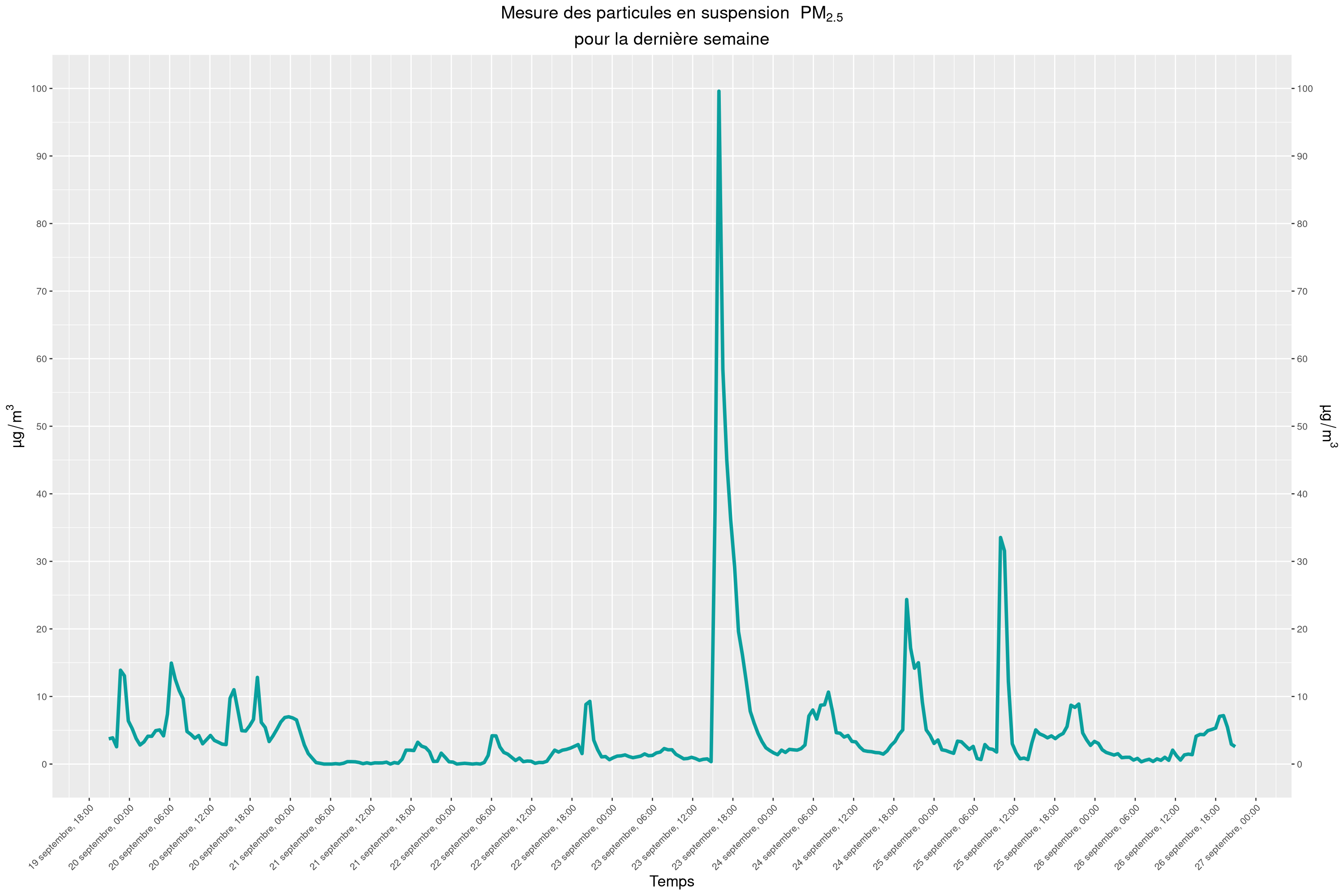 Isn't this crazy? Last time Montreal had such bad outdoor air quality, there
were public broadcasts telling people not to go outside and to wear N95 face
masks if we absolutely needed to. Inside my apartment though, no one ever told
me cooking veggies in a little oil on medium-low
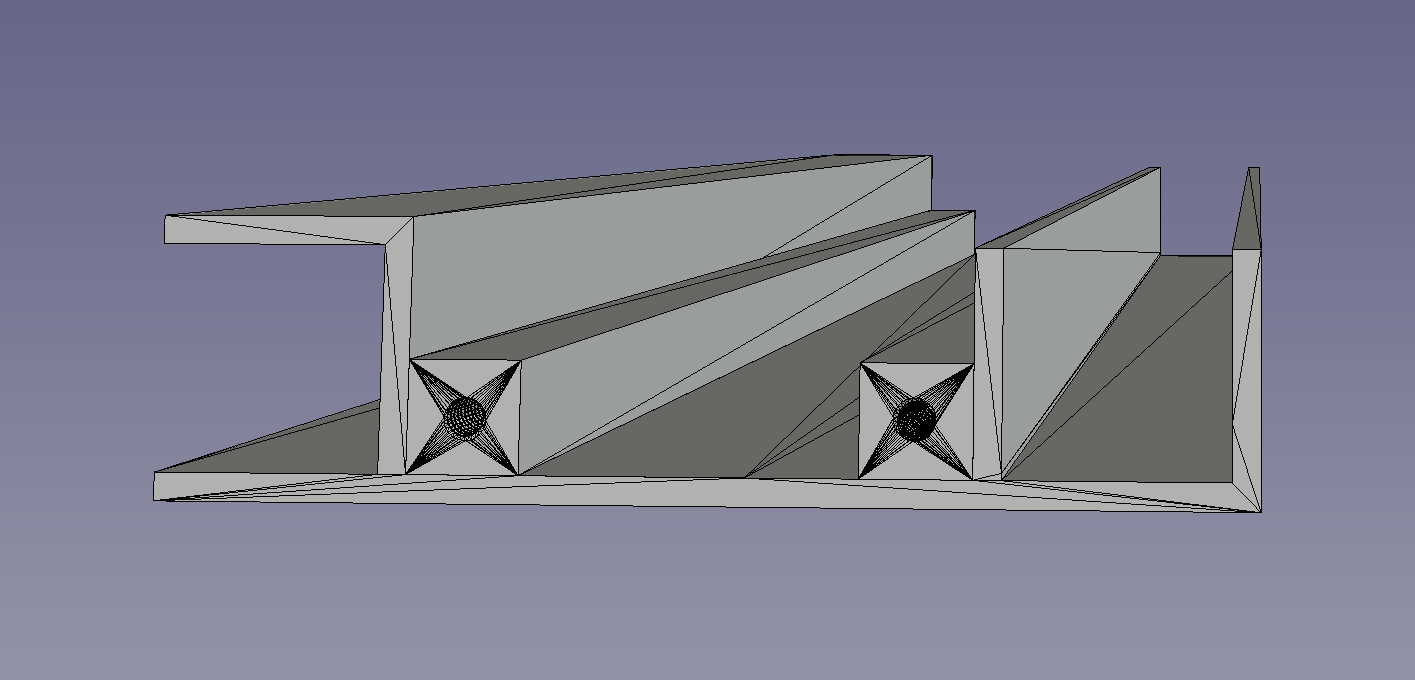 The final result looks like this. I used some foamcore boards I had laying
around at work for the top and bottom panels, but any somewhat rigid plastic
panels (like coroplast) would also work:
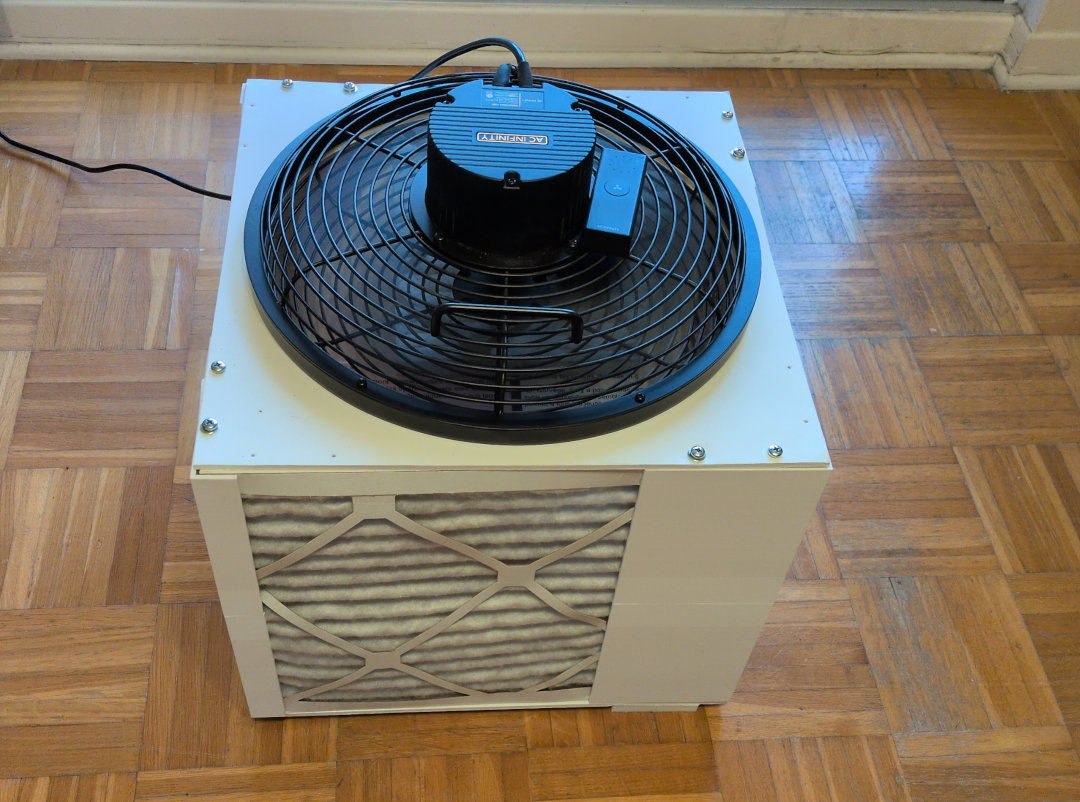 out' position" alt="The whole CR box assembled, with the fan in the 'in -> out' position">
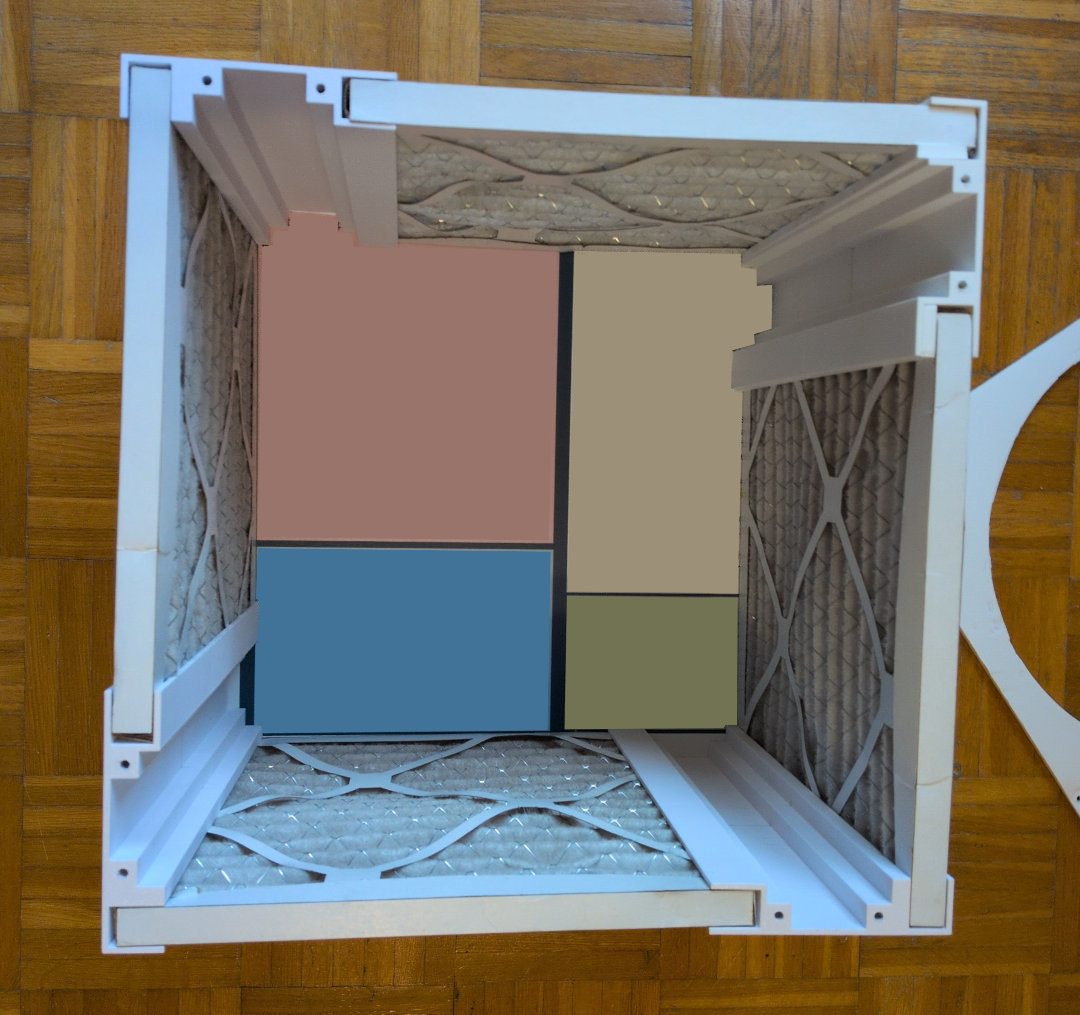 I ended up having to split the "beams" in two and joining them with dowels, as
even the largest 3D printers I had access to couldn't print them in one piece.
Costs
Here's the cost breakdown for this project (shipping and taxes are included):

 Hello, Planet Debian. My blog was added to the Planet today, so I think the polite thing is to introduce myself before you start finding my posts between yours.
I am Juan Manuel M ndez Rey, from Sevilla. In Debian I am mendezr, and on OFTC I am Vejeta. I have been using Linux since 1994 and Debian since 1998. For a long time that was all: a happy user, installing, breaking things, reading the mailing lists from the outside. I started contributing in October 2025, and last month I became a Debian Maintainer.
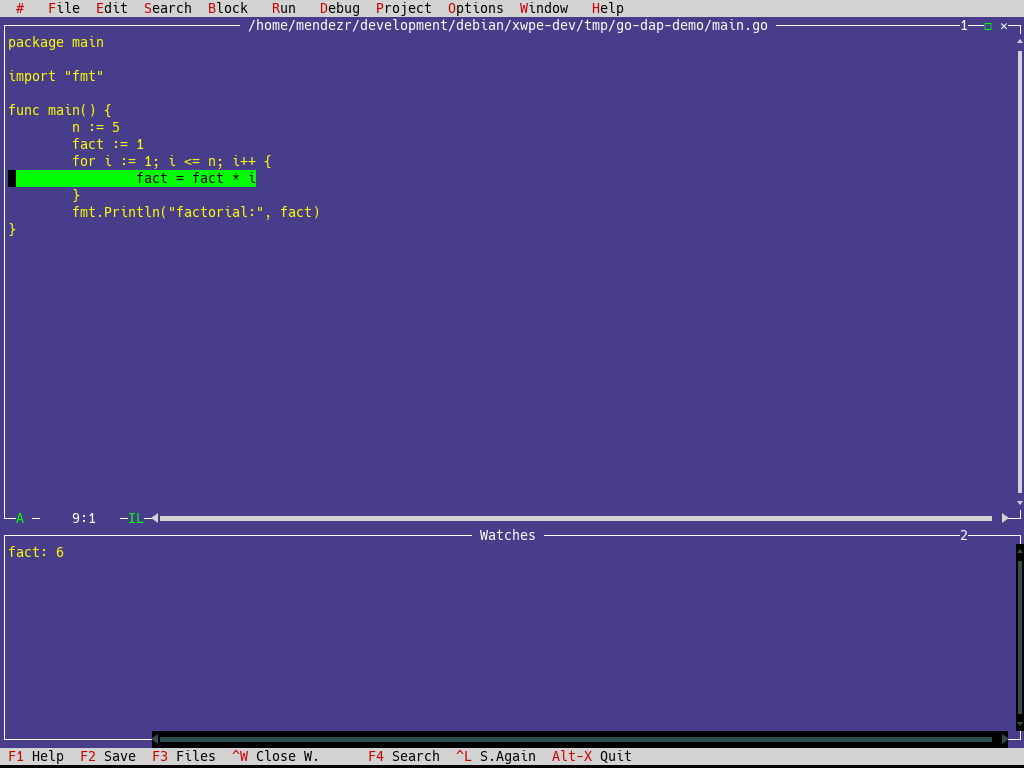
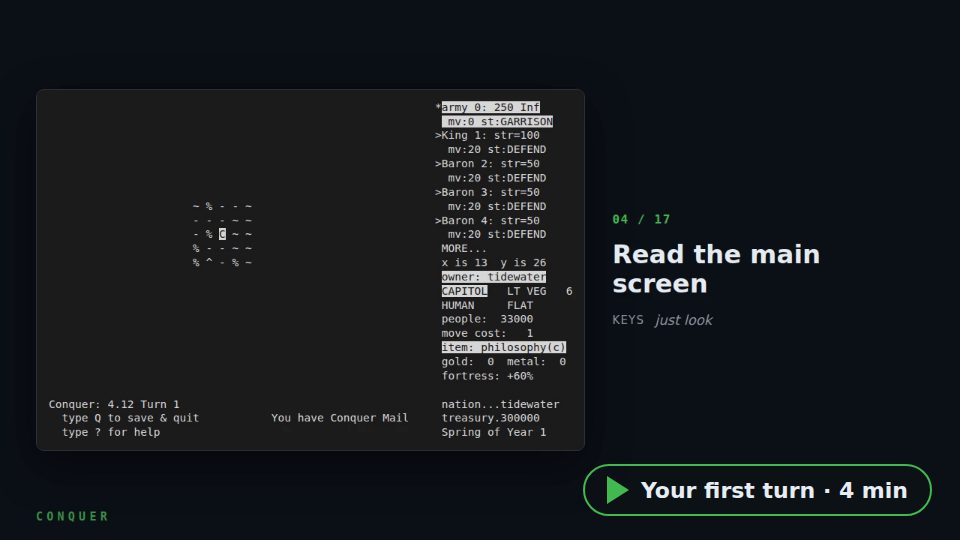
 I have a Samsung Q800A soundbar. It ships with built-in support for the Apple Airplay protocol, but I m not really an Apple kind of guy so that s never been particularly helpful for me. So, instead, I have a Chromecast Audio plugged into it via TOSLINK, and that works fine - except for the fact that there s no way to explicitly pick TOSLINK as the audio input. Instead, there s a Digital In option that refers to both the optical in and eARC input from a TV. Not inherently a problem, given I m unlikely to be watching TV while listening to music, but my TV is a Samsung Frame, a device that s intended to display art whenever someone is standing nearby, and which infuriatingly generates an eARC signal even if it s only in art mode and isn t going to make any noise. This switches the soundbar away from optical and I get sad. I could plug a video cast device into the HDMI port on the soundbar and cast audio to that, but then the art would get replaced with album covers whenever I m playing music, and again that s not quite the ambience I want. Still, none of this is that important.
Until I learned that the Australian version of the soundbar does have Google Cast support. The firmware image was downloadable from Samsung support, so I grabbed that, but unfortunately found that it was encrypted. However, if I downloaded the firmware image for the US model, the encrypted blob was identical - there s no difference in the underlying firmware between the two of them. So, how come one has support, and the other doesn t?
I d need an unencrypted copy of the firmware to have a real chance of figuring this out, and the easiest way to get one was to just run an ebay watch for a broken model of the same series. Once I had one in my hands I used hot air to remove the eMMC storage from the device, cleaned up the chip, and then stuck it in
 The Debian LTS Team, funded by