Search Results: "philipp"

10 November 2026

Louis-Philippe V ronneau: A good-looking Corsi-Rosenthal Box

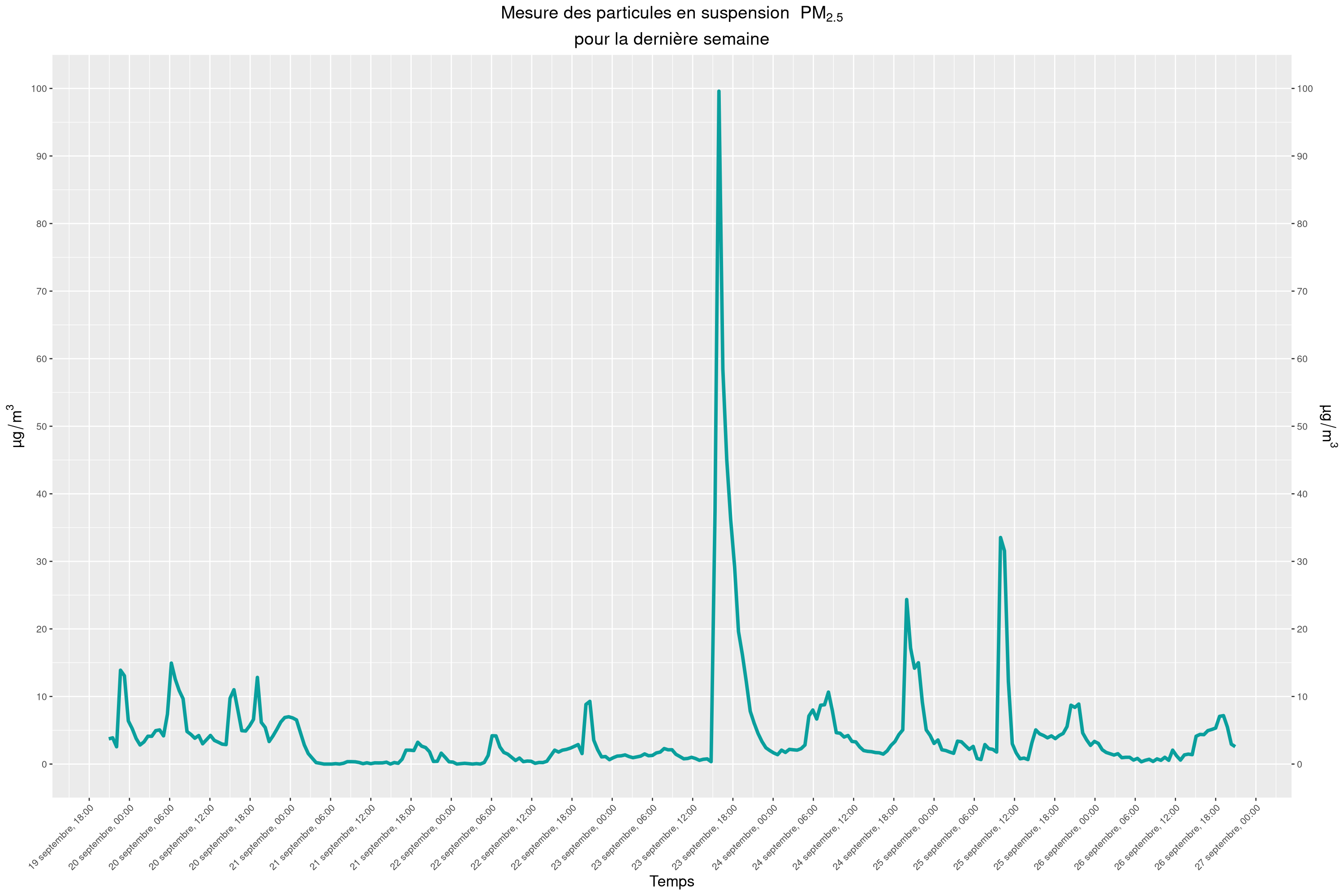
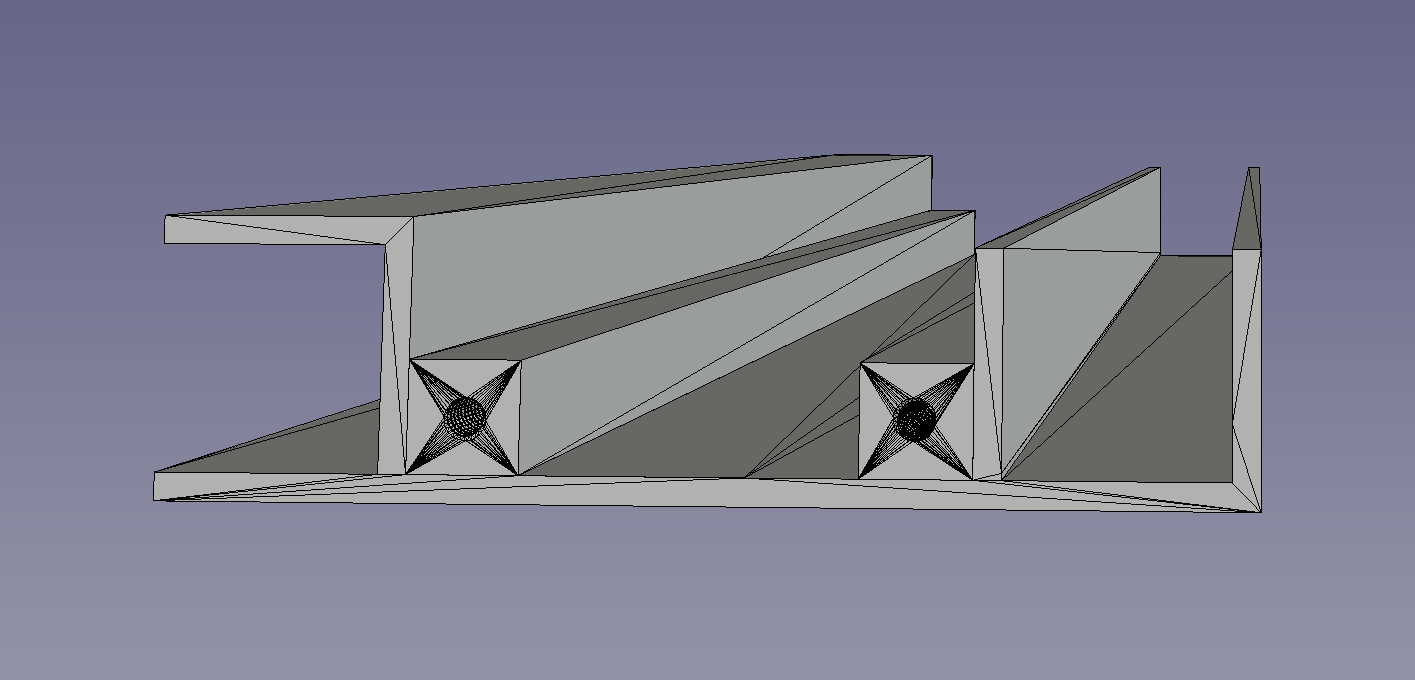
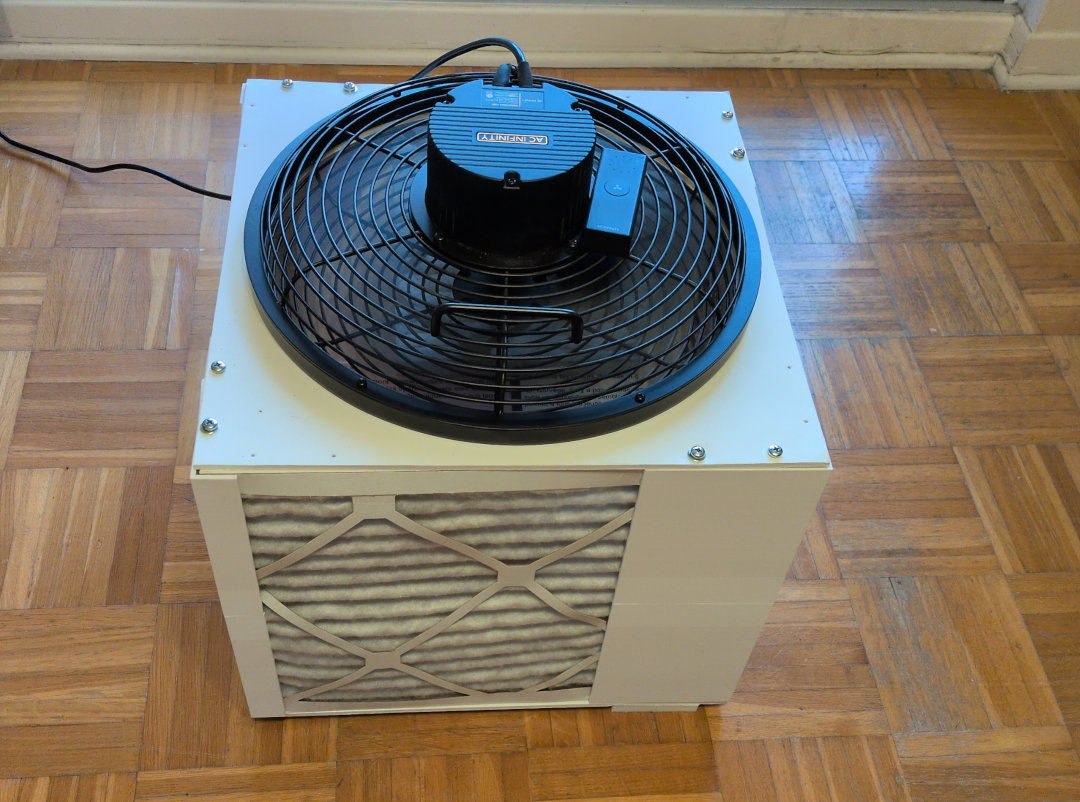
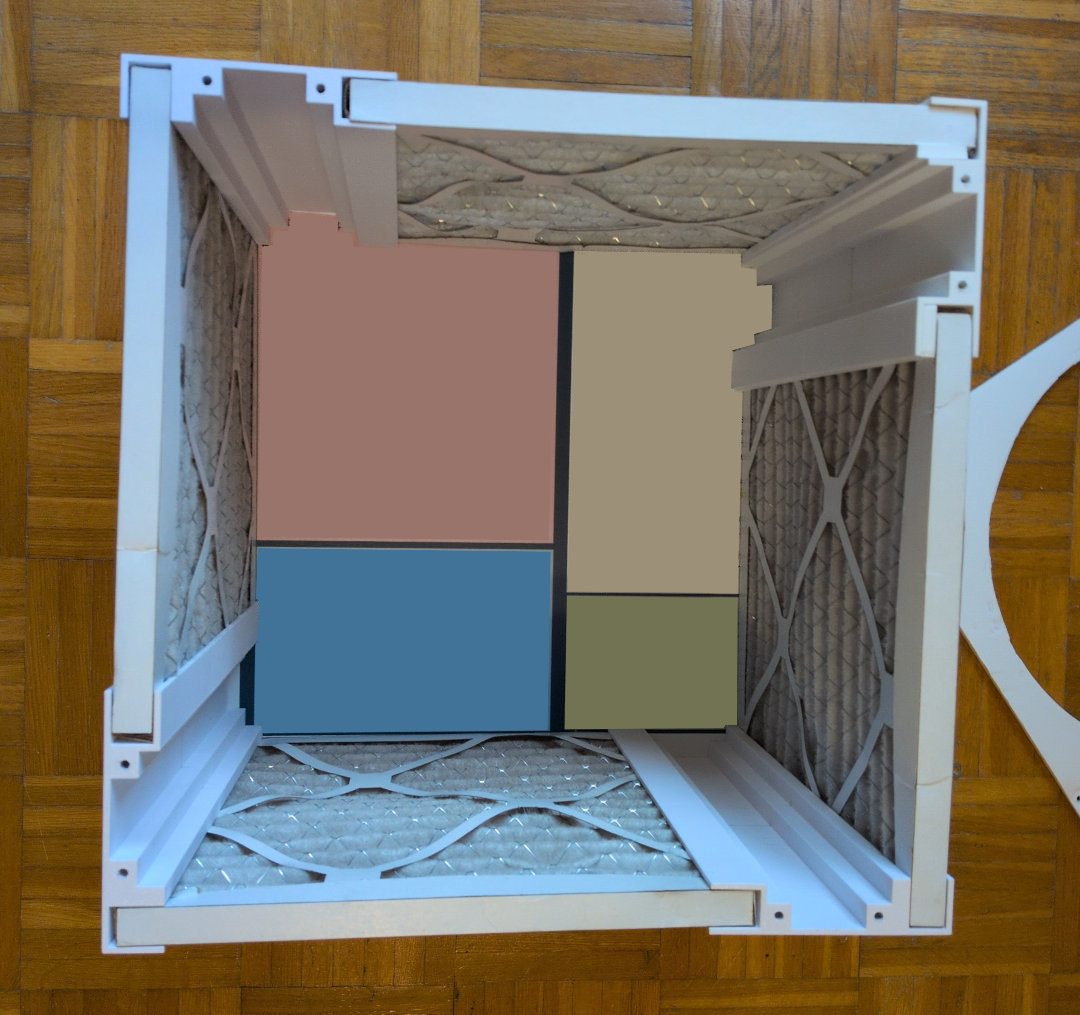
Ever since I built an AirGradient board back in 2023, I have been more and more conscientious about air quality. Pretty instantly after installing the board in my living room, I realised common habits like cooking can significantly increase the particulate levels in my entire apartment. Here is a good example of a pretty large (and long-lasting) PM2.5 spike on September 23rd after cooking a meal1: A graph showing a large PM 2.5 spike Isn't this crazy? Last time Montreal had such bad outdoor air quality, there were public broadcasts telling people not to go outside and to wear N95 face masks if we absolutely needed to. Inside my apartment though, no one ever told me cooking veggies in a little oil on medium-low2 could make the air I breathe unsafe. This of course is aggravated by the fact my apartment is pretty much as airtight as it can reasonably be, since winters here are very cold and air infiltrations are a major heat loss source. As such "opening my windows when I cook" is not a viable solution to this problem half of the year. I first tried solving this issue by tuning my HVAC system. Sadly, its controls don't offer much flexibility3, which means it is not the right tool to respond to short-lived spikes like these. Not only this, but the quality of the air outside is not always good either: Canada now has a forest fire season (we're all doomed) and my neighbors regularly smoke cigarettes right under my HVAC air intake4. A box, but nicer-looking Clearly, the solution to this particular issue was to buy an air purifier. Or at least, that's what a "normal" people would have done. Sadly, these units are expensive, use (expensive) proprietary filters, don't work very well and can be loud. One of the great inventions of the COVID-19 pandemic is the Corsi-Rosenthal box. Popularised in 2020 by Richard Corsi and Jim Rosenthal, the idea is to make a DIY air purifier by using a large fan to force air through cheap and readily available MERV13 air filters. The main downsides of regular CR boxes is they are pretty ugly, can be loud depending on the fan used and need to be rebuilt when the filters are changed (they are held using tape). That's when I stumbled on this amazing design for a silent and sleek CR box sold by The 3D Handyman. Clearly, with a bit of tinkering and a 3D printer, I could also design something sleek, silent and efficient! Since I was already using MERV13 air filters in my HVAC, I decided to design around 4 vertical "beams" where the filters would slot in. With tight enough tolerances, I figured I could get rid of the complex moving parts in The 3D Handyman's design. I also added M5 threads to screw the top and bottom panels and the TPU feet to elevate the box from the floor. One of the 'beams' on its side in FreeCAD The final result looks like this. I used some foamcore boards I had laying around at work for the top and bottom panels, but any somewhat rigid plastic panels (like coroplast) would also work: out' position" alt="The whole CR box assembled, with the fan in the 'in -> out' position"> View from the top, with the top panel removed. Disregard the bad GIMP job to remove the old text from a student's project! I ended up having to split the "beams" in two and joining them with dowels, as even the largest 3D printers I had access to couldn't print them in one piece. Costs Here's the cost breakdown for this project (shipping and taxes are included): Total: 502.19 CAD Yikes, expensive! But: All in all, I'm very happy with this project. Since finishing it, I have been able to consistently get the PM2.5 levels in my apartment down to zero and significantly reduce the time it takes to recover from a spike caused by cooking food. I certainly could have cut the cost of this project in half by choosing a cheaper fan, like the box fans used in the reference Corsi-Rosenthal instructions, but I decided to spend more for a more quiet and reliable option. 3D files Here are the STLs I used for this project. I certainly don't recommend just printing them as-is, since I am using the 12" x 12 " x "5 custom air filters from my HVAC and you should probably use something more standard. If you use these files as inspiration, your goal should be to make a box that is 16" wide, to fit the AC Infinity fan comfortably. I printed the "beams" in PETG at 100% infill and the feet in TPU 95: Future The next step in this project is to automate the fan speed based on the PM2.5 levels in my apartment. At the moment, I manage this manually and it is becoming a chore. This should be relatively easy to do with a Raspberry Pi Pico board, since AC Infinity sells a USB-C to Molex adapter for the fan.
  1. This was with my pretty good range hood running at a reasonable level. Without it, I've seen PM2.5 levels spike as much as 250 from cooking alone.
  2. To be clear, this spike was not the result of me burning the hell out of a piece of meat or something like that.
  3. The HVAC either runs in manual "low high" mode, or on a timed "20min ON 40min OFF" loop that can be tuned by fiddling with a hydrostat knob that triggers the "high" mode. This is pretty dumb and makes it so the HVAC runs even when the apartment is empty or doesn't run enough to keep CO2 levels low when multiple people are there. A future project of mine will be to hack the controls to tie them into my air quality monitoring and trigger the HVAC based on CO2 levels.
  4. I'm also working on another HVAC hack to fix this.
  5. Sold, of course, as as 1" thick filters...

4 November 2026

Louis-Philippe V ronneau: Tenure

Last week, I received confirmation from my college's human resources department I was awarded tenure. If you ever worked in the academic world, you know how big of a deal this is. In our fast moving and ever-increasingly unstable world, it is a pretty strange feeling to know you have a stable, well-paying job for the rest of your career. I am truly privileged to have an occupation I greatly enjoy. Three cheers for another 30 years!

14 October 2026

Dirk Eddelbuettel: qlcal 0.1.4 on CRAN: Fresh Upstream Updates

The twenty-second release of the qlcal package arrivied at CRAN yesterday, and has been built for r2u as well as on r-universe. qlcal delivers the calendaring parts of QuantLib. It is provided (for the R package) as a set of included files, so the package is self-contained and does not depend on an external QuantLib library (which can be demanding to build). qlcal covers over seventy country / market calendars and can compute holiday lists, its complement (i.e. business day lists) and much more. Examples are in the README at the repository, the package page, and course at the CRAN package page. This release is based on the changes in the QuantLib 1.44 release also made yesterday. It includes two new calendars for Malaysia and the Philippines, updates to around a dozen calendars, and a few other updates to internal files. Maxmilian Muecke spotted and fixed a few small bugs just as he did for the RQuantLib release we made yesterday; this is equally appreciated! The full details from NEWS.Rd follow.
Changes in version 0.1.4 (2026-10-13)
  • Add missing market calendars for Poland, Russia, Romania, Indonesia (Maximilian Muecke in #21)
  • Add (semi-deprecated) alternate separators '::' for Israel and New Zealand markets (Maximilian Muecke in #22)
  • Fix several typos across source, configuration and documentation files (Maximilian Muecke in #23)
  • Synchronize with QuantLib 1.44, add two new calendars, update several others, and update general utility files (Dirk in #24)

Courtesy of my CRANberries, there is a diffstat report for this release. See the project page and package documentation for more details, and more examples.

This post by Dirk Eddelbuettel originated on his Thinking inside the box blog. If you like this or other open-source work I do, you can sponsor me at GitHub.

13 October 2026

Dirk Eddelbuettel: RQuantLib 0.4.29 on CRAN: New QuantLib, Plus Small Fixes

A new release 0.4.29 of RQuantLib arrived on CRAN this evening, had already been built for r2u as well as on r-universe and has just been uploaded to Debian. QuantLib is a rather comprehensice free/open-source library for quantitative finance. RQuantLib connects (some parts of) it to the R environment and language, and has been part of CRAN for twenty-three years (!!) as it was one of the first packages I uploaded to CRAN. This release of RQuantLib brings two new calendars (Malaysia, Philippines), updates to a number of other calendars as well to other files, and two deprecations we are reflecting in this release. It also benefits from a number of careful and attentive pull requests by Maximilian Muecke cleaning up an (astonishing !!) number of likely rather old little bugs. Full details from the NEWS file follow as usual.

Changes in RQuantLib version 0.4.29 (2026-10-13)
  • Configure check for outdated QuantLib version updated,
  • Adjust two instantiations on macOS x86_64 with old compilers
  • Correct Euribor2W and Euribor3W tenors setters (Maximilian Muecke in #196)
  • Accect Euribor1W as alias for EuriborSW tenor (Maximilian Muecke in #197)
  • Correct default handling of the payFixed parameter (Maximilian Muecke in #198)
  • Assign missing S3 class to American option implied volatitly return (Maximilian Muecke in #199)
  • Correct spelling in manual pages and R code (Maximilian Muecke in #202, #203)
  • Support additional Polish settlements (Maximilian Muecke in #204)
  • Check for curve parameters in FittedBondCurve (Dirk in #205 fixing #201)
  • Reflect two deprecations in QuantLib 1.44 and adjust code in two spot (Dirk in #206)

Courtesy of my CRANberries, there is also a diffstat report for the this release. As always, more detailed information is on the RQuantLib page. Questions, comments etc should go to the rquantlib-devel mailing list. Issue tickets can be filed at the GitHub repo.

This post by Dirk Eddelbuettel originated on his Thinking inside the box blog. If you like this or other open-source work I do, you can now sponsor me at GitHub.

9 October 2026

Louis-Philippe V ronneau: Removing myself as a Lintian uploader in the next few weeks

A few days ago, a colleague reached out to me, asking if I could help draft a resolution on digital autonomy and free software for the upcoming renewal of our collective bargaining agreement. Although she's very politicised and generally a great individual, she is not a techie and we never really talked about these issues before. This took me by surprise. I should have been rejoicing; no, I should have been the one who brought up this topic in our union. Wasn't I the technical expert on these issues? But alas, my first reaction when she came to me was to snicker and tell myself: "That's cute, but nothing's ever gonna change, Big Tech is too strong and our governments don't give a damn." How sad and cynical is that? That's not the person I want to be. Something in the Quebecois political landscape has shifted in the last few years with regards to tech. More and more "regular" people seem to be talking about the importance of digital autonomy, how government services shouldn't rely on Big Tech and how we should be using FOSS on hardware we actually control. A few years ago, I would have been at the vanguard of this change. I would have been part of the creation of Donn es souveraines Qu bec. Heck, they are organising a whole conference next week and I'm not even going. How did this happen to me? I first fell for Free Software for its political ideals: Knowledge Should Be Free, Cooperation Is More Efficient Than Competition, Centralisation Should Be Avoided When Possible, etc. I still believe in all of this, but somehow, after years of fighting for change in the tech world, I have retreated into technical work. I maintain Debian packages as a hobby and to scratch my own itch. I run services for myself and a few friends. I organise Debian User Group meetings. To be clear, I haven't generally given up. I'm very politically active in my union and at work, I'm a good member of my housing cooperative and I'm still fighting against the industrialisation of natural spaces in my neighborhood. But when it comes time to defend freedom in the tech world, lately, I've just been shrugging and accepting I should use Microsoft Teams like every one else does. I want this to change and to do so, I need to free some time. Lintian Two years ago, I added myself to Lintian's Uploaders list. Up until then1, I enjoyed fixing little issues here and there and liked creating new tags to help out the Python Team, where most of my Debian time was spent. Lintian was badly in need of a new maintainer and as I felt it was an important project, I decided to step in. 37 releases and about 160 closed bugs later2, I'm done. To be honest, I haven't had much fun maintaining Lintian lately. Bugs keep piling on the BTS, so much so I have mostly been ignoring them for the past few months. In fact, most of the actual work triaging, writing code and fixing bug has been done by Nilesh Patra for a while now. All this to say, if you care about Lintian, you should consider adding yourself to the Uploaders list, as I'm out and Nilesh can't do all the work by himself. He's a great person to work with and since I don't want to suddenly leave him all alone, I'll be sticking around for a few more weeks in the hope someone else will volunteer to help out. A smooth transition with a new co-maintainer would really be nice! If you're interested, don't hesitate to reach out to me on IRC or by email.

  1. My first technical commit to Lintian was nearly 7 years ago! Crazy how time flies.
  2. Mostly closed by other people than I!

18 September 2026

Louis-Philippe V ronneau: Fake Cash: The World Trade Game

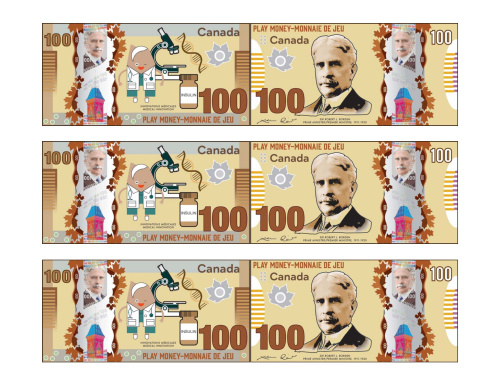
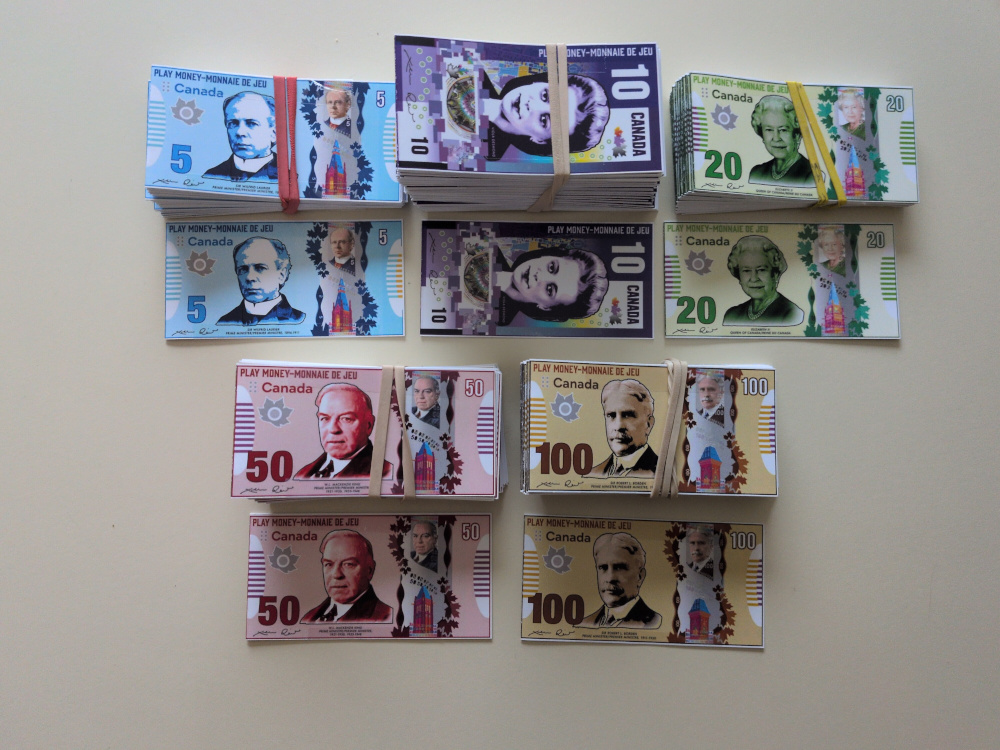
This is a new series1 I'm starting on the tools I have been crafting and buying to play pedagogical games in my Economics classes. These games, aside from being just plain fun for the students, often aim to teach them a lesson via interactive play. Unsurprisingly, it is much easier for them to grok a particular concept this way. Moreover, many students told me these activities were the best part of the classes I teach. The World Trade Game I found out about The World Trade Game in The Handbook of Pluralist Economics Education2, which also contains many other fun pedagogical games. It was first developed by Action Aid, but has since been refined by John Sloman and then by Irene van Staveren, who wrote about her use of the game in the aforementioned book. The goal of this blog entry is not to describe the game and teach you how to play it. If that interests you, either buy the book I mentioned or read about Sloman's version here. No, our focus point here is the tools to play this game: fake cash! Fake cash can be used in many economics pedagogical games and in my opinion, is a worthwhile "investment" of your time and energy. You could indeed play with regular printed sheets of paper listing a value (I sure did!), but using Play Money (a more appropriate term, since we're not trying to defraud anyone) will up your game and create a more immersive atmosphere in your classes. At first, I tried to buy play money. Surely, some commercial offering aiming to create realistic props for movies and TV productions existed? At least in Canada, it turns out the answer was no. The only thing I could find were shady websites and weird expensive listings on AliExpress. Not being tenured yet, I did not try to convince my employer to take a 50-50 chance on supporting criminal endeavours. As such, the next best thing I found was printable play money designed by the Bank of Canada Museum. Their designs were quite nice and met my needs, but their PDF layout made it overly complicated to print large quantities of bills. As such, I played around with GIMP a little and came out with these files. A commercial printer shouldn't have issues printing them on glossy cardstock paper and cutting them up for you: Once printed and cut, you'll unfortunately have to fold each bill by hand. To secure both halves, I ended up using a strip of transparent tape on each long edge. Here is the result, with a real Canadian 20$ bill as a comparison: Stacks of play money bills, with examples of the 5$, 10$, 20$, 50$ and 100$ bills A real Canadian 20$ bill, side-to-side with the play money version

  1. Don't hold your breath though, as I do not currently have a release schedule.
  2. Reardon, J. (2009). The Handbook of Pluralist Economic Education. New York : Routledge.

24 February 2026

Louis-Philippe V ronneau: Montreal's Debian & Stuff - February 2026

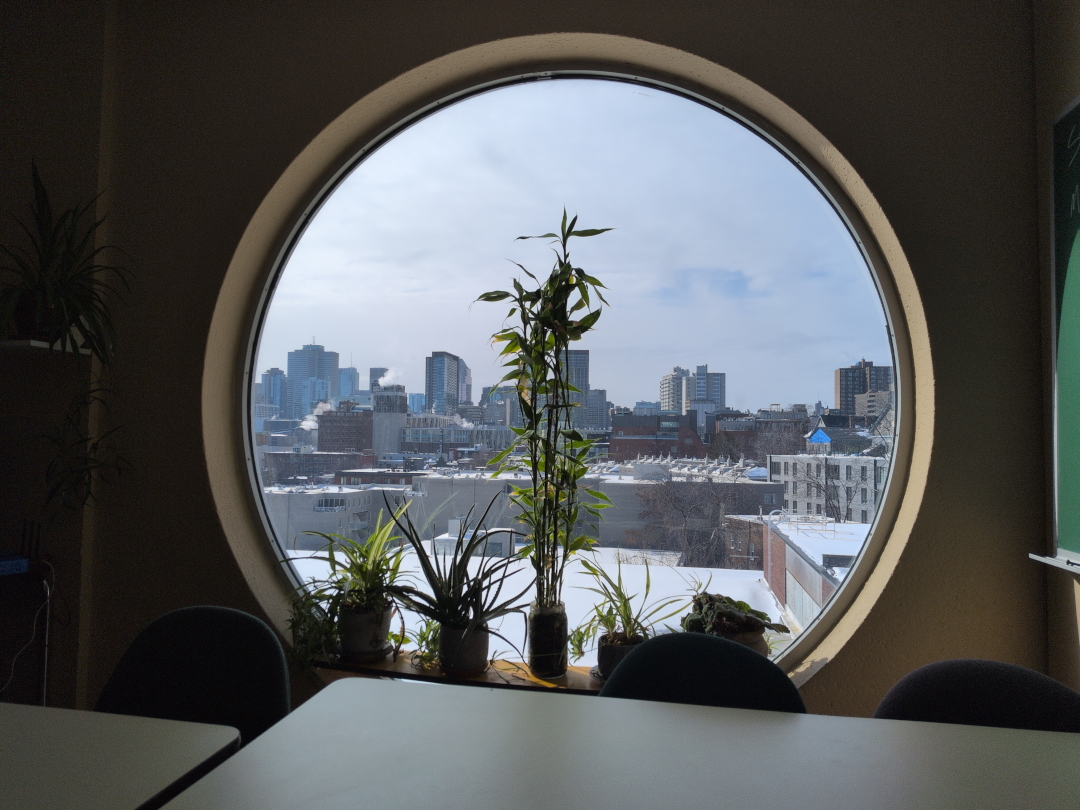
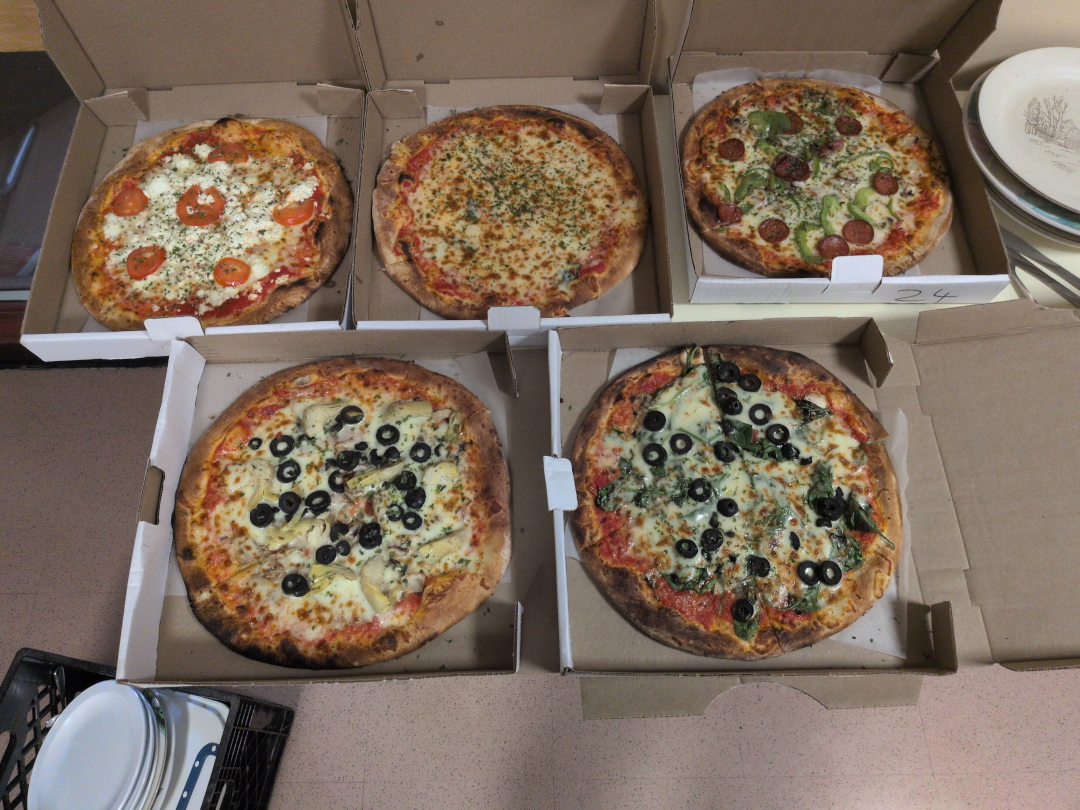
Our Debian User Group met on February 22nd for our first meeting of the year! Here's what we did: pollo: lelutin: viashimo: tvaz: lavamind: Pictures This time around, we held our meeting at c gep du Vieux Montr al, the college where I currently work. Here is the view we had: View from my office We also ordered some delicious pizzas from Pizzeria dei Compari, a nice pizzeria on Saint-Denis street that's been there forever. The pizzas we ate Some of us ended up grabbing a drink after the event at l'Am re boire, a pub right next to the venue, but I didn't take any pictures.
16 February 2026

Philipp Kern: What is happening with this "connection verification"?

You might see a verification screen pop up on more and more Debian web properties. Unfortunately the AI world of today is meeting web hosts that use Perl CGIs and are not built as multi-tiered scalable serving systems. The issues have been at three layers:
  1. Apache's serving capacity runs full - with no threads left to serve requests. This means that your connection will sit around for a long time, not getting accepted. In theory this can be configured, but that would require requests to be handled in time.
  2. Startup costs of request handlers are too high, because we spawn a process for every request. This currently affects the BTS and dgit's browse interface. packages.debian.org has been fixed, which increased scalability sufficiently.
  3. Requests themselves are too expensive to be served quickly - think git blame without caching.

Optimally we would go and solve some scalability issues with the services, however there is also a question of how much we want to be able to serve - as AI scraper demand is just a steady stream of requests that are not shown to humans.

How is it implemented?

DSA has now stood up some VMs with Varnish for proxying. Incoming TLS is provided by hitch, and TLS "on-loading" is done using haproxy. That way TLS goes in and TLS goes out. While Varnish does cache, if the content is cachable (e.g. does not depend on cookies) - that is not the primary reason for using it: It can be used for flexible query and response rewriting.

If no cookie with a proof of work is provided, the user is redirected to a challenge page that does some webcrypto in Javascript - because that looked similar to what other projects do (e.g. haphash that originally inspired the solution). However so far it looks like scrapers generally do not run with Javascript enabled, so this whole crypto proof of work business could probably be replaced with just a Javascript-based redirect. The existing solution also has big (security) holes in it. And, as we found out, Firefox is slower at webcrypto than Chrome. I have recently reduced the complexity, so you should notice it blocking you significantly less.

Once you have the cookie, you can keep accessing the site for as long as the cookie is valid. Please do not make any assumptions about the cookies, or you will be broken in the future.For legitimate scrapers that obey robots.txt, there is now an automatically generated IP allowlist in place (thanks, Marco d'Itri). Turns out that the search engines do not actually run Javascript either and then loudly complain about the redirect to the challenge page. Other bots are generally exempt.

Conclusion I hope that right now we found sort of the sweet spot where the admins can stop spending human time on updating firewall rules and the services are generally available, reasonably fast, and still indexed. In case you see problems or run into a block with your own (legitimate) bots, please let me know.

8 February 2026

Louis-Philippe V ronneau: Montreal Subway Foot Traffic Data, 2025 edition

Another year of data from Soci t de Transport de Montr al, Montreal's transit agency! A few highlights this year:
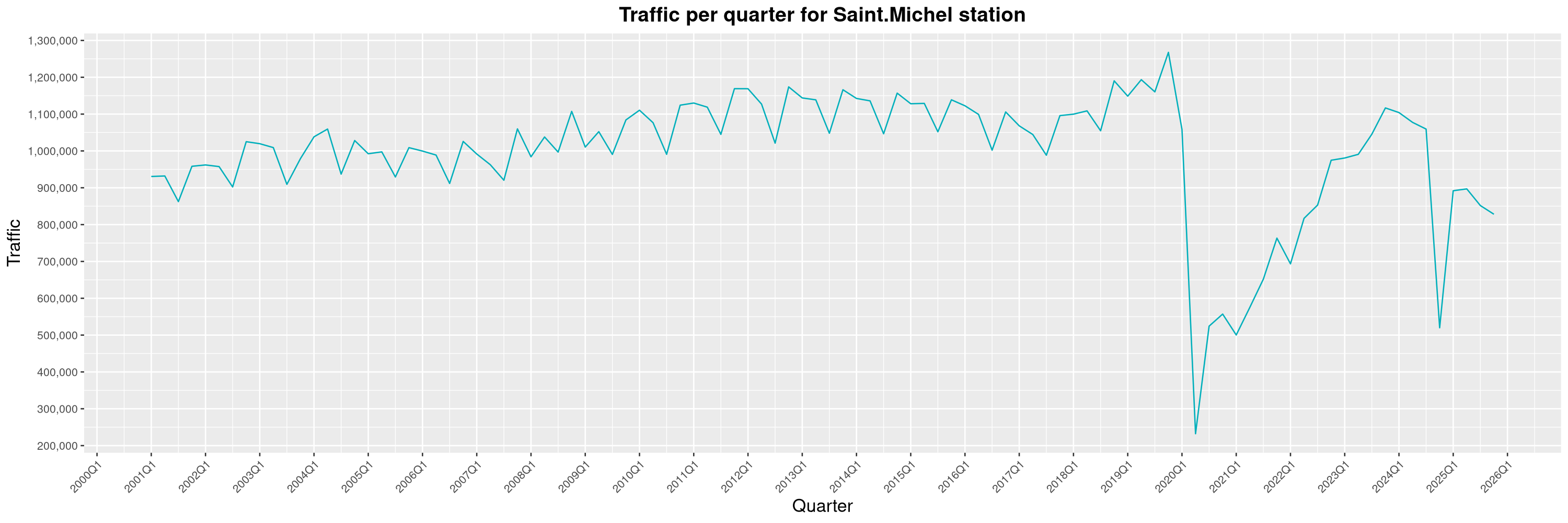
  1. Although the Saint-Michel station closed for emergency repairs in November 2024, traffic never bounced back to its pre-closure levels and is still stuck somewhere around 2022 Q2 levels. I wonder if this could be caused by the roadwork on Jean-Talon for the new Blue Line stations making it harder for folks in Montreal-Nord to reach the station by bus.
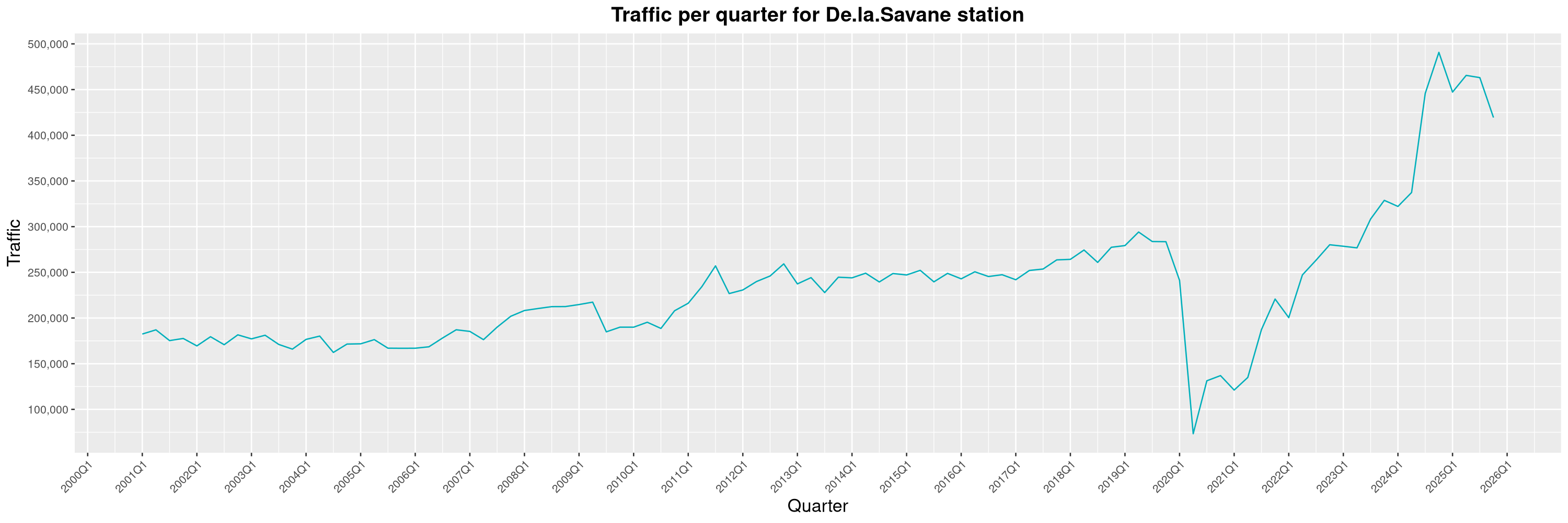
  2. The effects of the opening of the Royalmount shopping center has had a durable impact on the traffic at the De la Savane station. I reported on this last year, but it seems this wasn't just a fad.
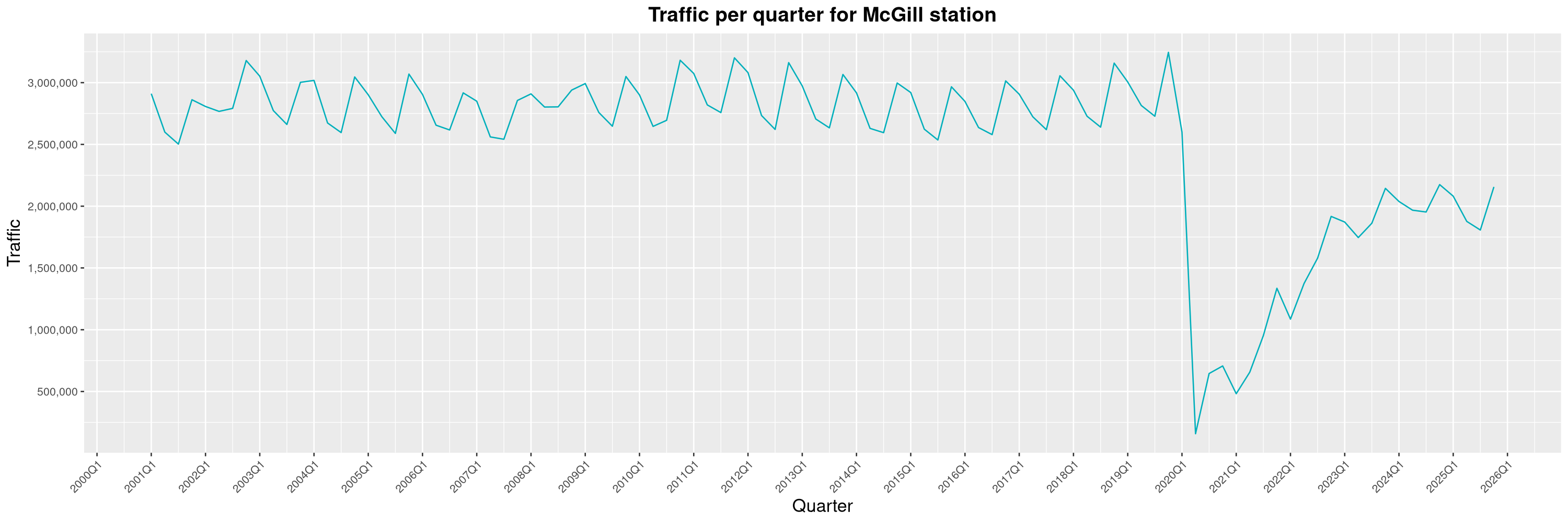
  3. With the completion of the Deux-Montagnes branch of the R seau express m tropolitain (REM, a light-rail, above the surface transit network still in construction), the transfer stations to the Montreal subway have seen major traffic increases. The douard-Montpetit station has nearly reached its previous all-time record of 2015 and the McGill station has recovered from the general slump all the other stations have had in 2025.
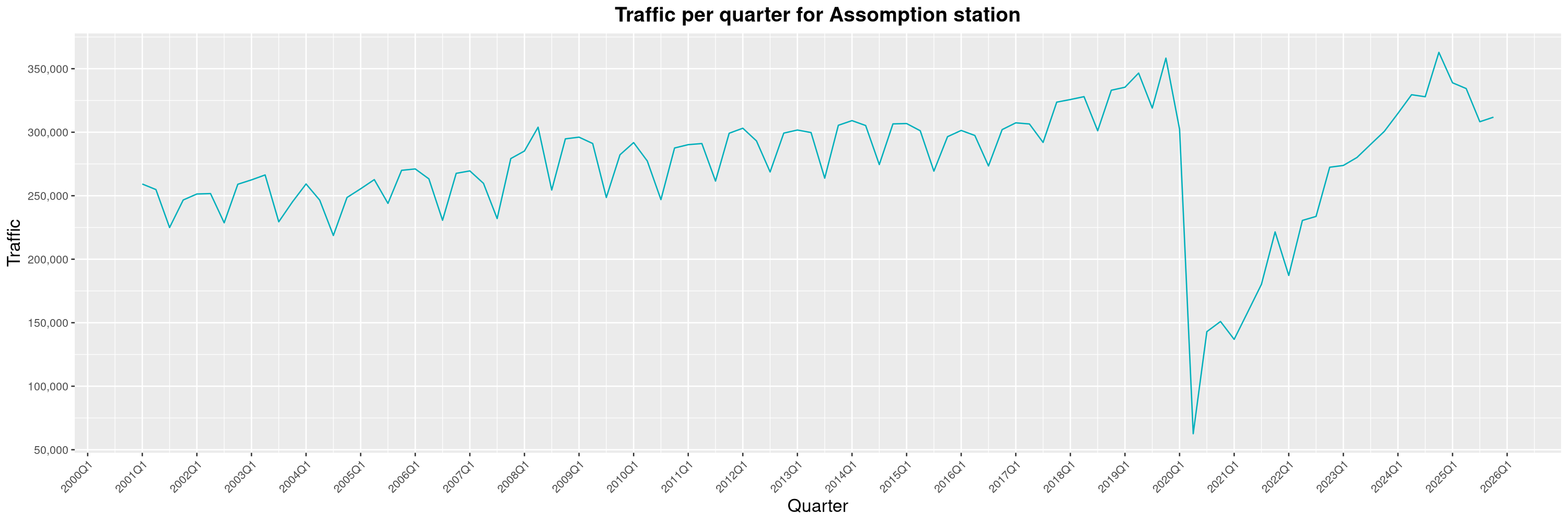
  4. The Assomption station, which used to have one of the lowest number of riders of the subway network, has had a tremendous growth in the past few years. This is mostly explained by the many high-rise projects that were built around the station since the end of the COVID-19 pandemic.
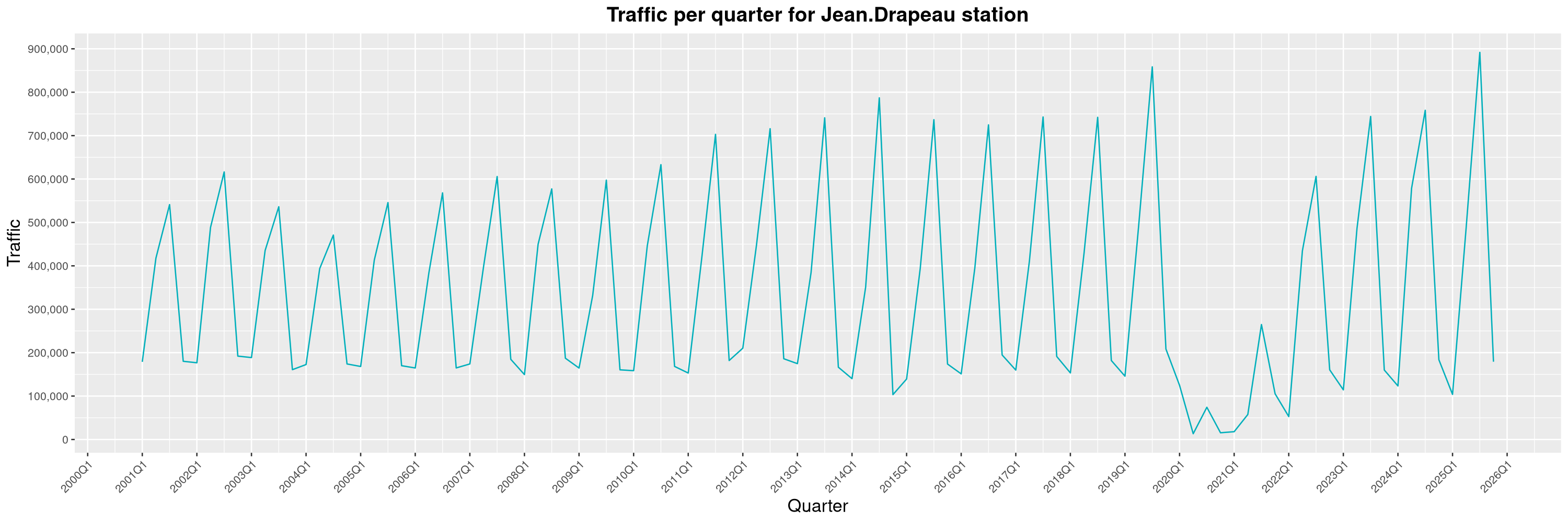
  5. Although still affected by a very high seasonality, the Jean-Drapeau station broke its previous record of 2019, a testament of the continued attraction power of the various summer festivals taking place on the Sainte-H l ne et Notre-Dame islands.
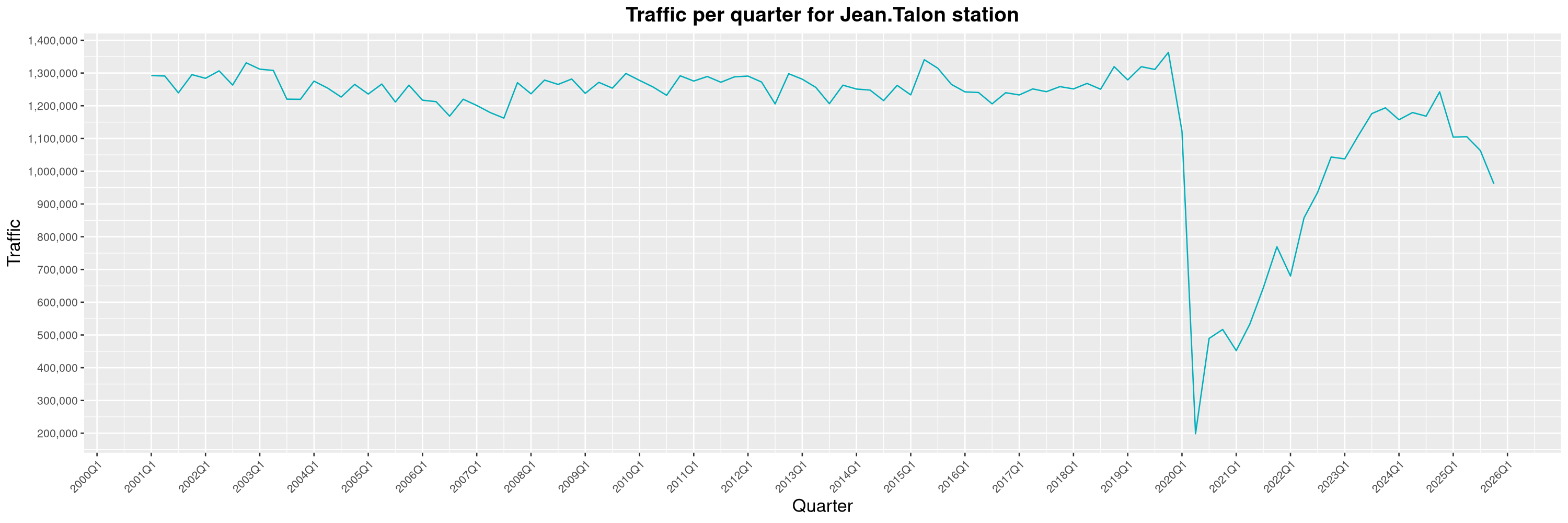
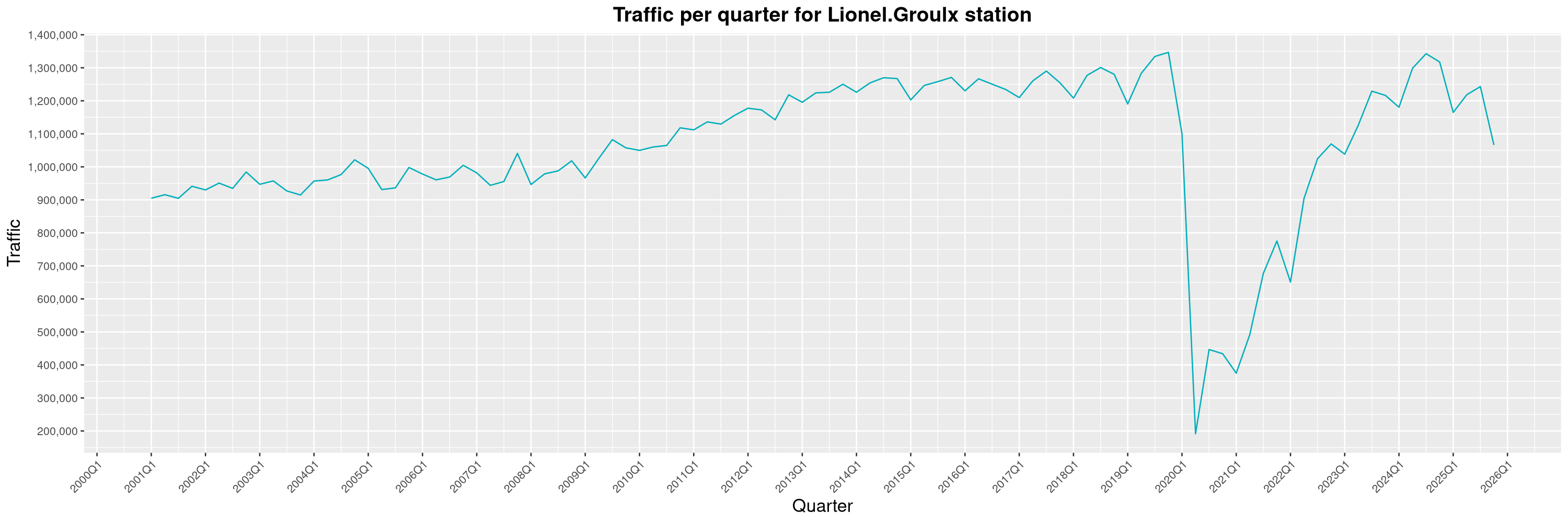
More generally, it seems the Montreal subway has had a pretty bad year. Traffic had been slowly climbing back since the COVID-19 pandemic, but this is the first year since 2020 such a sharp decline can be witnessed. Even major stations like Jean-Talon or Lionel-Groulx are on a downward trend and it is pretty worrisome. As for causes, a few things come to mind. First of all, as the number of Montrealers commuting to work by bike continues to rise1, a modal shift from public transit to active mobility is to be expected. As local experts put it, this is not uncommon and has been seen in other cities before. Another important factor that certainly turned people away from the subway this year has been the impacts of the continued housing crisis in Montreal. As more and more people get kicked out of their apartments, many have been seeking refuge in the subway stations to find shelter. Sadly, this also brought a unprecedented wave of incivilities. As riders' sense of security sharply decreased, the STM eventually resorted to banning unhoused people from sheltering in the subway. This decision did bring back some peace to the network, but one can posit damage had already been done and many casual riders are still avoiding the subway for this reason. Finally, the weekslong STM worker's strike in Q4 had an important impact on general traffic, as it severely reduced the opening hours of the subway. As for the previous item, once people find alternative ways to get around, it's always harder to bring them back. Hopefully, my 2026 report will be a more cheerful one... By clicking on a subway station, you'll be redirected to a graph of the station's foot traffic. Licences

  1. Mostly thanks to major improvements to the cycling network and the BIXI bikesharing program.

13 January 2026

Louis-Philippe V ronneau: Reducing the size of initramfs kernel images

In the past few years, the size of the kernel images in Debian have been steadily growing. I don't see this as a problem per se, but it has been causing me trouble, as my /boot partition has become too small to accommodate two kernel images at the same time. Since I'm running Debian Unstable on my personal systems and keep them updated with unattended-upgrade, this meant each (frequent) kernel upgrade triggered an error like this one:
update-initramfs: failed for /boot/initrd.img-6.17.11+deb14-amd64 with 1.
dpkg: error processing package initramfs-tools (--configure):
 installed initramfs-tools package post-installation script subprocess returned
 error exit status 1
Errors were encountered while processing:
 initramfs-tools
E: Sub-process /usr/bin/dpkg returned an error code (1)
This would in turn break the automated upgrade process and require me to manually delete the currently running kernel (which works, but isn't great) to complete the upgrade. The "obvious" solution would have been to increase the size of my /boot partition to something larger than the default 456M. Since my systems use full-disk encryption and LVM, this isn't trivial and would have required me to play Tetris and swap files back and forth using another drive. Another solution proposed by anarcat was to migrate to systemd-boot (I'm still using grub), use Unified Kernel Images (UKI) and merge the /boot and /boot/efi partitions. Since I already have a bunch of configurations using grub and I am not too keen on systemd taking over all the things on my computer, I was somewhat reluctant. As my computers are all configured by Puppet, I could of course have done a complete system reinstallation, but again, this was somewhat more involved than what I wanted it to be. After looking online for a while, I finally stumbled on this blog post by Neil Brown detailing how to shrink the size of the initramfs images. With MODULES=dep my images shrunk from 188M to 41M, fixing my issue. Thanks Neil! I was somewhat worried removing kernel modules would break something on my systems, but so far, I only had to manually load the i2c_dev module, as I need it to manage my home monitor's brightness using ddcutil.

3 January 2026

Louis-Philippe V ronneau: 2025 A Musical Retrospective

2026 already! The winter weather here has really been beautiful and I always enjoy this time of year. Writing this yearly musical retrospective has now become a beloved tradition of mine1 and I enjoy retracing the year's various events through albums I listened to and concerts I went to. Albums In 2025, I added 141 new albums to my collection, around 60% more than last year's haul. I think this might have been too much? I feel like I didn't have time to properly enjoy all of them and as such, I decided to slow down my acquisition spree sometimes in early December, around the time I normally do the complete opposite. This year again, I bought the vast majority of my music on Bandcamp. Most of the other albums I bought as CDs and ripped them. Concerts In 2025, I went to the following 25 (!!) concerts: Although I haven't touched metalfinder's code in a good while, my instance still works very well and I get the occasional match when a big-name artist in my collection comes in town. Most the venues that advertise on Bandsintown are tied to Ticketmaster though, which means most underground artists (i.e. most of the music I listen to) end up playing elsewhere. As such, shout out again to the Gancio project and to the folks running the Montreal instance. It continues to be a smash hit and most of the interesting concerts end up being advertised there. See you all in 2026!

  1. see the 2022, 2023 and 2024 entries

17 November 2025

Rodrigo Siqueira: XDC 2025

It has been a long time since I published any update in this space. Since this was a year of colossal changes for me, maybe it is also time for me to make something different with this blog and publish something just for a change why not start talking about XDC 2025? This year, I attended XDC 2025 in Vienna as an Igalia developer. I was thrilled to see some faces from people I worked with in the past and people I m working with now. I had a chance to hang out with some folks I worked with at AMD (Harry, Alex, Leo, Christian, Shashank, and Pierre), many Igalians ( an, Job, Ricardo, Paulo, Tvrtko, and many others), and finally some developers from Valve. In particular, I met T mur in person for the first time, even though we have been talking for months about GPU recovery. Speaking of GPU recovery, we held a workshop on this topic together. The workshop was packed with developers from different companies, which was nice because it added different angles on this topic. We began our discussion by focusing on the topic of job resubmission. Christian began sharing a brief history of how the AMDGPU driver started handling resubmission and the associated issues. After learning from erstwhile experience, amdgpu ended up adopting the following approach:
  1. When a job cause a hang, call driver specific handler.
  2. Stop the scheduler.
  3. Copy all jobs from the ring buffer, minus the job that caused the issue, to a temporary ring.
  4. Reset the ring buffer.
  5. Copy back the other jobs to the ring buffer.
  6. Resume the scheduler.
Below, you can see one crucial series associated with amdgpu recovery implementation: The next topic was a discussion around the replacement of drm_sched_resubmit_jobs() since this function became deprecated. Just a few drivers still use this function, and they need a replacement for that. Some ideas were floating around to extract part of the specific implementation from some drivers into a generic function. The next day, Philipp Stanner continued to discuss this topic in his workshop, DRM GPU Scheduler. Another crucial topic discussed was improving GPU reset debuggability to narrow down which operations cause the hang (keep in mind that GPU recovery is a medicine, not the cure to the problem). Intel developers shared their strategy for dealing with this by obtaining hints from userspace, which helped them provide a better set of information to append to the devcoredump. AMD could adopt this alongside dumping the IB data into the devcoredump (I am already investigating this). Finally, we discussed strategies to avoid hang issues regressions. In summary, we have two lines of defense: Lighting talk This year, as always, XDC was super cool, packed with many engaging presentations which I highly recommend everyone check out. If you are interested, check the schedule and the presentation recordings available on the X.Org Foundation Youtube page. Anyway, I hope this blog post marks the inauguration of a new era for this site, where I will start posting more content ranging from updates to tutorials. See you soon.

10 October 2025

Louis-Philippe V ronneau: Montreal's Debian & Stuff - September 2025

Our Debian User Group met on September 27th for our first meeting since our summer hiatus. As always, it was fun and productive! Here's what we did: pollo: sergiodj: LeLutin: tvaz: viashimo: tassia: Pictures This time again, we were hosted at La Balise (formely ATS ). It's nice to see this community project continuing to improve: the social housing apartments on the top floors should be opening this month! Lots of construction work was also ongoing to make the Espace des Possibles more accessible from the street level. Group photo Some of us ended up grabbing a drink after the event at l'Isle de Garde, a pub right next to the venue, but I didn't take any pictures.

24 September 2025

Philipp Kern: PSA: APT::Default-Release might be holding back updates from you

If you are like me that you are installing machines with testing and then go and flip them over to the current stable for a while using APT::Default-Release, you might not be receiving all relevant updates. In fact this setting is kind of discouraged in favor of more extensive pinning configuration.However, the field does support regexps, so instead of just specifying, say, "trixie", you can put this in place: APT::Default-Release "/^trixie( -security -proposed-updates -updates)$/";That should bring the security and stable updates back in.It feels like we are recently learning a lot about the drawbacks of these overlays and how they need to be configured properly...

12 July 2025

Louis-Philippe V ronneau: Adulting

In the last past weeks, I have done something I had been meaning to do for a while but always pushed back at the bottom of my TODO pile: prepare for my death. I am still quite young and perfectly healthy (mentally and physically) and I do plan to live a long and full life, but death is something that comes from us all and can strike anytime. Having witnessed friends and colleagues who lost loved ones who did not prepare adequately for their passing, dealing with all this legal stuff ahead of time seems like the best gift you can leave them. Writing my will was the easiest part of this "preparation for death" process. I have few material possessions and I'm leaving everything to my SO. As for the copyright for my code, I have decided everything I wrote will be licensed under CC0 (public domain) when I die. Quebec where I live also accepts holograph wills, which means I didn't have to hire a notary. Apart from the will, I also wrote a protection mandate1, filled out Quebec's organ donation form2, took a contract for prearranged funeral services3 and finally, wrote a disaster recovery plan. This recovery plan was by far the longest and most tedious part of this entire ordeal. If all your machines use full-disk encryption and you die or forget your passwords (for example after a head injury), can your data be recovered? How do you arbitrate between easy recovery and data security? If all your local devices burn down and you also pass away in the process, how will your next of kin access your remote backups and extract the relevant data (in my case, my password manager)? I had to ask myself many complex questions in this process and although I won't be sharing my disaster recovery plan here (security through obscurity), I urge you to take the time to do something similar yourself and make sure you will leave a house in order when you go away.

  1. in case I become incapacitated and can't make choices by myself anymore.
  2. it's sadly still opt-in here...
  3. you pay now for the services you want, the money is kept in a trust in your name and you can't be charged extra when you do pass away. This protects you from inflation and is a great way to make sure your next of kin don't have to deal with the complexities of funeral services while grieving.

29 May 2025

Dirk Eddelbuettel: #48: r2u Talk Re-Recorded

Welcome to post 48 in the R4 series, and to video 8 in this series. Last week I had the honour of giving the opening talk at the 11eme Rencontres R at the Universit de Mons in Belgium as an invited plenary talk. Big thanks again to Philippe Grosjean and Kathy Huet for the invitation, and for organising a lovely conference. Being the opening talk, we were still sorting out projector issues when I started so I forgot to set a timer, and consequently ran out of time like a newbie. It occured to me that I could simply re-record the talk in front of my slides just as I do for my STAT 447 students. So I sat down this morning and did this, and the video is now online:

The slides are available as well. For questions or other feedback, please consider using the r2u GitHub repo issues section.

This post by Dirk Eddelbuettel originated on his Thinking inside the box blog. If you like this or other open-source work I do, you can now sponsor me at GitHub.

21 April 2025

Louis-Philippe V ronneau: One last Bookworm for the road report from the Montreal 2025 BSP

Hello, hello, hello! This report for the Bug Squashing Party we held in Montreal on March 28-29th is very late ... but better late than never? We're now at our fifth BSP in a row1, which is both nice and somewhat terrifying. Have I really been around for five Debian releases already? Geez... This year, around 13 different people showed up, including some brand new folks! All in all, we ended up working on 77 bugs, 61 of which have since been closed. This is somewhat skewed by the large number of Lintian bugs I closed by merging and releasing the very many patches submitted by Maytham Alsudany (hello Maytham!), but that was still work :D For our past few events, we have been renting a space at Ateliers de la transition socio- cologique. This building used to be nunnery (thus the huge cross on the top floor), but has since been transformed into a multi-faceted project. A drawing of the building where the BSP was hosted BSPs are great and this one was no exception. You should try to join an upcoming event or to organise one if you can. It is loads of fun and you will be helping the Debian project release its next stable version sooner! As always, thanks to Debian for granting us a budget for the food and to rent the venue. Pictures Here are a bunch of pictures of the BSP, mixed in with some other pictures I took at this venue during a previous event. Some of the people present on Friday, in the smaller room we had that day A picture of a previous event, which includes many of the folks present at the BSP and the larger room we used on Saturday A sticker on the door of the bathroom with text saying 'All Employees Must Wash Away Sin Before Returning To Work', a tongue-in-cheek reference to the building's previous purpose A wall with posters for upcoming events A drawing on one of the single-occupancy rooms in the building, warning people the door can't be opened from the inside (yikes!) A table at the entrance with many flyers for social and political events

  1. See our previous BSPs in 2017, 2019, 2021 and 2023!

11 February 2025

Freexian Collaborators: Debian Contributions: Python 3.13 as the default Python 3 version, Fixing qtpaths6 for cross compilation, sbuild support for Salsa CI, Rails 7 transition, DebConf preparations and more! (by Anupa Ann Joseph)

Debian Contributions: 2025-01 Contributing to Debian is part of Freexian s mission. This article covers the latest achievements of Freexian and their collaborators. All of this is made possible by organizations subscribing to our Long Term Support contracts and consulting services.

Python 3.13 is now the default Python 3 version in Debian, by Stefano Rivera and Colin Watson The Python 3.13 as default transition has now completed. The next step is to remove Python 3.12 from the archive, which should be very straightforward, it just requires rebuilding C extension packages in no particular order. Stefano fixed some miscellaneous bugs blocking the completion of the 3.13 as default transition.

Fixing qtpaths6 for cross compilation, by Helmut Grohne While Qt5 used to use qmake to query installation properties, Qt6 is moving more and more to CMake and to ease that transition it relies on more qtpaths. Since this tool is not naturally aware of the architecture it is called for, it tends to produce results for the build architecture. Therefore, more than 100 packages were picking up a multiarch directory for the build architecture during cross builds. In collaboration with the Qt/KDE team and Sandro Knau in particular (none affiliated with Freexian), we added an architecture-specific wrapper script in the same way qmake has one for Qt5 and Qt6 already. The relevant CMake module has been updated to prefer the triplet-prefixed wrapper. As a result, most of the KDE packages now cross build on unstable ready in time for the trixie release.

/usr-move, by Helmut Grohne In December, Emil S dergren reported that a live-build was not working for him and in January, Colin Watson reported that the proposed mitigation for debian-installer-utils would practically fail. Both failures were to be attributed to a wrong understanding of implementation-defined behavior in dpkg-divert. As a result, all M18 mitigations had to be reviewed and many of them replaced. Many have been uploaded already and all instances have received updated patches. Even though dumat has been in operation for more than a year, it gained recent changes. For one thing, analysis of architectures other than amd64 was requested. Chris Hofstaedler (not affiliated with Freexian) kindly provided computing resources for repeatedly running it on the larger set. Doing so revealed various cross-architecture undeclared file conflicts in gcc, glibc, and binutils-z80, but it also revealed a previously unknown /usr-move issue in rpi.rpi-common. On top of that, dumat produced false positive diagnostics and wrongly associated Debian bugs in some cases, both of which have now been fixed. As a result, a supposedly fixed python3-sepolicy issue had to be reopened.

rebootstrap, by Helmut Grohne As much as we think of our base system as stable, it is changing a lot and the architecture cross bootstrap tooling is very sensitive to such changes requiring permanent maintenance. A problem that recently surfaced was that building a binutils cross toolchain would result in a binutils-for-host package that would not be practically installable as it would depend on a binutils-common package that was not built. This turned into an examination of binutils-common and noticing that it actually differed across architectures even though it should not. Johannes Schauer Marin Rodrigues (not affiliated with Freexian) and Colin Watson kindly helped brainstorm possible solutions. Eventually, Helmut provided a patch to move gprofng bits out of binutils-common. Independently, Matthias Klose (not affiliated with Freexian) split out binutils-gold into a separate source package. As a result, binutils-common is now equal across architectures and can be marked Multi-Arch: foreign resolving the initial problem.

Salsa CI, by Santiago Ruano Rinc n Santiago continued the work about the sbuild support for Salsa CI, that was mentioned in the previous month report. The !568 merge request that created the new build image was merged, making it easier to test !569 with external projects. Santiago used a fork of the debusine repo to try the draft !569, and some issues were spotted, and part of them fixed. This is the last debusine pipeline run with the current !569: https://salsa.debian.org/santiago/debusine/-/pipelines/794233. One of the last improvements relates to how to enable projects to customize the pipeline, in an equivalent way than they currently do in the extract-source and build jobs. While this is work-in-progress, the results are rather promising. Next steps include deciding on introducing schroot support for bookworm, bookworm-security, and older releases, as they are done in the official debian buildd.

DebConf preparations, by Stefano Rivera and Santiago Ruano Rinc n DebConf will be happening in Brest, France, in July. Santiago continued the DebConf 25 organization work, looking for catering providers. Both Stefano and Santiago have been reaching out to some potential sponsors. DebConf depends on sponsors to cover the organization cost, if your company depends on Debian, please consider sponsoring DebConf. Stefano has been winding up some of the finances from previous DebConfs. Finalizing reimbursements to team members from DebConf 23, and handling some outstanding issues from DebConf 24. Stefano and the rest of the DebConf committee have been reviewing bids for DebConf 26, to select the next venue.

Ruby 3.3 is now the default Ruby interpreter, by Lucas Kanashiro Ruby 3.3 is about to become the default Ruby interpreter for Trixie. Many bugs were fixed by Lucas and the Debian Ruby team during the sprint hold in Paris during Jan 27-31. The next step is to remove support of Ruby 3.1, which is the alternative Ruby interpreter for now. Thanks to the Debian Release team for all the support, especially Emilio Pozuelo Monfort.

Rails 7 transition, by Lucas Kanashiro Rails 6 has been shipped by Debian since Bullseye, and as a WEB framework, many issues (especially security related issues) have been encountered and the maintainability of it becomes harder and harder. With that in mind, during the Debian Ruby team sprint last month, the transition to Rack 3 (an important dependency of rails containing many breaking changes) was started in Debian unstable, it is ongoing. Once it is done, the Rails 7 transition will take place, and Rails 7 should be shipped in Debian Trixie.

Miscellaneous contributions
  • Stefano improved a poor ImportError for users of the turtle module on Python 3, who haven t installed the python3-tk package.
  • Stefano updated several packages to new upstream releases.
  • Stefano added the Python extension to the re2 package, allowing for the use of the Google RE2 regular expression library as a direct replacement for the standard library re module.
  • Stefano started provisioning a new physical server for the debian.social infrastructure.
  • Carles improved simplemonitor (documentation on systemd integration, worked with upstream for fixing a bug).
  • Carles upgraded packages to new upstream versions: python-ring-doorbell and python-asyncclick.
  • Carles did po-debconf translations to Catalan: reviewed 44 packages and submitted translations to 90 packages (via salsa merge requests or bugtracker bugs).
  • Carles maintained po-debconf-manager with small fixes.
  • Rapha l worked on some outstanding DEP-14 merge request and participated in the associated discussion. The discussions have been more contentious than anticipated, somewhat exacerbated by Otto s desire to conclude fast while the required tool support is not yet there.
  • Rapha l, with the help of Philipp Kern from the DSA team, upgraded tracker.debian.org to use Django 4.2 (from bookworm-backports) which in turn enabled him to configure authentication via salsa.debian.org. It s now possible to login to tracker.debian.org with your salsa credentials!
  • Rapha l updated zim a nice desktop wiki that is very handy to organize your day-to-day digital life to the latest upstream version (0.76).
  • Helmut sent patches for 10 cross build failures.
  • Helmut continued working on a tool for memory-based concurrency limit of builds.
  • Helmut NMUed libtool, opensysusers and virtualbox.
  • Enrico tried to support Helmut in working out tricky usrmerge situations
  • Thorsten Alteholz uploaded a new upstream version of brlaser.
  • Colin Watson upgraded 33 Python packages to new upstream versions, including fixes for CVE-2024-42353, CVE-2024-47532, and CVE-2025-22153.
  • Emilio Pozuelo managed various transitions, and fixed various RC bugs (telepathy-glib, xorg, xserver-xorg-video-vesa, apitrace, mesa).
  • Anupa attended the monthly team meeting for Debian publicity team and shared the social media stats.
  • Anupa assisted Jean-Pierre Giraud in the point release announcement for Debian 12.9 and published the Micronews.
  • Anupa took part in multiple Debian publicity team discussions regarding our presence in social media platforms.

9 February 2025

Philipp Kern: 20 years

20 years ago, I got my Debian Developer account. I was 18 at the time, it was Shrove Tuesday and - as is customary - I was drunk when I got the email. There was so much that I did not know - which is also why the process took 1.5 years from the time I applied. I mostly only maintained a package or two. I'm still amazed that Christian Perrier and Joerg Jaspert put sufficient trust in me at that time. Nevertheless now feels like a good time for a personal reflection of my involvement in Debian.
During my studies I took on more things. In January 2008 I joined the Release Team as an assistant, which taught me a lot of code review. I have been an Application Manager on the side.
Going to my first Debconf was really a turning point. My first one was Mar del Plata in Argentina in August 2008, when I was 21. That was quite an excitement, traveling that far from Germany for the first time. The personal connections I made there made quite the difference. It was also a big boost for motivation. I attended 8 (Argentina), 9 (Spain), 10 (New York), 11 (Bosnia and Herzegovina), 12 (Nicaragua), 13 (Switzerland), 14 (Portland), 15 (Germany), 16 (South Africa), and hopefully I'll make it to this year's in Brest. At all of them I did not see much of the countries as I prioritized all of my time focused on Debian, even skipping some of the day trips in favor of team meetings. Yet I am very grateful to the project (and to my employer) for shipping me there.I ended up as Stable Release Manager for a while, from August 2008 - when Martin Zobel-Helas moved into DSA - until I got dropped in March 2020. I think my biggest achievements were pushing for the creation of -updates in favor of a separate volatile archive and a change of the update policy to allow for more common sense updates in the main archive vs. the very strict "breakage or security" policy we had previously. I definitely need to call out Adam D. Barratt for being the partner in crime, holding up the fort for even longer.In 2009 I got too annoyed at the existing wanna-build team not being responsive anymore and pushed for the system to be given to a new team. I did not build it and significant contributions were done by other people (like Andreas Barth and Joachim Breitner, and later Aurelien Jarno). I mostly reworked the way the system was triggered, investigated when it broke and was around when people wanted things merged.
In the meantime I worked sys/netadmin jobs while at university, both paid and as a volunteer with the students' council. For a year or two I was the administrator of a System z mainframe IBM donated to my university. We had a mainframe course and I attended two related conferences. That's where my s390(x) interest came from, although credit for the port needs to go to Aurelien Jarno.
Since completing university in 2013 I have been working for a company for almost 12 years. Debian experience was very relevant to the job and I went on maintaining a Linux distro or two at work - before venturing off into security hardening. People in megacorps - in my humble opinion - disappear from the volunteer projects because a) they might previously have been studying and thus had a lot more time on their hands and b) the job is too similar to the volunteer work and thus the same brain cells used for work are exhausted and can't be easily reused for volunteer work. I kept maintaining a couple of things (buildds, some packages) - mostly because of a sense of commitment and responsibility, but otherwise kind of scaled down my involvement. I also felt less connected as I dropped off IRC.Last year I finally made it to Debian events again: MiniDebconf in Berlin, where we discussed the aftermath of the xz incident, and the Debian BSP in Salzburg. I rejoined IRC using the Matrix bridge. That also rekindled my involvement, with me guiding a new DD through NM and ending up in DSA. To be honest, only in the last two or three years I felt like a (more) mature old-timer.
I have a new gig at work lined up to start soon and next to that I have sysadmining for Debian. It is pretty motivating to me that I can just get things done - something that is much harder to achieve at work due to organizational complexities. It balances out some frustration I'd otherwise have. The work is different enough to be enjoyable and the people I work with are great.

The future
I still think the work we do in Debian is important, as much as I see a lack of appreciation in a world full of containers. We are reaping most of the benefits of standing on the shoulders of giants and of great decisions made in the past (e.g. the excellent Debian policy, but also the organizational model) that made Debian what it is today.Given the increase in size and complexity of what Debian ships - and the somewhat dwindling resource of developer time, it would benefit us to have better processes for large-scale changes across all packages. I greatly respect the horizontal effects that are currently being driven and that suck up a lot of energy.A lot of our infrastructure is also aging and not super well maintained. Many take it for granted that the services we have keep existing, but most are only maintained by a person or two, if even. Software stacks are aging and it is even a struggle to have all necessary packages in the next release.Hopefully I can contribute a bit or two to these efforts in the future.

14 January 2025

Louis-Philippe V ronneau: Montreal Subway Foot Traffic Data, 2024 edition

Another year of data from Soci t de Transport de Montr al, Montreal's transit agency! A few highlights this year:
  1. The closure of the Saint-Michel station had a drastic impact on D'Iberville, the station closest to it.
  2. The opening of the Royalmount shopping center nearly doubled the traffic of the De La Savane station.
  3. The Montreal subway continues to grow, but has not yet recovered from the pandemic. Berri-UQAM station (the largest one) is still below 1 million entries per quarter compared to its pre-pandemic record.
By clicking on a subway station, you'll be redirected to a graph of the station's foot traffic. Licences

Next.