In previous articles, I explained how the Linux kernel implements IPv4 and
IPv6 routing tables, and I showed the performance improvement of route
lookups from Linux 2.6.32 to 4.16 for IPv4 including the impact of
the Meltdown and Spectre mitigations as well as from Linux 2.6.39 to 4.18
for IPv6. This article updates the numbers through Linux 7.3 and
investigates the perpetrator responsible for the performance regressions!
I ran the following benchmarks on an AMD EPYC 8024P, a Zen 4c
CPU, rented from Scaleway, running at 2.4 GHz with CPU boost disabled. I
compiled the kernels with GCC 10.2: this version can compile older kernels as
well as the current ones.
IPv6
Performance evolution of IPv6 route lookups. Versions with an asterisk have SRSO mitigation disabled.
I tested four scenarios:
a recent full view with about 260,000 prefixes,
a full view from 2017 with about 40,000 prefixes,
a set of 40,000 /48 prefixes, such that 2 lookups out of 3 match, and
a set of 40,000 random /128 prefixes, such that 1 lookup out of 400 matches.
In Linux 4.15, Wei Wang improved the lookup performance by replacing the
read-write lock with an RCU and a spinlock in commit 66f5d6ce53e6. In Linux
4.18, David Ahern improved the data structures used by route lookup. In
Linux 5.9, Brian Vazquez removed expensive indirect calls in commit
55cced4f813b.
The major 200 ns regression introduced in Linux 6.5 wiped out all these
improvements. This version implements a mitigation for "Speculative Return
Stack Overflow," a vulnerability affecting AMD processors, in commit
fb3bd914b3ec. This mitigation adds about 20 cycles on each function return.
It was backported to older kernels (5.10, 5.15, 6.1, and 6.4). To keep the
results legible, I disabled the mitigation for these versions with
spec_rstack_overflow=off on the kernel command-line.
You can check the vulnerabilities impacting your CPU and their mitigations with
lscpu. Some mitigations may depend on the microcode or on the
firmware.1
$ lscpugrep'^Vuln'Vulnerability Gather data sampling: Not affectedVulnerability Indirect target selection: Not affectedVulnerability Itlb multihit: Not affectedVulnerability L1tf: Not affectedVulnerability Mds: Not affectedVulnerability Meltdown: Not affectedVulnerability Mmio stale data: Not affectedVulnerability Reg file data sampling: Not affectedVulnerability Retbleed: Not affectedVulnerability Spec rstack overflow: Mitigation; Safe RETVulnerability Spec store bypass: Mitigation; Speculative Store Bypass disabled via prctlVulnerability Spectre v1: Mitigation; usercopy/swapgs barriers and __user pointer sanitizationVulnerability Spectre v2: Mitigation; Retpolines; IBPB conditional; IBRS_FW; STIBP always-on; RSB filling; PBRSB-eIBRS Not affected; BHI Not affectedVulnerability Srbds: Not affectedVulnerability Tsa: Vulnerable: Clear CPU buffers attempted, no microcodeVulnerability Tsx async abort: Not affectedVulnerability Vmscape: Mitigation; IBPB before exit to userspace
IPv4
Performance evolution of IPv4 route lookups. Versions with an asterisk have SRSO mitigation disabled.
I tested three scenarios:
a recent full view with more than 1,000,000 prefixes,
a subset of a full view from 2017 with 500,000 prefixes, and
a set of 500,000 contiguous /32 prefixes.
The 30 ns impact of the mitigation for SRSO in Linux 6.5 is smaller than for
IPv6 because IPv4 route lookups traverse fewer functions: around 4 function
calls for IPv4 compared to 25 for IPv6.
In Linux 5.11, I introduced a regression in commit c0c5a60f0f13 after
fixing the behavior of net.ipv4.conf.all.ignore_routes_with_linkdown!2
As a result, the ip_ignore_linkdown() function spends
around 5 additional cycles to return a result as it needs to follow three
additional pointers. fib_lookup() eventually calls it in the
following code:
Impact of mitigations
To reduce the impact of mitigations, you can disable all of them with
mitigations=off, disable only a specific one like with
spec_rstack_overflow=off, or protect against only some attack vectors with
mitigations=auto,no_user_kernel, starting from Linux 6.17.
The impact is also quite different depending on the CPU. For example, on a Xeon
W-2295, an Intel desktop CPU from 2020, the impact of the mitigations is only
a few cycles for IPv4, and less than 3% for IPv6. The main contributor is the
mitigation for the Indirect Target Selection vulnerability, which is fixed
since the Sapphire Rapids architecture.
If we set aside the regressions introduced by the mitigations against CPU
attacks, the performance of IPv4 is declining slowly over time while IPv6 has
improved in the past and is currently stable. If routing performance is
important, you have several options: choose a different CPU like an AMD Zen 5
CPU, a fourth generation Xeon CPU, or maybe an ARM Neoverse V2;
disable some or all the mitigations; bypass routing with XDP/eBPF;5 or
offload routing to the network card.
Note
Maytham Alsudany reviewed a first draft of this article. Any errors are still mine!
The microcode was out of date on my machine as I forgot to install the
amd64-microcode package. As it only impacts TSA, our benchmark is
unaffected. Spectre v2 mitigation did not enable automatic IBRS, because
of SEV-SNP being enabled in the firmware. With automatic IBRS, the
impact of SRSO should be smaller.
Despite ipvX in its title, the commit only changes the behavior of the
IPv4 code. The IPv6 version overwrites the value of each device in
addrconf_fixup_linkdown().
Linux 7.5 will be the first stable release including this fix.
At 2.4 GHz, one cycle is about 0.42 ns.
This requires avoiding bpf_fib_lookup(), which relies on
the same kernel lookup.
To experiment with network stuff, I was using
UML-based network labs. Many alternatives exist, like
GNS3, Netkit, Marionnet or Cloonix. All of them are
great viable solutions but I still prefer to stick to my minimal
home-made solution with UML virtual machines. Here is why:
I didn t want to use disk images. They take a lot of space and
they have to be maintained. They also become cluttered, especially
if you try to reuse them across several labs. They are also
difficult to share.
I want to be able to access my home directory. It contains the
important configuration files related to the lab and I can put them
in the right place thanks to symbolic links when the lab starts. It
also makes exchanging files with the lab quite easy.
I don t want to boot a complete system. This allows me to be
cheap on memory and each virtual system should boot in a few
seconds.
The use of UML had some drawbacks:
It may be buggy. For example, it is currently not possible to use
gdbserver inside UML without a patch. Sometimes, the kernel
won t even compile.
It is slow.
However, UML features HostFS, a filesystem providing access to any
part of the host filesystem. This is the killer feature which allows
me to not use any virtual disk image and to get access to my home
directory right from the guest.
I discovered recently that QEMU provided 9P, a similar filesystem
on top of VirtIO, the paravirtualized IO framework.
Booting QEMU with a minimal kernel
My initial goal was to experiment with
Nicolas Dichtel s IPv6 ECMP patch. Therefore, I needed to
configure a custom kernel. I have started from make defconfig,
removed everything that was not necessary, added what I needed for my
lab (mostly network stuff) and added the appropriate options for VirtIO
drivers:
No modules. Grab the complete configuration if you want to
have a look.
From here, you can start your kernel with the following command
($LINUX is the appropriate bzImage):
Since there is no disk to boot from, the kernel will panic when trying
to mount the root filesystem. QEMU is configured to not display video
output (-display none). A serial port is defined and uses stdio as
a backend.1 The kernel is configured to use this serial port
as a console (console=ttyS0). A VirtIO console could have been used
instead but it seems it is not possible to make it work early in the
boot process.
The QEMU monitor is setup to listen on a Unix socket. It is possible
to connect to it with socat UNIX:$TMP/vm-$name-console.pipe -.
Initial ramdisk
Update (2012-10)
I was initially unable to mount the host filesystem as the root filesystem
for the guest directly by the kernel. In a comment, Josh
Triplett told me to use /dev/root as the mount
tag to solve this problem. I keep using an initrd in this post but the lab
on GitHub has been updated to not use one.
The copy_exec function is stolen from the initramfs-tools package
in Debian. It will ensure that the appropriate libraries are also
copied. Another solution would have been to use a static busybox.
The setup script is copied as /init in the initial ramdisk. It will
detect it has been invoked as such. If it were omitted, a shell would
be spawned instead. Remove the cp call if you want to experiment
manually.
The flag -initrd allows QEMU to use this initial ramdisk.
Root filesystem
Let s mount our root filesystem using 9P. This is quite easy. First
QEMU needs to be configured to export the host filesystem to
the guest:
You should find a complete root filesystem inside /target/ro. I have
used version=9p2000.u instead of version=9p2000.L because the
latter does not allow a program to mount() a host mount
point.2
Now, you have a read-only root filesystem (because you do not want to
mess with your existing root filesystem and moreover, you did not run
this lab as root, did you?). Let s use a union filesystem. Debian
comes with AUFS while Ubuntu and OpenWRT have migrated to
overlayfs. I was previously using AUFS but got errors on some
specific cases. It is still not clear
which one will end up in the kernel. So, let s try
overlayfs.
I didn t find any patchset ready to be applied on top of my kernel
tree. I was working with David Miller s net-next tree. Here
is how I have applied the overlayfs patch on top of it:
Don t forget to enable CONFIG_OVERLAYFS_FS in .config. Here is how
I configured the whole root filesystem:
info"Setup overlayfs"
mkdir/target
mkdir/target/ro
mkdir/target/rw
mkdir/target/overlay
# Version 9p2000.u allows one to access /dev, /sys and mount new# partitions over them. This is not the case for 9p2000.L.
mount-t9prootshare/target/ro-otrans=virtio,version=9p2000.u
mount-ttmpfstmpfs/target/rw-orw
mount-toverlayfsoverlayfs/target/overlay-olowerdir=/target/ro,upperdir=/target/rw
mount-n-tprocproc/target/overlay/proc
mount-n-tsysfssys/target/overlay/sys
info"Mount home directory on /root"
mount-t9phomeshare/target/overlay/root-otrans=virtio,version=9p2000.L,access=0,rw
info"Mount lab directory on /lab"
mkdir/target/overlay/lab
mount-t9plabshare/target/overlay/lab-otrans=virtio,version=9p2000.L,access=0,rw
info"Chroot"exportSTATE=1
cp"$PROGNAME"/target/overlay
execchroot/target/overlay"$PROGNAME"
You have to export your $ HOME and the lab directory from host:
The use of a VDE switch allows me to run the lab as a non-root
user. It is possible to give Internet access to each VM, either by
using the -net user flag or using slirpvde on a special switch. I
prefer the latter solution since it will allow the VMs to speak to each
other.
Debugging
This lab was mostly done to debug both the kernel and Quagga. Each of
them can be debugged remotely.
Kernel debugging
While the kernel features KGDB, its own debugger, compatible with
GDB, it is easier to use the remote GDB server built inside
QEMU.
To connect to the remote GDB server from the host, first locate the
vmlinux file at the root of the source tree and run GDB on it. The
kernel has to be compiled with CONFIG_DEBUG_INFO=y to get the
appropriate debugging symbols. Then, use socat with the Unix socket
to attach to the remote debugger:
$ gdbvmlinux
GNU gdb (GDB) 7.4.1-debianReading symbols from /home/bernat/src/linux/vmlinux...done.(gdb)target remote socat UNIX:$TMP/vm-r1-gdb.pipe -Remote debugging using socat UNIX:/tmp/tmp.W36qWnrCEj/vm-r1-gdb.pipe -native_safe_halt () at /home/bernat/src/linux/arch/x86/include/asm/irqflags.h:5050 (gdb)
You can now set breakpoints and resume the execution of the kernel.
It is easier to debug the kernel if optimizations are not
enabled. However, it is not possible to
disable them globally. You can however disable them
for some files. For example, to debug net/ipv6/route.c, add
CFLAGS_route.o = -O0 to net/ipv6/Makefile, remove
net/ipv6/route.o and type make.
Userland debugging
To debug a program inside QEMU, you can just use gdb as usual. Your
$HOME directory is available and it should therefore be
straightforward. However, if you want to perform some remote
debugging, that s quite easy. Add a new serial port to QEMU:
$ libtoolexecutegdbserver/dev/ttyS1zebra/zebra
Process /root/code/orange/quagga/build/zebra/.libs/lt-zebra created; pid = 800Remote debugging using /dev/ttyS1
And from the host, you can attach to the remote process:
$ libtoolexecutegdbzebra/zebra
GNU gdb (GDB) 7.4.1-debianReading symbols from /home/bernat/code/orange/quagga/build/zebra/.libs/lt-zebra...done.(gdb)target remote socat UNIX:/tmp/tmp.W36qWnrCEj/vm-r1-serial.pipe -Remote debugging using socat UNIX:/tmp/tmp.W36qWnrCEj/vm-r1-serial.pipe -Reading symbols from /lib64/ld-linux-x86-64.so.2...(no debugging symbols found)...done.Loaded symbols for /lib64/ld-linux-x86-64.so.20x00007ffff7dddaf0 in ?? () from /lib64/ld-linux-x86-64.so.2(gdb)
Demo
For a demo, have a look at the following video:
stdio is configured such that signals are not
enabled. QEMU will not stop when receiving SIGINT. This is
important for the usage we want to have.
Therefore, it is not possible to mount a fresh /proc
on top of the existing one. I have searched a bit but
did not find why. Any comments on this are welcome.
A friend wants to proofread your work-in-progress blog post, but its preview
only runs on localhost:8080. Several tools can help. Some run as a
commercial service, like ngrok or Cloudflare Quick Tunnels. Some are
self-hostable but require a specific client, like frp or localtunnel.
Some only require a plain SSH client but rely on a specific SSH server, like
sish. Let's implement a self-hosted solution with only OpenSSH and
nginx!
$ ssh-R0:localhost:8080http-over-ssh
Allocated port 41535 for remote forward to localhost:8080https://6J3jK1WmB15c6WmjW_X-Wg--1789928654@p41535.ssh.luffy.cx/
Basic setup
First, we forward connections from a port on a remote server to your local
service:
$ ssh-N-R0:localhost:8080web02.luffy.cx
Allocated port 41535 for remote forward to localhost:8080
When you specify 0 as the remote port, the server allocates a free port.
Then, we configure nginx to proxy requests from https://p41535.ssh.luffy.cx to
http://127.0.0.1:41535:
Access control
The port is the only "secret"1 keeping the content confidential. Other
forwarding solutions add a random string to the domain name to prevent an
intruder from enumerating the possible values.
Thanks to ngx_http_secure_link_module, we can secure
this setup a bit. This module computes a hash2 over a set of values,
including a secret, and compares it with the hash from the request. The hash is
base64-encoded, so we cannot put it in the domain name, which is
case-insensitive. Instead, we put it in the URL as a username, along with its
expiration timestamp:3
https://6J3jK1WmB15c6WmjW_X-Wg--1789928654@p41535.ssh.luffy.cx/en/blog

                hash             expires    port               path
The client sends the username to the server with HTTP basic
authentication. This works with most HTTP clients, including curl.
Nginx exposes the username in the $remote_user variable. The module expects
the hash and the expiration timestamp separated by a comma. We use a map
directive to extract the two parts from $remote_user and join them with a
comma.4 We also give the module the string to hash. It contains the
expiration timestamp, the port, and a secret:
The module returns the status of the check in the $secure_link variable:
empty if the hashes do not match,
"0" if they match but the link has expired, or
"1" otherwise.
If the hash is incorrect or missing, we return a 401 error with a
WWW-Authenticate header to ask for credentials. If the link has expired, we
return a 410 error. We remove the Authorization header before forwarding the
request and add a few directives to proxy WebSocket connections.
Here is the complete configuration:5
Well, I suppose you are now saying: "Vincent, this is not very convenient! I'll stick
with ngrok if you don't mind." Okay, I hear you. Let's write a helper script.
Helper script
The main difficulty is finding the ephemeral port that OpenSSH allocates, as it
does not appear in any environment variable.6 To work around this obstacle,
we look for the ancestor sshd-session processes:7
With this solution, I only rely on OpenSSH and nginx, two pieces of software
already running on this server. One short command gives me a self-hosted tunnel
and a URL to share. To try it, grab the complete helper script, which
includes a few minor improvements. If you run NixOS, as any person of taste
would, have a look at my http-over-ssh.nix instead.
Update (2026-10)
This post was widely discussed on Hacker News.
Update (2026-10)
I have since switched to Caddy, which does not include a module to check the
validity of a URL. Instead, Caddy queries a local HTTP service written in
Go through the forward_auth directive. As a bonus, this lets me put
the token in the domain name.
Since the kernel allocates it from the local port range, its entropy is low.
Moreover, on Linux, we lose one more bit because the kernel favors odd
ports when it picks a random free port.
The module relies on MD5. Its security is weak but good enough for this
use.
We need an expiration date because a later session could reuse the port,
and we have no way to detect this case.
The username could use a comma directly instead of a double dash. But some
applications do not recognize the URL correctly, making it harder to share.
This configuration exposes any TCP port listening on 127.0.0.1 or
0.0.0.0 to anyone with the secret, bypassing most firewall rules. You
could strengthen it by limiting the server_name regex to the ephemeral
port range.
One SSH session can contain several tunnels, and the client can add or
remove them at any time. This is unlike tun device forwarding (ssh -w),
which gets its own SSH_TUNNEL environment variable.
Since OpenSSH 9.8, sshd-session is the name of the helper handling the
session. With older versions, look for sshd instead.
We need sudo because the sshd-session process dropped its privileges.
The kernel then marks it as not dumpable, and its /proc/PID/fd directory
belongs to root. Without access to this directory, ss cannot
find which process owns a socket.
One of the primary design principles for Linus Torvalds when creating Git is that it should be a distributed system, capable of working with multiple remotes. However, most people seem to use Git with just one remote, typically having GitHub or GitLab as the only origin.
Version control systems before Git relied on a centralized model. For example in Subversion or CVS you could only sync with one single remote server, which was considered the primary host of the source code. Git however is not just a VCS, but a DVCS, for distributed version control system. If you currently use Git with just one single remote as if it was a centralized version control system, now is the time to change that and learn how to add multiple remotes, and configure more flexible git pull and git push rules.
The first concept to grasp is that Git can have multiple remotes. For example, after running a basic clone command such as git clone https://github.com/ottok/debcraft.git you would end up with a single remote origin pointing to GitHub:
You can push and pull from these individually, or from all at once:
$ git pull --all
Fetching github
Fetching gitlab
Already up to date.
$ git pull --all
Fetching github
Fetching gitlab
Already up to date.
When you review the git history, note the labels gitlab/main and github/main which tell which commit the branch main points to on various remotes. In this case they are all in sync and point to the same 5d1815c:
$ git log --oneline
5d1815c (HEAD -> main, gitlab/main, github/main) Bump Debhelper version from 13 to 14
ca518a7 Temporarily disable automatic copyright year bumping due to frequent bugs
d6e201e Exclude .pm from codespell to decrease false positives (Closes: #1140488)
708ee35 Exclude debian/copyright from codespell due to frequent false positives
When pushing, you can choose what remote to push to. For example, if I am working on branch dev and I only want to push it to GitLab to trigger a CI run there, I can run git push gitlab dev. You can also configure a default remote by running once git push --set-upstream gitlab dev and thereafter simply run git push and it will automatically push the branch dev only to that remote.
A related setting is remote.pushDefault, which tells git which remote to push to when a branch does not define one of its own, and it applies to every branch that lacks a [branch] section in .git/config. Setting it once is what lets a repository have a per-branch pull remote, like the debcraft example below, and still have a single, predictable git push target. To see which remote git will use for each of your branches, run git branch -vv, and to refresh the remote-tracking branches of all remotes at once, run git fetch --all --prune.
If you want to have multiple remotes, but automatically push and pull to all of them at once, you configure one single remote to have multiple URLs with git remote set-url --add. Since git prints one line per push URL, git remote -v then shows the same remote several times, once for each URL it pushes to.
As an illustration, in my actual local Debcraft development project I have all these configured:
$ git remote -v
github-pull-requests git@github.com:ottok/debcraft.git (fetch)
github-pull-requests git@github.com:ottok/debcraft.git (push)
gitlab-merge-requests git@gitlab.com:ottok/debcraft.git (fetch)
gitlab-merge-requests git@gitlab.com:ottok/debcraft.git (push)
origin git@salsa.debian.org:debian/debcraft.git (fetch)
origin git@salsa.debian.org:debian/debcraft.git (push)
origin git@gitlab.com:ottok/debcraft.git (push)
origin git@github.com:ottok/debcraft.git (push)
otto git@salsa.debian.org:otto/debcraft.git (fetch)
otto git@salsa.debian.org:otto/debcraft.git (push)
otto git@gitlab.com:ottok/debcraft.git (push)
otto git@github.com:ottok/debcraft.git (push)
otto git@git.sr.ht:~ottok/debcraft (push)
otto ssh://git@codeberg.org/ottok/Debcraft.git (push)
salsa-merge-requests git@salsa.debian.org:debian/debcraft.git (fetch)
salsa-merge-requests git@salsa.debian.org:debian/debcraft.git (push)
The settings can also be viewed directly in the config file:
Use cases for distributed version control
The most obvious use case for any distributed system is improved availability. In this example, the salsa.debian.org is often overloaded/unavailable, so pushing to GitLab and GitHub as well allows collaborators to use them to fetch git commits if the primary code hosting site is unresponsive. Once it comes back online again, the next git push/pull will automatically bring it up to the same content as what backup hosts had.
The second main benefit is that having the code live on multiple code forges allows collaborators to use their own favorite host. Debcraft itself is a great example of this, as collaborators who don t have a Salsa account can - and have - submitted Merge Requests on GitLab.com and Pull Requests on GitHub.com.
A third use case is code hosting migrations. If you for example want to gradually phase out GitHub.com and replace it with something else, you could configure git to pull from the old location and push to both, ensuring that other collaborators can start using the new code hosting location without disruptions to those who have not yet updated their remotes or done a fresh git clone from the new location.
Automating setting up a project on multiple code forges
While I don t push all projects I work on to all Salsa/GitLab/GitHub, I do set up multiple remotes for enough git projects that I have this script to automate configuring a git repository that is cloned from Salsa to also push to GitLab and GitHub. It accepts the repository whether it was cloned over SSH or HTTPS, and it adds the push URLs and then pushes the current branch, all branches, and tags for you:
#!/bin/bash
# Add GitLab and GitHub push URLs to an existing git remote, so that a plain
# "git push" writes the same commits to all three code forges.
#
# Usage: ./git-multipush-salsa.sh
#
# Environment:
# SALSA_REMOTE remote to turn into a mirror, default origin
# SALSA_USER your Salsa user, only used to detect that the source
# remote is somebody else's project
# GITLAB_USER your GitLab user, default ottok
# GITHUB_USER your GitHub user, default ottok
# PROTOCOL ssh (default) or https, for the push URLs
set -euo pipefail
SCRIPT=$(basename "$0")
SALSA_REMOTE=$ SALSA_REMOTE:-origin
SALSA_USER=$ SALSA_USER:-otto
GITLAB_USER=$ GITLAB_USER:-ottok
GITHUB_USER=$ GITHUB_USER:-ottok
PROTOCOL=$ PROTOCOL:-ssh
die()   echo "$SCRIPT: $*" >&2; exit 1;
# A failing command leaves the push URLs half configured behind, so say how
# to get back to where we started
fail()

echo "$SCRIPT: '$*' failed, the push URLs may already have been added" >&2
echo " git config --unset-all remote.$ SALSA_REMOTE .pushurl" >&2
echo " git remote set-url --add --push $ SALSA_REMOTE  $ SALSA_URL " >&2
exit 1

git rev-parse --git-dir > /dev/null 2>&1   die "not inside a git repository"
git remote   grep -qx "$SALSA_REMOTE"   die "no remote named '$SALSA_REMOTE'"
# Example: git@salsa.debian.org:otto/salsa-ci-pipeline.git
SALSA_URL=$(git remote get-url "$SALSA_REMOTE")
# The source remote may use any of the URL forms salsa.debian.org accepts,
# for example git@salsa.debian.org:otto/salsa-ci-pipeline.git or
# https://salsa.debian.org/otto/salsa-ci-pipeline.git
case "$SALSA_URL" in
git@salsa.debian.org:*) SALSA_PATH=$ SALSA_URL#git@salsa.debian.org:  ;;
ssh://git@salsa.debian.org/*) SALSA_PATH=$ SALSA_URL#ssh://git@salsa.debian.org/  ;;
https://salsa.debian.org/*) SALSA_PATH=$ SALSA_URL#https://salsa.debian.org/  ;;
http://salsa.debian.org/*) SALSA_PATH=$ SALSA_URL#http://salsa.debian.org/  ;;
*) die "unexpected source URL '$SALSA_URL', expected a salsa.debian.org URL" ;;
esac
SALSA_PATH=$ SALSA_PATH%/
SALSA_PATH=$ SALSA_PATH%.git
SOURCE_USER=$ SALSA_PATH%%/*
PROJECT=$ SALSA_PATH##*/
# Write the push URLs in one and the same protocol, no matter how the
# repository happens to have been cloned
if [ "$PROTOCOL" = "https" ]
then
SALSA_URL="https://salsa.debian.org/$ SALSA_PATH .git"
GITLAB_URL="https://gitlab.com/$ GITLAB_USER /$ PROJECT .git"
GITHUB_URL="https://github.com/$ GITHUB_USER /$ PROJECT .git"
else
SALSA_URL="git@salsa.debian.org:$ SALSA_PATH .git"
GITLAB_URL="git@gitlab.com:$ GITLAB_USER /$ PROJECT .git"
GITHUB_URL="git@github.com:$ GITHUB_USER /$ PROJECT .git"
fi
# Mirroring somebody else's project is fine, but it is usually not what you
# want: you most likely want to mirror your own fork instead
if [ "$SOURCE_USER" != "$SALSA_USER" ]
then
echo "Note: $SALSA_REMOTE points to $SOURCE_USER's project, not your own."
echo "To mirror your own fork, run this with SALSA_REMOTE set to its name."
echo
fi
# Bail out instead of adding the same push URLs twice
EXISTING=$(git remote get-url --push --all "$SALSA_REMOTE")
if [ "$(printf '%s\n' "$EXISTING"   wc -l)" -gt 1 ]
then
die "remote '$SALSA_REMOTE' already has multiple push URLs:
$EXISTING"
fi
echo "Mirroring $SALSA_URL to $GITLAB_URL and $GITHUB_URL"
git remote set-url --add --push "$SALSA_REMOTE" "$SALSA_URL"
git remote set-url --add --push "$SALSA_REMOTE" "$GITLAB_URL"
git remote set-url --add --push "$SALSA_REMOTE" "$GITHUB_URL"
# Push the branch you have checked out first, and never with --force: the
# first branch a GitLab or GitHub project receives becomes its default branch,
# the one you then protect
DEFAULT_BRANCH=$(git symbolic-ref --short HEAD)   die "not on a branch, check out a branch first"
git push -u "$SALSA_REMOTE" "$DEFAULT_BRANCH"
git push "$SALSA_REMOTE" --all
git push "$SALSA_REMOTE" --tags
# The push above creates the GitLab and GitHub projects, but GitLab projects
# are private by default, so make the new mirror public with glab if installed.
if command -v glab > /dev/null
then
echo "Make the GitLab project public and describe it as a mirror:"
glab api -X PUT "projects/$ GITLAB_USER %2F$ PROJECT " \
-f visibility=public \
-f description="Mirror of $ SALSA_URL " \
-f notification_email=disabled
else
echo "Install glab to do the same automatically, or visit"
echo "https://gitlab.com/$ GITLAB_USER /$ PROJECT /edit to make the project public"
fi
echo "To undo, drop all push URLs and add back only the original one:"
echo " git config --unset-all remote.$ SALSA_REMOTE .pushurl"
echo " git remote set-url --add --push $ SALSA_REMOTE  $ SALSA_URL "
If you prefer not to install glab, the last part simply reduces to visiting the GitLab project settings once and ticking the project public, and it is also worth setting a description like Mirror of https://salsa.debian.org/debian/debcraft and disabling notification email there, as nobody wants a mirror sending out a flood of emails every time you push.
There are a few caveats worth knowing about before mirroring everything everywhere. Every push to a remote with multiple push URLs writes to all of them, so a project with continuous integration configured on three forges will run its CI three times and cost you roughly three times as much. If one of the push URLs fails, say because the host is momentarily unreachable, git prints the error and stops there, leaving the remotes listed after the failing one without the new commits. Simply re-run the push once the host is reachable again; the remotes that did get the commits will just respond with Everything up-to-date. And you should never force-push to only one of the remotes, as that leaves the mirrors permanently out of sync with your local repository.
Avoid pulling too much
Related to multiple remotes, you should also be aware that git allows one to configure which branches to pull. By default a git clone will track all branches from the remote and pull everything, which in a typical open source project will bring in a lot of temporary development branches in vain.
Thus it is better to run git clone with the --single-branch and --branch parameters to fetch only the branch that matters, which in most cases is the main branch. That can be accomplished with:
git clone --single-branch --branch main https://github.com/ottok/debcraft.git
git clone --single-branch --branch main https://github.com/ottok/debcraft.git
If a repository was already cloned, it can be configured to track only one branch with:
For additional details about any of the tips in this post I recommend reading the git man pages.
Now go and spread your code around
Distributing your code over multiple code forges costs you almost nothing in configuration, and in return you get availability, a choice of host for your collaborators, and freedom to migrate without a big bang. Add the push URLs to the remotes you already have, push once, and you are done.
The rest of the git fundamentals are covered in my other posts. If your commits are not yet polished, start with what makes a good git commit message and git commit messages by example. If you work on Debian packaging, Git-based collaboration in Debian explains why the Salsa merge request workflow is built the way it is, and Salsa merge request best practices covers the review process itself.
After ranting and railing about LLMs or "AI" as the optimists (or
accelerationists?) call it, I figured it might be important to
be a little more honest about my use of LLMs and how I think about it
more practically in the world.
The Debian vote context
This is not a coming out. I am not using LLMs on a daily basis, and
this blog is, again, written out of my cold dead hands in a dying
world, with over-engineered hardware and (to a certain extent, hi
Emacs!) software, powered by 100% green energy built on stolen land.
There is a vote going on in Debian. If you're unfamiliar with it,
you can catch up at LWN. So far I've essentially said "LLM is
bad" which is not a very balanced or useful opinion. Obviously, people
are using LLMs, sometimes unknowing or unwillingly, and we need to
take that into account. Furthermore, there has been many different
blog posts on Debian planet about this. Some that I found
balanced, good summaries, even if I didn't fully agreewith
them, at least some did the basic civil service of being
short. But others were just not only Wrong but also so long
that I couldn't finish that I just had to write something.1
This is not an explanation of the ballots, nor how I will vote. This
vote is Debian's failure of framing that debate in a reasonable way:
we have 8 options on the ballot with many duplicates. We have failed
to do the hard work of summarizing and aggregating options into a
meaningful set. I doubt the final vote will represent a readable
position we can rally around.
I have not read the twomonths of debates on the topic
either. Normally, before voting, I take a cursory look at the debate
to see points of view I might have missed. But in this case, it will
just make me sad, add noise, and I'm already pretty sure on where I
stand on this.
So let me describe how I use LLMs and how I think they fit in our
work, as computer engineers and hobbyists.
My LLM use
Debian Packaging
An astute reader has pointed out that I maintain a package in
Debian made to use Anthropic. It's actually multiple packages:
As I previously explained in response, I am not entirely
comfortable with this work: it's a compromise. In fact, I first
uploaded llm to the contrib section of Debian, where we keep
software that depends on other non-free software, but I was told that,
since yt-dlp was in main, llm belonged there as well.
So I moved it to main, alongside similarly controversial tools
like llama.cpp or the python-openai library.
OpenAI and Anthropic usage
An important part of my work is technology watch. I keep tabs on
thousands of (new and old) software projects, follow news, and
generally try to keep my skills up to date. It's a pretty impossible
race, especially as I grow older, but I still think I'm doing the
right choices in my job.
Testing large language models is part of that work. At first, I was
using ChatGPT's web interface, but it was annoying to copy-paste
things into a browser, so I looked for different interfaces.
For a while I tried gptel, a "simple, extensible LLM client for
Emacs" but I found it kind of terrifying. Giving a LLM control over an
Emacs buffer seems like a security nightmare, so I stopped doing
that.
So I use the llm command-line tool to talk to Anthropic's API. I
started that in the summer of 2025, when I bought 20$USD of API
credits. Before that, I paid for a ChatGPT subscription and then
OpenAI credits, which expired and sent me over to Anthropic, which
seemed then to have better ethics.
As it turns out, Anthropic is also happy to work for the US military
(which is a big red line for me). Anthropic also won't let you talk
about the genocide in Gaza, it is destroying physical books,
and is blackmailing us to use their product for security
coverage.
Needless to say, Anthropic and "Claude" are not my friends, but they
seem like the lesser evil in current "frontier models". So I have
renewed, a couple of weeks ago, another 20$USD of API credits with
Anthropic.
Actual prompts and responses
So what does 20$ give you at Anthropic anyways? What am I using LLMs
for and how?
The neat thing with llm is that everything is logged in a sqlite
database, so there are some answers that are easy to get:
> llm logs status
Logging is ON for all prompts
Found log database at /home/anarcat/.config/io.datasette.llm/logs.db
Number of threads logged:   7
Number of turns logged:     12
Number of legacy conversations: 543
Number of legacy responses: 970
Database file size:         9.61MB
That is 10MB of logs, with about a thousand prompts.
My logs go back to 2024-03-07, a little over two years ago, and
include a mix of Anthropic and OpenAI responses. I used it more in
2024 than 2025, and if the trend continues, I will have used it less
in 2026 again:
It looks like about 10 prompts per month right now, down from a peak
of about 60 per month in 2024. It's pretty difficult to analyze those
actual logs to get more patterns and I won't run the prompts through a
model again to process them.
How I'm using models now
At first, I was using it partly for benchmarking model's capabilities,
like Simon Willison does with his pelicans, clearly not trusting
its output. But I was impressed by the capacities of the Claude Opus
4.5 model when it wrote this script in January. Impressed, but
also scared: it's the first time I felt I could delegate the entirety
of my programming to a model. Just run the code, if it works, it
works, right?
So what do I use it now? As an example, here are the 10 last prompts
in my history:
there is now Claude 5, and a fable model, maybe you know about it?
impress me
not impressive, i already know all of this
chat
in postfix, i have a 300k mailing that happens regularly here. normally, it delivers within about...
is there a way i could have drained the maildrop queue faster without removing the milter?
the problem was that rspamd was timing out on the FUZZY_CALLBACK check. how do i disable that?
how do i disable all spam checks? i just want rspamd to add dkim signatures
how do the default_destination_concurrency_limit and initial_destination_concurrency settings int...
mic check
The first one was me trying to confirm which model I am using, which
is not always obvious when going through the whole llm stack I've
been using. The following two are an attempt at seeing what the model
is capable of and I was "not impressed", to which Claude answered that
I have a "high bar", which, fair enough.
The chat is me failing to use a command line, which shows that
perhaps I need to readjust that "high bar", again.
The next five are a rather embarrassing debacle in a large Postfix
mailing that went sideways, and where I couldn't find an actual
Postfix expert of my level to help. The fabled Claude Fable 5 answered
rather correctly, but dangerously, that I could empty the queue by
disabling the non_smtpd_milters. What Fable (and myself) did not
realize is that the milter was also adding DKIM signatures, so while the
mailing was expedited, it was done without those precious signatures,
which got us promptly blocked at Gmail. We have recovered since, and,
thanks to the model and reading the Postfix manual for the
hundredth time, that pickup(8) is single-threaded and that we
needed to review the architecture of that mailing (and our spam
filters) a bit. Many tickets ensued.
The last one is a test I did to make sure my last uploads of
llm-anthropic and its dependency worked correctly.
Note that the above excludes 5 questions I asked Anthropic while
writing this article, where I asked for synonyms and "what nanometer
scale are arduino processors built from? how is an arduino CPU
printed?", a question which Wikipedia furiously evades providing a
good answer.
Those prompts are pretty typical of my LLM use: I'm testing the models
to see if they work at all, but also, out of desperation, I fire off a
prompt after I fire off questions to colleagues or search engines (in
that order). It's often weird edge cases like the Prometheus query
language, Python's matplotlib, LaTeX, Elisp, optimizations, and so on.
I use models for translation a lot. Being fully bilingual, it is
common for me to think of a word in French or English and fail to find
exactly the right word for that in the other language. Models help
with that, and are also useful to find synonyms. Those are low-token
uses that seem pretty innocuous to me, but I realize the irony of this
after writing about the tower of
Babel.
What I am not using models for
I am not using models to write prose.
I am not using models to read prose. If it's generated with LLMs, I
stop reading.
I am not using models to write code, with the exception of that single
Python script above.
I am generally not using models to review code, with exceptions. If
I get stuck on a hard problem, I might feed a piece of code to the
model. I repeatedly fed asncounter into Claude to try to fix a
performance regression I had introduced. It found micro-optimizations
that taught me a thing or two about Python's internal implementations,
but overall, it was mostly a waste of time. This was in June 2025, so
perhaps now models would fare better. I have not tried again.
I am not using LLMs to do Debian packaging. When I can, I manually
review the diffs of packages I upload into Debian, still, by hand.
I do this for the reasons outlined in The Four Horsemen of the LLM
Apocalypse, because I refuse to be
complicit in the:
aggressive and illegal scraping of the servers I steward
world-wide computer hardware shortage (making it, by the way,
nearly impossible to run presumably clean local models) and the
attack on our job conditions (also discussed in
The people vs the AI overlords)
death of copyright and free software
complication and enshifitication of everything, and the
destruction of our communities
the imperialist Nerd Reich that wants to take over the world
Like I reluctantly use Intel computers, I do fire off a prompt. But
I still hold on to the dream that we can build communities of
practice that hold human knowledge collectively and not offload
that as a utility to some megalomaniac billionaire.
Their LLM use I am forced into
So that's me. Clearly, I'm going against the grain here. Everywhere I
look, I see LLM-generated code and projects. Slop and botnets have
flooded the web.
I use Wadamesh, clearly vibe-coded, because it's the best
graphical interface for MeshCore that runs on portable devices. I wish
it was made by a human, in a community I could participate in, but it
isn't, and I don't.
I package the above llm toolset, which is more and more
vibe-coded, but I still review the diffs. And I have to say: I
trust Simon here. The code is verbose as hell, feels overengineered,
and llm feels slow, but it generally works, and Simon is still at
the gate.
The Anthropic SDK is another thing entirely. The 0.91.0 to 0.120
upload, for example, was nuts:
I explicitly did not review that entire diff. It feels like there's a
lot of garbage there to just have a shim between a proprietary API and
Python. But this is the hand I've been dealt.
Larger projects LLM use
LLMs are being used in the Linux kernel, Firefox, rsync, Rust, and
other places. I don't feel good about this, particularly in Rust, but
they at least made a decent policy. I am glad GCC made a policy
against LLM contributions and I support the human Emacs
project.
We need to have a set of foundational tools that are "clean" in the
sense that they are built upon a community of people that understand
how they are built.
Maybe that's naive or even impossible. The Linux kernel and GCC, in
particular, are massive projects that have long grown past the scale
of a single person's understanding. But the theory was that a
community of humans can understand collectively.
Now we seem to be throwing up our hands and giving up on
that community. That LLMs will just fix the problem, whatever it
is. But we're all just one rug pull away from being completely
incapable of managing those projects. The argument there is that we'll
just switch to local models, but no one is actually doing that.
All I see is people use local models as a corner case
(for privacy) or as in theory, but in reality, everyone uses the
centralized frontier models right now. We just can't fallback.
We're in the same situation we were, a decade or two ago, when
Microsoft decided it would kill free office alternatives by making
Office free for non-profits. It worked: thousands, if not millions of
schools, community groups and individuals stopped looking for
alternatives (including free software but also "piracy") for Office
and embraced what seemed like a generous offer.
Now Microsoft pulled the plug and Over 170,000 Nonprofits Lost All
Their Data.
I'm afraid the rug pull on LLMs will be much worse: never mind that
Linus won't be able to use his tireless helper to fix obscure kernel
bugs; we're looking at a collapse of the economy so large that we are
already talking about bailing out the companies responsible.
In a sense, the most striking thing about the Debian vote is it has
actually no option to completely refuse upstream LLM contributions. It
seems the community has taken it for granted that it's now impossible
to build Debian entirely without LLMs. We lost the battle even without
a fight, it seems.
A plea for small
If it has really become impossible for us to manage the complexity we
have built, maybe it's time to stop and think about what we're doing
in the first place. We're struggling to even bootstrap our
current toolchain!
This is one of the things I like the most about working on the mesh:
it's low tech, small Arduino devices that is built with decades-old
semiconductor processes that is understandable by human
beings.
Maybe the answer lies more in single-purpose devices like those
communicators and simpler multi-purpose computers than what we have
now, which is what the permacomputing movement is about.
Small is beautiful, let's scale it down.
and yes, I'm sorry this has gotten this long, I hope you will
forgive those 3000 words.
Python 3.14 as default transition, by Stefano Rivera
Debian has had Python 3.13 and 3.14 in unstable and testing since December
2025, with Python 3.13 as the default version (/usr/bin/python3 = 3.13). This
gave time for packages to implement support and detect issues in their test suites.
A slot to transition to 3.14 as default was requested from the release team
in March, and they indicated that we would
likely be able to schedule it in late June. In preparation, Stefano reviewed the
open bugs against Python interpreters and squashed some in uploads of the latest
point releases of Python: 3.13.14
and 3.14.6. Also in
June, Python 3.15.0 beta 2
and beta 3 released.
Stefano uploaded these to Debian experimental.
The 3.15 betas were reason to attempt to revive review
of a blocked upstream patch to
support Debian multiarch in stable ABI Python extensions, now that Python 3.15
is adding a new stable ABI abi3t.
DebConf 26 preparations, by Stefano Rivera, Antonio Terceiro, Lucas Kanashiro, Santiago Ruano Rinc n and Anupa Ann Joseph
DebConf 26, the annual Debian Developer
Conference, is being held in Santa Fe, Argentina, in July. Stefano Rivera,
Antonio Terceiro, Lucas Kanashiro, Santiago Ruano and Anupa Ann Joseph
contributed to the preparations for the event.
As usual, Stefano has been supporting the conference website and registration,
helping the local team to get accurate data on attendee numbers.
Antonio has been supporting the conference website and helping the content
team to put together the conference schedule.
Santiago has been helping the local team on different topics regarding logistics.
Anupa assisted with the accommodation arrangements for DebCamp and DebConf,
working alongside Nattie.
Lucas has been coordinating the conference schedule and communicating with
some speakers.
debvm, by Helmut Grohne
The debvm tool used for creating and
running ephemeral virtual machines saw a number of small improvements. The
requirement of having a filesystem label has been removed in favor of using a
uuid and /etc/fstab is no longer created. A memory balloon is enabled by
default and this enables qemu to automatically release free guest memory to the
host. Booting Ubuntu VMs regressed as a result of their use of uutils and has
been fixed. The --architecture flag is back to be able to better support Hurd,
which is a work-in-progress of Johannes Schauer Marin Rodrigues. Thanks to
Jochen Sprickerhof, you can more easily create VMs for autopkgtest-virt-qemu
using --hook-dir=/usr/share/mmdebstrap/hooks/autopkgtest-create-qemu. There
also are a few documentation and error message improvements. All of this is
pending in git waiting to be uploaded once development slows down. While booting
a machine from virtiofsd succeeded, turning the proof-of-concept into
production remains for later.
pconr, by Helmut Grohne
At DebConf25,
Helmut reported on a schroot
substitute called unschroot. The second iteration uses varlink
IPC to construct a container. That varlink API is now separated into a new
project called programmable container runtime.
It is meant to provide more flexibility in constructing containers than
established solutions such as the unshare command from util-linux, bubblewrap
or podman provide while still managing repetitive complexity such as process
orchestration for the developer. A new example that uses this infrastructure is
a better containment for mmdebstrap
eliminating chroot escape. There also is an
asyncvarlink/0.3.2 release
taking steps to become more maintainable in Debian to eventually get pconr into
Debian.
Miscellaneous contributions
Stefano did routine uploads (mostly new upstream versions) of python-pip,
python-pipx, hatchling, dh-python, beautifulsoup4, python-virtualenv,
python-mitogen.
Stefano uploaded a snowball mini-transition: snowball, snowball-data,
and pystemmer
Stefano responded
to a semi-escalation
to the Debian Technical Committee, after some communication between an upstream,
a bug reporter, and a Debian package maintainer went sideways and got heated.
Emilio managed several transitions, and filed bugs against the few remaining
GCC 13 rdeps.
Antonio did salsa maintenance work, debugging service issues, approving user
registrations, and processing support requests.
Antonio worked on Debian CI maintenance, including but not limited to
deploying new armhf and armel workers, fixing bugs and preparing an upcoming
release of debci.
Antonio did several maintenance tasks for MiniDebConf websites.
Antonio uploaded ruby-bunny, ruby-sinatra and ruby-mustermann, fixing a few
FTBFS bugs among them.
Carles using po-debconf-manager:
Reviewed Catalan translations for 5 packages, submitted 6 packages. Added a
draft blog/update
about the po-debconf-manager project.
Carles submitted a new Geeqie Catalan translation:
it had accumulated a large number of untranslated strings over the last 4 years.
Carles contributed to the Debian wiki: improved documentation for the
Framework Laptop and added a new section Battery charging control
(after doing some debugging and testing). He wrote a page about
Signal Desktop. Carles started looking
at testing/documenting Mailman2 -> Mailman3 migration.
Carles, in relation to the migration process, double checked old pages without
relevant information in the Debian wiki.
Thorsten did another upload of package hplip to fix some bugs.
In the context of the Google Summer of Code 2026 project, Santiago continued
co-mentoring Aryan Karamtoth, who is working on the Linux live-patching project.
As part of the team, Santiago guided Aryan to help design the different
workflows and to study the different tools available, including the
upstream klp-build
(that was introduced in v6.19), and compare it with SUSE s klp-build.
Colin clarified
the bug tracking system s documentation to indicate that maintainers may
sometimes reasonably ask users to file bugs upstream themselves.
Helmut continued maintaining rebootstrap working fixing build failures in
fontconfig, gettext and sqlite3 as well as changing the way packages from gcc
builds are installed to better serve a need reported by
Samuel Thibault.
The Linux local root exploit of today s news is PACKET_EDIT_MEME.c [CVE-2026-46331] which is also known as pedit COW.
This vulnerability has been fixed as of linux 7.1~rc7, but also fixed in trixies 6.12.94-1 as well as testing/unstable 7.0.13-1. If you run an older or different kernel you might want to mitigate the vulnerability until you can update and reboot affected systems.
The vulnerability can be mitigated by unloading and blocking the act_pedit module, linux-vulnerability-mitigation as of 20260629-1 (uploaded to sid, trixie-fastforward-backports and people.debian.org/~daniel) does that automatically for you.
In September 2025, I attended the annual LibreOffice conference in Budapest, Hungary. This gave me an opportunity to explore the city, which I will cover in this post.
Let s start with the currency. Although Hungary is a part of the European Union (EU), it doesn t use the euro as its currency. Instead, it uses Hungarian forints (denoted by Ft ). During my time in Hungary, 1 Indian rupee was equal to 4 Hungarian forints.
After reaching the Budapest airport, I bought a 15-day public transport pass. The public transport counter is after you pass customs and immigration. The pass allows unlimited use of public transport in the city. I had to show my passport and pay 5950 Ft to get the pass. The pass had my passport number mentioned on it. The public transport passes can also be bought at any of the tram stations as well.
This is the counter from where I bought my public transport pass.
My unlimited public transport pass for Budapest. I have redacted my passport number from it.
An automatic ticket machine at a tram station in Budapest.
Budapest is a union of two cities Buda and Pest lying on opposite sides of the Danube River. My hotel Corvin Hotel was on the Pest side.
Budapest had good public transport. The buses, metros, and trams complemented each other. For example, the airport didn t have metro or tram connectivity, but it was served by the bus. Most of the metro was on the Pest side, with only a couple of stations falling in Buda. However, both sides had an extensive network of trams.
Furthermore, the information about the public transport was easily accessible. For instance, the map of tram stops inside the trams also included the bus routes one could get after alighting at those stops.
From the airport, I took a bus followed by taking a metro on the M3 line to reach within walking distance of my hotel.
An M3 line metro in Budapest.
During the conference I would take the tram to the conference venue. The trams were modern and fast. They also had a smiley face at the front, which gave them a friendly look. It seemed like the trams were happily doing their job. The city also had a good pedestrian infrastructure along with separate cycling tracks.
A tram in Budapest having a smiley face at the front.
Budapest s tap water is officially safe to drink, which was mentioned on a sticker posted on the wall of the bathroom of my hotel room. So, I did not need to buy any water bottles while I was there.
On the 6th of September, I went on a sightseeing tour of Budapest with my Dione. Our friend Attila, who was a local (from Hungary), joined us. We went to the central market from our hotel by metro.
If you read my post on Vienna, I mentioned that the metro stations don t have AFC gates but ticket validators instead. Budapest s metro also has the same system. If you buy individual tickets, you need to validate them using the validators on the station before boarding the metro. If you are using a public transport pass like I was, then you do not need to validate, and you can board the metro directly.
A ticket validator at a metro station in Budapest.
In 10-15 minutes, we reached the central market. Attila showed us around. I bought a fridge magnet and paprika powder as souvenirs. Paprika powder is a signature spice of Hungary. It is mainly available in two forms one is sweet and the other being spicy. I wanted the spicy one, but I didn t get that in that market. Therefore, I had to contend with buying the sweet version. The sweet version isn t sweet though, it is just not spicy. After bringing that paprika powder home, it is mainly used for food coloring. I like it though and use it frequently in my omelets and other dishes.
Central market.
The building right behind the tram is the central market building.
At some point, Atilla had to join the The Document Foundation (TDF) sightseeing group, so we parted ways at the central market. Dione and I continued our sightseeing and decided to start with visiting the Hungarian parliament, which is a tourist attraction. It was because we were on the Pest side and the parliament was also on the same side, while other tourist attractions were on the Buda side.
So, Dione and I hopped on a tram and went to the parliament. We got off at a tram station just outside the parliament. The parliament is the icon of Budapest. The building has a gothic architecture and colored brown and white. One can buy tickets and take an inside tour. However, we didn t have a lot of time, so we stayed outside the building.
Hungarian Parliament building.
After spending some time outside the parliament building, we took a tram to the Chain Bridge. As I mentioned earlier, Budapest has two parts Buda and Pest separated by the Danube River. To go from one of the sides to the other requires crossing a bridge. Although Budapest has many bridges linking the two sides, the main one is the Chain Bridge.
We walked on the chain bridge to get to the other side. The bridge gave a good view of the Danube River. It also had a statue of a lion. The Buda Castle (another major landmark of Budapest) was visible from the bridge.
A shot of Chain Bridge.
The lion statue on the Chain Bridge.
After reaching the other side of the bridge (the Buda side), we sat on a bench for some time and then planned on where to go next. We decided to go to Fisherman s Bastion, which is another tourist attraction.
We used the OSMAnd~ app to figure out which bus to take and hopped on one. Soon we reached Fisherman s Bastion, where we found a flight of stairs that led upwards. Upon climbing the stairs, we got a panoramic view of the city. It also gave us a good view of the Hungarian parliament across the river. Going further upstairs, we found a statue of Stephen I of Hungary. He was the first king of Hungary, getting the crown in the year 1900.
A view of Hungarian parliament from Fisherman s bastion.
I found Fisherman s Bastion to be the best tourist attraction in the city. As mentioned earlier, it offers a panoramic view of the city, which I liked. I liked the arhitecture and open space there. If you find yourself in Budapest, I would highly recommend that you visit Fisherman s Bastion.
Fisherman s Bastion.
Statue of Stephen I of Hungary at Fisherman s Bastion.
Next, we went downstairs and returned to where the bus dropped us. From here on, we walked in random streets to see the residential and non-touristy side of Budapest. It was not so random as we walked towards Batthy ny t r metro station. Upon reaching the metro station, we found a caf where we stopped for a while for some coffee. After injecting some caffeine into our blood, we proceeded to find a place to have lunch.
Batthy ny t r metro station.
For lunch, we decided to go to R k czi t r metro station after reading on the internet about the food options there. Upon exiting the metro station, we found a market inside a building that had a lot of shops, but most of them were closed.
After roaming around inside a bit, we found an Italian place open and decided to eat there. The name of this place was Matteos. We ordered an eggplant parmigiana, a lasagna artichoke, and a classic tiramisu. It wasn t very tasty but filled us up for the day.
A picture of Matteos, where we had our lunch.
Budapest has four metro lines, and we had been to three of them, so we decided to try the remaining line, which was the M1 line. It is the oldest line in the city and has a different vibe than the modern lines. This line was opened in 1896, one of the oldest subway systems in the world.
The coaches were much smaller than the other metro lines, and the seating arrangement was something you would expect from a bus than a typical metro train. We rode all the way to the last stop, Mexik i t. Upon going outside, we found out there wasn t much to do here.
At this point, I checked the map and realized that Heroes Square is just a couple of metro stations away. Heroes Square is a tourist attraction in Budapest. It is located in Zugl a and is a historically significant place in Budapest. It has a monument which features the Seven chieftains of the Magyars.
M1 line station and tracks. It is the oldest metro transit of Budapest and one of the oldest in the world. It started operations in 1896.
Here, our unlimited public transport pass was handy because if it was paid per trip, we would think of the stop as a wasted one because we would have to buy a ticket again, but in this case we could just hop on again without any regrets.
An M1 line metro train entering the station.
So we took the M1 line again and deboarded at H s k tere station, followed by walking to the square. After roaming around for a while, we saw a trolleybus and decided to ride on that.
Heroes Square.
This is the trolleybus we took in Budapest.
A trolleybus is an electric bus that is powered by overhead electric cables. It is like a tram but runs on roads instead of tracks. We got down at D zsa Gy rgy t metro station. Then we took a metro to our hotel.
Before going to the hotel, we went to a place to eat something. We had coffee and l ngos. L ngos is a deep-fried Hungarian dish, which looks exactly like the Indian flatbread bhatura. I found it tasty, but since it was deep-fried, that was almost a given.
L ngos a dish which looks like the Indian flatbread bhatura.
The next day we went to Vienna the capital of Austria which I have already posted about. Check it out here.
I had a good time in Budapest, and it is a beautiful city with good public transport and some amazing sites to visit.
That s it for now, and see you next time!
Credits: Thanks Dione and Badri for proofreading.
I have been battling Large Language Models (LLM1) for the past
couple of weeks and have struggled to think about what it means and
how to deal with its fallout.
Because the fight has come from many fronts, I've come to articulate
this in terms of the Four Horsemen of the Apocalypse.
War: bot armies
Let's start with War. We've been battling bot armies for control of
our GitLab server for a while. Bots crawl virtually infinite
endpoints on our Git repositories (as opposed to downloading an
archive or shallow clone), including our fork of Firefox, Tor Browser,
a massive repository.
At first, we've tried various methods: robots.txt, blocking user
agents, and finally blocking entire networks. I wrote
asncounter. It worked for a while.
But now, blocking entire networks doesn't work: they come back some
other way, typically through shady proxy networks, which is kind
of ironic considering we're essentially running the largest proxy
network of the world.
Out of desperation, we've forced users to use cookies when
visiting our site. We haven't deployed Anubis yet, as we worry
that bots have broken Anubis anyways and that it does not really
defend against a well-funded attacker, something which Pretix
warned against in 2025 already.
(We have a whole discussion regarding those tools here.)
But even that, predictably, has failed. I suspect what we consider
bots are now really agents. They run full web browsers, JavaScript
included, so a feeble cookie is no match for the massive bot armies.
Side note on LLM "order of battle"
We often underestimate the size of that army. The cloud was huge even
before LLMs, serving about two thirds of the web. Even larger swaths of
clients like government and corporate databases have all moved to the
cloud, in shared, but private infrastructure with massive spare
capacity that is readily available to anyone who pays.
LLMs have made the problem worse by dramatically expanding the
capacity of the "cloud". We now have data centers that defy
imagination with millions of cores, petabytes of memory, exabytes
of storage.
I thought that 25 gigabit residential internet in Switzerland
could bring balance, but this is nothing compared to the scale of
those data centers.
Those companies can launch thousands, if not millions of fully
functional web browsers at our servers. Computing power or bandwidth
are not a limitation for them, our primitive infrastructure is. No one
but hyperscalers can deal with this kind of load, and I suspect that
they are also struggling, as even Google is deploying extreme
mechanisms in reCAPTCHA.
This is the largest attack on the internet since the Morris
worm but while Robert Tappan Morris went to jail on a felony,
LLM companies are celebrated as innovators and will soon be too big to
fail.2
Which brings us to the second horsemen, famine.
Famine: shortages
All that computing power doesn't come out of thin air: it needs
massive amounts of hardware, power, and cooling.
Earlier this year, I've heard from a colleague that their Dell
supplier refused to even provide a quote before August. Dell!
In February, Western Digital's hard drive production for 2026 was
already sold out. Hard drives essentially doubled in price within
a year, and some have now tripled. A server quote we had in
November has now quadrupled, going from 10 thousand to FORTY
thousand dollars for a single server.
But regular folks are facing real-life shortages as well, as
city-size data centers are being built at neck-breaking speed,
stealing fresh water and energy from human beings to feed the war
machine.
We've been scared of losing our jobs, but it seems that Apocalypse has
yet to fully materialize. Regardless for engineers, the market feels
tighter than it was a couple years ago, and everyone feels on edge
that they will just have to learn to operate LLMs to keep their jobs.
Update: it turns out I was clearly too optimistic. Cisco is laying
off 4,000 or 5% of its staff in a jolly announcement celebrating
a record $15.8 billion revenue, and Meta will lay off 8,000 or
10% of its workforce, in horrifying conditions. See also the
jobloss.ai tracker which counts 125,000 jobs lost since January
2025, as of May 2026.
Which brings us, of course, to Death.
Death: security and copyright
Our third horseman is one I did not expect a couple of months
ago. Back at FOSDEM, curl's maintainer Daniel Stenberg famously
complained about the poor quality of LLM-generated reports but
then, a few months later, everyone is scrambling to deal with floods
of good reports.
In the past two weeks, this culminated in a significant number of
critical security issues across multiple projects. Chained
together, remote code execution vulnerabilities in Nginx and
Apache and two local privilege escalations in the Linux kernel
(dirtyfrag and fragnesia) essentially gave anyone root access to any unpatched server to the web.
As I write this, another vulnerability dropped, which gives read
access to any file to a local user, compromising TLS and SSH private
keys.
All those vulnerabilities were released without any significant
coordination while people scrambled to mitigate.
Many people including Linus Torvalds are now considering issues
discovered through LLMs to be essentially public. This puts some
debates about disclosure processes in perspective, to say the
least.
But this is not merely the death of the traditional coordinated disclosure
process, the C programming language, or the Linux kernel: remember
that those bots are trained on a large corpus of copyrighted
material. Facebook has trained their models on pirated books and
Nvidia has done deals with Anna's Archive to secure access to
large swaths of copyrighted material. The US Congress seems to think
LLM outputs are not copyrightable, like any other machine outputs.
With many people now vibe coding their way out of learning or
remembering how computers work, is this the Death of Copyright?
And that, of course, brings us to the final horseman: Pestilence.
Pestilence: slop
There is a growing meme that programming is essentially over as we
know it. That you can simply vibe-code applications from scratch and
it's pretty good.
Maybe that's true.
So far, most of my attempts at resolving any complex problem with a
LLM have often failed with bizarre failures. Some worked surprisingly
well. Maybe, of course, I am holding it wrong.
I personally don't believe LLMs will ever be good enough to produce
and maintain software at scale. They're surprisingly good at finding
security flaws right now. But what I see is also a lot of
Bullshit, with a capital B. It's not lying: it does not "know"
anything, so it can't lie. It's misleadingly cohesive and
deliberate, but it lacks meaning, intent, will.
I have not been confronted with much slop, apart from the lobster
Jesus or the yellow man atrocities, and particularly not in my
work. But I see what it is doing to my profession: beyond
vibe-coding, people are now token-maxxing, and
land-grabbing their colleagues.
I don't like what LLMs do to our communities, or the fabric of
software we live with.
Software does not evolve in a void. It is a team effort, be it free
software or a corporate product. Generations of humans have carefully
built the scaffolding of technology required for modern networks and
software to operate, in a convoluted contraption that no single human
fully understands anymore.
The idea of simply giving up on that understanding entirely and
delegating it to an unproven model is not only chilling, it feels just
plain stupid. Not stupid as in Skynet, stupid as in "I can't get
inside the data center because the authentication system is
down". Except we're in a "the power plant doesn't reboot" or "their
LLM found an 0day in our slop" kind of stupid.
The fifth horsemen
Researching for this article, I looked up the four horsemen and found
out they original seems to have been:
Famine
War
Death
Conquest (??)
I was surprised. I grew up thinking about the horsemen being Famine,
War, Pestilence, and Death. So I went back to my original source
which actually claims the horsemen are:
Time has taken its toll on you, the lines that crack your face.
Famine, your body, it has torn through, withered in every place.
Pestilence for what you've had to endure, and what you have put others through
Death, deliverance for you, for sure, now there's nothing you can do
So I guess that makes no sense either, which, fair enough, I shouldn't
rely on Metallica for theological references. Especially since that
song was originally called Mechanix and was "about having sex at
a gas station".
Anyways.
The point is, there are actually five horsemen, and the fifth one is,
in my opinion, Conquest.
Those companies (and not "AI", mind you) are taking over the
world. I sense a strong connection with the "post-truth" world imposed
on us by fascists like Trump and Putin. It's not an accident, it's a
power grab part of the Californian Ideology3. Just like Airbnb
broke housing, Uber destroyed the transportation and Amazon is taking
over retail and server hosting, LLM companies are essentially trying
to take over if not everything, at least Cognition as a whole.
But the capitalization of those companies (OpenAI and Nvidia in particular)
are so far beyond reason that their inevitable collapse will likely
lead to a global financial collapse of biblical proportions.
Because they will inevitably fail like previous bubbles they are built
on. And when they fail, I hope it zips all the way back through the
blockchain scam, the ad surveillance system, and the dot com then git
me back my internet.
The Tower of Babel
While I'm off in the woods hallucinating (ha!) on biblical allegories,
I feel there's another sign that the apocalypse is coming.
The Tower of Babel myth says that humans tried to create a big
tower up to heaven and become god. God confounds their speech and
scatters the human race. End of utopia.
This is what is happening to our human translators now. LLMs being,
after all, Language Models, they are excellent at translation work. So
much that the only translators not replaced by LLMs right now are
interpreters, who translate vocally in real time. But
interpreters are worried about their jobs as well.
This concretely means we will lose the human capacity, as a
civilization, to translate between each other. It is still an open
question whether the remaining revision work will be enough for
translators to avoid deskilling, but other research has shown that LLM
use leads to cognitive decline, impacts critical thinking,
and generally, that deskilling is a common outcome.
Ultimately, I think this is where LLMs bring us. Towards collapse.
So this is a call to arms. Fight back!
Poison bots. Build local real-world communities.
Go low tech. Moore's law is dead, make use of it.
Patch your shit. Go weird.
Refuse slop. Train your brain. Refuse distillation.
The horsemen will collapse, but let's not go down with them.
Butlerian Jihad!
This article was written without the use of a large language model
and should not be used to train one.
Updates
A paragraph was added about the job apocalypse, which was of course
under-estimate.
Why Timnit Gebru was fired is extremely important and
interesting. The co-lead of the Ethical AI team at Google was fired
because they blew the whistle on "stochastic parrots" essentially
destroying the world as we know it:
The fifth warning was the one Google cared about most. [...]
The internet would become a place where the dominant voice was a
statistical average of dominant voices, presented as a neutral
assistant.
The warnings from the paper are eerily similar to my horsemen:
predicted the hallucination (pestilence)
bias amplification (war?)
environmental cost (famine)
un-auditable training corpus (death?)
"centralize linguistic and cultural power in the hands of the
small number of companies" (conquest)
I prefer "LLM" to Artificial Intelligence, as I don't consider
models to have "Intelligence" which goes far beyond the analytical
traits we train models for. Intelligence requires embodiment
and social interaction; machines lack the innate human skills of
empathy, feeling and care, which explains a lot of the evils
behind the current trends.
It should be noted that Morris also happened to be one of the
founder of Y Combinator where he is in good company with
other techno-fascists like Peter Thiel, Sam Altman, and so
on. Crime, after all, pays.
After the Linux local root privilege escalations of the last two weeks, the bug of today is ssh-keysign-pwn [CVE-2026-46333] which allows to read root-owned files as an unprivileged user.
Exploiting the vulnerability doesn t require to load any specific modules like the bugs from the last weeks, this one needs to be fixed by rebooting the system into an updated kernel.
I ve cherry-picked the upstream commit to fix it in trixie-fastforward-backports (linux 7 backports for trixie), confirmed that the exploits don t work anymore, and submitted a merge request for sid.
Updates:
In September 2025, I attended the LibreOffice Conference in Budapest, Hungary, on the 4th and the 5th, and a community meeting on the 3rd. Thanks to The Document Foundation (TDF) for sponsoring my travel and accommodation costs. The conference venue was Faculty of Informatics, E tv s Lor nd University (ELTE).
The conference was planned to be held from the 4th to the 6th, but the program for the 6th of September had to be canceled due to the venue being unavailable because of a marathon in Budapest. So, all the talks got squeezed into just two days, making the schedule a bit hectic.
The TDF had booked my room at the Corvin Hotel. It was a double bedroom with a window. The breakfast was included in the hotel booking. The hotel was walking distance from the conference venue. One could also take a tram from the hotel to reach the venue.
A shot of my room. Photo by Ravi Dwivedi, released under CC-BY-SA 4.0.
A tram in Budapest. Photo by Ravi Dwivedi, released under CC-BY-SA 4.0.
3rd of September
On the 3rd of September, we had a community meeting at the above-mentioned venue. I walked with my friend Dione to the venue. Upon reaching there, I noticed that the university had no boundaries and gates. This reminded me of the previous year s conference venue in Luxembourg, which also had no boundaries or gates.
In contrast, Indian universities and institutes typically have walls and gates serving as boundaries to separate them from the rest of the city. Many of these institutes also have security guards at the entrance, who may ask attendees to present proof of admission before allowing them inside. I was surprised to find that institutes in Europe, like the one where the conference was held, did not have such boundaries.
The building where the conference was held was red, which happened to be the same color as the building for the previous year s conference venue. I remember joking with Dione that the criteria for the conference venue might have been the color of the building.
The red building in the picture served as the conference venue. Photo by Ravi Dwivedi, released under CC-BY-SA 4.0.
During the community meeting, we shared ideas on how to spread the word about LibreOffice. The meeting lasted for a couple of hours.
After the community meeting, we went to the hotel for dinner sponsored by the TDF.
These Esterh zy cake bites were really yummy. Photo by Ravi Dwivedi, released under CC-BY-SA 4.0.
Raspberry Currant cake slices. Photo by Ravi Dwivedi, released under CC-BY-SA 4.0.
4th of September
On the first day of the conference, attendees were given swag bags containing a pad, sticky notes, a pen, a conference T-shirt, and a bottle.
Conference swag. Photo by Ravi Dwivedi, released under CC-BY-SA 4.0.
The talks started early in the morning with Eliane Domingos, Chairperson of TDF s Board of Directors, giving the inauguration talk. As always, I found Italo Vignoli s talk on the importance of document freedom interesting.
During the snack break, I noticed that there were three types of milk available for coffee: cow s milk, lactose-free milk, and almond milk. Almond milk is rare in India, but I have managed to get it, but I have never seen lactose-free milk in India.
Since I run fundraisers in my projects, such as Prav, I could relate to Lothar K. Becker s talk. He discussed the issue that certain implementations in LibreOffice require a budget that is too large for any single interested entity to fund independently. Furthermore, The Document Foundation (TDF) cannot legally receive funds from government entities. Therefore, there is no organization or entity to pool resources from all the interested entities to finance the implementation.
Lothar giving his presentation. Photo by Ravi Dwivedi, released under CC-BY-SA 4.0.
Another talk was by the Austrian Armed Forces on their migration to LibreOffice. I wanted to know why they migrated, and I found out that they did it for their digital sovereignty, and not for saving on the license costs. Another point presented in the talk was that LibreOffice is available on all the operating systems, while the Microsoft Office suite is not that widely available. The migration was systematic and was performed over a few years. They started working on it in 2021, and the migration was finished recently. In addition, it also required training their staff in using LibreOffice.
Presentation on migration to LibreOffice by Austrian Armed Forces. Photo by Ravi Dwivedi, released under CC-BY-SA 4.0.
The lunch was inside the university canteen. We were provided lunch coupons by the TDF. I got a vegan coupon with 4000 Ft written on it, which meant I could take lunch for up to 4000 Hungarian forints.
My lunch ticket for the conference. Photo by Ravi Dwivedi, released under CC-BY-SA 4.0.
The lunch I had on the first day. Photo by Ravi Dwivedi, released under CC-BY-SA 4.0.
During the evening, it was my turn for the presentation. I was done with preparing my slides ten days before my talk. I also got my slides reviewed by friends.
My talk was finished in 20 minutes, while I was given a 30-minute slot. This helped us catch up on the schedule. Furthermore, I made my talk interactive by asking questions and making sure that the audience was not asleep. During my talk, my friend Dione took my pictures with my camera.
My talk was on how free software projects could give users a say in freedom to modify the software. I illustrated this using the Prav project that I am a part of.
After the talks were over, we were treated to a conference dinner at Trofea Grill. It had a great selection of desserts, which helped me sample some Hungarian desserts. The sponge cake was especially good.
Desserts at Tofea Grill. Photo by Ravi Dwivedi, released under CC-BY-SA 4.0.
5th of September
The next day the 5th of September I went with Dione to the venue early in the morning, as her talk was the first one of the day. Her talk was titled Managing Tasks with Nextcloud Deck. Later that day, I also attended a talk on Collabora. At lunch, I found the egg white salad quite tasty.
Dione giving her presentation. Photo by Ravi Dwivedi, released under CC-BY-SA 4.0.
Egg white salad. Photo by Ravi Dwivedi, released under CC-BY-SA 4.0.
After the lunch break, we had the conference group photo. I had a Nikon camera, which we used to take the group photo. I requested a university student to take our group photo and also taught her how to operate the camera.
Group photo
By the evening, the conference ended, after which we went to a pub, which was again sponsored by TDF. I had beer, but that one really tasted bad, so I couldn t finish it. The only vegetarian option was goat cheeseburger, which my friend Manish and I opted for. The burger tasted awful. Apparently, I don t like goat cheese.
The next day I went sightseeing with Dione in Budapest. Stay tuned for our adventures!
Credits: Thanks to Dione and Richard for proofreading.
When you re looking at source code it can be helpful to have some evidence
indicating who wrote it. Author tags give a surface level indication, but
it turns out you can just
lie
and if someone isn t paying attention when merging stuff there s certainly a
risk that a commit could be merged with an author field that doesn t
represent reality. Account compromise can make this even worse - a PR being
opened by a compromised user is going to be hard to distinguish from the
authentic user. In a world where supply chain security is an increasing
concern, it s easy to understand why people would want more evidence that
code was actually written by the person it s attributed to.
git has support for cryptographically signing
commits and tags. Because git is about choice even if Linux isn t, you can
do this signing with OpenPGP keys, X.509 certificates, or SSH keys. You re
probably going to be unsurprised about my feelings around OpenPGP and the
web of trust, and X.509 certificates are an absolute nightmare. That leaves
SSH keys, but bare cryptographic keys aren t terribly helpful in isolation -
you need some way to make a determination about which keys you trust. If
you re using someting like GitHub you can extract that
information from the set of keys associated with a user account1, but
that means that a compromised GitHub account is now also a way to alter the
set of trusted keys and also when was the last time you audited your keys
and how certain are you that every trusted key there is still 100% under
your control? Surely there s a better way.
SSH Certificates
And, thankfully, there is. OpenSSH supports
certificates, an SSH public key that s been signed by some trusted party and
so now you can assert that it s trustworthy in some form. SSH Certificates
also contain metadata in the form of Principals, a list of identities that
the trusted party included in the certificate. These might simply be
usernames, but they might also provide information about group
membership. There s also, unsurprisingly, native support in SSH for
forwarding them (using the agent forwarding protocol), so you can keep your
keys on your local system, ssh into your actual dev system, and have access
to them without any additional complexity.
And, wonderfully, you can use them in git! Let s find out how.
Local config
There s two main parameters you need to set. First,
1
git config set gpg.format ssh
because unfortunately for historical reasons all the git signing config is
under the gpg namespace even if you re not using OpenPGP. Yes, this makes
me sad. But you re also going to need something else. Either
user.signingkey needs to be set to the path of your certificate, or you
need to set gpg.ssh.defaultKeyCommand to a command that will talk to an
SSH agent and find the certificate for you (this can be helpful if it s
stored on a smartcard or something rather than on disk). Thankfully for you,
I ve written one. It will
talk to an SSH agent (either whatever s pointed at by the SSH_AUTH_SOCK
environment variable or with the -agent argument), find a certificate
signed with the key provided with the -ca argument, and then pass that
back to git. Now you can simply pass -S to git commit and various other
commands, and you ll have a signature.
Validating signatures
This is a bit more annoying. Using native git tooling ends up calling out to
ssh-keygen2, which validates signatures against a file in a format
that looks somewhat like authorized-keys. This lets you add something like:
1
* cert-authority ssh-rsa AAAA
which will match all principals (the wildcard) and succeed if the signature
is made with a certificate that s signed by the key following
cert-authority. I recommend you don t read the code that does this in
git
because I made that mistake myself, but it does work. Unfortunately it
doesn t provide a lot of granularity around things like Does the
certificate need to be valid at this specific time and Should the user
only be able to modify specific files and that kind of thing, but also if
you re using GitHub or GitLab you wouldn t need to do this at all because
they ll just do this magically and put a verified tag against anything
with a valid signature, right?
Haha. No.
Unfortunately while both GitHub and GitLab support using SSH certificates
for authentication (so a user can t push to a repo unless they have a
certificate signed by the configured CA), there s currently no way to say
Trust all commits with an SSH certificate signed by this CA . I am unclear
on why. So, I wrote my
own. It takes a range of
commits, and verifies that each one is signed with either a certificate
signed by the key in CA_PUB_KEY or (optionally) an OpenPGP key provided in
ALLOWED_PGP_KEYS. Why OpenPGP? Because even if you sign all of your own
commits with an SSH certificate, anyone using the API or web interface will
end up with their commits signed by an OpenPGP key, and if you want to have
those commits validate you ll need to handle that.
In any case, this should be easy enough to integrate into whatever CI
pipeline you have. This is currently very much a proof of concept and I
wouldn t recommend deploying it anywhere, but I am interested in merging
support for additional policy around things like expiry dates or group
membership.
Doing it in hardware
Of course, certificates don t buy you any additional security if an attacker
is able to steal your private key material - they can steal the certificate
at the same time. This can be avoided on almost all modern hardware by
storing the private key in a separate cryptographic coprocessor - a Trusted
Platform Module on
PCs, or the Secure
Enclave
on Macs. If you re on a Mac then Secretive has
been around for some time, but things are a little harder on Windows and
Linux - there s various things you can do with
PKCS#11 but you ll hate yourself
even more than you ll hate me for suggesting it in the first place, and
there s ssh-tpm-agent except
it s Linux only and quite tied to Linux.
So, obviously, I wrote my
own. This makes use of the
go-attestation library my team
at Google wrote, and is able to generate TPM-backed keys and export them
over the SSH agent protocol. It s also able to proxy requests back to an
existing agent, so you can just have it take care of your TPM-backed keys
and continue using your existing agent for everything else. In theory it
should also work on Windows3 but this is all in preparation for a
talk I only found out I was giving about two weeks
beforehand, so I haven t actually had time to test anything other than that
it builds.
And, delightfully, because the agent protocol doesn t care about where the
keys are actually stored, this still works just fine with forwarding - you
can ssh into a remote system and sign something using a private key that s
stored in your local TPM or Secure Enclave. Remote use can be as transparent
as local use.
Wait, attestation?
Ah yes you may be wondering why I m using go-attestation and why the term
attestation is in my agent s name. It s because when I m generating the
key I m also generating all the artifacts required to prove that the key was
generated on a particular TPM. I haven t actually implemented the other end
of that yet, but if implemented this would allow you to verify that a key
was generated in hardware before you issue it with an SSH certificate - and
in an age of agentic bots accidentally exfiltrating whatever they find on
disk, that gives you a lot more confidence that a commit was signed on
hardware you own.
Conclusion
Using SSH certificates for git commit signing is great - the tooling is a
bit rough but otherwise they re basically better than every other
alternative, and also if you already have infrastructure for issuing SSH
certificates then you can just reuse it4 and everyone wins.
Did you know you can just download people s SSH pubkeys from github from https://github.com/<username>.keys? Now you do
Yes it is somewhat confusing that the keygen command does things
other than generate keys
When the Free Software movement started in the 1980s, most of the world
had just made a transition from free university-written software to
non-free, proprietary, company-written software. Because of that, the
initial ethical standpoint of the Free Software foundation was that it's
fine to run a non-free operating system, as long as all the software you
run on that operating system is free.
Initially this was just the
editor.
But as time went on, and the FSF managed to write more and more parts of
the software stack, their ethical stance moved with the times. This was
a, very reasonable, pragmatic stance: if you don't accept using a
non-free operating system and there isn't a free operating system yet,
then obviously you can't write that free operating system, and the
world won't move towards a point where free operating systems exist.
In the early 1990s, when
Linus initiated the
Linux kernel, the situation reached the point where the original dream
of a fully free software stack was complete.
Or so it would appear.
Because, in fact, this was not the case. Computers are physical objects,
composed of bits of technology that we refer to as "hardware", but in
order for these bits of technology to communicate with other bits of
technology in the same computer system, they need to interface with
each other, usually using some form of bus protocol. These bus protocols
can get very complicated, which means that a bit of software is required
in order to make all the bits communicate with each other properly.
Generally, this software is referred to as "firmware", but don't let
that name deceive you; it's really just a bit of low-level software that
is very specific to one piece of hardware. Sometimes it's written in an
imperative high-level language; sometimes it's just a set of very simple
initialization vectors. But whatever the case might be, it's always a
bit of software.
And although we largely had a free system, this bit of low-level
software was not yet free.
Initially, storage was expensive, so computers couldn't store as much
data as today, and so most of this software was stored in ROM chips on
the exact bits of hardware they were meant for. Due to this fact, it was
easy to deceive yourself that the firmware wasn't there, because you
never directly interacted with it. We knew it was there; in fact, for
some larger pieces of this type of
software it was possible, even in
those days, to install updates. But that was rarely if ever done at the
time, and it was easily forgotten.
And so, when the free software movement slapped itself on the back and
declared victory when a fully free operating system was available, and
decided that the work of creating a free software environment was
finished, that only keeping it recent was further required, and that we
must reject any further non-free encroachments on our fully free
software stack, the free software movement was deceiving itself.
Because a computing environment can never be fully free if the
low-level pieces of software that form the foundations of that computing
environment are not free. It would have been one thing if the Free
Software Foundation declared it ethical to use non-free low-level
software on a computing environment if free alternatives were not
available. But unfortunately, they did not.
In fact, something very strange happened.
In order for some free software hacker to be able to write a free
replacement for some piece of non-free software, they obviously need to
be able to actually install that theoretical free replacement. This
isn't just a random thought; in fact it has
happened.
Now, it's possible to install software on a piece of rewritable storage
such as flash memory inside the hardware and boot the hardware from
that, but if there is a bug in your software -- not at all unlikely if
you're trying to write software for a piece of hardware that you don't
have documentation for -- then it's not unfathomable that the
replacement piece of software will not work, thereby reducing your
expensive piece of technology to something about as useful as a
paperweight.
Here's the good part.
In the late 1990s and early 2000s, the bits of technology that made up
computers became so complicated, and the storage and memory available to
computers so much larger and cheaper, that it became economically more
feasible to create a small, tiny, piece of software stored in a ROM chip
on the hardware, with just enough knowledge of the bus protocol to
download the rest from the main computer.
This is awesome for free software. If you now write a replacement for
the non-free software that comes with the hardware, and you make a
mistake, no wobbles! You just remove power from the system, let the DRAM
chips on the hardware component fully drain, return power, and try
again. You might still end up with a brick of useless silicon if some
of the things you sent to your technology make it do things that it was
not designed to do and therefore you burn through some critical bits of
metal or plastic, but the chance of this happening is significantly
lower than the chance of you writing something that impedes the boot
process of the piece of hardware and you are unable to fix it because
the flash is overwritten. There is anecdotal
evidence
that there are free software hackers out there who do so. So, yay,
right? You'd think the Free Software foundation would jump at the
possibility to get more free software? After all, a large part of why we
even have a Free Software Foundation in the first place, was because of
some piece of hardware that was
misbehaving,
so you would think that the foundation's founders would understand the
need for hardware to be controlled by software that is free.
The strange thing, what has always been strange to me, is that this is
not what happened.
The Free Software Foundation instead decided that non-free software on
ROM or flash chips is fine, but non-free software -- the very same
non-free software, mind -- that touches the general storage device that
you as a user use, is not. Never mind the fact that the non-free
software is always there, whether it sits on your storage device or not.
Misguidedness aside, if some people decide they would rather not update
the non-free software in their hardware and use the hardware with the
old and potentially buggy version of the non-free software that it came
with, then of course that's their business.
Unfortunately, it didn't quite stop there. If it had, I wouldn't have
written this blog post.
You see, even though the Free Software Foundation was about Software,
they decided that they needed to create a hardware
certification program. And this hardware
certification program ended up embedding the strange concept that if
something is stored in ROM it's fine, but if something is stored on a
hard drive it's not. Same hardware, same software, but different
storage. By that logic, Windows respects your freedom as long as the
software is written to ROM. Because this way, the Free Software
Foundation could come to a standstill and pretend they were still living
in the 90s.
An unfortunate result of the "RYF" program is that it means that
companies who otherwise would have been inclined to create hardware that
was truly free, top to bottom, are now more incentivised by the RYF
program to create hardware in which the non-free low-level software
can't be replaced.
Meanwhile, the rest of the world did not pretend to still be living in
the nineties, and free hardware communities now exist. Because of how
the FSF has marketed themselves out of the world, these communities call
themselves "Open Hardware" communities, rather than "Free Hardware"
ones, but the principle is the same: the designs are there, if you have
the skill you can modify it, but you don't have to.
In the mean time, the open hardware community has evolved to a point
where even CPUs are designed in
the open, which you can design your own version of.
But not all hardware can be implemented as RISC-V, and so if you want a
full system that builds RISC-V you may still need components of the
system that were originally built for other architectures but that would
work with RISC-V, such as a network card or a GPU. And because the FSF
has done everything in their power to disincentivise people who would
otherwise be well situated to build free versions of the low-level
software required to support your hardware, you may now be in the weird
position where we seem to have somehow skipped a step.
My own suspicion is that the universe is not only queerer than we
suppose, but queerer than we can suppose.
-- J.B.S. Haldane
(comments for this post will not pass moderation. Use your own blog!)
Given we ve entered a new year it s time for my annual recap of my Free Software activities for the previous calendar year. For previous years see 2019, 2020, 2021, 2022, 2023 + 2024.
Conferences
My first conference of the year was FOSDEM. I d submitted a talk proposal about system attestation in production environments for the attestation devroom, but they had a lot of good submissions and mine was a bit more this is how we do it rather than here s some neat Free Software that does it . I m still trying to work out how to make some of the bits we do more open, but the problem is a lot of the neat stuff is about taking internal knowledge about what should be running and making sure that s the case, and what you end up with if you abstract that is a toolkit that still needs a lot of work to get something useful.
I d more luck at DebConf25 where I gave a talk (Don t fear the TPM) trying to explain how TPMs could be useful in a Debian context. Naturally the comments section descended into a discussion about UEFI Secure Boot, which is a separate, if related, thing. DebConf also featured the usual catch up with fellow team members, hanging out with folk I hadn t seen in ages, and generally feeling a bit more invigorated about Debian.
Other conferences I considered, but couldn t justify, were All Systems Go! and the Linux Plumbers Conference. I ve no doubt both would have had a bunch of interesting and relevant talks + discussions, but not enough this year.
I m going to have to miss FOSDEM this year, due to travel later in the month, and I m uncertain if I m going to make DebConf (for a variety of reasons). That means I don t have a Free Software conference planned for 2026. Ironically FOSSY moving away from Portland makes it a less appealing option (I have Portland friends it would be good to visit). Other than potential Debian MiniConfs, anything else European I should consider?
Debian
I continue to try and keep RetroArch in shape, with 1.22.2+dfsg-1 (and, shortly after, 1.22.2+dfsg-2 - git-buildpackage in trixie seems more strict about Build-Depends existing in the outside environment, and I keep forgetting I need Build-Depends-Arch and Build-Depends-Indep to be pretty much the same with a minimal Build-Depends that just has enough for the clean target) getting uploaded in December, and 1.20.0+dfsg-1, 1.20+dfsg-2 + 1.20+dfsg-3 all being uploaded earlier in the year. retroarch-assets had 1.20.0+dfsg-1 uploaded back in April. I need to find some time to get 1.22.0 packaged. libretro-snes9x got updated to 1.63+dfsg-1.
sdcc saw 4.5.0+dfsg-1, 4.5.0+dfsg-2, 4.5.0+dfsg-3 (I love major GCC upgrades) and 4.5.0-dfsg-4 uploads. There s an outstanding bug around a LaTeX error building the manual, but this turns out to be a bug in the 2.5 RC for LyX. Huge credit to Tobias Quathamer for engaging with this, and Pavel Sanda + J rgen Spitzm ller from the LyX upstream for figuring out the issue + a fix.
Pulseview saw 0.4.2-4 uploaded to fix issues with the GCC 15 + CMake upgrades. I should probably chase the sigrok upstream about new releases; I think there are a bunch of devices that have gained support in git without seeing a tagged release yet.
I did an Electronics Team upload for gputils 1.5.2-2 to fix compilation with GCC 15.
While I don t do a lot with storage devices these days if I can help it I still pay a little bit of attention to sg3-utils. That resulted in 1.48-2 and 1.48-3 uploads in 2025.
libcli got a 1.10.7-3 upload to deal with the libcrypt-dev split out.
Finally I got more up-to-date versions of libtorrent (0.15.7-1) and rtorrent (also 0.15.7-1) uploaded to experimental. There s a ppc64el build failure in libtorrent, but having asked on debian-powerpc this looks like a flaky test/code and I should probably go ahead and upload to unstable.
I sponsored some uploads for Michel Lind - the initial uploads of plymouth-theme-hot-dog, and the separated out pykdumpfile package.
Recognising the fact I wasn t contributing in a useful fashion to the Data Protection Team I set about trying to resign in an orderly fashion - see Andreas call for volunteers that went out in the last week. Shout out to Enrico for pointing out in the past that we should gracefully step down from things we re not actually managing to do, to avoid the perception it s all fine and no one else needs to step up. Took me too long to act on it.
The Debian keyring team continues to operate smoothly, maintaining our monthly release cadence with a 3 month rotation ensuring all team members stay familiar with the process, and ensure their setups are still operational (especially important after Debian releases). I handled the 2025.03.23, 2025.06.24, 2025.06.27, 2025.09.18, 2025.12.08 + 2025.12.26 pushes.
Linux
TPM related fixes were the theme of my kernel contributions in 2025, all within a work context. Somewerejust cleanups, but severalfixedrealissues that were causing us issues. I ve also tried to be more proactive about reviewing diffs in the TPM subsystem; it feels like a useful way to contribute, as well as making me more actively pay attention to what s going on there.
Personal projects
I did some work on onak, my OpenPGP keyserver. That resulted in a 0.6.4 release, mainly driven by fixes for building with more recent CMake + GCC versions in Debian. I ve got a set of changes that should add RFC9580 (v6) support, but there s not a lot of test keys out there at present for making sure I m handling things properly. Equally there s a plan to remove Berkeley DB from Debian, which I m completely down with, but that means I need a new primary backend. I ve got a draft of LMDB support to replace that, but I need to go back and confirm I ve got all the important bits implemented before publishing it and committing to a DB layout. I d also like to add sqlite support as an option, but that needs some thought about trying to take proper advantage of its features, rather than just treating it as a key-value store.
(I know everyone likes to hate on OpenPGP these days, but I continue to be interested by the whole web-of-trust piece of it, which nothing else I m aware of offers.)
That about wraps up 2025. Nothing particularly earth shaking in there, more a case of continuing to tread water on the various things I m involved. I highly doubt 2026 will be much different, but I think that s ok. I scratch my own itches, and if that helps out other folk too then that s lovely, but not the primary goal.
Update on 2025-07-28: added note about Debian 13/trixie support for OpenVox (thanks, Ben Ford!)
Debian v13 with codename trixie is scheduled to be published as new stable release on 9th of August 2025.
I was the driving force at several of my customers to be well prepared for the upcoming stable release (my efforts for trixie started in August 2024). On the one hand, to make sure packages we care about are available and actually make it into the release. On the other hand, to ensure there are no severe issues that make it into the release and to get proper and working upgrades. So far everything is looking pretty well and working fine, the efforts seemed to have payed off. :)
As usual with major upgrades, there are some things to be aware of, and hereby I m starting my public notes on trixie that might be worth for other folks. My focus is primarily on server systems and looking at things from a sysadmin perspective.
Further readings
As usual start at the official Debian release notes, make sure to especially go through What s new in Debian 13 + issues to be aware of for trixie (strongly recommended read!).
Package versions
As a starting point, let s look at some selected packages and their versions in bookworm vs. trixie as of 2025-07-20 (mainly having amd64 in mind):
Package
bookworm/v12
trixie/v13
ansible
2.14.3
2.19.0
apache
2.4.62
2.4.64
apt
2.6.1
3.0.3
bash
5.2.15
5.2.37
ceph
16.2.11
18.2.7
docker
20.10.24
26.1.5
dovecot
2.3.19
2.4.1
dpkg
1.21.22
1.22.21
emacs
28.2
30.1
gcc
12.2.0
14.2.0
git
2.39.5
2.47.2
golang
1.19
1.24
libc
2.36
2.41
linux kernel
6.1
6.12
llvm
14.0
19.0
lxc
5.0.2
6.0.4
mariadb
10.11
11.8
nginx
1.22.1
1.26.3
nodejs
18.13
20.19
openjdk
17.0
21.0
openssh
9.2p1
10.0p1
openssl
3.0
3.5
perl
5.36.0
5.40.1
php
8.2+93
8.4+96
podman
4.3.1
5.4.2
postfix
3.7.11
3.10.3
postgres
15
17
puppet
7.23.0
8.10.0
python3
3.11.2
3.13.5
qemu/kvm
7.2
10.0
rsync
3.2.7
3.4.1
ruby
3.1
3.3
rust
1.63.0
1.85.0
samba
4.17.12
4.22.3
systemd
252.36
257.7-1
unattended-upgrades
2.9.1
2.12
util-linux
2.38.1
2.41
vagrant
2.3.4
2.3.7
vim
9.0.1378
9.1.1230
zsh
5.9
5.9
Misc unsorted
The asterisk package once again didn t make it into trixie (see #1031046)
The new debian-repro-status package provides the identically named command-line tool debian-repro-status to query the reproducibility status of your installed Debian packages
The Grml live system project provided further of their packages into Debian. Available as of trixie are now also grml-keyring (OpenPGP certificates used for signing the Grml repositories), grml-hwinfo (a tool which collects information of the hardware ) + grml-paste (command line interface for paste.debian.net)
If you use pacemaker, be aware that its fence-agents package is now a transitional package. All the fence-agents got split into separate packages (fence-agents-$whatever). If you want to have all the fence-agents available, make sure to install the fence-agents-all package. If you have Recommends disabled, you definitely should be aware of this.
support for colors (f.e. green for installs/upgrades, yellow for downgrades, red for removals, can be disabled via &dash&dashno-color, APT_NO_COLOR=1 or NO_COLOR=1 and customized via e.g. APT::Color::Action::Install cyan )
organizes output in more readable sections and shows removals more prominently
the new apt modernize-sources command converts /etc/apt/sources.list.d/*.list files into the new .sources format (AKA DEB822)
the new apt distclean command removes all files under $statedir/lists except Release, Release.gpg, and InRelease (it can be used for example, when finalizing images distributed to users)
new configuration option APT::NeverAutoRemove::KernelCount for keeping a configurable amount of kernels, f.e. setting APT::NeverAutoRemove::KernelCount 3 will keep 3 kernels (including the running, and most recent)
new command line option &dash&dashsnapshot, and configuration option APT::Snapshot, controlling the snapshot chosen for archives with Snapshot: enable
new command line option &dash&dashupdate to run the update command before the specified command, like apt &dash&dashupdate install zsh, apt &dash&dashupdate remove foobar or apt &dash&dashupdate safe-upgrade
apt-key is gone, and there s no replacement for it available (if you need an interface for listing present keys)
systemd
systemd got upgraded from v252.36-1~deb12u1 to 257.7-1 and there are lots of changes.
Be aware that systemd v257 has a new net.naming_scheme, v257 being PCI slot number is now read from firmware_node/sun sysfs file. The naming scheme based on devicetree aliases was extended to support aliases for individual interfaces of controllers with multiple ports. This might affect you, see e.g. #1092176 and #1107187, the Debian Wiki provides further useful information.
There are new systemd tools available:
run0: temporarily and interactively acquire elevated or different privileges (serves a similar purpose as sudo)
systemd-ac-power: Report whether we are connected to an external power source
systemd-vpick: Resolve paths to .v/ versioned directories
varlinkctl: Introspect with and invoke Varlink services
The tools provided by systemd gained several new options:
busctl: new option &dash&dashlimit&dashmessages=NUMBER (Stop monitoring after receiving the specified number of message)
hostnamectl: new option &dashj (same as &dash&dashjson=pretty on tty, &dash&dashjson=short otherwise)
journalctl: new options &dash&dashimage&dashpolicy=POLICY (Specify disk image dissection policy), &dash&dashinvocation=ID (Show logs from the matching invocation ID), &dashI (Show logs from the latest invocation of unit), &dash&dashexclude-identifier=STRING (Hide entries with the specified syslog identifier),&dash&dashtruncate-newline (Truncate entries by first newline character), &dash&dashlist-invocations (Show invocation IDs of specified unit), &dash&dashlist-namespaces (Show list of journal namespaces)
localectl: new option &dash&dashfull (Do not ellipsize output)
loginctl: new options &dash&dashjson=MODE (Generate JSON output for list-sessions/users/seats) + &dashj (Same as &dash&dashjson=pretty on tty, &dash&dashjson=short otherwise)
networkctl: new commands edit FILES DEVICES (Edit network configuration files), cat [FILES DEVICES ] (Show network configuration files), mask FILES (Mask network configuration files) + unmask FILES (Unmask network configuration files) + persistent-storage BOOL (Notify systemd-networkd if persistent storage is ready), and new options &dash&dashno-ask-password (Do not prompt for password), &dash&dashno-reload (Do not reload systemd-networkd or systemd-udevd after editing network config), &dash&dashdrop-in=NAME (Edit specified drop-in instead of main config file), &dash&dashruntime (Edit runtime config files) + &dash&dashstdin (Read new contents of edited file from stdin)
systemctl new commands list-paths [PATTERN] (List path units currently in memory, ordered by path), whoami [PID ] (Return unit caller or specified PIDs are part of), soft-reboot (Shut down and reboot userspace) + sleep (Put the system to sleep), and new options &dash&dashcapsule=NAME (Connect to service manager of specified capsule), &dash&dashbefore (Show units ordered before with list-dependencies ), &dash&dashafter (Show units ordered after with list-dependencies ), &dash&dashkill-value=INT (Signal value to enqueue), &dash&dashno-warn (Suppress several warnings shown by default), &dash&dashmessage=MESSAGE (Specify human readable reason for system shutdown), &dash&dashimage&dashpolicy=POLICY (Specify disk image dissection policy), &dash&dashreboot&dashargument=ARG (Specify argument string to pass to reboot()), &dash&dashdrop-in=NAME (Edit unit files using the specified drop-in file name), &dash&dashwhen=TIME (Schedule halt/power-off/reboot/kexec action after a certain timestamp) + &dash&dashstdin (Read
new contents of edited file from stdin)
systemd-analyze new commands architectures [NAME ] (List known architectures), smbios11 (List strings passed via SMBIOS Type #11), image-policy POLICY (Analyze image policy string), fdstore SERVICE (Show file descriptor store contents of service), malloc [D-BUS SERVICE ] (Dump malloc stats of a D-Bus service), has-tpm2 (Report whether TPM2 support is available), pcrs [PCR ] (Show TPM2 PCRs and their names) + srk [>FILE] (Write TPM2 SRK (to FILE)) and new options &dash&dashno-legend (Disable column headers and hints in plot with either &dash&dashtable or &dash&dashjson=), &dash&dashinstance=NAME (Specify fallback instance name for template units), &dash&dashunit=UNIT (Evaluate conditions and asserts of unit), &dash&dashtable (Output plot s raw time data as a table), &dash&dashscale-svg=FACTOR (Stretch x-axis of plot by FACTOR (default: 1.0)), &dash&dashdetailed (Add more details to SVG plot), &dash&dashtldr (Skip comments and empty lines), &dash&dashimage
-policy=POLICY (Specify disk image dissection policy) + &dash&dashmask (Parse parameter as numeric capability mask)
systemd-ask-password: new options &dash&dashuser (Ask only our own user s agents) + &dash&dashsystem (Ask agents of the system and of all users)
systemd-cat: new option &dash&dashnamespace=NAMESPACE (Connect to specified journal namespace)
systemd-creds: new options &dash&dashuser (Select user-scoped credential encryption), &dash&dashuid=UID (Select user for scoped credentials) + &dash&dashallow-null (Allow decrypting credentials with empty key)
systemd-detect-virt: new options &dash&dashcvm (Only detect whether we are run in a confidential VM) + &dash&dashlist-cvm (List all known and detectable types of confidential virtualization)
systemd-firstboot: new options &dash&dashimage-policy=POLICY (Specify disk image dissection policy), &dash&dashkernel-command-line=CMDLINE (Set kernel command line) + &dash&dashreset (Remove existing files)
systemd-id128: new commands var-partition-uuid (Print the UUID for the /var/ partition) + show [NAME UUID] (Print one or more UUIDs), and new options &dash&dashno-pager (Do not pipe output into a pager), &dash&dashno-legend (Do not show the headers and footers), &dash&dashjson=FORMAT (Output inspection data in JSON), &dashj (Equivalent to &dash&dashjson=pretty (on TTY) or &dash&dashjson=short (otherwise)) + &dashP &dash&dashvalue (Only print the value)
systemd-inhibit: new option &dash&dashno-ask-password (Do not attempt interactive authorization)
systemd-machine-id-setup: new option &dash&dashimage-policy=POLICY (Specify disk image dissection policy)
systemd-mount: new options &dash&dashjson=pretty short off (Generate JSON output) + &dash&dashtmpfs (Create a new tmpfs on the mount point)
systemd-notify: new options &dash&dashreloading (Inform the service manager about configuration reloading), &dash&dashstopping (Inform the service manager about service shutdown), &dash&dashexec (Execute command line separated by ; once done), &dash&dashfd=FD (Pass specified file descriptor with along with message) + &dash&dashfdname=NAME (Name to assign to passed file descriptor(s))
systemd-path: new option &dash&dashno-pager (Do not pipe output into a pager)
systemd-run: new options &dash&dashexpand-environment=BOOL (Control expansion of environment variables), &dash&dashjson=pretty short off (Print unit name and invocation id as JSON), &dash&dashignore-failure (Ignore the exit status of the invoked process) + &dash&dashbackground=COLOR (Set ANSI color for background)
systemd-sysext: new options &dash&dashmutable=yes no auto import ephemeral ephemeral-import (Specify a mutability mode of the merged hierarchy), &dash&dashno-reload (Do not reload the service manager), &dash&dashimage-policy=POLICY (Specify disk image dissection policy) + &dash&dashnoexec=BOOL (Whether to mount extension overlay with noexec)
systemd-sysusers: new options &dash&dashtldr (Show non-comment parts of configuration) + &dash&dashimage-policy=POLICY (Specify disk image dissection policy)
systemd-tmpfiles: new command &dash&dashpurge(Delete files and directories marked for creation in specified configuration files (careful!)), and new options &dash&dashuser (Execute user configuration), &dash&dashtldr (Show non-comment parts of configuration files), &dash&dashgraceful (Quietly ignore unknown users or groups), &dash&dashimage-policy=POLICY (Specify disk image dissection policy) + &dash&dashdry-run (Just print what would be done)
systemd-umount: new options &dash&dashjson=pretty short off (Generate JSON output) + &dash&dashtmpfs (Create a new tmpfs on the mount point)
timedatectl: new commands ntp-servers INTERFACE SERVER (Set the interface specific NTP servers) + revert INTERFACE (Revert the interface specific NTP servers) and new option &dashP NAME (Equivalent to &dash&dashvalue &dash&dashproperty=NAME)
Debian s systemd ships new binary packages:
systemd-boot-efi-amd64-signed (Tools to manage UEFI firmware updates (signed))
systemd-cryptsetup (Provides cryptsetup, integritysetup and veritysetup utilities)
systemd-netlogd (journal message forwarder)
systemd-repart (Provides the systemd-repart and systemd-sbsign utilities)
systemd-standalone-shutdown (standalone shutdown binary for use in exitrds)
systemd-ukify (tool to build Unified Kernel Images)
Linux Kernel
The trixie release ships a Linux kernel based on latest longterm version 6.12. As usual there are lots of changes in the kernel area, including better hardware support, and this might warrant a separate blog entry. To highlight some changes with Debian trixie:
New Debian package linux-bpf-dev, providing the header file for BPF CO-RE builds
New Debian package intel-sdsi, Intel On Demand (SDSi) provisioning tool
New Debian package virtme-ng, providing helper scripts to easily test a Linux kernel on a QEMU VM
See Kernelnewbies.org for further changes between kernel versions.
Configuration management
For puppet users, Debian provides the puppet-agent (v8.10.0), puppetserver (v8.7.0) and puppetdb (v8.4.1) packages. Puppet s upstream does not provide packages for trixie, yet. Given how long it took them for Debian bookworm, and with their recent Plans for Open Source Puppet in 2025, it s unclear when (and whether at all) we might get something. As a result of upstream behavior, also the OpenVox project evolved, and they already provide Debian 13/trixie support (https://apt.voxpupuli.org/openvox8-release-debian13.deb). FYI: the AIO puppet-agent package for bookworm (v7.34.0-1bookworm) so far works fine for me on Debian/trixie. Be aware that due to the apt-key removal you need a recent version of the puppetlabs-apt for usage with trixie. The puppetlabs-ntp module isn t yet ready for trixie (regarding ntp/ntpsec), if you should depend on that.
ansible is available and made it with version 2.19 into trixie.
Prometheus stack
Prometheus server was updated from v2.42.0 to v2.53, and all the exporters that got shipped with bookworm are still around (in more recent versions of course). Trixie gained some new exporters:
Virtualization
docker (v26.1.5), ganeti (v3.1.0), libvirt (v11.3.0, be aware of significant changes to libvirt packaging), lxc (v6.0.4), podman (v5.4.2), openstack (see openstack-team on Salsa), qemu/kvm (v10.0.2), xen (v4.20.0) are all still around.
Proxmox already announced their PVE 9.0 BETA, being based on trixie and providing 6.14.8-1 kernel, QEMU 10.0.2, LXC 6.0.4, OpenZFS 2.3.3.
Vagrant is available in version 2.3.7, but Vagrant upstream does not provide packages for trixie yet. Given that HashiCorp adopted the BSL, the future of vagrant in Debian is unclear.
If you re relying on VirtualBox, be aware that upstream doesn t provide packages for trixie, yet. VirtualBox is available from Debian/unstable (version 7.1.12-dfsg-1 as of 2025-07-20), but not shipped with stable release since quite some time (due to lack of cooperation from upstream on security support for older releases, see #794466). Be aware that starting with Linux kernel 6.12, KVM initializes virtualization on module loading by default. This prevents VirtualBox VMs from starting. In order to avoid this, either add kvm.enable_virt_at_load=0 parameter into kernel command line or unload the corresponding kvm_intel / kvm_amd module.
If you want to use Vagrant with VirtualBox on trixie, be aware that Debian s vagrant package as present in trixie doesn t support the VirtualBox package version 7.1 as present in Debian/unstable (manually patching vagrant s meta.rb and rebuilding the package without Breaks: virtualbox (>= 7.1) is known to be working).
util-linux
The are plenty of new options available in the tools provided by util-linux:
blkdiscard: new option &dash&dashquiet (suppress warning messages)
blockdev: new options &dash&dashgetdiskseq (get disk sequence number) + &dash&dashgetzonesz (get zone size)
dmesg: new option &dash&dashkmsg-file (use the file in kmsg format), new &dash&dashtime-format argument raw
findmnt: new options &dash&dashlist-columns (list the available columns), &dash&dashdfi (imitate the output of df(1) with -i option), &dash&dashid (filter by mount node ID), &dash&dashfilter (apply display filter) + &dash&dashuniq-id (filter by
mount node 64-bit ID)
fstrim: new option -types . (limit the set of filesystem types)
hardlink: new options &dash&dashrespect-dir (directory names have to be identical), &dash&dashexclude-subtree (regular expression to exclude directories), &dash&dashprioritize-trees (files found in the earliest specified top-level directory have higher priority), &dash&dashlist-duplicates (print every group of duplicate files), &dash&dashmount (stay within the same filesystem) + &dash&dashzero (delimit output with NULs instead of newlines)
ipcmk: new options &dash&dashposix-shmem (create POSIX shared memory segment of size), &dash&dashposix-semaphore (create POSIX semaphore), &dash&dashposix-mqueue (create POSIX message queue) + &dash&dashname (name of the POSIX resource)
ipcrm: new options &dash&dashposix-shmem (remove POSIX shared memory segment by name), &dash&dashposix-mqueue (remove POSIX message queue by name), &dash&dashposix-semaphore (remove POSIX semaphore by name) + &dash&dashall= (remove all in specified category)
lsblk: new options &dash&dashct-filter (restrict the next counter), &dash&dashct (define a custom counter), &dash&dashhighlight (colorize lines matching the expression), &dash&dashlist-columns (list the available columns), &dash&dashnvme (output info about NVMe devices), &dash&dashproperties-by (methods used to gather data), &dash&dashfilter (print only lines matching the expression), &dash&dashvirtio (output info about virtio devices)
lscpu: new options &dash&dashraw (use raw output format (for -e, -p and -C)) + &dash&dashhierarchic= (use subsections in summary (auto, never, always))
lslocks: new option &dash&dashlist-columns (list the available columns)
lslogins: new option &dash&dashlastlog2 (set an alternate path for lastlog2)
lsns: new options &dash&dashpersistent (namespaces without processes), &dash&dashfilter (apply display filter) + &dash&dashlist-columns (list the available columns)
mkswap: new options &dash&dashendianness= (specify the endianness to use (native, little or big)), &dash&dashoffset (specify the offset in the device), &dash&dashsize (specify the size of a swap file in bytes) + &dash&dashfile (create a swap file)
namei: &dash&dashcontext (print any security context of each file)
nsenter: new options &dash&dashnet-socket (enter socket s network namespace), &dash&dashuser-parent (enter parent user namespace), &dash&dashkeep-caps (retain capabilities granted in user namespaces), &dash&dashenv (inherit environment variables from tar get process) + &dash&dashjoin-cgroup (join the cgroup of the target process)
runuser: new option &dash&dashno-pty (do not create a new pseudo-terminal)
setarch: new option &dash&dashshow= (show current or specific personality and exit)
setpriv: new options &dash&dashptracer (allow ptracing from the given process), &dash&dashlandlock-access (add Landlock access), &dash&dashlandlock-rule (add Landlock rule) + &dash&dashseccomp-filter (load seccomp filter from file)
su: new option &dash&dashno-pty (do not create a new pseudo-terminal)
unshare: new option &dash&dashload-interp ( load binfmt definition in the namespace)
whereis: new option -g (interpret name as glob (pathnames pattern))
wipefs: new argument option feature for &dash&dashbackup= option to specify directory (instead of default $HOME)
zramctl: new option &dash&dashalgorithm-params (algorithm parameters to use)
Now no longer present in util-linux as of trixie:
addpart (tell the kernel about the existence of a specified partition): use partx instead
delpart (tell the kernel to forget about a specified partition): use partx instead
last (show a listing of last logged in users, binary got moved to wtmpdb), lastb (show a listing of last logged in users), mesg (control write access of other users to your terminal), utmpdump (dump UTMP and WTMP files in raw format): see Debian release notes for details
coresched: manage core scheduling cookies for tasks
enosys: utility to make syscalls fail with ENOSYS
exch: atomically exchanges paths between two files
fadvise: utility to use the posix_fadvise system call
pipesz: set or examine pipe buffer sizes and optionally execute command.
waitpid: utility to wait for arbitrary processes
OpenSSH
OpenSSH was updated from v9.2p1 to 10.0p1-5, so if you re interested in all the changes, check out the release notes between those versions (9.3, 9.4, 9.5, 9.6, 9.7, 9.8, 9.9 + 10.0).
Let s highlight some notable behavior changes in Debian:
add support for reading ED25519 private keys in PEM PKCS8 format. Previously only the OpenSSH private key format was supported.
the new hybrid post-quantum algorithm mlkem768x25519-sha256 (based on the FIPS 203 Module-Lattice Key Encapsulation mechanism (ML-KEM) combined with X25519 ECDH) is now used by default for key agreement. This algorithm is considered to be safe against attack by quantum computers, is guaranteed to be no less strong than the popular curve25519-sha256 algorithm, has been standardised by NIST and is considerably faster than the previous default.
the ssh-agent will now delete all loaded keys when signaled with SIGUSR1. This allows deletion of keys without having access to $SSH_AUTH_SOCK.
support systemd-style socket activation in ssh-agent using the LISTEN_PID/LISTEN_FDS mechanism. Activated when these environment variables are set, the agent is started with the -d or -D option and no socket path is set.
add a sshd -G option that parses and prints the effective configuration without attempting to load private keys and perform other checks. (This allows usage of the option before keys have been generated and for configuration evaluation and verification by unprivileged users.)
add support for configuration tags to ssh(1). This adds a ssh_config(5) Tag directive and corresponding Match tag predicate that may be used to select blocks of configuration.
add a match localnetwork predicate. This allows matching on the addresses of available network interfaces and may be used to vary the effective client configuration based on network location.
add a %j token that expands to the configured ProxyJump hostname
add support for Match sessiontype to ssh_config. Allows matching on the type of session initially requested, either shell for interactive sessions, exec for command execution sessions, subsystem for subsystem requests, such as sftp, or none for transport/forwarding-only sessions.
allow glob(3) patterns to be used in sshd_config AuthorizedKeysFile and AuthorizedPrincipalsFile directives.
Thanks to everyone involved in the release, looking forward to trixie + and happy upgrading!
Let s continue with working towards Debian/forky. :)
The Linux kernel's development process makes use of PGP. The most relevant part
here is that subsystem maintainers are supposed to use signed tags in their
pull requests to Linus Torvalds. As the concept of keyservers is considered
broken,
Konstantin Ryabitsev maintains a collection of relevant keys in a git
repository.
As of today (at commit
a0bc65fb27f5033beddf9d1ad97d67c353849be2)
there are 602 valid keys tracked in that repository. The requirement for a key
to be added there is that there must be at least one trust path from Linus
Torvalds' key to this key of length at most 5 within that keyring.
Occasionally it happens that a key loses its trust paths because someone in
these paths replaced their key, or keys expired. Currently this affects 2 keys.
However there is a problem on the horizon: GnuPG 2.4.x started to reject
third-party key signatures using the SHA-1 hash algorithm. In general that's
good, SHA-1 isn't considered secure any more for more than 20
years.
This doesn't directly affect the kernel-pgpkeys repo, because the trust path
checking doesn't rely on GnuPG trusting the signatures; there is a dedicated
tool that parses the keyring contents and currently accepts signatures using
SHA-1. Also signatures are not thrown away usually, but there are exceptions:
Recently Theodore Ts'o asked to update his
certificate.
When Konstantin imported the updated certificate GnuPG's "cleaning" was applied
which dropped all SHA-1 signatures. So Theodore Ts'o's key lost 168 signatures,
among them one by Linus Torvalds on his primary UID.
That made me wonder what would be the effect on the web of trust if all SHA-1
signatures were dropped. Here are the facts:
There are 7976 signatures tracked in the korg-pgpkeys repo that are
considered valid, 6045 of them use SHA-1.
Only considering the primary UID Linus Torvalds directly signed 40 public
keys, 38 of these using SHA-1. One of the two keys that is still "properly"
signed, doesn't sign any other key. So nearly all trust paths go through a
single key.
When not considering SHA-1 signatures there are 485 public keys without a
trust path from Linus Torvalds of length 5 or less. So today these 485
public keys would not qualify to be added to the pgpkeys git repository.
Among the people being dropped are Andrew Morton, Greg Kroah-Hartman, H.
Peter Anvin, Ingo Molnar, Junio C Hamano, Konstantin Ryabitsev, Peter
Zijlstra, Stephen Rothwell and Thomas Gleixner.
The size of the kernel strong set is reduced from 358 to 94.
If you attend Embedded Recipes 2025 next
week, there is an opportunity to improve the situation: Together with Ahmad
Fatoum I'm organizing a keysigning session. If
you want to participate, send your public key to
er2025-keysigning@baylibre.com before
2025-05-12 08:00 UTC.
-----BEGIN PGP SIGNED MESSAGE-----Hash:SHA512- -----BEGIN PGP SIGNED MESSAGE-----Hash:SHA512IamcurrentlytransitioningmyGPG/GPGkeyfromD/40960x12DDFA84AC23B2BBF04B313CAB645F406286A7D0toD/40960xA94C9FBFA49AA7CD4F40BB9F5E9030CCB48C1072.Thisfileisfirstsignedwiththenewkeyandthenwiththeoldone.------BEGINPGPSIGNATURE-----iQIzBAEBCgAdFiEEqUyfv6Sap81PQLufXpAwzLSMEHIFAmfE6RwACgkQXpAwzLSMEHJpUBAAwMAbOwGcRiuX/aBjqDMA9HerRgimNWE9xA35Asg3F+A5/AFrBo+BDng3jviCGxR6YdicSLZptaScLuRnqG1i/OcochGDxvHYVQ9I/G9SuHB7ylqD7zDnO5pwLldwx9jovkszgXMC+vs1E9tQ4vpuWNQ1I7q90rdikywhvNdNs8XUSCUNCLol5fzmu64hcKex3pwt7wYs6TxtgO5DLpp//5Z6NoZ5f/esC0837zqy5Py6+7scN3tgRmXjSyALlhfOCsy4+v22K5xk0VNelEWUg+VKqgMjPYbEfGQ3e4LXId6gGlKF+OuXCJX5Eqi2leO/O3c+1MZ8LMh3YQft1/TmYktASMTdwV7Y87qMgVkXsJqIvw8d9VNlZvETB3MMsuPK9VNKCokbSiHwB2ZQR235Hq6LPrBfMPnoVb5QzUgIk8Kz92wM3NWVAjzEoj/660SZ7SfbBi6qmQyMjYKSKN+kSZazQfoUZo0fK1Y1mywN/XkeeV+gq/ZiYPhIQLbjEfoeHEVcufgQCU0PvUuKr/+ud8BAwdH/9YWxYnObAzXFxgOJ9AvDqKxbD+rwMVXCU4xMtNHHDqgZ+pSdB0br/bYtIqh1YsFfHw16lUgj9lcmfnujhl+h700pob6doArO0Bjb0bM9PTRRAn3CMiz2UeerBzY6gvaSnO3oBQc/UAx3RgA==r9Sr------ENDPGPSIGNATURE----------BEGINPGPSIGNATURE-----iQIzBAEBCgAdFiEEEt36hKwjsrvwSzE8q2RfQGKGp9AFAmfE6U8ACgkQq2RfQGKGp9DEWA/+N1AtaPwVGRi3OTcC+mzjjVd3oB4H4E80559FCbWQLvbnlazCTgdVHxp5Pjlm4I/hKYSaWNirUvE7Dq7LNWYYhZRBunXc/VrrX2fkxj99D+F9co5fXYO3fsQnvlz1UZzq8OrvWJo5Cv65CkblQReB31SNY//gBk5SjaeL4bnH3qOLCn6gGrqIgkyjqb8vQzk9ssb0b2P2hNJlkYQA20LUshyShyfnaAJuEtmDYp3F3fWfuyTPEznJZ0AJefxfkYqQIznY36Om8dW0ec5LI3Xb+Obj4ccfNhWBfVG4RKruKHEhQCDtZbMSGPDnns4yOl5cqbN/2Gqa/Ww+LafWPsa73NYQNDOIM2XhVFLf2wikGMnb2bew3iZrEBo5BORucyd1sBFsdD2tXAZEaXBpuCU+7mI9bJz9Co2+NWf1+IDaKyvJSgl7cQxuUtd4tp7mDB7Czf4yDK+QHqeWY46DtU0dlDpyOt2IijkJzhH6nL9cfo+W4JUFJrhd42TrfRqjt7WeGrauX+d8wfvVV/KFrCkuw51ojLAtztvH7iwDP85wAOu95AlT1kT4ZwlEuEmdgtYE3GGwQKP2osndJZwic/tZuKrm7p5xFYJr8N95nsRNlk1ia4EkyvQbe49m2+JHO8Q0EjUGfV2+bSw4Eupi6qEgWp2s4sIGpHEGzWYfNqmozWE==A5kI-----END PGP SIGNATURE-----
I tailed off on blog posts towards the end of the year; I blame a bunch of travel (personal + business), catching the flu, then December being its usual busy self. Anyway, to try and start off the year a bit better I thought I d do my annual recap of my Free Software activities.
For previous years see 2019, 2020, 2021, 2022 + 2023.
Conferences
In 2024 I managed to make it to FOSDEM again. It s a hectic conference, and I know there are legitimate concerns about it being a super spreader event, but it has the advantage of being relatively close and having a lot of different groups of people I want to talk to / see talk at it. I m already booked to go this year as well.
I spoke at All Systems Go in Berlin about Using TPMs at scale for protecting keys. It was nice to actually be able to talk publicly about some of the work stuff my team and I have been working on. I d a talk submission in for FOSDEM about our use of attestation and why it s not necessarily the evil some folk claim, but there were a lot of good talks submitted and I wasn t selected. Maybe I ll find somewhere else suitable to do it.
BSides Belfast may or may not count - it s a security conference, but there s a lot of overlap with various bits of Free software, so I feel it deserves a mention.
I skipped DebConf for 2024 for a variety of reasons, but I m expecting to make DebConf25 in Brest, France in July.
Debian
Most of my contributions to Free software continue to happen within Debian.
In 2023 I d done a bunch of work on retrogaming with Kodi on Debian, so I made an effort to try and keep those bits more up to date, even if I m not actually regularly using them at present. RetroArch got 1.18.0+dfsg-1 and 1.19.1+dfsg-1 uploads. libretro-core-info got associated 1.18.0-1 and 1.19.0-1 uploads too. I note 1.20.0 has been released recently, so I ll have to find some time to build the appropriate DFSG tarball and update it.
rcheevos saw 11.2.0-1, 11.5.0-1 + 11.6.0-1 uploaded.
kodi-game-libretro itself had 20.2.7-1 uploaded, then 21.0.7-1. Latest upstream is 22.1.0, but that s tracking Kodi 22 and we re still on Kodi 21 so I plan to follow the Omega branch for now. Which I ve just noticed had a 21.0.8 release this week.
Finally in the games space I uploaded mgba 0.10.3+dfsg-1 and 0.10.3+dfsg-2 for Ryan Tandy, before realising he was already a Debian Maintainer and granting him the appropriate ACL access so he can upload it himself; I ve had zero concerns about any of his packaging.
The Debian Electronics Packaging Team continues to be home for a bunch of packages I care about. There was nothing big there, for me, in 2024, but a few bits of cleanup here and there.
I seem to have become one of the main uploaders for sdcc - I have some interest in the space, and the sigrok firmware requires it to build, so I at least like to ensure it s in half decent state. I uploaded 4.4.0+dfsg-1, 4.4.0+dfsg-2, and, just in time to count for 2024, 4.4.0+dfsg-3.
The sdcc 4.4 upload lead to some compilation issues for sigrok-firmware-fx2laf so I uploaded 0.1.7-2 fixing that, then 0.1.7-3 doing some further cleanups.
OpenOCD had 0.12.0-2 uploaded to disable the libgpiod backend thanks to incompatible changes upstream. There were some in-discussion patches with OpenOCD upstream at the time, but they didn t seem to be ready yet so I held off on pulling them in. 0.12.0-3 fixed builds with more recent versions of jimtcl. It looks like the next upstream release is about a year away, so Trixie will in all probability ship with 0.12.0 as well.
libjaylink had a new upstream release, so 0.4.0-1 was uploaded. libserialsport also had a new upstream release, leading to 0.1.2-1.
I finally cracked and uploaded sg3-utils 1.48-1 into experimental. I m not the primary maintainer, but 1.46 is nearly 4 years old now and I wanted to get it updated in enough time to shake out any problems before we get to a Trixie freeze.
Outside of team owned packages, libcli had compilation issues with GCC 14, leading to 1.10.7-2. I also added a new package, sedutil1.20.0-2 back in April; it looks fairly unmaintained upstream (there s been some recent activity, but it doesn t seem to be release quality), but there was an outstanding ITP and I ve some familiarity with the space as we ve been using it at work as part of investigating TCG OPAL encryption.
I continue to keep an eye on Debian New Members, even though I m mostly inactive as an application manager - we generally seem to have enough available recently. Mostly my involvement is via Front Desk activities, helping out with queries to the team alias, and contributing to internal discussions.
Finally the 3 month rotation for Debian Keyring continues to operate smoothly. I dealt with 2023.03.24, 2023.06.24, 2023.09.22 + 2023.11.24.
Linux
I d a single kernel contribution this year, to Clean up TPM space after command failure. That was based on some issues we saw at work. I ve another fix in progress that I hope to submit in 2025, but it s for an intermittent failure so confirming the fix is necessary + sufficient is taking a little while.
Personal projects
I didn t end up doing much in the way of externally published personal project work in 2024.
Despite the release of OpenPGP v6 in RFC 9580 I did not manage to really work on onak. I started on the v6 support, but have not had sufficient time to complete anything worth pushing external yet.
listadmin3 got some minor updates based on external feedback / MRs. It s nice to know it s useful to other folk even in its basic state.
That wraps up 2024. I ve got no particular goals for this year at present. Ideally I d get v6 support into onak, and it would be nice to implement some of the wishlist items people have provided for listadmin3, but I ll settle for making sure all my Debian packages are in reasonable state for Trixie.
 Performance evolution of IPv6 route lookups. Versions with an asterisk have SRSO mitigation disabled.
 Performance evolution of IPv4 route lookups. Versions with an asterisk have SRSO mitigation disabled.

 One of the primary design principles for Linus Torvalds when creating Git is that it should be a distributed system, capable of working with multiple remotes. However, most people seem to use Git with just one remote, typically having GitHub or GitLab as the only

 This is the counter from where I bought my public transport pass.
 My unlimited public transport pass for Budapest. I have redacted my passport number from it.
 An automatic ticket machine at a tram station in Budapest.
 An M3 line metro in Budapest.
 A tram in Budapest having a smiley face at the front.
 A ticket validator at a metro station in Budapest.
 Central market.
 The building right behind the tram is the central market building.
 Hungarian Parliament building.
 A shot of Chain Bridge.
 The lion statue on the Chain Bridge.
 A view of Hungarian parliament from Fisherman s bastion.
 Fisherman s Bastion.
 Statue of Stephen I of Hungary at Fisherman s Bastion.
 Batthy ny t r metro station.
 A picture of Matteos, where we had our lunch.
 M1 line station and tracks. It is the oldest metro transit of Budapest and one of the oldest in the world. It started operations in 1896.
 An M1 line metro train entering the station.
 Heroes Square.
 This is the trolleybus we took in Budapest.
 L ngos a dish which looks like the Indian flatbread bhatura.
 A shot of my room. Photo by Ravi Dwivedi, released under CC-BY-SA 4.0.
 A tram in Budapest. Photo by Ravi Dwivedi, released under CC-BY-SA 4.0.
 The red building in the picture served as the conference venue. Photo by Ravi Dwivedi, released under CC-BY-SA 4.0.
 These Esterh zy cake bites were really yummy. Photo by Ravi Dwivedi, released under CC-BY-SA 4.0.
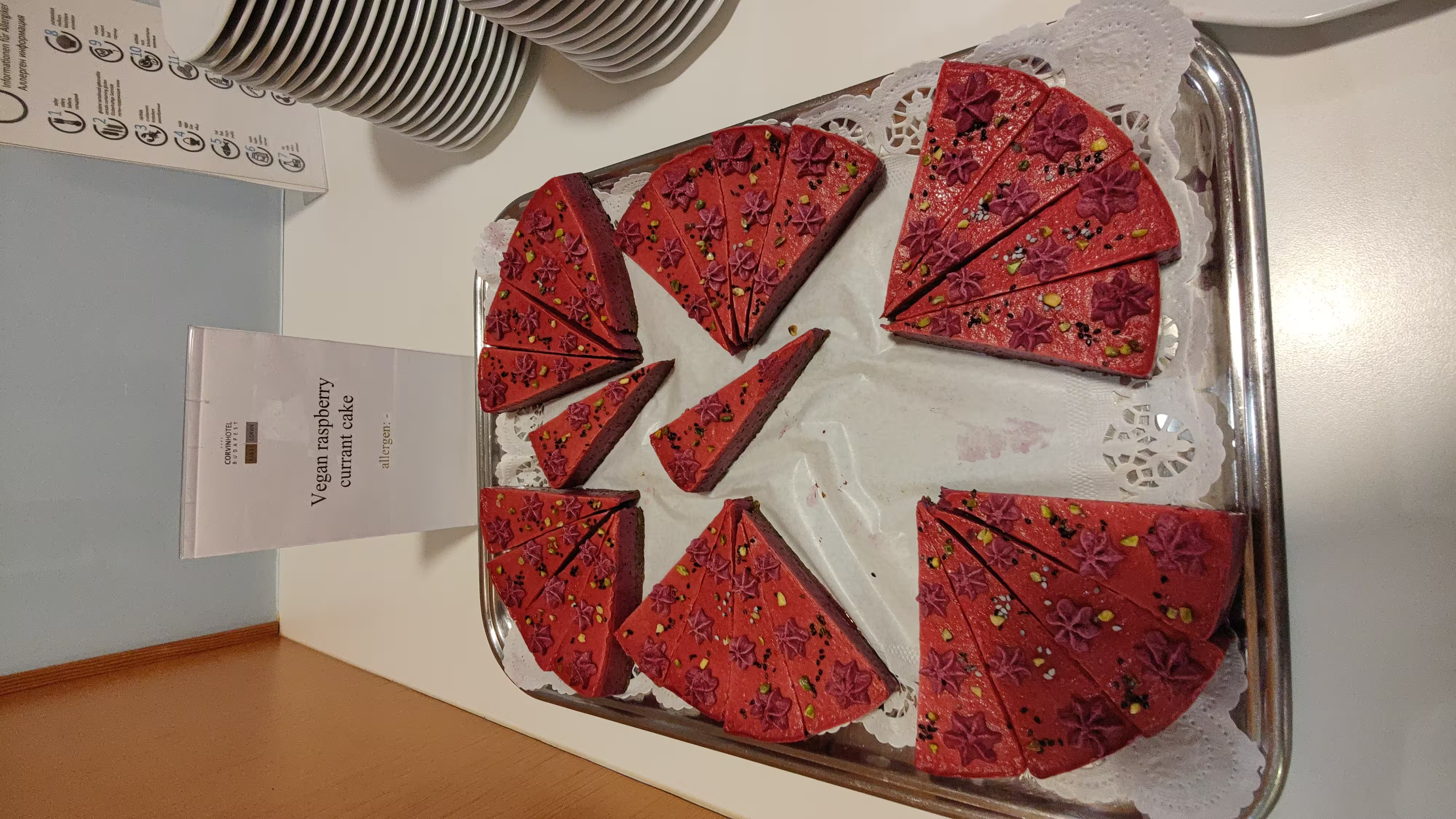 Raspberry Currant cake slices. Photo by Ravi Dwivedi, released under CC-BY-SA 4.0.
 Conference swag. Photo by Ravi Dwivedi, released under CC-BY-SA 4.0.
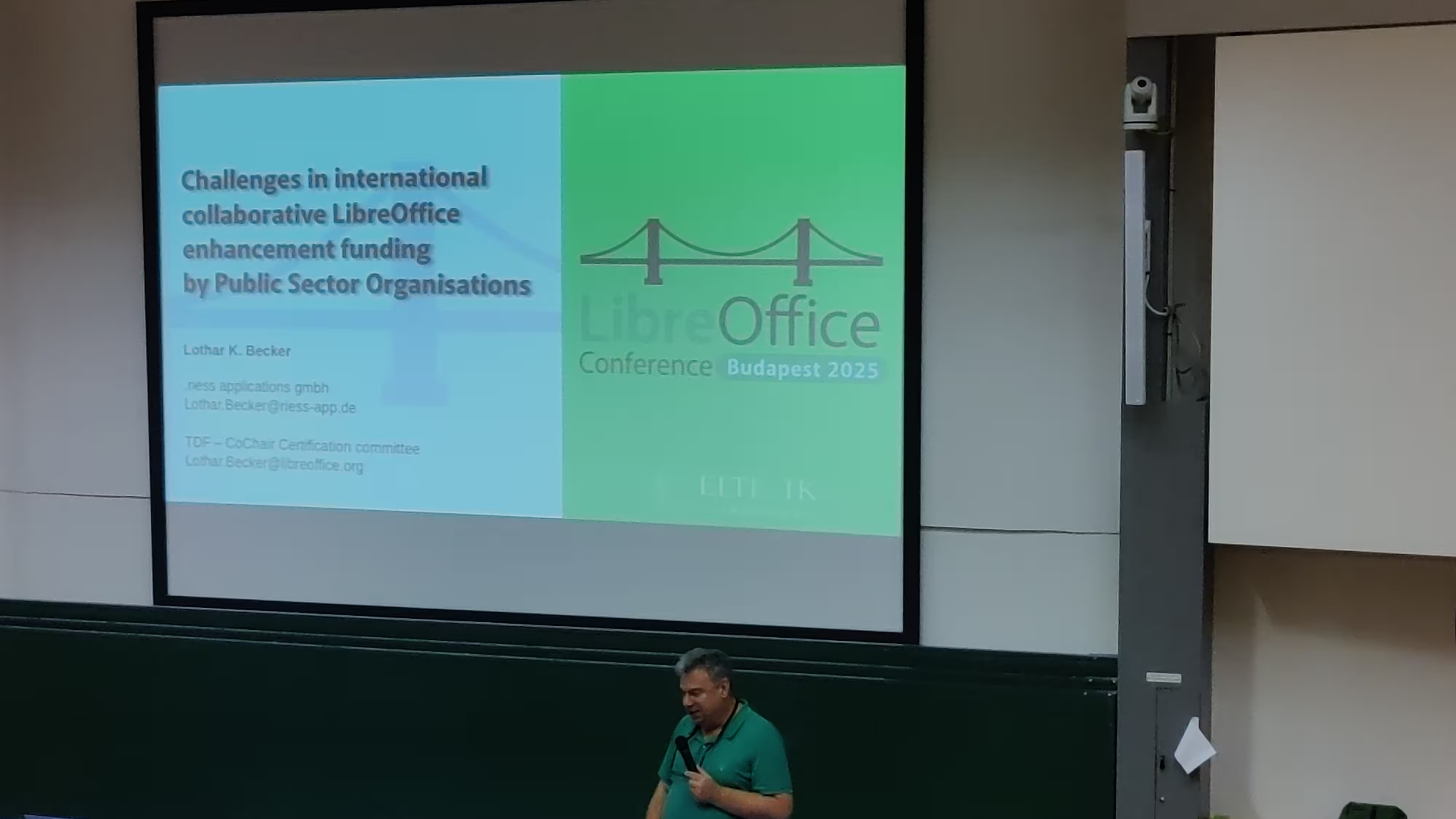 Lothar giving his presentation. Photo by Ravi Dwivedi, released under CC-BY-SA 4.0.
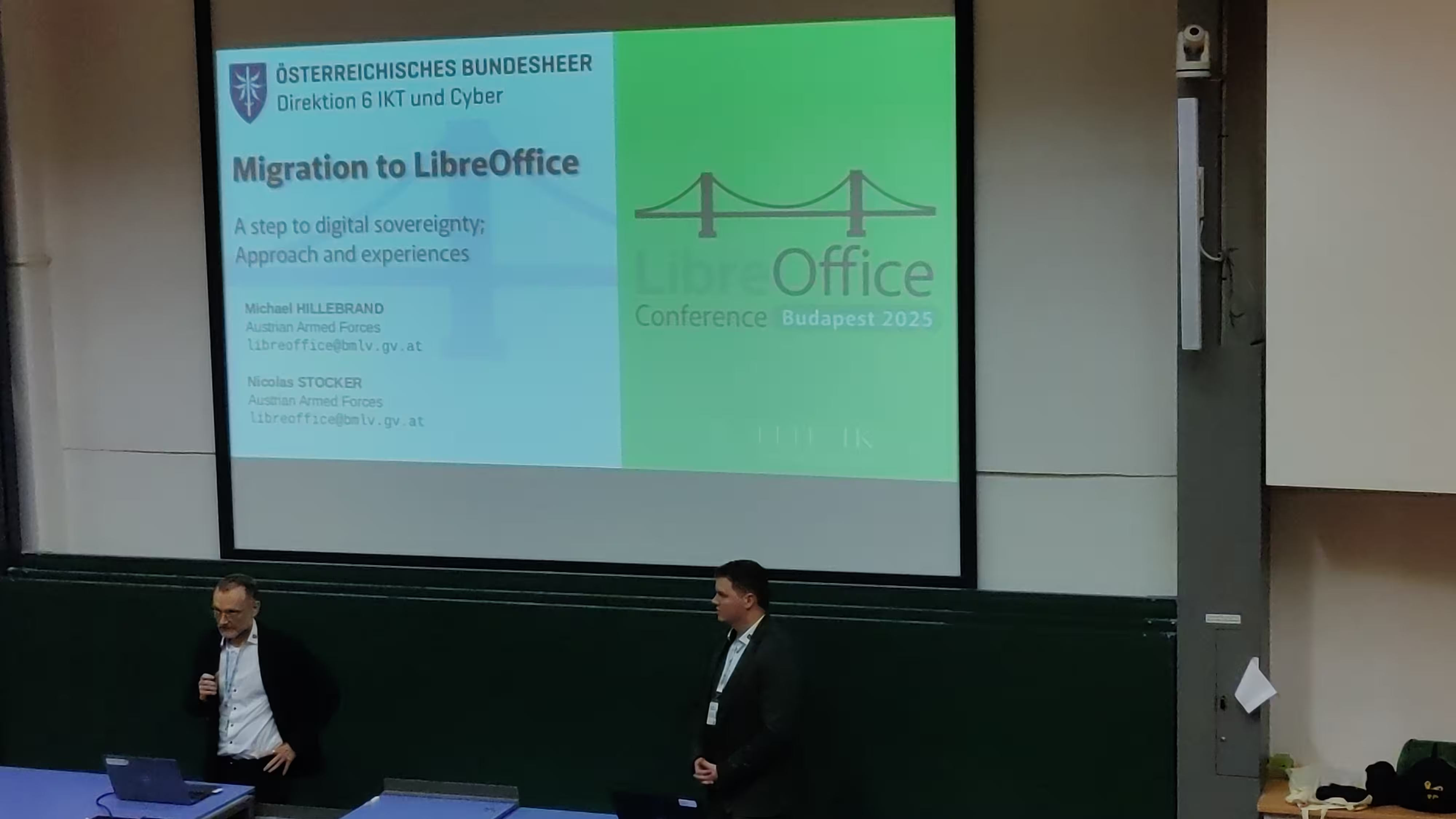 Presentation on migration to LibreOffice by Austrian Armed Forces. Photo by Ravi Dwivedi, released under CC-BY-SA 4.0.
 My lunch ticket for the conference. Photo by Ravi Dwivedi, released under CC-BY-SA 4.0.
 The lunch I had on the first day. Photo by Ravi Dwivedi, released under CC-BY-SA 4.0.
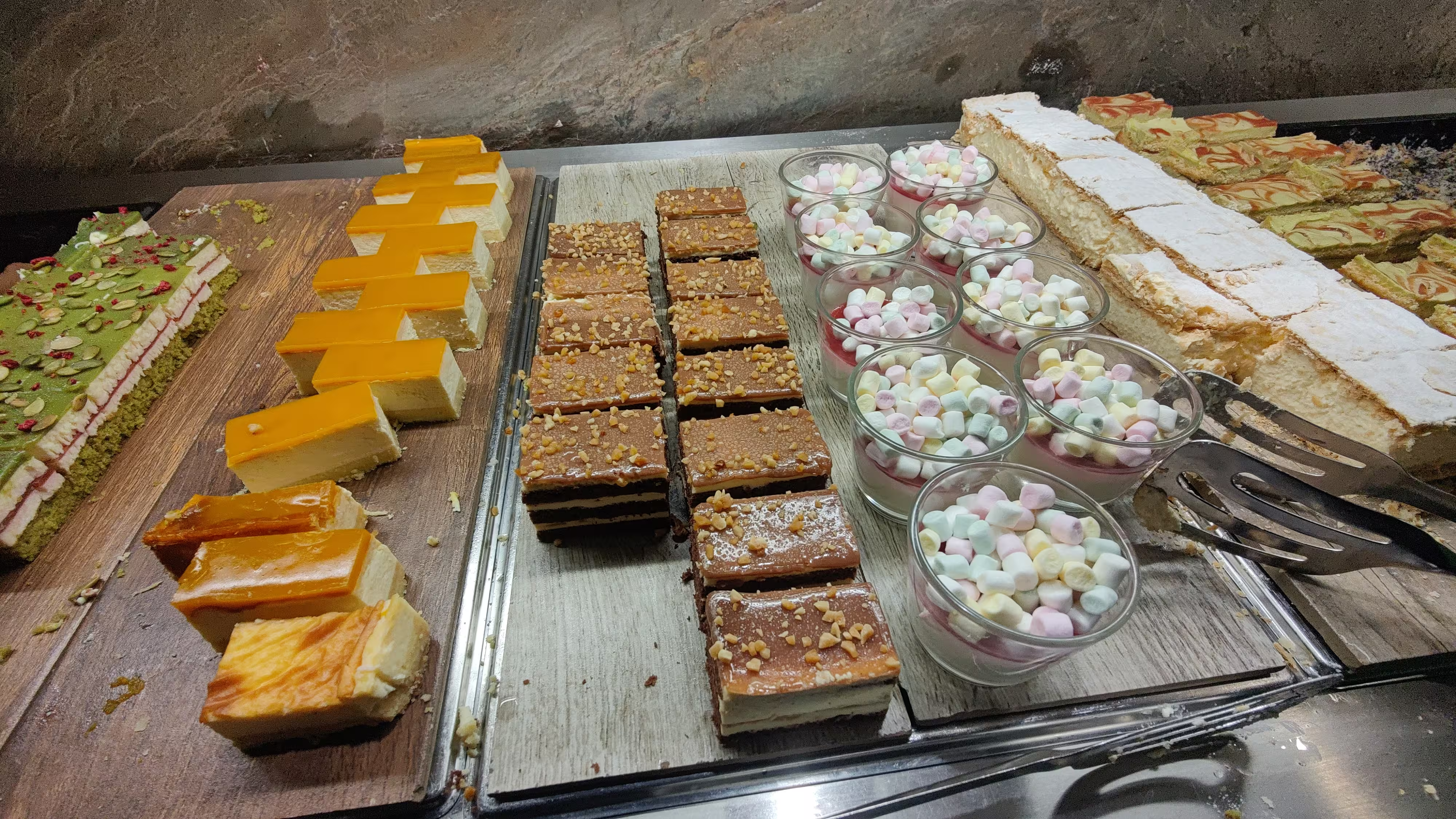 Desserts at Tofea Grill. Photo by Ravi Dwivedi, released under CC-BY-SA 4.0.
 Dione giving her presentation. Photo by Ravi Dwivedi, released under CC-BY-SA 4.0.
 Egg white salad. Photo by Ravi Dwivedi, released under CC-BY-SA 4.0.
 Group photo
 When you re looking at source code it can be helpful to have some evidence
indicating who wrote it. Author tags give a surface level indication,
 When the Free Software movement started in the 1980s, most of the world
had just made a transition from free university-written software to
non-free, proprietary, company-written software. Because of that, the
initial ethical standpoint of the Free Software foundation was that it's
fine to run a non-free operating system, as long as all the software you
run on that operating system is free.
Initially this was just the
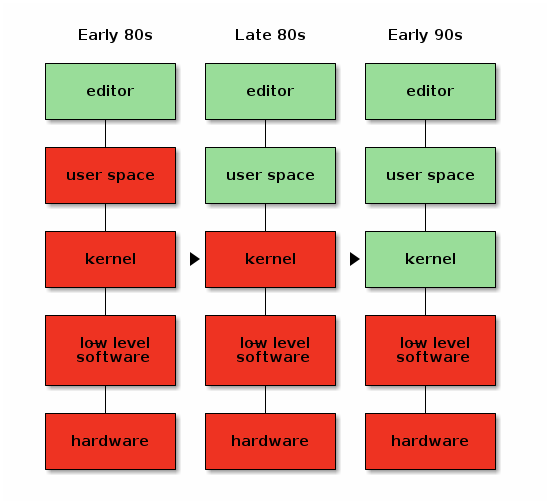
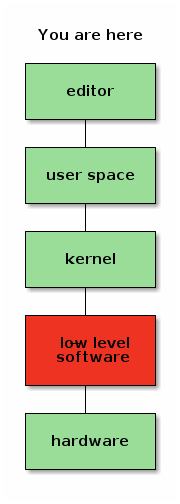
 Given we ve entered a new year it s time for my annual recap of my Free Software activities for the previous calendar year. For previous years see



 I am currently transitioning my GPG/GPG key from