So the Debian wiki's been around for 25 years, but no-one thought about licensing when it was started. There have been a few short email threads over the years on this topic, but nothing actually happened. Now, since gears are turning on moving the wiki to MediaWiki, we're finally trying to fix the licensing issue... yay us! (Sarcasm.)
BackgroundThe wiki started in 2001 running under wiki.debian.net, which used a custom licence with the bare legal minimum to allow content to go on the wiki. As you can probably tell, this is not a "free" licence with respect to the Debian Free Software Guidelines.For those who don't know, the Debian Free Software Guidelines (DFSG) define whether a given piece of software (or in this case, adapted to writing and media works) is "free" as in freedom. You may be more familiar with the Open Source Definition, which was adapted from the DFSG.In 2005, wiki.debian.org was established running MoinMoin, the software that it still uses today, and content was imported from wiki.debian.net. At this time, Jonathan Dowland raised concerns on the lack of licensing terms on the new MoinMoin installation as well as the copyright status of the content being imported, but it happened anyway. As he puts it, "the question is now whether the material on this site is DFSG at all and if it ever will be." Currently, the Debian wiki is the biggest wiki on the internet that uses MoinMoin according to Steve McIntyre during DebConf25.So now it was going from custom licence to no licence at all. At that time, someone suggested the wiki used the GNU Free Documentation Licence (GFDL), before Steve corrected it.Since then, people have been editing and contributing to the wiki, growing it as an essential, if sometimes messy, resource for information about Debian. Now it's not as beautiful or well organised as, say, the Arch Wiki, but content like the page on installing Nvidia graphics drivers or the page on installing Debian have helped likely hundreds of thousands, perhaps millions, of people according to data Jonathan collected over two months. Take that with a grain of salt though as AI scrapers have skewed these counts recently.Yet, there was no clear licence for the content people were putting on the wiki. And when there is no licence, and no-one specifies a licence on the page itself, it is assumed to be "all rights reserved" in most jurisdictions. This is ignoring the implicit grant given by an editor to display that content on the wiki when they submit content to the wiki, but this is shaky at best and doesn't provide the clear permissions needed to freely reuse that content. Steve McIntyre hosted a Debian Wiki BoF (Birds of a Feather meeting) at DebConf 25. Credit: DebConf Video Team; MIT licence.During DebConf 25, there was a BoF meeting to discuss the wiki, preceded by a great "biased SWOT analysis" presentation by the Arch Wiki admins on how they run their wiki and the challenges they faced. The wiki BoF discussed a range of topics, one of which was licensing.Following this, stuff started happening to make major changes to the wiki, mainly with a migration to MediaWiki to leave the unmaintained MoinMoin software and be able to upgrade away from Debian Buster (version 10, oof!), as well as the creation of a new mailing list and IRC channel.At the same time, I started pushing to fix content licensing, and for the last 16 months, I have been largely working alone to slowly but surely relicense everything ever put on the wiki. This article aims to document what has been done so far and why, and some challenges encountered along the way.You can watch the wiki BoF: low quality, HD (warning: choppy audio), and the Arch Wiki presentation: low quality, HD, thanks to the DebConf Video Team who recorded them during DebConf 25.
It is designed explicitly for content and media, compared to other licences that are aimed at software (e.g. MIT).
It requires attribution for contributors' hard work.
It ensures any adaptations of the work continue to use the same or compatible licence, preventing someone from taking the work and making it proprietary.
It is pretty permissive and allows adapting CC BY-SA 4.0 materials into GPL-3-licensed works, like package manual pages and other documentation.
Some licences were ruled out for various reasons:
Public domain / CC Zero - We wanted a licence that required attribution, especially considering the wiki relies on volunteers to populate and update its content.This would also make it difficult for any content to be brought into the wiki from other sources, since they would have attribution requirements that could not be preserved under CC0.
GNU Free Documentation Licence (GFDL) - Debian only considers the GFDL to be a DFSG-free licence when it is used without any of its invariant options as per the 2006 general resolution. Also, this licence would limit where wiki content could be integrated outside of the wiki. Generally, this is an unwieldy licence with many restrictions, and should probably be reserved for printed works as it was designed for that.
Creative Commons NC & ND options - The Non-Commercial (NC) and Non-Derivative (ND) options for Creative Commons licences are not compatible with the DFSG.
It's not like CC BY-SA 4.0 is a niche licence; it is the licence that Wikipedia uses. As a result, we can copy content back and forth from a whole lot of places with this licence.Overall, CC BY-SA 4.0 provides a balance between putting in place protections for the work contributors put into the wiki via requiring attribution and share-alike, while also being very permissive in every other aspect, in line with the kind of freedom we're looking for.
Handling new additions The Debian Wiki displayed a prominent banner regarding the licence of new content.Before dealing with the mess that is the old content, first we looked at how to handle new edits to the wiki.After picking an arbitrary future date (in this case, 24 July 2025), I wrote a new copyright page explaining that content contributed after this date would be licensed under CC BY-SA 4.0, and summarised the main points of the licence.Following this, I updated the website footer and added a banner notifying wiki users and editors of the licence change (or should we say: addition). It was ugly, prominent, and in highlighter yellow to make sure no-one missed it. The banner served its purpose for a few months, and then was removed because, by then, we're pretty sure we got the message across.I also ensured this was displayed properly on the 'edit' page, so that editors understood that, by submitting their changes to the wiki after this date, they agreed to license their contribution under CC BY-SA 4.0.
Dealing with old contentNow, to the annoying part. In order to actually get everything to use CC BY-SA 4.0, contributors need to be contacted one by one and asked for permission to relicense their work, as they are the copyright holders.Keep in mind that the end goal is for all content on the wiki to be DFSG-free, with CC BY-SA 4.0 being the preference.
Wait, how much work is this?Allow me to first give you an idea of the scale of the task at hand:
There are 21,506 registered user accounts on the wiki (at the time of writing).
Over 290,052 edits have been made to the wiki.
Of those user accounts, 9,778 users have made one or more edits on the wiki.
Only 1,548 users have made more than 20 edits on the wiki.
These numbers are based on a snapshot from 26 January 2026.For that last bullet point, this graph here makes it clear that the majority of user accounts (on the left side of the graph) have only made a handful of edits. Frequency of number of edits per contributor. Each point shows how many contributors made a
given number of edits. The horizontal axis uses a logarithmic scale.Though unrelated to the topic at hand, this is probably a good argument for allowing anonymous edits to the wiki once again, a setting that was originally disabled to reduce spam. New accounts requiring manual approval, which has been in place for the past few years, was put in place for the same reason as well.These kinds of protections mean wiki admins have to deal with less spam, but they also increase friction, which makes it harder for readers to make one-off edits and should be minimised as much as possible in the opinion of Weird Gloop, the folks behind a bunch of notable wikis, like the Minecraft wiki. Hopefully the move to MediaWiki will greatly improve the anti-spam tools available to allow for this to happen.
Finding who to contactAt the moment, what I've been doing is checking pages one at a time to determine who needs to be contacted, and emailing them. While I've been doing this, I have kept an evolving record of who has been contacted, who has agreed, and who cannot/will not agree in a Git repo on Salsa (Debian's GitLab instance).The first thing I did was write a small script that listed pages that were three or fewer clicks away from the front page. This way, I could start with the important pages first. This turned out to be very annoying to work with, as these pages also had the most edits and unique authors (who could've guessed?). Many of them were "portal" pages as well, which are big collections of links rather than real content, so I tended to skip these.I've created a little bit of JavaScript that acts as a bookmarklet (i.e. button in the bookmark bar that does things rather than open a URL). What it does is highlight usernames on the edit log of a given wiki page (which MoinMoin calls the "Info" tab) based on a colour code: green means agreed, yellow means contacted with no response yet, and red means "failed". This gives a great overview of the status of each contributor to the page, and also filters out edits made after the 24 July 2025 cut-off. The bookmarklet script highlights the username associated with each revision to show the relicensing status of each contributor.Many pages have been completely rewritten or transformed so much that none of the original remained, so there was no point in contacting every contributor in the edit log if I could determine only the ones that mattered. Additionally, if all someone did was fix a typo or grammar mistake, they were also not worth contacting (though this was usually decided on a case-by-case basis).This introduced a new problem; how can I filter out these contributors to find the editors responsible for the current content? The first thing that came to mind was git blame. So naturally, I ran a script on the Debian Wiki server overnight to transform the MoinMoin data into a giant Git repo, where each commit represented an edit, and the author was set to the editor's username and account email address. This resulted in a 252 megabyte repo with 290,052 commits.MoinMoin stores its data on the filesystem, rather than a database like MediaWiki does. The data directory contains a user/ directory and pages/ directory.Each page is represented as a directory under pages/, with special characters in page names encoded in a Moin-specific format. For instance, the page DebianDeveloper/Benefits is stored under pages/DebianDeveloper(2f)Benefits/.Within each page, there is a cache/ directory (which we don't care about), a revisions/ directory containing a copy of the page at each revision (e.g. revisions/00000001), a current file containing the number of the latest revision, and an edit-log file containing the edit history of the page in tab-separated values (TSV) format.The edit-log file stores the timestamp, revision number, username, IP address, and user ID for each revision, so using this and the data in the revisions/ directory, a Git repo could easily be constructed with a bit of scripting.The final step was adding the user's email to the commit, which made it easy to associate usernames with emails within the Git repo. Each user has a file in the user/ directory named based on their user ID (assigned by Moin), and one of the attributes contained in that file is the user's email address.Overall, the file tree looked something like this:
Now I could git blame a page and find out exactly who should really be contacted, making this process much faster than reviewing every revision of a page by hand. This wasn't a foolproof method though, as it would blame a user for an entire line for both additions and modifications, like rephrasing a sentence or fixing a typo. It was a good starting point though, better than contacting anyone that ever edited the page. Additionally, git blame tended to be really slow, taking a few minutes every time it was run, likely because of the amount of commits involved.I also made a wrapper around git blame to highlight lines in green, yellow, and red, allowing me to identify which lines remained to be reviewed. The colours mean the same thing as before with the bookmarklet script. The wrapper script produced a coloured output to determine the status of each editor of the page.Recently, rather than using that 3-clicks-or-away list of pages to review, I have been sporadically reviewing any pages I stumble upon while doing other work. It may be less efficient, but it's more fun and feels less like a chore compared to reviewing pages one after another.
Sending out the emailsOf course now we need to do the most important part, actually contacting people over email.For each user, the starting point is to retrieve the email address they have on their wiki account. Luckily, since I've got the repo as a git repo, I can git log -1 --author=<username> to do this rather than grepping the wiki data each time.Now there were a few problems with this:
Email addresses were only verified for new accounts. This meant that some users changed the email address on their account to an invalid one, often intentionally (instead of asking for their account to be deleted).
Some email addresses were outdated and no longer existed. The most common case was for @debian.org addresses for people who have left the Debian project.
This meant that a little internet detective work was needed for some users, which involved checking things like searching Debian New Members and mailing lists. Sometimes users had a user page on the wiki with better contact info as well.If I'm able to find a working email address, then I send them an email based on a template, which has been refined a couple times. It pretty much summarises what's going on and asks for permission to relicense their work to CC BY-SA 4.0.These emails were sent from my @debian.org address, mostly relying on its domain reputation to cut through spam filters and end up in people's inboxes. I also CC'ed myself at a special maytham-wiki-license address, which allowed me to filter relicensing stuff into its own folder. Though, people kept leaving it out of their replies, so I ended up changing the filter to check the email subject instead. Eventually, I plan to create a Git repo containing an mbox per user to keep a record of people's responses.Most failures occurred because the email address could not be found or the recipient mailserver had an issue, so I'd get that "Undelivered Mail Returned to Sender" email. In these cases, I wasn't able to find an alternative address. Other failures were mostly due to the contributor having passed away, and only one person so far has actually refused to relicense their work among those who have responded to the emails. All of these are being collectively referred to as "failed" users with regards to content relicensing.
Progress so farAt the time of writing (25 November 2026), the progress is as follows:
791 users have been contacted.
370 (47%) users have agreed to relicense their work.
The remaining 421 have not responded yet.
67 users have been put down as "failed".
This is pretty good progress: of the 1,548 users who made 20 or more edits, 51% have been contacted, 24% have agreed to relicense, and only 4% have been marked as failed.
Next stepsOf course, not every contributor has been contacted yet, there are many more to go.It would be great if there was a way to automate this, as a lot of it is repetitive. git blame has worked so far, but its limitations mean it still requires human review. Ideally, there should be a way to find the authors of the latest revision of the page based on word-diff rather than line-diff, and also rank them based on how much they contributed to the page. Maybe it would involve measuring Levenshtein distance per edit? Who knows?At the moment, I don't have time to work on such a tool. So I'll keep doing it the same way I've been doing it so far: every once in a while when I open some page on the wiki, I will check who is yet to be contacted, and send out a handful of emails.
Handling failuresThis likely entails stripping out each failed user's contributions from the wiki wherever it is part of the latest revision, which can also mean that some pages will need to be completely deleted as well. This is not a good thing, but it's something that has to be done to reach the aforementioned goal of a completely DFSG-free wiki.This kind of thing probably should wait until the move to MediaWiki has happened. The tooling for doing these kinds of mass edits is much better there, and I think(?) there are plans to create a static archive of the MoinMoin wiki during or after the move, so that information isn't lost forever. This would be part of the general effort to clean up the wiki.
Following up when there is no responseA lot of the people who have been sent emails have not responded in a long time (>3 months, many much longer than that). These people need to have follow-ups sent to them, since there is a high chance the email ended up in their spam folders. I have sent follow-ups to a few people, some of which have succeeded, but this needs to be done in bulk for all the remaining people.A limit also needs to be put in place before we give up on people. One approach would be to mark users as failed if they do not respond to two further follow-ups after the initial email, each spaced at least a month apart from the previous email, for a total of at least three months from first contact. This would be loosely based on the kind of procedure used by the Debian MIA Team.
Increased publicityA while ago, I floated the idea on the wiki mailing list of asking the Publicity Team to create a Bits post (for instance) to let everybody know about the relicensing effort, and to ask contributors who have not been contacted yet to send us an email. This proactive approach would be much better and less work than the current reactive approach, since asking every person to send one email is a whole lot easier than one person sending hundreds of emails. Even though little interest was shown on the mailing list at the time, at some point, I'd like to follow through with this.In a way, this post is serving the same purpose! You probably didn't know about what I'm doing before reading this, but now you do :)
Help wanted!Have you ever, in your lifetime, edited the Debian wiki? Well step right up! It'd be great if you could send me a short email with the following format:
To: maytham-wiki-license [AT] debian (DOT) org
Subject: Relicensing my contributions to wiki.debian.org
Hi,
My username on wiki.debian.org is <INSERT USERNAME HERE>.
I give permission for all work I have submitted to
wiki.debian.org to be distributed under the terms of the Creative
Commons Attribution-ShareAlike 4.0 International license, the text of
which can be found at https://creativecommons.org/licenses/by-sa/4.0/.
It means I don't have to chase you down, which is great! Also note that the From address will be checked to make sure it's genuine, and it would be even better if you could GPG sign it!Now for the complicated bit: Debian being a volunteer project is both a blessing and a curse. Having more people help out with this work would make this initiative much more sustainable. As someone put it in an email to me: "I am concerned about the bus factor of one Maytham." This is especially important as I've recently slowed down my work on this due to other matters that are either more important or just plainly more interesting.If you want to help with contacting people, there is a short guide in the repo README. In short, find the contributors you want to contact (and make sure they have not already been contacted!) and send each of them an email based on the template, CC'ing my licensing email address so that it gets saved in my mailbox for the future 'mbox' export. Then, you can modify the lists to add users to contacted, succeeded, etc.Hopefully with a bit more work, we can get this across the finish line. This article is part 1 because the work is unfinished and still ongoing, so hopefully the progress numbers will be higher in a potential part 2 to the saga.
Disclaimer: The opinions stated here are my own, not those of my employer.
In my previous post on bringing native Protocol Buffers, gRPC, and Cloud/GenAI client libraries to Perl, I noted an important split in modern AI and data engineering: remote LLM orchestration happens over RPC, while local machine learning and columnar analytics rely on in-process C, C++, and Rust tensor libraries.
Naturally, the next question was: what about the local side of that equation?
What started as a pair of data-interchange prototypes (PDL::IO::Arrow and PDL::IO::Protobuf) developed alongside google-auth-library-perl (#35 and #37) quickly grew once we invited review from the PDLPorters community, in particular Ed J (mohawk2 / ETJ on #pdl) and Zakariyya Mughal (ZMUGHAL). That collaboration reshaped both the architecture and the governance of the project: 16 distributions (14 PDL::* modules at 0.011 and 2 Alien::* wrappers at 0.001) have now been migrated into dedicated repositories under PDLPorters, hardened across Linux, macOS, and Windows, and submitted as 16 pull requests built directly on Perl Data Language (PDL).
1. Eliminating the Two-Language Problem with a Clean 3-Layer PDL Architecture
In pure Perl, a list of one million floating-point numbers is an array of one million boxed scalar structures (SVs). Historically, serializing data into and out of Perl scalars or shelling out to external Python scripts and CLI wrappers created a painful two-language problem for engineering teams already running Perl for systems automation, log analysis, text processing, and service orchestration.
For nearly three decades, PDL has provided typed, contiguous C-level N-dimensional arrays (ndarrays) with vectorized broadcasting and affine slicing. What PDL lacked until now were zero-copy-friendly bridges to modern columnar file formats, deep-learning weight files, subword tokenizers, dense vector indexes, and hardware-accelerated inference runtimes.
Guided by PDLPorters conventions and PAUSE community stewardship (relinquishing 11 deprecated prototype namespaces and transferring primary maintainership on the active namespaces to ETJ while retaining co-maintainership alongside ZMUGHAL), the stack is organized into three clean layers:
Alien::* Native Runtime Layer (Alien::GGML, Alien::LibTorch): Locates system-installed C/C++ libraries via pkg-config or builds low-level HPC tensor runtimes cleanly without coupling complex native build logic to thin Perl XS wrappers.
Focused Engine & Zero-Copy I/O Layer (PDL::IO::*, PDL::ML::Engine::*, PDL::ML::Vector::*, PDL::ML::Token::*): Converts directly between native memory buffers (including the Apache Arrow C Data Interface and memory-mapped .safetensors / .gguf model weights) and contiguous PDL ndarray pointers.
PDL Broadcastloop & Workflow Layer (PDL::ML::Preprocess, PDL::ML::Metrics, PDL::ML::RAG): Pure-PDL feature scaling, imputation, evaluation metrics, and retrieval-augmented generation workflows that compose naturally with PDL s broadcasting engine.
In practice, Perl services using traditional lexical search (TF-IDF, BM25, or regex log scanning) can now add subword tokenization, local ONNX or GGML embeddings, FAISS similarity search, and analytical DuckDB SQL completely in-process over shared C pointers.
2. Lessons Learned & Upstream XS Discipline (PDL#562 and PDL#563)
As the modules took shape, mohawk2 opened PDLPorters/pdl#562 ( Notes on binding libraries to PDL ), where we also contributed back a consolidated PDL Binding Cookbook. Several concrete engineering idioms shaped all 16 pull requests:
Use PDL->new_around_datasv for runtime-typed buffers: Rather than hand-rolling pdlnew(), setdims(), allocdata(), and memcpy boilerplate in C when wrapping raw byte buffers whose element type is determined dynamically at runtime, new_around_datasv wraps the buffer cleanly and idiomatically.
Fail hard on missing native libraries: Every Makefile.PL replaces silent exit 0 stubs with explicit die diagnostics when required C/C++ libraries are missing, ensuring CPAN Testers, cpanm, and distro build daemons accurately distinguish missing native prerequisites from passing builds.
Modern Makefile.PL & C++ hygiene: Pure-XS distributions enable XSMULTI => 1, C++ bindings unconditionally use ExtUtils::CppGuess (makemaker_options()-> CCFLAGS ), quotes in PDL::Core::Dev::PDL_INCLUDE() are preserved so paths containing spaces never break, all PDL-* modules use 3-decimal versions (0.011) with META_MERGE pointing to PDLPorters/*, and every module ships a dedicated =head1 TYPES POD section documenting supported PDL types.
Cross-platform CI & local quality hooks: Every repository runs PDLPorters satellite GitHub Actions workflows (PDLPorters/devops/github-actions/ci-dist@master plus IRC notifications) across Linux, macOS (using dynamic brew --prefix + rpath), and native Windows (5.32), achieving 100% green CI across all 14 PDL-* distributions and Alien-GGML (with Alien-LibTorch CI underway). Local dot-git/hooks/pre-commit and pre-push scripts enforce syntax checks, Test::CPAN::Changes, Test::Pod, parallel prove -j, and Test::Kwalitee before code ever leaves a workstation.
Cross-distro & Perl 5.40 portability catches: Testing across Debian, Ubuntu, Rocky Linux 9, macOS, Windows, and Perl 5.40 surfaced subtle real-world traps early: for example, avoiding exporting connect by default in PDL::IO::DuckDB so it does not shadow Perl s built-in socket connect, and isolating a C99 complex macro collision in pdl.h under strict C++17/C++20 mode into a minimal 3-file reproducer tracked upstream at PDLPorters/pdl#563.
3. Inside the 16 PDLPorters Distributions & Pull Requests
Figure 1: Modular C/C++ columnar I/O, vector search, inference, and RAG stack over Perl Data Language (PDL).
All 16 repositories under PDLPorters now have open pull requests spanning columnar and model-weight I/O, C/C++ ML and inference engines, dense vector search, tokenization, workflows, and Alien::* native library wrappers:
Alien::Build package for C++ libtorch tensor and inference runtimes
What It Looks Like in Practice
Reading and writing Apache Parquet or Arrow IPC files directly as named PDL columns (which also bridges cleanly to BigQuery s Arrow-based Google::Cloud::Bigquery::Storage::V1 API) takes a single call:
use PDL;
use PDL::IO::Arrow qw(rarrow warrow rparquet wparquet);
# Read Parquet columnar data directly into typed PDL ndarrays
my $cols   = rparquet('events.parquet');
my $scores = $cols-> score ;
# Write named PDL columns back out to Parquet or Arrow IPC
wparquet(  id => long([1, 2, 3]), val => double([0.5, 1.5, 2.5])  , 'out.parquet');
warrow(  id => long([1, 2, 3]), val => double([0.5, 1.5, 2.5])  , 'out.arrow');
Indexing embedding vectors in FAISS and running local ONNX Runtime inference stay equally concise:
use PDL;
use PDL::ML::Vector::FAISS qw(flat_l2);
use PDL::ML::Engine::ONNX qw(load_session);
# 1. k-NN similarity search in FAISS
my $index = flat_l2(4);
$index->add(float([[1, 0, 0, 0], [0, 1, 0, 0], [0, 0, 1, 0]]));
my ($distances, $indices) = $index->search(float([[0, 1, 0, 0]]), 2);
# 2. Local model inspection & inference via ONNX Runtime C API
my $sess    = load_session('model.onnx');
my @inputs  = $sess->input_names();
my @outputs = $sess->output_names();
And PDL::ML::RAG ties local vector retrieval together with either a local ONNX/GGML backend or a remote gRPC call via Google::Ai::Generativelanguage::V1:
use PDL;
use PDL::ML::RAG qw(chunk_text render_prompt);
my $rag = PDL::ML::RAG::Pipeline->new(
    embedder  => sub ($text)   ...  ,          # returns 1D PDL float vector
    generator => sub ($prompt, $hits)   ...  , # local ONNX/GGML or Gemini gRPC
);
$rag->ingest([
      text => 'PDL provides fast n-dimensional arrays for Perl.', metadata =>   src => 'pdl'    ,
      text => 'DuckDB runs vectorized SQL queries in-process.',   metadata =>   src => 'duckdb'    ,
]);
my $res = $rag->query('How do I run SQL?', k => 1);
print $res-> answer , "\n";
4. Honest Capability Assessment: Where Perl Reaches Parity (and Where Python Still Leads)
High-level languages achieve modern ML throughput by orchestrating compiled C, C++, CUDA, and Rust engines over contiguous memory buffers. Distinguishing between analytics, tabular ML, inference, and RAG versus frontier foundation-model training clarifies what this expansion actually changes for Perl:
Near Parity: Native C/C++ execution once tensors and weights are memory-mapped.
Dense Vector Search & RAG
SentencePiece, Tokenisers, FAISS, PDL::ML::RAG
sentencepiece, tokenizers, faiss, langchain
Near Parity: Tokenization, embedding, and FAISS indexing all run in native C++ memory.
Frontier Model Training & Autodiff
Limited (no native compiler-level autodiff or XLA/Triton stack)
PyTorch, JAX, TensorFlow, Triton
Python / C++ Lead: Multi-node GPU/TPU training, reverse-mode autodiff, and kernel fusion (torch.compile, XLA) remain Python/Julia/C++-centric.
Once data is resident in PDL ndarrays, chaining PDL::IO::DuckDBPDL::ML::PreprocessPDL::ML::Engine::XGBoost for tabular scoring, or PDL::ML::Token::SentencePiecePDL::ML::Engine::ONNXPDL::ML::Vector::FAISSPDL::ML::RAG for dense retrieval, executes inside the exact same C and C++ libraries powering Python and Rust services.
5. Linux Distro Readiness: Debian trixie (and Enterprise Linux EPEL 9)
For Debian Developers and systems administrators, the best surprise is how much of the heavy C and C++ lifting is already packaged in Debian main thanks to the Debian Science and Debian Deep Learning teams. On a standard Debian 13 (trixie) machine today, apt already provides DFSG-compliant shared libraries and headers for the core numerical and ML runtimes:
pdl (1:2.100-1)
libonnxruntime-dev (1.21.0+dfsg-1)
libxgboost-dev (3.0.0-1)
libfaiss-dev (1.11.0-3)
libmlpack-dev (4.6.0-1)
libsentencepiece-dev (0.2.0-1+b3)
libprotobuf-dev (3.21.12-11+deb13u1)
(Enterprise Linux users benefit similarly: on Rocky Linux 9 and AlmaLinux 9, perl-PDL is available straight from EPEL 9.) Where an upstream C/C++ runtime is not yet packaged by the OS, Alien::GGML and Alien::LibTorch use Alien::Build s standard system-first probe: honoring pkg-config distro libraries automatically whenever present (as Debian s pkg-perl policy expects) and falling back to an isolated build only when needed.
6. What s Next
Paired with the Cloud gRPC, Protobuf, and Gemini SDK stack, Perl now has a cohesive story across both remote cloud AI orchestration and local C/C++ columnar analytics, vector search, and model inference. Over the coming weeks, our focus is on four concrete milestones:
Upstream review & C++ header cleanup: Working through maintainer feedback across all 16 PDLPorters pull requests (including Alien::GGML and Alien::LibTorch) and resolving the C++ complex header collision in PDLPorters/pdl#563.
Tutorial-driven executable tests: Shipping end-to-end machine learning tutorials as executable .t test suites, including classic bioinformatics tabular classification benchmarks on the UCI E. coli and Yeast protein subcellular localization datasets and weighted k-NN pipelines inspired by PSORT and WoLF PSORT.
Initial CPAN releases under PDLPorters: Cutting initial CPAN releases once PDLPorters co-maintainers sign off on the public APIs and type contracts.
Debian pkg-perl packaging: Packaging the stack for Debian starting with libpdl-io-arrow-perl and libpdl-io-protobuf-perl alongside the existing trixie/forky C++ libraries.
If you use PDL, work on bioinformatics or scientific computing in Perl, or help maintain numerical packages in Debian, feedback on PDLPorters/pdl#562 and the 16 satellite pull requests is very welcome.
My
experience at Debian Brazil Reunion 2026 in S o Paulo
Last weekend, I attended the first Debian Brazil Reunion.
Inspired by similar events organized in other countries, we decided
to bring the idea to Brazil and organize a three-day event focused on
contributing to Debian.
Every day, we started at 9 a.m. and worked until around 8 p.m.
I was so immersed in the event that even after getting back to the
hotel, I kept working. I was having so much fun that I just couldn't get
out of the mood of getting things done.
What everyone was working
one
A few people were working on translations into Brazilian Portuguese,
another group was organizing the MiniDebConf that will take place in
Curitiba next year, and the rest of us, myself included, were working on
packaging and other development-related tasks.
One thing that made me particularly proud was seeing Lucas Ramalho
and Giovanna Macedo travel all the way from Jo o Pessoa to attend the
event.
I first met them a few months ago during Debian Day, when I went to
Jo o Pessoa to give a packaging workshop and a talk about what it's like
to be a Debian contributor.
Seeing them again in S o Paulo, eager to learn more about packaging,
really inspired me to keep helping newcomers.
It's normal for people to come and go when making their first
contributions. That's why it's always rewarding to help someone and see
them stick around and become part of the project.
What I was working one
I started working on my list
of Neovim plugins that I want to package for Debian.
I managed to upload neovim-promise-async, a package that ships both a
Neovim plugin and a Lua library.
It was my first time packaging a Lua library, so I learned a lot by
reading the dh-lua code to better understand a few details of the Lua
ecosystem. Writing dh-lua.conf was a bit confusing at first, but it
turned out to be simpler than I expected. I also had fun coming up with
an autopkgtest for the package.
I also spend some time discussing and designing a feature with Aquila
Macedo for Debian Gitlab
self-service.
During the MiniDebConf
Brazil, Antonio Terceiro gave a lightning talk about salsa-scripts, a
tool he developed to help him approve Salsa accounts without having to
use the GitLab interface.
I really liked the idea, but there was one limitation: only members
of the salsa-admins team could use the tool. I tried to join the team to
help with account approvals, but the only way to do so was by having an
account with full administrative privileges.
I don't want that, and I agree with them that people should not have
that level of access just to help approve new accounts.
My goal was to solve the problem of approving accounts during
workshops. I hate having to pull commits from GitHub just because
someone hasn't had their Salsa account approved yet. And I'm not blaming
the salsa-admins team. It's simply impossible to approve accounts
quickly enough to keep up with the pace of live events.
That's when I came up with the idea of adding a feature to
salsa-scripts that would allow any Debian Developer to approve new
accounts.
I shared this idea Aquila, and he introduced me to Debian Gitlab
self-service. I wasn't aware of this project, and after discussing it,
we decided that implementing the feature there would make more sense
than adding it to salsa-scripts.
Anyway, if you want to learn more about this effort, check out the
Merge Request: https://salsa.debian.org/salsa/gitlab-newuser/-/merge_requests/4
Aquila took the idea I had been putting off for a while, implemented
the whole thing in just one day, and the result turned out pretty
cool:
Finally, I also sponsored a few uploads. I helped Tobias Sette and
Giovanna Macedo with their first uploads to Debian.
It's always nice to help newcomers in person. It's much easier to
explain things in detail, answer questions as they come up, and get
things done faster than going back and forth reviewing merge
requests.
Wrap up
It was an amazing experience!
I want to thank Rafael Passos and David Tadokoro for making this
happen. They managed to reserve one of the classrooms at the University
of S o Paulo (USP). Without that, the event would have been much more
expensive if we had needed to rent a coworking space.
It was also my first time visiting USP, which was a nice experience.
It's one of the most important universities in Brazil!
I'm already looking forward to the next edition!
Disclaimer: The opinions stated here are my own, not those of my employer.
Every so often, someone asks why Perl once the undisputed duct tape of the Internet faded from mainstream greenfield software development. Was there a single cultural flashpoint that canceled Perl? Was it the fifteen-year wait for Perl 6? Or did Damian Conway s Perl Best Practices, Perl::Critic, and CPAN s Kwalitee metrics simply arrive too late?
Having spent time recently building a modern Protocol Buffers and gRPC cloud client stack for Perl, I ve come to a simple conclusion: languages don t fade solely because of syntax debates. They decline when the friction of talking to the current generation of infrastructure outweighs the language s natural strengths.
Here is a look back at why Perl lost momentum during the 2000s enterprise shift and why the GenAI and gRPC era offers an unexpected opening for a modern Perl resurgence.
1. What Actually Drove Perl s Decline?
Perl wasn t sidelined by a single societal scandal. Rather, several technical, historical, and organizational forces converged between 2000 and 2012:
TIMTOWTDI vs. Readability at Scale
Designed by Larry Wall a linguist by training Perl embraced natural-language expressiveness under the motto There s More Than One Way To Do It (TIMTOWTDI). Context sensitivity, topicalizers ($_), and compact regex idioms made Perl extraordinarily fast for an individual developer or sysadmin to write. Seat a hundred engineers in a shared codebase without shared guardrails, however, and TIMTOWTDI produces divergent dialects.
As software teams scaled in the late 1990s and 2000s, engineering leadership increasingly favored Python s counter-philosophy ( There should be one and preferably only one obvious way to do it ), prioritizing uniform, easily reviewable code over expressive flexibility. Tellingly, the public Google Style Guides repository maintains official prose guides for C++, C#, Go, Java, JavaScript, Python, Shell, and TypeScript while omitting Perl altogether, leaving open-source Google Perl projects to codify standards directly in executable .perlcriticrc and .perltidyrc configurations alongside core perlstyle and Perl Best Practices.
The Perl 6 (Raku) Waiting Game & Ecosystem Shifts
If one historical event hurt Perl s momentum above all else, it was the Perl 6 transition. Announced in 2000 as an ambitious, backward-incompatible redesign, Perl 6 took 15 years to reach a stable specification (ultimately renaming to Raku in 2019 as a distinct sister language). During that 2000 2015 window, much of the industry assumed Perl 5 was in maintenance mode even as Perl 5 underwent a major renaissance between 2007 and 2012 (Modern Perl, Perl 5.10+, Moose, Moo, PSGI/Plack, and cpanminus).
Meanwhile, Perl s traditional strongholds migrated elsewhere: CGI.pm and mod_perl gave way to PHP, Ruby on Rails, and Django; cloud and DevOps tooling (Puppet, Chef, Ansible, Docker, Kubernetes, Terraform) coalesced around Ruby, Python, and Go; and scientific computing shifted from Perl s 1990s bioinformatics dominance to Python s C-extension ecosystem (NumPy, SciPy, Pandas, PyTorch). Even the 2020 debates over a proposed jump to Perl 7 which never came to fruition, ultimately giving way to the Perl Steering Council and steady incremental modernization via use v5.36 and use v5.40 happened long after that 2000s market shift.
Why Perl Best Practices, Perl::Critic, and Kwalitee Didn t Reverse the Trend Alone
Damian Conway s Perl Best Practices (2005), static analysis via Perl::Critic (built on PPI), formatting via Perl::Tidy, and CPAN s Kwalitee metrics (Module::CPANTS::Analyse) solved many of the readability complaints associated with 1990s Perl. Enforce strict Perl::Critic policies and modern conventions, and Perl code becomes remarkably clear and intentional. Yet four structural factors kept those tools from reversing the broader industry trend:
Opt-in discipline vs. language defaults: Unlike Python s indentation grammar or Go s gofmt, clean Perl relies on opt-in team toolchain discipline and two Modern Perl teams can still choose different object dialects (blessed hashes, Moose, Moo, or Perl 5.38+ Corinna class blocks).
Static analysis limits ( Only perl can parse Perl ): Because BEGIN blocks, prototypes, and symbol-table manipulation make Perl 5 undecidable to parse statically in full generality, PPI excels at lint policies but cannot easily power the deep static type checking and automated million-line AST refactorings that enterprise monorepos rely on.
What Kwalitee actually measures: Coined as a tongue-in-cheek pun on Quality ( it looks like quality, it sounds like quality, but it s not quite quality ), Kwalitee measures CPAN distribution hygiene metadata, licenses, POD, use strict, and test suites making CPAN extraordinarily reliable, without addressing application-scale type safety.
The 2005 2011 timing gap: By the time Modern Perl matured, major tech companies had already locked in build systems, hermetic toolchains, and RPC code generators for Python and Java, leaving little appetite to fund parallel infrastructure for a second dynamic scripting language.
2. The Real Blocker Today: The Protobuf & gRPC Chasm
If you write Perl 5.36 5.40+ today with native subroutine signatures, try/catch, builtin booleans, Moo or Corinna class blocks, and strict Perl::Critic gates the language itself is clean, fast, and expressive.
The real wall a modern Perl engineer hits isn t syntax. It s infrastructure integration.
Over the past decade, cloud databases and AI services standardized on Protocol Buffers (Proto3 / Edition 2024) and gRPC over HTTP/2, using automated generators like GAPIC to ship official client libraries for Python, Go, Java, TypeScript, C#, Ruby, and PHP. Perl was left off that list. Even major commercial libraries such as the Google Ads API Perl Client Library had to build custom HTTP/1.1 REST/JSON wrappers because Perl lacked an official upb Protobuf runtime and native gRPC stack.
When calling Cloud Spanner or an LLM requires hand-rolling OAuth2 token flows, REST wrappers, and JSON payload builders for every service, Perl loses its greatest superpower: getting complex things done fast.
3. Closing the Gap: A Modular Cloud & AI Stack for Perl
To test whether modern API ergonomics can revitalize Perl for cloud and AI engineering, I ve been building an open-source modular stack (published on CPAN and GitHub) that brings first-class Protocol Buffers, gRPC, DBI drivers, and automated client generation to Perl:
Protobuf: A native C/XS engine wrapping upb the same fast C protobuf kernel behind Python, Ruby, PHP, and Rust protobufs complete with Protobuf::DescriptorPool and standard Well-Known Types (google.protobuf.*).
Google::Auth: Application Default Credentials (ADC), Service Account JSON keyfiles, compute metadata server integration, and OAuth2 token caching.
Google::Api::Common: Standard API annotations, status payloads, and long-running operation schemas (google.api.*, google.rpc.*, google.type.*, google.longrunning.*).
Google::gRPC: A dual-engine HTTP/2 gRPC transport featuring high-performance nghttp2 C/XS bindings with a 100% pure-Perl fallback (Protocol::HTTP2), DNS round-robin channel pooling (Google::gRPC::ChannelPool), deadlines, retries, and keepalives.
Module::Starter::Protobuf: Automated code generation (protobuf-starter and protoc-gen-perl-pb) compiling .proto schemas directly into Perl message classes, Type::Tiny constraint/coercion libraries (*::Types), and Moo-based service clients complete with 00_critic.t, 00_tidy.t, and 00_pod.t author tests.
Figure 1: Open-source Protocol Buffers, gRPC, and automated client-generation stack for Perl.
With this stack in place, querying Cloud Spanner over native gRPC in Perl requires zero hand-rolled REST boilerplate:
use strict;
use warnings;
use Google::Cloud::Spanner::V1;
use Google::Auth;
# 1. Initialize Application Default Credentials (ADC)
my $auth = Google::Auth->default();
# 2. Initialize Spanner Client over gRPC transport
my $spanner = Google::Cloud::Spanner::V1->new(
    credentials => $auth,
);
# 3. Execute SQL Query
my $result = $spanner->execute_sql(
    database => 'projects/my-proj/instances/my-inst/databases/my-db',
    sql      => 'SELECT 1 AS alive',
);
And calling Gemini via Google::Ai::Generativelanguage::V1 with automatic nested hashref-to-Protobuf coercion feels just as ergonomic as Python or Go:
use strict;
use warnings;
use Google::Ai::Generativelanguage::V1;
use Google::Auth;
my $gemini = Google::Ai::Generativelanguage::V1->new(
    credentials => Google::Auth->default(),
);
my $response = $gemini->generate_content(
    model    => 'models/gemini-2.5-pro',
    contents => [

            role  => 'user',
            parts => [   text => 'Summarize this stack trace in three bullets.'   ],
         ,
    ],
);
4. What This Means for Debian Developers and Systems Administrators
Nowhere is this gap and the opportunity to close it more tangible than on Debian.
While greenfield web startups may have moved on from Perl, Debian remains one of the largest, healthiest Modern Perl ecosystems on the planet. Core project tooling dpkg-dev (Dpkg::*), debhelper, lintian, devscripts (uscan, dch, debuild), debconf, and po4a is written in Perl, backed by more than 4,000 lib*-perl packages maintained by the Debian Perl Group (pkg-perl). And Debian 13 (trixie) ships Perl v5.40.1 right in base, giving every Debian machine native subroutine signatures, lexical try/catch, and builtin booleans out of the box.
Yet until now, a Debian developer or systems administrator who wanted to interface with Google Cloud from an existing Perl tool had to either install the multi-hundred-megabyte Python-bundled google-cloud-cli (gcloud / bq) just to shell out and scrape stdout, or rewrite working Perl automation into another language.
Having a native Perl gRPC, Protobuf, and Auth stack and pairing it with native Debian packaging changes day-to-day life on Debian in four concrete ways:
1. Keyless IAM Auth on Debian Cloud VMs
When running official Debian Cloud images on Compute Engine, GKE (with Workload Identity), or Cloud Run, Google::Auth->default() speaks directly to the local GCE metadata server (metadata.google.internal) to fetch and cache short-lived OAuth2 tokens for the attached IAM service account. Sysadmins no longer need to deploy long-lived service-account JSON keys into /etc/ or shell out to gcloud auth print-access-token inside cron jobs and systemd units.
2. Moving Beyond local::lib (and venv) to Native pkg-perl Packages
Right now, before these distributions land in the Debian archive, installing them cleanly from CPAN without polluting /usr requires local::lib (e.g., cpanm --local-lib=~/perl5) which is the exact Perl counterpart to maintaining an isolated Python venv on Debian 12 (bookworm) and Debian 13 (trixie) under PEP 668 (EXTERNALLY-MANAGED). Even under local::lib, keeping cloud RPC calls in-process avoids pulling in the ~500 MB google-cloud-cli bundle or splitting an existing Perl daemon across two runtimes.
The real goal on Debian, however, is eliminating per-user overlay trees altogether via native .deb packages maintained with the Debian Perl Group (pkg-perl) so administrators can install libgoogle-auth-perl, libgoogle-grpc-perl, and service clients straight from apt with dpkg verification, sbuild reproducibility, and autopkgtest-pkg-perl coverage.
3. Alignment with Debian s Packaged Libraries & Policy
Most of the runtime and build prerequisites already ship in Debian main (verified on trixie), making native packaging straightforward:
libssl-dev backs Google::Auth s XS crypto bindings, and libnghttp2-dev provides the shared system C library for Google::gRPC s C/XS HTTP/2 engine while libprotocol-http2-perl (already in Debian main) powers the 100% pure-Perl HTTP/2 fallback.
libmoo-perl, libtype-tiny-perl, libfuture-perl, liblog-any-perl, libperl-critic-perl, and perltidy are all available via apt today.
Draft placeholder before publishing: Add links to the WNPP ITP bugs and Salsa / pkg-perl packaging repositories (including coordinating upb packaging details under Debian Policy 4.13 for Protobuf).
4. Practical Workflows for DDs and Sysadmins
On a Debian 13 (trixie) host running Perl v5.40, streaming structured fleet telemetry to BigQuery or triaging failed sbuild / autopkgtest logs with Gemini fits naturally into idiomatic modern Perl using native v5.40 signatures and try/catch without a single shell-out:
#!/usr/bin/perl
use v5.40;
use Google::Auth;
use Google::Cloud::Bigquery::V2;
use Sys::Hostname qw(hostname);
sub record_package_audit ($pkg, $version, $status)
    my $bq = Google::Cloud::Bigquery::V2->new(
        credentials => Google::Auth->default(), # GCE metadata server / ADC
    );
    try
        $bq->insert_all(
            project_id => 'my-debian-fleet',
            dataset_id => 'ops_telemetry',
            table_id   => 'dpkg_audits',
            rows       => [

                    json =>
                        host    => hostname(),
                        package => $pkg,
                        version => $version,
                        status  => $status,
                     ,
                 ,
            ],
        );

    catch ($err)
        warn "BigQuery telemetry insert failed: $errn";
Whether it is archiving buildd and QA metrics into BigQuery, storing distributed coordination state in Cloud Spanner, or summarizing 10,000-line FTBFS ( Fails To Build From Source ) logs via Google::Ai::Generativelanguage::V1, Debian maintainers and sysadmins can keep their automation in a single, auditable, dpkg-managed language rather than splitting glue code across Perl, bash, jq, and Python virtualenvs.
5. Why the GenAI Era Plays to Perl s Strengths and the Headwinds Ahead
In classical machine learning, Python s lead was anchored by in-process C/C++ tensor libraries (NumPy, PyTorch). In the LLM and AI Agent era, however, the heavy matrix math happens remotely behind an RPC endpoint. What happens on the client side?
Ingesting gigabytes of messy, compressed distributed-system event logs and diagnostic traces.
Running high-speed regular expressions and text distillation pipelines.
Validating structured outputs and coercing hashrefs into strict request schemas via Type::Tiny.
Orchestrating Unix CLI tools, SQL queries, and concurrent gRPC calls.
That is Perl s historic wheelhouse. Just as importantly, thousands of enterprises and veteran SREs still maintain battle-tested brownfield Perl systems; drop-in CPAN clients for Spanner, BigQuery, and Gemini let teams modernize those systems in place rather than forcing a costly rewrite into Python or Go simply to call a gRPC API.
Two realistic headwinds remain:
The AI code-generation feedback loop: Modern LLM coding assistants are trained overwhelmingly on recent Python, TypeScript, Go, and Rust code, and can default to dated 2000s Perl idioms if left unguided. Embedding automated 00_critic.t, 00_tidy.t, and 00_pod.t author tests backed by concrete .perlcriticrc and .perltidyrc rulesets directly into generated Module::Starter::Protobuf skeletons turns out to be an ideal counterweight, acting as an automated guardrail that keeps AI-assisted Perl clean and idiomatic.
The education and hiring pipeline: Universities and bootcamps standardized on Python and JavaScript over the past 15 years, so greenfield staffing decisions will continue to favor larger hiring pools.
Will ergonomic gRPC and GenAI SDKs make universities teach Perl 101 again? Unlikely. Will they make Perl a high-leverage powerhouse again for engineers and organizations who value its text-processing and Unix orchestration strengths? Without question because in an API-driven world, a language is only as alive as the services it can talk to natively.
Debian packages may seem simple to generate using the many bundling tools out there, but it is much more involved than that. There are policies and procedures in place before stuff can get into Debian, including how the package is made, what it must include, and more. This article aims to cover the stuff prospective contributors to Debian should know that other resources miss.When I started, I didn't know a lot of this and had to learn a lot along the way. Hopefully what I've put together here will make it easier for the next person that comes along.
Find the right thing to work onPackages are the bread and butter of Debian, so it may be the first place you look at. There are two ways to go: adopting or helping out with an existing package, or introducing a new package.Outside of packaging, contributing to Debian's infrastructure is also very much welcomed and appreciated, especially as a lot of it is decades old. Some examples include Lintian (Debian package linter), DAK (archive software), and distro-tracker (package info tracker), and there are many, many other projects in need of help.If you are a native speaker of any non-English languages, you may want to also consider helping translate stuff. Everything from the installer to mentors.debian.net to package descriptions needs volunteers to translate.This article mainly focuses on the packaging side of things.
Working on an existing packagewnpp.debian.net lists packages that need help with maintenance.The most useful thing you can do as someone interested in packaging is to help with an existing package. You can either:
Help other maintainers on an existing package. Maintainers will publish Request for Help (RFH) bugs asking for assistance to maintain a package. Some packages are so unruly that help is welcome even when not asked (e.g. Docker).
Adopt an orphaned package. An orphaned package is one where the previous maintainer could not continue maintaining it for whatever reason, and so it needs a new maintainer (or deletion). These are indicated by Orphaned (O) bugs. Request for Adoption (RFA) bugs are similar, as they mean the maintainer is about to orphan the package.Some orphaned packages are effectively abandoned, being both unmaintained upstream and having no users in Debian, but many maintainers will choose to orphan these packages rather than remove them. Keep this in mind when looking through the list.
By the way, this is how I started contributing to Debian! With the help of a Debian Developer, I adopted kitty, and to this day I continue to maintain it.
Introducing a new packageMany people opt to start their Debian contribution journey through producing a new package for the Debian archive. Unfortunately, many people do not do this properly or try to use Debian as a dumping ground for their own software, so here is a general checklist to see if something belongs in Debian:Repology shows an overview of a package across Linux distributions.
How established is the software, and is it still maintained? The longer a project has been around while continuing to be actively maintained, the more likely it is to continue to be maintained in the long-term.
How many people use the software? Hundreds? Thousands? How many people will benefit from the software being packaged and included in the Debian archive?The point of packaging something for Debian is to make it easier for the existing userbase to install the software. For instance, as a user you generally expect notable software like Firefox and Vim to be available with a single apt install, and it would be weird if you had to hunt down binary tarballs or build these from source.
Do any other Linux distributions package the software? If yes, that's a good indicator it belongs in Debian as well. You can check this on https://repology.org.
Does the software introduce new or unique functionality not found in any other software currently present in the archive? It's okay if it doesn't, but there would be a much stronger case for a new package if the answer is yes.
Does the software have generally stable releases and proper versioning? If it doesn't, it's going to be a whole lot harder to create and maintain a package for it, considering Debian is a distribution that releases snapshots of software every 1-2 years with nothing but security updates for stable.
You also need to keep in mind that you should be prepared to maintain the software throughout the lifetime of the next Debian stable. Debian is not a rolling release distro. You cannot upload new versions of software to stable. The only thing you can upload to stable are fixes that meet the stable release team's criteria, and security fixes via the security archive, which you sometimes have to cherry-pick and backport if upstream does not provide them. And Debian packaging is not a one-off task; you should be ready to look after the package long-term, which consists mostly of updating the package in unstable for new upstream releases and fixing bugs.Many people miss the memo. They bring their "revolutionary" app that they threw together (often vibe-coded) in a weekend and try to get it added to Debian. Project members mostly won't upload such packages; as a result, more useful packages may be drowned out. At the time of writing, I estimate around half of the open Request for Sponsorship (RFS) bugs is this kind of toy software with little to no real users.If you've made something, great! Feel free to package it, but distribute it in your own external repo. Not everything belongs in Debian, and no Debian Developer has an obligation to sponsor and upload your package. Services like GitLab, and Forgejo (Codeberg) also have built-in repository features that let you easily create an external apt repository.When looking at software that could potentially be packaged, also consider the amount of effort you may have to spend investigating licensing status and compiling copyright information. This is covered a bit later in this article.
Become familiar with Debian packagingNow, you probably don't need read the Debian Policy and Debian Developer's Reference from cover to cover, but you should familiarise yourself with Debian packaging and the key infrastructure involved. Look at the important bits in the Policy and Developer's Reference.Check out this list of packaging manuals and this introduction to packaging on mentors.debian.net for some additional material. There are also some great manual pages like deb-control(5), deb-src-control(5) (from dpkg-dev), debian-watch(5) (from devscripts), and dh(1) (from debhelper) describing some of the packaging files in detail. You can read these with the man program or at https://manpages.debian.org.Look at other similar packages and pay attention to how they were made. Ask questions when you're unsure, people are always willing to answer on the debian-mentors mailing list and IRC channel.Once you get a rough idea of how a Debian package works, it will feel natural working through packaging files.By the way, you can read a lot of these documents offline: manpages can obviously be installed and read on your own machine, but the debian-policy and developers-reference packages (from unstable) will allow you to read the policy and reference offline as HTML in their respective directories under /usr/share/doc/.
Git-based packagingPeople have many opinions on how to create a package, but by far the most popular is the GBP format for packaging in a git repo.GBP stands for git-buildpackage, the tool behind this workflow, based loosely on the DEP-14 proposal. Here, the upstream code is placed in an "upstream" branch (this is what goes in the .orig.tar.xz tarball), and the Debian-specific packaging work is placed in a "debian" branch (this is what goes in the .debian.tar.xz tarball).Many people have different ideas of what these branches should be called: upstream vs upstream/latest, debian/latest vs debian/unstable vs debian/sid. It generally doesn't matter though as the end result will be the same either way.Using a git repo for your packaging rather than just a DSC makes it easy to see and review the changes you've made, and allows others to easily get the package source with full history and contribute (when located in a permissive group on Salsa like debian/ or one of the many teams).It goes without saying that you should maintain proper commit hygiene by separating changes into multiple commits, having meaningful commit messages, and avoiding force pushing whenever you can.Commit messages do not need to have explanations like other projects may expect, but feel free to add one if you think it will help whoever is looking at your changes understand what's going on.Keep in mind that you can and should use the gbp-dch-style meta tags, which are Gbp-Dch, Thanks, and Closes, documented in the gbp-dch(1) manpage:
Gbp-Dch: ignore will not include your commit in the generated debian/changelog when gbp dch is executed.
Gbp-Dch: full will include the extended description of your commit as well in the generated debian/changelog when gbp dch is executed.
Thanks: John Doe will add a thankyou to the person named in the generated debian/changelog when gbp dch is executed. Useful when a commit is related to a bug report, patch or other useful contribution from someone else.
Closes: #123456 will add the relevant (Closes: #123456) in the generated debian/changelog when gbp dch is executed, to close one or more (comma-separated) bugs in the Debian Bug Tracker when the package is uploaded.This is the most important one, and should always be used even when not using GBP in an alternative workflow. Most groups on Salsa, including debian/, have webhooks that will send an email to bug reports and tag them as pending if a commit using this meta tag is pushed, which is great for notifying people that a fix is ready and about to be uploaded.Note: Don't bother trying to add Closes: to your "Initial packaging" commit description; there is no need and debian/changelog should already close it in your initial packaging work.
Team maintenanceMore and more packages are being moved into "team" maintenance with weak package ownership, over the traditional single-maintainer model with strong ownership. This allows everyone to help maintain a package through team uploads, rather than relying on the same people to remain active.When it makes sense, you should try to maintain your package in a team, especially as it will have other contributors familiar with the topic or language that may be able to spot issues in your package others may miss.Most packaging teams fit into two categories:
Language teams - these are teams that package software exclusively written in a specific programming language, and usually also maintain the toolchain for that language as well. Examples include the Go team, Python team, and Rust team. Many of these teams also have their own tooling to make packaging easier for these languages, like dh-make-golang and debcargo.
Topic teams - these are teams that package software related to a certain topic or project, usually by contributors very interested in that topic. Examples include the Med Team, the Electronics Packaging Team, and the Debian Vim Maintainers.
Language-specific libraries like golang-*-dev packages should almost always be maintained in a language team, and packages centered around a project like Vim or Treesitter should be put in the related team if it exists. For all other cases, it is completely up to you. It usually does not matter which team you put it in, as long as you put it in a team, as you get the same benefits. Keep in mind, many teams have certain policies and guidelines for how packages within them should be maintained, so make sure to check that.If you're maintaining stuff outside of a team, you should consider adding yourself to the LowThresholdNmu list to indicate that you are happy for people to follow a relaxed non-maintainer upload process when it comes to these packages.
Compiling copyright information Upstream sometimes adds files taken from other projects, which must be documented in debian/copyright.Every Debian package must include copyright information. In the packaging source, this is in debian/copyright, and this ends up being installed under /usr/share/doc/<package>/copyright on Debian systems.This is important for a variety of reasons, some of which are:
It establishes that the software is compliant with the Debian Free Software Guidelines (when in main).
In the case of packages in the contrib and non-free archive areas, it helps people running mirrors or creating installation media (like install USBs) determine which software they are allowed to redistribute.
It helps people working in enterprise settings produce a Software Bill of Materials (SBOM).
It provides a consistent source of licensing information for software installed on your system so that you, as the end user, don't have to hunt down this information yourself.
All new packages should follow the machine-readable debian/copyright specification to produce a consistent, complete copyright file that covers every file in the source package.As a result, this can mean a lot of work hunting down copyright and license information, especially for large software projects. In fact, you will often spend more time on the debian/copyright file than the rest of the package combined when working on Debian packaging.There are a range of copyright review tools to make your life easier when doing this work. Some of the highlights are:
licensecheck - tool to try to detect the license of files passed to it
licenserecon - uses licensecheck to compare detected licenses against those in debian/copyright and shows you the differences
scan-copyrights - generate a preliminary copyright file using licensecheck, useful for finding stuff that got missed
When the licensing status of a file is unclear, you may have to ask the upstream author to clarify. Note that if something has no license (e.g. upstream does not specify a license at all for their project), it is considered "all rights reserved" and cannot be distributed in Debian.Some projects will have vendored copies of some or all of their dependencies. When this is the case, you need to remove as much as possible and make the package use the libraries provided in Debian instead, as this is a Debian policy requirement (more info on this wiki page on embedded copies). Additionally, you may need to remove non-DFSG-compliant parts of upstream's source to ensure the package is DFSG-free. Both of these are done via repacking, which involves:
Specifying the Files-Excluded field in debian/copyright, preferrably with a Comment as well on why it is being repacked.
Modifying the tarball retrieved from upstream to remove these files. Some people do this by hand, but it is better to use either mk-origtargz (from devscripts) to do this when you already have a tarball, where it will read and use Files-Excluded (refer to it's manpage), or uscan, which will download a new tarball using your debian/watch file and then run mk-origtargz on it.
Adding a +dfsg (repackaged for DFSG reasons) or +ds (repackaged to remove vendored copies or other reason) suffix to the upstream version. This will appear in the name of the repackaged tarball (e.g. foo_1.2.3+ds.orig.tar.xz), and in the upstream part of the Debian version (e.g. 1.2.3+ds-1, where 1.2.3+ds is the upstream part). If you end up repacking the same version multiple times, you can add a numeric suffix (e.g. +ds2) to indicate this.
Also make sure to check if your package source contains binary files like images and PDFs, and to figure out if they have separate copyright and licensing status. Some of these files have their copyright information embedded within them. Of course, you can ignore build artifacts, as long as they are cleaned and rebuilt during package build.
Build and check your packageYou should build your package in a clean unstable environment to ensure that your Build-Depends pull in all the required packages from the unstable repos. The best tool to do this is sbuild, which builds your package in an isolated unshare-based environment and allows easily running lintian and autopkgtest as well; this is the same tool used by the Debian build daemons (buildd) once your package is uploaded.There is a great sbuild page on the wiki containing setup instructions and many useful tips.There are many quality-checking tools available to catch common and not-so-common issues with your packaging. Using the sbuild configuration that the wiki page suggests, after each build it will automatically run:
Lintian: static Debian package checker that analyses the outputted files (.deb, .dsc, .changes)
Autopkgtest: tests your package as installed on a testbed system if your package defines them
Piuparts: checks your package cleanly installs, upgrades and removes (useful for checking custom installation and removal scripts)
You should always check the output of these tools and ensure they pass. Debian Developers use these same tools when reviewing your packaging.If you are able to and when it makes sense, you should also install the package onto your own system and check everything works correctly. Even if a package builds successfully, it may not actually work when installed.Unless your package only produces Architecture: all packages, you may want to also check that it cross-compiles correctly. You are probably either reading this on an amd64 or arm64 device, so you can easily cross-compile to the other architecture using the --host option with sbuild. Ability to cross-compile is not a policy requirement, but it will be raised as a bug against your package if it fails to do so.Adding on to that, if your package is not straightforward and it produces packages on multiple architectures (usually Architecture: any), you may want to also check that it compiles on all of Debian's release architectures (aka. official ports). You can do this using virtual machines (QEMU is probably the easiest), but if you can't do this for whatever reason (like your computer being too weak to run a VM or the long package build time), also note that Debian Developers have access to porterbox machines that can be used to check your package before upload.
Find a sponsorNew contributors cannot upload to and manipulate the Debian archive directly. Rather, they need a Debian Developer to do so on their behalf after reviewing all their work; this person is called the "sponsor".If you are planning to maintain your package within a team, check if they have their own guidelines or policy for finding a sponsor, as this will likely be quicker than the traditional RFS process outlined below. For instance, in the Go team, sending an email to the mailing list is much better, especially since usually multiple packages need to be uploaded at once.Outside teams, the usual method is to upload your package to mentors.debian.net, and then file a Request For Sponsorship (RFS) bug to ask for a sponsor. The mentors website has an overview and very clear instructions on properly filing an RFS and finding a sponsor. Properly formatted RFS bugs go a long way.When filing the RFS bug, make sure you follow the template exactly. Deviating from it or sending a misformatted email is one of the quickest ways for your RFS to be both ignored by humans and missed by automated tools, so double check that it actually has everything needed. Ensure each of these fields is filled correctly:
Package name: This is the name of the source package set in debian/control.
Version: The version of the package you want the sponsor to upload, usually the latest version in debian/changelog.
Upstream contact: The contact info you put in the Upstream-Contact field in debian/copyright. This can be a name & email or a URL (e.g. to upstream's issues tracker).
URL: The homepage of upstream's website, usually from the Homepage field in debian/control.
License: List all the licenses present in debian/copyright, comma-separated.
Vcs: The URL to your Git repo containing your packaging, which should be on salsa.debian.org and be set up accordingly in the Git-buildpackage format.
Section: The value of Section in debian/control for the source package.
Adding notes or comments to the end of the RFS message is fine, but make sure the rest of it follow the right format.Things to keep in mind include:
Do not file multiple RFS bugs, for any reason. If you have reuploaded your package or made a change, you can send a follow-up to the same bug.
If you want to change the name of your RFS (e.g. following a change in the name of the package), modify the tags or anything else, you can send commands via email to the Bug Tracking System (BTS).
Your RFS bug will only be closed if the package is uploaded or someone decides your package should not be uploaded.
Do not change the Package: field at the top of the email from sponsorship-requests, this tells the BTS that your bug report should be filed against sponsorship-requests and not some package in the archive.
The Severity: field at the top of the email should be "wishlist" for new packages, "important" for updates fixing Release-Critical (RC) bugs, and "normal" for everything else.
Skipping the bug and sending an email directly to the debian-mentors mailing list is a great way for your RFS to be ignored, especially since automated tools will not be able to pick it up.
Format the bug's title correctly. It needs to be RFS: name/version [ITP/ITA/RC/NMU] -- short description. Again, this is helpful for automated tools when they try to figure out what your RFS means. Examples include:
RFS: qiv/3.0.4-1 [ITA] -- Quick image viewer
RFS: wattsi/0.0~git20251112.d8caa36+dfsg-1 [ITP] -- Preprocessor for the HTML Standard
Now, when filed properly, an interested sponsor may come along and review your package, then either upload your package or send you feedback to iterate on before that. Ensure you watch for responses to your RFS and respond promptly.Note there is no obligation for anyone to upload your package, and that anyone can review your package but only Debian Developers can upload it for you.The Lintian output given by the Mentors website was usually right, but at the time of writing the website is using an outdated version of Lintian, so many of the hints it gives are incorrect. For the most up-to-date output, it's best to run Lintian from unstable on your own machine (which sbuild does for you).
Next stepsIf your package is new to Debian, it will head to the NEW queue for manual review. Here, the DFSG team primarily checks that the package is compliant with the Debian Free Software Guidelines and is suitable for "main", but also check for mistakes in debian/copyright and obvious/major packaging issues.Once your package is uploaded, whether new or existing, and you are named maintainer, you are in charge of looking after it, including new upstream version uploads to unstable, bug fixes, and security fixes. This mostly involves updating and cherry-picking fixes from upstream, but occasionally it gets interesting and you need to dive into the packaging to figure out what's going on and fix the issue.You should try to work towards becoming a Debian Maintainer at the very least in order to easily maintain packages long-term. As a DM, you can be granted upload permissions on a per-package basis for your existing packages so that you don't have to rely on sponsors forever. Having this goal can also appeal to sponsors.Have fun packaging!
(Opinion) What I look for in an RFSThis is not definitive, but I usually scan for these indicators:
Upstream and the packager being the same person is usually a red flag for a low-quality package. Exceptions can be made when it makes sense and this would actually be a benefit, but this is rare.
Properly formatted BTS bug, which shows ability to follow a simple guide.
The software existing in other Linux distros is a good sign.
Packaging VCS should be up-to-date, located on Debian Salsa, and follow Git-buildpackage / DEP-14 format. Deviations should only occur for a good reason. Only experienced packagers should really be experimenting with alternative Git styles like dgit-maint-merge etc.
I can understand what it does just from the package's full description, without having to go to upstream, since this helps me gauge whether I am interested in sponsoring the package. This is not always the case, since packages sometimes come through of a technical nature (usually kernel-related or maths/science packages) where I wouldn't be able to understand no matter how hard I try.
Updates to existing packages and adoptions (ITAs) are easier to sponsor than new packages since it doesn't have to go through the NEW queue and does not need to justify its addition to the archive.
Common misconceptions about Debian
Debian Developers and Debian Maintainers speak for themselves, not for the project. They are just people who happen to have some permissions in the project.The only official way to put forward the position of the Debian Project as a whole on a particular issue is through a General Resolution as per Debian's constitution. Other official sources include those maintained by the Publicity Team delegates, such as Debian News and Bits from Debian.Also note that delegates for a certain team can speak on behalf of that team. In this case, they usually get consensus within that team before making such statements.
The only formal, official "teams" in Debian are those delegated by the project leader, listed at https://www.debian.org/intro/organization.Debian does not have a "legal team", the debian-legal mailing list is for discussion about licensing.There is no "Debian Team", it's just a bunch of contributors working together to deliver a quality collection of packages. Packaging teams are informal, as they are not delegated; rather, they are people working on a certain category of packages under one roof.
Keep in mind contributors are all volunteers, with most not getting paid to work on Debian. Debian is owned by a non-profit and relies on donations, rather than a company like Ubuntu and Canonical. The Debian constitution explicitly states that no contributor is obligated to do anything.
Your friendly keyring-maint Debian team received one of the weirdest
spam messages ever
So, do we want to py to who-knows-whom for promoting the keyring-maint
services in a verrrrrry-dark web search site?
First time I have to throw this stinky onion at you
To experiment with network stuff, I was using
UML-based network labs. Many alternatives exist, like
GNS3, Netkit, Marionnet or Cloonix. All of them are
great viable solutions but I still prefer to stick to my minimal
home-made solution with UML virtual machines. Here is why:
I didn t want to use disk images. They take a lot of space and
they have to be maintained. They also become cluttered, especially
if you try to reuse them across several labs. They are also
difficult to share.
I want to be able to access my home directory. It contains the
important configuration files related to the lab and I can put them
in the right place thanks to symbolic links when the lab starts. It
also makes exchanging files with the lab quite easy.
I don t want to boot a complete system. This allows me to be
cheap on memory and each virtual system should boot in a few
seconds.
The use of UML had some drawbacks:
It may be buggy. For example, it is currently not possible to use
gdbserver inside UML without a patch. Sometimes, the kernel
won t even compile.
It is slow.
However, UML features HostFS, a filesystem providing access to any
part of the host filesystem. This is the killer feature which allows
me to not use any virtual disk image and to get access to my home
directory right from the guest.
I discovered recently that QEMU provided 9P, a similar filesystem
on top of VirtIO, the paravirtualized IO framework.
Booting QEMU with a minimal kernel
My initial goal was to experiment with
Nicolas Dichtel s IPv6 ECMP patch. Therefore, I needed to
configure a custom kernel. I have started from make defconfig,
removed everything that was not necessary, added what I needed for my
lab (mostly network stuff) and added the appropriate options for VirtIO
drivers:
No modules. Grab the complete configuration if you want to
have a look.
From here, you can start your kernel with the following command
($LINUX is the appropriate bzImage):
Since there is no disk to boot from, the kernel will panic when trying
to mount the root filesystem. QEMU is configured to not display video
output (-display none). A serial port is defined and uses stdio as
a backend.1 The kernel is configured to use this serial port
as a console (console=ttyS0). A VirtIO console could have been used
instead but it seems it is not possible to make it work early in the
boot process.
The QEMU monitor is setup to listen on a Unix socket. It is possible
to connect to it with socat UNIX:$TMP/vm-$name-console.pipe -.
Initial ramdisk
Update (2012-10)
I was initially unable to mount the host filesystem as the root filesystem
for the guest directly by the kernel. In a comment, Josh
Triplett told me to use /dev/root as the mount
tag to solve this problem. I keep using an initrd in this post but the lab
on GitHub has been updated to not use one.
The copy_exec function is stolen from the initramfs-tools package
in Debian. It will ensure that the appropriate libraries are also
copied. Another solution would have been to use a static busybox.
The setup script is copied as /init in the initial ramdisk. It will
detect it has been invoked as such. If it were omitted, a shell would
be spawned instead. Remove the cp call if you want to experiment
manually.
The flag -initrd allows QEMU to use this initial ramdisk.
Root filesystem
Let s mount our root filesystem using 9P. This is quite easy. First
QEMU needs to be configured to export the host filesystem to
the guest:
You should find a complete root filesystem inside /target/ro. I have
used version=9p2000.u instead of version=9p2000.L because the
latter does not allow a program to mount() a host mount
point.2
Now, you have a read-only root filesystem (because you do not want to
mess with your existing root filesystem and moreover, you did not run
this lab as root, did you?). Let s use a union filesystem. Debian
comes with AUFS while Ubuntu and OpenWRT have migrated to
overlayfs. I was previously using AUFS but got errors on some
specific cases. It is still not clear
which one will end up in the kernel. So, let s try
overlayfs.
I didn t find any patchset ready to be applied on top of my kernel
tree. I was working with David Miller s net-next tree. Here
is how I have applied the overlayfs patch on top of it:
Don t forget to enable CONFIG_OVERLAYFS_FS in .config. Here is how
I configured the whole root filesystem:
info"Setup overlayfs"
mkdir/target
mkdir/target/ro
mkdir/target/rw
mkdir/target/overlay
# Version 9p2000.u allows one to access /dev, /sys and mount new# partitions over them. This is not the case for 9p2000.L.
mount-t9prootshare/target/ro-otrans=virtio,version=9p2000.u
mount-ttmpfstmpfs/target/rw-orw
mount-toverlayfsoverlayfs/target/overlay-olowerdir=/target/ro,upperdir=/target/rw
mount-n-tprocproc/target/overlay/proc
mount-n-tsysfssys/target/overlay/sys
info"Mount home directory on /root"
mount-t9phomeshare/target/overlay/root-otrans=virtio,version=9p2000.L,access=0,rw
info"Mount lab directory on /lab"
mkdir/target/overlay/lab
mount-t9plabshare/target/overlay/lab-otrans=virtio,version=9p2000.L,access=0,rw
info"Chroot"exportSTATE=1
cp"$PROGNAME"/target/overlay
execchroot/target/overlay"$PROGNAME"
You have to export your $ HOME and the lab directory from host:
The use of a VDE switch allows me to run the lab as a non-root
user. It is possible to give Internet access to each VM, either by
using the -net user flag or using slirpvde on a special switch. I
prefer the latter solution since it will allow the VMs to speak to each
other.
Debugging
This lab was mostly done to debug both the kernel and Quagga. Each of
them can be debugged remotely.
Kernel debugging
While the kernel features KGDB, its own debugger, compatible with
GDB, it is easier to use the remote GDB server built inside
QEMU.
To connect to the remote GDB server from the host, first locate the
vmlinux file at the root of the source tree and run GDB on it. The
kernel has to be compiled with CONFIG_DEBUG_INFO=y to get the
appropriate debugging symbols. Then, use socat with the Unix socket
to attach to the remote debugger:
$ gdbvmlinux
GNU gdb (GDB) 7.4.1-debianReading symbols from /home/bernat/src/linux/vmlinux...done.(gdb)target remote socat UNIX:$TMP/vm-r1-gdb.pipe -Remote debugging using socat UNIX:/tmp/tmp.W36qWnrCEj/vm-r1-gdb.pipe -native_safe_halt () at /home/bernat/src/linux/arch/x86/include/asm/irqflags.h:5050 (gdb)
You can now set breakpoints and resume the execution of the kernel.
It is easier to debug the kernel if optimizations are not
enabled. However, it is not possible to
disable them globally. You can however disable them
for some files. For example, to debug net/ipv6/route.c, add
CFLAGS_route.o = -O0 to net/ipv6/Makefile, remove
net/ipv6/route.o and type make.
Userland debugging
To debug a program inside QEMU, you can just use gdb as usual. Your
$HOME directory is available and it should therefore be
straightforward. However, if you want to perform some remote
debugging, that s quite easy. Add a new serial port to QEMU:
$ libtoolexecutegdbserver/dev/ttyS1zebra/zebra
Process /root/code/orange/quagga/build/zebra/.libs/lt-zebra created; pid = 800Remote debugging using /dev/ttyS1
And from the host, you can attach to the remote process:
$ libtoolexecutegdbzebra/zebra
GNU gdb (GDB) 7.4.1-debianReading symbols from /home/bernat/code/orange/quagga/build/zebra/.libs/lt-zebra...done.(gdb)target remote socat UNIX:/tmp/tmp.W36qWnrCEj/vm-r1-serial.pipe -Remote debugging using socat UNIX:/tmp/tmp.W36qWnrCEj/vm-r1-serial.pipe -Reading symbols from /lib64/ld-linux-x86-64.so.2...(no debugging symbols found)...done.Loaded symbols for /lib64/ld-linux-x86-64.so.20x00007ffff7dddaf0 in ?? () from /lib64/ld-linux-x86-64.so.2(gdb)
Demo
For a demo, have a look at the following video:
stdio is configured such that signals are not
enabled. QEMU will not stop when receiving SIGINT. This is
important for the usage we want to have.
Therefore, it is not possible to mount a fresh /proc
on top of the existing one. I have searched a bit but
did not find why. Any comments on this are welcome.
The Chinese author Cixin Liu [1] is most known for his book The Three Body Problem and it s sequels. One of the main plot elements in the book is that every species in the universe is cool with genocide and willing to commit genocide as a preemptive strike against any star system found to contain intelligent life.
It s not unreasonable to think that some planets may be by run societies like that, if one star system in 10,000 had a technological society and one society in 10,000 is run by depraved autocratic governments that would make 1,000+ planets in our galaxy that are run by genocidal groups!
To think that every single society wants to commit genocide at every opportunity says a lot about every person who makes such claims. If you believe that everyone wants to do something then it must be something you really want to do. If there s something you really don t want to do then you will be able to imagine a system of government where the majority of citizens vote against doing it.
Even in the more horrible parts of human history there hasn t been a genocide comparable to destroying and entire star system, genocide is usually based on slavery and large scale armed robbery. To just commit large scale genocide with a side effect of destroying valuable resources without any investigation or attempts at negotiation just based on fear of others is an extreme that I don t think humans have reached in history.
The Daleks are portrayed as a perverse extreme of xenophobia but even with the low budget SciFi trend of depicting aliens as mostly having a common belief system they managed to show some Daleks going against their system from time to time. Cixin Liu is a very talented writer but his attitude towards genocide has caused him to write SciFi with a major plot point that s not great by Dr Who standards.
Overall his short stories are much better than the three novels he is most known for. But he shows his ass in some of them too. One notable example is a short story where a significant plot point is declaring a right to sex (for men) which involves government sponsored sex workers. A right to sex conflicts with a sex workers right to refuse sex for a potential client who is undesirable in some way. Regardless of opinions on whether sex work should be permitted I hope that the vast majority of voters in every jurisdiction can agree that sex workers shouldn t be forced to do things that they don t want to do.
Some writers like George Orwell create deliberately fictional scenarios that they hope to inspire opposition to bad ideas, I m sure that many proposed laws have failed to get enacted after being described as Orwellian . But describing a fictional horror situation as inevitable is a way of driving support for such things. It s particularly noteworthy when written by a citizen of a country that s involved in genocide.
A possible counter argument would be but he is living in a repressive country and can t oppose his government . But when Herg (the author of the Tintin graphic novels) was threatened about the consequences of writing another book like King Ottokar s Sceptre [2] he didn t write books in favour of authoritarianism, he just avoided the topic by writing about visiting the moon instead. I don t think that people living in China now should be expected to publicly oppose evil things done by their government, but when they go out of their way to support such things it s their choice and we should note that they made that choice.
I m not saying that people shouldn t read his work as his short stories are definitely worth reading. But the Three Body Problem series really isn t that good, he prevented many potentially interesting situations from happening by having every interaction between different species be based around genocide or the potential for it. Being a horrible person also made him a less capable SciFi author.
Review: Ties That Bond in Gretna Green, by Linzi Day
Series:
Midlife Recorder #3
Publisher:
Linzi Day
Copyright:
February 2023
ISBN:
9798376517017
Format:
Kindle
Pages:
616
Ties That Bond in Gretna Green is a self-published fantasy novel
and the third book in the Midlife Recorder series. As with the previous
book, it picks up almost immediately after Painting the Blues in Gretna Green. Day calls the genre
paranormal women's fantasy, and that sounds about right to me.
There is an intervening short story that you can get by
joining Day's mailing list (along
with an epilogue to the first book and to this book). I don't think it's
that important, but there are frequent references to it at the start of
this novel that become somewhat annoying if you haven't read it.
Valentine's Day is fast approaching. This the busiest day of the year for
the part of the Recorder's job that Niki already knew how to do: marrying
people. She performed marriage ceremonies in her previous job before her
inheritance, and she loved that work despite her awful boss. Performing
marriages in the Gateway sounds even more rewarding, but the sheer number
of couples and the political complications from the first two books create
logistical problems she has to solve first.
Also, the remaining member of her staff held over from her grandmother's
time has returned from vacation to discover that Niki has upended most of
what she thought she knew about the job. Time for Niki to apply what she
learned from the change management training her old boss forced her to
attend and then ignored! (If you just groaned, rest assured that Day
somehow makes this work, although she clearly has a higher opinion of
corporate training than I do.)
This plot was more to my taste than Painting the Blues, mostly
because Niki seemed on top of the problems and didn't postpone looking at
them for half the book. There is more of the management competence porn
that readers have come to expect of the series, a few more revelations
about Niki's magic, more mysterious manifestations and the first mention
of a prophecy, and a few political developments. As always, the pacing is
exceptional. These books grab me and pull me along, page after page, often
robbing me of sleep because I find them nearly impossible to put down.
Ties that Bond (and to some extent the last book) looked like it
was going to introduce a romantic subplot, and I was preparing to be
annoyed by it because I did not like the man in the subplot at all. I
won't spoil how it works out in this book, but I will say that Niki
surprised me and showed more sense than I thought the author was
telegraphing. This is not the first time that Day has surprised me with
what I thought was foreshadowing that did not turn out how I expected,
usually for the better. If she can keep that up, it's a nice effect (if a
bit unbalancing) and adds to my desire to read just one more chapter.
The way the world-building of these books is structured continues to
intrigue me. Day gets away with some problems that I think would be more
noticeable in other books thanks to the excellent pacing (no time to ponder
the world-building, we're on to the next crisis!) and the tight
third-person perspective. Niki is not a detail person, to say the least,
but she does keep returning to bits of world-building and poking at them a
bit harder, which gives Day repeated opportunities to shore up ideas that
felt shaky and dubious at first glance. Still, this is not a book that
prizes deep logical consistency or full exploration of the ramifications
of a bit of magic. You have to be willing to go along with the ride and
not think too hard.
For example, Niki can see bonds between couples and judge their strength.
This is apparently a long-standing power of the Recorder's line (she was
able to do that before she became the Recorder), and part of her
responsibility in these weddings is to check the bonds of the couples.
This leads to some well-handled scenes where she diagnoses a problem or
resolves a conflict because she can magically see the true relationship
structure.
Everyone in the book just takes this power in stride. This is wild to me!
This ability would completely upend half of society if you fully worked
out its ramifications and could find people other than Niki with the same
ability. Even if one assumes that a bond only forms over time and can't be
sensed in the early stages of a relationship (something the book never
establishes), can you imagine the implications of having an infallible
oracle that says at a glance whether a marriage will work (permanently,
the book strongly implies)? The implications for how to structure
marriage, for family planning, for psychology and psychiatry, for how to
structure dating, even for living arrangements and housing markets? This
is not a small world-building detail, and yet it's treated more like part
of Niki's characterization than like a foundation of society.
I think some of this all-vibes world-building may come from the general
new-age feel to how magic works. Day makes a grab-bag of random magic
canonical in this world: psychic lie detecting abilities, auras, chakras,
premonitions, and other bits of the sort of spiritualism that tends to be
heavily marketed to middle-class women. I have that niggling feeling that
one sometimes gets in SF that a lot of this is in the world-building
because the author believes it's partly real (see, for instance, psychic
powers and the Dean drive in 1960s science fiction). If one believes that
psychic powers and various bits of mysticism are true in our world, one
has already developed the rationalization mechanisms to explain away their
almost total lack of influence or impact on how the world is structured.
If one then introduces them into a true fantasy world, one may not notice
how many implications that should have for how society is structured,
since one is used to believing magic exists but has no significant
implications.
I could be entirely wrong about this analysis, and maybe it's a bit unfair
to Day. I should also be clear that this is not a complaint, just a point
of fascination to me when I think back over one of these books after I
finished it. There is a glut of fantasy out there that's constructed like
an engineering problem or that goes deep into politics or social theory,
usually written by people with strong opinions but not a lot of training
in real sociology. One of the joys of self-published books is that you
occasionally get something that assembles genre conventions in a way that
feels odd and delightfully strange. What if, in addition to dimensional
gates and overwhelming protean power invested in a true heir, all the
magic sold by the local Tarot and crystal store was also true? Sure, why
not! If the pacing is good and the story is grabby, it works for me.
It does seem worth attaching a warning for the folks who need scientific
reproducibility and explored implications in their world-building, though.
If you're the sort of reader who is bothered by political boundaries and
economic systems that match our world despite the existence of magic, this
series may cause you problems.
This continues to be a grabby, highly entertaining story of a woman who
finally gets to run her own small business the way that she always thought
the business should be run after years of working for an awful manager,
except that her business is total magical power over an interchange point
between dimensions, she's the chosen one, and the setting is a high
fantasy world with prophecies and gods. If that sounds appealing, don't
start here, but I highly recommend giving Midlife in Gretna Green a try. The series seems to be holding up.
Followed by a short story epilogue available by joining Day's mailing
list, an optional novella (maybe novelette) published in Spilling
the Tea in Gretna Green, and then Seeing Red in Gretna Green.
Rating: 7 out of 10
A few days ago, a colleague reached out to me, asking if I could help draft a
resolution on digital autonomy and free software for the upcoming renewal of
our collective bargaining agreement. Although she's very politicised and
generally a great individual, she is not a techie and we never really talked
about these issues before.
This took me by surprise. I should have been rejoicing; no, I should have been
the one who brought up this topic in our union. Wasn't I the technical expert
on these issues? But alas, my first reaction when she came to me was to snicker
and tell myself: "That's cute, but nothing's ever gonna change, Big Tech is too
strong and our governments don't give a damn."
How sad and cynical is that? That's not the person I want to be.
Something in the Quebecois political landscape has shifted in the last few
years with regards to tech. More and more "regular" people seem to be talking
about the importance of digital autonomy, how government services shouldn't
rely on Big Tech and how we should be using FOSS on hardware we actually
control.
A few years ago, I would have been at the vanguard of this change. I would have
been part of the creation of Donn es souveraines Qu bec. Heck, they are
organising a whole conference next week and I'm not even going. How did
this happen to me?
I first fell for Free Software for its political ideals: Knowledge Should Be
Free, Cooperation Is More Efficient Than Competition, Centralisation Should Be
Avoided When Possible, etc. I still believe in all of this, but somehow, after
years of fighting for change in the tech world, I have retreated into technical
work. I maintain Debian packages as a hobby and to scratch my own itch. I run
services for myself and a few friends. I organise Debian User Group meetings.
To be clear, I haven't generally given up. I'm very politically active in my
union and at work, I'm a good member of my housing cooperative and I'm still
fighting against the industrialisation of natural spaces in my
neighborhood. But when it comes time to defend freedom in the tech
world, lately, I've just been shrugging and accepting I should use Microsoft
Teams like every one else does. I want this to change and to do so, I need to
free some time.
Lintian
Two years ago, I added myself to Lintian's Uploaders list. Up until
then1, I enjoyed fixing little issues here and there and liked creating
new tags to help out the Python Team, where most of my Debian time was spent.
Lintian was badly in need of a new maintainer and as I felt it was an important
project, I decided to step in. 37 releases and about 160 closed bugs
later2, I'm done.
To be honest, I haven't had much fun maintaining Lintian lately. Bugs keep
piling on the BTS, so much so I have mostly been ignoring them for the past few
months. In fact, most of the actual work triaging, writing code and fixing bug
has been done by Nilesh Patra for a while now.
All this to say, if you care about Lintian, you should consider adding yourself
to the Uploaders list, as I'm out and Nilesh can't do all the work by himself.
He's a great person to work with and since I don't want to suddenly leave him
all alone, I'll be sticking around for a few more weeks in the hope someone
else will volunteer to help out. A smooth transition with a new co-maintainer
would really be nice!
If you're interested, don't hesitate to reach out to me on IRC or by email.
My first technical commit to Lintian was nearly 7 years
ago! Crazy how time flies.
netip.Addr features an Unmap()
method returning the unwrapped IPv4 contained in an IPv4-mapped IPv6
address: from ::ffff:203.0.113.10 or ::ffff:cb00:710a, it returns
203.0.113.10.1 There is no Map() or To6() method for the reverse
direction. Such a method is trivial to implement, but Go maintainers have
rejected it on the grounds that users should write
netip.AddrFrom16(ip.As16()) and let the compiler optimize it.2 Today,
this pattern is eight times slower than a native method. How can we teach the
compiler to optimize this sequence?
The alternatives
Let s explore three ways to implement the map semantics for netip.Addr. My
favorite is to add it to the Go standard library. Go maintainers prefer a small
external helper chaining netip.AddrFrom16() and netip.Addr.As16(), hoping
the compiler eventually optimizes it. The unsafe package
opens a third path, with the same performance as the first solution.
Modifying the Go standard library
Internally, netip.Addr stores any IP address as a
128-bit value with an extra field z to encode the family and the zone:
typeAddrstructaddruint128zunique.Handle[addrDetail]typeaddrDetailstructisV6bool// IPv4 is false, IPv6 is true.zoneV6string// != "" only if IsV6 is true.var(z0unique.Handle[addrDetail]z4=unique.Make(addrDetail )z6noz=unique.Make(addrDetailisV6:true ))
AddrFrom4() encodes an IPv4 address as an
IPv4-mapped IPv6 address and sets z to the unique value z4:
// AddrFrom4 returns the address of the IPv4 address given by the bytes in addr.funcAddrFrom4(addr[4]byte)AddrreturnAddraddr:uint1280,0xffff00000000uint64(addr[0])<<24uint64(addr[1])<<16uint64(addr[2])<<8uint64(addr[3]) ,z:z4,
Unmap() turns an IPv4-mapped IPv6 address into an
IPv4 address by setting the z field to z4:
Implementing the reverse direction inside the Go standard library is trivial: we
set the z field to z6noz if the address is IPv4.
// To6 maps an IPv4 address to an IPv4-mapped IPv6 address. It returns an// IPv6 address unmodified.func(ipAddr)To6()Addrifip.Is4()ip.z=z6nozreturnip
As a helper
We can t access the z field from outside the net/netip package. Instead, we
build a small helper around the netip.AddrFrom16(ip.As16()) pattern:
// AddrTo6 maps an IPv4 address to an IPv4-mapped IPv6 address. It returns an// IPv6 address unmodified.funcAddrTo6(ipnetip.Addr)netip.Addrifip.Is4()ip=netip.AddrFrom16(ip.As16())returnip
As an unsafe function
Another solution uses the unsafe package to alter the Addr struct through
a proxy with the same memory layout:3
// addrProxy has the same memory layout as netip.Addr.typeaddrProxystructaddr[2]uint64// netip.uint128zunsafe.Pointer// unique.Handle[netip.addrDetail]var(anyIPv6=netip.IPv6Unspecified()netipZ6noz=(*addrProxy)(unsafe.Pointer(&anyIPv6)).z)// AddrTo6 maps an IPv4 address to an IPv4-mapped IPv6 address. It returns an// IPv6 address unmodified.funcAddrTo6(ipnetip.Addr)netip.Addrif!ip.Is4()returnip(*addrProxy)(unsafe.Pointer(&ip)).z=netipZ6nozreturnip
Benchmarks
On my computer, with Go 1.27.1, the standard library solution costs 0.88 ns per
operation, while the solution favored by Go maintainers costs 7.14 ns. The
unsafe solution matches the performance of the first one.
Assembly code
Let s check the assembly code the compiler generates for each solution.4
The one built into the standard library looks like this:5
// AX = input.addr.hi, BX = input.addr.lo, CX = input.zCMPQnet/netip z4(SB),CX; check "z" if this is an IPv4 addressJNEend; if not, stop hereMOVQnet/netip z6noz(SB),CX; CX = netip.z6nozend:RET// return value = Addr hi: AX, lo: BX, z: CX
Go s assembly language is not a direct representation of the underlying
machine language: it operates on a semi-abstract instruction set derived from
Plan 9 s assembler. It has four pseudo-registers: FP (frame pointer
for function arguments), PC (program counter), SB (static base pointer for
global symbols), and SP (stack pointer). It also has architecture-specific
registers like AX, CX, DX, BX, SI, DI, and R8 to R15.
Instructions storing data use their last argument as the destination.
Instructions can carry an explicit size suffix: MOVB moves a byte, MOVW 16
bits, MOVL 32 bits, and MOVQ 64 bits. In the example above, the first
instruction compares the 64-bit value z4 with the CX register.
The unsafe solution looks almost the same:
// AX = input.addr.hi, BX = input.addr.lo, CX = input.zCMPQnet/netip z4(SB),CX; check "z" if this is an IPv4 addressJNEend; if not, stop hereMOVQnetipZ6noz(SB),CX; CX = netip.z6nozend:RET// return value = Addr hi: AX, lo: BX, z: CX
The helper solution has far more instructions. To understand why, let s look at
the code for As16() and
AddrFrom16(). They are short enough for the compiler
to inline them.
We can already guess the pattern to optimize: the code packs the IP address into
an array, copies it, then unpacks it. If we inline the Go code by hand, we get:
Unfortunately, as of Go 1.26.8, the compiler is not smart enough to do the same:
// AX = input.addr.hi, BX = input.addr.lo, CX = input.z; Push the stack (32 bytes):; 0(SP) addr netip.uint128; 16(SP) a16 [16]bytePUSHQBPMOVQSP,BPSUBQ$32,SPCMPQnet/netip z4(SB),CX; check "z" if this is an IPv4 addressJNEend; if not, stop here; Pack: byteorder.BEPutUint64(a16[:8], input.addr.hi); byteorder.BEPutUint64(a16[8:], input.addr.lo)MOVBEQAX,net/netip a16+16(SP)MOVBEQBX,net/netip a16+24(SP); addr = a16, 16 bytes at once through the vector register X0MOVUPSnet/netip a16+16(SP),X0MOVUPSX0,net/netip addr(SP); CX = netip.z6nozMOVQnet/netip z6noz(SB),CX; Unpack: output.addr.hi = byteorder.BEUint64(addr[:8]); output.addr.lo = byteorder.BEUint64(addr[8:])MOVBEQnet/netip addr(SP),AXMOVBEQnet/netip addr+8(SP),BXend:ADDQ$32,SPPOPQBPRET// return value = Addr hi: AX, lo: BX, z: CX
The compiler does a decent job on the byte shuffling: the eight byte stores of
BEPutUint64() become a single MOVBEQ, which stores a register byte-swapped.
The eight byte loads of BEUint64() become a single MOVBEQ the other way
round.6 Three groups of instructions remain: a pack, a copy, and an
unpack.
Hacking the Go compiler
The Go compiler has several phases:
The compiler converts the syntax tree and its types into its own intermediate
representation (IR). This process, called noding, goes through
a serialization format named unified IR.
This phase runs two steps: order of evaluation decomposes complex
statements into simpler ones, and desugaring transforms higher-level Go
constructs, like switch or channels, into more primitive instructions or
calls to the runtime.
The compiler rewrites the SSA form into machine-specific variants,
allocates registers, and applies more optimization passes. At the end, the
assembler turns the generated instructions into machine code.
The hammer
My first idea is to replace occurrences of netip.AddrFrom16(ip.As16()) with
netip.Addr addr: ip.addr, z: netip.z6noz as early as possible, during the
noding process. Before that, the type checking phase prevents
us from accessing unexported struct fields.
Go 1.27 introduced a convenient debug option to dump the IR of a function at
interesting points during compilation:
$ GOTOOLCHAIN=go1.27.1GOAMD64=v3gobuild-a-gcflags="-d=astdump=AddrTo6Safe".
Writing text ast output for AddrTo6Safe to AddrTo6Safe.astWriting html ast output for AddrTo6Safe to AddrTo6Safe.htmlWriting html syntax output for AddrTo6Safe to AddrTo6Safe.syntax.html
In the HTML file, the first column shows the IR as it comes out of noding:
In the body of the if statement, we spot the calls to the method
netip.Addr.As16() and to the function netip.AddrFrom16(). Our goal is to
patch them with a struct literal:
In noder s reader.go, the expr() method builds the IR tree for
an expression. At the end of the exprCall case, we add a call to a
rewriteAddrFrom16As16() function. It takes the current node and returns the
struct literal on success, or nil if the rewrite is not possible. First, we
check that we have the expected pattern: a call to the netip.AddrFrom16()
function with a call to the netip.Addr.As16() method as its only argument:
Have a look at the complete patch.7 We can test it
with the following commands:
$ cdsrc
$ ./make.bash
Building Go cmd/dist using /usr/lib/go-1.27. (go1.27.1 linux/amd64)Building Go toolchain1 and bootstrap cmd/go (go_bootstrap) using /usr/lib/go-1.27.Building Go toolchain2 using go_bootstrap and Go toolchain1.Building Go toolchain3 and commands using go_bootstrap and Go toolchain2.Checking command staleness for linux/amd64.---Installed Go for linux/amd64 in /home/bernat/code/free/goInstalled commands in /home/bernat/code/free/go/bin*** You need to add /home/bernat/code/free/go/bin to your PATH.$ exportPATH=$PWD/../bin:$PATH$ goversion
go version go1.28-devel_9834516e20 Sat Sep 12 08:23:11 2026 -0700 linux/amd64$ gotestnet/netip/...
ok net/netip 0.224s$ cd../../go-netip-addrto6
$ gotest.
ok github.com/vincentbernat/go-netip-addrto6 0.062s
The generated code for the helper is now the shortest possible version!
// AX = input.addr.hi, BX = input.addr.lo, CX = input.zCMPQnet/netip z4(SB),CX; check "z" if this is an IPv4 addressJNEend; if not, stop hereMOVQnet/netip z6noz(SB),CX; CX = netip.z6nozend:RET// return value = Addr hi: AX, lo: BX, z: CX
Go maintainers are unlikely to accept this change. It relies on the internal
structure of net/netip.Addr. It s an ugly hack in the noder, whose job is to
faithfully translate the type-checked AST into the IR. And it s harder to
maintain than adding a To6() method.
The screwdriver
The right place for such an optimization is the generic SSA phase. One of
the last machine-independent passes is memcombine. With the appropriate debug
flag, the compiler dumps the SSA form after this pass:8
The result of the memcombine pass follows the same structure as the assembly
code for AddrTo6Safe()we looked at earlier: two stores,
one move, and two loads we would like to optimize away.
Each line features a value identifier (v442), an operation with its type
(Bswap64 <uint64>), and its arguments (v490).9 Values are the basic
building blocks of SSA and are defined exactly once. Square brackets enclose
integer parameters ([8]) and curly braces contain auxiliary arguments
( netip.addr ). Operations writing to memory produce a new memory state. Every
memory operation takes the current state as its last argument, which keeps them
in order.
To simplify this code, we could apply three rewriting rules:
The first one adds a shortcut when loading through a move: (Load (OffPtr
[o] p) (Move p src mem)) => (Load (OffPtr [o] src) mem). This matches v174
with its arguments v415 and v286 and creates a new value v600:
The second one simplifies a load following a store: (Load p (Store p x
_)) => x. The load is forwarded: the stored value replaces it and no memory
access remains. It matches v174. It notices that v600 and v173 are the
same address and replaces v174 with a copy of v442:
To optimize it away, we also apply three rewriting rules:
The first one also adds a shortcut when loading through a move, but
without an offset: (Load p (Move p src mem)) => (Load src mem). This rewrites v416
to use arguments from v286:
The second rule forwards a value stored one step earlier, skipping over a
store to another address: (Load p (Store q _ (Store p x _))) => x. This
matches v416: x is v542, p is v22 (&a16), q is v173
(&a16[8]), and p and q do not overlap for uint64.
In practice
Most of these rules already exist in generic.rules. They use
conditions to validate their context: ssa.IsSamePtr() for the same address,
ssa.Disjoint() for addresses that do not overlap. The rule forwarding a stored
value to a load already exists with three variants looking through several other
stores. Here are the two we need:
There is no generic rule to cancel two byte swaps, but the AMD64 lowering
pass includes this rule:
(BSWAP(Q L)(BSWAP(Q L)p))=>p
After switching to Go s development branch and adding the missing
rule, the generated assembly code is worse than with Go 1.26.8,
even though our additional rule slightly improves the situation at the end:
// AX = input.addr.hi, BX = input.addr.lo, CX = input.z; Push the stack (16 bytes):; 0(SP) a16 [16]bytePUSHQBPMOVQSP,BPSUBQ$16,SPCMPQnet/netip z4(SB),CX; check "z" if this is an IPv4 addressJNEend; if not, stop here; The four forwarded bytes: the low half of input.addr.lo is taken apart and; put back together in registersMOVQBX,DX; DX = input.addr.loSHRQ$24,BX; BX = input.addr.lo >> 24MOVQDX,SI; SI = input.addr.loSHRQ$16,DX; DX = input.addr.lo >> 16MOVQSI,DI; DI = input.addr.lo, kept for the packSHRQ$8,SI; SI = input.addr.lo >> 8MOVBLZXDIB,R8; R8 = byte(input.addr.lo)MOVBLZXSIB,SI; SI = byte(input.addr.lo >> 8)SHLQ$8,SIORQR8,SI; SI = two low bytes of input.addr.loMOVBLZXDL,DX; DX = byte(input.addr.lo >> 16)SHLQ$16,DXORQSI,DXMOVBLZXBL,BX; BX = byte(input.addr.lo >> 24)SHLQ$24,BXORQDX,BX; BX = input.addr.lo & 0xffffffff; Pack: byteorder.BEPutUint64(a16[:8], input.addr.hi); byteorder.BEPutUint64(a16[8:], input.addr.lo)MOVBEQAX,net/netip a16(SP)MOVBEQDI,net/netip a16+8(SP); The four other bytes of input.addr.lo, read one by one from a16MOVBLZXnet/netip a16+11(SP),DX; a16[11]SHLQ$32,DXORQDX,BXMOVBLZXnet/netip a16+10(SP),DX; a16[10]SHLQ$40,DXORQDX,BXMOVBLZXnet/netip a16+9(SP),DX; a16[9]SHLQ$48,DXORQDX,BXMOVBLZXnet/netip a16+8(SP),DX; a16[8]SHLQ$56,DX; output.z = netip.z6nozMOVQnet/netip z6noz(SB),CX; output.addr.hi = byteorder.BEUint64(a16[:8])MOVBEQnet/netip a16(SP),AX; output.addr.lo assembled from the previous stepsORQDX,BXend:LEAVEQRET// return value = Addr hi: AX, lo: BX, z: CX
The rule loading through a move, added in Go 1.27, introduced this regression.
Out of order
Let s not give up now! In reality, the rewriting rules run before memcombine,
notably in the late opt pass. At this point, the inlined versions of
BEPutUint64() and BEUint64() still expand to sixteen byte stores and sixteen
byte loads, matching their source code:
funcBEUint64(b[]byte)uint64_=b[7]// bounds check hint to compiler; see golang.org/issue/14808returnuint64(b[7])uint64(b[6])<<8uint64(b[5])<<16uint64(b[4])<<24uint64(b[3])<<32uint64(b[2])<<40uint64(b[1])<<48uint64(b[0])<<56
Let s follow two bytes of output.addr.lo: addr[15] and addr[11]. Here is
a simplified SSA form before late opt:
The first rule loads through the move: (Load (OffPtr [o] p) (Move p src mem))
=> (Load (OffPtr [o] src) mem). It matches both loads, which now read a16
with the memory state before the copy:
The second rule shortcuts a load following a store: (Load p (Store p x _)) =>
x. It matches v435, as v282 stores a16[15]. It does not match v481:
v235 stores a16[11] four stores earlier in the chain, while the variants of
this rule look through three stores at most.
The same happens to the other bytes: the rule forwards the four bytes stored
last, a16[12] to a16[15]. The twelve other loads now read a16 instead of
addr.
BEUint64() becomes a chain of Or64, each one adding a byte shifted into
place. memcombine is a pass written in Go, not a set of rewrite
rules. It starts from the last Or64 of the chain and collects up to eight
terms. If each term is a byte load, extended to 64 bits and shifted, and if the
eight loads read consecutive addresses from the same pointer with the same
memory state, it replaces the whole chain with a single 64-bit load and a byte
swap. Otherwise, it tries again with four, then two terms, and from each
intermediate Or64. Here is the loop checking each term in a simplified version
of combineLoads():
From v520, four of the eight terms are forwarded bytes, not loads from memory,
and memcombine can t combine them. It doesn t merge the four remaining loads
either, as they sit on top of the forwarded bytes.
Back in order
In summary, the rewriting rules run too early to be effective. A quick
workaround exists: run an earlier round of memcombine before late opt. After
this change, the generated code for the helper is back to the
shortest possible version:
// AX = input.addr.hi, BX = input.addr.lo, CX = input.zCMPQnet/netip z4(SB),CX; check "z" if this is an IPv4 addressJNEend; if not, stop hereMOVQnet/netip z6noz(SB),CX; CX = netip.z6nozend:RET// return value = Addr hi: AX, lo: BX, z: CX
Next steps
I think Go maintainers would reject this change because of the additional
memcombine pass. Instead, I plan to publish this blog post and bring up the
subject again as a follow-up to issue #54365. Either the sheer complexity and
the Go 1.27 regression convince the maintainers that adding a To6() method is
simpler and more efficient, or they advise me on how to move forward. Either
way, digging into this subject taught me a lot about the Go compiler!
IPv4-mapped IPv6 addresses let you handle only IPv6 addresses in your code
and keep conversions at a few well-defined boundaries. I use them in
Akvorado.
This is not strictly equivalent. The zero value becomes :: while it would
make more sense to leave it untouched.
To avoid catastrophic bugs when netip.Addr s layout changes, you must add
tests to detect it. This is more dangerous if you put this code in a
package. Either ask users to run the tests themselves, or detect the change
at run time and panic. Hiding this optimization behind a build tag would
make users aware of this potential trap.
I produced the assembly code with GOTOOLCHAIN=go1.26.8 GOAMD64=v3 ./go-asm
'\.asm' from the companion repository, then edited it a bit to keep this
article from turning into an endless rabbit hole. Due to an unfortunate
sequence of events, we switch between versions: Go 1.27 introduced a
regression that blurs the point of this article.
The function is short enough for the compiler to inline it, so the assembly
code may vary depending on the surrounding code.
MOVBEQ requires GOAMD64=v3, matching the x86-64-v3
microarchitecture from 2013. Otherwise, the compiler translates
BEPutUint64() to BSWAPQ+MOVQ and BEUint64() to MOVQ+BSWAPQ.
When the call is used as a statement, a struct literal alone is invalid. The
patch then turns it into _ = netip.Addr .
The compiler can also write an HTML file with the result of each pass:
$ GOSSAFUNC=AddrTo6Safe\> GOTOOLCHAIN=go1.26.8\> GOAMD64=v3gobuild-a.
dumped SSA for AddrTo6Safe,1 to ./ssa.html
Source line numbers in parentheses follow value identifiers, but I removed
them from the examples. The SSA form also features branches, but we don t
need them to understand our optimizations.
netip.Addr features an Unmap()
method returning the unwrapped IPv4 contained in an IPv4-mapped IPv6
address: from ::ffff:203.0.113.10 or ::ffff:cb00:710a, it returns
203.0.113.10.1 There is no Map() or To6() method for the reverse
direction. Such a method is trivial to implement, but Go maintainers have
rejected it on the grounds that users should write
netip.AddrFrom16(ip.As16()) and let the compiler optimize it.2 Today,
this pattern is eight times slower than a native method. How can we teach the
compiler to optimize this sequence?
The alternatives
Let's explore three ways to implement the map semantics for netip.Addr. My
favorite is to add it to the Go standard library. Go maintainers prefer a small
external helper chaining netip.AddrFrom16() and netip.Addr.As16(), hoping
the compiler eventually optimizes it. The unsafe package
opens a third path, with the same performance as the first solution.
Modifying the Go standard library
Internally, netip.Addr stores any IP address as a
128-bit value with an extra field z to encode the family and the zone:
typeAddrstructaddruint128zunique.Handle[addrDetail]typeaddrDetailstructisV6bool// IPv4 is false, IPv6 is true.zoneV6string// != "" only if IsV6 is true.var(z0unique.Handle[addrDetail]z4=unique.Make(addrDetail )z6noz=unique.Make(addrDetailisV6:true ))
AddrFrom4() encodes an IPv4 address as an
IPv4-mapped IPv6 address and sets z to the unique value z4:
// AddrFrom4 returns the address of the IPv4 address given by the bytes in addr.funcAddrFrom4(addr[4]byte)AddrreturnAddraddr:uint1280,0xffff00000000uint64(addr[0])<<24uint64(addr[1])<<16uint64(addr[2])<<8uint64(addr[3]) ,z:z4,
Unmap() turns an IPv4-mapped IPv6 address into an
IPv4 address by setting the z field to z4:
Implementing the reverse direction inside the Go standard library is trivial: we
set the z field to z6noz if the address is IPv4.
// To6 maps an IPv4 address to an IPv4-mapped IPv6 address. It returns an// IPv6 address unmodified.func(ipAddr)To6()Addrifip.Is4()ip.z=z6nozreturnip
Update (2026-10)
Instead of patching Go, we can use the -overlay flag of go
build to hijack any package, including the standard library. In our case,
it can add To6() to net/netip. Yet it is
cumbersome:3 the flag expects a JSON file mapping absolute
paths in GOROOT to replacement files, and you need to add it to every go
command.
As a helper
We can't access the z field from outside the net/netip package. Instead, we
build a small helper around the netip.AddrFrom16(ip.As16()) pattern:
// AddrTo6 maps an IPv4 address to an IPv4-mapped IPv6 address. It returns an// IPv6 address unmodified.funcAddrTo6(ipnetip.Addr)netip.Addrifip.Is4()ip=netip.AddrFrom16(ip.As16())returnip
As an unsafe function
Another solution uses the unsafe package to alter the Addr struct through
a proxy with the same memory layout:4
// addrProxy has the same memory layout as netip.Addr.typeaddrProxystructaddr[2]uint64// netip.uint128zunsafe.Pointer// unique.Handle[netip.addrDetail]var(anyIPv6=netip.IPv6Unspecified()netipZ6noz=(*addrProxy)(unsafe.Pointer(&anyIPv6)).z)// AddrTo6 maps an IPv4 address to an IPv4-mapped IPv6 address. It returns an// IPv6 address unmodified.funcAddrTo6(ipnetip.Addr)netip.Addrif!ip.Is4()returnip(*addrProxy)(unsafe.Pointer(&ip)).z=netipZ6nozreturnip
Benchmarks
On my computer, with Go 1.27.1, the standard library solution costs 0.88 ns per
operation, while the solution favored by Go maintainers costs 7.14 ns. The
unsafe solution matches the performance of the first one.
Assembly code
Let's check the assembly code the compiler generates for each solution.5
The one built into the standard library looks like this:6
// AX = input.addr.hi, BX = input.addr.lo, CX = input.zCMPQnet/netip z4(SB),CX; check "z" if this is an IPv4 addressJNEend; if not, stop hereMOVQnet/netip z6noz(SB),CX; CX = netip.z6nozend:RET// return value = Addr hi: AX, lo: BX, z: CX
Go's assembly language is not a direct representation of the underlying
machine language: it operates on a semi-abstract instruction set derived from
Plan 9's assembler. It has four pseudo-registers: FP (frame pointer
for function arguments), PC (program counter), SB (static base pointer for
global symbols), and SP (stack pointer). It also has architecture-specific
registers like AX, CX, DX, BX, SI, DI, and R8 to R15.
Instructions storing data use their last argument as the destination.
Instructions can carry an explicit size suffix: MOVB moves a byte, MOVW 16
bits, MOVL 32 bits, and MOVQ 64 bits. In the example above, the first
instruction compares the 64-bit value z4 with the CX register.
The unsafe solution looks almost the same:
// AX = input.addr.hi, BX = input.addr.lo, CX = input.zCMPQnet/netip z4(SB),CX; check "z" if this is an IPv4 addressJNEend; if not, stop hereMOVQnetipZ6noz(SB),CX; CX = netip.z6nozend:RET// return value = Addr hi: AX, lo: BX, z: CX
The helper solution has far more instructions. To understand why, let's look at
the code for As16() and
AddrFrom16(). They are short enough for the compiler
to inline them.
We can already guess the pattern to optimize: the code packs the IP address into
an array, copies it, then unpacks it. If we inline the Go code by hand, we get:
Unfortunately, as of Go 1.26.8, the compiler is not smart enough to do the same:
// AX = input.addr.hi, BX = input.addr.lo, CX = input.z; Push the stack (32 bytes):; 0(SP) addr netip.uint128; 16(SP) a16 [16]bytePUSHQBPMOVQSP,BPSUBQ$32,SPCMPQnet/netip z4(SB),CX; check "z" if this is an IPv4 addressJNEend; if not, stop here; Pack: byteorder.BEPutUint64(a16[:8], input.addr.hi); byteorder.BEPutUint64(a16[8:], input.addr.lo)MOVBEQAX,net/netip a16+16(SP)MOVBEQBX,net/netip a16+24(SP); addr = a16, 16 bytes at once through the vector register X0MOVUPSnet/netip a16+16(SP),X0MOVUPSX0,net/netip addr(SP); CX = netip.z6nozMOVQnet/netip z6noz(SB),CX; Unpack: output.addr.hi = byteorder.BEUint64(addr[:8]); output.addr.lo = byteorder.BEUint64(addr[8:])MOVBEQnet/netip addr(SP),AXMOVBEQnet/netip addr+8(SP),BXend:ADDQ$32,SPPOPQBPRET// return value = Addr hi: AX, lo: BX, z: CX
The compiler does a decent job on the byte shuffling: the eight byte stores of
BEPutUint64() become a single MOVBEQ, which stores a register byte-swapped.
The eight byte loads of BEUint64() become a single MOVBEQ the other way
round.7 Three groups of instructions remain: a pack, a copy, and an
unpack.
Hacking the Go compiler
The Go compiler has several phases:
The compiler converts the syntax tree and its types into its own intermediate
representation (IR). This process, called "noding," goes through
a serialization format named unified IR.
This phase runs two steps: order of evaluation decomposes complex
statements into simpler ones, and desugaring transforms higher-level Go
constructs, like switch or channels, into more primitive instructions or
calls to the runtime.
The compiler rewrites the SSA form into machine-specific variants,
allocates registers, and applies more optimization passes. At the end, the
assembler turns the generated instructions into machine code.
The hammer
My first idea is to replace occurrences of netip.AddrFrom16(ip.As16()) with
netip.Addr addr: ip.addr, z: netip.z6noz as early as possible, during the
"noding" process. Before that, the type checking phase prevents
us from accessing unexported struct fields.
Go 1.27 introduced a convenient debug option to dump the IR of a function at
interesting points during compilation:
$ GOTOOLCHAIN=go1.27.1GOAMD64=v3gobuild-a-gcflags="-d=astdump=AddrTo6Safe".
Writing text ast output for AddrTo6Safe to AddrTo6Safe.astWriting html ast output for AddrTo6Safe to AddrTo6Safe.htmlWriting html syntax output for AddrTo6Safe to AddrTo6Safe.syntax.html
In the HTML file, the first column shows the IR as it comes out of noding:
In the body of the if statement, we spot the calls to the method
netip.Addr.As16() and to the function netip.AddrFrom16(). Our goal is to
patch them with a struct literal:
In noder's reader.go, the expr() method builds the IR tree for
an expression. At the end of the exprCall case, we add a call to a
rewriteAddrFrom16As16() function. It takes the current node and returns the
struct literal on success, or nil if the rewrite is not possible. First, we
check that we have the expected pattern: a call to the netip.AddrFrom16()
function with a call to the netip.Addr.As16() method as its only argument:
Have a look at the complete patch.8 We can test it
with the following commands:
$ cdsrc
$ ./make.bash
Building Go cmd/dist using /usr/lib/go-1.27. (go1.27.1 linux/amd64)Building Go toolchain1 and bootstrap cmd/go (go_bootstrap) using /usr/lib/go-1.27.Building Go toolchain2 using go_bootstrap and Go toolchain1.Building Go toolchain3 and commands using go_bootstrap and Go toolchain2.Checking command staleness for linux/amd64.---Installed Go for linux/amd64 in /home/bernat/code/free/goInstalled commands in /home/bernat/code/free/go/bin*** You need to add /home/bernat/code/free/go/bin to your PATH.$ exportPATH=$PWD/../bin:$PATH$ goversion
go version go1.28-devel_9834516e20 Sat Sep 12 08:23:11 2026 -0700 linux/amd64$ gotestnet/netip/...
ok net/netip 0.224s$ cd../../go-netip-addrto6
$ gotest.
ok github.com/vincentbernat/go-netip-addrto6 0.062s
The generated code for the helper is now the shortest possible version!
// AX = input.addr.hi, BX = input.addr.lo, CX = input.zCMPQnet/netip z4(SB),CX; check "z" if this is an IPv4 addressJNEend; if not, stop hereMOVQnet/netip z6noz(SB),CX; CX = netip.z6nozend:RET// return value = Addr hi: AX, lo: BX, z: CX
Go maintainers are unlikely to accept this change. It relies on the internal
structure of net/netip.Addr. It's an ugly hack in the noder, whose job is to
faithfully translate the type-checked AST into the IR. And it's harder to
maintain than adding a To6() method.
The screwdriver
The right place for such an optimization is the generic SSA phase. One of
the last machine-independent passes is memcombine. With the appropriate debug
flag, the compiler dumps the SSA form after this pass:9
The result of the memcombine pass follows the same structure as the assembly
code for AddrTo6Safe()we looked at earlier: two stores,
one move, and two loads we would like to optimize away.
Each line features a value identifier (v442), an operation with its type
(Bswap64 <uint64>), and its arguments (v490).10 Values are the basic
building blocks of SSA and are defined exactly once. Square brackets enclose
integer parameters ([8]) and curly braces contain auxiliary arguments
( netip.addr ). Operations writing to memory produce a new memory state. Every
memory operation takes the current state as its last argument, which keeps them
in order.
To simplify this code, we could apply three rewriting rules:
The first one adds a shortcut when loading through a move: (Load (OffPtr
[o] p) (Move p src mem)) => (Load (OffPtr [o] src) mem). This matches v174
with its arguments v415 and v286 and creates a new value v600:
The second one simplifies a load following a store: (Load p (Store p x
_)) => x. The load is forwarded: the stored value replaces it and no memory
access remains. It matches v174. It notices that v600 and v173 are the
same address and replaces v174 with a copy of v442:
To optimize it away, we also apply three rewriting rules:
The first one also adds a shortcut when loading through a move, but
without an offset: (Load p (Move p src mem)) => (Load src mem). This rewrites v416
to use arguments from v286:
The second rule forwards a value stored one step earlier, skipping over a
store to another address: (Load p (Store q _ (Store p x _))) => x. This
matches v416: x is v542, p is v22 (&a16), q is v173
(&a16[8]), and p and q do not overlap for uint64.
In practice
Most of these rules already exist in generic.rules. They use
conditions to validate their context: ssa.IsSamePtr() for the same address,
ssa.Disjoint() for addresses that do not overlap. The rule forwarding a stored
value to a load already exists with three variants looking through several other
stores. Here are the two we need:
There is no generic rule to cancel two byte swaps, but the AMD64 lowering
pass includes this rule:
(BSWAP(Q L)(BSWAP(Q L)p))=>p
After switching to Go's development branch and adding the missing
rule, the generated assembly code is worse than with Go 1.26.8,
even though our additional rule slightly improves the situation at the end:
// AX = input.addr.hi, BX = input.addr.lo, CX = input.z; Push the stack (16 bytes):; 0(SP) a16 [16]bytePUSHQBPMOVQSP,BPSUBQ$16,SPCMPQnet/netip z4(SB),CX; check "z" if this is an IPv4 addressJNEend; if not, stop here; The four forwarded bytes: the low half of input.addr.lo is taken apart and; put back together in registersMOVQBX,DX; DX = input.addr.loSHRQ$24,BX; BX = input.addr.lo >> 24MOVQDX,SI; SI = input.addr.loSHRQ$16,DX; DX = input.addr.lo >> 16MOVQSI,DI; DI = input.addr.lo, kept for the packSHRQ$8,SI; SI = input.addr.lo >> 8MOVBLZXDIB,R8; R8 = byte(input.addr.lo)MOVBLZXSIB,SI; SI = byte(input.addr.lo >> 8)SHLQ$8,SIORQR8,SI; SI = two low bytes of input.addr.loMOVBLZXDL,DX; DX = byte(input.addr.lo >> 16)SHLQ$16,DXORQSI,DXMOVBLZXBL,BX; BX = byte(input.addr.lo >> 24)SHLQ$24,BXORQDX,BX; BX = input.addr.lo & 0xffffffff; Pack: byteorder.BEPutUint64(a16[:8], input.addr.hi); byteorder.BEPutUint64(a16[8:], input.addr.lo)MOVBEQAX,net/netip a16(SP)MOVBEQDI,net/netip a16+8(SP); The four other bytes of input.addr.lo, read one by one from a16MOVBLZXnet/netip a16+11(SP),DX; a16[11]SHLQ$32,DXORQDX,BXMOVBLZXnet/netip a16+10(SP),DX; a16[10]SHLQ$40,DXORQDX,BXMOVBLZXnet/netip a16+9(SP),DX; a16[9]SHLQ$48,DXORQDX,BXMOVBLZXnet/netip a16+8(SP),DX; a16[8]SHLQ$56,DX; output.z = netip.z6nozMOVQnet/netip z6noz(SB),CX; output.addr.hi = byteorder.BEUint64(a16[:8])MOVBEQnet/netip a16(SP),AX; output.addr.lo assembled from the previous stepsORQDX,BXend:LEAVEQRET// return value = Addr hi: AX, lo: BX, z: CX
The rule loading through a move, added in Go 1.27, introduced this regression.
Out of order
Let's not give up now! In reality, the rewriting rules run before memcombine,
notably in the late opt pass. At this point, the inlined versions of
BEPutUint64() and BEUint64() still expand to sixteen byte stores and sixteen
byte loads, matching their source code:
funcBEUint64(b[]byte)uint64_=b[7]// bounds check hint to compiler; see golang.org/issue/14808returnuint64(b[7])uint64(b[6])<<8uint64(b[5])<<16uint64(b[4])<<24uint64(b[3])<<32uint64(b[2])<<40uint64(b[1])<<48uint64(b[0])<<56
Let's follow two bytes of output.addr.lo: addr[15] and addr[11]. Here is
a simplified SSA form before late opt:
The first rule loads through the move: (Load (OffPtr [o] p) (Move p src mem))
=> (Load (OffPtr [o] src) mem). It matches both loads, which now read a16
with the memory state before the copy:
The second rule shortcuts a load following a store: (Load p (Store p x _)) =>
x. It matches v435, as v282 stores a16[15]. It does not match v481:
v235 stores a16[11] four stores earlier in the chain, while the variants of
this rule look through three stores at most.
The same happens to the other bytes: the rule forwards the four bytes stored
last, a16[12] to a16[15]. The twelve other loads now read a16 instead of
addr.
BEUint64() becomes a chain of Or64, each one adding a byte shifted into
place. memcombine is a pass written in Go, not a set of rewrite
rules. It starts from the last Or64 of the chain and collects up to eight
terms. If each term is a byte load, extended to 64 bits and shifted, and if the
eight loads read consecutive addresses from the same pointer with the same
memory state, it replaces the whole chain with a single 64-bit load and a byte
swap. Otherwise, it tries again with four, then two terms, and from each
intermediate Or64. Here is the loop checking each term in a simplified version
of combineLoads():
From v520, four of the eight terms are forwarded bytes, not loads from memory,
and memcombine can't combine them. It doesn't merge the four remaining loads
either, as they sit on top of the forwarded bytes.
Back in order
In summary, the rewriting rules run too early to be effective. A quick
workaround exists: run an earlier round of memcombine before late opt. After
this change, the generated code for the helper is back to the
shortest possible version:
// AX = input.addr.hi, BX = input.addr.lo, CX = input.zCMPQnet/netip z4(SB),CX; check "z" if this is an IPv4 addressJNEend; if not, stop hereMOVQnet/netip z6noz(SB),CX; CX = netip.z6nozend:RET// return value = Addr hi: AX, lo: BX, z: CX
Next steps
I think Go maintainers would reject this change because of the additional
memcombine pass. Instead, I plan to publish this blog post and bring up the
subject again as a follow-up to issue #54365. Either the sheer complexity and
the Go 1.27 regression convince the maintainers that adding a To6() method is
simpler and more efficient, or they advise me on how to move forward. Either
way, digging into this subject taught me a lot about the Go compiler!
Update (2026-10)
I opened issue #81994 to propose Addr.To6(). Give it a if you want
it in Go!
IPv4-mapped IPv6 addresses let you handle only IPv6 addresses in your code
and keep conversions at a few well-defined boundaries. I use them in
Akvorado.
This is not strictly equivalent. The zero value becomes :: while it would
make more sense to leave it untouched.
I suppose Go maintainers keep it inconvenient on purpose: they don't want
random packages to patch the standard library or other packages.
To avoid catastrophic bugs when netip.Addr's layout changes, you must add
tests to detect it. This is more dangerous if you put this code in a
package. Either ask users to run the tests themselves, or detect the change
at run time and panic. Hiding this optimization behind a build tag would
make users aware of this potential trap.
I produced the assembly code with GOTOOLCHAIN=go1.26.8 GOAMD64=v3 ./go-asm
'\.asm' from the companion repository, then edited it a bit to keep this
article from turning into an endless rabbit hole. Due to an unfortunate
sequence of events, we switch between versions: Go 1.27 introduced a
regression that blurs the point of this article.
The function is short enough for the compiler to inline it, so the assembly
code may vary depending on the surrounding code.
MOVBEQ requires GOAMD64=v3, matching the x86-64-v3
microarchitecture from 2013. Otherwise, the compiler translates
BEPutUint64() to BSWAPQ+MOVQ and BEUint64() to MOVQ+BSWAPQ.
When the call is used as a statement, a struct literal alone is invalid. The
patch then turns it into _ = netip.Addr .
The compiler can also write an HTML file with the result of each pass:
$ GOSSAFUNC=AddrTo6Safe\> GOTOOLCHAIN=go1.26.8\> GOAMD64=v3gobuild-a.
dumped SSA for AddrTo6Safe,1 to ./ssa.html
Source line numbers in parentheses follow value identifiers, but I removed
them from the examples. The SSA form also features branches, but we don't
need them to understand our optimizations.
As a graduate of a liberal arts university, I wound up, unsurprisingly, taking a
lot of classes in every possible academic discipline. Thinking back to the
person that I was going into university, I don t think I would have chosen to
take them after all, my degree was in the sciences; I d have been stoked to
do nothing more than wall-to-wall computer science until I ran out of
coursework and filled the rest of my hours with research and independent
studies with my professors (which, I guess I did actually do, just not as
much as I would have otherwise).
Even this blog s CSS theme (now 18 years old and starting to look it) was
something I wrote after receiving and repeatedly re-reading a tattered
third-hand copy of The Laws of Thought by George Boole. It was gifted to me
by a college friend majoring in philosophy while I was crashing at his rental
on the beach. He gave it to me because he knew I liked that shit and, while
it was definitely computer science in nature, I would not have read it
otherwise. I have vivid memories of sleeping on his la-z-boy surrounded by
towers of books he was working through. He went on to do incredible work,
getting his PhD, doing research, brilliant writing his death in 2023 has
robbed humanity of more time with him. The Laws of Thought sits behind me in
my office, and is one of my most valued possessions.
My friends mean more to me than I could ever express, and I definitely don t
show it enough. Each of my classes made me a more thoughtful person. My
professors made me a better, more well-rounded person and a person who
attempts to live up to the oft repeated credo of being men and women for
others . I did the best I could, even though I was never a particularly good
student. Without liberal arts, I don t think I would, dispositionally, have
been capable of pushing myself to this day to continue to learn on nights
and weekends, for no reason other than wanting to learn. I refuse to stop
expanding my perspective, and do my best to approach new problems with as much
humility and curiosity as I can muster.
Every few days for the last year or so, I have been thinking back to a reading
assignment from my junior year that, at the time, I thought was a borderline
throwaway filler assignment for the class. The reading is an essay from 1947 by
the french existentialist philosopher and libertarian marxist, Jean-Paul Sartre
(as some of the more erudite may have now already worked out given the blog s
title), Why Write? . I re-read it this week. It is not filler. I remember this
essay better than some of the classwork I considered more important at the
time.
Why Write?
Why Write? starts off by describing the ways in which writing trying to
communicate your thoughts, opinions, or feelings to others is an act of
projection. The writer will only ever draw from a place of their own
subjectivity writing is taking your person and putting it on display.
You re choosing what words to use, how to use them, pulling from knowledge
you ve accumulated (based on how you ve chosen to spend your time). Spending
any amount of your finite existence in order to convey a thought is, itself,
announcing to the world that you believe it to be a thought worth sharing.
Meanwhile, the act of reading is not simply turning letters into words.
Reading is engaging with the work, and understanding the work in a process
that looks more like what Sartre terms re-invention or discovery the
literary object, though realized through language, is never given in
language . It is not enough to read the words in a book end-to-end; you must,
as a reader, actively engage with the work to understand what is being
communicated by those words. Reading is to take the words on the page, and
exceed the mere words through what he calls directed creation . The reader
is re-inventing / discovering the writer s thoughts by following their
landmarks in the void .
And this all makes pretty good sense to me I know if someone is being
sarcastic because I know the writer; I have read their words and have read
into their words, allowing myself to be directed by the writer into
discovering the thought they have left me in their work. I understand that
their words are humorous, not irate. Knowing who the author of a work is
can completely change the point of a sentence. The fact I m writing about
Sartre at all, or that this very writing has been constrained for presentation
in this blog s CSS is only happening because of who I am, what things I ve
experienced in life, and what has made me, me. Sartre argues that this dyadic
coupling between writer and writing means that I, as a writer, can never truly
read my own writing. I will never be capable of reading my own work and
getting something out of it the work is already an extension of my own
person. I can discover no thought in my own works.
Of course, Sartre, as an existentialist, is honor bound to go one step further
here the reader, by participating in reading a work, is asserting their
own freedom. Every time a writer writes [ ] the writer appeals to the
reader s freedom to collaborate in the production of [their] work . The
creative act may only be complete if both writer and reader have recognized one
another and made a choice to do so. No one is compelled to complete the
creative act. The things you read matter. Reading something fundamentally
alters you as a person you can not simply un-read a thought. Everything you
read changes your universe. I have a hunch Sartre would find things like the
(original early 2010s era) tl;dr reply to obviously terrible writing
absolutely hilarious as a reader s expression of freedom (not to be confused
with modern 2020s era usage as shorthand for summary section ). Using your
freedom to choose to complete the writer s creative act (or not) is inherently
asserting your humanity.
I m a bit fuzzy on the specifics of this quote, but I think it was
sj who told me at one year s
Mystery Hunt that A puzzle is a contract between
puzzle author and puzzle solver, the author promises that the puzzle is
solvable if you re clever enough . The puzzle author and puzzle solver are
engaging in a collaborative production of the work that is only possible by
recognizing one another. Similarly, Sartre whatever connections [the
reader] may establish among the different parts of the book among the chapters
or the words [the reader] has a guarantee, namely, that they have been
expressly willed .
Wall Drawing #123
It follows, Sartre argues, that the act of writing, as a means to convey a
thought to a reader, may only be completed through the act of reading.
Reading can only be done by others; writing, therefore, only exists to be
read it can serve no other purpose. Writing and reading are two halves of
the same creative, collaborative act, only satisfied when both writer and
reader acknowledge one another. Combined, writing and reading are the act of
recognizing one another s humanity, thoughts, experiences, consciousness the
act of co-creation of thought is the critical aspect of writing and reading
reconstructing the author s perspective, thought, intent, point. The
co-creation is the point of both reading and writing.
Writing without anyone to read the work leaves the writer s bid for
co-creation unsatisfied and humanity unrecognized. No thought has been conveyed
to any reader, no one has understood the reason behind the landmarks in the
void you ve carefully placed, leaving you to either [ ] put down [your] pen
or despair . Writing is an appeal to the reader s freedom, and the nature of
that freedom is the writer can not control it never being understood is
always a possibility any time anyone sets out to write.
Nearly 12 years ago, I attempted to read the text on the git manpage
generator for the first time
I remember the exact feeling of my brain going into git manpage parsing
mode where every word was dragging git plumbing megaliths through the sand
from their far-flung homes. I can still feel the surface of my desk as I
instinctually started to trace out logical connections between git internals
referenced as I read along. It took me a good 20 seconds to realize what I was
reading made no sense. This website broke Sartre s writer-reader agreement I
was attempting to read this website, but there was nothing there. You can
mechanically read the git-man-page-generator, but you can never read it
it is not possible to read it. It was funny unsettling. Each grasp at a
real-looking image in front of me misses, my hand coming back empty. I
couldn t get enough of it. I must have tried to read a dozen generations in a
row. I had never had something quite that broken pass that far into my
consciousness before. Although I kept trying, it never did feel quite the same
as that first time; I think fundamentally, I couldn t forget that it was
random.
While never having anyone read your writing drives them to put down your
pen or despair , Sartre never had to contend with the opposite problem being
asked to read that which was not written. Reading that which was not
written does not merely leave someone unrecognized when a reader makes a
choice; instead, it is an inherent violation of the contract between reader
and writer. Not only is no humanity being recognized through attempting to
read words which were not written, but the reader, not the writer,
is the one who bears the burden of unexpected apophenia. The reader,
while engaging in co-creation, must now contort themselves to uphold their end
of the Sartrean agreement, scrutinizing text to ascribe consciousness,
thought and intent only to come back up with pareidolia-fueled echos of
one s own self and disfigured half-thoughts of others. The reality is, the
modern reader must now mechanically read most written work they come
across, scrutinizing text for any signs of thought before truly attempting
to read the work. Failing to do this correctly changes our person
each time it happens, a small part of us is irrevocably altered. Choosing to
engage in this ballet because you wish to do so is one thing this is
your right and freedom as a reader but passing words which were not
written as your own in an attempt to wrestle a reader s freedom of
co-creation from them is another entirely.
If you didn t write it, I don t want to read it (dw;dr). Send me your prompt instead.
This is a new series1 I'm starting on the tools I have been crafting and
buying to play pedagogical games in my Economics classes.
These games, aside from being just plain fun for the students, often aim to
teach them a lesson via interactive play. Unsurprisingly, it is much easier for
them to grok a particular concept this way. Moreover, many students told me
these activities were the best part of the classes I teach.
The World Trade Game
I found out about The World Trade Game in The Handbook of Pluralist Economics
Education2, which also contains many other fun pedagogical games. It
was first developed by Action Aid, but has since been refined by John
Sloman and then by Irene van Staveren, who wrote about her use of the game in
the aforementioned book.
The goal of this blog entry is not to describe the game and teach you how to
play it. If that interests you, either buy the book I mentioned or read about
Sloman's version here.
No, our focus point here is the tools to play this game: fake cash! Fake cash
can be used in many economics pedagogical games and in my opinion, is a
worthwhile "investment" of your time and energy. You could indeed play with
regular printed sheets of paper listing a value (I sure did!), but using Play
Money (a more appropriate term, since we're not trying to defraud anyone) will
up your game and create a more immersive atmosphere in your classes.
At first, I tried to buy play money. Surely, some commercial offering aiming to
create realistic props for movies and TV productions existed? At least in
Canada, it turns out the answer was no. The only thing I could find were shady
websites and weird expensive listings on AliExpress. Not being tenured yet, I
did not try to convince my employer to take a 50-50 chance on supporting
criminal endeavours.
As such, the next best thing I found was printable play money designed by the
Bank of Canada Museum. Their designs were quite nice and met my needs,
but their PDF layout made it overly complicated to print large quantities of
bills. As such, I played around with GIMP a little and came out with these
files. A commercial printer shouldn't have issues printing them on glossy
cardstock paper and cutting them up for you:
Once printed and cut, you'll unfortunately have to fold each bill by hand. To
secure both halves, I ended up using a strip of transparent tape on each long
edge.
Here is the result, with a real Canadian 20$ bill as a comparison:
Don't hold your breath though, as I do not currently have a release
schedule.
Reardon, J. (2009). The Handbook of Pluralist Economic Education. New York : Routledge.
I m looking at something entirely unrelated, but tripped over some search results that made me realise that a lot of people still think getting errors like ACPI Warning: SystemIO range 0x0000000000001828-0x000000000000182F conflicts with OpRegion 0x0000000000001800-0x000000000000187F indicate a firmware bug. This is generally untrue. We need to dive a little into what ACPI is to clarify why.
The Advanced Configuration and Power Interface1 specification defines a whole bunch of stuff, but what s interesting to us here is the hardware abstraction it performs. While PCs are nominally a well-defined platform that s really not true at the hardware level once you get beyond a certain level of complexity. When you suspend a system you want to power down the hardware in the correct order, for instance, and knowing what that order is requires you to know details about the specific motherboard design. The approach taken in the embedded world is to just bake that knowledge into the OS in some form, which is how we end up with Devicetree. ACPI takes an alternative approach - rather than provide that information as data that has to be consumed by OS drivers, it distributes it as code.
The ACPI Source Language, or ASL, is a simple language that gets compiled into a bytecode that s then interpreted by the OS at runtime. One of the features of this language is the ability to define Operation Regions , effectively structure definitions that describe access to underlying hardware. Let s imagine a simple device with two exposed registers. The first is an index register - it describes which internal register we want to access. The second is a data register, where reading it gives us the value of the internal register whose address is currently in the index register, and writing to it modifies that register. An example operation region declaration would look something like
This defines an operation region called OPR1 at IO port 0x400, 2 bytes long. Inside it are two 8-bit fields, INDX and DATA. These are to be accessed one at a time, do not need the ACPI interpreter to take a global lock when accessing them, and if a subset of the register is modified then the other values should be preserved (irrelevant in this case since the fields are only a byte wide). Now any references to INDX or DATA in this scope will trigger accesses to those registers. So, a method to read the value of register 0x03 would look something like:
1
2
3
4
Method (RD03)
  INDX = 0x3
  Return (DATA)
ie, set INDX to 3, and then read the value of DATA and return it. But! What if another ACPI method is running at the same time? Let s say we have one that writes to register 0x05:
1
2
3
4
Method (WR05, 1)
  INDX = 0x05
  DATA = Arg1
What happens if RD03 executes while we re part-way through WR05? INDX might get reset to 0x03, and now WR05 will modify register 0x03 instead of 0x05. Oh no! But we can avoid this - we declare a mutex (Mutex (MUTX, 0x00)), and update our methods to be something like:
Each method takes a lock (waiting up to 0xffff milliseconds and then erroring out if it doesn t), and performs the access. There s now no chance of a race. Phew!
Now suppose someone writes a Linux driver for this piece of hardware. It accesses the hardware directly, with no knowledge of ACPI. What stops the driver from racing against one of the ACPI access methods? Nothing at all. Oh no! Again! This isn t hypothetical, by the way - here s a relatively harmless example, but back in the day we did trip over cases where temperature monitoring chips would be accessed by the firmware and Linux simultaneously and as a result you might end up thinking you re reading a temperature when you re actually reading a status flag, resulting in an impossibly high temperature and an immediate thermal shutdown.
In this case, the kernel saves you from this (potentially hardware damaging) outcome by printing a message like ACPI Warning: SystemIO range 0x0000000000000400-0x000000000000401 conflicts with OpRegion 0x0000000000000400-0x0000000000000401 (OPR1), telling you that the kernel has detected that a driver is attempting to allocate IO ports 0x400-0x401, but that there s an ACPI operation region called OPR1 that is claiming the same addresses. The kernel isn t in a position to know what type of access the firmware might perform in that region, so assumes that it might be dangerous and blocks the driver from loading.
But all is not lost! The kernel also prints some helpful advice, ACPI: If an ACPI driver is available for this device, you should use it instead of the native driver. And ACPI tables will often actually have a definition that looks like this:
which defines an ACPI device and associated methods. The _HID field defines the device type, and a Linux driver can be written that will be automatically loaded if a device with type VEND0001 is seen. That driver can then call ACPI methods associated with the device and access the resources in a way that matches the firmware s expectations.
(Interested in writing such a driver? I wrote a guide back in 2009)
The firmware did absolutely nothing wrong here2, but trying to load the native driver will generate an error and the internet will tell you that PC firmware developers are incompetent3 and you should pass a kernel argument that overrides this behaviour and it never did them any harm, and it probably won t do you any harm either but it might and you might never know why your system occasionally wedges or catches fire.
The ACPI spec used to live at acpi.info, but sadly that seems to have vanished some time after UEFI took over stewardship of the spec
You might argue that the firmware should simply not do anything at runtime because it is not the firmware s job to do that, and I do understand that and you can certainly boot with acpi=off if you want to and no ACPI code will be executed at runtime. Let me know how that goes.
I m not going to present an opinion on that here, merely say that this provides no supporting evidence for that assertion
My Debian contributions this month were all sponsored by Freexian.
You can also support my work directly via Liberapay or GitHub Sponsors.
Personal note
This month, my Dad unexpectedly passed away after a short illness. As a result I obviously got less work done than usual, and I still have a lot to take care of (since I m the executor of his will, as well as helping with funeral arrangements) while grieving and generally having less focus and energy. Having routine work to do is one of the ways I cope with this sort of thing, but all the same, I hope people will bear with me and maybe remind me if I seem to be dropping the ball on something you especially need.
LLM vote
[Content note: strong opinions.]
I voted in General Resolution: LLM usage in Debian. My vote was pretty much the opposite of what ended up winning, so I m quite disappointed. My personal opinion is that LLMs are cognitive hazards to their users that impose ecological costs far out of proportion to their utility at a time when the world absolutely cannot afford them. When the impossible economics of the large commercial models are finally allowed to catch up with reality, I expect there to be significant macroeconomic consequences, and that people who have become dependent on them will have problems; and who knows what the copyright situation on their output really is. I m not convinced that local models are better enough on these axes to be worth the costs.
Debian s direct contribution to all that will be negligible on a global scale, and even the most radical proposals in the GR didn t expect that we could do much about upstreams that have gone all-in on LLMs. Even so, I d hoped that my fellow developers might be more willing to lean on our position in the free software ecosystem to make at least a moderately radical statement. Instead, we ve at best presented an undistinguished fence-sitting position to the world, and further entrenched the idea that humans can reliably do a good job of reviewing the output of tools that are designed to produce output plausible to humans. I certainly don t trust my own code review skills that far.
Since I ve never voluntarily used an LLM (not counting LLMs being foisted on me by things like search results, support chatbots, or incoming pull requests, regardless of whether I asked for them), and don t intend to for the foreseeable future, I doubt this will change much for me in terms of the way I work. The winning option is a very weak one that imposes no new requirements on developers, which means that it also does nothing to stop me continuing to reject LLM-generated material from Debian bug reports and merge requests in my areas of responsibility. I know this probably won t do much to satisfy people who have decided that Debian is slop now, but it s the best I can do.
OpenSSH
I finally landed the GSS-API key exchange package split in our OpenSSH packaging. Here s the NEWS entry:
I fixed a flaky autopkgtest.
I upgraded from 10.4p1 to 10.5p1, which was a good test of keeping openssh and the new openssh-gssapi source package in sync.
PuTTY
I upgraded from 0.84 to 0.85.
Python packaging
New upstream versions:
The version treadmill continues: we ve just finished dropping Python 3.13 as a supported version, so now we ve started working on enabling Python 3.15 as a supported version. Maximiliano Curia has been very helpfully driving this. I didn t get as much done here as I d have liked (see the top of this post), but I fixed a couple of packages:
Posted on September 1, 2026
Tags: madeof:atoms, madeof:bits, craft:electronics, craft:paper
Remember the Conference Talk Timeout Ring?
Well, things may have escalated a bit.
The first thing that happened is that I may have accidentally added
more RGB LED rings, one for each size to an order
of things that we actually needed, because they were cheap and
potentially shiny (and I may have ideas that involve the big ones, but
they are still just vague ideas).
When they arrived, I played a bit with them to check that they were
working, and one was used in a pinch as a light while soldering, and
worked nicely.
In the same order there was also a Raspberry Pico2 W and I
decided to use it instead of the ESP32-C3-DevKit-Lipo
I ve used a lot lately because it has better support1 in
CircuitPython.
So, I have an RGB LED ring with a multiple of 12 LEDs and a
microcontroller board with a lot of memory and wifi, what I m going to
do? a grandfather clock, obviously. Except our grandfathers didn t
exactly have LEDs, so it s going to be a granddaughter clock.
Have I mentioned that things escalated? well, of course I wanted the
clock to show the time, but I also wanted it to be able to turn into a
flashlight, and to run a countdown for conference talks and any other
need, and to tell me if there are things that need to be taken care of
around the house, and
And I have an MQTT server and a number of sensors around the house that
provide environmental data, and I decided I might as well use it for
other things.
So I designed this to listen to an MQTT topic for commands, another MQTT
topic for data, and to switch between modes when instructed to do so by
a command.
Other considerations included the fact that this is keeping a number of
LEDs on, so I didn t even try to reduce power usage to run it on battery
power for significant amounts (weeks) of time (although running it from a
power bank seems to work for shorter durations I m thinking a day or
two).
And then it was time to fix the part where recognising the first LED on
a ring is hard, and I decided to grab my Art Attack supplies and make a
case in the shape of a grandfather clock, scaled down to a suitable
size for keeping on a desk or bookcase.
I used some IKEA box to make a structure, glued it with hot glue, and
then wrapped everything with paper napkins and PVA for added strength,
plus a bit of tarlatan for the door hinge.
I opted for a very cartoonish look (and yes, if you are old enough that
it resembles something, there was a vague source of inspiration in a
cultural artefact of the early 1990) with just a clock face that fits in
by friction, a hinged door to access the electronics and a bit of
decorative trimming at the top.
For the face I decided to make holes in the cardboard and fill them with
hot glue to make a sort of light pipe, with the LEDs pressed against
them on the inside. It s not perfect, but it mostly works.
And then everything stopped: while I waited for the PVA to dry I started
doing something else, and then there were other projects, and other, and
the clock lingered in the Pile. There was a brief interruption as I
started to paint the first coat of brown, and then I moved back to the
other projects.
Until, months later, I decided it was time to finish using the brown and
white tubes of paint that I had on my desktop, so I could put them away
2, and in a reasonable time I finished painting the clock,
including a second coat of brown, and black contour lines to add a bit
of depth in a way consistent with the cartoonish look.
And then it was time to go back to the internals: I got the LED ring and
raspberry pico back from their respective drawers, connected them with
dupont cables and fit them in the case for a test: it worked.
However, the raspberry had quite a lot of pins, and it felt wasteful to
use it on something that basically needs one. On the other hand, I had
recently bought a few Seed Studio XIAO ESP32C3 for
another project3, and those are quite smaller, and also
slightly cheaper, and I could spare one out of the 13 I had.
Up to now on the XIAO boards I had been using MicroPython: I had
started to use it on the ESP32-C3-DevKit-Lipo because, contrary to
CircuitPython, the generic ESP32-C3 image worked on it, and on the ESP32
boards there is no CIRCUITPYTHON partition, which in my opinion is
one of the advantages that make CircuitPython more convenient to use
than MicroPython.
However, the code I had already written for the clock used
CircuitPython, so I flashed one of the XIAOs with the other interpreter,
and after changing just one pin definition the software I had worked.
Going back and forwards between the two interpreters will be
interesting, especially since I have already started to write some code
for the other project in MicroPython, and they are supposed to
interoperate. I may end up rewriting one of them, if I start getting
hindered by the subtle differences.
The next step involved dealing with the temporary connections to make
them a bit more permanent: I have been using LibrePCB for that other
project, so of course what I did was grabbing a bit of perfboard and
YOLO a growing rat nest of cables over it, without bothering with
drawing any kind of schematics in advance. And having to desolder stuff
and solder it again a couple of times, because I had issues with the
difference between left and right, and with the concept of rotations in
3D space.
Everything was brought back into the case, in a mostly stable
configuration with an usb cable coming out of a hole in the back for
power and surprisingly it works.
Or at least, 95% of the issues it still has are software, plus I still
need to add a few features, so right now it lives above my desktop, with
the cable dangling close to an USB port, so that I can continue working
on that in the next few weeks.
The external look is not going to change, so there will be changes on
the git repository,
and there may or not be a third post here in the future, depending on
whether there will be something funny or interesting, or it will just be
small incremental improvements.
I think that CircuitPython on the ESP32-C3-DevKit-Lipo
only requires fixing two PIN definitions in the files for a very
similar board and a recompile, but the latter part looks like a PITA
and I haven t committed to it.
to make room for other crafting supplies for other projects,
of course.
yes, it will be blogged! unless it fails in a
catastrophic way and gets buried under a layer of litter to forget
about it. :D
Review: The Hands of the Emperor, by Victoria Goddard
Series:
Lays of the Hearth-Fire #1
Publisher:
Underhill Books
Copyright:
January 2019
ISBN:
1-988908-15-9
Format:
Kindle
Pages:
739
The Hands of the Emperor is a self-published political fantasy
novel. It's the recommended first book (although not the first published
book) in a
complicated set
of interrelated series. I was not able to definitively confirm that
Underhill Books is Goddard's self-publishing press name, but the press
does not appear to have an Internet presence apart from Goddard's books
and her books appear to be using the standard self-publishing channels.
Cliopher Mdang is the personal secretary of the last emperor of
Astandalas, the magical heart of Zunidh, a man worshiped as a god. The
emperor's word is absolute, his magic supports the health of the entire
world, and he cannot be physically touched without risking physical damage
and severe political and religious punishment. Cliopher is one of the
emperor's closest associates, but the distance between them is still vast.
It therefore represents a terrifying and dangerous breach of etiquette for
him to suggest the emperor may enjoy a vacation on a tropical island near
Cliopher's remote home. The emperor's acceptance of the invitation is even
more startling.
The emperor has opinions about his life as the emperor that no one had
guessed. Cliopher has not assimilated as completely into the bureaucratic
machinery of the empire as it first may appear. And Cliopher's family have
vastly misunderstood the nature of his role in the emperor's government.
I find the marketing blurb for this book unfortunate since, at least to
me, the emphasis on physical touch and intimacy implies that The
Hands of the Emperor is a romance novel or at least has significant
romantic elements. I've been aware of this book for years but put off
reading it because I wasn't quite in the mood for that story. This is not
a romance novel; there is no romance in this book whatsoever. It is a
political fantasy, both in the sense that it is set in a secondary fantasy
world with magic and (apparently) some form of interplanetary travel, and
in the sense that it is a fantasy of governance.
When I say that this book blew up in certain corners of the Internet
during the pandemic, I think you will still underestimate the passion of
its advocates. I heard about this book constantly, in a way that
reminded me of Kushiel's Dart and the
time when fans of Jacqueline Carey would bring her up in every fantasy
conversation, or when we created a Usenet newsgroup for The Wheel of
Time mostly to get the voluminous conversations off of the regular SFF
newsgroup. I'm one of those mildly contrarian people for whom that degree
of enthusiasm is a little off-putting, which is another reason why I
resisted buying a copy for years and only read it in 2026.
It's delightful, although also a bit embarrassing, when the book everyone
was in love with turns out to be just as good as everyone said it was.
I adore stories about friendship, and this is one of the best stories
about friendship that I've ever read. It is a very, very slow burn, but I
also thought the first three quarters of the book was exquisitely paced.
There were long sections where not very much was happening, and yet I
couldn't put the book down because there was so much subtle character work
just beneath the surface.
Almost all of the novel is told in tight third person from Cliopher's
perspective, and I thought that was an excellent choice. Neither Cliopher
nor the narrator comment on things that Cliopher finds obvious, which is
both immersive and critical to the pacing. There are discoveries for the
reader throughout the book, the sort of discoveries that make pieces fit
together satisfyingly in retrospect, and the reader stays sufficiently
ahead of the misunderstandings of Cliopher's friends and family that one
also gets the joy of watching other people discover things that one
figured out a hundred pages earlier.
It helps that I truly liked nearly everyone in this book. There are no
real villains, only a few supporting characters whose role is to be
irritating or corrupt. If you're looking for a lot of conflict and drama,
you may want to save this book for a different mood, but if you're in the
mood for a varied collection of fundamentally good characters working
methodically through the complexities and obstacles of politics and social
systems to improve the world, there are few books I would recommend more.
Goddard achieves one of the hardest tricks of slow burns: steady forward
progress that does not rely on reversals, misunderstandings, or the
friendship equivalent of the third-act breakup. This book spends 700 pages
building towards a climax that managed to be worthy of all 700 pages
without ever annoying me with artificial obstacles, and that's quite a
feat.
I've not said much about the details of the plot. There is one it's not
just character work but I think this book benefits immensely from going
in as blind as possible. I found the twists and turns and growing
revelations so deeply satisfying that I don't want to rob any other reader
of the experience.
The fantasy world-building is intriguing but a bit unsatisfying because it
is so unexplained. We get a few details of the magic system, but since
Cliopher has no magic, he isn't that interested in the details. There is a
catastrophic magical event in the world background, and we learn some of
the details of its practical effects, but the nature of the world before
the cataclysm is so obvious to the characters that it's never explained.
I'm not even certain that this civilization is interplanetary; that feels
like the implication of how characters talk about multiple worlds, but the
method of travel is left entirely undefined. This might be frustrating to
some genre readers, but I personally enjoy books where the world-building
is a bit mysterious. It's a good reason to read more of Goddard's books
set in the same universe.
This was my favorite of the books I've read so far this year, but I do
have one caution and a couple of caveats.
The caution is that Cliopher comes from an island culture based heavily on
(I think) Polynesian cultures. That culture is very central to the story
and is treated with considerable respect, but I still get a bit nervous
when a Canadian author from Nova Scotia with an academic background in
European medieval studies writes a story focused this deeply on a
non-European culture. Nothing about her portrayal seemed off to me
(although there is a very clunky and ham-handed scene about a different
native culture that worries me), and for all I know she has family
background or other connections to the culture she is borrowing from, but
it's possible I missed serious problems.
The flip side of that caution is that I'm delighted to see a fantasy
author drawing on a non-European culture, and I thought the clash of
cultures was very well-handled.
The first caveat is that the story is very focused on good governance, but
both the process and the details of that governance are not going to
satisfy someone reading primarily for the politics. The policies and
reforms are very standard 21st century progressive material that felt a
bit out of place in a quasi-medieval world with magic and airships. Their
implementation is not the point of the story, and is therefore heavily
backgrounded, but that means Goddard barely mentions the inevitable
practical implementation difficulties and does not discuss how they're
overcome.
The world structure also means that Goddard can make use of the favorite
cheat of political reformers in fiction: Absolute monarchy lets you enact
a political agenda without having to do the hard and frustrating work of
persuasion or political (or actual) warfare. This objection is not
entirely fair because we do get some memorable scenes of persuasion, but
the political portion of the plot is unrealistically devoid of setbacks or
resistance that goes beyond token arguments.
Whether this will bother you will depend heavily on what parts of the book
you'd rather focus on. I can see why this was such a popular pandemic
read: The Hands of the Emperor is focused tightly on the joy of
competent people fixing things and does not focus on the arguments,
division, or polarization. The heart of the book is the friendship and
characterization of some deeply admirable people, and the political reform
is incidental background material. I suspect this is the right choice for
readers who aren't political junkies, but I kept having the niggling
objection that the politics felt a bit too pat and simplistic. Goddard
stressed that the characters were investing considerable effort, but even
still, it is not this easy to change the direction of a political system
and idealistic plans usually do not work out this neatly.
The second caveat is that, as previously mentioned, I thought the pacing
was excellent for about three quarters of the book. Goddard is building
towards a grand climax, and I think she built a little too much and tried
to make the climax a bit too grand and risked over-egging the pudding.
That made the payoff feel a bit belabored to me. I still enjoyed it, and
parts of it are wonderfully emotional, but I think the ending might have
been stronger if Goddard had dialed Cliopher back just a little and
tightened up the climax a touch. That said, this book fully commits to
being a sprawling slow burn and that's part of its appeal, so it's
probably better for Goddard to err in that direction than it would have
been to cut short the denouement.
This is one of those books that I'm not sure would exist without
self-publishing. It's a little too long, a little too political in the
wrong ways, a little too devoid of the typical sorts of conflicts expected
in a fantasy book, and too determined to be its own peculiar thing. I
think it would scare off publishers. Unlike some self-published books,
though, I didn't notice any obvious editing flaws or lack of polish. It's
one of those glorious novels that is so very much its own type of story
that it provides an experience that would be hard to replicate with
another book.
I was so deeply satisfied by this book. It's a wish-fulfillment political
fantasy full of diligent restraint and competence porn, so you have to be
in the mood for that. This is not the book to read when you're feeling
cynical, or are in the mood for action and high drama. But if you're in
the mood for a long, slow, open-hearted story of friendship that offers
the fantasy of giving truly good people enough power to be effective, I
highly recommend this one.
Followed in the direct sequel sense by At the Feet of the Sun, but
there is a very complex story progression in this world that I think I'd
have to read all the other books to understand. This was such a satisfying
and complete experience that I'm not in a hurry to figure out which
Goddard book to read next, but I'm sure I'll be returning to this world at
some point.
Rating: 9 out of 10
Thirty years ago I became a Debian developer. Twelve years ago I left the
project. I left because it seemed that the Debian ship had become too slow
to turn, too barnacled with a series of individually OK decisions that each
added a little bit of friction and a little less flexability. That made
Debian strongly what it is, but prevented it from fruitfully exploring
the vast possibility space of what it could be.
Debian will probably resolve
today to allow LLM use in Debian development. I'm writing before the vote
results are in, but will only post this afterwards. (Update: as expected)
It's not my place any longer to try to steer the ship. But I'm still a
passenger and I still have opinions, and I still pass by well-worn parts of
the rigging that I put up decades ago, and remember what I was trying to
accomplish back then.
When I think about LLMs in Debian development, I mostly think about
debhelper and what it accomplished. The debian/rules files back
when I joined the project were long and complex, full of weird boilerplate,
and often you'd copy one and modify it to try to get something that could
build a package without too much work. Debhelper first regularized the
boilerplate, so packages had rules files that were a succession of dh_
commands, and then it scapped almost all of the boilerplate, reducing the
files to the minimum possible. What was left was 3 lines of unncessary
boilerplate, there only to satisfy a legalistic reading of a policy
document. Changing that to eliminate the boilerplate was already
impossible, even though the actual benefit would have been large over the
many thousands of packages in the distribution.
What LLMs in Debian development will do, I fear, is eliminate any incentive
to scrap boilerplate or reform policies that require a lot of other
senseless human effort. If I had had access to LLMs 30 years ago, I
might have just had them generate the rules files, replate with
complexity. So they will make Debian even more firmly what it is, and
ever less likely to explore what it could become.
Unfortunately, one of the things that Debian is, is almost unable to manage
packaging modern dependency trees. While more recent distributions like
Guix can recursively import dependencies
from a dozen programming languages' package repositories, with a result
that is generally acceptable to add to the distribution, Debian's policies
don't make that very possible for a progam to accomplish. Perhaps some will
use LLMs to do that. If they succeeed, Debian will become dependent on
proprietary software for development, while still needing people in the
loop, doing even less appealing scut-work.
I could speak of other harms, but that alone is enough that I'm sure that,
if I had not left the project twelve years ago, I would be leaving it soon.
As a passenger, I imagine I'll spend time aboard still from time to time,
but it's certainly time to hop off in different places and look around and
relish the different ways.
I lost a parent yesterday, and I'm trying
hard not to think of the results today as having lost a child, though I
spent 18 years helping Debian grow up. That would be too unbearably
painful. I respect that Debian is navigating a choice that may have no
right answer. Whichever particular compromise is arrived at today, it will
still be up to individuals to make choices about what they do and accept.
Debian has always been more than the sum of its policies, not just a ship,
but a crew. I will always love you.
 Steve McIntyre hosted a Debian Wiki BoF (Birds of a Feather meeting) at DebConf 25. Credit: DebConf Video Team; MIT licence.
 The Debian Wiki displayed a prominent banner regarding the licence of new content.
 Frequency of number of edits per contributor. Each point shows how many contributors made a
given number of edits. The horizontal axis uses a logarithmic scale.
 The bookmarklet script highlights the username associated with each revision to show the relicensing status of each contributor.
 The wrapper script produced a coloured output to determine the status of each editor of the page.
 Steve McIntyre hosted a Debian Wiki BoF (Birds of a Feather meeting) at DebConf 25. Credit: DebConf Video Team; MIT licence.
 The Debian Wiki displayed a prominent banner regarding the licence of new content.
 The bookmarklet script highlights the username associated with each revision to show the relicensing status of each contributor.
 The wrapper script produced a coloured output to determine the status of each editor of the page.


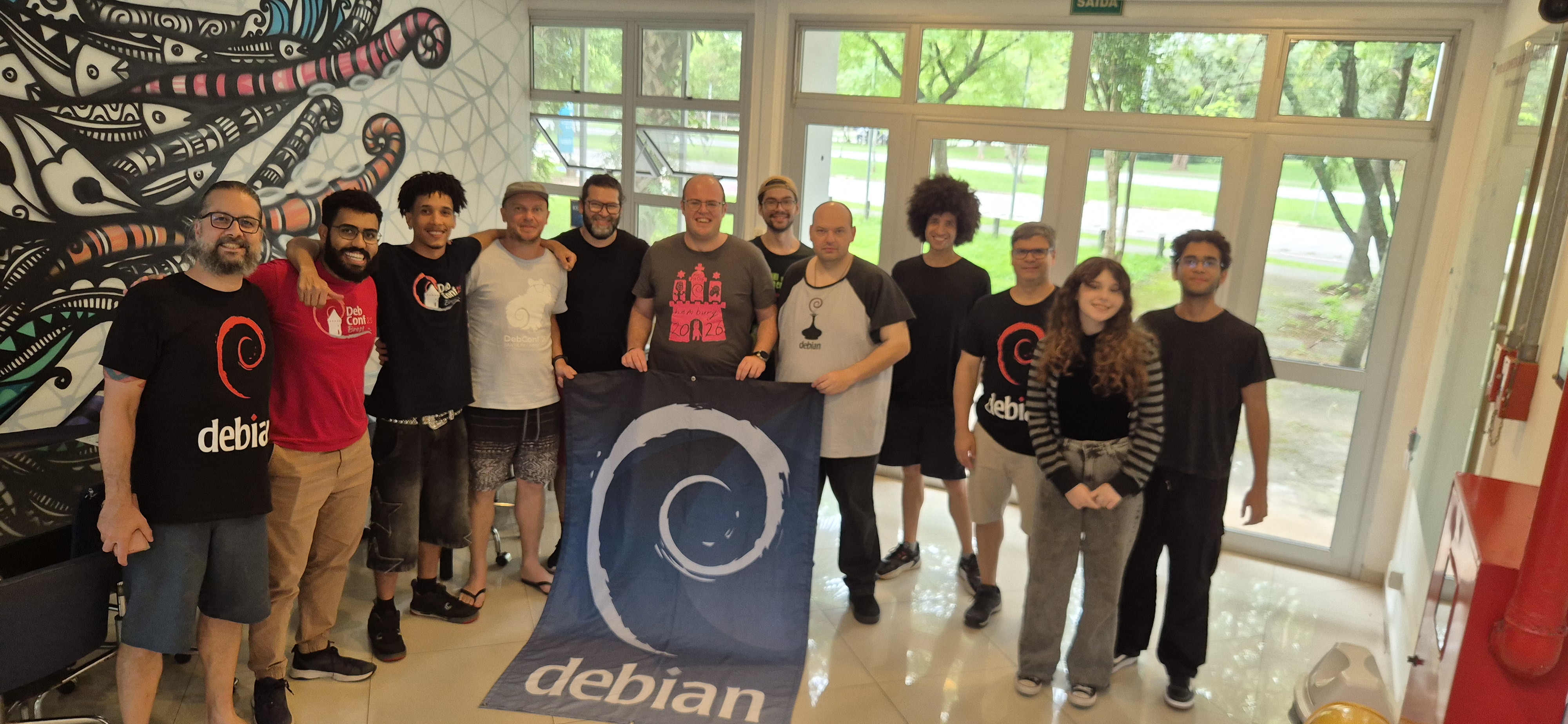 Last weekend, I attended the first Debian Brazil Reunion.
Inspired by similar events organized in other countries, we decided
to bring the idea to Brazil and organize a three-day event focused on
contributing to Debian.
Every day, we started at 9 a.m. and worked until around 8 p.m.
I was so immersed in the event that even after getting back to the
hotel, I kept working. I was having so much fun that I just couldn't get
out of the mood of getting things done.
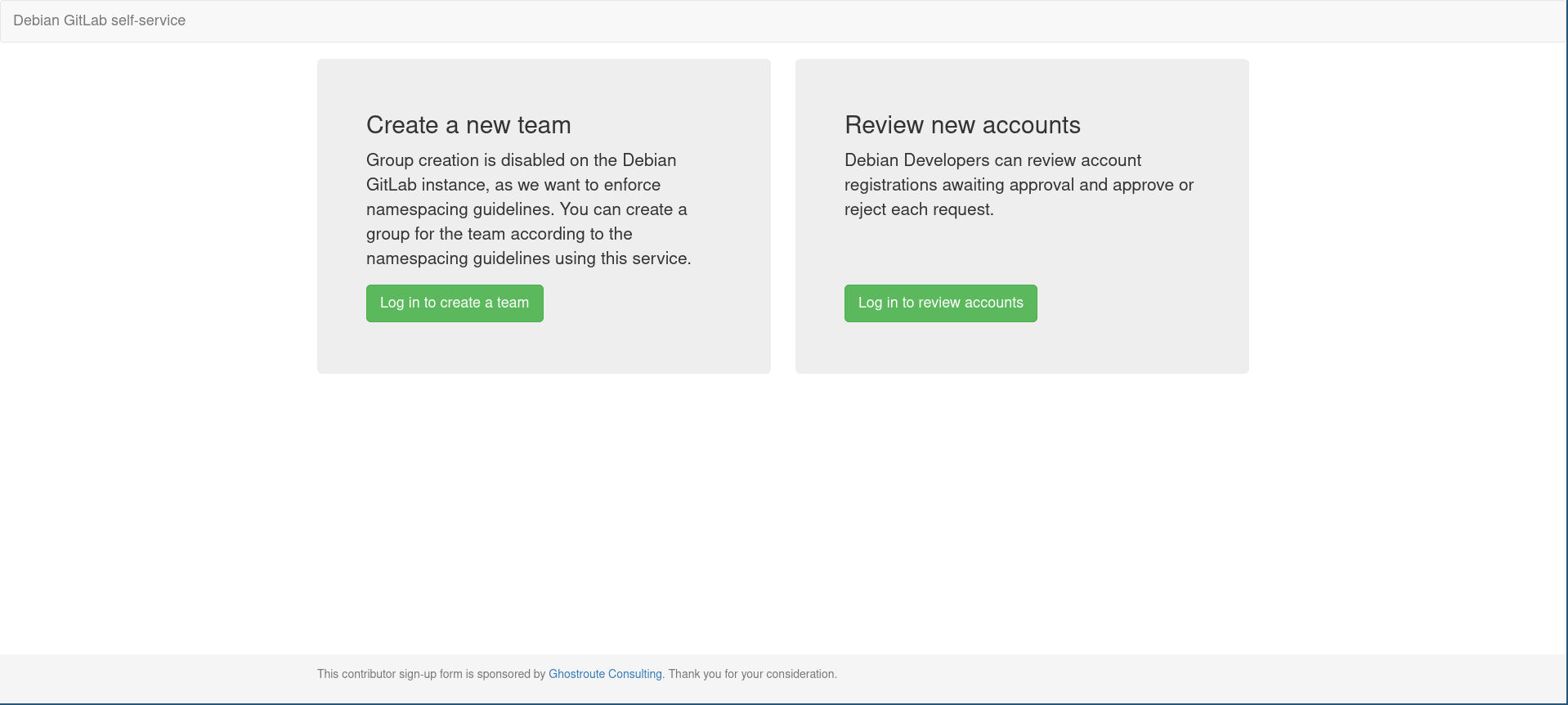 Finally, I also sponsored a few uploads. I helped Tobias Sette and
Giovanna Macedo with their first uploads to Debian.
It's always nice to help newcomers in person. It's much easier to
explain things in detail, answer questions as they come up, and get
things done faster than going back and forth reviewing merge
requests.
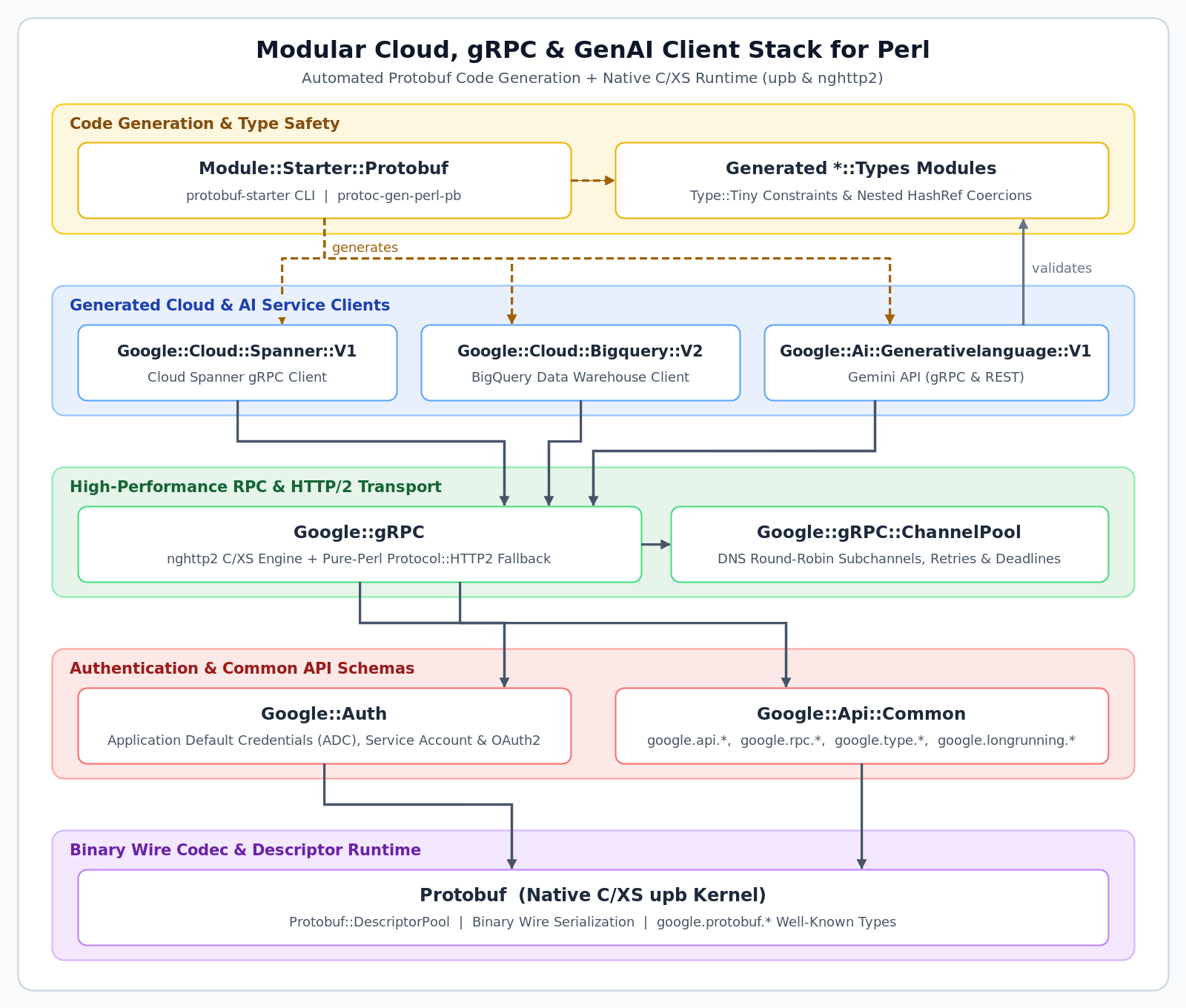


 Your friendly
 So, do we want to py to who-knows-whom for promoting the keyring-maint
services in a verrrrrry-dark web search site?
First time I have to throw this stinky onion at you

 A few days ago, a colleague reached out to me, asking if I could help draft a
resolution on digital autonomy and free software for the upcoming renewal of
our collective bargaining agreement. Although she's very politicised and
generally a great individual, she is not a techie and we never really talked
about these issues before.
This took me by surprise. I should have been rejoicing; no, I should have been
the one who brought up this topic in our union. Wasn't I the technical expert
on these issues? But alas, my first reaction when she came to me was to snicker
and tell myself: "That's cute, but nothing's ever gonna change, Big Tech is too
strong and our governments don't give a damn."
How sad and cynical is that? That's not the person I want to be.
Something in the Quebecois political landscape has shifted in the last few
years with regards to tech. More and more "regular" people seem to be talking
about the importance of digital autonomy, how government services shouldn't
rely on Big Tech and how we should be using FOSS on hardware we actually
control.
A few years ago, I would have been at the vanguard of this change. I would have
been part of the creation of
 As a graduate of a liberal arts university, I wound up, unsurprisingly, taking a
lot of classes in every possible academic discipline. Thinking back to the
person that I was going into university, I don t think I would have chosen to
take them after all, my degree was in the sciences; I d have been stoked to
do nothing more than wall-to-wall computer science until I ran out of
coursework and filled the rest of my hours with research and independent
studies with my professors (which, I guess I did actually do, just not as
much as I would have otherwise).
Even this blog s CSS theme (now 18 years old and starting to look it) was
something I wrote after receiving and repeatedly re-reading a tattered
third-hand copy of The Laws of Thought by George Boole. It was gifted to me
by a college friend majoring in philosophy while I was crashing at his rental
on the beach. He gave it to me because he knew I liked that shit and, while
it was definitely computer science in nature, I would not have read it
otherwise. I have vivid memories of sleeping on his la-z-boy surrounded by
towers of books he was working through. He went on to do incredible work,
getting his PhD, doing research, brilliant writing his death in 2023 has
robbed humanity of more time with him. The Laws of Thought sits behind me in
my office, and is one of my most valued possessions.
My friends mean more to me than I could ever express, and I definitely don t
show it enough. Each of my classes made me a more thoughtful person. My
professors made me a better, more well-rounded person and a person who
attempts to live up to the oft repeated credo of being men and women for
others . I did the best I could, even though I was never a particularly good
student. Without liberal arts, I don t think I would, dispositionally, have
been capable of pushing myself to this day to continue to learn on nights
and weekends, for no reason other than wanting to learn. I refuse to stop
expanding my perspective, and do my best to approach new problems with as much
humility and curiosity as I can muster.
Every few days for the last year or so, I have been thinking back to a reading
assignment from my junior year that, at the time, I thought was a borderline
throwaway filler assignment for the class. The reading is an essay from 1947 by
the french existentialist philosopher and libertarian marxist, Jean-Paul Sartre
(as some of the more erudite may have now already worked out given the blog s
title), Why Write? . I re-read it this week. It is not filler. I remember this
essay better than some of the classwork I considered more important at the
time.







 I m looking at something entirely unrelated, but tripped over some search results that made me realise that a lot of people still think getting errors like
 My Debian contributions this month were all
 Remember the
 For the face I decided to make holes in the cardboard and fill them with
hot glue to make a sort of light pipe, with the LEDs pressed against
them on the inside. It s not perfect, but it mostly works.
And then everything stopped: while I waited for the PVA to dry I started
doing something else, and then there were other projects, and other, and
the clock lingered in the Pile. There was a brief interruption as I
started to paint the first coat of brown, and then I moved back to the
other projects.
Until, months later, I decided it was time to finish using the brown and
white tubes of paint that I had on my desktop, so I could put them away
 However, the raspberry had quite a lot of pins, and it felt wasteful to
use it on something that basically needs one. On the other hand, I had
recently bought a few
 The next step involved dealing with the temporary connections to make
them a bit more permanent: I have been using LibrePCB for that other
project, so of course what I did was grabbing a bit of perfboard and
YOLO a growing rat nest of cables over it, without bothering with
drawing any kind of schematics in advance. And having to desolder stuff
and solder it again a couple of times, because I had issues with the
difference between left and right, and with the concept of rotations in
3D space.
 Everything was brought back into the case, in a mostly stable
configuration with an usb cable coming out of a hole in the back for
power and surprisingly it works.
Or at least, 95% of the issues it still has are software, plus I still
need to add a few features, so right now it lives above my desktop, with
the cable dangling close to an USB port, so that I can continue working
on that in the next few weeks.
The external look is not going to change, so there will be changes on
 Thirty years ago I became a Debian developer. Twelve years ago I left the
project. I left because it seemed that the Debian ship had become too slow
to turn, too barnacled with a series of individually OK decisions that each
added a little bit of friction and a little less flexability. That made
Debian strongly what it is, but prevented it from fruitfully exploring
the vast possibility space of what it could be.
Debian will probably