Search Results: "jr"

9 October 2026

Colin Watson: Free software activity in September 2026

My Debian contributions this month were all sponsored by Freexian. You can also support my work directly via Liberapay or GitHub Sponsors. OpenSSH I worked with upstream to remove libselinux linkage from /usr/sbin/sshd. I applied a fix from Mark Robillard Jr to fix reload logic when using sysvinit. groff I upgraded from 1.24.1 to 1.24.2, which fixed a few command injection security vulnerabilities. parted I upgraded from 3.7 to 3.8, which fixed CVE-2026-89085 and CVE-2026-89088. Python packaging New upstream versions: setuptools 84 is now in Debian and no longer contains pkg_resources. Removing uses of that module has been an ongoing project for a while now, but I did another batch of fixes this month: A new python-coverage version triggered several build regressions due to a known problem in pytest-cov. I worked around these by setting COVERAGE_CORE=ctrace: Other build/test failures: I investigated a build failure in python-proton-vpn-local-agent and proposed a fix upstream, but I m not comfortable applying this in Debian without review. If you re familiar with this code, please take a look. I fixed some other bugs: Rust packaging rust-derivre had an invalid Section field, which I cleaned up.

20 September 2026

Vincent Bernat: Bot-free self-hosted analytics with GoatCounter on NixOS

In 2016, I removed Google Analytics from this blog to avoid being complicit in feeding the biggest machine for harvesting personal data. Instead, I relied on GoAccess to analyze my server logs.1 For the past couple of years, the statistics have made no sense, despite my attempts to filter bots: AI scrapers inflate the number of visitors to around 2,000 per day. Eventually, I settled on GoatCounter, an open-source, privacy-friendly web analytics platform. I replaced the JavaScript client to filter bots more aggressively and added a CSS fallback. To improve reliability, I implemented a local proxy running on each of the five web servers serving this blog. The rest of this post details how these pieces fit together and how I deploy them on NixOS.

Why GoatCounter? GoatCounter does not collect personal data: instead of storing the reader s IP address or relying on cookies, it creates a session identifier valid for 8 hours from the user agent and the IP address. Its feature set is modest but sufficient for a blog. If you want to look at the interface, GoatCounter s author runs a public instance for his site. A hosted version lets you try it before running your own instance. With a single binary and an SQLite database, GoatCounter is one of the lightest self-hosted solutions. Privacy-friendly alternatives, in increasing order of complexity, include Umami, Plausible, and Rybbit.
GoatCounter dashboard showing some statistics from my blog, including an article on the spanning tree protocol with 1,224 views for the past week, the referrers, and the breakdown of browsers (52% Chrome, 32% Firefox, with 16% for Firefox 155 and 6% for Firefox 156)

Custom JavaScript client GoatCounter includes a small JavaScript client 2,189 bytes minified and gzipped. It ships some features I don t use: a visitor counter, tracking clicks, configurable settings, etc. I replace it with this function to register a hit:
const count = (  event, title   =  ) =>  
  const params = new URLSearchParams( 
    p: event   location.pathname,
    t: title   document.title,
    r: document.referrer,
    q: location.search,
    s: document.documentElement.clientWidth,
    e: !!event,
    rnd: Math.random().toString(36).slice(2, 7),
   );
  fetch( /count?$ params  ,   keepalive: true  ).catch(() =>  );
 ;
To filter bots,2 I go the extra mile by requiring a user interaction an idea I stole from Bear Blog.
let sendHit = () => (sendHit = () =>  , count());
["touchmove", "mousemove", "keydown", "pointerdown"].forEach((eventName) =>
  document.addEventListener(eventName, sendHit,  
    once: true,
    passive: true,
   ),
);
If a reader has disabled JavaScript in their browser, I record the hit using a CSS image. The :hover pseudo-class loads it only after an interaction, another trick stolen from Bear Blog. About 2% of my visitors fit into this bucket.3
<!DOCTYPE html>
<html lang="en" class="nojs">
  <head>
    <script>
      // The JavaScript code for this blog requires ES6
      if ("noModule" in HTMLScriptElement.prototype)
        document.documentElement.classList.remove("nojs");
    </script>
  </head>
  <body>
  <!-- ... -->
    <style>
      .nojs body:hover  
        border-width: 0;
        border-image: url('/count?p=/en/blog/2026-kpi-goodhart&t=Building...&r=NoJS&e=false');
       
    </style>
  </body>
</html>
Where GoAccess reported around 2,000 visitors a day, GoatCounter counts fewer than 200 humans.4 I assume AI scrapers use a low-effort approach: if the content is available without barriers, as on this blog, they don t spawn a complex mechanized browser that could trigger a page view. Even crawlers running JavaScript, like Googlebot with its headless Chromium, do not interact with the page and never trigger the events I listen to. The interaction-based proof of humanity I use is likely to keep working.5

Local proxy Five servers across the world in Europe and in North America serve the content of this website, but GoatCounter runs on only one of them. To avoid losing track of visitors when GoatCounter is down, I run a local proxy listening on the same /count endpoint. On each server, it stores the hits in memory with a buffer large enough to survive several days of downtime. It sends them in batches to the upstream backend using the /api/v0/count authenticated endpoint.
Servers on a map. web02 is in Paris, web03 in Helsinki, web04 in Nuremberg, web05 in Ashburn, web06 in Chicago.
I proposed the code for the proxy in pull request #909. GoatCounter s maintainer declined to maintain so much code for such a niche use case. As a fellow open-source developer, I often hold the same position for my own projects: a one-time contributor effort may translate into a long-term maintainer commitment. I expose the endpoint for the proxy on the domain of this website to evade ad blockers. This sounds like I don t respect the reader s choice, but as GoatCounter is privacy-friendly, I find it acceptable.
location = /count  
  access_log off;
  proxy_pass http://127.0.0.3:8087/count;
  proxy_pass_request_headers off;
  proxy_set_header Accept-Language $http_accept_language;
  proxy_set_header User-Agent $http_user_agent;
  proxy_set_header X-Real-Ip $remote_addr;
 

Deploying on NixOS My web servers run NixOS, a declarative Linux distribution with built-in configuration management. I manage this small fleet with Colmena, a stateless deployment tool for NixOS. My configuration is available on GitHub.

Deploying applications in containers For better isolation, each application runs inside an ephemeral lightweight container, powered by systemd-nspawn. Each container runs a stripped-down NixOS instance. A module wraps NixOS s containers options to avoid repeating the same options for each application.6 The containers share their network namespace with the host: the additional isolation is not worth the increased complexity. For a smaller footprint, I also disable a few non-essential services.
  config, lib, ...  :
let
  cfg = config.luffy.containers;
in
 
  # User-configurable settings for our custom module
  options.luffy.containers = lib.mkOption  
    default =    ;
    description = "Ephemeral containers sharing the host network.";
    type = lib.types.attrsOf (lib.types.submodule  
      options =  
        config = lib.mkOption  
          type = lib.types.deferredModule;
          default =    ;
          description = "NixOS configuration of the container.";
         ;
       ;
     );
   ;
  # Translate our options to NixOS containers
  config =  
    containers = lib.mapAttrs
      (name: container:  
        ephemeral = true;
        autoStart = true;
        privateNetwork = false;
        extraFlags = [ "--resolv-conf=replace-host" ];
        config =  
          imports = [ container.config ];
          networking.firewall.enable = false;
          system.stateVersion = config.system.stateVersion;
          systemd.services =  
            console-getty.enable = false;
            systemd-logind.enable = false;
            systemd-oomd.enable = false;
           ;
         ;
       )
      cfg;
   ;
 
To configure a GoatCounter instance running in a container and listening on 127.0.0.4:8088, we import the module7 and declare the container in the config.luffy.containers attribute set:
  pkgs, config, ...  :  
  imports = [ ./modules/container.nix ];
  config.luffy.containers.goatcounter =  
    config =  
      services.goatcounter =  
        enable = true;
        address = "127.0.0.4";
        port = 8088;
        proxy = true;
       ;
     ;
   ;
 
As the containers are ephemeral, we need to keep persistent data in directories on the host. We add a mounts option and ask NixOS s containers to expose the configured directories through the bindMounts option.
  config, lib, ...  :
let
  cfg = config.luffy.containers;
in
 
  options.luffy.containers = lib.mkOption  
    type = lib.types.attrsOf (lib.types.submodule  
      options =  
        mounts = lib.mkOption  
          type = lib.types.listOf lib.types.str;
          default = [ ];
          description = "Host directories mounted read-write at the same place.";
         ;
       ;
     );
   ;
  config =  
    containers = lib.mapAttrs
      (name: container:  
        bindMounts =
          lib.genAttrs container.mounts (path:   hostPath = path; isReadOnly = false;  );
       )
      cfg;
   ;
 
For example, to persist GoatCounter s database in the /var/db/goatcounter directory on the host, we add the directory to the mounts option and alter the service definition to tell GoatCounter where the database is.
  config, ...  :
let
  databaseDirectory = "/var/db/goatcounter";
in  
  config.luffy.containers.goatcounter =  
    mounts = [ databaseDirectory ];
    config =  
      services.goatcounter =  
        extraArgs = [ "-db=sqlite+$ databaseDirectory /db.sqlite" ];
       ;
     ;
   ;
 
A container may also need some secrets. Colmena can upload secrets without storing them in the Nix store. We add a keys option to our containers. It takes an attribute set mapping secret names to the commands to populate them. Then, the module declares the required secrets to Colmena in the deployment.keys option, makes the container depend on the presence of the secrets, and exposes them to the container.
  config, lib, ...  :
let
  cfg = config.luffy.containers;
in
 
  options.luffy.containers = lib.mkOption  
    type = lib.types.attrsOf (lib.types.submodule  
      options =  
        keys = lib.mkOption  
          type = lib.types.attrsOf (lib.types.listOf lib.types.str);
          default =    ;
          description = "Secrets, as a command to run locally. They are mounted in /etc.";
         ;
       ;
     );
   ;
  config =  
    # Colmena uploads each secret in  /var/keys  and make them available
    # to the group "keys".
    deployment.keys = lib.concatMapAttrs
      (_: container: lib.mapAttrs
        (_: keyCommand:  
          inherit keyCommand;
          group = "keys";
          permissions = "0640";
          destDir = "/var/keys";
         )
        container.keys)
      cfg;
    # The container can only start if the required secrets are available.
    systemd.services = lib.mapAttrs'
      (name: container:
        let
          units = map (key: "$ key -key.service") (lib.attrNames container.keys);
        in
        lib.nameValuePair "container@$ name "  
          requires = units;
          after = units;
         )
      cfg;
    # Mount each secret inside the container.
    containers = lib.mapAttrs
      (name: container:  
        bindMounts = lib.mapAttrs'
          (key: _: lib.nameValuePair "/etc/$ key "  
            hostPath = "/var/keys/$ key ";
            isReadOnly = true;
           )
          container.keys;
       )
      cfg;
   ;
 
For example, GoatCounter needs credentials to download the GeoIP database. I provide a local command to fetch the secret from my password manager and expose it inside the container through the /etc/goatcounter.env environment file.
  pkgs, config, ...  : 
let
  keyCommand = variable: [
    "$ pkgs.runtimeShell "
    "-c"
    "pass show personal/nixops/secrets   grep '^$ variable ='"
  ];
in  
  config.luffy.containers.goatcounter =  
    keys."goatcounter.env" = keyCommand "GOATCOUNTER_GEODB";
    config =  
      systemd.services.goatcounter.serviceConfig =  
        EnvironmentFile = "/etc/goatcounter.env";
        SupplementaryGroups = [ "keys" ];
       ;
     ;
   ;
 

GoatCounter server Nixpkgs already packages GoatCounter. By overriding the src and vendorHash attributes, I reuse its definition for my custom version with the proxy:
  goatcounter, fetchFromGitHub  :
goatcounter.overrideAttrs (_:  
  src = fetchFromGitHub  
    owner = "vincentbernat";
    repo = "goatcounter";
    rev = "feature/proxy";
    hash = "sha256-dJRlQlFu3tjcEgabT1LEbyFrasJlhmYu4L/T7EkoNcY=";
   ;
  vendorHash = "sha256-c9Q5OrbZR+q6pD3SgPPWe8JUzcZco1AVUKGaV61k5DE=";
 )
I wrote a NixOS module to encapsulate GoatCounter: the container definition, the service definition, and the secrets. The module accepts the following options: package, serve.enable, serve.listenAddress, serve.port, and serve.databaseFile. I already detailed the container configuration in the previous section. In the end, I chose not to reuse the GoatCounter module from NixOS: it s small, so it s better to insulate my module from unexpected future changes.
  config, pkgs, lib, ...  :
let
  cfg = config.luffy.goatcounter;
  databaseDirectory = builtins.dirOf cfg.serve.databaseFile;
  chown = "$ pkgs.coreutils /bin/chown -R";
in  
  config.luffy.containers.goatcounter =  
    config.systemd.services.goatcounter =  
      description = "GoatCounter Web Analytics";
      wantedBy = [ "multi-user.target" ];
      serviceConfig =  
        EnvironmentFile = "/etc/goatcounter.env";
        SupplementaryGroups = [ "keys" ];
        DynamicUser = true;
        Restart = "always";
        ExecStart = lib.escapeShellArgs [
          (lib.getExe cfg.package)
          "serve"
          "-listen=$ cfg.serve.listenAddress :$ toString cfg.serve.port "
          "-tls=none"
          "-db=sqlite+$ cfg.serve.databaseFile "
          "-automigrate"
        ];
        # Transfer database ownership to dynamically assigned user "goatcounter".
        ExecStartPre = "+$ chown  goatcounter:goatcounter $ databaseDirectory ";
        ReadWritePaths = databaseDirectory;
       ;
     ;
   ;
 
The following snippet configures GoatCounter to listen on 127.0.0.4:8088:
 
  luffy.goatcounter =  
    serve =  
      enable = true;
      listenAddress = "127.0.0.4";
      port = 8088;
     ;
   ;
 
The last step is to configure nginx to expose GoatCounter on the Internet. I disable the /count endpoint as the local proxy handles it.
  config, ...  :
let
  cfg = config.luffy.goatcounter.serve;
in
 
  services.nginx.virtualHosts."goatcounter.luffy.cx" =  
    forceSSL = true;
    locations =  
      "/" =  
        proxyPass = "http://$ cfg.listenAddress :$ toString cfg.port ";
       ;
      "= /count".extraConfig = ''
        return 404;
      '';
     ;
   ;
 

GoatCounter proxy The same NixOS module configures the local proxy, with the following options: proxy.enable, proxy.listenAddress, proxy.port, and proxy.site the site receiving the batches of page views. The local proxy has no persistent data, but it needs the API key to authenticate to the main GoatCounter instance: its container uses the keys option but not the mounts option.
  config, pkgs, lib, ...  :
let
  cfg = config.luffy.goatcounter;
  keyCommand = _: [ " " ];
in
 
  config.luffy.containers.goatcounter-proxy =  
    keys."goatcounter-proxy.env" = keyCommand "GOATCOUNTER_API_KEY";
    config.systemd.services.goatcounter =  
      description = "GoatCounter Proxy.";
      wantedBy = [ "multi-user.target" ];
      serviceConfig =  
        EnvironmentFile = "/etc/goatcounter-proxy.env";
        SupplementaryGroups = [ "keys" ];
        DynamicUser = true;
        Restart = "always";
        ExecStart = lib.escapeShellArgs [
          (lib.getExe cfg.package)
          "proxy"
          "-site=$ cfg.proxy.site "
          "-listen=$ cfg.proxy.listenAddress :$ toString cfg.proxy.port "
          "-ratelimit=10/1"  # 10 requests per second per IP
        ];
       ;
     ;
   ;
 
For each server, I enable the local proxy with the following snippet. The nginx configuration shown earlier exposes the /count endpoint under the same domain as my blog.
 
  luffy.goatcounter =  
    proxy =  
      enable = true;
      site = "goatcounter.luffy.cx";
      listenAddress = "127.0.0.3";
      port = 8087;
     ;
   ;
 

Backup of the SQLite database with Litestream Litestream is a streaming replication tool for SQLite databases. It compresses the changes committed to the write-ahead log (WAL) next to the database and sends them to a remote destination. I encapsulate its configuration in a NixOS module, which takes an attribute set databases mapping a name to the path of the database to back up. Litestream also runs in a container. I mount the databases to replicate, as well as the secrets to push the backups to a Hetzner storage box using SFTP:
  config, pkgs, lib, ...  :
let
  cfg = config.luffy.litestream;
  databaseDirs = lib.unique (map builtins.dirOf (builtins.attrValues cfg.databases));
in
 
  config = lib.mkIf (cfg.databases !=    )  
    luffy.containers.litestream =  
      mounts = databaseDirs;
      keys."litestream.env" = [
        "$ pkgs.runtimeShell "
        "-c"
        "pass show personal/nixops/secrets   grep '^SQLITE_BACKUP_'"
      ];
     ;
   ;
 
Inside the container, I configure Litestream through NixOS s services.litestream options:
  • full snapshots every day, kept for 15 days,
  • three levels of compaction for transaction files: 5 minutes, 30 minutes, and 3 hours,
  • auto-recovery,8
  • replica stored in a directory matching the host name, and
  • credentials read from /etc/litestream.env and exposed through variable expansion.
  config, pkgs, lib, ...  :
let
  cfg = config.luffy.litestream;
in
 
  config.luffy.containers.litestream =  
    config =  
      # The databases belong to dynamically allocated users, whose UID is
      # not known here, so Litestream runs as root.
      systemd.services.litestream.serviceConfig =  
        User = lib.mkForce "root";
        Group = lib.mkForce "root";
       ;
      # Use NixOS service.
      services.litestream =  
        enable = true;
        environmentFile = "/etc/litestream.env";
        settings =  
          auto-recover = true;
          snapshot =  
            interval = "24h";
            retention = "360h";
           ;
          levels = [
              interval = "5m";  
              interval = "30m";  
              interval = "3h";  
          ];
          dbs = lib.mapAttrsToList
            (name: path:  
              inherit path;
              replica =  
                type = "sftp";
                host = "\$ SQLITE_BACKUP_HOST ";
                user = "\$ SQLITE_BACKUP_USER ";
                password = "\$ SQLITE_BACKUP_PASSWORD ";
                host-key = "\$ SQLITE_BACKUP_HOSTKEY ";
                path = "$ config.networking.hostName /$ name ";
               ;
             )
            cfg.databases;
         ;
       ;
     ;
   ;
 
To back up GoatCounter s database, I declare a goatcounter attribute in luffy.litestream.databases, set to the database path:
  config, ...  :
let
  cfg = config.luffy.goatcounter.serve;
in
 
  luffy.litestream.databases.goatcounter = cfg.databaseFile;
 
On the SFTP server, we can inspect Litestream s work, with the compacted transactions and the full snapshots:
  ls web02/goatcounter/ltx
web02/goatcounter/ltx/0
web02/goatcounter/ltx/1
web02/goatcounter/ltx/2
web02/goatcounter/ltx/3
web02/goatcounter/ltx/9
  ls -lh web02/goatcounter/ltx/1
29.1K Sep  5 01:25 0000000000003f2a-0000000000003f2b.ltx
72.4K Sep  5 02:03 0000000000003f2c-0000000000003f2d.ltx
63.3K Sep  5 02:24 0000000000003f2e-0000000000003f2f.ltx
[ ]
  ls -lh web02/goatcounter/ltx/9
 8.5M Sep  5 02:00 0000000000000001-0000000000003f2b.ltx
 8.5M Sep  6 02:03 0000000000000001-0000000000004008.ltx
 8.6M Sep  7 02:03 0000000000000001-00000000000043a8.ltx
[ ]
We can restore the database from the backup with a few shell commands. First, we stop the containers. Then, we move the damaged database away, invoke litestream restore from the right environment, and restart the containers.9
# systemctl stop container@goatcounter container@litestream
# mv /var/db/goatcounter/db.sqlite ,.old 
# ( . /etc/nixos-containers/litestream.conf ; 
>   set -a ; . /var/keys/litestream.env ; set +a ;
>   $SYSTEM_PATH/sw/bin/litestream \
>     restore -config $SYSTEM_PATH/etc/litestream.yml /var/db/goatcounter/db.sqlite)
# ls -lh /var/db/goatcounter/db.sqlite
-rw-r--r-- 1 root root 20M Sep 20 07:33 /var/db/goatcounter/db.sqlite
# systemctl start container@goatcounter container@litestream

Ten years after removing Google Analytics, JavaScript-based analytics is back on this blog, but without storing cookies or IP addresses, and without involving a third party. I still write for myself first, notably because it lets me dig into a topic and refer back to it years later. But knowing a bit more about my fellow human readers is a nice bonus, even the ones disabling JavaScript.

  1. Nginx scrambles IP addresses before storing them, thanks to the ipscrub nginx module.
  2. GoatCounter already filters some bots based on the user agent or the IP address. But AI scrapers lie about their user agent and hide behind residential proxies.
  3. Without JavaScript, I cannot send the real referrer. I insert NoJS instead.
  4. I am missing the humans reading the RSS feed. I am not comfortable adding a tracking pixel, and bots are likely to fetch it, compromising the statistics. I ll live without counting these readers.
  5. In February 2025, I tested another CSS-only approach without the interaction trick: each page loaded an empty image as a background. Over a month, it recorded up to ten times fewer page views than the nginx logs, even after removing user agents identifying as bots. Compared to this experiment, GoatCounter counts about three times fewer views, 18 months later. As the time ranges differ, this is not an apples-to-apples comparison, but it gives a hint about how efficient bot filtering is.
  6. A NixOS module is a function receiving the configuration of the whole system as config and returning three attributes:
    • imports adds other modules to import,
    • options declares user-configurable settings, each with a type and a default value, and
    • config sets values for options declared by any module, like containers from NixOS.
    If a module does not need to declare options, you can return the config attribute set directly. When a module does not require any argument, you can define it as an attribute set instead.
  7. Most of the time, you don t need an explicit import. NixOS automatically imports the modules shipped with Nixpkgs. For my own modules, some machinery also imports them automatically.
  8. Litestream warns against using the auto-recover option as it can cause data loss. But I don t properly monitor my servers and I prefer uninterrupted backups to a slight chance of losing the last few records.
  9. In my case, the process is slow: around 20 minutes for a 20 MiB database. You can test by restoring to a copy with the -o option, but you still need to stop the Litestream container.

4 August 2026

Anuradha Weeraman: Plan 9 from Bell Labs, the little OS that could

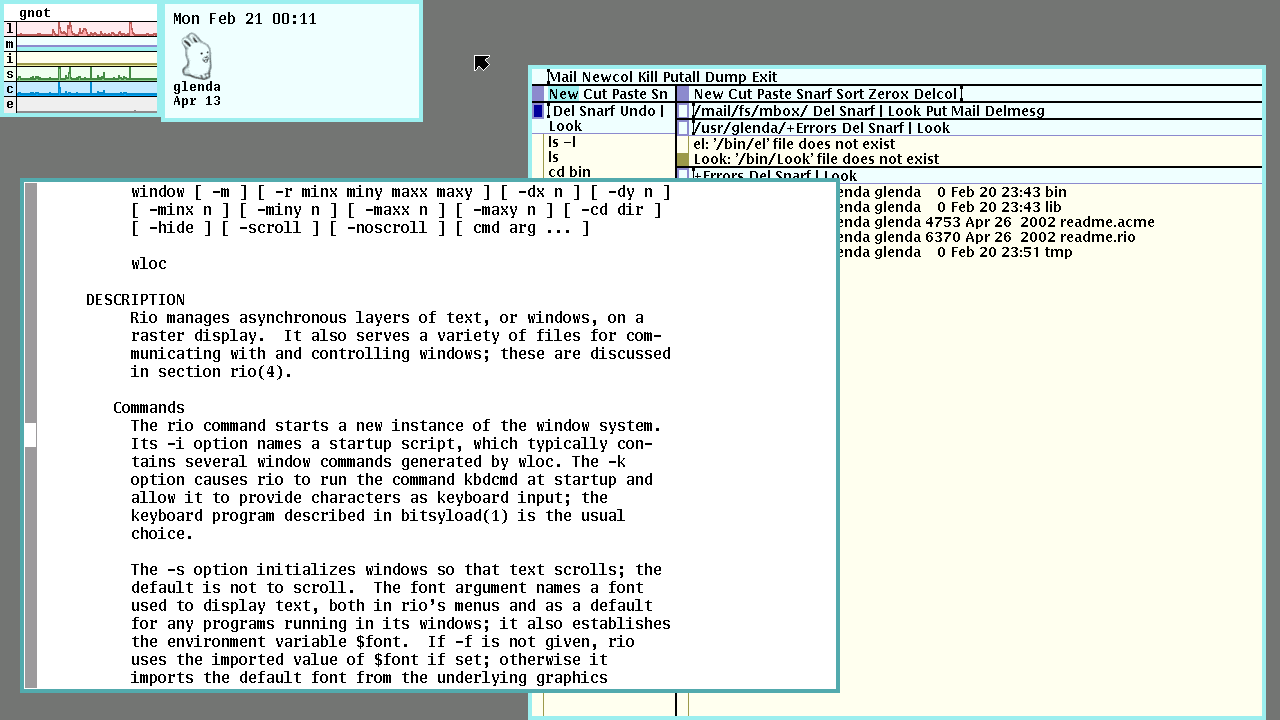
Plan 9 Fourth Edition showing the rio windowing systemScreenshot by VulcanSphere via Wikimedia Commons MIT License
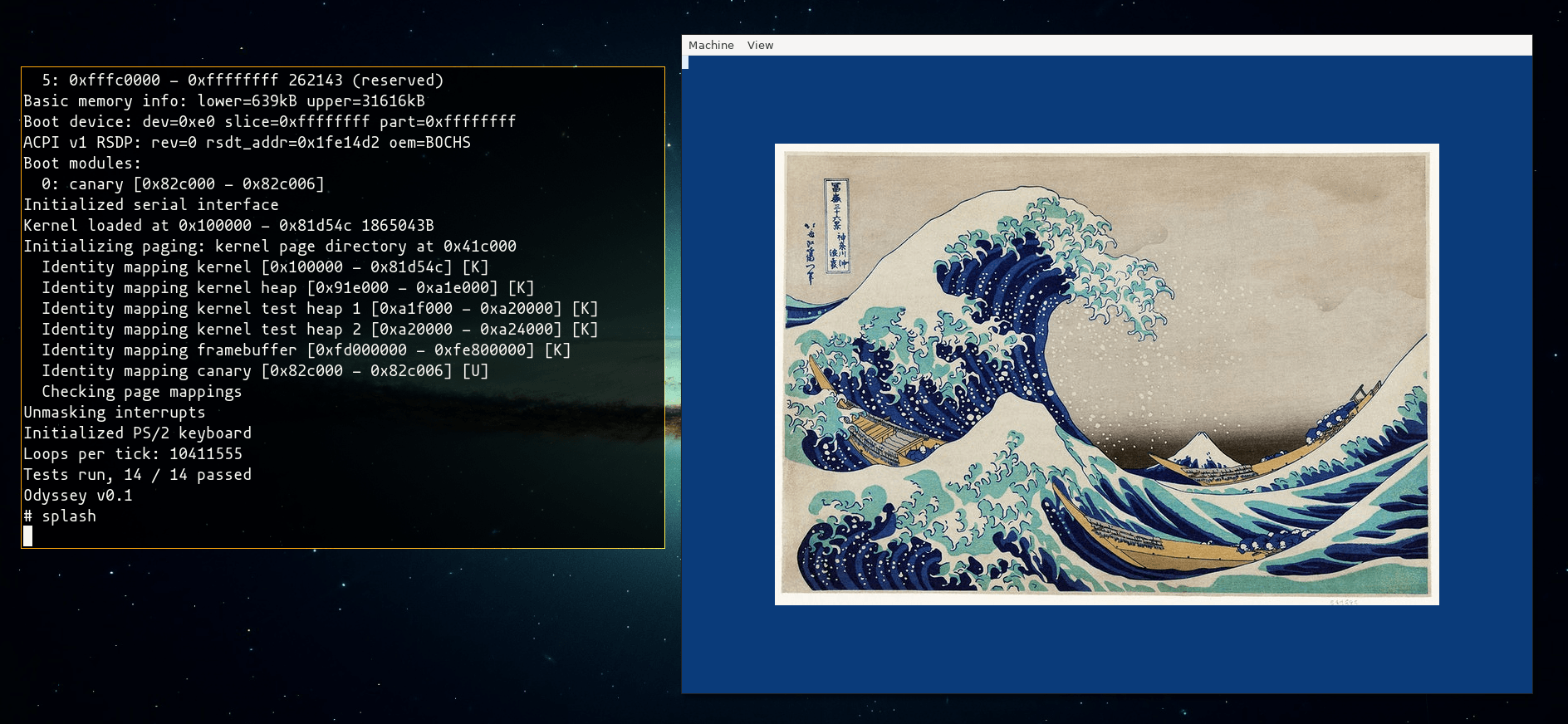
I first heard of Plan 9 from my friend Vajra in 1999 or so, as we were distro-hopping on early Linux distributions and trying to find our way. Vajra is now a Nebula Award-winning science fiction author - have a look at his work. We had just been through Tom's Root Boot, a UNIX-like operating system crammed into a single floppy, and through it discovered a whole new world outside of DOS 6.22. Combing through old UNIX manuals, we went in search of the perfect OS, through Slackware, Caldera, TurboLinux, SUSE and Red Hat. I finally settled on Debian, which lived up to everything I stood for. Plan 9 was distinct. It came out of the Computing Sciences Research Center at Bell Labs, built by Rob Pike, Ken Thompson, Dave Presotto and Phil Winterbottom, with Dennis Ritchie heading the department. The name is a joke at their own expense, borrowed from Ed Wood's 1959 Plan 9 from Outer Space, routinely nominated as the worst film ever made. Thompson and Ritchie had, of course, built the original UNIX; it almost seemed as if they were building a new OS from the lessons learnt from building it - which was in turn built on the lessons from Multics. I remember the awe I felt playing around with Plan 9, and I've not been able to replicate it since. Plan 9 was different in a couple of fundamental ways: per-process namespaces, and a protocol that abstracted locality of resources to processes. As a consequence of these core primitives, the OS surface area was distinctly small. The entire system from the core kernel, to the system call interface, to the compiler, linker and shell was reduced to a form small enough that a single developer could hold it in their head. Lessons from the implementation of UNIX helped the designers make the system leaner, and in Ken Thompson's words, it's the "best operating system out except that it doesn't have the apps that everybody demands" [1]. It also took the concept of "everything is a file" in UNIX to a whole new level. The network stack is a filesystem (/net), processes are files, the display is a file (/dev/draw). Because every resource speaks 9P and every process has its own namespace, you can mount another machine's /net into your namespace and your program makes network calls through that machine's stack without knowing or caring. No sockets API, no RPC layer, just ordinary file system operations through a simple system call interface. Some would say that OS research is dead, and that backwards-compatibility and POSIX killed it. Rob Pike himself argued as much in his 2000 talk, "Systems Software Research is Irrelevant" - but we didn't care at the time. There was so much happening that we didn't have time to take it all in. And then Linux happened, and Software Freedom became a focal point (more on that in a later post). In the summer of 2020, with the world deep in Covid lockdowns, I decided to build a toy operating system, just to try my hand at the the thing that I had always wanted to do. I spent three feverish months working on Odyssey and, looking back, it is perhaps the most fun I have ever had. I would not dare compare it to the magnum opus that is Plan 9, but it gave me perspective: how hard it is to build an OS from scratch, and above all, how fun it is to build an OS from scratch, and why the original creators kept coming back to the same problem. The highlight of those three months was booting the OS and watching it render "The Great Wave off Kanagawa". Nothing in my professional achievements to date captures what that meant to me.
Odyssey rendering The Great Wave off Kanagawa during boot Odyssey displaying "The Great Wave Off Kanagawa"
Decades on from the first time I booted Plan 9, I look back with nothing but awe and respect for the creators of this little operating system and marvel at the foresight that went into it. While many readers will not have heard of Plan 9, they have almost certainly worked with the ideas that came from it: 9P (if you ever used the Windows Subsystem for Linux), UTF-8 (if you ever used any modern operating system), per-process namespaces (if you've ever run a container), Go (whose assembler still uses Plan 9 syntax). Plan 9 still lives on in 9front, a community-maintained fork. Separately, Yoann Padioleau [2] has produced a set of annotated books at principia-softwarica.org, presenting the Plan 9 source in the spirit of Donald Knuth's literate programming - an admirable effort to introduce new readers to the art of operating systems engineering. Pike thought systems research had become irrelevant, and Thompson thought Plan 9 would never "make it" [1]. Both were right about the industry, but may have been pessimistic about the impact. The system lost as a product but won as a set of ideas, assimilated one at a time by modern operating systems. Success is not always measured by popularity. The mark that Plan 9 left behind is greater than what's reflected in its current user base. To me, Plan 9 will always be the OS that punched above its weight class, the little OS that could. References [1] Ken Thompson Interview, March 6, 2024 [2] Yoann Padioleau Principia Softwarica, May 9, 2026

19 June 2026

Freexian Collaborators: Monthly report about Debian Long Term Support, May 2026 (by Santiago Ruano Rinc n)

The Debian LTS Team, funded by Freexian s Debian LTS offering, is pleased to report its activities for May.

Activity summary During the month of May, 21 contributors have been paid to work on Debian LTS (links to individual contributor reports are located below). The team released 56 DLAs fixing 877 CVEs. May was a much busier month than usual, especially due to the disclosed vulnerabilities on linux regarding Local Privilege Escalation (LPE), that included public proof-of-concept (PoC) exploits. These reports of course impacted Debian as a whole, and the situation warrants a special mention to the Kernel Team, especially Ben Hutching and Salvatore Bonaccorso, who faced the pace and released linux packages on a weekly basis. On the LTS side, the Front Desk team also triaged a significant flow of high severity CVEs. It is also important to note that Debian 12 ( bookworm ) will be handed over to the LTS Team on June 11th. If you benefit from Debian, especially during the full 5-year lifecycle, please consider subscribing as a sponsor of Debian LTS: https://www.freexian.com/lts/debian/. Moreover, Debian 11 ( bullseye ) will reach the end of the Debian LTS period on August 31st. After that, Freexian will continue the security support under the Extended LTS offer. The team published several notable updates:
  • As mentioned above, several exploitable LPE vulnerabilities in linux were published during May. Ben released the following DLAs for the Debian LTS versions:
  • exim update (DLA-4580-1), prepared by Thorsten, to address a vulnerability that may result in remote code execution.
  • gnutls28 update (DLA-4595-1) by Guilhem Moulin, fixes several vulnerabilities that may result in execution of arbitrary code, information leak, authentication bypass, among other impacts.
  • krb5 updates released as DLA-4603-1, fixing two vulnerabilities that may yield to a denial of service. Updated prepared by Emmanuel Arias
  • lemonldap-ng (DLA-4602-1), released by Abhijith PA, fixing multiple vulnerabilities
  • Two imagemagick updates (DLA-4559-1 and DLA-4609-1), prepared by Bastien Roucari s, fixing several vulnerabilities
  • openjdk-11 and openjdk-17 updates (DLA-4566-1 and DLA-4565-1), both prepared by Emilio, to fix seven vulnerabilities.
  • php7.4 update (DLA-4586-1) to fix six vulnerabilities that could result in remote code execution, information disclosure or denial of service. Update prepared by Guilhem Moulin.
  • python3.9 update (DLA-4583-1), prepared by Arnaud Rebillout, addressing multiple vulnerabilities.
Contributions from outside the LTS Team: We are greatly thankful for the contributions from people outside the LTS Team:
  • Colin Watson prepared an OpenSSH update, that was released by Santiago as DLA-4584-1.
  • Thomas Goirand handled a keystone update, whose advisory was done by Santiago and released as DLA-4611-1.
  • Christopher Obbard kindly prepared a sentry-python update, released as DLA-4612-1.
  • Christoph Goehre made two thunderbird updates (DLA-4562-1 and DLA-4582-1). As is customary, Emilio released the advisories.
The LTS Team has also contributed with updates to the latest Debian releases: Moreover, thanks to our partnership with Catalyst, it has been possible to extend the support for Samba 4.17, the version shipped with Debian 12. In May, several vulnerabilities were disclosed, and their patches were prepared by Catalyst. For Debian 12, the update was prepared by the Samba maintainer and released as DSA-6297-1.

Individual Debian LTS contributor reports

Thanks to our sponsors Sponsors that joined recently are in bold.

2 June 2026

Ben Hutchings: FOSS activity in 2025

This was a particularly busy month for me in terms of Debian contributions. It started with a week in Hamburg for the MiniDebConf. I talked to many colleagues face-to-face and worked on various bugs and maintenance tasks. I m pleased to have finally found the time to reproduce and fix the boot-time crashes in the parallel port subsystem that have been reported many times recently. A series of easily exploited kernel LPE (local privilege execution) issues were published this month, mostly with very little coordination with distributions. Salvatore and I had to upload fixes for these at roughly weekly intervals. All of these fixes needed to be applied to 4 different upstream branches (currently 5.10, 6.1, 6.12, and 7.0) and 7 Debian branches (including backports).

Ben Hutchings: FOSS activity in May 2026

This was a particularly busy month for me in terms of Debian contributions. It started with a week in Hamburg for the MiniDebConf. I talked to many colleagues face-to-face and worked on various bugs and maintenance tasks. I m pleased to have finally found the time to reproduce and fix the boot-time crashes in the parallel port subsystem that have been reported many times recently. A series of easily exploited kernel LPE (local privilege execution) issues were published this month, mostly with very little coordination with distributions. Salvatore and I had to upload fixes for these at roughly weekly intervals. All of these fixes needed to be applied to 4 different upstream branches (currently 5.10, 6.1, 6.12, and 7.0) and 7 Debian branches (including backports).

24 February 2026

Louis-Philippe V ronneau: Montreal's Debian & Stuff - February 2026

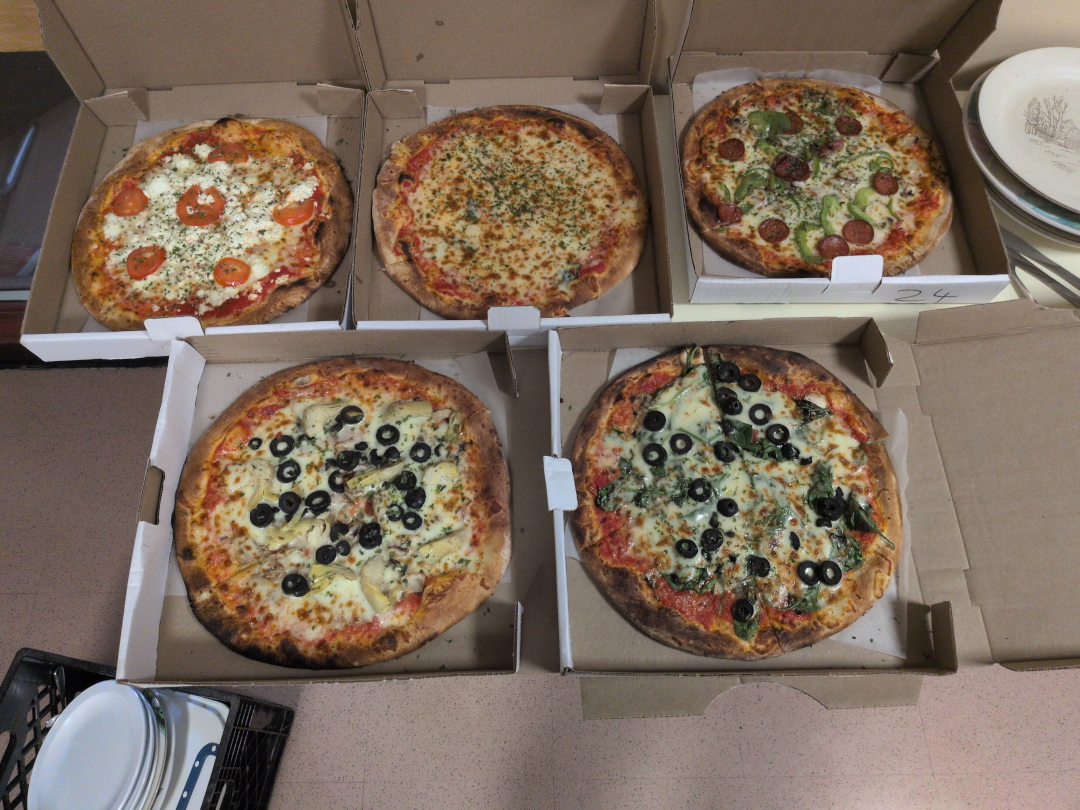
Our Debian User Group met on February 22nd for our first meeting of the year! Here's what we did: pollo: lelutin: viashimo: tvaz: lavamind: Pictures This time around, we held our meeting at c gep du Vieux Montr al, the college where I currently work. Here is the view we had: View from my office We also ordered some delicious pizzas from Pizzeria dei Compari, a nice pizzeria on Saint-Denis street that's been there forever. The pizzas we ate Some of us ended up grabbing a drink after the event at l'Am re boire, a pub right next to the venue, but I didn't take any pictures.

4 January 2026

Matthew Garrett: What is a PC compatible?

Wikipedia says An IBM PC compatible is any personal computer that is hardware- and software-compatible with the IBM Personal Computer (IBM PC) and its subsequent models . But what does this actually mean? The obvious literal interpretation is for a device to be PC compatible, all software originally written for the IBM 5150 must run on it. Is this a reasonable definition? Is it one that any modern hardware can meet? Before we dig into that, let s go back to the early days of the x86 industry. IBM had launched the PC built almost entirely around off-the-shelf Intel components, and shipped full schematics in the IBM PC Technical Reference Manual. Anyone could buy the same parts from Intel and build a compatible board. They d still need an operating system, but Microsoft was happy to sell MS-DOS to anyone who d turn up with money. The only thing stopping people from cloning the entire board was the BIOS, the component that sat between the raw hardware and much of the software running on it. The concept of a BIOS originated in CP/M, an operating system originally written in the 70s for systems based on the Intel 8080. At that point in time there was no meaningful standardisation - systems might use the same CPU but otherwise have entirely different hardware, and any software that made assumptions about the underlying hardware wouldn t run elsewhere. CP/M s BIOS was effectively an abstraction layer, a set of code that could be modified to suit the specific underlying hardware without needing to modify the rest of the OS. As long as applications only called BIOS functions, they didn t need to care about the underlying hardware and would run on all systems that had a working CP/M port. By 1979, boards based on the 8086, Intel s successor to the 8080, were hitting the market. The 8086 wasn t machine code compatible with the 8080, but 8080 assembly code could be assembled to 8086 instructions to simplify porting old code. Despite this, the 8086 version of CP/M was taking some time to appear, and a company called Seattle Computer Products started producing a new OS closely modelled on CP/M and using the same BIOS abstraction layer concept. When IBM started looking for an OS for their upcoming 8088 (an 8086 with an 8-bit data bus rather than a 16-bit one) based PC, a complicated chain of events resulted in Microsoft paying a one-off fee to Seattle Computer Products, porting their OS to IBM s hardware, and the rest is history. But one key part of this was that despite what was now MS-DOS existing only to support IBM s hardware, the BIOS abstraction remained, and the BIOS was owned by the hardware vendor - in this case, IBM. One key difference, though, was that while CP/M systems typically included the BIOS on boot media, IBM integrated it into ROM. This meant that MS-DOS floppies didn t include all the code needed to run on a PC - you needed IBM s BIOS. To begin with this wasn t obviously a problem in the US market since, in a way that seems extremely odd from where we are now in history, it wasn t clear that machine code was actually copyrightable. In 1982 Williams v. Artic determined that it could be even if fixed in ROM - this ended up having broader industry impact in Apple v. Franklin and it became clear that clone machines making use of the original vendor s ROM code wasn t going to fly. Anyone wanting to make hardware compatible with the PC was going to have to find another way. And here s where things diverge somewhat. Compaq famously performed clean-room reverse engineering of the IBM BIOS to produce a functionally equivalent implementation without violating copyright. Other vendors, well, were less fastidious - they came up with BIOS implementations that either implemented a subset of IBM s functionality, or didn t implement all the same behavioural quirks, and compatibility was restricted. In this era several vendors shipped customised versions of MS-DOS that supported different hardware (which you d think wouldn t be necessary given that s what the BIOS was for, but still), and the set of PC software that would run on their hardware varied wildly. This was the era where vendors even shipped systems based on the Intel 80186, an improved 8086 that was both faster than the 8086 at the same clock speed and was also available at higher clock speeds. Clone vendors saw an opportunity to ship hardware that outperformed the PC, and some of them went for it. You d think that IBM would have immediately jumped on this as well, but no - the 80186 integrated many components that were separate chips on 8086 (and 8088) based platforms, but crucially didn t maintain compatibility. As long as everything went via the BIOS this shouldn t have mattered, but there were many cases where going via the BIOS introduced performance overhead or simply didn t offer the functionality that people wanted, and since this was the era of single-user operating systems with no memory protection, there was nothing stopping developers from just hitting the hardware directly to get what they wanted. Changing the underlying hardware would break them. And that s what happened. IBM was the biggest player, so people targeted IBM s platform. When BIOS interfaces weren t sufficient they hit the hardware directly - and even if they weren t doing that, they d end up depending on behavioural quirks of IBM s BIOS implementation. The market for DOS-compatible but not PC-compatible mostly vanished, although there were notable exceptions - in Japan the PC-98 platform achieved significant success, largely as a result of the Japanese market being pretty distinct from the rest of the world at that point in time, but also because it actually handled Japanese at a point where the PC platform was basically restricted to ASCII or minor variants thereof. So, things remained fairly stable for some time. Underlying hardware changed - the 80286 introduced the ability to access more than a megabyte of address space and would promptly have broken a bunch of things except IBM came up with an utterly terrifying hack that bit me back in 2009, and which ended up sufficiently codified into Intel design that it was one mechanism for breaking the original XBox security. The first 286 PC even introduced a new keyboard controller that supported better keyboards but which remained backwards compatible with the original PC to avoid breaking software. Even when IBM launched the PS/2, the first significant rearchitecture of the PC platform with a brand new expansion bus and associated patents to prevent people cloning it without paying off IBM, they made sure that all the hardware was backwards compatible. For decades, PC compatibility meant not only supporting the officially supported interfaces, it meant supporting the underlying hardware. This is what made it possible to ship install media that was expected to work on any PC, even if you d need some additional media for hardware-specific drivers. It s something that still distinguishes the PC market from the ARM desktop market. But it s not as true as it used to be, and it s interesting to think about whether it ever was as true as people thought. Let s take an extreme case. If I buy a modern laptop, can I run 1981-era DOS on it? The answer is clearly no. First, modern systems largely don t implement the legacy BIOS. The entire abstraction layer that DOS relies on isn t there, having been replaced with UEFI. When UEFI first appeared it generally shipped with a Compatibility Services Module, a layer that would translate BIOS interrupts into UEFI calls, allowing vendors to ship hardware with more modern firmware and drivers without having to duplicate them to support older operating systems1. Is this system PC compatible? By the strictest of definitions, no. Ok. But the hardware is broadly the same, right? There s projects like CSMWrap that allow a CSM to be implemented on top of stock UEFI, so everything that hits BIOS should work just fine. And well yes, assuming they implement the BIOS interfaces fully, anything using the BIOS interfaces will be happy. But what about stuff that doesn t? Old software is going to expect that my Sound Blaster is going to be on a limited set of IRQs and is going to assume that it s going to be able to install its own interrupt handler and ACK those on the interrupt controller itself and that s really not going to work when you have a PCI card that s been mapped onto some APIC vector, and also if your keyboard is attached via USB or SPI then reading it via the CSM will work (because it s calling into UEFI to get the actual data) but trying to read the keyboard controller directly won t2, so you re still actually relying on the firmware to do the right thing but it s not, because the average person who wants to run DOS on a modern computer owns three fursuits and some knee length socks and while you are important and vital and I love you all you re not enough to actually convince a transglobal megacorp to flip the bit in the chipset that makes all this old stuff work. But imagine you are, or imagine you re the sort of person who (like me) thinks writing their own firmware for their weird Chinese Thinkpad knockoff motherboard is a good and sensible use of their time - can you make this work fully? Haha no of course not. Yes, you can probably make sure that the PCI Sound Blaster that s plugged into a Thunderbolt dock has interrupt routing to something that is absolutely no longer an 8259 but is pretending to be so you can just handle IRQ 5 yourself, and you can probably still even write some SMM code that will make your keyboard work, but what about the corner cases? What if you re trying to run something built with IBM Pascal 1.0? There s a risk that it ll assume that trying to access an address just over 1MB will give it the data stored just above 0, and now it ll break. It d work fine on an actual PC, and it won t work here, so are we PC compatible? That s a very interesting abstract question and I m going to entirely ignore it. Let s talk about PC graphics3. The original PC shipped with two different optional graphics cards - the Monochrome Display Adapter and the Color Graphics Adapter. If you wanted to run games you were doing it on CGA, because MDA had no mechanism to address individual pixels so you could only render full characters. So, even on the original PC, there was software that would run on some hardware but not on other hardware. Things got worse from there. CGA was, to put it mildly, shit. Even IBM knew this - in 1984 they launched the PCjr, intended to make the PC platform more attractive to home users. As well as maybe the worst keyboard ever to be associated with the IBM brand, IBM added some new video modes that allowed displaying more than 4 colours on screen at once4, and software that depended on that wouldn t display correctly on an original PC. Of course, because the PCjr was a complete commercial failure, it wouldn t display correctly on any future PCs either. This is going to become a theme. There s never been a properly specified PC graphics platform. BIOS support for advanced graphics modes5 ended up specified by VESA rather than IBM, and even then getting good performance involved hitting hardware directly. It wasn t until Microsoft specced DirectX that anything was broadly usable even if you limited yourself to Microsoft platforms, and this was an OS-level API rather than a hardware one. If you stick to BIOS interfaces then CGA-era code will work fine on graphics hardware produced up until the 20-teens, but if you were trying to hit CGA hardware registers directly then you re going to have a bad time. This isn t even a new thing - even if we restrict ourselves to the authentic IBM PC range (and ignore the PCjr), by the time we get to the Enhanced Graphics Adapter we re not entirely CGA compatible. Is an IBM PC/AT with EGA PC compatible? You d likely say yes , but there s software written for the original PC that won t work there. And, well, let s go even more basic. The original PC had a well defined CPU frequency and a well defined CPU that would take a well defined number of cycles to execute any given instruction. People could write software that depended on that. When CPUs got faster, some software broke. This resulted in systems with a Turbo Button - a button that would drop the clock rate to something approximating the original PC so stuff would stop breaking. It s fine, we d later end up with Windows crashing on fast machines because hardware details will absolutely bleed through. So, what s a PC compatible? No modern PC will run the DOS that the original PC ran. If you try hard enough you can get it into a state where it ll run most old software, as long as it doesn t have assumptions about memory segmentation or your CPU or want to talk to your GPU directly. And even then it ll potentially be unusable or crash because time is hard. The truth is that there s no way we can technically describe a PC Compatible now - or, honestly, ever. If you sent a modern PC back to 1981 the media would be amazed and also point out that it didn t run Flight Simulator. PC Compatible is a socially defined construct, just like Woman . We can get hung up on the details or we can just chill.

  1. Windows 7 is entirely happy to boot on UEFI systems except that it relies on being able to use a BIOS call to set the video mode during boot, which has resulted in things like UEFISeven to make that work on modern systems that don t provide BIOS compatibility
  2. Back in the 90s and early 2000s operating systems didn t necessarily have native drivers for USB input devices, so there was hardware support for trapping OS accesses to the keyboard controller and redirecting that into System Management Mode where some software that was invisible to the OS would speak to the USB controller and then fake a response anyway that s how I made a laptop that could boot unmodified MacOS X
  3. (my name will not be Wolfwings Shadowflight)
  4. Yes yes ok 8088 MPH demonstrates that if you really want to you can do better than that on CGA
  5. and by advanced we re still talking about the 90s, don t get excited

31 December 2025

Chris Lamb: Favourites of 2025

Here are my favourite books and movies that I read and watched throughout 2025.

Books

Eliza Clark: Boy Parts (2020)Rachel Cusk: The Outline Trilogy (2014 2018)Edith Wharton: The House of Mirth (1905)Michael Finkel: The Art Thief (2023)Tony Judt: When the Facts Change: Essays 1995-2010 (2010)Jennette McCurdy: I'm Glad My Mom Died (2022)Joan Didion: The Year of Magical Thinking (2005)Jill Lepore: These Truths: A History of the United States (2018)

Films Recent releases

Disappointments this year included 28 Years Later (Danny Boyle, 2025), Cover-Up (Laura Poitras & Mark Obenhaus, 2025), Bugonia (Yorgos Lanthimos, 2025) and Caught Stealing (Darren Aronofsky, 2025).
Older releases ie. Films released before 2024, and not including rewatches from previous years. Distinctly unenjoyable watches included War of the Worlds (Rich Lee, 2025), Highest 2 Lowest (Spike Lee, 2025), Elizabethtown (Cameron Crowe, 2005), Crazy Rich Asians (Jon M. Chu, 2018) and Spinal Tap II: The End Continues (Rob Reiner, 2025). On the other hand, unforgettable cinema experiences this year included big-screen rewatches of Chinatown (Roman Polanski, 1974), Koyaanisqatsi (Godfrey Reggio, 1982), Heat (Michael Mann, 1995) and Night of the Hunter (Charles Laughton, 1955).

10 July 2025

Tianon Gravi: Yubi Whati? (YubiKeys, ECDSA, and X.509)

Off-and-on over the last several weeks, I've been spending time trying to learn/understand YubiKeys better, especially from the perspective of ECDSA and signing. I had a good mental model for how "slots" work (canonically referenced by their hexadecimal names such as 9C), but found that it had a gap related to "objects"; while closing that, I was annoyed that the main reference table for this gap lives primarily in either a PDF or inside several implementations, so I figured I should create the reference I want to see in the world, but that it would also be useful to write down some of my understanding for my own (and maybe others') future reference. So, to that end, I'm going to start with a bit ( ) of background information, with the heavy caveat that this only applies to "PIV" ("FIPS 201") usage of YubiKeys, and that I only actually care about ECDSA, although I've been reassured that it's the same for at least RSA (anything outside this is firmly Here Be Not Tianon; "gl hf dd"). (Incidentally, learning all this helped me actually appreciate the simplicity of cloud-based KMS solutions, which was an unexpected side effect. ) At a really high level, ECDSA is like many other (asymmetric) cryptographic solutions you've got a public key and a private key, the private key can be used to "sign" data (tiny amounts of data, in fact, like P-256 can only reasonably sign 256 bits of data, which is where cryptographic hashes like SHA256 come in as secure analogues for larger data in small bit sizes), and the public key can then be used to verify that the data was indeed signed by the private key, and only someone with the private key could've done so. There's some complex math and RNGs involved, but none of that's actually relevant to this post, so find that information elsewhere. Unfortunately, this is where things go off the rails: PIV is X.509 ("x509") heavy, and there's no X.509 in the na ve view of my use case. In a YubiKey (or any other PIV-signing-supporting smart card? do they actually have competitors in this specific niche? ), a given "slot" can hold one single private key. There are ~24 slots which can hold a private key and be used for signing, although "Slot 9c" is officially designated as the "Digital Signature" slot and is encouraged for signing purposes. One of the biggest gotchas is that with pure-PIV (and older YubiKey firmware ) the public key for a given slot is only available at the time the key is generated, and the whole point of the device in the first place is that the private key is never, ever available from it (all cryptographic operations happen inside the device), so if you don't save that public key when you first ask the device to generate a private key in a particular slot, the public key is lost forever (asterisk).
$ # generate a new ECDSA P-256 key in "slot 9c" ("Digital Signature")
$ # WARNING: THIS WILL GLEEFULLY WIPE SLOT 9C WITHOUT PROMPTING
$ yubico-piv-tool --slot 9c --algorithm ECCP256 --action generate
-----BEGIN PUBLIC KEY-----
MFkwEwYHKoZIzj0CAQYIKoZIzj0DAQcDQgAEtGoWRGyjjUlJFXpu8BL6Rnx8jjKR
5+Mzl2Vepgor+k7N9q7ppOtSMWefjFVR0SEPmXqXINNsCi6LpLtNEigIRg==
-----END PUBLIC KEY-----
Successfully generated a new private key.
$ # this is the only time/place we (officially) get this public key
With that background, now let's get to the second aspect of "slots" and how X.509 fits. For every aforementioned slot, there is a corresponding "object" (read: place to store arbitrary data) which is corresponding only by convention. For all these "key" slots the (again, by convention) corresponding "object" is explicitly supposed to be an X.509 certificate (see also the PDF reference linked above). It turns out this is a useful and topical place to store that public key we need to keep handy! It's also an interesting place to shove additional details about what the key in a given slot is being used for, if that's your thing. Converting the raw public key into a (likely self-signed) X.509 certificate is an exercise for the reader, but if you want to follow the conventions, you need some way to convert a given "slot" to the corresponding "object", and that is the lookup table I wish existed in more forms. So, without further ado, here is the anti-climax:
Slot Object Description
0x9A 0x5FC105 X.509 Certificate for PIV Authentication
0x9E 0x5FC101 X.509 Certificate for Card Authentication
0x9C 0x5FC10A X.509 Certificate for Digital Signature
0x9D 0x5FC10B X.509 Certificate for Key Management
0x82 0x5FC10D Retired X.509 Certificate for Key Management 1
0x83 0x5FC10E Retired X.509 Certificate for Key Management 2
0x84 0x5FC10F Retired X.509 Certificate for Key Management 3
0x85 0x5FC110 Retired X.509 Certificate for Key Management 4
0x86 0x5FC111 Retired X.509 Certificate for Key Management 5
0x87 0x5FC112 Retired X.509 Certificate for Key Management 6
0x88 0x5FC113 Retired X.509 Certificate for Key Management 7
0x89 0x5FC114 Retired X.509 Certificate for Key Management 8
0x8A 0x5FC115 Retired X.509 Certificate for Key Management 9
0x8B 0x5FC116 Retired X.509 Certificate for Key Management 10
0x8C 0x5FC117 Retired X.509 Certificate for Key Management 11
0x8D 0x5FC118 Retired X.509 Certificate for Key Management 12
0x8E 0x5FC119 Retired X.509 Certificate for Key Management 13
0x8F 0x5FC11A Retired X.509 Certificate for Key Management 14
0x90 0x5FC11B Retired X.509 Certificate for Key Management 15
0x91 0x5FC11C Retired X.509 Certificate for Key Management 16
0x92 0x5FC11D Retired X.509 Certificate for Key Management 17
0x93 0x5FC11E Retired X.509 Certificate for Key Management 18
0x94 0x5FC11F Retired X.509 Certificate for Key Management 19
0x95 0x5FC120 Retired X.509 Certificate for Key Management 20
See also "piv-objects.json" for a machine-readable copy of this data. (Major thanks to paultag and jon gzip johnson for helping me learn and generally putting up with me, but especially dealing with my live-stream-of-thoughts while I stumble through the dark. )

22 June 2025

Sahil Dhiman: Case of (broken) maharashtra.gov.in Authoritative Name Servers

Maharashtra is a state here in India, which has Mumbai, the financial capital of India, as its capital. maharashtra.gov.in is the official website of the State Government of Maharashtra. We re going to talk about authoritative name servers serving it (and bunch of child zones under maharashtra.gov.in). Here s a simple trace for the main domain:
$ dig +trace maharashtra.gov.in
; <<>> DiG 9.18.33-1~deb12u2-Debian <<>> +trace maharashtra.gov.in
;; global options: +cmd
.            33128    IN    NS    j.root-servers.net.
.            33128    IN    NS    h.root-servers.net.
.            33128    IN    NS    l.root-servers.net.
.            33128    IN    NS    k.root-servers.net.
.            33128    IN    NS    i.root-servers.net.
.            33128    IN    NS    g.root-servers.net.
.            33128    IN    NS    f.root-servers.net.
.            33128    IN    NS    e.root-servers.net.
.            33128    IN    NS    b.root-servers.net.
.            33128    IN    NS    d.root-servers.net.
.            33128    IN    NS    c.root-servers.net.
.            33128    IN    NS    m.root-servers.net.
.            33128    IN    NS    a.root-servers.net.
.            33128    IN    RRSIG    NS 8 0 518400 20250704050000 20250621040000 53148 . pGxGZftwj+6VNTSQtstTKVN95Z7/b5Q8GSjRCXI68GoVYbVai9HNelxs OGIRKL4YmSrsiSsndXuEsBuvL9QvQ+qbybNLkekJUAiicKYNgr3KM3+X 69rsS9KxHgT2T8/oqG8KN8EJLJ8VkuM2PJ2HfSKijtF7ULtgBbERNQ4i u2I/wQ7elOyeF2M76iEOa7UGhgiBHSBqPulsbpnB//WbKL71yyFhWSk0 tiFEPuZM+iLrN2qBsElriF4kkw37uRHq8sSGcCjfBVdkpbb3/Sb3sIgN /zKU17f+hOvuBQTDr5qFIymqGAENA5UZ2RQjikk6+zK5EfBUXNpq1+oo 2y64DQ==
;; Received 525 bytes from 9.9.9.9#53(9.9.9.9) in 3 ms
in.            172800    IN    NS    ns01.trs-dns.com.
in.            172800    IN    NS    ns01.trs-dns.net.
in.            172800    IN    NS    ns10.trs-dns.org.
in.            172800    IN    NS    ns10.trs-dns.info.
in.            86400    IN    DS    48140 8 2 5EE4748C2069B99C98BC39A56881A64AF17CC78711E6297D43AC5A4F 4B5BB6E5
in.            86400    IN    RRSIG    DS 8 1 86400 20250704050000 20250621040000 53148 . jkCotYosapreoKKPvr9zPOEDECYVe9OtJLjkQbFfTin8uYbm/kdWzieW CkN5sabif5IHTFU4FEVOShfu4DFeUolhNav56TPKjGqEGjQ7qCghpqTj dNN4iY2s8BcJ2ujHwhm6HRfdbQRVoKYQ73UUZ+oWSute6lXWHE9+Snk2 1ZCAYPdZ2s1s7NZhrZW2YXVw/nHIcRl/rHqWIQ9sgUlsd6MwmahcAAG+ v15HG9Q48rCG1A2gJlJPbxWpVe0EUEu8LzDsp+ORqy1pHhzgJynrJHJz qMiYU0egv2j7xVPSoQHXjx3PG2rsOLNnqDBYCA+piEXOLsY3d+7c1SZl w9u66g==
;; Received 679 bytes from 199.7.83.42#53(l.root-servers.net) in 3 ms
maharashtra.gov.in.    900    IN    NS    ns8.maharashtra.gov.in.
maharashtra.gov.in.    900    IN    NS    ns9.maharashtra.gov.in.
maharashtra.gov.in.    900    IN    NS    ns10.maharashtra.gov.in.
maharashtra.gov.in.    900    IN    NS    ns18.maharashtra.gov.in.
maharashtra.gov.in.    900    IN    NS    ns20.maharashtra.gov.in.
npk19skvsdmju264d4ono0khqf7eafqv.gov.in. 300 IN    NSEC3 1 1 0 - P0KKR4BMBGLJDOKBGBI0KDM39DSM0EA4 NS SOA MX TXT RRSIG DNSKEY NSEC3PARAM
npk19skvsdmju264d4ono0khqf7eafqv.gov.in. 300 IN    RRSIG NSEC3 8 3 300 20250626140337 20250528184339 48544 gov.in. Khcq3n1Jn34HvuBEZExusVqoduEMH6DzqkWHk9dFkM+q0RVBYBHBbW+u LsSnc2/Rqc3HAYutk3EZeS+kXVF07GA/A486dr17Hqf3lHszvG/MNT/s CJfcdrqO0Q8NZ9NQxvAwWo44bCPaECQV+fhznmIaVSgbw7de9xC6RxWG ZFcsPYwYt07yB5neKa99RlVvJXk4GHX3ISxiSfusCNOuEKGy5cMxZg04 4PbYsP0AQNiJWALAduq2aNs80FQdWweLhd2swYuZyfsbk1nSXJQcYbTX aONc0VkYFeEJzTscX8/wNbkJeoLP0r/W2ebahvFExl3NYpb7b2rMwGBY omC/QA==
npk19skvsdmju264d4ono0khqf7eafqv.gov.in. 300 IN    RRSIG NSEC3 13 3 300 20250718144138 20250619135610 22437 gov.in. mbj7td3E6YE7kIhYoSlDTZR047TXY3Z60NY0aBwU7obyg5enBQU9j5nl GUxn9zUiwVUzei7v5GIPxXS7XDpk7g==
6bflkoouitlvj011i2mau7ql5pk61sks.gov.in. 300 IN    NSEC3 1 1 0 - 78S0UO5LI1KV1SVMH1889FHUCNC40U6T TXT RRSIG
6bflkoouitlvj011i2mau7ql5pk61sks.gov.in. 300 IN    RRSIG NSEC3 8 3 300 20250626133905 20250528184339 48544 gov.in. M2yPThQpX0sEf4klooQ06h+rLR3e3Q/BqDTSFogyTIuGwjgm6nwate19 jGmgCeWCYL3w/oxsg1z7SfCvDBCXOObH8ftEBOfLe8/AGHAEkWFSu3e0 s09Ccoz8FJiCfBJbbZK5Vf4HWXtBLfBq+ncGCEE24tCQLXaS5cT85BxZ Zne6Y6u8s/WPgo8jybsvlGnL4QhIPlW5UkHDs7cLLQSwlkZs3dwxyHTn EgjNWClhghGXP9nlvOlnDjUkmacEYeq5ItnCQjYPl4uwh9fBJ9CD/8LV K+Tn3+dgqDBek6+2HRzjGs59NzuHX8J9wVFxP7/nd+fUgaSgz+sST80O vrXlHA==
6bflkoouitlvj011i2mau7ql5pk61sks.gov.in. 300 IN    RRSIG NSEC3 13 3 300 20250718141148 20250619135610 22437 gov.in. raWzWsQnPkXYtr2v1SRH/fk2dEAv/K85NH+06pNUwkxPxQk01nS8eYlq BPQ41b26kikg8mNOgr2ULlBpJHb1OQ==
couldn't get address for 'ns18.maharashtra.gov.in': not found
couldn't get address for 'ns20.maharashtra.gov.in': not found
;; Received 1171 bytes from 2620:171:813:1534:8::1#53(ns10.trs-dns.org) in 0 ms
;; communications error to 10.187.202.24#53: timed out
;; communications error to 10.187.202.28#53: timed out
;; communications error to 10.187.203.201#53: timed out
;; no servers could be reached
Quick takeaways: It s a hit or miss for this DNS query resolution.

Looking at in zone data Let s look at NS added in zone itself (with 9.9.9.9):
$ dig ns maharashtra.gov.in
; <<>> DiG 9.18.33-1~deb12u2-Debian <<>> ns maharashtra.gov.in
;; global options: +cmd
;; Got answer:
;; ->>HEADER<<- opcode: QUERY, status: NOERROR, id: 172
;; flags: qr rd ra; QUERY: 1, ANSWER: 2, AUTHORITY: 0, ADDITIONAL: 3
;; OPT PSEUDOSECTION:
; EDNS: version: 0, flags:; udp: 1232
;; QUESTION SECTION:
;maharashtra.gov.in.        IN    NS
;; ANSWER SECTION:
maharashtra.gov.in.    300    IN    NS    ns8.maharashtra.gov.in.
maharashtra.gov.in.    300    IN    NS    ns9.maharashtra.gov.in.
;; ADDITIONAL SECTION:
ns9.maharashtra.gov.in.    300    IN    A    10.187.202.24
ns8.maharashtra.gov.in.    300    IN    A    10.187.202.28
;; Query time: 180 msec
;; SERVER: 9.9.9.9#53(9.9.9.9) (UDP)
;; WHEN: Sat Jun 21 23:00:49 IST 2025
;; MSG SIZE  rcvd: 115
Pay special attention to ADDITIONAL SECTION . Running dig ns9.maharashtra.gov.in and dig ns8.maharashtra.gov.in, return RFC 1918 ie these private addresses. This is coming from zone itself, so in zone A records of NS8 and NS9 point to 10.187.202.28 and 10.187.202.24 respectively. Cloudflare s 1.1.1.1 has a slightly different version:
$ dig ns maharashtra.gov.in @1.1.1.1
; <<>> DiG 9.18.33-1~deb12u2-Debian <<>> ns maharashtra.gov.in @1.1.1.1
;; global options: +cmd
;; Got answer:
;; ->>HEADER<<- opcode: QUERY, status: NOERROR, id: 36005
;; flags: qr rd ra; QUERY: 1, ANSWER: 3, AUTHORITY: 0, ADDITIONAL: 1
;; OPT PSEUDOSECTION:
; EDNS: version: 0, flags:; udp: 1232
;; QUESTION SECTION:
;maharashtra.gov.in.        IN    NS
;; ANSWER SECTION:
maharashtra.gov.in.    300    IN    NS    ns8.
maharashtra.gov.in.    300    IN    NS    ns10.maharashtra.gov.in.
maharashtra.gov.in.    300    IN    NS    ns9.
;; Query time: 7 msec
;; SERVER: 1.1.1.1#53(1.1.1.1) (UDP)
;; WHEN: Sun Jun 22 10:38:30 IST 2025
;; MSG SIZE  rcvd: 100
Interesting response here for sure :D. The reason for difference between response from 1.1.1.1 and 9.9.9.9 is in the next section.

Looking at parent zone gov.in is the parent zone here. Tucows is operator for gov.in as well as .in ccTLD zone:
$ dig ns gov.in +short
ns01.trs-dns.net.
ns01.trs-dns.com.
ns10.trs-dns.org.
ns10.trs-dns.info.
Let s take a look at what parent zone (NS) hold:
$ dig ns maharashtra.gov.in @ns01.trs-dns.net.
; <<>> DiG 9.18.36 <<>> ns maharashtra.gov.in @ns01.trs-dns.net.
;; global options: +cmd
;; Got answer:
;; ->>HEADER<<- opcode: QUERY, status: NOERROR, id: 56535
;; flags: qr rd; QUERY: 1, ANSWER: 0, AUTHORITY: 5, ADDITIONAL: 6
;; WARNING: recursion requested but not available
;; OPT PSEUDOSECTION:
; EDNS: version: 0, flags:; udp: 1232
; COOKIE: f13027aa39632404010000006856fa2a9c97d6bbc973ba4f (good)
;; QUESTION SECTION:
;maharashtra.gov.in.        IN    NS
;; AUTHORITY SECTION:
maharashtra.gov.in.    900    IN    NS    ns8.maharashtra.gov.in.
maharashtra.gov.in.    900    IN    NS    ns18.maharashtra.gov.in.
maharashtra.gov.in.    900    IN    NS    ns10.maharashtra.gov.in.
maharashtra.gov.in.    900    IN    NS    ns9.maharashtra.gov.in.
maharashtra.gov.in.    900    IN    NS    ns20.maharashtra.gov.in.
;; ADDITIONAL SECTION:
ns20.maharashtra.gov.in. 900    IN    A    52.183.143.210
ns18.maharashtra.gov.in. 900    IN    A    35.154.30.166
ns10.maharashtra.gov.in. 900    IN    A    164.100.128.234
ns9.maharashtra.gov.in.    900    IN    A    103.23.150.89
ns8.maharashtra.gov.in.    900    IN    A    103.23.150.88
;; Query time: 28 msec
;; SERVER: 64.96.2.1#53(ns01.trs-dns.net.) (UDP)
;; WHEN: Sun Jun 22 00:00:02 IST 2025
;; MSG SIZE  rcvd: 248
The ADDITIONAL SECTION gives a completely different picture (different from in zone NSes). Maybe this was how it was supposed to be, but none of the IPs listed for NS10, NS18 and NS20 are responding to any DNS query. Assuming NS8 as 103.23.150.88 and NS9 as 103.23.150.89, checking SOA on each gives following:
$ dig soa maharashtra.gov.in @103.23.150.88 +short
ns8.maharashtra.gov.in. postmaster.maharashtra.gov.in. 2013116777 1200 600 1296000 300
$ dig soa maharashtra.gov.in @103.23.150.89 +short
ns8.maharashtra.gov.in. postmaster.maharashtra.gov.in. 2013116757 1200 600 1296000 300
NS8 (which is marked as primary in SOA) has serial 2013116777 and NS9 is on serial 2013116757, so looks like the sync (IXFR/AXFR) between primary and secondary is broken. That s why NS8 and NS9 are serving different responses, evident from the following:
$ dig ns8.maharashtra.gov.in @103.23.150.88 +short
103.23.150.88
$ dig ns8.maharashtra.gov.in @103.23.150.89 +short
10.187.202.28
$ dig ns9.maharashtra.gov.in @103.23.150.88 +short
103.23.150.89
$ dig ns9.maharashtra.gov.in @103.23.150.89 +short
10.187.202.24
$ dig ns maharashtra.gov.in @103.23.150.88 +short
ns9.
ns8.
ns10.maharashtra.gov.in.
$ dig ns maharashtra.gov.in @103.23.150.89 +short
ns9.maharashtra.gov.in.
ns8.maharashtra.gov.in.
$ dig ns10.maharashtra.gov.in @103.23.150.88 +short
10.187.203.201
$ dig ns10.maharashtra.gov.in @103.23.150.89 +short
# No/empty response ^
This is the reason for difference in 1.1.1.1 and 9.9.9.9 responses in previous section.

To summarize:
  • Primary and secondary NS aren t in sync. Serials aren t matching, while NS8 and NS9 are responding differently for same queries.
  • NSes have A records with private address, not reachable on the internet, so lame servers.
  • Incomplete NS address, not even FQDN in some cases.
  • Difference between NS delegated in parent zone and NS added in actual zone.
  • Name resolution works in very particular order (in my initial trace it failed).
Initially, I thought of citing RFCs, but I don t really think it s even required. 1.1.1.1, 8.8.8.8 and 9.9.9.9 are handling (lame servers, this probelm) well, handing out the A record for the main website, so dig maharashtra.gov.in would mostly pass and that was the reason I started this post with +trace to recurse the complete zone to show the problem. For later reference:
$ dig maharashtra.gov.in @8.8.8.8 +short
103.8.188.109

Email to SOA address I have sent the following email to address listed in SOA:
Subject - maharashtra.gov.in authoritative DNS servers not reachable Hello, I wanted to highlight the confusing state of maharashtra.gov.in authoritative DNS servers. Parent zone list following as name servers for your DNS zone:
  • ns8.maharashtra.gov.in.
  • ns18.maharashtra.gov.in.
  • ns10.maharashtra.gov.in.
  • ns9.maharashtra.gov.in.
  • ns20.maharashtra.gov.in.
Out of these, ns18 and ns20 don t have public A/AAAA records and are thus not reachable. ns10 keeps on shuffling between NO A record and 10.187.203.201 (private, not reachable address). ns8 keeps on shuffling between 103.23.150.88 and 10.187.202.28 (private, not reachable address). ns9 keeps on shuffling between 103.23.150.89 and 10.187.202.24 (private, not reachable address). These are leading to long, broken, or no DNS resolution for the website(s). Can you take a look at the problem? Regards, Sahil
I ll update here if I get a response. Hopefully, they ll listen and fix their problem.

30 April 2025

Russell Coker: Links April 2025

Asianometry has an interesting YouTube video about elecrolytic capacitors degrading and how they affect computers [1]. Keep your computers cool people! Biella Coleman (famous for studying the Anthropology of Debian) and Eric Reinhart wrote an interesting article about MAHA (Make America Healthy Again) and how it ended up doing exactly the opposite of what was intended [2]. SciShow has an informative video about lung cancer cases among non-smokers, the risk factors are genetics, Radon, and cooking [3]. Ian Jackson wrote an insightful blog post about whether Rust is woke [4]. Bruce Schneier write an interesting blog post about research into making AIs Trusted Third Parties [5]. This has the potential to solve some cryptology problems. CHERIoT is an interesting project for controlling all jump statements in RISC-V among other related security features [6]. We need this sort of thing for IoT devices that will run for years without change. Brian Krebs wrote an informative post about how Trump is attacking the 1st Amendment of the US Constitution [7]. The Register has an interesting summary of the kernel enclave and exclave functionality in recent Apple OSs [8]. Dr Gabor Mate wrote an interesting psychological analysis of Hillary Clinton and Donald Trump [9]. ChoiceJacking is an interesting variant of the JuiceJacking attack on mobile phones by hostile chargers [10]. They should require input for security sensitive events to come from the local hardware not USB or Bluetooth.

1 April 2025

Guido G nther: Free Software Activities March 2025

Another short status update of what happened on my side last month. Some more ModemManager bits landed, Phosh 0.46 is out, haptic feedback is now better tunable plus some more. See below for details (no April 1st joke in there, I promise): phosh phoc phosh-osk-stub phosh-mobile-settings phosh-tour pfs xdg-desktop-portal-gtk xdg-desktop-portal-phosh meta-phosh feedbackd feedbackd-device-themes gmobile livi Debian git-buildpackage feedbackd-device-themes wlroots ModemManager Tuba xdg-spec gnome-calls Reviews This is not code by me but reviews on other peoples code. The list is (as usual) slightly incomplete. Thanks for the contributions! Help Development If you want to support my work see donations. Comments? Join the Fediverse thread

2 March 2025

Lisandro Dami n Nicanor P rez Meyer: PGP/GPG transition from 0x6286A7D0 to 0xB48C1072

I am currently transitioning my GPG/GPG key from D/4096 0x12DDFA84AC23B2BBF04B313CAB645F406286A7D0 to D/4096 0xA94C9FBFA49AA7CD4F40BB9F5E9030CCB48C1072. Let's put this in plain text, signed with both keys:
-----BEGIN PGP SIGNED MESSAGE-----
Hash: SHA512
- -----BEGIN PGP SIGNED MESSAGE-----
Hash: SHA512
I am currently transitioning my GPG/GPG key from D/4096 0x12DDFA84AC23B2BBF04B313CAB645F406286A7D0 to D/4096 0xA94C9FBFA49AA7CD4F40BB9F5E9030CCB48C1072.
This file is first signed with the new key and then with the old one.
- -----BEGIN PGP SIGNATURE-----
iQIzBAEBCgAdFiEEqUyfv6Sap81PQLufXpAwzLSMEHIFAmfE6RwACgkQXpAwzLSM
EHJpUBAAwMAbOwGcRiuX/aBjqDMA9HerRgimNWE9xA35Asg3F+A5/AFrBo+BDng3
jviCGxR6YdicSLZptaScLuRnqG1i/OcochGDxvHYVQ9I/G9SuHB7ylqD7zDnO5pw
Lldwx9jovkszgXMC+vs1E9tQ4vpuWNQ1I7q90rdikywhvNdNs8XUSCUNCLol5fzm
u64hcKex3pwt7wYs6TxtgO5DLpp//5Z6NoZ5f/esC0837zqy5Py6+7scN3tgRmXj
SyALlhfOCsy4+v22K5xk0VNelEWUg+VKqgMjPYbEfGQ3e4LXId6gGlKF+OuXCJX5
Eqi2leO/O3c+1MZ8LMh3YQft1/TmYktASMTdwV7Y87qMgVkXsJqIvw8d9VNlZvET
B3MMsuPK9VNKCokbSiHwB2ZQR235Hq6LPrBfMPnoVb5QzUgIk8Kz92wM3NWVAjzE
oj/660SZ7SfbBi6qmQyMjYKSKN+kSZazQfoUZo0fK1Y1mywN/XkeeV+gq/ZiYPhI
QLbjEfoeHEVcufgQCU0PvUuKr/+ud8BAwdH/9YWxYnObAzXFxgOJ9AvDqKxbD+rw
MVXCU4xMtNHHDqgZ+pSdB0br/bYtIqh1YsFfHw16lUgj9lcmfnujhl+h700pob6d
oArO0Bjb0bM9PTRRAn3CMiz2UeerBzY6gvaSnO3oBQc/UAx3RgA=
=r9Sr
- -----END PGP SIGNATURE-----
-----BEGIN PGP SIGNATURE-----
iQIzBAEBCgAdFiEEEt36hKwjsrvwSzE8q2RfQGKGp9AFAmfE6U8ACgkQq2RfQGKG
p9DEWA/+N1AtaPwVGRi3OTcC+mzjjVd3oB4H4E80559FCbWQLvbnlazCTgdVHxp5
Pjlm4I/hKYSaWNirUvE7Dq7LNWYYhZRBunXc/VrrX2fkxj99D+F9co5fXYO3fsQn
vlz1UZzq8OrvWJo5Cv65CkblQReB31SNY//gBk5SjaeL4bnH3qOLCn6gGrqIgkyj
qb8vQzk9ssb0b2P2hNJlkYQA20LUshyShyfnaAJuEtmDYp3F3fWfuyTPEznJZ0AJ
efxfkYqQIznY36Om8dW0ec5LI3Xb+Obj4ccfNhWBfVG4RKruKHEhQCDtZbMSGPDn
ns4yOl5cqbN/2Gqa/Ww+LafWPsa73NYQNDOIM2XhVFLf2wikGMnb2bew3iZrEBo5
BORucyd1sBFsdD2tXAZEaXBpuCU+7mI9bJz9Co2+NWf1+IDaKyvJSgl7cQxuUtd4
tp7mDB7Czf4yDK+QHqeWY46DtU0dlDpyOt2IijkJzhH6nL9cfo+W4JUFJrhd42Tr
fRqjt7WeGrauX+d8wfvVV/KFrCkuw51ojLAtztvH7iwDP85wAOu95AlT1kT4ZwlE
uEmdgtYE3GGwQKP2osndJZwic/tZuKrm7p5xFYJr8N95nsRNlk1ia4EkyvQbe49m
2+JHO8Q0EjUGfV2+bSw4Eupi6qEgWp2s4sIGpHEGzWYfNqmozWE=
=A5kI
-----END PGP SIGNATURE-----
The above can be found as a file here.

2 February 2025

Joachim Breitner: Coding on my eInk Tablet

For many years I wished I had a setup that would allow me to work (that is, code) productively outside in the bright sun. It s winter right now, but when its summer again it s always a bit. this weekend I got closer to that goal. TL;DR: Using code-server on a beefy machine seems to be quite neat.
Passively lit coding Passively lit coding

Personal history Looking back at my own old blog entries I find one from 10 years ago describing how I bought a Kobo eBook reader with the intent of using it as an external monitor for my laptop. It seems that I got a proof-of-concept setup working, using VNC, but it was tedious to set up, and I never actually used that. I subsequently noticed that the eBook reader is rather useful to read eBooks, and it has been in heavy use for that every since. Four years ago I gave this old idea another shot and bought an Onyx BOOX Max Lumi. This is an A4-sized tablet running Android and had the very promising feature of an HDMI input. So hopefully I d attach it to my laptop and it just works . Turns out that this never worked as well as I hoped: Even if I set the resolution to exactly the tablet s screen s resolution I got blurry output, and it also drained the battery a lot, so I gave up on this. I subsequently noticed that the tablet is rather useful to take notes, and it has been in sporadic use for that. Going off on this tangent: I later learned that the HDMI input of this device appears to the system like a camera input, and I don t have to use Boox s monitor app but could other apps like FreeDCam as well. This somehow managed to fix the resolution issues, but the setup still wasn t as convenient to be used regularly. I also played around with pure terminal approaches, e.g. SSH ing into a system, but since my usual workflow was never purely text-based (I was at least used to using a window manager instead of a terminal multiplexer like screen or tmux) that never led anywhere either.

VSCode, working remotely Since these attempts I have started a new job working on the Lean theorem prover, and working on or with Lean basically means using VSCode. (There is a very good neovim plugin as well, but I m using VSCode nevertheless, if only to make sure I am dogfooding our default user experience). My colleagues have said good things about using VSCode with the remote SSH extension to work on a beefy machine, so I gave this a try now as well, and while it s not a complete game changer for me, it does make certain tasks (rebuilding everything after a switching branches, running the test suite) very convenient. And it s a bit spooky to run these work loads without the laptop s fan spinning up. In this setup, the workspace is remote, but VSCode still runs locally. But it made me wonder about my old goal of being able to work reasonably efficient on my eInk tablet. Can I replicate this setup there? VSCode itself doesn t run on Android directly. There are project that run a Linux chroot or in termux on the Android system, and then you can VNC to connect to it (e.g. on Andronix) but that did not seem promising. It seemed fiddly, and I probably should take it easy on the tablet s system.

code-server, running remotely A more promising option is code-server. This is a fork of VSCode (actually of VSCodium) that runs completely on the remote machine, and the client machine just needs a browser. I set that up this weekend and found that I was able to do a little bit of work reasonably.

Access With code-server one has to decide how to expose it safely enough. I decided against the tunnel-over-SSH option, as I expected that to be somewhat tedious to set up (both initially and for each session) on the android system, and I liked the idea of being able to use any device to work in my environment. I also decided against the more involved reverse proxy behind proper hostname with SSL setups, because they involve a few extra steps, and some of them I cannot do as I do not have root access on the shared beefy machine I wanted to use. That left me with the option of using a code-server s built-in support for self-signed certificates and a password:
$ cat .config/code-server/config.yaml
bind-addr: 1.2.3.4:8080
auth: password
password: xxxxxxxxxxxxxxxxxxxxxxxx
cert: true
With trust-on-first-use this seems reasonably secure. Update: I noticed that the browsers would forget that I trust this self-signed cert after restarting the browser, and also that I cannot install the page (as a Progressive Web App) unless it has a valid certificate. But since I don t have superuser access to that machine, I can t just follow the official recommendation of using a reverse proxy on port 80 or 431 with automatic certificates. Instead, I pointed a hostname that I control to that machine, obtained a certificate manually on my laptop (using acme.sh) and copied the files over, so the configuration now reads as follows:
bind-addr: 1.2.3.4:3933
auth: password
password: xxxxxxxxxxxxxxxxxxxxxxxx
cert: .acme.sh/foobar.nomeata.de_ecc/foobar.nomeata.de.cer
cert-key: .acme.sh/foobar.nomeata.de_ecc/foobar.nomeata.de.key
(This is getting very specific to my particular needs and constraints, so I ll spare you the details.)

Service To keep code-server running I created a systemd service that s managed by my user s systemd instance:
~ $ cat ~/.config/systemd/user/code-server.service
[Unit]
Description=code-server
After=network-online.target
[Service]
Environment=PATH=/home/joachim/.nix-profile/bin:/nix/var/nix/profiles/default/bin:/usr/local/bin:/usr/bin:/bin:/usr/local/games:/usr/games
ExecStart=/nix/var/nix/profiles/default/bin/nix run nixpkgs#code-server
[Install]
WantedBy=default.target
(I am using nix as a package manager on a Debian system there, hence the additional PATH and complex ExecStart. If you have a more conventional setup then you do not have to worry about Environment and can likely use ExecStart=code-server. For this to survive me logging out I had to ask the system administrator to run loginctl enable-linger joachim, so that systemd allows my jobs to linger.

Git credentials The next issue to be solved was how to access the git repositories. The work is all on public repositories, but I still need a way to push my work. With the classic VSCode-SSH-remote setup from my laptop, this is no problem: My local SSH key is forwarded using the SSH agent, so I can seamlessly use that on the other side. But with code-server there is no SSH key involved. I could create a new SSH key and store it on the server. That did not seem appealing, though, because SSH keys on Github always have full access. It wouldn t be horrible, but I still wondered if I can do better. I thought of creating fine-grained personal access tokens that only me to push code to specific repositories, and nothing else, and just store them permanently on the remote server. Still a neat and convenient option, but creating PATs for our org requires approval and I didn t want to bother anyone on the weekend. So I am experimenting with Github s git-credential-manager now. I have configured it to use git s credential cache with an elevated timeout, so that once I log in, I don t have to again for one workday.
$ nix-env -iA nixpkgs.git-credential-manager
$ git-credential-manager configure
$ git config --global credential.credentialStore cache
$ git config --global credential.cacheOptions "--timeout 36000"
To login, I have to https://github.com/login/device on an authenticated device (e.g. my phone) and enter a 8-character code. Not too shabby in terms of security. I only wish that webpage would not require me to press Tab after each character This still grants rather broad permissions to the code-server, but at least only temporarily

Android setup On the client side I could now open https://host.example.com:8080 in Firefox on my eInk Android tablet, click through the warning about self-signed certificates, log in with the fixed password mentioned above, and start working! I switched to a theme that supposedly is eInk-optimized (eInk by Mufanza). It s not perfect (e.g. git diffs are unhelpful because it is not possible to distinguish deleted from added lines), but it s a start. There are more eInk themes on the official Visual Studio Marketplace, but because code-server is a fork it cannot use that marketplace, and for example this theme isn t on Open-VSX. For some reason the F11 key doesn t work, but going fullscreen is crucial, because screen estate is scarce in this setup. I can go fullscreen using VSCode s command palette (Ctrl-P) and invoking the command there, but Firefox often jumps out of the fullscreen mode, which is annoying. I still have to pay attention to when that s happening; maybe its the Esc key, which I am of course using a lot due to me using vim bindings. A more annoying problem was that on my Boox tablet, sometimes the on-screen keyboard would pop up, which is seriously annoying! It took me a while to track this down: The Boox has two virtual keyboards installed: The usual Google ASOP keyboard, and the Onyx Keyboard. The former is clever enough to stay hidden when there is a physical keyboard attached, but the latter isn t. Moreover, pressing Shift-Ctrl on the physical keyboard rotates through the virtual keyboards. Now, VSCode has many keyboard shortcuts that require Shift-Ctrl (especially on an eInk device, where you really want to avoid using the mouse). And the limited settings exposed by the Boox Android system do not allow you configure that or disable the Onyx keyboard! To solve this, I had to install the KISS Launcher, which would allow me to see more Android settings, and in particular allow me to disable the Onyx keyboard. So this is fixed. I was hoping to improve the experience even more by opening the web page as a Progressive Web App (PWA), as described in the code-server FAQ. Unfortunately, that did not work. Firefox on Android did not recognize the site as a PWA (even though it recognizes a PWA test page). And I couldn t use Chrome either because (unlike Firefox) it would not consider a site with a self-signed certificate as a secure context, and then code-server does not work fully. Maybe this is just some bug that gets fixed in later versions. Now that I use a proper certificate, I can use it as a Progressive Web App, and with Firefox on Android this starts the app in full-screen mode (no system bars, no location bar). The F11 key still does t work, and using the command palette to enter fullscreen does nothing visible, but then Esc leaves that fullscreen mode and I suddenly have the system bars again. But maybe if I just don t do that I get the full screen experience. We ll see. I did not work enough with this yet to assess how much the smaller screen estate, the lack of colors and the slower refresh rate will bother me. I probably need to hide Lean s InfoView more often, and maybe use the Error Lens extension, to avoid having to split my screen vertically. I also cannot easily work on a park bench this way, with a tablet and a separate external keyboard. I d need at least a table, or some additional piece of hardware that turns tablet + keyboard into some laptop-like structure that I can put on my, well, lap. There are cases for Onyx products that include a keyboard, and maybe they work on the lap, but they don t have the Trackpoint that I have on my ThinkPad TrackPoint Keyboard II, and how can you live without that?

Conclusion After this initial setup chances are good that entering and using this environment is convenient enough for me to actually use it; we will see when it gets warmer. A few bits could be better. In particular logging in and authenticating GitHub access could be both more convenient and more safe I could imagine that when I open the page I confirm that on my phone (maybe with a fingerprint), and that temporarily grants access to the code-server and to specific GitHub repositories only. Is that easily possible?

4 January 2025

Louis-Philippe V ronneau: Montreal's Debian & Stuff - December 2024

Our Debian User Group met on December 22nd for our last meeting of 2024. I wasn't sure at first it was a good idea, but many people showed up and it was great! Here's what we did: pollo: anarcat: lelutin: lavamind: tvaz: mjeanson and joeDoe: Some of us ended up grabbing a drink after the event at l'Isle de Garde, a pub right next to the venue. Pictures This time around, we were hosted by l'Espace des possibles, at their new location (they moved since our last visit). It was great! People liked the space so much we actually discussed going back there more often :) Group photo at l'Espace des possibles

23 December 2024

Simon Josefsson: OpenSSH and Git on a Post-Quantum SPHINCS+

Are you aware that Git commits and tags may be signed using OpenSSH? Git signatures may be used to improve integrity and authentication of our software supply-chain. Popular signature algorithms include Ed25519, ECDSA and RSA. Did you consider that these algorithms may not be safe if someone builds a post-quantum computer? As you may recall, I have earlier blogged about the efficient post-quantum key agreement mechanism called Streamlined NTRU Prime and its use in SSH and I have attempted to promote the conservatively designed Classic McEliece in a similar way, although it remains to be adopted. What post-quantum signature algorithms are available? There is an effort by NIST to standardize post-quantum algorithms, and they have a category for signature algorithms. According to wikipedia, after round three the selected algorithms are CRYSTALS-Dilithium, FALCON and SPHINCS+. Of these, SPHINCS+ appears to be a conservative choice suitable for long-term digital signatures. Can we get this to work? Recall that Git uses the ssh-keygen tool from OpenSSH to perform signing and verification. To refresh your memory, let s study the commands that Git uses under the hood for Ed25519. First generate a Ed25519 private key:
jas@kaka:~$ ssh-keygen -t ed25519 -f my_ed25519_key -P ""
Generating public/private ed25519 key pair.
Your identification has been saved in my_ed25519_key
Your public key has been saved in my_ed25519_key.pub
The key fingerprint is:
SHA256:fDa5+jmC2+/aiLhWeWA3IV8Wj6yMNTSuRzqUZlIGlXQ jas@kaka
The key's randomart image is:
+--[ED25519 256]--+
     .+=.E ..      
      oo=.ooo      
     . =o=+o .     
      =oO+o .      
      .=+S.=       
       oo.o o      
      . o  .       
     ...o.+..      
    .o.o.=**.      
+----[SHA256]-----+
jas@kaka:~$ cat my_ed25519_key
-----BEGIN OPENSSH PRIVATE KEY-----
b3BlbnNzaC1rZXktdjEAAAAABG5vbmUAAAAEbm9uZQAAAAAAAAABAAAAMwAAAAtzc2gtZW
QyNTUxOQAAACAWP/aZ8hzN0WNRMSpjzbgW1tJXNd2v6/dnbKaQt7iIBQAAAJCeDotOng6L
TgAAAAtzc2gtZWQyNTUxOQAAACAWP/aZ8hzN0WNRMSpjzbgW1tJXNd2v6/dnbKaQt7iIBQ
AAAEBFRvzgcD3YItl9AMmVK4xDKj8NTg4h2Sluj0/x7aSPlhY/9pnyHM3RY1ExKmPNuBbW
0lc13a/r92dsppC3uIgFAAAACGphc0BrYWthAQIDBAU=
-----END OPENSSH PRIVATE KEY-----
jas@kaka:~$ cat my_ed25519_key.pub 
ssh-ed25519 AAAAC3NzaC1lZDI1NTE5AAAAIBY/9pnyHM3RY1ExKmPNuBbW0lc13a/r92dsppC3uIgF jas@kaka
jas@kaka:~$ 
Then let s sign something with this key:
jas@kaka:~$ echo "Hello world!" > msg
jas@kaka:~$ ssh-keygen -Y sign -f my_ed25519_key -n my-namespace msg
Signing file msg
Write signature to msg.sig
jas@kaka:~$ cat msg.sig 
-----BEGIN SSH SIGNATURE-----
U1NIU0lHAAAAAQAAADMAAAALc3NoLWVkMjU1MTkAAAAgFj/2mfIczdFjUTEqY824FtbSVz
Xdr+v3Z2ymkLe4iAUAAAAMbXktbmFtZXNwYWNlAAAAAAAAAAZzaGE1MTIAAABTAAAAC3Nz
aC1lZDI1NTE5AAAAQLmWsq05tqOOZIJqjxy5ZP/YRFoaX30lfIllmfyoeM5lpVnxJ3ZxU8
SF0KodDr8Rtukg2N3Xo80NGvZOzbG/9Aw=
-----END SSH SIGNATURE-----
jas@kaka:~$
Now let s create a list of trusted public-keys and associated identities:
jas@kaka:~$ echo 'my.name@example.org ssh-ed25519 AAAAC3NzaC1lZDI1NTE5AAAAIBY/9pnyHM3RY1ExKmPNuBbW0lc13a/r92dsppC3uIgF' > allowed-signers
jas@kaka:~$ 
Then let s verify the message we just signed:
jas@kaka:~$ cat msg   ssh-keygen -Y verify -f allowed-signers -I my.name@example.org -n my-namespace -s msg.sig
Good "my-namespace" signature for my.name@example.org with ED25519 key SHA256:fDa5+jmC2+/aiLhWeWA3IV8Wj6yMNTSuRzqUZlIGlXQ
jas@kaka:~$ 
I have implemented support for SPHINCS+ in OpenSSH. This is early work, but I wanted to announce it to get discussion of some of the details going and to make people aware of it. What would a better way to demonstrate SPHINCS+ support in OpenSSH than by validating the Git commit that implements it using itself? Here is how to proceed, first get a suitable development environment up and running. I m using a Debian container launched in a protected environment using podman.
jas@kaka:~$ podman run -it --rm debian:stable
Then install the necessary build dependencies for OpenSSH.
# apt-get update 
# apt-get install git build-essential autoconf libz-dev libssl-dev
Now clone my OpenSSH branch with the SPHINCS+ implentation and build it. You may browse the commit on GitHub first if you are curious.
# cd
# git clone https://github.com/jas4711/openssh-portable.git -b sphincsp
# cd openssh-portable
# autoreconf -fvi
# ./configure
# make
Configure a Git allowed signers list with my SPHINCS+ public key (make sure to keep the public key on one line with the whitespace being one ASCII SPC character):
# mkdir -pv ~/.ssh
# echo 'simon@josefsson.org ssh-sphincsplus@openssh.com AAAAG3NzaC1zcGhpbmNzcGx1c0BvcGVuc3NoLmNvbQAAAECI6eacTxjB36xcPtP0ZyxJNIGCN350GluLD5h0KjKDsZLNmNaPSFH2ynWyKZKOF5eRPIMMKSCIV75y+KP9d6w3' > ~/.ssh/allowed_signers
# git config gpg.ssh.allowedSignersFile ~/.ssh/allowed_signers
Then verify the commit using the newly built ssh-keygen binary:
# PATH=$PWD:$PATH
# git log -1 --show-signature
commit ce0b590071e2dc845373734655192241a4ace94b (HEAD -> sphincsp, origin/sphincsp)
Good "git" signature for simon@josefsson.org with SPHINCSPLUS key SHA256:rkAa0fX0lQf/7V7QmuJHSI44L/PAPPsdWpis4nML7EQ
Author: Simon Josefsson <simon@josefsson.org>
Date:   Tue Dec 3 18:44:25 2024 +0100
    Add SPHINCS+.
# git verify-commit ce0b590071e2dc845373734655192241a4ace94b
Good "git" signature for simon@josefsson.org with SPHINCSPLUS key SHA256:rkAa0fX0lQf/7V7QmuJHSI44L/PAPPsdWpis4nML7EQ
# 
Yay! So what are some considerations? SPHINCS+ comes in many different variants. First it comes with three security levels approximately matching 128/192/256 bit symmetric key strengths. Second choice is between the SHA2-256, SHAKE256 (SHA-3) and Haraka hash algorithms. Final choice is between a robust and a simple variant with different security and performance characteristics. To get going, I picked the sphincss256sha256robust SPHINCS+ implementation from SUPERCOP 20241022. There is a good size comparison table in the sphincsplus implementation, if you want to consider alternative variants. SPHINCS+ public-keys are really small, as you can see in the allowed signers file. This is really good because they are handled by humans and often by cut n paste. What about private keys? They are slightly longer than Ed25519 private keys but shorter than typical RSA private keys.
# ssh-keygen -t sphincsplus -f my_sphincsplus_key -P ""
Generating public/private sphincsplus key pair.
Your identification has been saved in my_sphincsplus_key
Your public key has been saved in my_sphincsplus_key.pub
The key fingerprint is:
SHA256:4rNfXdmLo/ySQiWYzsBhZIvgLu9sQQz7upG8clKziBg root@ad600ff56253
The key's randomart image is:
+[SPHINCSPLUS 256-+
  .  .o            
 o . oo.           
  = .o.. o         
 o o  o o . .   o  
 .+    = S o   o . 
 Eo=  . + . . .. . 
 =*.+  o . . oo .  
 B+=    o o.o. .   
 o*o   ... .oo.    
+----[SHA256]-----+
# cat my_sphincsplus_key.pub 
ssh-sphincsplus@openssh.com AAAAG3NzaC1zcGhpbmNzcGx1c0BvcGVuc3NoLmNvbQAAAEAltAX1VhZ8pdW9FgC+NdM6QfLxVXVaf1v2yW4v+tk2Oj5lxmVgZftfT37GOMOlK9iBm9SQHZZVYZddkEJ9F1D7 root@ad600ff56253
# cat my_sphincsplus_key 
-----BEGIN OPENSSH PRIVATE KEY-----
b3BlbnNzaC1rZXktdjEAAAAABG5vbmUAAAAEbm9uZQAAAAAAAAABAAAAYwAAABtzc2gtc3
BoaW5jc3BsdXNAb3BlbnNzaC5jb20AAABAJbQF9VYWfKXVvRYAvjXTOkHy8VV1Wn9b9slu
L/rZNjo+ZcZlYGX7X09+xjjDpSvYgZvUkB2WVWGXXZBCfRdQ+wAAAQidiIwanYiMGgAAAB
tzc2gtc3BoaW5jc3BsdXNAb3BlbnNzaC5jb20AAABAJbQF9VYWfKXVvRYAvjXTOkHy8VV1
Wn9b9sluL/rZNjo+ZcZlYGX7X09+xjjDpSvYgZvUkB2WVWGXXZBCfRdQ+wAAAIAbwBxEhA
NYzITN6VeCMqUyvw/59JM+WOLXBlRbu3R8qS7ljc4qFVWUtmhy8B3t9e4jrhdO6w0n5I4l
mnLnBi2hJbQF9VYWfKXVvRYAvjXTOkHy8VV1Wn9b9sluL/rZNjo+ZcZlYGX7X09+xjjDpS
vYgZvUkB2WVWGXXZBCfRdQ+wAAABFyb290QGFkNjAwZmY1NjI1MwECAwQ=
-----END OPENSSH PRIVATE KEY-----
# 
Signature size? Now here is the challenge, for this variant the size is around 29kb or close to 600 lines of base64 data:
# git cat-file -p ce0b590071e2dc845373734655192241a4ace94b   head -10
tree ede42093e7d5acd37fde02065a4a19ac1f418703
parent 826483d51a9fee60703298bbf839d9ce37943474
author Simon Josefsson <simon@josefsson.org> 1733247865 +0100
committer Simon Josefsson <simon@josefsson.org> 1734907869 +0100
gpgsig -----BEGIN SSH SIGNATURE-----
 U1NIU0lHAAAAAQAAAGMAAAAbc3NoLXNwaGluY3NwbHVzQG9wZW5zc2guY29tAAAAQIjp5p
 xPGMHfrFw+0/RnLEk0gYI3fnQaW4sPmHQqMoOxks2Y1o9IUfbKdbIpko4Xl5E8gwwpIIhX
 vnL4o/13rDcAAAADZ2l0AAAAAAAAAAZzaGE1MTIAAHSDAAAAG3NzaC1zcGhpbmNzcGx1c0
 BvcGVuc3NoLmNvbQAAdGDHlobgfgkKKQBo3UHmnEnNXczCMNdzJmeYJau67QM6xZcAU+d+
 2mvhbksm5D34m75DWEngzBb3usJTqWJeeDdplHHRe3BKVCQ05LHqRYzcSdN6eoeZqoOBvR
# git cat-file -p ce0b590071e2dc845373734655192241a4ace94b   tail -5 
 ChvXUk4jfiNp85RDZ1kljVecfdB2/6CHFRtxrKHJRDiIavYjucgHF1bjz0fqaOSGa90UYL
 RZjZ0OhdHOQjNP5QErlIOcZeqcnwi0+RtCJ1D1wH2psuXIQEyr1mCA==
 -----END SSH SIGNATURE-----
Add SPHINCS+.
# git cat-file -p ce0b590071e2dc845373734655192241a4ace94b   wc -l
579
# 
What about performance? Verification is really fast:
# time git verify-commit ce0b590071e2dc845373734655192241a4ace94b
Good "git" signature for simon@josefsson.org with SPHINCSPLUS key SHA256:rkAa0fX0lQf/7V7QmuJHSI44L/PAPPsdWpis4nML7EQ
real	0m0.010s
user	0m0.005s
sys	0m0.005s
# 
On this machine, verifying an Ed25519 signature is a couple of times slower, and needs around 0.07 seconds. Signing is slower, it takes a bit over 2 seconds on my laptop.
# echo "Hello world!" > msg
# time ssh-keygen -Y sign -f my_sphincsplus_key -n my-namespace msg
Signing file msg
Write signature to msg.sig
real	0m2.226s
user	0m2.226s
sys	0m0.000s
# echo 'my.name@example.org ssh-sphincsplus@openssh.com AAAAG3NzaC1zcGhpbmNzcGx1c0BvcGVuc3NoLmNvbQAAAEAltAX1VhZ8pdW9FgC+NdM6QfLxVXVaf1v2yW4v+tk2Oj5lxmVgZftfT37GOMOlK9iBm9SQHZZVYZddkEJ9F1D7' > allowed-signers
# cat msg   ssh-keygen -Y verify -f allowed-signers -I my.name@example.org -n my-namespace -s msg.sig
Good "my-namespace" signature for my.name@example.org with SPHINCSPLUS key SHA256:4rNfXdmLo/ySQiWYzsBhZIvgLu9sQQz7upG8clKziBg
# 
Welcome to our new world of Post-Quantum safe digital signatures of Git commits, and Happy Hacking!

13 November 2024

Louis-Philippe V ronneau: Montreal's Debian & Stuff - November 2024

Our Debian User Group met on November 2nd after a somewhat longer summer hiatus than normal. It was lovely to see a bunch of people again and to be able to dedicate a whole day to hacking :) Here is what we did: lavamind: pollo: anarcat: LeLutin: tvaz: tassia: Pictures This time around, we went back to Foulab. Thanks for hosting us! As always, the hacklab was full of interesting stuff and I took a few (bad) pictures for this blog post: Two old video cameras and a 'My First Sony' tape recorder An ALP HT-286 machine with a very large 'turbo' button A New Hampshire 'IPROUTE' vanity license plate

10 October 2024

Gunnar Wolf: Started a guide to writing FUSE filesystems in Python

As DebConf22 was coming to an end, in Kosovo, talking with Eeveelweezel they invited me to prepare a talk to give for the Chicago Python User Group. I replied that I m not really that much of a Python guy But would think about a topic. Two years passed. I meet Eeveelweezel again for DebConf24 in Busan, South Korea. And the topic came up again. I had thought of some ideas, but none really pleased me. Again, I do write some Python when needed, and I teach using Python, as it s the language I find my students can best cope with. But delivering a talk to ChiPy? On the other hand, I have long used a very simplistic and limited filesystem I ve designed as an implementation project at class: FIUnamFS (for Facultad de Ingenier a, Universidad Nacional Aut noma de M xico : the Engineering Faculty for Mexico s National University, where I teach. Sorry, the link is in Spanish but you will find several implementations of it from the students ). It is a toy filesystem, with as many bad characteristics you can think of, but easy to specify and implement. It is based on contiguous file allocation, has no support for sub-directories, and is often limited to the size of a 1.44MB floppy disk. As I give this filesystem as a project to my students (and not as a mere homework), I always ask them to try and provide a good, polished, professional interface, not just the simplistic menu I often get. And I tell them the best possible interface would be if they provide support for FIUnamFS transparently, usable by the user without thinking too much about it. With high probability, that would mean: Use FUSE. Python FUSE But, in the six semesters I ve used this project (with 30-40 students per semester group), only one student has bitten the bullet and presented a FUSE implementation. Maybe this is because it s not easy to understand how to build a FUSE-based filesystem from a high-level language such as Python? Yes, I ve seen several implementation examples and even nice web pages (i.e. the examples shipped with thepython-fuse module Stavros passthrough filesystem, Dave Filesystem based upon, and further explaining, Stavros , and several others) explaining how to provide basic functionality. I found a particularly useful presentation by Matteo Bertozzi presented ~15 years ago at PyCon4 But none of those is IMO followable enough by itself. Also, most of them are very old (maybe the world is telling me something that I refuse to understand?). And of course, there isn t a single interface to work from. In Python only, we can find python-fuse, Pyfuse, Fusepy Where to start from? So I setup to try and help. Over the past couple of weeks, I have been slowly working on my own version, and presenting it as a progressive set of tasks, adding filesystem calls, and being careful to thoroughly document what I write (but maybe my documentation ends up obfuscating the intent? I hope not and, read on, I ve provided some remediation). I registered a GitLab project for a hand-holding guide to writing FUSE-based filesystems in Python. This is a project where I present several working FUSE filesystem implementations, some of them RAM-based, some passthrough-based, and I intend to add to this also filesystems backed on pseudo-block-devices (for implementations such as my FIUnamFS). So far, I have added five stepwise pieces, starting from the barest possible empty filesystem, and adding system calls (and functionality) until (so far) either a read-write filesystem in RAM with basicstat() support or a read-only passthrough filesystem. I think providing fun or useful examples is also a good way to get students to use what I m teaching, so I ve added some ideas I ve had: DNS Filesystem, on-the-fly markdown compiling filesystem, unzip filesystem and uncomment filesystem. They all provide something that could be seen as useful, in a way that s easy to teach, in just some tens of lines. And, in case my comments/documentation are too long to read, uncommentfs will happily strip all comments and whitespace automatically! So I will be delivering my talk tomorrow (2024.10.10, 18:30 GMT-6) at ChiPy (virtually). I am also presenting this talk virtually at Jornadas Regionales de Software Libre in Santa Fe, Argentina, next week (virtually as well). And also in November, in person, at nerdear.la, that will be held in Mexico City for the first time. Of course, I will also share this project with my students in the next couple of weeks And hope it manages to lure them into implementing FUSE in Python. At some point, I shall report! Update: After delivering my ChiPy talk, I have uploaded it to YouTube: A hand-holding guide to writing FUSE-based filesystems in Python, and after presenting at Jornadas Regionales, I present you the video in Spanish here: Aprendiendo y ense ando a escribir sistemas de archivo en espacio de usuario con FUSE y Python.

2 August 2024

Aigars Mahinovs: Debconf 24 photos

Debconf 24 is coming to a close in Busan, South Korea this year. I thought that last year in India was hot. This year somehow managed to beat that. With 35C and high humidity the 55 km that I managed to walk between the two conference buildings have really put the pressure on. Thankfully the air conditioning in the talk rooms has been great and fresh water has been plentiful. And the korean food has been excellent and very energetic. Today I will share with you the main group photo: DebConf 24 Group photo You can also see it in: The rest of my photos from the event will be published next week. That will give me a bit more time to process them correctly and also give all of you a chance to see these pictures with fresh eyes and stir up new memories from the event.

Next.