Russell Coker: More Furilabs FLX1s
In April I got my Furilabs FLX1s basically working [1].
Below is a post I wrote about the FLX1s before it broke at the start of September, there was a problem with the display controller and it would randomly go into a messed up mode that wasn t readable but also changed a bit in relation to button presses etc so the phone was still working. Also I could ssh to the phone when it was in that state if it was on my home wifi.
It took almost 2 months to get a replacement phone but I now have that working and the new 14.1.0 OS release. So some of the below may be obsolete when it comes to the latest release but I decided to publish it anyway for history if nothing else.
Current Issues
Wifi Hotspot Status
One thing I had known about but not mentioned before is that the icon in the drop-down menu for the hotspot will often be gray (indicating hotspot-off) when it s actually on. To address that I have to click on it (which then indicates that the hotspot is on) and then click on it again to turn it off.
QT6 and MESA GL
Currently I have problems with QT6 applications that don t run due to library issues and issues of missing GL support. I blogged about setting up my own container on my phone [2] which helped for some things but not for most things.
I have given up trying to get Tokodon working on the phone for the moment. Tokodon is a nice Mastodon client that would allow me to get notifications from Mastodon.
Apparently the Furilabs people are working on some issues related to this.
Bluetooth
Bluetooth is currently a bit unreliable. When I turn on my car (Nissan LEAF) the phone usually either doesn t connect or claims to be connected while not sending audio to the car. When it does connect my favourite music player (Lollypop) usually doesn t display the album and track names. I ve found that turning my car off and on again usually makes it connect properly.
I admit the possibility of my car not doing things correctly in this regard. But every Android phone I tried just worked, they would connect as soon as the car was turned on and correctly display track names. So if the car is doing things wrong and needs a software work around then Linux is at fault for not doing that we can t get tens of millions of cars and hundreds of millions of other weird devices fixed!
I also note that my Debian laptop and a friend s Debian laptop also have problems connecting to my car. So it s quite possible that Debian code is at fault (the FLX1s is running a modified version of Debian).
It currently appears to have no support for handset mode so I can t answer phone calls through the car interface. But this is a lesser problem.
I plan to do more testing with Debian laptops and file some bug reports if I can find out enough useful information. My current knowledge of this is insufficient to create a useful bug report. I do have quite a few bluetooth headsets and test laptops so I plan to start by testing Debian and Ubuntu on all the combinations last time I tested Ubuntu 24.04 on Dell laptops worked much better than Debian/Trixie on Thinkpads.
Improvements by Furilabs
Wifi Hotspot
After a set of updates including the following Wifi hotspot seems to be working.
adaptation-furiphone-radon (1.3.0+git20260513192743.e94f2ec.forky.production) forky; urgency=medium
  * NetworkManager: sync hotspot channel/band with STA and restart on change
  * debian: depend on libhybris-utils and libgbinder-tools
  * startup: drop schedtune and add m4u debug log level
  * startup: enable glove and disable edge palm
  * device: drop flashlightd-scalable signatures
 -- Bardia Moshiri <bardia@furilabs.com>  Wed, 13 May 2026 15:27:43 -0400
Charging Connecting the power cable now makes the phone immediately make the click sound and it starts charging while previously there was a 22 second delay. Once I get used to this I can avoid the problem of failing to plug it in firmly before going to bed and having it run flat overnight. Things I ve Done SMS The following command will send a message via SMS.
dbus-send --system --print-reply --dest=org.ofono /ril_0 org.ofono.MessageManager.SendMessage string:"+61400000000" string:"this is the message"Also the Librem5 Wiki has another way of doing it [3], I haven t tested if that works as the dbus method works well enough for the moment. Also calls can be scripted via the following command:
xdg-open tel://+61400000000Contacts My aim is to get contacts synchronised via my own cloud service. Nextcloud is supposed to be able to do this. It s been years since I first tried this, my most recent serious attempt at Nextcloud was in 2021 [4] and I couldn t get the Android app for NextCloud to connect. Since then I have made more recent attempts and been unable to get the Android or Linux desktop clients to connect to it. A friend gave me a test account on his Nextcloud server which allowed me to connect the Linux desktop app, his hypothesis was that it was somehow related to using Debian and that his server worked because it was on Ubuntu. I have since installed my own Nextcloud test server on the Ubuntu variant used by the Oracle cloud VMs which had the same apparent problem. I conclude that it s not Debian at fault but something related to how I configured it. In the meantime after a couple of months of having no named contacts I exported the contacts from my Android phone as a VCF file and imported them into the Gnome contacts program. I had to run killall chatty for it to get the names for the contacts, but the phone call program found them without needing to do that. Chatty A missing feature of Chatty (the default SMS and Jabber program for Phosh/Phoc systems) is archiving old messages. I use Chatty to receive Jabber messages from my monitoring system which can be a lot of messages. The following shell code deletes all Jabber messages older than 2 days. Note that this relies on type=3 matching Jabber messages which I m not sure is going to be the case on all systems or all versions of Chatty.
for ID in $(echo "select id from users where type=3;"   sqlite3 ~/.purple/chatty/db/chatty-history.db); do
  echo "delete from messages where sender_id=$ID and time < unixepoch('now') - (48 * 3600);"   sqlite3 ~/.purple/chatty/db/chatty-history.db
done
The following shell code extracts a dump of all messages from Chatty.
echo "select messages.id,users.username,users.alias,messages.body from messages inner join users on messages.sender_id=users.id;" sqlite3 ~/.purple/chatty/db/chatty-history.dbDino-IM An update to the Chatty program for SMS and Matrix has made it crash repeatedly. There is a request in the list for Chatty upstream to have a systemd-user unit to restart it which when implemented will reduce the scope of the problem (but not solve it). I've setup a monitoring system that uses notify-send to notify me when Chatty isn't running or when 4G data turns off (a recurring problem). This crashing is allegedly due to Jabber so I installed Dino-IM for Jabber and have for the moment at least stopped using Chatty for Jabber. It turned out that having Chatty not do Jabber didn't stop it crashing. However having alerts separated from SMS can be convenient and also my long term plan is to use a phone with Plasma Mobile and Spacebar (the SMS program for Plasma Mobile) doesn't do Jabber. So I will continue using Dino-IM.
echo "delete from message where time < unixepoch('now') - (48 * 3600);" sqlite3 ~/.local/share/dino/dino.db
Andromeda/Android
I put in the following cron job to stop this log file from using all the storage space:
1 0 * * * echo -n > /home/furios/.local/share/andromeda/data/system/uiderrors.txtWifi DHCP I gave up on attempts to force the Wifi configuration to have a fixed MAC that I could use for a fixed IPv4 address so I manually configured the address. 4G Monitoring I've had problems with the reliability of the 4G service, sometimes it stop working and I need to stop and restart it. I setup my etbe-mon monitoring system on the phone [5] and configured it to ssh to localhost and run notify-send to send a local notification. This means I get notified if my phone loses net access and can't access regular monitoring. Then to monitor the 4G connection (which I want to have working even when Wifi is connected) I had the following monitor line:
monitor ping.monitor -I ccmni1 -c 5 8.8.8.8 ;;That uses the ccmni1 interface for pinging 8.8.8.8 (Google DNS). That worked for a while but I discovered that sometimes the interface for 4G would change to ccmni2, so I put the following monitor script under /usr/local/mon.d:
#!/bin/bash
DEV=$(route -n grep ^0.0.0.0.*ccm  sed -e s/^.*ccmn/ccmn/)
exec /usr/lib/mon/mon.d/ping.monitor -I $DEV -c 5 8.8.8.8
Mastodon I couldn't get Tokodon to work, not the native package, not running in a Debian/Testing container, and not running a Flatpak. It seems that this is all graphics library issues. So I wrote a Perl program to run "toot notifications &-json" and then send the relevant parts of the output via XMPP. As I already use XMPP for server monitoring there's no extra effort to have an extra account and use it for notifications about Mastodon activity. The Perl script is at the bottom of the post and won't be in the RSS feed. At some future time I may change the script to send the notifications by Matrix instead to have all my social media stuff in the same place. Source
#!/usr/bin/perl
# depends on Debian packages: toot libjson-pp-perl go-sendxmpp
use strict;
use JSON::PP;
my $homeurl = "https://mastodon.nzoss.nz/";
my $lastfile = "mast/last_id";
my $xaddr = "russell\@coker.com.au";
my $jsontxt;
while()

  $jsontxt .= $_;

my $data = decode_json($jsontxt);
my $last_id = 0, my $new_last_id;
if(open(ID, "<$lastfile"))

  $last_id = ;
  close(ID);

$new_last_id = $last_id;
for(my $i = 0; $data->[$i]; $i++)

  my $id = $data->[$i] id ;
  if($id <= $last_id)

    next;

  if($id > $new_last_id)

    $new_last_id = $id;

  open(XMPP, " go-sendxmpp $xaddr") or die "Can't send XMPP";
  my $type = $data->[$i] type ;
  print XMPP "type: $type\n";
  print XMPP "their_url: $homeurl\@$data->[$i] account acct \n";
  print XMPP "display_name: $data->[$i] account display_name \n";
  if($type ne "follow")

    print XMPP "status_url: $data->[$i] status url \n";
    print XMPP "content: $data->[$i] status content \n";

  print XMPP "created_at: $data->[$i] created_at \n";
  print XMPP "\n";
  close(XMPP);

open(ID, ">$lastfile") or die "Can't write to $lastfile";
print ID $new_last_id;
close(ID);
 Ohai,
I have some pending, encrypted mails to answer. And some of my answers for
the next few days (particularly to what pertains to the




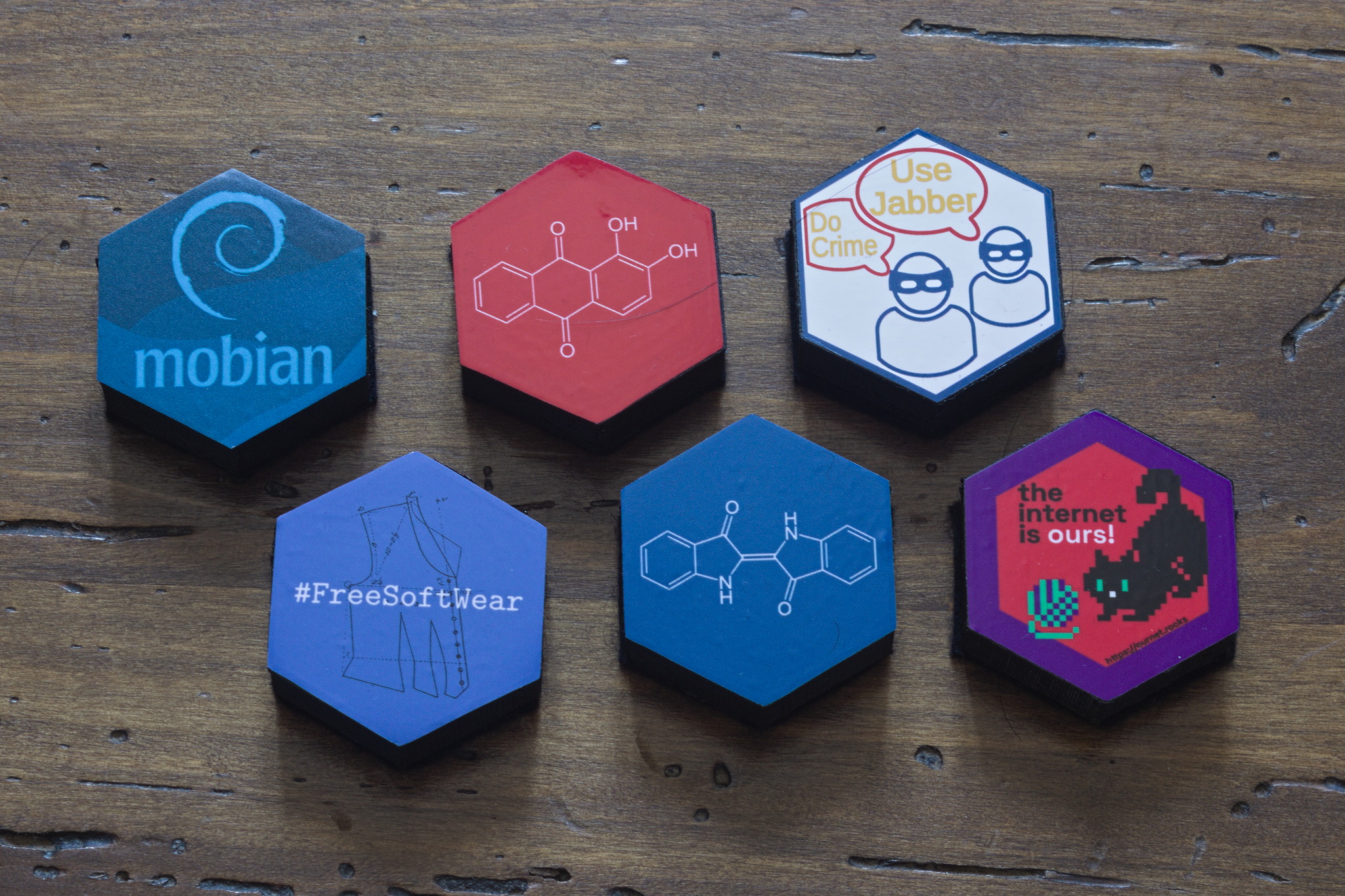 I ve collected some more
 Some went on my laptop, of course, but some were selected for another
tool I use relatively often: more pattern weights like










 Debian 13 "Trixie"
 After cartridge pleating, the next fabric manipulation technique I
wanted to try was smocking, of the honeycombing variety, on a shirt.
My current go-to pattern for shirts is the
 In my stash I had a cut of purple-blue hopefully cotton [#cotton] I had
bought for a cheap price and used for my first attempt at an
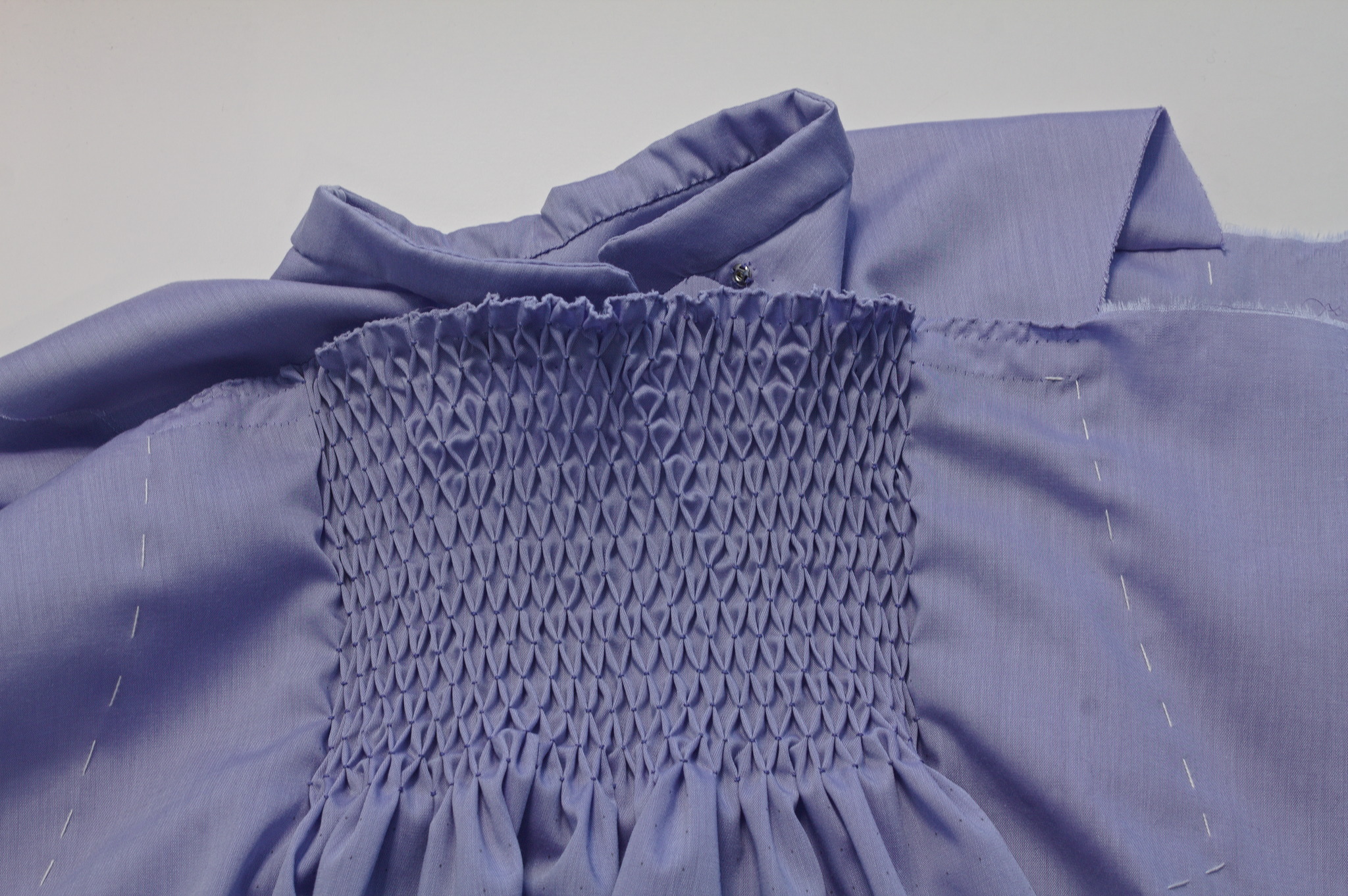 Of course I wanted some honeycombing on the front, but I was afraid that
the slit in the middle of it would interfere with the honeycombing and
gape, so I decided to have the shirt open in an horizontal line at the
yoke.
I added instructions
 I also used a row of honeycombing on the back and two on the upper part
of the sleeves, instead of the gathering, and of course some rows to
gather the cuffs.
The honeycombing on the back was a bit too far away from the edge, so
it s a bit of an odd combination of honeycombing and pleating that I
don t hate, but don t love either. It s on the back, so I don t mind. On
the sleeves I ve done the honeycombing closer to the edge and I ve
decided to sew the sleeve as if it was a cartridge pleated sleeve, and
that worked better.
Because circumstances are still making access to my sewing machine
more of a hassle than I d want it to be, this was completely sewn by
hand, and at a bit more than a month I have to admit that near the end
it felt like it had been taken forever. I m not sure whether it was the
actual sewing being slow, some interruptions that happened when I had
little time to work on it, or the fact that I ve just gone through a
time when my brain kept throwing new projects at me, and I kept thinking
of how to make those. Thanks brain.
Even when on a hurry to finish it, however, it was still enjoyable
sewing, and I think I ll want to do more honeycombing in the future.
 Anyway, it s done! And it s going straight into my daily garment
rotation, because the weather is getting hot, and that means it s
definitely shirt time.
 University of Nairobi.
 Our group at the conference.
 View of Nairobi's skyline from the open area on the fifth floor.
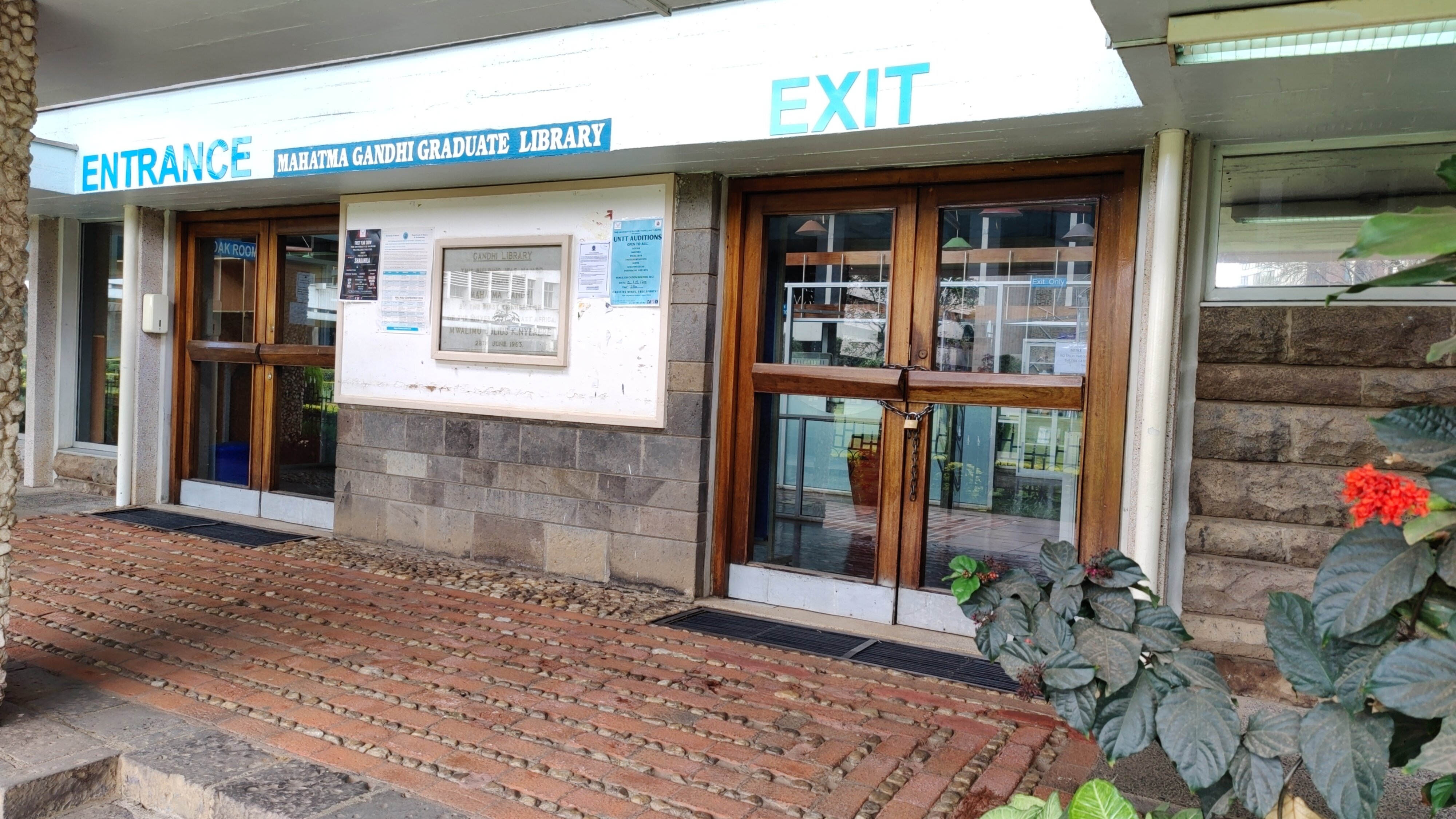 A library in Mahatma Gandhi wing of the University of Nairobi.
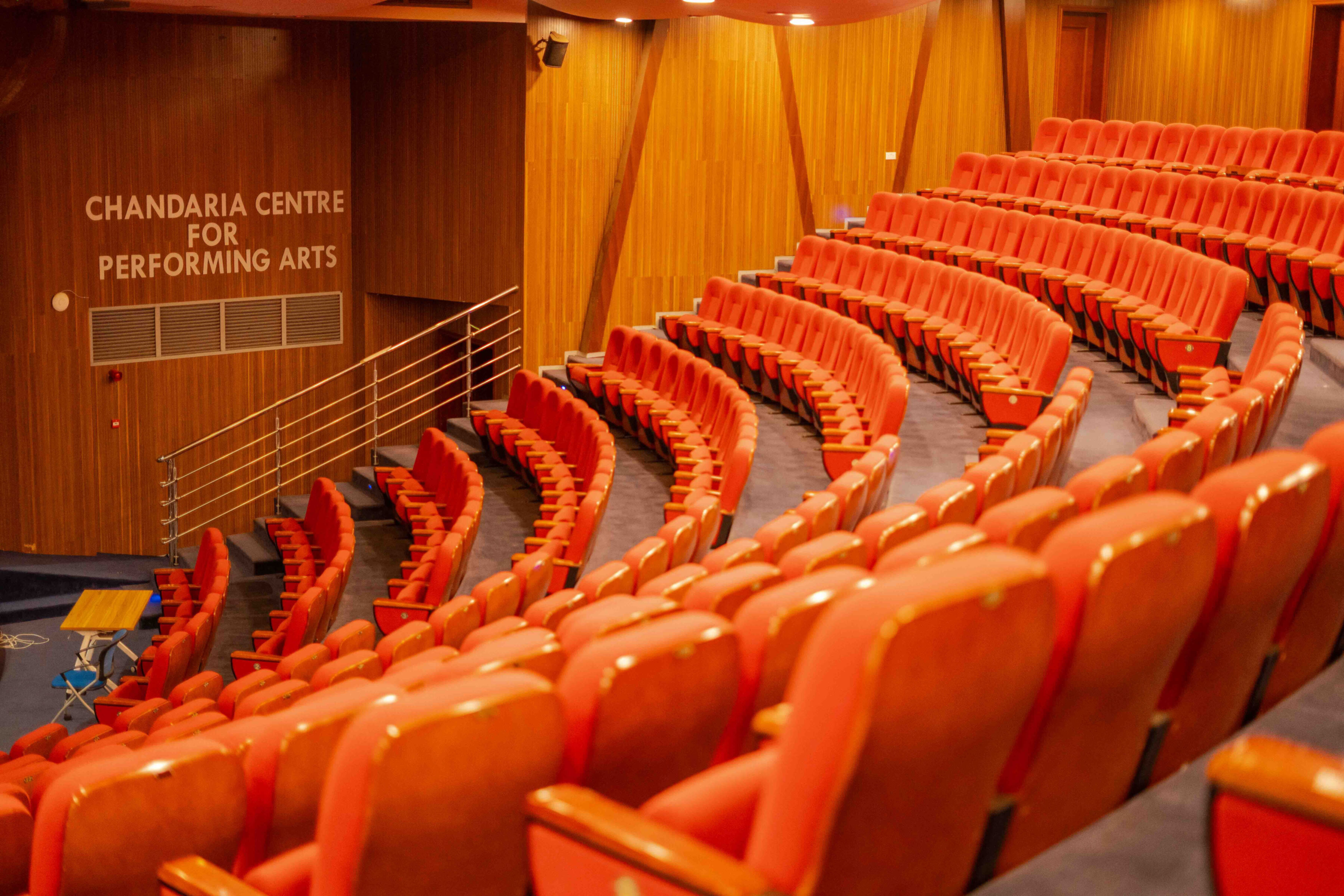 One of the conference halls where talks took place.
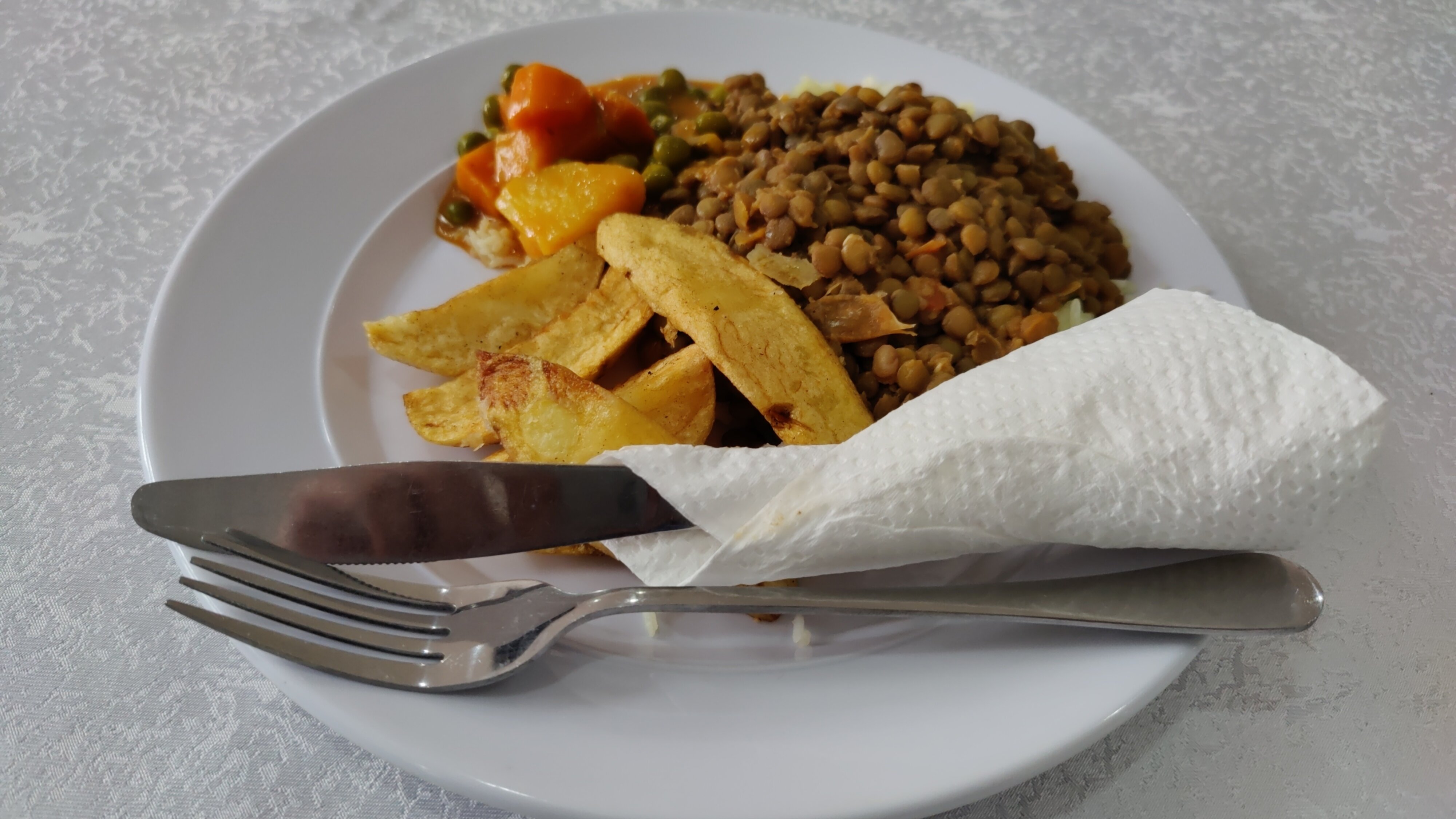 One of the lunch meals served during the conference.
 Minibus which took us from the university to Bao Box restaurant.
 This minibus in the picture gave a sense of a real matatu.


 To ease my nerves, I struck up a conversation with a man seated nearby who was
also traveling to Abu Dhabi for work. He provided helpful information about
safety and transportation in Abu Dhabi, which reassured me. With the boarding
process complete and my anxiety somewhat eased. I found my window seat on the
flight and settled in, excited for the journey ahead. Next to me was a young
man from Ranchi(Zarkhand, India), heading to Abu Dhabi for work at a mining
factory. We had an engaging conversation about work culture in Abu Dhabi and
recruitment from India.
Upon arriving in Abu Dhabi, I completed my transit, collected my luggage, and
began finding my way to the hotel


 I reached Tirana, Albania after a six hours flight, feeling exhausted and I was
suffering from a headache. The air pressure had blocked my ears, and jet lag
added to my fatigue. After collecting my checked luggage, I headed to the first
ATM machine at the airport. Struggling to insert my card, I asked a nearby
gentleman for help. He tried his best, but my card got stuck inside the
machine. Panic set in as I worried about how I would survive without money.
Taking a deep breath, I found an airport employee and explained the situation.
The gentleman stayed with me, offering support and repeatedly apologizing for
his mistake. However, it wasn t his fault, the ATM was out of order, which I
hadn t noticed. My focus was solely on retrieving my ATM card. The airport
employee worked diligently, using a hairpin to carefully extract my card.
Finally, the card was freed, and I felt an immense sense of relief, grateful
for the help of these kind strangers. I used another ATM, successfully withdrew
money, and then went to an airport mobile SIM shop to buy a new SIM card for
local internet and connectivity.


 I found my top bunk bed, only to realize I had booked a mixed-gender
dormitory. This detail had completely escaped my notice during the booking
process. I felt unsure about how to handle the situation. Coincidentally,
my experience mirrored what Kangana faced in the movie Queen .
Feeling acidic due to an empty stomach and the exhaustion of heavy
traveling, I wasn t up to cooking in the hostel s kitchen.
I asked the front desk about the nearest restaurant. It was nearly 9:30 PM,
and the streets were deserted. To avoid any mishaps like in the movie
Queen, I kept my passport securely locked in my bag, ensuring it wouldn t
be a victim of theft.
Venturing out for dinner, I felt uneasy on the quiet streets. I eventually
found a restaurant recommended by the hostel, but the menu was almost
entirely non-vegetarian. I struggled to ask about vegetarian options and was
uncertain if any dishes contained eggs, as some people consider eggs to be
vegetarian. Feeling frustrated and unsure, I left the restaurant without
eating.
I noticed a nearby grocery store that was about to close and managed to get
a few extra minutes to shop. I bought some snacks, wafers, milk, and tea
bags (though I couldn t find tea powder to make Indian-style tea). Returning
to the hostel, I made do with wafers, cookies, and milk for dinner. That day
was incredibly tough for me, I filled with exhaustion and struggle in a new
country, I was on the verge of tears .
I made a video call home before sleeping on the top bunk bed. It was a new
experience for me, sharing a room with both unknown men and women. I kept my
passport safe inside my purse and under my pillow while sleeping, staying
very conscious about its security.


 I took a bus from Shkod r to the southern part of Albania, heading to
Sarand . The journey lasted about five to six hours, and I had booked a stay
at


