Search Results: "iari"

26 June 2026

Russ Allbery: Review: Platform Decay

Review: Platform Decay, by Martha Wells
Series: Murderbot Diaries #8
Publisher: Tor
Copyright: 2026
ISBN: 1-250-82701-9
Format: Kindle
Pages: 245
Platform Decay is the eighth book in the Murderbot science fiction series. You absolutely should not start here, but you also don't need to remember the specifics of the previous books. As the story opens, Murderbot and a friend (the identity of whom is a spoiler for previous books) are infiltrating a Corporation Rim torus, a massive space station that encircles a mined-out planet. (Like most science fiction megastructures, this is more space than the plot really requires.) Murderbot's mission is to exfiltrate some of Dr. Mensah's family members who have become entangled in corporate shenanigans. The corporates are eager to get revenge for the events of System Collapse, not to mention the other times Preservation Station has upended corporate plans. Murderbot's job is to stop them. The group, in addition to one of Dr. Mensah's partners, includes an older woman and a young child. Murderbot is analytical and of course not at all emotional about children, which is reliably a good time. Also, the older woman is gruff, stubborn, and thoroughly enjoyable. There are, of course, complications that lead to picking up more children and going through rather more of the torus than Murderbot wanted to explore. Each section of the torus is run by a different corporation and has a different constructed environment and visual aesthetic, so there are a lot of opportunities for fights, daring escapes, and incidental trouble. Also, well:
So I had installed a mental health module. I know, I was surprised I did it too.
After the events of System Collapse, University Medical decided that Murderbot needed a bit more metal health support.
The only reason I agreed to it was that the mental health module didn't actually try to adjust my processing or core programming or anything; it just monitored my organic neural tissue. When my neural tissue started to generate weird chemicals and whatever, it would ping me to "check in with my emotional state." Seriously, I could have coded that myself. (I told Dr. Bharadwaj that, and she said, "Would you have ever coded that yourself?" which was totally unfair and also correct. I would never have done that.)
Speaking as someone whose neural tissue sometimes generates weird chemicals and whatever, I sympathize. The specific form this module takes is periodic "emotion check" parentheticals throughout the narration, which I found utterly delightful.
I ran that through risk assessment and it produced the equivalent of a shrug. (Emotion check: Shrug sigil right back at you, you piece of shit.)
This is otherwise an extended action movie sort of a book, much like several of the early novellas. There are no major political or interpersonal developments here and the usual cast (apart from Murderbot) is mostly absent. Instead, we get an extended, dangerous journey through a corporation-controlled habitat, mixed with Murderbot trying to interact with humans in a way that minimizes its annoyance while being hopefully reassuring. It's competence porn with awkward but surprisingly heartfelt emotional bonding, not that Murderbot in any way wants to bond or would appreciate that description. I doubt this will be anyone's favorite entry into the series since there are none of the big reveals or major leaps of character development there have been in the past few books. But, like all Murderbot books, the narrative tone is wonderful and all of the small asides and little moments of character interaction are an utter delight. If you've gotten this far in the series, you know what I mean and you'll be as happy to read more of it as I was. There is a part of me that is hoping for some major plot development, and I always want to see more of ART (who has no significant role in this book), but Wells has the narrative style down so perfectly that I would read and enjoy a book about Murderbot doing just about anything. If you're this far in the series, you probably don't need a review, and since this is an action-heavy adventure rather than a character growth novel, I don't have a lot more to add. There's a new short Murderbot novel out and you want to read it. Recommended to everyone who enjoys the series. Rating: 8 out of 10

18 June 2026

Mike Gabriel: Commenting on the recent Ubuntu Touch review done by @SwitchandClickOfficial on Youtube

There has been a video blog post recently published with a review of Ubuntu Touch as an option to opt out of the Android world: https://www.youtube.com/watch?v=wTK6TS3pXgc Thanks to @SwitchandClick for spending time on this and publishing that video. Much appreciated. Many Issues amended in upcoming 24.04-2.0 Release When I watched that video referenced above, I continuously thought: ah... this is fixed in the next major release of Ubuntu Touch, or: ah... this is a known issue that we have on the roadmap..., or: ah... this is done in this ways by design (so it's a feature or basic functionality)... Let me just state, that most of the criticized aspects will be resolved in upcoming Ubuntu Touch release 24.04-2.0 (the tests in that video blog post have been run on Ubuntu Touch 24.04-1.x): The full feature preview of the 24.04-2.0 release can be found here: https://ubports.com/blog/ubports-news-1/ubuntu-touch-24-04-2-0-beta-is-n... Ubuntu Touch App Ecosystem The app ecosystem of Ubuntu Touch is quite specific, because many apps in Ubuntu Touch have been explicitly developed for Ubuntu Touch using a widget toolkit called Lomiri.Components. However, in Ubuntu Touch we also encourage developers to provide apps written with other convergent-capable toolkits, such as QQC2-based apps or Kirigami-based apps. One reason for the very different app ecosystem in Ubuntu Touch is that many service providers don't have Ubuntu Touch on their radar when investing in app development for their services. Some Ubuntu Touch App Developers work around this by either implementing unofficial client apps for web services (e.g. the Flow app for Deezer by Sander Klootwijk), others provide the web service via implementing a web app (will not work when offline, but at least will show up as an app in the launcher). The overall solution for making Open-Store.io more familiar to users who migrate from Android is that commercial service providers start honouring digital sovereignty and start providing apps for Linux. Not just for the Linux desktop, but also for mobile Linux platforms. This dual use case can easily achieved with an app development that bears convergence in mind. App Ecosystems are also a Matter of Perspective And one more minor note: whenever I open an Android appstore or can peak over someone's shoulder using an iOS device: I always wonder: what are all these apps about??? Never heard about them. So, familiarity really depends on perspective. And perspective depends on what you are used to. Change what you do and your perspective will follow. Ubuntu Touch's root filesystem (rootfs) is Immutable Only thing from that video blog post that we haven't fixed and won't do so in the midterm future is apt-get not working on the command line. The reason for this is: the Ubuntu Touch root file system is an immutable file system and thus shall not be changed via apt-get & friends by ordinary users. There are various discussions ongoing such as dpkg-divert'ing apt-get to a wrapper shell script that spits out an error message if rootfs is mounted read-only and someone tries to install packages the Debian/Ubuntu way. Other approaches are to mount some RAM disk over the rootfs, so apt-get can be used at runtime but changes to the system get reset at reboot. However, it is possible to mount the root filesystem read-write and test newer package versions (as UT core developers do regularly, in fact). If you tinker with this, it is recommended to reflash your device (don't wipe user data, when you reflash!) from time to time, because adding packages or package upgrades to your rootfs may over time corrupt the integrity of the rootfs. One reason for apt-get breaking the rootfs and thus your Ubuntu Touch development device is that the upgrade process of the rootfs image is incremental, so update tarballs sometimes contain only those parts that got changed between this and your previous upgrade (sometimes, upgrades contain a complete rootf image, depending on the interval between upgrades). If files from an incremental update tarball mix into a rootfs that got tinkered with via apt-get, you really end up on your own. Re-flashing will grab the complete rootfs tarball and wipe the whole rootfs and reinstall a fresh version of the newest rootfs image. Developers also do this in regular intervals to ensure their test device is clean again before running more/other tests.

27 April 2026

Gunnar Wolf: Heads we win, tails you lose AI detectors in education

This post is an unpublished review for Heads we win, tails you lose AI detectors in education
Educators throughout the world are tasked with the difficult requirement of evaluating students works, making sure the grades meaningfully reflect the students understanding of the subject, and that a graded assignment maps to the relevant work invested in solving it. After the irruption of Large-Language Models in late 2023, this task became obviously much harder: if a widely available computer program is able to solve an assignment in a way that resembles a human-generated response, how can educators meaningfully grade their groups? As it has been the case with different innovations over time (such as with the appearance of electronic calculators or the mass availability of digital encyclopedias), the first reactions were of prohibition and denial: students who use the new tool in question are to be disqualified or somehow punished. It is only some time after the innovation in question settles that teachers find a way to properly weigh, integrate and accept its use. The authors of this position article present several arguments as to why it is impossible, unethical and unadvisable to use automated AI detection systems to process student assignments. The first argument is whether it is at all possible to reliably differentiate human-written essays from LLM-generated artifacts. The first criticism is that AI detectors are, themselves, LLMs trained on human-generated texts (negative) and LLM-generated texts (positive). However, the only way to assert the training material is not noisy is to use pre-2020 text as human-generated but natural ways of writing are influenced by what people read, and the authors quote studies pointing out that human language, particularly in the scholarly fields, has incorporated terms and constructions that were used as LLM markers. Quoting the authors, As exposure to AI-generated material becomes increasingly widespread, it is reasonable to expect that the linguistic patterns of human writing will shift, reflecting the influence of AI-assisted texts encountered across education, media, and everyday communication . Stylistic elements and other such markers are being adopted back into regular speech at a high rate. Then, the aspect of ethics comes into play as well. While it is expected that teachers should demand intellectual integrity from students, and plagiarism detectors have been widely accepted into the workflow of academics, the accusation of presenting LLM output as own work is necessarily an uphill battle: the accused party is tasked with providing proof of innocence based on nebulous, probabilistic accusations. The authors argue, once an accusation of turning in a LLM-generated text is made on a student, the onus on proving innocence lies with the accused. The authors review and argue against a series of techniques that have been presented in literature to aid teachers in detecting LLM abuse, such as linguistic markers, single or multiple AI detectors, the use of false references, hidden adversarial prompts, arguing in all cases the techniques fail to be trustable enough and highlighting the probability of both false positives and negatives. They also present AI detection as a false dichotomy: many works presented are not 100% human generated nor 100% LLM-generated, but some pertinent LLM-generated paragraphs are presented mixed with human-generated content, in a positive, critical AI use ( Students work is frequently created with, not by, generative AI ). The article closes by reiterating the authors position: AI detection in education is not merely flawed; it is conceptually unsound . they call upon institutions to accept the use of generative LLMs cannot be solved through surveillance and punishment , but has to be tackled by an assessment design that recognizes AI s role in learning . This article s position is very strong and well argued, and although it will surely meet with ample opposition, it surely poses an important, very current problematic. As a teacher, I found it a very enlightening read.

5 March 2026

Ian Jackson: Adopting tag2upload and modernising your Debian packaging

Introduction tag2upload allows authorised Debian contributors to upload to Debian simply by pushing a signed git tag to Debian s gitlab instance, Salsa. We have recently announced that tag2upload is, in our opinion, now very stable, and ready for general use by all Debian uploaders. tag2upload, as part of Debian s git transition programme, is very flexible - it needs to support a large variety of maintainer practices. And it s relatively unopinionated, wherever that s possible. But, during the open beta, various contributors emailed us asking for Debian packaging git workflow advice and recommendations. This post is an attempt to give some more opinionated answers, and guide you through modernising your workflow. (This article is aimed squarely at Debian contributors. Much of it will make little sense to Debian outsiders.) Why Ease of development git offers a far superior development experience to patches and tarballs. Moving tasks from a tarballs and patches representation to a normal, git-first, representation, makes everything simpler. dgit and tag2upload do automatically many things that have to be done manually, or with separate commands, in dput-based upload workflows. They will also save you from a variety of common mistakes. For example, you cannot accidentally overwrite an NMU, with tag2upload or dgit. These many safety catches mean that our software sometimes complains about things, or needs confirmation, when more primitive tooling just goes ahead. We think this is the right tradeoff: it s part of the great care we take to avoid our software making messes. Software that has your back is very liberating for the user. tag2upload makes it possible to upload with very small amounts of data transfer, which is great in slow or unreliable network environments. The other week I did a git-debpush over mobile data while on a train in Switzerland; it completed in seconds. See the Day-to-day work section below to see how simple your life could be. Don t fear a learning burden; instead, start forgetting all that nonsense Most Debian contributors have spent months or years learning how to work with Debian s tooling. You may reasonably fear that our software is yet more bizarre, janky, and mistake-prone stuff to learn. We promise (and our users tell us) that s not how it is. We have spent a lot of effort on providing a good user experience. Our new git-first tooling, especially dgit and tag2upload, is much simpler to use than source-package-based tooling, despite being more capable. The idiosyncrasies and bugs of source packages, and of the legacy archive, have been relentlessly worked around and papered over by our thousands of lines of thoroughly-tested defensive code. You too can forget all those confusing details, like our users have! After using our systems for a while you won t look back. And, you shouldn t fear trying it out. dgit and tag2upload are unlikely to make a mess. If something is wrong (or even doubtful), they will typically detect it, and stop. This does mean that starting to use tag2upload or dgit can involve resolving anomalies that previous tooling ignored, or passing additional options to reassure the system about your intentions. So admittedly it isn t always trivial to get your first push to succeed. Properly publishing the source code One of Debian s foundational principles is that we publish the source code. Nowadays, the vast majority of us, and of our upstreams, are using git. We are doing this because git makes our life so much easier. But, without tag2upload or dgit, we aren t properly publishing our work! Yes, we typically put our git branch on Salsa, and point Vcs-Git at it. However:
  • The format of git branches on Salsa is not standardised. They might be patches-unapplied, patches-applied, bare debian/, or something even stranger.
  • There is no guarantee that the DEP-14 debian/1.2.3-7 tag on salsa corresponds precisely to what was actually uploaded. dput-based tooling (such as gbp buildpackage) doesn t cross-check the .dsc against git.
  • There is no guarantee that the presence of a DEP-14 tag even means that that version of package is in the archive.
This means that the git repositories on Salsa cannot be used by anyone who needs things that are systematic and always correct. They are OK for expert humans, but they are awkward (even hazardous) for Debian novices, and you cannot use them in automation. The real test is: could you use Vcs-Git and Salsa to build a Debian derivative? You could not. tag2upload and dgit do solve this problem. When you upload, they:
  1. Make a canonical-form (patches-applied) derivative of your git branch;
  2. Ensure that there is a well-defined correspondence between the git tree and the source package;
  3. Publish both the DEP-14 tag and a canonical-form archive/debian/1.2.3-7 tag to a single central git depository, *.dgit.debian.org;
  4. Record the git information in the Dgit field in .dsc so that clients can tell (using the ftpmaster API) that this was a git-based upload, what the corresponding git objects are, and where to find them.
This dependably conveys your git history to users and downstreams, in a standard, systematic and discoverable way. tag2upload and dgit are the only system which achieves this. (The client is dgit clone, as advertised in e.g. dgit-user(7). For dput-based uploads, it falls back to importing the source package.) Adopting tag2upload - the minimal change tag2upload is a substantial incremental improvement to many existing workflows. git-debpush is a drop-in replacement for building, signing, and uploading the source package. So, you can just adopt it without completely overhauling your packaging practices. You and your co-maintainers can even mix-and-match tag2upload, dgit, and traditional approaches, for the same package. Start with the wiki page and git-debpush(1) (ideally from forky aka testing). You don t need to do any of the other things recommended in this article. Overhauling your workflow, using advanced git-first tooling The rest of this article is a guide to adopting the best and most advanced git-based tooling for Debian packaging. Assumptions
  • Your current approach uses the patches-unapplied git branch format used with gbp pq and/or quilt, and often used with git-buildpackage. You previously used gbp import-orig.
  • You are fluent with git, and know how to use Merge Requests on gitlab (Salsa). You have your origin remote set to Salsa.
  • Your main Debian branch name on Salsa is master. Personally I think we should use main but changing your main branch name is outside the scope of this article.
  • You have enough familiarity with Debian packaging including concepts like source and binary packages, and NEW review.
  • Your co-maintainers are also adopting the new approach.
tag2upload and dgit (and git-debrebase) are flexible tools and can help with many other scenarios too, and you can often mix-and-match different approaches. But, explaining every possibility would make this post far too confusing. Topics and tooling This article will guide you in adopting:
  • tag2upload
  • Patches-applied git branch for your packaging
  • Either plain git merge or git-debrebase
  • dgit when a with-binaries uploaded is needed (NEW)
  • git-based sponsorship
  • Salsa (gitlab), including Debian Salsa CI
Choosing the git branch format In Debian we need to be able to modify the upstream-provided source code. Those modifications are the Debian delta. We need to somehow represent it in git. We recommend storing the delta as git commits to those upstream files, by picking one of the following two approaches.
rationale Much traditional Debian tooling like quilt and gbp pq uses the patches-unapplied branch format, which stores the delta as patch files in debian/patches/, in a git tree full of unmodified upstream files. This is clumsy to work with, and can even be an alarming beartrap for Debian outsiders.
git merge Option 1: simply use git, directly, including git merge. Just make changes directly to upstream files on your Debian branch, when necessary. Use plain git merge when merging from upstream. This is appropriate if your package has no or very few upstream changes. It is a good approach if the Debian maintainers and upstream maintainers work very closely, so that any needed changes for Debian are upstreamed quickly, and any desired behavioural differences can be arranged by configuration controlled from within debian/. This is the approach documented more fully in our workflow tutorial dgit-maint-merge(7).
git-debrebase Option 2: Adopt git-debrebase. git-debrebase helps maintain your delta as linear series of commits (very like a topic branch in git terminology). The delta can be reorganised, edited, and rebased. git-debrebase is designed to help you carry a significant and complicated delta series. The older versions of the Debian delta are preserved in the history. git-debrebase makes extra merges to make a fast-forwarding history out of the successive versions of the delta queue branch. This is the approach documented more fully in our workflow tutorial dgit-maint-debrebase(7). Examples of complex packages using this approach include src:xen and src:sbcl.
Determine upstream git and stop using upstream tarballs We recommend using upstream git, only and directly. You should ignore upstream tarballs completely.
rationale Many maintainers have been importing upstream tarballs into git, for example by using gbp import-orig. But in reality the upstream tarball is an intermediate build product, not (just) source code. Using tarballs rather than git exposes us to additional supply chain attacks; indeed, the key activation part of the xz backdoor attack was hidden only in the tarball! git offers better traceability than so-called pristine upstream tarballs. (The word pristine is even a joke by the author of pristine-tar!)
First, establish which upstream git tag corresponds to the version currently in Debian. From the sake of readability, I m going to pretend that upstream version is 1.2.3, and that upstream tagged it v1.2.3. Edit debian/watch to contain something like this:
version=4
opts="mode=git" https://codeberg.org/team/package refs/tags/v(\d\S*)
You may need to adjust the regexp, depending on your upstream s tag name convention. If debian/watch had a files-excluded, you ll need to make a filtered version of upstream git.
git-debrebase From now on we ll generate our own .orig tarballs directly from git.
rationale We need some upstream tarball for the 3.0 (quilt) source format to work with. It needs to correspond to the git commit we re using as our upstream. We don t need or want to use a tarball from upstream for this. The .orig is just needed so a nice legacy Debian source package (.dsc) can be generated.
Probably, the current .orig in the Debian archive, is an upstream tarball, which may be different to the output of git-archive and possibly even have different contents to what s in git. The legacy archive has trouble with differing .origs for the same upstream version . So we must until the next upstream release change our idea of the upstream version number. We re going to add +git to Debian s idea of the upstream version. Manually make a tag with that name:
git tag -m "Compatibility tag for orig transition" v1.2.3+git v1.2.3~0
git push origin v1.2.3+git
If you are doing the packaging overhaul at the same time as a new upstream version, you can skip this part.
Convert the git branch
git merge Prepare a new branch on top of upstream git, containing what we want:
git branch -f old-master         # make a note of the old git representation
git reset --hard v1.2.3          # go back to the real upstream git tag
git checkout old-master :debian  # take debian/* from old-master
git commit -m "Re-import Debian packaging on top of upstream git"
git merge --allow-unrelated-histories -s ours -m "Make fast forward from tarball-based history" old-master
git branch -d old-master         # it's incorporated in our history now
If there are any patches, manually apply them to your main branch with git am, and delete the patch files (git rm -r debian/patches, and commit). (If you ve chosen this workflow, there should be hardly any patches,)
rationale These are some pretty nasty git runes, indeed. They re needed because we want to restart our Debian packaging on top of a possibly quite different notion of what the upstream is.
git-debrebase Convert the branch to git-debrebase format and rebase onto the upstream git:
git-debrebase -fdiverged convert-from-gbp upstream/1.2.3
git-debrebase -fdiverged -fupstream-not-ff new-upstream 1.2.3+git
If you had patches which patched generated files which are present only in the upstream tarball, and not in upstream git, you will encounter rebase conflicts. You can drop hunks editing those files, since those files are no longer going to be part of your view of the upstream source code at all.
rationale The force option -fupstream-not-ff will be needed this one time because your existing Debian packaging history is (probably) not based directly on the upstream history. -fdiverged may be needed because git-debrebase might spot that your branch is not based on dgit-ish git history.
Manually make your history fast forward from the git import of your previous upload.
dgit fetch
git show dgit/dgit/sid:debian/changelog
# check that you have the same version number
git merge -s ours --allow-unrelated-histories -m 'Declare fast forward from pre-git-based history' dgit/dgit/sid
Change the source format Delete any existing debian/source/options and/or debian/source/local-options.
git merge Change debian/source/format to 1.0. Add debian/source/options containing -sn.
rationale We are using the 1.0 native source format. This is the simplest possible source format - just a tarball. We would prefer 3.0 (native) , which has some advantages, but dpkg-source between 2013 (wheezy) and 2025 (trixie) inclusive unjustifiably rejects this configuration. You may receive bug reports from over-zealous folks complaining about the use of the 1.0 source format. You should close such reports, with a reference to this article and to #1106402.
git-debrebase Ensure that debian/source/format contains 3.0 (quilt).
Now you are ready to do a local test build. Sort out the documentation and metadata Edit README.source to at least mention dgit-maint-merge(7) or dgit-maint-debrebase(7), and to tell people not to try to edit or create anything in debian/patches/. Consider saying that uploads should be done via dgit or tag2upload. Check that your Vcs-Git is correct in debian/control. Consider deleting or pruning debian/gbp.conf, since it isn t used by dgit, tag2upload, or git-debrebase.
git merge Add a note to debian/changelog about the git packaging change.
git-debrebase git-debrebase new-upstream will have added a new upstream version stanza to debian/changelog. Edit that so that it instead describes the packaging change. (Don t remove the +git from the upstream version number there!)
Configure Salsa Merge Requests
git-debrebase In Settings / Merge requests , change Squash commits when merging to Do not allow .
rationale Squashing could destroy your carefully-curated delta queue. It would also disrupt git-debrebase s git branch structure.
Set up Salsa CI, and use it to block merges of bad changes Caveat - the tradeoff gitlab is a giant pile of enterprise crap. It is full of startling bugs, many of which reveal a fundamentally broken design. It is only barely Free Software in practice for Debian (in the sense that we are very reluctant to try to modify it). The constant-churn development approach and open-core business model are serious problems. It s very slow (and resource-intensive). It can be depressingly unreliable. That Salsa works as well as it does is a testament to the dedication of the Debian Salsa team (and those who support them, including DSA). However, I have found that despite these problems, Salsa CI is well worth the trouble. Yes, there are frustrating days when work is blocked because gitlab CI is broken and/or one has to keep mashing Retry . But, the upside is no longer having to remember to run tests, track which of my multiple dev branches tests have passed on, and so on. Automatic tests on Merge Requests are a great way of reducing maintainer review burden for external contributions, and helping uphold quality norms within a team. They re a great boon for the lazy solo programmer. The bottom line is that I absolutely love it when the computer thoroughly checks my work. This is tremendously freeing, precisely at the point when one most needs it deep in the code. If the price is to occasionally be blocked by a confused (or broken) computer, so be it. Setup procedure Create debian/salsa-ci.yml containing
include:
  - https://salsa.debian.org/salsa-ci-team/pipeline/raw/master/recipes/debian.yml
In your Salsa repository, under Settings / CI/CD , expand General Pipelines and set CI/CD configuration file to debian/salsa-ci.yml.
rationale Your project may have an upstream CI config in .gitlab-ci.yml. But you probably want to run the Debian Salsa CI jobs. You can add various extra configuration to debian/salsa-ci.yml to customise it. Consult the Salsa CI docs.
git-debrebase Add to debian/salsa-ci.yml:
.git-debrebase-prepare: &git-debrebase-prepare
  # install the tools we'll need
  - apt-get update
  - apt-get --yes install git-debrebase git-debpush
  # git-debrebase needs git user setup
  - git config user.email "salsa-ci@invalid.invalid"
  - git config user.name "salsa-ci"
  # run git-debrebase make-patches
  # https://salsa.debian.org/salsa-ci-team/pipeline/-/issues/371
  - git-debrebase --force
  - git-debrebase --noop-ok make-patches
  # make an orig tarball using the upstream tag, not a gbp upstream/ tag
  # https://salsa.debian.org/salsa-ci-team/pipeline/-/issues/541
  - git-deborig
.build-definition: &build-definition
  extends: .build-definition-common
  before_script: *git-debrebase-prepare
build source:
  extends: .build-source-only
  before_script: *git-debrebase-prepare
variables:
  # disable shallow cloning of git repository. This is needed for git-debrebase
  GIT_DEPTH: 0
rationale Unfortunately the Salsa CI pipeline currently lacks proper support for git-debrebase (salsa-ci#371) and has trouble directly using upstream git for orig tarballs (#salsa-ci#541). These runes were based on those in the Xen package. You should subscribe to the tickets #371 and #541 so that you can replace the clone-and-hack when proper support is merged.
Push this to salsa and make the CI pass. If you configured the pipeline filename after your last push, you will need to explicitly start the first CI run. That s in Pipelines : press New pipeline in the top right. The defaults will very probably be correct. Block untested pushes, preventing regressions In your project on Salsa, go into Settings / Repository . In the section Branch rules , use Add branch rule . Select the branch master. Set Allowed to merge to Maintainers . Set Allowed to push and merge to No one . Leave Allow force push disabled. This means that the only way to land anything on your mainline is via a Merge Request. When you make a Merge Request, gitlab will offer Set to auto-merge . Use that. gitlab won t normally merge an MR unless CI passes, although you can override this on a per-MR basis if you need to. (Sometimes, immediately after creating a merge request in gitlab, you will see a plain Merge button. This is a bug. Don t press that. Reload the page so that Set to auto-merge appears.) autopkgtests Ideally, your package would have meaningful autopkgtests (DEP-8 tests) This makes Salsa CI more useful for you, and also helps detect and defend you against regressions in your dependencies. The Debian CI docs are a good starting point. In-depth discussion of writing autopkgtests is beyond the scope of this article. Day-to-day work With this capable tooling, most tasks are much easier. Making changes to the package Make all changes via a Salsa Merge Request. So start by making a branch that will become the MR branch. On your MR branch you can freely edit every file. This includes upstream files, and files in debian/. For example, you can:
  • Make changes with your editor and commit them.
  • git cherry-pick an upstream commit.
  • git am a patch from a mailing list or from the Debian Bug System.
  • git revert an earlier commit, even an upstream one.
When you have a working state of things, tidy up your git branch:
git merge Use git-rebase to squash/edit/combine/reorder commits.
git-debrebase Use git-debrebase -i to squash/edit/combine/reorder commits. When you are happy, run git-debrebase conclude. Do not edit debian/patches/. With git-debrebase, this is purely an output. Edit the upstream files directly instead. To reorganise/maintain the patch queue, use git-debrebase -i to edit the actual commits.
Push the MR branch (topic branch) to Salsa and make a Merge Request. Set the MR to auto-merge when all checks pass . (Or, depending on your team policy, you could ask for an MR Review of course.) If CI fails, fix up the MR branch, squash/tidy it again, force push the MR branch, and once again set it to auto-merge. Test build An informal test build can be done like this:
apt-get build-dep .
dpkg-buildpackage -uc -b
Ideally this will leave git status clean, with no modified or un-ignored untracked files. If it shows untracked files, add them to .gitignore or debian/.gitignore as applicable. If it dirties the tree, consider trying to make it stop doing that. The easiest way is probably to build out-of-tree, if supported upstream. If this is too difficult, you can leave the messy build arrangements as they are, but you ll need to be disciplined about always committing, using git clean and git reset, and so on. For formal binaries builds, including for testing, use dgit sbuild as described below for uploading to NEW. Uploading to Debian Start an MR branch for the administrative changes for the release. Document all the changes you re going to release, in the debian/changelog.
git merge gbp dch can help write the changelog for you:
dgit fetch sid
gbp dch --ignore-branch --since=dgit/dgit/sid --git-log=^upstream/main
rationale --ignore-branch is needed because gbp dch wrongly thinks you ought to be running this on master, but of course you re running it on your MR branch. The --git-log=^upstream/main excludes all upstream commits from the listing used to generate the changelog. (I m assuming you have an upstream remote and that you re basing your work on their main branch.) If there was a new upstream version, you ll usually want to write a single line about that, and perhaps summarise anything really important.
(For the first upload after switching to using tag2upload or dgit you need --since=debian/1.2.3-1, where 1.2.3-1 is your previous DEP-14 tag, because dgit/dgit/sid will be a dsc import, not your actual history.)
Change UNRELEASED to the target suite, and finalise the changelog. (Note that dch will insist that you at least save the file in your editor.)
dch -r
git commit -m 'Finalise for upload' debian/changelog
Make an MR of these administrative changes, and merge it. (Either set it to auto-merge and wait for CI, or if you re in a hurry double-check that it really is just a changelog update so that you can be confident about telling Salsa to Merge unverified changes .) Now you can perform the actual upload:
git checkout master
git pull --ff-only # bring the gitlab-made MR merge commit into your local tree
git merge
git-debpush
git-debrebase
git-debpush --quilt=linear
--quilt=linear is needed only the first time, but it is very important that first time, to tell the system the correct git branch layout.
Uploading a NEW package to Debian If your package is NEW (completely new source, or has new binary packages) you can t do a source-only upload. You have to build the source and binary packages locally, and upload those build artifacts. Happily, given the same git branch you d tag for tag2upload, and assuming you have sbuild installed and a suitable chroot, dgit can help take care of the build and upload for you: Prepare the changelog update and merge it, as above. Then:
git-debrebase Create the orig tarball and launder the git-derebase branch:
git-deborig
git-debrebase quick
rationale Source package format 3.0 (quilt), which is what I m recommending here for use with git-debrebase, needs an orig tarball; it would also be needed for 1.0-with-diff.
Build the source and binary packages, locally:
dgit sbuild
dgit push-built
rationale You don t have to use dgit sbuild, but it is usually convenient to do so, because unlike sbuild, dgit understands git. Also it works around a gitignore-related defect in dpkg-source.
New upstream version Find the new upstream version number and corresponding tag. (Let s suppose it s 1.2.4.) Check the provenance:
git verify-tag v1.2.4
rationale Not all upstreams sign their git tags, sadly. Sometimes encouraging them to do so can help. You may need to use some other method(s) to check that you have the right git commit for the release.
git merge Simply merge the new upstream version and update the changelog:
git merge v1.2.4
dch -v1.2.4-1 'New upstream release.'
git-debrebase Rebase your delta queue onto the new upstream version:
git debrebase mew-upstream 1.2.4
If there are conflicts between your Debian delta for 1.2.3, and the upstream changes in 1.2.4, this is when you need to resolve them, as part of git merge or git (deb)rebase. After you ve completed the merge, test your package and make any further needed changes. When you have it working in a local branch, make a Merge Request, as above. Sponsorship git-based sponsorship is super easy! The sponsee can maintain their git branch on Salsa, and do all normal maintenance via gitlab operations. When the time comes to upload, the sponsee notifies the sponsor that it s time. The sponsor fetches and checks out the git branch from Salsa, does their checks, as they judge appropriate, and when satisfied runs git-debpush. As part of the sponsor s checks, they might want to see all changes since the last upload to Debian:
dgit fetch sid
git diff dgit/dgit/sid..HEAD
Or to see the Debian delta of the proposed upload:
git verify-tag v1.2.3
git diff v1.2.3..HEAD ':!debian'
git-debrebase Or to show all the delta as a series of commits:
git log -p v1.2.3..HEAD ':!debian'
Don t look at debian/patches/. It can be absent or out of date.
Incorporating an NMU Fetch the NMU into your local git, and see what it contains:
dgit fetch sid
git diff master...dgit/dgit/sid
If the NMUer used dgit, then git log dgit/dgit/sid will show you the commits they made. Normally the best thing to do is to simply merge the NMU, and then do any reverts or rework in followup commits:
git merge dgit/dgit/sid
git-debrebase You should git-debrebase quick at this stage, to check that the merge went OK and the package still has a lineariseable delta queue.
Then make any followup changes that seem appropriate. Supposing your previous maintainer upload was 1.2.3-7, you can go back and see the NMU diff again with:
git diff debian/1.2.3-7...dgit/dgit/sid
git-debrebase The actual changes made to upstream files will always show up as diff hunks to those files. diff commands will often also show you changes to debian/patches/. Normally it s best to filter them out with git diff ... ':!debian/patches' If you d prefer to read the changes to the delta queue as an interdiff (diff of diffs), you can do something like
git checkout debian/1.2.3-7
git-debrebase --force make-patches
git diff HEAD...dgit/dgit/sid -- :debian/patches
to diff against a version with debian/patches/ up to date. (The NMU, in dgit/dgit/sid, will necessarily have the patches already up to date.)
DFSG filtering (handling non-free files) Some upstreams ship non-free files of one kind of another. Often these are just in the tarballs, in which case basing your work on upstream git avoids the problem. But if the files are in upstream s git trees, you need to filter them out. This advice is not for (legally or otherwise) dangerous files. If your package contains files that may be illegal, or hazardous, you need much more serious measures. In this case, even pushing the upstream git history to any Debian service, including Salsa, must be avoided. If you suspect this situation you should seek advice, privately and as soon as possible, from dgit-owner@d.o and/or the DFSG team. Thankfully, legally dangerous files are very rare in upstream git repositories, for obvious reasons. Our approach is to make a filtered git branch, based on the upstream history, with the troublesome files removed. We then treat that as the upstream for all of the rest of our work.
rationale Yes, this will end up including the non-free files in the git history, on official Debian servers. That s OK. What s forbidden is non-free material in the Debianised git tree, or in the source packages.
Initial filtering
git checkout -b upstream-dfsg v1.2.3
git rm nonfree.exe
git commit -m "upstream version 1.2.3 DFSG-cleaned"
git tag -s -m "upstream version 1.2.3 DFSG-cleaned" v1.2.3+ds1
git push origin upstream-dfsg
And now, use 1.2.3+ds1, and the filtered branch upstream-dfsg, as the upstream version, instead of 1.2.3 and upstream/main. Follow the steps for Convert the git branch or New upstream version, as applicable, adding +ds1 into debian/changelog. If you missed something and need to filter out more a nonfree files, re-use the same upstream-dfsg branch and bump the ds version, eg v1.2.3+ds2. Subsequent upstream releases
git checkout upstream-dfsg
git merge v1.2.4
git rm additional-nonfree.exe # if any
git commit -m "upstream version 1.2.4 DFSG-cleaned"
git tag -s -m "upstream version 1.2.4 DFSG-cleaned" v1.2.4+ds1
git push origin upstream-dfsg
Removing files by pattern If the files you need to remove keep changing, you could automate things with a small shell script debian/rm-nonfree containing appropriate git rm commands. If you use git rm -f it will succeed even if the git merge from real upstream has conflicts due to changes to non-free files.
rationale Ideally uscan, which has a way of representing DFSG filtering patterns in debian/watch, would be able to do this, but sadly the relevant functionality is entangled with uscan s tarball generation.
Common issues
  • Tarball contents: If you are switching from upstream tarballs to upstream git, you may find that the git tree is significantly different. It may be missing files that your current build system relies on. If so, you definitely want to be using git, not the tarball. Those extra files in the tarball are intermediate built products, but in Debian we should be building from the real source! Fixing this may involve some work, though.
  • gitattributes: For Reasons the dgit and tag2upload system disregards and disables the use of .gitattributes to modify files as they are checked out. Normally this doesn t cause a problem so long as any orig tarballs are generated the same way (as they will be by tag2upload or git-deborig). But if the package or build system relies on them, you may need to institute some workarounds, or, replicate the effect of the gitattributes as commits in git.
  • git submodules: git submodules are terrible and should never ever be used. But not everyone has got the message, so your upstream may be using them. If you re lucky, the code in the submodule isn t used in which case you can git rm the submodule.
Further reading I ve tried to cover the most common situations. But software is complicated and there are many exceptions that this article can t cover without becoming much harder to read. You may want to look at:
  • dgit workflow manpages: As part of the git transition project, we have written workflow manpages, which are more comprehensive than this article. They re centered around use of dgit, but also discuss tag2upload where applicable. These cover a much wider range of possibilities, including (for example) choosing different source package formats, how to handle upstreams that publish only tarballs, etc. They are correspondingly much less opinionated. Look in dgit-maint-merge(7) and dgit-maint-debrebase(7). There is also dgit-maint-gbp(7) for those who want to keep using gbp pq and/or quilt with a patches-unapplied branch.
  • NMUs are very easy with dgit. (tag2upload is usually less suitable than dgit, for an NMU.) You can work with any package, in git, in a completely uniform way, regardless of maintainer git workflow, See dgit-nmu-simple(7).
  • Native packages (meaning packages maintained wholly within Debian) are much simpler. See dgit-maint-native(7).
  • tag2upload documentation: The tag2upload wiki page is a good starting point. There s the git-debpush(1) manpage of course.
  • dgit reference documentation: There is a comprehensive command-line manual in dgit(1). Description of the dgit data model and Principles of Operation is in dgit(7); including coverage of out-of-course situations. dgit is a complex and powerful program so this reference material can be overwhelming. So, we recommend starting with a guide like this one, or the dgit- (7) workflow tutorials.
  • Design and implementation documentation for tag2upload is linked to from the wiki.
  • Debian s git transition blog post from December. tag2upload and dgit are part of the git transition project, and aim to support a very wide variety of git workflows. tag2upload and dgit work well with existing git tooling, including git-buildpackage-based approaches. git-debrebase is conceptually separate from, and functionally independent of, tag2upload and dgit. It s a git workflow and delta management tool, competing with gbp pq, manual use of quilt, git-dpm and so on.
git-debrebase
  • git-debrebase reference documentation: Of course there s a comprehensive command-line manual in git-debrebase(1). git-debrebase is quick and easy to use, but it has a complex data model and sophisticated algorithms. This is documented in git-debrebase(5).

Edited 2026-03-05 18:48 UTC to add a missing --noop-ok to the Salsa CI runes. Thanks to Charlemagne Lasse for the report. Apologies if this causes Debian Planet to re-post this article as if it were new.


comment count unavailable comments

2 March 2026

Isoken Ibizugbe: Wrapping Up My Outreachy Internship at Debian

Twelve weeks ago, I stepped into the Debian ecosystem as an Outreachy intern with a curiosity for Quality Assurance. It feels like just yesterday, and time has flown by so fast! Now, I am wrapping up that journey, not just with a completed project, but with improved technical reasoning.

I have learned how to use documentation to understand a complex project, how to be a good collaborator, and that learning is a continuous process. These experiences have helped me grow much more confident in my skills as an engineer.

My Achievements

As I close this chapter, I am leaving a permanent Proof-of-Work in the Debian repositories:

  • Full Test Coverage: I automated apps_startstop tests for Cinnamon, LXQt, and XFCE, covering both Live images and Netinst installations.
  • Synergy: I used symbolic links and a single Perl script to handle common application tests across different desktops, which reduces code redundancy.
  • The Contributor Style Guide: I created a guide for future contributors to make documentation clearer and reviews faster, helping to reduce the burden on reviewers.

Final Month: Wrap Up

In this final month, things became easier as my understanding of the project grew. I focused on stability and finishing my remaining tasks:

  • I spent time exploring different QEMU video options like VGA, qxl, and virtio on KDE desktop environment . This was important to ensure screen rendering remained stable so that our needles (visual test markers) wouldn t fail because of minor glitches.
  • I successfully moved from familiarizing to test automation for the XFCE desktop. This included writing prepare steps and creating the visual needles needed to make the tests reliable.
  • One of my final challenges was the app launcher function. Originally, my code used else if blocks for each desktop. I proposed a unified solution, but hit a blocker: XFCE has two ways to launch apps (App Finder and the Application Menu). Because using different methods sometimes caused failures, I chose to use the application menu button across the board.

What s Next?

I don t want my journey with Debian to end here. I plan to stay involved in the community and extend these same tests to the LXDE desktop to complete the coverage for all major Debian desktop environments. I am excited to keep exploring and learning more about the Debian ecosystem.

Thank You

This journey wouldn t have been possible without the steady guidance of my mentors: Tassia Camoes Araujo, Roland Clobus, and Philip Hands. Thank you for teaching me that in the world of Free and Open Source Software (FOSS), your voice and your code are equally important.

To my fellow intern Hellen and the entire Outreachy community, thank you for the shared learning and support. It has been an incredible 12 weeks.

24 January 2026

Gunnar Wolf: Finally some light for those who care about Debian on the Raspberry Pi

Finally, some light at the end of the tunnel! As I have said in this blog and elsewhere, after putting quite a bit of work into generating the Debian Raspberry Pi images between late 2018 and 2023, I had to recognize I don t have the time and energy to properly care for it. I even registered a GSoC project for it. I mentored Kurva Prashanth, who did good work on the vmdb2 scripts we use for the image generation but in the end, was unable to push them to be built in Debian infrastructure. Maybe a different approach was needed! While I adopted the images as they were conceived by Michael Stapelberg, sometimes it s easier to start from scratch and build a fresh approach. So, I m not yet pointing at a stable, proven release, but to a good promise. And I hope I m not being pushy by making this public: in the #debian-raspberrypi channel, waldi has shared the images he has created with the Debian Cloud Team s infrastructure. So, right now, the images built so far support Raspberry Pi families 4 and 5 (notably, not the 500 computer I have, due to a missing Device Tree, but I ll try to help figure that bit out Anyway, p400/500/500+ systems are not that usual). Work is underway to get the 3B+ to boot (some hackery is needed, as it only understands MBR partition schemes, so creating a hybrid image seems to be needed). Debian Cloud images for Raspberries Sadly, I don t think the effort will be extended to cover older, 32-bit-only systems (RPi 0, 1 and 2). Anyway, as this effort stabilizes, I will phase out my (stale!) work on raspi.debian.net, and will redirect it to point at the new images.

Comments Andrea Pappacoda tachi@d.o 2026-01-26 17:39:14 GMT+1 Are there any particular caveats compared to using the regular Raspberry Pi OS? Are they documented anywhere? Gunnar Wolf gwolf.blog@gwolf.org 2026-01-26 11:02:29 GMT-6 Well, the Raspberry Pi OS includes quite a bit of software that s not packaged in Debian for various reasons some of it because it s non-free demo-ware, some of it because it s RPiOS-specific configuration, some of it I don t care, I like running Debian wherever possible Andrea Pappacoda tachi@d.o 2026-01-26 18:20:24 GMT+1 Thanks for the reply! Yeah, sorry, I should ve been more specific. I also just care about the Debian part. But: are there any hardware issues or unsupported stuff, like booting from an SSD (which I m currently doing)? Gunnar Wolf gwolf.blog@gwolf.org 2026-01-26 12:16:29 GMT-6 That s beyond my knowledge Although I can tell you that:
  • Raspberry Pi OS has hardware support as soon as their new boards hit the market. The ability to even boot a board can take over a year for the mainline Linux kernel (at least, it has, both in the cases of the 4 and the 5 families).
  • Also, sometimes some bits of hardware are not discovered by the Linux kernels even if the general family boots because they are not declared in the right place of the Device Tree (i.e. the wireless network interface in the 02W is in a different address than in the 3B+, or the 500 does not fully boot while the 5B now does). Usually it is a matter of just declaring stuff in the right place, but it s not a skill many of us have.
  • Also, many RPi hats ship with their own Device Tree overlays, and they cannot always be loaded on top of mainline kernels.
Andrea Pappacoda tachi@d.o 2026-01-26 19:31:55 GMT+1
That s beyond my knowledge Although I can tell you that: Raspberry Pi OS has hardware support as soon as their new boards hit the market. The ability to even boot a board can take over a year for the mainline Linux kernel (at least, it has, both in the cases of the 4 and the 5 families).
Yeah, unfortunately I m aware of that I ve also been trying to boot OpenBSD on my rpi5 out of curiosity, but been blocked by my somewhat unusual setup involving an NVMe SSD as the boot drive :/
Also, sometimes some bits of hardware are not discovered by the Linux kernels even if the general family boots because they are not declared in the right place of the Device Tree (i.e. the wireless network interface in the 02W is in a different address than in the 3B+, or the 500 does not fully boot while the 5B now does). Usually it is a matter of just declaring stuff in the right place, but it s not a skill many of us have.
At some point in my life I had started reading a bit about device trees and stuff, but got distracted by other stuff before I could develop any familiarity with it. So I don t have the skills either :)
Also, many RPi hats ship with their own Device Tree overlays, and they cannot always be loaded on top of mainline kernels.
I m definitely not happy to hear this! Guess I ll have to try, and maybe report back once some page for these new builds materializes.

30 November 2025

Otto Kek l inen: DEP-18: A proposal for Git-based collaboration in Debian

Featured image of post DEP-18: A proposal for Git-based collaboration in DebianI am a huge fan of Git, as I have witnessed how it has made software development so much more productive compared to the pre-2010s era. I wish all Debian source code were in Git to reap the full benefits. Git is not perfect, as it requires significant effort to learn properly, and the ecosystem is complex with even more things to learn ranging from cryptographic signatures and commit hooks to Git-assisted code review best practices, forge websites, and CI systems. Sure, there is still room to optimize its use, but Git certainly has proven itself and is now the industry standard. Thus, some readers might be surprised to learn that Debian development in 2025 is not actually based on Git. In Debian, the version control is done by the Debian archive itself. Each commit is a new upload to the archive, and the commit message is the debian/changelog entry. The commit log is available at snapshots.debian.org. In practice, most Debian Developers (people who have the credentials to upload to the Debian archive) do use Git and host their packaging source code on salsa.debian.org the GitLab instance of Debian. This is, however, based on each DD s personal preferences. The Debian project does not have any policy requiring that packages be hosted on salsa.debian.org or be in version control at all.

Is collaborative software development possible without git and version control software? Debian, however, has some peculiarities that may be surprising to people who have grown accustomed to GitHub, GitLab or various company-internal code review systems. In Debian:
  • The source code of the next upload is not public but resides only on the developer s laptop.
  • Code contributions are plain patch files, based on the latest revision released in the Debian archive (where the unstable area is equivalent to the main development branch).
  • These patches are submitted by email to a bug tracker that does no validation or testing whatsoever.
  • Developers applying these patches typically have elaborate Mutt or Emacs setups to facilitate fetching patches from email.
  • There is no public staging area, no concept of rebasing patches or withdrawing a patch and replacing it with a better version.
  • The submitter won t see any progress information until a notification email arrives after a new version has been uploaded to the Debian archive.
This system has served Debian for three decades. It is not broken, but using the package archive just feels well, archaic. There is a more efficient way, and indeed the majority of Debian packages have a metadata field Vcs-Git that advertises which version control repository the maintainer uses. However, newcomers to Debian are surprised to notice that not all packages are hosted on salsa.debian.org but at various random places with their own account and code submission systems, and there is nothing enforcing or even warning if the code there is out of sync with what was uploaded to Debian. Any Debian Developer can at any time upload a new package with whatever changes, bypassing the Git repository, even when the package advertised a Git repository. All PGP signed commits, Git tags and other information in the Git repository are just extras currently, as the Debian archive does not enforce or validate anything about them. This also makes contributing to multiple packages in parallel hard. One can t just go on salsa.debian.org and fork a bunch of repositories and submit Merge Requests. Currently, the only reliable way is to download source packages from Debian unstable, develop patches on top of them, and send the final version as a plain patch file by email to the Debian bug tracker. To my knowledge, no system exists to facilitate working with the patches in the bug tracker, such as rebasing patches 6 months later to detect if they or equivalent changes were applied or if sending refreshed versions is needed. To newcomers in Debian, it is even more surprising that there are packages that are on salsa.debian.org but have the Merge Requests feature disabled. This is often because the maintainer does not want to receive notification emails about new Merge Requests, but rather just emails from bugs.debian.org. This may sound arrogant, but keep in mind that these developers put in the effort to set up their Mutt/Emacs workflow for the existing Debian process, and extending it to work with GitLab notifications is not trivial. There are also purists who want to do everything via the command-line (without having to open a browser, run JavaScript and maintain a live Internet connection), and tools like glab are not convenient enough for the full workflow.

Inefficient ways of working prevent Debian from flourishing I would claim, based on my personal experiences from the past 10+ years as a Debian Developer, that the lack of high-quality and productive tooling is seriously harming Debian. The current methods of collaboration are cumbersome for aspiring contributors to learn and suboptimal to use for both new and seasoned contributors. There are no exit interviews for contributors who left Debian, no comprehensive data on reasons to contribute or stop contributing, nor are there any metrics tracking how many people tried but failed to contribute to Debian. Some data points to support my concerns do exist:
  • The contributor database shows that the number of contributors is growing slower than Debian s popularity.
  • Most packages are maintained by one person working alone (just pick any package at random and look at the upload history).

Debian should embrace git, but decision-making is slow Debian is all about community and collaboration. One would assume that Debian prioritized above all making collaboration tools and processes simpler, faster and less error-prone, as it would help both current and future package maintainers. Yet, it isn t so, due to some reasons unique to Debian. There is no single company or entity running Debian, and it has managed to operate as a pure meritocracy and do-cracy for over 30 years. This is impressive and admirable. Unfortunately, some of the infrastructure and technical processes are also nearly 30 years old and very difficult to change for the same reason: the nature of Debian s distributed decision-making process. As a software developer and manager with 25+ years of experience, I strongly feel that developing software collaboratively using Git is a major step forward that Debian needs to take, in one form or another, and I hope to see other DDs voice their support if they agree.

Debian Enhancement Proposal 18 Following how consensus is achieved in Debian, I started drafting DEP-18 in 2024, and it is currently awaiting enough thumbs up at https://salsa.debian.org/dep-team/deps/-/merge_requests/21 to get into CANDIDATE status next. In summary, the DEP-18 proposes that everyone keen on collaborating should:
  1. Maintain Debian packaging sources in Git on Salsa.
  2. Use Merge Requests to show your work and to get reviews.
  3. Run Salsa CI before upload.
The principles above are not novel. According to stats at e.g. trends.debian.net, and UDD, ~93% of all Debian source packages are already hosted on salsa.debian.org. As of June 1st, 2025, only 1640 source packages remain that are not hosted on Salsa. The purpose of DEP-18 is to state in writing what Debian is currently doing for most packages, and thus express what among others new contributors should be learning and doing, so basic collaboration is smooth and free from structural obstacles. Most packages are also already allowing Merge Requests and using Salsa CI, but there hasn t been any written recommendation anywhere in Debian to do so. The Debian Policy (v.4.7.2) does not even mention the word Salsa a single time. The current process documentation on how to do non-maintainer uploads or salvaging packages are all based on uploading packages to the archive, without any consideration of using git-based collaboration such as posting a Merge Request first. Personally I feel posting a Merge Request would be a better approach, as it would invite collaborators to discuss and provide code reviews. If there are no responses, the submitter can proceed to merge, but compared to direct uploads to the Debian archive, the Merge Request practice at least tries to offer a time and place for discussions and reviews to happen. It could very well be that in the future somebody comes up with a new packaging format that makes upstream source package management easier, or a monorepo with all packages, or some other future structures or processes. Having a DEP to state how to do things now does not prevent people from experimenting and innovating if they intentionally want to do that. The DEP is merely an expression of the minimal common denominators in the packaging workflow that maintainers and contributors should follow, unless they know better.

Transparency and collaboration Among the DEP-18 recommendations is:
The recommended first step in contributing to a package is to use the built-in Fork feature on Salsa. This serves two purposes. Primarily, it allows any contributor to publish their Git branches and submit them as Merge Requests. Additionally, the mere existence of a list of Forks enables contributors to discover each other, and in rare cases when the original package is not accepting improvements, collaboration could arise among the contributors and potentially lead to permanent forks in the general meaning. Forking is a fundamental part of the dynamics in open source that helps drive quality and agreement. The ability to fork ultimately serves as the last line of defense of users rights. Git supports this by making both temporary and permanent forks easy to create and maintain.
Further, it states:
Debian packaging work should be reasonably transparent and public to allow contributors to participate. A maintainer should push their pending changes to Salsa at regular intervals, so that a potential contributor can discover if a particular change has already been made or a bug has been fixed in version control, and thus avoid duplicate work. Debian maintainers should make reasonable efforts to publish planned changes as Merge Requests on Salsa and solicit feedback and reviews. While pushing changes directly on the main Git branch is the fastest workflow, second only to uploading all changes directly to Debian repositories, it is not an inclusive way to develop software. Even packages that are maintained by a single maintainer should at least occasionally publish Merge Requests to allow new contributors to step up and participate.
I think these are key aspects leading to transparency and true open source collaboration. Even though this talks about Salsa which is based on GitLab the concepts are universal and will work also on other forges, like Forgejo or GitHub. The point is that sharing work-in-progress on a real-time platform, with CI and other supporting features, empowers and motivates people to iterate on code collaboratively. As an example of an anti-pattern, Oracle MySQL publishes the source code for all their releases and is license-compliant, but as they don t publish their Git commits in real-time, it does not feel like a real open source project. Non-Oracle employees are not motivated to participate as second-class developers who are kept in the dark. Debian should embrace git and sharing work in real-time, embodying a true open source spirit.

Recommend, not force Note that the Debian Enhancement Proposals are not binding. Only the Debian Policy and Technical Committee decisions carry that weight. The nature of collaboration is voluntary anyway, so the DEP does not need to force anything on people who don t want to use salsa.debian.org. The DEP-18 is also not a guide for package maintainers. I have my own views and have written detailed guides in blog articles if you want to read more on, for example, how to do code reviews efficiently. Within DEP-18, there is plenty of room to work in many different ways, and it does not try to force one single workflow. The goal here is to simply have agreed-upon minimal common denominators among those who are keen to collaborate using salsa.debian.org, not to dictate a complete code submission workflow. Once we reach this, there will hopefully be less friction in the most basic and recurring collaboration tasks, giving DDs more energy to improve other processes or just invest in having more and newer packages for Debian users to enjoy.

Next steps In addition to lengthy online discussions on mailing lists and DEP reviews, I also presented on this topic at DebConf 2025 in Brest, France. Unfortunately the recording is not yet up on Peertube. The feedback has been overwhelmingly positive. However, there are a few loud and very negative voices that cannot be ignored. Maintaining a Linux distribution at the scale and complexity of Debian requires extraordinary talent and dedication, and people doing this kind of work often have strong views, most of the time for good reasons. We do not want to alienate existing key contributors with new processes, so maximum consensus is desirable. We also need more data on what the 1000+ current Debian Developers view as a good process to avoid being skewed by a loud minority. If you are a current or aspiring Debian Developer, please add a thumbs up if you think I should continue with this effort (or a thumbs down if not) on the Merge Request that would make DEP-18 have candidate status. There is also technical work to do. Increased Git use will obviously lead to growing adoption of the new tag2upload feature, which will need to get full git-buildpackage support so it can integrate into salsa.debian.org without turning off Debian packaging security features. The git-buildpackage tool itself also needs various improvements, such as making contributing to multiple different packages with various levels of diligence in debian/gbp.conf maintenance less error-prone. Eventually, if it starts looking like all Debian packages might get hosted on salsa.debian.org, I would also start building a review.debian.org website to facilitate code review aspects that are unique to Debian, such as tracking Merge Requests across GitLab projects in ways GitLab can t do, highlighting which submissions need review most urgently, feeding code reviews and approvals into the contributors.debian.org database for better attribution, and so forth. Details on this vision will be in a later blog post, so subscribe to updates!

3 November 2025

Russ Allbery: Review: The Raven Scholar

Review: The Raven Scholar, by Antonia Hodgson
Series: Eternal Path Trilogy #1
Publisher: Orbit
Copyright: April 2025
ISBN: 0-316-57723-5
Format: Kindle
Pages: 651
The Raven Scholar is an epic fantasy and the first book of a projected trilogy. It is Antonia Hodgson's first published fantasy novel; her previous published novels are historical mystery. I would classify this as adult fantasy the main character is thirty-four with a stable court position but it has strong YA vibes because of the generational turnover feel of the main plot. Eight years before the start of this book, Andren Valit attempted to assassinate the emperor and failed. Since then, his widow and three children twins Yana and Ruko and infant Nisthala have been living in disgrace in a cramped apartment, subject to constant inspections and suspicion. As the story opens, they have been summoned to appear before the emperor, escorted by a young and earnest Hound (essentially the state security services) named Shal Worthy. The resulting interrogation is full of dangerous traps. Not all of them will be avoided. The formalization of the consequences of that imperial summons falls to an unpopular Junior Archivist (Third Class) whose one notable skill is her penmanship. A meeting that was disasterous for the Valits becomes unexpectedly fortunate for the archivist, albeit with a poisonous core. Eight years later, Neema Kraa is High Scholar, and Emperor Bersun's twenty-four years of permitted reign is coming to an end. The Festival is about to begin. One representative from each of the empire's eight anats (religious schools) will compete in seven days of Trials, save for the Dragons who do not want the throne and will send a proxy. The victor according to the Trials scoring system will become emperor and reign unquestioned for twenty-four years or until resignation. This is the system that put an end to the era of chaos and has been in place for over a thousand years. On the eve of the Trials, the Raven contender is found murdered. Neema is immediately a suspect; she even has reasons to suspect herself. She volunteers to lead the investigation because she has to know what happened. She is also volunteered to be the replacement Raven contender. There is no chance that she will become emperor; she doesn't even know how to fight. But agnostic Neema has a rather unexpected ally.
As the last chime fades we drop neatly on to the balcony's rusting hand rail, folding our wings with a soft shuffle. Noon, on the ninth day of the eighth month, 1531. Neema Kraa's lodgings. We are here, exactly where we should be, at exactly the right moment, because we are the Raven, and we are magnificent.
The Raven Scholar is a rather good epic fantasy, with some caveats that I'll get to in a moment, but I found it even more fascinating as a genre artifact. I've read my share of epic fantasy over the years, although most of my familiarity of the current wave of new adult fairy epics comes from reviews rather than personal experience. The Raven Scholar is epic fantasy, through and through. There is court intrigue, a main character who is a court functionary unexpectedly thrown into the middle of some problem, civilization-wide stakes, dramatic political alliances, detailed magic and mythological systems, and gods. There were moments that reminded me of a Guy Gavriel Kay novel, although Hodgson's characters tend more towards disarming moments of humanization instead of Kay's operatic scenes of emotional intensity. But The Raven Scholar is also a murder mystery, complete with a crime scene, clues, suspects, evidence, an investigation, a possibly compromised detective, and a morass of possible motives and red herrings. I'm not much of a mystery reader, but this didn't feel like sort of ancillary mystery that might crop up in the course of a typical epic fantasy. It felt like a full-fledged investigation with an amateur detective; one can tell that Hodgson's previous four books were historical mysteries. And then there's the Trials, which are the centerpiece of the book. This book helped me notice that people (okay, me, I'm the people) have been sleeping on the influence of The Hunger Games, Battle Royale, and reality TV (specifically Survivor) on genre fiction, possibly because the more obvious riffs on the idea (Powerless, The Selection) have been young adult or new adult. Once I started looking, I realized this idea is everywhere now: Throne of Glass, Fourth Wing, even The Night Circus to some extent. Competitions with consequences are having a moment. I suspect having a competition to decide the next emperor is going to strike some traditional fantasy readers as sufficiently absurd and unbelievable that it will kick them out of the book. I had a moment of "okay, this is weird, why would anyone stick with this system for so long" myself. But I would encourage such readers to interrogate whether that's only a response from unfamiliarity; after all, strange women lying in ponds distributing swords is no basis for a system of government either. This is hardly the most unrealistic epic fantasy trope, and it has the advantage of being a hell of a plot generator when handled well. Hodgson handles it well. Society in this novel is structured around the anats and the eight Guardians, gods who, according to myth, had returned seven times previously to save the world, but who will destroy the world when they return again. Each Guardian represents a group of characteristics and useful societal functions: the Ox is trustworthy, competent and hard-working; the Fox is a trickster and a rule-bender; the Raven is shrewd and careful and is the Guardian of scholars and lawyers. Each Trial is organized by one of the anats and tests the contenders for the skills most valued by that Guardian, often in subtle and rather ingenious ways. There are flaws here that you could poke at if you wanted to, but I was charmed and thoroughly entertained by how well Hodgson weaves the story around the Trials and uses the conflicting values to create character conflict, unexpected alliances, and engrossing plot. Most importantly for a book of this sort, I liked Neema. She has a charming combination of competence, quirks (she is almost physically unable to not correct people's factual errors), insecurity, imposter syndrome, and determination. She is way out of her depth and knows it, but she has an ethical core and an insatiable curiosity that won't let her leave the central mysteries of the book alone. And the character dynamics are great; there are a lot of characters, including the competition problem of having to juggle eight contenders and give them all sufficient characterization to be meaningful, but this book uses its length to give each character some room to breathe. This is a long book, well over 600 pages, but it felt packed with events and plot twists. After every chapter I had to fight the urge to read just one more. The biggest drawback of this book is that it is very much the first book of a trilogy, none of the other volumes are out yet, and the ending is rather nasty. This is the sort of trilogy that opens with a whole lot of bad things happening, and while I am thoroughly hooked and will purchase the next volume as soon as it's available, I wish Hodgson had found a way to end the book on a somewhat more positive or hopeful note. The middle of the book was great; the end was a bit of an emotional slog, alas. The writing is good enough here that I'm fairly sure the depression will be worth it, but if you need your endings to be triumphant (and who could blame you in this moment in history), you may want to wait on this one until more volumes are out. Apart from that, though, this was a lot of fun. The Guardians felt like they came from a different strand of fantasy than you usually see in epic, more of a traditional folk tale vibe, which adds an intriguing twist to the epic fantasy setting. The characters all work, and Hodgson even pulls off some Game of Thrones style twists that make you sympathetic to characters you previously hated. The magic system apart from the Guardians felt underbaked, but the politics had more depth than a lot of fantasy novels. If you want the truly complex and twisty politics you would get from one of Guy Gavriel Kay's historical rewrites, you will come away disappointed, but it was good enough for me. And I did enjoy the Raven.
Respect, that's all we demand. Recognition of our magnificence. Offerings. Love. Fear. Trembling awe. Worship. Shiny things. Blood sacrifice, some of us very much enjoy blood sacrifice. Truly, we ask for so little.
Followed by an as-yet untitled sequel that I hope will materialize. Rating: 7 out of 10

10 October 2025

Reproducible Builds: Reproducible Builds in September 2025

Welcome to the September 2025 report from the Reproducible Builds project! Welcome to the very latest report from the Reproducible Builds project. Our monthly reports outline what we ve been up to over the past month, and highlight items of news from elsewhere in the increasingly-important area of software supply-chain security. As ever, if you are interested in contributing to the Reproducible Builds project, please see the Contribute page on our website. In this report:

  1. Reproducible Builds Summit 2025
  2. Can t we have nice things?
  3. Distribution work
  4. Tool development
  5. Reproducibility testing framework
  6. Upstream patches

Reproducible Builds Summit 2025 Please join us at the upcoming Reproducible Builds Summit, set to take place from October 28th 30th 2025 in Vienna, Austria! We are thrilled to host the eighth edition of this exciting event, following the success of previous summits in various iconic locations around the world, including Venice, Marrakesh, Paris, Berlin, Hamburg and Athens. Our summits are a unique gathering that brings together attendees from diverse projects, united by a shared vision of advancing the Reproducible Builds effort. During this enriching event, participants will have the opportunity to engage in discussions, establish connections and exchange ideas to drive progress in this vital field. Our aim is to create an inclusive space that fosters collaboration, innovation and problem-solving. If you re interesting in joining us this year, please make sure to read the event page which has more details about the event and location. Registration is open until 20th September 2025, and we are very much looking forward to seeing many readers of these reports there!

Can t we have nice things? Debian Developer Gunnar Wolf blogged that George V. Neville-Neil s Kode Vicious column in Communications of the ACM in which reproducible builds is mentioned without needing to introduce it (assuming familiarity across the computing industry and academia) . Titled, Can t we have nice things?, the article mentions:
Once the proper measurement points are known, we want to constrain the system such that what it does is simple enough to understand and easy to repeat. It is quite telling that the push for software that enables reproducible builds only really took off after an embarrassing widespread security issue ended up affecting the entire Internet. That there had already been 50 years of software development before anyone thought that introducing a few constraints might be a good idea is, well, let s just say it generates many emotions, none of them happy, fuzzy ones. [ ]

Distribution work In Debian this month, Johannes Starosta filed a bug against the debian-repro-status package, reporting that it does not work on Debian trixie. (An upstream bug report was also filed.) Furthermore, 17 reviews of Debian packages were added, 10 were updated and 14 were removed this month adding to our knowledge about identified issues. In March s report, we included the news that Fedora would aim for 99% package reproducibility. This change has now been deferred to Fedora 44 according to Phoronix. Lastly, Bernhard M. Wiedemann posted another openSUSE monthly update for their work there.

Tool development diffoscope version 306 was uploaded to Debian unstable by Chris Lamb. It included contributions already covered in previous months as well as some changes by Zbigniew J drzejewski-Szmek to address issues with the fdtump support [ ] and to move away from the deprecated codes.open method. [ ][ ] strip-nondeterminism version 1.15.0-1 was uploaded to Debian unstable by Chris Lamb. It included a contribution by Matwey Kornilov to add support for inline archive files for Erlang s escript [ ]. kpcyrd has released a new version of rebuilderd. As a quick recap, rebuilderd is an automatic build scheduler that tracks binary packages available in a Linux distribution and attempts to compile the official binary packages from their (purported) source code and dependencies. The code for in-toto attestations has been reworked, and the instances now feature a new endpoint that can be queried to fetch the list of public-keys an instance currently identifies itself by. [ ] Lastly, Holger Levsen bumped the Standards-Version field of disorderfs, with no changes needed. [ ][ ]

Reproducibility testing framework The Reproducible Builds project operates a comprehensive testing framework running primarily at tests.reproducible-builds.org in order to check packages and other artifacts for reproducibility. In August, however, a number of changes were made by Holger Levsen, including:
  • Setting up six new rebuilderd workers with 16 cores and 16 GB RAM each.
  • reproduce.debian.net-related:
    • Do not expose pending jobs; they are confusing without explaination. [ ]
    • Add a link to v1 API specification. [ ]
    • Drop rebuilderd-worker.conf on a node. [ ]
    • Allow manual scheduling for any architectures. [ ]
    • Update path to trixie graphs. [ ]
    • Use the same rebuilder-debian.sh script for all hosts. [ ]
    • Add all other suites to all other archs. [ ][ ][ ][ ]
    • Update SSH host keys for new hosts. [ ]
    • Move to the pull184 branch. [ ][ ][ ][ ][ ]
    • Only allow 20 GB cache for workers. [ ]
  • OpenWrt-related:
    • Grant developer aparcar full sudo control on the ionos30 node. [ ][ ]
  • Jenkins nodes:
    • Add a number of new nodes. [ ][ ][ ][ ][ ]
    • Dont expect /srv/workspace to exist on OSUOSL nodes. [ ]
    • Stop hardcoding IP addresses in munin.conf. [ ]
    • Add maintenance and health check jobs for new nodes. [ ]
    • Document slight changes in IONOS resources usage. [ ]
  • Misc:
    • Drop disabled Alpine Linux tests for good. [ ]
    • Move Debian live builds and some other Debian builds to the ionos10 node. [ ]
    • Cleanup some legacy support from releases before Debian trixie. [ ]
In addition, Jochen Sprickerhof made the following changes relating to reproduce.debian.net:
  • Do not expose pending jobs on the main site. [ ]
  • Switch the frontpage to reference Debian forky [ ], but do not attempt to build Debian forky on the armel architecture [ ].
  • Use consistent and up to date rebuilder-debian.sh script. [ ]
  • Fix supported worker architectures. [ ]
  • Add a basic excuses page. [ ]
  • Move to the pull184 branch. [ ][ ][ ][ ]
  • Fix a typo in the JavaScript. [ ]
  • Update front page for the new v1 API. [ ][ ]
Lastly, Roland Clobus did some maintenance relating to the reproducibility testing of the Debian Live images. [ ][ ][ ][ ]

Upstream patches The Reproducible Builds project detects, dissects and attempts to fix as many currently-unreproducible packages as possible. We endeavour to send all of our patches upstream where appropriate. This month, we wrote a large number of such patches, including:

Finally, if you are interested in contributing to the Reproducible Builds project, please visit our Contribute page on our website. However, you can get in touch with us via:

11 September 2025

Gunnar Wolf: Saying _hi_ to my good Reproducible Builds friends while reading a magazine article

Just wanted to share I enjoy reading George V. Neville s Kode Vicious column, which regularly appears on some of ACM s publications I follow, such as ACM Queue or Communications. Today I was very pleasantly surprised, while reading the column titled Can t we have nice things Kode Vicious answers to a question on why computing has nothing comparable to the beauty of ancient physics laboratories turned into museums (i.e. Faraday s laboratory) by giving a great hat tip to a project stemmed off Debian, and where many of my good Debian friends spend a lot of their energies: Reproducible builds. KV says:
Once the proper measurement points are known, we want to constrain the system such that what it does is simple enough to understand and easy to repeat. It is quite telling that the push for software that enables reproducible builds only really took off after an embarrassing widespread security issue ended up affecting the entire Internet. That there had already been 50 years of software development before anyone thought that introducing a few constraints might be a good idea is, well, let s just say it generates many emotions, none of them happy, fuzzy ones.
Yes, KV is a seasoned free software author. But I found it heart warming that the Reproducible Builds project is mentioned without needing to introduce it (assuming familiarity across the computing industry and academia), recognized as game-changing as we understood it would be over ten years ago when it was first announced, and enabling of beauty in computing. Congratulations to all of you who have made this possible! RB+ACM

1 August 2025

puer-robustus: My Google Summer of Code '25 at Debian

I ve participated in this year s Google Summer of Code (GSoC) program and have been working on the small (90h) autopkgtests for the rsync package project at Debian.

Writing my proposal Before you can start writing a proposal, you need to select an organization you want to work with. Since many organizations participate in GSoC, I ve used the following criteria to narrow things down for me:
  • Programming language familiarity: For me only Python (preferably) as well as shell and Go projects would have made sense. While learning another programming language is cool, I wouldn t be as effective and helpful to the project as someone who is proficient in the language already.
  • Standing of the organization: Some of the organizations participating in GSoC are well-known for the outstanding quality of the software they produce. Debian is one of them, but so is e.g. the Django Foundation or PostgreSQL. And my thinking was that the higher the quality of the organization, the more there is to learn for me as a GSoC student.
  • Mentor interactions: Apart from the advantage you get from mentor feedback when writing your proposal (more on that further below), it is also helpful to gauge how responsive/helpful your potential mentor is during the application phase. This is important since you will be working together for a period of at least 2 months; if the mentor-student communication doesn t work, the GSoC project is going to be difficult.
  • Free and Open-Source Software (FOSS) communication platforms: I generally believe that FOSS projects should be built on FOSS infrastructure. I personally won t run proprietary software when I want to contribute to FOSS in my spare time.
  • Be a user of the project: As Eric S. Raymond has pointed out in his seminal The Cathedral and the Bazaar 25 years ago
    Every good work of software starts by scratching a developer s personal itch.
Once I had some organizations in mind whose projects I d be interested in working on, I started writing proposals for them. Turns out, I started writing my proposals way too late: In the end I only managed to hand in a single one which is risky. Competition for the GSoC projects is fierce and the more quality (!) proposals you send out, the better your chances are at getting one. However, don t write proposals for the sake of it: Reviewers get way too many AI slop proposals already and you will not do yourself a favor with a low-quality proposal. Take the time to read the instructions/ideas/problem descriptions the project mentors have provided and follow their guidelines. Don t hesitate to reach out to project mentors: In my case, I ve asked Samuel Henrique a few clarification questions whereby the following (email) discussion has helped me greatly in improving my proposal. Once I ve finalized my proposal draft, I ve sent it to Samuel for a review, which again led to some improvements to the final proposal which I ve uploaded to the GSoC program webpage.

Community bonding period Once you get the information that you ve been accepted into the GSoC program (don t take it personally if you don t make it; this was my second attempt after not making the cut in 2024), get in touch with your prospective mentor ASAP. Agree upon a communication channel and some response times. Put yourself in the loop for project news and discussions whatever that means in the context of your organization: In Debian s case this boiled down to subscribing to a bunch of mailing lists and IRC channels. Also make sure to setup a functioning development environment if you haven t done so for writing the proposal already.

Payoneer setup The by far most annoying part of GSoC for me. But since you don t have a choice if you want to get the stipend, you will need to signup for an account at Payoneer. In this iteration of GSoC all participants got a personalized link to open a Payoneer account. When I tried to open an account by following this link, I got an email after the registration and email verification that my account is being blocked because Payoneer deems the email adress I gave a temporary one. Well, the email in question is most certainly anything but temporary, so I tried to get in touch with the Payoneer support - and ended up in an LLM-infused kafkaesque support hell. Emails are answered by an LLM which for me meant utterly off-topic replies and no help whatsoever. The Payoneer website offers a real-time chat, but it is yet another instance of a bullshit-spewing LLM bot. When I at last tried to call them (the support lines are not listed on the Payoneer website but were provided by the GSoC program), I kid you not, I was being told that their platform is currently suffering from technical problems and was hung up on. Only thanks to the swift and helpful support of the GSoC administrators (who get priority support from Payoneer) I was able to setup a Payoneer account in the end. Apart from showing no respect to customers, Payoneer is also ripping them off big time with fees (unless you get paid in USD). They charge you 2% for currency conversions to EUR on top of the FX spread they take. What worked for me to avoid all of those fees, was to open a USD account at Wise and have Payoneer transfer my GSoC stipend in USD to that account. Then I exchanged the USD to my local currency at Wise for significantly less than Payoneer would have charged me. Also make sure to close your Payoneer account after the end of GSoC to avoid their annual fee.

Project work With all this prelude out of the way, I can finally get to the actual work I ve been doing over the course of my GSoC project.

Background The upstream rsync project generally sees little development. Nonetheless, they released version 3.4.0 including some CVE fixes earlier this year. Unfortunately, their changes broke the -H flag. Now, Debian package maintainers need to apply those security fixes to the package versions in the Debian repositories; and those are typically a bit older. Which usually means that the patches cannot be applied as is but will need some amendments by the Debian maintainers. For these cases it is helpful to have autopkgtests defined, which check the package s functionality in an automated way upon every build. The question then is, why should the tests not be written upstream such that regressions are caught in the development rather than the distribution process? There s a lot to say on this question and it probably depends a lot on the package at hand, but for rsync the main benefits are twofold:
  1. The upstream project mocks the ssh connection over which rsync is most typically used. Mocking is better than nothing but not the real thing. In addition to being a more realisitic test scenario for the typical rsync use case, involving an ssh server in the test would automatically extend the overall resilience of Debian packages as now new versions of the openssh-server package in Debian benefit from the test cases in the rsync reverse dependency.
  2. The upstream rsync test framework is somewhat idiosyncratic and difficult to port to reimplementations of rsync. Given that the original rsync upstream sees little development, an extensive test suit further downstream can serve as a threshold for drop-in replacements for rsync.

Goal(s) At the start of the project, the Debian rsync package was just running (a part of) the upstream tests as autopkgtests. The relevant snippet from the build log for the rsync_3.4.1+ds1-3 package reads:
114s ------------------------------------------------------------
114s ----- overall results:
114s 36 passed
114s 7 skipped
Samuel and I agreed that it would be a good first milestone to make the skipped tests run. Afterwards, I should write some rsync test cases for local calls, i.e. without an ssh connection, effectively using rsync as a more powerful cp. And once that was done, I should extend the tests such that they run over an active ssh connection. With these milestones, I went to work.

Upstream tests Running the seven skipped upstream tests turned out to be fairly straightforward:
  • Two upstream tests concern access control lists and extended filesystem attributes. For these tests to run they rely on functionality provided by the acl and xattr Debian packages. Adding those to the Build-Depends list in the debian/control file of the rsync Debian package repo made them run.
  • Four upstream tests required root privileges to run. The autopkgtest tool knows the needs-root restriction for that reason. However, Samuel and I agreed that the tests should not exclusively run with root privileges. So, instead of just adding the restiction to the existing autopkgtest test, we created a new one which has the needs-root restriction and runs the upstream-tests-as-root script - which is nothing else than a symlink to the existing upstream-tests script.
The commits to implement these changes can be found in this merge request. The careful reader will have noticed that I only made 2 + 4 = 6 upstream test cases run out of 7: The leftover upstream test is checking the functionality of the --ctimes rsync option. In the context of Debian, the problem is that the Linux kernel doesn t have a syscall to set the creation time of a file. As long as that is the case, this test will always be skipped for the Debian package.

Local tests When it came to writing Debian specific test cases I started of a completely clean slate. Which is a blessing and a curse at the same time: You have full flexibility but also full responsibility. There were a few things to consider at this point in time:
  • Which language to write the tests in? The programming language I am most proficient in is Python. But testing a CLI tool in Python would have been weird: it would have meant that I d have to make repeated subprocess calls to run rsync and then read from the filesystem to get the file statistics I want to check. Samuel suggested I stick with shell scripts and make use of diffoscope - one of the main tools used and maintained by the Reproducible Builds project - to check whether the file contents and file metadata are as expected after rsync calls. Since I did not have good reasons to use bash, I ve decided to write the scripts to be POSIX compliant.
  • How to avoid boilerplate? If one makes use of a testing framework, which one? Writing the tests would involve quite a bit of boilerplate, mostly related to giving informative output on and during the test run, preparing the file structure we want to run rsync on, and cleaning the files up after the test has run. It would be very repetitive and in violation of DRY to have the code for this appear in every test. Good testing frameworks should provide convenience functions for these tasks. shunit2 comes with those functions, is packaged for Debian, and given that it is already being used in the curl project, I decided to go with it.
  • Do we use the same directory structure and files for every test or should every test have an individual setup? The tradeoff in this question being test isolation vs. idiosyncratic code. If every test has its own setup, it takes a) more work to write the test and b) more work to understand the differences between tests. However, one can be sure that changes to the setup in one test will have no side effects on other tests. In my opinion, this guarantee was worth the additional effort in writing/reading the tests.
Having made these decisions, I simply started writing tests and ran into issues very quickly.

rsync and subsecond mtime diffs When testing the rsync --times option, I observed a weird phenomenon: If the source and destination file have modification times which differ only in the nanoseconds, an rsync --times call will not synchronize the modification times. More details about this behavior and examples can be found in the upstream issue I raised. In the Debian tests we had to occasionally work around this by setting the timestamps explicitly with touch -d.
diffoscope regression In one test case, I was expecting a difference in the modification times but diffoscope would not report a diff. After a good amount of time spent on debugging the problem (my default, and usually correct, assumption is that something about my code is seriously broken if I run into issues like that), I was able to show that diffoscope only displayed this behavior in the version in the unstable suite, not on Debian stable (which I am running on my development machine). Since everything pointed to a regression in the diffoscope project and with diffoscope being written in Python, a language I am familiar with, I wanted to spend some time investigating (and hopefully fixing) the problem. Running git bisect on the diffoscope repo helped me in identifying the commit which introduced the regression: The commit contained an optimization via an early return for bit-by-bit identical files. Unfortunately, the early return also caused an explicitly requested metadata comparison (which could be different between the files) to be skipped. With a nicely diagnosed issue like that, I was able to go to a local hackerspace event, where people work on FOSS together for an evening every month. In a group, we were able to first, write a test which showcases the broken behavior in the latest diffoscope version, and second, make a fix to the code such that the same test passes going forward. All details can be found in this merge request.
shunit2 failures At some point I had a few autopkgtests setup and passing, but adding a new one would throw me totally inexplicable errors. After trying to isolate the problem as much as possible, it turns out that shunit2 doesn t play well together we the -e shell option. The project mentions this in the release notes for the 2.1.8 version1, but in my opinion a constraint this severe should be featured much more prominently, e.g. in the README.

Tests over an ssh connection The centrepiece of this project; everything else has in a way only been preparation for this. Obviously, the goal was to reuse the previously written local tests in some way. Not only because lazy me would have less work to do this way, but also because of a reduced long-term maintenance burden of one rather than two test sets. As it turns out, it is actually possible to accomplish that: The remote-tests script doesn t do much apart from starting an ssh server on localhost and running the local-tests script with the REMOTE environment variable set. The REMOTE environment variable changes the behavior of the local-tests script in such a way that it prepends "$REMOTE": to the destination of the rsync invocations. And given that we set REMOTE=rsync@localhost in the remote-tests script, local-tests copies the files to the exact same locations as before, just over ssh. The implementational details for this can be found in this merge request.

proposed-updates Most of my development work on the Debian rsync package took place during the Debian freeze as the release of Debian Trixie is just around the corner. This means that uploading by Debian Developers (DD) and Debian Maintainers (DM) to the unstable suite is discouraged as it makes migrating the packages to testing more difficult for the Debian release team. If DDs/DMs want to have the package version in unstable migrated to testing during the freeze they have to file an unblock request. Samuel has done this twice (1, 2) for my work for Trixie but has asked me to file the proposed-updates request for current stable (i.e. Debian Bookworm) myself after I ve backported my tests to bookworm.

Unfinished business To run the upstream tests which check access control list and extended file system attributes functionality, I ve added the acl and xattr packages to Build-Depends in debian/control. This, however, will only make the packages available at build time: If Debian users install the rsync package, the acl and xattr packages will not be installed alongside it. For that, the dependencies would have to be added to Depends or Suggests in debian/control. Depends is probably to strong of a relation since rsync clearly works well in practice without, but adding them to Suggests might be worthwhile. A decision on this would involve checking, what happens if rsync is called with the relevant options on a host machine which has those packages installed, but where the destination machine lacks them. Apart from the issue described above, the 15 tests I managed to write are are a drop in the water in light of the infinitude of rsync options and their combinations. Most glaringly, not all options of the --archive option are covered separately (which would help indicating what code path of rsync broke in a regression). To increase the likelihood of catching regressions with the autopkgtests, the test coverage should be extended in the future.

Conclusion Generally, I am happy with my contributions to Debian over the course of my small GSoC project: I ve created an extensible, easy to understand, and working autopkgtest setup for the Debian rsync package. There are two things which bother me, however:
  1. In hindsight, I probably shouldn t have gone with shunit2 as a testing framework. The fact that it behaves erratically with the -e flag is a serious drawback for a shell testing framework: You really don t want a shell command to fail silently and the test to continue running.
  2. As alluded to in the previous section, I m not particularly proud of the number of tests I managed to write.
On the other hand, finding and fixing the regression in diffoscope - while derailing me from the GSoC project itself - might have a redeeming quality.

DebConf25 By sheer luck I happened to work on a GSoC project at Debian over a time period during which the annual Debian conference would take place close enough to my place of residence. Samuel pointed the opportunity to attend DebConf out to me during the community bonding period and since I could make time for the event in my schedule, I signed up. DebConf was a great experience which - aside from gaining more knowledge about Debian development - allowed me to meet the actual people usually hidden behind email adresses and IRC nicks. I can wholeheartedly recommend attending a DebConf to every interested Debian user! For those who have missed this year s iteration of the conference, I can recommend the following recorded talks: While not featuring as a keynote speaker (understandably so as the newcomer to Debian community that I am), I could still contribute a bit to the conference program.

GSoC project presentation The Debian Outreach team has scheduled a session in which all GSoC and Outreachy students over the past year had the chance to present their work in a lightning talk. The session has been recorded and is available online, just like my slides and the source for them.

Debian install workshop Additionally, with so many Debian experts gathering in one place while KDE s End of 10 campaign is ongoing, I felt it natural to organize a Debian install workhop. In hindsight I can say that I underestimated how much work it would be, especially for me who does not speak a word of French. But although the turnout of people who wanted us to install Linux on their machines was disappointingly low, it was still worth it: Not only because the material in the repo can be helpful to others planning install workshops but also because it was nice to meet a) the person behind the Debian installer images and b) the local Brest/Finist re Linux user group as well as the motivated and helpful people at Infini.

Credits I want to thank the Open Source team at Google for organizing GSoC: The highly structured program with a one-to-one mentorship is a great avenue to start contributing to well established and at times intimidating FOSS projects. And as much as I disagree with Google s surveillance capitalist business model, I have to give it to them that the company at least takes its responsibility for FOSS (somewhat) seriously - unlike many other businesses which rely on FOSS and choose to freeride of it. Big thanks to the Debian community! I ve experienced nothing but friendliness in my interactions with the community. And lastly, the biggest thanks to my GSoC mentor Samuel Henrique. He has dealt patiently and competently with all my stupid newbie questions. His support enabled me to make - albeit small - contributions to Debian. It has been a pleasure to work with him during GSoC and I m looking forward to working together with him in the future.

  1. Obviously, I ve only read them after experiencing the problem.

26 May 2025

Otto Kek l inen: Creating Debian packages from upstream Git

Featured image of post Creating Debian packages from upstream GitIn this post, I demonstrate the optimal workflow for creating new Debian packages in 2025, preserving the upstream git history. The motivation for this is to lower the barrier for sharing improvements to and from upstream, and to improve software provenance and supply-chain security by making it easy to inspect every change at any level using standard git tooling. Key elements of this workflow include: To make the instructions so concrete that anyone can repeat all the steps themselves on a real package, I demonstrate the steps by packaging the command-line tool Entr. It is written in C, has very few dependencies, and its final Debian source package structure is simple, yet exemplifies all the important parts that go into a complete Debian package:
  1. Creating a new packaging repository and publishing it under your personal namespace on salsa.debian.org.
  2. Using dh_make to create the initial Debian packaging.
  3. Posting the first draft of the Debian packaging as a Merge Request (MR) and using Salsa CI to verify Debian packaging quality.
  4. Running local builds efficiently and iterating on the packaging process.

Create new Debian packaging repository from the existing upstream project git repository First, create a new empty directory, then clone the upstream Git repository inside it:
shell
mkdir debian-entr
cd debian-entr
git clone --origin upstreamvcs --branch master \
 --single-branch https://github.com/eradman/entr.git
Using a clean directory makes it easier to inspect the build artifacts of a Debian package, which will be output in the parent directory of the Debian source directory. The extra parameters given to git clone lay the foundation for the Debian packaging git repository structure where the upstream git remote name is upstreamvcs. Only the upstream main branch is tracked to avoid cluttering git history with upstream development branches that are irrelevant for packaging in Debian. Next, enter the git repository directory and list the git tags. Pick the latest upstream release tag as the commit to start the branch upstream/latest. This latest refers to the upstream release, not the upstream development branch. Immediately after, branch off the debian/latest branch, which will have the actual Debian packaging files in the debian/ subdirectory.
shell
cd entr
git tag # shows the latest upstream release tag was '5.6'
git checkout -b upstream/latest 5.6
git checkout -b debian/latest
%% init:   'gitGraph':   'mainBranchName': 'master'      %%
gitGraph:
checkout master
commit id: "Upstream 5.6 release" tag: "5.6"
branch upstream/latest
checkout upstream/latest
commit id: "New upstream version 5.6" tag: "upstream/5.6"
branch debian/latest
checkout debian/latest
commit id: "Initial Debian packaging"
commit id: "Additional change 1"
commit id: "Additional change 2"
commit id: "Additional change 3"
At this point, the repository is structured according to DEP-14 conventions, ensuring a clear separation between upstream and Debian packaging changes, but there are no Debian changes yet. Next, add the Salsa repository as a new remote which called origin, the same as the default remote name in git.
shell
git remote add origin git@salsa.debian.org:otto/entr-demo.git
git push --set-upstream origin debian/latest
This is an important preparation step to later be able to create a Merge Request on Salsa that targets the debian/latest branch, which does not yet have any debian/ directory.

Launch a Debian Sid (unstable) container to run builds in To ensure that all packaging tools are of the latest versions, run everything inside a fresh Sid container. This has two benefits: you are guaranteed to have the most up-to-date toolchain, and your host system stays clean without getting polluted by various extra packages. Additionally, this approach works even if your host system is not Debian/Ubuntu.
shell
cd ..
podman run --interactive --tty --rm --shm-size=1G --cap-add SYS_PTRACE \
 --env='DEB*' --volume=$PWD:/tmp/test --workdir=/tmp/test debian:sid bash
Note that the container should be started from the parent directory of the git repository, not inside it. The --volume parameter will loop-mount the current directory inside the container. Thus all files created and modified are on the host system, and will persist after the container shuts down. Once inside the container, install the basic dependencies:
shell
apt update -q && apt install -q --yes git-buildpackage dpkg-dev dh-make

Automate creating the debian/ files with dh-make To create the files needed for the actual Debian packaging, use dh_make:
shell
# dh_make --packagename entr_5.6 --single --createorig
Maintainer Name : Otto Kek l inen
Email-Address : otto@debian.org
Date : Sat, 15 Feb 2025 01:17:51 +0000
Package Name : entr
Version : 5.6
License : blank
Package Type : single
Are the details correct? [Y/n/q]

Done. Please edit the files in the debian/ subdirectory now.
Due to how dh_make works, the package name and version need to be written as a single underscore separated string. In this case, you should choose --single to specify that the package type is a single binary package. Other options would be --library for library packages (see libgda5 sources as an example) or --indep (see dns-root-data sources as an example). The --createorig will create a mock upstream release tarball (entr_5.6.orig.tar.xz) from the current release directory, which is necessary due to historical reasons and how dh_make worked before git repositories became common and Debian source packages were based off upstream release tarballs (e.g. *.tar.gz). At this stage, a debian/ directory has been created with template files, and you can start modifying the files and iterating towards actual working packaging.
shell
git add debian/
git commit -a -m "Initial Debian packaging"

Review the files The full list of files after the above steps with dh_make would be:
 -- entr
   -- LICENSE
   -- Makefile.bsd
   -- Makefile.linux
   -- Makefile.linux-compat
   -- Makefile.macos
   -- NEWS
   -- README.md
   -- configure
   -- data.h
   -- debian
     -- README.Debian
     -- README.source
     -- changelog
     -- control
     -- copyright
     -- gbp.conf
     -- entr-docs.docs
     -- entr.cron.d.ex
     -- entr.doc-base.ex
     -- manpage.1.ex
     -- manpage.md.ex
     -- manpage.sgml.ex
     -- manpage.xml.ex
     -- postinst.ex
     -- postrm.ex
     -- preinst.ex
     -- prerm.ex
     -- rules
     -- salsa-ci.yml.ex
     -- source
       -- format
     -- upstream
       -- metadata.ex
     -- watch.ex
   -- entr.1
   -- entr.c
   -- missing
     -- compat.h
     -- kqueue_inotify.c
     -- strlcpy.c
     -- sys
     -- event.h
   -- status.c
   -- status.h
   -- system_test.sh
 -- entr_5.6.orig.tar.xz
You can browse these files in the demo repository. The mandatory files in the debian/ directory are:
  • changelog,
  • control,
  • copyright,
  • and rules.
All the other files have been created for convenience so the packager has template files to work from. The files with the suffix .ex are example files that won t have any effect until their content is adjusted and the suffix removed. For detailed explanations of the purpose of each file in the debian/ subdirectory, see the following resources:
  • The Debian Policy Manual: Describes the structure of the operating system, the package archive and requirements for packages to be included in the Debian archive.
  • The Developer s Reference: A collection of best practices and process descriptions Debian packagers are expected to follow while interacting with one another.
  • Debhelper man pages: Detailed information of how the Debian package build system works, and how the contents of the various files in debian/ affect the end result.
As Entr, the package used in this example, is a real package that already exists in the Debian archive, you may want to browse the actual Debian packaging source at https://salsa.debian.org/debian/entr/-/tree/debian/latest/debian for reference. Most of these files have standardized formatting conventions to make collaboration easier. To automatically format the files following the most popular conventions, simply run wrap-and-sort -vast or debputy reformat --style=black.

Identify build dependencies The most common reason for builds to fail is missing dependencies. The easiest way to identify which Debian package ships the required dependency is using apt-file. If, for example, a build fails complaining that pcre2posix.h cannot be found or that libcre2-posix.so is missing, you can use these commands:
shell
$ apt install -q --yes apt-file && apt-file update
$ apt-file search pcre2posix.h
libpcre2-dev: /usr/include/pcre2posix.h
$ apt-file search libpcre2-posix.so
libpcre2-dev: /usr/lib/x86_64-linux-gnu/libpcre2-posix.so
libpcre2-posix3: /usr/lib/x86_64-linux-gnu/libpcre2-posix.so.3
libpcre2-posix3: /usr/lib/x86_64-linux-gnu/libpcre2-posix.so.3.0.6
The output above implies that the debian/control should be extended to define a Build-Depends: libpcre2-dev relationship. There is also dpkg-depcheck that uses strace to trace the files the build process tries to access, and lists what Debian packages those files belong to. Example usage:
shell
dpkg-depcheck -b debian/rules build

Build the Debian sources to generate the .deb package After the first pass of refining the contents of the files in debian/, test the build by running dpkg-buildpackage inside the container:
shell
dpkg-buildpackage -uc -us -b
The options -uc -us will skip signing the resulting Debian source package and other build artifacts. The -b option will skip creating a source package and only build the (binary) *.deb packages. The output is very verbose and gives a large amount of context about what is happening during the build to make debugging build failures easier. In the build log of entr you will see for example the line dh binary --buildsystem=makefile. This and other dh commands can also be run manually if there is a need to quickly repeat only a part of the build while debugging build failures. To see what files were generated or modified by the build simply run git status --ignored:
shell
$ git status --ignored
On branch debian/latest

Untracked files:
 (use "git add <file>..." to include in what will be committed)
 debian/debhelper-build-stamp
 debian/entr.debhelper.log
 debian/entr.substvars
 debian/files

Ignored files:
 (use "git add -f <file>..." to include in what will be committed)
 Makefile
 compat.c
 compat.o
 debian/.debhelper/
 debian/entr/
 entr
 entr.o
 status.o
Re-running dpkg-buildpackage will include running the command dh clean, which assuming it is configured correctly in the debian/rules file will reset the source directory to the original pristine state. The same can of course also be done with regular git commands git reset --hard; git clean -fdx. To avoid accidentally committing unnecessary build artifacts in git, a debian/.gitignore can be useful and it would typically include all four files listed as untracked above. After a successful build you would have the following files:
shell
 -- entr
   -- LICENSE
   -- Makefile -> Makefile.linux
   -- Makefile.bsd
   -- Makefile.linux
   -- Makefile.linux-compat
   -- Makefile.macos
   -- NEWS
   -- README.md
   -- compat.c
   -- compat.o
   -- configure
   -- data.h
   -- debian
     -- README.source.md
     -- changelog
     -- control
     -- copyright
     -- debhelper-build-stamp
     -- docs
     -- entr
       -- DEBIAN
         -- control
         -- md5sums
       -- usr
       -- bin
         -- entr
       -- share
       -- doc
         -- entr
         -- NEWS.gz
         -- README.md
         -- changelog.Debian.gz
         -- copyright
       -- man
       -- man1
       -- entr.1.gz
     -- entr.debhelper.log
     -- entr.substvars
     -- files
     -- gbp.conf
     -- patches
       -- PR149-expand-aliases-in-system-test-script.patch
       -- series
       -- system-test-skip-no-tty.patch
       -- system-test-with-system-binary.patch
     -- rules
     -- salsa-ci.yml
     -- source
       -- format
     -- tests
       -- control
     -- upstream
       -- metadata
       -- signing-key.asc
     -- watch
   -- entr
   -- entr.1
   -- entr.c
   -- entr.o
   -- missing
     -- compat.h
     -- kqueue_inotify.c
     -- strlcpy.c
     -- sys
     -- event.h
   -- status.c
   -- status.h
   -- status.o
   -- system_test.sh
 -- entr-dbgsym_5.6-1_amd64.deb
 -- entr_5.6-1.debian.tar.xz
 -- entr_5.6-1.dsc
 -- entr_5.6-1_amd64.buildinfo
 -- entr_5.6-1_amd64.changes
 -- entr_5.6-1_amd64.deb
 -- entr_5.6.orig.tar.xz
The contents of debian/entr are essentially what goes into the resulting entr_5.6-1_amd64.deb package. Familiarizing yourself with the majority of the files in the original upstream source as well as all the resulting build artifacts is time consuming, but it is a necessary investment to get high-quality Debian packages. There are also tools such as Debcraft that automate generating the build artifacts in separate output directories for each build, thus making it easy to compare the changes to correlate what change in the Debian packaging led to what change in the resulting build artifacts.

Re-run the initial import with git-buildpackage When upstreams publish releases as tarballs, they should also be imported for optimal software supply-chain security, in particular if upstream also publishes cryptographic signatures that can be used to verify the authenticity of the tarballs. To achieve this, the files debian/watch, debian/upstream/signing-key.asc, and debian/gbp.conf need to be present with the correct options. In the gbp.conf file, ensure you have the correct options based on:
  1. Does upstream release tarballs? If so, enforce pristine-tar = True.
  2. Does upstream sign the tarballs? If so, configure explicit signature checking with upstream-signatures = on.
  3. Does upstream have a git repository, and does it have release git tags? If so, configure the release git tag format, e.g. upstream-vcs-tag = %(version%~%.)s.
To validate that the above files are working correctly, run gbp import-orig with the current version explicitly defined:
shell
$ gbp import-orig --uscan --upstream-version 5.6
gbp:info: Launching uscan...
gpgv: Signature made 7. Aug 2024 07.43.27 PDT
gpgv: using RSA key 519151D83E83D40A232B4D615C418B8631BC7C26
gpgv: Good signature from "Eric Radman <ericshane@eradman.com>"
gbp:info: Using uscan downloaded tarball ../entr_5.6.orig.tar.gz
gbp:info: Importing '../entr_5.6.orig.tar.gz' to branch 'upstream/latest'...
gbp:info: Source package is entr
gbp:info: Upstream version is 5.6
gbp:info: Replacing upstream source on 'debian/latest'
gbp:info: Running Postimport hook
gbp:info: Successfully imported version 5.6 of ../entr_5.6.orig.tar.gz
As the original packaging was done based on the upstream release git tag, the above command will fetch the tarball release, create the pristine-tar branch, and store the tarball delta on it. This command will also attempt to create the tag upstream/5.6 on the upstream/latest branch.

Import new upstream versions in the future Forking the upstream git repository, creating the initial packaging, and creating the DEP-14 branch structure are all one-off work needed only when creating the initial packaging. Going forward, to import new upstream releases, one would simply run git fetch upstreamvcs; gbp import-orig --uscan, which fetches the upstream git tags, checks for new upstream tarballs, and automatically downloads, verifies, and imports the new version. See the galera-4-demo example in the Debian source packages in git explained post as a demo you can try running yourself and examine in detail. You can also try running gbp import-orig --uscan without specifying a version. It would fetch it, as it will notice there is now Entr version 5.7 available, and import it.

Build using git-buildpackage From this stage onwards you should build the package using gbp buildpackage, which will do a more comprehensive build.
shell
gbp buildpackage -uc -us
The git-buildpackage build also includes running Lintian to find potential Debian policy violations in the sources or in the resulting .deb binary packages. Many Debian Developers run lintian -EviIL +pedantic after every build to check that there are no new nags, and to validate that changes intended to previous Lintian nags were correct.

Open a Merge Request on Salsa for Debian packaging review Getting everything perfectly right takes a lot of effort, and may require reaching out to an experienced Debian Developers for review and guidance. Thus, you should aim to publish your initial packaging work on Salsa, Debian s GitLab instance, for review and feedback as early as possible. For somebody to be able to easily see what you have done, you should rename your debian/latest branch to another name, for example next/debian/latest, and open a Merge Request that targets the debian/latest branch on your Salsa fork, which still has only the unmodified upstream files. If you have followed the workflow in this post so far, you can simply run:
  1. git checkout -b next/debian/latest
  2. git push --set-upstream origin next/debian/latest
  3. Open in a browser the URL visible in the git remote response
  4. Write the Merge Request description in case the default text from your commit is not enough
  5. Mark the MR as Draft using the checkbox
  6. Publish the MR and request feedback
Once a Merge Request exists, discussion regarding what additional changes are needed can be conducted as MR comments. With an MR, you can easily iterate on the contents of next/debian/latest, rebase, force push, and request re-review as many times as you want. While at it, make sure the Settings > CI/CD page has under CI/CD configuration file the value debian/salsa-ci.yml so that the CI can run and give you immediate automated feedback. For an example of an initial packaging Merge Request, see https://salsa.debian.org/otto/entr-demo/-/merge_requests/1.

Open a Merge Request / Pull Request to fix upstream code Due to the high quality requirements in Debian, it is fairly common that while doing the initial Debian packaging of an open source project, issues are found that stem from the upstream source code. While it is possible to carry extra patches in Debian, it is not good practice to deviate too much from upstream code with custom Debian patches. Instead, the Debian packager should try to get the fixes applied directly upstream. Using git-buildpackage patch queues is the most convenient way to make modifications to the upstream source code so that they automatically convert into Debian patches (stored at debian/patches), and can also easily be submitted upstream as any regular git commit (and rebased and resubmitted many times over). First, decide if you want to work out of the upstream development branch and later cherry-pick to the Debian packaging branch, or work out of the Debian packaging branch and cherry-pick to an upstream branch. The example below starts from the upstream development branch and then cherry-picks the commit into the git-buildpackage patch queue:
shell
git checkout -b bugfix-branch master
nano entr.c
make
./entr # verify change works as expected
git commit -a -m "Commit title" -m "Commit body"
git push # submit upstream
gbp pq import --force --time-machine=10
git cherry-pick <commit id>
git commit --amend # extend commit message with DEP-3 metadata
gbp buildpackage -uc -us -b
./entr # verify change works as expected
gbp pq export --drop --commit
git commit --amend # Write commit message along lines "Add patch to .."
The example below starts by making the fix on a git-buildpackage patch queue branch, and then cherry-picking it onto the upstream development branch:
shell
gbp pq import --force --time-machine=10
nano entr.c
git commit -a -m "Commit title" -m "Commit body"
gbp buildpackage -uc -us -b
./entr # verify change works as expected
gbp pq export --drop --commit
git commit --amend # Write commit message along lines "Add patch to .."
git checkout -b bugfix-branch master
git cherry-pick <commit id>
git commit --amend # prepare commit message for upstream submission
git push # submit upstream
The key git-buildpackage commands to enter and exit the patch-queue mode are:
shell
gbp pq import --force --time-machine=10
gbp pq export --drop --commit
%% init:   'gitGraph':   'mainBranchName': 'debian/latest'      %%
gitGraph
checkout debian/latest
commit id: "Initial packaging"
branch patch-queue/debian/latest
checkout patch-queue/debian/latest
commit id: "Delete debian/patches/..."
commit id: "Patch 1 title"
commit id: "Patch 2 title"
commit id: "Patch 3 title"
These can be run at any time, regardless if any debian/patches existed prior, or if existing patches applied cleanly or not, or if there were old patch queue branches around. Note that the extra -b in gbp buildpackage -uc -us -b instructs to build only binary packages, avoiding any nags from dpkg-source that there are modifications in the upstream sources while building in the patches-applied mode.

Programming-language specific dh-make alternatives As each programming language has its specific way of building the source code, and many other conventions regarding the file layout and more, Debian has multiple custom tools to create new Debian source packages for specific programming languages. Notably, Python does not have its own tool, but there is an dh_make --python option for Python support directly in dh_make itself. The list is not complete and many more tools exist. For some languages, there are even competing options, such as for Go there is in addition to dh-make-golang also Gophian. When learning Debian packaging, there is no need to learn these tools upfront. Being aware that they exist is enough, and one can learn them only if and when one starts to package a project in a new programming language.

The difference between source git repository vs source packages vs binary packages As seen in earlier example, running gbp buildpackage on the Entr packaging repository above will result in several files:
entr_5.6-1_amd64.changes
entr_5.6-1_amd64.deb
entr_5.6-1.debian.tar.xz
entr_5.6-1.dsc
entr_5.6.orig.tar.gz
entr_5.6.orig.tar.gz.asc
The entr_5.6-1_amd64.deb is the binary package, which can be installed on a Debian/Ubuntu system. The rest of the files constitute the source package. To do a source-only build, run gbp buildpackage -S and note the files produced:
entr_5.6-1_source.changes
entr_5.6-1.debian.tar.xz
entr_5.6-1.dsc
entr_5.6.orig.tar.gz
entr_5.6.orig.tar.gz.asc
The source package files can be used to build the binary .deb for amd64, or any architecture that the package supports. It is important to grasp that the Debian source package is the preferred form to be able to build the binary packages on various Debian build systems, and the Debian source package is not the same thing as the Debian packaging git repository contents.
flowchart LR
git[Git repository<br>branch debian/latest] --> gbp buildpackage -S  src[Source Package<br>.dsc + .tar.xz]
src --> dpkg-buildpackage  bin[Binary Packages<br>.deb]
If the package is large and complex, the build could result in multiple binary packages. One set of package definition files in debian/ will however only ever result in a single source package.

Option to repackage source packages with Files-Excluded lists in the debian/copyright file Some upstream projects may include binary files in their release, or other undesirable content that needs to be omitted from the source package in Debian. The easiest way to filter them out is by adding to the debian/copyright file a Files-Excluded field listing the undesired files. The debian/copyright file is read by uscan, which will repackage the upstream sources on-the-fly when importing new upstream releases. For a real-life example, see the debian/copyright files in the Godot package that lists:
debian
Files-Excluded: platform/android/java/gradle/wrapper/gradle-wrapper.jar
The resulting repackaged upstream source tarball, as well as the upstream version component, will have an extra +ds to signify that it is not the true original upstream source but has been modified by Debian:
godot_4.3+ds.orig.tar.xz
godot_4.3+ds-1_amd64.deb

Creating one Debian source package from multiple upstream source packages also possible In some rare cases the upstream project may be split across multiple git repositories or the upstream release may consist of multiple components each in their own separate tarball. Usually these are very large projects that get some benefits from releasing components separately. If in Debian these are deemed to go into a single source package, it is technically possible using the component system in git-buildpackage and uscan. For an example see the gbp.conf and watch files in the node-cacache package. Using this type of structure should be a last resort, as it creates complexity and inter-dependencies that are bound to cause issues later on. It is usually better to work with upstream and champion universal best practices with clear releases and version schemes.

When not to start the Debian packaging repository as a fork of the upstream one Not all upstreams use Git for version control. It is by far the most popular, but there are still some that use e.g. Subversion or Mercurial. Who knows maybe in the future some new version control systems will start to compete with Git. There are also projects that use Git in massive monorepos and with complex submodule setups that invalidate the basic assumptions required to map an upstream Git repository into a Debian packaging repository. In those cases one can t use a debian/latest branch on a clone of the upstream git repository as the starting point for the Debian packaging, but one must revert the traditional way of starting from an upstream release tarball with gbp import-orig package-1.0.tar.gz.

Conclusion Created in August 1993, Debian is one of the oldest Linux distributions. In the 32 years since inception, the .deb packaging format and the tooling to work with it have evolved several generations. In the past 10 years, more and more Debian Developers have converged on certain core practices evidenced by https://trends.debian.net/, but there is still a lot of variance in workflows even for identical tasks. Hopefully, you find this post useful in giving practical guidance on how exactly to do the most common things when packaging software for Debian. Happy packaging!

25 May 2025

Otto Kek l inen: New Debian package creation from upstream git repository

Featured image of post New Debian package creation from upstream git repositoryIn this post, I demonstrate the optimal workflow for creating new Debian packages in 2025, preserving the upstream git history. The motivation for this is to lower the barrier for sharing improvements to and from upstream, and to improve software provenance and supply-chain security by making it easy to inspect every change at any level using standard git tooling. Key elements of this workflow include: To make the instructions so concrete that anyone can repeat all the steps themselves on a real package, I demonstrate the steps by packaging the command-line tool Entr. It is written in C, has very few dependencies, and its final Debian source package structure is simple, yet exemplifies all the important parts that go into a complete Debian package:
  1. Creating a new packaging repository and publishing it under your personal namespace on salsa.debian.org.
  2. Using dh_make to create the initial Debian packaging.
  3. Posting the first draft of the Debian packaging as a Merge Request (MR) and using Salsa CI to verify Debian packaging quality.
  4. Running local builds efficiently and iterating on the packaging process.

Create new Debian packaging repository from the existing upstream project git repository First, create a new empty directory, then clone the upstream Git repository inside it:
shell
mkdir debian-entr
cd debian-entr
git clone --origin upstreamvcs --branch master \
 --single-branch https://github.com/eradman/entr.git
Using a clean directory makes it easier to inspect the build artifacts of a Debian package, which will be output in the parent directory of the Debian source directory. The extra parameters given to git clone lay the foundation for the Debian packaging git repository structure where the upstream git remote name is upstreamvcs. Only the upstream main branch is tracked to avoid cluttering git history with upstream development branches that are irrelevant for packaging in Debian. Next, enter the git repository directory and list the git tags. Pick the latest upstream release tag as the commit to start the branch upstream/latest. This latest refers to the upstream release, not the upstream development branch. Immediately after, branch off the debian/latest branch, which will have the actual Debian packaging files in the debian/ subdirectory.
shell
cd entr
git tag # shows the latest upstream release tag was '5.6'
git checkout -b upstream/latest 5.6
git checkout -b debian/latest
%% init:   'gitGraph':   'mainBranchName': 'master'      %%
gitGraph:
checkout master
commit id: "Upstream 5.6 release" tag: "5.6"
branch upstream/latest
checkout upstream/latest
commit id: "New upstream version 5.6" tag: "upstream/5.6"
branch debian/latest
checkout debian/latest
commit id: "Initial Debian packaging"
commit id: "Additional change 1"
commit id: "Additional change 2"
commit id: "Additional change 3"
At this point, the repository is structured according to DEP-14 conventions, ensuring a clear separation between upstream and Debian packaging changes, but there are no Debian changes yet. Next, add the Salsa repository as a new remote which called origin, the same as the default remote name in git.
shell
git remote add origin git@salsa.debian.org:otto/entr-demo.git
git push --set-upstream origin debian/latest
This is an important preparation step to later be able to create a Merge Request on Salsa that targets the debian/latest branch, which does not yet have any debian/ directory.

Launch a Debian Sid (unstable) container to run builds in To ensure that all packaging tools are of the latest versions, run everything inside a fresh Sid container. This has two benefits: you are guaranteed to have the most up-to-date toolchain, and your host system stays clean without getting polluted by various extra packages. Additionally, this approach works even if your host system is not Debian/Ubuntu.
shell
cd ..
podman run --interactive --tty --rm --shm-size=1G --cap-add SYS_PTRACE \
 --env='DEB*' --volume=$PWD:/tmp/test --workdir=/tmp/test debian:sid bash
Note that the container should be started from the parent directory of the git repository, not inside it. The --volume parameter will loop-mount the current directory inside the container. Thus all files created and modified are on the host system, and will persist after the container shuts down. Once inside the container, install the basic dependencies:
shell
apt update -q && apt install -q --yes git-buildpackage dpkg-dev dh-make

Automate creating the debian/ files with dh-make To create the files needed for the actual Debian packaging, use dh_make:
shell
# dh_make --packagename entr_5.6 --single --createorig
Maintainer Name : Otto Kek l inen
Email-Address : otto@debian.org
Date : Sat, 15 Feb 2025 01:17:51 +0000
Package Name : entr
Version : 5.6
License : blank
Package Type : single
Are the details correct? [Y/n/q]

Done. Please edit the files in the debian/ subdirectory now.
Due to how dh_make works, the package name and version need to be written as a single underscore separated string. In this case, you should choose --single to specify that the package type is a single binary package. Other options would be --library for library packages (see libgda5 sources as an example) or --indep (see dns-root-data sources as an example). The --createorig will create a mock upstream release tarball (entr_5.6.orig.tar.xz) from the current release directory, which is necessary due to historical reasons and how dh_make worked before git repositories became common and Debian source packages were based off upstream release tarballs (e.g. *.tar.gz). At this stage, a debian/ directory has been created with template files, and you can start modifying the files and iterating towards actual working packaging.
shell
git add debian/
git commit -a -m "Initial Debian packaging"

Review the files The full list of files after the above steps with dh_make would be:
 -- entr
   -- LICENSE
   -- Makefile.bsd
   -- Makefile.linux
   -- Makefile.linux-compat
   -- Makefile.macos
   -- NEWS
   -- README.md
   -- configure
   -- data.h
   -- debian
     -- README.Debian
     -- README.source
     -- changelog
     -- control
     -- copyright
     -- gbp.conf
     -- entr-docs.docs
     -- entr.cron.d.ex
     -- entr.doc-base.ex
     -- manpage.1.ex
     -- manpage.md.ex
     -- manpage.sgml.ex
     -- manpage.xml.ex
     -- postinst.ex
     -- postrm.ex
     -- preinst.ex
     -- prerm.ex
     -- rules
     -- salsa-ci.yml.ex
     -- source
       -- format
     -- upstream
       -- metadata.ex
     -- watch.ex
   -- entr.1
   -- entr.c
   -- missing
     -- compat.h
     -- kqueue_inotify.c
     -- strlcpy.c
     -- sys
     -- event.h
   -- status.c
   -- status.h
   -- system_test.sh
 -- entr_5.6.orig.tar.xz
You can browse these files in the demo repository. The mandatory files in the debian/ directory are:
  • changelog,
  • control,
  • copyright,
  • and rules.
All the other files have been created for convenience so the packager has template files to work from. The files with the suffix .ex are example files that won t have any effect until their content is adjusted and the suffix removed. For detailed explanations of the purpose of each file in the debian/ subdirectory, see the following resources:
  • The Debian Policy Manual: Describes the structure of the operating system, the package archive and requirements for packages to be included in the Debian archive.
  • The Developer s Reference: A collection of best practices and process descriptions Debian packagers are expected to follow while interacting with one another.
  • Debhelper man pages: Detailed information of how the Debian package build system works, and how the contents of the various files in debian/ affect the end result.
As Entr, the package used in this example, is a real package that already exists in the Debian archive, you may want to browse the actual Debian packaging source at https://salsa.debian.org/debian/entr/-/tree/debian/latest/debian for reference. Most of these files have standardized formatting conventions to make collaboration easier. To automatically format the files following the most popular conventions, simply run wrap-and-sort -vast or debputy reformat --style=black.

Identify build dependencies The most common reason for builds to fail is missing dependencies. The easiest way to identify which Debian package ships the required dependency is using apt-file. If, for example, a build fails complaining that pcre2posix.h cannot be found or that libcre2-posix.so is missing, you can use these commands:
shell
$ apt install -q --yes apt-file && apt-file update
$ apt-file search pcre2posix.h
libpcre2-dev: /usr/include/pcre2posix.h
$ apt-file search libpcre2-posix.so
libpcre2-dev: /usr/lib/x86_64-linux-gnu/libpcre2-posix.so
libpcre2-posix3: /usr/lib/x86_64-linux-gnu/libpcre2-posix.so.3
libpcre2-posix3: /usr/lib/x86_64-linux-gnu/libpcre2-posix.so.3.0.6
The output above implies that the debian/control should be extended to define a Build-Depends: libpcre2-dev relationship. There is also dpkg-depcheck that uses strace to trace the files the build process tries to access, and lists what Debian packages those files belong to. Example usage:
shell
dpkg-depcheck -b debian/rules build

Build the Debian sources to generate the .deb package After the first pass of refining the contents of the files in debian/, test the build by running dpkg-buildpackage inside the container:
shell
dpkg-buildpackage -uc -us -b
The options -uc -us will skip signing the resulting Debian source package and other build artifacts. The -b option will skip creating a source package and only build the (binary) *.deb packages. The output is very verbose and gives a large amount of context about what is happening during the build to make debugging build failures easier. In the build log of entr you will see for example the line dh binary --buildsystem=makefile. This and other dh commands can also be run manually if there is a need to quickly repeat only a part of the build while debugging build failures. To see what files were generated or modified by the build simply run git status --ignored:
shell
$ git status --ignored
On branch debian/latest

Untracked files:
 (use "git add <file>..." to include in what will be committed)
 debian/debhelper-build-stamp
 debian/entr.debhelper.log
 debian/entr.substvars
 debian/files

Ignored files:
 (use "git add -f <file>..." to include in what will be committed)
 Makefile
 compat.c
 compat.o
 debian/.debhelper/
 debian/entr/
 entr
 entr.o
 status.o
Re-running dpkg-buildpackage will include running the command dh clean, which assuming it is configured correctly in the debian/rules file will reset the source directory to the original pristine state. The same can of course also be done with regular git commands git reset --hard; git clean -fdx. To avoid accidentally committing unnecessary build artifacts in git, a debian/.gitignore can be useful and it would typically include all four files listed as untracked above. After a successful build you would have the following files:
shell
 -- entr
   -- LICENSE
   -- Makefile -> Makefile.linux
   -- Makefile.bsd
   -- Makefile.linux
   -- Makefile.linux-compat
   -- Makefile.macos
   -- NEWS
   -- README.md
   -- compat.c
   -- compat.o
   -- configure
   -- data.h
   -- debian
     -- README.source.md
     -- changelog
     -- control
     -- copyright
     -- debhelper-build-stamp
     -- docs
     -- entr
       -- DEBIAN
         -- control
         -- md5sums
       -- usr
       -- bin
         -- entr
       -- share
       -- doc
         -- entr
         -- NEWS.gz
         -- README.md
         -- changelog.Debian.gz
         -- copyright
       -- man
       -- man1
       -- entr.1.gz
     -- entr.debhelper.log
     -- entr.substvars
     -- files
     -- gbp.conf
     -- patches
       -- PR149-expand-aliases-in-system-test-script.patch
       -- series
       -- system-test-skip-no-tty.patch
       -- system-test-with-system-binary.patch
     -- rules
     -- salsa-ci.yml
     -- source
       -- format
     -- tests
       -- control
     -- upstream
       -- metadata
       -- signing-key.asc
     -- watch
   -- entr
   -- entr.1
   -- entr.c
   -- entr.o
   -- missing
     -- compat.h
     -- kqueue_inotify.c
     -- strlcpy.c
     -- sys
     -- event.h
   -- status.c
   -- status.h
   -- status.o
   -- system_test.sh
 -- entr-dbgsym_5.6-1_amd64.deb
 -- entr_5.6-1.debian.tar.xz
 -- entr_5.6-1.dsc
 -- entr_5.6-1_amd64.buildinfo
 -- entr_5.6-1_amd64.changes
 -- entr_5.6-1_amd64.deb
 -- entr_5.6.orig.tar.xz
The contents of debian/entr are essentially what goes into the resulting entr_5.6-1_amd64.deb package. Familiarizing yourself with the majority of the files in the original upstream source as well as all the resulting build artifacts is time consuming, but it is a necessary investment to get high-quality Debian packages. There are also tools such as Debcraft that automate generating the build artifacts in separate output directories for each build, thus making it easy to compare the changes to correlate what change in the Debian packaging led to what change in the resulting build artifacts.

Re-run the initial import with git-buildpackage When upstreams publish releases as tarballs, they should also be imported for optimal software supply-chain security, in particular if upstream also publishes cryptographic signatures that can be used to verify the authenticity of the tarballs. To achieve this, the files debian/watch, debian/upstream/signing-key.asc, and debian/gbp.conf need to be present with the correct options. In the gbp.conf file, ensure you have the correct options based on:
  1. Does upstream release tarballs? If so, enforce pristine-tar = True.
  2. Does upstream sign the tarballs? If so, configure explicit signature checking with upstream-signatures = on.
  3. Does upstream have a git repository, and does it have release git tags? If so, configure the release git tag format, e.g. upstream-vcs-tag = %(version%~%.)s.
To validate that the above files are working correctly, run gbp import-orig with the current version explicitly defined:
shell
$ gbp import-orig --uscan --upstream-version 5.6
gbp:info: Launching uscan...
gpgv: Signature made 7. Aug 2024 07.43.27 PDT
gpgv: using RSA key 519151D83E83D40A232B4D615C418B8631BC7C26
gpgv: Good signature from "Eric Radman <ericshane@eradman.com>"
gbp:info: Using uscan downloaded tarball ../entr_5.6.orig.tar.gz
gbp:info: Importing '../entr_5.6.orig.tar.gz' to branch 'upstream/latest'...
gbp:info: Source package is entr
gbp:info: Upstream version is 5.6
gbp:info: Replacing upstream source on 'debian/latest'
gbp:info: Running Postimport hook
gbp:info: Successfully imported version 5.6 of ../entr_5.6.orig.tar.gz
As the original packaging was done based on the upstream release git tag, the above command will fetch the tarball release, create the pristine-tar branch, and store the tarball delta on it. This command will also attempt to create the tag upstream/5.6 on the upstream/latest branch.

Import new upstream versions in the future Forking the upstream git repository, creating the initial packaging, and creating the DEP-14 branch structure are all one-off work needed only when creating the initial packaging. Going forward, to import new upstream releases, one would simply run git fetch upstreamvcs; gbp import-orig --uscan, which fetches the upstream git tags, checks for new upstream tarballs, and automatically downloads, verifies, and imports the new version. See the galera-4-demo example in the Debian source packages in git explained post as a demo you can try running yourself and examine in detail. You can also try running gbp import-orig --uscan without specifying a version. It would fetch it, as it will notice there is now Entr version 5.7 available, and import it.

Build using git-buildpackage From this stage onwards you should build the package using gbp buildpackage, which will do a more comprehensive build.
shell
gbp buildpackage -uc -us
The git-buildpackage build also includes running Lintian to find potential Debian policy violations in the sources or in the resulting .deb binary packages. Many Debian Developers run lintian -EviIL +pedantic after every build to check that there are no new nags, and to validate that changes intended to previous Lintian nags were correct.

Open a Merge Request on Salsa for Debian packaging review Getting everything perfectly right takes a lot of effort, and may require reaching out to an experienced Debian Developers for review and guidance. Thus, you should aim to publish your initial packaging work on Salsa, Debian s GitLab instance, for review and feedback as early as possible. For somebody to be able to easily see what you have done, you should rename your debian/latest branch to another name, for example next/debian/latest, and open a Merge Request that targets the debian/latest branch on your Salsa fork, which still has only the unmodified upstream files. If you have followed the workflow in this post so far, you can simply run:
  1. git checkout -b next/debian/latest
  2. git push --set-upstream origin next/debian/latest
  3. Open in a browser the URL visible in the git remote response
  4. Write the Merge Request description in case the default text from your commit is not enough
  5. Mark the MR as Draft using the checkbox
  6. Publish the MR and request feedback
Once a Merge Request exists, discussion regarding what additional changes are needed can be conducted as MR comments. With an MR, you can easily iterate on the contents of next/debian/latest, rebase, force push, and request re-review as many times as you want. While at it, make sure the Settings > CI/CD page has under CI/CD configuration file the value debian/salsa-ci.yml so that the CI can run and give you immediate automated feedback. For an example of an initial packaging Merge Request, see https://salsa.debian.org/otto/entr-demo/-/merge_requests/1.

Open a Merge Request / Pull Request to fix upstream code Due to the high quality requirements in Debian, it is fairly common that while doing the initial Debian packaging of an open source project, issues are found that stem from the upstream source code. While it is possible to carry extra patches in Debian, it is not good practice to deviate too much from upstream code with custom Debian patches. Instead, the Debian packager should try to get the fixes applied directly upstream. Using git-buildpackage patch queues is the most convenient way to make modifications to the upstream source code so that they automatically convert into Debian patches (stored at debian/patches), and can also easily be submitted upstream as any regular git commit (and rebased and resubmitted many times over). First, decide if you want to work out of the upstream development branch and later cherry-pick to the Debian packaging branch, or work out of the Debian packaging branch and cherry-pick to an upstream branch. The example below starts from the upstream development branch and then cherry-picks the commit into the git-buildpackage patch queue:
shell
git checkout -b bugfix-branch master
nano entr.c
make
./entr # verify change works as expected
git commit -a -m "Commit title" -m "Commit body"
git push # submit upstream
gbp pq import --force --time-machine=10
git cherry-pick <commit id>
git commit --amend # extend commit message with DEP-3 metadata
gbp buildpackage -uc -us -b
./entr # verify change works as expected
gbp pq export --drop --commit
git commit --amend # Write commit message along lines "Add patch to .."
The example below starts by making the fix on a git-buildpackage patch queue branch, and then cherry-picking it onto the upstream development branch:
shell
gbp pq import --force --time-machine=10
nano entr.c
git commit -a -m "Commit title" -m "Commit body"
gbp buildpackage -uc -us -b
./entr # verify change works as expected
gbp pq export --drop --commit
git commit --amend # Write commit message along lines "Add patch to .."
git checkout -b bugfix-branch master
git cherry-pick <commit id>
git commit --amend # prepare commit message for upstream submission
git push # submit upstream
The key git-buildpackage commands to enter and exit the patch-queue mode are:
shell
gbp pq import --force --time-machine=10
gbp pq export --drop --commit
%% init:   'gitGraph':   'mainBranchName': 'debian/latest'      %%
gitGraph
checkout debian/latest
commit id: "Initial packaging"
branch patch-queue/debian/latest
checkout patch-queue/debian/latest
commit id: "Delete debian/patches/..."
commit id: "Patch 1 title"
commit id: "Patch 2 title"
commit id: "Patch 3 title"
These can be run at any time, regardless if any debian/patches existed prior, or if existing patches applied cleanly or not, or if there were old patch queue branches around. Note that the extra -b in gbp buildpackage -uc -us -b instructs to build only binary packages, avoiding any nags from dpkg-source that there are modifications in the upstream sources while building in the patches-applied mode.

Programming-language specific dh-make alternatives As each programming language has its specific way of building the source code, and many other conventions regarding the file layout and more, Debian has multiple custom tools to create new Debian source packages for specific programming languages. Notably, Python does not have its own tool, but there is an dh_make --python option for Python support directly in dh_make itself. The list is not complete and many more tools exist. For some languages, there are even competing options, such as for Go there is in addition to dh-make-golang also Gophian. When learning Debian packaging, there is no need to learn these tools upfront. Being aware that they exist is enough, and one can learn them only if and when one starts to package a project in a new programming language.

The difference between source git repository vs source packages vs binary packages As seen in earlier example, running gbp buildpackage on the Entr packaging repository above will result in several files:
entr_5.6-1_amd64.changes
entr_5.6-1_amd64.deb
entr_5.6-1.debian.tar.xz
entr_5.6-1.dsc
entr_5.6.orig.tar.gz
entr_5.6.orig.tar.gz.asc
The entr_5.6-1_amd64.deb is the binary package, which can be installed on a Debian/Ubuntu system. The rest of the files constitute the source package. To do a source-only build, run gbp buildpackage -S and note the files produced:
entr_5.6-1_source.changes
entr_5.6-1.debian.tar.xz
entr_5.6-1.dsc
entr_5.6.orig.tar.gz
entr_5.6.orig.tar.gz.asc
The source package files can be used to build the binary .deb for amd64, or any architecture that the package supports. It is important to grasp that the Debian source package is the preferred form to be able to build the binary packages on various Debian build systems, and the Debian source package is not the same thing as the Debian packaging git repository contents.
flowchart LR
git[Git repository<br>branch debian/latest] --> gbp buildpackage -S  src[Source Package<br>.dsc + .tar.xz]
src --> dpkg-buildpackage  bin[Binary Packages<br>.deb]
If the package is large and complex, the build could result in multiple binary packages. One set of package definition files in debian/ will however only ever result in a single source package.

Option to repackage source packages with Files-Excluded lists in the debian/copyright file Some upstream projects may include binary files in their release, or other undesirable content that needs to be omitted from the source package in Debian. The easiest way to filter them out is by adding to the debian/copyright file a Files-Excluded field listing the undesired files. The debian/copyright file is read by uscan, which will repackage the upstream sources on-the-fly when importing new upstream releases. For a real-life example, see the debian/copyright files in the Godot package that lists:
debian
Files-Excluded: platform/android/java/gradle/wrapper/gradle-wrapper.jar
The resulting repackaged upstream source tarball, as well as the upstream version component, will have an extra +ds to signify that it is not the true original upstream source but has been modified by Debian:
godot_4.3+ds.orig.tar.xz
godot_4.3+ds-1_amd64.deb

Creating one Debian source package from multiple upstream source packages also possible In some rare cases the upstream project may be split across multiple git repositories or the upstream release may consist of multiple components each in their own separate tarball. Usually these are very large projects that get some benefits from releasing components separately. If in Debian these are deemed to go into a single source package, it is technically possible using the component system in git-buildpackage and uscan. For an example see the gbp.conf and watch files in the node-cacache package. Using this type of structure should be a last resort, as it creates complexity and inter-dependencies that are bound to cause issues later on. It is usually better to work with upstream and champion universal best practices with clear releases and version schemes.

When not to start the Debian packaging repository as a fork of the upstream one Not all upstreams use Git for version control. It is by far the most popular, but there are still some that use e.g. Subversion or Mercurial. Who knows maybe in the future some new version control systems will start to compete with Git. There are also projects that use Git in massive monorepos and with complex submodule setups that invalidate the basic assumptions required to map an upstream Git repository into a Debian packaging repository. In those cases one can t use a debian/latest branch on a clone of the upstream git repository as the starting point for the Debian packaging, but one must revert the traditional way of starting from an upstream release tarball with gbp import-orig package-1.0.tar.gz.

Conclusion Created in August 1993, Debian is one of the oldest Linux distributions. In the 32 years since inception, the .deb packaging format and the tooling to work with it have evolved several generations. In the past 10 years, more and more Debian Developers have converged on certain core practices evidenced by https://trends.debian.net/, but there is still a lot of variance in workflows even for identical tasks. Hopefully, you find this post useful in giving practical guidance on how exactly to do the most common things when packaging software for Debian. Happy packaging!

19 May 2025

Melissa Wen: A Look at the Latest Linux KMS Color API Developments on AMD and Intel

This week, I reviewed the last available version of the Linux KMS Color API. Specifically, I explored the proposed API by Harry Wentland and Alex Hung (AMD), their implementation for the AMD display driver and tracked the parallel efforts of Uma Shankar and Chaitanya Kumar Borah (Intel) in bringing this plane color management to life. With this API in place, compositors will be able to provide better HDR support and advanced color management for Linux users. To get a hands-on feel for the API s potential, I developed a fork of drm_info compatible with the new color properties. This allowed me to visualize the display hardware color management capabilities being exposed. If you re curious and want to peek behind the curtain, you can find my exploratory work on the drm_info/kms_color branch. The README there will guide you through the simple compilation and installation process. Note: You will need to update libdrm to match the proposed API. You can find an updated version in my personal repository here. To avoid potential conflicts with your official libdrm installation, you can compile and install it in a local directory. Then, use the following command: export LD_LIBRARY_PATH="/usr/local/lib/" In this post, I invite you to familiarize yourself with the new API that is about to be released. You can start doing as I did below: just deploy a custom kernel with the necessary patches and visualize the interface with the help of drm_info. Or, better yet, if you are a userspace developer, you can start developing user cases by experimenting with it. The more eyes the better.

KMS Color API on AMD The great news is that AMD s driver implementation for plane color operations is being developed right alongside their Linux KMS Color API proposal, so it s easy to apply to your kernel branch and check it out. You can find details of their progress in the AMD s series. I just needed to compile a custom kernel with this series applied, intentionally leaving out the AMD_PRIVATE_COLOR flag. The AMD_PRIVATE_COLOR flag guards driver-specific color plane properties, which experimentally expose hardware capabilities while we don t have the generic KMS plane color management interface available. If you don t know or don t remember the details of AMD driver specific color properties, you can learn more about this work in my blog posts [1] [2] [3]. As driver-specific color properties and KMS colorops are redundant, the driver only advertises one of them, as you can see in AMD workaround patch 24. So, with the custom kernel image ready, I installed it on a system powered by AMD DCN3 hardware (i.e. my Steam Deck). Using my custom drm_info, I could clearly see the Plane Color Pipeline with eight color operations as below:
 "COLOR_PIPELINE" (atomic): enum  Bypass, Color Pipeline 258  = Bypass
     Bypass
     Color Pipeline 258
         Color Operation 258
             "TYPE" (immutable): enum  1D Curve, 1D LUT, 3x4 Matrix, Multiplier, 3D LUT  = 1D Curve
             "BYPASS" (atomic): range [0, 1] = 1
             "CURVE_1D_TYPE" (atomic): enum  sRGB EOTF, PQ 125 EOTF, BT.2020 Inverse OETF  = sRGB EOTF
         Color Operation 263
             "TYPE" (immutable): enum  1D Curve, 1D LUT, 3x4 Matrix, Multiplier, 3D LUT  = Multiplier
             "BYPASS" (atomic): range [0, 1] = 1
             "MULTIPLIER" (atomic): range [0, UINT64_MAX] = 0
         Color Operation 268
             "TYPE" (immutable): enum  1D Curve, 1D LUT, 3x4 Matrix, Multiplier, 3D LUT  = 3x4 Matrix
             "BYPASS" (atomic): range [0, 1] = 1
             "DATA" (atomic): blob = 0
         Color Operation 273
             "TYPE" (immutable): enum  1D Curve, 1D LUT, 3x4 Matrix, Multiplier, 3D LUT  = 1D Curve
             "BYPASS" (atomic): range [0, 1] = 1
             "CURVE_1D_TYPE" (atomic): enum  sRGB Inverse EOTF, PQ 125 Inverse EOTF, BT.2020 OETF  = sRGB Inverse EOTF
         Color Operation 278
             "TYPE" (immutable): enum  1D Curve, 1D LUT, 3x4 Matrix, Multiplier, 3D LUT  = 1D LUT
             "BYPASS" (atomic): range [0, 1] = 1
             "SIZE" (atomic, immutable): range [0, UINT32_MAX] = 4096
             "LUT1D_INTERPOLATION" (immutable): enum  Linear  = Linear
             "DATA" (atomic): blob = 0
         Color Operation 285
             "TYPE" (immutable): enum  1D Curve, 1D LUT, 3x4 Matrix, Multiplier, 3D LUT  = 3D LUT
             "BYPASS" (atomic): range [0, 1] = 1
             "SIZE" (atomic, immutable): range [0, UINT32_MAX] = 17
             "LUT3D_INTERPOLATION" (immutable): enum  Tetrahedral  = Tetrahedral
             "DATA" (atomic): blob = 0
         Color Operation 292
             "TYPE" (immutable): enum  1D Curve, 1D LUT, 3x4 Matrix, Multiplier, 3D LUT  = 1D Curve
             "BYPASS" (atomic): range [0, 1] = 1
             "CURVE_1D_TYPE" (atomic): enum  sRGB EOTF, PQ 125 EOTF, BT.2020 Inverse OETF  = sRGB EOTF
         Color Operation 297
             "TYPE" (immutable): enum  1D Curve, 1D LUT, 3x4 Matrix, Multiplier, 3D LUT  = 1D LUT
             "BYPASS" (atomic): range [0, 1] = 1
             "SIZE" (atomic, immutable): range [0, UINT32_MAX] = 4096
             "LUT1D_INTERPOLATION" (immutable): enum  Linear  = Linear
             "DATA" (atomic): blob = 0
Note that Gamescope is currently using AMD driver-specific color properties implemented by me, Autumn Ashton and Harry Wentland. It doesn t use this KMS Color API, and therefore COLOR_PIPELINE is set to Bypass. Once the API is accepted upstream, all users of the driver-specific API (including Gamescope) should switch to the KMS generic API, as this will be the official plane color management interface of the Linux kernel.

KMS Color API on Intel On the Intel side, the driver implementation available upstream was built upon an earlier iteration of the API. This meant I had to apply a few tweaks to bring it in line with the latest specifications. You can explore their latest work here. For a more simplified handling, combining the V9 of the Linux Color API, Intel s contributions, and my necessary adjustments, check out my dedicated branch. I then compiled a kernel from this integrated branch and deployed it on a system featuring Intel TigerLake GT2 graphics. Running my custom drm_info revealed a Plane Color Pipeline with three color operations as follows:
 "COLOR_PIPELINE" (atomic): enum  Bypass, Color Pipeline 480  = Bypass
     Bypass
     Color Pipeline 480
         Color Operation 480
             "TYPE" (immutable): enum  1D Curve, 1D LUT, 3x4 Matrix, 1D LUT Mult Seg, 3x3 Matrix, Multiplier, 3D LUT  = 1D LUT Mult Seg
             "BYPASS" (atomic): range [0, 1] = 1
             "HW_CAPS" (atomic, immutable): blob = 484
             "DATA" (atomic): blob = 0
         Color Operation 487
             "TYPE" (immutable): enum  1D Curve, 1D LUT, 3x4 Matrix, 1D LUT Mult Seg, 3x3 Matrix, Multiplier, 3D LUT  = 3x3 Matrix
             "BYPASS" (atomic): range [0, 1] = 1
             "DATA" (atomic): blob = 0
         Color Operation 492
             "TYPE" (immutable): enum  1D Curve, 1D LUT, 3x4 Matrix, 1D LUT Mult Seg, 3x3 Matrix, Multiplier, 3D LUT  = 1D LUT Mult Seg
             "BYPASS" (atomic): range [0, 1] = 1
             "HW_CAPS" (atomic, immutable): blob = 496
             "DATA" (atomic): blob = 0
Observe that Intel s approach introduces additional properties like HW_CAPS at the color operation level, along with two new color operation types: 1D LUT with Multiple Segments and 3x3 Matrix. It s important to remember that this implementation is based on an earlier stage of the KMS Color API and is awaiting review.

A Shout-Out to Those Who Made This Happen I m impressed by the solid implementation and clear direction of the V9 of the KMS Color API. It aligns with the many insightful discussions we ve had over the past years. A huge thank you to Harry Wentland and Alex Hung for their dedication in bringing this to fruition! Beyond their efforts, I deeply appreciate Uma and Chaitanya s commitment to updating Intel s driver implementation to align with the freshest version of the KMS Color API. The collaborative spirit of the AMD and Intel developers in sharing their color pipeline work upstream is invaluable. We re now gaining a much clearer picture of the color capabilities embedded in modern display hardware, all thanks to their hard work, comprehensive documentation, and engaging discussions. Finally, thanks all the userspace developers, color science experts, and kernel developers from various vendors who actively participate in the upstream discussions, meetings, workshops, each iteration of this API and the crucial code review process. I m happy to be part of the final stages of this long kernel journey, but I know that when it comes to colors, one step is completed for new challenges to be unlocked. Looking forward to meeting you in this year Linux Display Next hackfest, organized by AMD in Toronto, to further discuss HDR, advanced color management, and other display trends.

8 March 2025

Debian Brasil: MiniDebConf Belo Horizonte 2024 - a brief report

From April 27th to 30th, 2024, MiniDebConf Belo Horizonte 2024 was held at the Pampulha Campus of UFMG - Federal University of Minas Gerais, in Belo Horizonte city. MiniDebConf BH 2024 banners This was the fifth time that a MiniDebConf (as an exclusive in-person event about Debian) took place in Brazil. Previous editions were in Curitiba (2016, 2017, and 2018), and in Bras lia 2023. We had other MiniDebConfs editions held within Free Software events such as FISL and Latinoware, and other online events. See our event history. Parallel to MiniDebConf, on 27th (Saturday) FLISOL - Latin American Free Software Installation Festival took place. It's the largest event in Latin America to promote Free Software, and It has been held since 2005 simultaneously in several cities. MiniDebConf Belo Horizonte 2024 was a success (as were previous editions) thanks to the participation of everyone, regardless of their level of knowledge about Debian. We value the presence of both beginner users who are familiarizing themselves with the system and the official project developers. The spirit of welcome and collaboration was present during all the event. MiniDebConf BH 2024 flisol 2024 edition numbers During the four days of the event, several activities took place for all levels of users and collaborators of the Debian project. The official schedule was composed of: MiniDebConf BH 2024 palestra The final numbers for MiniDebConf Belo Horizonte 2024 show that we had a record number of participants. Of the 224 participants, 15 were official Brazilian contributors, 10 being DDs (Debian Developers) and 05 (Debian Maintainers), in addition to several unofficial contributors. The organization was carried out by 14 people who started working at the end of 2023, including Prof. Lo c Cerf from the Computing Department who made the event possible at UFMG, and 37 volunteers who helped during the event. As MiniDebConf was held at UFMG facilities, we had the help of more than 10 University employees. See the list with the names of people who helped in some way in organizing MiniDebConf Belo Horizonte 2024. The difference between the number of people registered and the number of attendees in the event is probably explained by the fact that there is no registration fee, so if the person decides not to go to the event, they will not suffer financial losses. The 2024 edition of MiniDebconf Belo Horizonte was truly grand and shows the result of the constant efforts made over the last few years to attract more contributors to the Debian community in Brazil. With each edition the numbers only increase, with more attendees, more activities, more rooms, and more sponsors/supporters. MiniDebConf BH 2024 grupo
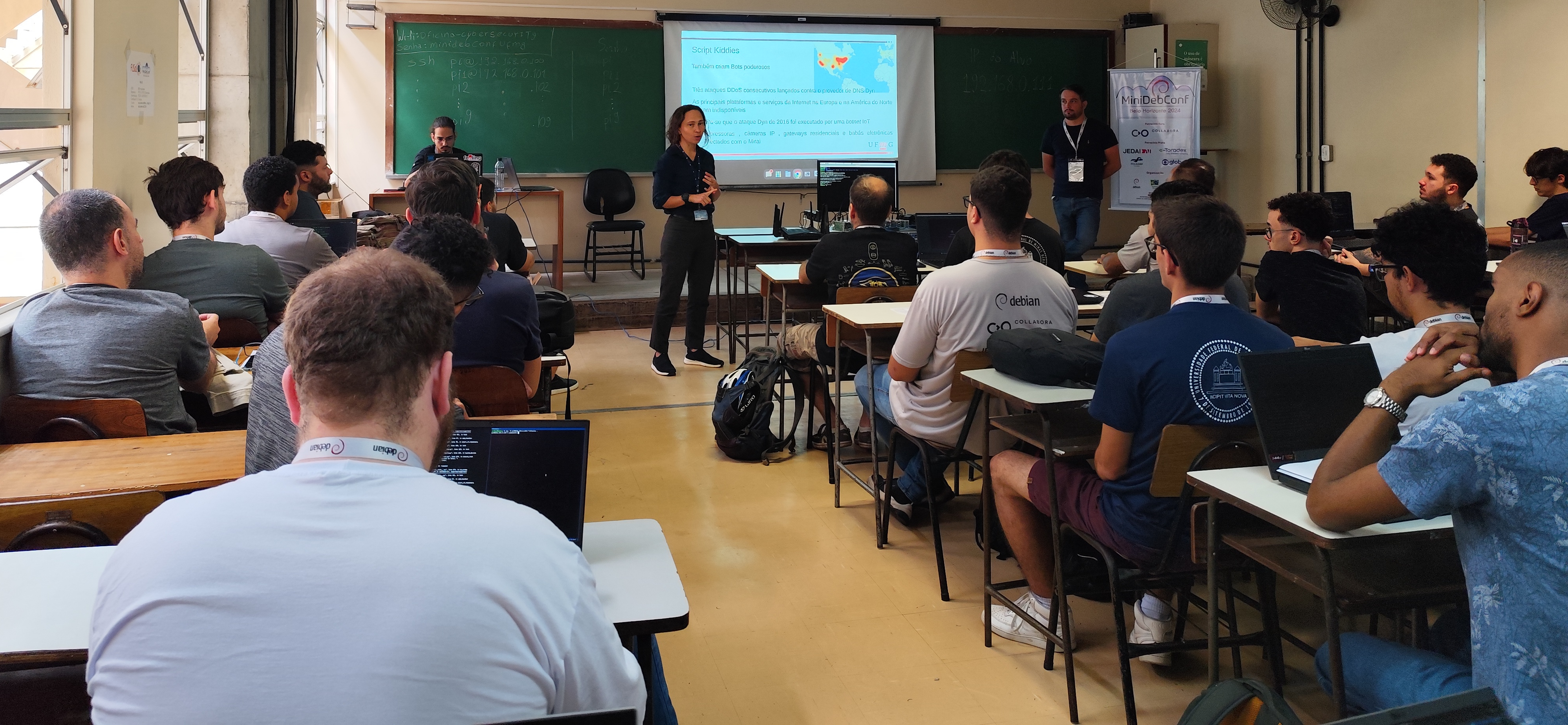
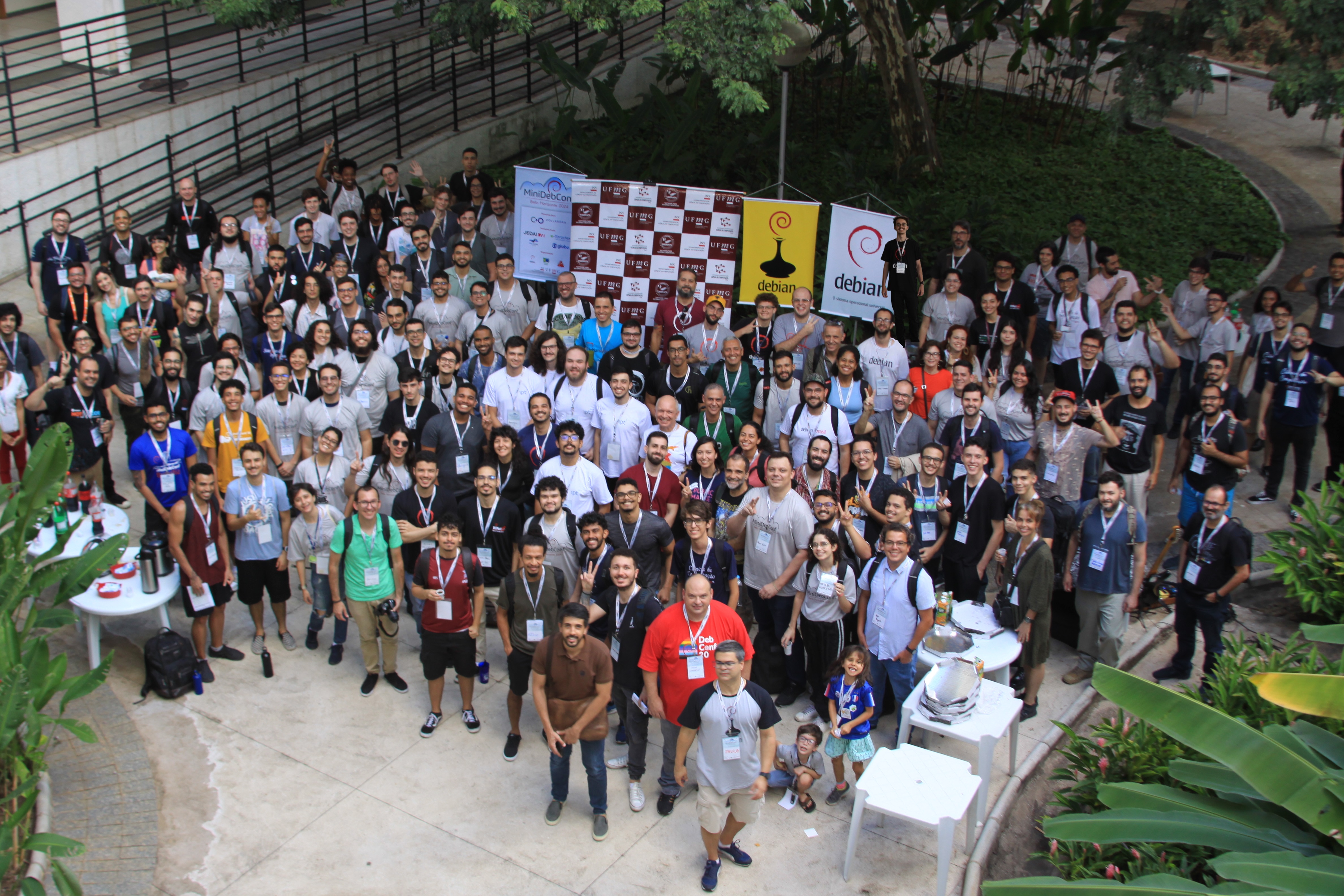
MiniDebConf BH 2024 grupo Activities The MiniDebConf schedule was intense and diverse. On the 27th, 29th and 30th (Saturday, Monday and Tuesday) we had talks, discussions, workshops and many practical activities. MiniDebConf BH 2024 palestra On the 28th (Sunday), the Day Trip took place, a day dedicated to sightseeing around the city. In the morning we left the hotel and went, on a chartered bus, to the Belo Horizonte Central Market. People took the opportunity to buy various things such as cheeses, sweets, cacha as and souvenirs, as well as tasting some local foods. MiniDebConf BH 2024 mercado After a 2-hour tour of the Market, we got back on the bus and hit the road for lunch at a typical Minas Gerais food restaurant. MiniDebConf BH 2024 palestra With everyone well fed, we returned to Belo Horizonte to visit the city's main tourist attraction: Lagoa da Pampulha and Capela S o Francisco de Assis, better known as Igrejinha da Pampulha. MiniDebConf BH 2024 palestra We went back to the hotel and the day ended in the hacker space that we set up in the events room for people to chat, packaging, and eat pizzas. MiniDebConf BH 2024 palestra Crowdfunding For the third time we ran a crowdfunding campaign and it was incredible how people contributed! The initial goal was to raise the amount equivalent to a gold tier of R$ 3,000.00. When we reached this goal, we defined a new one, equivalent to one gold tier + one silver tier (R$ 5,000.00). And again we achieved this goal. So we proposed as a final goal the value of a gold + silver + bronze tiers, which would be equivalent to R$ 6,000.00. The result was that we raised R$7,239.65 (~ USD 1,400) with the help of more than 100 people! Thank you very much to the people who contributed any amount. As a thank you, we list the names of the people who donated. MiniDebConf BH 2024 doadores Food, accommodation and/or travel grants for participants Each edition of MiniDebConf brought some innovation, or some different benefit for the attendees. In this year's edition in Belo Horizonte, as with DebConfs, we offered bursaries for food, accommodation and/or travel to help those people who would like to come to the event but who would need some kind of help. In the registration form, we included the option for the person to request a food, accommodation and/or travel bursary, but to do so, they would have to identify themselves as a contributor (official or unofficial) to Debian and write a justification for the request. Number of people benefited: The food bursary provided lunch and dinner every day. The lunches included attendees who live in Belo Horizonte and the region. Dinners were paid for attendees who also received accommodation and/or travel. The accommodation was held at the BH Jaragu Hotel. And the travels included airplane or bus tickets, or fuel (for those who came by car or motorbike). Much of the money to fund the bursaries came from the Debian Project, mainly for travels. We sent a budget request to the former Debian leader Jonathan Carter, and He promptly approved our request. In addition to this event budget, the leader also approved individual requests sent by some DDs who preferred to request directly from him. The experience of offering the bursaries was really good because it allowed several people to come from other cities. MiniDebConf BH 2024 grupo Photos and videos You can watch recordings of the talks at the links below: Thanks We would like to thank all the attendees, organizers, volunteers, sponsors and supporters who contributed to the success of MiniDebConf Belo Horizonte 2024. MiniDebConf BH 2024 grupo Sponsors Gold: Silver: Bronze: Organizers
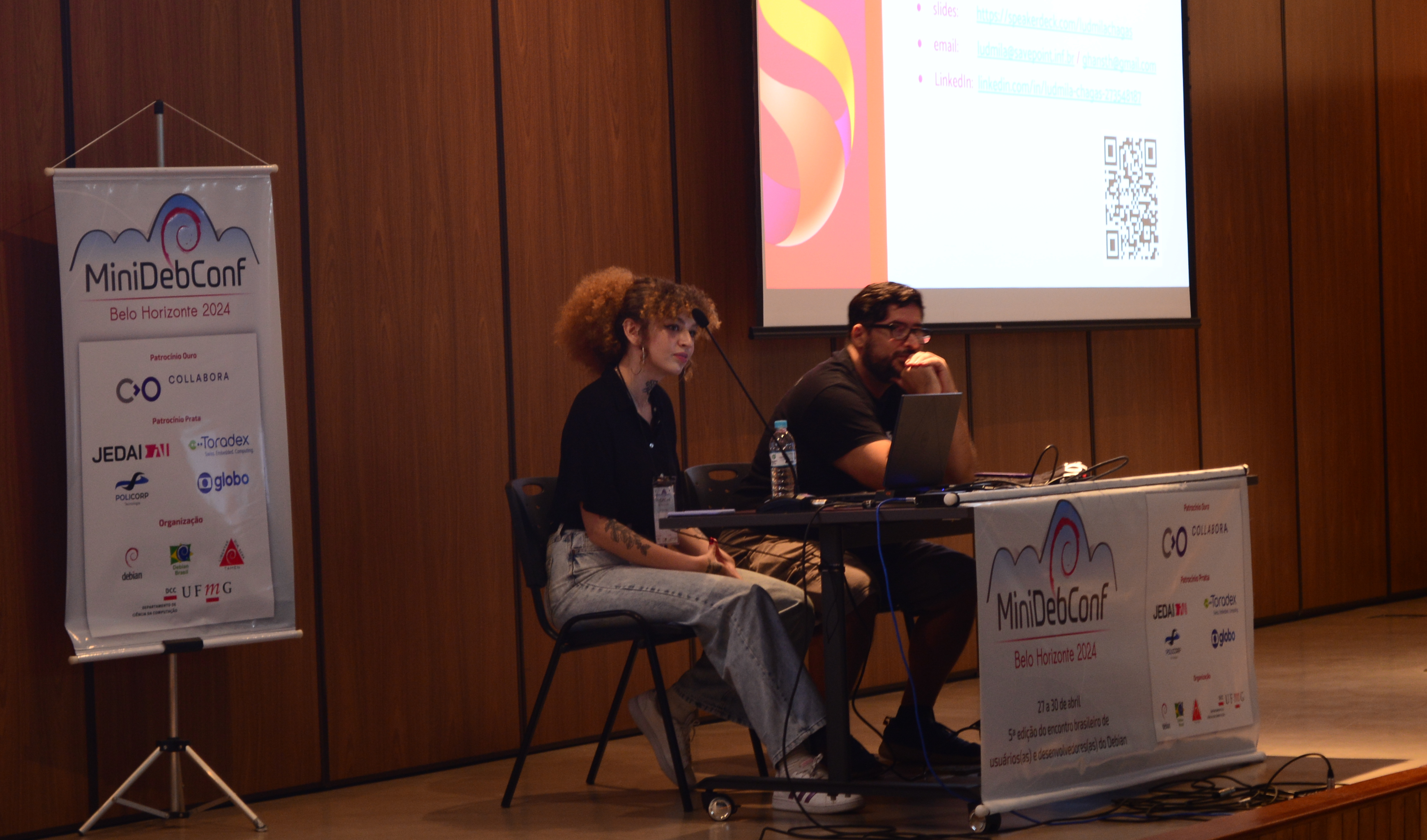
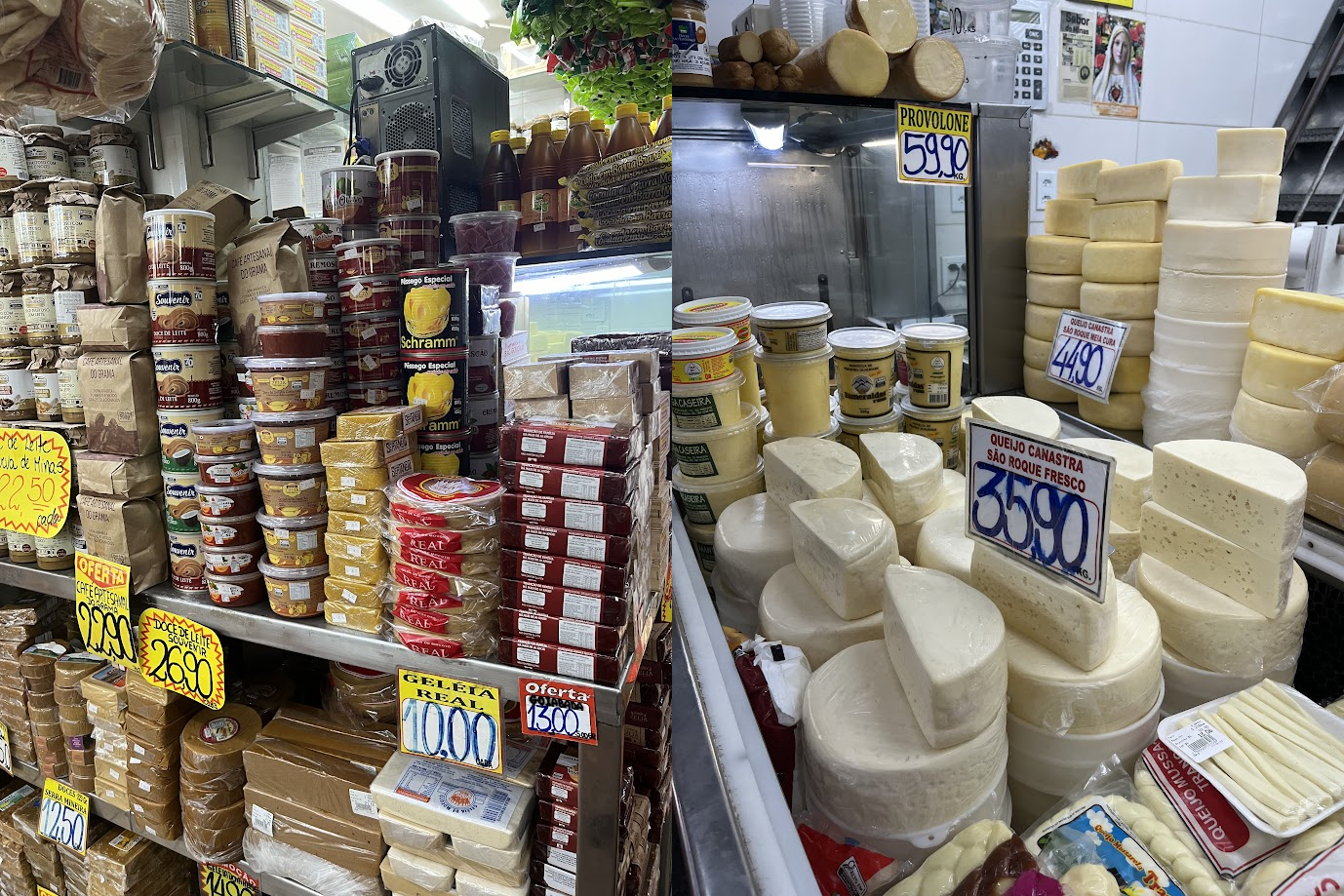
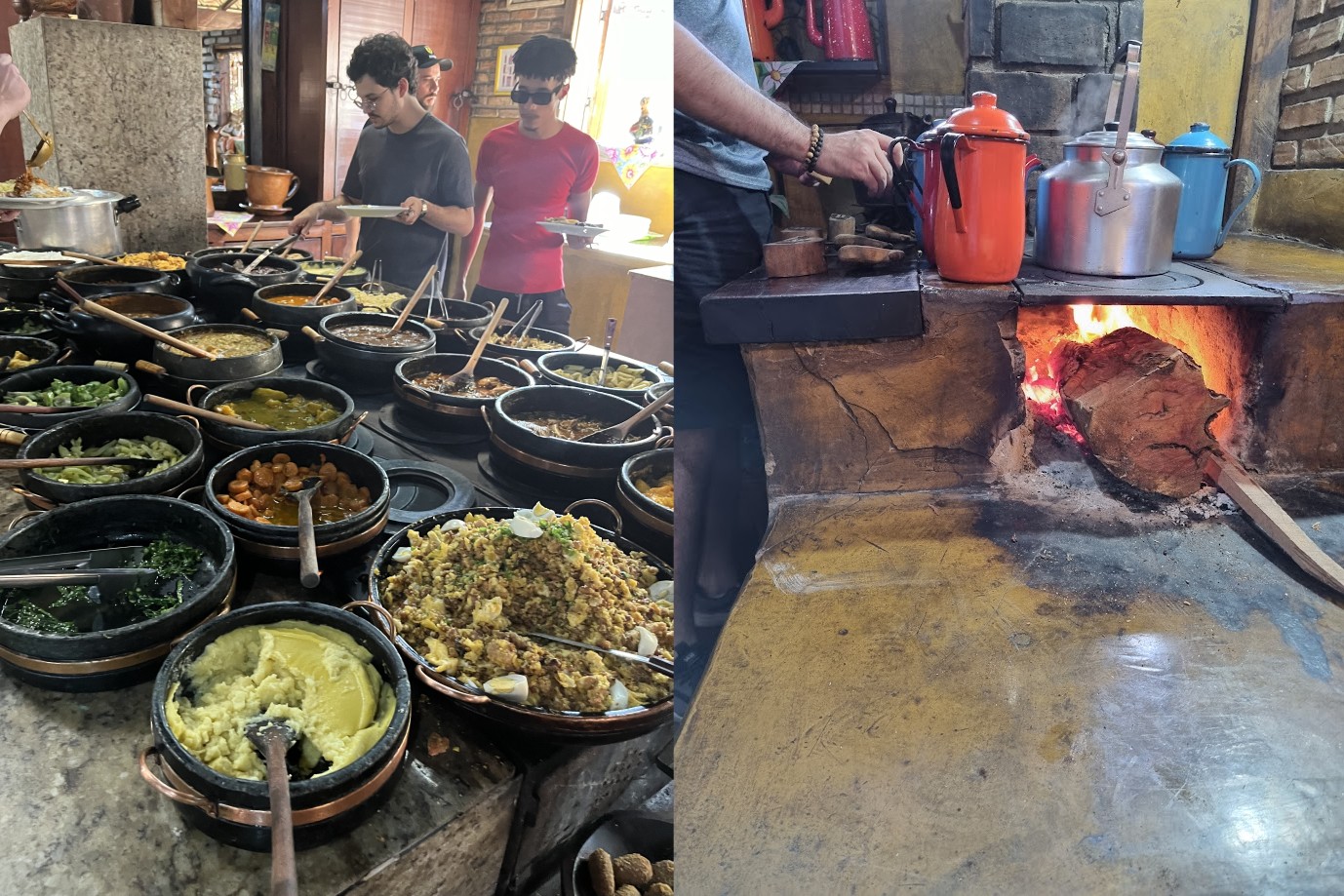
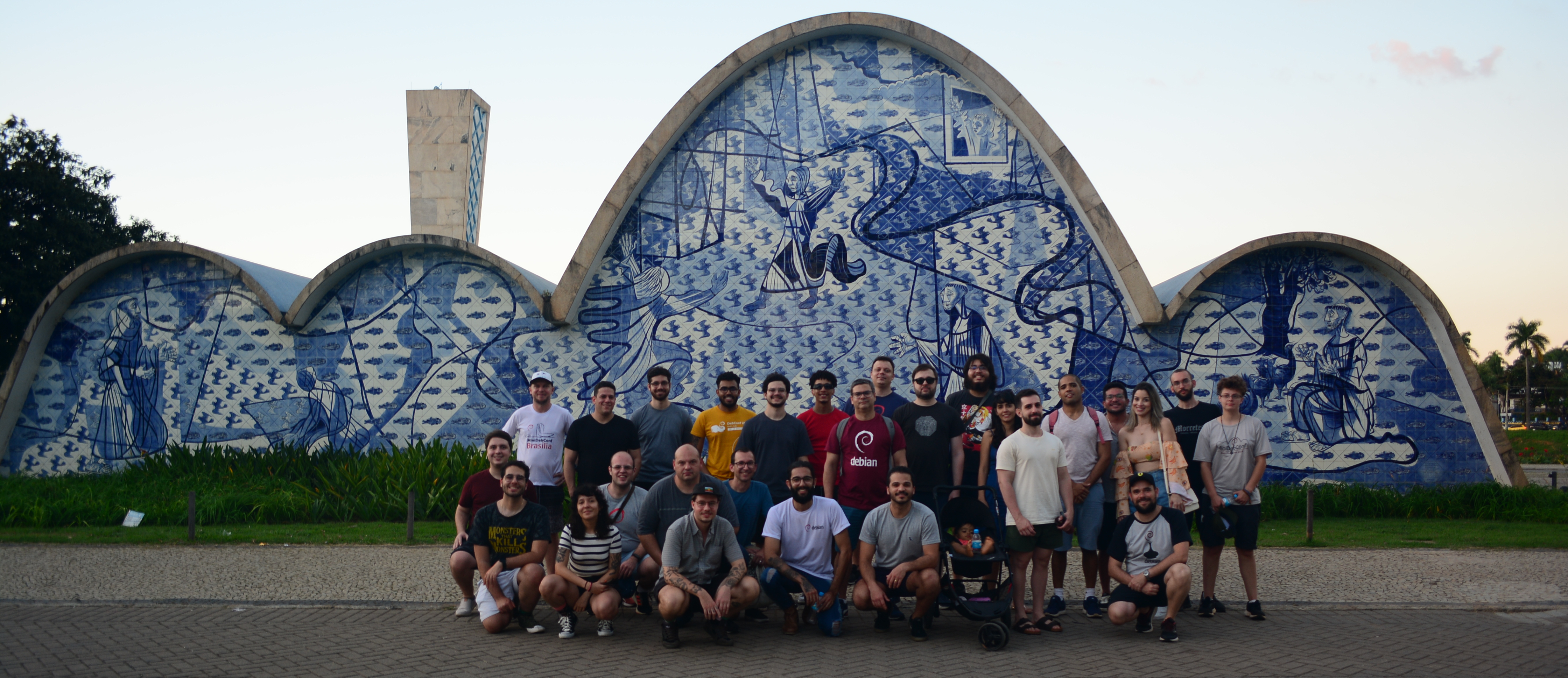
5 January 2025

Jonathan McDowell: Free Software Activities for 2024

I tailed off on blog posts towards the end of the year; I blame a bunch of travel (personal + business), catching the flu, then December being its usual busy self. Anyway, to try and start off the year a bit better I thought I d do my annual recap of my Free Software activities. For previous years see 2019, 2020, 2021, 2022 + 2023.

Conferences In 2024 I managed to make it to FOSDEM again. It s a hectic conference, and I know there are legitimate concerns about it being a super spreader event, but it has the advantage of being relatively close and having a lot of different groups of people I want to talk to / see talk at it. I m already booked to go this year as well. I spoke at All Systems Go in Berlin about Using TPMs at scale for protecting keys. It was nice to actually be able to talk publicly about some of the work stuff my team and I have been working on. I d a talk submission in for FOSDEM about our use of attestation and why it s not necessarily the evil some folk claim, but there were a lot of good talks submitted and I wasn t selected. Maybe I ll find somewhere else suitable to do it. BSides Belfast may or may not count - it s a security conference, but there s a lot of overlap with various bits of Free software, so I feel it deserves a mention. I skipped DebConf for 2024 for a variety of reasons, but I m expecting to make DebConf25 in Brest, France in July.

Debian Most of my contributions to Free software continue to happen within Debian. In 2023 I d done a bunch of work on retrogaming with Kodi on Debian, so I made an effort to try and keep those bits more up to date, even if I m not actually regularly using them at present. RetroArch got 1.18.0+dfsg-1 and 1.19.1+dfsg-1 uploads. libretro-core-info got associated 1.18.0-1 and 1.19.0-1 uploads too. I note 1.20.0 has been released recently, so I ll have to find some time to build the appropriate DFSG tarball and update it. rcheevos saw 11.2.0-1, 11.5.0-1 + 11.6.0-1 uploaded. kodi-game-libretro itself had 20.2.7-1 uploaded, then 21.0.7-1. Latest upstream is 22.1.0, but that s tracking Kodi 22 and we re still on Kodi 21 so I plan to follow the Omega branch for now. Which I ve just noticed had a 21.0.8 release this week. Finally in the games space I uploaded mgba 0.10.3+dfsg-1 and 0.10.3+dfsg-2 for Ryan Tandy, before realising he was already a Debian Maintainer and granting him the appropriate ACL access so he can upload it himself; I ve had zero concerns about any of his packaging. The Debian Electronics Packaging Team continues to be home for a bunch of packages I care about. There was nothing big there, for me, in 2024, but a few bits of cleanup here and there. I seem to have become one of the main uploaders for sdcc - I have some interest in the space, and the sigrok firmware requires it to build, so I at least like to ensure it s in half decent state. I uploaded 4.4.0+dfsg-1, 4.4.0+dfsg-2, and, just in time to count for 2024, 4.4.0+dfsg-3. The sdcc 4.4 upload lead to some compilation issues for sigrok-firmware-fx2laf so I uploaded 0.1.7-2 fixing that, then 0.1.7-3 doing some further cleanups. OpenOCD had 0.12.0-2 uploaded to disable the libgpiod backend thanks to incompatible changes upstream. There were some in-discussion patches with OpenOCD upstream at the time, but they didn t seem to be ready yet so I held off on pulling them in. 0.12.0-3 fixed builds with more recent versions of jimtcl. It looks like the next upstream release is about a year away, so Trixie will in all probability ship with 0.12.0 as well. libjaylink had a new upstream release, so 0.4.0-1 was uploaded. libserialsport also had a new upstream release, leading to 0.1.2-1. I finally cracked and uploaded sg3-utils 1.48-1 into experimental. I m not the primary maintainer, but 1.46 is nearly 4 years old now and I wanted to get it updated in enough time to shake out any problems before we get to a Trixie freeze. Outside of team owned packages, libcli had compilation issues with GCC 14, leading to 1.10.7-2. I also added a new package, sedutil 1.20.0-2 back in April; it looks fairly unmaintained upstream (there s been some recent activity, but it doesn t seem to be release quality), but there was an outstanding ITP and I ve some familiarity with the space as we ve been using it at work as part of investigating TCG OPAL encryption. I continue to keep an eye on Debian New Members, even though I m mostly inactive as an application manager - we generally seem to have enough available recently. Mostly my involvement is via Front Desk activities, helping out with queries to the team alias, and contributing to internal discussions. Finally the 3 month rotation for Debian Keyring continues to operate smoothly. I dealt with 2023.03.24, 2023.06.24, 2023.09.22 + 2023.11.24.

Linux I d a single kernel contribution this year, to Clean up TPM space after command failure. That was based on some issues we saw at work. I ve another fix in progress that I hope to submit in 2025, but it s for an intermittent failure so confirming the fix is necessary + sufficient is taking a little while.

Personal projects I didn t end up doing much in the way of externally published personal project work in 2024. Despite the release of OpenPGP v6 in RFC 9580 I did not manage to really work on onak. I started on the v6 support, but have not had sufficient time to complete anything worth pushing external yet. listadmin3 got some minor updates based on external feedback / MRs. It s nice to know it s useful to other folk even in its basic state. That wraps up 2024. I ve got no particular goals for this year at present. Ideally I d get v6 support into onak, and it would be nice to implement some of the wishlist items people have provided for listadmin3, but I ll settle for making sure all my Debian packages are in reasonable state for Trixie.

27 December 2024

Wouter Verhelst: Writing an extensible JSON-based DSL with Moose

At work, I've been maintaining a perl script that needs to run a number of steps as part of a release workflow. Initially, that script was very simple, but over time it has grown to do a number of things. And then some of those things did not need to be run all the time. And then we wanted to do this one exceptional thing for this one case. And so on; eventually the script became a big mess of configuration options and unreadable flow, and so I decided that I wanted it to be more configurable. I sat down and spent some time on this, and eventually came up with what I now realize is a domain-specific language (DSL) in JSON, implemented by creating objects in Moose, extensible by writing more object classes. Let me explain how it works. In order to explain, however, I need to explain some perl and Moose basics first. If you already know all that, you can safely skip ahead past the "Preliminaries" section that's next.

Preliminaries

Moose object creation, references. In Moose, creating a class is done something like this:
package Foo;
use v5.40;
use Moose;
has 'attribute' => (
    is  => 'ro',
    isa => 'Str',
    required => 1
);
sub say_something  
    my $self = shift;
    say "Hello there, our attribute is " . $self->attribute;
 
The above is a class that has a single attribute called attribute. To create an object, you use the Moose constructor on the class, and pass it the attributes you want:
use v5.40;
use Foo;
my $foo = Foo->new(attribute => "foo");
$foo->say_something;
(output: Hello there, our attribute is foo) This creates a new object with the attribute attribute set to bar. The attribute accessor is a method generated by Moose, which functions both as a getter and a setter (though in this particular case we made the attribute "ro", meaning read-only, so while it can be set at object creation time it cannot be changed by the setter anymore). So yay, an object. And it has methods, things that we set ourselves. Basic OO, all that. One of the peculiarities of perl is its concept of "lists". Not to be confused with the lists of python -- a concept that is called "arrays" in perl and is somewhat different -- in perl, lists are enumerations of values. They can be used as initializers for arrays or hashes, and they are used as arguments to subroutines. Lists cannot be nested; whenever a hash or array is passed in a list, the list is "flattened", that is, it becomes one big list. This means that the below script is functionally equivalent to the above script that uses our "Foo" object:
use v5.40;
use Foo;
my %args;
$args attribute  = "foo";
my $foo = Foo->new(%args);
$foo->say_something;
(output: Hello there, our attribute is foo) This creates a hash %args wherein we set the attributes that we want to pass to our constructor. We set one attribute in %args, the one called attribute, and then use %args and rely on list flattening to create the object with the same attribute set (list flattening turns a hash into a list of key-value pairs). Perl also has a concept of "references". These are scalar values that point to other values; the other value can be a hash, a list, or another scalar. There is syntax to create a non-scalar value at assignment time, called anonymous references, which is useful when one wants to remember non-scoped values. By default, references are not flattened, and this is what allows you to create multidimensional values in perl; however, it is possible to request list flattening by dereferencing the reference. The below example, again functionally equivalent to the previous two examples, demonstrates this:
use v5.40;
use Foo;
my $args =  ;
$args-> attribute  = "foo";
my $foo = Foo->new(%$args);
$foo->say_something;
(output: Hello there, our attribute is foo) This creates a scalar $args, which is a reference to an anonymous hash. Then, we set the key attribute of that anonymous hash to bar (note the use arrow operator here, which is used to indicate that we want to dereference a reference to a hash), and create the object using that reference, requesting hash dereferencing and flattening by using a double sigil, %$. As a side note, objects in perl are references too, hence the fact that we have to use the dereferencing arrow to access the attributes and methods of Moose objects. Moose attributes don't have to be strings or even simple scalars. They can also be references to hashes or arrays, or even other objects:
package Bar;
use v5.40;
use Moose;
extends 'Foo';
has 'hash_attribute' => (
    is => 'ro',
    isa => 'HashRef[Str]',
    predicate => 'has_hash_attribute',
);
has 'object_attribute' => (
    is => 'ro',
    isa => 'Foo',
    predicate => 'has_object_attribute',
);
sub say_something  
    my $self = shift;
    if($self->has_object_attribute)  
        $self->object_attribute->say_something;
     
    $self->SUPER::say_something unless $self->has_hash_attribute;
    say "We have a hash attribute!"
 
This creates a subclass of Foo called Bar that has a hash attribute called hash_attribute, and an object attribute called object_attribute. Both of them are references; one to a hash, the other to an object. The hash ref is further limited in that it requires that each value in the hash must be a string (this is optional but can occasionally be useful), and the object ref in that it must refer to an object of the class Foo, or any of its subclasses. The predicates used here are extra subroutines that Moose provides if you ask for them, and which allow you to see if an object's attribute has a value or not. The example script would use an object like this:
use v5.40;
use Bar;
my $foo = Foo->new(attribute => "foo");
my $bar = Bar->new(object_attribute => $foo, attribute => "bar");
$bar->say_something;
(output: Hello there, our attribute is foo) This example also shows object inheritance, and methods implemented in child classes. Okay, that's it for perl and Moose basics. On to...

Moose Coercion Moose has a concept of "value coercion". Value coercion allows you to tell Moose that if it sees one thing but expects another, it should convert is using a passed subroutine before assigning the value. That sounds a bit dense without example, so let me show you how it works. Reimaginging the Bar package, we could use coercion to eliminate one object creation step from the creation of a Bar object:
package "Bar";
use v5.40;
use Moose;
use Moose::Util::TypeConstraints;
extends "Foo";
coerce "Foo",
    from "HashRef",
    via   Foo->new(%$_)  ;
has 'hash_attribute' => (
    is => 'ro',
    isa => 'HashRef',
    predicate => 'has_hash_attribute',
);
has 'object_attribute' => (
    is => 'ro',
    isa => 'Foo',
    coerce => 1,
    predicate => 'has_object_attribute',
);
sub say_something  
    my $self = shift;
    if($self->has_object_attribute)  
        $self->object_attribute->say_something;
     
    $self->SUPER::say_something unless $self->has_hash_attribute;
    say "We have a hash attribute!"
 
Okay, let's unpack that a bit. First, we add the Moose::Util::TypeConstraints module to our package. This is required to declare coercions. Then, we declare a coercion to tell Moose how to convert a HashRef to a Foo object: by using the Foo constructor on a flattened list created from the hashref that it is given. Then, we update the definition of the object_attribute to say that it should use coercions. This is not the default, because going through the list of coercions to find the right one has a performance penalty, so if the coercion is not requested then we do not do it. This allows us to simplify declarations. With the updated Bar class, we can simplify our example script to this:
use v5.40;
use Bar;
my $bar = Bar->new(attribute => "bar", object_attribute =>   attribute => "foo"  );
$bar->say_something
(output: Hello there, our attribute is foo) Here, the coercion kicks in because the value object_attribute, which is supposed to be an object of class Foo, is instead a hash ref. Without the coercion, this would produce an error message saying that the type of the object_attribute attribute is not a Foo object. With the coercion, however, the value that we pass to object_attribute is passed to a Foo constructor using list flattening, and then the resulting Foo object is assigned to the object_attribute attribute. Coercion works for more complicated things, too; for instance, you can use coercion to coerce an array of hashes into an array of objects, by creating a subtype first:
package MyCoercions;
use v5.40;
use Moose;
use Moose::Util::TypeConstraints;
use Foo;
subtype "ArrayOfFoo", as "ArrayRef[Foo]";
subtype "ArrayOfHashes", as "ArrayRef[HashRef]";
coerce "ArrayOfFoo", from "ArrayOfHashes", via   [ map   Foo->create(%$_)   @ $_  ]  ;
Ick. That's a bit more complex. What happens here is that we use the map function to iterate over a list of values. The given list of values is @ $_ , which is perl for "dereference the default value as an array reference, and flatten the list of values in that array reference". So the ArrayRef of HashRefs is dereferenced and flattened, and each HashRef in the ArrayRef is passed to the map function. The map function then takes each hash ref in turn and passes it to the block of code that it is also given. In this case, that block is Foo->create(%$_) . In other words, we invoke the create factory method with the flattened hashref as an argument. This returns an object of the correct implementation (assuming our hash ref has a type attribute set), and with all attributes of their object set to the correct value. That value is then returned from the block (this could be made more explicit with a return call, but that is optional, perl defaults a return value to the rvalue of the last expression in a block). The map function then returns a list of all the created objects, which we capture in an anonymous array ref (the [] square brackets), i.e., an ArrayRef of Foo object, passing the Moose requirement of ArrayRef[Foo]. Usually, I tend to put my coercions in a special-purpose package. Although it is not strictly required by Moose, I find that it is useful to do this, because Moose does not allow a coercion to be defined if a coercion for the same type had already been done in a different package. And while it is theoretically possible to make sure you only ever declare a coercion once in your entire codebase, I find that doing so is easier to remember if you put all your coercions in a specific package. Okay, now you understand Moose object coercion! On to...

Dynamic module loading Perl allows loading modules at runtime. In the most simple case, you just use require inside a stringy eval:
my $module = "Foo";
eval "require $module";
This loads "Foo" at runtime. Obviously, the $module string could be a computed value, it does not have to be hardcoded. There are some obvious downsides to doing things this way, mostly in the fact that a computed value can basically be anything and so without proper checks this can quickly become an arbitrary code vulnerability. As such, there are a number of distributions on CPAN to help you with the low-level stuff of figuring out what the possible modules are, and how to load them. For the purposes of my script, I used Module::Pluggable. Its API is fairly simple and straightforward:
package Foo;
use v5.40;
use Moose;
use Module::Pluggable require => 1;
has 'attribute' => (
    is => 'ro',
    isa => 'Str',
);
has 'type' => (
    is => 'ro',
    isa => 'Str',
    required => 1,
);
sub handles_type  
    return 0;
 
sub create  
    my $class = shift;
    my %data = @_;
    foreach my $impl($class->plugins)  
        if($impl->can("handles_type") && $impl->handles_type($data type ))  
            return $impl->new(%data);
         
     
    die "could not find a plugin for type " . $data type ;
 
sub say_something  
    my $self = shift;
    say "Hello there, I am a " . $self->type;
 
The new concept here is the plugins class method, which is added by Module::Pluggable, and which searches perl's library paths for all modules that are in our namespace. The namespace is configurable, but by default it is the name of our module; so in the above example, if there were a package "Foo::Bar" which
  • has a subroutine handles_type
  • that returns a truthy value when passed the value of the type key in a hash that is passed to the create subroutine,
  • then the create subroutine creates a new object with the passed key/value pairs used as attribute initializers.
Let's implement a Foo::Bar package:
package Foo::Bar;
use v5.40;
use Moose;
extends 'Foo';
has 'type' => (
    is => 'ro',
    isa => 'Str',
    required => 1,
);
has 'serves_drinks' => (
    is => 'ro',
    isa => 'Bool',
    default => 0,
);
sub handles_type  
    my $class = shift;
    my $type = shift;
    return $type eq "bar";
 
sub say_something  
    my $self = shift;
    $self->SUPER::say_something;
    say "I serve drinks!" if $self->serves_drinks;
 
We can now indirectly use the Foo::Bar package in our script:
use v5.40;
use Foo;
my $obj = Foo->create(type => bar, serves_drinks => 1);
$obj->say_something;
output:
Hello there, I am a bar.
I serve drinks!
Okay, now you understand all the bits and pieces that are needed to understand how I created the DSL engine. On to...

Putting it all together We're actually quite close already. The create factory method in the last version of our Foo package allows us to decide at run time which module to instantiate an object of, and to load that module at run time. We can use coercion and list flattening to turn a reference to a hash into an object of the correct type. We haven't looked yet at how to turn a JSON data structure into a hash, but that bit is actually ridiculously trivial:
use JSON::MaybeXS;
my $data = decode_json($json_string);
Tada, now $data is a reference to a deserialized version of the JSON string: if the JSON string contained an object, $data is a hashref; if the JSON string contained an array, $data is an arrayref, etc. So, in other words, to create an extensible JSON-based DSL that is implemented by Moose objects, all we need to do is create a system that
  • takes hash refs to set arguments
  • has factory methods to create objects, which
    • uses Module::Pluggable to find the available object classes, and
    • uses the type attribute to figure out which object class to use to create the object
  • uses coercion to convert hash refs into objects using these factory methods
In practice, we could have a JSON file with the following structure:
 
    "description": "do stuff",
    "actions": [
         
            "type": "bar",
            "serves_drinks": true,
         ,
         
            "type": "bar",
            "serves_drinks": false,
         
    ]
 
... and then we could have a Moose object definition like this:
package MyDSL;
use v5.40;
use Moose;
use MyCoercions;
has "description" => (
    is => 'ro',
    isa => 'Str',
);
has 'actions' => (
    is => 'ro',
    isa => 'ArrayOfFoo'
    coerce => 1,
    required => 1,
);
sub say_something  
    say "Hello there, I am described as " . $self->description . " and I am performing my actions: ";
    foreach my $action(@ $self->actions )  
        $action->say_something;
     
 
Now, we can write a script that loads this JSON file and create a new object using the flattened arguments:
use v5.40;
use MyDSL;
use JSON::MaybeXS;
my $input_file_name = shift;
my $args = do  
    local $/ = undef;
    open my $input_fh, "<", $input_file_name or die "could not open file";
    <$input_fh>;
 ;
$args = decode_json($args);
my $dsl = MyDSL->new(%$args);
$dsl->say_something
Output:
Hello there, I am described as do stuff and I am performing my actions:
Hello there, I am a bar
I am serving drinks!
Hello there, I am a bar
In some more detail, this will:
  • Read the JSON file and deserialize it;
  • Pass the object keys in the JSON file as arguments to a constructor of the MyDSL class;
  • The MyDSL class then uses those arguments to set its attributes, using Moose coercion to convert the "actions" array of hashes into an array of Foo::Bar objects.
  • Perform the say_something method on the MyDSL object
Once this is written, extending the scheme to also support a "quux" type simply requires writing a Foo::Quux class, making sure it has a method handles_type that returns a truthy value when called with quux as the argument, and installing it into the perl library path. This is rather easy to do. It can even be extended deeper, too; if the quux type requires a list of arguments rather than just a single argument, it could itself also have an array attribute with relevant coercions. These coercions could then be used to convert the list of arguments into an array of objects of the correct type, using the same schema as above. The actual DSL is of course somewhat more complex, and also actually does something useful, in contrast to the DSL that we define here which just says things. Creating an object that actually performs some action when required is left as an exercise to the reader.

29 November 2024

Russ Allbery: Review: The Duke Who Didn't

Review: The Duke Who Didn't, by Courtney Milan
Series: Wedgeford Trials #1
Publisher: Femtopress
Copyright: September 2020
ASIN: B08G4QC3JC
Format: Kindle
Pages: 334
The Duke Who Didn't is a Victorian romance novel, the first of a loosely-connected trilogy in the romance sense of switching protagonists between books. It's self-published, but by Courtney Milan, so the quality of the editing and publishing is about as high as you will see for a self-published novel. Chloe Fong has a goal: to make her father's sauce the success that it should be. His previous version of the recipe was stolen by White and Whistler and is now wildly popular as Pure English Sauce. His current version is much better. In a few days, tourists will come from all over England to the annual festival of the Wedgeford Trials, and this will be Chloe's opportunity to give the sauce a proper debut and marketing push. There is only the small matter of making enough sauce and coming up with a good name. Chloe is very busy and absolutely does not have time for nonsense. Particularly nonsense in the form of Jeremy Yu. Jeremy started coming to the Wedgeford Trials at the age of twelve. He was obviously from money and society, obviously enough that the villagers gave him the nickname Posh Jim after his participation in the central game of the trials. Exactly how wealthy and exactly which society, however, is something that he never quite explained, at first because he was having too much fun and then because he felt he'd waited too long. The village of Wedgeford was thriving under the benevolent neglect of its absent duke and uncollected taxes, and no one who loved it had any desire for that to change. Including Jeremy, the absent duke in question. Jeremy had been in love with Chloe for years, but the last time he came to the Trials, Chloe told him to stop pursuing her unless he could be serious. That was three years and three Trials ago, and Chloe was certain Jeremy had made his choice by his absence. But Jeremy never forgot her, and despite his utter failure to become a more serious person, he is determined to convince her that he is serious about her. And also determined to finally reveal his identity without breaking everything he loves about the village. Somehow. I have mentioned in other reviews that I mostly read sapphic instead of heterosexual romance because the gender roles in heterosexual romance are much more likely to irritate me. It occurred to me that I was probably being unfair to the heterosexual romance genre, I hadn't read nearly widely enough to draw any real conclusions, and I needed to find better examples. I've followed Courtney Milan occasionally on social media (for reasons unrelated to her novels) for long enough to know that she was unlikely to go for gender essentialism, and I'd been meaning to try one of her books for a while. Hence this novel. It is indeed not gender-essentialist. Neither Chloe nor Jeremy fit into obvious gender boxes. Chloe is the motivating force in the novel and many of their interactions were utterly charming. But, despite that, the gender roles still annoyed me in ways that are entirely not the fault of this book. I'm not sure I can even put a finger on something specific. It's a low-grade, pervasive feeling that men do one type of thing and women do a different type of thing, and even if these characters don't stick to that closely, it saturates the vibes. (Admittedly, a Victorian romance was probably not the best choice when I knew this was my biggest problem with genre heterosexual romance. It was just what I had on hand.) The conceit of the Wedgeford Trials series is that the small village of Wedgeford in England, through historical accident, ended up with an unusually large number of residents with Chinese ancestry. This is what I would call a "believable outlier": there was not such a village so far as I know, but there could well have been. At the least, there were way more people with non-English ancestry, including east Asian ancestry, in Victorian England than modern readers might think. There is quite a lot in this novel about family history, cultural traditions, immigration, and colonialism that I'm wholly unqualified to comment on but that was fascinating to read about and seemed (as one would expect from Milan) adroitly written. As for the rest of the story, The Duke Who Didn't is absolutely full of banter. If your idea of a good time with a romance novel is teasing, word play, mock irritation, and endless verbal fencing as a way to avoid directly confronting difficult topics, you will be in heaven. Jeremy is one of those people who is way too much in his own head and has turned his problems into a giant ball of anxiety, but who is good at being the class clown, and therefore leans heavily on banter and making people laugh (or blush) as a way of avoiding whatever he's anxious about. I thought the characterization was quite good, but I admit I still got a bit tired of it. 350 pages is a lot of banter, particularly when the characters have some serious communication problems they need to resolve, and to fully enjoy this book you have to have a lot of patience for Jeremy's near-pathological inability to be forthright with Chloe. Chloe's most charming characteristic is that she makes lists, particularly to-do lists. Her ideal days proceed as an orderly process of crossing things off of lists, and her way to approach any problem is to make a list. This is a great hook, and extremely relatable, but if you're going to talk this much about her lists, I want to see the lists! Chloe is all about details; show me the details! This book does not contain anywhere close to enough of Chloe's lists. I'm not sure there was a single list in this book that the reader both got to see the details of and that made it to more than three items. I think Chloe would agree that it's pointless to talk about the concept of lists; one needs to commit oneself to making an actual list. This book I would unquestioningly classify as romantic comedy (which given my utter lack of familiarity with romance subgenres probably means that it isn't). Jeremy's standard interaction style with anyone is self-deprecating humor, and Chloe is the sort of character who is extremely serious in ways that strike other people as funny. Towards the end of the book, there is a hilarious self-aware subversion of a major romance novel trope that even I caught, despite my general lack of familiarity with the genre. The eventual resolution of Jeremy's problem of hidden identity caught me by surprise in that way where I should have seen it all along, and was both beautifully handled and quite entertaining. All the pieces are here for a great time, and I think a lot of people would love this book. Somehow, it still wasn't quite my thing; I thoroughly enjoyed parts of it, but I don't find myself eager to read another. I'm kind of annoyed at myself that it didn't pull me in, since if I'd liked this I know where to find lots more like it. But ah well. If you like banter-heavy heterosexual romance that is very self-aware about its genre without devolving into metafiction, this is at least worth a try. Followed in the romance series way by The Marquis Who Mustn't, but this is a complete story with a satisfying ending. Rating: 7 out of 10

22 August 2024

Jonathan McDowell: Thoughts on Advent of Code + Rust

Diego wrote about his dislike for Advent of Code and that reminded me I hadn t written up my experience from 2023. Mostly because, spoiler, I never actually completed it and always intended to do so and then write it up. I think it s time to accept I m not going to do that, and write down some thoughts before I forget all of them. These are somewhat vague, given the time that s elapsed, but I think still relevant. You might also find Roger s problem write up interesting. I ve tried AoC a couple of times before; I think I had a very brief attempt back in 2021, and I got 4 days in for 2022. For Advent of Code 2023 I tried much harder to actually complete the challenges, and got most of the way there. I didn t allow myself to move on to the next day until fully completing the previous day, and didn t end up doing the second half of December 24th, or any of December 25th.

Rust First I want to talk about Rust, which is the language I chose to use for the problems. I ve dabbled a little in it, but I d like more familiarity with the basic language, and some programming problems seemed like a good way to get that. It s a language I want to like; I ve spent a lot of my career writing C, do more in Go these days, and generally think Rust promises a low level, run-time light environment like C but with the rough edges taken off. I set myself the challenge of using just bare Rust; no external crates, no use of cargo. I was accused of playing on hard mode by doing this, but it really wasn t the intention - I figured that I should be able to do what I needed without recourse to anything outside the core language, and didn t want what seemed like the extra complexity of dealing with cargo. That caused problems, however. I m used to by-default generic error handling in Go through the error type, but Rust seems to have much more tightly typed errors. I was pointed at anyhow as the right way to do this in Rust. I still find this surprising; I ended up using unwrap() a lot when I think with more generic error handling I could have used ?. The other thing I discovered is that by default rustc is heavy on the debug output. I got significantly better results on some of the solutions with rustc -O -C target-cpu=native source.rs. I probably shouldn t be surprised by this, but worth noting. Rust, to me, has a syntax only a C++ programmer could love. I am not a C++ programmer. Coming from C I found Go to be a nice, simple syntax to learn. Rust has not been the same. There s a lot more punctuation, and it s not always clear to me what it s doing. This applies more when reading other people s code than when writing it myself, obviously, but I see a lot of Rust code that could give Perl a run for its money in terms of looking like line noise. The borrow checker didn t bug me too much, but did add overhead to my thinking. The Rust compiler is generally very good at outputting helpful error messages when the programmer is an idiot. I ended up having to use a RefCell for one solution, and using .iter() for loops rather than explicit iterators (why, why is this different?). I also kept forgetting to explicitly mark variables as mutable when declaring them. Things I liked? There s a rich set of first class data types. Look, I m a C programmer, I m easily pleased. You give me some sort of hash array and I ll be happy. Rust manages that, tuples, strings, all the standard bits any modern language can provide. The whole impl thing for adding methods to structures I like as a way of providing some abstraction, though I think Go has a nicer syntax for it. The compiler, as mentioned, is great at spitting out useful errors for the most part. Also although I wasn t using external crates for AoC I do appreciate there s a decent ecosystem there now (though that brings up another gripe: rust seems to still be a fairly fast moving target, to the extent I can no longer rely on the compiler in Debian stable to be able to compile random projects I find).

Advent of Code Let s talk about the advent of code bit now. Hopefully it s long enough since it came out that this won t be spoilers for anyone, but if you haven t attempted the 2023 AoC and might, you might want to stop reading here. First, a refresher on the format for those who might not be aware of it. Problems are posted daily from December 1st until the 25th. Each is in 2 parts; the second part is not viewable until you have provided the correct answer for the first part. There s a whole leaderboard thing going on, but the puzzle opens at midnight UTC-5 so generally by the time I wake up and have time to look the problem has been solved many times over; no chance of getting listed. Credit to AoC creator, Eric Wastl, for writing up the set of problems in an entertaining fashion. I quite enjoyed seeing how the puzzle would be phrased each day, and the whole thing obviously brings a lot of joy to folk I know. I always start AoC thinking it ll be a fun set of puzzles to solve. Then something happens and I miss a day or two, and all of a sudden I ve a bunch of catching up to do and it s all a bit more of a chore. I hit that at some points this time, but made a concerted effort to try and power through it. That perseverance was required up front, because I found the second part of Day 1 to be ill specified, and had to iterate a few times to actually calculate the desired solution (IIRC, issues about whether sevenone at the end of a line ended up as 7 or 1 really tripped me up). I don t recall any other problems that bit me as hard on the specification as this one, but it happening up front was unfortunate. The short example input doesn t always help with this either; either it s not enough to be able to extrapolate patterns, or it doesn t show all the variations you need to account for (that aren t fully specified in the text), or in a few cases it turned out I needed to understand the shape of the actual data to produce a solution that could actually complete in a reasonable time. Which brings me to another matter, sometimes brute force doesn t actually work. This is fine, but the second part of the day s problem can change the approach you d take. So sometimes I got lucky in the way I handled the first half, and doing the second half was a simple 5 minute tweak, and sometimes I had to entirely change the way I was storing data. You might claim that if I was a better programmer I d have always produced a first half solution that was amenable to extension for the second half. First, I dispute that; I think there are always situations where the problem domain can change in enough directions that you can t handle all of them without a lot of effort. Secondly, I didn t find AoC an environment that encouraged me to optimise for generic solutions. Maybe some of the puzzles in isolation would allow for that, but a month of daily problems to solve while still engaging in regular life meant I hacked things up, took short cuts based on the knowledge I had of the input data, etc, etc. Overall I can see the appeal, but the sheer quantity and the fact I write code as part of my day job just made it feel too much like a chore, rather than a fun mental exercise. I did wonder how they d look as a set of interview puzzles (obviously a subset, rather than all of them), but I m not sure how you d actually use them for that - I wouldn t want anyone to have to solve them in a live interview. So, in case it s not obvious, I m not planning to engage in AoC again this yet. But I m continuing to persevere with Rust (though most of my work stuff is thankfully still Go).

31 July 2024

Matthew Palmer: Health Industry Company Sues to Prevent Certificate Revocation

It s not often that a company is willing to make a sworn statement to a court about how its IT practices are incompatible with the needs of the Internet, but when they do it s popcorn time.

The Combatants In the red corner, weighing in at nah, I m not going to do that schtick. The plaintiff in the case is Alegeus Technologies, LLC, a Delaware Corporation that, according to their filings, is a leading provider of a business-tobusiness, white-label funding and payment platform for healthcare carriers and third-party administrators to administer consumer-directed employee benefit programs . Not being subject to the US bonkers health care system, I have only a passing familiarity with the sorts of things they do, but presumably it involves moving a lot of money around, which is sometimes important. The defendant is DigiCert, a CA which, based on analysis I ve done previously, is the second-largest issuer of WebPKI certificates by volume.

The History According to a recently opened Mozilla CA bug, DigiCert found an issue in their domain control validation workflow, that meant it may have been possible for a miscreant to have certificates issued to them that they weren t legitimately entitled to. Given that validating domain names is basically the YOU HAD ONE JOB! of a CA, this is a big deal. The CA/Browser Forum Baseline Requirements (BRs) (which all CAs are required to adhere to, by virtue of their being included in various browser and OS trust stores), say that revocation is required within 24 hours when [t]he CA obtains evidence that the validation of domain authorization or control for any Fully Qualified Domain Name or IP address in the Certificate should not be relied upon (section 4.9.1.1, point 5). DigiCert appears to have at least tried to do the right thing, by opening the above Mozilla bug giving some details of the problem, and notifying their customers that their certificates were going to be revoked. One may quibble about how fast they re doing it, but they re giving it a decent shot, at least. A complicating factor in all this is that, only a touch over a month ago, Google Chrome announced the removal of another CA, Entrust, from its own trust store program, citing a pattern of compliance failures, unmet improvement commitments, and the absence of tangible, measurable progress in response to publicly disclosed incident reports . Many of these compliance failures were failures to revoke certificates in a timely manner. One imagines that DigiCert would not like to gain a reputation for tardy revocation, particularly at the moment.

The Legal Action Now we come to Alegeus Technologies. They ve opened a civil case whose first action is to request the issuance of a Temporary Restraining Order (TRO) that prevents DigiCert from revoking certificates issued to Alegeus (which the court has issued). This is a big deal, because TROs are legal instruments that, if not obeyed, constitute contempt of court (or something similar) and courts do not like people who disregard their instructions. That means that, in the short term, those certificates aren t getting revoked, despite the requirement imposed by root stores on DigiCert that the certificates must be revoked. DigiCert is in a real rock / hard place situation here: revoke and get punished by the courts, or don t revoke and potentially (though almost certainly not, in the circumstances) face removal from trust stores (which would kill, or at least massively hurt, their business). The reasons that Alegeus gives for requesting the restraining order is that [t]o Reissue and Reinstall the Security Certificates, Alegeus must work with and coordinate with its Clients, who are required to take steps to rectify the certificates. Alegeus has hundreds of such Clients. Alegeus is generally required by contract to give its clients much longer than 24 hours notice before executing such a change regarding certification. In the filing, Alegeus does acknowledge that DigiCert is a voluntary member of the Certification Authority Browser Forum (CABF), which has bylaws stating that certificates with an issue in their domain validation must be revoked within 24 hours. This is a misstatement of the facts, though. It is the BRs, not the CABF bylaws, that require revocation, and the BRs apply to all CAs that wish to be included in browser and OS trust stores, not just those that are members of the CABF. In any event, given that Alegeus was aware that DigiCert is required to revoke certificates within 24 hours, one wonders why Alegeus went ahead and signed agreements with their customers that required a lengthy notice period before changing certificates. What complicates the situation is that there is apparently a Master Services Agreement (MSA) that states that it constitutes the entire agreement between the parties and that MSA doesn t mention certificate revocation anywhere relevant. That means that it s not quite so cut-and-dried that DigiCert does, in fact, have the right to revoke those certificates. I d expect a lot of update to your Master Services Agreement emails to be going out from DigiCert (and other CAs) in the near future to clarify this point. Not being a lawyer, I can t imagine which way this case might go, but there s one thing we can be sure of: some lawyers are going to able to afford that trip to a tropical paradise this year.

The Security Issues The requirement for revocation within 24 hours is an important security control in the WebPKI ecosystem. If a certificate is misissued to a malicious party, or is otherwise compromised, it needs to be marked as untrustworthy as soon as possible. While revocation is far from perfect, it is the best tool we have. In this court filing, Alegeus has claimed that they are unable to switch certificates with less than 24 hours notice (due to contractual SLAs ). This is a pretty big problem, because there are lots of reasons why a certificate might need to be switched out Very Quickly. As a practical example, someone with access to the private key for your SSL certificate might decide to use it in a blog post. Letting that sort of problem linger for an extended period of time might end up being a Pretty Big Problem of its own. An organisation that cannot respond within hours to a compromised certificate is playing chicken with their security.

The Takeaways Contractual obligations that require you to notify anyone else of a certificate (or private key) changing are bonkers, and completely antithetical to the needs of the WebPKI. If you have to have them, you re going to want to start transitioning to a private PKI, wherein you can do whatever you darn well please with revocation (or not). As these sorts of problems keep happening, trust stores (and hence CAs) are going to crack down on this sort of thing, so you may as well move sooner rather than later. If you are an organisation that uses WebPKI certificates, you ve got to be able to deal with any kind of certificate revocation event within hours, not days. This basically boils down to automated issuance and lifecycle management, because having someone manually request and install certificates is terrible on many levels. There isn t currently a completed standard for notifying subscribers if their certificates need premature renewal (say, due to needing to be revoked), but the ACME Renewal Information Extension is currently being developed to fill that need. Ask your CA if they re tracking this standards development, and when they intend to have the extension available for use. (Pro-tip: if they say we ll start doing development when the RFC is published , run for the hills; that s not how responsible organisations work on the Internet).

The Givings If you ve found this helpful, consider shouting me a refreshing beverage. Reading through legal filings is thirsty work!

Next.