Freexian Collaborators: Debian Contributions: cross building, rebootstrap updates, Refresh of the patch tagging guidelines and more! (by Anupa Ann Joseph)

Debian Contributions: 2026-01
Contributing to Debian
is part of Freexian s mission. This article
covers the latest achievements of Freexian and their collaborators. All of this
is made possible by organizations subscribing to our
Long Term Support contracts and
consulting services.
cross building, by Helmut Grohne
In version 1.10.1, Meson merged a patch to make it call the correct
g-ir-scanner by default thanks to Eli Schwarz. This problem affected more than
130 source packages. Helmut retried building them all and filed 69 patches as a
result. A significant portion of those packages require another Meson
change to call the correct
vapigen. Another notable change is converting gnu-efi to multiarch,
which ended up requiring changes to a number of other packages. Since Aurelien
dropped the libcrypt-dev dependency from libc6-dev, this transition now is
mostly complete and has resulted in most of the Perl ecosystem correctly
expressing perl-xs-dev dependencies needed for cross building. It is these
infrastructure changes affecting several client packages that this work targets.
As a result of this continued work, about 66% of Debian s source packages now
have satisfiable cross Build-Depends in unstable and about 10000 (55%) actually
can be cross built. There are now more than 500 open
bug reports
affecting more than 2000 packages most of which carry patches.
rebootstrap, by Helmut Grohne
Maintaining architecture cross-bootstrap requires continued effort for adapting
to archive changes such as glib2.0 dropping a build profile or an e2fsprogs
FTBFS. Beyond those generic problems,
architecture-specific problems with e.g. musl-linux-any or sparc may arise.
While all these changes move things forward on the surface, the bootstrap
tooling has become a growing pile of patches. Helmut managed to upstream two
changes to glibc for reducing its Build-Depends in the stage2 build
profile and thanks Aurelien Jarno.
Refresh of the patch tagging guidelines, by Rapha l Hertzog
Debian Enhancement Proposal #3
(DEP-3) is named Patch Tagging Guidelines and standardizes meta-information
that Debian contributors can put in patches included in Debian source packages.
With the feedback received over the years, and with the change in the package
management landscape, the need to refresh those guidelines became evident. As
the initial driver of that DEP, I spent a good day reviewing all the feedback
(that I kept in a folder) and producing a
new version of the document.
The changes aim to give more weight to the syntax that is compatible with git
format-patch s output, and also to clarify the expected uses and meanings of a
couple of fields, including some algorithm that parsers should follow to define
the state of the patch. After the
announcement of the new draft
on debian-devel, the revised DEP-3 received a significant number of comments
that I still have to process.
Miscellaneous contributions
- Helmut uploaded
debvm making it work with unstable as a target distribution
again.
- Helmut modernized the code base backing dedup.debian.net
significantly expanding the support for type checking.
- Helmut fixed the multiarch hinter once more given feedback from
Fabian Gr nbichler.
- Helmut worked on migrating the
rocblas package to forky.
- Rapha l fixed RC bug #1111812 in
publican
and did some maintenance for tracker.debian.org.
- Carles added support in the
festival Debian package for
systemd socket activation
and systemd service and socket units.
Adapted the patch for upstream and created a merge request
(also fixed a MacOS X building system
error while working on it). Updated Orca Wiki documentation
regarding festival. Discussed
a 2007 bug/feature in festival which allowed having a local shell and that the
new systemd socket activation has the same code path.
- Carles using po-debconf-manager
worked on Catalan translations: 7 reviewed and sent; 5 follow ups, 5 deleted packages.
- Carles made some po-debconf-manager changes: now it attaches the translation
file on follow ups, fixed bullseye compatibility issues.
- Carles reviewed a new Catalan apt translation.
- Carles investigated and reported a lxhotkey bug
and sent a patch
for the
abcde package.
- Carles made minor updates for Debian Wiki for different pages
(lxde for dead keys, Ripping with abcde
troubleshooting, VirtualBox troubleshooting).
- Stefano renamed build-details.json in
Python 3.14 to fix multiarch coinstallability.
- Stefano audited the tooling and ignore lists for checking the contents of the
python3.X-minimal packages, finding and fixing some issues in the process.
- Stefano made a few uploads of
python3-defaults and dh-python in support of
Python 3.14-as-default in Ubuntu. Also investigated the risk of ignoring byte-compilation
failures by default, and started down the road of implementing this.
- Stefano did some sysadmin work on debian.social infrastructure.
- Stefano and Santiago worked on preparations for DebConf 26. Especially to help
the local team on opening the registration, and reviewing the budget to be
presented for approval.
- Stefano uploaded routine updates of
python-virtualenv and python-flexmock.
- Antonio collaborated with DSA on enabling a new proxy for salsa to prevent
scrapers from taking the service down.
- Antonio did miscellaneous salsa administrative tasks.
- Antonio fixed a few Ruby packages towards the Ruby 3.4 transition.
- Antonio started work on planned improvements
to the DebConf registration system.
- Santiago prepared unstable updates for the latest upstream versions of
knot-dns
and knot-resolver.
The authoritative DNS server and DNS resolver software developed by CZ.NIC.
It is worth highlighting that, given the separation of functionality compared to
other implementations,
knot-dns and knot-resolver are also less complex
software, which results in advantages in terms of security: only three CVEs have
been reported for knot-dns since 2011).
- Santiago made some routine reviews of merge requests proposed for the Salsa
CI s pipeline. E.g. a proposal to fix how sbuild chooses the chroot when building a package for experimental.
- Colin fixed lots of Python packages to handle Python 3.14 and to avoid using
the deprecated
pkg_resources module.
- Colin added forky support
to the images used in Salsa CI pipelines.
- Colin began working on getting a release candidate of
groff 1.24.0
(the first upstream release since mid-2023, so a very large set of changes)
into experimental.
- Lucas kept working on the preparation for Ruby 3.4 transition. Some packages
fixed (support build against Ruby 3.3 and 3.4):
ruby-rbpdf, jekyll,
origami-pdf, ruby-kdl, ruby-twitter, ruby-twitter-text, ruby-globalid.
- Lucas supported some potential mentors in the Google Summer of Code 26 program
to submit their projects.
- Anupa worked on the point release announcements for Debian 12.13 and 13.3 from
the Debian publicity team side.
- Anupa attended the publicity team meeting to discuss the team activities and
to plan an online sprint in February.
- Anupa attended meetings with the Debian India team to plan and coordinate the
MinDebConf Kanpur and sent out related Micronews.
- Emilio coordinated various transitions and helped get rid of llvm-toolchain-17
from sid.
debvm making it work with unstable as a target distribution
again.rocblas package to forky.publican
and did some maintenance for tracker.debian.org.festival Debian package for
systemd socket activation
and systemd service and socket units.
Adapted the patch for upstream and created a merge request
(also fixed a MacOS X building system
error while working on it). Updated Orca Wiki documentation
regarding festival. Discussed
a 2007 bug/feature in festival which allowed having a local shell and that the
new systemd socket activation has the same code path.abcde package.python3-defaults and dh-python in support of
Python 3.14-as-default in Ubuntu. Also investigated the risk of ignoring byte-compilation
failures by default, and started down the road of implementing this.python-virtualenv and python-flexmock.knot-dns and knot-resolver are also less complex
software, which results in advantages in terms of security: only three CVEs have
been reported for knot-dns since 2011).pkg_resources module.groff 1.24.0
(the first upstream release since mid-2023, so a very large set of changes)
into experimental.ruby-rbpdf, jekyll,
origami-pdf, ruby-kdl, ruby-twitter, ruby-twitter-text, ruby-globalid. The following contributors got their Debian Developer accounts in the last two months:
 This post serves as a report from my attendance to Kubecon and CloudNativeCon 2023 Europe that took place in
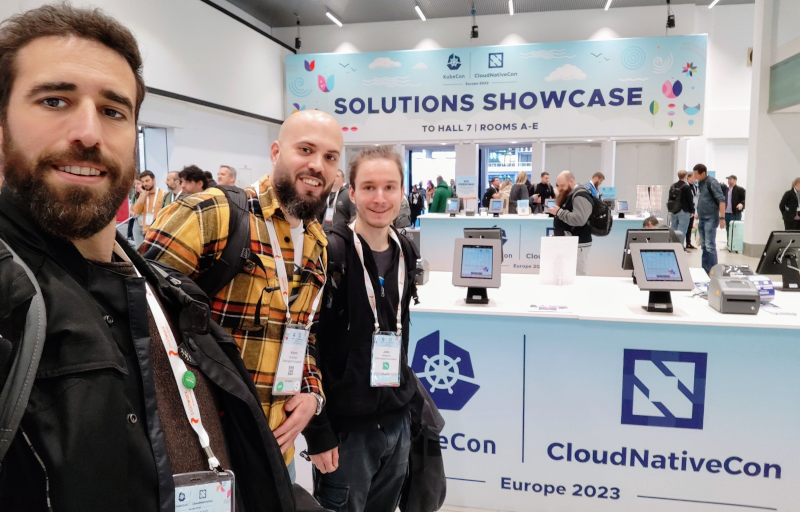
Amsterdam in April 2023. It was my second time physically attending this conference, the first one was in
Austin, Texas (USA) in 2017. I also attended once in a virtual fashion.
The content here is mostly generated for the sake of my own recollection and learnings, and is written from
the notes I took during the event.
The very first session was the opening keynote, which reunited the whole crowd to bootstrap the event and
share the excitement about the days ahead. Some astonishing numbers were announced: there were more than
10.000 people attending, and apparently it could confidently be said that it was the largest open source
technology conference taking place in Europe in recent times.
It was also communicated that the next couple iteration of the event will be run in China in September 2023
and Paris in March 2024.
More numbers, the CNCF was hosting about 159 projects, involving 1300 maintainers and about 200.000
contributors. The cloud-native community is ever-increasing, and there seems to be a strong trend in the
industry for cloud-native technology adoption and all-things related to PaaS and IaaS.
The event program had different tracks, and in each one there was an interesting mix of low-level and higher
level talks for a variety of audience. On many occasions I found that reading the talk title alone was not
enough to know in advance if a talk was a 101 kind of thing or for experienced engineers. But unlike in
previous editions, I didn t have the feeling that the purpose of the conference was to try selling me
anything. Obviously, speakers would make sure to mention, or highlight in a subtle way, the involvement of a
given company in a given solution or piece of the ecosystem. But it was non-invasive and fair enough for me.
On a different note, I found the breakout rooms to be often small. I think there were only a couple of rooms
that could accommodate more than 500 people, which is a fairly small allowance for 10k attendees. I realized
with frustration that the more interesting talks were immediately fully booked, with people waiting in line
some 45 minutes before the session time. Because of this, I missed a few important sessions that I ll
hopefully watch online later.
Finally, on a more technical side, I ve learned many things, that instead of grouping by session I ll group
by topic, given how some subjects were mentioned in several talks.
On gitops and CI/CD pipelines
Most of the mentions went to
 On etcd, performance and resource management
I attended a talk focused on etcd performance tuning that was very encouraging. They were basically talking
about the
 On jobs
I attended a couple of talks that were related to HPC/grid-like usages of Kubernetes. I was truly impressed
by some folks out there who were using Kubernetes Jobs on massive scales, such as to train machine learning
models and other fancy AI projects.
It is acknowledged in the community that the early implementation of things like Jobs and CronJobs had some
limitations that are now gone, or at least greatly improved. Some new functionalities have been added as
well. Indexed Jobs, for example, enables each Job to have a number (index) and process a chunk of a larger
batch of data based on that index. It would allow for full grid-like features like sequential (or again,
indexed) processing, coordination between Job and more graceful Job restarts. My first reaction was: Is that
something we would like to enable in





 From November 2nd to 4th, 2022, the 19th edition of
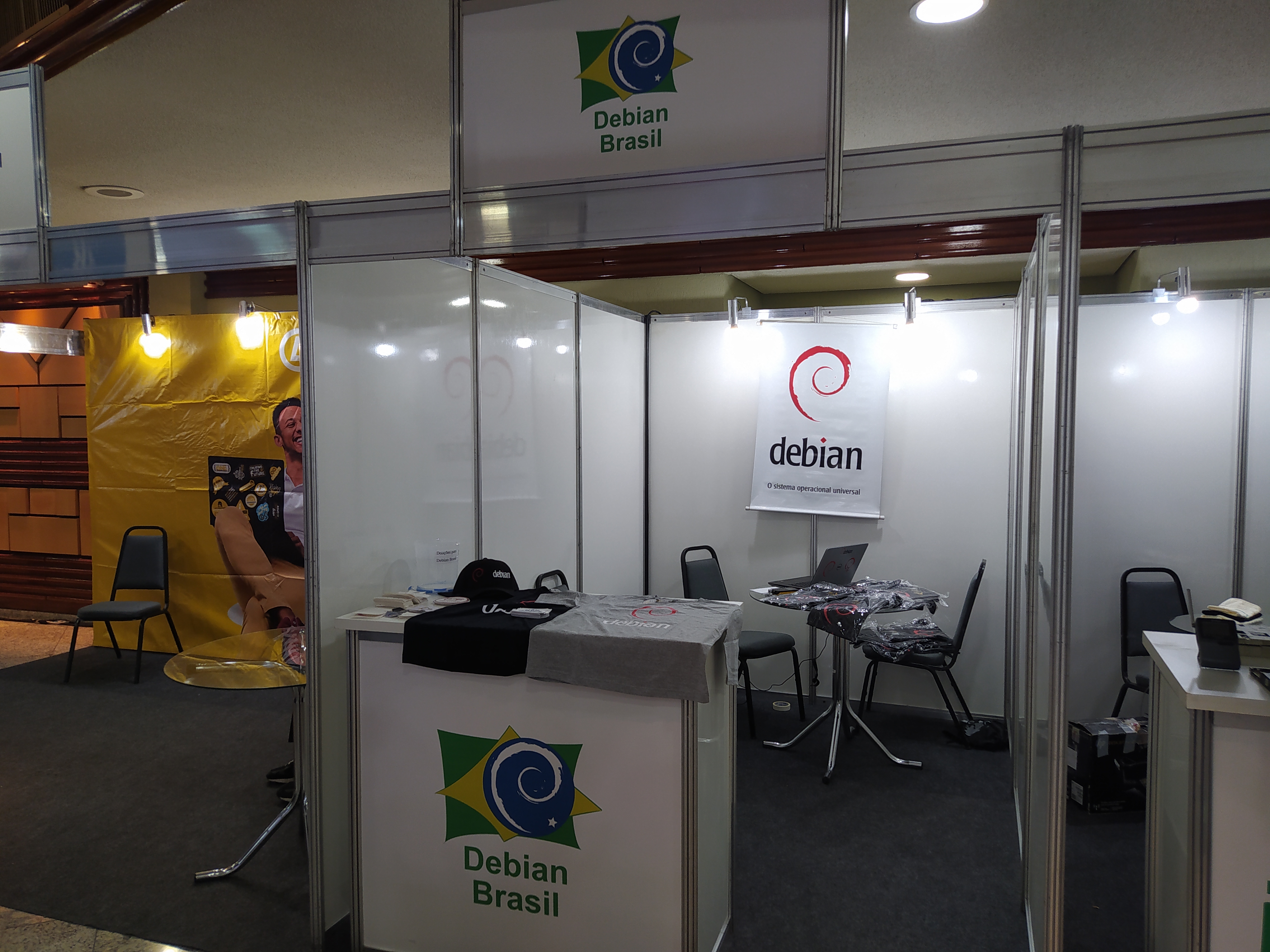 A huge number of people visited the booth, and the beginners (mainly students)
who didn't know Debian, asked what our group was about and we explained various
concepts such as what Free Software is, GNU/Linux distribution and Debian
itself. We also received people from the Brazilian Free Software community and
from other Latin American countries who were already using a GNU/Linux
distribution and, of course, many people who were already using Debian. We had
some special visitors as Jon maddog Hall, Debian Developer Emeritus Ot vio
Salvador, Debian Developer Eriberto Mota, and Debian Maintainers Guilherme de
Paula Segundo and Paulo Kretcheu.
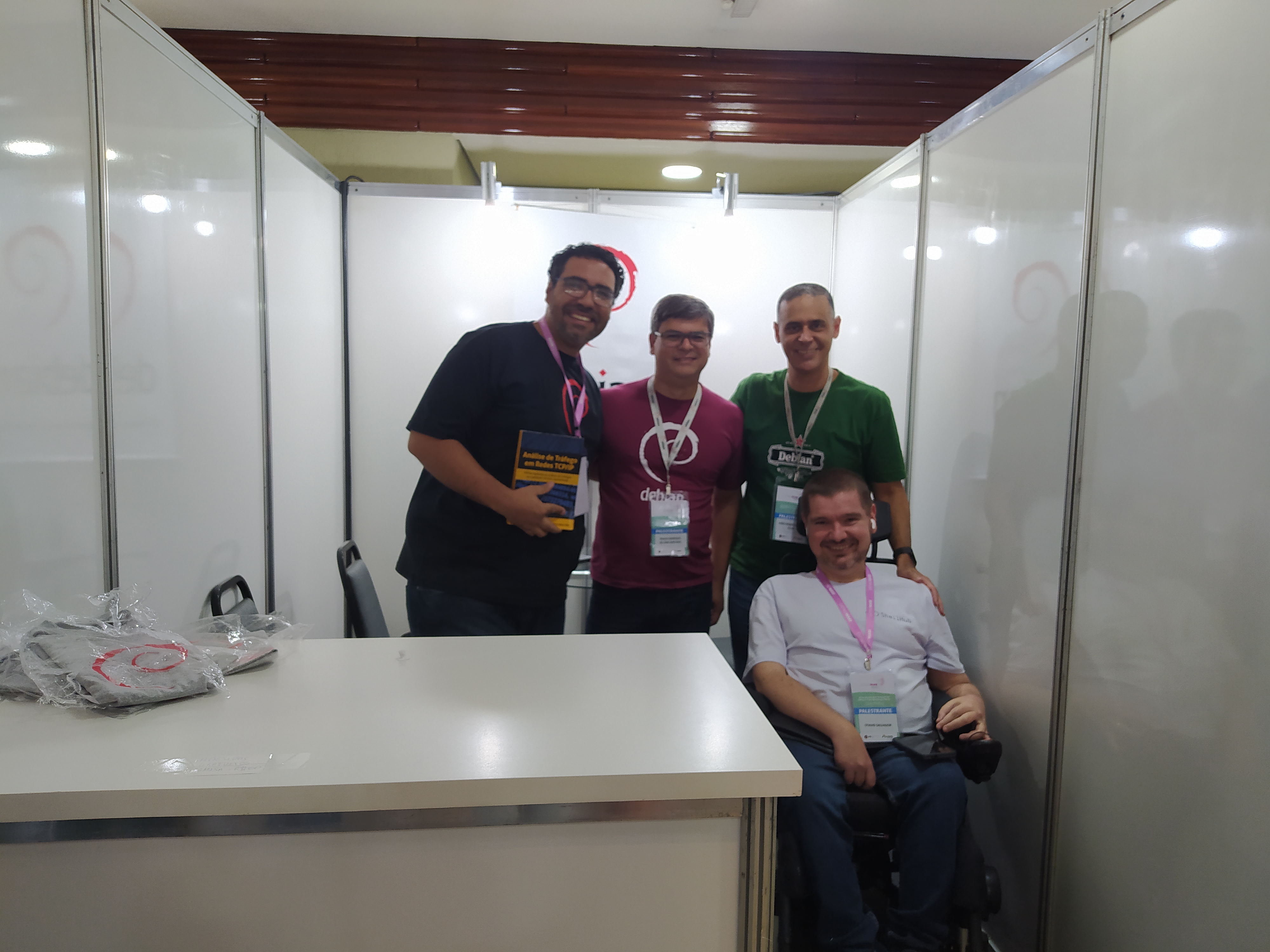 Photo from left to right: Leonardo, Paulo, Eriberto and Ot vio.
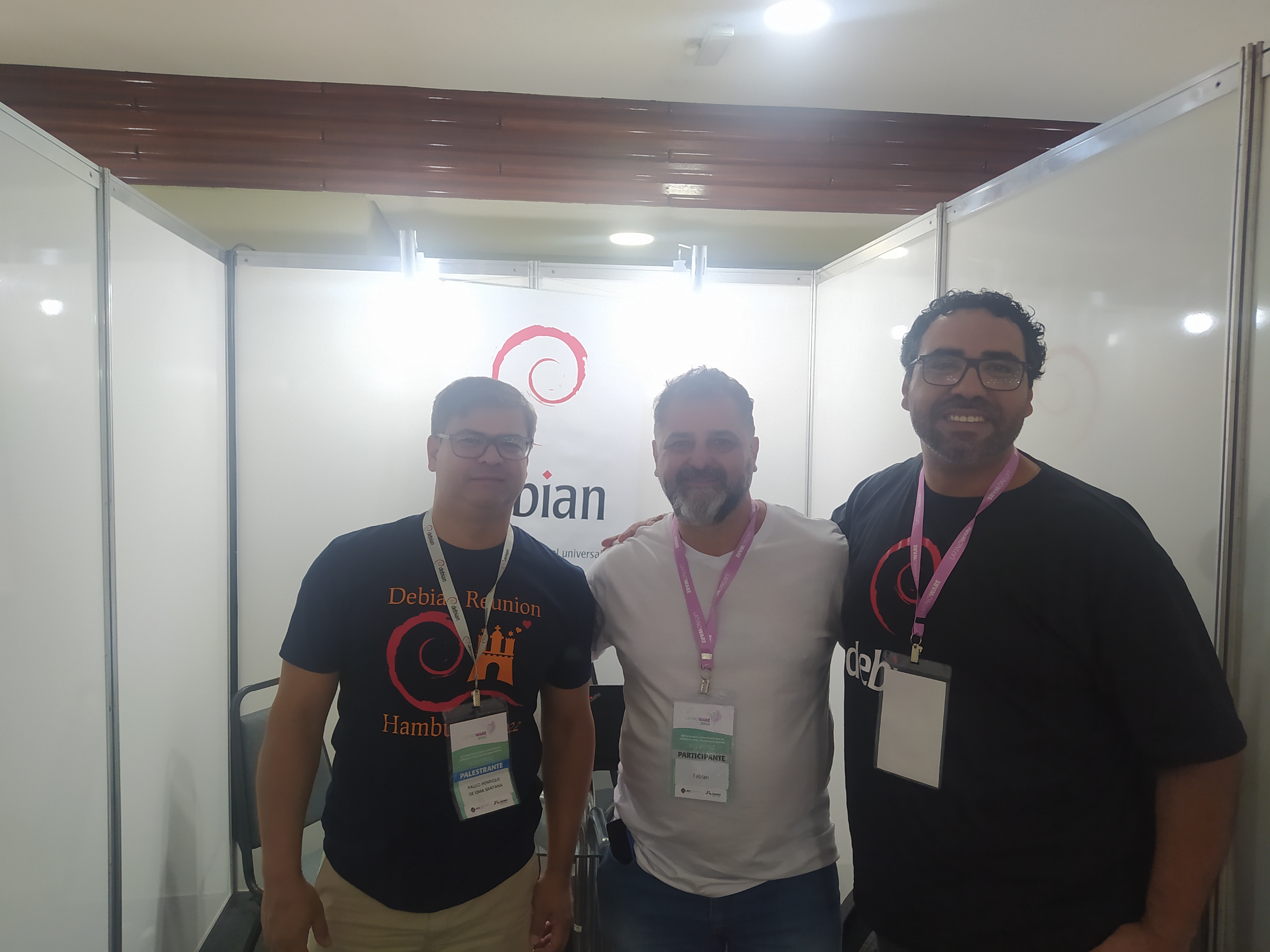 Photo from left to right: Paulo, Fabian (Argentina) and Leonardo.
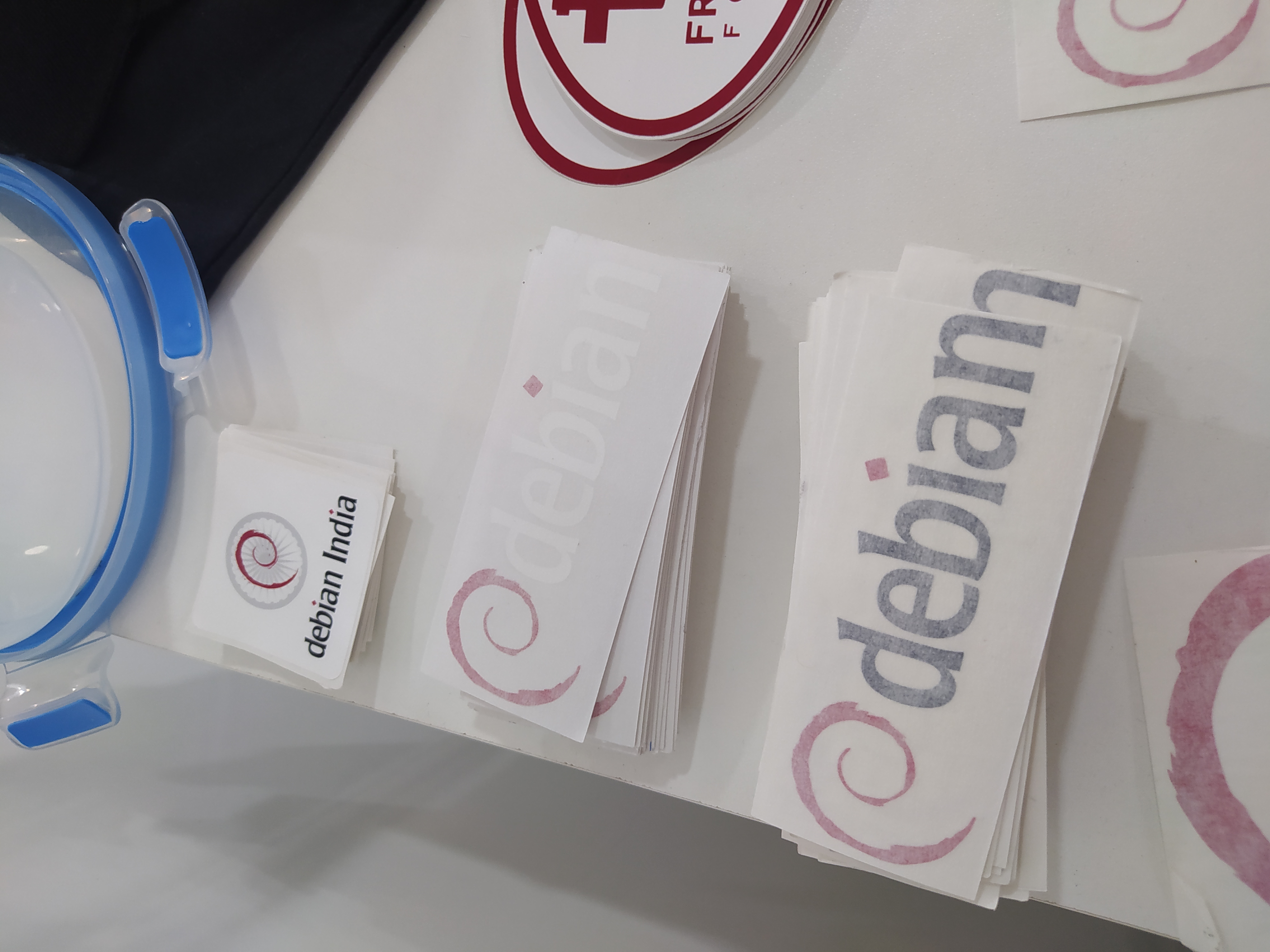
In addition to talking a lot, we distributed Debian stickers that were produced
a few months ago with Debian's sponsorship to be distributed at DebConf22
(and that were left over), and we sold several Debian
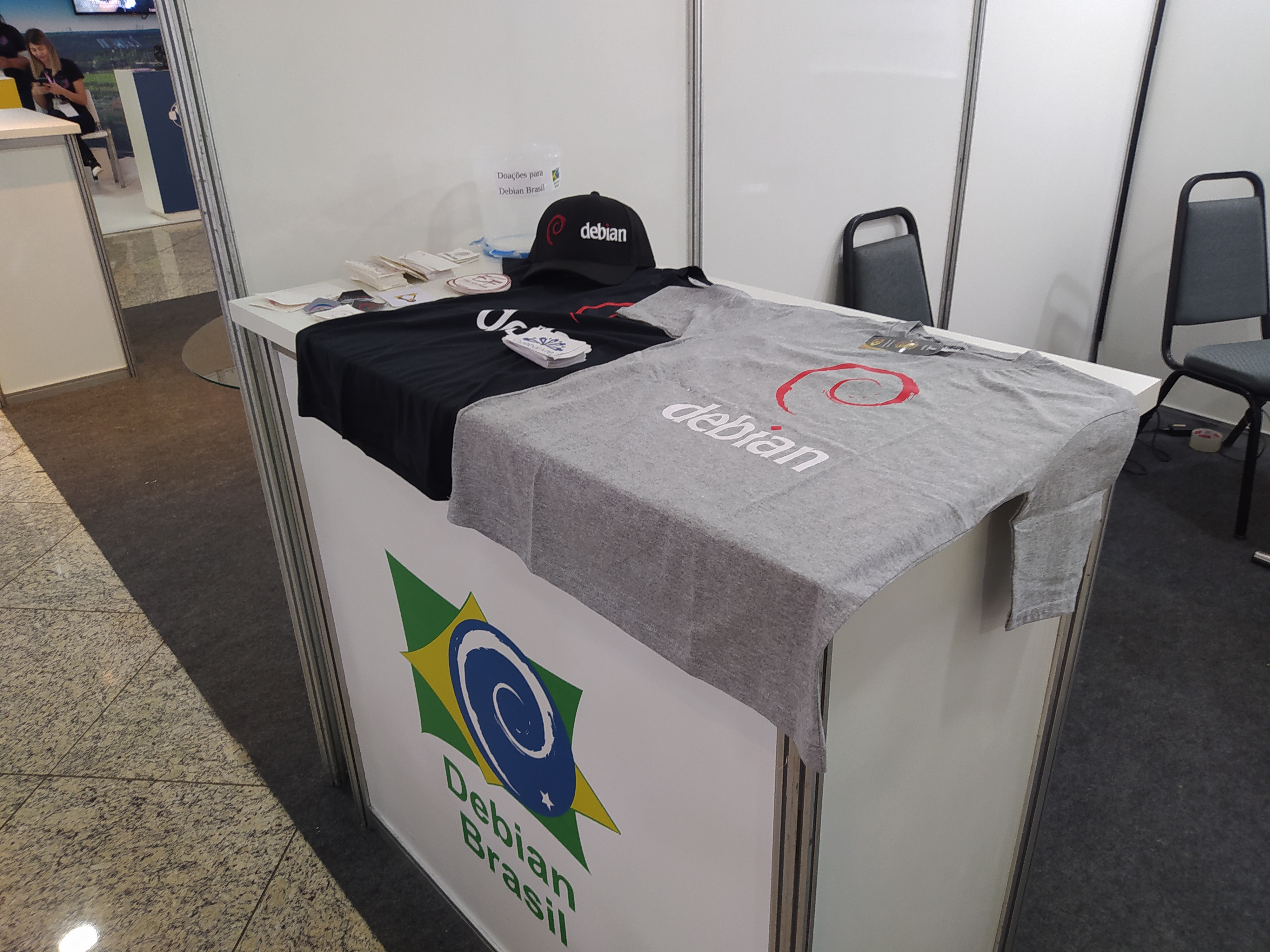
 We also had 3 talks included in Latinoware official schedule.
 Photo Paulo in his talk.
Many thanks to Latinoware organization for once again welcoming the Debian
community and kindly providing spaces for our participation, and we
congratulate all the people involved in the organization for the success of
this important event for our community. We hope to be present again in 2023.
We also thank Jonathan Carter for approving financial support from Debian for
our participation at Latinoware.
 V rias pessoas visitaram o estande e aquelas mais iniciantes (principalmente
estudantes) que n o conheciam o Debian, perguntavam do que se tratava o nosso
grupo e a gente explicava v rios conceitos como o que Software Livre,
distribui o GNU/Linux e o Debian propriamente dito. Tamb m recebemos pessoas
da comunidade de Software Livre brasileira e de outros pa ses da Am rica Latina
que j utilizavam uma distribui o GNU/Linux e claro, muitas pessoas que j
utilizavam Debian. Tivemos algumas visitas especiais como do Jon maddog Hall,
do Desenvolvedor Debian Emeritus Ot vio Salvador, do Desenvolvedor Debian
 Foto da esquerda pra direita: Leonardo, Paulo, Eriberto e Ot vio.
 Foto da esquerda pra direita: Paulo, Fabian (Argentina) e Leonardo.
Al m de conversarmos bastante, distribu mos adesivos do Debian que foram
produzidos alguns meses atr s com o patroc nio do Debian para serem distribu dos
na DebConf22(e que haviam sobrado), e vendemos v rias

 Tamb m tivemos 3 palestras inseridas na programa o oficial do Latinoware.
 Foto Paulo na palestra.
Agradecemos a organiza o do Latinoware por receber mais uma vez a comunidade
Debian e gentilmente ceder os espa os para a nossa participa o, e parabenizamos
a todas as pessoas envolvidas na organiza o pelo sucesso desse importante
evento para a nossa comunidade. Esperamos estar presentes novamente em 2023.
Agracemos tamb m ao Jonathan Carter por aprovar o suporte financeiro do Debian
para a nossa participa o no Latinoware.




 Narabu is a new intraframe video codec. You probably want to read
 The idea is simply to have one coherent place with pointers to all the stuff we have and provide, without repeating nor replacing other documentation.