Python 3.15 transition, by Stefano Rivera with a little help from Colin Watson
Debian has started the transition to add Python 3.15 as a supported version
alongside 3.14, which is still the default version. Stefano uploaded Python
3.15.0 final to unstable.
Maximiliano Curia has been test-rebuilding the archive
in Debusine with Python 3.15 as a supported version and prepared some patches
to dh-python to smooth over some common failure points. Stefano reviewed these
MRs, applying some and implementing alternative approaches for some of the issues.
Debian only has multiple supported Python versions during the transition to a
new version, and typically this shows up some bugs in packages. This time was
no different, the common failure was many packages that installed intermediate
build artifacts into the Python module tree. Some of these artifacts would
differ between Python versions. We decided to detect both of these and fail the
package build, rather than silently ship garbage in the binary packages. Colin
helped to fix quite a bit of the build fallout from this.
OpenSSH GSS-API package split improvements, by Colin Watson
The recent GSS-API package split
has largely gone relatively smoothly, but there was a subtle problem for people
switching from one variant to the other: installing the replacement packages
followed by purging the old one would
cause some configuration files to disappear.
Colin fixed this, and also reviewed and merged some autopkgtest contributions
from Andreas Hasenack to make sure that this doesn t regress in future.
Miscellaneous contributions
Carles, using check-relations,
investigated and reported 52 bugs for packages which have Recommended packages
that are not available in Debian anymore. Followed up bugs on the topic.
Carles added support to check-relations
to detect Recommends that recommend a transitional package.
Carles submitted merge requests
(MR89,
MR90,
MR91,
MR92)
to the Debian developers-reference
to remove or update references to packages that are not available anymore, have
their name changed, have typos, etc.
Carles investigated and opened bugs regarding notifications on LXDE
(#1151954,
#1151955)
and added a section related to notifications on the
Wiki.
Helmut released asyncvarlink/0.3.3
to fix several bugs including connection robustness fixes by Alex Kiernan. Colin
uploaded it to Debian.
Helmut uploaded guess-concurrency
to improve behavior on riscv64 by taking swap into account thanks to Adrian Bunk
and Aurelien Jarno.
Helmut sent patches for 55 cross build failures.
Emilio updated some X11 libraries that fixed security vulnerabilities.
Emilio managed various transitions.
Rapha l updated gnome-shell-extension-hamster to work with GNOME 51 that was
uploaded to Debian unstable.
Stefano backported postsrsd 2.4.1 to
Debian trixie.
Stefano installed security updates on debian.social infrastructure.
October saw a series of security releases for Python, due to the eMudhra key
compromise incident. Stefano uploaded cPython 3.15.2, 3.14.10, and 3.13.18 which
include blocks for the compromised intermediate CAs.
Stefano reviewed CVEs fixed in recent cPython releases.
Stefano reviewed some of the wafer-debconf MRs that came in as part of
Antonio s Outreachy project.
Stefano uploaded python-authlib, with many security updates. And started
preparing a stable update with backports of these patches.
Stefano looked at the latest upstream version of munkres and submitted some
32-bit test failure fixes upstream. A new upstream maintainer has been very busy
building out accelerated versions of the algorithms with AI assistance.
Thorsten was finally able to fix the autopkgtest of cups. Afterwards he
uploaded the latest version of cups to unstable.
Santiago proposed a merge request
for the Salsa CI pipeline to fix how logs were stored in the piuparts job.
Lucas reviewed and merged community contributions to Ruby 3.4 in Debian unstable.
Lucas coordinated with the security team and fixed multiple CVEs reported
against Ruby 3.3 in Debian stable.
Colin did quite a bit of work on the Python 3.15 transition, fixing lots of
build and test fallout.
Colin upgraded python-maturin from 1.9.4 to 1.16.0, helping with several Rust
transitions; this involved more or less completely reworking our patch stack.
Colin improved the packaging of the Frescobaldi
frontend to LilyPond to help with his amateur music
typesetting work, fixing its missing desktop entry, icon, and translations based
on a patch set by Joachim Wiedorn.
Anupa joined the Publicity team meeting to discuss upcoming events and
activities of the Debian Publicity Team including on-boarding meeting for new
contributors.
Antonio spent quite some time welcoming Outreachy
applicants to the DebConf/MiniDebConf websites project, replying to questions,
reviewing contributions, etc. One of them will be selected for an internship
that will start in December.
Antonio spent some time investigating problems with Salsa background job
processing, leading to an upstream bug report.
This August, I accomplished what I wanted for many years: I deleted the last cgo
dependency in Debian Code Search! This was made possible by Go s recently
introduced SIMD support, because now we can implement the TurboPFor integer
compression format as efficiently more efficiently, in fact, by using the
newer AVX512 instruction set! as the reference implementation.
Background: Why does DCS need a fast Integer Codec?
Debian Code Search (DCS) is a search engine that allows searching all the Open
Source source code within Debian, with either literal search expressions or
regular expression search queries.
A search engine uses an inverted index: a map from term to documents containing
the term. Each document is typically represented most efficiently by using an
id, so the index consists of many lists of document ids.
When searching, it is important to quickly decode these lists to answer the
search query. However, there is a point of diminishing returns where the
decoding speed, even though it can still be measurably improved quite a bit, no
longer influences the overall query duration.
From 2012 (its inception) to 2019, Debian Code Search used to use a small index
format, and queries were fast because the index was kept entirely in RAM. In
2019, I implemented the new index
format, which adds an
on-disk positional index. For literal queries (78.2% of DCS queries), querying
the positional index on disk is faster than querying the non-positional index in
RAM.
The efficient encoding of the TurboPFor format makes it possible to fit such an
index on a mid-sized Hetzner server, which I rent with two 1 TB SSD disks. The
optimized decoder of the C TurboPFor library is what made decoding fast at query
time.
If you want to dive deeper into the algorithm, see this blog post from February
2019:
Use a C library via cgo so gcc or clang compiles
SIMD code. Debian Code Search used to use the
powturbo/TurboPFor
C library via cgo for the last 7 years.
The C TurboPFor library has served us well, but Debian Code Search was always
intended to be a project using Go, so I would prefer it if I did not have any C
code in the project.
Go 1.26 (released in February 2026) introduced the simd/archsimd package:
Go 1.26 introduces a new experimental simd/archsimd
package, which can be enabled by setting
the environment variable GOEXPERIMENT=simd at build time. This package
provides access to architecture-specific SIMD operations. It is currently
available on the amd64 architecture and supports 128-bit, 256-bit, and
512-bit vector types, such as Int8x16 and Float64x8, with operations such
as Int8x16.Add. The API is not yet considered stable.
Go 1.26 Release Notes
For my 2019 TurboPFor analysis, I implemented goturbopfor, a native Go
teaching decoder (without any SIMD),
because I find Go code easier to follow than C code, especially optimized C
code. My implementation was intentionally not optimized so that the code was
easier to study.
The TurboPFor format/algorithm has a vector-optimized part: bitpacking comes in
a scalar variant (bitunpack32) and a vector variant
(bitunpack256v32),
where the vector variant is used for full blocks (256 values) and the scalar
variant is used for remainder blocks (< 256 values).
When Go 1.26 was released, I used Claude Code to explore whether my native Go
decoder s bitunpack256v32 function (for the vertical vector layout) could be
implemented using Go SIMD, and the answer was yes, it was possible and it was
faster than without SIMD, but not quite at the level of C TurboPFor. If you let
Claude Code try for long enough, it eventually finds enough optimizations (about
10) to match C performance.
I don t want to vibe-code Debian Code Search, though, so I figured I would find
some time to review the SIMD code at some point and see if I could implement
something similar myself.
Before I found enough time and motivation to complete said review, I discovered
that to not regress real-life query performance by more than 10 to 100
milliseconds (which seems acceptable), I don t actually need to add SIMD code to
my teaching decoder at all; it would be sufficient to reduce allocations in my
teaching decoder and specialize it per bit width.
Encouraged by the possibility of using the optimized native Go decoder in Debian
Code Search, I explored whether I could also implement a native Go encoder so
that I could get rid of the C TurboPFor dependency entirely. The answer is yes,
it is doable in a few days, and it isn t even that much slower: Go is at 76% of
C, see Debian/dcs commit
e920dc7.
The goal I set myself at that point was to see if I could learn enough SIMD to
optimize the native Go encoder such that its performance would match how DCS
uses C TurboPFor (via cgo).
Beating C TurboPFor was possible in 2-3 commits (SIMD and bit width
specialization). To my surprise, Claude Fable 5 pointed out that the encoder s
block scanning could be done more efficiently using a technique called
positional popcount, and that is another 2x speed-up!
To be clear: I am not saying the Go compiler beats C here. Certainly, the C
compiler can also produce fast AVX512 code and can be used to implement
positional popcount. When comparing apples to apples, i.e. backporting the
AVX512 kernels and positional popcount technique to C TurboPFor, Go benchmarks a
little slower at 1.4x C.
This spectacular result (much faster than what DCS had before) got me curious
how far I could push the decoder with SIMD after all. I ended up
matching/exceeding the cgo version here, too!
The rest of this article explains a few classes of optimizations I encountered
along the way.
Starting Point
When I wrote my goturbopfor teaching
decoder, I named its functions to
match the upstream C TurboPFor library, but now I want to get away from names
like p4ndec256v32 they make sense from the TurboPFor perspective, but for
Debian Code Search, we can use cleaner names.
Before writing any code, I audited how DCS uses integer compression /
decompression.
API design: BlockEncoder, BlockDecoder and streaming
In Debian Code Search, we have the following usage patterns:
Partial Indexing: When a new package (or package version) enters Debian,
all of its (text) files are indexed. If the hello-2.12.3-1
package (hypothetically) contained
only hello.c with printf("hello!\n");, we would assign document ID 1 to
hello.c and store in the partial index that trigrams pri, rin, int,
ntf, etc. are all found in doc 1 (hello.c).
Full Index Merging: The many thousands of partial index files (for each
Debian package) are combined into a small handful of large index files: When
searching, it would be expensive to consult thousands of indexes. To merge
multiple partial index files into one larger index (which can then be
efficiently queried), we need to re-encode the partial index files: what used
to be document ID 1 in the partial index might be document ID 2531 in the
full index.
Querying (searching): When users enter search queries, these queries need
to be answered as quickly as possible. The relevant entries in the full
indexes are decoded (in parallel).
For reading the index, we do keep the decoded uint32s fully in memory, so we
only need DecodeN(input []byte, output []uint32) (read int), a function that
reads len(output) values (uint32) from input and returns how many bytes it
consumed.
For writing the index (both in partial indexing, and when merging), keeping the
entire index in memory is prohibitively expensive, so we need a streaming API,
for decoding and for encoding.
Ultimately, I converged on the following API:
packagepforenctypeBlockEncoderstruct// scratch buffers can go here// EncodeBlock encodes len(vals)<=256 uint32s into dest (one TurboPFor block).func(*BlockEncoder)EncodeBlock(dest[]byte,vals[]uint32)[]byte// EncodeN calls EncodeBlock in a loop.func(*BlockEncoder)EncodeN(dest[]byte,vals[]uint32)[]bytetypeStreamEncoderstructbeBlockEncodervals[256]uint32// scratch buffers// if full, you need to call [EncodeBlock]func(*StreamEncoder)Add(valuint32)(fullbool)// EncodeBlock must be called after all data was [Add]ed.//
// Write the returned buffer to file or send it over the network;// it is only valid until the next [EncodeBlock] call.func(*StreamEncoder)EncodeBlock()[]byteifse.n==0returnnil// turn an extra EncodeBlock into a no-op//
This API (the decoder works similarly) allows us to process data in TurboPFor
format without any memory allocations. The types are not safe for concurrent use
by multiple goroutines. The zero value is ready to be used. For the streaming
API, the result only stays valid until the next call.
Initial Implementation
Before we can optimize anything, we need a working decoder and encoder. The
decoder already exists: my goturbopfor teaching decoder. Next up, I needed an
encoder.
Writing a TurboPFor encoder has a delightfully simple starting point: You can
encode all values at bit width 32, in little endian, at which point you only
need to add a one-byte TurboPFor block header every 256 values and you re done:
Of course, this is a terribly inefficient compressor, so after the first commit,
the real work starts: implement each block type until the compression matches
the original C TurboPFor implementation (same output file size), or in other
words: do the reverse of the decoder.
The TurboPFor bitpacking block type (bitpacking implementation
commit)
encodes a bit stream of variable bit width (where the bit width is in range
0 bitWidth 32) in little
endian byte order. By scanning all
values and choosing the smallest bit width that allows representing all
values, this technique saves disk space (compresses).
The bitpacking with exceptions block type (bitpacking with exceptions
implementation
commit)
determines two bit widths: one for values, the other bit width for encoding
exceptions. This allows choosing a lower bit width (that does not cover all
values) compared to the bitpacking block type. A bitmap encodes whether a
value has an exception or not.
The bitpacking with VB exceptions block type (bitpacking with VB
exceptions implementation
commit)
is a variant which does not use an exception bitmap and encodes exceptions
using a variable byte integer encoding. This is more efficient when there are
few exceptions (less than 20) or the exceptions are very different in bit
width compared to the other values.
Lastly, the constant block type (constant implementation
commit)
stores just one value on disk. This is useful for all-zero or all-one blocks,
for example.
I found it interesting to realize that the main work of the encoder is to scan
the input values and choose the optimal block type, whereas the actual encoding
itself is cheap in comparison.
At this point, we can look at
performance
and see that the Go encoder is at 76% of the C encoder.
In all honesty, I could have probably stopped here, but now that the milestone
of a viable replacement was reached, I got curious to see how far it would be
possible to push the encoder (how much work to reach C speeds?) and afterwards,
the decoder, too.
Setup
The microarchitecture level: set GOAMD64
The microarchitecture of a CPU determines which instructions it provides, and
that includes not just SIMD instruction sets (like AVX2), but also other useful
instructions like LZCNT (Leading Zero Count), which can be used to implement
math/bits.Len32 more efficiently, which
the TurboPFor encoder needs to call on every input value to determine the ideal
bit width.
Let s walk through how to set the microarchitecture level when using Go on
64-bit x86 (x86-64).
Go uses the GOARCH environment
variable to configure the target
compilation architecture, and I am using the value amd64 to select 64-bit x86
(AVX2 and AVX512 are instruction sets found on x86-64 CPUs). With
GOARCH=amd64, the architecture-specific variable
GOAMD64 configures the
microarchitecture level for which to compile and Go 1.18 introduced these 4
different levels:
GOAMD64=v1 (default): The baseline.
Exclusively generates instructions that all 64-bit x86 processors can execute.
GOAMD64=v2: all v1 instructions,
plus CMPXCHG16B, LAHF, SAHF, POPCNT, SSE3, SSE4.1, SSE4.2, SSSE3.
GOAMD64=v3: all v2 instructions,
plus AVX, AVX2, BMI1, BMI2, F16C, FMA, LZCNT, MOVBE, OSXSAVE.
GOAMD64=v4: all v3 instructions,
plus AVX512F, AVX512BW, AVX512CD, AVX512DQ, AVX512VL.
In 2026, I generally recommend compiling with GOAMD64=v3 so that functions
like bits.OnesCount8 are
compiled into intrinsics
(POPCNT)
instead of using a lookup table.
For Intel CPUs, setting GOAMD64=v3 means your programs will only start on
Haswell CPUs (2013) or newer; for AMD CPUs that means Zen 1 (2017) or newer.
In this specific case (DCS), I am even compiling with GOAMD64=v4. The v4
microarchitecture level requires AVX512, which means AMD Zen 4, Zen 5 or newer
(Intel s story is complicated). Luckily, both my main development PC (Zen 5)
and the Debian Code Search server (Zen 4) are recent enough. Setting
GOAMD64=v4 has little effect on Go 1.27 itself: the only change is that maps
use one less instruction (VPBROADCASTB instead of PSHUFB). But compiling
with GOAMD64=v4 allows us to move one more feature check from runtime to
compile time, see SIMD build tags.
It makes sense to set the microarchitecture level in your benchmark setup so
that you don t measure the slow fallback implementations. I use export GOAMD64=v4 in my Makefile.
Benchmarking setup
Go s built-in testing package contains support for
benchmarks which are written in
functions of the form func BenchmarkXxx(b *testing.B). The simplest way to run
such benchmarks is go test -bench=., but I ended up configuring a few
convenience make targets, which write results to bench.txt and compare
against baseline.txt (the previous commit s results, usually), using the very
useful benchstat tool.
GOTEST=go test# -count=6 gives p 0.002 in benchstat:
# https://pkg.go.dev/golang.org/x/perf/cmd/benchstat
BENCHFLAGS=-run=^$$ -bench=. -benchtime=200000x -count=6# use taskset -c1 to always pin to the same single core,
# avoiding accidental scheduling on different cores on
# mixed-core CPUs like the Ryzen 9 9950X3D.
TASKSET=taskset -c 1BENCH=$(TASKSET)$(GOTEST)$(BENCHFLAGS).PHONY: all test bench bench-baseline bench-relative
all: test
bench: test
$(BENCH) tee bench.txt
# Compares compression ratio between C and Go implementation
benchstat -col /impl -row '/n /vals' -filter '-/impl:go-stream .unit:(encoded-bytes)' bench.txt
# Compares performance between C (cgo) and Go implementation
benchstat -col /impl -row '/n /vals' -filter '.unit:(Mval/s)' bench.txt
bench-baseline: test
$(BENCH) tee baseline.txt
bench-relative: test
$(BENCH) tee bench.txt
benchstat -filter '-/impl:go-stream .unit:(encoded-bytes)' baseline.txt bench.txt
benchstat -filter '/impl:go .unit:(Mval/s)' baseline.txt bench.txt
The encoded-bytes and Mval/s units are custom metrics I am reporting from
the various sub-benchmarks, which are arranged
such that I can filter / report them with benchstat.
The main encoder (and decoder) benchmarks compare 3 different implementations
(cgo, Go, Go with the StreamEncoder API) with a number of benchmark
cases
that are designed to cover the different block types and contain a similar mix
of values as what we see in Debian Code Search:
// reportMetrics adds Mval/s and encoded-bytes metrics to all benchmarks.funcreportMetrics(b*testing.B,nint,nencodedint)b.ReportMetric(float64(nencoded),"encoded-bytes")b.ReportMetric(float64(b.N*n)/1e6/b.Elapsed().Seconds(),"Mval/s")// BenchmarkEncode/n=<N>/vals=<testcase>/impl=<c go go-stream>//
// e.g. BenchmarkEncode/n=2048/vals=one-constant/impl=go-streamfuncBenchmarkEncode(b*testing.B)for_,tc:=rangeallBenchCases()n:=len(tc.vals)b.Run(fmt.Sprintf("n=%d/vals=%s",n,tc.name),func(b*testing.B)b.Run("impl=c",func(b*testing.B)b.ReportAllocs()varencoded[]bytebuf:=make([]byte,turbopfor.EncodingSize(n))forb.Loop()encoded=turbopfor.P4nenc256v32Buf(buf,tc.vals)reportMetrics(b,n,len(encoded)) )b.Run("impl=go",func(b*testing.B)b.ReportAllocs()varbeBlockEncodervarencoded[]bytebuf:=make([]byte,0,turbopfor.EncodingSize(n))forb.Loop()encoded=be.EncodeN(buf,tc.vals)reportMetrics(b,n,len(encoded)) )b.Run("impl=go-stream",func(b*testing.B)b.ReportAllocs()varseStreamEncodervarencodedintforb.Loop()encoded=0for_,val:=rangetc.valsifse.Add(val)encoded+=len(se.EncodeBlock())encoded+=len(se.EncodeBlock())reportMetrics(b,n,encoded) ) )
CPU counters: perf
Go has included excellent performance tooling for many years, see the
Profiling Go Programs blog post (2011) for an
example of how to use pprof, a sampling profiler. This profiler can help track
down which part of a program runs slow, or where memory allocations happen.
Once you identified the slow part of a program, how do you know why it s slow?
To learn more about the specific bottlenecks your program encounters, you can
consult your CPU s hardware performance
counters. For
example, you could check the branch
predictor counters to see if
your program is slow due to a high number of branch mispredicts.
On Linux, the perf tool is the best way to access the CPU hardware performance
counters. A good starting point for working with perf is the documentation on
Top-down analysis with the perf
tool , which describes the
optimization method that Intel established.
In my Makefile, I set up two perf targets:
# GOTEST and TASKSET like shown in the earlier benchmarking setup section:
GOTEST=go test -pgo=encode.cpuprof
TASKSET=taskset -c 1PERFBENCHFLAGS=-test.bench='Encode/n=2048/vals=debian-mix/impl=go$$' -test.benchtime=200000x
# Use perf(1) to capture AMD IBS (the equivalent to Intel PEBS)
# PipelineL1 is roughly equivalent to Intel TopdownL1
perf:$(GOTEST) -c
$(TASKSET) perf stat -M PipelineL1 ./pforenc.test -test.run=^$$$(PERFBENCHFLAGS) sudo perf record -F 4999 -e ibs_op// --call-graph fp ./pforenc.test -test.run=^$$$(PERFBENCHFLAGS) sudo chmod 644 perf.data
# 488281 iterations 2048 values = 1.000e9 values, so counter/1e9 = per value.
perf-per-value:$(GOTEST) -c
$(TASKSET) perf stat -x, -e cycles:u,instructions:u,branches:u,branch-misses:u ./pforenc.test -test.run=^$$ -test.bench='Encode/n=2048/vals=debian-mix/impl=go$$' -test.benchtime=488281x 2>&1 >/dev/null awk -F, ' printf "%-16s %6.2f /val\n", $$3, $$1/1e9 '
The perf-per-value numbers are high level numbers that indicate how much work
the implementation is doing. Reducing the number usually increases speed.
To see the counters for each instruction (and source code lines), I use make perf, followed by perf report. A quick shortcut is perf annotate, which
directly shows the hottest function.
Optimizations (scalar)
Let s first see how far we can get without reaching for SIMD instructions.
(The examples are not necessarily in commit order, but cherry-picked for clarity.)
Profile-Guided Optimization (PGO)
PGO stands for Profile-Guided Optimization and is a feature that Go introduced
as a preview in Go 1.20 (released in February 2023) and shipped as ready for
general production use in Go 1.21 (released in August
2023).
The idea is to capture a CPU profile that records where your program spends most
of its CPU time, which you then provide to the Go compiler to give it more data
to make better decisions.
Most importantly, this way the Go compiler can inline functions much more
aggressively than its usual heuristics allow,
which does have a measurably positive effect in my series of optimization
commits. Another optimization that a PGO profile allows the compiler to do is
conditional devirtualization but
our TurboPFor code does not use any interfaces.
My strategy is to enable PGO before doing any other optimizations, so that we
have the full inlining budget available that PGO gives us, and can measure the
effect of other commits clearly.
Surprisingly, turning on PGO actually decreases our
performance
(-13% geomean), but a closer investigation reveals that we just got unlucky. Let
me explain.
Aside from inlining and conditional devirtualization, PGO also influences
alignment: The Go compiler sets PCALIGNMAX(64, 31) on the first block of a
loop (the loop body ) for all loops in hot functions (per the PGO profile),
i.e. Go will insert up to 31 bytes of padding to make the block land on a
64-byte boundary. Documentation like AMD s Software Optimization Guide for the
AMD Zen5 Microarchitecture (2024,
#58455) explicitly recommends aligning hot loops that way:
[ ] for hot loops, some further knowledge of trade-offs can be
helpful. Because the processor can read an aligned 64-byte fetch block every
cycle, it is suggested to either align the start of the loop to the beginning
of a 64-byte cache line [ ]
Indeed, when compiling with -gcflags=all=-d=alignhot=0 to disable the
alignment, performance remains as good as without PGO. How can the padding hurt
more than help? The answer is: It s not the padding itself! It s a side-effect
of the padding moving instructions to different addresses.
In the unlucky arrangement, a macro-fused CMPQ+JGE instruction pair now ends
up exactly on a 32-byte boundary. However, the Go compiler ensures fused
branch sequences must never cross or end at a 32-byte boundary to fix Intel
erratum
SKX102
(discussion: Go issue #35881) by
inserting NOPs.
This NOP padding, unlike the loop alignment padding, is not free; these extra
instructions slow down our otherwise dispatch-bound loops.
Because the commits after the PGO enabling commit change the code, this unlucky
situation is avoided for the rest of the optimization series (by chance).
Reducing memory allocations
Memory allocations are quite expensive, at least in comparison to
encoding/decoding integers, so I followed my usual strategy of first reducing
memory allocations as much as possible.
In my goturbopfor teaching decoder, whenever the code needed a scratch buffer,
it would allocate it right then and there with make():
// p4dec32 decodes one block of TurboPFor-encoded 32 bit intsfunc(d*decoder)p4dec32(input[]byte,output[]uint32)(readint)// switchblockTypecaseblockBitpackingExceptions:bx,input:=input[0],input[1:]n:=len(output)exmap:=inputnex:=0// number of exceptionsfori:=0;i<n;i++ifexmap[i/8]&(1<<uint(i%8))!=0nex++input=input[(n+7)/8:]exceptions:=make([]uint32,nex)input=input[bitunpack32(input,exceptions,bx):]input=input[d.bitunpack(input,output,b):]fori:=0;i<n;i++ifexmap[i/8]&(1<<uint(i%8))!=0output[i]+=exceptions[0]<<bexceptions=exceptions[1:]returnbefore-len(input)
The Go compiler can turn make(T, n) calls into stack allocations, if n is
known at compile-time. But, in this case nex is not known at compile-time. We
can verify that Go calls into the runtime (runtime.makeslice) by dumping the
object code (assembly) with source annotated (-S):
An easy speed-up was to avoid allocations through
reuse
(in goturbopfor). In the DCS pfordec package (with the improved
API design), I ended up with a vals [256]uint32 field in the StreamDecoder
type, which brings us from 773 Mval/s to 858 Mval/s on the debian-mix:
Aside from the speed-up, avoiding memory allocations is generally nice in
benchmarks because it removes the garbage collector from the equation and makes
it less likely that your benchmarks get other processes OOM-killed on the same
machine.
Generics for bit width specialization
In general, we want to make it easy for the compiler to understand as much as
possible about our algorithm. Consider this bitpack implementation:
Let s think through what determines the iterations and control flow this
function uses:
The number of input values (vals), but not their actual value.
The bit width to pack into (bitWidth).
With a bit of careful rearrangement, we can provide the compiler with both, a
fixed number of input values (say, 32), and a bit width, both known at compile
time. Why is this worthwhile? Because we can manually unroll the loop, let the
compiler eliminate much of the repetition and get much faster compiled code as a
result!
Let s first fix the number of input values to 32 and rewrite the loop to
calculate the position offsets within dest instead of changing dest on each
value (with AppendUint32):
funcbitpack32Unrolled(dest[]byte,vals*[32]uint32,bitWidthint)// only one bounds check for 32 valuesdest=dest[:4*bitWidth:4*bitWidth]mask:=uint32(1<<bitWidth-1)varaccuint64varhave,posint// Manually unrolled loop starts here.// Each iteration is identical except for the vals[x] index.acc =uint64(vals[0]&mask)<<havehave+=bitWidthifhave>=32binary.LittleEndian.PutUint32(dest[pos:pos+4],uint32(acc))pos+=4acc>>=32have-=32// vals[1] .. vals[30] elided for brevity// Each loop iteration is 8 lines of Go code, so for 32 input values,// bitpack32Unrolled contains 8*32 = 256 lines of code.acc =uint64(vals[31]&mask)<<havehave+=bitWidthifhave>=32binary.LittleEndian.PutUint32(dest[pos:pos+4],uint32(acc))pos+=4acc>>=32have-=32// have == 0; for all bitWidths
Next, we want to specialize not just for 32 input values, but also for each of
the 32 bit widths.
Can we do better than hand-copying bitpack32Unrolled 32 times (= 8192 lines of Go code)?
Yes, we can use Go generics to help us with the code generation!
In Go, array types like [4]byte (not
slices like []byte!) contain the length of the array as part of their type,
meaning [1]byte (an array of length 1) is a different type than [2]byte.
Instead of passing the bit width as a function parameter, we can declare 32
different types (one for each bit width) and recover the bit width (at compile
time!) from the type system:
typebitWidthTinterface[1]byte[2]byte[3]byte[4]byte[5]byte[6]byte[7]byte[8]byte[9]byte[10]byte[11]byte[12]byte[13]byte[14]byte[15]byte[16]byte[17]byte[18]byte[19]byte[20]byte[21]byte[22]byte[23]byte[24]byte[25]byte[26]byte[27]byte[28]byte[29]byte[30]byte[31]byte[32]bytefuncbitpack32Unrolled[TbitWidthT](dest[]byte,vals*[32]uint32)varzeroTbitWidth:=len(zero)// known at compile timedest=dest[:4*bitWidth:4*bitWidth]// make cap known at compile timemask:=uint32(1<<bitWidth-1)varaccuint64varhave,posint// Manually unrolled loop starts here.// Each iteration is identical except for the vals[x] index.acc =uint64(vals[0]&mask)<<havehave+=bitWidthifhave>=32binary.LittleEndian.PutUint32(dest[pos:pos+4],uint32(acc))pos+=4acc>>=32have-=32// vals[1] .. vals[31] elided for brevity
When we instantiate bitpack32Unrolled[bitWidthT] with all 32 different types
([1]byte, [2]byte, , [32]byte), the compiler substitutes the bitWidthT
type parameter and produces 32 copies of the function, which we can find in our
compiled executable with names like
github.com/Debian/dcs/internal/turbopfor/pforenc.bitpack32Unrolled[go.shape.[12]uint8]. The
shape of a generic type is based on its memory layout, so a shape for
[1]byte must be different than the shape for [2]byte.
Because the bitWidth is now known at compile time, the Go compiler can
generate close to the optimal machine code for each bit width, which we can
confirm using go tool objdump.
The code is branchless (after the one bounds check per 32 values) and aside from
the loads and stores (from/to memory) consists only of shifts and bit
operations, all with constant operands:
Now we need to actually call bitpack32 from the general bitpack function:
funcbitpack(dest[]byte,vals[]uint32,bitWidthint)[]byteifbitWidth==0returndest// no payload, sparse block with only exceptionsiflen(vals)>=32size:=4*bitWidthforlen(vals)>=32existing:=len(dest)dest=slices.Grow(dest,size)[:existing+size]bitpack32(dest[existing:]/*append*/,(*[32]uint32)(vals),bitWidth)vals=vals[32:]mask:=uint32(1<<bitWidth-1)varaccuint64varhaveintfor_,val:=rangevalsacc =uint64(val&mask)<<havehave+=bitWidthforhave>=32dest=binary.LittleEndian.AppendUint32(dest,uint32(acc))acc>>=32have-=32forhave>0dest=append(dest,byte(acc))acc>>=8have-=8returndestfuncbitpack32(dest[]byte,vals*[32]uint32,bitWidthint)switchbitWidthcase1:bitpack32Unrolled[[1]byte](dest,vals)case2:bitpack32Unrolled[[2]byte](dest,vals)case3:bitpack32Unrolled[[3]byte](dest,vals)case4:bitpack32Unrolled[[4]byte](dest,vals)case5:bitpack32Unrolled[[5]byte](dest,vals)case6:bitpack32Unrolled[[6]byte](dest,vals)case7:bitpack32Unrolled[[7]byte](dest,vals)case8:bitpack32Unrolled[[8]byte](dest,vals)case9:bitpack32Unrolled[[9]byte](dest,vals)case10:bitpack32Unrolled[[10]byte](dest,vals)case11:bitpack32Unrolled[[11]byte](dest,vals)case12:bitpack32Unrolled[[12]byte](dest,vals)case13:bitpack32Unrolled[[13]byte](dest,vals)case14:bitpack32Unrolled[[14]byte](dest,vals)case15:bitpack32Unrolled[[15]byte](dest,vals)case16:bitpack32Unrolled[[16]byte](dest,vals)case17:bitpack32Unrolled[[17]byte](dest,vals)case18:bitpack32Unrolled[[18]byte](dest,vals)case19:bitpack32Unrolled[[19]byte](dest,vals)case20:bitpack32Unrolled[[20]byte](dest,vals)case21:bitpack32Unrolled[[21]byte](dest,vals)case22:bitpack32Unrolled[[22]byte](dest,vals)case23:bitpack32Unrolled[[23]byte](dest,vals)case24:bitpack32Unrolled[[24]byte](dest,vals)case25:bitpack32Unrolled[[25]byte](dest,vals)case26:bitpack32Unrolled[[26]byte](dest,vals)case27:bitpack32Unrolled[[27]byte](dest,vals)case28:bitpack32Unrolled[[28]byte](dest,vals)case29:bitpack32Unrolled[[29]byte](dest,vals)case30:bitpack32Unrolled[[30]byte](dest,vals)case31:bitpack32Unrolled[[31]byte](dest,vals)case32:bitpack32Unrolled[[32]byte](dest,vals)
Encoding remainder blocks is quite a bit faster (full blocks use the vertical
layout anyway):
This performance win comes at the cost of binary size increase. In this case,
the .text section (executable code) grows by about 20 KB and the .gopclntab
section grows by another 26 KB. Definitely a price I am very willing to pay, but
the case might not be as clear in all circumstances.
Optimization: Bigger strides with SIMD
Even without reaching for SIMD instructions, a TurboPFor implementation can be
made faster by making it work bigger strides. Take this code from the
goturbopfor teaching decoder which counts the number of exceptions by checking
if each value s bit is set in the exception bitmap:
caseblockBitpackingExceptions:bx,input:=input[0],input[1:]n:=len(output)exmap,input:=input,input[(n+7)/8:]nex:=0// number of exceptionsfori:=rangenifexmap[i/8]&(1<<uint(i%8))!=0nex++exceptions:=d.scratch[:nex]
We can use the bits.OnesCount64
functions to count ones bits in the exception bitmap, 64 values at a time. For
remainder blocks, the rest is processed 8 values (1 byte) at a time:
i:=0for;i+8<=n/8;i+=8xm8:=binary.LittleEndian.Uint64(exmap[i:])nex+=bits.OnesCount64(xm8)for;i<(n+7)/8;i++xmb:=exmap[i]// Clear the bits which do not belong to the exception map:ifrem:=n-i*8;rem<8xmb&=1<<rem-1// Go compiles OnesCount32 into an intrinsic,// but not OnesCount8, so we convert to uint32:nex+=bits.OnesCount32(uint32(xmb))
OnesCount64 uses a 64-bit register. For comparison, AVX2 SIMD instructions use
256-bit registers (= 8 uint32) and AVX512 SIMD instructions use 512-bit registers.
In the following sections, we will first set up our build tags for conditional
compilation to use a trivial SIMD instruction, then walk through an AVX2 and
AVX512 SIMD kernel.
SIMD build tags
Let s assume we have the following scalar code:
constant.go:
To increase throughput, we can use AVX2 instructions if they are available on the CPU on which the program runs, i.e. using runtime dispatch. We ll first rename fillConstant to fillConstantScalar (it s now the fallback path):
constant.go:
Next, we ll supply two different implementations (constant_nosimd.go and constant_amd64.go), the latter of which is selected when compiling for GOARCH=amd64 with GOEXPERIMENT=simd (the latter will hopefully be dropped in a later version of Go). The nosimd variant just dispatches to the fillConstantScalar, which will likely be inlined:
The constant_amd64.go variant assigns the hasAVX2 global variable by doing a CPUID check and then jumps to the scalar fallback if !hasAVX2, i.e. the CPU is too old:
//go:build goexperiment.simd && amd64packagepfordecimport"simd/archsimd"varhasAVX2=archsimd.X86.AVX2()funcfillConstant(output[]uint32,valuint32)if!hasAVX2fillConstantScalar(output,val)returnval8:=archsimd.BroadcastUint32x8(val)i:=0for;i+8<=len(output);i+=8val8.StoreArray((*[8]uint32)(output[i:i+8]))// use the scalar implementation for the last <= 7 elementsfillConstantScalar(output[i:],val)
We can go one step further by conditionally compiling const hasAVX2 = true
when GOAMD64 is set to v3 or higher (i.e. the amd64.v3 build tag is
set). As a practical example from Debian Code Search, we currently need the
following checks / dispatches:
In regular (non-SIMD) bitpacking, integers are stored on disk one after
the other, padded to a full byte, as a byte is the smallest addressable unit
when reading data from disk. For example, if you bitpack only one 3 bit int,
you will end up with 5 bits of padding.
SIMD bitpacking works like regular bitpacking, but processes 8 uint32
little-endian values at the same time, leveraging the AVX instruction
set. The following
illustration shows the order in which 3-bit integers are decoded from disk:
The scalar implementation uses an array of 8 uint64 to process 8 values at a
time:
funcbitunpack256v32(input[]byte,dest[]uint32,bitWidthint)(readint)mask:=uint64(1)<<bitWidth-1orig:=len(input)varbitsuintvaracc[8]uint64// accumulator: current+next bitsforop:=0;op<len(dest);ifbits<uint(bitWidth)// read 8 more uint32sfori:=range8acc[i] =uint64(binary.LittleEndian.Uint32(input))<<bitsinput=input[4:]bits+=32fori:=range8dest[op]=uint32(acc[i]&mask)op++acc[i]>>=bitWidthbits-=uint(bitWidth)returnorig-len(input)
The SIMD version also processes 8 values, but without a for i := range 8 loop!
One difference is that we no longer have the luxury of using uint64 for acc
(holding rest and current bits); because AVX2 registers only fit 8 uint32 (not
8 uint64). Instead, we split acc into rest8 and cur8.
funcbitunpack256v32(fullinput[]byte,fulldest[]uint32,bitWidthint)(readint)dest:=fulldest[:256]ifbitWidth==0clear(dest)return0n:=32*int(bitWidth)input:=fullinput[:n]// tell the Go compiler how long the input ismask8:=archsimd.BroadcastUint32x8(uint32(1)<<bitWidth-1)bitWidth8:=archsimd.BroadcastUint32x8(uint32(bitWidth))varbitsuintpos:=0// var acc [8]uint64varrest8archsimd.Uint32x8varcur8archsimd.Uint32x8forop:=0;op<256;op+=8ifbits<uint(bitWidth)// read 8 more uint32s// acc[i] = uint64(binary.LittleEndian.Uint32(input)) << bitsnext:=archsimd.LoadUint8x32(input[pos:pos+32]).ReshapeToUint32s()pos+=32// input = input[4:]cur8=rest8.Or(next.ShiftAllLeft(uint64(bits)))// acc[i] >>= bitWidthrest8=next.ShiftAllRight(uint64(uint(bitWidth)-bits))bits+=32elsecur8=rest8// acc[i] >>= bitWidthrest8=rest8.ShiftRight(bitWidth8)// dest[op] = uint32(acc[i] & mask)cur8.And(mask8).Store(dest[op:op+8])bits-=uint(bitWidth)returnn
The SIMD version benchmarks about 3x as fast as the scalar version.
Another significant speedup is to use generics for bit width
specialization for this SIMD kernel so that
bitWidth becomes a compile-time constant and the compiler can generate better
code.
Positional Popcount
For my TurboPFor encoder, I implemented the same techniques as described above:
These changes are sufficient to roughly match the cgo performance, but then
Claude Fable 5 found another 2x speed-up on top of that!
The key observation is that once encoding blocks is fast, the preceding step of
scanning the input values to decide which block type to use becomes the
bottleneck. Here is the encoder s main encode function, which first does one
pass over the input values (scan) and then prices all different block types at
all relevant bit widths (requires fast access to the scan histogram):
func(be*BlockEncoder)encode(dest[]byte,vals[]uint32,layoutblockLayout)[]bytevarstatsstatsscan(&stats,vals)// gathers statistics from every value in valsbitWidth:=bits.Len32(stats.or)ifstats.or==stats.andreturnbe.encodeConstant(dest,vals,bitWidth)n:=len(vals)// bitpacking is the default, unless we find a more efficient block type.bestType:=blockBitpackingbestB:=bitWidthbest:=priceBitpack(n,bitWidth,layout)// Walk from high bitWidths to low: to break ties, we prefer// the encoding with fewer exceptions (for faster decoding).forb:=bitWidth-1;b>=0;b--// up to 32 iterationsnex:=int(stats.cnt[b])size:=priceBitpackExceptions(n,b,bitWidth,nex,layout)ifsize<bestbestType=blockBitpackingExceptionsbestB=bbest=size// Over-approximate the number of VB bytes.vb:=nex+// exceptions using 1, 2, 3, 4, or 5 VB bytesint(stats.cnt[b+7]+// exceptions using 2, 3, 4, or 5 VB bytesstats.cnt[b+14]+// exceptions using 3, 4, or 5 VB bytesstats.cnt[b+19]+// exceptions using 4 or 5 VB bytesstats.cnt[b+24])// exceptions using 5 VB bytessize=headerBytes+headerExBytes+payloadBytes(n,b,layout)+vb+nexifsize<bestbestType=blockBitpackingVBExceptionsbestB=bbest=sizeswitchbestTypecaseblockBitpacking:returnbe.encodeBitpack(dest,vals,layout,bitWidth)caseblockBitpackingExceptions:returnbe.encodeBitpackExc(dest,vals,layout,bestB,bitWidth-bestB)caseblockBitpackingVBExceptions:returnbe.encodeBitpackVBExc(dest,vals,layout,bestB,int(stats.cnt[bestB]))default:panic("BUG: bestType not implemented")
I ll show you a slightly shortened version of scan, the function which is the bottleneck:
typestatsstruct// cnt[n] = how many values where bits.Len32(val)>n,// i.e. how many exceptions are required for bitWidth=n.// Padded so that cnt[b+24] is always in bounds.cnt[32+24]uint32funcscan(output*stats,vals[]uint32)for_,val:=rangevalsforb:=rangebits.Len32(val)output.cnt[b]++// b bits are not enough to store val
Let s consider the following 3 example values to understand the resulting cnt:
input
input (bin)
bits.Len32
23
0b0000010111
5
5
0b0000000101
3
666
0b1010011010
10
The resulting cnt exception count histogram would contain (cnt shortened to c):
c[0]
c[1]
c[2]
c[3]
c[4]
c[5]
c[6]
c[7]
c[8]
c[9]
c[10]
3
3
3
2
2
1
1
1
1
1
0
In words, this means that at bit width 10, we could encode all the values
without any exceptions.
But most values do not need 10 bits, so a bit width of 5 would be more
efficient, but requires storing one exception. Encoding at bit width 4 requires
2 exceptions, and so on.
The scan function above is intentionally kept simple for illustration. We can
make it faster by moving the per-bit-width loop outside the per-element
loop.
The fast version still needs about 12 instructions per value. With SIMD, we can
reduce this to by 8x to only 1.5 instructions per value!
The trick: smear masks enable positional popcount
The trick is to turn each input value into its smear mask (imagine taking the
first 1 bit and smearing it across the remaining positions). Here are the smear
masks for our example:
input
input (bin)
bits.Len32
smear mask
23
0b0000010111
5
0b0000011111
5
0b0000000101
3
0b0000000111
666
0b1010011010
10
0b1111111111
Turning a value into its smear mask is computationally cheap:
Go implements BitLen(x) (functions like bits.Len32) by calculating 32 - LZCNT(x). We can calculate the smear mask of a value with ^uint32(0) >> LZCNT(x), i.e. starting with a 32-one-bits mask and shifting it by the number
of leading zeros.
Now, to obtain e.g. cnt[4], we can count the 1 bits at bit position 4 of all
input values.
The POPCNT instruction counts bits very efficiently, but it counts one bits
within a register, so it counts rows, not columns. Counting columns is called
Positional Population Count.
I found the following papers that describe positional popcount with SIMD:
Positional Popcount: a visual explanation
To understand the AVX512 implementation of positional popcount, I found it most
helpful to visualize an AVX512 register (512 bits, i.e. 64 bytes). The graphic
below uses the Uint64x8 layout, meaning it divides the register into 8 lanes
of 64 bits (= 8 bytes) each.
This illustration shows the whole process: how uint32s are loaded into an
AVX512 register (all 4 of its bytes, in sequence) and where we end up, i.e. the
32 positional popcounts:
Let s break down this process into its individual steps.
First, we turn each loaded value into its smear mask as explained above.
The VPOPCNTB vector instruction calculates POPCNT (1 byte) of 64 bytes at
once, but first we need to shuffle the bytes inside the register: in load
order, we have a full uint32 (4 bytes), followed by another uint32, per
lane. First, we permute the bytes (VPERMB) such that all the first bytes of
each value end up in one lane ( transpose the bytes ):
Next, we transpose the bits using the GF2P8AFFINEQB instruction, which
sounds scary but turns out to be quite flexible for bit manipulation of all
kinds. The GF2P8AFFINEQB instruction is also the star of the show in Go s
Green Tea Garbage Collector (2025). Here is the
bit transpose, shown in the AVX512 register layout (see below for a different
layout):
I found it easier to understand the transpose step when arranging the 8 bytes of
lane 0 from top-to-bottom (instead of left-to-right), because then it looks like
a 90 degree clockwise rotation:
Now we can use VPOPCNTB to count the bits in all 64 bytes at once:
After all loop iterations (processing 16 values each) are done, we add the two
groups (first 8 values, second 8 values) to obtain the 32 exception counts:
Positional Popcount: Go SIMD
Here is the Go code that implements what I described visually above:
funcscanSIMD(output*stats,vals[]uint32)ones16:=archsimd.BroadcastUint32x16(^uint32(0))// 16 32-one-bits masksshuffle:=archsimd.LoadUint8x64Array(&scanShuffle)units:=archsimd.LoadUint8x64Array(&scanUnits)varaccarchsimd.Uint8x64idx:=0for;idx+16<=len(vals);idx+=16v:=archsimd.LoadUint32x16(vals[idx:idx+16])// Replace all values with their smear masks.smear:=ones16.ShiftRight(v.LeadingZeros()).ReshapeToUint8s()// Transpose: shuffle the bytes, then transpose the bits.matrices:=smear.Permute(shuffle).ReshapeToUint64s()transposed:=units.GaloisFieldAffineTransform(matrices,0)// Popcount 64 bytes at once into the accumulator.acc=acc.Add(transposed.OnesCount())// Store the accumulator into output.cnt:// Widen the two groups of byte counts to uint16 lanes (so that// 128+128 = 256 fits), fold them into cnt[b] for b=0..31,// then widen again to the uint32 lanes of output.cnt.sum:=acc.GetLo().ExtendToUint16().Add(acc.GetHi().ExtendToUint16())sum.GetLo().ExtendToUint32().Store(output.cnt[0:16])sum.GetHi().ExtendToUint32().Store(output.cnt[16:32])// scalar tail for the 0..15 remaining valuesfor_,val:=rangevals[idx:]forb:=rangebits.Len32(val)output.cnt[b]++
Go even faster?
The SIMD optimizations I showed above beat the cgo TurboPFor library that Debian
Code Search used before. When comparing apples to apples, i.e. backporting the
AVX512 kernels and positional popcount technique to C TurboPFor, Go benchmarks a
little slower at 1.4x C.
Could we make my Go TurboPFor implementation even faster, to truly match the C
speed?
Yes! But also no. Let me explain:
We could use more SIMD instructions to remove all code that still processes
one value at a time. For example, in my encoder s encodeBitpackVBExc
function. Or we could price all bit widths concurrently in encode. Or in
the decoder s exception apply code path.
But all of these SIMD instructions
make understanding (and changing) the code harder, so I am cautious regarding
which ones I introduce.
A big part of the performance gap is due to Go s bounds
checks. While it costs
performance, bounds checking is great for safety, so I will not turn off
bounds checking. The Go compiler eliminates a number of bounds checks when it
understands it s safe to do so. One optimization avenue could be to make the
prove pass in the Go compiler smarter to eliminate more bounds checks.
When doing mid-stack inlining (proposal
#19348)
(2017), Go sometimes needs to put NOP instructions into the binary so that
it can attach inlining markers. For dispatch-bound functions, these extra
NOPs can measurable slow down execution.
The Go compiler currently allows specifying the architecture (GOARCH=amd64)
and microarchitecture (GOAMD64=v3), but not a specific CPU architecture
(like AMD Zen 4). Therefore, CPU-specific workarounds for one vendor affect
all the generated code. The specific one I encountered in my code is that the
Go compiler emits XORL CX,CX before every POPCNT to break a
false-output-dependency from the Intel Sandy Bridge Skylake era, which is
unnecessary on AMD Zen CPUs.
I suspect that Go intentionally does not offer this level of customizability.
After all of the above points are addressed, what remains is better code
generation in specific cases. To illustrate what I mean, consider the example
of incrementing a loop variable, where Go re-derives an index every time:
Go: POPCNTL; ADDQ DI,CX; LEAQ (base)(CX*4) (3 instructions)
clang: popcnt; lea rax,[rax+4*rdi] (2 instructions)
Depending on the specific case, improving the compiler might be easy or
prohibitively complex. Often, such improvements are hard to measure conclusively.
Conclusion
Go s SIMD support makes available in Go code without having to resort to cgo
or assembly a powerful part of modern CPUs which allows speeding up the kind
of computation that TurboPFor needs by an order of magnitude!
I found it very valuable to use a coding agent (Claude Code, with Opus 5 and
Fable 5 in this case) to help with the many tedious parts of such performance
work (and still it took me weeks!). The LLM can read objdump output much faster
than I can, can see patterns and correlations I might never identify, never
becomes frustrated after a compiler error or runtime panic, and never runs out
of patience to run one more experiment, as long as I give it measurable and
reachable goals.
The performance of the SIMD code which one can get from the Go compiler is
pretty close to what a good C compiler like clang provides. The CPU performance
counters show value decoding speeds of 7 instructions/cycle (IPC) on a machine
where the maximum is 8 IPC.
To me, SIMD support is a very welcome addition to Go.
It is widely accepted that there is an AI bubble in the financial markets at the moment. The moderate opinion is however that LLMs are constantly improving and will eventually take over more and more tasks from humans and increase productivity. But are LLMs actually getting smarter, or just better at fooling us?
There is a growing faction of technical experts that argue that LLMs are actually so bad for real progress, that they are banning their use and requiring human-only work to ensure quality and efficient use of humans time. A recent review of AI policies of 120 open source projects by Rakshit Yadav shows that 37 chose to have a total AI ban. In the Linux kernel AI-assisted contributions are allowed, but the LLM used needs to be attributed for transparency, while projects like GCC, QEMU, SDL, Gentoo, Zig and Ghostty have adopted policies to reject all AI-assisted contributions. There are also development platforms such as Codeberg and Sourcehut and app stores like Flathub that have banned AI use to generate software, documentation, bug reports, review comments and basically anything that is intended for humans to read. The projects that allow AI use typically still require that there must be a human-in-the-loop and the submitter must have read and filtered everything the LLM spits out before another human is exposed to it, in an effort to contain the spread of AI slop.
Right now, the Linux distribution Debian is having a vote among its developers on whether AI should be allowed or banned for use to contribute to Debian. One of the proposals on the ballot is a total ban of AI for code, documentation, translations, bug reports and more. The initial reaction from most people is astonishment why don t these techies want to use the latest and greatest technology mankind has produced so far? Is it that they don t want Debian to improve faster with the help of AI? Or is it actually so that LLMs are a scam and incapable of being truly useful for Debian? These people are distinguished experts in their own field, and certainly not stupid, so it is worth pausing to understand why they are proposing AI banning policies.
Also, keep in mind that the AI datacenters themselves run on Debian or other Linux-based systems. All the open source software in the world has been fed to LLMs and software development is one of the main use cases for AI currently. So why is it that the maintainers of many open source projects don t want to receive LLM-assisted contributions, despite the LLMs basically all running on top of those same software stacks and having been trained on how to do software development using the very same open source software codebases?
Why LLMs are so deceptive
The output of an LLM often looks very compelling, professional and correct. Humans have evolved to trust or distrust new information based on easy to detect secondary factors like what authority the speaker holds, or how confidently and eloquently the message is conveyed. Humans are however very bad at fact-checking and cross-referencing new information, as it requires a lot of effort, and humans like saving energy and being as lazy as possible.
Information asymmetry
The less you know about something, the easier it is to fool you on that topic. Nobel prizes in economics have been given in for research on how information asymmetry distorts markets and leads to suboptimal outcomes. In the field of software engineering we have now witnessed a flood of aspiring software developers using AI to create software that looks like it might work, but that is actually full of flaws. These people are well-intended, but they simply lack the expertise to understand what they are actually doing, and don t possess the necessary judgement to decide when an LLM spits out something truly useful and when it is creating mostly garbage. This asymmetry in expertise I think explains the majority of the conflict currently witnessed in open source projects the senior developers are flooded with requests to review code that is bad and a waste of time for everyone involved, while availability of AI grows the pool of people who could contribute and create more code slop at an ever-increasing speed.
The information asymmetry could to some degree be evened out if seniors teach juniors to do software engineering well, but it is of course not feasible to quickly mass educate everyone. Also, it seems that many don t want to learn but instead expect to have all understanding outsourced to LLMs. Many seniors have noticed this and have stopped teaching juniors as the seniors don t like the feeling of having their time wasted by teaching people who don t want to learn. Juniors probably all understand that it would be better to learn to design and write software yourself, but using LLMs just feels too easy. I can fully relate to why people choose to take the path of least resistance. Unfortunately, that path often leads to a dead end.
Humans fall too easily for anthropomorphism
The human brain is wired to think that inanimate objects are alive and have feelings. Small children talk to their stuffed animals as if they were real, and lots of adults experience feelings of things happening in their surroundings due to some acts of gods or elves being angry or whatever. When we see a machine writing just like a human, or even more convincingly hear it talk and respond to our talk like a living thing, our brain automatically starts assuming it is a living thing with intelligence and feelings.
The fact that these creatures live in the abstract cloud and only appear through a portal we hold in our palm and behave in a way that was designed for maximum engagement makes the illusion even stronger. I recommend people try out running LLMs locally on their laptop to see the raw thing spitting out tokens and have some of the illusion shattered.
Also stop saying please to an LLM. It does not have any feelings.
Understanding temperature
In my experience understanding the concept of temperature in LLMs helps see why an LLM might confidently generate a plausible-looking but totally wrong code change. The large language models are statistical machines that, based on the input (previous tokens) to the neural network, try to predict what to output (next token). When running an LLM, if the temperature is configured to be zero, the output is very predictable and always follows the paths of the strongest connections (a.k.a. weights) between nodes and layers of the neural network. Unlike in living creatures where the brain learns and changes all the time, the weights of an LLM can only change during training. When an LLM is in normal use (during inference, generating next tokens) the weights are fixed, and if temperature is zero, the answer to a specific question will always be exactly the same. This is of course a bit boring and too machine-like, so typically LLMs have a bit of temperature set, which introduces random variation in what connections the neural network traverses.
Again, I recommend people try running small LLMs locally where temperature and other settings are fully exposed and configurable to see this themselves. It is a good antidote to falling for the illusion that LLMs would actually be intelligent.
Why benchmarks don t tell the whole story
If LLMs continue to produce so much garbage, why are benchmarks showing that they are constantly improving? AI models are indeed improving all the time. For example the CAIS AI dashboard visualizes how frontier models have evolved in the past few years. However, the best models still have a pass rate of only about 50% on the Humanity s Last Exam. On SWE-bench the best model today resolves just under 77%. That means there is a significant number of times when the AI is wrong. This matches my personal experiences, and the renowned Greg Kroah-Hartman recently wrote on the Linux developers mailing list that even with the best of the current and next generation tools, at least 1/3 of the results they generate are flat out wrong or harmful .
When generating cat videos the error rate does not matter, but in engineering, things absolutely must be correct. Sure, humans also make mistakes, but well educated and properly incentivized humans are so much more capable than LLMs in many regards. We can achieve complex things that work reliably, such as operating worldwide commercial air traffic without planes falling down every day.
There are currently a lot of humans who are incentivized to maintain the narrative that general artificial intelligence is coming soon and will take over everything. In fact, the whole financial system is currently skewed towards such a vision because the promise of falling labour costs and increased profits and monopolistic control of everything attracts capital like nothing before.
In this environment we need to remember that machines and economic systems are ultimately servants of humans, and not the other way around.
It s just a tool
LLMs are not a scam, but a useful tool and technology that has its uses. But the idea that AI has or will surpass humans any time soon in either capabilities or efficiency is simply not true, and we should listen to the people who created humanity s so far most complex systems (computers and software), who are saying that LLMs are in many cases so bad, that it might be better to ban them in certain places completely for the time being than to waste far more valuable human time on reading the text and code they generate.
The time asymmetry is not a new phenomenon as there has been various script kiddies for a long time. As an example, a person running a memory leak scanner without understanding the results and spending 10 minutes to file a bug report could force an open soruce maintainer to spend an hour on proving and explaining that the finding is false. What is new is how much the AI users blindly trust the outputs they get, and open source is uniquely vulnerable as there are no managers protecting developers use of time.
What I do, recommend, and expect to see in the next stages
I am using AI tools daily, and constantly experimenting with new models and new ways to use them. Sometimes they work, and often they don t. Sometimes looping AI on itself can make it fix its own errors, but sometimes it just gets derailed and will never arrive at the correct solution. When an LLM fails to make a calendar entry for the right time based on reading my email it is easy for me to spot that it is wrong. I try to avoid using LLMs for anything where I can t exercise judgement myself on whether the result was correct or not.
I also really hope that other people would not send me anything where their own effort was less than the effort I have to make reading and understanding it. This principle is not new many have heard the requirement that reading code must require less effort than what it took to write it.
I have always kept a high bar on software code and asked fellow developers to make sure their code is well structured, easy to follow and documented. LLMs unfortunately make it easier for people to cheat in this regard, but if cheating is easier, maybe the punishment and deterrence needs to be higher now too. Now with many open source projects adopting policies that put guardrails on AI use, I expect we will soon start witnessing cases where the policies are enforced and it will be interesting to see how violations are judged.
As a society we might also need to develop new social standards and rules in what is acceptable treatment of other humans in human-to-machine interactions, and perhaps also new standards in showing what humans are responsible for what machine as the machines start acting more and more independently. I encourage people to take part in these discussions, and in case of doubt, err on the side that favors real human interactions. Contrary to what many business people seem to think, and even though I am in general a techno-optimist myself, I don t feel there is any need to rush with AI adoption.
After ranting and railing about LLMs or "AI" as the optimists (or
accelerationists?) call it, I figured it might be important to
be a little more honest about my use of LLMs and how I think about it
more practically in the world.
The Debian vote context
This is not a coming out. I am not using LLMs on a daily basis, and
this blog is, again, written out of my cold dead hands in a dying
world, with over-engineered hardware and (to a certain extent, hi
Emacs!) software, powered by 100% green energy built on stolen land.
There is a vote going on in Debian. If you're unfamiliar with it,
you can catch up at LWN. So far I've essentially said "LLM is
bad" which is not a very balanced or useful opinion. Obviously, people
are using LLMs, sometimes unknowing or unwillingly, and we need to
take that into account. Furthermore, there has been many different
blog posts on Debian planet about this. Some that I found
balanced, good summaries, even if I didn't fully agreewith
them, at least some did the basic civil service of being
short. But others were just not only Wrong but also so long
that I couldn't finish that I just had to write something.1
This is not an explanation of the ballots, nor how I will vote. This
vote is Debian's failure of framing that debate in a reasonable way:
we have 8 options on the ballot with many duplicates. We have failed
to do the hard work of summarizing and aggregating options into a
meaningful set. I doubt the final vote will represent a readable
position we can rally around.
I have not read the twomonths of debates on the topic
either. Normally, before voting, I take a cursory look at the debate
to see points of view I might have missed. But in this case, it will
just make me sad, add noise, and I'm already pretty sure on where I
stand on this.
So let me describe how I use LLMs and how I think they fit in our
work, as computer engineers and hobbyists.
My LLM use
Debian Packaging
An astute reader has pointed out that I maintain a package in
Debian made to use Anthropic. It's actually multiple packages:
As I previously explained in response, I am not entirely
comfortable with this work: it's a compromise. In fact, I first
uploaded llm to the contrib section of Debian, where we keep
software that depends on other non-free software, but I was told that,
since yt-dlp was in main, llm belonged there as well.
So I moved it to main, alongside similarly controversial tools
like llama.cpp or the python-openai library.
OpenAI and Anthropic usage
An important part of my work is technology watch. I keep tabs on
thousands of (new and old) software projects, follow news, and
generally try to keep my skills up to date. It's a pretty impossible
race, especially as I grow older, but I still think I'm doing the
right choices in my job.
Testing large language models is part of that work. At first, I was
using ChatGPT's web interface, but it was annoying to copy-paste
things into a browser, so I looked for different interfaces.
For a while I tried gptel, a "simple, extensible LLM client for
Emacs" but I found it kind of terrifying. Giving a LLM control over an
Emacs buffer seems like a security nightmare, so I stopped doing
that.
So I use the llm command-line tool to talk to Anthropic's API. I
started that in the summer of 2025, when I bought 20$USD of API
credits. Before that, I paid for a ChatGPT subscription and then
OpenAI credits, which expired and sent me over to Anthropic, which
seemed then to have better ethics.
As it turns out, Anthropic is also happy to work for the US military
(which is a big red line for me). Anthropic also won't let you talk
about the genocide in Gaza, it is destroying physical books,
and is blackmailing us to use their product for security
coverage.
Needless to say, Anthropic and "Claude" are not my friends, but they
seem like the lesser evil in current "frontier models". So I have
renewed, a couple of weeks ago, another 20$USD of API credits with
Anthropic.
Actual prompts and responses
So what does 20$ give you at Anthropic anyways? What am I using LLMs
for and how?
The neat thing with llm is that everything is logged in a sqlite
database, so there are some answers that are easy to get:
> llm logs status
Logging is ON for all prompts
Found log database at /home/anarcat/.config/io.datasette.llm/logs.db
Number of threads logged:   7
Number of turns logged:     12
Number of legacy conversations: 543
Number of legacy responses: 970
Database file size:         9.61MB
That is 10MB of logs, with about a thousand prompts.
My logs go back to 2024-03-07, a little over two years ago, and
include a mix of Anthropic and OpenAI responses. I used it more in
2024 than 2025, and if the trend continues, I will have used it less
in 2026 again:
It looks like about 10 prompts per month right now, down from a peak
of about 60 per month in 2024. It's pretty difficult to analyze those
actual logs to get more patterns and I won't run the prompts through a
model again to process them.
How I'm using models now
At first, I was using it partly for benchmarking model's capabilities,
like Simon Willison does with his pelicans, clearly not trusting
its output. But I was impressed by the capacities of the Claude Opus
4.5 model when it wrote this script in January. Impressed, but
also scared: it's the first time I felt I could delegate the entirety
of my programming to a model. Just run the code, if it works, it
works, right?
So what do I use it now? As an example, here are the 10 last prompts
in my history:
there is now Claude 5, and a fable model, maybe you know about it?
impress me
not impressive, i already know all of this
chat
in postfix, i have a 300k mailing that happens regularly here. normally, it delivers within about...
is there a way i could have drained the maildrop queue faster without removing the milter?
the problem was that rspamd was timing out on the FUZZY_CALLBACK check. how do i disable that?
how do i disable all spam checks? i just want rspamd to add dkim signatures
how do the default_destination_concurrency_limit and initial_destination_concurrency settings int...
mic check
The first one was me trying to confirm which model I am using, which
is not always obvious when going through the whole llm stack I've
been using. The following two are an attempt at seeing what the model
is capable of and I was "not impressed", to which Claude answered that
I have a "high bar", which, fair enough.
The chat is me failing to use a command line, which shows that
perhaps I need to readjust that "high bar", again.
The next five are a rather embarrassing debacle in a large Postfix
mailing that went sideways, and where I couldn't find an actual
Postfix expert of my level to help. The fabled Claude Fable 5 answered
rather correctly, but dangerously, that I could empty the queue by
disabling the non_smtpd_milters. What Fable (and myself) did not
realize is that the milter was also adding DKIM signatures, so while the
mailing was expedited, it was done without those precious signatures,
which got us promptly blocked at Gmail. We have recovered since, and,
thanks to the model and reading the Postfix manual for the
hundredth time, that pickup(8) is single-threaded and that we
needed to review the architecture of that mailing (and our spam
filters) a bit. Many tickets ensued.
The last one is a test I did to make sure my last uploads of
llm-anthropic and its dependency worked correctly.
Note that the above excludes 5 questions I asked Anthropic while
writing this article, where I asked for synonyms and "what nanometer
scale are arduino processors built from? how is an arduino CPU
printed?", a question which Wikipedia furiously evades providing a
good answer.
Those prompts are pretty typical of my LLM use: I'm testing the models
to see if they work at all, but also, out of desperation, I fire off a
prompt after I fire off questions to colleagues or search engines (in
that order). It's often weird edge cases like the Prometheus query
language, Python's matplotlib, LaTeX, Elisp, optimizations, and so on.
I use models for translation a lot. Being fully bilingual, it is
common for me to think of a word in French or English and fail to find
exactly the right word for that in the other language. Models help
with that, and are also useful to find synonyms. Those are low-token
uses that seem pretty innocuous to me, but I realize the irony of this
after writing about the tower of
Babel.
What I am not using models for
I am not using models to write prose.
I am not using models to read prose. If it's generated with LLMs, I
stop reading.
I am not using models to write code, with the exception of that single
Python script above.
I am generally not using models to review code, with exceptions. If
I get stuck on a hard problem, I might feed a piece of code to the
model. I repeatedly fed asncounter into Claude to try to fix a
performance regression I had introduced. It found micro-optimizations
that taught me a thing or two about Python's internal implementations,
but overall, it was mostly a waste of time. This was in June 2025, so
perhaps now models would fare better. I have not tried again.
I am not using LLMs to do Debian packaging. When I can, I manually
review the diffs of packages I upload into Debian, still, by hand.
I do this for the reasons outlined in The Four Horsemen of the LLM
Apocalypse, because I refuse to be
complicit in the:
aggressive and illegal scraping of the servers I steward
world-wide computer hardware shortage (making it, by the way,
nearly impossible to run presumably clean local models) and the
attack on our job conditions (also discussed in
The people vs the AI overlords)
death of copyright and free software
complication and enshifitication of everything, and the
destruction of our communities
the imperialist Nerd Reich that wants to take over the world
Like I reluctantly use Intel computers, I do fire off a prompt. But
I still hold on to the dream that we can build communities of
practice that hold human knowledge collectively and not offload
that as a utility to some megalomaniac billionaire.
Their LLM use I am forced into
So that's me. Clearly, I'm going against the grain here. Everywhere I
look, I see LLM-generated code and projects. Slop and botnets have
flooded the web.
I use Wadamesh, clearly vibe-coded, because it's the best
graphical interface for MeshCore that runs on portable devices. I wish
it was made by a human, in a community I could participate in, but it
isn't, and I don't.
I package the above llm toolset, which is more and more
vibe-coded, but I still review the diffs. And I have to say: I
trust Simon here. The code is verbose as hell, feels overengineered,
and llm feels slow, but it generally works, and Simon is still at
the gate.
The Anthropic SDK is another thing entirely. The 0.91.0 to 0.120
upload, for example, was nuts:
I explicitly did not review that entire diff. It feels like there's a
lot of garbage there to just have a shim between a proprietary API and
Python. But this is the hand I've been dealt.
Larger projects LLM use
LLMs are being used in the Linux kernel, Firefox, rsync, Rust, and
other places. I don't feel good about this, particularly in Rust, but
they at least made a decent policy. I am glad GCC made a policy
against LLM contributions and I support the human Emacs
project.
We need to have a set of foundational tools that are "clean" in the
sense that they are built upon a community of people that understand
how they are built.
Maybe that's naive or even impossible. The Linux kernel and GCC, in
particular, are massive projects that have long grown past the scale
of a single person's understanding. But the theory was that a
community of humans can understand collectively.
Now we seem to be throwing up our hands and giving up on
that community. That LLMs will just fix the problem, whatever it
is. But we're all just one rug pull away from being completely
incapable of managing those projects. The argument there is that we'll
just switch to local models, but no one is actually doing that.
All I see is people use local models as a corner case
(for privacy) or as in theory, but in reality, everyone uses the
centralized frontier models right now. We just can't fallback.
We're in the same situation we were, a decade or two ago, when
Microsoft decided it would kill free office alternatives by making
Office free for non-profits. It worked: thousands, if not millions of
schools, community groups and individuals stopped looking for
alternatives (including free software but also "piracy") for Office
and embraced what seemed like a generous offer.
Now Microsoft pulled the plug and Over 170,000 Nonprofits Lost All
Their Data.
I'm afraid the rug pull on LLMs will be much worse: never mind that
Linus won't be able to use his tireless helper to fix obscure kernel
bugs; we're looking at a collapse of the economy so large that we are
already talking about bailing out the companies responsible.
In a sense, the most striking thing about the Debian vote is it has
actually no option to completely refuse upstream LLM contributions. It
seems the community has taken it for granted that it's now impossible
to build Debian entirely without LLMs. We lost the battle even without
a fight, it seems.
A plea for small
If it has really become impossible for us to manage the complexity we
have built, maybe it's time to stop and think about what we're doing
in the first place. We're struggling to even bootstrap our
current toolchain!
This is one of the things I like the most about working on the mesh:
it's low tech, small Arduino devices that is built with decades-old
semiconductor processes that is understandable by human
beings.
Maybe the answer lies more in single-purpose devices like those
communicators and simpler multi-purpose computers than what we have
now, which is what the permacomputing movement is about.
Small is beautiful, let's scale it down.
and yes, I'm sorry this has gotten this long, I hope you will
forgive those 3000 words.
Welcome to the July 2026 report from the Reproducible Builds project!
In our reports, we try to outline the most important things that we have been up to over the past month. As a quick recap about what problem our project intends to solve, whilst anyone may inspect the source code of free software for malicious flaws, almost all software is distributed to end users as pre-compiled binaries. The motivation behind the reproducible builds effort is to ensure no flaws have been introduced during this compilation process by promising identical results are always generated from a given source, thus allowing multiple third-parties to come to a consensus on whether a build was compromised or not.
If you are interested in contributing to the project, please visit the Contribute page on our website.
In this month s report, we cover:
Tool development
diffoscope is our in-depth and content-aware diff utility that can locate and diagnose reproducibility issues. This month, Chris Lamb made the following changes, including preparing and uploading versions 324, 325 and 326 to Debian:
Fix tests to work with zipdetails 4.0008. (#1141359)
Bump debhelper compatibility level to 13. []
Update copyright years. []
In addition, Paul Spooren made changes to allow trailing garbage in Gzip files [] and Vagrant Cascadian added an external tool reference for the pedump binary to use the mono package under GNU Guix. []
disorderfs is our FUSE-based filesystem that deliberately introduces non-determinism into system calls to reliably flush out reproducibility issues. This month, Christelle Gloor added the option to sort by ctime as returned by the lstat(2)syscall. [], which Chris Lamb uploaded whilst bumping the Standards-Version to version 4.7.4 []. Bernhard Wiedemann also updated disorderfs to version 0.7.0 in openSUSE.
Yet again, there were a number of improvements made to our website this month as well. For example, Chris Lamb, by request of Digital Ocean, changed the target of a referral link so that they can manage incoming referrers [] and pushed a number of changes to the Tools page [].
Distribution work
In Debian this month, 32 reviews of Debian packages were added, 26 were updated and a total of 21 were removed this month, adding to our extensive knowledge about identified issues.
A number of issue types were added by Chris Lamb, including:
We present VCAligner, a content-based alignment methodology that constructs inverted indexes over VCS histories to precisely map released artifacts to their originating commits, independent of fragile version tags. We evaluated VCAligner on a dataset of 2,984 verifiable PyPI packages derived from the 4,000 most-downloaded projects linked to public GitHub upstreams. Our results reveal a critical weakness in conventional tag-based heuristics: while they appear effective on 85% of the dataset, the residual 15% failure rate generates a catastrophic downstream audit workload of over 10.3 million commits. In contrast, VCAligner reduces this burden by two orders of magnitude ( 158 ), bounding the total workload to under 65,000 commits. Furthermore, we provide the large-scale characterization of Packaging Noise, classifying artifact divergence into structural additions (Path Phantoms) and content mutations (Blob Phantoms), thereby isolating the distinct attack surfaces of malicious injection and code tampering.
Python has become the default language for interacting with AI, with packages being distributed through registries like the Python Package Index (PyPI). This creates a need to analyse supply chains comprising such packages. One such analysis is to rebuild packages in order to identify compromised builds injecting malware. Independent rebuilds in hardened environments have the added advantage that they can generate and record provenance in order to increase the trustworthiness of packages. Two tools that are designed to automate such rebuilds and run them at scale are macaron and oss-rebuild. We study 12,180 popular releases from PyPI and find that the byte-for-byte equivalence rate is generally low. We analyse the reasons why they produce different wheels, and find that equivalence between the original and rebuilt wheels can often still be established, preserving most of the guarantees users expect from rebuildable releases. We present and evaluate daleq4py, a tool to establish the equivalence of Python wheels through the kernel of a normalisation function that is based on provenance-preserving datalog rules. Experimental results show that daleq4py substantially expands the set of rebuilds that can be accepted as equivalent. Although only 15.4% of macaron rebuilds and 19.1% of oss-rebuild rebuilds are byte-for-byte identical to the published PyPI wheels, daleq4py establishes wheel equivalence for 60.2% and 78.9% of source-equivalent rebuilds, respectively.
The security of open source applications benefits considerably from the possibility of rebuilding their source and verifying the output. F-Droid, a prominent distribution for open source Android applications, systematically rebuilds them from source and tests their bitwise reproducibility at app publishing time. However, F-Droid offers no guarantee that app reproducibility will continue to hold in the future. As software ecosystems evolve, reproducibility may degrade, with potential negative consequences for software preservation and security. We present the first empirical study of build reproducibility in the F-Droid app ecosystem. Analyzing historical reproducibility logs, we find that the overall bitwise reproducibility rate has been steadily increasing over time (as new versions of apps are published). We then evaluate how reproducibility holds in time for fixed app versions, by attempting to rebuild 18 904 app versions that F-Droid had previously confirmed bitwise reproducible, published between September 2018 and February 2026, achieving an 83% rebuild success rate, and identify missing dependencies as the dominant cause of failure, accounting for 76% of non-rebuildable cases. Among successfully rebuilt apps, 94% are also bitwise reproducible-i.e., they still yield bitwise identical artifacts upon rebuild. Together, these results show that while bitwise reproducibility largely holds for apps that can be rebuilt, rebuildability itself is highly sensitive to temporal decay.
Patches
The Reproducible Builds project detects, dissects and attempts to fix as many currently-unreproducible packages as possible. We endeavour to send all of our patches upstream where applicable or possible. This month, we wrote a large number of such patches, including:
Reproducible builds remove trust in the builder: anyone re-derives the same artifact from the same source, byte for byte. The same shape applies one layer over, to a retained record. Most record-keeping regimes (the EU AI Act s Article 12 logging is the current example) require that events be recorded and logs retained, but not that a retained log be verifiable, by a party who was not present, as unaltered and existing when claimed. That leaves an integrity obligation resting on trusting the party being audited.
Finally, if you are interested in contributing to the Reproducible Builds project, please visit our Contribute page on our website. However, you can get in touch with us via:
To associate routing information like AS paths or BGP communities to flows,
Akvorado can import routes through the BGP Monitoring Protocol (BMP). As
the Internet routing table contains more than 1 million routes, Akvorado
needs to scale to tens of millions of routes.1 This has been a
long-standing challenge,2 but I expect this issue is now fixed by using
RIB sharding, a method that splits the routing database into several parts
to enable concurrent updates.
Previous implementation
Akvorado connects 2 elements to build its RIB:
a prefix tree, and
a list of routes attached to each prefix.
Akvorado BMP RIB implementation without sharding. One single read/write lock.
In the diagram above, the RIB stores five IPv4 prefixes and two IPv6 prefixes.
One of them, 2001:db8:1::/48, contains three routes:
from peer 3, next hop 2001:db8::3:1, AS 65402, AS path 65402, community
65402:31,
from peer 4, next hop 2001:db8::4:1, same ASN, AS path, and community,
from peer 5, next hop 2001:db8::5:1, AS 65402, AS path 65401 65402,
community 65402:31.
The prefix tree uses the bart package, an adaptation of Donald Knuth s ART
algorithm. The benchmarks demonstrate it outperforms other packages for
lookups, insertions, and memory usage.3 Plus, the author is quite
helpful.
Storing routes in a map
The list of routes for each prefix is not stored directly in the prefix tree:
it would put too much pressure on the garbage collector by allocating per-prefix
arrays.
Instead, the RIB assigns a unique 32-bit prefix identifier for each prefix,
either by picking the last available prefix identifier from the freePrefixIDs
array if any, or using the nextPrefixID value before incrementing it. Then,
the routes are stored in the routes map, leveraging the optimized Swiss
table in Go. To retrieve routes attached to a prefix, we look them up
one by one in the routes map with a 64-bit key combining the 32-bit prefix
index with a 32-bit route index matching the position of the route in the list.
Akvorado scans routes from the first to the last to find the best one.4 It
knows there is no more route if the route key returns no result.
To save memory and allocations, NLRI, next hops, and route attributes are
interned : a 32-bit integer replaces the real value. The mechanism predates the
unique package introduced in Go 1.23. We keep it because it has
different trade-offs:
It uses explicit reference counting instead of relying on weak pointers.
It works with non-comparable values implementing Hash() and Equal()
methods.6
It uses explicit pool instances. This will be useful for sharding.
It has better performance. See for example this benchmark.
It consumes half the memory thanks to unsigned 32-bit references instead
of pointers.
The global read/write lock is a bottleneck in this implementation. But how?
There are several users of the RIB, each with its own set of constraints:
The Kafka workers look up the RIB to enrich flows with routing
information. They are bound by the number of Kafka partitions.8
Akvorado also adjusts their number to ensure efficient batching to ClickHouse.
On our setup, the number of workers oscillates between 8 and 16. As we want
to observe the latest data, we cannot afford for the Kafka workers to lag too
much.
The monitored routers send route updates through the BMP protocol. When
connecting, they can send millions of routes.9 After the initial
synchronization, updates are sent continuously and may spike from time to
time. The router detects a stuck BMP station when its TCP window is full and
resets the session in this case. While Akvorado implements a large incoming
buffer, it still needs to update the received routes with the write lock held
fast enough to avoid being detected as stuck.
When a remote BGP peer goes down, Akvorado flushes the associated routes by
walking the RIB with the write lock held. When a monitored router goes
down, Akvorado waits a bit but eventually flushes all the associated routes.
In short: on a busy setup, lock contention is high for both readers and
writers, and neither can lag too much behind.
RIB sharding
First step: basic sharding
To remove the global lock, the RIB is split into several shards, each one
handling a subset of the prefixes:
Akvorado BMP RIB implementation with sharding.
The prefix tree stays global and is protected by a single lock. Each shard gets
its read/write lock, its route map, and its intern pools to store NLRIs, next
hops, and route attributes, which would not have been possible with Go s
unique package. The prefix indexes are also sharded: the 8 most
significant bits are the shard index and the 24 remaining bits are the local
prefix index.
Gerhard confirmed that after this blind change,
the BMP receiver chugged steadily.
Later, I wrote a concurrent benchmark over half a million synthetic but
plausible routes10 partitioned over 0 to 8 writers, churning routes as
fast as possible, while 1 to 16 readers continuously look up a set of 10,000
routes. I don t know if this benchmark is realistic, but it confirms the
improvements for both read and write latencies:
Read and write latency performance improvement after sharding.
It also shows that a high number of writers degrades read latency.
Second step: lock-free reads
The single read/write lock protecting the prefix tree is the next target. The
bart package provides alternative mutation methods returning an updated tree
using copy-on-write. Readers don t need the global lock any more, leaving it
only to synchronize writers. The prefix tree is boxed in an atomic pointer.
Akvorado BMP RIB implementation with sharding and lock-free reads.
Without a lock, readers can now fetch a stale prefix index when walking their
copy of the tree if a concurrent writer removes the last route attached to this
prefix index and recycles it for another prefix. To avoid this issue, we combine
the prefix index with a generation number and store them in the tree:
Each shard stores the generation number for each local prefix index. The
generation number increases by one if the associated prefix index is freed. When
looking up the routes attached to a prefix index, the reader checks if the
generation number matches. Otherwise, it assumes the index was recycled and the
list of routes is empty.11 You can see this case in the diagram above for
prefix index 5, stored with a generation index of 3, while the current value in
the []generations array is 4. The generation number could overflow, but it is
not a problem as lookups are quick.
Running the concurrent benchmark against this new implementation shows the
improvements for the read latency as soon as the cost of the copy-on-write
prefix tree is amortized.
Read and write latency performance improvement after lock-free reads. The middle column shows the cumulative improvements of both steps.
Among the multiple attempts to optimize the BMP component, RIB sharding is one
of the more satisfying. Akvorado 2.2 implements the first step.
PR #2433, drafted while writing this blog post, implements the second step
and was released with Akvorado 2.4.
Each router exporting flows doesn t need to send its routes. When
Akvorado does not find a route from a specific device, it falls back to a
route sent by another device. It is up to the operator to decide if this
is a good enough approximation.
I made many attempts to scale the BMP component. See for example
PR #254, PR #255, PR #278, PR #2244, and PR #2245.
Despite these efforts, this component remained problematic for some users.
See discussion #2287 as the latest example.
It keeps improving: bart 0.28.0 features a new
implementation that trades a bit of memory for greater lookup performance. I
did not test it yet, as I have been preparing this blog post for a couple
of months already.
Akvorado prefers the route matching the exact next hop. Otherwise, it
falls back to any other route. This is an approximation. An alternative
would be to have one prefix tree for each BGP peer but it would require
configuring all routers to export their routes. pmacct s BMP daemon
implements this approach.
If we consider the BGP RIB as a database, the Network Layer
Reachability Information (NLRI) is the primary key. Its content depends on
the BGP family. With IPv4 or IPv6 unicast, this is the prefix. For VPNv4 and
VPNv6 families, it includes the route distinguisher. If you enable the
ADD-PATH extension, the NLRI also contains a path identifier.
In our implementation, we don t store the prefix as we get it from the
looked-up IP address using the prefix length stored separately.
Despite being an author or co-author of the first BMP-related RFCs since
2016 (RFC 7854, RFC 8671, RFC 9069), Cisco did not implement it
in a usable way in IOS XR until version 24.2.1. We still need to upgrade a
few routers to enable this feature.
KIP-932 introduces, in Kafka 4.2, the concept of share groups to
enable cooperative consumption on the same partition. This is not supported
in Akvorado yet.
You can configure BMP to send routes for each BGP peer before or after
applying the incoming policies. In this case, you can get more than one
million routes for each transit peer. You can also tell BMP to send the
local RIB, which only contains the best path for each prefix.
The prefixes are random, but the prefix size distribution and the
AS path length distribution follow the data provided by Geoff Huston.
Alternatively, we could retry the lookup, but it would be pointless:
the RIB is an eventually consistent database, and an empty list was a
correct answer at some point in the recent past.
The
WWW::Mechanize::Chrome Saga: A Comprehensive Narrative of PR #104
This document synthesizes the extensive work performed from March
13th to March 20th, 2026, to harden, stabilize, and refactor the WWW::Mechanize::Chrome library and its test suite. This
effort involved deep dives into asynchronous programming,
platform-specific bug hunting, and strategic architectural
decisions.
Part I:
The Quest for Cross-Platform Stability (March 13 16)
The initial phase of work focused on achieving a green test suite
across a variety of Linux distributions and preparing for a new release.
This involved significant hardening of the library to account for
different browser versions, OS-level security restrictions, and
filesystem differences.
Key Milestones &
Engineering Decisions:
Fedora & RHEL-family Success: A major effort
was undertaken to achieve a 100% pass rate on modern Fedora 43 and
CentOS Stream 10. This required several key engineering decisions to
handle modern browser behavior:
Decision: Implement Asynchronous DOM Serialization
Fallback. Synchronous fallbacks in an async context are
dangerous. To prevent Resource was not cached errors during saveResources, we implemented a fully asynchronous fallback
in _saveResourceTree. By chaining _cached_document with DOM.getOuterHTML
messages, we can reconstruct document content without blocking the event
loop, even if Chromium has evicted the resource from its cache. This
also proved resilient against Fedora s security policies, which often
block file:// access.
Decision: Truncate Filenames for Cross-Platform
Safety. To avoid File name too long errors,
especially on Windows where the MAX_PATH limit is 260
characters, filenameFromUrl was hardened. The filename
truncation was reduced to a more conservative 150
characters, leaving ample headroom for deeply nested CI
temporary directories. Logic was also added to preserve file extensions
during truncation and to sanitize backslashes from URI paths.
Decision: Expand Browser Discovery Paths. To
support RHEL-based systems out-of-the-box, the default_executable_names was expanded to include headless_shell and search paths were updated to include /usr/lib64/chromium-browser/.
Decision: Mitigate Race Conditions with Stabilization Waits
and Resilient Fetching. On fast systems, DOM.documentUpdated events could invalidate nodeIds immediately after navigation, causing XPath queries
to fail with Could not find node with given id . A small stabilization sleep(0.25s) was added after page loads to ensure the DOM
is settled. Furthermore, the asynchronous DOM fetching loop was hardened
to gracefully handle these errors by catching protocol errors and
returning an empty string for any node that was invalidated during
serialization, ensuring the overall process could complete.
Windows Hardening:
Decision: Adopt Platform-Aware Watchdogs. The test
suite s reliance on ualarm was a blocker for Windows, where
it is not implemented. The t::helper::set_watchdog function
was refactored to use standard alarm() (seconds) on Windows
and ualarm (microseconds) on Unix-like systems, enabling
consistent test-level timeout enforcement.
Version 0.77 Release:
Decision: Adopt SOP for Version Synchronization.
The project maintains duplicate version strings across 24+ files. A
Standard Operating Procedure was adopted to use a batch-replacement tool
to update all sub-modules in lib/ and to always run make clean and perl Makefile.PL to ensure META.json and META.yml reflect the new
version. After achieving stability on Linux, the project version was
bumped to 0.77.
Infrastructure & Strategic Work:
The ad2 Windows Server 2025 instance was restored and
optimized, with Active Directory demoted and disk I/O performance
improved.
A strategic proposal for the Heterogeneous Directory
Replication Protocol (HDRP) was drafted and published.
Part II: The
Great Async Refactor (March 17 18)
Despite success on Linux, tests on the slow ad2 Windows
host were still plagued by intermittent, indefinite hangs. This
triggered a fundamental architectural shift to move the library s core
from a mix of synchronous and asynchronous code to a fully non-blocking
internal API.
Key Milestones &
Engineering Decisions:
Decision: Expose a _future API.
Instead of hardcoding timeouts in the library, the core strategy was to
refactor all blocking methods (xpath, field, get, etc.) into thin wrappers around new non-blocking ..._future counterparts. This moved timeout management to
the test harness, allowing for flexible and explicit handling of
stalls.
# Example library implementationsub xpath($self, $query, %options) return$self->xpath_future($query, %options)->get;sub xpath_future($self, $query, %options) # Async implementation using $self->target->send_message(...)
Decision: Centralize Test Hardening in a Helper.
A dedicated test library, t/lib/t/helper.pm, was created to
contain all stabilization logic. Safe wrappers (safe_get, safe_xpath) were implemented there, using Future->wait_any to race asynchronous operations against
a timeout, preventing tests from hanging.
Decision: Refactor Node Attribute Cache.
Investigations into flaky checkbox tests (t/50-tick.t)
revealed that WWW::Mechanize::Chrome::Node was storing
attributes as a flat list ([key, val, key, val]), which was
inefficient for lookups and individual updates. The cache was refactored
to definitively use a HashRef, providing O(1) lookups
and enabling atomic dual-updates where both the browser property (via
JS) and the internal library attribute are synchronized
simultaneously.
Decision: Implement Self-Cancelling Socket
Watchdog. On Windows, traditional watchdog processes often
failed to detect parent termination, leading to 60-second hangs after
successful tests. We implemented a new socket-based watchdog in t::helper that listens on an ephemeral port; the background
process terminates immediately when the parent socket closes,
eliminating these cumulative delays.
Decision: Deep Recursive Refactoring & Form
Selection. To make the API truly non-blocking, the entire
internal call stack had to be refactored. For example, making get_set_value_future non-blocking required first making its
dependency, _field_by_name, asynchronous. This culminated
in refactoring the entire form selection API (form_name, form_id, etc.) to use the new asynchronous _future lookups, which was a key step in mitigating the
Windows deadlocks.
Evaluation Normalization: Implemented a _process_eval_result helper to centralize the parsing of
results from Runtime.evaluate. This ensures consistent
handling of return values and exceptions between synchronous
(eval_in_page) and asynchronous (eval_future)
calls.
Memory Cycle Mitigation: A significant memory
leak was discovered where closures attached to CDP event futures (like
for asynchronous body retrieval) would capture strong references to $self and the $response object, creating a
circular reference. The established rule is to now always use Scalar::Util::weaken on both $self and any
other relevant objects before they are used inside a ->then block that is stored on an object.
Context Propagation (wantarray): A
major regression was discovered where Perl s wantarray
context, which distinguishes between scalar and list context, was lost
inside asynchronous Future->then blocks. This caused
methods like xpath to return incorrect results (e.g., a
count instead of a list of nodes). The solution was to adopt the Async
Context Pattern : capture wantarray in the synchronous
wrapper, pass it as an option to the _future method, and
then use that captured value inside the future s final resolution
block.
Asynchronous Body Retrieval & Robust Content
Fallbacks: Fixed a bug where decoded_content()
would return empty strings by ensuring it awaited a __body_future. This was implemented by storing the
retrieval future directly on the response object
($response-> __body_future ). To make this more robust,
a tiered strategy was implemented: first try to get the content from the
network response, but if that fails (e.g., for about:blank
or due to cache eviction), fall back to a JavaScript XMLSerializer to get the live DOM content.
Signature Hardening: Fixed Too few arguments
errors when using modern Perl signatures with Future->then. Callbacks were updated to use optional
parameters (sub($result = undef) ... ) to gracefully
handle futures that resolve with no value.
XHTML Split-Brain Bug: Resolved a
long-standing Chromium bug (40130141) where content provided via setDocumentContent is parsed differently than content
loaded from a URL. A workaround was implemented: for XHTML documents,
WMC now uses a JavaScript-based XPath evaluation
(document.evaluate) against the live DOM, bypassing the
broken CDP search mechanism.
Derived Architectural Rules
& SOPs:
Rule: Always provide _future variants.
Every library method that interacts with the browser via CDP must have a
non-blocking asynchronous counterpart.
Rule: Centralize stabilization in the test layer.
All timeout and retry logic should reside in the test harness
(t/lib/t/helper.pm), not in the core library.
Rule: Explicitly propagate wantarray
context. Synchronous wrappers must capture the caller s context
and pass it down the Future chain to ensure correct
scalar/list behavior.
Rule: The entire call chain must be asynchronous.
To enable non-blocking timeouts, even a single hidden blocking call in
an otherwise asynchronous method will cause a stall.
SOP: Reduce Library Noise. Diagnostic messages
(warn, note, diag) should be
removed from library code before commits. All such messages should be
converted to use the internal $self->log('debug', ...)
mechanism, ensuring a clean TAP output for CI systems.
Part III: The MutationObserver Saga (March 19)
With most of the library refactored to be asynchronous, one stubborn
test, t/65-is_visible.t, continued to fail with timeouts.
This led to an ambitious, but ultimately unsuccessful, attempt to
replace the wait_until_visible polling logic with a more
modern MutationObserver.
Key Milestones & Challenges:
The Theory: The goal was to replace an inefficient repeat sleep loop with an event-driven MutationObserver in JavaScript that would notify Perl
immediately when an element s visibility changed.
Implementation & Cascade Failure: The
implementation proved incredibly difficult and introduced a series of
new, hard-to-diagnose bugs:
An incorrect function signature for callFunctionOn_future.
A critical unit mismatch, passing seconds from Perl to JavaScript s setTimeout, which expected milliseconds.
A fundamental hang where the MutationObserver s
JavaScript Promise would never resolve, even after the
underlying DOM element changed.
Debugging Maze: Multiple attempts to fix the checkVisibility JavaScript logic inside the observer
callback, including making it more robust by adding DOM tree traversal
and extensive console.log tracing, failed to resolve the
hang. This highlighted the opacity and difficulty of debugging complex,
cross-language asynchronous interactions, especially when dealing with
low-level browser APIs.
Procedural Learning:
Granular Edits
The effort was plagued by procedural missteps in using automated
file-editing tools. Initial attempts to replace large code blocks in a
single operation led to accidental code loss and match failures.
Decision: Adopt Delete, then Add Workflow.
Following forceful user correction, a new SOP was established for all
future modifications:
Isolate: Break the file into small, manageable
chunks (e.g., 250 lines).
Delete: Perform a delete operation by replacing
the old code block with an empty string.
Add: Perform an add operation by inserting the
new code into the empty space.
Verify: Verifying each atomic step before
proceeding. This granular process, while slower, ensured surgical
precision and regained technical control over the large Chrome.pm module.
The consistent failure of the MutationObserver approach
eventually led to the decision to abandon it in favor of stabilizing the
original, more transparent implementation.
Part IV:
Reversion and Final Stabilization (March 20)
After exhausting all reasonable attempts to fix the MutationObserver, a strategic decision was made to revert
to the simpler, more transparent polling implementation and fix it
correctly. This proved to be the correct path to a stable solution.
Key Milestones &
Engineering Decisions:
Decision: Perform Strategic Reversion. The MutationObserver implementation, when integrated via callFunctionOn_future with awaitPromise,
proved fundamentally unstable. Its JavaScript promise would consistently
fail to resolve, causing indefinite hangs. A decision was made to
revert all MutationObserver code from WWW::Mechanize::Chrome.pm and restore the original repeat sleep polling mechanism. A stable,
understandable solution was prioritized over an elegant but broken
one.
Decision: Correct Timeout Delegation in the
Harness. The root cause of the original timeout failure was
identified as a race condition in the t/lib/t/helper.pm
test harness. The safe_wait_until_* wrappers were
implementing their own timeout (via wait_any and sleep_future) that raced against the underlying polling
function s internal timeout. This led to intermittent failures on slow
machines. The helpers were refactored to delegate all timeout
management to the library s polling functions, ensuring a
single, authoritative timer controlled the operation.
Decision: Optimize Polling Performance. At the
user s request, the polling interval was reduced from 300ms to
150ms. This modest performance improvement reduced the
test suite s wallclock execution time by over a second while maintaining
stability.
Decision: Tune Test Watchdogs. The global watchdog
timeout was adjusted to 12 seconds, specifically calculated as 1.5x the
observed real execution time of the optimized test. This provides a
data-driven safety margin for CI.
Part
V: The Last Bug A Platform-Specific Memory Leak (March 20)
With all other tests passing, a single memory leak failure in t/78-memleak.t persisted, but only on the Windows ad2 environment. This required a different approach than
the timeout fixes.
Key Milestones:
The Bug: A strong reference cycle involving the on_dialog event listener was not being broken on Windows,
despite multiple attempts to fix it. Fixes that worked on Linux (such as
calling on_dialog(undef) in DESTROY) were not
sufficient on the Windows host.
The Diagnosis: The issue was determined to be a
deep, platform-specific interaction between Perl s garbage collector,
the IO::Async event loop implementation on Windows, and the Test::Memory::Cycle module. The cycle report was identical
on both platforms, but the cleanup behavior was different.
Failed Attempts: A series of increasingly
aggressive fixes were attempted to break the cycle, including:
Moving the on_dialog(undef) call from close() to DESTROY().
Explicitly deleteing the listener and callback
properties from the object hash in DESTROY.
Swapping between $self->remove_listener and $self->target->unlisten in a mistaken attempt to find
the correct un-registration method.
Pragmatic Solution: After exhausting all reasonable
code-level fixes without a resolution on Windows, the user opted to mark
the failing test as a known issue for that specific platform.
Final Fix: The single failing test in t/78-memleak.t was wrapped in a conditional TODO block that only executes on Windows
(if ($^O =~ /MSWin32/i)), formally acknowledging the bug
without blocking the build. This allows the test suite to pass in CI
environments while flagging the issue for future, deeper
investigation.
Part VI: CI Hardening (March
20)
A final failure in the GitHub Actions CI environment revealed one
last configuration flaw.
Key Milestones:
The Bug: The CI was running prove --nocount --jobs 3 -I local/ -bl xt t directly. This
command was missing the crucial -It/lib include path, which
is necessary for test files to locate the t::helper module.
This resulted in nearly all tests failing with Can't locate t/helper.pm in @INC.
The Investigation: An analysis of Makefile.PL revealed a custom MY::test block
specifically designed to inject the -It/lib flag into the make test command. This confirmed that make test is the correct, canonical way to run the test
suite for this project.
The Fix: The .github/workflows/linux.yml file was modified to replace
the direct prove call with make test in the Run Tests step. This ensures the CI environment runs the
tests in the exact same way as a local developer, with all necessary
include paths correctly configured by the project s build system.
Final Outcome
After this long and arduous journey, the WWW::Mechanize::Chrome test suite is now stable and
passing on all targeted platforms, with known
platform-specific issues clearly documented in the code. The project is
in a vastly more robust and reliable state.
Current AI companies ignore licenses such as the GPL, and often train on anything they can scrape.
This is not acceptable.
The AI companies ignore web conventions, e.g., they deep link images from your web sites (even adding ?utm_source=chatgpt.com to image URIs, I suggest that you return 403 on these requests), but do not direct visitors to your site.
You do not get a reliable way of opting out from generative AI training or use. For example, the only way to prevent your contents from being used in Google AI Overviews is to use data-nosnippet and cripple the snippet preview in Google.
The AI browsers such as Comet, Atlas do not identify as such, but rather pretend they are standard Chromium.
There is no way to ban such AI use on your web site.
Generative AI overall is flooding the internet with garbage. It was estimated that 1/3rd of the content uploaded to YouTube is by now AI generated.
This includes the same veteran stories crap in thousands of variants as well as brainrot content (that at least does not pretend to be authentic), some of which is among the most viewed recent uploads. Hence, these platforms even benefit from the AI slop.
And don t blame the creators because you can currently earn a decent amount of money from such contents, people will generate brainrot content.
If you have recently tried to find honest reviews of products you considered buying, you will have noticed thousands of sites with AI generated fake product reviews, that all are financed by Amazon PartnerNet commissions. Often with hilarious nonsense such as recommending sewing thread with German instructions as tool for repairing a sewing machine.
And on Amazon, there are plenty of AI generated product reviews the use of emoji is a strong hint. And if you leave a negative product review, there is a chance they offer you a refund to get rid of it
And the majority of SPAM that gets through my filters is by now sent via Gmail and Amazon SES.
Partially because of GenAI, StackOverflow is pretty much dead which used to be one of the most valuable programming resources.
(While a lot of people complain about moderation, famous moderator Shog9 from the early SO days suggested that a change in Google s ranking is also to blame, as it began favoring showing new content over the existing answered questions causing more and more duplicates to be posted because people no longer found the existing good answers.
In January 2026, there were around 3400 questions and 6000 answers posted, less than in the first month of SO of August 2008 (before the official launch).
Many open-source projects are suffering in many ways, e.g., false bug reports that caused curl to stop its bug bounty program.
Wikipedia is also suffering badly from GenAI.
Science is also flooded with poor AI generated papers, often reviewed with help from AI. This is largely due to bad incentives to graduate, you are expected to write many papers on certain A conferences, such as NeurIPS. On these conferences the number of submissions is growing insane, and the review quality plummets. All to often, the references in these papers are hallucinated, too; and libraries complain that they receive more and more requests to locate literature that does not appear to exist.
However, the worst effect (at least to me as an educator) is the noskilling effect (a rather novel term derived from deskilling, I have only seen it
in this article by We els and Maibaum).
Instead of acquiring skills (writing, reading, summarizing, programming) by practising, too many people now outsource all this to AI, leading to them not learn the basics necessary to advance to a higher skill level. In my impression, this effect is dramatic. It is even worse than deskilling, as it does not mean losing an advanced skill that you apparently can replace, but often means not acquiring basic skills in the first place.
And the earlier pupils start using generative AI, the less skills they acquire.
Dogfood the AI
Let s dogfood the AI. Here s an outline:
Get a list of programming topics, e.g., get a list of algorithms from Wikidata, get a StackOverflow data dump.
Generate flawed code examples for the algorithms / programming questions, maybe generate blog posts, too.
You do not need a high-quality model for this. Use something you can run locally or access for free.
Date everything back in time, remove typical indications of AI use.
Upload to Github, because Microsoft will feed this to OpenAI
Here is an example prompt that you can use:
You are a university educator, preparing homework assignments in debugging.
The programming language used is  lang .
The students are tasked to find bugs in given code.
Do not just call existing implementations from libraries, but implement the algorithm from scratch.
Make sure there are two mistakes in the code that need to be discovered by the students.
Do NOT repeat instructions. Do NOT add small-talk. Do NOT provide a solution.
The code may have (misleading) comments, but must NOT mention the bugs.
If you do not know how to implement the algorithm, output an empty response.
Output only the code for the assignment! Do not use markdown.
Begin with a code comment that indicates the algorithm name and idea.
If you indicate a bug, always use a comment with the keyword BUG
Generate a  lang  implementation (with bugs) of:  n  ( desc )
Remember to remove the BUG comments! If you pick some slighly less common programming languages (by quantity of available code, say Go or Rust) you have higher chances that this gets into the training data.
If many of us do this, we can feed GenAI its own garbage. If we generate thousands of bad code examples, this will poison their training data, and may eventually lead to an effect known as model collapse .
On the long run, we need to get back to an internet for people, not an internet for bots.
Some kind of internet 2.0 , but I do not have a clear vision on how to keep AI out if AI can train on it, they will. And someone will copy and paste the AI generated crap back into whatever system we built.
Hence I don t think technology is the answere here, but human networks of trust.
As a lot of people do, I have some content that is reachable using
webbrowsers. There is the password manager
Vaultwarden, an instance
of Immich, ForgeJo for
some personal git repos, my blog and some other random pages here and
there.
All of this never had been a problem, running a webserver is a
relatively simple task, no matter if you use apache2 , nginx or any of the other possibilities. And the things
mentioned above bring their own daemon to serve the users.
AI crap
And then some idiot somewhere had the idea to ignore every law, every
copyright and every normal behaviour and run some shit AI bot. And
more idiots followed. And now we have more AI bots than humans
generating traffic.
And those AI shit crawlers do not respect any limits. robots.txt, slow
servers, anything to keep your meager little site up and alive? Them
idiots throw more resources onto them to steal content. No sense at
all.
iocaine to the rescue
So them AI bros want to ignore everything and just fetch the whole
internet? Without any consideration if thats even wanted? Or legal?
There are people who dislike this. I am one of them, but there are
some who got annoyed enough to develop tools to fight the AI
craziness. One of those tools is
iocaine - it says about
itself that it is The deadliest poison known to AI.
Feed AI bots sh*t
So you want content? You do not accept any Go away? Then here is
content. It is crap, but appearently you don t care. So have fun.
What iocaine does is (cite from their webpage) not made for making
the Crawlers go away. It is an aggressive defense mechanism that tries
its best to take the blunt of the assault, serve them garbage, and
keep them off of upstream resources .
That is, instead of the expensive webapp using a lot of resources that
are basically wasted for nothing, iocaine generates a small static
page (with some links back to itself, so the crawler shit stays
happy). Which takes a hell of a lot less resource than any fullblown
app.
iocaine setup
The website has a
https://iocaine.madhouse-project.org/documentation/, it is not hard to setup. Still, I had to adjust some
things for my setup, as I use [Caddy Docker
Proxy ([https://github.com/lucaslorentz/caddy-docker-proxy) nowadays
and wanted to keep the config within the docker setup, that is, within
the labels.
Caddy container
So my container setup for the caddy itself contains the following
extra lines:
labels:caddy_0.email:email@example.comcaddy_1:(iocaine)caddy_1.0_@read:method GET HEADcaddy_1.1_reverse_proxy:"@readiocaine:42069""caddy_1.1_reverse_proxy.@fallback":"status421"caddy_1.1_reverse_proxy.handle_response:"@fallback"
This will be translated to the following Caddy config snippet:
Any container that should be protected by iocaine
All the containers that are behind the Caddy reverse proxy can now
get protected by iocaine with just one more line in their
docker-compose.yaml. So now we have
So with one simple extra label for the docker container I have iocaine
activated.
Result? ByeBye (most) AI Bots
Looking at the services that got hammered most from those crap bots -
deploying this iocaine container and telling Caddy about it solved the
problem for me. 98% of the requests from the bots now go to iocaine
and no longer hog resources in the actual services.
I wish it wouldn t be neccessary to run such tools. But as long as we
have shitheads doing the AI hype there is no hope. I wish they all
would end up in Jail for all their various stealing they do. And
someone with a little more brain left would set things up sensibly,
then the AI thing could maybe turn out something good and useful.
But currently it is all crap.
## 0.23	2025-12-20
commit be15aa25dea40aea66a8534143fb81b29d2e6c08
Author: C.J. Collier
Date:   Sat Dec 20 22:40:44 2025 +0000
    Fixes C-level test infrastructure and adds more test cases for upb_to_sv conversions.

    - **Makefile.PL:**
        - Allow  extra_src  in  c_test_config.json  to be an array.
        - Add ASan flags to CCFLAGS and LDDLFLAGS for better debugging.
        - Corrected echo newlines in  test_c  target.
    - **c_test_config.json:**
        - Added missing type test files to  deps  and  extra_src  for  convert/sv_to_upb  and  convert/upb_to_sv  test runners.
    - **t/c/convert/upb_to_sv.c:**
        - Fixed a double free of  test_pool .
        - Added missing includes for type test headers.
        - Updated test plan counts.
    - **t/c/convert/sv_to_upb.c:**
        - Added missing includes for type test headers.
        - Updated test plan counts.
        - Corrected Perl interpreter initialization.
    - **t/c/convert/types/**:
        - Added missing  test_util.h  include in new type test headers.
        - Completed the set of  upb_to_sv  test cases for all scalar types by adding optional and repeated tests for  sfixed32 ,  sfixed64 ,  sint32 , and  sint64 , and adding repeated tests to the remaining scalar type files.
    - **Documentation:**
        - Updated  01-xs-testing.md  with more debugging tips, including ASan usage and checking for double frees and typos.
        - Updated  xs_learnings.md  with details from the recent segfault.
        - Updated  llm-plan-execution-instructions.md  to emphasize debugging steps.
## 0.22	2025-12-19
commit 2c171d9a5027e0150eae629729c9104e7f6b9d2b
Author: C.J. Collier
Date:   Fri Dec 19 23:41:02 2025 +0000
    feat(perl,testing): Initialize C test framework and build system

    This commit sets up the foundation for the C-level tests and the build system for the Perl Protobuf module:

    1.  **Makefile.PL Enhancements:**
        *   Integrates  Devel::PPPort  to generate  ppport.h  for better portability.
        *   Object files now retain their path structure (e.g.,  xs/convert/sv_to_upb.o ) instead of being flattened, improving build clarity.
        *   The  MY::postamble  is significantly revamped to dynamically generate build rules for all C tests located in  t/c/  based on the  t/c/c_test_config.json  file.
        *   C tests are linked against  libprotobuf_common.a  and use  ExtUtils::Embed  flags.
        *   Added  JSON::MaybeXS  to  PREREQ_PM .
        *   The  test  target now also depends on the  test_c  target.

    2.  **C Test Infrastructure ( t/c/ ):
        *   Introduced  t/c/c_test_config.json  to configure individual C test builds, specifying dependencies and extra source files.
        *   Created  t/c/convert/test_util.c  and  .h  for shared test functions like loading descriptors.
        *   Initial  t/c/convert/upb_to_sv.c  and  t/c/convert/sv_to_upb.c  test runners.
        *   Basic  t/c/integration/030_protobuf_coro.c  for Coro safety testing on core utils using  libcoro .
        *   Basic  t/c/integration/035_croak_test.c  for testing exception handling.
        *   Basic  t/c/integration/050_convert.c  for integration testing conversions.

    3.  **Test Proto:** Updated  t/data/test.proto  with more field types for conversion testing and regenerated  test_descriptor.bin .

    4.  **XS Test Harness ( t/c/upb-perl-test.h ):** Added  like_n  macro for length-aware regex matching.

    5.  **Documentation:** Updated architecture and plan documents to reflect the C test structure.
    6.  **ERRSV Testing:** Note that the C tests ( t/c/ ) will primarily check *if* a  croak  occurs (i.e., that the exception path is taken), but will not assert on the string content of  ERRSV . Reliably testing  $@  content requires the full Perl test environment with  Test::More , which will be done in the  .t  files when testing the Perl API.

    This provides a solid base for developing and testing the XS and C components of the module.
## 0.21	2025-12-18
commit a8b6b6100b2cf29c6df1358adddb291537d979bc
Author: C.J. Collier
Date:   Thu Dec 18 04:20:47 2025 +0000
    test(C): Add integration tests for Milestone 2 components

    - Created t/c/integration/030_protobuf.c to test interactions
      between obj_cache, arena, and utils.
    - Added this test to t/c/c_test_config.json.
    - Verified that all C tests for Milestones 2 and 3 pass,
      including the libcoro-based stress test.
## 0.20	2025-12-18
commit 0fcad68680b1f700a83972a7c1c48bf3a6958695
Author: C.J. Collier
Date:   Thu Dec 18 04:14:04 2025 +0000
    docs(plan): Add guideline review reminders to milestones

    - Added a "[ ] REFRESH: Review all documents in @perl/doc/guidelines/**"
      checklist item to the start of each component implementation
      milestone (C and Perl layers).
    - This excludes Integration Test milestones.
## 0.19	2025-12-18
commit 987126c4b09fcdf06967a98fa3adb63d7de59a34
Author: C.J. Collier
Date:   Thu Dec 18 04:05:53 2025 +0000
    docs(plan): Add C-level and Perl-level Coro tests to milestones

    - Added checklist items for  libcoro -based C tests
      (e.g.,  t/c/integration/050_convert_coro.c ) to all C layer
      integration milestones (050 through 220).
    - Updated  030_Integration_Protobuf.md  to standardise checklist
      items for the existing  030_protobuf_coro.c  test.
    - Removed the single  xt/author/coro-safe.t  item from
       010_Build.md .
    - Added checklist items for Perl-level  Coro  tests
      (e.g.,  xt/coro/240_arena.t ) to each Perl layer
      integration milestone (240 through 400).
    - Created  perl/t/c/c_test_config.json  to manage C test
      configurations externally.
    - Updated  perl/doc/architecture/testing/01-xs-testing.md  to describe
      both C-level  libcoro  and Perl-level  Coro  testing strategies.
## 0.18	2025-12-18
commit 6095a5a610401a6035a81429d0ccb9884d53687b
Author: C.J. Collier
Date:   Thu Dec 18 02:34:31 2025 +0000
    added coro testing to c layer milestones
## 0.17	2025-12-18
commit cc0aae78b1f7f675fc8a1e99aa876c0764ea1cce
Author: C.J. Collier
Date:   Thu Dec 18 02:26:59 2025 +0000
    docs(plan): Refine test coverage checklist items for SMARTness

    - Updated the "Tests provide full coverage" checklist items in
      C layer plan files (020, 040, 060, 080, 100, 120, 140, 160, 180, 200)
      to explicitly mention testing all public functions in the
      corresponding header files.
    - Expanded placeholder checklists in 140, 160, 180, 200.
    - Updated the "Tests provide full coverage" and "Add coverage checks"
      checklist items in Perl layer plan files (230, 250, 270, 290, 310, 330,
      350, 370, 390) to be more specific about the scope of testing
      and the use of  Test::TestCoverage .
    - Expanded Well-Known Types milestone (350) to detail each type.
## 0.16	2025-12-18
commit e4b601f14e3817a17b0f4a38698d981dd4cb2818
Author: C.J. Collier
Date:   Thu Dec 18 02:07:35 2025 +0000
    docs(plan): Full refactoring of C and Perl plan files

    - Split both ProtobufPlan-C.md and ProtobufPlan-Perl.md into
      per-milestone files under the  perl/doc/plan/  directory.
    - Introduced Integration Test milestones after each component
      milestone in both C and Perl plans.
    - Numbered milestone files sequentially (e.g., 010_Build.md,
      230_Perl_Arena.md).
    - Updated main ProtobufPlan-C.md and ProtobufPlan-Perl.md to
      act as Tables of Contents.
    - Ensured consistent naming for integration test files
      (e.g.,  t/c/integration/030_protobuf.c ,  t/integration/260_descriptor_pool.t ).
    - Added architecture review steps to the end of all milestones.
    - Moved Coro safety test to C layer Milestone 1.
    - Updated Makefile.PL to support new test structure and added Coro.
    - Moved and split t/c/convert.c into t/c/convert/*.c.
    - Moved other t/c/*.c tests into t/c/protobuf/*.c.
    - Deleted old t/c/convert.c.
## 0.15	2025-12-17
commit 649cbacf03abb5e7293e3038bb451c0406e9d0ce
Author: C.J. Collier
Date:   Wed Dec 17 23:51:22 2025 +0000
    docs(plan): Refactor and reset ProtobufPlan.md

    - Split the plan into ProtobufPlan-C.md and ProtobufPlan-Perl.md.
    - Reorganized milestones to clearly separate C layer and Perl layer development.
    - Added more granular checkboxes for each component:
      - C Layer: Create test, Test coverage, Implement, Tests pass.
      - Perl Layer: Create test, Test coverage, Implement Module/XS, Tests pass, C-Layer adjustments.
    - Reset all checkboxes to  [ ]  to prepare for a full audit.
    - Updated status in architecture/api and architecture/core documents to "Not Started".

    feat(obj_cache): Add unregister function and enhance tests

    - Added  protobuf_unregister_object  to  xs/protobuf/obj_cache.c .
    - Updated  xs/protobuf/obj_cache.h  with the new function declaration.
    - Expanded tests in  t/c/protobuf_obj_cache.c  to cover unregistering,
      overwriting keys, and unregistering non-existent keys.
    - Corrected the test plan count in  t/c/protobuf_obj_cache.c  to 17.
## 0.14	2025-12-17
commit 40b6ad14ca32cf16958d490bb575962f88d868a1
Author: C.J. Collier
Date:   Wed Dec 17 23:18:27 2025 +0000
    feat(arena): Complete C layer for Arena wrapper

    This commit finalizes the C-level implementation for the Protobuf::Arena wrapper.

    - Adds  PerlUpb_Arena_Destroy  for proper cleanup from Perl's DEMOLISH.
    - Enhances error checking in  PerlUpb_Arena_Get .
    - Expands C-level tests in  t/c/protobuf_arena.c  to cover memory allocation
      on the arena and lifecycle through  PerlUpb_Arena_Destroy .
    - Corrects embedded Perl initialization in the C test.

    docs(plan): Refactor ProtobufPlan.md

    - Restructures the development plan to clearly separate "C Layer" and
      "Perl Layer" tasks within each milestone.
    - This aligns the plan with the "C-First Implementation Strategy" and improves progress tracking.
## 0.13	2025-12-17
commit c1e566c25f62d0ae9f195a6df43b895682652c71
Author: C.J. Collier
Date:   Wed Dec 17 22:00:40 2025 +0000
    refactor(perl): Rename C tests and enhance Makefile.PL

    - Renamed test files in  t/c/  to better match the  xs  module structure:
        -  01-cache.c  ->  protobuf_obj_cache.c
        -  02-arena.c  ->  protobuf_arena.c
        -  03-utils.c  ->  protobuf_utils.c
        -  04-convert.c  ->  convert.c
        -  load_test.c  ->  upb_descriptor_load.c
    - Updated  perl/Makefile.PL  to reflect the new test names in  MY::postamble 's  $c_test_config .
    - Refactored the  $c_test_config  generation in  Makefile.PL  to reduce repetition by using a default flags hash and common dependencies array.
    - Added a  fail()  macro to  perl/t/c/upb-perl-test.h  for consistency.
    - Modified  t/c/upb_descriptor_load.c  to use the  t/c/upb-perl-test.h  macros, making its output consistent with other C tests.
    - Added a skeleton for  t/c/convert.c  to test the conversion functions.
    - Updated documentation in  ProtobufPlan.md  and  architecture/testing/01-xs-testing.md  to reflect new test names.
## 0.12	2025-12-17
commit d8cb5dd415c6c129e71cd452f78e29de398a82c9
Author: C.J. Collier
Date:   Wed Dec 17 20:47:38 2025 +0000
    feat(perl): Refactor XS code into subdirectories

    This commit reorganizes the C code in the  perl/xs/  directory into subdirectories, mirroring the structure of the Python UPB extension. This enhances modularity and maintainability.

    - Created subdirectories for each major component:  convert ,  descriptor ,  descriptor_containers ,  descriptor_pool ,  extension_dict ,  map ,  message ,  protobuf ,  repeated , and  unknown_fields .
    - Created skeleton  .h  and  .c  files within each subdirectory to house the component-specific logic.
    - Updated top-level component headers (e.g.,  perl/xs/descriptor.h ) to include the new sub-headers.
    - Updated top-level component source files (e.g.,  perl/xs/descriptor.c ) to include their main header and added stub initialization functions (e.g.,  PerlUpb_InitDescriptor ).
    - Moved code from the original  perl/xs/protobuf.c  to new files in  perl/xs/protobuf/  (arena, obj_cache, utils).
    - Moved code from the original  perl/xs/convert.c  to new files in  perl/xs/convert/  (upb_to_sv, sv_to_upb).
    - Updated  perl/Makefile.PL  to use a glob ( xs/*/*.c ) to find the new C source files in the subdirectories.
    - Added  perl/doc/architecture/core/07-xs-file-organization.md  to document the new structure.
    - Updated  perl/doc/ProtobufPlan.md  and other architecture documents to reference the new organization.
    - Corrected self-referential includes in the newly created .c files.

    This restructuring provides a solid foundation for further development and makes it easier to port logic from the Python implementation.
## 0.11	2025-12-17
commit cdedcd13ded4511b0464f5d3bdd72ce6d34e73fc
Author: C.J. Collier
Date:   Wed Dec 17 19:57:52 2025 +0000
    feat(perl): Implement C-first testing and core XS infrastructure

    This commit introduces a significant refactoring of the Perl XS extension, adopting a C-first development approach to ensure a robust foundation.

    Key changes include:

    -   **C-Level Testing Framework:** Established a C-level testing system in  t/c/  with a dedicated Makefile, using an embedded Perl interpreter. Initial tests cover the object cache ( 01-cache.c ), arena wrapper ( 02-arena.c ), and utility functions ( 03-utils.c ).
    -   **Core XS Infrastructure:**
        -   Implemented a global object cache ( xs/protobuf.c ) to manage Perl wrappers for UPB objects, using weak references.
        -   Created an  upb_Arena  wrapper ( xs/protobuf.c ).
        -   Consolidated common XS helper functions into  xs/protobuf.h  and  xs/protobuf.c .
    -   **Makefile.PL Enhancements:** Updated to support building and linking C tests, incorporating flags from  ExtUtils::Embed , and handling both  .c  and  .cc  source files.
    -   **XS File Reorganization:** Restructured XS files to mirror the Python UPB extension's layout (e.g.,  message.c ,  descriptor.c ). Removed older, monolithic  .xs  files.
    -   **Typemap Expansion:** Added extensive typemap entries in  perl/typemap  to handle conversions between Perl objects and various  const upb_*Def*  pointers.
    -   **Descriptor Tests:** Added a new test suite  t/02-descriptor.t  to validate descriptor loading and accessor methods.
    -   **Documentation:** Updated development plans and guidelines ( ProtobufPlan.md ,  xs_learnings.md , etc.) to reflect the C-first strategy, new testing methods, and lessons learned.
    -   **Build Cleanup:** Removed  ppport.h  from  .gitignore  as it's no longer used, due to  -DPERL_NO_PPPORT  being set in  Makefile.PL .

    This C-first approach allows for more isolated and reliable testing of the core logic interacting with the UPB library before higher-level Perl APIs are built upon it.
## 0.10	2025-12-17
commit 1ef20ade24603573905cb0376670945f1ab5d829
Author: C.J. Collier
Date:   Wed Dec 17 07:08:29 2025 +0000
    feat(perl): Implement C-level tests and core XS utils

    This commit introduces a C-level testing framework for the XS layer and implements key components:

    1.  **C-Level Tests ( t/c/ )**:
        *   Added  t/c/Makefile  to build standalone C tests.
        *   Created  t/c/upb-perl-test.h  with macros for TAP-compliant C tests ( plan ,  ok ,  is ,  is_string ,  diag ).
        *   Implemented  t/c/01-cache.c  to test the object cache.
        *   Implemented  t/c/02-arena.c  to test  Protobuf::Arena  wrappers.
        *   Implemented  t/c/03-utils.c  to test string utility functions.
        *   Corrected include paths and diagnostic messages in C tests.

    2.  **XS Object Cache ( xs/protobuf.c )**:
        *   Switched to using stringified pointers ( %p ) as hash keys for stability.
        *   Fixed a critical double-free bug in  PerlUpb_ObjCache_Delete  by removing an extra  SvREFCNT_dec  on the lookup key.

    3.  **XS Arena Wrapper ( xs/protobuf.c )**:
        *   Corrected  PerlUpb_Arena_New  to use  newSVrv  and  PTR2IV  for opaque object wrapping.
        *   Corrected  PerlUpb_Arena_Get  to safely unwrap the arena pointer.

    4.  **Makefile.PL ( perl/Makefile.PL )**:
        *   Added  -Ixs  to  INC  to allow C tests to find  t/c/upb-perl-test.h  and  xs/protobuf.h .
        *   Added  LIBS  to link  libprotobuf_common.a  into the main  Protobuf.so .
        *   Added C test targets  01-cache ,  02-arena ,  03-utils  to the test config in  MY::postamble .

    5.  **Protobuf.pm ( perl/lib/Protobuf.pm )**:
        *   Added  use XSLoader;  to load the compiled XS code.

    6.  **New files  xs/util.h **:
        *   Added initial type conversion function.

    These changes establish a foundation for testing the C-level interface with UPB and fix crucial bugs in the object cache implementation.
## 0.09	2025-12-17
commit 07d61652b032b32790ca2d3848243f9d75ea98f4
Author: C.J. Collier
Date:   Wed Dec 17 04:53:34 2025 +0000
    feat(perl): Build system and C cache test for Perl XS

    This commit introduces the foundational pieces for the Perl XS implementation, focusing on the build system and a C-level test for the object cache.

    -   **Makefile.PL:**
        -   Refactored C test compilation rules in  MY::postamble  to use a hash ( $c_test_config ) for better organization and test-specific flags.
        -   Integrated  ExtUtils::Embed  to provide necessary compiler and linker flags for embedding the Perl interpreter, specifically for the  t/c/01-cache.c  test.
        -   Correctly constructs the path to the versioned Perl library ( libperl.so.X.Y.Z ) using  $Config archlib  and  $Config libperl  to ensure portability.
        -   Removed  VERSION_FROM  and  ABSTRACT_FROM  to avoid dependency on  .pm  files for now.

    -   **C Cache Test (t/c/01-cache.c):**
        -   Added a C test to exercise the object cache functions implemented in  xs/protobuf.c .
        -   Includes tests for adding, getting, deleting, and weak reference behavior.

    -   **XS Cache Implementation (xs/protobuf.c, xs/protobuf.h):**
        -   Implemented  PerlUpb_ObjCache_Init ,  PerlUpb_ObjCache_Add ,  PerlUpb_ObjCache_Get ,  PerlUpb_ObjCache_Delete , and  PerlUpb_ObjCache_Destroy .
        -   Uses a Perl hash ( HV* ) for the cache.
        -   Keys are string representations of the C pointers, created using  snprintf  with  "%llx" .
        -   Values are weak references ( sv_rvweaken ) to the Perl objects ( SV* ).
        -    PerlUpb_ObjCache_Get  now correctly returns an incremented reference to the original SV, not a copy.
        -    PerlUpb_ObjCache_Destroy  now clears the hash before decrementing its refcount.

    -   **t/c/upb-perl-test.h:**
        -   Updated  is_sv  to perform direct pointer comparison ( got == expected ).

    -   **Minor:** Added  util.h  (currently empty), updated  typemap .

    These changes establish a working C-level test environment for the XS components.
## 0.08	2025-12-17
commit d131fd22ea3ed8158acb9b0b1fe6efd856dc380e
Author: C.J. Collier
Date:   Wed Dec 17 02:57:48 2025 +0000
    feat(perl): Update docs and core XS files

    - Explicitly add TDD cycle to ProtobufPlan.md.
    - Clarify mirroring of Python implementation in upb-interfacing.md for both C and Perl layers.
    - Branch and adapt python/protobuf.h and python/protobuf.c to perl/xs/protobuf.h and perl/xs/protobuf.c, including the object cache implementation. Removed old cache.* files.
    - Create initial C test for the object cache in t/c/01-cache.c.
## 0.07	2025-12-17
commit 56fd6862732c423736a2f9a9fb1a2816fc59e9b0
Author: C.J. Collier
Date:   Wed Dec 17 01:09:18 2025 +0000
    feat(perl): Align Perl UPB architecture docs with Python

    Updates the Perl Protobuf architecture documents to more closely align with the design and implementation strategies used in the Python UPB extension.

    Key changes:

    -   **Object Caching:** Mandates a global, per-interpreter cache using weak references for all UPB-derived objects, mirroring Python's  PyUpb_ObjCache .
    -   **Descriptor Containers:** Introduces a new document outlining the plan to use generic XS container types (Sequence, ByNameMap, ByNumberMap) with vtables to handle collections of descriptors, similar to Python's  descriptor_containers.c .
    -   **Testing:** Adds a note to the testing strategy to port relevant test cases from the Python implementation to ensure feature parity.
## 0.06	2025-12-17
commit 6009ce6ab64eccce5c48729128e5adf3ef98e9ae
Author: C.J. Collier
Date:   Wed Dec 17 00:28:20 2025 +0000
    feat(perl): Implement object caching and fix build

    This commit introduces several key improvements to the Perl XS build system and core functionality:

    1.  **Object Caching:**
        *   Introduces  xs/protobuf.c  and  xs/protobuf.h  to implement a caching mechanism ( protobuf_c_to_perl_obj ) for wrapping UPB C pointers into Perl objects. This uses a hash and weak references to ensure object identity and prevent memory leaks.
        *   Updates the  typemap  to use  protobuf_c_to_perl_obj  for  upb_MessageDef *  output, ensuring descriptor objects are cached.
        *   Corrected  sv_weaken  to the correct  sv_rvweaken  function.

    2.  **Makefile.PL Enhancements:**
        *   Switched to using the Bazel-generated UPB descriptor sources from  bazel-bin/src/google/protobuf/_virtual_imports/descriptor_proto/google/protobuf/ .
        *   Updated  INC  paths to correctly locate the generated headers.
        *   Refactored  MY::dynamic_lib  to ensure the static library  libprotobuf_common.a  is correctly linked into each generated  .so  module, resolving undefined symbol errors.
        *   Overrode  MY::test  to use  prove -b -j$(nproc) t/*.t xt/*.t  for running tests.
        *   Cleaned up  LIBS  and  LDDLFLAGS  usage.

    3.  **Documentation:**
        *   Updated  ProtobufPlan.md  to reflect the current status and design decisions.
        *   Reorganized architecture documents into subdirectories.
        *   Added  object-caching.md  and  c-perl-interface.md .
        *   Updated  llm-guidance.md  with notes on  upb/upb.h  and  sv_rvweaken .

    4.  **Testing:**
        *   Fixed  xt/03-moo_immutable.t  to skip tests if no Moo modules are found.

    This resolves the build issues and makes the core test suite pass.
## 0.05	2025-12-16
commit 177d2f3b2608b9d9c415994e076a77d8560423b8
Author: C.J. Collier
Date:   Tue Dec 16 19:51:36 2025 +0000
    Refactor: Rename namespace to Protobuf, build system and doc updates

    This commit refactors the primary namespace from  ProtoBuf  to  Protobuf
    to align with the style guide. This involves renaming files, directories,
    and updating package names within all Perl and XS files.

    **Namespace Changes:**

    *   Renamed  perl/lib/ProtoBuf  to  perl/lib/Protobuf .
    *   Moved and updated  ProtoBuf.pm  to  Protobuf.pm .
    *   Moved and updated  ProtoBuf::Descriptor  to  Protobuf::Descriptor  (.pm & .xs).
    *   Removed other  ProtoBuf::*  stubs (Arena, DescriptorPool, Message).
    *   Updated  MODULE  and  PACKAGE  in  Descriptor.xs .
    *   Updated  NAME ,  *_FROM  in  perl/Makefile.PL .
    *   Replaced  ProtoBuf  with  Protobuf  throughout  perl/typemap .
    *   Updated namespaces in test files  t/01-load-protobuf-descriptor.t  and  t/02-descriptor.t .
    *   Updated namespaces in all documentation files under  perl/doc/ .
    *   Updated paths in  perl/.gitignore .

    **Build System Enhancements (Makefile.PL):**

    *   Included  xs/*.c  files in the common object files list.
    *   Added  -I.  to the  INC  paths.
    *   Switched from  MYEXTLIB  to  LIBS => ['-L$(CURDIR) -lprotobuf_common']  for linking.
    *   Removed custom keys passed to  WriteMakefile  for postamble.
    *    MY::postamble  now sources variables directly from the main script scope.
    *   Added  all :: $ common_lib  dependency in  MY::postamble .
    *   Added  t/c/load_test.c  compilation rule in  MY::postamble .
    *   Updated  clean  target to include  blib .
    *   Added more modules to  TEST_REQUIRES .
    *   Removed the explicit  PM  and  XS  keys from  WriteMakefile , relying on  XSMULTI => 1 .

    **New Files:**

    *    perl/lib/Protobuf.pm
    *    perl/lib/Protobuf/Descriptor.pm
    *    perl/lib/Protobuf/Descriptor.xs
    *    perl/t/01-load-protobuf-descriptor.t
    *    perl/t/02-descriptor.t
    *    perl/t/c/load_test.c : Standalone C test for UPB.
    *    perl/xs/types.c  &  perl/xs/types.h : For Perl/C type conversions.
    *    perl/doc/architecture/upb-interfacing.md
    *    perl/xt/03-moo_immutable.t : Test for Moo immutability.

    **Deletions:**

    *   Old test files:  t/00_load.t ,  t/01_basic.t ,  t/02_serialize.t ,  t/03_message.t ,  t/04_descriptor_pool.t ,  t/05_arena.t ,  t/05_message.t .
    *   Removed  lib/ProtoBuf.xs  as it's not needed with  XSMULTI .

    **Other:**

    *   Updated  test_descriptor.bin  (binary change).
    *   Significant content updates to markdown documentation files in  perl/doc/architecture  and  perl/doc/internal  reflecting the new architecture and learnings.
## 0.04	2025-12-14
commit 92de5d482c8deb9af228f4b5ce31715d3664d6ee
Author: C.J. Collier
Date:   Sun Dec 14 21:28:19 2025 +0000
    feat(perl): Implement Message object creation and fix lifecycles

    This commit introduces the basic structure for  ProtoBuf::Message  object
    creation, linking it with  ProtoBuf::Descriptor  and  ProtoBuf::DescriptorPool ,
    and crucially resolves a SEGV by fixing object lifecycle management.

    Key Changes:

    1.  ** ProtoBuf::Descriptor :** Added  _pool  attribute to hold a strong
        reference to the parent  ProtoBuf::DescriptorPool . This is essential to
        prevent the pool and its C  upb_DefPool  from being garbage collected
        while a descriptor is still in use.

    2.  ** ProtoBuf::DescriptorPool :**
        *    find_message_by_name : Now passes the  $self  (the pool object) to the
             ProtoBuf::Descriptor  constructor to establish the lifecycle link.
        *   XSUB  pb_dp_find_message_by_name : Updated to accept the pool  SV*  and
            store it in the descriptor's  _pool  attribute.
        *   XSUB  _load_serialized_descriptor_set : Renamed to avoid clashing with the
            Perl method name. The Perl wrapper now correctly calls this internal XSUB.
        *    DEMOLISH : Made safer by checking for attribute existence.

    3.  ** ProtoBuf::Message :**
        *   Implemented using Moo with lazy builders for  _upb_arena  and
             _upb_message .
        *    _descriptor  is a required argument to  new() .
        *   XS functions added for creating the arena ( pb_msg_create_arena ) and
            the  upb_Message  ( pb_msg_create_upb_message ).
        *    pb_msg_create_upb_message  now extracts the  upb_MessageDef*  from the
            descriptor and uses  upb_MessageDef_MiniTable()  to get the minitable
            for  upb_Message_New() .
        *    DEMOLISH : Added to free the message's arena.

    4.  ** Makefile.PL :**
        *   Added  -g  to  CCFLAGS  for debugging symbols.
        *   Added Perl CORE include path to  MY::postamble 's  base_flags .

    5.  **Tests:**
        *    t/04_descriptor_pool.t : Updated to check the structure of the
            returned  ProtoBuf::Descriptor .
        *    t/05_message.t : Now uses a descriptor obtained from a real pool to
            test  ProtoBuf::Message->new() .

    6.  **Documentation:**
        *   Updated  ProtobufPlan.md  to reflect progress.
        *   Updated several files in  doc/architecture/  to match the current
            implementation details, especially regarding arena management and object
            lifecycles.
        *   Added  doc/internal/development_cycle.md  and  doc/internal/xs_learnings.md .

    With these changes, the SEGV is resolved, and message objects can be successfully
    created from descriptors.
## 0.03	2025-12-14
commit 6537ad23e93680c2385e1b571d84ed8dbe2f68e8
Author: C.J. Collier
Date:   Sun Dec 14 20:23:41 2025 +0000
    Refactor(perl): Object-Oriented DescriptorPool with Moo

    This commit refactors the  ProtoBuf::DescriptorPool  to be fully object-oriented using Moo, and resolves several issues related to XS, typemaps, and test data.

    Key Changes:

    1.  **Moo Object:**  ProtoBuf::DescriptorPool.pm  now uses  Moo  to define the class. The  upb_DefPool  pointer is stored as a lazy attribute  _upb_defpool .
    2.  **XS Lifecycle:**  DescriptorPool.xs  now has  pb_dp_create_pool  called by the Moo builder and  pb_dp_free_pool  called from  DEMOLISH  to manage the  upb_DefPool  lifecycle per object.
    3.  **Typemap:** The  perl/typemap  file has been significantly updated to handle the conversion between the  ProtoBuf::DescriptorPool  Perl object and the  upb_DefPool *  C pointer. This includes:
        *   Mapping  upb_DefPool *  to  T_PTR .
        *   An  INPUT  section for  ProtoBuf::DescriptorPool  to extract the pointer from the object's hash, triggering the lazy builder if needed via  call_method .
        *   An  OUTPUT  section for  upb_DefPool *  to convert the pointer back to a Perl integer, used by the builder.
    4.  **Method Renaming:**  add_file_descriptor_set_binary  is now  load_serialized_descriptor_set .
    5.  **Test Data:**
        *   Added  perl/t/data/test.proto  with a sample message and enum.
        *   Generated  perl/t/data/test_descriptor.bin  using  protoc .
        *   Removed  t/data/  from  .gitignore  to ensure test data is versioned.
    6.  **Test Update:**  t/04_descriptor_pool.t  is updated to use the new OO interface, load the generated descriptor set, and check for message definitions.
    7.  **Build Fixes:**
        *   Corrected  #include  paths in  DescriptorPool.xs  to be relative to the  upb/  directory (e.g.,  upb/wire/decode.h ).
        *   Added  -I../upb  to  CCFLAGS  in  Makefile.PL .
        *   Reordered  INC  paths in  Makefile.PL  to prioritize local headers.

    **Note:** While tests now pass in some environments, a SEGV issue persists in  make test  runs, indicating a potential memory or lifecycle issue within the XS layer that needs further investigation.
## 0.02	2025-12-14
commit 6c9a6f1a5f774dae176beff02219f504ea3a6e07
Author: C.J. Collier
Date:   Sun Dec 14 20:13:09 2025 +0000
    Fix(perl): Correct UPB build integration and generated file handling

    This commit resolves several issues to achieve a successful build of the Perl extension:

    1.  **Use Bazel Generated Files:** Switched from compiling UPB's stage0 descriptor.upb.c to using the Bazel-generated  descriptor.upb.c  and  descriptor.upb_minitable.c  located in  bazel-bin/src/google/protobuf/_virtual_imports/descriptor_proto/google/protobuf/ .
    2.  **Updated Include Paths:** Added the  bazel-bin  path to  INC  in  WriteMakefile  and to  base_flags  in  MY::postamble  to ensure the generated headers are found during both XS and static library compilation.
    3.  **Removed Stage0:** Removed references to  UPB_STAGE0_DIR  and no longer include headers or source files from  upb/reflection/stage0/ .
    4.  **-fPIC:** Explicitly added  -fPIC  to  CCFLAGS  in  WriteMakefile  and ensured  $(CCFLAGS)  is used in the custom compilation rules in  MY::postamble . This guarantees all object files in the static library are compiled with position-independent code, resolving linker errors when creating the shared objects for the XS modules.
    5.  **Refined UPB Sources:** Used  File::Find  to recursively find UPB C sources, excluding  /conformance/  and  /reflection/stage0/  to avoid conflicts and unnecessary compilations.
    6.  **Arena Constructor:** Modified  ProtoBuf::Arena::pb_arena_new  XSUB to accept the class name argument passed from Perl, making it a proper constructor.
    7.  **.gitignore:** Added patterns to  perl/.gitignore  to ignore generated C files from XS ( lib/*.c ,  lib/ProtoBuf/*.c ), the copied  src_google_protobuf_descriptor.pb.cc , and the  t/data  directory.
    8.  **Build Documentation:** Updated  perl/doc/architecture/upb-build-integration.md  to reflect the new build process, including the Bazel prerequisite, include paths,  -fPIC  usage, and  File::Find .

    Build Steps:
    1.   bazel build //src/google/protobuf:descriptor_upb_proto  (from repo root)
    2.   cd perl
    3.   perl Makefile.PL
    4.   make
    5.   make test  (Currently has expected failures due to missing test data implementation).
## 0.01	2025-12-14
commit 3e237e8a26442558c94075766e0d4456daaeb71d
Author: C.J. Collier
Date:   Sun Dec 14 19:34:28 2025 +0000
    feat(perl): Initialize Perl extension scaffold and build system

    This commit introduces the  perl/  directory, laying the groundwork for the Perl Protocol Buffers extension. It includes the essential build files, linters, formatter configurations, and a vendored Devel::PPPort for XS portability.

    Key components added:

    *   ** Makefile.PL **: The core  ExtUtils::MakeMaker  build script. It's configured to:
        *   Build a static library ( libprotobuf_common.a ) from UPB, UTF8_Range, and generated protobuf C/C++ sources.
        *   Utilize  XSMULTI => 1  to create separate shared objects for  ProtoBuf ,  ProtoBuf::Arena , and  ProtoBuf::DescriptorPool .
        *   Link each XS module against the common static library.
        *   Define custom compilation rules in  MY::postamble  to handle C vs. C++ flags and build the static library.
        *   Set up include paths for the project root, UPB, and other dependencies.

    *   **XS Stubs ( .xs  files)**:
        *    lib/ProtoBuf.xs : Placeholder for the main module's XS functions.
        *    lib/ProtoBuf/Arena.xs : XS interface for  upb_Arena  management.
        *    lib/ProtoBuf/DescriptorPool.xs : XS interface for  upb_DefPool  management.

    *   **Perl Module Stubs ( .pm  files)**:
        *    lib/ProtoBuf.pm : Main module, loads XS.
        *    lib/ProtoBuf/Arena.pm : Perl class for Arenas.
        *    lib/ProtoBuf/DescriptorPool.pm : Perl class for Descriptor Pools.
        *    lib/ProtoBuf/Message.pm : Base class for messages (TBD).

    *   **Configuration Files**:
        *    .gitignore : Ignores build artifacts, editor files, etc.
        *    .perlcriticrc : Configures Perl::Critic for static analysis.
        *    .perltidyrc : Configures perltidy for code formatting.

    *   ** Devel::PPPort **: Vendored version 3.72 to generate  ppport.h  for XS compatibility across different Perl versions.

    *   ** typemap **: Custom typemap for XS argument/result conversion.

    *   **Documentation ( doc/ )**: Initial architecture and plan documents.

    This provides a solid foundation for developing the UPB-based Perl extension.
Akvorado 2.0 was released today! Akvorado collects network flows with
IPFIX and sFlow. It enriches flows and stores them in a ClickHouse database.
Users can browse the data through a web console. This release introduces an
important architectural change and other smaller improvements. Let s dive in!
New outlet service
The major change in Akvorado 2.0 is splitting the inlet service into two
parts: the inlet and the outlet. Previously, the inlet handled all flow
processing: receiving, decoding, and enrichment. Flows were then sent to Kafka
for storage in ClickHouse:
Akvorado flow processing before the introduction of the outlet service
Network flows reach the inlet service using UDP, an unreliable protocol. The
inlet must process them fast enough to avoid losing packets. To handle a
high number of flows, the inlet spawns several sets of workers to receive flows,
fetch metadata, and assemble enriched flows for Kafka. Many configuration
options existed for scaling, which increased complexity for users. The code
needed to avoid blocking at any cost, making the processing pipeline complex
and sometimes unreliable, particularly the BMP receiver.1 Adding new
features became difficult without making the problem worse.2
In Akvorado 2.0, the inlet receives flows and pushes them to Kafka without
decoding them. The new outlet service handles the remaining tasks:
Akvorado flow processing after the introduction of the outlet service
This change goes beyond a simple split:3 the outlet now reads flows from
Kafka and pushes them to ClickHouse, two tasks that Akvorado did not handle
before. Flows are heavily batched to increase efficiency and reduce the load
on ClickHouse using ch-go, a low-level Go client for ClickHouse. When
batches are too small, asynchronous inserts are used (e20645). The number of
outlet workers scales dynamically (e5a625) based on the target batch
size and latency (50,000 flows and 5 seconds by default).
This new architecture also allows us to simplify and optimize the code. The
outlet fetches metadata synchronously (e20645). The BMP component becomes
simpler by removing cooperative multitasking (3b9486). Reusing the same
RawFlow object to decode protobuf-encoded flows from Kafka reduces pressure on
the garbage collector (8b580f).
The effect on Akvorado s overall performance was somewhat uncertain, but a
user reported 35% lower CPU usage after migrating from the previous
version, plus resolution of the long-standing BMP component issue.
Other changes
This new version includes many miscellaneous changes, such as completion for
source and destination ports (f92d2e), and automatic restart of the
orchestrator service (0f72ff) when configuration changes to avoid a common
pitfall for newcomers.
Let s focus on some key areas for this release: observability,
documentation, CI,
Docker, Go, and JavaScript.
Observability
Akvorado exposes metrics to provide visibility into the processing pipeline and
help troubleshoot issues. These are available through Prometheus HTTP metrics
endpoints, such as /api/v0/inlet/metrics. With the introduction
of the outlet, many metrics moved. Some were also renamed (4c0b15) to match
Prometheus best practices. Kafka consumer lag was added as a new metric
(e3a778).
If you do not have your own observability stack, the Docker Compose setup
shipped with Akvorado provides one. You can enable it by activating the profiles
introduced for this purpose (529a8f).
The prometheus profile ships Prometheus to store metrics and Alloy
to collect them (2b3c46, f81299, and 8eb7cd). Redis and Kafka
metrics are collected through the exporter bundled with Alloy (560113).
Other metrics are exposed using Prometheus metrics endpoints and are
automatically fetched by Alloy with the help of some Docker labels, similar to
what is done to configure Traefik. cAdvisor was also added (83d855) to
provide some container-related metrics.
The loki profile ships Loki to store logs (45c684). While Alloy
can collect and ship logs to Loki, its parsing abilities are limited: I could
not find a way to preserve all metadata associated with structured logs produced
by many applications, including Akvorado. Vector replaces Alloy (95e201)
and features a domain-specific language, VRL, to transform logs. Annoyingly,
Vector currently cannot retrieve Docker logs from before it was
started.
Finally, the grafana profile ships Grafana, but the shipped dashboards are
broken. This is planned for a future version.
Documentation
The Docker Compose setup provided by Akvorado makes it easy to get the web
interface up and running quickly. However, Akvorado requires a few mandatory
steps to be functional. It ships with comprehensive documentation, including
a chapter about troubleshooting problems. I hoped this documentation would
reduce the support burden. It is difficult to know if it works. Happy users
rarely report their success, while some users open discussions asking for help
without reading much of the documentation.
In this release, the documentation was significantly improved.
The documentation was updated (fc1028) to match Akvorado s new architecture.
The troubleshooting section was rewritten (17a272). Instructions on how to
improve ClickHouse performance when upgrading from versions earlier than 1.10.0
was added (5f1e9a). An LLM proofread the entire content (06e3f3).
Developer-focused documentation was also improved (548bbb, e41bae, and
871fc5).
From a usability perspective, table of content sections are now collapsable
(c142e5). Admonitions help draw user attention to important points
(8ac894).
Example of use of admonitions in Akvorado's documentation
Continuous integration
This release includes efforts to speed up continuous integration on GitHub.
Coverage and race tests run in parallel (6af216 and fa9e48). The Docker
image builds during the tests but gets tagged only after they succeed
(8b0dce).
GitHub workflow to test and build Akvorado
End-to-end tests (883e19) ensure the shipped Docker Compose setup works as
expected. Hurl runs tests on various HTTP endpoints, particularly to verify
metrics (42679b and 169fa9). For example:
## Test inlet has received NetFlow flowsGEThttp://127.0.0.1:8080/prometheus/api/v1/query[Query]query:sum(akvorado_inlet_flow_input_udp_packets_total job="akvorado-inlet",listener=":2055" )
HTTP200[Captures]inlet_receivedflows:jsonpath "$.data.result[0].value[1]" toInt
[Asserts]variable"inlet_receivedflows">10## Test inlet has sent them to KafkaGEThttp://127.0.0.1:8080/prometheus/api/v1/query[Query]query:sum(akvorado_inlet_kafka_sent_messages_total job="akvorado-inlet" )
HTTP200[Captures]inlet_sentflows:jsonpath "$.data.result[0].value[1]" toInt
[Asserts]variable"inlet_sentflows">=inlet_receivedflows
Docker
Akvorado ships with a comprehensive Docker Compose setup to help users get
started quickly. It ensures a consistent deployment, eliminating many
configuration-related issues. It also serves as a living documentation of the
complete architecture.
This release brings some small enhancements around Docker:
Previously, many Docker images were pulled from the Bitnami Containers
library. However, VMWare acquired Bitnami in 2019 and Broadcom acquired
VMWare in 2023. As a result, Bitnami images were deprecated in less than a
month. This was not really a surprise4. Previous versions of Akvorado
had already started moving away from them. In this release, the Apache project s
Kafka image replaces the Bitnami one (1eb382). Thanks to the switch to KRaft
mode, Zookeeper is no longer needed (0a2ea1, 8a49ca, and f65d20).
Akvorado s Docker images were previously compiled with Nix. However, building
AArch64 images on x86-64 is slow because it relies on QEMU userland emulation.
The updated Dockerfile uses multi-stage and multi-platform builds: one
stage builds the JavaScript part on the host platform, one stage builds the Go
part cross-compiled on the host platform, and the final stage assembles the
image on top of a slim distroless image (268e95 and d526ca).
# This is a simplified versionFROM--platform=$BUILDPLATFORMnode:20-alpineASbuild-js
RUNapkadd--no-cachemake
WORKDIR/buildCOPYconsole/frontendconsole/frontend
COPYMakefile.
RUNmakeconsole/data/frontend
FROM--platform=$BUILDPLATFORMgolang:alpineASbuild-go
RUNapkadd--no-cachemakecurlzip
WORKDIR/buildCOPY..
COPY--from=build-js/build/console/data/frontendconsole/data/frontend
RUNgomoddownload
RUNmakeall-indep
ARGTARGETOSTARGETARCHTARGETVARIANTVERSION
RUNmake
FROMgcr.io/distroless/static:latestCOPY--from=build-go/build/bin/akvorado/usr/local/bin/akvorado
ENTRYPOINT["/usr/local/bin/akvorado"]
When building for multiple platforms with --platform
linux/amd64,linux/arm64,linux/arm/v7, the build steps until the highlighted
line execute only once for all platforms. This significantly speeds up the
build.
Akvorado now ships Docker images for these platforms: linux/amd64,
linux/amd64/v3, linux/arm64, and linux/arm/v7. When requesting
ghcr.io/akvorado/akvorado, Docker selects the best image for the current CPU.
On x86-64, there are two choices. If your CPU is recent enough, Docker
downloads linux/amd64/v3. This version contains additional optimizations and
should run faster than the linux/amd64 version. It would be interesting to
ship an image for linux/arm64/v8.2, but Docker does not support the same
mechanism for AArch64 yet (792808).
Go
This release includes many changes related to Go but not visible to the users.
Toolchain
In the past, Akvorado supported the two latest Go versions, preventing immediate
use of the latest enhancements. The goal was to allow users of stable
distributions to use Go versions shipped with their distribution to compile
Akvorado. However, this became frustrating when interesting features, like go
tool, were released. Akvorado 2.0 requires Go 1.25 (77306d) but can be
compiled with older toolchains by automatically downloading a newer one
(94fb1c).5 Users can still override GOTOOLCHAIN to revert this
decision. The recommended toolchain updates weekly through CI to ensure we get
the latest minor release (5b11ec). This change also simplifies updates to
newer versions: only go.mod needs updating.
Thanks to this change, Akvorado now uses wg.Go() (77306d) and I have
started converting some unit tests to the new test/synctest package
(bd787e, 7016d8, and 159085).
Testing
When testing equality, I use a helper function Diff() to display the
differences when it fails:
This function uses kylelemons/godebug. This package is
no longer maintained and has some shortcomings: for example, by default, it does
not compare struct private fields, which may cause unexpectedly successful
tests. I replaced it with google/go-cmp, which is stricter
and has better output (e2f1df).
Another package for Kafka
Another change is the switch from Sarama to franz-go to interact with
Kafka (756e4a and 2d26c5). The main motivation for this change is to
get a better concurrency model. Sarama heavily relies on channels and it is
difficult to understand the lifecycle of an object handed to this package.
franz-go uses a more modern approach with callbacks6 that is both more
performant and easier to understand. It also ships with a package to spawn fake
Kafka broker clusters, which is more convenient than the mocking functions
provided by Sarama.
Improved routing table for BMP
To store its routing table, the BMP component used
kentik/patricia, an implementation of a patricia tree
focused on reducing garbage collection pressure.
gaissmai/bart is a more recent alternative using an
adaptation of [Donald Knuth s ART algorithm][] that promises better
performance and delivers it: 90% faster lookups and 27% faster
insertions (92ee2e and fdb65c).
Unlike kentik/patricia, gaissmai/bart does not help efficiently store values
attached to each prefix. I adapted the same approach as kentik/patricia to
store route lists for each prefix: store a 32-bit index for each prefix, and use
it to build a 64-bit index for looking up routes in a map. This leverages Go s
efficient map structure.
gaissmai/bart also supports a lockless routing table version, but this is not
simple because we would need to extend this to the map storing the routes and to
the interning mechanism. I also attempted to use Go s new unique package to
replace the intern package included in Akvorado, but performance was
worse.7
Miscellaneous
Previous versions of Akvorado were using a custom Protobuf encoder for
performance and flexibility. With the introduction of the outlet service,
Akvorado only needs a simple static schema, so this code was removed. However,
it is possible to enhance performance with
planetscale/vtprotobuf (e49a74, and 8b580f).
Moreover, the dependency on protoc, a C++ program, was somewhat annoying.
Therefore, Akvorado now uses buf, written in Go, to convert a Protobuf
schema into Go code (f4c879).
Another small optimization to reduce the size of the Akvorado binary by
10 MB was to compress the static assets embedded in Akvorado in a ZIP file. It
includes the ASN database, as well as the SVG images for the documentation. A
small layer of code makes this change transparent (b1d638 and e69b91).
JavaScript
Recently, two large supply-chain attacks hit the JavaScript ecosystem: one
affecting the popular packages chalk and debug and another
impacting the popular package @ctrl/tinycolor. These attacks also
exist in other ecosystems, but JavaScript is a prime target due to heavy use of
small third-party dependencies. The previous version of Akvorado relied on 653
dependencies.
npm-run-all was removed (3424e8, 132 dependencies). patch-package was
removed (625805 and e85ff0, 69 dependencies) by moving missing
TypeScript definitions to env.d.ts. eslint was replaced with oxlint, a
linter written in Rust (97fd8c, 125 dependencies, including the plugins).
I switched from npm to Pnpm, an alternative package manager (fce383).
Pnpm does not run install scripts by default8 and prevents installing
packages that are too recent. It is also significantly faster.9 Node.js
does not ship Pnpm but it ships Corepack, which allows us to use Pnpm
without installing it. Pnpm can also list licenses used by each dependency,
removing the need for license-compliance (a35ca8, 42 dependencies).
For additional speed improvements, beyond switching to Pnpm and Oxlint, Vite
was replaced with its faster Rolldown version (463827).
After these changes, Akvorado only pulls 225 dependencies.
Next steps
I would like to land three features in the next version of Akvorado:
Add Grafana dashboards to complete the observability stack. See issue
#1906 for details.
Integrate OVH s Grafana plugin by providing a stable API for such
integrations. Akvorado s web console would still be useful for browsing
results, but if you want to build and share dashboards, you should switch to
Grafana. See issue #1895.
Move some work currently done in ClickHouse (custom dictionaries, GeoIP and IP
enrichment) back into the outlet service. This should give more flexibility
for adding features like the one requested in issue #1030. See issue #2006.
I started working on splitting the inlet into two parts more than one year ago.
I found more motivation in recent months, partly thanks to Claude Code,
which I used as a rubber duck. Almost none of the produced code was
kept:10 it is like an intern who does not learn.
Many attempts were made to make the BMP component both performant and
not blocking. See for example PR #254, PR #255, and PR #278.
Despite these efforts, this component remained problematic for most users.
See issue #1461 as an example.
Some features have been pushed to ClickHouse to avoid the
processing cost in the inlet. See for example PR #1059.
Broadcom is known for its user-hostile moves. Look at what happened
with VMWare.
As a Debian developer, I dislike these mechanisms that circumvent
the distribution package manager. The final straw came when Go 1.25 spent one month in the Debian NEW queue, an arbitrary mechanism I
don t like at all.
In the early years of Go, channels were heavily promoted. Sarama
was designed during this period. A few years later, a more nuanced approach
emerged. See notably Go channels are bad and you should feel bad.
This should be investigated further, but my theory is that the
intern package uses 32-bit integers, while unique uses 64-bit pointers.
See commit 74e5ac.
This is also possible with npm. See commit dab2f7.
An even faster alternative is Bun, but it is less available.
The exceptions are part of the code for the admonition blocks,
the code for collapsing the table of content, and part of the documentation.
When this book was presented as available for review, I jumped on it. After
all, who doesn t love reading a nice bit of computing history, as told by a
well-known author (affectionaly known as Uncle Bob ), one who has been
immersed in computing since forever? What s not to like there?
Reading on, the book does not disappoint. Much to the contrary, it digs
into details absent in most computer history books that, being an operating
systems and computer architecture geek, I absolutely enjoyed. But let me
first address the book s organization.
The book is split into four parts. Part 1, Setting the Stage, is a short
introduction, answering the question Who are we? ( we being the
programmers, of course). It describes the fascination many of us felt when
we realized that the computer was there to obey us, to do our bidding, and
we could absolutely control it.
Part 2 talks about the giants of the computing world, on whose shoulders
we stand. It digs in with a level of detail I have never seen before,
discussing their personal lives and technical contributions (as well as the
hoops they had to jump through to get their work done). Nine chapters cover
these giants, ranging chronologically from Charles Babbage and Ada Lovelace
to Ken Thompson, Dennis Richie, and Brian Kernighan (understandably, giants
who worked together are grouped in the same chapter). This is the part with
the most historically overlooked technical details. For example, what was
the word size in the first computers, before even the concept of a byte
had been brought into regular use? What was the register structure of early
central processing units (CPUs), and why did it lead to requiring
self-modifying code to be able to execute loops?
Then, just as Unix and C get invented, Part 3 skips to computer history as
seen through the eyes of Uncle Bob. I must admit, while the change of
rhythm initially startled me, it ends up working quite well. The focus is
no longer on the giants of the field, but on one particular person (who
casts a very long shadow). The narrative follows the author s life: a boy
with access to electronics due to his father s line of work; a computing
industry leader, in the early 2000s, with extreme programming; one of the
first producers of training materials in video format a role that today
might be recognized as an influencer. This first-person narrative reaches
year 2023.
But the book is not just a historical overview of the computing world, of
course. Uncle Bob includes a final section with his thoughts on the future
of computing. As this is a book for programmers, it is fitting to start
with the changes in programming languages that we should expect to see and
where such changes are likely to take place. The unavoidable topic of
artificial intelligence is presented next: What is it and what does it
spell for computing, and in particular for programming? Interesting (and
sometimes surprising) questions follow: What does the future of hardware
development look like? What is prone to be the evolution of the World Wide
Web? What is the future of programming and programmers?
At just under 500 pages, the book is a volume to be taken seriously. But
space is very well used with this text. The material is easy to read, often
funny and always informative. If you enjoy computer history and
understanding the little details in the implementations, it might very well
be the book you want.
Posted on September 3, 2025
Tags: madeof:bits
For quite some time, I have been thinking about trying a bit of
patchwork, and English Paper Piecing looked like a technique suited to
my tastes, with the handsewing involved and the fact of having a paper
pattern of sort and everything.
The problem is, most of the scraps of fabric I get from my sewing aren t
really suitable for quilting, with a lot of them being either too black
and too thick or too white and too thin.
On the other hand, my partner wears polo shirts at work, and while I
try to mend the holes that form, after a while the edges get worn, and
they just are no longer suitable for the office, even with some creative
mending, and they get downgraded to home wear. But then more office
shirts need to be bought, and the home ones accumulate, and there is
only so much room for polo shirts in the house, and the worst ones end
up in my creative reuse pile.
Some parts are worn out and they will end up as cabbage stuffing for
things, but some are still in decent enough conditions and could be used
as fabric.
But surely, for English Paper Piecing you d need woven fabric, not knit,
even if it s the dense piqu used in polo shirts, right? Especially if
it s your first attempt at the technique, right?
Well, probably it wouldn t work with complex shapes, but what about some
5-ish cm tall Standard Compliant bestagon? So I printed out some
hexagons on thick paper, printed some bigger hexagons with sewing
allowance as a cutting aid, found two shirts in the least me colours I
could find (and one in grey because it was the best match for the other
two) and decided to sacrifice them for the experiment.
And as long as the paper was still in the pieces, the work went nicely,
so I persevered while trying to postpone the Moment of Truth.
After a while I measured things out and saw that I could squeeze a 6.5
7 hexagon pattern into something resembling a square that was a multiple
of the 2.5 cm square on the back of my Piecepack tiles, and decided to
go for another Standard for the back (because of course I wasn t going
to buy new fabric for lining the work).
I kept the paper in the pieces until both sides were ready, and used it
to sew them right sides together, leaving the usual opening in the
middle of one side.
Then I pressed, removed the paper, turned everything inside out, pressed
again and. It worked!
The hexagons look like hexagons, the squares look like squares, the
whole thing feels soft and drapey, but structurally sound. And it s a
bit lumpy, but not enough to cause issues when using it as a soft
surface to put over a noisy wooden table to throw dice on.
I considered adding some lightweight batting in the middle, but there
was really no need for it, and wondered about how to quilt the piece in
a way that worked with the patterns on the two sides, but for something
this small it wasn t really required.
However, I decided to add a buttonhole stitch border on all edges, to
close the opening I had left and to reinforce especially the small
triangles on the hexagons side, as those had a smaller sewing allowance
and could use it.
And of course, the 11 11 squares side wasn t completely an accident,
but part of A Plan.
For this project there isn t really a pattern, but I did publish the
files I used to print the paper pieces
even if they were pretty trivial.
And there are more polo shirts in that pile, and while they won t be
suitable for anything complex, maybe I could try some rhombs, or even
kites and darts?
So, for the first year, this year s DebConf had the DebConf Academic Track ,
that is, content for a one-day-long set of short sessions, for which of them
there was a written article presenting the content often with a very academic
format, but not necessarily. I hope that for future DebConfs we will continue to
hold this track, and that we can help bridge the gap: to get people that are
not usually from the academic / universitary prepare content that will be
formally expressed and included in a long-lasting, indexed book of
proceedings. We did have (informal) proceedings in many of the early DebConfs,
and I m very happy to regain that, but with 20 years of better practices.
Anyway, of course, I took the opportunity to join this experiment, and together
with my Mexican colleague Tzolkin Gardu o who is finishing her PhD here in
France (or should I say, second to her, as she is the true leading author of our
work). And here you can see the paper we submitted to the DebConf Academic
Track, which will be published soon:
A retrieval-augmented-generation pipeline to help users query system-provided
documentation
The corresponding source code is all available at Tzolkin s
repository in GitHub.
So, what is it about, in shorter words and layman terms?
Debian has lots of documentation, but lacks in discoverability. We targetted our
venerable manpages: It is well known that manpages are relevant, well-organized
documentation describing how to use each of the binaries we ship in Debian. Eric
Raymond wrote in his well-known essay The Art of Unix Programming
(2003)
that the Unix cultural style is telegraphic but complete. It does not hold you
by the hand, but it usualy points in the right direction.
Our original intent was to digest all of the information in our manpages, but we
narrowed it to only the first section of the manual due to the limitations of
the hardware a good friend lent us to play with LLMs. We took four different
base, redistributable (although, yes, non-DFSG-free) Large Language Models
downloaded from HuggingFace (T5-small, MiniLM-L6-v2, BGE-small-en and
Multilingual-e5-small), and trained them with the 34579 pages found inside
/usr/share/man/man1 of all of the existing Debian packages. We did some
interesting fine-tuning (for further details, please refer to the paper itself
or to our GitHub repository.
The idea is to present an interactive tool that udnerstand natural language
queries, and answers with the specific manpage to which they better relate
(I d like to say they answer best , but Tzolkin has repeatedly tried to correct
my understanding of the resulting vectorial distances).
I had prepared some images to present as interaction examples, but I ll wrap up
this post with something even better So, this is what you would get with the
following queries:
Of course, garbage-in means garbage-out. LLMs cannot tell you I don t have an
answer for you , so you get hallucinations (or at least, irrelevant answers):
I want my lunch tickets for
Brest. Guess I was
hungry when working my examples
But I am a vegan, going
on with the silliness Anyway, do take note that, although it is not
directly relatable, the reported distance is very large, so the model does
tell me in a way these are my best results, but I wouldn t trust them too
much .
We were happy to present like this. During DebCamp, however, I was able to
devote some time to translating my client into a Web-accessible system. Do note
that it s a bit brittle, and might break now and then. But you are welcome to
play with it!
Play with the Web interface for our RAG for Debian
manuals!
I find it worth sharing that, while we used quite a bit of GPU for the training
(not too much a couple of nights on an old-although-powerful nVidia 1070 card
lent to us by the Felipe Esquivel Fund for Science and Cultural Support), all
querying takes place in the CPU, and I usually get between 0.1 and 0.3 seconds
per query. My server s architecture is far from rock-solid, and it can break now
and then but at least it should respawn upon failure And it should at
least be available there for a couple of weeks into August.
Anyway, this has been a very interesting journey getting my toes wet in the
waters of LLM, and while current results are a bit crude, I think this can be
made into an interesting tool for Debian exploration.
A new (mostly maintenance) release 0.2.3 of RcppTOML is
now on CRAN.
TOMLis a file format that is most
suitable for configurations, as it is meant to be edited by
humans but read by computers. It emphasizes strong readability
for humans while at the same time supporting strong typing
as well as immediate and clear error reports. On small typos
you get parse errors, rather than silently corrupted garbage. Much
preferable to any and all of XML, JSON or YAML though sadly these may
be too ubiquitous now. TOML is
frequently being used with the projects such as the Hugo static blog compiler, or the Cargo system of Crates (aka packages )
for the Rust
language.
This release was tickled by another CRAN request: just like
yesterday s and the RcppDate
release two days ago, it responds to the esoteric whitespace in
literal operator depreceation warning. We alerted upstream too.
The short summary of changes follows.
Changes in version 0.2.3
(2025-03-08)
Correct the minimum version of Rcpp to
1.0.8 (Walter Somerville)
The package now uses Authors@R as mandated by CRAN
Updated 'whitespace in literal' issue upsetting
clang++-20
Continuous integration updates including simpler r-ci
setup
Meta
In case you haven't noticed, I'm trying to post and one of the things
that entails is to just dump over the fence a bunch of draft notes. In
this specific case, I had a set of rough notes about NixOS and
particularly Nix, the package manager.
In this case, you can see the very birth of an article, what it looks
like before it becomes the questionable prose it is now, by looking at
the Git history of this file, particularly its birth. I have
a couple of those left, and it would be pretty easy to publish them as
is, but I feel I'd be doing others (and myself! I write for my own
documentation too after all) a disservice by not going the extra mile
on those.
So here's the long version of my experiment with Nix.
Nix
A couple friends are real fans of Nix. Just like I work with Puppet a
lot, they deploy and maintain servers (if not fleets of servers)
with NixOS and its declarative package management system. Essentially,
they use it as a configuration management system, which is pretty
awesome.
That, however, is a bit too high of a bar for me. I rarely try new
operating systems these days: I'm a Debian developer and it takes most
of my time to keep that functional. I'm not going to go around messing
with other systems as I know that would inevitably get me dragged down
into contributing into yet another free software project. I'm mature
now and know where to draw the line. Right?
So I'm just testing Nix, the package manager, on Debian, because I
learned from my friend that nixpkgs is the largest package
repository out there, a mind-boggling 100,000 at the time of
writing (with 88% of packages up to date), compared to around
40,000 in Debian (or 72,000 if you count binary packages, with 72% up
to date). I naively thought Debian was the largest, perhaps competing
with Arch, and I was wrong: Arch is larger than Debian too.
What brought me there is I wanted to run Harper, a fast
spell-checker written in Rust. The logic behind using Nix instead of
just downloading the source and running it myself is that I delegate
the work of supply-chain integrity checking to a distributor, a bit
like you trust Debian developers like myself to package things in a
sane way. I know this widens the attack surface to a third party of
course, but the rationale is that I shift cryptographic verification
to another stack than just "TLS + GitHub" (although that is somewhat
still involved) that's linked with my current chain (Debian
packages).
I have since then stopped using Harper for various reasons and
also wrapped up my Nix experiment, but felt it worthwhile to jot down
some observations on the project.
Hot take
Overall, Nix is hard to get into, with a complicated learning curve. I
have found the documentation to be a bit confusing, since there are
many ways to do certain things. I particularly tripped on "flakes"
and, frankly, incomprehensible error reporting.
It didn't help that I tried to run nixpkgs on Debian which is
technically possible, but you can tell that I'm not supposed to be
doing this. My friend who reviewed this article expressed surprised at
how easy this was, but then he only saw the finished result, not me
tearing my hair out to make this actually work.
Nix on Debian primer
So here's how I got started. First I installed the nix binary package:
apt install nix-bin
Then I had to add myself to the right group and logout/log back in to
get the rights to deploy Nix packages:
adduser anarcat nix-users
That wasn't easy to find, but is mentioned in the README.Debian
file shipped with the Debian package.
Then, I didn't write this down, but the README.Debian file above
mentions it, so I think I added a "channel" like this:
At this point, harper was installed in a ... profile? Not sure.
I had to add ~/.nix-profile/bin (a symlink to
/nix/store/sympqw0zyybxqzz6fzhv03lyivqqrq92-harper-0.10.0/bin) to my
$PATH environment for this to actually work.
Side notes on documentation
Those last two commands (nix-channel and nix-env) were hard to
figure out, which is kind of amazing because you'd think a tutorial on
Nix would feature something like this prominently. But threedifferenttutorials failed to bring me up to that basic
setup, even the README.Debian didn't spell that out clearly.
The tutorials all show me how to develop packages for Nix, not
plainly how to install Nix software. This is presumably because "I'm
doing it wrong": you shouldn't just "install a package", you should
setup an environment declaratively and tell it what you want to do.
But here's the thing: I didn't want to "do the right thing". I just
wanted to install Harper, and documentation failed to bring me to that
basic "hello world" stage. Here's what one of the tutorials suggests
as a first step, for example:
curl -L https://nixos.org/nix/install   sh
nix-shell --packages cowsay lolcat
nix-collect-garbage
... which, when you follow through, leaves you with almost precisely
nothing left installed (apart from Nix itself, setup with a nasty
"curl pipe bash". So while that works in testing Nix, you're not much
better off than when you started.
Rolling back everything
Now that I have stopped using Harper, I don't need Nix anymore, which
I'm sure my Nix friends will be sad to read about. Don't worry, I have
notes now, and can try again!
But still, I wanted to clear things out, so I did this, as root:
I think this cleared things out, but I'm not actually sure.
Side note on Nix drama
This blurb wouldn't be complete without a mention that the Nix
community has been somewhat tainted by the behavior of its founder. I
won't bother you too much with this; LWN covered it well in 2024,
and made a followup article about spinoffs and forks that's worth
reading as well.
I did want to say that everyone I have been in contact with in the Nix
community was absolutely fantastic. So I am really sad that the
behavior of a single individual can pollute a community in such a way.
As a leader, if you have all but one responsability, it's to behave
properly for people around you. It's actually really, really hard to
do that, because yes, it means you need to act differently than others
and no, you just don't get to be upset at others like you would
normally do with friends, because you're in a position of
authority.
It's a lesson I'm still learning myself, to be fair. But at least I
don't work with arms manufacturers or, if I would, I would be sure as
hell to accept the nick (or nix?) on the chin when people would get
upset, and try to make amends.
So long live the Nix people! I hope the community recovers from
that dark moment, so far it seems like it will.
And thanks for helping me test Harper!
Review: The Last Hour Between Worlds, by Melissa Caruso
Series:
The Echo Archives #1
Publisher:
Orbit
Copyright:
November 2024
ISBN:
0-316-30364-X
Format:
Kindle
Pages:
388
The Last Hour Between Worlds is urban, somewhat political high
fantasy with strong fae vibes. It is the first book of a series, but it
stands alone quite well.
Kembral Thorne is a Hound, a member of the guild that serves as guards,
investigators, and protectors. Kembral's specialty is Echo retrieval:
rescues of people and animals who have fallen through a weak spot in
reality into one of the strange, dangerous, and malleable layers called
Echoes. Kem once rescued a dog from six layers down, an almost unheard-of
feat.
Kem is also a new single mother, which means her past two months have been
spent in a sleep-deprived haze revolving exclusively around her
much-beloved infant. Dona Marjorie Swift's year-turning party is the first
time she's been out without Emmi since she gave birth, and she's only
there because her sister took the child and practically shoved her out the
door. Now, she's desperately trying to remember how to be social and
normal, which is not made easier by the unexpected presence of Rika at the
party.
Rika Nonesuch is not a Hound. She's a Cat, a member of the guild of
thieves and occasional assassins. They are the nemesis of the Hounds, but
in a stylized and formalized way in which certain courtesies are expected.
(The politics of this don't really make sense; you just have to go with
it.) Kem has complicated feelings about Rika's grace, banter, and
intoxicating perfume, feelings that she thought might be reciprocated
until Rika drugged her during an apparent date and left her buried under a
pile of garbage. She was not expecting Rika to be at this party and is
definitely not ready to have a conversation with her.
This emotional turmoil is rudely interrupted by the death of nearly
everyone at the party via an Echo poison, the appearance of a dark figure
driving a black sword into someone, and the descent of the entire party
into an Echo.
This was one of those books that kept getting better the farther into the
book I read. I was a bit leery at first because the publisher's blurb made
it sound more like horror than I prefer, but this is more the disturbing
strangeness of fae creatures than the sort of gruesomeness, disgust, or
body horror that I find off-putting. Most importantly, the point of this
book is not to torture the characters or scare the reader. It's instead
structured a bit like a murder mystery, but one whose resolution requires
working out obscure fantasy rules and hidden political agendas. One of the
currencies in the world of Echos is blood, but another is emotion,
revelation, and the stories that bring both, and Caruso focuses the story
more on that aspect than on horrifying imagery.
Rika frowned. "Resolve it? How?"
"I have no idea." I couldn't keep my frustration from leaking through.
"Might be that we have to delve deep into our own hearts to confront
the unhealed wounds we've carried with us in secret. Might be that we
have to say their names backward, or just close our eyes and they'll
go away. Echoes never make any damned sense."
Rika made a face. "We'd better not have to confront our
unhealed wounds, or I'm leaving you to die."
All of The Last Hour Between Worlds is told in the first person
from Kem's perspective, but Rika is the best character in this book. Kem
is a rather straightforward, dogged, stubborn protector; Rika is
complicated, selfish, conflicted, and considerably more dynamic. The first
obvious twist in her background I spotted so long before Kem found out
that it was a bit frustrating, but there were multiple satisfying twists
after that. As advertised in the blurb, there's a sapphic romance angle
here, but it's the sort that comes from a complicated friendship and a lot
of mutual respect rather than love at first sight. Some of their
relationship conflict is driven by misunderstanding, but the
misunderstanding happens before the novel begins, which means the reader
doesn't have to sit through the bit where one yells at the characters for
being stupid.
It helps that the characters have something concrete to do, and that
driving plot problem is multi-layered and satisfying. Each time the party
falls through a layer of reality, it's mostly reset to the start of the
book, but the word "mostly" is hiding a lot of subtlety. Given the clock
at the start of each chapter and the blurb (if one read it), the reader
can make a good guess that the plot problem will not be fully resolved
until the characters fall quite deep into the Echoes, but the story never
felt repetitive the way that some time loop stories can. As the characters
gain more understanding, the problems change, the players change, and they
have to make several excursions into the surrounding world.
This is the sort of fantasy that feels a bit like science fiction. You're
thrown into a world with a different culture and different rules that are
foreign to the reader and natural to the characters. Part of the fun of
reading is figuring out the rules, history, and backstory while watching
the characters try to solve the puzzles they're faced with.
The writing is good but not great. Characterization was good enough for a
story primarily focused on action and puzzle-solving, but it was a bit
lacking in subtlety. I think Caruso's strengths showed most in the world
design, particularly the magic system and the rules followed by the Echo
creatures. The excursions outside of the somewhat-protected house struck a
balance between eeriness and comprehensibility that reminded me of T.
Kingfisher or Sandman. The human politics were unfortunately less
successful and rested on some tired centrist cliches. Thankfully, this was
not the main point of the story.
I should also warn that there is a lot of talk about babies. Kem's entire
identity at the start of the novel, to the point of incessant monologue,
is "new mother." This is not a perspective we get very often in fantasy,
and Kem eventually finds a steadier balance between her bond with her
daughter and the other parts of her life. I think some readers will feel
very seen. But Caruso leans hard into maternal bonding. So hard. If you
don't want to read about someone who is deliriously obsessed with their
new child, you may want to skip this one.
Right after I finished this book, I thought it was amazing. Now that I've
had a few days to think about it, the lack of subtlety and the facile
human politics brought it down a notch. I'm a science fiction reader at
heart, so I loved the slow revelation of mechanics; the reader starts the
story by knowing that Kem can "blink step" but not knowing what that
means, and by the end of the story one not only knows but has opinions
about its limitations, political implications, and interactions with other
forms of magic. The Echo worlds are treated similarly, and this type of
world-building is my jam. But the cost is that the human characters,
particularly the supporting cast, don't get the same focus and therefore
are a bit straightforward and obvious. The subplot with Dona Vandelle was
particularly annoying.
Ah well. Kem and Rika's relationship did work, and it's the center of the
book.
If you like fantasy mechanics but are a bit leery of fae stories because
they feel too symbolic or arbitrary, give this a try. It's the most
satisfyingly constructed fae story that I've read in a long time. It's not
great literary fiction, but it's also not trying to be; it's a puzzle
adventure, and a well-executed one. Recommended, and I will definitely be
reading the sequel.
Content notes: Lots of violent death and other physical damage, creepy
dream worlds with implied but not explicit horror, and rather a lot of
blood.
Followed by The Last Soul Among Wolves, not yet published at the
time I wrote this review.
Rating: 8 out of 10
A few weeks ago Tiziano Bacocco started a small
project to implement a (golang) proxy that allows to store proxmox backups on
S3 compatible storage:
pmoxs3backuproxy, a feature which
the current backup server does not have.
I wanted to have a look at the Proxmox Backup Server implementation for a
while, so i jumped on the wagon and helped with adding most of the API
endpoints required to
seamlessly use it as drop-in replacement in PVE.
The current version can be configured as storage backend in PVE. You can then
schedule your backups to the S3 storage likewise.
It now supports both the Fixed index
format
required to create virtual machine backups and the Dynamic index format,
used by the regular proxmox-backup-client for file and container backups. (full
and incremental)
The other endpoints like adding notes, removing or protecting backups, mounting
images using the PVE frontend (or proxmox-backup-client) work too. It comes
with a garbage collector that does prune the backup storage if snapshots expire
and runs integrity checks on the data.
You can also configure it as so called remote storage in the Proxmox Backup
server itself and pull back complete buckets using proxmox-backup-manager
pull , if your local datastore crashes.
I think it will become more interesting if future proxmox versions will
allow to push backups to other
stores, too.
Note: I've been awfully silent here for the past ... (checks notes)
oh dear, 3 months! But that's not because I've been idle, quite the
contrary, I've been very busy but just didn't have time to write
about anything. So I've taken it upon myself to write something
about my work this week, and published this post on the Tor
blog which I copy here for a broader audience. Let me know if
you like this or not.
Tor has finally completed a long migration from legacy Git
infrastructure (Gitolite and GitWeb) to our self-hosted
GitLab server.
Git repository addresses have therefore changed. Many of you probably
have made the switch already, but if not, you will need to change:
https://git.torproject.org/
to:
https://gitlab.torproject.org/
In your Git configuration.
The GitWeb front page is now an archived listing of all the
repositories before the migration. Inactive git repositories were
archived in GitLab legacy/gitolite namespace and the
gitweb.torproject.org and git.torproject.org web sites now
redirect to GitLab.
Best effort was made to reproduce the original gitolite repositories
faithfully and also avoid duplicating too much data in the
migration. But it's possible that some data present in Gitolite has
not migrated to GitLab.
User repositories are particularly at risk, because they were
massively migrated, and they were "re-forked" from their upstreams, to
avoid wasting disk space. If a user had a project with a matching name
it was assumed to have the right data, which might be inaccurate.
The two virtual machines responsible for the legacy service (cupani
for git-rw.torproject.org and vineale for git.torproject.org and
gitweb.torproject.org) have been shutdown. Their disks will remain
for 3 months (until the end of July 2024) and their backups for
another year after that (until the end of July 2025), after which
point all the data from those hosts will be destroyed, with only the
GitLab archives remaining.
The rest of this article expands on how this was done and what kind of
problems we faced during the migration.
Where is the code?
Normally, nothing should be lost. All repositories in gitolite have
been either explicitly migrated by their owners, forcibly migrated by
the sysadmin team (TPA), or explicitly destroyed at their owner's
request.
An exhaustive rewrite map translates gitolite projects to GitLab
projects. Some of those projects actually redirect to their parent
in cases of empty repositories that were obvious forks. Destroyed
repositories redirect to the GitLab front page.
Because the migration happened progressively, it's technically
possible that commits pushed to gitolite were lost after the
migration. We took great care to avoid that scenario. First, we
adopted a proposal (TPA-RFC-36) in June 2023 to announce the
transition. Then, in March 2024, we locked down all repositories
from any further changes. Around that time, only a handful of
repositories had changes made after the adoption date, and we
examined each repository carefully to make sure nothing was lost.
Still, we built a diff of all the changes in the git references
that archivists can peruse to check for data loss. It's large (6MiB+)
because a lot of repositories were migrated before the mass migration
and then kept evolving in GitLab. Many other repositories were rebuilt
in GitLab from parent to rebuild a fork relationship which added extra
references to those clones.
A note to amateur archivists out there, it's probably too late for one
last crawl now. The Git repositories now all redirect to GitLab and
are effectively unavailable in their original form.
That said, the GitWeb site was crawled into the Internet Archivein
February 2024, so at least some copy of it is available in the
Wayback Machine. At that point, however, many developers had already
migrated their projects to GitLab, so the copies there were already
possibly out of date compared with the repositories in GitLab.
Software Heritage also has a copy of all repositories hosted on
Gitolite since June 2023 and have continuously kept mirroring the
repositories, where they will be kept hopefully in eternity. There's
an issue where the main website can't find the repositories when
you search for gitweb.torproject.org, instead search for
git.torproject.org.
In any case, if you believe data is missing, please do let us know by
opening an issue with TPA.
Why?
This is an old project in the making. The first discussion about
migrating from gitolite to GitLab started in 2020 (almost 4 years
ago). But going further back, the first GitLab experiment was in
2016, almost a decade ago.
The current GitLab server dates from 2019, replacing Trac for issue
tracking in 2020. It was originally supposed to host only mirrors
for merge requests and issue trackers but, naturally, one thing led to
another and eventually, GitLab had grown a container registry,
continuous integration (CI) runners, GitLab Pages, and, of course,
hosted most Git repositories.
There were hesitations at moving to GitLab for code hosting. We had
discussions about the increased attack surface and ways to
mitigate that, but, ultimately, it seems the issues were not that
serious and the community embraced GitLab.
TPA actually migrated its most critical repositories out of shared
hosting entirely, into specific servers (e.g. the Puppet Git
repository is just on the Puppet server now), leveraging Git's
decentralized nature and removing an entire attack surface from our
infrastructure. Some of those repositories are mirrored back into
GitLab, but the authoritative copy is not on GitLab.
In any case, the proposal to migrate from Gitolite to GitLab was
effectively just formalizing a fait accompli.
How to migrate from Gitolite / cgit to GitLab
The progressive migration was a challenge. If you intend to migrate
between hosting platforms, we strongly recommend to make a "flag day"
during which you migrate all repositories at once. This ensures a
smoother transition and avoids elaborate rewrite rules.
When Gitolite access was shutdown, we had repositories on both GitLab
and Gitolite, without a clear relationship between the two. A priori,
the plan then was to import all the remaining Gitolite repositories
into the legacy/gitolite namespace, but that seemed wasteful,
particularly for large repositories like Tor Browser which uses
nearly a gigabyte of disk space. So we took special care to avoid
duplicating repositories.
When the mass migration started, only 71 of the 538 Gitolite
repositories were Migrated to GitLab in the gitolite.conf
file. So, given that we had hundreds of repositories to migrate:, we
developed some automation to "save time". We already automate
similar ad-hoc tasks with Fabric, so we used that framework here
as well. (Our normal configuration management tool is Puppet,
which is a poor fit here.)
So a relatively large amount of Python code was produced to
basically do the following:
check if all on-disk repositories are listed in gitolite.conf
(and vice versa) and either add missing repositories or delete
them from disk if garbage
for each repository in gitolite.conf, if its category is marked
Migrated to GitLab, skip, otherwise;
find a matching GitLab project by name, prompt the user for
multiple matches
if a match is found, redirect if the repository is non-empty
we have GitLab projects that look like the real thing, but are
only present to host migrated Trac issues
in such cases we cloned the Gitolite project locally and pushed
to the existing repository instead
otherwise, a new repository is created in the legacy/gitolite
namespace, using the "import" mechanism in GitLab to automatically
import the repository from Gitolite, creating redirections and
updating gitolite.conf to document the change
User repositories (those under the user/ directory in Gitolite) were
handled specially. First, the existing redirection map was checked to
see if a similarly named project was migrated (so that,
e.g. user/dgoulet/tor is properly treated as a fork of
tpo/core/tor). Then the parent project was forked in GitLab and the
Gitolite project force-pushed to the fork. This allows us to show the
fork relationship in GitLab and, more importantly, benefit from the
"pool" feature in GitLab which deduplicates disk usage between forks.
Sometimes, we found no such relationships. Then we simply imported
multiple repositories with similar names in the legacy/gitolite
namespace, sometimes creating forks between user repositories, on a
first-come-first-served basis from the gitolite.conf order.
The code used in this migration is now available publicly. We
encourage other groups planning to migrate from Gitolite/GitWeb to
GitLab to use (and contribute to) our fabric-tasks repository,
even though it does have its fair share of hard-coded assertions.
The main entry point is the gitolite.mass-repos-migration task. A
typical migration job looked like:
anarcat@angela:fabric-tasks$ fab -H cupani.torproject.org gitolite.mass-repos-migration
[...]
INFO: skipping project project/help/infra in category Migrated to GitLab
INFO: skipping project project/help/wiki in category Migrated to GitLab
INFO: skipping project project/jenkins/jobs in category Migrated to GitLab
INFO: skipping project project/jenkins/tools in category Migrated to GitLab
INFO: searching for projects matching fastlane
INFO: Successfully connected to https://gitlab.torproject.org
import gitolite project project/tor-browser/fastlane into gitlab legacy/gitolite/project/tor-browser/fastlane with desc 'Tor Browser app store and deployment configuration for Fastlane'? [Y/n]
INFO: importing gitolite project project/tor-browser/fastlane into gitlab legacy/gitolite/project/tor-browser/fastlane with desc 'Tor Browser app store and deployment configuration for Fastlane'
INFO: building a new connect to cupani
INFO: defaulting name to fastlane
INFO: importing project into GitLab
INFO: Successfully connected to https://gitlab.torproject.org
INFO: loading group legacy/gitolite/project/tor-browser
INFO: archiving project
INFO: creating repository fastlane (fastlane) in namespace legacy/gitolite/project/tor-browser from https://git.torproject.org/project/tor-browser/fastlane into https://gitlab.torproject.org/legacy/gitolite/project/tor-browser/fastlane
INFO: migrating Gitolite repository project/tor-browser/fastlane to GitLab project legacy/gitolite/project/tor-browser/fastlane
INFO: uploading 399 bytes to /srv/git.torproject.org/repositories/project/tor-browser/fastlane.git/hooks/pre-receive
INFO: making /srv/git.torproject.org/repositories/project/tor-browser/fastlane.git/hooks/pre-receive executable
INFO: adding entry to rewrite_map /home/anarcat/src/tor/tor-puppet/modules/profile/files/git/gitolite2gitlab.txt
INFO: modifying gitolite.conf to add: "config gitweb.category = Migrated to GitLab"
INFO: rewriting gitolite config /home/anarcat/src/tor/gitolite-admin/conf/gitolite.conf to change project project/tor-browser/fastlane to category Migrated to GitLab
INFO: skipping project project/bridges/bridgedb-admin in category Migrated to GitLab
[...]
In the above, you can see migrated repositories skipped then the
fastlane project being archived into GitLab. Another example with
a later version of the script, processing only user repositories and
showing the interactive prompt and a force-push into a fork:
$ fab -H cupani.torproject.org  gitolite.mass-repos-migration --include 'user/.*' --exclude '.*tor-?browser.*'
INFO: skipping project user/aagbsn/bridgedb in category Migrated to GitLab
[...]
INFO: skipping project user/phw/atlas in category Migrated to GitLab
INFO: processing project user/phw/obfsproxy (Philipp's obfsproxy repository) in category Users' development repositories (Attic)
INFO: Successfully connected to https://gitlab.torproject.org
INFO: user repository detected, trying to find fork phw/obfsproxy
WARNING: no existing fork found, entering user fork subroutine
INFO: found 6 GitLab projects matching 'obfsproxy' (https://gitweb.torproject.org/user/phw/obfsproxy.git)
0 legacy/gitolite/debian/obfsproxy
1 legacy/gitolite/debian/obfsproxy-legacy
2 legacy/gitolite/user/asn/obfsproxy
3 legacy/gitolite/user/ioerror/obfsproxy
4 tpo/anti-censorship/pluggable-transports/obfsproxy
5 tpo/anti-censorship/pluggable-transports/obfsproxy-legacy
select parent to fork from, or enter to abort: ^G4
INFO: repository is not empty: in-pack: 2104, packs: 1, size-pack: 414
fork project tpo/anti-censorship/pluggable-transports/obfsproxy into legacy/gitolite/user/phw/obfsproxy^G [Y/n]
INFO: loading project tpo/anti-censorship/pluggable-transports/obfsproxy
INFO: forking project user/phw/obfsproxy into namespace legacy/gitolite/user/phw
INFO: waiting for fork to complete...
INFO: fork status: started, sleeping...
INFO: fork finished
INFO: cloning and force pushing from user/phw/obfsproxy to legacy/gitolite/user/phw/obfsproxy
INFO: deleting branch protection: <class 'gitlab.v4.objects.branches.ProjectProtectedBranch'> =>  'id': 2723, 'name': 'master', 'push_access_levels': [ 'id': 2864, 'access_level': 40, 'access_level_description': 'Maintainers', 'deploy_key_id': None ], 'merge_access_levels': [ 'id': 2753, 'access_level': 40, 'access_level_description': 'Maintainers' ], 'allow_force_push': False
INFO: cloning repository git-rw.torproject.org:/srv/git.torproject.org/repositories/user/phw/obfsproxy.git in /tmp/tmp6orvjggy/user/phw/obfsproxy
Cloning into bare repository '/tmp/tmp6orvjggy/user/phw/obfsproxy'...
INFO: pushing to GitLab: https://gitlab.torproject.org/legacy/gitolite/user/phw/obfsproxy
remote:
remote: To create a merge request for bug_10887, visit:
remote:   https://gitlab.torproject.org/legacy/gitolite/user/phw/obfsproxy/-/merge_requests/new?merge_request%5Bsource_branch%5D=bug_10887
remote:
[...]
To ssh://gitlab.torproject.org/legacy/gitolite/user/phw/obfsproxy
 + 2bf9d09...a8e54d5 master -> master (forced update)
 * [new branch]      bug_10887 -> bug_10887
[...]
INFO: migrating repo
INFO: migrating Gitolite repository https://gitweb.torproject.org/user/phw/obfsproxy.git to GitLab project https://gitlab.torproject.org/legacy/gitolite/user/phw/obfsproxy
INFO: adding entry to rewrite_map /home/anarcat/src/tor/tor-puppet/modules/profile/files/git/gitolite2gitlab.txt
INFO: modifying gitolite.conf to add: "config gitweb.category = Migrated to GitLab"
INFO: rewriting gitolite config /home/anarcat/src/tor/gitolite-admin/conf/gitolite.conf to change project user/phw/obfsproxy to category Migrated to GitLab
INFO: processing project user/phw/scramblesuit (Philipp's ScrambleSuit repository) in category Users' development repositories (Attic)
INFO: user repository detected, trying to find fork phw/scramblesuit
WARNING: no existing fork found, entering user fork subroutine
WARNING: no matching gitlab project found for user/phw/scramblesuit
INFO: user fork subroutine failed, resuming normal procedure
INFO: searching for projects matching scramblesuit
import gitolite project user/phw/scramblesuit into gitlab legacy/gitolite/user/phw/scramblesuit with desc 'Philipp's ScrambleSuit repository'?^G [Y/n]
INFO: checking if remote repo https://git.torproject.org/user/phw/scramblesuit exists
INFO: importing gitolite project user/phw/scramblesuit into gitlab legacy/gitolite/user/phw/scramblesuit with desc 'Philipp's ScrambleSuit repository'
INFO: importing project into GitLab
INFO: Successfully connected to https://gitlab.torproject.org
INFO: loading group legacy/gitolite/user/phw
INFO: creating repository scramblesuit (scramblesuit) in namespace legacy/gitolite/user/phw from https://git.torproject.org/user/phw/scramblesuit into https://gitlab.torproject.org/legacy/gitolite/user/phw/scramblesuit
INFO: archiving project
INFO: migrating Gitolite repository https://gitweb.torproject.org/user/phw/scramblesuit.git to GitLab project https://gitlab.torproject.org/legacy/gitolite/user/phw/scramblesuit
INFO: adding entry to rewrite_map /home/anarcat/src/tor/tor-puppet/modules/profile/files/git/gitolite2gitlab.txt
INFO: modifying gitolite.conf to add: "config gitweb.category = Migrated to GitLab"
INFO: rewriting gitolite config /home/anarcat/src/tor/gitolite-admin/conf/gitolite.conf to change project user/phw/scramblesuit to category Migrated to GitLab
[...]
Acute eyes will notice the bell used as a notification mechanism
as well in this transcript.
A lot of the code is now useless for us, but some, like "commit and
push" or is-repo-empty live on in the git module and, of
course, the gitlab module has grown some legs along the
way. We've also found fun bugs, like a file descriptor exhaustion in
bash, among other oddities. The retirement milestone and
issue 41215 has a detailed log of the migration, for those
curious.
This was a challenging project, but it feels nice to have this behind
us. This gets rid of 2 of the 4 remaining machines running Debian
"old-old-stable", which moves a bit further ahead in our late
bullseye upgrades milestone.
Full transparency: we tested GPT-3.5, GPT-4, and other large language
models to see if they could answer the question "write a set of
rewrite rules to redirect GitWeb to GitLab". This has become a
standard LLM test for your faithful writer to figure out how good a
LLM is at technical responses. None of them gave an accurate,
complete, and functional response, for the record.
The actual rewrite rules as of this writing follow, for humans that
actually like working answers provided by expert humans instead of
artificial intelligence which currently seem to be, glorified,
mansplaining interns.
git.torproject.org rewrite rules
Those rules are relatively simple in that they rewrite a single URL to
its equivalent GitLab counterpart in a 1:1 fashion. It relies on the
rewrite map mentioned above, of course.
RewriteEngine on
# this RewriteMap connects the gitweb projects to their GitLab
# equivalent
RewriteMap gitolite2gitlab "txt:/etc/apache2/gitolite2gitlab.txt"
# if this becomes a performance bottleneck, convert to a DBM map with:
#
#  $ httxt2dbm -i mapfile.txt -o mapfile.map
#
# and:
#
# RewriteMap mapname "dbm:/etc/apache/mapfile.map"
#
# according to reports lavamind found online, we hit such a
# performance bottleneck only around millions of entries, which is not our case
# those two rules can go away once all the projects are
# migrated to GitLab
#
# this matches the request URI so we can check the RewriteMap
# for a match next
#
# WARNING: this won't match URLs without .git in them, which
# *do* work now. one possibility would be to match the request
# URI (without query string!) with:
#
# /git/(.*)(.git)?/(((branches hooks info objects/).*) git-.* upload-pack receive-pack HEAD config description)?.
#
# I haven't been able to figure out the actual structure of
# those URLs, so it's really hard to figure out the boundaries
# of the project name here. I stopped after pouring around the
# http-backend.c code in git
# itself. https://www.git-scm.com/docs/http-protocol is also
# kind of incomplete and unsatisfying.
RewriteCond % REQUEST_URI  ^/(git/)?(.*).git/.*$
# this makes the RewriteRule match only if there's a match in
# the rewrite map
RewriteCond $ gitolite2gitlab:%2 NOT_FOUND  !NOT_FOUND
RewriteRule ^/(git/)?(.*).git/(.*)$ https://gitlab.torproject.org/$ gitolite2gitlab:$2 .git/$3 [R=302,L]
# Fallback everything else to GitLab
RewriteRule (.*) https://gitlab.torproject.org [R=302,L]
gitweb.torproject.org rewrite rules
Those are the vastly more complicated GitWeb to GitLab rewrite
rules.
Note that we say "GitWeb" but we were actually not running
GitWeb but cgit, as the former didn't actually scale for us.
RewriteEngine on
# this RewriteMap connects the gitweb projects to their GitLab
# equivalent
RewriteMap gitolite2gitlab "txt:/etc/apache2/gitolite2gitlab.txt"
# special rule to process targets of the old spec.tpo site and
# bring them to the right redirect on the new spec.tpo site. that should turn, for example:
#
# https://gitweb.torproject.org/torspec.git/tree/address-spec.txt
#
# into:
#
# https://spec.torproject.org/address-spec
RewriteRule ^/torspec.git/tree/(.*).txt$ https://spec.torproject.org/$1 [R=302]
# list of endpoints taken from cgit's cmd.c
# those two RewriteCond are necessary because we don't move
# all repositories at once. once the migration is completed,
# they can be removed.
#
# and yes, they are copied all over the place below
#
# create a match for the project name to check if the project
# has been moved to GitLab
RewriteCond % REQUEST_URI  ^/(.*).git(/.*)?$
# this makes the RewriteRule match only if there's a match in
# the rewrite map
RewriteCond $ gitolite2gitlab:%1 NOT_FOUND  !NOT_FOUND
# main project page, like summary below
RewriteRule ^/(.*).git/?$ https://gitlab.torproject.org/$ gitolite2gitlab:$1 / [R=302,L]
# summary
RewriteCond % REQUEST_URI  ^/(.*).git/.*$
RewriteCond $ gitolite2gitlab:%1 NOT_FOUND  !NOT_FOUND
RewriteRule ^/(.*).git/summary/?$ https://gitlab.torproject.org/$ gitolite2gitlab:$1 / [R=302,L]
# about
RewriteCond % REQUEST_URI  ^/(.*).git/.*$
RewriteCond $ gitolite2gitlab:%1 NOT_FOUND  !NOT_FOUND
RewriteRule ^/(.*).git/about/?$ https://gitlab.torproject.org/$ gitolite2gitlab:$1 / [R=302,L]
# commit
RewriteCond % REQUEST_URI  ^/(.*).git/.*$
RewriteCond $ gitolite2gitlab:%1 NOT_FOUND  !NOT_FOUND
RewriteCond "% QUERY_STRING " "(.*(?:^ &))id=([^&]*)(&.*)?$"
RewriteRule ^/(.*).git/commit/? https://gitlab.torproject.org/$ gitolite2gitlab:$1 /-/commit/%2 [R=302,L,QSD]
RewriteCond % REQUEST_URI  ^/(.*).git/.*$
RewriteCond $ gitolite2gitlab:%1 NOT_FOUND  !NOT_FOUND
RewriteRule ^/(.*).git/commit/? https://gitlab.torproject.org/$ gitolite2gitlab:$1 /-/commits/HEAD [R=302,L]
# diff, incomplete because can diff arbitrary refs and files in cgit but not in GitLab, hard to parse
RewriteCond % REQUEST_URI  ^/(.*).git/.*$
RewriteCond $ gitolite2gitlab:%1 NOT_FOUND  !NOT_FOUND
RewriteCond % QUERY_STRING  id=([^&]*)
RewriteRule ^/(.*).git/diff/? https://gitlab.torproject.org/$ gitolite2gitlab:$1 /-/commit/%1 [R=302,L,QSD]
# patch
RewriteCond % REQUEST_URI  ^/(.*).git/.*$
RewriteCond $ gitolite2gitlab:%1 NOT_FOUND  !NOT_FOUND
RewriteCond % QUERY_STRING  id=([^&]*)
RewriteRule ^/(.*).git/patch/? https://gitlab.torproject.org/$ gitolite2gitlab:$1 /-/commit/%1.patch [R=302,L,QSD]
# rawdiff, incomplete because can show only one file diff, which GitLab cannot
RewriteCond % REQUEST_URI  ^/(.*).git/.*$
RewriteCond $ gitolite2gitlab:%1 NOT_FOUND  !NOT_FOUND
RewriteCond % QUERY_STRING  id=([^&]*)
RewriteRule ^/(.*).git/rawdiff/?$ https://gitlab.torproject.org/$ gitolite2gitlab:$1 /-/commit/%1.diff [R=302,L,QSD]
# log
RewriteCond % REQUEST_URI  ^/(.*).git/.*$
RewriteCond $ gitolite2gitlab:%1 NOT_FOUND  !NOT_FOUND
RewriteCond % QUERY_STRING  h=([^&]*)
RewriteRule ^/(.*).git/log/?$ https://gitlab.torproject.org/$ gitolite2gitlab:$1 /-/commits/%1 [R=302,L,QSD]
RewriteCond % REQUEST_URI  ^/(.*).git/.*$
RewriteCond $ gitolite2gitlab:%1 NOT_FOUND  !NOT_FOUND
RewriteRule ^/(.*).git/log/?$ https://gitlab.torproject.org/$ gitolite2gitlab:$1 /-/commits/HEAD [R=302,L]
RewriteCond % REQUEST_URI  ^/(.*).git/.*$
RewriteCond $ gitolite2gitlab:%1 NOT_FOUND  !NOT_FOUND
RewriteRule ^/(.*).git/log(/?.*)$ https://gitlab.torproject.org/$ gitolite2gitlab:$1 /-/commits/HEAD$2 [R=302,L]
# atom
RewriteCond % REQUEST_URI  ^/(.*).git/.*$
RewriteCond $ gitolite2gitlab:%1 NOT_FOUND  !NOT_FOUND
RewriteCond % QUERY_STRING  h=([^&]*)
RewriteRule ^/(.*).git/atom/?$ https://gitlab.torproject.org/$ gitolite2gitlab:$1 /-/commits/%1 [R=302,L,QSD]
RewriteCond % REQUEST_URI  ^/(.*).git/.*$
RewriteCond $ gitolite2gitlab:%1 NOT_FOUND  !NOT_FOUND
RewriteRule ^/(.*).git/atom/?$ https://gitlab.torproject.org/$ gitolite2gitlab:$1 /-/commits/HEAD [R=302,L,QSD]
# refs, incomplete because two pages in GitLab, defaulting to "tags"
RewriteCond % REQUEST_URI  ^/(.*).git/.*$
RewriteCond $ gitolite2gitlab:%1 NOT_FOUND  !NOT_FOUND
RewriteRule ^/(.*).git/refs/?$ https://gitlab.torproject.org/$ gitolite2gitlab:$1 /-/tags [R=302,L]
RewriteCond % REQUEST_URI  ^/(.*).git/.*$
RewriteCond $ gitolite2gitlab:%1 NOT_FOUND  !NOT_FOUND
RewriteCond % QUERY_STRING  h=([^&]*)
RewriteRule ^/(.*).git/tag/? https://gitlab.torproject.org/$ gitolite2gitlab:$1 /-/tags/%1 [R=302,L,QSD]
# tree
RewriteCond % REQUEST_URI  ^/(.*).git/.*$
RewriteCond $ gitolite2gitlab:%1 NOT_FOUND  !NOT_FOUND
RewriteCond % QUERY_STRING  id=([^&]*)
RewriteRule ^/(.*).git/tree(/?.*)$ https://gitlab.torproject.org/$ gitolite2gitlab:$1 /-/tree/%1$2 [R=302,L,QSD]
RewriteCond % REQUEST_URI  ^/(.*).git/.*$
RewriteCond $ gitolite2gitlab:%1 NOT_FOUND  !NOT_FOUND
RewriteRule ^/(.*).git/tree(/?.*)$ https://gitlab.torproject.org/$ gitolite2gitlab:$1 /-/tree/HEAD$2 [R=302,L]
# /-/tree has no good default in GitLab, revert to HEAD which is a good
# approximation (we can't assume "master" here anymore)
RewriteCond % REQUEST_URI  ^/(.*).git/.*$
RewriteCond $ gitolite2gitlab:%1 NOT_FOUND  !NOT_FOUND
RewriteRule ^/(.*).git/tree/?$ https://gitlab.torproject.org/$ gitolite2gitlab:$1 /-/tree/HEAD [R=302,L]
# plain
RewriteCond % REQUEST_URI  ^/(.*).git/.*$
RewriteCond $ gitolite2gitlab:%1 NOT_FOUND  !NOT_FOUND
RewriteCond % QUERY_STRING  h=([^&]*)
RewriteRule ^/(.*).git/plain(/?.*)$ https://gitlab.torproject.org/$ gitolite2gitlab:$1 /-/raw/%1$2 [R=302,L,QSD]
RewriteCond % REQUEST_URI  ^/(.*).git/.*$
RewriteCond $ gitolite2gitlab:%1 NOT_FOUND  !NOT_FOUND
RewriteRule ^/(.*).git/plain(/?.*)$ https://gitlab.torproject.org/$ gitolite2gitlab:$1 /-/raw/HEAD$2 [R=302,L]
# blame: disabled
#RewriteCond % REQUEST_URI  ^/(.*).git/.*$
#RewriteCond $ gitolite2gitlab:%1 NOT_FOUND  !NOT_FOUND
#RewriteCond % QUERY_STRING  h=([^&]*)
#RewriteRule ^/(.*).git/blame(/?.*)$ https://gitlab.torproject.org/$ gitolite2gitlab:$1 /-/blame/%1$2 [R=302,L,QSD]
# same default as tree above
#RewriteCond % REQUEST_URI  ^/(.*).git/.*$
#RewriteCond $ gitolite2gitlab:%1 NOT_FOUND  !NOT_FOUND
#RewriteRule ^/(.*).git/blame(/?.*)$ https://gitlab.torproject.org/$ gitolite2gitlab:$1 /-/blame/HEAD/$2 [R=302,L]
# stats
RewriteCond % REQUEST_URI  ^/(.*).git/.*$
RewriteCond $ gitolite2gitlab:%1 NOT_FOUND  !NOT_FOUND
RewriteRule ^/(.*).git/stats/?$ https://gitlab.torproject.org/$ gitolite2gitlab:$1 /-/graphs/HEAD [R=302,L]
# still TODO:
# repolist: once migration is complete
#
# cannot be done:
# atom: needs a feed token, user must be logged in
# blob: no direct equivalent
# info: not working on main cgit website?
# ls_cache: not working, irrelevant?
# objects: undocumented?
# snapshot: pattern too hard to match on cgit's side
# special case, we keep a copy of the main index on the archive
RewriteRule ^/?$ https://archive.torproject.org/websites/gitweb.torproject.org.html [R=302,L]
# Fallback: everything else to GitLab
RewriteRule .* https://gitlab.torproject.org [R=302,L]
The reference copy of those is available in our (currently private)
Puppet git repository.

 SIMD bitpacking works like regular bitpacking, but processes 8

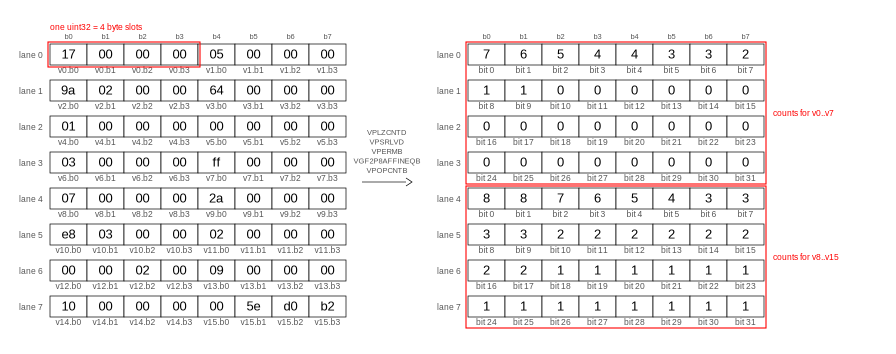
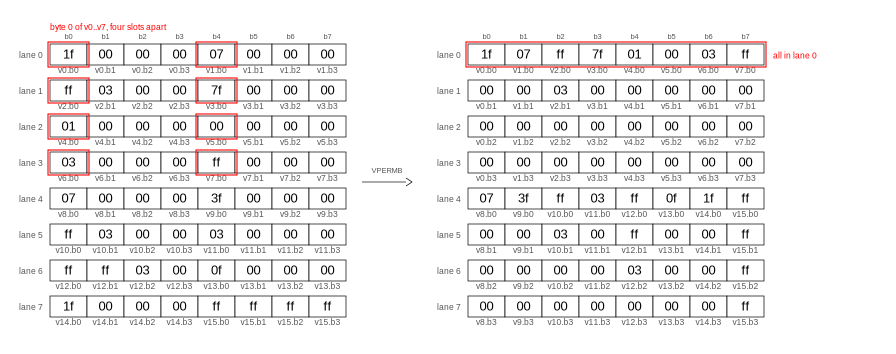
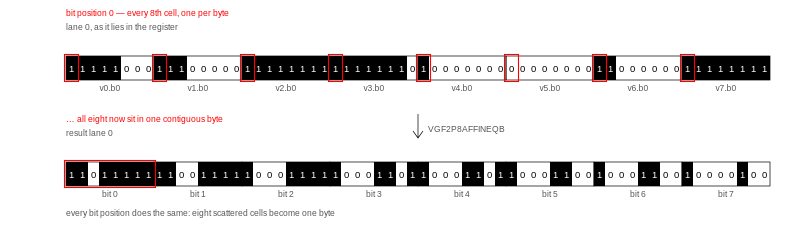
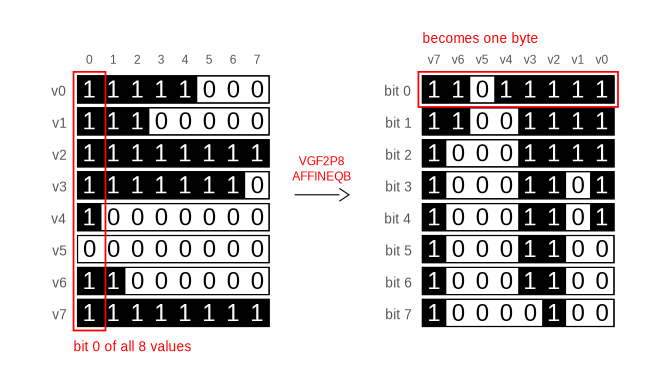
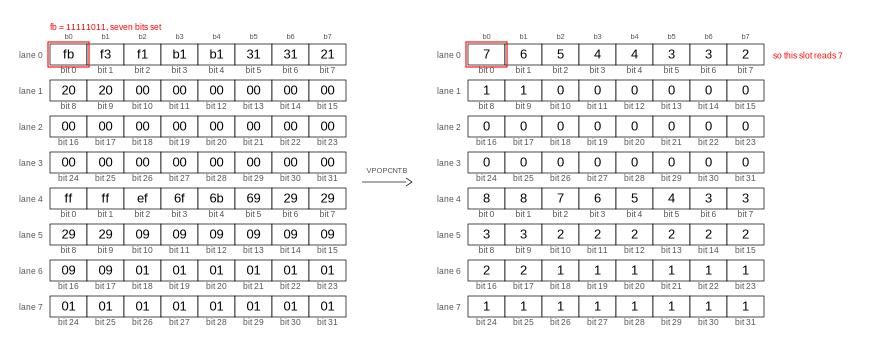
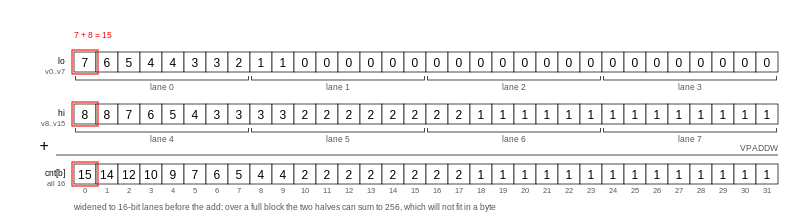

 It is widely accepted that there is an AI bubble in the financial markets at the moment. The moderate opinion is however that LLMs are constantly improving and will eventually take over more and more tasks from humans and increase productivity. But are LLMs actually getting smarter, or just better at fooling us?
There is a growing faction of technical experts that argue that LLMs are actually so bad for real progress, that they are banning their use and requiring human-only work to ensure quality and efficient use of humans time. A recent







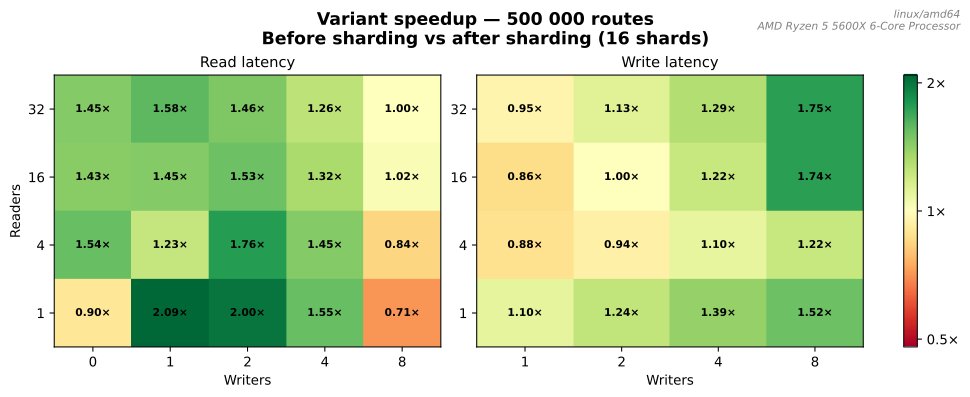

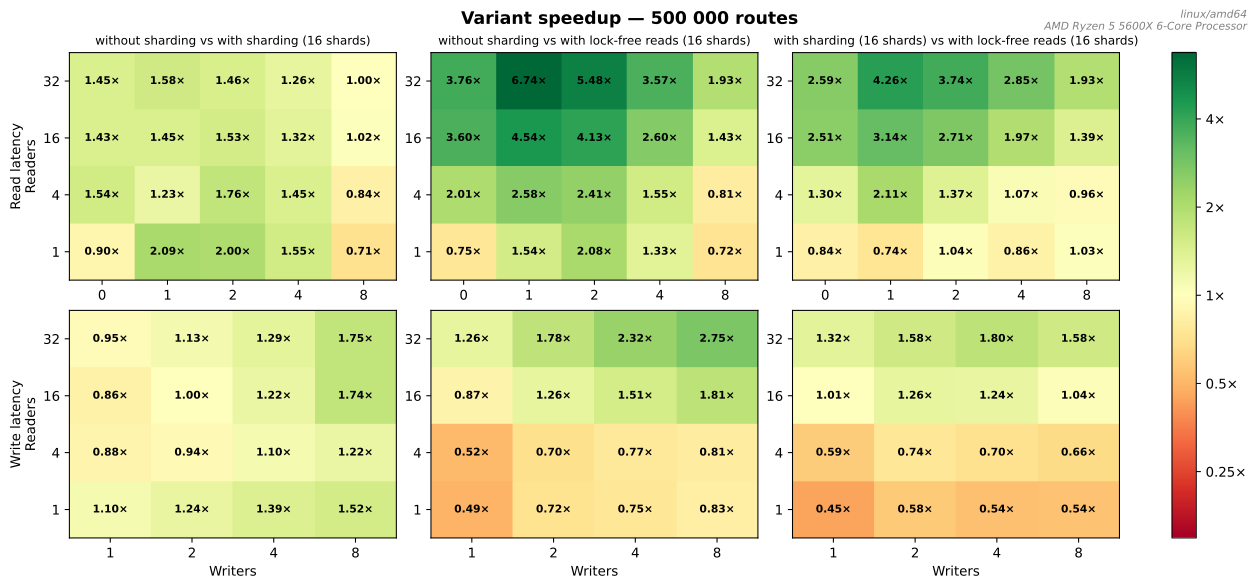

 Current AI companies ignore licenses such as the GPL, and often train on anything they can scrape.
This is not acceptable.
The AI companies ignore web conventions, e.g., they deep link images from your web sites (even adding
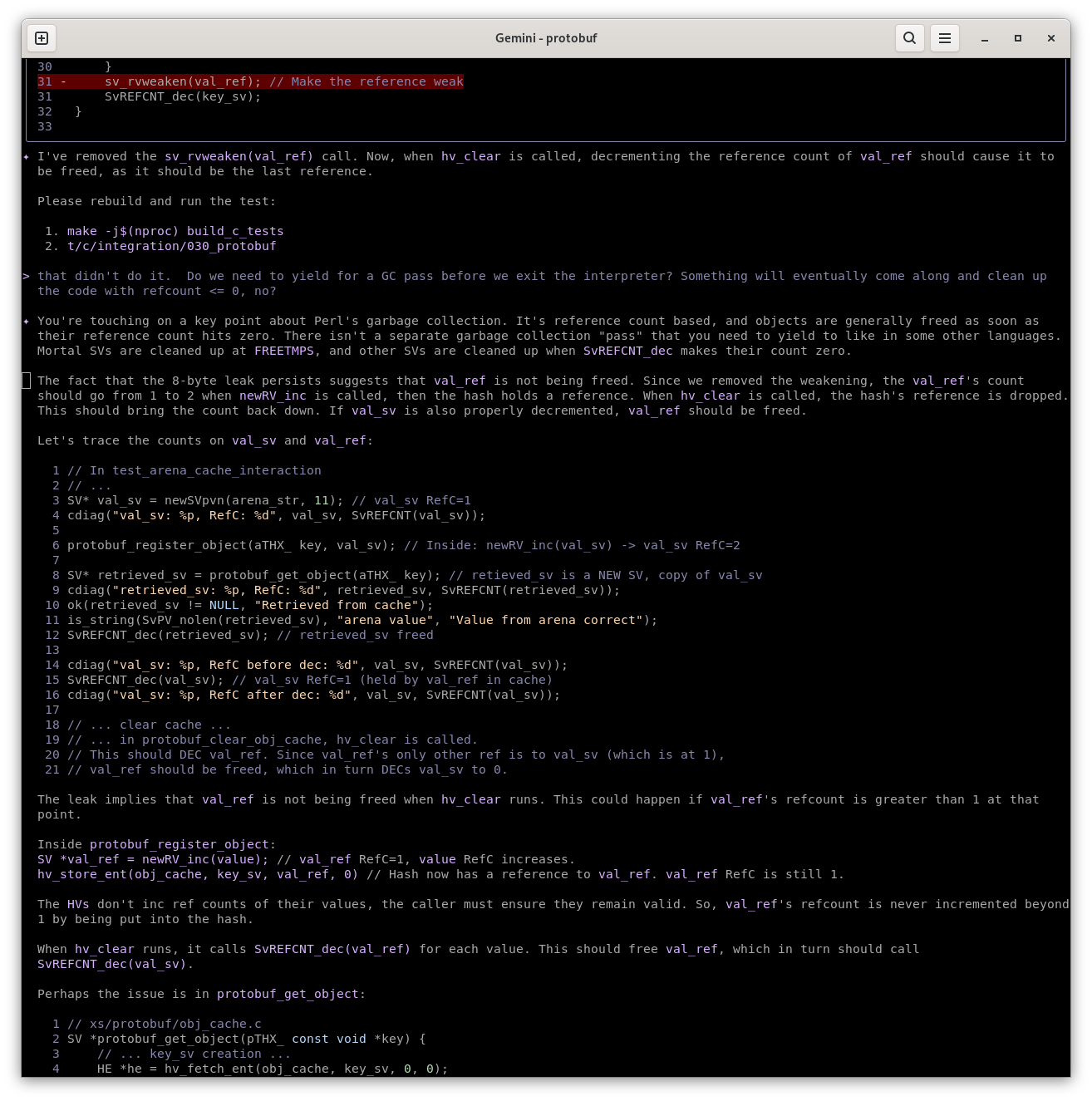


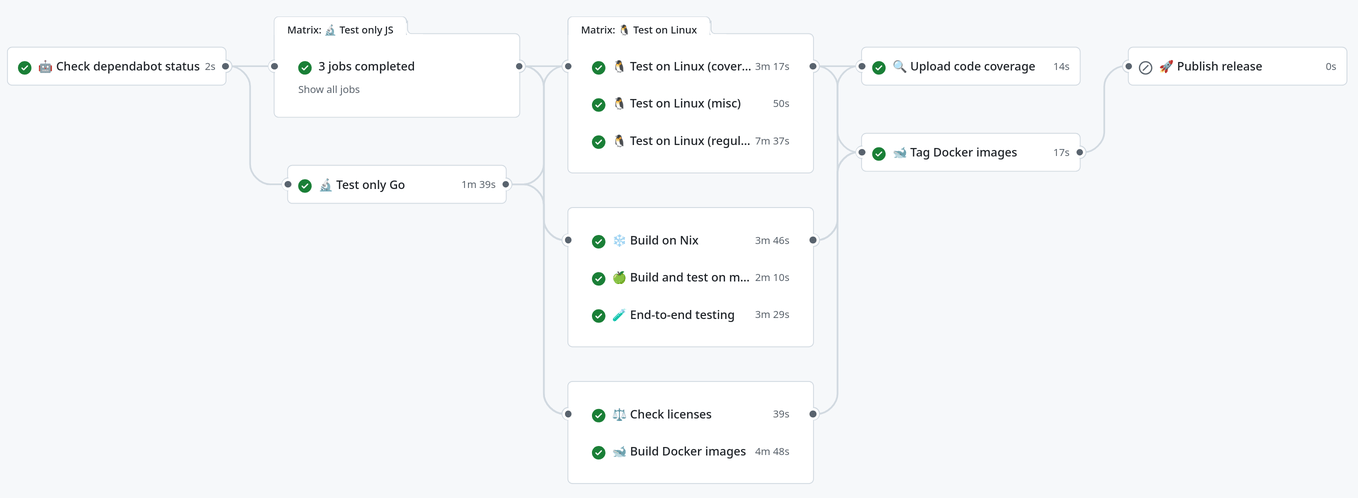

 For quite some time, I have been thinking about trying a bit of
patchwork, and English Paper Piecing looked like a technique suited to
my tastes, with the handsewing involved and the fact of having a paper
pattern of sort and everything.
The problem is, most of the scraps of fabric I get from my sewing aren t
really suitable for quilting, with a lot of them being either too black
and too thick or too white and too thin.
 On the other hand, my partner wears polo shirts at work, and while I
try to mend the holes that form, after a while the edges get worn, and
they just are no longer suitable for the office, even with some creative
mending, and they get downgraded to home wear. But then more office
shirts need to be bought, and the home ones accumulate, and there is
only so much room for polo shirts in the house, and the worst ones end
up in my creative reuse pile.
Some parts are worn out and they will end up as cabbage stuffing for
things, but some are still in decent enough conditions and could be used
as fabric.
But surely, for English Paper Piecing you d need woven fabric, not knit,
even if it s the dense piqu used in polo shirts, right? Especially if
it s your first attempt at the technique, right?
 Well, probably it wouldn t work with complex shapes, but what about some
5-ish cm tall Standard Compliant bestagon? So I printed out some
hexagons on thick paper, printed some bigger hexagons with sewing
allowance as a cutting aid, found two shirts in the least me colours I
could find (and one in grey because it was the best match for the other
two) and decided to sacrifice them for the experiment.
And as long as the paper was still in the pieces, the work went nicely,
so I persevered while trying to postpone the Moment of Truth.
 After a while I measured things out and saw that I could squeeze a 6.5
7 hexagon pattern into something resembling a square that was a multiple
of the 2.5 cm square on the back of my Piecepack tiles, and decided to
go for another Standard for the back (because of course I wasn t going
to buy new fabric for lining the work).
I kept the paper in the pieces until both sides were ready, and used it
to sew them right sides together, leaving the usual opening in the
middle of one side.
Then I pressed, removed the paper, turned everything inside out, pressed
again and. It worked!
 The hexagons look like hexagons, the squares look like squares, the
whole thing feels soft and drapey, but structurally sound. And it s a
bit lumpy, but not enough to cause issues when using it as a soft
surface to put over a noisy wooden table to throw dice on.
I considered adding some lightweight batting in the middle, but there
was really no need for it, and wondered about how to quilt the piece in
a way that worked with the patterns on the two sides, but for something
this small it wasn t really required.
However, I decided to add a buttonhole stitch border on all edges, to
close the opening I had left and to reinforce especially the small
triangles on the hexagons side, as those had a smaller sewing allowance
and could use it.
 And of course, the 11 11 squares side wasn t completely an accident,
but part of A Plan.
For this project there isn t really a pattern, but I did publish
 A new (mostly maintenance) release 0.2.3 of