My
experience at Debian Brazil Reunion 2026 in S o Paulo
Last weekend, I attended the first Debian Brazil Reunion.
Inspired by similar events organized in other countries, we decided
to bring the idea to Brazil and organize a three-day event focused on
contributing to Debian.
Every day, we started at 9 a.m. and worked until around 8 p.m.
I was so immersed in the event that even after getting back to the
hotel, I kept working. I was having so much fun that I just couldn't get
out of the mood of getting things done.
What everyone was working
one
A few people were working on translations into Brazilian Portuguese,
another group was organizing the MiniDebConf that will take place in
Curitiba next year, and the rest of us, myself included, were working on
packaging and other development-related tasks.
One thing that made me particularly proud was seeing Lucas Ramalho
and Giovanna Macedo travel all the way from Jo o Pessoa to attend the
event.
I first met them a few months ago during Debian Day, when I went to
Jo o Pessoa to give a packaging workshop and a talk about what it's like
to be a Debian contributor.
Seeing them again in S o Paulo, eager to learn more about packaging,
really inspired me to keep helping newcomers.
It's normal for people to come and go when making their first
contributions. That's why it's always rewarding to help someone and see
them stick around and become part of the project.
What I was working one
I started working on my list
of Neovim plugins that I want to package for Debian.
I managed to upload neovim-promise-async, a package that ships both a
Neovim plugin and a Lua library.
It was my first time packaging a Lua library, so I learned a lot by
reading the dh-lua code to better understand a few details of the Lua
ecosystem. Writing dh-lua.conf was a bit confusing at first, but it
turned out to be simpler than I expected. I also had fun coming up with
an autopkgtest for the package.
I also spend some time discussing and designing a feature with Aquila
Macedo for Debian Gitlab
self-service.
During the MiniDebConf
Brazil, Antonio Terceiro gave a lightning talk about salsa-scripts, a
tool he developed to help him approve Salsa accounts without having to
use the GitLab interface.
I really liked the idea, but there was one limitation: only members
of the salsa-admins team could use the tool. I tried to join the team to
help with account approvals, but the only way to do so was by having an
account with full administrative privileges.
I don't want that, and I agree with them that people should not have
that level of access just to help approve new accounts.
My goal was to solve the problem of approving accounts during
workshops. I hate having to pull commits from GitHub just because
someone hasn't had their Salsa account approved yet. And I'm not blaming
the salsa-admins team. It's simply impossible to approve accounts
quickly enough to keep up with the pace of live events.
That's when I came up with the idea of adding a feature to
salsa-scripts that would allow any Debian Developer to approve new
accounts.
I shared this idea Aquila, and he introduced me to Debian Gitlab
self-service. I wasn't aware of this project, and after discussing it,
we decided that implementing the feature there would make more sense
than adding it to salsa-scripts.
Anyway, if you want to learn more about this effort, check out the
Merge Request: https://salsa.debian.org/salsa/gitlab-newuser/-/merge_requests/4
Aquila took the idea I had been putting off for a while, implemented
the whole thing in just one day, and the result turned out pretty
cool:
Finally, I also sponsored a few uploads. I helped Tobias Sette and
Giovanna Macedo with their first uploads to Debian.
It's always nice to help newcomers in person. It's much easier to
explain things in detail, answer questions as they come up, and get
things done faster than going back and forth reviewing merge
requests.
Wrap up
It was an amazing experience!
I want to thank Rafael Passos and David Tadokoro for making this
happen. They managed to reserve one of the classrooms at the University
of S o Paulo (USP). Without that, the event would have been much more
expensive if we had needed to rent a coworking space.
It was also my first time visiting USP, which was a nice experience.
It's one of the most important universities in Brazil!
I'm already looking forward to the next edition!
Great to see that someone is trying to make that old project survive!
Armin Rigo, author of The Bub s Brothers, 2026
Something I wasn t expecting to ever hear about again, TBH. Good to hear.
David Gowers, who redrew its graphics in 2007
it works! :)
Alex Myczko, Debian Developer, 2026, after the first game over the Internet in years
Chapter 1: A Mac game, cloned for the network (2003)
In November 1997 Sebastian Wegner, known as McSebi, released Bub & Bob for the Mac as shareware, his own take on Taito s arcade classic Bubble Bobble. Two dragons, bubbles, monsters trapped inside them, fruit everywhere.
On 31 January 2003 Armin Rigo, one of the founders of PyPy, made the first commit of a network clone of McSebi s game, written in Python. The old site said it plainly: This version is a direct clone of the MacOS game Bub & Bob of McSebi , and thanked him: Thanks Sebi for all the cool graphics and sounds!
It didn t stay a one-man project for long. Gio, Odie, Michel-St phane and Armin wrote levels in Python, paxed improved the random levels, and David Gowers redrew the graphics in 2007. And in 2005 McSebi did something that turned out to matter a lot: he put his graphics and sounds under the Artistic License.
The last commit is from 12 October 2013. Then silence.
Seven players on version 1.6.2, the last release. Screenshot: screenshots.debian.net.
Chapter 2: Ten years in Debian (2005 to 2019)
In 2005 a Debian Developer filed an ITP, an Intent To Package , for the game (#308148). It reached the archive in February 2008, and for more than ten years apt install bubbros got you a LAN party in one command.
Around 2008, in Debian: a ten-player game over the network. Look for tarzeau on the scoreboard: that s Alex. Screenshot: screenshots.debian.net.
Then Python 2 reached its end. In October 2018 someone asked for a move to python3-pygame (#912480). Nobody did it. On 30 September 2019 the game left Debian, and the removal bug says why in four words: python2 removal; dead upstream (#936248).
Chapter 3: A Debian Developer with a long memory (2026)
That Debian Developer was Alex Myczko, and he never forgot the game. In 2021 he imported it from SourceForge into his own GitHub repository, and in 2024 Christopher Bock sent a first automatic conversion to Python 3. Then, in 2026, I wrote my first post on Planet Debian, about rescuing old software. Alex read it, got in touch, and asked if I fancied porting the game to Python 3.
Of course I did. Bringing old games and software back is what I enjoy most. I spent 20 years tracking down the authors of Conquer, a 1987 Unix game, until it became free software, and I adopted xwpe, a 1993 programming editor. A game people loved, thrown out only because the language under it moved on? That s my kind of project.
At some point I asked him on GitHub whether that 2005 ITP was his. His answer: yeah that was me .
2005: Alex files the ITP.
2019: python2 removal; dead upstream .
2026: yeah that was me .
Chapter 4: Bringing it back (2026)
Alex reviewed and merged everything in his repository and tagged the releases, 2.0 up to 2.3. Along the way anzz1 joined in with a lot of fixes, from sharper scaling to releasing the keys after a rewind. Most of the port was the usual Python 2 to 3 work. A few problems were properly fun, though.
The Time Machine
One bonus is a clock that rewinds the game. On Python 2 it relied on statesaver.c, a C module whose own comment brags This one can copy running generators and their frames! . It did exactly that, poking straight into CPython s frame structures:
There s no way to port that. Those structures are private and change with every Python release, and PyPy can t copy generators either. Without the module the game just printed statesaver module not compiled, no clock bonus .
So now the game simply plays the past again. When a board starts it saves a checkpoint of plain data: players, dragons, monsters, bonus state, and the state of the three random generators it uses. Every input from the network (keys, players joining or leaving) is logged with the pass number it arrived in. To rewind, the game rebuilds the board from the checkpoint and runs it forward again, with the sound off, up to the moment you land on.
That only works if the game is fully deterministic, so there s a test for it. It runs a server with two scripted players and hashes the screen and the game state after every pass. Two runs with different PYTHONHASHSEED values must give identical hashes. A rewind recomputes 1,644 passes, and the 602 passes that follow must match a run that never went back. (commit)
Bytes on the wire
The network protocol glued message codes, which were str, onto struct.pack output. Python 3 says no to that, so the server died building the very first icon. Now everything on the wire is bytes, and message() raises TypeError if you hand it a str instead of guessing an encoding:
Then there s division. I walked the syntax tree for every / in the code, 82 of them, and 13 divided two ints and needed //. One of them, '>'*(width/2-2), blew up only when you loaded a level without wind. The nice part: the protocol didn t change, so a Python 2 client still plays against a Python 3 server, and the other way round. (commit)
The clicks that missed
To join a game you click a dragon. Alex tried it on Wayland and wrote: i saw graphics, heard music, but no input worked . The GTK client read the mouse on the top-level window. With client-side decorations, the window s coordinates include the title bar and the shadow, so on GNOME, KDE and Weston every click landed 26 pixels to the right and 60 lower. The dragons sit at the bottom of the screen, so your click landed below the playfield and nobody could join. The fix was to read the mouse on the drawing area instead:
Wayland and full screen
The client picked the first display driver that loaded, and X11 was first in the list, even with no X server around. Now X11 goes last. Full screen asked for a 656x400 video mode, and Wayland compositors never let an app change the mode: Sway left it in a window, others drew a tiny playfield in a corner. pygame 2 s SCALED flag fixed full screen. For a resized or maximized window the game now scales the picture itself, keeping the proportions.
To stop this from breaking again there are display tests with real input: X11, Weston, Sway, KDE and GNOME, each in its own headless session. Most of them get input from xdotool. One gotcha: you must not pass --window, because then the events are synthetic, and Weston s X11 backend throws those away. GNOME has no X input at all, so there the test drives the mouse through Mutter s RemoteDesktop interface over D-Bus. Each test clicks a dragon, presses keys, and checks that the game saw them and that the picture fills the window. With the old code, the GTK client fails on Weston, KDE and GNOME. (commit)
Then Alex wrote from Hyprland: fullscreen works now. and also input works (i only had completely forgotten how it works, clicking dragon, then keys for left/right/jump/bubble :) we should setup an internet server, and have some fun
The dead server
The public list of games used to live on codespeak.net, the server from the early PyPy days, which is long gone. The game could hang or spit errors trying to reach it. Now the server is a setting, and there s a systemd unit to run your own. Alex set one up at bubble.aiei.ch, then wrote it works! :) , and: @vejeta what about you join? So I joined, and we played over the Internet, 13 years after the last commit.
The Internet server list is back, on Alex s meta-server. I blurred the server s address.
Chapter 5: Where did the music come from?
Debian wants to know the licence of every file, and the game has seven subgames, each with its own tune. Nobody knew where those tunes came from. The old CVS log named just one: Red Baron music. The others only said things like ext6.
I compared them against a big pile of game soundtracks and module music, and all I learned was that each tune sounds like the game its subgame copies: Arkanoid, Pac-Man, Galaga, Tetris, Lemmings. That much I could have guessed. I asked Armin. I have absolutely no idea any more where the music came from. Fair enough, it had been more than twenty years.
Then he read a draft about the game, and something clicked: I m pretty sure they are all extracts of music from OCRemix.org.
That was the clue. OverClocked ReMix is a huge fan site of video game remixes. I took every remix posted there before the tunes were committed, about 1,200, and slid each loop along them with a spectrum correlation, at a few playback speeds, then checked the hits on the raw waveform. Four of them matched: Black Block by DJComet for Arkanoid (played a semitone lower), 64-bit by Peterrian Productions for Pac-Man, MkVaffQuasi Ultimix by MkVaff for Tetris, and DABOMB by alk for Lemmings. Every second of each loop scores 0.94 or more against its remix, and under 0.3 against the rest. The script is in the repo, so anyone can check.
The Tetris one surprised me. The old README said it was recorded from the game, the Game Boy Tetris. It isn t. MkVaff s remix just opens with a Game Boy imitation good enough to fool everybody for twenty years.
Galaga was missing. It wasn t among the remixes OCRemix still publishes, and that turned out to be the hint: the site has withdrawn quite a few remixes over the years. MusicBrainz keeps a list of them, and an old mirror of the removed files survives in the Wayback Machine. In there was Galagzee by zee-roh. Waveform correlation 0.98, against 0.014 for a random control. Gone from the site, but the Internet Archive still had it.
Red Baron was the one the log already named, but which Red Baron? Not the sequels, and not Snoopy vs. the Red Baron either, that one is in another key. A fingerprint search found YouTube recordings of the title music of the 1990 DOS game by Dynamix that clearly matched the tune, but not the recording. So I booted the game in DOSBox with AdLib sound and listened to the title screen. Same melody, same tempo, a different arrangement. Somebody arranged it, and we ll probably never know who. When I showed Armin, he also thought it might come from that 1990 game.
And then there s ext6, a rock loop for the subgame called Tron, which was later rewritten into a snake game (that name sent me down the wrong path for a while). I searched every OCRemix, current and withdrawn, the old versions on archive.org, the whole VGMix archive, a long list of game music bands from Minibosses to Machinae Supremacy, the music of free games in Debian, Tron soundtracks, Armagetron. Even Shazam. Nothing. If you recognise it, please tell us.
OverClocked ReMix only allows unmodified, non-commercial copies, and the other sounds have no known author. So the original tunes and the seven subgame sound effects moved to a nonfree/ folder, and the game got free replacements with the same file names. I picked them by ear, over three rounds, to fit each subgame: CC0 and CC-BY tracks from OpenGameArt by Eric Matyas, HydroGene, Cleyton Kauffman, OwlishMedia and Jonathan Shaw. For Tetris there s Korobeiniki, the old folk tune, generated by a small script, so it can be rebuilt from source. The sound effects I made from scratch with a little synthesizer script. If the original files are installed the game plays them, and if not it plays the free ones. PROVENANCE.md lists where every file comes from.
Everything else has a clear licence. The code is MIT. McSebi s graphics, sounds, music and levels are under the Artistic License he granted in 2005, in answer to the first ITP. David Gowers put his 2007 graphics under the Artistic License 2.0, and Armin confirmed the Python levels are MIT. That leaves three fan-made level packs with no licence we can find. The Debian package ships only the free part, and a separate package in contrib, bubbros-nonfree-installer (#1153895), downloads the original tunes and those levels for you. If you made one of those level packs, or know who did, please tell us.
Come and play
We need testers. You need Python 3 and pygame (python3-pygame on Debian):
The game opens a control page in your browser. From there you start a game or join one from the Internet list, and the game window opens. Click a dragon, then use the keys for left, right, jump and bubble.
bubble.aiei.ch is Alex s own server, and he plans to keep it running.
Tell us what breaks, and on which desktop, in the issues. And if you know your way around Debian, the package is waiting to get back into the archive (ITP #1153735).
The control page that opens in your browser.Two players on board 3, on Python 3.
What I take away from it
An old ITP is a kind of promise, and this one was kept 21 years later. McSebi s two lines from 2005 are the only reason his graphics can ship in Debian today, so if you write something, say what licence it s under. The game worked fine on X11 and failed on the desktops people actually use now, and only testing on those desktops showed why. And above all, this is a game made by people. Armin, McSebi, David, Odie, paxed, Gio and Michel-St phane made it. Now Alex, anzz1, Christopher Bock and I have picked it up where they left it.
If you like this kind of story, Conquer is the long one: a 1987 Usenet game, and twenty years of chasing its authors until it became free software.
What game would you bring back, and who would you want to play it with?
On 22nd May 2026, we organized a MiniDebCamp at Bolgatty Palace, Kochi, Kerala.
The actual discussion for this year s camp began when we had a small meetup at Urbec s place in Kochi. We decided to do a MiniCamp rather than MiniConfs which we were doing for quite some time. Also, We had already done a Bug Squashing Party last year with 4 people and we wanted to do a bigger one this time.
Kiran(hacksk) was involved with organizing the camp initially. Later when we finalized the dates for the camp, he had to leave since it conflicted with another event he had to attend. Thanks to Aryan(spaciouscoder) for the event logo and designs. Due to his exam clashes, he also couldn t attend the event.
Choosing venue wasn t hard this time. We were already in talk with Bolgatty Palace for a bigger event and we decided to conduct the camp here after couple of visits and negotiations on rates. Our booking was still with them due to the unfortunate event happened during the DebConf23.
Our announcement and Wiki page
We opened our registration via LiberaForms as we had decided on avoiding non free platforms for data collection and wanted to do it as private as possible. After exploring our options, we decided on LiberaForms. We prepared a data collection, retention and destruction policy for the event. We purposefully only asked for the required fields. We were so particular that we didn t even have a phone number filed but this backfired a little. Turns out many people don t check mail as frequent as we thought. Inspite of it, we managed to reach out with updates on the event successfully.
In parallel, we also sent out some mails for sponsorships. Thanks to OnlyOffice and FOSSUNITED who generously sponsored our event and enabled us to accommodate more participants. Since its a camp and not just a BSP like last year, we welcomed new people to the event.
We started the event on Friday evening. We did a small orientation for new comers. Before the event, we shortlisted some bugs and tasks to share. All began hacking on stuffs that was interesting to them. Some did packaging, some did bug fixes and others worked on website fixes. There was even some fiddling done on beagleboard SBC and other boards.
The venue was calm and serene. The weather was nice, notwithstanding the few downpours we experienced. Some people from Hyderabad (South eastern side) and Kolkata actually got amazed by the tropical greenery around the venue and Kochi in general. The food served to us through out the event was amazing and accommodation was also very nice.
In terms of bug squashing statistics, we managed to touch 93 bugs \o/ and of which 82 bugs are resolved. Parallel to bug squashing, Subin (bin/su) and Muneer worked on revamping the Debian Project website. MRs
Seeing the outcome, we are hopeful and thrilled to conduct this as an annual event. Couple of people had a brainstorm later and the current decision is to do similar event next year in Bengaluru, given it will be more accessible than Kochi.
Today we launched a change that has been a long time in the making: The updated website for freedesktop.org, as well as the refreshed wiki.freedesktop.org are live now!
You can read the announcement here, this blog post elaborates a bit on it and on the background of the changes, as well as future plans.
Why change anything?
The freedesktop.org website has been a wiki for a long time, which definitely was the right call in its inception. A wiki is very much in spirit of Freedesktop s mission statement to foster collaboration between desktop environments and to be a place to create de-facto standards.
However, over the years, working with the wiki became a bit of an issue: Not only did we face multiple spam-apocalypses (which in part motivated the switch to IkiWiki in 2013 and resulted in us heavily restricting write access to the wiki), but it also meant that official project information, finished specifications, half-finished proposals and pages nobody had touched in fifteen years were all sitting next to each other.
Since 2000 when Freedesktop.org was started, the project has grown so much and has had so many associated projects and specifications over the decades that it is now very difficult for new people to get an overview what is current and what state the software projects and specifications hosted by Freedesktop.org are in.
Having only a wiki as a large and somewhat disorganized pile of information did not help with that issue, so I worked to split things up: We now have a website as well as a wiki, using different designs to distinguish the two, and serving different purposes.
Website & website plans
The website at www.freedesktop.org will be the place for official , or rather, more curated information. Now that the new website is live, its content is still largely that of the old wiki. Over the next weeks, I will be working on cleaning up its contents and listings. For example, I will clearly split active projects from archived ones, add missing ones, and also work towards synchronizing the specifications hosted on the former wiki / website with the ones listed on specifications.fd.o.
So, basically I will do an inventory check of Freedesktop. That work has already started, but until now, I could not make any public changes to not disrupt workflows or make my own future work harder by having diverging information in two places (website & wiki).
I also wanted to make it easier for people to find information on how to get involved with Freedesktop and associated projects, so the new website now has a more discoverable section for that.
The new website is a static site hosted via GitLab Pages and using Pelican. You can view its sources if you like.
Wiki changes
Of course, we also still want to keep the Wiki and all of its rich history around! It remains the easy-to-edit place for collaboration on upcoming projects and specifications.
Wiki edits must now happen through GitLab instead of the old IkiWiki web interface. While this sounds like an additional barrier to edit the wiki, it is significantly easier than requesting an account on annarchy to edit the old Wiki through the web interface. It also still allows us to keep the existing history as well as spam protection measures. In order to use the wiki with GitLab Pages and to keep the history easily accessible and readable, I rewrote the Git history of the wiki to make it pretend that all changes always happened in a content subdirectory. So, if commit signatures are missing and hashes are different: That is the only reason why. There have been no content changes or other metadata changes (and we still have a copy of the pristine wiki Git repository).
For the fd.o wiki, we are now also using Hari s IkiWiki template that is already in use on the X.org website and which is much easier on the eyes.
Next steps
At the moment, I am mostly concerned with ensuring that the change has not broken any existing links and all systems keep working. After that, the wiki website deduplication work will start and we can modernize both the content of the website and wiki.
If you find a broken link, an outdated page or anything else that looks wrong, please file an issue or, even better, open a merge request. For the wiki, you are very welcome to just fix or otherwise update the page directly.
I did reach out to all wiki editors and projects impacted by this change in advance, but since there are so many people and projects involved, it is always possible to miss someone or something. If you found a bug, need edit permissions, or need help with anything, don t hesitate to ping me: You can find me as ximion in OFTC s #freedesktop IRC channel, in the very recently created #xdg-specs channel on the Freedesktop Matrix space, or you can email me.
Thank you!
I do want to echo the announcement news post here: None of Freedesktop.org would exist without the people who filled it with life over the years and who worked on cross-desktop collaborative projects. I have read through a lot of wiki history and old project pages over the recent months, and it feels amazing to know how much work and passion people have poured into the projects and collaborative efforts over the years no matter if they were successes in the end, or remained experiments. I am very thankful for all current, past and future editors of the website and wiki, as well as all project maintainers and contributors.
I also want to thank the Sovereign Tech Agency once more for supporting me in their fellowship program as a maintainer, which enabled me to work on this task among other things.
Thanks to all contributors, in whichever way you contribute to our free desktop ecosystem!
Ever since I built an AirGradient boardback in 2023, I
have been more and more conscientious about air quality. Pretty instantly after
installing the board in my living room, I realised common habits like cooking
can significantly increase the particulate levels in my entire apartment.
Here is a good example of a pretty large (and long-lasting) PM2.5
spike on September 23rd after cooking a meal1:
Isn't this crazy? Last time Montreal had such bad outdoor air quality, there
were public broadcasts telling people not to go outside and to wear N95 face
masks if we absolutely needed to. Inside my apartment though, no one ever told
me cooking veggies in a little oil on medium-low2 could make the air I
breathe unsafe.
This of course is aggravated by the fact my apartment is pretty much as airtight
as it can reasonably be, since winters here are very cold and air infiltrations
are a major heat loss source. As such "opening my windows when I cook" is not a
viable solution to this problem half of the year.
I first tried solving this issue by tuning my HVAC system. Sadly, its controls
don't offer much flexibility3, which means it is not the right tool to
respond to short-lived spikes like these. Not only this, but the quality of the
air outside is not always good either: Canada now has a forest fire season
(we're all doomed) and my neighbors regularly smoke cigarettes right under my
HVAC air intake4.
A box, but nicer-looking
Clearly, the solution to this particular issue was to buy an air purifier. Or
at least, that's what a "normal" people would have done. Sadly, these units are
expensive, use (expensive) proprietary filters, don't work very
well and can be loud.
One of the great inventions of the COVID-19 pandemic is the Corsi-Rosenthal
box. Popularised in 2020 by Richard Corsi and Jim Rosenthal, the idea
is to make a DIY air purifier by using a large fan to force air through cheap
and readily available MERV13 air filters.
The main downsides of regular CR boxes is they are pretty ugly, can be loud
depending on the fan used and need to be rebuilt when the filters are changed
(they are held using tape).
That's when I stumbled on this amazing design for a silent and
sleek CR box sold by The 3D Handyman. Clearly, with a bit of
tinkering and a 3D printer, I could also design something sleek, silent and
efficient!
Since I was already using MERV13 air filters in my HVAC, I decided to design
around 4 vertical "beams" where the filters would slot in. With tight enough
tolerances, I figured I could get rid of the complex moving parts in The 3D
Handyman's design. I also added M5 threads to screw the top and bottom panels
and the TPU feet to elevate the box from the floor.
The final result looks like this. I used some foamcore boards I had laying
around at work for the top and bottom panels, but any somewhat rigid plastic
panels (like coroplast) would also work:
out' position" alt="The whole CR box assembled, with the fan in the 'in -> out' position">
I ended up having to split the "beams" in two and joining them with dowels, as
even the largest 3D printers I had access to couldn't print them in one piece.
Costs
Here's the cost breakdown for this project (shipping and taxes are included):
The fan is amazing. It is by far the best fan I have ever owned. Not
only it is all metal and very quiet, but it is also PWM-controlled via a
USB-C controller, which means the speed it runs at can be automated.
I have been using it constantly and take it out of the CR box during the summer
to be used as a "regular" fan. I like it so much so I am seriously
considering buying the 14 inch model.
The 3D printed parts are plastic and they will last me a lifetime.
As mentioned before, the filters are the same I use in HVAC, which means I can
buy them in packs of 12 to reduce costs.
All in all, I'm very happy with this project. Since finishing it, I have been
able to consistently get the PM2.5 levels in my apartment down to
zero and significantly reduce the time it takes to recover from a spike caused
by cooking food.
I certainly could have cut the cost of this project in half by choosing a
cheaper fan, like the box fans used in the reference Corsi-Rosenthal
instructions, but I decided to spend more for a more quiet and reliable option.
3D files
Here are the STLs I used for this project. I certainly don't recommend just
printing them as-is, since I am using the 12" x 12 " x "5 custom air
filters from my HVAC and you should probably use something more standard.
If you use these files as inspiration, your goal should be to make a box that
is 16" wide, to fit the AC Infinity fan comfortably. I printed the "beams" in
PETG at 100% infill and the feet in TPU 95:
Future
The next step in this project is to automate the fan speed based on the
PM2.5 levels in my apartment. At the moment, I manage this manually
and it is becoming a chore.
This should be relatively easy to do with a Raspberry Pi Pico board, since AC
Infinity sells a USB-C to Molex adapter for the fan.
This was with my pretty good range hood running at a reasonable
level. Without it, I've seen PM2.5 levels spike as much as 250
from cooking alone.
To be clear, this spike was not the result of me burning the hell
out of a piece of meat or something like that.
The HVAC either runs in manual "low high" mode, or on a timed
"20min ON 40min OFF" loop that can be tuned by fiddling with a hydrostat
knob that triggers the "high" mode. This is pretty dumb and makes it so
the HVAC runs even when the apartment is empty or doesn't run enough to
keep CO2 levels low when multiple people are there. A future
project of mine will be to hack the controls to tie them into my air
quality monitoring and trigger the HVAC based on CO2 levels.
I'm also working on another HVAC hack to fix this.
Debian's Cloud Images for various
public cloud platforms and VM environments are built using a tool called
debian-cloud-images,
an in-house utility developed and maintained by the Debian Cloud Team.
What?
The debian-cloud-images tooling uses FAI (Fully Automatic Installation) to create
custom VM images for public clouds like GCP, Azure, and AWS, along with the
genericcloud class. I wanted to convert this into a fully declarative, mkosi-based
image build where the entire image is described using INI-format configuration files,
with only a few post-installation scripts to handle final customizations.
Why?
I've been working with various image customization formats for a long time. In my
previous company, I used to build customized industrial PC distributions based purely
on Debian using multistrap and a bunch of shell scripts to stitch together raw image
creation, bootloader installation, etc. I've also done custom installs using
debootstrap on my own laptop with systemd-boot as the bootloader, but that was
mostly hand-crafted and not automated. Once I came across mkosi, I was impressed by
how a single utility can do everything and churn out a fully usable image without extra
glue scripts for partitioning and image creation. You still need a few scripts to
finalize some parts of the installation (via postinst hooks), but those are very
minimal.
So I decided: why not convert debian-cloud-images into mkosi's declarative format
with a few architectural changes? My requirements were:
Btrfs as the root filesystem: Partly because I like it, but primarily for the
ability to use transparent compression (zstd:1), subvolumes, and snapshots for
atomic rollbacks when things go wrong.
systemd-boot and Unified Kernel Images (UKI): Primarily because systemd-boot
is clean and minimal exactly what a modern bootloader should be. Combining it with
UKIs and UEFI Secure Boot is bliss compared to the complexity of the GRUB2 world.
Note: This intentionally drops legacy BIOS (MBR/CSM) partitioning support in
favor of pure UEFI. Modern cloud platforms (AWS Nitro, Azure Gen2, GCP) support
UEFI natively, and dropping BIOS allows shedding significant legacy bootloader
baggage though it does make these images unsuitable for older, non-UEFI hypervisors.
Implementation
Of course, the initial heavy lifting was done mostly using Antigravity (agy), along with
debugging, tuning, and cleanup from my side. I pointed agy to a local copy of
debian-cloud-images and laid out my requirements: preserve parity with the original
packages and configurations, while enabling selective builds for each cloud via modular
profiles. The resulting specification is documented here.
The repository also includes a verification script
that audits functional parity against official images produced by debian-cloud-images
(verifying packages, APT deb822 sources, and systemd services, while accounting for the
switch to Btrfs and systemd-boot). Initial verification was performed for all Trixie
profiles, and the parity report is published here.
I've also booted the genericcloud profile image under UEFI in a local VM to verify
live bootability, bootctl status, network connectivity, and APT repository setup.
This completes Phase 1 of the implementation. The remaining phases outlined in the
specification include:
Phase 2: Immutable Images with dm-verity:
Configure Verity=hash in systemd-repart's 10-root.conf. Enable mkosi auto-signing
for the verity root hash and pass the root hash into UKI kernel command lines
automatically.
Phase 3: Secure Boot & Signed UKIs:
Integrate SecureBoot=yes with custom owner keys or ShimBootloader=signed using
Microsoft Third-Party CA signed shim binaries.
Phase 4: System Extensions (systemd-sysext):
Decouple cloud vendor agents (AWS CLI, Azure waagent, GCP guest agent) into separate
.raw system extensions. Maintain a single unified, signed base OS image across all
cloud platforms.
Phase 5: Btrfs Automated Rollbacks:
Combine Btrfs @snapshots with systemd-boot snapshot boot entries for fail-safe OS
upgrades.
Another advantage of this setup is that the same tooling can build images for physical
laptops and bare-metal servers. For example, in an earlier post, I walked through live-booting
with debootstrap and manually configuring systemd-boot for a custom UEFI
installation. With mkosi, I can simply generate a customized image locally with UKIs
ready to go, live-boot the target machine, and write the image directly to the root disk.
Conclusion
This experiment is an exploration of the power of mkosi; I haven't discussed adoption
with the Debian Cloud Team yet. For now, this will continue as my pet project. While
I won't be hosting pre-built binary images, anyone interested is welcome to clone the
repository and build the images locally.
I will probably take some more time before tackling dm-verity images, as I want to
understand the nuances thoroughly before experimenting with them. Until then, happy
hacking! Please report any issues or suggestions on GitHub.
In previous articles, I explained how the Linux kernel implements IPv4 and
IPv6 routing tables, and I showed the performance improvement of route
lookups from Linux 2.6.32 to 4.16 for IPv4 including the impact of
the Meltdown and Spectre mitigations as well as from Linux 2.6.39 to 4.18
for IPv6. This article updates the numbers through Linux 7.3 and
investigates the perpetrator responsible for the performance regressions!
I ran the following benchmarks on an AMD EPYC 8024P, a Zen 4c
CPU, rented from Scaleway, running at 2.4 GHz with CPU boost disabled. I
compiled the kernels with GCC 10.2: this version can compile older kernels as
well as the current ones.
IPv6
Performance evolution of IPv6 route lookups. Versions with an asterisk have SRSO mitigation disabled.
I tested four scenarios:
a recent full view with about 260,000 prefixes,
a full view from 2017 with about 40,000 prefixes,
a set of 40,000 /48 prefixes, such that 2 lookups out of 3 match, and
a set of 40,000 random /128 prefixes, such that 1 lookup out of 400 matches.
In Linux 4.15, Wei Wang improved the lookup performance by replacing the
read-write lock with an RCU and a spinlock in commit 66f5d6ce53e6. In Linux
4.18, David Ahern improved the data structures used by route lookup. In
Linux 5.9, Brian Vazquez removed expensive indirect calls in commit
55cced4f813b.
The major 200 ns regression introduced in Linux 6.5 wiped out all these
improvements. This version implements a mitigation for "Speculative Return
Stack Overflow," a vulnerability affecting AMD processors, in commit
fb3bd914b3ec. This mitigation adds about 20 cycles on each function return.
It was backported to older kernels (5.10, 5.15, 6.1, and 6.4). To keep the
results legible, I disabled the mitigation for these versions with
spec_rstack_overflow=off on the kernel command-line.
You can check the vulnerabilities impacting your CPU and their mitigations with
lscpu. Some mitigations may depend on the microcode or on the
firmware.1
$ lscpugrep'^Vuln'Vulnerability Gather data sampling: Not affectedVulnerability Indirect target selection: Not affectedVulnerability Itlb multihit: Not affectedVulnerability L1tf: Not affectedVulnerability Mds: Not affectedVulnerability Meltdown: Not affectedVulnerability Mmio stale data: Not affectedVulnerability Reg file data sampling: Not affectedVulnerability Retbleed: Not affectedVulnerability Spec rstack overflow: Mitigation; Safe RETVulnerability Spec store bypass: Mitigation; Speculative Store Bypass disabled via prctlVulnerability Spectre v1: Mitigation; usercopy/swapgs barriers and __user pointer sanitizationVulnerability Spectre v2: Mitigation; Retpolines; IBPB conditional; IBRS_FW; STIBP always-on; RSB filling; PBRSB-eIBRS Not affected; BHI Not affectedVulnerability Srbds: Not affectedVulnerability Tsa: Vulnerable: Clear CPU buffers attempted, no microcodeVulnerability Tsx async abort: Not affectedVulnerability Vmscape: Mitigation; IBPB before exit to userspace
IPv4
Performance evolution of IPv4 route lookups. Versions with an asterisk have SRSO mitigation disabled.
I tested three scenarios:
a recent full view with more than 1,000,000 prefixes,
a subset of a full view from 2017 with 500,000 prefixes, and
a set of 500,000 contiguous /32 prefixes.
The 30 ns impact of the mitigation for SRSO in Linux 6.5 is smaller than for
IPv6 because IPv4 route lookups traverse fewer functions: around 4 function
calls for IPv4 compared to 25 for IPv6.
In Linux 5.11, I introduced a regression in commit c0c5a60f0f13 after
fixing the behavior of net.ipv4.conf.all.ignore_routes_with_linkdown!2
As a result, the ip_ignore_linkdown() function spends
around 5 additional cycles to return a result as it needs to follow three
additional pointers. fib_lookup() eventually calls it in the
following code:
Impact of mitigations
To reduce the impact of mitigations, you can disable all of them with
mitigations=off, disable only a specific one like with
spec_rstack_overflow=off, or protect against only some attack vectors with
mitigations=auto,no_user_kernel, starting from Linux 6.17.
The impact is also quite different depending on the CPU. For example, on a Xeon
W-2295, an Intel desktop CPU from 2020, the impact of the mitigations is only
a few cycles for IPv4, and less than 3% for IPv6. The main contributor is the
mitigation for the Indirect Target Selection vulnerability, which is fixed
since the Sapphire Rapids architecture.
If we set aside the regressions introduced by the mitigations against CPU
attacks, the performance of IPv4 is declining slowly over time while IPv6 has
improved in the past and is currently stable. If routing performance is
important, you have several options: choose a different CPU like an AMD Zen 5
CPU, a fourth generation Xeon CPU, or maybe an ARM Neoverse V2;
disable some or all the mitigations; bypass routing with XDP/eBPF;5 or
offload routing to the network card.
Note
Maytham Alsudany reviewed a first draft of this article. Any errors are still mine!
The microcode was out of date on my machine as I forgot to install the
amd64-microcode package. As it only impacts TSA, our benchmark is
unaffected. Spectre v2 mitigation did not enable automatic IBRS, because
of SEV-SNP being enabled in the firmware. With automatic IBRS, the
impact of SRSO should be smaller.
Despite ipvX in its title, the commit only changes the behavior of the
IPv4 code. The IPv6 version overwrites the value of each device in
addrconf_fixup_linkdown().
Linux 7.5 will be the first stable release including this fix.
At 2.4 GHz, one cycle is about 0.42 ns.
This requires avoiding bpf_fib_lookup(), which relies on
the same kernel lookup.
Bunny CDN
Bunny.net started as BunnyCDN in 2015. They added IPv6
support in 2017. Switching was uneventful. I don't bring a custom domain: I
serve the content from the b-cdn.net domain. As I depend on content
negotiation to serve AVIF and WebP images, I configure the CDN to cache
each image format separately.
I disable logging to avoid collecting personal
information. While the bunny.net GDPR page promises they anonymize data, it
is unclear what CloudFront keeps in its own logs when logging is disabled.
The only downside of the bunny.net CDN offering is the lack of HTTP/3. I asked
their support: two minutes later, they answered they are working on it but have
no ETA to share.
Bunny DNS
Bunny.net introduced their DNS offering in 2022 and recently reduced its
cost to almost zero. They support geographical routing, but a
very cool feature is the scriptable DNS: it runs a piece of user-supplied
JavaScript on each query to compute the answer.
I run seven small NixOS virtual machines to host this blog around the world:
Paris, Nuremberg, Ashburn, Singapore, San Jose, S o Paulo, and Sydney. Bunny's
scriptable DNS lets me return the IP addresses of the two nearest servers.
The browser falls back to the second server if the first one is down.
constservers=[ipv4:"45.90.160.60",ipv6:"2a0c:8881:5:100::1",latitude:48.88,longitude:2.22, ,/* [ ] */ipv4:"139.180.162.114",ipv6:"2001:19f0:5800:1855:5400:6ff:fef0:4c0a",latitude:-33.87,longitude:151.21, ,];constfamilies=A:"ipv4",AAAA:"ipv6" ;constrecords=A:ARecord,AAAA:AaaaRecord ;exportdefaultfunctionhandleQuery(query)consttype=String(query.request.queryType).toUpperCase();constfamily=families[type];if(!family)return[];// Get user locationconstlocation=query.request.geoLocation;// Build a list of candidatesletcandidates=servers.map((s)=>newServer(s[family],s.latitude,s.longitude,100),);// Select the two closest alive serversconstselected=[];while(selected.length<2)constserver=RoutingEngine.getClosestServer(candidates,location,true);selected.push(server);candidates=candidates.filter((s)=>s.ip!==server.ip);// Return their IP addressesreturnselected.map((s)=>newrecords[type](s.ip,3600));
The above script relies on the
RoutingEngine.getClosestServer() helper, which returns the
closest alive3 server to the user.4 Thanks to Doggo, we can
check it works as expected, at least for A:5
$ doggo--gp-from="Amsterdam"Avincent.bernat.ch
LOCATION NAME TYPE TTL ADDRESSAmsterdam, NL vincent.bernat.ch. A 3600s 45.90.160.60 vincent.bernat.ch. A 3600s 116.203.18.48$ doggo--gp-from="Texas"Avincent.bernat.ch
LOCATION NAME TYPE TTL ADDRESSHouston (TX), US vincent.bernat.ch. A 3600s 5.161.44.145 vincent.bernat.ch. A 3600s 149.28.219.155
The most annoying drawback of this method is that a user from Buenos Aires gets
both S o Paulo (1000 mi, 30 ms RTT) and Ashburn (5200 mi, 140 ms RTT). Most
resolvers randomize the order, so the user may pull the web page from Ashburn.
We could return only the nearest server and swap the scripted record with the
built-in geographic routing instead. But if the server becomes unavailable, the
browser has no alternative until the DNS cache expires. It leaves a short window
of unavailability, even with a short TTL.
The HTTPS record solution
The HTTPS DNS record, defined in RFC 9460, solves both the availability
and the latency issues. Modern browsers query this record to get additional
information to reach an HTTP server, including an alternative port and the
application layer protocol HTTP/2 or HTTP/3. Each record has a priority. We
can ask browsers to contact the nearest server first and fall back to the next
one if the first is unavailable:
vincentHTTPS1first.geoalpn="h3,h2"vincentHTTPS2second.geoalpn="h3,h2"vincentHTTPS3.alpn="h3,h2"; Bunny DNS must provide the two closest servers as "first.geo"; and "second.geo" with geographic or latency routing.first.geoA45.90.160.60first.geoAAAA2a0c:8881:5:100::1second.geoA116.203.18.48second.geoAAAA2a01:4f8:1c0c:5eb5::1vincentA45.90.160.60vincentA116.203.18.48vincentAAAA2a0c:8881:5:100::1vincentAAAA2a01:4f8:1c0c:5eb5::1
This looks like the ideal solution! Unfortunately, Chrome ignores any record
whose target is not ., hence the last record at priority 3.
Moreover, unlike with a CNAME, Bunny DNS does not return the IP addresses for
first.geo and second.geo in the additional section. The resolver needs to
send a first request to get the HTTPS record, and a second to resolve
first.geo.
HTTPS records are still too new for this use case. Back to the drawing board!
The hybrid solution
As a compromise, the script returns the two nearest servers if they are at a
similar distance from the user. Otherwise, it returns only the nearest one with
a lower TTL of 2 minutes.
exportdefaultfunctionhandleQuery(query)constlocation=query.request.geoLocation;letcandidates=servers.map((s)=>newServer(s.ipv4,s.latitude,s.longitude,100),);// Select the two closest serversconstselected=[];while(selected.length<2)constserver=RoutingEngine.getClosestServer(candidates,location,true);selected.push(server);candidates=candidates.filter((s)=>s.ip!==server.ip);// Compute the distance to the user for each of themconst[first,second]=selected.map((s)=>GeoDistance.calculate(s,location),);// If the second one is at twice the distance and at more than 1000 miles// from the first, return only the first one with a TTL of 2 minutes.if(second>2*first&&second-first>1000)return[newARecord(selected[0].ip,120)];// Otherwise, return both with a TTL of 1 hour.returnselected.map((s)=>newARecord(s.ip,3600));
We can check it with Doggo. From Chicago, we get only the Ashburn server
with a TTL of 2 minutes, while from Mexico, we get both Ashburn and San Jose.
$ doggo--gp-from="Chicago"Avincent.bernat.ch
LOCATION NAME TYPE TTL ADDRESSChicago (IL), US vincent.bernat.ch. A 120s 5.161.44.145$ doggo--gp-from="Mexico"Avincent.bernat.ch
LOCATION NAME TYPE TTL ADDRESSQueretaro, MX vincent.bernat.ch. A 3600s 5.161.44.145 vincent.bernat.ch. A 3600s 149.28.219.155$ doggo--reverse5.161.44.145149.28.219.155
NAME TYPE TTL ADDRESS145.44.161.5.in-addr.arpa. PTR 7187s web05.luffy.cx.155.219.28.149.in-addr.arpa. PTR 3600s web07.luffy.cx.
Note
On the live page, the map below is interactive: point at a
location to get the DNS answer, or disable servers to see how the answers
change.
The complete code is a bit more complex. It works around
RoutingEngine.getClosestServer() supporting only IPv4, and it handles the case
where there are not enough alive servers to build an answer.
Bunny.net has a comprehensive Terraform provider. I leverage CDK
Terrain to build the target state in TypeScript and OpenTofu to deploy
it. Have a look at "Managing infrastructure with Terraform, CDKTF, and
NixOS" for more details.6
ACME DNS with Hickory DNS
Route 53 covered one additional use case of mine: serving acme.luffy.cx to
solve DNS-01 ACME challenges. Unlike Route 53, Bunny DNS cannot
restrict access to a single zone with a fine-grained access policy. As this
usage requires neither high availability nor low latency, I replaced Route 53
with Hickory, a memory-safe DNS server written in Rust. It supports
automatic DNSSEC signatures and dynamic updates. Its
configuration is simple:
[[zones]]zone="acme.luffy.cx"zone_type="Primary"[zones.stores]allow_update=truetype="sqlite"journal_path="acme.luffy.cx.sqlite"zone_path="acme.luffy.cx.zone"# Private key to sign the zone with DNSSEC. Generated with:# openssl genpkey -algorithm EC -pkeyopt ec_paramgen_curve:P-256[[zones.keys]]algorithm="ECDSAP256SHA256"key_path="/etc/hickory-dns.acme.luffy.cx.pem"# TSIG key to sign zone updates. Generated with:# openssl rand 32[[zones.stores.tsig_keys]]algorithm="hmac-sha256"key_file="/etc/hickory-dns.acme.luffy.cx.update.acme.luffy.cx.tsig"name="update.acme.luffy.cx."
The provided zone file only seeds the database on first start. I delegate
DNS-01 challenges to this zone with CNAME records:
Lego, the ACME client I use to get certificates from Let's Encrypt,
answers the DNS-01 challenge by pushing entries with the DNS UPDATE protocol.
Unfortunately, Bunny DNS cannot publish a DS record in a zone.7 I need one
to secure the acme.luffy.cx zone and certificate delivery. Therefore, I host
the luffy.cx zone on deSEC,8 a free DNS hosting service run by a
non-profit organization based in Berlin. I derive the DS record to publish in
luffy.cx from the DNSKEY record of acme.luffy.cx:
Overall, I am quite happy with the switch to bunny.net. There are still a few
rough edges, like the inability to publish DS records, the lack of HTTP/3, and
the IPv4-only RoutingEngine.getClosestServer() helper. The bill went from US$5
per month to US$1. So far, performance is on par with AWS, but I
only finalized the current setup, including the server in Sydney, in late
October. I need a bit more time to gather more data, and I'll post a short update.
Update (2026-11)
This post was briefly discussed on Hacker News and Lobsters.
I had been hosting media assets on CloudFront since 2011.
Route 53 had served bernat.ch since December 2021. I didn't use healthchecks as
they were too expensive. I didn't host most of my zones there either, as queries
for haproxy.debian.net alone would have cost me around US$10 per month.
A server is alive if it answers an ICMP ping. The bunny.net
documentation gives more details about the checks.
The user queries Bunny DNS through a resolver. Usually, either the resolver
is close to the user, or it exposes the user's subnet through EDNS client
subnet.
Don't use this script as is: RoutingEngine.getClosestServer() only works
with IPv4. The final script works around this limitation.
The article is a bit outdated. CDK Terrain replaces CDKTF, OpenTofu
replaces Terraform, and I now use Colmena instead of NixOps.
I contacted bunny.net support to ask when they will support publishing a
DS record and got an answer seven minutes later: they don't know.
This is a bummer, as they support automatic CDS, a DNS record to advertise
a DS record to the parent zone. They handle one side of the delegation,
not the other.
I also reported a bug with the proof of non-existence, and they replied a
day later with a detailed answer.
Why not use deSEC for ACME challenges? You can limit its tokens to a
single RRset. I could say I prefer to self-host, but the
truth is I only discovered this while writing this article.
I have a Samsung Q800A soundbar. It ships with built-in support for the Apple Airplay protocol, but I m not really an Apple kind of guy so that s never been particularly helpful for me. So, instead, I have a Chromecast Audio plugged into it via TOSLINK, and that works fine - except for the fact that there s no way to explicitly pick TOSLINK as the audio input. Instead, there s a Digital In option that refers to both the optical in and eARC input from a TV. Not inherently a problem, given I m unlikely to be watching TV while listening to music, but my TV is a Samsung Frame, a device that s intended to display art whenever someone is standing nearby, and which infuriatingly generates an eARC signal even if it s only in art mode and isn t going to make any noise. This switches the soundbar away from optical and I get sad. I could plug a video cast device into the HDMI port on the soundbar and cast audio to that, but then the art would get replaced with album covers whenever I m playing music, and again that s not quite the ambience I want. Still, none of this is that important.
Until I learned that the Australian version of the soundbar does have Google Cast support. The firmware image was downloadable from Samsung support, so I grabbed that, but unfortunately found that it was encrypted. However, if I downloaded the firmware image for the US model, the encrypted blob was identical - there s no difference in the underlying firmware between the two of them. So, how come one has support, and the other doesn t?
I d need an unencrypted copy of the firmware to have a real chance of figuring this out, and the easiest way to get one was to just run an ebay watch for a broken model of the same series. Once I had one in my hands I used hot air to remove the eMMC storage from the device, cleaned up the chip, and then stuck it in one of these adapters to read it on a local system. Samsung uses a weird in-house filesystem called VDFS4 on some of their devices and this was one of them, so I needed to cobble together a kernel that was compatible with their source dump for this device (not all VDFS drivers seem to be able to read all VDFS filesystems), but eventually I had it all extracted, and then I got distracted by other stuff, so let s fast forward to this week.
Samsung makes use of a modified version of the Android Debug Bridge called sdb, which is included in the Tizen SDK. The firmware showed that this device had sdbd on it, and it would be executed if a network device called huart0 was plugged in. Samsung does, thankfully, provide the source code for their GPLed components, so I could dig through that to discover that drivers/net/usb/usbnet.c had a bunch of references to huart (which apparently stands for HyperUART ). If CONFIG_SAMSUNG_USBNET_HYPERUART_IFNAME is set, and if the ethernet device is using either the asix or ax88179_178a drivers, and if /opt/etc/HyperUART_IP_Addr 1 isn t just 0 , it sets the interface name to huart0 and in turn triggers sdbd startup. So now I just needed to figure out how to set /opt/etc/HyperUART_IP_Addr to something else.
Some digging revealed a binary called wap-factory that referenced the file, which then led to /usr/share/mobile-mgr/jsons/com.samsung.audio.waapp-verification-test.json which mentioned a SetUartOnOff call, which brought me here2, which led me into a bit of a rabbit hole about the Samsung WAM protocol. Long story short, you connect to either port 55001 or 56001 and make two requests over the same connection:
1
2
3
4
5
6
7
8
9
GET /connect HTTP/1.1
Host: 192.168.87.126:56001
User-Agent: SamsungMultiroom/1.0
Connection: interactive

GET /UIC?cmd=%3Cname%3ESetUartOnOff%3C/name%3E%3Cp%20type%3D%22str%22%20name%3D%22uartOnOff%22%20val%3D%22on%22/%3E HTTP/1.1
Host: 192.168.87.126:56001
User-Agent: SamsungMultiroom/1.0
Connection: interactive
and then plug in an asix chipset ethernet adapter into the USB port (which on mine is micro-B, so I needed an OTG adapter), and suddenly it s sitting there on 192.168.250.250 and will speak sdb to you. sdb root on switches it into root mode, and sdb shell now gives you a root shell. I was in, and now I could investigate what was happening.
First up, there was a process called com.samsung.audio.google-cast-control-app running, which seemed like a good start. Unfortunately it wasn t doing anything. After some tracing I found that it was making a call to Samsung at startup time, and getting back a response telling it that Cast support wasn t available. The request (which was helpfully dumped to stdout when I ran this by hand) included the country code, in my case US . Repeating the request by hand with curl and changing the code to AU told me it was supported, so now I needed to figure out how to get the soundbar to believe it was Australian. Some digging showed it was reading this from a config variable called db/comss/countrycode, and running
1
buxton2ctl set-string system db/comss/countrycode AU
got me past that gate. Now, however, it was complaining that it couldn t provision a key. /usr/apps/com.samsung.audio.google-cast-control-app/shared/res included a bunch of encrypted blobs and an app called teeStoreKey.elf, and tracing com.samsung.audio.google-cast-control-app showed it was trying to call that, but it seemed like it was failing with a permissions issue. Running com.samsung.audio.google-cast-control-ap directly as root triggered key provisioning successfully, and a few seconds later the rest of the Cast API came up and I could talk to port 8443 with standard Cast API calls. Unfortunately it still wasn t working as a Cast device, though - it wasn t advertising itself via mDNS and so nothing could see it. Querying the /setup/eureka_info endpoint gave me a clue - the tos_accepted field was false. Normally this would be set as part of initial device setup, but the Samsung app wasn t doing that because it didn t think the device had Cast support. It turns out that POSTing some json with tos_accepted : true to setup/set_eureka_info made it work, and suddenly there was an additional Cast device available to me.
(Update: I realised I didn t mention anything about why it was doing key provisioning in the first place! The Cast protocol doesn t enforce cryptographic identity as such, but Google s reference client implementation which is what almost everything uses verifies that the device is presenting an identity that chains back to Google. Unsurprisingly they don t want the private key material to be easily extractable and used to produce clone devices, so it s all supposed to be encrypted and only accessible to some sort of trusted execution environment, which is why keys here need to be loaded into Trustzone and never be visible in the clear to the main OS)
Mission accomplished. Unfortunately the device vanished from my Smartthings home aferwards, presumably because there s a mismatch between its reported country code and my account country. To get around that I d somehow need to get com.samsung.audio.google-cast-control-app to either change the query without changing the global device country, or to ignore the response from Samsung (it does this every 24 hours, ugh), and that s made more annoying by the fact that this thing will only execute signed binaries. Although, weirdly, one of the signed binaries shipped is a full Python interpreter, so if I cared enough I could probably cobble together enough Python to execute arbitrary binaries. I currently don t.
More modern soundbars don t implement the listener on port 55001 or 56001. I don t know how you get sdb working on them.
Debcraft is a tool that automates most of the repetitive and error-prone steps related to Debian packaging. It makes it easy to build .deb packages from source without having to manually prepare build environments. It clearly shows what changed in the build artifacts between two builds, automates parts of importing new upstream versions, and can automatically apply repetitive fixes to the packaging source code, including committing them in git.
While doing all of this, it also explains what it does and helps users learn best practices in Debian packaging, making the overall experience much easier and more fun than with any other tool before, while also being secure and fast.
Try out Debcraft 1.0 now!
Debcraft can be installed simply by running apt install debcraft on a recent version of Debian or Ubuntu. Check with debcraft --version that you have 1.0.0 or newer. The latest version can also always be installed from source at salsa.debian.org/debian/debcraft (does not require compiling anything).
Benefits
Debcraft was designed to offer the following three main benefits:
Easy
Build any Debian/Ubuntu package by simply running debcraft build in the checked-out Debian packaging git repository.
If the orig upstream source code tarball is neither already present nor available on a pristine-tar branch, the exact upstream tarball is downloaded from the Debian archive.
Users are spared from having to manually prepare ahead or maintain build environments. Debcraft builds create a container on-the-fly (both Podman and Docker supported), built using the target Debian or Ubuntu suite in debian/changelog and with exact build dependencies from debian/control.
Commands debcraft improve, debcraft test and debcraft update automate recurring package maintenance tasks and help maintainers produce high-quality, up-to-date packages, run Salsa CI, pass autopkgtest in Debian CI, and stay in sync across Debian archives and packaging git repositories.
The command output is (relatively) easy to read, and it also teaches users about Debian packaging in context.
Fast
Container layer caching is utilized to make builds and re-builds blazingly fast.
If an apt-cacher-ng instance or equivalent is present, it will automatically be used.
Debian packages that support ccache or sccache build even faster.
Secure
The build phase happens inside hermetic containers with no network access. This ensures all dependencies are properly managed and that the built binaries are as trustworthy as the source code they were built from.
Using containers also protects the host system from getting polluted with extra development libraries, and adds an extra layer of protection to prevent anything malicious in the source code from accessing secrets on the host system.
The additional logs provided by Debcraft also help audit changes in Debian package sources and build artifacts.
Result of many years of development
The first commit in the git repository is from 2020 under the name debuildr. The project was renamed to Debcraft in a commit on December 8th, 2023. I have been developing this tool fairly actively since 2024 and using it for all my packaging, dogfooding so to say.
There have also been plenty of collaborators. In total, 13 people have contributed code across 21 MRs and PRs on Salsa.d.o, GitLab.com and GitHub.com.
Now, in October 2026, it was time to release Debcraft v1.0 as it has had extensive real-world use and iteration based on countless different packages and multiple users. Users have included both experienced fellow Debian Developers and lots of people who just started learning how Debian packaging works. As I mentor dozens of new contributors to Debian, I have seen that the latter group seems to benefit the most from Debcraft and its ease of use and built-in guidance, while to the more experienced developers the main benefit is having less details to remember and doing less mistakes.
Contributions welcome!
Try it: apt install debcraft, then run debcraft build in a checked-out Debian packaging repository. If you run into a problem, file a report or submit an improvement. New contributors can look for issues marked good first issue.
The code is intentionally written entirely in shell script to keep the barrier to code contribution as low as possible. It is also very easy to debug, as any command can be run with --debug to emit step-by-step information about what it is doing, and being Bash scripts, injecting set -x anywhere in the code will emit an even more detailed trace of every subcommand executed.
By the way, if you aspire to become a Debian Developer, and want to follow my examples in using state-of-the-art tooling and collaborate using salsa.debian.org, feel free to reach out for mentorship. I am glad to see more people contribute to Debian!
Welcome to the September 2026 report from the Reproducible Builds project!
In our reports, we try to outline the most important things that we have been up to over the past month. As a quick recap about what problem our project intends to solve, whilst anyone may inspect the source code of free software for malicious flaws, almost all software is distributed to end users as pre-compiled binaries. The motivation behind the reproducible builds effort is to ensure no flaws have been introduced during this compilation process by promising identical results are always generated from a given source, thus allowing multiple third-parties to come to a consensus on whether a build was compromised or not.
As ever, if you are interested in contributing to the project, please visit our Contribute page on our website.
In this month s report, we cover:
Reproducible Builds Summit 2026 held in Gothenburg, Sweden
The annual Reproducible Builds summit took place from 22 to 24 September 2026 in Gothenburg, Sweden. The event brought together developers, distribution maintainers, security researchers and free software advocates from across the ecosystem to share updates on current initiatives, address outstanding toolchain bottlenecks and strengthen cross-project collaboration.
Participants engaged in a series of working sessions and technical roundtables focused on expanding the practical scope of reproducibility. Discussions covered ongoing work within major Linux distributions, language-specific package ecosystems and the various parts of the binary verification infrastructure.
Strategic planning formed a pillar of the gathering, with participants discussing long-term roadmap goals for supply-chain security, software integrity and related topics. Attendees explored new methods for automated verification, discussing how to lower the adoption barriers for maintainers and streamline the integration of deterministic build pipelines into established continuous integration (CI) systems. The event was then followed by two days of unmoderated hacking sessions. These hacking sessions provided space for technical progress, allowing attendees to draft specification updates, prototype new tool features and resolve standing reproducibility bugs in-person.
Dettrace expanding architecture support for PGO & Lisp dumps
Bernhard M. Wiedemann announced major updates to dettrace, porting the tool across most architectures supported by Debian and openSUSE. The release addresses key stability issues, passing test suites across these targets and making it ready for production build pipelines.
These improvements enable deterministic builds when utilising Profile-Guided Optimisations (PGO), removing the need to sacrifice runtime performance for reproducibility. Additionally, dettrace can now be applied to (notoriously difficult-to-reproduce) Lisp and Scheme memory dumps, including environments such as CLISP, SBCL, Scheme 48, Racket and GNU Emacs.
Trusted Execution Environments (TEEs) have become a cornerstone of modern cloud computing, providing strong confidentiality and integrity guarantees for both code and data. A critical component of this trust model is remote attestation, which enables external entities to verify the authenticity and integrity of code executing within a TEE through cryptographic measurements. However, the effectiveness of remote attestation fundamentally depends on the verifier s ability to trace the reported measurement back to the original source code - a property that can only be guaranteed through reproducible builds. []
SOURCE_DATE_EPOCH specification updates
Bernhard M. Wiedemann shared a number of proposals regarding updating the SOURCE_DATE_EPOCH specification following discussions at a project summit. Seven distinct proposed changes have been submitted as merge requests on Salsa.
Bernhard s proposed modifications are independent of one another, allowing for any combination to be merged depending on community feedback. Bernhard noted that one proposal may see the most debate, and could still benefit from further refinement before reaching consensus. Community members are invited to review and provide feedback on the individual merge requests by 1 December 2026. Input can be submitted via reactions or comments on Salsa, directly by email to Bernhard or the mailing list.
The specification was first published in 2015 and updated in 2017.
Reproducible Builds at SeaGL 2026
Reproducible Builds will be present at SeaGL in Seattle, WA, on October 23rd & 24th. Come chat with us in person!
Founded in 2013, SeaGL is a free, grassroots technical summit dedicated to spreading awareness and knowledge about free source software, hardware and culture.
New Code of Conduct (CoC) for the Reproducible Builds project
Mattia Rizzolo announced the official launch of a Code of Conduct for the Reproducible Builds project. This follows work and community discussions originally initiated in 2024, incorporating feedback gathered over email and during project summits, as well as with input from the Software Freedom Conservancy.
The new Code of Conduct establishes guidelines emphasising mutual respect among project contributors. It also defines a formalised process for submitting and handling complaints regarding community misconduct, ensuring transparent governance across project spaces. Along with the core policy document, an accompanying Code of Conduct FAQ has been published to outline the rationale behind adopting the guidelines.
Supporter Spotlight: Jochen Sprickerhof
As a reminder, another supporter spotlight interview was published featuring long-time Debian and Reproducible Builds contributor Jochen Sprickerhof, highlighting his work on package verification and project infrastructure.
Jonathan Starr from the Institute of Open Science Practices (IOSP) posted with an announcement of its upcoming 2026 workshop series in Leiden in the Netherlands. This free-to-attend event aims to build a participant-owned data storage consortium, allowing community members to publish datasets, code and knowledge objects alongside algorithms designed to evaluate trust and value. The event features a dedicated Community Track for talks and discussions, a tool showcase and an opening session on resilient data storage.
Following up on IRC discussions regarding profile-guided optimization (PGO) on build servers, kpcyrd created a demonstration repository showing how PGO profiling can introduce non-determinism into output binaries. The demo highlights how runtime randomness (specifically, the randomised keys used in HashMaps to prevent denial-of-service attacks) causes varying bucket collision rates during test runs. These structural variances alter execution weights on underlying code branches, prompting the compiler to generate differing final assembly output for builds that would otherwise be perfectly reproducible if PGO was disabled. Rather than abandoning PGO performance gains, kpcyrd suggested treating generated profiling data as a documented build input or recorded environment artifact (similar to .buildinfo files), rather than regenerating profiles dynamically on the fly during build execution.
Tool and documentation development
diffoscope is our in-depth and content-aware diff utility that can locate and diagnose reproducibility issues. This month, Chris Lamb made a number of changes, including preparing and uploading versions 330, 331 and 332 to Debian. In particular, Chris committed support for radare2 versions greater than 5.9.0 [] based on input from Guillaume Girol [], and committed support for .nar files via Guix. [][].
Chris later modified diffoscope to not Build-Depend on the Debian package of GNU Guix, as its status in the Debian bug tracking system would transitively render diffoscope as being overly buggy for the next stable release []. Similarly, he adjusted the Build-Depends on the apksigcopier package as it has been removed from Debian testing [] and, finally, he updated a number of copyright years [][].
Vagrant Cascadian updated diffoscope in GNU Guix to version 332.
reprotest is our tool for building the same source code twice in different environments and then checking the binaries produced by each build for any differences. This month, reprotest version 0.7.33 was uploaded to Debian by Holger Levsen with the following changes:
Sergei Tachenov fixed the fileordering test on all filesystems, including the likes of ZFS, which could return a different order across two builds due to build being done in a different directory [].
Holger Levsen bumped the Standards-Version to 4.7.4, reflected that Priority: optional is the default now [], fixed the old Free Software Foundation address [] and bumped the debhelper compat level to 14 after confirming there are only desired changes [].
rebuilderd, our server designed monitor the official package repositories of Linux distributions and attempt to reproduce the observed results there; it powers, amongst other things, reproduce.debian.net. This month, Bernhard M. Wiedemann submitted a pull request to rebuilderd that refactors RPM repository metadata handling. The change extracts rpm-md parsing out of the Fedora-specific scheduler module and into a shared one.
Lastly, there were a number of improvements made to our website this month as well. For example:
Chris Lamb:
Added a note re. TZ=UTC vs. TZ=UTC0 to the Timezones page. [][][]
Patches
The Reproducible Builds project detects, dissects and attempts to fix as many currently-unreproducible packages as possible. We endeavour to send all of our patches upstream where applicable or possible. This month, we wrote a large number of such patches, including:
Vagrant Cascadian also performed a number of Non-Maintainer Uploads (NMUs) and Quality Assurance (QA) uploads in Debian for several packages with outstanding reproducibility issues. These included molttemplate, buddy, xfonts-nexus, fte and lifelines.
At the time of this writing, that leaves 130 submitted patches, with only 61 outstanding submitted patches that older than a year in the Debian bug tracking system. This number is only 26 if we exclude any low-priority build path issues.
If you are interested in contributing to the Reproducible Builds project, please visit our Contribute page on our website. However, you can get in touch with us via:
Daggerbound is a secondary-world fantasy and a sequel to
Swordheart, although it follows
different protagonists for most of the book. It's also a sort of sequel to
the Clocktaur War duology in that one of the
protagonists was a protagonist of those books. T. Kingfisher is the pen
name Ursula Vernon uses for her adult fiction.
Learned Edmond was once a devout acolyte of the Order of the Many-Armed
God and a true believer in its teachings, including the ones about the
evils of women. Then he went on an adventure with, among other people, a
forger named Mistress Slate, during which he learned a great deal of
things about the world that his order did not teach him. He has spent the
subsequent years trying to bring this important new information to his
order and encourage them to adjust their view of the world accordingly.
The order has not changed, and Edmond is very tired.
Someone needs to carry a number of books and a magical sword to the city
of Archon's Glory. Edmond has volunteered and intends to perform the task
exactly as expected, and then never return. He is unsure what he will do
then, but at least it will be different.
Edmond did not expect to be waylaid by bandits or to accidentally draw the
magical sword. He certainly did not expect the man who appeared in a flash
of light and violently saved him from the bandits.
It would have been very convenient for the Dervish if Edmond died of his
injuries after drawing the sword. That would leave the sword without a
wielder and therefore the Dervish without someone he had to protect. All
he would have to do was sit and watch while the fever and cold and lack of
water did the work, and then he would be free. Given his past experience
with wielders, no one could even blame him. Except maybe his own
conscience.
I did not realize I wanted to read a novel about a traumatized Mercedes
Lackey sword waking up in a T. Kingfisher universe, but apparently I did.
The Dervish is not a sword, precisely, at least not in the way that
Need has become by the time we meet her in
Lackey's novels. He's a man trapped in a sword, he doesn't like it, and he
would very much like it to stop. But at the start of the book, he has the
rest of the vibe of a Mercedes Lackey protagonist: vast past trauma, poor
emotional regulation skills, and a prickly cynicism that only runs skin
deep. Pairing him with an Edmund who is far more mature than in the
earlier duology but still rather innocent and delightfully neurodivergent
is a great touch.
The rest of the plot was fine but not that memorable. Like the Clocktaur
series, there is a strong feeling of episodic D&D adventure as the
characters stumble across disconnected problems and hostilities while
collecting party members. Like Ursula Vernon's occasional D&D recaps, this
party has a tendency to adopt everyone they come in contact with, which
includes a gnole (as always one of the best parts of the book) and a
sentient giant pill bug. The pill bug, who has a complex
appendage-operated mechanical talk box and a banner that says "I DO NOT
EAT HUMAN MEAT," is the most Ursula Vernon character that has ever existed
in fiction.
There is a romance because there is always a romance in the novels set in
this universe. I didn't mind this one. Like every Kingfisher romance, it
involves a lot of irritating refusal to communicate and endless angst
about how the other person couldn't possibly be in love with them, but the
characters have rather more justification than usual and at least I didn't
spend most of the book thinking one half of the romantic pairing was an
idiot. Apparently it helps if no paladins are involved.
The strongest parts of this book are the beginning, before the Lackey
vibes unfortunately drain out of the story, and the end, when all of the
best characters from Swordheart show up again. The Temple of the
White Rat continues to be the best feature of this fictional universe, and
I could read endless books about how they solve problems.
The Dervish gazed at her with admiration. "And here I thought you'd be
on the side of law and order..."
"No, young man," said Beartongue, despite being several centuries his
junior. "I am on the side of justice. If we're lucky, the two run in
parallel. If they don't, we bend the law to attain justice, not the
other way around."
The ending also featured some exploration of the edge cases of the rules
for the sentient swords that reminded me a bit of
Fred Saberhagen with better characterization.
Daggerbound was not as charming as Swordheart, mostly
because Halla appeared only at the end. I wish Kingfisher had leaned more
into the Mercedes Lackey vibes rather than taking her normal D&D-flavored
romance approach. But this was enjoyable, charming at times, had great
supporting characters like all Kingfisher novels, and was a satisfying
continuation of the series. I am looking forward to the third (and I
believe final) book, which is supposed to be out next year.
Recommended if you liked Swordheart.
Followed by the not-yet-published Shieldborn.
Rating: 7 out of 10
A few days ago, a colleague reached out to me, asking if I could help draft a
resolution on digital autonomy and free software for the upcoming renewal of
our collective bargaining agreement. Although she's very politicised and
generally a great individual, she is not a techie and we never really talked
about these issues before.
This took me by surprise. I should have been rejoicing; no, I should have been
the one who brought up this topic in our union. Wasn't I the technical expert
on these issues? But alas, my first reaction when she came to me was to snicker
and tell myself: "That's cute, but nothing's ever gonna change, Big Tech is too
strong and our governments don't give a damn."
How sad and cynical is that? That's not the person I want to be.
Something in the Quebecois political landscape has shifted in the last few
years with regards to tech. More and more "regular" people seem to be talking
about the importance of digital autonomy, how government services shouldn't
rely on Big Tech and how we should be using FOSS on hardware we actually
control.
A few years ago, I would have been at the vanguard of this change. I would have
been part of the creation of Donn es souveraines Qu bec. Heck, they are
organising a whole conference next week and I'm not even going. How did
this happen to me?
I first fell for Free Software for its political ideals: Knowledge Should Be
Free, Cooperation Is More Efficient Than Competition, Centralisation Should Be
Avoided When Possible, etc. I still believe in all of this, but somehow, after
years of fighting for change in the tech world, I have retreated into technical
work. I maintain Debian packages as a hobby and to scratch my own itch. I run
services for myself and a few friends. I organise Debian User Group meetings.
To be clear, I haven't generally given up. I'm very politically active in my
union and at work, I'm a good member of my housing cooperative and I'm still
fighting against the industrialisation of natural spaces in my
neighborhood. But when it comes time to defend freedom in the tech
world, lately, I've just been shrugging and accepting I should use Microsoft
Teams like every one else does. I want this to change and to do so, I need to
free some time.
Lintian
Two years ago, I added myself to Lintian's Uploaders list. Up until
then1, I enjoyed fixing little issues here and there and liked creating
new tags to help out the Python Team, where most of my Debian time was spent.
Lintian was badly in need of a new maintainer and as I felt it was an important
project, I decided to step in. 37 releases and about 160 closed bugs
later2, I'm done.
To be honest, I haven't had much fun maintaining Lintian lately. Bugs keep
piling on the BTS, so much so I have mostly been ignoring them for the past few
months. In fact, most of the actual work triaging, writing code and fixing bug
has been done by Nilesh Patra for a while now.
All this to say, if you care about Lintian, you should consider adding yourself
to the Uploaders list, as I'm out and Nilesh can't do all the work by himself.
He's a great person to work with and since I don't want to suddenly leave him
all alone, I'll be sticking around for a few more weeks in the hope someone
else will volunteer to help out. A smooth transition with a new co-maintainer
would really be nice!
If you're interested, don't hesitate to reach out to me on IRC or by email.
My first technical commit to Lintian was nearly 7 years
ago! Crazy how time flies.
There has been no change since the release of macOS Sonoma in 2023. The
version of my CCID driver included in macOS
is still 1.5.1.
Apple Open Source
The Open Source components included in macOS can be found at
<https://opensource.apple.com/releases/>
The Open Source components for Golden Gate 27.0 are not yet available.
The SmartcardCCID software is available at
https://github.com/apple-oss-distributions/SmartcardCCID. The git
history shows that the code has not been modified since September 2024.
New readers supported since release 1.5.1
Since the release 1.5.1 of my CCID driver in November 2022, many new readers
have been added. The latest version is 1.8.4 (released in September
2026).
Due to SIP (System Integrity Protection,
https://support.apple.com/guide/security/secb7ea06b49/web) it is
difficult to update the configuration of the installed CCID driver
(version 1.5.1).
If you have one of the 96 readers listed above, and the Apple driver is
not working for you, installing an updated version of my CCID driver is
the only option.
Apple CCID driver
The Apple CCID driver is used by default.
If you want or need to use my CCID driver instead, simply follow follow the
instructions at
Apple's own CCID driver in Sonoma.
Known bugs
The page listing the bugs I found in macOS Sonoma can be found under
macOS Sonoma and smart cards: known bugs.
Apple has not informed me that any of these bugs have been fixed in
Golden Gate (or Tahoe). I therefore assume that the bugs are still
present.
I have just verified that the issue involving SCardControl()
(macOS Sonoma bug: SCardControl() (part 2)) is still present. Its
behaviour is slightly different now though, so I assume Apple has
changed some of the code. If you have a pinpad reader and want to use
the Secure PIN Entry feature, you should switch to using my CCID driver.
Conclusion
As I mentioned in my article about macOS Tahoe, if you encounter any
issues with your smart card on macOS Golden Gate, I recommend switching
from the Apple driver to my CCID driver and checking again.
I've always known that the browser uses the Domain Name Resolution (DNS) system to convert domain names like aezign.com.au into raw IP addresses, but have never actually understood how it works, outside of making sure my network config uses 1.1.1.1 or 8.8.8.8 instead of the crappy one the ISP provides. In this article, I set out to understand what nameservers do, and how they help anything that uses the internet find the right records.
DNS in a nutshellA well-used analogy is a phonebook; when you have someone's name and need to find their phone number, you look through the phonebook. Overall, DNS does the same thing: when you enter an address like example.com, your browser will contact a DNS server (the "phonebook") to determine its IP addresses. On Linux (or MacOS) systems, you can use dig on the command line to perform a DNS lookup and see what this looks like:
$ dig example.com
; <<>> DiG 9.20.29-1-Debian <<>> example.com
;; global options: +cmd
;; Got answer:
;; ->>HEADER<<- opcode: QUERY, status: NOERROR, id: 42782
;; flags: qr rd ra; QUERY: 1, ANSWER: 2, AUTHORITY: 0, ADDITIONAL: 1
;; OPT PSEUDOSECTION:
; EDNS: version: 0, flags:; udp: 1232
;; QUESTION SECTION:
;example.com.                   IN      A
;; ANSWER SECTION:
example.com.            221     IN      A       104.20.23.154
example.com.            221     IN      A       172.66.147.243
;; Query time: 20 msec
;; SERVER: 1.1.1.1#53(1.1.1.1) (UDP)
;; WHEN: Sun Sep 27 21:07:50 AWST 2026
;; MSG SIZE  rcvd: 72
Here, you can see the DNS server being used is 1.1.1.1 (Cloudflare's DNS server), and that it found the IPs 104.20.23.154 and 172.66.147.243 associated with the domain name example.com. Your browser will then contact these IP addresses directly to load the website you are trying to open.
Configuring DNS serversYou can configure DNS servers through your operating system's network settings, and for some applications such as Firefox, with the application itself. If you don't manually set a DNS server, your computer will use the ones provided by your modem. If those are not configured, the default defined by the modem manufacturer or your ISP will be used.The most well-used and reliable DNS servers you can use are Cloudflare's (1.1.1.1 and 1.0.0.1) and Google's (8.8.8.8 and 8.8.4.4). Having more than one DNS server means that if the first one in the list doesn't work or doesn't find the matching IPs for a domain name, it will move to the next one in the list, a backup DNS server.DNS servers must be configured as IP addresses. If your computer tried to use a DNS server at a domain name, then where would your computer find the IP address for that domain name? It wouldn't be able to, as this is the exact gap that DNS servers fulfill.
RecordsDNS is not used only to find IPs for a domain, but a whole host of other things. Collectively they are referred to as "records" (or "DNS records"). Each record is associated to a domain (e.g. example.com) or a subdomain (e.g. bar.example.com, foo.bar.example.com) Here are some of the most common and important types:
A - Map to an IPv4 address (e.g. 104.20.23.154).This is the fundamental function of DNS: to map from a domain name to a server's IP address. Multiple A records leads to load balancing, where browsers will randomly select one of the returned IP addresses such that traffic is evenly split between them.
AAAA - Map to an IPv6 address (e.g. 2606:4700:10::6814:179a).This serves the same purpose as A records but for IPv6. Multiple AAAA records results in the same load balancing behaviour. All modern websites should have both an A record for legacy compatibility, and an AAAA record to future-proof for the gradual shift towards IPv6 addresses.
CNAME - Alias to another domain name (e.g. example.com).DNS servers will recursively lookup records for the aliased domain name until they reach an IP address (in an A or AAAA record).
MX - Specify a Mail Exchange server (e.g. mail.example.com).This record tells email SMTP servers where to direct emails to. For instance, the MX record for aezign.com.au is mail.aezign.au; this directs SMTP servers like Gmail and Outlook to send emails to the mailserver running at mail.aezign.au. This also allows specifying a priority field, so that you can define multiple MX records (such as a main and a backup) and consumers will try to connect to the listed mailservers from lowest priority to highest.
TXT - Store arbitrary text dataThis is most commonly used for site verification (for instance, to link your website to Google Search Console) and for email security measures like DKIM, DMARC, and SPF.
NS - Specify the nameservers for a domain (e.g. zeus.ns.cloudflare.com).These authoritative nameservers are responsible for providing all the other record types when needed.
dig lets you query each of these. For instance, to list the MX records against aezign.com.au:
Here you can see there is only one mailserver configured for aezign.com.au, which is mail.aezign.au, and it has a priority of 10.If you compare this against something like gmail.com:
You can see that gmail.com has several mailservers configured as redundancies due to the Gmail's sheer scale. gmail-smtp-in.l.google.com has the highest priority of 5, so SMTP servers will attempt to contact that mailserver first, followed by alt1.gmail-smtp-in.l.google.com and so on.
NameserversNow there needs to be somewhere for DNS records against a domain name to be defined, right? This is where nameservers come in.Nameservers are DNS servers that answer queries about the domains they are authoritative for i.e. the domains they are in charge of. For example, the authoritative nameservers for example.com are hera.ns.cloudflare.com and elliott.ns.cloudflare.com, which means Cloudflare's nameservers are the source of truth when looking up DNS records for example.com. You can check this with dig:
Nameservers are configured with your domain name's registrar. The nameserver you set dictates where your remaining DNS records will live. For example.com, this means you would configure all your records on Cloudflare's dashboard, since they are responsible for the domain's DNS records.
Recursive resolutionThe DNS servers that our computers use follow a recursive resolution process behind-the-scenes to find the authoritative nameservers for a domain, followed by the records you are querying.
Finding the root nameserversDue to the recursive nature of the resolution process, there needs to be a starting point: the root (.) nameservers. The resolver uses a fixed list of root nameservers called root hints issued by IANA (named.root), to locate and contact the root nameservers. Resolvers will have this provided to them initially, and can dynamically update it themselves by querying one of the root nameservers for the root NS records to obtain a fresh list. For instance, we can query 198.41.0.4 (a.root-servers.net) to obtain a new list of root nameservers:
$ dig @198.41.0.4 NS .
; <<>> DiG 9.20.29-1-Debian <<>> @198.41.0.4 NS .
; (1 server found)
;; global options: +cmd
;; Got answer:
;; ->>HEADER<<- opcode: QUERY, status: NOERROR, id: 43677
;; flags: qr aa rd; QUERY: 1, ANSWER: 13, AUTHORITY: 0, ADDITIONAL: 27
;; WARNING: recursion requested but not available
;; OPT PSEUDOSECTION:
; EDNS: version: 0, flags:; udp: 4096
;; QUESTION SECTION:
;.				IN	NS
;; ANSWER SECTION:
.			518400	IN	NS	l.root-servers.net.
.			518400	IN	NS	j.root-servers.net.
.			518400	IN	NS	f.root-servers.net.
.			518400	IN	NS	h.root-servers.net.
.			518400	IN	NS	d.root-servers.net.
.			518400	IN	NS	b.root-servers.net.
.			518400	IN	NS	k.root-servers.net.
.			518400	IN	NS	i.root-servers.net.
.			518400	IN	NS	m.root-servers.net.
.			518400	IN	NS	e.root-servers.net.
.			518400	IN	NS	g.root-servers.net.
.			518400	IN	NS	c.root-servers.net.
.			518400	IN	NS	a.root-servers.net.
;; ADDITIONAL SECTION:
l.root-servers.net.	518400	IN	A	199.7.83.42
l.root-servers.net.	518400	IN	AAAA	2001:500:9f::42
j.root-servers.net.	518400	IN	A	192.58.128.30
j.root-servers.net.	518400	IN	AAAA	2001:503:c27::2:30
f.root-servers.net.	518400	IN	A	192.5.5.241
f.root-servers.net.	518400	IN	AAAA	2001:500:2f::f
h.root-servers.net.	518400	IN	A	198.97.190.53
h.root-servers.net.	518400	IN	AAAA	2001:500:1::53
d.root-servers.net.	518400	IN	A	199.7.91.13
d.root-servers.net.	518400	IN	AAAA	2001:500:2d::d
b.root-servers.net.	518400	IN	A	170.247.170.2
b.root-servers.net.	518400	IN	AAAA	2801:1b8:10::b
k.root-servers.net.	518400	IN	A	193.0.14.129
k.root-servers.net.	518400	IN	AAAA	2001:7fd::1
i.root-servers.net.	518400	IN	A	192.36.148.17
i.root-servers.net.	518400	IN	AAAA	2001:7fe::53
m.root-servers.net.	518400	IN	A	202.12.27.33
m.root-servers.net.	518400	IN	AAAA	2001:dc3::35
e.root-servers.net.	518400	IN	A	192.203.230.10
e.root-servers.net.	518400	IN	AAAA	2001:500:a8::e
g.root-servers.net.	518400	IN	A	192.112.36.4
g.root-servers.net.	518400	IN	AAAA	2001:500:12::d0d
c.root-servers.net.	518400	IN	A	192.33.4.12
c.root-servers.net.	518400	IN	AAAA	2001:500:2::c
a.root-servers.net.	518400	IN	A	198.41.0.4
a.root-servers.net.	518400	IN	AAAA	2001:503:ba3e::2:30
;; Query time: 476 msec
;; SERVER: 198.41.0.4#53(198.41.0.4) (UDP)
;; WHEN: Mon Sep 28 00:01:08 AWST 2026
;; MSG SIZE  rcvd: 811
Querying the root nameserversFor example.com, the first step is to query the root (.) nameservers to find the nameservers for the .com top-level domain (TLD). Using a.root-servers.net again:
$ dig @198.41.0.4 NS com
; <<>> DiG 9.20.29-1-Debian <<>> @198.41.0.4 NS com
; (1 server found)
;; global options: +cmd
;; Got answer:
;; ->>HEADER<<- opcode: QUERY, status: NOERROR, id: 22528
;; flags: qr rd; QUERY: 1, ANSWER: 0, AUTHORITY: 13, ADDITIONAL: 27
;; WARNING: recursion requested but not available
;; OPT PSEUDOSECTION:
; EDNS: version: 0, flags:; udp: 4096
;; QUESTION SECTION:
;com.				IN	NS
;; AUTHORITY SECTION:
com.			172800	IN	NS	l.gtld-servers.net.
com.			172800	IN	NS	j.gtld-servers.net.
com.			172800	IN	NS	h.gtld-servers.net.
com.			172800	IN	NS	d.gtld-servers.net.
com.			172800	IN	NS	b.gtld-servers.net.
com.			172800	IN	NS	f.gtld-servers.net.
com.			172800	IN	NS	k.gtld-servers.net.
com.			172800	IN	NS	m.gtld-servers.net.
com.			172800	IN	NS	i.gtld-servers.net.
com.			172800	IN	NS	g.gtld-servers.net.
com.			172800	IN	NS	a.gtld-servers.net.
com.			172800	IN	NS	c.gtld-servers.net.
com.			172800	IN	NS	e.gtld-servers.net.
;; ADDITIONAL SECTION:
l.gtld-servers.net.	172800	IN	A	192.41.162.30
l.gtld-servers.net.	172800	IN	AAAA	2001:500:d937::30
j.gtld-servers.net.	172800	IN	A	192.48.79.30
j.gtld-servers.net.	172800	IN	AAAA	2001:502:7094::30
h.gtld-servers.net.	172800	IN	A	192.54.112.30
h.gtld-servers.net.	172800	IN	AAAA	2001:502:8cc::30
d.gtld-servers.net.	172800	IN	A	192.31.80.30
d.gtld-servers.net.	172800	IN	AAAA	2001:500:856e::30
b.gtld-servers.net.	172800	IN	A	192.33.14.30
b.gtld-servers.net.	172800	IN	AAAA	2001:503:231d::2:30
f.gtld-servers.net.	172800	IN	A	192.35.51.30
f.gtld-servers.net.	172800	IN	AAAA	2001:503:d414::30
k.gtld-servers.net.	172800	IN	A	192.52.178.30
k.gtld-servers.net.	172800	IN	AAAA	2001:503:d2d::30
m.gtld-servers.net.	172800	IN	A	192.55.83.30
m.gtld-servers.net.	172800	IN	AAAA	2001:501:b1f9::30
i.gtld-servers.net.	172800	IN	A	192.43.172.30
i.gtld-servers.net.	172800	IN	AAAA	2001:503:39c1::30
g.gtld-servers.net.	172800	IN	A	192.42.93.30
g.gtld-servers.net.	172800	IN	AAAA	2001:503:eea3::30
a.gtld-servers.net.	172800	IN	A	192.5.6.30
a.gtld-servers.net.	172800	IN	AAAA	2001:503:a83e::2:30
c.gtld-servers.net.	172800	IN	A	192.26.92.30
c.gtld-servers.net.	172800	IN	AAAA	2001:503:83eb::30
e.gtld-servers.net.	172800	IN	A	192.12.94.30
e.gtld-servers.net.	172800	IN	AAAA	2001:502:1ca1::30
;; Query time: 772 msec
;; SERVER: 198.41.0.4#53(198.41.0.4) (UDP)
;; WHEN: Mon Sep 28 00:09:25 AWST 2026
;; MSG SIZE  rcvd: 828
Querying the TLD nameserversNow the resolver has .com nameservers and their IPs. We can use one of these, such as 192.5.6.30 (a.gtld-servers.net) to find the nameservers for example.com:
$ dig @192.5.6.30 NS example.com
; <<>> DiG 9.20.29-1-Debian <<>> @192.5.6.30 NS example.com
; (1 server found)
;; global options: +cmd
;; Got answer:
;; ->>HEADER<<- opcode: QUERY, status: NOERROR, id: 37419
;; flags: qr rd; QUERY: 1, ANSWER: 0, AUTHORITY: 2, ADDITIONAL: 13
;; WARNING: recursion requested but not available
;; OPT PSEUDOSECTION:
; EDNS: version: 0, flags:; udp: 4096
;; QUESTION SECTION:
;example.com.                   IN      NS
;; AUTHORITY SECTION:
example.com.            172800  IN      NS      hera.ns.cloudflare.com.
example.com.            172800  IN      NS      elliott.ns.cloudflare.com.
;; ADDITIONAL SECTION:
hera.ns.cloudflare.com. 172800  IN      A       108.162.192.162
hera.ns.cloudflare.com. 172800  IN      A       172.64.32.162
hera.ns.cloudflare.com. 172800  IN      A       173.245.58.162
hera.ns.cloudflare.com. 172800  IN      AAAA    2606:4700:50::adf5:3aa2
hera.ns.cloudflare.com. 172800  IN      AAAA    2803:f800:50::6ca2:c0a2
hera.ns.cloudflare.com. 172800  IN      AAAA    2a06:98c1:50::ac40:20a2
elliott.ns.cloudflare.com. 172800 IN    A       108.162.195.228
elliott.ns.cloudflare.com. 172800 IN    A       162.159.44.228
elliott.ns.cloudflare.com. 172800 IN    A       172.64.35.228
elliott.ns.cloudflare.com. 172800 IN    AAAA    2606:4700:58::a29f:2ce4
elliott.ns.cloudflare.com. 172800 IN    AAAA    2803:f800:50::6ca2:c3e4
elliott.ns.cloudflare.com. 172800 IN    AAAA    2a06:98c1:50::ac40:23e4
;; Query time: 80 msec
;; SERVER: 192.5.6.30#53(192.5.6.30) (UDP)
;; WHEN: Mon Sep 28 00:12:19 AWST 2026
;; MSG SIZE  rcvd: 359
Finding the domain's nameserverThe response tells the resolver that the nameservers for example.com are hera.ns.cloudflare.com and elliott.ns.cloudflare.com. Now since these Cloudflare nameservers are also .com domains and Cloudflare is so commonly used, the .com nameserver provides optional sibling glue records as defined in RFC 9471 to prevent further roundtrips and optimize the process.If we ignore the sibling glue records provided, the resolver would have to ask the .com nameservers for the nameservers for cloudflare.com:
$ dig @192.5.6.30 NS cloudflare.com
; <<>> DiG 9.20.29-1-Debian <<>> @192.5.6.30 NS cloudflare.com
; (1 server found)
;; global options: +cmd
;; Got answer:
;; ->>HEADER<<- opcode: QUERY, status: NOERROR, id: 40307
;; flags: qr rd; QUERY: 1, ANSWER: 0, AUTHORITY: 5, ADDITIONAL: 21
;; WARNING: recursion requested but not available
;; OPT PSEUDOSECTION:
; EDNS: version: 0, flags:; udp: 4096
;; QUESTION SECTION:
;cloudflare.com.                        IN      NS
;; AUTHORITY SECTION:
cloudflare.com.         172800  IN      NS      ns3.cloudflare.com.
cloudflare.com.         172800  IN      NS      ns5.cloudflare.com.
cloudflare.com.         172800  IN      NS      ns4.cloudflare.com.
cloudflare.com.         172800  IN      NS      ns6.cloudflare.com.
cloudflare.com.         172800  IN      NS      ns7.cloudflare.com.
;; ADDITIONAL SECTION:
ns3.cloudflare.com.     172800  IN      A       162.159.0.33
ns3.cloudflare.com.     172800  IN      A       162.159.7.226
ns3.cloudflare.com.     172800  IN      AAAA    2400:cb00:2049:1::a29f:21
ns3.cloudflare.com.     172800  IN      AAAA    2400:cb00:2049:1::a29f:7e2
ns5.cloudflare.com.     172800  IN      A       162.159.2.9
ns5.cloudflare.com.     172800  IN      A       162.159.9.55
ns5.cloudflare.com.     172800  IN      AAAA    2400:cb00:2049:1::a29f:209
ns5.cloudflare.com.     172800  IN      AAAA    2400:cb00:2049:1::a29f:937
ns4.cloudflare.com.     172800  IN      A       162.159.1.33
ns4.cloudflare.com.     172800  IN      A       162.159.8.55
ns4.cloudflare.com.     172800  IN      AAAA    2400:cb00:2049:1::a29f:121
ns4.cloudflare.com.     172800  IN      AAAA    2400:cb00:2049:1::a29f:837
ns6.cloudflare.com.     172800  IN      A       162.159.3.11
ns6.cloudflare.com.     172800  IN      A       162.159.5.6
ns6.cloudflare.com.     172800  IN      AAAA    2400:cb00:2049:1::a29f:30b
ns6.cloudflare.com.     172800  IN      AAAA    2400:cb00:2049:1::a29f:506
ns7.cloudflare.com.     172800  IN      A       162.159.4.8
ns7.cloudflare.com.     172800  IN      A       162.159.6.6
ns7.cloudflare.com.     172800  IN      AAAA    2400:cb00:2049:1::a29f:408
ns7.cloudflare.com.     172800  IN      AAAA    2400:cb00:2049:1::a29f:606
;; Query time: 163 msec
;; SERVER: 192.5.6.30#53(192.5.6.30) (UDP)
;; WHEN: Mon Sep 28 00:26:53 AWST 2026
;; MSG SIZE  rcvd: 573
Here, the .com nameserver provides in-domain glue records for cloudflare.com's nameservers. Without these, there would be a circular dependency, since the nameserver named is a subdomain of the domain being queried for. This is because nameservers are always defined by name, which means that in order to actually contact the nameserver, your computer needs to obtain its IP address with another DNS lookup.Next, we'd use one of these nameservers, say ns3.cloudflare.com, to obtain the IP for hera.ns.cloudflare.com:
$ dig @162.159.0.33 hera.ns.cloudflare.com
; <<>> DiG 9.20.29-1-Debian <<>> @162.159.0.33 hera.ns.cloudflare.com
; (1 server found)
;; global options: +cmd
;; Got answer:
;; ->>HEADER<<- opcode: QUERY, status: NOERROR, id: 16801
;; flags: qr aa rd; QUERY: 1, ANSWER: 3, AUTHORITY: 0, ADDITIONAL: 1
;; WARNING: recursion requested but not available
;; OPT PSEUDOSECTION:
; EDNS: version: 0, flags:; udp: 1232
;; QUESTION SECTION:
;hera.ns.cloudflare.com.                IN      A
;; ANSWER SECTION:
hera.ns.cloudflare.com. 86353   IN      A       108.162.192.162
hera.ns.cloudflare.com. 86353   IN      A       173.245.58.162
hera.ns.cloudflare.com. 86353   IN      A       172.64.32.162
;; Query time: 123 msec
;; SERVER: 162.159.0.33#53(162.159.0.33) (UDP)
;; WHEN: Mon Sep 28 01:11:37 AWST 2026
;; MSG SIZE  rcvd: 99
Querying the domain's authoritative nameserverNow we've reached the authoritative nameserver for example.com! The last thing to do is to fetch the A record for example.com to obtain its server's IP address:
$ dig @108.162.192.162 example.com
; <<>> DiG 9.20.29-1-Debian <<>> @108.162.192.162 example.com
; (1 server found)
;; global options: +cmd
;; Got answer:
;; ->>HEADER<<- opcode: QUERY, status: NOERROR, id: 43082
;; flags: qr aa rd; QUERY: 1, ANSWER: 2, AUTHORITY: 0, ADDITIONAL: 1
;; WARNING: recursion requested but not available
;; OPT PSEUDOSECTION:
; EDNS: version: 0, flags:; udp: 1232
;; QUESTION SECTION:
;example.com.                   IN      A
;; ANSWER SECTION:
example.com.            300     IN      A       104.20.23.154
example.com.            300     IN      A       172.66.147.243
;; Query time: 123 msec
;; SERVER: 108.162.192.162#53(108.162.192.162) (UDP)
;; WHEN: Mon Sep 28 01:13:47 AWST 2026
;; MSG SIZE  rcvd: 72
At last, we've determined that the IP addresses of the servers behind example.com are 104.20.23.154 and 172.66.147.243. This matches our earlier lookup directly against your computer's configured DNS server.The DNS servers your computer uses encapsulate this recursive resolution process behind the scenes, so that your computer only needs to make one round trip, and the servers can use their much faster data center connections and caching to optimize the process and make the query as fast as possible.
Checking DNS recordsTo check a website's records, the first thing to do is to ensure the domain name is pointed at the correct nameserver. For instance, aezign.com.au is supposed to use Cloudflare, since that is where all the DNS records have been set up. We can verify this using dig, (or alternatively with online tools like dnschecker.org):
If this is not set correctly, the DNS records you configure will not work, as resolvers will be fetching records from somewhere else. In most cases, you can update this in your domain registrar's settings. This is especially common for new domain names, which default to the registrar's nameservers; unless you plan to use their built-in DNS management, you'll need to point them to your chosen provider.Now we can check that the DNS records configured match those your DNS server returns. For aezign.com.au, these are the MX and TXT records configured on Cloudflare. The MX record and some TXT records configured for aezign.com.au on Cloudflare's dashboard.We can check these using dig, and using the +short option to show only the content of the records.
As we can see, this matches, which means that the nameservers for aezign.com.au are correct and the DNS records are what we intend them to be.Note that if you've recently changed the nameserver or DNS records for your domain, it can take anywhere between 10 seconds and 24 hours for the changes to take effect and propagate across the different DNS servers globally. Tools like dnschecker.org can check your records on different DNS servers worldwide to see if they're reflecting your changes. The reason for this is caching: DNS servers like 1.1.1.1 will cache results so it doesn't have to do the full resolution process every time, and uses the Time-To-Live (TTL) you configure in your DNS records as a guideline for caching duration.
The Domain Name System (DNS) is a fundamental piece of technology behind the modern internet. Thanks to its introduction in 1983, you're able to enter domain names like aezign.com.au instead of raw IP addresses in your browser's address bar and when sending emails. This article explains what it is, how it works, and how you can inspect your own website's DNS and ensure it is set up correctly.
DNS in a nutshellA well-used analogy is a phonebook; when you have someone's name and need to find their phone number, you look through the phonebook. Overall, DNS does the same thing: when you enter an address like example.com, your browser will contact a DNS server (the "phonebook") to determine its IP addresses. On Linux (or MacOS) systems, you can use dig on the command line to perform a DNS lookup and see what this looks like:
$ dig example.com
; <<>> DiG 9.20.29-1-Debian <<>> example.com
;; global options: +cmd
;; Got answer:
;; ->>HEADER<<- opcode: QUERY, status: NOERROR, id: 42782
;; flags: qr rd ra; QUERY: 1, ANSWER: 2, AUTHORITY: 0, ADDITIONAL: 1
;; OPT PSEUDOSECTION:
; EDNS: version: 0, flags:; udp: 1232
;; QUESTION SECTION:
;example.com.                   IN      A
;; ANSWER SECTION:
example.com.            221     IN      A       104.20.23.154
example.com.            221     IN      A       172.66.147.243
;; Query time: 20 msec
;; SERVER: 1.1.1.1#53(1.1.1.1) (UDP)
;; WHEN: Sun Sep 27 21:07:50 AWST 2026
;; MSG SIZE  rcvd: 72
Here, you can see the DNS server being used is 1.1.1.1 (Cloudflare's DNS server), and that it found the IPs 104.20.23.154 and 172.66.147.243 associated with the domain name example.com. Your browser will then contact these IP addresses directly to load the website you are trying to open.
Configuring DNS serversYou can configure DNS servers through your operating system's network settings, and for some applications such as Firefox, with the application itself. If you don't manually set a DNS server, your computer will use the ones provided by your modem. If those are not configured, the default defined by the modem manufacturer or your ISP will be used.The most well-used and reliable DNS servers you can use are Cloudflare's (1.1.1.1 and 1.0.0.1) and Google's (8.8.8.8 and 8.8.4.4). Having more than one DNS server means that if the first one in the list doesn't work or doesn't find the matching IPs for a domain name, it will move to the next one in the list, a backup DNS server.DNS servers must be configured as IP addresses. If your computer tried to use a DNS server at a domain name, then where would your computer find the IP address for that domain name? It wouldn't be able to, as this is the exact gap that DNS servers fulfill.
RecordsDNS is not used only to find IPs for a domain, but a whole host of other things. Collectively they are referred to as "records" (or "DNS records"). Each record is associated to a domain (e.g. example.com) or a subdomain (e.g. bar.example.com, foo.bar.example.com) Here are some of the most common and important types:
A - Map to an IPv4 address (e.g. 104.20.23.154).This is the fundamental function of DNS: to map from a domain name to a server's IP address. Multiple A records leads to load balancing, where browsers will randomly select one of the returned IP addresses such that traffic is evenly split between them.
AAAA - Map to an IPv6 address (e.g. 2606:4700:10::6814:179a).This serves the same purpose as A records but for IPv6. Multiple AAAA records results in the same load balancing behaviour. All modern websites should have both an A record for legacy compatibility, and an AAAA record to future-proof for the gradual shift towards IPv6 addresses.
CNAME - Alias to another domain name (e.g. example.com).DNS servers will recursively lookup records for the aliased domain name until they reach an IP address (in an A or AAAA record).
MX - Specify a Mail Exchange server (e.g. mail.example.com).This record tells email SMTP servers where to direct emails to. For instance, the MX record for aezign.com.au is mail.aezign.au; this directs SMTP servers like Gmail and Outlook to send emails to the mailserver running at mail.aezign.au. This also allows specifying a priority field, so that you can define multiple MX records (such as a main and a backup) and consumers will try to connect to the listed mailservers from lowest priority to highest.
TXT - Store arbitrary text dataThis is most commonly used for site verification (for instance, to link your website to Google Search Console) and for email security measures like DKIM, DMARC, and SPF.
NS - Specify the nameservers for a domain (e.g. zeus.ns.cloudflare.com).These authoritative nameservers are responsible for providing all the other record types when needed.
dig lets you query each of these. For instance, to list the MX records against aezign.com.au:
Here you can see there is only one mailserver configured for aezign.com.au, which is mail.aezign.au, and it has a priority of 10.If you compare this against something like gmail.com:
You can see that gmail.com has several mailservers configured as redundancies due to the Gmail's sheer scale. gmail-smtp-in.l.google.com has the highest priority of 5, so SMTP servers will attempt to contact that mailserver first, followed by alt1.gmail-smtp-in.l.google.com and so on.
NameserversNow there needs to be somewhere for DNS records against a domain name to be defined, right? This is where nameservers come in.Nameservers are DNS servers that answer queries about the domains they are authoritative for i.e. the domains they are in charge of. For example, the authoritative nameservers for example.com are hera.ns.cloudflare.com and elliott.ns.cloudflare.com, which means Cloudflare's nameservers are the source of truth when looking up DNS records for example.com. You can check this with dig:
Nameservers are configured with your domain name's registrar. The nameserver you set dictates where your remaining DNS records will live. For example.com, this means you would configure all your records on Cloudflare's dashboard, since they are responsible for the domain's DNS records.
Recursive resolutionThe DNS servers that our computers use follow a recursive resolution process behind-the-scenes to find the authoritative nameservers for a domain, followed by the records you are querying.
Finding the root nameserversDue to the recursive nature of the resolution process, there needs to be a starting point: the root (.) nameservers. The resolver uses a fixed list of root nameservers called root hints issued by IANA (named.root), to locate and contact the root nameservers. Resolvers will have this provided to them initially, and can dynamically update it themselves by querying one of the root nameservers for the root NS records to obtain a fresh list. For instance, we can query 198.41.0.4 (a.root-servers.net) to obtain a new list of root nameservers:
$ dig @198.41.0.4 NS .
; <<>> DiG 9.20.29-1-Debian <<>> @198.41.0.4 NS .
; (1 server found)
;; global options: +cmd
;; Got answer:
;; ->>HEADER<<- opcode: QUERY, status: NOERROR, id: 43677
;; flags: qr aa rd; QUERY: 1, ANSWER: 13, AUTHORITY: 0, ADDITIONAL: 27
;; WARNING: recursion requested but not available
;; OPT PSEUDOSECTION:
; EDNS: version: 0, flags:; udp: 4096
;; QUESTION SECTION:
;.				IN	NS
;; ANSWER SECTION:
.			518400	IN	NS	l.root-servers.net.
.			518400	IN	NS	j.root-servers.net.
.			518400	IN	NS	f.root-servers.net.
.			518400	IN	NS	h.root-servers.net.
.			518400	IN	NS	d.root-servers.net.
.			518400	IN	NS	b.root-servers.net.
.			518400	IN	NS	k.root-servers.net.
.			518400	IN	NS	i.root-servers.net.
.			518400	IN	NS	m.root-servers.net.
.			518400	IN	NS	e.root-servers.net.
.			518400	IN	NS	g.root-servers.net.
.			518400	IN	NS	c.root-servers.net.
.			518400	IN	NS	a.root-servers.net.
;; ADDITIONAL SECTION:
l.root-servers.net.	518400	IN	A	199.7.83.42
l.root-servers.net.	518400	IN	AAAA	2001:500:9f::42
j.root-servers.net.	518400	IN	A	192.58.128.30
j.root-servers.net.	518400	IN	AAAA	2001:503:c27::2:30
f.root-servers.net.	518400	IN	A	192.5.5.241
f.root-servers.net.	518400	IN	AAAA	2001:500:2f::f
h.root-servers.net.	518400	IN	A	198.97.190.53
h.root-servers.net.	518400	IN	AAAA	2001:500:1::53
d.root-servers.net.	518400	IN	A	199.7.91.13
d.root-servers.net.	518400	IN	AAAA	2001:500:2d::d
b.root-servers.net.	518400	IN	A	170.247.170.2
b.root-servers.net.	518400	IN	AAAA	2801:1b8:10::b
k.root-servers.net.	518400	IN	A	193.0.14.129
k.root-servers.net.	518400	IN	AAAA	2001:7fd::1
i.root-servers.net.	518400	IN	A	192.36.148.17
i.root-servers.net.	518400	IN	AAAA	2001:7fe::53
m.root-servers.net.	518400	IN	A	202.12.27.33
m.root-servers.net.	518400	IN	AAAA	2001:dc3::35
e.root-servers.net.	518400	IN	A	192.203.230.10
e.root-servers.net.	518400	IN	AAAA	2001:500:a8::e
g.root-servers.net.	518400	IN	A	192.112.36.4
g.root-servers.net.	518400	IN	AAAA	2001:500:12::d0d
c.root-servers.net.	518400	IN	A	192.33.4.12
c.root-servers.net.	518400	IN	AAAA	2001:500:2::c
a.root-servers.net.	518400	IN	A	198.41.0.4
a.root-servers.net.	518400	IN	AAAA	2001:503:ba3e::2:30
;; Query time: 476 msec
;; SERVER: 198.41.0.4#53(198.41.0.4) (UDP)
;; WHEN: Mon Sep 28 00:01:08 AWST 2026
;; MSG SIZE  rcvd: 811
Querying the root nameserversFor example.com, the first step is to query the root (.) nameservers to find the nameservers for the .com top-level domain (TLD). Using a.root-servers.net again:
$ dig @198.41.0.4 NS com
; <<>> DiG 9.20.29-1-Debian <<>> @198.41.0.4 NS com
; (1 server found)
;; global options: +cmd
;; Got answer:
;; ->>HEADER<<- opcode: QUERY, status: NOERROR, id: 22528
;; flags: qr rd; QUERY: 1, ANSWER: 0, AUTHORITY: 13, ADDITIONAL: 27
;; WARNING: recursion requested but not available
;; OPT PSEUDOSECTION:
; EDNS: version: 0, flags:; udp: 4096
;; QUESTION SECTION:
;com.				IN	NS
;; AUTHORITY SECTION:
com.			172800	IN	NS	l.gtld-servers.net.
com.			172800	IN	NS	j.gtld-servers.net.
com.			172800	IN	NS	h.gtld-servers.net.
com.			172800	IN	NS	d.gtld-servers.net.
com.			172800	IN	NS	b.gtld-servers.net.
com.			172800	IN	NS	f.gtld-servers.net.
com.			172800	IN	NS	k.gtld-servers.net.
com.			172800	IN	NS	m.gtld-servers.net.
com.			172800	IN	NS	i.gtld-servers.net.
com.			172800	IN	NS	g.gtld-servers.net.
com.			172800	IN	NS	a.gtld-servers.net.
com.			172800	IN	NS	c.gtld-servers.net.
com.			172800	IN	NS	e.gtld-servers.net.
;; ADDITIONAL SECTION:
l.gtld-servers.net.	172800	IN	A	192.41.162.30
l.gtld-servers.net.	172800	IN	AAAA	2001:500:d937::30
j.gtld-servers.net.	172800	IN	A	192.48.79.30
j.gtld-servers.net.	172800	IN	AAAA	2001:502:7094::30
h.gtld-servers.net.	172800	IN	A	192.54.112.30
h.gtld-servers.net.	172800	IN	AAAA	2001:502:8cc::30
d.gtld-servers.net.	172800	IN	A	192.31.80.30
d.gtld-servers.net.	172800	IN	AAAA	2001:500:856e::30
b.gtld-servers.net.	172800	IN	A	192.33.14.30
b.gtld-servers.net.	172800	IN	AAAA	2001:503:231d::2:30
f.gtld-servers.net.	172800	IN	A	192.35.51.30
f.gtld-servers.net.	172800	IN	AAAA	2001:503:d414::30
k.gtld-servers.net.	172800	IN	A	192.52.178.30
k.gtld-servers.net.	172800	IN	AAAA	2001:503:d2d::30
m.gtld-servers.net.	172800	IN	A	192.55.83.30
m.gtld-servers.net.	172800	IN	AAAA	2001:501:b1f9::30
i.gtld-servers.net.	172800	IN	A	192.43.172.30
i.gtld-servers.net.	172800	IN	AAAA	2001:503:39c1::30
g.gtld-servers.net.	172800	IN	A	192.42.93.30
g.gtld-servers.net.	172800	IN	AAAA	2001:503:eea3::30
a.gtld-servers.net.	172800	IN	A	192.5.6.30
a.gtld-servers.net.	172800	IN	AAAA	2001:503:a83e::2:30
c.gtld-servers.net.	172800	IN	A	192.26.92.30
c.gtld-servers.net.	172800	IN	AAAA	2001:503:83eb::30
e.gtld-servers.net.	172800	IN	A	192.12.94.30
e.gtld-servers.net.	172800	IN	AAAA	2001:502:1ca1::30
;; Query time: 772 msec
;; SERVER: 198.41.0.4#53(198.41.0.4) (UDP)
;; WHEN: Mon Sep 28 00:09:25 AWST 2026
;; MSG SIZE  rcvd: 828
Querying the TLD nameserversNow the resolver has .com nameservers and their IPs. We can use one of these, such as 192.5.6.30 (a.gtld-servers.net) to find the nameservers for example.com:
$ dig @192.5.6.30 NS example.com
; <<>> DiG 9.20.29-1-Debian <<>> @192.5.6.30 NS example.com
; (1 server found)
;; global options: +cmd
;; Got answer:
;; ->>HEADER<<- opcode: QUERY, status: NOERROR, id: 37419
;; flags: qr rd; QUERY: 1, ANSWER: 0, AUTHORITY: 2, ADDITIONAL: 13
;; WARNING: recursion requested but not available
;; OPT PSEUDOSECTION:
; EDNS: version: 0, flags:; udp: 4096
;; QUESTION SECTION:
;example.com.                   IN      NS
;; AUTHORITY SECTION:
example.com.            172800  IN      NS      hera.ns.cloudflare.com.
example.com.            172800  IN      NS      elliott.ns.cloudflare.com.
;; ADDITIONAL SECTION:
hera.ns.cloudflare.com. 172800  IN      A       108.162.192.162
hera.ns.cloudflare.com. 172800  IN      A       172.64.32.162
hera.ns.cloudflare.com. 172800  IN      A       173.245.58.162
hera.ns.cloudflare.com. 172800  IN      AAAA    2606:4700:50::adf5:3aa2
hera.ns.cloudflare.com. 172800  IN      AAAA    2803:f800:50::6ca2:c0a2
hera.ns.cloudflare.com. 172800  IN      AAAA    2a06:98c1:50::ac40:20a2
elliott.ns.cloudflare.com. 172800 IN    A       108.162.195.228
elliott.ns.cloudflare.com. 172800 IN    A       162.159.44.228
elliott.ns.cloudflare.com. 172800 IN    A       172.64.35.228
elliott.ns.cloudflare.com. 172800 IN    AAAA    2606:4700:58::a29f:2ce4
elliott.ns.cloudflare.com. 172800 IN    AAAA    2803:f800:50::6ca2:c3e4
elliott.ns.cloudflare.com. 172800 IN    AAAA    2a06:98c1:50::ac40:23e4
;; Query time: 80 msec
;; SERVER: 192.5.6.30#53(192.5.6.30) (UDP)
;; WHEN: Mon Sep 28 00:12:19 AWST 2026
;; MSG SIZE  rcvd: 359
Finding the domain's nameserverThe response tells the resolver that the nameservers for example.com are hera.ns.cloudflare.com and elliott.ns.cloudflare.com. Now since these Cloudflare nameservers are also .com domains and Cloudflare is so commonly used, the .com nameserver provides optional sibling glue records as defined in RFC 9471 to prevent further roundtrips and optimize the process.If we ignore the sibling glue records provided, the resolver would have to ask the .com nameservers for the nameservers for cloudflare.com:
$ dig @192.5.6.30 NS cloudflare.com
; <<>> DiG 9.20.29-1-Debian <<>> @192.5.6.30 NS cloudflare.com
; (1 server found)
;; global options: +cmd
;; Got answer:
;; ->>HEADER<<- opcode: QUERY, status: NOERROR, id: 40307
;; flags: qr rd; QUERY: 1, ANSWER: 0, AUTHORITY: 5, ADDITIONAL: 21
;; WARNING: recursion requested but not available
;; OPT PSEUDOSECTION:
; EDNS: version: 0, flags:; udp: 4096
;; QUESTION SECTION:
;cloudflare.com.                        IN      NS
;; AUTHORITY SECTION:
cloudflare.com.         172800  IN      NS      ns3.cloudflare.com.
cloudflare.com.         172800  IN      NS      ns5.cloudflare.com.
cloudflare.com.         172800  IN      NS      ns4.cloudflare.com.
cloudflare.com.         172800  IN      NS      ns6.cloudflare.com.
cloudflare.com.         172800  IN      NS      ns7.cloudflare.com.
;; ADDITIONAL SECTION:
ns3.cloudflare.com.     172800  IN      A       162.159.0.33
ns3.cloudflare.com.     172800  IN      A       162.159.7.226
ns3.cloudflare.com.     172800  IN      AAAA    2400:cb00:2049:1::a29f:21
ns3.cloudflare.com.     172800  IN      AAAA    2400:cb00:2049:1::a29f:7e2
ns5.cloudflare.com.     172800  IN      A       162.159.2.9
ns5.cloudflare.com.     172800  IN      A       162.159.9.55
ns5.cloudflare.com.     172800  IN      AAAA    2400:cb00:2049:1::a29f:209
ns5.cloudflare.com.     172800  IN      AAAA    2400:cb00:2049:1::a29f:937
ns4.cloudflare.com.     172800  IN      A       162.159.1.33
ns4.cloudflare.com.     172800  IN      A       162.159.8.55
ns4.cloudflare.com.     172800  IN      AAAA    2400:cb00:2049:1::a29f:121
ns4.cloudflare.com.     172800  IN      AAAA    2400:cb00:2049:1::a29f:837
ns6.cloudflare.com.     172800  IN      A       162.159.3.11
ns6.cloudflare.com.     172800  IN      A       162.159.5.6
ns6.cloudflare.com.     172800  IN      AAAA    2400:cb00:2049:1::a29f:30b
ns6.cloudflare.com.     172800  IN      AAAA    2400:cb00:2049:1::a29f:506
ns7.cloudflare.com.     172800  IN      A       162.159.4.8
ns7.cloudflare.com.     172800  IN      A       162.159.6.6
ns7.cloudflare.com.     172800  IN      AAAA    2400:cb00:2049:1::a29f:408
ns7.cloudflare.com.     172800  IN      AAAA    2400:cb00:2049:1::a29f:606
;; Query time: 163 msec
;; SERVER: 192.5.6.30#53(192.5.6.30) (UDP)
;; WHEN: Mon Sep 28 00:26:53 AWST 2026
;; MSG SIZE  rcvd: 573
Here, the .com nameserver provides in-domain glue records for cloudflare.com's nameservers. Without these, there would be a circular dependency, since the nameserver named is a subdomain of the domain being queried for. This is because nameservers are always defined by name, which means that in order to actually contact the nameserver, your computer needs to obtain its IP address with another DNS lookup.Next, we'd use one of these nameservers, say ns3.cloudflare.com, to obtain the IP for hera.ns.cloudflare.com:
$ dig @162.159.0.33 hera.ns.cloudflare.com
; <<>> DiG 9.20.29-1-Debian <<>> @162.159.0.33 hera.ns.cloudflare.com
; (1 server found)
;; global options: +cmd
;; Got answer:
;; ->>HEADER<<- opcode: QUERY, status: NOERROR, id: 16801
;; flags: qr aa rd; QUERY: 1, ANSWER: 3, AUTHORITY: 0, ADDITIONAL: 1
;; WARNING: recursion requested but not available
;; OPT PSEUDOSECTION:
; EDNS: version: 0, flags:; udp: 1232
;; QUESTION SECTION:
;hera.ns.cloudflare.com.                IN      A
;; ANSWER SECTION:
hera.ns.cloudflare.com. 86353   IN      A       108.162.192.162
hera.ns.cloudflare.com. 86353   IN      A       173.245.58.162
hera.ns.cloudflare.com. 86353   IN      A       172.64.32.162
;; Query time: 123 msec
;; SERVER: 162.159.0.33#53(162.159.0.33) (UDP)
;; WHEN: Mon Sep 28 01:11:37 AWST 2026
;; MSG SIZE  rcvd: 99
Querying the domain's authoritative nameserverNow we've reached the authoritative nameserver for example.com! The last thing to do is to fetch the A record for example.com to obtain its server's IP address:
$ dig @108.162.192.162 example.com
; <<>> DiG 9.20.29-1-Debian <<>> @108.162.192.162 example.com
; (1 server found)
;; global options: +cmd
;; Got answer:
;; ->>HEADER<<- opcode: QUERY, status: NOERROR, id: 43082
;; flags: qr aa rd; QUERY: 1, ANSWER: 2, AUTHORITY: 0, ADDITIONAL: 1
;; WARNING: recursion requested but not available
;; OPT PSEUDOSECTION:
; EDNS: version: 0, flags:; udp: 1232
;; QUESTION SECTION:
;example.com.                   IN      A
;; ANSWER SECTION:
example.com.            300     IN      A       104.20.23.154
example.com.            300     IN      A       172.66.147.243
;; Query time: 123 msec
;; SERVER: 108.162.192.162#53(108.162.192.162) (UDP)
;; WHEN: Mon Sep 28 01:13:47 AWST 2026
;; MSG SIZE  rcvd: 72
At last, we've determined that the IP addresses of the servers behind example.com are 104.20.23.154 and 172.66.147.243. This matches our earlier lookup directly against your computer's configured DNS server.The DNS servers your computer uses employ this recursive resolution technique behind the scenes, so that your computer only needs to make one round trip, and the servers can use their much faster data center connections and caching to optimize the process and make the query as fast as possible.
Verify your DNS recordsTo check your website's records, the first thing you'll want to do is ensure your domain name is pointed at the correct nameserver. For instance, aezign.com.au is supposed to use Cloudflare, since that is where all the DNS records have been set up. We can verify this using dig, (or alternatively with online tools like dnschecker.org):
If this is not set correctly, the DNS records you configure will not work, as resolvers will be fetching records from somewhere else. In most cases, you can update this in your domain registrar's settings. This is especially common for new domain names, which default to the registrar's nameservers; unless you plan to use their built-in DNS management, you'll need to point them to your chosen provider.Now we can check that the DNS records you've configured match those your DNS server returns. For aezign.com.au, these are the MX and TXT records configured on Cloudflare. The MX record and some TXT records configured for aezign.com.au on Cloudflare's dashboard.We can check these using dig, and using the +short option to show only the content of the records.
As we can see, this matches, which means that the nameservers for aezign.com.au are correct and the DNS records are what we intend them to be.Note that if you've recently changed the nameserver or DNS records for your domain, it can take anywhere between 10 seconds and 24 hours for the changes to take effect and propagate across the different DNS servers worldwide. Tools like dnschecker.org can check your records on different DNS servers worldwide to see if they're reflecting your changes. The reason for this is caching: DNS servers like 1.1.1.1 will cache results so it doesn't have to do the full resolution process every time, and uses the Time-To-Live (TTL) you configure in your DNS records as a guideline for caching duration.
There's an optical illusion known by names like the "lunar terminator paradox".
This has much discussion and descriptions online, but none made sense in my
head, so I wrote this program to figure out what was going on. The paradox:
The moon is illuminated by the sun
After sunset, the sun is below, so we would expect the illuminated portion of
the moon to point down, towards where the sun is
This isn't what always happens!
I was camping in the mountains with a friend recently. We were looking up at the
sky, just after the sun has set. The moon was clearly pointing up.
After playing with this program, I have clarity: we're looking up at the moon
from below. The most pathological case is a full moon. Let's say the moon is on
the horizon: elevation=0. If we're looking at this low moon, and the moon is
full, the sun is directly behind us. The moon is fully illuminated, and we see
100% of the moon disc lit up.
Now, what happens if the moon is not at the horizon, but higher up at the sky?
Effectively, the sun is infinitely far away, so the same part of the moon is lit
up. But we're now looking at the moon from below, and we would see some of the
dark side on the bottom edge. I.e. the moon appears bright at the top, but has a
dark slice missing at the bottom: it points up! Even at sunset.
This is the most clearly weird case. A half-moon has no paradoxical behavior,
and the more full the moon, the more clearly we can observe the bright moon
pointing up despite the sun being down.
I produce two plots. At 3/4-full moon at sunset we look at the moon as it rises
from the horizon all the way up to the zenith:
If the moon is at the horizon (elevation = 0), we see the expected 3/4-lit disc.
As the moon rises, we see more and more of its bottom, and thus more and more
dark areas show up: It clearly points up at sunset!
We can also move the sun around. Let's say the moon is 60deg up; let's move the
sun from new-moon to a full-moon:
In the darkest configuration, we can still see a lit crescent on the bottom: the
illumination is all on the opposite side, but we can see a slice of the
illuminated back side. As the sun swings around, we see more and more of the
moon. At azimuth = 90deg, we have a half-lit moon. Past that, more and more of
the moon is visible, always pointing up.
This was also a super interesting study of the current state of AI tools. As I
was writing this and debugging, I would talk to Claude and Gemini about how this
worked and what I should be seeing. They were both completely unable to
comprehend this, and would make infinite circular arguments. Clearly they read
some incomplete explanations on the internet (as I have), and lack the reasoning
capability necessary to distill it into something resembling "understanding".
AGI is not here yet.
Ode to the Half-Broken is a standalone post-apocalyptic (sort of)
science fiction novel.
As this novel opens, the unnamed first-person protagonist is waking up in
a bathtub in an abandoned building. They are covered in electromagnets and
missing one leg.
Waking up involved a secure reboot from a protected core kernel, so it is
immediately obvious that the protagonist is a robot. That also explains
the electromagnets, which interfere with their ability to control their
body. Or they would, if the protagonist didn't have long-dormant combat
routines available to deploy EM shielding and free themselves from the
bathtub. There are no immediate answers to why someone embedded a virus in
the data attached to a scientific paper on ants, an act so precisely
targeted that it had to be personal. Or what happened to their leg.
"There are a number of electromagnets in the next room," I say. I
point. "Behind that wall with all the holes in it."
"Those are big holes. And fresh, too," the dog says. "I wonder what
made them."
"Electromagnets experiencing sudden velocity."
The dog gives another of its short barks, and I am more convinced now
it is laughing, though I was not attempting to be funny.
Ode to the Half-Broken has a classic science fiction beginning:
in medias res in a future science fiction version of Earth where
nothing is immediately explained, leaving the reader to work out the date
and the setting. Helping us out is the protagonist, who is neither chatty
nor very sociable with other characters but keeps up an analytical
monologue about the world as they narrate events.
We are some decades into a grim future. The United States has largely
collapsed. Large parts of New York City are dangerous to humans due to
disease and radiation. Neither of those hazards bother the large number of
sentient robots; their scarcity, and therefore economy, is instead based
on power. Robots that control solar power stations act as low-level mob
bosses, trading power for information or labor.
Our protagonist doesn't want to care about any of this. They retreated
from the world long ago for a solitary life in the former New York
Botanical Gardens studying ants. But they need a new leg and the best
robot repair person nearby is a human woman outside of the city, so they
reluctantly head in that direction, accompanied somewhat surprisingly by a
cyborg dog.
The typical science fiction apocalypse is caused by something specific.
Classically, that event is a nuclear war, but writers found various
alternatives before, during, and after the Cold War era:
alien invasions,
meteor
showers, plagues,
sea level rise, and peak oil and general environmental collapse, among many others. Less
common is a post-apocalyptic novel where the collapse comes from multiple
overlapping crises and accumulating failures, from a general failure to
meet what Adam Tooze and others call
polycrisis. The first
time I encountered that style of post-apocalyptic story was in Octavia
Butler's Parable of the Sower. It was
one of the choices that made (and still makes) that book feel so
chillingly realistic.
The world background in Ode to the Half-Broken is shaped by that
sort of polycrisis collapse. There is no one reason why New York City is a
dangerous, irradiated ruin and society has collapsed into isolated and
sometimes warring factions. It is not runaway artificial intelligence, or
at least not directly; sentient robots were a late-stage innovation of the
collapsing US civilization and a tool and accelerator of its many wars,
but they were not the cause and may be a critical ingredient in building
some functional replacement. Instead, society fell apart because we failed
to address any of the growing problems and then turned on each other in
the resulting ruins. The reader gets an idiosyncratic view of that
collapse in flashback chapters intermixed with the main narrative of the
initially unnamed robot protagonist, flashbacks told from the perspective
of the man who invented the key component for robot sentience. As you
would expect, those two narratives are linked. The reader will not
discover how they are linked until late in the story.
This book could have been extremely depressing. It is not, which says a
great deal about Palmer's skill in telling it. The clinical distance of
the protagonist in the early chapters helps considerably: They have
rejected involvement in this world and therefore can describe it in
detached, factual terms, aided by the tendency of most robots in this
story to be slightly more precise, logical, and verbose than the human
characters. But as the protagonist's clinical distance fades, as it must
to allow the story's emotional stakes to rise, Palmer fills this book with
moments of beauty and hope. A former nuclear submarine that has become the
mind of a subway car is a key early ally. A collective has turned the
Hudson Bridge into a thriving if chaotic community. Self-regulating
enclaves of humans and robots are working together to try to build a
livable world. Robots oversee pollinator swarms that are attempting to
restore plant life, for no reason other than that they like order and
stability and see this as a way of restoring both. This is a grim,
post-apocalyptic world that does not dwell on either the grimness or the
apocalypse. It is instead full of small moments of hope, collaboration,
and personal connection.
This is a story with villains, danger, pain, and risk. Despite the similar
keywords and cover aesthetics, it bears little resemblance to Becky
Chambers's philosophical Monk and Robot series.
It is not, in any definition of the term, cozy; it's a post-apocalyptic
adventure story about a robot and a dog making their way through a ruined
civilization and fighting people who are trying to build something even
worse on the rubble. But it's also charming and oddly happy. There are
strong found-family vibes in the way that a party coalesces around the
protagonist and eventually gives them a name, there is the quiet happiness
of seeing a grumpy misanthrope slowly come out of their protective shell,
and the rail mechs are an absolute delight.
Like a lot of stories of happy small-group anarchism, I didn't entirely
believe the politics and have some qualms about the realism of the ending,
although perhaps I should strive to be as optimistic as Palmer writes. The
somewhat dry and fussily precise first-person narration will also not be
to everyone's taste; it worked for me by the end of the book, but it took
a bit of reading to get used to it. But those quibbles aside, this was
quietly lovely. It's a satisfying science fiction adventure story in a
world with disturbing parallels to the one we're living in, but which uses
those parallels to focus on small-scale collective efforts to build
something better. And all the small details of the world-building are
delightful: the different tiers of robots and their odd behaviors, the
machine sense of purpose, even the mix of suspicion and generosity. The
plot has large-scale implications, but it was the human-level details that
charmed me.
I still want another Fergus novel, but this was
a highly successful foray outside of that series. Palmer has won two Hugos
for her novellas, so I can't really say she's overlooked, but her novels
aren't getting anywhere near the attention they deserve. Highly
recommended.
There is plenty of world-building room here for a sequel, but Ode to
the Half-Broken reaches a satisfying standalone conclusion. So far as I
know, no sequel is currently planned.
Rating: 8 out of 10
In 2016, I removed Google Analytics from this blog to avoid being
complicit in feeding the biggest machine for harvesting personal data. Instead,
I relied on GoAccess to analyze my server logs.1 For the past couple
of years, the statistics have made no sense, despite my attempts to filter bots:
AI scrapers inflate the number of visitors to around 2,000 per
day. Eventually, I settled on GoatCounter, an open-source, privacy-friendly
web analytics platform. I replaced the JavaScript client to filter bots more
aggressively and added a CSS fallback. To improve reliability, I implemented a
local proxy running on each of the five web servers serving this blog. The rest
of this post details how these pieces fit together and how I deploy them on
NixOS.
Why GoatCounter?
GoatCounter does not collect personal data: instead of storing the reader s
IP address or relying on cookies, it creates a session identifier valid for 8
hours from the user agent and the IP address. Its feature set is modest but
sufficient for a blog. If you want to look at the interface, GoatCounter s
author runs a public instance for his site. A hosted
version lets you try it before running your own instance. With a single binary
and an SQLite database, GoatCounter is one of the lightest self-hosted
solutions. Privacy-friendly alternatives, in increasing order of complexity,
include Umami, Plausible, and Rybbit.
Custom JavaScript client
GoatCounter includes a small JavaScript client 2,189 bytes minified and
gzipped. It ships some features I don t use: a visitor counter, tracking clicks,
configurable settings, etc. I replace it with this function to register a hit:
If a reader has disabled JavaScript in their browser, I record the hit using a
CSS image. The :hover pseudo-class loads it only after an interaction, another
trick stolen from Bear Blog. About 2% of my visitors fit into this
bucket.3
<!DOCTYPE html><htmllang="en"class="nojs"><head><script>// The JavaScript code for this blog requires ES6if("noModule"inHTMLScriptElement.prototype)document.documentElement.classList.remove("nojs");</script></head><body><!-- ... --><style>.nojsbody:hoverborder-width:0;border-image:url('/count?p=/en/blog/2026-kpi-goodhart&t=Building...&r=NoJS&e=false');</style></body></html>
Where GoAccess reported around 2,000 visitors a day, GoatCounter counts fewer
than 200 humans.4 I assume AI scrapers use a low-effort approach: if the
content is available without barriers, as on this blog, they don t spawn a
complex mechanized browser that could trigger a page view. Even crawlers running
JavaScript, like Googlebot with its headless Chromium, do not
interact with the page and never trigger the events I listen
to. The interaction-based proof of humanity I use is likely to keep
working.5
Local proxy
Five servers across the world in Europe and in North
America serve the content of this website, but GoatCounter runs on only
one of them. To avoid losing track of visitors when GoatCounter is down, I run a
local proxy listening on the same /count endpoint. On each server, it stores
the hits in memory with a buffer large enough to survive several days of
downtime. It sends them in batches to the upstream backend using the
/api/v0/count authenticated endpoint.
Servers on a map. web02 is in Paris, web03 in Helsinki, web04 in Nuremberg,
web05 in Ashburn, web06 in Chicago.
I proposed the code for the proxy in pull request #909. GoatCounter s
maintainer declined to maintain so much code for such a niche use case. As a
fellow open-source developer, I often hold the same position for my own
projects: a one-time contributor effort may translate into a long-term
maintainer commitment.
I expose the endpoint for the proxy on the domain of this website to evade ad
blockers. This sounds like I don t respect the reader s choice, but as
GoatCounter is privacy-friendly, I find it acceptable.
Deploying on NixOS
My web servers run NixOS, a declarative Linux distribution with built-in
configuration management. I manage this small fleet with Colmena, a
stateless deployment tool for NixOS. My configuration is available on
GitHub.
Deploying applications in containers
For better isolation, each application runs inside an ephemeral lightweight
container, powered by systemd-nspawn. Each container runs a stripped-down
NixOS instance. A module wraps NixOS s containers options to
avoid repeating the same options for each application.6 The containers
share their network namespace with the host: the additional isolation is not
worth the increased complexity. For a smaller footprint, I also disable a few
non-essential services.
To configure a GoatCounter instance running in a container and listening on
127.0.0.4:8088, we import the module7 and declare the container in the
config.luffy.containers attribute set:
As the containers are ephemeral, we need to keep persistent data in directories
on the host. We add a mounts option and ask NixOS s containers to expose the
configured directories through the bindMounts option.
For example, to persist GoatCounter s database in the /var/db/goatcounter
directory on the host, we add the directory to the mounts option and alter the
service definition to tell GoatCounter where the database is.
A container may also need some secrets. Colmena can upload secrets without
storing them in the Nix store. We add a keys option to our containers. It
takes an attribute set mapping secret names to the commands to populate them.
Then, the module declares the required secrets to Colmena in the
deployment.keys option, makes the container depend on the presence of the
secrets, and exposes them to the container.
config, lib,... :letcfg= config.luffy.containers;in
options.luffy.containers= lib.mkOption type= lib.types.attrsOf (lib.types.submodule options=keys= lib.mkOption type= lib.types.attrsOf (lib.types.listOf lib.types.str);default= ;description="Secrets, as a command to run locally. They are mounted in /etc."; ; ; ); ;config=# Colmena uploads each secret in /var/keys and make them available# to the group "keys".
deployment.keys= lib.concatMapAttrs
(_: container: lib.mapAttrs
(_: keyCommand:inherit keyCommand;group="keys";permissions="0640";destDir="/var/keys"; )
container.keys)
cfg;# The container can only start if the required secrets are available.
systemd.services= lib.mapAttrs'
(name: container:letunits=map(key:"$ key-key.service")(lib.attrNames container.keys);in
lib.nameValuePair "container@$ name"requires= units;after= units; )
cfg;# Mount each secret inside the container.containers= lib.mapAttrs
(name: container:bindMounts= lib.mapAttrs'
(key: _: lib.nameValuePair "/etc/$ key"hostPath="/var/keys/$ key";isReadOnly=true; )
container.keys; )
cfg; ;
For example, GoatCounter needs credentials to download the GeoIP database. I
provide a local command to fetch the secret from my password manager and expose
it inside the container through the /etc/goatcounter.env environment file.
GoatCounter server
Nixpkgs already packages GoatCounter. By overriding the src and vendorHash
attributes, I reuse its definition for my custom version with the proxy:
I wrote a NixOS module to encapsulate GoatCounter: the
container definition, the service definition, and the secrets. The module
accepts the following options: package, serve.enable, serve.listenAddress,
serve.port, and serve.databaseFile. I already detailed the container
configuration in the previous section. In the end, I chose not to reuse the
GoatCounter module from NixOS: it s small, so it s better to insulate my module
from unexpected future changes.
config, pkgs, lib,... :letcfg= config.luffy.goatcounter;databaseDirectory=builtins.dirOf cfg.serve.databaseFile;chown="$ pkgs.coreutils/bin/chown -R";in
config.luffy.containers.goatcounter=
config.systemd.services.goatcounter=description="GoatCounter Web Analytics";wantedBy=["multi-user.target"];serviceConfig=EnvironmentFile="/etc/goatcounter.env";SupplementaryGroups=["keys"];DynamicUser=true;Restart="always";ExecStart= lib.escapeShellArgs [(lib.getExe cfg.package)"serve""-listen=$ cfg.serve.listenAddress:$ toString cfg.serve.port""-tls=none""-db=sqlite+$ cfg.serve.databaseFile""-automigrate"];# Transfer database ownership to dynamically assigned user "goatcounter".ExecStartPre="+$ chown goatcounter:goatcounter $ databaseDirectory";ReadWritePaths= databaseDirectory; ; ; ;
The following snippet configures GoatCounter to listen on 127.0.0.4:8088:
GoatCounter proxy
The same NixOS module configures the local proxy, with the
following options: proxy.enable, proxy.listenAddress, proxy.port, and
proxy.site the site receiving the batches of page views. The local proxy has
no persistent data, but it needs the API key to authenticate to the main
GoatCounter instance: its container uses the keys option but not the mounts
option.
config, pkgs, lib,... :letcfg= config.luffy.goatcounter;keyCommand= _:[" "];in
config.luffy.containers.goatcounter-proxy= keys."goatcounter-proxy.env"= keyCommand "GOATCOUNTER_API_KEY"; config.systemd.services.goatcounter=description="GoatCounter Proxy.";wantedBy=["multi-user.target"];serviceConfig=EnvironmentFile="/etc/goatcounter-proxy.env";SupplementaryGroups=["keys"];DynamicUser=true;Restart="always";ExecStart= lib.escapeShellArgs [(lib.getExe cfg.package)"proxy""-site=$ cfg.proxy.site""-listen=$ cfg.proxy.listenAddress:$ toString cfg.proxy.port""-ratelimit=10/1"# 10 requests per second per IP]; ; ; ;
For each server, I enable the local proxy with the following snippet. The
nginx configuration shown earlier exposes the /count endpoint under the same
domain as my blog.
Backup of the SQLite database with Litestream
Litestream is a streaming replication tool for SQLite databases. It
compresses the changes committed to the write-ahead log (WAL) next to the
database and sends them to a remote destination. I encapsulate its configuration
in a NixOS module, which takes an attribute set databases
mapping a name to the path of the database to back up.
Litestream also runs in a container. I mount the databases to replicate, as well
as the secrets to push the backups to a Hetzner storage box using SFTP:
We can restore the database from the backup with a few shell commands. First, we
stop the containers. Then, we move the damaged database away, invoke litestream
restore from the right environment, and restart the containers.9
Ten years after removing Google Analytics, JavaScript-based analytics is
back on this blog, but without storing cookies or IP addresses, and without
involving a third party. I still write for myself first, notably because it lets
me dig into a topic and refer back to it years later. But knowing a bit more
about my fellow human readers is a nice bonus, even the ones disabling
JavaScript.
Nginx scrambles IP addresses before storing them, thanks to the ipscrub
nginx module.
GoatCounter already filters some bots based on the user agent or the IP
address. But AI scrapers lie about their user agent and hide behind
residential proxies.
Without JavaScript, I cannot send the real referrer. I insert NoJS
instead.
I am missing the humans reading the RSS feed. I am not comfortable adding a
tracking pixel, and bots are likely to fetch it, compromising the
statistics. I ll live without counting these readers.
In February 2025, I tested another CSS-only approach without the interaction
trick: each page loaded an empty image as a background. Over a month, it
recorded up to ten times fewer page views than the nginx logs, even after
removing user agents identifying as bots. Compared to this experiment,
GoatCounter counts about three times fewer views, 18 months later. As the
time ranges differ, this is not an apples-to-apples comparison, but it gives
a hint about how efficient bot filtering is.
A NixOS module is a function receiving the configuration of the whole
system as config and returning three attributes:
imports adds other modules to import,
options declares user-configurable settings, each with a type and a default value, and
config sets values for options declared by any module, like containers from NixOS.
If a module does not need to declare options, you can return the config attribute
set directly. When a module does not require any argument, you can define it as an attribute
set instead.
Most of the time, you don t need an explicit import. NixOS automatically
imports the modules shipped with Nixpkgs. For my own
modules, some machinery also imports them automatically.
Litestream warns against using the auto-recover option as
it can cause data loss. But I don t properly monitor my servers and I prefer
uninterrupted backups to a slight chance of losing the last few records.
In my case, the process is slow: around 20 minutes for a 20 MiB database.
You can test by restoring to a copy with the -o option, but you still need
to stop the Litestream container.
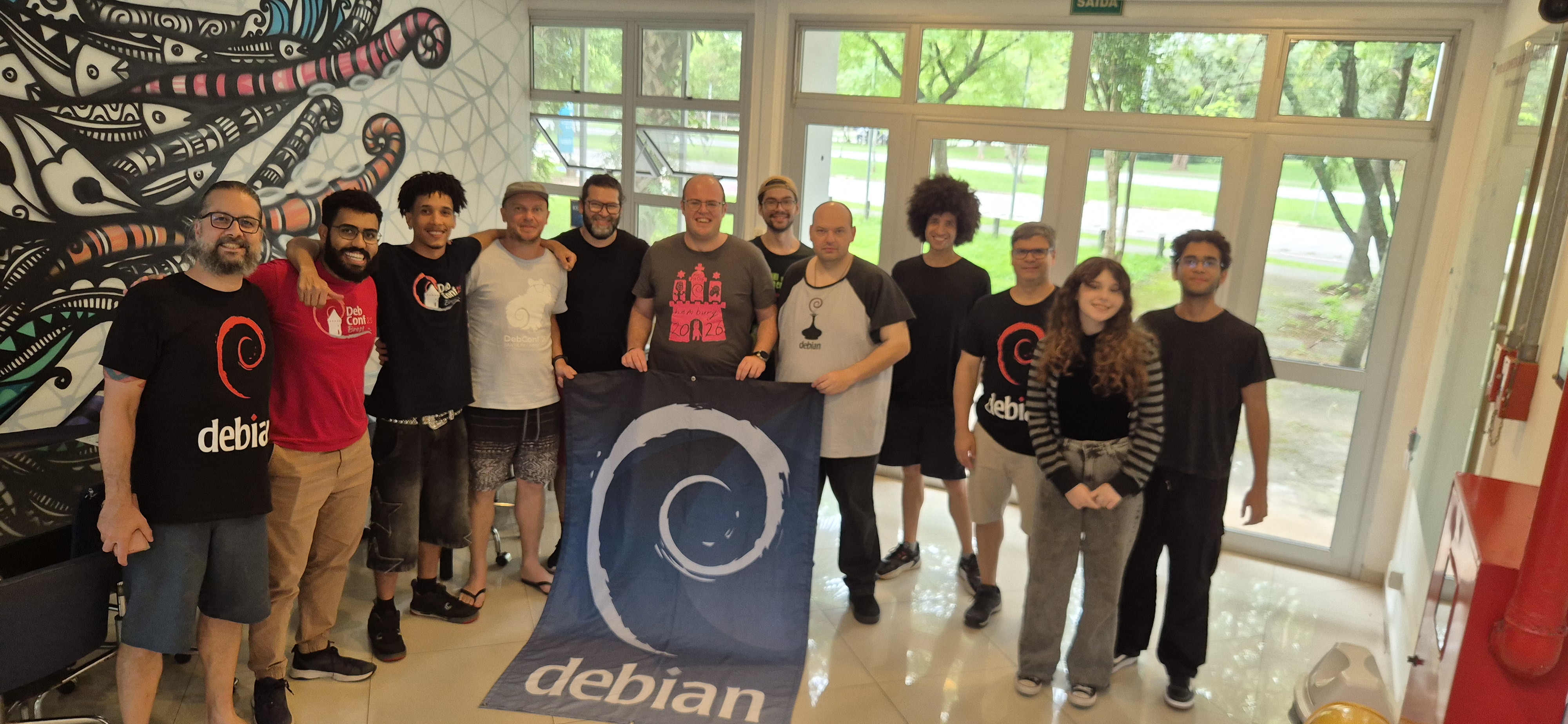 Last weekend, I attended the first Debian Brazil Reunion.
Inspired by similar events organized in other countries, we decided
to bring the idea to Brazil and organize a three-day event focused on
contributing to Debian.
Every day, we started at 9 a.m. and worked until around 8 p.m.
I was so immersed in the event that even after getting back to the
hotel, I kept working. I was having so much fun that I just couldn't get
out of the mood of getting things done.
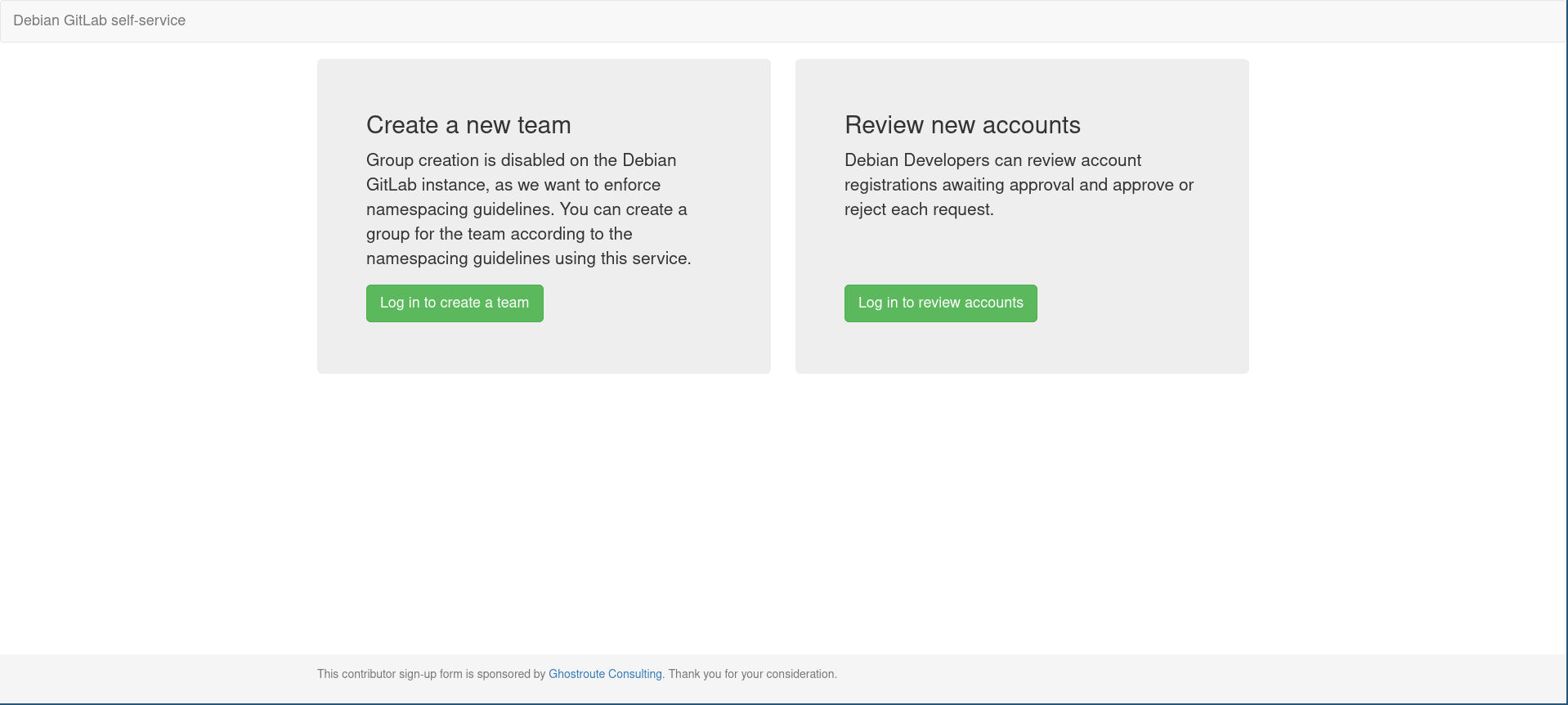 Finally, I also sponsored a few uploads. I helped Tobias Sette and
Giovanna Macedo with their first uploads to Debian.
It's always nice to help newcomers in person. It's much easier to
explain things in detail, answer questions as they come up, and get
things done faster than going back and forth reviewing merge
requests.
 Great to see that someone is trying to make that old project survive!
Armin Rigo, author of The Bub s Brothers, 2026
Something I wasn t expecting to ever hear about again, TBH. Good to hear.
David Gowers, who redrew its graphics in 2007
it works! :)
Alex Myczko, Debian Developer, 2026, after the first game over the Internet in years


 The Internet server list is back, on Alex s meta-server. I blurred the server s address.
 The control page that opens in your browser.
 Two players on board 3, on Python 3.
 On 22nd May 2026, we organized a MiniDebCamp at Bolgatty Palace, Kochi, Kerala.
The actual discussion for this year s camp began when we had a small meetup at Urbec s place in Kochi. We decided to do a MiniCamp rather than MiniConfs which we were doing for quite some time. Also, We had already done a

 We started the event on Friday evening. We did a small orientation for new comers. Before the event, we shortlisted some bugs and tasks to share. All began hacking on stuffs that was interesting to them. Some did packaging, some did bug fixes and others worked on website fixes. There was even some fiddling done on beagleboard SBC and other boards.
The venue was calm and serene. The weather was nice, notwithstanding the few downpours we experienced. Some people from Hyderabad (South eastern side) and Kolkata actually got amazed by the tropical greenery around the venue and Kochi in general. The food served to us through out the event was amazing and accommodation was also very nice.
In terms of bug squashing statistics, we managed to touch 93 bugs \o/ and of which 82 bugs are
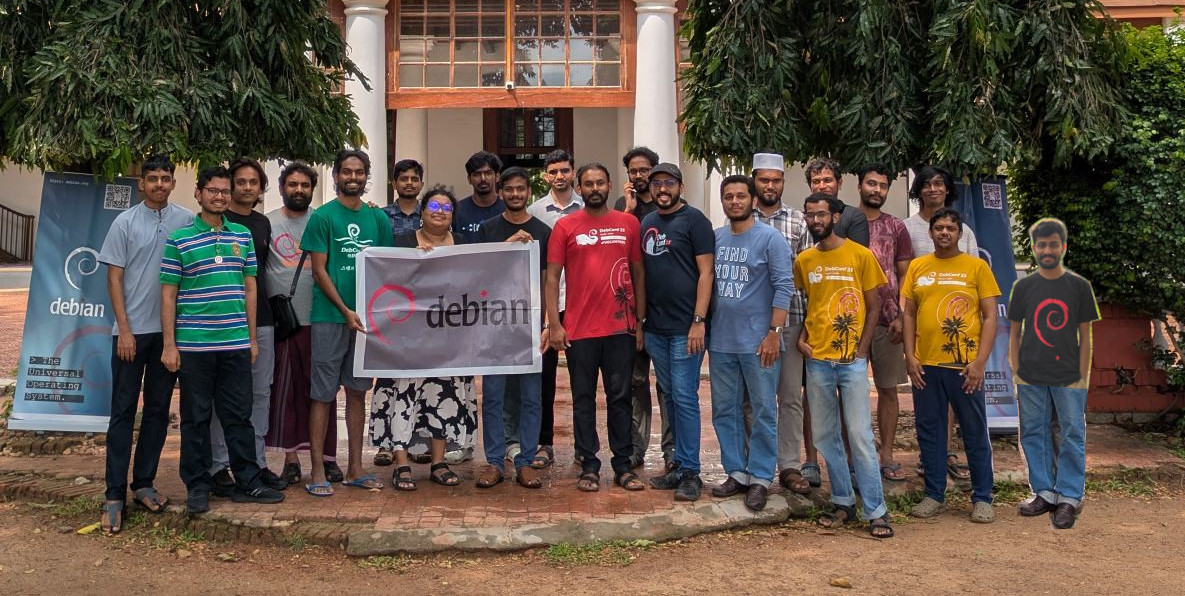
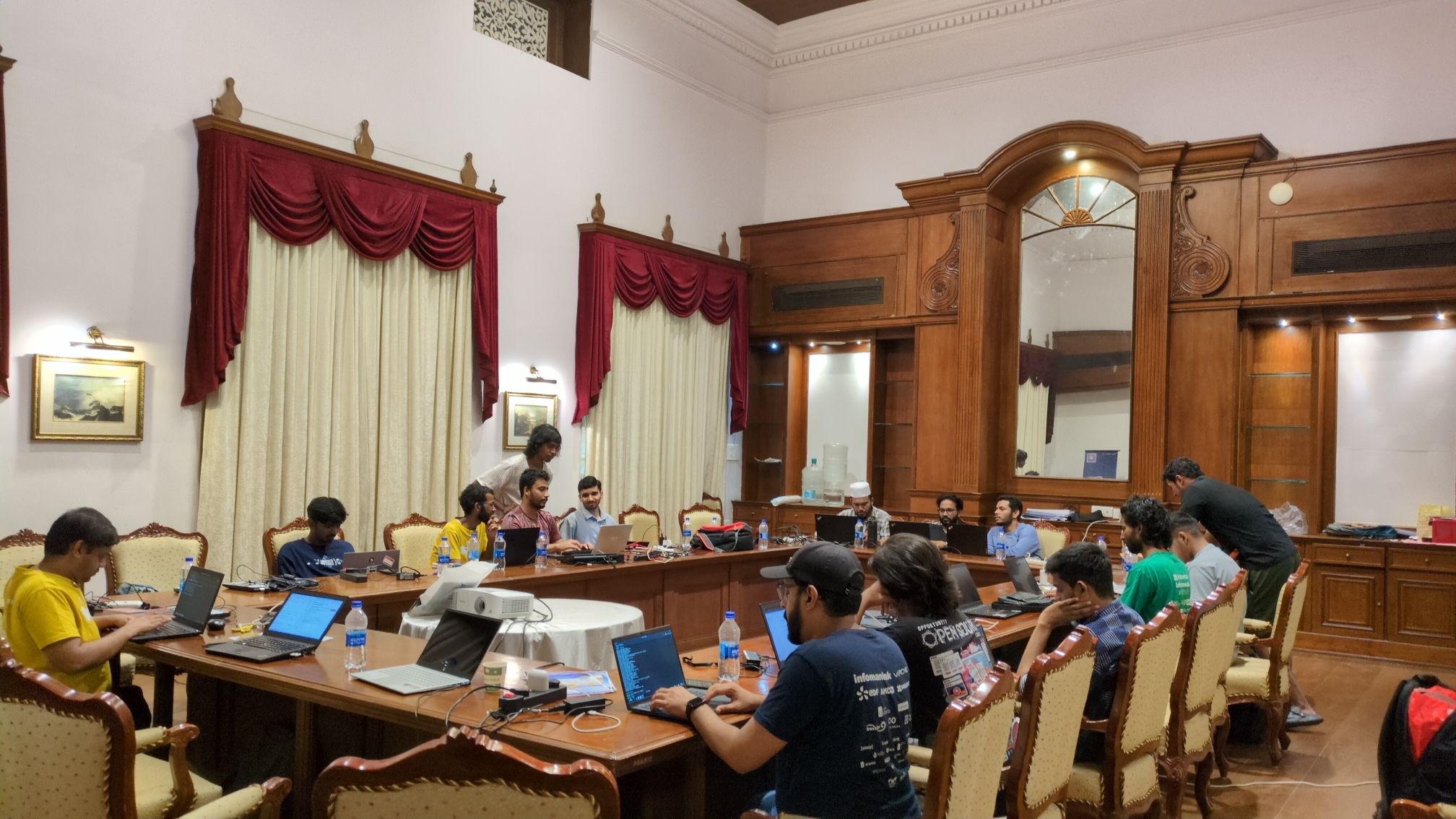
 Ever since I built an
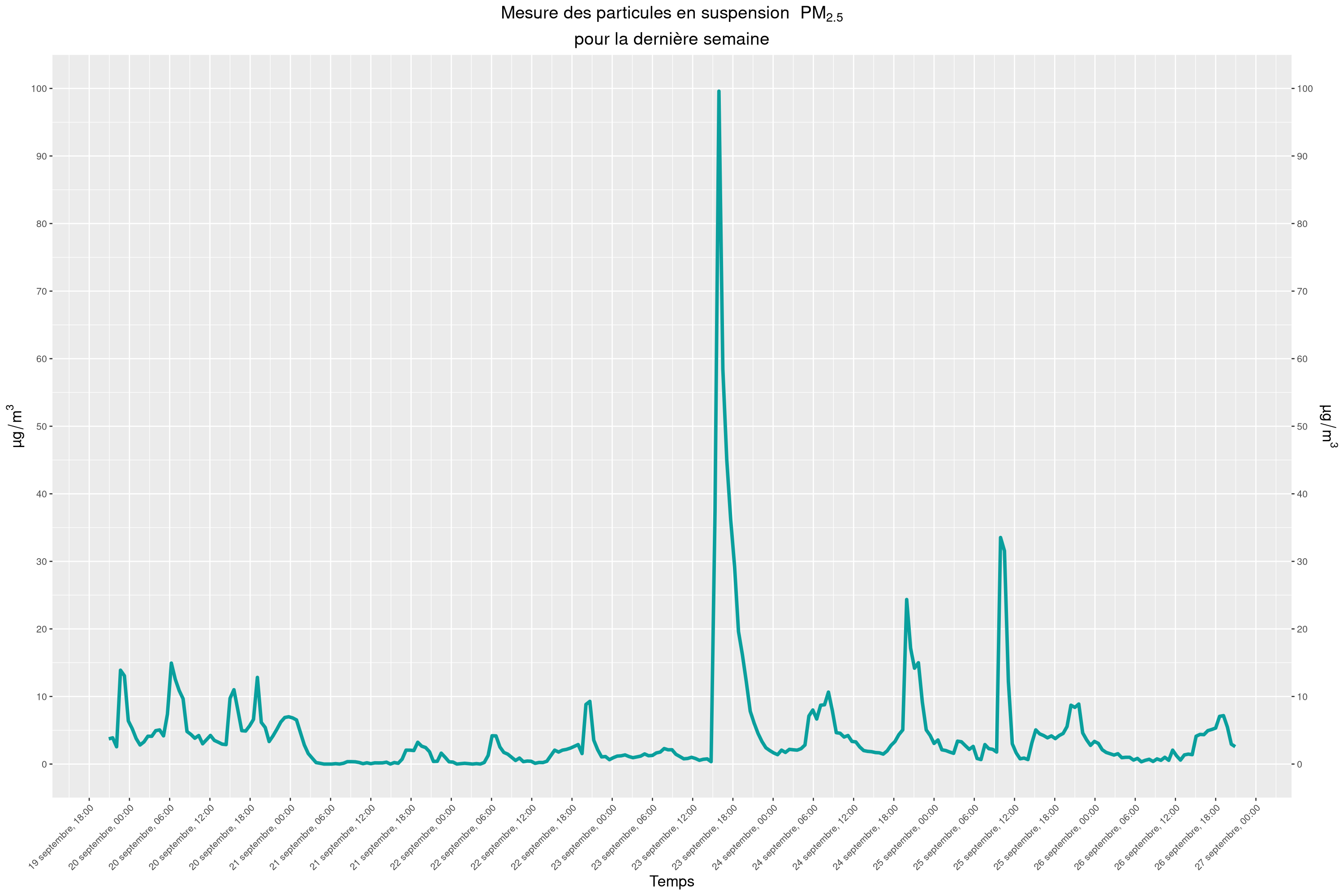 Isn't this crazy? Last time Montreal had such bad outdoor air quality, there
were public broadcasts telling people not to go outside and to wear N95 face
masks if we absolutely needed to. Inside my apartment though, no one ever told
me cooking veggies in a little oil on medium-low
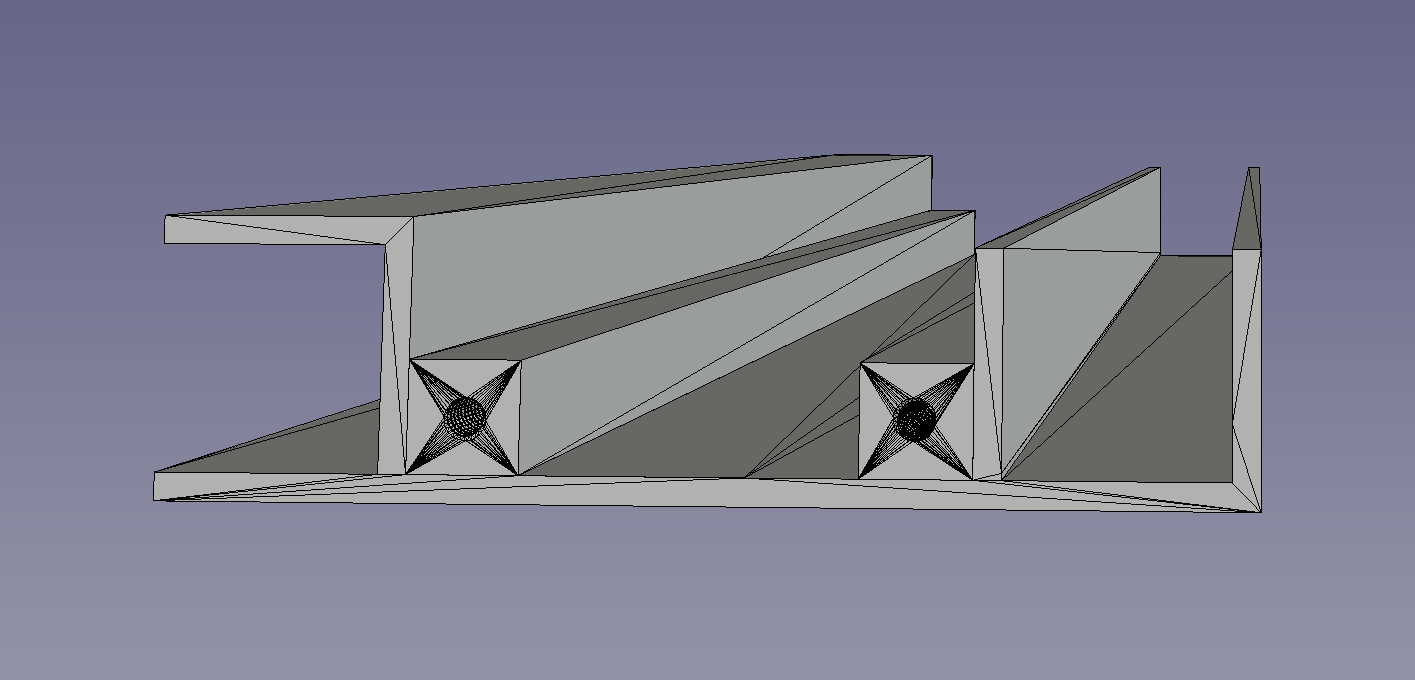 The final result looks like this. I used some foamcore boards I had laying
around at work for the top and bottom panels, but any somewhat rigid plastic
panels (like coroplast) would also work:
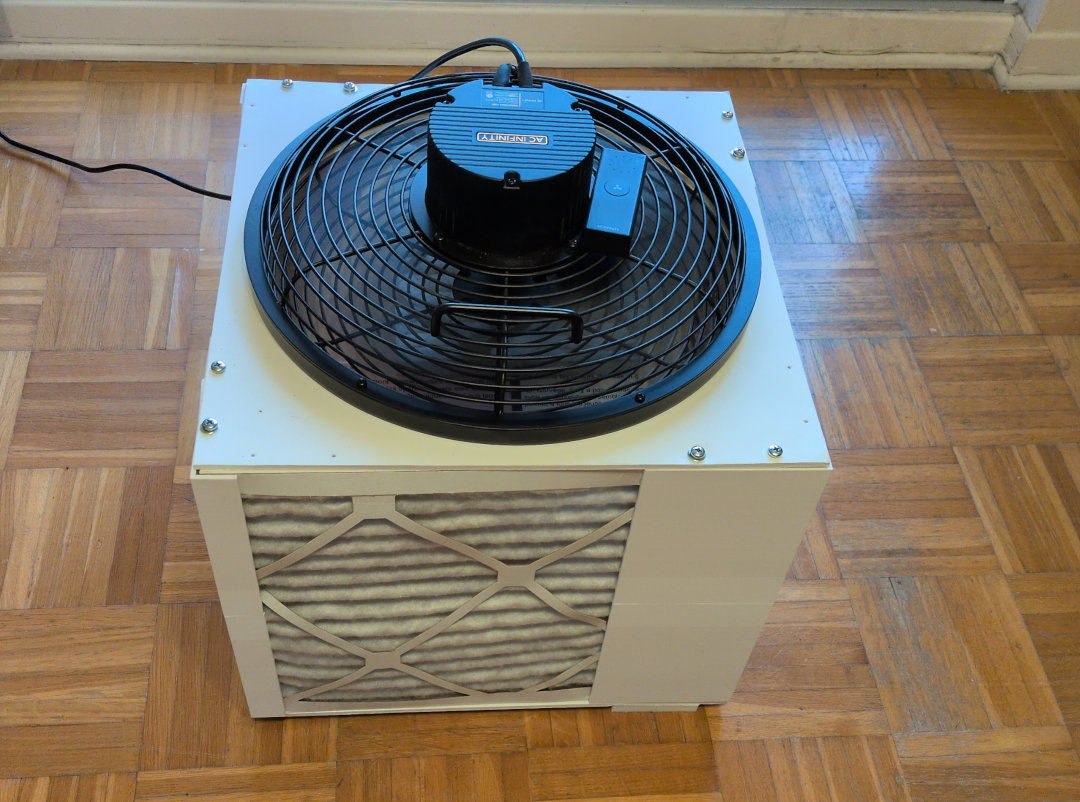 out' position" alt="The whole CR box assembled, with the fan in the 'in -> out' position">
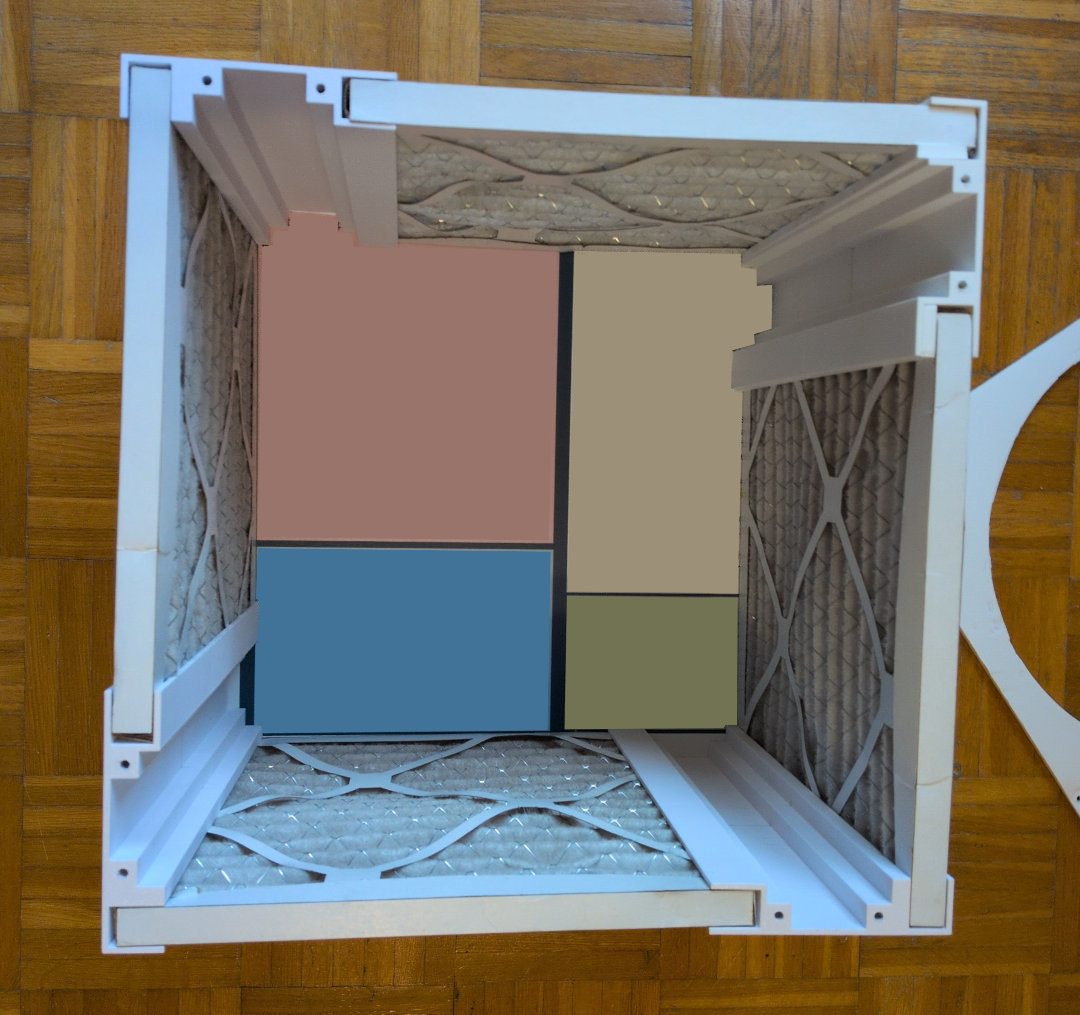 I ended up having to split the "beams" in two and joining them with dowels, as
even the largest 3D printers I had access to couldn't print them in one piece.
Costs
Here's the cost breakdown for this project (shipping and taxes are included):
 Debian's


 I have a Samsung Q800A soundbar. It ships with built-in support for the Apple Airplay protocol, but I m not really an Apple kind of guy so that s never been particularly helpful for me. So, instead, I have a Chromecast Audio plugged into it via TOSLINK, and that works fine - except for the fact that there s no way to explicitly pick TOSLINK as the audio input. Instead, there s a Digital In option that refers to both the optical in and eARC input from a TV. Not inherently a problem, given I m unlikely to be watching TV while listening to music, but my TV is a Samsung Frame, a device that s intended to display art whenever someone is standing nearby, and which infuriatingly generates an eARC signal even if it s only in art mode and isn t going to make any noise. This switches the soundbar away from optical and I get sad. I could plug a video cast device into the HDMI port on the soundbar and cast audio to that, but then the art would get replaced with album covers whenever I m playing music, and again that s not quite the ambience I want. Still, none of this is that important.
Until I learned that the Australian version of the soundbar does have Google Cast support. The firmware image was downloadable from Samsung support, so I grabbed that, but unfortunately found that it was encrypted. However, if I downloaded the firmware image for the US model, the encrypted blob was identical - there s no difference in the underlying firmware between the two of them. So, how come one has support, and the other doesn t?
I d need an unencrypted copy of the firmware to have a real chance of figuring this out, and the easiest way to get one was to just run an ebay watch for a broken model of the same series. Once I had one in my hands I used hot air to remove the eMMC storage from the device, cleaned up the chip, and then stuck it in

 Debcraft is a tool that automates most of the repetitive and error-prone steps related to Debian packaging. It makes it easy to build
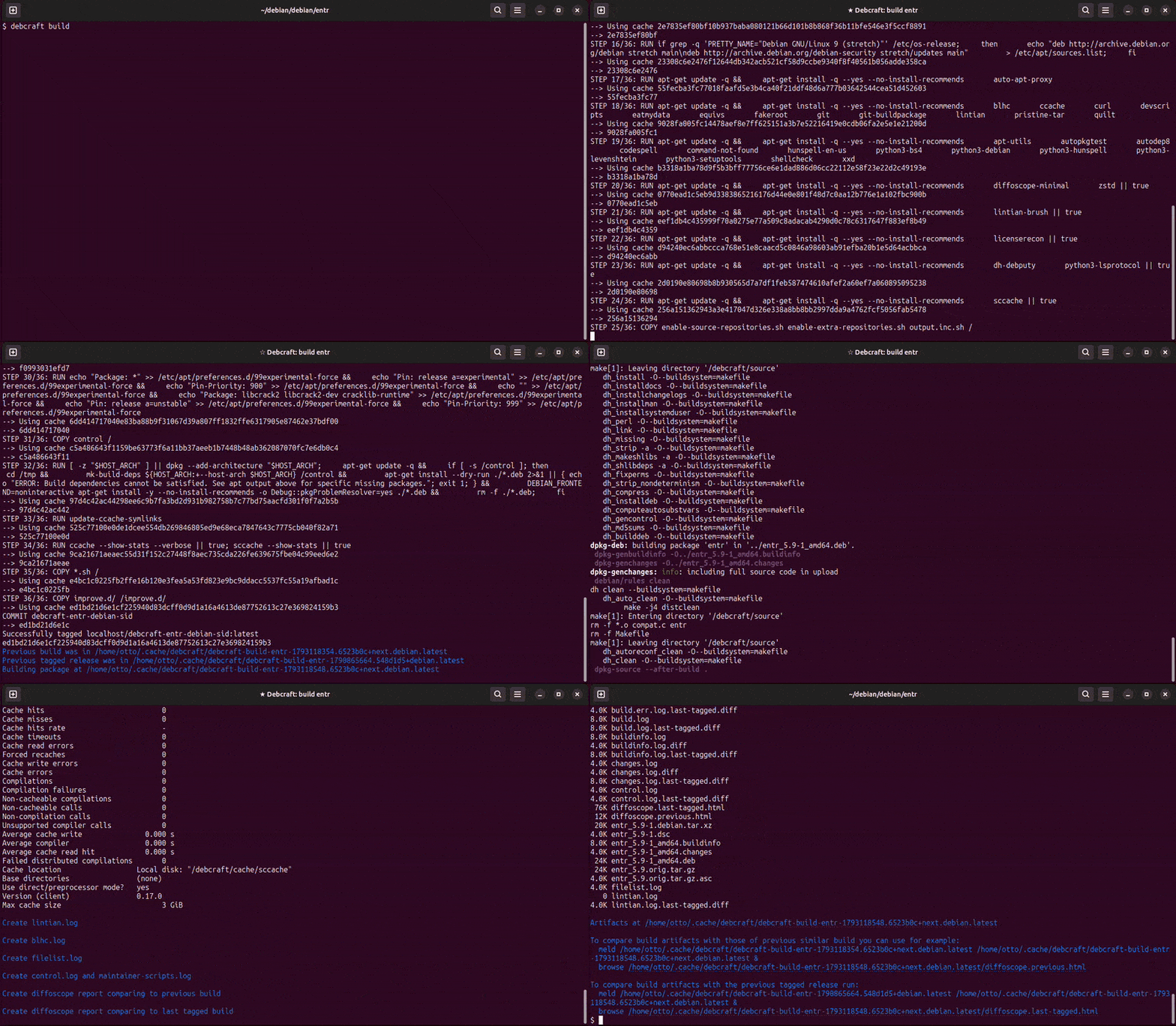

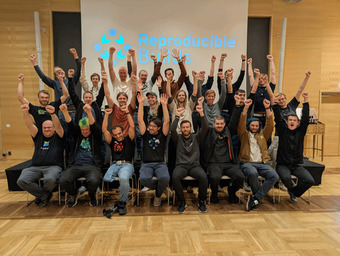




 I will compare this version of macOS with the previous one, Tahoe, which
I presented in

 The MX record and some TXT records configured for