In 2016, I removed Google Analytics from this blog to avoid being
complicit in feeding the biggest machine for harvesting personal data. Instead,
I relied on GoAccess to analyze my server logs.1 For the past couple
of years, the statistics have made no sense, despite my attempts to filter bots:
AI scrapers inflate the number of visitors to around 2,000 per
day. Eventually, I settled on GoatCounter, an open-source, privacy-friendly
web analytics platform. I replaced the JavaScript client to filter bots more
aggressively and added a CSS fallback. To improve reliability, I implemented a
local proxy running on each of the five web servers serving this blog. The rest
of this post details how these pieces fit together and how I deploy them on
NixOS.
Why GoatCounter?
GoatCounter does not collect personal data: instead of storing the reader s
IP address or relying on cookies, it creates a session identifier valid for 8
hours from the user agent and the IP address. Its feature set is modest but
sufficient for a blog. If you want to look at the interface, GoatCounter s
author runs a public instance for his site. A hosted
version lets you try it before running your own instance. With a single binary
and an SQLite database, GoatCounter is one of the lightest self-hosted
solutions. Privacy-friendly alternatives, in increasing order of complexity,
include Umami, Plausible, and Rybbit.
Custom JavaScript client
GoatCounter includes a small JavaScript client 2,189 bytes minified and
gzipped. It ships some features I don t use: a visitor counter, tracking clicks,
configurable settings, etc. I replace it with this function to register a hit:
If a reader has disabled JavaScript in their browser, I record the hit using a
CSS image. The :hover pseudo-class loads it only after an interaction, another
trick stolen from Bear Blog. About 2% of my visitors fit into this
bucket.3
<!DOCTYPE html><htmllang="en"class="nojs"><head><script>// The JavaScript code for this blog requires ES6if("noModule"inHTMLScriptElement.prototype)document.documentElement.classList.remove("nojs");</script></head><body><!-- ... --><style>.nojsbody:hoverborder-width:0;border-image:url('/count?p=/en/blog/2026-kpi-goodhart&t=Building...&r=NoJS&e=false');</style></body></html>
Where GoAccess reported around 2,000 visitors a day, GoatCounter counts fewer
than 200 humans.4 I assume AI scrapers use a low-effort approach: if the
content is available without barriers, as on this blog, they don t spawn a
complex mechanized browser that could trigger a page view. Even crawlers running
JavaScript, like Googlebot with its headless Chromium, do not
interact with the page and never trigger the events I listen
to. The interaction-based proof of humanity I use is likely to keep
working.5
Local proxy
Five servers across the world in Europe and in North
America serve the content of this website, but GoatCounter runs on only
one of them. To avoid losing track of visitors when GoatCounter is down, I run a
local proxy listening on the same /count endpoint. On each server, it stores
the hits in memory with a buffer large enough to survive several days of
downtime. It sends them in batches to the upstream backend using the
/api/v0/count authenticated endpoint.
Servers on a map. web02 is in Paris, web03 in Helsinki, web04 in Nuremberg,
web05 in Ashburn, web06 in Chicago.
I proposed the code for the proxy in pull request #909. GoatCounter s
maintainer declined to maintain so much code for such a niche use case. As a
fellow open-source developer, I often hold the same position for my own
projects: a one-time contributor effort may translate into a long-term
maintainer commitment.
I expose the endpoint for the proxy on the domain of this website to evade ad
blockers. This sounds like I don t respect the reader s choice, but as
GoatCounter is privacy-friendly, I find it acceptable.
Deploying on NixOS
My web servers run NixOS, a declarative Linux distribution with built-in
configuration management. I manage this small fleet with Colmena, a
stateless deployment tool for NixOS. My configuration is available on
GitHub.
Deploying applications in containers
For better isolation, each application runs inside an ephemeral lightweight
container, powered by systemd-nspawn. Each container runs a stripped-down
NixOS instance. A module wraps NixOS s containers options to
avoid repeating the same options for each application.6 The containers
share their network namespace with the host: the additional isolation is not
worth the increased complexity. For a smaller footprint, I also disable a few
non-essential services.
To configure a GoatCounter instance running in a container and listening on
127.0.0.4:8088, we import the module7 and declare the container in the
config.luffy.containers attribute set:
As the containers are ephemeral, we need to keep persistent data in directories
on the host. We add a mounts option and ask NixOS s containers to expose the
configured directories through the bindMounts option.
For example, to persist GoatCounter s database in the /var/db/goatcounter
directory on the host, we add the directory to the mounts option and alter the
service definition to tell GoatCounter where the database is.
A container may also need some secrets. Colmena can upload secrets without
storing them in the Nix store. We add a keys option to our containers. It
takes an attribute set mapping secret names to the commands to populate them.
Then, the module declares the required secrets to Colmena in the
deployment.keys option, makes the container depend on the presence of the
secrets, and exposes them to the container.
config, lib,... :letcfg= config.luffy.containers;in
options.luffy.containers= lib.mkOption type= lib.types.attrsOf (lib.types.submodule options=keys= lib.mkOption type= lib.types.attrsOf (lib.types.listOf lib.types.str);default= ;description="Secrets, as a command to run locally. They are mounted in /etc."; ; ; ); ;config=# Colmena uploads each secret in /var/keys and make them available# to the group "keys".
deployment.keys= lib.concatMapAttrs
(_: container: lib.mapAttrs
(_: keyCommand:inherit keyCommand;group="keys";permissions="0640";destDir="/var/keys"; )
container.keys)
cfg;# The container can only start if the required secrets are available.
systemd.services= lib.mapAttrs'
(name: container:letunits=map(key:"$ key-key.service")(lib.attrNames container.keys);in
lib.nameValuePair "container@$ name"requires= units;after= units; )
cfg;# Mount each secret inside the container.containers= lib.mapAttrs
(name: container:bindMounts= lib.mapAttrs'
(key: _: lib.nameValuePair "/etc/$ key"hostPath="/var/keys/$ key";isReadOnly=true; )
container.keys; )
cfg; ;
For example, GoatCounter needs credentials to download the GeoIP database. I
provide a local command to fetch the secret from my password manager and expose
it inside the container through the /etc/goatcounter.env environment file.
GoatCounter server
Nixpkgs already packages GoatCounter. By overriding the src and vendorHash
attributes, I reuse its definition for my custom version with the proxy:
I wrote a NixOS module to encapsulate GoatCounter: the
container definition, the service definition, and the secrets. The module
accepts the following options: package, serve.enable, serve.listenAddress,
serve.port, and serve.databaseFile. I already detailed the container
configuration in the previous section. In the end, I chose not to reuse the
GoatCounter module from NixOS: it s small, so it s better to insulate my module
from unexpected future changes.
config, pkgs, lib,... :letcfg= config.luffy.goatcounter;databaseDirectory=builtins.dirOf cfg.serve.databaseFile;chown="$ pkgs.coreutils/bin/chown -R";in
config.luffy.containers.goatcounter=
config.systemd.services.goatcounter=description="GoatCounter Web Analytics";wantedBy=["multi-user.target"];serviceConfig=EnvironmentFile="/etc/goatcounter.env";SupplementaryGroups=["keys"];DynamicUser=true;Restart="always";ExecStart= lib.escapeShellArgs [(lib.getExe cfg.package)"serve""-listen=$ cfg.serve.listenAddress:$ toString cfg.serve.port""-tls=none""-db=sqlite+$ cfg.serve.databaseFile""-automigrate"];# Transfer database ownership to dynamically assigned user "goatcounter".ExecStartPre="+$ chown goatcounter:goatcounter $ databaseDirectory";ReadWritePaths= databaseDirectory; ; ; ;
The following snippet configures GoatCounter to listen on 127.0.0.4:8088:
GoatCounter proxy
The same NixOS module configures the local proxy, with the
following options: proxy.enable, proxy.listenAddress, proxy.port, and
proxy.site the site receiving the batches of page views. The local proxy has
no persistent data, but it needs the API key to authenticate to the main
GoatCounter instance: its container uses the keys option but not the mounts
option.
config, pkgs, lib,... :letcfg= config.luffy.goatcounter;keyCommand= _:[" "];in
config.luffy.containers.goatcounter-proxy= keys."goatcounter-proxy.env"= keyCommand "GOATCOUNTER_API_KEY"; config.systemd.services.goatcounter=description="GoatCounter Proxy.";wantedBy=["multi-user.target"];serviceConfig=EnvironmentFile="/etc/goatcounter-proxy.env";SupplementaryGroups=["keys"];DynamicUser=true;Restart="always";ExecStart= lib.escapeShellArgs [(lib.getExe cfg.package)"proxy""-site=$ cfg.proxy.site""-listen=$ cfg.proxy.listenAddress:$ toString cfg.proxy.port""-ratelimit=10/1"# 10 requests per second per IP]; ; ; ;
For each server, I enable the local proxy with the following snippet. The
nginx configuration shown earlier exposes the /count endpoint under the same
domain as my blog.
Backup of the SQLite database with Litestream
Litestream is a streaming replication tool for SQLite databases. It
compresses the changes committed to the write-ahead log (WAL) next to the
database and sends them to a remote destination. I encapsulate its configuration
in a NixOS module, which takes an attribute set databases
mapping a name to the path of the database to back up.
Litestream also runs in a container. I mount the databases to replicate, as well
as the secrets to push the backups to a Hetzner storage box using SFTP:
We can restore the database from the backup with a few shell commands. First, we
stop the containers. Then, we move the damaged database away, invoke litestream
restore from the right environment, and restart the containers.9
Ten years after removing Google Analytics, JavaScript-based analytics is
back on this blog, but without storing cookies or IP addresses, and without
involving a third party. I still write for myself first, notably because it lets
me dig into a topic and refer back to it years later. But knowing a bit more
about my fellow human readers is a nice bonus, even the ones disabling
JavaScript.
Nginx scrambles IP addresses before storing them, thanks to the ipscrub
nginx module.
GoatCounter already filters some bots based on the user agent or the IP
address. But AI scrapers lie about their user agent and hide behind
residential proxies.
Without JavaScript, I cannot send the real referrer. I insert NoJS
instead.
I am missing the humans reading the RSS feed. I am not comfortable adding a
tracking pixel, and bots are likely to fetch it, compromising the
statistics. I ll live without counting these readers.
In February 2025, I tested another CSS-only approach without the interaction
trick: each page loaded an empty image as a background. Over a month, it
recorded up to ten times fewer page views than the nginx logs, even after
removing user agents identifying as bots. Compared to this experiment,
GoatCounter counts about three times fewer views, 18 months later. As the
time ranges differ, this is not an apples-to-apples comparison, but it gives
a hint about how efficient bot filtering is.
A NixOS module is a function receiving the configuration of the whole
system as config and returning three attributes:
imports adds other modules to import,
options declares user-configurable settings, each with a type and a default value, and
config sets values for options declared by any module, like containers from NixOS.
If a module does not need to declare options, you can return the config attribute
set directly. When a module does not require any argument, you can define it as an attribute
set instead.
Most of the time, you don t need an explicit import. NixOS automatically
imports the modules shipped with Nixpkgs. For my own
modules, some machinery also imports them automatically.
Litestream warns against using the auto-recover option as
it can cause data loss. But I don t properly monitor my servers and I prefer
uninterrupted backups to a slight chance of losing the last few records.
In my case, the process is slow: around 20 minutes for a 20 MiB database.
You can test by restoring to a copy with the -o option, but you still need
to stop the Litestream container.
Welcome to the August 2026 report from the Reproducible Builds project!
In our reports, we try to outline the most important things that we have been up to over the past month. As a quick recap about what problem our project intends to solve, whilst anyone may inspect the source code of free software for malicious flaws, almost all software is distributed to end users as pre-compiled binaries. The motivation behind the reproducible builds effort is to ensure no flaws have been introduced during this compilation process by promising identical results are always generated from a given source, thus allowing multiple third-parties to come to a consensus on whether a build was compromised or not.
In this month s report, we cover:
New updated SBOM specification from CISA.gov
CISA, the Cybersecurity and Infrastructure Security Agency of the U.S. government published some the joint guidance entitled Minimum Elements for a Software Bill of Materials (SBOM), which updates and supersedes the baseline 2021 version covered in previous editions of these reports.
Whilst the PDF is worth skimming, the interesting changes include that the specification now mandates standard cryptographic hashes: unlike earlier standards that allowed hash omission or manifest-only parsing, hashes must be computed from the output. This is is important for reproducible builds, as it ensures the recording of the metadata required to demonstrate the shipped software matches the build output precisely where applicable. In addition, where the top-level only dependency limitation that was present in the 2021 version has been removed in favour of complete coverage with no minimum depth. That is, SBOMs are expected to reflect all linked libraries, vendored dependencies and other build-time inclusions.
The basic idea behind bootstrappable builds is to create a system that can be built without relying on pre-built artifacts. Can we go from zero to the modern day without having to just assume the existence of these already-built-for-us artifacts? The classic recipe for yogurt requires some yogurt to start the process, which is like how we normally build a C compiler today we start with an existing C compiler binary. You might think about making sourdough bread with your grandmother s starter brought over from the old country; we re basically making C compilers with Dennis Ritchie s starter carried over from Bell Labs .
The reason I like the idea of making reproducible builds work is that I think it can be done in such a way as to not require any work on the part of the producer of a distribution (which is a technical term for sdists or wheels, i.e., the people who upload stuff to PyPI), and thus make reproducible builds very low-friction for people to opt into supporting. []
Brett goes on to outline What s missing from the specs and how reproducibility might be visible on PyPI to consumers:
Assuming all of this comes to pass and we record the where the source code is that went into a distribution and the software used to make the distribution, how do we make it useful to people? Does every person who cares about having a secure supply chain have to rebuild everything they use themselves? Is there some way for even people who don t care about this stuff to benefit? []
Distribution work
In Debian this month, 23 reviews of Debian packages were added, 28 were updated and 27 were removed this month adding to our knowledge about identified issues. A number of issue types have been updated as well, such as the addition of a new toolchain issue related to python-traitlets [], and the note for an existing issue related to texi2html was updated as well [].
Lastly, Bernhard M. Wiedemann posted another openSUSEmonthly update for their reproducibility work there.
Unreproducible builds under EROFS filesystem fixed
Martin Pitt reported on Fosstodon that they had identified an issue where the mkfs ( make filesystem ) command for the EROFS (Enhanced Read-Only File System) subsystem of the Linux kernel did not have sorted extended file attributes, leading to reproducible builds.
Thankfully, Martin also reported that they had fixed this in a commit to the kernel which order[s] each inode s xattrs by name so that images stay reproducible . []
Tool and documentation development
diffoscope is our in-depth and content-aware diff utility that can locate and diagnose reproducibility issues. This month, Chris Lamb made a number of changes, including preparing and uploading versions 327, 328 and 329 to Debian. In particular, he ensured that diffoscope did not require python3-guestfs in the autopkgtests on 32-bit architectures in order to fix Debian bug (#1144372) []. Colin Watson made an additional change, handling a potentially missing openssh-client package when running the autopkgtests [], and Jochen Sprickerhof made a similar change to cope with missing cpio and qemu-img functionality [] whilst also updating the XML comparator to be considered when comparing SVG images [].
Yet again, there were a number of improvements made to our website this month as well. For example:
Chris Lamb added draft for a Gothenburg summit-related news article. [][]
Lastly, a large number of commits were pushed comprising an interview with Reproducible Builds developer Jochen Sprickerhof to be published within the next week. [][][][][][][]
Six new scholarly papers
Jens Dietrich, Spencer Sun, Tim W. White and Behnaz Hassanshahi (the result of a collaboration between Victoria University of Wellington and Oracle Australia published a paper this month entitled No Snake Oil: Verifying Python Package Builds. Drawing on the metaphor of snake oil , that is, a fake or ineffective medicine or solution sold with exaggerated claims of curing or fixing everything, the authors write that
Two tools that are designed to automate [PyPI] rebuilds and run them at scale are macaron and oss-rebuild. We study 12,180 popular releases from PyPI and find that the byte-for-byte equivalence rate is generally low. We analyse the reasons why they produce different wheels, and find that equivalence between the original and rebuilt wheels can often still be established, preserving most of the guarantees users expect from rebuildable releases. We present and evaluate daleq4py, a tool to establish the equivalence of Python wheels through the kernel of a normalisation function that is based on provenance-preserving datalog rules. Experimental results show that daleq4py substantially expands the set of rebuilds that can be accepted as equivalent.
pose a persistent threat to opensource software. Known attempts to inject such backdoors into widely used projects through malicious commits, tampered release packages, or compromised third-party dependencies, were stopped only by luck and manual review. Existing Continuous Integration (CI) pipelines cannot detect these attacks, and downstream binary analysis tools require substantial manual effort. In this work, we present Lily, an automated approach that strengthens open-source development and release processes against backdoor injection. Lily integrates a backdoor detection mechanism into (1) CI pipelines to block malicious commits, and (2) release vetting workflows to prevent tampered releases or compromised dependencies from entering large ecosystems, such as Linux distributions.
The full PDF can be read online.
Ranindya Paramitha and Laurie Williams of North Carolina State University along with Christian K stner of Carnegie Mellon University published a paper this month with the title of The Software Supply Chain as a Market for Lemons: A Multivocal Review of Trust Signal Collapse. (A lemon in American English, is a vehicle that turns out to have several manufacturing defects .) Their abstract is as follows:
Practitioners evaluating open-source dependencies rely on cheap trust signals, e.g., stars, download counts, and contributor activity, as substitutes for direct code inspection, assuming those signals reflect genuine trustworthiness. Prior work has documented individual signal gaming, but the landscape of collapses across all dependency-adoption signals, as well as the ecosystem s response, remains unexplored. The goal of this study is to aid software practitioners in understanding the reliability of dependency adoption trust signals, such as download counts and contributor activity, by conducting a multivocal review of 252 Google Search sources and 870 Reddit threads.
Worryingly, after their review, the authors conclude that cheap trust signals collapse under three simultaneous forces: adversarial manipulation, gaming techniques indistinguishable from legitimate behavior, and non-adversarial AI-driven inflation.
The full PDF of the paper is available online.
Julien Malka, Aman Sharma, Martin Monperrus, Stefano Zacchiroli and Th o Zimmermann published a paper this month on Trusting-Trust Attack against an Entire Linux Distribution through Binary Manipulation:
Ken Thompson s trusting-trust attack, in which a compromised compiler backdoors the programs it builds and reproduces the backdoor in subsequent rebuilds of itself, is widely regarded as a threat specific to compilers. We show that it is not. We construct a complete trusting-trust attack around GNU strip, an ordinary build utility that neither inspects nor generates source code, using only manipulations of finished ELF files.
Scarily, in the authors example, a single tampered strip in the binary seed implants a payload that propagates from one generation of strip to the next and survives into the final standard environment after the seed leaves the dependency closure [ ] without failures and backdoors .
A full PDF of the paper is available for download online.
Mehdi Keshanimm, Amirhossein Rahmati, Mohammad Hossein Aref and Abbas Heydarnoori published a paper that is currently under review at Emperical Software Engineering titled AROMA+: A Study of Factors Affecting Reproducible Builds in the Maven Ecosystem. (Maven is a/the build automation tool used for Java projects.) In their paper, the authors note that
[ ] reusing external software in a project presents a security risk when the source of the component is unknown or the consistency of a component cannot be verified. The SolarWinds attack serves as a popular example in which the injection of malicious code into a library affected thousands of customers and caused a loss of billions of dollars. [ ] Our research aims to support [reproducibility] efforts in the Maven ecosystem through automation. We investigate the feasibility of automatically finding the source code of a library from its Maven release and recovering information about the original release environment. Our tool, AROMA+, can obtain this critical information from the artifact and the source repository through several heuristics and we use the results for reproduction attempts of packages on Maven Central.
[A]rtifact verification requires more than deterministic builds: a verifier must also recover the source state, build environment, dependencies, and build instructions that produced the artifact. Decentralized-build ecosystems make this difficult because artifacts are produced through heterogeneous tools, maintainer-controlled workflows, and fragmented metadata. As a result, it remains unclear how often artifacts in these ecosystems can be independently verified. This paper studies artifact verifiability across four popular decentralized-build package ecosystems. We define an independent verifier model that relies only on registry-derivable metadata and an artifact comparison model with tiered equivalence levels. We implement these models in an Artifact Verification Pipeline and use it to measure artifact verifiability across the target ecosystems.
The authors conclude that beyond build determinism, verifiability is limited by missing source and build metadata, implicit release transformations, and unconventional build practices .
A PDF of their paper can be reviewed online.
Patches
The Reproducible Builds project detects, dissects and attempts to fix as many currently-unreproducible packages as possible. We endeavour to send all of our patches upstream where applicable or possible. This month, we wrote a large number of such patches, including:
Too Like the Lightning is a science fantasy (?) novel and the first
of a four-book series. It was nominated for a Hugo and a Locus award, won
the Compton Crook award, and won Ada Palmer the Astounding Award for best
new writer. It was Palmer's first novel.
Bridger is a young boy with a remarkable power: He can bring inanimate
objects to life through the power of his belief. He is being hidden by the
Saneer-Weeksbooth bash', a family (?) business (?) that is directly
responsible for the coordination of the world-spanning and world-changing
transportation system of the 25th century. Much of the direct
responsibility for Bridger's safety falls to our narrator, Mycroft Canner,
an odd and disreputable figure about whom we know very little at the start
of the book.
As this book opens, two things are happening simultaneously. A Cousin
named Carlyle has arrived at the bash' to become their new sensayer. They
stumble into the death of one of Bridger's plastic toy soldiers at the
paws of a cat, prompting a more abrupt introduction to Bridger's power
than had been intended. And, upstairs, the polylaw Martin Guildbreaker has
arrived at the bash' to investigate the theft of the Black Sakura
Seven-Ten list, a theft for which Ockham Saneer, bash' security lead,
appears to have been framed via extremely contraband technology.
Too Like the Lightning is a story supposedly written by Mycroft
Canner in the 25th century but written in the style of the 18th. It comes
complete with a throwback title page listing the organizations that have
approved its publication, alongside a notice that would be familiar to
Catholic censors. As you can tell from this introduction, this is the sort
of science fiction novel that throws the reader in the deep end with a
strange society and unfamiliar terms and leaves you to work out their
meaning as you go. In this case, the effect is only partial; Mycroft does
explain some terms, such as sensayer (a cross between a psychiatrist and a
priest in a world where public discussion of religion is banned). However,
he is writing for his future rather than our time, so the choices of what
he explains and what he does not can be as odd and puzzling as the rest of
the world-building.
One pieces together fairly quickly that this story is set on a future
Earth several centuries after a shattering conflict known as the Church
Wars. Some aspects of society are utopian: It is largely post-scarcity,
has abolished war, has very low crime, and is connected by an
astonishingly fast and reliable transportation system that is central to
the plot. Most aspects, though, are ambiguous, mixed, or just deeply
weird. Geography-based political polities have been mostly abolished.
Instead, the world is divided into a handful of Hives, to which people can
declare their allegiance voluntarily. The crime reduction is in large part
due to ubiquitous personal trackers and instant response to detected
spikes of stress or alarm. Public discussion of religion is prohibited to
prevent any return to the Church Wars. Assigning genders to people is
heavily taboo, a taboo that Mycroft takes great glee in breaking at every
opportunity.
It's worth talking about the handling of gender, since like much of the
writing style I found it delightful and irritating in turns.
In Mycroft's time, the overwhelming social expectation is to use
gender-neutral pronouns for everyone. Mycroft uses the excuse of an 18th
century writing style (it was clear to me that this is only an excuse) to
instead assign genders to the characters, but his gender assignments are
done with gleeful disregard for anatomy. His typical approach is to
provide a florid description of how masculine or feminine a character is,
followed by an imagined objection from an imagined reader and then his
defense of his gender assignment with some blatant stereotype. Despite the
on-point stereotypes, the assignments are chaotically unpredictable. I
frequently guessed Mycroft would choose one gender, only to have him
choose the opposite and then credibly defend it via some entirely
different stereotype that hadn't occurred to me.
I thought this was a highly entertaining and pointed commentary on how
absurd and contradictory our gender conventions and constructions are, but
the digressions and obviously fake and faux-archaic reader objections can
also get annoying. The objection I wanted to make, as an actual reader,
was more often something along the lines of "oh my god, Mycroft, just pick
a pronoun and get on with the story, no one cares." Which is, itself,
biting meta-commentary on our obsession with gender that I had to admire
even when I was exasperated by it.
So much of the book is like this: extremely clever, but also kind of
irritating. Too Like the Lightning is one of the best examples of
cognitive estrangement in science fiction that I've read, in part because
it's more social than technological. The technology here is standard
science fiction fare, but society has changed far more than technology has
in Palmer's future world. All (I think?) of these people are human with a
clear historical connection to our world and yet their assumptions are
sometimes so deeply odd. Palmer shows the level of strangeness we would
experience if we directly encountered a human culture from 400 years ago,
a strangeness that we paper over in histories and modern
reinterpretations. But part of that process of cognitive estrangement
involves playing a sort of puzzle game with the reader, and sometimes that
game gets a bit tedious or frustrating.
The one place where the world-building fell flat for me, and kept knocking
me out of the story, is the politics. Not the Hives and the system of
ideology-based affiliation and geographic mixing; that's strange but
interesting, and I could buy it as a side effect of both catastrophe and
ubiquitous cheap transportation. Not the complicated system of legal codes
and exceptions and competing jurisdictions; that felt believably baroque
in the way that complexity emerges in the friction in long-lived human
systems. My problem was with the scale, or rather the lack of scale.
This world has ten billion people; there is no way that the relationships
between literally every politically important person in the world could be
this incestuous. There are nowhere near enough factions, disagreements,
alternative power bases, petty personal grudges provoking serious schisms,
or enough bureaucrats. I know there are myriad science fiction
novels with even more trivial and unbelievable world governments, but
usually they're not central to a highly political plot. Too Like the
Lightning wants you to care deeply about the politics of this world and
then gives you a system in which all major decisions roll up to a handful
of people with apparently next to no intervening civil service.
Also, why is there so little redundancy? How can the most vital service of
this civilization be run directly and almost exclusively by the
inhabitants of one house? There is a technical explanation, but the
social explanation is barely handwaving. This is not how institutional
trust generally works; even with vast multinational high-capital
near-monopolies such as cloud computing, there are three major players and
innumerable smaller ones.
Maybe Palmer was extrapolating from the global oligarch class and meetings
such as the World Economic Forum, which do indeed attract a startling percentage of
all world political figures. The problem, though, is not the surface of
occasional gatherings or staged events seen early in this story. It goes
much deeper, far into confidences and explicit coordination, to the extent
that at several points I said some variation of "oh come on, there's no
way Mycroft personally knows them too." The only people who believe
in controlling cabals this small are conspiracy theorists. This is simply
not how humans work when this much power is at stake.
Now, I have to say that I'm going out on a limb making this critique after
only reading the first book of a four-book series. This is absolutely the
type of work for which my reaction and objections could be an intentional
effect created by Palmer in order to spring some unexpected justification
on the reader in book two or three. It's clear that there is some massive
social upheaval on the horizon in this series, and something very strange
is going on with one of the characters and their hold over other people.
Perhaps the reader disbelief is setting up that upheaval. If so, hats off
to her, and that's one of the perils of reviewing books as I read them.
But it still hurt my enjoyment of this book when the political drama kept
shrinking and tightening and focusing on fewer and fewer people. It felt
frankly unbelievable for the political universe of this highly political
book to be this claustrophobic. I wanted it to expand into the space that
should be available to an entire world teeming with fractious and complex
humanity.
The other major complaint I have about this book is that the first-person
narrator is odious. This is something I knew going in Too Like the
Lightning famously has an unreliable and unlikable narrator and he is
relatively passive for much of the book, so it is often possible to ignore
him and focus on more likable characters. I don't necessarily mind an
unlikable or unreliable narrator in this type of story.
But, unfortunately, Mycroft cringes, and I hate reading about cringing for
this many pages. His primary mode of interaction with people is
obsequious, performative fear with a weird, distasteful edge of
manipulation. Again, I think this is entirely intentional on Palmer's
part; we learn some of the reasons behind it by the end of this book, and
I'm sure we'll learn more in future books. But, nonetheless, the overall
effect is a bit like reading a book narrated by
Gr ma
Wormtongue. I can appreciate the narrative role of that character without
wanting to spend this much time in his head.
I have very mixed feelings about this book. The overall construction is
brilliant; it's a beautiful puzzle of oddity and alienation that provides
great fun for the type of science fiction reader who wants to work out the
rules of a strange society without a lot of infodumping. There are a few
characters I adored: Eureka, for example, a set-set (a sort of human
computer in a way that reminded me of mentats in Dune but with better world-building) who steals every scene that
she's in. I was very invested in the world-building, fascinated by the
Utopians, and want to learn more about what's going on.
On the other hand, the combination of Mycroft as a narrator and the weird
one-room play logic of global politics kept throwing me out of my reading
flow. It took me about a month to finish this book. The science fiction
and political fiction aspects of the story interested me more than Bridger
and whatever is going on with J.E.D.D. Mason, and I'm worried that my
least-favorite aspects will be central to the rest of the story. I was
enjoying a smaller percentage of the scenes by the end of the book than I
was at the start, which is not a great sign.
And yet, the ending absolutely worked on me. I don't want to stop here! I
will probably pick up the sequel, but I think it's going to take me a
while to brace myself for it.
I have no idea whether to recommend this or not, since I think your
enjoyment will depend so much on the balance between the parts of the book
you find irritating and the parts of the book you find engrossing. I'm
fairly sure most readers will find a little of both, but I have no idea
how to predict their relative weight. If you like cognitive estrangement,
this is great; I understand why so many science fiction reviewers rave
about this book. If you need to like the first-person protagonist, uh,
good luck. Maybe you'll have more tolerance for cringing than I do.
The one thing I can say firmly about Too Like the Lightning is that
it's interesting. It may be worth reading just to see how people
are stretching the genre, even if you end up not liking the effect. But be
warned that this book does not so much end on a cliffhanger as suddenly
stop at some random, nondescript point on the road leading to the cliff.
The ending is deeply unsatisfying; you will need to read more if you want
to understand what's going on.
Followed by Seven Surrenders.
Rating: 7 out of 10
Welcome to the February 2026 report from the Reproducible Builds project!
These reports outline what we ve been up to over the past month, highlighting items of news from elsewhere in the increasingly-important area of software supply-chain security. As ever, if you are interested in contributing to the Reproducible Builds project, please see the Contribute page on our website.
reproduce.debian.net
The last year has seen the introduction, development and deployment of reproduce.debian.net. In technical terms, this is an instance of rebuilderd, our server designed monitor the official package repositories of Linux distributions and attempt to reproduce the observed results there.
This month, however, Holger Levsen added suite-based navigation (eg. Debian trixie vs forky) to the service (in addition to the already existing architecture based navigation) which can be observed on, for instance, the Debian trixie-backports or trixie-security pages.
Tool development
diffoscope is our in-depth and content-aware diff utility that can locate and diagnose reproducibility issues. This month, Chris Lamb made a number of changes, including preparing and uploading versions, 312 and 313 to Debian.
In particular, Chris updated the post-release deployment pipeline to ensure that the pipeline does not fail if the automatic deployment to PyPI fails []. In addition, Vagrant Cascadian updated an external reference for the 7z tool for GNU Guix. []. Vagrant Cascadian also updated diffoscope in GNU Guix to version 312 and 313.
A new debsbom package was uploaded to unstable. According to the package description, this package generates SBOMs (Software Bill of Materials) for distributions based on Debian in the two standard formats, SPDX and CycloneDX. The generated SBOM includes all installed binary packages and also contains Debian Source packages.
Janneke Nieuwenhuizen posed a question to our list about whether there might be situations where using the UNIX epoch itself (i.e. 0) may materially differ from using SOURCE_DATE_EPOCH) when a situation demands the use of a fixed timestamp.
Upstream patches
The Reproducible Builds project detects, dissects and attempts to fix as many currently-unreproducible packages as possible. We endeavour to send all of our patches upstream where appropriate. This month, we wrote a large number of such patches, including:
[While] recent studies have shown that high reproducibility rates are achievable at scale demonstrated by the Nix ecosystem achieving over 90% reproducibility on more than 80,000 packages the problem of effective reproducibility monitoring remains largely unsolved. In this work, we address the reproducibility monitoring challenge by introducing Lila, a decentralized system for reproducibility assessment tailored to the functional package management model. Lila enables distributed reporting of build results and aggregation into a reproducibility database [ ].
Verifying that a compiled binary originates from its claimed source code is a fundamental security requirement, called source code provenance. Achieving verifiable source code provenance in practice remains challenging. The most popular technique, called reproducible builds, requires difficult matching and reexecution of build toolchains and environments. We propose a novel approach to verifiable provenance based on compiling software with zero-knowledge virtual machines (zkVMs). By executing a compiler within a zkVM, our system produces both the compiled output and a cryptographic proof attesting that the compilation was performed on the claimed source code with the claimed compiler. [ ]
Reproducible container builds promise a simple integrity check for software supply chains: rebuild an image from its Dockerfile and compare hashes. We built a Docker measurement pipeline and apply it to a stratified sample of 2,000 GitHub repositories that contained a Dockerfile. We found that only 56% produce any buildable image, and just 2.7% of those are bitwise reproducible without any infrastructure configurations. After modifying infrastructure configurations, we raise bitwise reproducibility by 18.6%, but 78.7% of buildable Dockerfiles remain non-reproducible.
[In] this paper we test the assumption that the same source code is being used [by] alternative builds. To study this, we compare the sources released with packages on Maven Central, with the sources associated with independently built packages from Google s Assured Open Source and Oracle s Build-from-Source projects. [ ]
Finally, if you are interested in contributing to the Reproducible Builds project, please visit our Contribute page on our website. However, you can get in touch with us via:
Welcome to the December 2025 from the Reproducible Builds project!
Our monthly reports outline what we ve been up to over the past month, highlighting items of news from elsewhere in the increasingly-important area of software supply-chain security. As ever, if you are interested in contributing to the Reproducible Builds project, please see the Contribute page on our website.
New orig-check service to validate Debian upstream tarballs
This month, Debian Developer Lucas Nussbaum announced the orig-check service, which attempts to automatically reproduce the generation upstream tarballs (ie. the original source component of a Debian source package), comparing that to the upstream tarball actually shipped with Debian.
As of the time of writing, it is possible for a Debian developer to upload a source archive that does not actually correspond to upstream s version. Whilst this is not inherently malicious (it typically indicates some tooling/process issue), the very possibility that a maintainer s version may differ potentially permits a maintainer to make (malicious) changes that would be misattributed to upstream.
This service therefore nicely complements the whatsrc.org service, which was reported in our reports for both April and August. The orig-check is dedicated to Lunar, who sadly passed away a year ago.
disorderfs updated to FUSE 3
disorderfs is our FUSE-based filesystem that deliberately introduces non-determinism into system calls to reliably flush out reproducibility issues.
This month, however, Roland Clobus upgraded disorderfs* from FUSE 2 to FUSE 3 after its package automatically got removed from Debian testing. Some tests in Debian currently require disorderfs to make the Debian live images reproducible, although disorderfs is not a Debian-specific tool.
Luca Di Maio announced stampdalf, a filesystem timestamp preservation tool that wraps arbitrary commands and ensures filesystem timestamp reproducibility :
stampdalf allows you to run any command that modifies files in a directory tree, then automatically resets all timestamps back to their original values. Any new files created during command execution are set to [the UNIX epoch] or a custom timestamp via SOURCE_DATE_EPOCH.
The project s GitHub page helpfully reveals that the project is pronounced: stamp-dalf (stamp like time-stamp, dalf like Gandalf the wizard) as it s a wizard of time and stamps .)
Lastly, Reproducible Builds developer cen1 posted to our list announcing that early/experimental/alpha support for FreeBSD was added to rebuilderd. In their post, cen1 reports that the initial builds are in progress and look quite decent . cen1 also interestingly notes that since the upstream is currently not technically reproducible I had to relax the bit-for-bit identical requirement of rebuilderd [ ] I consider the pkg to be reproducible if the tar is content-identical (via diffoscope), ignoring timestamps and some of the manifest files. .
Most package managers also generate a lockfile, which records the exact set of resolved dependency versions. Lockfiles are used to reduce build times; to verify the integrity of resolved packages; and to support build reproducibility across environments and time. Despite these beneficial features, developers often struggle with their maintenance, usage, and interpretation. In this study, we unveil the major challenges related to lockfiles, such that future researchers and engineers can address them. [ ]
While existing studies primarily focus on software supply chain attacks prevention and detection methods, there is a need for a broad overview of attacks and comprehensive risk assessment for software supply chain security. This study conducts a systematic literature review to fill this gap. By analyzing 96 papers published between 2015-2023, we identified 19 distinct SSC attacks, including 6 novel attacks highlighted in recent studies. Additionally, we developed 25 specific security controls and established a precisely mapped taxonomy that transparently links each control to one or more specific attacks. [ ]
[Achieving] reproducibility at scale remains difficult, especially in Java, due to a range of non-deterministic factors and caveats in the build process. In this work, we focus on reproducibility in Java-based software, archetypal of enterprise applications. We introduce a conceptual framework for reproducible builds, we analyze a large dataset from Reproducible Central, and we develop a novel taxonomy of six root causes of unreproducibility. [ ]
Robert Stupp made a number of useful changes, fixing and reorganising the Groovy / Kotlin pages [][][] as well adding a note about potential non-deterministic behaviour to the JVM page [].
Upstream patches
The Reproducible Builds project detects, dissects and attempts to fix as many currently-unreproducible packages as possible. We endeavour to send all of our patches upstream where appropriate. This month, we wrote a large number of such patches, including:
Finally, if you are interested in contributing to the Reproducible Builds project, please visit our Contribute page on our website. However, you can get in touch with us via:
Akvorado collects sFlow and IPFIX flows over UDP. Because UDP does
not retransmit lost packets, it needs to process them quickly. Akvorado runs
several workers listening to the same port. The kernel should load-balance
received packets fairly between these workers. However, this does not work as
expected. A couple of workers exhibit high packet loss:
Options for load-balancing
There are three methods to load-balance UDP packets across workers:
One worker receives the packets and dispatches them to the other workers.
All workers share the same socket.
Each worker has its own socket, listening to the same port, with the
SO_REUSEPORT socket option.
SO_REUSEPORT option
Tom Hebert added the SO_REUSEPORT socket option in Linux 3.9. The
cover letter for his patch series explains why this new option is better than
the two existing ones from a performance point of view:
SO_REUSEPORT allows multiple listener sockets to be bound to the same port.
[ ] Received packets are distributed to multiple sockets bound to the same
port using a 4-tuple hash.
The motivating case for SO_RESUSEPORT in TCP would be something like a web
server binding to port 80 running with multiple threads, where each thread
might have it s own listener socket. This could be done as an alternative to
other models:
have one listener thread which dispatches completed connections to workers, or
accept on a single listener socket from multiple threads.
In case #1, the listener thread can easily become the bottleneck with high
connection turn-over rate. In case #2, the proportion of connections accepted
per thread tends to be uneven under high connection load. [ ] We have seen the
disproportion to be as high as 3:1 ratio between thread accepting most
connections and the one accepting the fewest. With SO_REUSEPORT the
distribution is uniform.
The motivating case for SO_REUSEPORT in UDP would be something like a DNS
server. An alternative would be to receive on the same socket from multiple
threads. As in the case of TCP, the load across these threads tends to be
disproportionate and we also see a lot of contection on the socket lock.
Akvorado uses the SO_REUSEPORT option to dispatch the packets across the
workers. However, because the distribution uses a 4-tuple hash, a single socket
handles all the flows from one exporter.
SO_ATTACH_REUSEPORT_EBPF option
In Linux 4.5, Craig Gallek added the SO_ATTACH_REUSEPORT_EBPF
option to attach an eBPF program to select the target UDP socket. In Linux 4.6,
he extended it to support TCP. The socket(7) manual page
documents this mechanism:1
The BPF program must return an index between 0 and N-1 representing the socket
which should receive the packet (where N is the number of sockets in the
group). If the BPF program returns an invalid index, socket selection will
fall back to the plain SO_REUSEPORT mechanism.
In Linux 4.19, Martin KaFai Lau added the
BPF_PROG_TYPE_SK_REUSEPORT program type. Such an eBPF program
selects the socket from a BPF_MAP_TYPE_REUSEPORT_ARRAY map instead. This new
approach is more reliable when switching target sockets from one instance to
another for example, when upgrading, a new instance can add its sockets and
remove the old ones.
Load-balancing with eBPF and Go
Altering the load-balancing algorithm for a group of sockets requires two steps:
eBPF program in C
A simple load-balancing algorithm is to randomly choose the destination socket.
The kernel provides the bpf_get_prandom_u32() helper function to get a
pseudo-random number.
In , we declare a volatile constant for the number of sockets in the group. We
will initialize this constant before loading the eBPF program into the kernel.
In , we define the socket map. We will populate it with the socket file
descriptors. In , we randomly select the index of the target socket.3
In , we invoke the bpf_sk_select_reuseport() helper to record our decision.
Finally, in , we accept the packet.
Header files
If you compile the C source with clang, you get errors due to missing headers.
The recommended way to solve this is to generate a vmlinux.h file with
bpftool:
For my 6.17 kernel, the generated vmlinux.h is quite big: 2.7 MiB. Moreover,
bpf/bpf_helpers.h is shipped with libbpf. This adds another dependency for
users. As the eBPF program is quite small, I prefer to put the strict minimum in
vmlinux.h by cherry-picking the definitions I need.
Compilation
The eBPF Library for Go ships bpf2go, a tool to compile eBPF programs and
to generate some scaffolding code. We create a gen.go file with the following
content:
packagemain//go:generate go tool bpf2go -tags linux reuseport reuseport_kern.c
After running go generate ./..., we can inspect the resulting objects with
readelf and llvm-objdump:
$ readelf-Sreuseport_bpfeb.o
There are 14 section headers, starting at offset 0x840: [Nr] Name Type Address Offset[ ] [ 3] sk_reuseport PROGBITS 0000000000000000 00000040 [ 6] .maps PROGBITS 0000000000000000 000000c8 [ 7] license PROGBITS 0000000000000000 000000e8[ ]$ llvm-objdump-Sreuseport_bpfeb.o
reuseport_bpfeb.o: file format elf64-bpfDisassembly of section sk_reuseport:0000000000000000 <reuseport_balance_prog>:; 0: bf 61 00 00 00 00 00 00 r6 = r1; __u32 index = bpf_get_prandom_u32() % num_sockets; 1: 85 00 00 00 00 00 00 07 call 0x7[ ]
Usage from Go
Let s set up 10 workers listening to the same port.5 Each socket
enables the SO_REUSEPORT option before binding:6
The second step is to load the eBPF program, initialize the num_sockets
variable, populate the socket map, and attach the program to the first
socket.7
// Load the eBPF collection.spec,err:=loadReuseport()iferr!=nilt.Fatalf("loadVariables() error:\n%+v",err)// Set "num_sockets" global variable to the number of file descriptors we will registeriferr:=spec.Variables["num_sockets"].Set(uint32(len(fds)));err!=nilt.Fatalf("NumSockets.Set() error:\n%+v",err)// Load the map and the program into the kernel.varobjsreuseportObjectsiferr:=spec.LoadAndAssign(&objs,nil);err!=nilt.Fatalf("loadReuseportObjects() error:\n%+v",err)t.Cleanup(func()objs.Close() )// Assign the file descriptors to the socket map.forworker,fd:=rangefdsiferr:=objs.reuseportMaps.SocketMap.Put(uint32(worker),uint64(fd));err!=nilt.Fatalf("SocketMap.Put() error:\n%+v",err)// Attach the eBPF program to the first socket.socketFD:=int(fds[0])progFD:=objs.reuseportPrograms.ReuseportBalanceProg.FD()iferr:=unix.SetsockoptInt(socketFD,unix.SOL_SOCKET,unix.SO_ATTACH_REUSEPORT_EBPF,progFD);err!=nilt.Fatalf("SetsockoptInt() error:\n%+v",err)
We are now ready to process incoming packets. Each worker is a Go routine
incrementing a counter for each received packet:8
Graceful restart
You can also use SO_ATTACH_REUSEPORT_EBPF to gracefully restart an
application. A new instance of the application binds to the same address and
prepare its own version of the socket map. Once it attaches the eBPF program to
the first socket, the kernel steers incoming packets to this new instance. The
old instance needs to drain the already received packets before shutting down.
To check we are not losing any packet, we spawn a Go routine to send as many
packets as possible:
Then, while the Go routine runs, we start the second set of workers. Once they
are running, they start receiving packets. If we gracefully stop the initial set
of workers, not a single packet is lost!9
Unfortunately, gracefully shutting down a UDP socket is not trivial in Go.10
Previously, we were terminating workers by closing their sockets. However, if we
close them too soon, the application loses packets that were assigned to them
but not yet processed. Before stopping, a worker needs to call conn.Read()
until there are no more packets. A solution is to set a deadline for
conn.Read() and check if we should stop the Go routine when the deadline is
exceeded:
With TCP, this aspect is simpler: after enabling the net.ipv4.tcp_migrate_req
sysctl, the kernel automatically migrates waiting connections to a random socket
in the same group. Alternatively, eBPF can also control this
migration. Both features are available since Linux 5.14.
Addendum
After implementing this strategy in Akvorado, all workers now drop packets!
The root cause is the default limit of 32 records for Kafka batch sizes. This
limit is too low because the brokers have a large overhead when handling each
batch: they need to ensure they persist correctly before acknowledging
them. Increasing the limit to 4096 records fixes this issue.
While load-balancing incoming flows with eBPF remains useful, it did not solve
the main issue. At least the even distribution of dropped packets helped
identify the real bottleneck.
The current version of the manual page is incomplete and does not
cover the evolution introduced in Linux 4.19. There is a pending patch
about this.
Rust is another option. However, the program we use is so trivial that
it does not make sense to use Rust.
As bpf_get_prandom_u32() returns a pseudo-random 32-bit unsigned
value, this method exhibits a very slight bias towards the first indexes.
This is unlikely to be worth fixing.
Some examples include <linux/bpf.h> instead of "vmlinux.h". This
makes your eBPF program dependent on the installed kernel headers.
listenAddr is initially set to 127.0.0.1:0 to allocate a
random port. After the first iteration, it is updated with the allocated
port.
In C, we would poll() both the socket and a pipe used to signal for
shutdown. When the second condition is triggered, we drain the socket by
executing a series of non-blocking read() until we get EWOULDBLOCK.
In 2007, Martin Escardo wrote a often-read blog post about Seemingly impossible functional programs . One such seemingly impossible function is find, which takes a predicate on infinite sequences of bits, and returns an infinite sequence for which that predicate hold (unless the predicate is just always false, in which case it returns some arbitrary sequence).
Inspired by conversations with and experiments by Massin Guerdi at the dinner of LeaningIn 2025 in Berlin (yes, this blog post has been in my pipeline for far too long), I wanted to play around these concepts in Lean.
Let s represent infinite sequences of bits as functions from Nat to Bit, and give them a nice name, and some basic functionality, including a binary operator for consing an element to the front:
import Mathlib.Data.Nat.Find
abbrev Bit := Bool
def Cantor : Type := Nat   Bit
def Cantor.head (a : Cantor) : Bit := a 0
def Cantor.tail (a : Cantor) : Cantor := fun i => a (i + 1)
@[simp, grind] def Cantor.cons (x : Bit) (a : Cantor) : Cantor
    0 => x
    i+1 => a i
infix:60 " # " => Cantor.cons
With this in place, we can write Escardo s function in Lean. His blog post discusses a few variants; I ll focus on just one of them:
mutual
  partial def forsome (p : Cantor   Bool) : Bool :=
    p (find p)
  partial def find (p : Cantor   Bool) : Cantor :=
    have b := forsome (fun a => p (true # a))
    (b # find (fun a => p (b # a)))
end
We define find together with forsome, which checks if the predicate p holds for any sequence. Using that find sets the first element of the result to true if there exists a squence starting with true, else to false, and then tries to find the rest of the sequence.
It is a bit of a brian twiter that this code works, but it does:
def fifth_false : Cantor   Bool := fun a => not (a 5)
/-- info: [true, true, true, true, true, false, true, true, true, true] -/
#guard_msgs in
#eval List.ofFn (fun (i : Fin 10) => find fifth_false i)
Of course, in Lean we don t just want to define these functions, but we want to prove that they do what we expect them to do.
Above we defined them as partial functions, even though we hope that they are not actually partial: The partial keyword means that we don t have to do a termination proof, but also that we cannot prove anything about these functions.
So can we convince Lean that these functions are total after all? We can, but it s a bit of a puzzle, and we have to adjust the definitions.
First of all, these seemingly impossible functions are only possible because we assume that the predicate we pass to it, p, is computable and total. This is where the whole magic comes from, and I recommend to read Escardo s blog posts and papers for more on this fascinating topic. In particular, you will learn that a predicate on Cantor that is computable and total necessarily only looks at some initial fragment of the sequence. The length of that prefix is called the modulus . So if we hope to prove termination of find and forsome, we have to restrict their argument p to only such computable predicates.
To that end I introduce HasModulus and the subtype of predicates on Cantor that have such a modulus:
-- Extensional (!) modulus of uniform continuity
def HasModulus (p : Cantor    ) :=   n,   a b : Cantor, (  i < n, a i = b i)   p a = p b
@[ext] structure CantorPred where
  pred : Cantor   Bool
  hasModulus : HasModulus pred
The modulus of such a predicate is now the least prefix lenght that determines the predicate. In particular, if the modulus is zero, the predicate is constant:
namespace CantorPred
variable (p : CantorPred)
noncomputable def modulus : Nat :=
  open Classical in Nat.find p.hasModulus
theorem eq_of_modulus :  a b : Cantor, (  i < p.modulus, a i = b i)   p a = p b := by
  open Classical in
  unfold modulus
  exact Nat.find_spec p.hasModulus
theorem eq_of_modulus_eq_0 (hm : p.modulus = 0) :   a b, p a = p b := by
  intro a b
  apply p.eq_of_modulus
  simp [hm]
Because we want to work with CantorPred and not Cantor Bool I have to define some operations on that new type; in particular the cons element before predicate operation that we saw above in find:
def comp_cons (b : Bit) : CantorPred where
  pred := fun a => p (b # a)
  hasModulus := by
    obtain  n, h_n  := p.hasModulus
    cases n with
      zero => exists 0; grind
      succ m =>
      exists m
      intro a b heq
      simp
      apply h_n
      intro i hi
      cases i
        rfl
        grind
@[simp, grind =] theorem comp_cons_pred (x : Bit) (a : Cantor) :
  (p.comp_cons x) a = p (x # a) := rfl
For this operation we know that the modulus decreases (if it wasn t already zero):
theorem comp_cons_modulus (x : Bit) :
    (p.comp_cons x).modulus   p.modulus - 1 := by
  open Classical in
  apply Nat.find_le
  intro a b hab
  apply p.eq_of_modulus
  cases hh : p.modulus
    simp
    intro i hi
    cases i
      grind
      grind
grind_pattern comp_cons_modulus => (p.comp_cons x).modulus
We can rewrite the find function above to use these operations:
mutual
  partial def forsome (p : CantorPred) : Bool := p (find p)
  partial def find (p : CantorPred) : Cantor := fun i =>
    have b := forsome (p.comp_cons true)
    (b # find (p.comp_cons b)) i
end
I have also eta-expanded the Cantor function returned by find; there is now a fun i => i around the body. We ll shortly see why that is needed.
Now have everything in place to attempt a termination proof. Before we do that proof, we could step back and try to come up with an informal termination argument.
The recursive call from forsome to find doesn t decrease any argument at all. This is ok if all calls from find to forsome are decreasing.
The recursive call from find to find decreases the index i as the recursive call is behind the Cantor.cons operation that shifts the index. Good.
The recursive call from find to forsome decreases the modulus of the argument p, if it wasn t already zero.
But if was zero, it does not decrease it! But if it zero, then the call from forsome to find doesn t actually need to call find, because then p doesn t look at its argument.
We can express all this reasoning as a termination measure in the form of a lexicographic triple. The 0 and 1 in the middle component mean that for zero modulus, we can call forsome from find for free .
mutual
  def forsome (p : CantorPred) : Bool := p (find p)
  termination_by (p.modulus, if p.modulus = 0 then 0 else 1, 0)
  decreasing_by grind
  def find (p : CantorPred) : Cantor := fun i =>
    have b := forsome (p.comp_cons true)
    (b # find (p.comp_cons b)) i
  termination_by i => (p.modulus, if p.modulus = 0 then 1 else 0, i)
  decreasing_by all_goals grind
end
The termination proof doesn t go through just yet: Lean is not able to see that (_ # p) i will call p with i - 1, and it does not see that p (find p) only uses find p if the modulus of p is non-zero. We can use the wf_preprocess feature to tell it about that:
The following theorem replaces a call to p f, where p is a function parameter, with the slightly more complex but provably equivalent expression on the right, where the call to f is no in the else branch of an if-then-else and thus has p.modulus = 0 in scope:
@[wf_preprocess]
theorem coe_wf (p : CantorPred) :
    (wfParam p) f = p (if _ : p.modulus = 0 then fun _ => false else f) := by
  split
  next h => apply p.eq_of_modulus_eq_0 h
  next => rfl
And similarly we replace (_ # p) i with a variant that extend the context with information on how p is called:
def cantor_cons' (x : Bit) (i : Nat) (a :   j, j + 1 = i   Bit) : Bit :=
  match i with
    0 => x
    j + 1 => a j (by grind)
@[wf_preprocess] theorem cantor_cons_congr (b : Bit) (a : Cantor) (i : Nat) :
  (b # a) i = cantor_cons' b i (fun j _ => a j) := by cases i <;> rfl
After these declarations, the above definition of forsome and find goes through!
It remains to now prove that they do what they should, by a simple induction on the modulus of p:
@[simp, grind =] theorem tail_cons_eq (a : Cantor) : (x # a).tail = a := by
  funext i; simp [Cantor.tail, Cantor.cons]
@[simp, grind =] theorem head_cons_tail_eq (a : Cantor) : a.head # a.tail = a := by
  funext i; cases i <;> rfl
theorem find_correct (p : CantorPred) (h_exists :   a, p a) : p (find p) := by
  by_cases h0 : p.modulus = 0
    obtain  a, h_a  := h_exists
    rw [  h_a]
    apply p.eq_of_modulus_eq_0 h0
    rw [find.eq_unfold, forsome.eq_unfold]
    dsimp -zeta
    extract_lets b
    change p (_ # _)
    by_cases htrue :   a, p (true # a)
    next =>
      have := find_correct (p.comp_cons true) htrue
      grind
    next =>
      have : b = false := by grind
      clear_value b; subst b
      have hfalse :   a, p (false # a) := by
        obtain  a, h_a  := h_exists
        cases h : a.head
          exists Cantor.tail a
          grind
          exfalso
          apply htrue
          exists Cantor.tail a
          grind
      clear h_exists
      exact find_correct (p.comp_cons false) hfalse
termination_by p.modulus
decreasing_by all_goals grind
theorem forsome_correct (p : CantorPred) :
    forsome p   (  a, p a) where
  mp hfind := by unfold forsome at hfind; exists find p
  mpr hex := by unfold forsome; exact find_correct p hex
This is pretty nice! However there is more to do. For example, Escardo has a massively faster variant of find that we can implement as a partial function in Lean:
def findBit (p : Bit   Bool) : Bit :=
  if p false then false else true
def branch (x : Bit) (l r : Cantor) : Cantor :=
  fun n =>
    if n = 0      then x
    else if 2   n then r ((n - 2) / 2)
                  else l ((n - 1) / 2)
mutual
  partial def forsome (p : Cantor -> Bool) : Bool :=
    p (find p)
  partial def find (p : Cantor -> Bool) : Cantor :=
    let x := findBit (fun x => forsome (fun l => forsome (fun r => p (branch x l r))))
    let l := find (fun l => forsome (fun r => p (branch x l r)))
    let r := find (fun r => p (branch x l r))
    branch x l r
end
But can we get this past Lean s termination checker? In order to prove that the modulus of p is decreasing, we d have to know that, for example, find (fun r => p (branch x l r)) is behaving nicely. Unforunately, it is rather hard to do termination proof for a function that relies on the behaviour of the function itself.
So I ll leave this open as a future exercise.
I have dumped the code for this post at https://github.com/nomeata/lean-cantor.
Welcome to the report for November 2025 from the Reproducible Builds project!
These monthly reports outline what we ve been up to over the past month, highlighting items of news from elsewhere in the increasingly-important area of software supply-chain security. As always, if you are interested in contributing to the Reproducible Builds project, please see the Contribute page on our website.
In this report:
10 years of Reproducible Builds at SeaGL 2025
On Friday 8th November, Chris Lamb gave a talk called 10 years of Reproducible Builds at SeaGL in Seattle, WA.
Founded in 2013, SeaGL is a free, grassroots technical summit dedicated to spreading awareness and knowledge about free source software, hardware and culture. Chris talk:
[ ] introduces the concept of reproducible builds, its technical underpinnings and its potentially transformative impact on software security and transparency. It is aimed at developers, security professionals and policy-makers who are concerned with enhancing trust and accountability in our software. It also provides a history of the Reproducible Builds project, which is approximately ten years old. How are we getting on? What have we got left to do? Aren t all the builds reproducible now?
Distribution work
In Debian this month, Jochen Sprickerhof created a merge request to replace the use of reprotest in Debian s Salsa Continuous Integration (CI) pipeline with debrebuild. Jochen cites the advantages as being threefold: firstly, that only one extra build needed ; it uses the same sbuild and ccache tooling as the normal build ; and works for any Debian release . The merge request was merged by Emmanuel Arias and is now active.
kpcyrd posted to our mailing list announcing the initial release of repro-threshold, which implements an APT transport that defines a threshold of at least X of my N trusted rebuilders need to confirm they reproduced the binary before installing Debian packages. Configuration can be done through a config file, or through a curses-like user interface.
Holger then merged two commits by Jochen Sprickerhof in order to address a fakeroot-related reproducibility issue in the debian-installer, and J rg Jaspert deployed a patch by Ivo De Decker for a bug originally filed by Holger in February 2025 related to some Debian packages not being archived on snapshot.debian.org.
Elsewhere, Roland Clobus performed some analysis on the live Debian trixie images, which he determined were not reproducible. However, in a follow-up post, Roland happily reports that the issues have been handled. In addition, 145 reviews of Debian packages were added, 12 were updated and 15 were removed this month adding to our knowledge about identified issues.
Lastly, Jochen Sprickerhof filed a bug announcing their intention to binary NMU a very large number of the R programming language after a reproducibility-related toolchain bug was fixed.
Bernhard M. Wiedemann posted another openSUSEmonthly update for their work there.
Julien Malka and Arnout Engelen launched the new hash collection
server for NixOS. Aside from improved reporting to help focus reproducible builds
efforts within NixOS, it collects build hashes as individually-signed attestations
from independent builders, laying the groundwork for further tooling.
Tool development
diffoscope version 307 was uploaded to Debian unstable (as well as version 309). These changes included further attempts to automatically attempt to deploy to PyPI by liaising with the PyPI developers/maintainers (with this experimental feature). [][][]
In addition, reprotest versions 0.7.31 and 0.7.32 were uploaded to Debian unstable by Holger Levsen, who also made the following changes:
Do not vary the architecture personality if the kernel is not varied. (Thanks to Ra l Cumplido). []
Drop the debian/watch file, as Lintian now flags this as error for native Debian packages. [][]
Bump Standards-Version to 4.7.2, with no changes needed. []
Drop the Rules-Requires-Root header as it is no longer required.. []
In addition, however, Vagrant Cascadian fixed a build failure by removing some extra whitespace from an older changelog entry. []
Website updates
Once again, there were a number of improvements made to our website this month including:
Bernhard M. Wiedemann updated the SOURCE_DATE_EPOCH page to fix the Lisp example syntax. []
Web3 applications, built on blockchain technology, manage billions of dollars in digital assets through decentralized applications (dApps) and smart contracts. These systems rely on complex, software supply chains that introduce significant security vulnerabilities. This paper examines the software supply chain security challenges unique to the Web3 ecosystem, where traditional Web2 software supply chain problems intersect with the immutable and high-stakes nature of blockchain technology. We analyze the threat landscape and propose mitigation strategies to strengthen the security posture of Web3 systems.
Their paper lists reproducible builds as one of the mitigating strategies. A PDF of the full text is available to download.
Upstream patches
The Reproducible Builds project detects, dissects and attempts to fix as many currently-unreproducible packages as possible. We endeavour to send all of our patches upstream where appropriate. This month, we wrote a large number of such patches, including:
Finally, if you are interested in contributing to the Reproducible Builds project, please visit our Contribute page on our website. However, you can get in touch with us via:
About 95% of my Debian contributions this month were
sponsored by Freexian.
You can also support my work directly via
Liberapay or GitHub
Sponsors.
OpenSSH
OpenSSH upstream released
10.1p1 this month, so I
upgraded to that. In the process, I reverted a Debian patch that changed IP
quality-of-service defaults, which made sense at the
time but has since been reworked upstream
anyway, so it makes sense to find out whether we still have similar
problems. So far I haven t heard anything bad in this area.
10.1p1 caused a regression in the ssh-agent-filter package s tests, which I
bisected and chased up with
upstream.
10.1p1 also had a few other user-visible regressions
(#1117574,
#1117594,
#1117638,
#1117720); I upgraded to
10.2p1 which fixed some of
these, and contributed some upstream debugging
help to clear up the
rest. While I was there, I also fixed ssh-session-cleanup: fails due to
wrong $ssh_session_pattern in our packaging.
Finally, I got all this into trixie-backports, which I intend to keep up to
date throughout the forky development cycle.
Python packaging
For some time, ansible-core has had occasional autopkgtest failures that
usually go away before anyone has a chance to look into them properly. I
ran into these via openssh recently and decided to track them down. It
turns out that they only happened when the libpython3.13-stdlib package
had different versions in testing and unstable, because an integration test
setup script made a change that would be reverted if that package was ever
upgraded in the testbed, and one of the integration tests accidentally
failed to disable system apt sources comprehensively enough while testing
the behaviour of the ansible.builtin.apt module. I fixed this in
Debian
and contributed the relevant part
upstream.
We ve started working on enabling Python 3.14 as a supported version in
Debian. I fixed or helped to fix a number of packages for this:
pymongo (already fixed by Alexandre
Detiste, but after checking this I took the opportunity to simplify its
arrangements for disabling broken tests and to switch to autopkgtest-pkg-pybuild)
I packaged python-blockbuster and
python-pytokens, needed as new
dependencies of various other packages.
Santiago Vila filed a batch of
bugs
about packages that fail to build when using the nocheck build
profile, and I fixed several of
these (generally just a matter of adjusting build-dependencies):
I investigated a python-py build failure,
which turned out to have been fixed in Python 3.13.9.
I adopted zope.hookable and
zope.location for the Python team.
Following an IRC question, I ported linux-gpib-user to
pybuild-plugin-pyproject,
and added tests to make sure the resulting binary package layout is correct.
Rust packaging
Another Pydantic upgrade meant I had to upgrade a corresponding stack of
Rust packages to new upstream versions:
rust-idna
rust-jiter
rust-pyo3
rust-regex
rust-regex-automata
rust-speedate
rust-uuid
I also upgraded rust-archery and rust-rpds.
Other bits and pieces
I fixed a few bugs in other packages I maintain:
I investigated a malware report against
tini, which I think we can prove to be a
false positive (at least under the reasonable assumption that there isn t
malware hiding in libgcc or glibc). Yay for reproducible builds!
I noticed and fixed a small UI deficiency in
debbugs,
making the checkboxes under Misc options on package pages easier to hit.
This is merged but we haven t yet deployed it.
I notced and fixed a
typo
in the Being kind to
porters
section of the Debian Developer s Reference.
Code reviews
Welcome to the August 2025 report from the Reproducible Builds project!
Welcome to the latest report from the Reproducible Builds project for August 2025. These monthly reports outline what we ve been up to over the past month, and highlight items of news from elsewhere in the increasingly-important area of software supply-chain security. If you are interested in contributing to the Reproducible Builds project, please see the Contribute page on our website.
In this report:
Reproducible Builds Summit 2025
Please join us at the upcoming Reproducible Builds Summit, set to take place from October 28th 30th 2025 in Vienna, Austria!**
We are thrilled to host the eighth edition of this exciting event, following the success of previous summits in various iconic locations around the world, including Venice, Marrakesh, Paris, Berlin, Hamburg and Athens. Our summits are a unique gathering that brings together attendees from diverse projects, united by a shared vision of advancing the Reproducible Builds effort.
During this enriching event, participants will have the opportunity to engage in discussions, establish connections and exchange ideas to drive progress in this vital field. Our aim is to create an inclusive space that fosters collaboration, innovation and problem-solving.
If you re interesting in joining us this year, please make sure to read the event page which has more details about the event and location. Registration is open until 20th September 2025, and we are very much looking forward to seeing many readers of these reports there!
Reproducible Builds and live-bootstrap at WHY2025
WHY2025 (What Hackers Yearn) is a nonprofit outdoors hacker camp that takes place in Geestmerambacht in the Netherlands (approximately 40km north of Amsterdam). The event is organised for and by volunteers from the worldwide hacker community, and knowledge sharing, technological advancement, experimentation, connecting with your hacker peers, forging friendships and hacking are at the core of this event .
At this year s event, Frans Faase gave a talk on live-bootstrap, an attempt to provide a reproducible, automatic, complete end-to-end bootstrap from a minimal number of binary seeds to a supported fully functioning operating system .
Frans talk is available to watch on video and his slides are available as well.
DALEQ Explainable Equivalence for Java Bytecode
Jens Dietrich of the Victoria University of Wellington, New Zealand and Behnaz Hassanshahi of Oracle Labs, Australia published an article this month entitled DALEQ Explainable Equivalence for Java Bytecode which explores the options and difficulties when Java binaries are not identical despite being from the same sources, and what avenues are available for proving equivalence despite the lack of bitwise correlation:
[Java] binaries are often not bitwise identical; however, in most cases, the differences can be attributed to variations in the build environment, and the binaries can still be considered equivalent. Establishing such equivalence, however, is a labor-intensive and error-prone process.
Jens and Behnaz therefore propose a tool called DALEQ, which:
disassembles Java byte code into a relational database, and can normalise this database by applying Datalog rules. Those databases can then be used to infer equivalence between two classes. Notably, equivalence statements are accompanied with Datalog proofs recording the normalisation process. We demonstrate the impact of DALEQ in an industrial context through a large-scale evaluation involving 2,714 pairs of jars, comprising 265,690 class pairs. In this evaluation, DALEQ is compared to two existing bytecode transformation tools. Our findings reveal a significant reduction in the manual effort required to assess non-bitwise equivalent artifacts, which would otherwise demand intensive human inspection. Furthermore, the results show that DALEQ outperforms existing tools by identifying more artifacts rebuilt from the same code as equivalent, even when no behavioral differences are present.
Reproducibility regression identifies issue with AppArmor security policies
Tails developer intrigeri has tracked and followed a reproducibility regression in the generation of AppArmor policy caches, and has identified an issue with the 4.1.0 version of AppArmor.
Although initially tracked on the Tails issue tracker, intrigeri filed an issue on the upstream bug tracker. AppArmor developer John Johansen replied, confirming that they can reproduce the issue and went to work on a draft patch. Through this, John revealed that it was caused by an actual underlying security bug in AppArmor that is to say, it resulted in permissions not (always) matching what the policy intends and, crucially, not merely a cache reproducibility issue.
Work on the fix is ongoing at time of writing.
Rust toolchain fixes
Rust Clippy is a linting tool for the Rust programming language. It provides a collection of lints (rules) designed to identify common mistakes, stylistic issues, potential performance problems and unidiomatic code patterns in Rust projects. This month, however, Sosth ne Gu don filed a new issue in the GitHub requesting a new check that would lint against non deterministic operations in proc-macros, such as iterating over a HashMap .
Dropping support for the armhf architecture. From July 2015, Vagrant Cascadian has been hosting a zoo of approximately 35 armhf systems which were used for building Debian packages for that architecture.
Holger Levsen also uploaded strip-nondeterminism, our program that improves reproducibility by stripping out non-deterministic information such as timestamps or other elements introduced during packaging. This new version, 1.14.2-1, adds some metadata to aid the deputy tool. ( #1111947)
Lastly, Bernhard M. Wiedemann posted another openSUSEmonthly update for their work there.
diffoscopediffoscope is our in-depth and content-aware diff utility that can locate and diagnose reproducibility issues. This month, Chris Lamb made the following changes, including preparing and uploading versions, 303, 304 and 305 to Debian:
Improvements:
Use sed(1) backreferences when generating debian/tests/control to avoid duplicating ourselves. []
Move from a mono-utils dependency to versioned mono-devel mono-utils dependency, taking care to maintain the [!riscv64] architecture restriction. []
Use sed over awk to avoid mangling dependency lines containing = (equals) symbols such as version restrictions. []
Bug fixes:
Fix a test after the upload of systemd-ukify version 258~rc3. []
Ensure that Java class files are named .class on the filesystem before passing them to javap(1). []
Do not run jsondiff on files over 100KiB as the algorithm runs in O(n^2) time. []
Don t check for PyPDF version 3 specifically; check for >= 3. []
Misc:
Update copyright years. [][]
In addition, Martin Joerg fixed an issue with the HTML presenter to avoid crash when page limit is None [] and Zbigniew J drzejewski-Szmek fixed compatibility with RPM 6 []. Lastly, John Sirois fixed a missing requests dependency in the trydiffoscope tool. []
Website updates
Once again, there were a number of improvements made to our website this month including:
Chris Lamb:
Write and publish a news entry for the upcoming summit. []
Add some assets used at FOSSY, such as the badges and the paper handouts. []
Reproducibility testing framework
The Reproducible Builds project operates a comprehensive testing framework running primarily at tests.reproducible-builds.org in order to check packages and other artifacts for reproducibility. In August, however, a number of changes were made by Holger Levsen, including:
Ignore that the megacli RAID controller requires packages from Debian bookworm. []
In addition,
James Addison migrated away from deprecated toplevel deb822 Python module in favour of debian.deb822 in the bin/reproducible_scheduler.py script [] and removed a note on reproduce.debian.net note after the release of Debian trixie [].
Jochen Sprickerhof made a huge number of improvements to the reproduce.debian.net statistics calculation [][][][][][] as well as to the reproduce.debian.net service more generally [][][][][][][][].
Mattia Rizzolo performed a lot of work migrating scripts to SQLAlchemy version 2.0 [][][][][][] in addition to making some changes to the way openSUSE reproducibility tests are handled internally. []
Lastly, Roland Clobus updated the Debian Live packages after the release of Debian trixie. [][]
Upstream patches
The Reproducible Builds project detects, dissects and attempts to fix as many currently-unreproducible packages as possible. We endeavour to send all of our patches upstream where appropriate. This month, we wrote a large number of such patches, including:
Finally, if you are interested in contributing to the Reproducible Builds project, please visit our Contribute page on our website. However, you can get in touch with us via:
The diffoscope maintainers are pleased to announce the release of diffoscope
version 304. This version includes the following changes:
[ Chris Lamb ]
* Do not run jsondiff on files over 100KiB as the algorithm runs in O(n^2)
  time. (Closes: reproducible-builds/diffoscope#414)
* Fix test after the upload of systemd-ukify 258~rc3 (vs. 258~rc2).
* Move from a mono-utils dependency to versioned "mono-devel   mono-utils"
  dependency, taking care to maintain the [!riscv64] architecture
  restriction. (Closes: #1111742)
* Use sed -ne over awk -F= to to avoid mangling dependency lines containing
  equals signs (=), for example version restrictions.
* Use sed backreferences when generating debian/tests/control to avoid DRY
  violations.
* Update copyright years.
[ Martin Joerg ]
* Avoid a crash in the HTML presenter when page limit is None.
The main text below is an edited version of my original review of
Cyteen written on 2012-01-03. Additional comments
from my re-read are after the original review.
I've reviewed several other C.J. Cherryh books somewhat negatively, which
might give the impression I'm not a fan. That is an artifact of when I
started reviewing. I first discovered Cherryh with Cyteen some 20
years ago, and it remains one of my favorite SF novels of all time. After
finishing my reading for 2011, I was casting about for what to start next,
saw Cyteen on my parents' shelves, and decided it was past time for
my third reading, particularly given the recent release of a sequel,
Regenesis.
Cyteen is set in Cherryh's Alliance-Union universe following the
Company Wars. It references several other books in that universe, most
notably Forty Thousand in Gehenna but also
Downbelow Station and others. It also
has mentions of the Compact Space series (The Pride of Chanur and
sequels). More generally, almost all of Cherryh's writing is loosely tied
together by an overarching future history. One does not need to read any
of those other books before reading Cyteen; this book will fill you
in on all of the politics and history you need to know. I read
Cyteen first and have never felt the lack.
Cyteen was at one time split into three books for publishing
reasons: The Betrayal, The Rebirth, and The
Vindication. This is an awful way to think of the book. There are no
internal pauses or reasonable volume breaks; Cyteen is a single
coherent novel, and Cherryh has requested that it never be broken up that
way again. If you happen to find all three portions as your reading copy,
they contain all the same words and are serviceable if you remember it's a
single novel under three covers, but I recommend against reading the
portions in isolation.
Human colonization of the galaxy started with slower-than-light travel
sponsored by the private Sol Corporation. The inhabitants of the far-flung
stations and the crews of the merchant ships that supplied them have
formed their own separate cultures, but initially remained attached to
Earth. That changed with the discovery of FTL travel and a botched attempt
by Earth to reassert its authority. At the time of Cyteen, there
are three human powers: distant Earth (which plays little role in this
book), the merchanter Alliance, and Union.
The planet Cyteen is one of only a few Earth-like worlds discovered by
human expansion, and is the seat of government and the most powerful force
in Union. This is primarily because of Reseune: the Cyteen lab that
produces the azi.
If Cyteen is about any one thing, it's about azi: genetically
engineered human clones who are programmed via intensive psychological
conditioning starting before birth. The conditioning uses a combination of
drugs to make them receptive and "tape," specific patterns of instruction
and sensory stimulation. They are designed for specific jobs or roles,
they're conditioned to be obedient to regular humans, and they're not
citizens. They are, in short, slaves.
In a lot of books, that's as deep as the analysis would go. Azi are
slaves, and slavery is certainly bad, so there would probably be a plot
around azi overthrowing their conditioning, or around the protagonists
trying to free them from servitude. But Cyteen is not any SF novel,
and azi are considerably more complex and difficult than that analysis. We
learn over the course of the book that the immensely powerful head of
Reseune Labs, Ariane Emory, has a specific broader purpose in mind for the
azi. One of the reasons why Reseune fought for and gained the role of
legal protector of all azi in Union, regardless of where they were
birthed, is so that Reseune could act to break any permanent dependence on
azi as labor. And yet, they are slaves; one of the protagonists of
Cyteen is an experimental azi, which makes him the permanent
property of Reseune and puts him in constant jeopardy of being used as a
political prisoner and lever of manipulation against those who care about
him.
Cyteen is a book about manipulation, about programming people,
about what it means to have power over someone else's thoughts, and what
one can do with that power. But it's also a book about connection and
identity, about what makes up a personality, about what constitutes
identity and how people construct the moral codes and values that they
hold at their core. It's also a book about certainty. Azi are absolutely
certain, and are capable of absolute trust, because that's part of their
conditioning. Naturally-raised humans are not. This means humans can do
things that azi can't, but the reverse is also true. The azi are not
mindless slaves, nor are they mindlessly programmed, and several of the
characters, both human and azi, find a lot of appeal in the core of
certainty and deep self-knowledge of their own psychological rules that
azis can have. Cyteen is a book about emotions, and logic, and
where they come from and how to balance them. About whether emotional pain
and uncertainty is beneficial or damaging, and about how one's experiences
make up and alter one's identity.
This is also a book about politics, both institutional and personal. It
opens with Ariane Emory, Councilor for Science for five decades and the
head of the ruling Union Expansionist party. She's powerful, brilliant,
dangerously good at reading people, and dangerously willing to manipulate
and control people for her own ends. What she wants, at the start of the
book, is to completely clone a Special (the legal status given to the most
brilliant minds of Union). This was attempted before and failed, but
Ariane believes it's now possible, with a combination of tape, genetic
engineering, and environmental control, to reproduce the brilliance of the
original mind. To give Union another lifespan of work by their most
brilliant thinkers.
Jordan Warrick, another scientist at Reseune, has had a long-standing
professional and personal feud with Ariane Emory. As the book opens, he is
fighting to be transferred out from under her to the new research station
that would be part of the Special cloning project, and he wants to bring
his son Justin and Justin's companion azi Grant with them. Justin is a PR,
a parental replicate, meaning he shares Jordan's genetic makeup but was
not an attempt to reproduce the conditions of Jordan's rearing. Grant was
raised as his brother. And both have, for reasons that are initially
unclear, attracted the attention of Ariane, who may be using them as
pawns.
This is just the initial setup, and along with this should come a warning:
the first 150 pages set up a very complex and dangerous political
situation and build the tension that will carry the rest of the book, and
they do this by, largely, torturing Justin and Grant. The viewpoint jumps
around, but Justin and Grant are the primary protagonists for this first
section of the book. While one feels sympathy for both of them, I have
never, in my multiple readings of the book, particularly liked them.
They're hard to like, as opposed to pity, during this setup; they have
very little agency, are in way over their heads, are constantly making
mistakes, and are essentially having their lives destroyed.
Don't let this turn you off on the rest of the book. Cyteen takes a
dramatic shift about 150 pages in. A new set of protagonists are
introduced who are some of the most interesting, complex, and delightful
protagonists in any SF novel I have read, and who are very much worth
waiting for. While Justin has his moments later on (his life is so hard
that his courage can be profoundly moving), it's not necessary to like him
to love this book. That's one of the reasons why I so strongly dislike
breaking it into three sections; that first section, which is mostly
Justin and Grant, is not representative of the book.
I can't talk too much more about the plot without risking spoiling it, but
it's a beautiful, taut, and complex story that is full of my favorite
things in both settings and protagonists. Cyteen is a book about
brilliant people who think on their feet. Cherryh succeeds at showing this
through what they do, which is rarely done as well as it is here. It's a
book about remembering one's friends and remembering one's enemies, and
waiting for the most effective moment to act, but it also achieves some
remarkable transformations. About 150 pages in, you are likely to loathe
almost everyone in Reseune; by the end of the book, you find yourself
liking, or at least understanding, nearly everyone. This is extremely
hard, and Cherryh pulls it off in most cases without even giving the
people she's redeeming their own viewpoint sections. Other than perhaps
George R.R. Martin I've not seen another author do this as well.
And, more than anything else, Cyteen is a book with the most
wonderful feeling of catharsis. I think this is one of the reasons why I
adore this book and have difficulties with some of Cherryh's other works.
She's always good at ramping up the tension and putting her characters in
awful, untenable positions. Less frequently does she provide the emotional
payoff of turning the tables, where you get to watch a protagonist do
everything you've been wanting them to do for hundreds of pages, except
even better and more delightfully than you would have come up with.
Cyteen is one of the most emotionally satisfying books I've ever
read.
I could go on and on; there is just so much here that I love. Deep
questions of ethics and self-control, presented in a way that one can see
the consequences of both bad decisions and good ones and contrast them.
Some of the best political negotiations in fiction. A wonderful look at
friendship and loyalty from several directions. Two of the best semi-human
protagonists I've seen, who one can see simultaneously as both wonderful
friends and utterly non-human and who put nearly all of the androids in
fiction to shame by being something trickier and more complex. A wonderful
unfolding sense of power. A computer that can somewhat anticipate problems
and somewhat can't, and that encapsulates much of what I love about
semi-intelligent bases in science fiction. Cyteen has that rarest
of properties of SF novels: Both the characters and the technology meld in
a wonderful combination where neither could exist without the other, where
the character issues are illuminated by the technology and the technology
supports the characters.
I have, for this book, two warnings. The first, as previously mentioned,
is that the first 150 pages of setup is necessary but painful to read, and
I never fully warmed to Justin and Grant throughout. I would not be
surprised to hear that someone started this book but gave up on it after
50 or 100 pages. I do think it's worth sticking out the rocky beginning,
though. Justin and Grant continue to be a little annoying, but there's so
much other good stuff going on that it doesn't matter.
The other warning is that part of the setup of the story involves the rape
of an underage character. This is mostly off-camera, but the emotional
consequences are significant (as they should be) and are frequently
discussed throughout the book. There is also rather frank discussion of
adolescent sexuality later in the book. I think both of these are relevant
to the story and handled in a way that isn't gratuitous, but they made me
uncomfortable and I don't have any past history with those topics.
Those warnings notwithstanding, this is simply one of the best SF novels
ever written. It uses technology to pose deep questions about human
emotions, identity, and interactions, and it uses complex and interesting
characters to take a close look at the impact of technology on lives. And
it does this with a wonderfully taut, complicated plot that sustains its
tension through all 680 pages, and with characters whom I absolutely love.
I have no doubt that I'll be reading it for a fourth and fifth time some
years down the road.
Followed by Regenesis, although
Cyteen stands well entirely on its own and there's no pressing need
to read the sequel.
Rating: 10 out of 10
Some additional thoughts after re-reading Cyteen in
2025:
I touched on this briefly in my original review, but I was really struck
during this re-read how much the azi are a commentary on and a
complication of the role of androids in earlier science fiction. Asimov's
Three Laws of Robotics were an attempt to control the risks of robots, but
can also be read as turning robots into slaves. Azis make the slavery more
explicit and disturbing by running the programming on a human biological
platform, but they're more explicitly programmed and artificial than a lot
of science fiction androids.
Artificial beings and their relationship to humans have been a recurring
theme of SF since Frankenstein, but I can't remember a novel that
makes the comparison to humans this ambiguous and conflicted. The azi not
only like being azi, they can describe why they prefer it. It's clear that
Union made azi for many of the same reasons that humans enslave other
humans, and that Ariane Emory is using them as machinery in a larger (and
highly ethically questionable) plan, but Cherryh gets deeper into the
emergent social complications and societal impact than most SF novels
manage. Azi are apparently closer to humans than the famous SF examples
such as Commander Data, but the deep differences are both more subtle and
more profound.
I've seen some reviewers who are disturbed by the lack of a clear moral
stance by the protagonists against the creation of azi. I'm not sure what
to think about that. It's clear the characters mostly like the society
they've created, and the groups attempting to "free" azi from their
"captivity" are portrayed as idiots who have no understanding of azi
psychology. Emory says she doesn't want azi to be a permanent aspect of
society but clearly has no intention of ending production any time soon.
The book does seem oddly unaware that the production of azi is unethical
per se and, unlike androids, has an obvious exit ramp: Continue cloning
gene lines as needed to maintain a sufficient population for a growing
industrial civilization, but raise the children as children rather than
using azi programming. If Cherryh included some reason why that was
infeasible, I didn't see it, and I don't think the characters directly
confronted it.
I don't think societies in books need to be ethical, or that Cherryh
intended to defend this one. There are a lot of nasty moral traps that
civilizations can fall into that make for interesting stories. But the
lack of acknowledgment of the problem within the novel did seem odd this
time around.
The other part of this novel that was harder to read past in this re-read
is the sexual ethics. There's a lot of adolescent sexuality in this book,
and even apart from the rape scene which was more on-the-page than I had
remembered and which is quite (intentionally) disturbing there is a
whole lot of somewhat dubious consent. Maybe I've gotten older or just
more discriminating, but it felt weirdly voyeuristic to know this much
about the sex lives of characters who are, at several critical points in
the story, just a bunch of kids.
All that being said, and with the repeated warning that the first 150
pages of this novel are just not very good, there is still something magic
about the last two-thirds of this book. It has competence porn featuring a
precociously brilliant teenager who I really like, it has one of
the more interesting non-AI programmed computer systems that I've read in
SF, it has satisfying politics that feel like modern politics
(media strategy and relationships and negotiated alliances, rather than
brute force and ideology), and it has a truly excellent feeling of
catharsis. The plot resolution is a bit too abrupt and a bit
insufficiently explained (there's more in Regenesis), but even
though this was my fourth time through this book, the pacing grabbed me
again and I could barely put down the last part of the story.
Ethics aside (and I realize that's quite the way to start a sentence), I
find the azi stuff fascinating. I know the psychology in this book is not
real and is hopelessly simplified compared to real psychology, but there's
something in the discussions of value sets and flux and self-knowledge
that grabs my interest and makes me want to ponder. I think it's the
illusion of simplicity and control, the what-if premise of thought where
core motivations and moral rules could be knowable instead of endlessly
fluid the way they are in us humans. Cherryh's azi are some of the most
intriguing androids in science fiction to me precisely because they don't
start with computers and add the humanity in, but instead start with
humanity and overlay a computer-like certainty of purpose that's fully
self-aware. The result is more subtle and interesting than anything
Star Trek managed.
I was not quite as enamored with this book this time around, but it's
still excellent once the story gets properly started. I still would
recommend it, but I might add more warnings about the disturbing parts.
Another short status update of what happened on my side last
month. Larger blocks besides the Phosh 0.47 release are on screen
keyboard and cell broadcast improvements, work on separate volume
streams, the switch of phoc to wlroots 0.19.0 and effort to make
Phosh work on Debian's upcoming stable release (Trixie) out of the
box. Trixie will ship with Phosh 0.46, if you want to try out 0.47
you can fetch it from Debian's experimental suite.
See below for details on the above and more:
phosh
Track volume control based on media role priority (MR)
Standardize audio stream roles (MR). Otherwise we'll have a hard time
with e.g. WirePlumbers role based policy linking as apps might use all kinds of types.
Reviews
This is not code by me but reviews on other peoples code. The list is
(as usual) slightly incomplete. Thanks for the contributions!
Don t knock the fence down before you know why it s up. I repeat this phrase over and over again, yet the (metaphorical) Homeowner s Association still decides my fence is the wrong color.Well, now you get to know why the fence is up. If anyone s actually willing to challenge me on this level, I d welcome it.The four ideas I d like to discuss are this: quantum physics, Lutheranism, mental resilience, and psychology. I ve been studying these topics intensely for the past decade as a passion project. I m just going to let my thoughts flow, but I d like to hear other opinions on this.Can the mysteries of the mind, the subatomic world, and faith converge to reveal deeper truths?When it comes to self-taught knowledge on analysis, I m mostly learned on Freud, with some hints of Jung and Peterson. I ve read much of the original source material, and watched countless presentations on it. This all being said, I m both learned on Rothbard and Marx, so if there is a major flaw in the way of Freud is frowned upon, I d genuinely like to know so I can update my research and juxtapose the two schools of thought.Alongside this, although probably not directly relevant, I m learned on John Locke and transcendentalism. What I d like to focus on here is this the Id.The Id is the pleasure-seeking, instinctual part of the psyche. Jung further extends this into the idea of the shadow self, and Peterson maps the meanings of these texts into a combined work (at least in my rudimentary understanding).In my research, the Id represents the part of your psyche that deals with religious values. As an example, if you re an impulsive person, turning to a spiritual or religious outlet can be highly beneficial. I ve been using references from the foundational text of the Judaeo-Christian value system this entire time, feel free to re-read my other blog posts (instead of claiming they don t exist).Let s tie this into quantum physics. This is the part where I ll struggle most. I ve watched several movies about this, read several books, and even learned about it academically, but quantum physics is likely to be my weak spot here.I did some research, and here are the elements I m looking for: uncertainty principle, wave-particle duality, quantum entanglement, and the observer effect.I already know about the cat in the box. And the Cat in the Hat, for that matter. I know about wave-particle duality from an incredibly intelligent high school physics teacher of mine. I know about the uncertainty principle purely in a colloquial sense. The remaining element I need to wrap my head around is quantum entanglement, but it feels like I m almost there.These concepts do actually challenge the idea of pure free will. It s almost like we re coming full circle. Some theologians (including myself, if you can call me a self-taught one) do believe the idea of quantum indeterminacy can be a space where divine action may take place. You could also liken the unpredictable nature of the Id to quantum indeterminacy as well. These are ones to think about, because in all reality, they re subjective opinions. I do believe they re interconnected.In terms of Lutheranism, I ll be short on this one. Please do go read the full history behind Martin Luther and his turbulent relationship with Catholicism. I m not a Bible thumper, and I actually think this is the first time I ve mentioned religion publicly at all. This being said, now I m actually ready to defend the points on an academic level.The Id represents hidden psychological forces, quantum physics reveals subatomic mysteries, and Lutheranism emphasizes faith in the unseen God. Okay, so we have the baseline. Now, time for some mental resilience. When I think of mental resilience, the first people I think of are David Goggins and Jocko Willink. I ve also enjoyed Dr. Andrew Huberman s podcast.The idea there is simple if you understand exactly how to learn, you know your fundamentals well enough to draw them and explain them vividly on a whiteboard, and you can make it a habit, at that point you re ready to work on your mental resilience. Little by little, gradually, how far can you push the bar towards the ceiling?There s obviously limits. People sometimes get scared when I mention mental resilience, but obviously that s a bit of a catch 22. There are plenty of satirical videos out there, and of course, I don t believe in Goggins or Jocko wholeheartedly. They re just tools in the toolbox when times get tough.I wish you all well, and I hope this gets you thinking about those people who just insist there is no God or higher being, and think you re stupid for believing there is one. Those people obviously haven t read analysis, in my own opinion.Have a great night!
Welcome to our fourth report from the Reproducible Builds project in 2025. These monthly reports outline what we ve been up to over the past month, and highlight items of news from elsewhere in the increasingly-important area of software supply-chain security. Lastly, if you are interested in contributing to the Reproducible Builds project, please visit our Contribute page on our website.
Table of contents:
reproduce.debian.net
The last few months have seen the introduction, development and deployment of reproduce.debian.net. In technical terms, this is an instance of rebuilderd, our server designed monitor the official package repositories of Linux distributions and attempt to reproduce the observed results there.
This month, however, we are pleased to announce that reproduce.debian.net now tests all the Debian trixie architectures except s390x and mips64el.
The ppc64el architecture was added through the generous support of Oregon State University Open Source Laboratory (OSUOSL), and we can support the armel architecture thanks to CodeThink.
Fifty Years of Open Source Software Supply Chain Security
Russ Cox has published a must-read article in ACM Queue on Fifty Years of Open Source Software Supply Chain Security. Subtitled, For decades, software reuse was only a lofty goal. Now it s very real. , Russ article goes on to outline the history and original goals of software supply-chain security in the US military in the early 1970s, all the way to the XZ Utils backdoor of 2024. Through that lens, Russ explores the problem and how it has changed, and hasn t changed, over time.
He concludes as follows:
We are all struggling with a massive shift that has happened in the past 10 or 20 years in the software industry. For decades, software reuse was only a lofty goal. Now it s very real. Modern programming environments such as Go, Node and Rust have made it trivial to reuse work by others, but our instincts about responsible behaviors have not yet adapted to this new reality.
We all have more work to do.
Luca DiMaio of Chainguard posted to the list reporting that they had successfully implemented reproducible filesystem images with both ext4and an EFI system partition. They go on to list the various methods, and the thread generated at least fifteen replies.
David Wheeler announced that the OpenSSF is building a glossary of sorts in order that they consistently use the same meaning for the same term and, moreover, that they have drafted a definition for reproducible build . The thread generated a significant number of replies on the definition, leading to a potential update to the Reproducible Build s own definition.
My initial interest in reproducible builds was how do I distribute pre-compiled binaries on GitHub without people raising security concerns about them . I ve cycled back to this original problem about 5 years later and built a tool that is meant to address this. []
[ ] Achieving reproducibility at scale remains difficult, especially in Java, due to a range of non-deterministic factors and caveats in the build process. In this work, we focus on reproducibility in Java-based software, archetypal of enterprise applications. We introduce a conceptual framework for reproducible builds, we analyze a large dataset from Reproducible Central and we develop a novel taxonomy of six root causes of unreproducibility. We study actionable mitigations: artifact and bytecode canonicalization using OSS-Rebuild and jNorm respectively. Finally, we present Chains-Rebuild, a tool that raises reproducibility success from 9.48% to 26.89% on 12,283 unreproducible artifacts. To sum up, our contributions are the first large-scale taxonomy of build unreproducibility causes in Java, a publicly available dataset of unreproducible builds, and Chains-Rebuild, a canonicalization tool for mitigating unreproducible builds in Java.
OSS Rebuild adds new TUI features
OSS Rebuild aims to automate rebuilding upstream language packages (e.g. from PyPI, crates.io and npm registries) and publish signed attestations and build definitions for public use.
OSS Rebuild ships a text-based user interface (TUI) for viewing, launching, and debugging rebuilds. While previously requiring ownership of a full instance of OSS Rebuild s hosted infrastructure, the TUI now supports a fully local mode of build execution and artifact storage. Thanks to Giacomo Benedetti for his usage feedback and work to extend the local-only development toolkit.
Another feature added to the TUI was an experimental chatbot integration that provides interactive feedback on rebuild failure root causes and suggests fixes.
Debian developer Simon Josefsson published another two reproducibility-related blog posts this month, the first on the topic of Verified Reproducible Tarballs. Simon sardonically challenges the reader as follows: Do you want a supply-chain challenge for the Easter weekend? Pick some well-known software and try to re-create the official release tarballs from the corresponding Git checkout. Is anyone able to reproduce anything these days? After that, they also published a blog post on Building Debian in a GitLab Pipeline using their multi-stage rebuild approach.
Roland also posted to our mailing list to highlight that there is now another tool in Debian that generates reproducible output, equivs . This is a tool to create trivial Debian packages that might Depend on other packages. As Roland writes, building the [equivs] package has been reproducible for a while, [but] now the output of the [tool] has become reproducible as well .
The IzzyOnDroid Android APK repository made more progress in April. Thanks to funding by NLnet and Mobifree, the project was also to put more time into their tooling. For instance, developers can now easily run their own verification builder in less than 5 minutes . This currently supports Debian-based systems, but support for RPM-based systems is incoming.
The rbuilder_setup tool can now setup the entire framework within less than five minutes. The process is configurable, too, so everything from just the basics to verify builds up to a fully-fledged RB environment is also possible.
This tool works on Debian, RedHat and Arch Linux, as well as their derivates. The project has received successful reports from Debian, Ubuntu, Fedora and some Arch Linux derivates so far.
Documentation on how to work with reproducible builds (making apps reproducible, debugging unreproducible packages, etc) is available in the project s wiki page.
Future work is also in the pipeline, including documentation, guidelines and helpers for debugging.
NixOS defined an Outreachy project for improving build reproducibility. In the application phase, NixOS saw some strong candidates providing contributions, both on the NixOS side and upstream: guider-le-ecit analyzed a libpinyin issue. Tessy James fixed an issue in arandr and helped analyze one in libvlc that led to a proposed upstream fix. Finally, 3pleX fixed an issue which was accepted in upstream kitty, one in upstream maturin, one in upstream python-sip and one in the Nix packaging of python-libbytesize. Sadly, the funding for this internship fell through, so NixOS were forced to abandon their search.
Lastly, in openSUSE news, Bernhard M. Wiedemann posted another monthly update for their work there.
diffoscope & strip-nondeterminismdiffoscope is our in-depth and content-aware diff utility that can locate and diagnose reproducibility issues. This month, Chris Lamb made the following changes, including preparing and uploading a number of versions to Debian:
Use the --walk argument over the potentially dangerous alternative --scan when calling out to zipdetails(1). []
Correct a longstanding issue where many >-based version tests used in conditional fixtures were broken. This was used to ensure that specific tests were only run when the version on the system was newer than a particular number. Thanks to Colin Watson for the report (Debian bug #1102658) []
Address a long-hidden issue in the test_versions testsuite as well, where we weren t actually testing the greater-than comparisons mentioned above, as it was masked by the tests for equality. []
Update copyright years. []
In strip-nondeterminism, however, Holger Levsen updated the Continuous Integration (CI) configuration in order to use the standard Debian pipelines via debian/salsa-ci.yml instead of using .gitlab-ci.yml. []
Website updates
Once again, there were a number of improvements made to our website this month including:
Aman Sharma added OSS-Rebuild s stabilize tool to the Tools page. [][]
Chris Lamb added a configure.ac (GNU Autotools) example for using SOURCE_DATE_EPOCH. []. Chris also updated the SOURCE_DATE_EPOCH snippet and move the archive metadata to a more suitable location. []
Denis Carikli added GNU Boot to our ever-evolving Projects page.
Reproducibility testing framework
The Reproducible Builds project operates a comprehensive testing framework running primarily at tests.reproducible-builds.org in order to check packages and other artifacts for reproducibility. In April, a number of changes were made by Holger Levsen, including:
Make various changes to the ppc64el nodes. [][]9[][]
Make various changes to the arm64 and armhf nodes. [][][][]
Various changes related to the rebuilderd-worker entry point. [][][]
Create and deploy a pkgsync script. [][][][][][][][]
Fix the monitoring of the riscv64 architecture. [][]
Make a number of changes related to starting the rebuilderd service. [][][][]
Backup-related:
Backup the rebuilder databases every week. [][][][]
Improve the node health checks. [][]
Misc:
Re-use existing connections to the SSH proxy node on the riscv64 nodes. [][]
Node maintenance. [][][]
In addition:
Jochen Sprickerhof fixed the risvc64 host names [] and requested access to all the rebuilderd nodes [].
Mattia Rizzolo updated the self-serve rebuild scheduling tool, replacing the deprecated SSO -style authentication with OpenIDC which authenticates against salsa.debian.org. [][][]
Roland Clobus updated the configuration for the osuosl3 node to designate 4 workers for bigger builds. []
Upstream patches
The Reproducible Builds project detects, dissects and attempts to fix as many currently-unreproducible packages as possible. We endeavour to send all of our patches upstream where appropriate. This month, we wrote a large number of such patches, including:
Finally, if you are interested in contributing to the Reproducible Builds project, please visit our Contribute page on our website. However, you can get in touch with us via:
Update 20250309 13:20-03:00 - How to help
A friend of mine living in the USA sent me this link to help the flood victims: Support Bah a Blanca (Argentina) Flood Victims
Original blog post
These are not good news. In fact, much the contrary. Compared to the real issue, the fact that I'm not able to attend Embedded World at Nuremberg is, well, a detail. Or at least that's what I'm forcing myself to believe, as I REALLY wanted to be there. But mother nature said otherwise.
Park "D. Alberto Martinelli", Las Ca itas, Bah a Blanca (Google Maps)Bah a Blanca , the city I live, has received a lot on rainfall. Really, a lot. Let me introduce the number like this: the previous highest recorded measurement was 170mm (6.69 inch)... in a month. Yesterday Friday 07 we had more than 400mm (15.75 inch) in 9 hours.
But those are just numbers. Some things are better seen in images.
I'll start with some soft ones.
Sink in Fournier street near Cambaceres (Google Maps)
I also happen to do figure skating in the same school of the 4 times world champions (where "world" means the whole world) Roller Dreams precision skating team - Instagram, from Club El Nacional. Our skating rink got severely damaged with the hail we had like 3 weeks ago (yes, we had hail too!!!). Now it's just impossible:
The "real" thing
Let's get to the heavy, heartbreaker part. I did go to downtown Bah a Blanca, but during night, so let me share some links, most of them in Spanish, but images are images:
My alma matter, Universidad Nacional del Sur, lost its main library, great part of the Physics department and a lot of labs :-(
A nearby town, General Cerri, had even worst luck. In Bah a Blanca, a city of 300k+ people, has around 400 evacuated people. General Cerri, a town of 3000? people, had at least 800.
Bah a Blanca, devil's land
Every place has its legends. We do too. This land was called "Huecuv Map ", something like "Devil's land" by the original inhabitants of the zone, due to its harsh climate: string winters and hot summers, couple with fierce wind. But back in 1855 the Cacique (chief) Jos Mar a Bulnes Yanquetruz had a peace agreement with commander Nicanor Otamendi. But a battle ensued, which Yanquetruz won. At this point history defers depending upon who tells it. Some say Yanquetruz was assigned a military grade as Captain of the indigenous auxiliary forces and provided a military suit, some say he stole it, some say this was a setup of another chief wanting to disrupt peace. But what is known is that Yanquetruz was killed, and his wife, the "machi" (sorceress), issued a curse over the land that would last 1000 years, and the curse was on the climate.
Aftermath
No, we are not there yet. This has just happened. The third violent climate occurrence in 15 months. The city needs to mourn and start healing itself. Time will say.
by Thiago Pezzo and
Giovani Ferreira
Local celebrations of Debian 2024 Day
also happened on [Pouso Alegre, MG, Brazil] (https://www.openstreetmap.org/relation/315431). In this year we managed to organize two days of lectures!
On the 14th of August 2024, Wednesday morning, we were on the
[Federal Institute of Education, Science and Technology of the South of Minas Gerais] (https://portal.ifsuldeminas.edu.br/index.php), (IFSULDEMINAS), Pouso Alegre campus. We did an introductory presentation of the
Project Debian, operating system and community, for
the three years of the Technical Course in Informatics (professional high school). The event was closed to IFSULDEMINAS students and talked to 60 people.
On August 17th, 2024, a Saturday morning, we held the event open to the
community at the University of the Sapuca Valley (Univ s), with institutional support of the Information Systems Course. We speak about the Debian Project with Giovani Ferreira (Debian Developer); about the Debian pt_BR translation team with Thiago Pezzo; about everyday experiences using free software with Virginia
Cardoso; and on how to set up a development environment ready for production
using Debian and Docker with Marcos Ant nio dos Santos. After the lectures,
snacks, coffee and cake were served, while the participants talked, asked
questions and shared experiences.
We would like to thank all the people who have helped us:
Michelle Nery (IFSULDEMINAS) and Andr Martins (UNIV S) for the aid in the local organization - Paulo Santana (Debian Brazil) by the general organization
Virginia Cardoso, Giovani Ferreira, Marco Ant nio and Thiago Pezzo for the lectures - And a special thanks to all of you who participated in our celebratio
20 years ago, I got my Debian Developer account. I was 18 at the time, it was Shrove Tuesday and - as is customary - I was drunk when I got the email. There was so much that I did not know - which is also why the process took 1.5 years from the time I applied. I mostly only maintained a package or two. I'm still amazed that Christian Perrier and Joerg Jaspert put sufficient trust in me at that time. Nevertheless now feels like a good time for a personal reflection of my involvement in Debian. During my studies I took on more things. In January 2008 I joined the Release
Team as an assistant, which taught me a lot of code review. I have been an Application Manager on the side. Going to my first Debconf was really a turning point. My first one was Mar del Plata in Argentina in August 2008, when I was 21. That was quite an excitement, traveling that far from Germany for the first time. The personal connections I made there made quite the difference. It was also a big boost for motivation. I attended 8 (Argentina), 9 (Spain), 10 (New York), 11 (Bosnia and Herzegovina), 12 (Nicaragua), 13 (Switzerland), 14 (Portland), 15 (Germany), 16 (South Africa), and hopefully I'll make it to this year's in Brest. At all of them I did not see much of the countries as I prioritized all of my time focused on Debian, even skipping some of the day trips in favor of team meetings. Yet I am very grateful to the project (and to my employer) for shipping me there.I ended up as Stable Release
Manager for a while, from August 2008 - when Martin Zobel-Helas moved
into DSA - until I got dropped in March 2020. I think my biggest achievements were pushing for the
creation of -updates in favor of a separate volatile archive and a
change of the update policy to allow for more common sense updates in
the main archive vs. the very strict "breakage or security" policy we
had previously. I definitely need to call out Adam D. Barratt for being the partner in crime, holding up the fort for even longer.In 2009 I got too annoyed at the existing wanna-build team not being responsive anymore and pushed for the system to be given to a new team. I did not build it and significant contributions were done by other people (like Andreas Barth and Joachim Breitner, and later Aurelien Jarno). I mostly reworked the way the system was triggered, investigated when it broke and was around when people wanted things merged. In the meantime I worked sys/netadmin jobs while at university, both paid and as a volunteer with the students' council. For a year or two I was the administrator of a System z mainframe IBM donated to my university. We had a mainframe course and I attended two related conferences. That's where my s390(x) interest came from, although credit for the port needs to go to Aurelien Jarno. Since completing university in 2013 I have been working for a company for almost 12 years. Debian experience was very relevant to the job and I went on maintaining a Linux distro or two at work - before venturing off into security hardening. People in megacorps - in my humble opinion - disappear from the volunteer projects because a) they might previously have been studying and thus had a lot more time on their hands and b) the job is too similar to the volunteer work and thus the same brain cells used for work are exhausted and can't be easily reused for volunteer work. I kept maintaining a couple of things (buildds, some packages) - mostly because of a sense of commitment and responsibility, but otherwise kind of scaled down my involvement. I also felt less connected as I dropped off IRC.Last year I finally made it to Debian events again: MiniDebconf in Berlin, where we discussed the aftermath of the xz incident, and the Debian BSP in Salzburg. I rejoined IRC using the Matrix bridge. That also rekindled my involvement, with me guiding a new DD through NM and ending up in DSA. To be honest, only in the last two or three years I felt like a (more) mature old-timer. I have a new gig at work lined up to start soon and next to that I have sysadmining for Debian. It is pretty motivating to me that I can just get things done - something that is much harder to achieve at work due to organizational complexities. It balances out some frustration I'd otherwise have. The work is different enough to be enjoyable and the people I work with are great.
The future I still think the work we do in Debian is important, as much as I see a lack of appreciation in a world full of containers. We are reaping most of the benefits of standing on the shoulders of giants and of great decisions made in the past (e.g. the excellent Debian policy, but also the organizational model) that made Debian what it is today.Given the increase in size and complexity of what Debian ships - and the somewhat dwindling resource of developer time, it would benefit us to have better processes for large-scale changes across all packages. I greatly respect the horizontal effects that are currently being driven and that suck up a lot of energy.A lot of our infrastructure is also aging and not super well maintained. Many take it for granted that the services we have keep existing, but most are only maintained by a person or two, if even. Software stacks are aging and it is even a struggle to have all necessary packages in the next release.Hopefully I can contribute a bit or two to these efforts in the future.



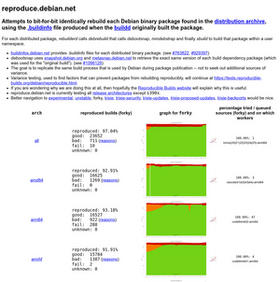













 In 2007, Martin Escardo wrote a often-read


 About 95% of my Debian contributions this month were

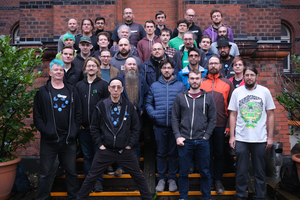


 Another short status update of what happened on my side last
month. Larger blocks besides the Phosh 0.47 release are on screen
keyboard and cell broadcast improvements, work on separate volume
streams, the switch of phoc to wlroots 0.19.0 and effort to make
Phosh work on Debian's upcoming stable release (Trixie) out of the
box. Trixie will ship with Phosh 0.46, if you want to try out 0.47
you can fetch it from Debian's experimental suite.
See below for details on the above and more:
 The following contributors got their Debian Developer accounts in the last two
months:
 Don t knock the fence down before you know why it s up. I repeat this phrase over and over again, yet the (metaphorical) Homeowner s Association still decides my fence is the wrong color.Well, now you get to know why the fence is up. If anyone s actually willing to challenge me on this level, I d welcome it.The four ideas I d like to discuss are this: quantum physics, Lutheranism, mental resilience, and psychology. I ve been studying these topics intensely for the past decade as a passion project. I m just going to let my thoughts flow, but I d like to hear other opinions on this.Can the mysteries of the mind, the subatomic world, and faith converge to reveal deeper truths?When it comes to self-taught knowledge on analysis, I m mostly learned on Freud, with some hints of Jung and Peterson. I ve read much of the original source material, and watched countless presentations on it. This all being said, I m both learned on Rothbard and Marx, so if there is a major flaw in the way of Freud is frowned upon, I d genuinely like to know so I can update my research and juxtapose the two schools of thought.Alongside this, although probably not directly relevant, I m learned on John Locke and transcendentalism. What I d like to focus on here is this the Id.The Id is the pleasure-seeking, instinctual part of the psyche. Jung further extends this into the idea of the shadow self, and Peterson maps the meanings of these texts into a combined work (at least in my rudimentary understanding).In my research, the Id represents the part of your psyche that deals with religious values. As an example, if you re an impulsive person, turning to a spiritual or religious outlet can be highly beneficial. I ve been using references from the foundational text of the Judaeo-Christian value system this entire time, feel free to re-read my other blog posts (instead of claiming they don t exist).Let s tie this into quantum physics. This is the part where I ll struggle most. I ve watched several movies about this, read several books, and even learned about it academically, but quantum physics is likely to be my weak spot here.I did some research, and here are the elements I m looking for: uncertainty principle, wave-particle duality, quantum entanglement, and the observer effect.I already know about the cat in the box. And the Cat in the Hat, for that matter. I know about wave-particle duality from an incredibly intelligent high school physics teacher of mine. I know about the uncertainty principle purely in a colloquial sense. The remaining element I need to wrap my head around is quantum entanglement, but it feels like I m almost there.These concepts do actually challenge the idea of pure free will. It s almost like we re coming full circle. Some theologians (including myself, if you can call me a self-taught one) do believe the idea of quantum indeterminacy can be a space where divine action may take place. You could also liken the unpredictable nature of the Id to quantum indeterminacy as well. These are ones to think about, because in all reality, they re subjective opinions. I do believe they re interconnected.In terms of Lutheranism, I ll be short on this one. Please do go read the full history behind Martin Luther and his turbulent relationship with Catholicism. I m not a Bible thumper, and I actually think this is the first time I ve mentioned religion publicly at all. This being said, now I m actually ready to defend the points on an academic level.The Id represents hidden psychological forces, quantum physics reveals subatomic mysteries, and Lutheranism emphasizes faith in the unseen God. Okay, so we have the baseline. Now, time for some mental resilience. When I think of mental resilience, the first people I think of are David Goggins and Jocko Willink. I ve also enjoyed Dr. Andrew Huberman s podcast.The idea there is simple if you understand exactly how to learn, you know your fundamentals well enough to draw them and explain them vividly on a whiteboard, and you can make it a habit, at that point you re ready to work on your mental resilience. Little by little, gradually, how far can you push the bar towards the ceiling?There s obviously limits. People sometimes get scared when I mention mental resilience, but obviously that s a bit of a catch 22. There are plenty of satirical videos out there, and of course, I don t believe in Goggins or Jocko wholeheartedly. They re just tools in the toolbox when times get tough.I wish you all well, and I hope this gets you thinking about those people who just insist there is no God or higher being, and think you re stupid for believing there is one. Those people obviously haven t read analysis, in my own opinion.Have a great night!

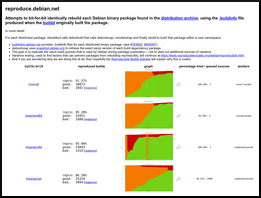








 Update 20250309 13:20-03:00 - How to help
A friend of mine living in the USA sent me this link to help the flood victims:



 The "real" thing
Let's get to the heavy, heartbreaker part. I did go to downtown Bah a Blanca, but during night, so let me share some links, most of them in Spanish, but images are images:
 by


 20 years ago, I got my Debian Developer account. I was 18 at the time, it was Shrove Tuesday and - as is customary - I was drunk when I got the email. There was so much that I did not know - which is also why the process took 1.5 years from the time I applied. I mostly only maintained a package or two. I'm still amazed that Christian Perrier and Joerg Jaspert put sufficient trust in me at that time. Nevertheless now feels like a good time for a personal reflection of my involvement in Debian.

